

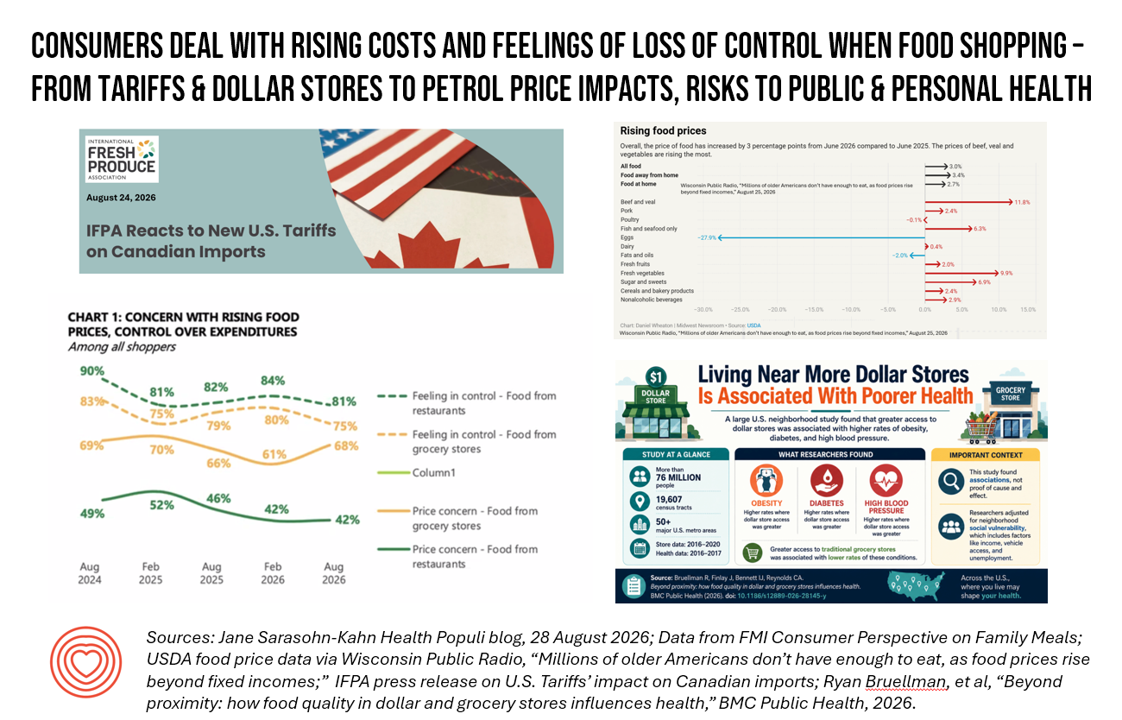
“Shoppers are feeling less control of their spending on food and more concerned about food prices than in February 2026.”
Researchers with The Food Industry Association discussed their latest research into U.S. consumers’ worries about food prices’ impacts on family meals this week, and their findings comport with what I see happening in peoples’ self-care choices at-home directly impacting nutrition as well as adjacent areas of retail health and home health life-flows.
This data point meshes with trends in geopolitics, home economics, and consumers’ growing demand for self-care outside of traditional “front doors” compelling me to call-out the health risks accompanying the high and higher costs of food.
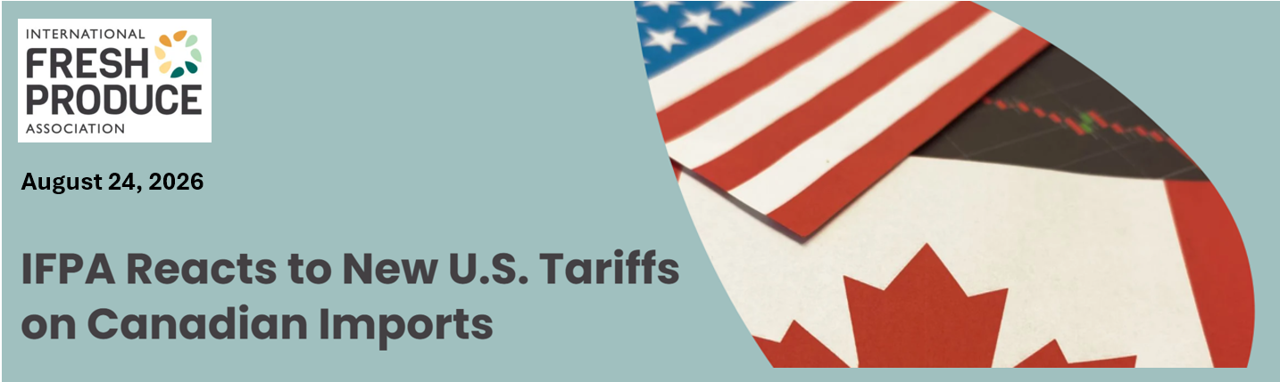
Start with geopolitics, which this week prompt me to focus on President Trump’s latest call for tariffs on Canada. Follow this announcement the IFPA immediately warned its stakeholders — the largest international association serving the entire fresh produce and floral supply chain — that, “The implementation of new tariffs on Canadian goods adds to the uncertainty facing the agriculture industry operating across the highly integrated North American market. Last year, Canada accounted for?48 percent of U.S. fresh produce exports, over $3.5 billion in produce sales. In total, the United States and Canada share nearly $6.5 billion in annual fresh produce trade. Canada is also a major supplier of cut florals and floral inputs, as well as an important source of critical inputs that U.S. fruit and vegetable growers rely on. A stable, predictable trade relationship with Canada is essential to the growers, businesses, and consumers who depend on a strong North American fresh produce supply chain.”
With consumers’ growing taste for food-as-medicine and mindful food choices for medical goals, a research paper in BMC Public Health struck me this week bolstering my thinking of food as a social determinant of health (or driver of health). Titled, “Beyond proximity: how food quality in dollar and grocery stores influences health,” the researchers found that folks who buy food from dollar stores were at greater risk of poorer health outcomes.
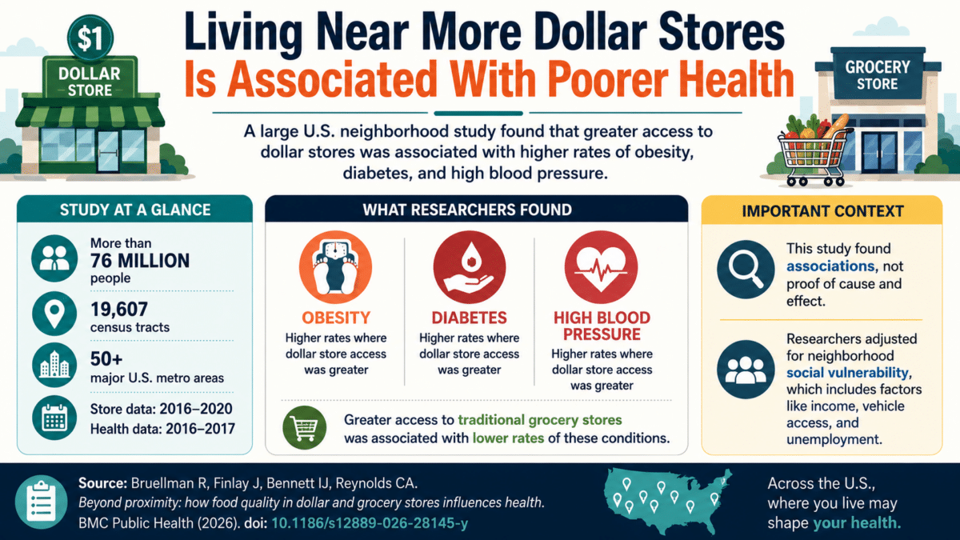
In UC Riverside’s coverage on the university researchers’ study, Jules Bernstein wrote, “While consumers may save a few bucks on groceries at dollar stores, they end up paying a higher price with their health. New UC Riverside research shows a link between dollar store food quality and higher rates of obesity, high blood pressure, cholesterol, and type 2 diabetes.”
The graphic summarizes the study results. Ryan Bruellman, UCR genetics, genomics, and bioinformatics doctoral candidate and the study’s first author, explained his motivation to do this study: ““I want to raise awareness that higher grocery costs are pushing people to buy highly processed, lower quality food at dollar stores, and it is negatively impacting their health in a similar way to fast food.”
Ryan and his colleagues used data from the Centers for Disease Control’s 500 Cities Project which has gathered data across U.S. communities. They included a cohort of dollar stores including the 99 Cent Store, Dollar General, Dollar Tree, and Family Dollar which together represent about 34,000 storefronts.
Furthermore, Ryan noted that, “Across the U.S. there are more dollar stores than traditional grocery stores.”
While this hypothesis might be intuitive to a lot of people, having this hard data is important and should inform public policy from the Federal level to local public school departments.
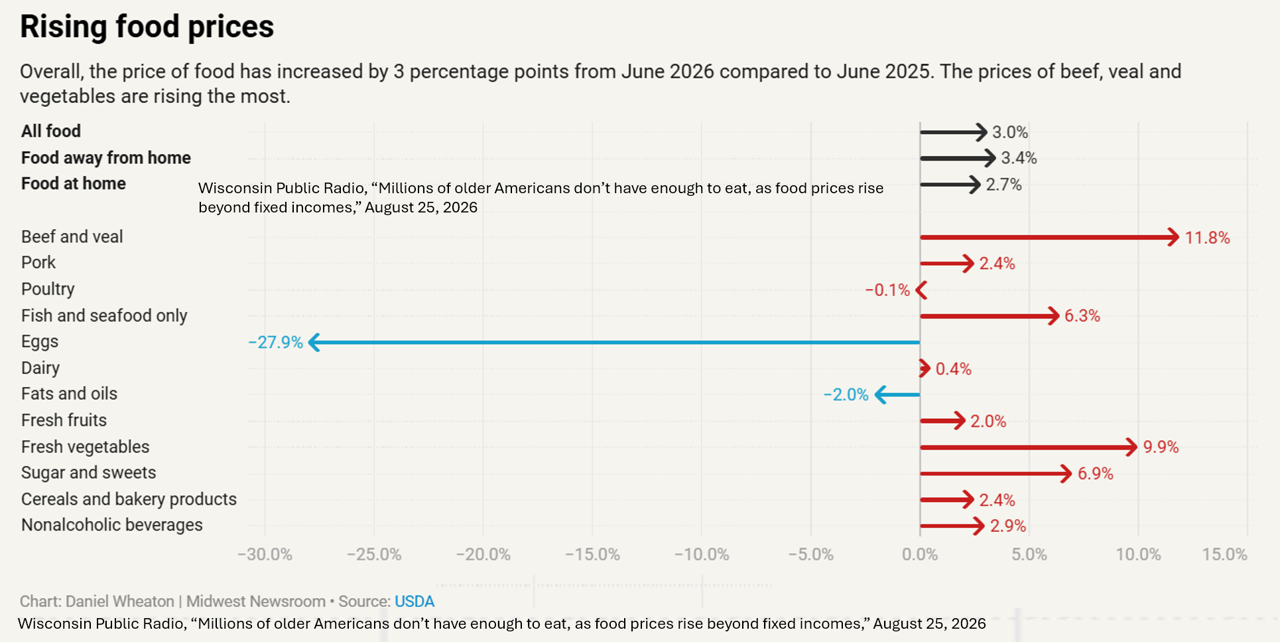
Here’s the USDA’s latest data on rising food prices by product category at the grocery store and away from home in restaurants.
The price of food increased by 3 percentage points from June 2025 to June 2026, with higher inflation for beef and veal (11.8%), fresh fish and seafood (6.3%), and certain kinds of fresh produce (for example, fresh vegetables rising at nearly 10%). 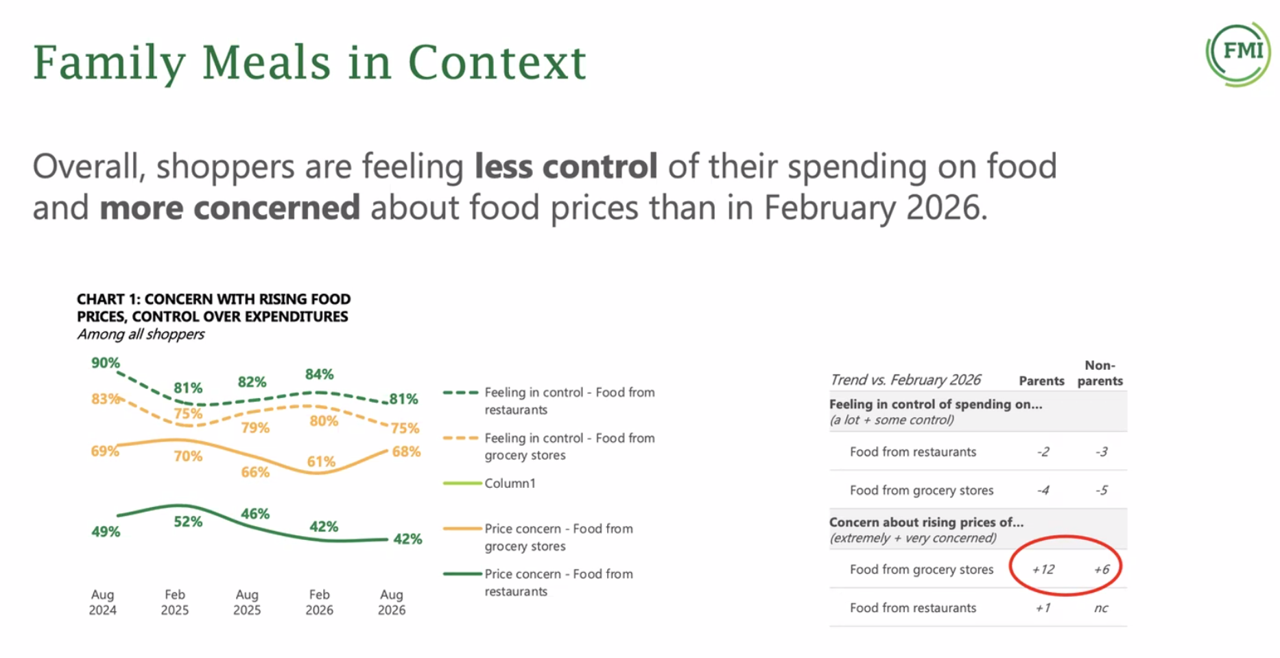
Now to the FMI research I cited introducing this post: consider how U.S. adults have reacted to the rising cost of food and their control over expenditures.
‘
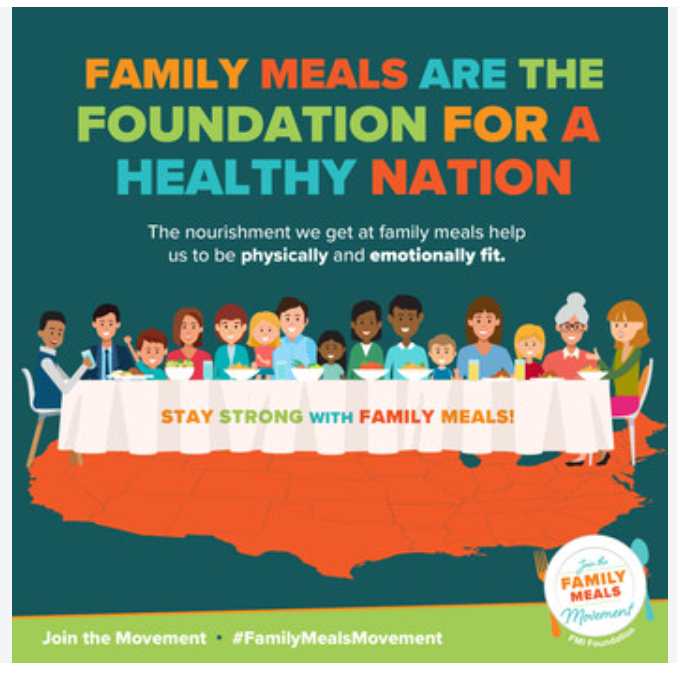
FMI’s webinar on Consumer Perspectives on Family Meals, precedes FMI’s Family Meals mission convening Family Meals Month in September.
Note the mission spelled out: that “Family meals are the foundation for a healthy nation…The nourishment we get at family meals helps us to be physically and emotionally fit.”
Bottom line? “Stay strong with family meals!” FMI enthuses on the poster asking us to Join the Movement.
[FYI, I grew up this way as busy as a family we were in my Wonder Bread years, and this stuck with me in our raising our own daughter decades later.]
Importantly, FMI’s data and recorded personal responses recorded for their session provides life human commentary on this topic: that families seek togetherness over the meal table but struggle with the cost of food, the cost of transportation, and the cost of time to/from workplaces. 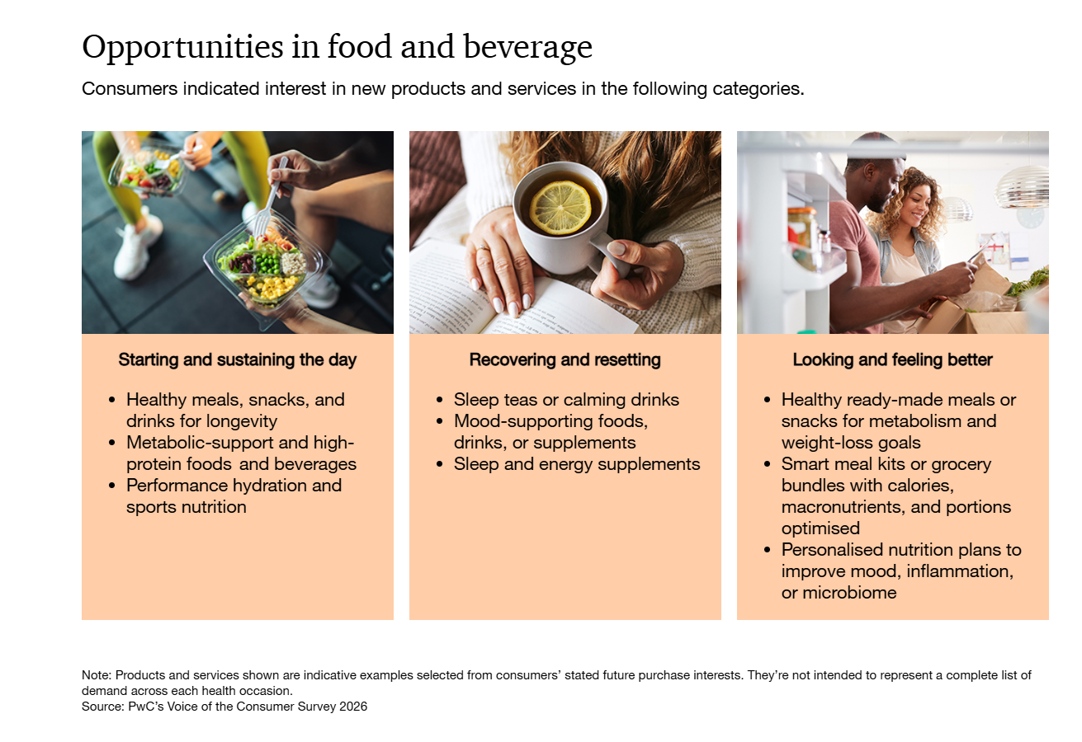
Health Populi’s Hot Points: PwC’s Voice of the Consumer study this year (subtitled “the rise of everyday health”) discussed the food and beverage industry’s role in serving up healthy choices for mainstream people who are dealing with the high costs of health care and the high costs of healthy food. In this diagram from the PwC report, we can learn about opportunities for the Food+Bev industry, illustrating areas consumers demand products and services from these stakeholders — including meal and nutrition support, help with sleep and stress relief, and products that can help us feel and look better, from head to toe and from internal cells to external skin.
Keep keeping in mind FMI’s finding that people are seeking more control in the midst of rising costs: this ethos impacts consumers across all age groups (in different ways), income and education levels, across political party ID, and race and ethnicity identities. When we in the health/care ecosystem talk about and venture to “meet people where they are,” this phenomenon of self-control and agency vis-a-vis rising costs of living is now part of where people are, every single day.
 Jane will be working with EU- and UK-based clients in September and October 2026, collaborating with stakeholders in digital health, public/community health, retail health, and growing opportunities for health-at-home. Stay tuned to her updates here on Health Populi on-the-ground as she lives the digital nomadic work-life in Italy, Belgium, the Netherlands, and in London.
 I was grateful to be Jasmine's first conversation-guest on her new podcast,
  Jane joined host Dr. Geeta "Dr. G" Nayyar and colleagues to brainstorm the value of vaccines for public and individual health in this challenging environment for health literacy, health politics, and health citizen grievance.