

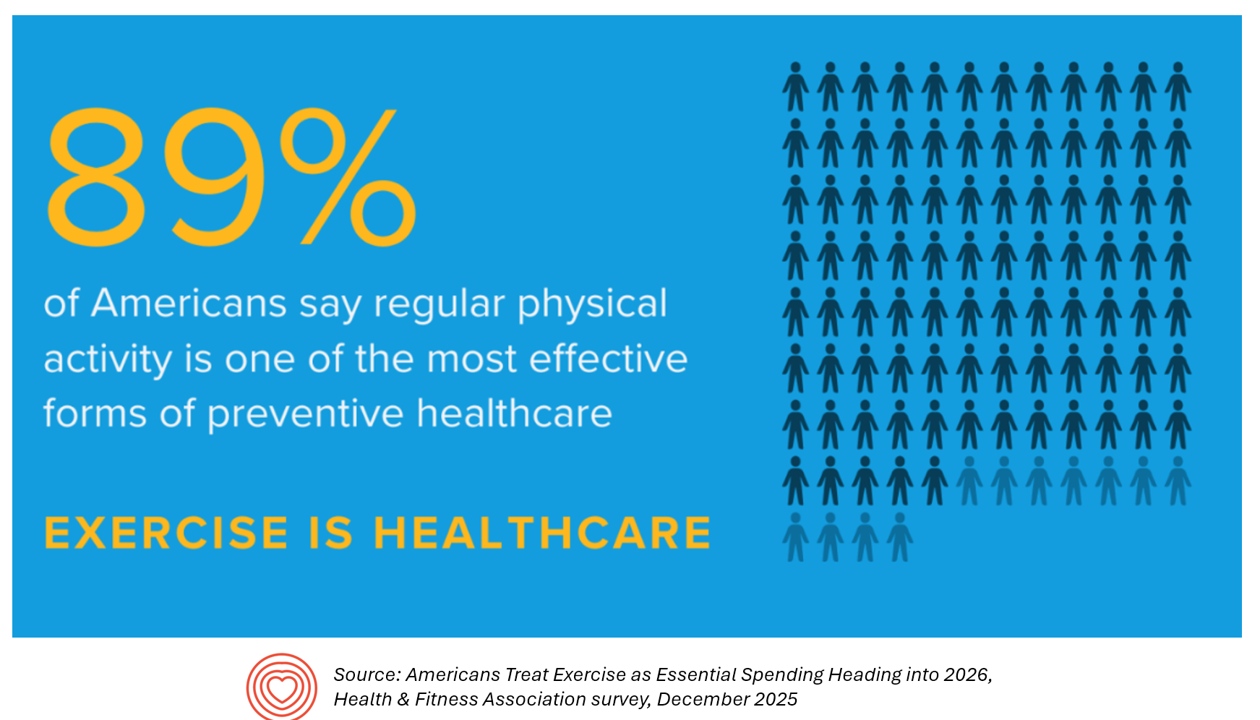
“Americans are not just setting fitness goals; they are budgeting for them,” Liz Clark, President and CEO of the Health & Fitness Association observed. “People increasingly see exercise as an essential investment in their long-term health. Even in a challenging economic environment, Americans are prioritizing physical activity as a proactive form of preventive healthcare.”
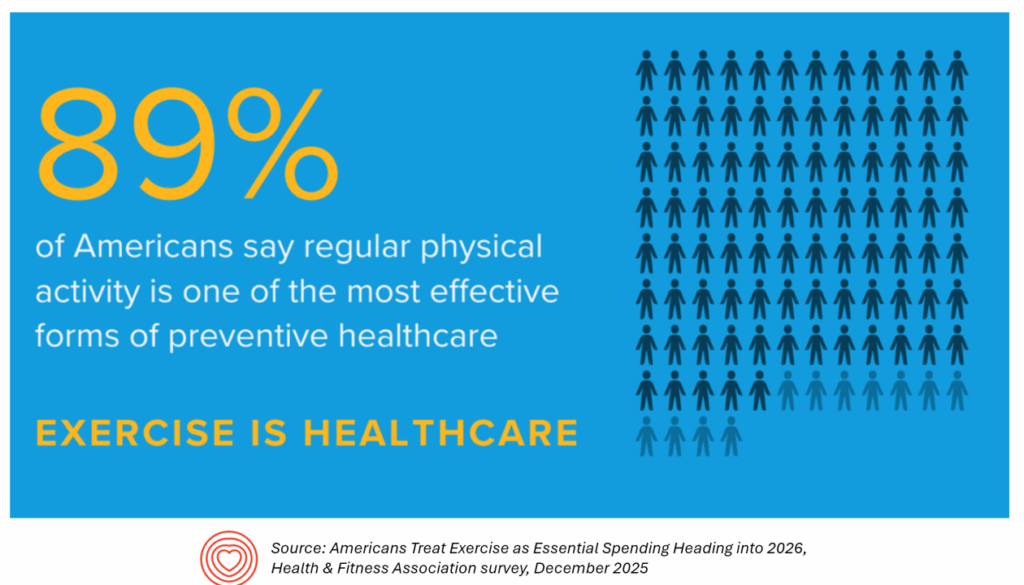
Americans see exercise as healthcare — and health — according to a survey from the Health & Fitness Association (HFA).
HFA commissioned Kantar to conduct the online survey among 2,000 U.S. adults 18 and over in December 2025 — well-timed for the 2026 Consumer Electronics Show (CES) taking place starting 6 January 2026.
I’m in Las Vegas now for the days preceding #CES2026, meeting with clients ahead of the big show and attending Media Days for CES, with big announcements from Big Tech, tech startups, and in particular digital health and longevity innovators. 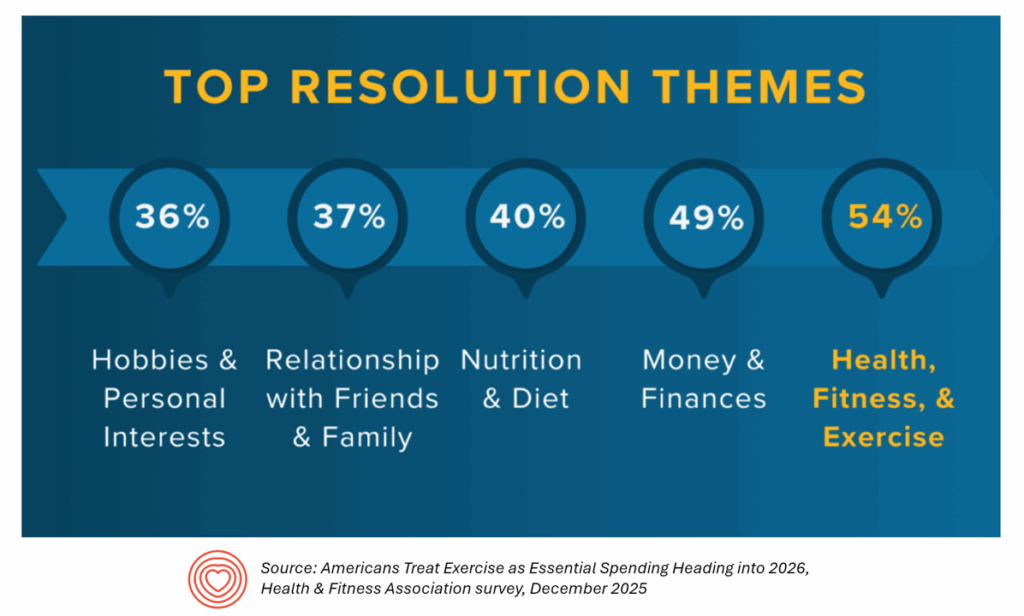
Timed at the start of the 2026 New Year, HFA identified consumers’ top resolution themes: at the top of priorities, over one-half of people cite health, fitness, and exercise, followed by attending to money and finance with 1 and 2 resolvers seeking to be financially fit.
Here’s where the physical and fiscal health goals coincide, especially acute in the U.S. as health citizen face both growing out-of-pocket medical expenses and threats to health insurance access and security due to the lack of Congressional support for ACA/Obamacare premium support.
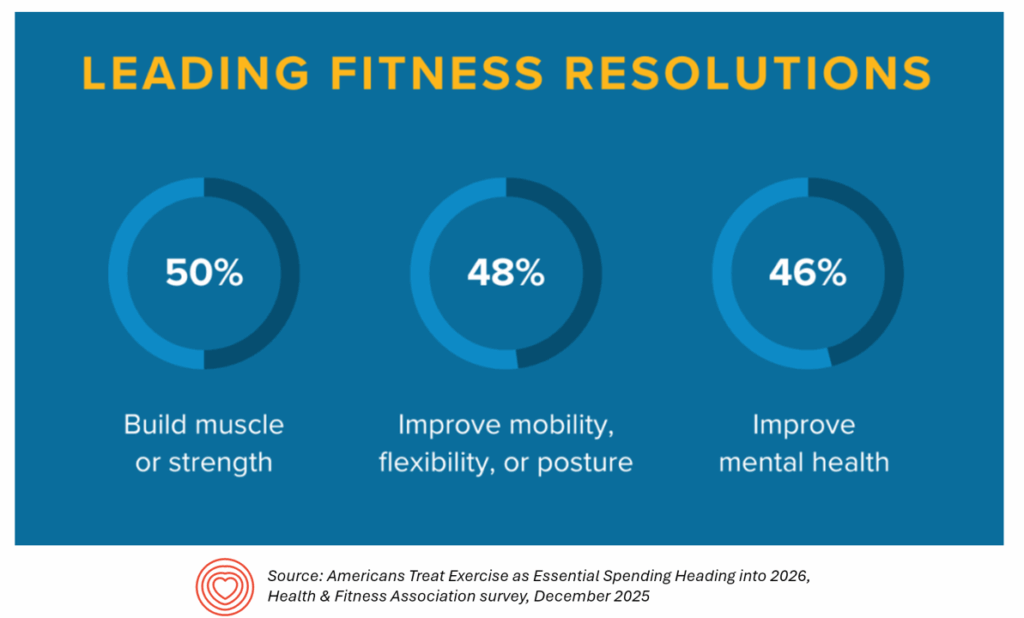
On the health/care front of peoples’ goals are building muscle and strength, improving mobility and flexibility, and bolstering mental health. On the topic of muscle, we should note that growing adoption of GLP-1 medicines to deal with obesity and diabetes which can have side effects of muscle loss — thus a growing demand for dietary supplements and protein-embedded food from the grocery store.
Peoples’ growing awareness, acceptance, and support for addressing mental health is also key for individuals, families, and communities across ages and demographics.
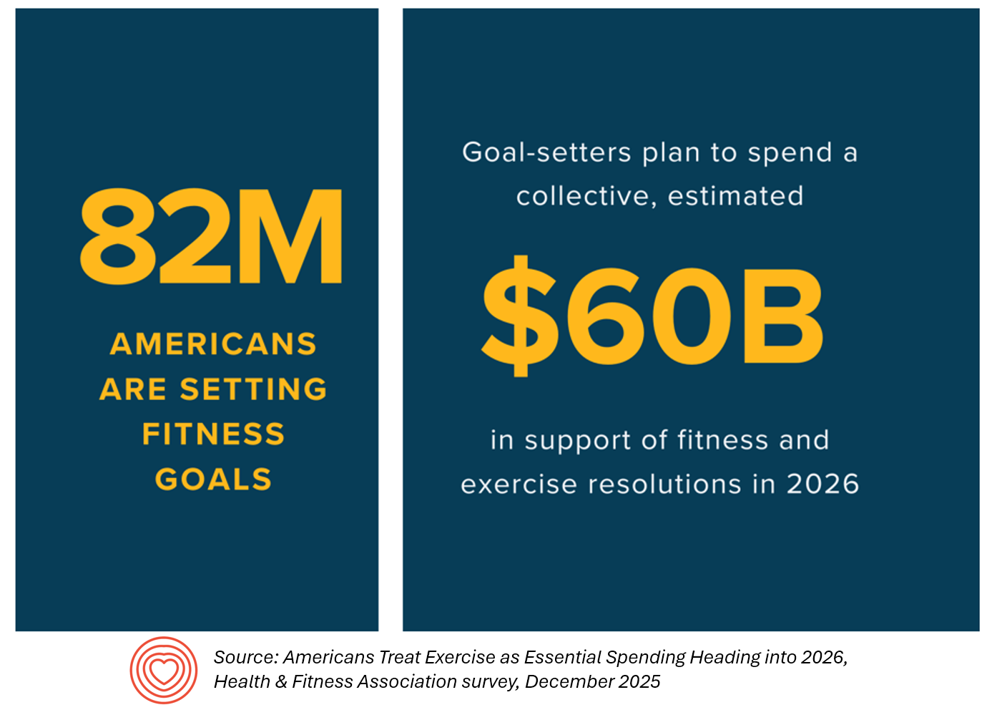
HFA’ analysis points out, “The findings highlight the enduring role of fitness in Americans’ personal health strategies and financial planning.”
Quantifying this, HFA calculate that among people setting fitness goals, they will each spend $733 per year (or $61 per month) on this intention — putting money here mouths (and health goals) are.
This investment choice in household budgets is notable in the current economic climate experienced and perceived by mainstream Americans who currently feel a “jobs recession” and financial in-security looking 2 years out — in the midst of health care insecurity (e.g., potential loss or “skinnying” of health insurance plans, and access challenges).
Health Populi’s Hot Points: We are entering the consumer-first era of health care, a term coined by PwC in their health consumer research report published in October 2025.
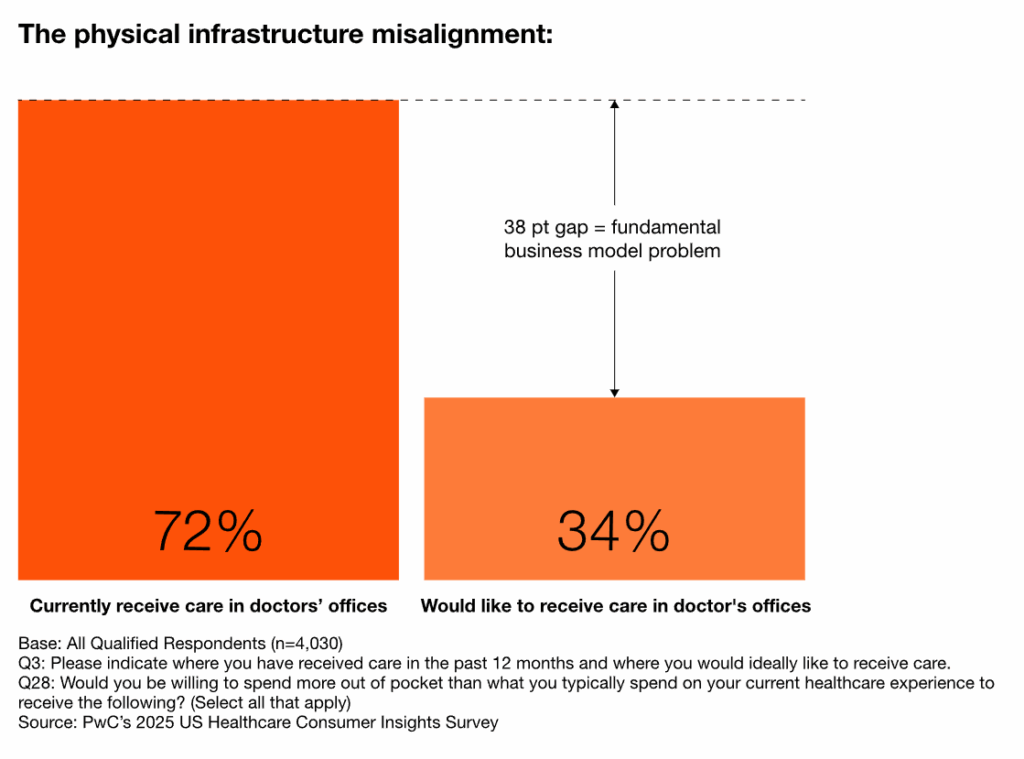
One sign of the consumer-first phenomenon for health care is peoples’ growing preference for care delivered outside of traditional sites — that is, away from hospitals, doctors’ offices, and medical clinics.
The vertical bar chart illustrates the math on this “health care everywhere” sentiment: the mis-alignment between where patients receive care now versus where they would prefer to get care. There is a large gap between people receiving care in a doctor’s office versus preference for other sites.
Patients-as-consumers are looking for greater access to virtual, at-home and retail models for care — with the current mode of care a business mis-alignment problem as well as a real estate and capital mis-alignment.
As PwC wrote, “Growth won’t come from square footage but from scalable, digital-first platforms.”
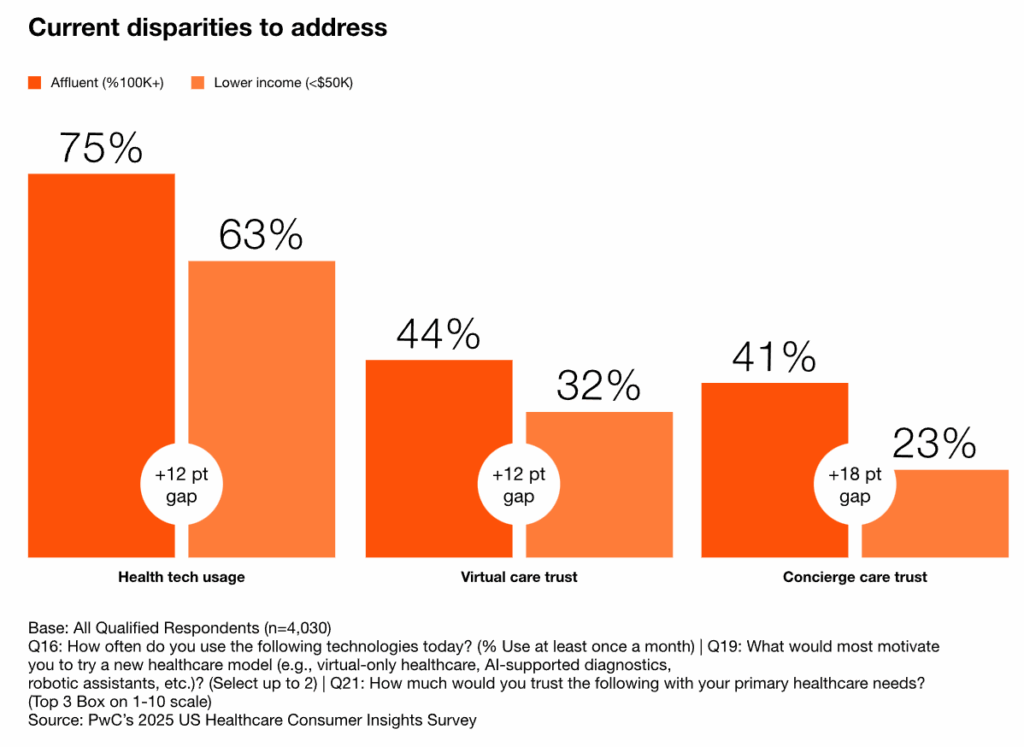
In terms of business models and opportunities, we can look to growing digital-first, retail-enhanced, and home-care options for care — for all health citizens, not just the affluent.
PwC’s report, to their credit, called out disparities to address in terms of digital divides for health tech usage, virtual care trust, and concierge care trust, shown in the second orange chart from PwC.
I’m thrilled to note that #CES2026 is hosting the Accessibility Stage, with that translating across the many layers of access — physical, literacy, trust, etc. — to help solve big problems in our lives and society. In prototypical “Field of Dreams” effect, if you build “it,” people (that is, consumers) may not all come. Keeping mindful and prioritizing consumers’ senses of value and values in user-centered design mode can get us further, together, collaboratively, in service to our fellow health citizens.
Stay tuned for more coverage from Las Vegas and #CES2026. And thanks to HFA and PwC for the well-timed, informative research.
And if you’re tracking the #longevity economy and aging well a #CES2026, check out this research from the National Council on Aging finding that home economics matter for longevity for “the other 80%.” That’s the fiscal-meets-physical reality for most older people in the U.S.

 I'm once again pretty gobsmackingly happy to have been named a judge for
  Stay tuned to Health Populi in early January as I'll be attending Media Days and meeting with innovators in digital health, longevity, and the home-for-health during
  Jane collaborated on