

People over 50 in America typically hold two thoughts in mind at once when it comes to AI: they’re optimistic and skeptical, depending on the “job” that AI could do, according to research from AARP explained in the report, Navigating the World of AI: Awareness, Attitudes, and How People Expect to Use It. 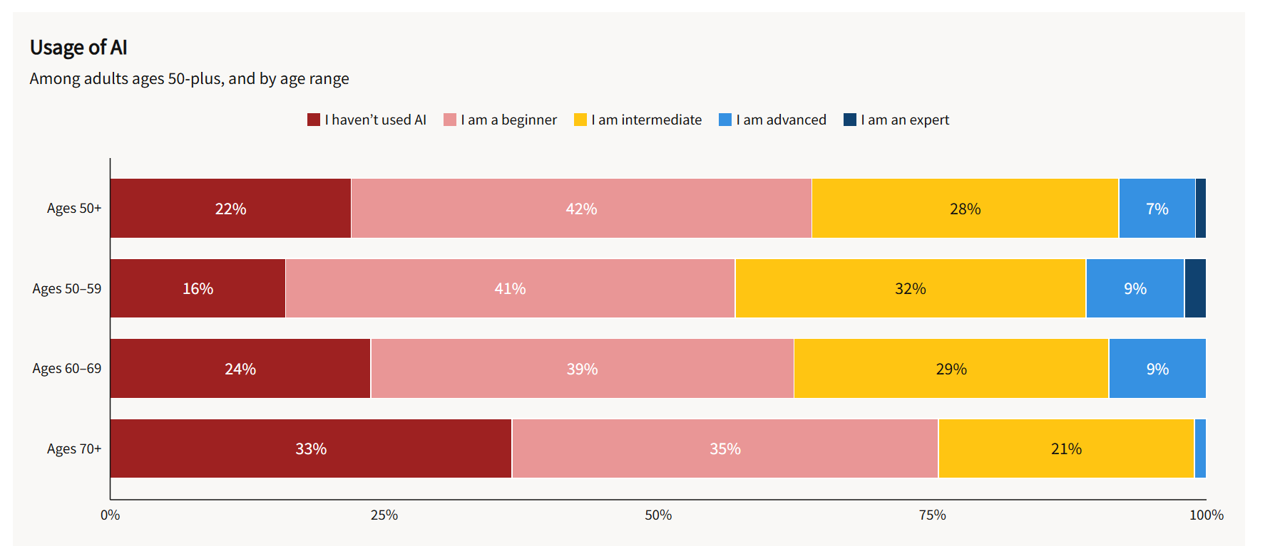
Topline, most people 50 and over have used AI in some way, with roughly 3 in 5 older Americans saying “I am a beginner” in using AI across age groups from 50 to 70+.
Most older Americans are familiar with many terms in the AI lexicon, such as text to speech, voice recognition, artificial intelligence, virtual reality, chatbots, and digital assistant. Fewer older people are familiar with the phrases augmented reality and generative AI. 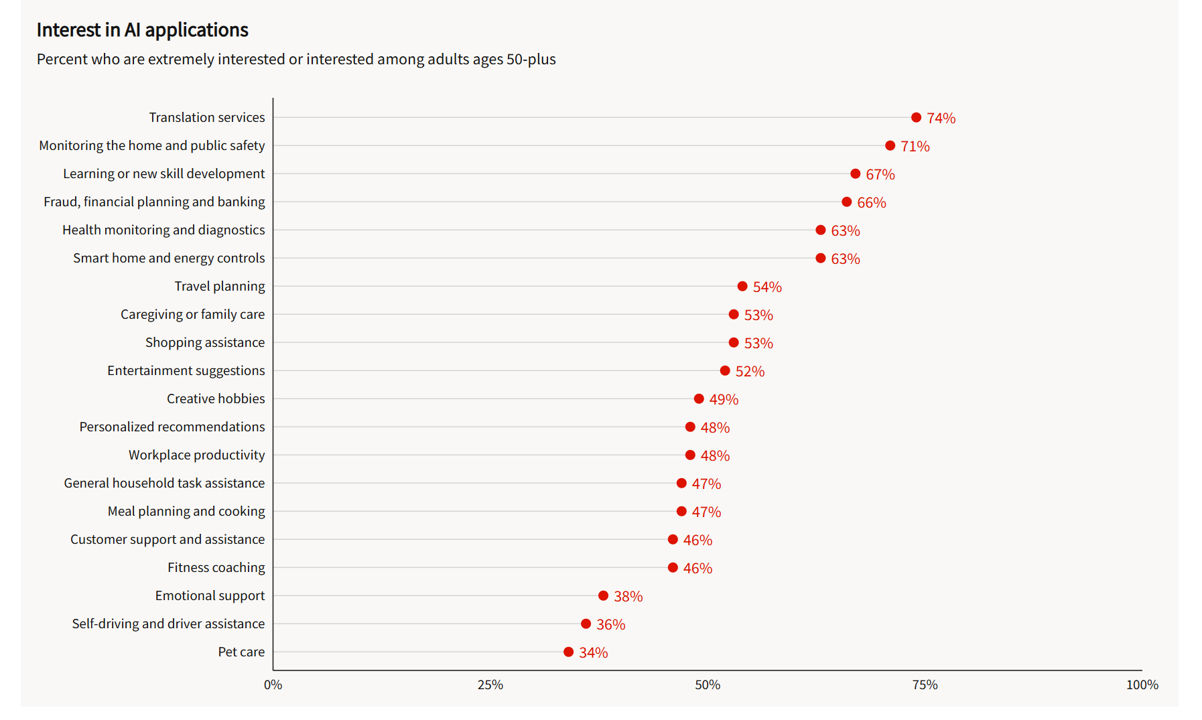
There is great interest in using AI for a variety of applications, or “jobs” in the terms of this study: most enthusiasm was found for translation services (among 74% of older Americans), monitoring home and public safety (for 71%), learning new skills (67%), fraud/financial planning/banking (66%), health monitoring and diagnostics (63%), and smart home and energy controls (63%).
Lease enthusiasm among older people were the use of AI for emotional support, self-driving, and pet care — all seen to be more appropriately “human”-powered jobs. 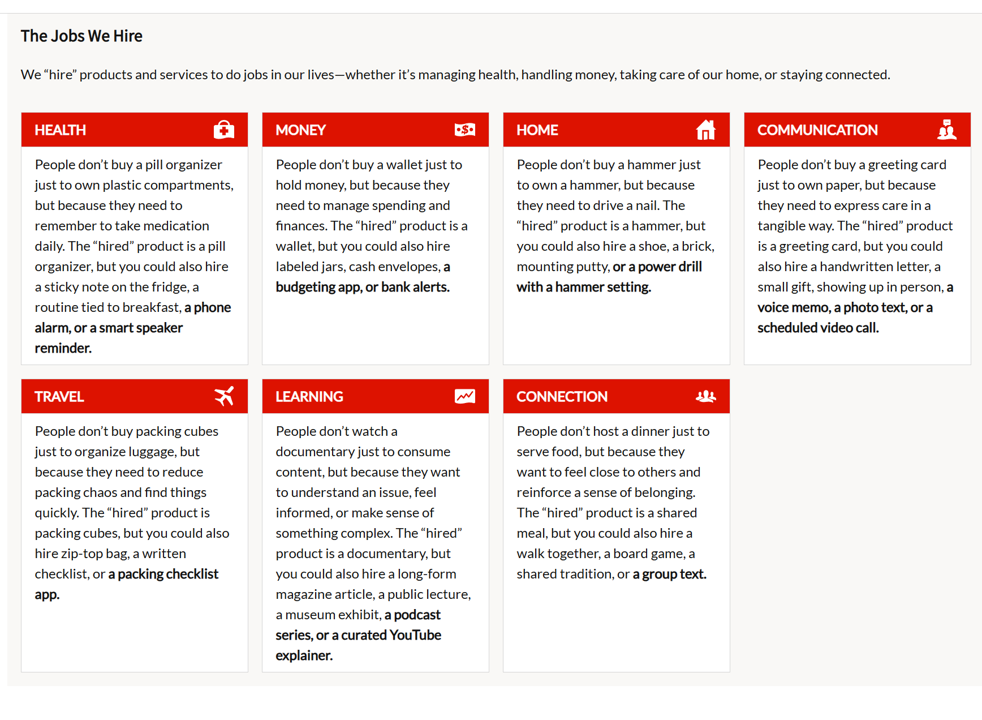
To that point, AARP explained AI apps in terms “the jobs we hire,” giving everyday meaning to the possible uses of AI to support tasks in daily living. Here we can see “hiring AI for health,” for example, detailing tasks such as medication adherence support — which could also be done with a sticky note adhered to a refrigerator door, a phone alarm, or reminder from Alexa’s voice tech. 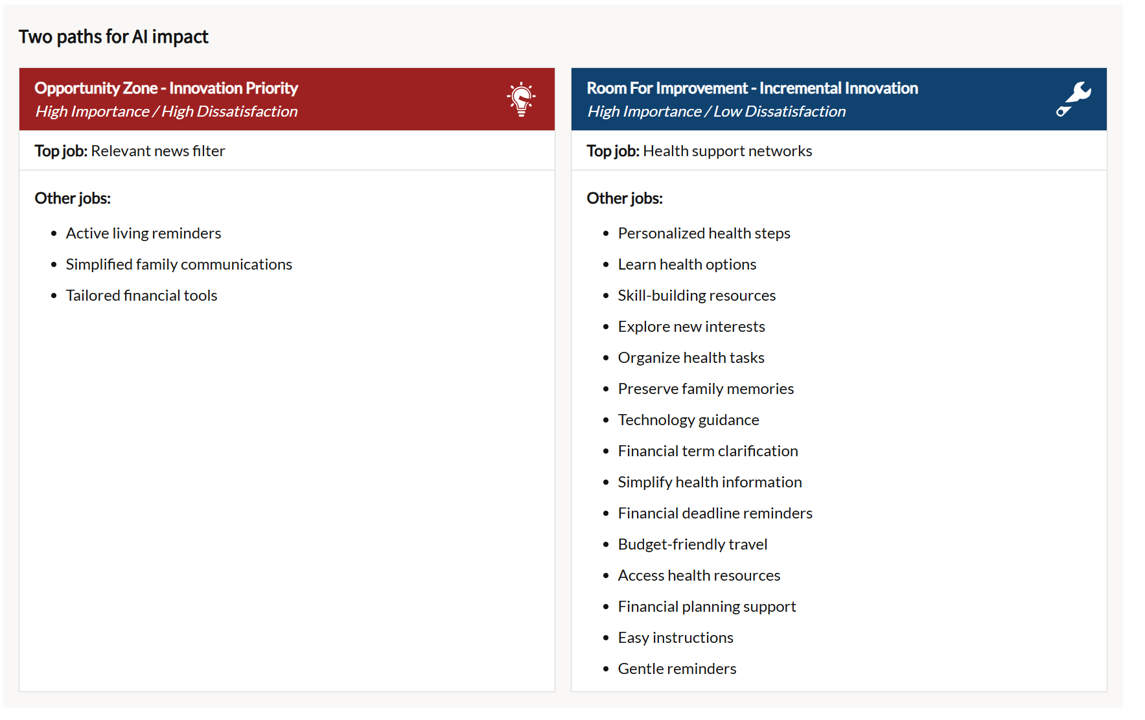
Health Populi’s Hot Points: It’s health care’s many tasks where older people see room for improvement, shown in the last chart I clipped from the report here.
Health support is a highly-valued area (with many micro-“jobs” to do, as the chart details), with low dissatisfaction. Some jobs of value would be personalized health steps, learning health options, organizing health tasks (think: the many micro-tasks each day a personal managing diabetes must undertake), simplifying health information, and so on.
Keep in mind the beliefs that older people have regarding AI, both on the benefits/positive side and the less sanguine areas of concern. On the upside, 80% of older Americans say technology has made life more convenient and efficient, and 65% of older folks said AI can be a helpful tool to support one’s daily independence.
When it comes to “AI benefits outweighing the potential risks it poses,” it’s a 50/50 split.
And on the negative side of the AI belief mindset among older people, 73% told AARP that AI tech is advancing rapidly but ethical politics are struggling to keep pace. Similarly, 68% of those studied worry that AI advancements might reduce human interaction in important areas of life — as I mentioned above, for driving, for pet care, and for emotional support.
The concerned embrace of AI — for convenience, lifelong learning, and support for daily living and independence — is very much on older peoples’ minds in balance with ethics and safety and peoples’ need for human touch, interaction, and social health. Thanks to AARP for providing nuance at this formative moment in AI adoption among consumers keen to live fully, well, and safely.

 Thanks to Jennifer Castenson for
  Jane joined host Dr. Geeta "Dr. G" Nayyar and colleagues to brainstorm the value of vaccines for public and individual health in this challenging environment for health literacy, health politics, and health citizen grievance.
  I'm grateful to be part of the Duke Corporate Education faculty, sharing perspectives on the future of health care with health and life science companies. Once again, I'll be brainstorming the future of health care with a cohort of executives working in a global pharmaceutical company.