

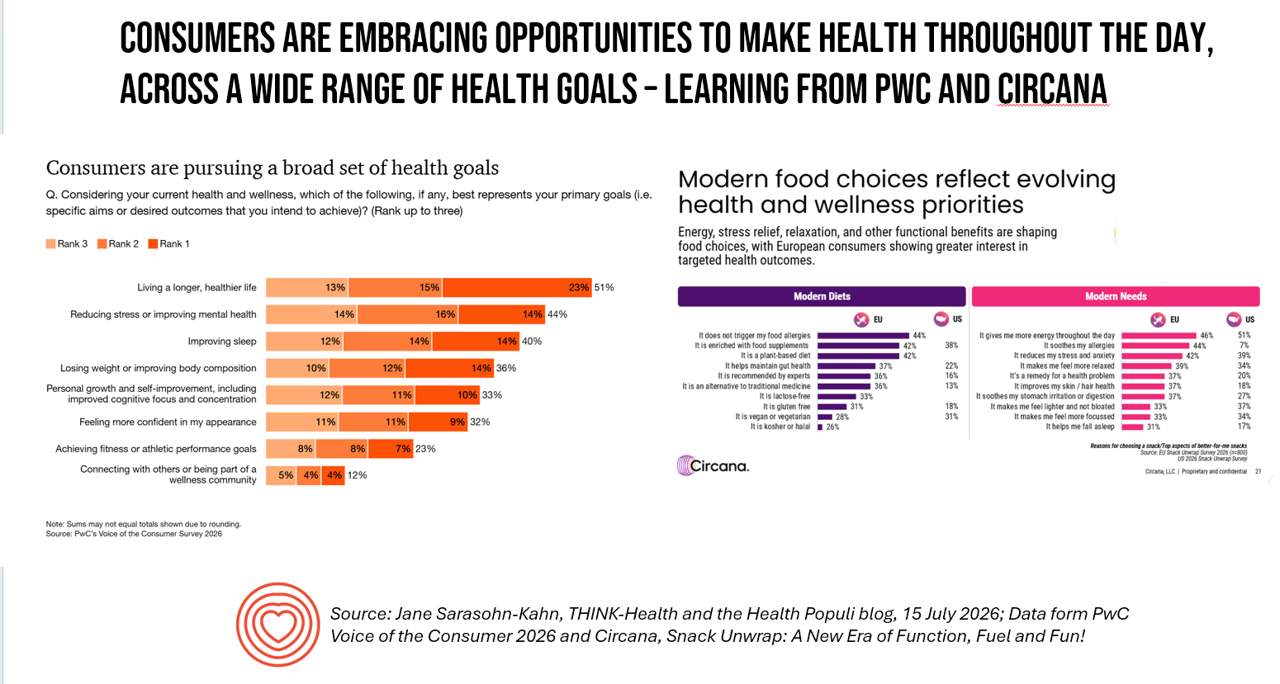
“Follow a consumer through the day, and health starts to show up everywhere.” That’s the observation of the PwC team assessing the annual Voice of the Consumer 2026 survey and shedding light on “the rise of everyday health.”
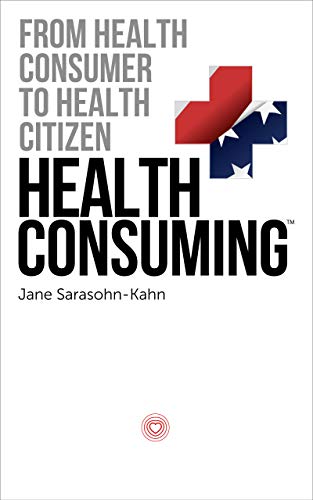
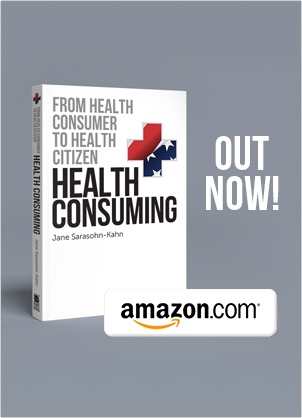
I coined the phrase “HealthConsuming” (TM) in 2019 when I published a book with that title, discussing the convergence of:
- Patients-as-medical bill payers, bearing more financial risk for their health care
- Patients as self-carers, using Google to check new prescription medicines, symptoms, and provider profiles, culminating in,
- Patients “consumed” in two ways by health care: as evolving consumers of care, and being “consumed” by medical costs.
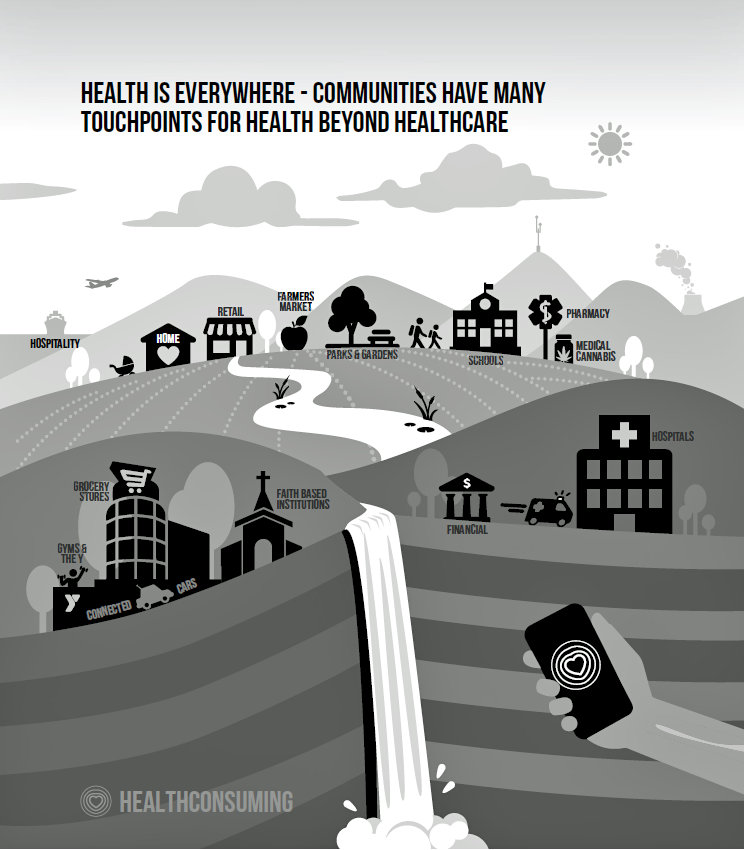
This led me to see opportunities to bolster health and well-being “everywhere,” particularly outside of the doctor’s office, hospital, and ambulatory clinics. 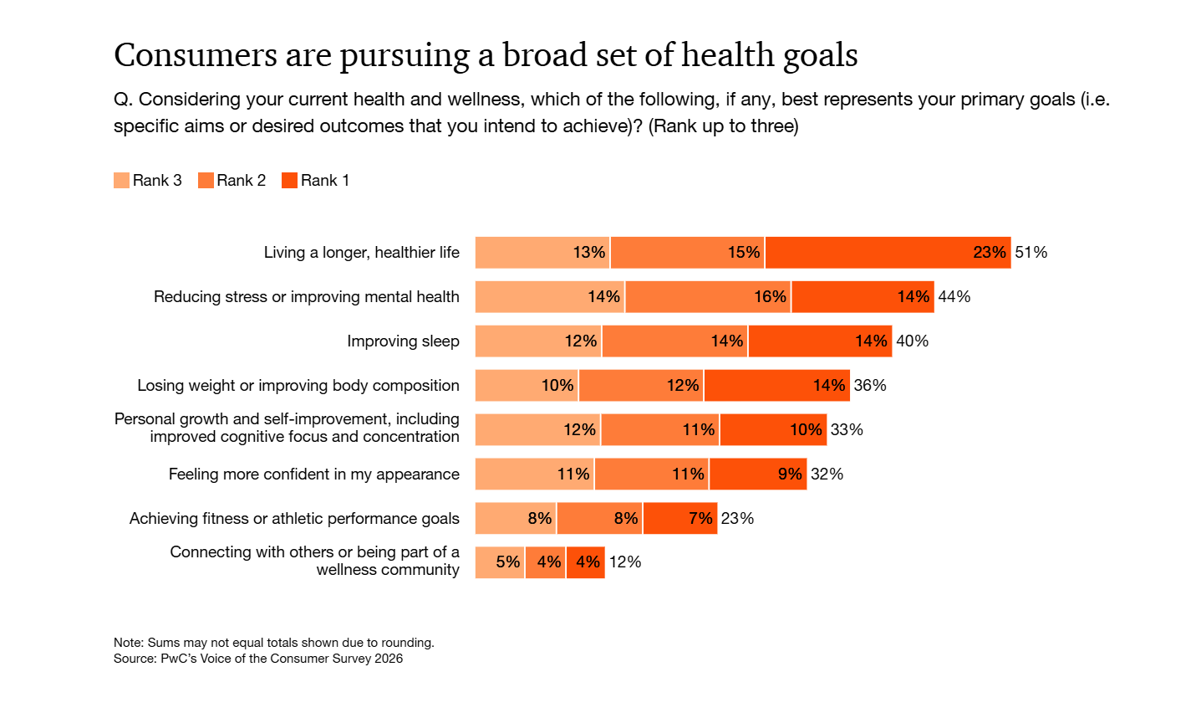
In PwC’s latest consumer research, we find this phenomenon playing out in peoples’ daily lives, from physical and mental health cognitive support and growth, improving body composition (eg., fat vs muscle), and seeing communities-at-large for wellness-building.
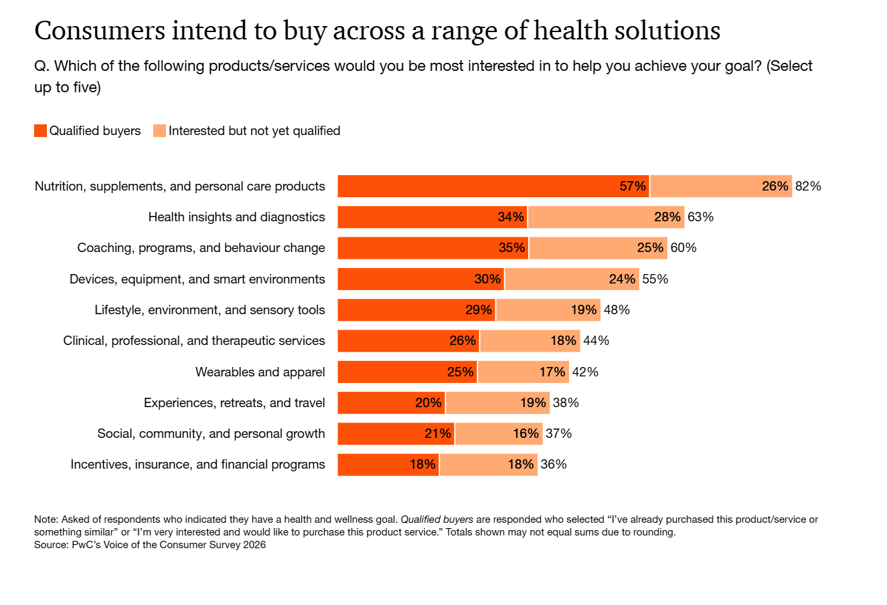
That leads people-as-health-consumers to take some of the family budget and allocate spending across a range of health solutions, PwC quantifies here. The #1 retail health consumer spend has typically been for vitamins, minerals, and supplements (VMS), broadening to nutrition support as shown in the graph.
Note the second and third solutions in which health consumers are keen in 2026: health insights and diagnostics, and coaching with an eye on behavior change, two categories that have not reached the apex of peoples’ spending priorities for health. I’m also intrigued by the growing categories of experiences and social touchpoints for growth as newer out-of-pocket solutions more health consumers cite. 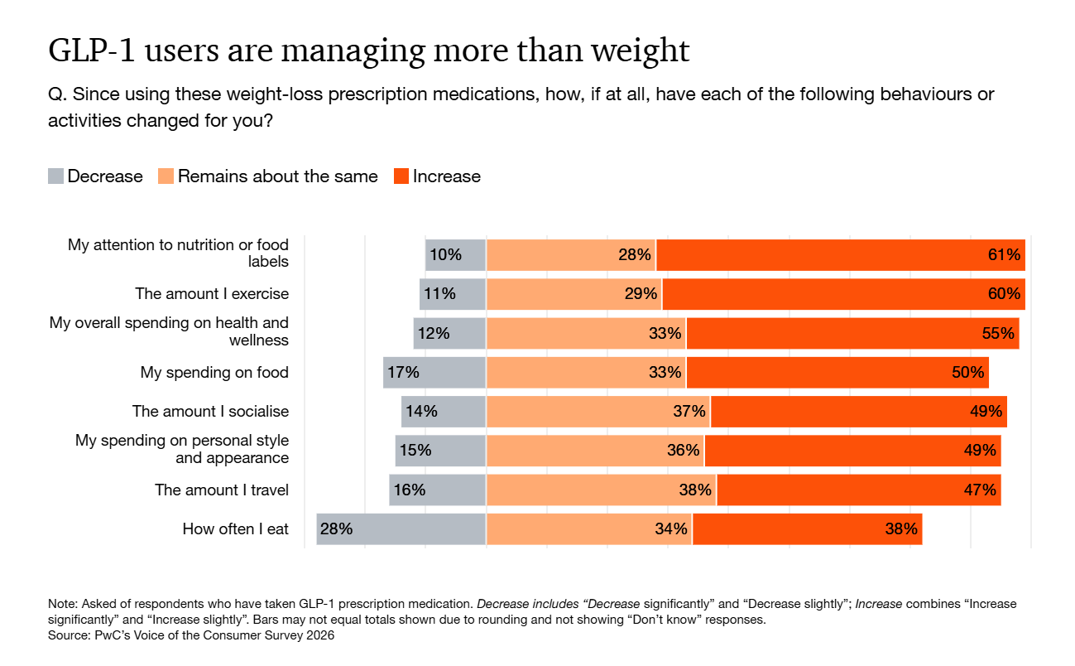
There’s no doubt that the growing adoption of GLP-1 medicines among self-pay and switched-on consumers has contributed to peoples’ confidence and self-agency for self-care. This PwC chart details some of the ways GLP-1s are re-shaping consumers’ mindsets and behaviors beyond weight-loss such as reconsidering time spent socializing and travel.
Health Populi’s Hot Points: I track retail and grocery shopping data as part of my lens on the consumer-led health/care ecosystem, so new research from Circana, leading thinkers in retail, complements the PwC consumer study.
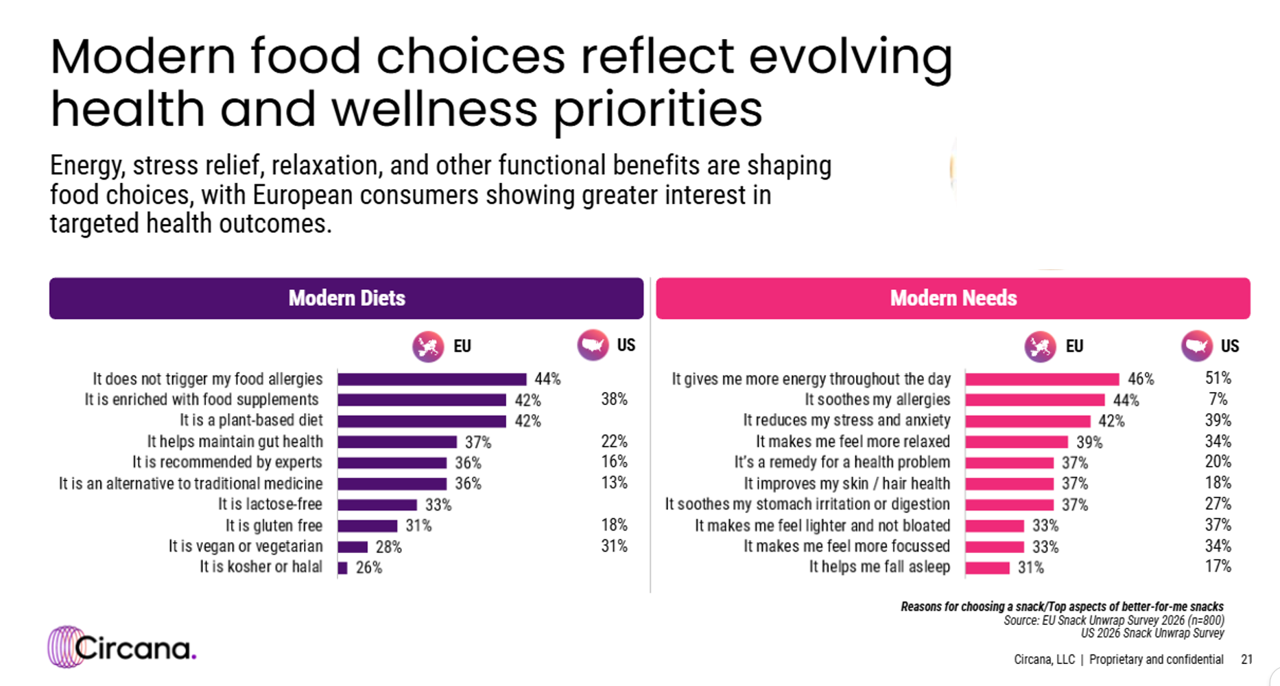
Here is one set of data points from Circana’s latest research on snacking trends in the U.S., Europe, and Australia presented in their “Snack Unwrap” reportage. This chart tells us that energy, relieving stress, bolstering relaxation, and functional benefits are shaping consumers’ food choices, balancing modern diets with modern needs. On the needs front, supporting energy is a big motivation among U.S. consumers, followed by reducing stress and anxiety, feeling “lighter” and less bloated, and getting more focused.
Why focus on snacking? Because, consistent with PwC’s observation I assert at the top of this post, “Follow a consumer through the day, and health starts to show up everywhere.” And snacking happens throughout the day, as much as 3x a day for people 45 and under.
“Snacking is doing four jobs at once,” Sally Lyons Wyatt, Global EVP and Chief Advisor for CPG and Foodservice with Circana, explained. Those four jobs are addressing hunger, cravings, enjoyment, and nutrition. And above all, today, “snacks must deliver a benefit” both Sally and her colleague Ananda Roy, who heads thought leadership in Circana’s Europe region, both advocated.
We are finding health/care everywhere, and Circana reminds us that this requires an omni-channel, portfolio approach to peoples’ discovery of products and services — enabled and powered by AI, it’s a tale of fragmentation of both media and attention. Thus, embracing the likes of TikTok, Social and Digital networks and channels (such as Instagram and YouTube), eCommerce, and of course, physical stores and community touchpoints, is crucial. “Discovery no longer has a single front door,” Sally emphasized, and this is as true for health/care as it is for peoples’ other personal values and goals,.
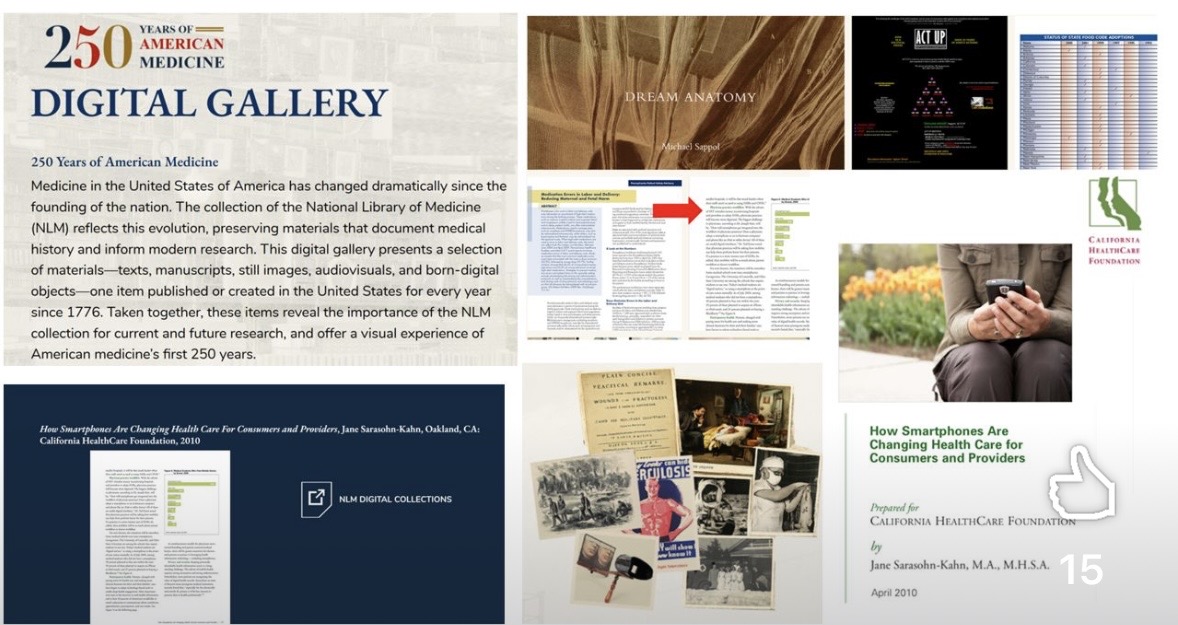 I’m celebrating America’s 250th birthday both patriotically and professionally, honored that the NLM included my 2010 paper, “How Smartphones Are Changing Healthcare for Consumers and Patients” as one of 250 items curated for the digital archive of 250 Years of American Medicine.
 I'm grateful to be part of the Duke Corporate Education faculty, sharing perspectives on the future of health care with health and life science companies. Once again, I'll be brainstorming the future of health care with a cohort of executives working in a global health care enterprise.
 Jane joined host Dr. Geeta "Dr. G" Nayyar and colleagues to brainstorm the value of vaccines for public and individual health in this challenging environment for health literacy, health politics, and health citizen grievance.