


Lower calories are good business
The restaurant chain business employs 10% of U.S. workers and accounts for $660 bn worth of the national economy. Where restaurant chains are growing fastest is in serving up lower-calorie meals, and it’s been a boon to the bottom-line. The case for lower calories leading to better business is made in Lower-Calorie Foods: It’s Just Good Business from the Hudson Institute‘s Obesity Solutions Initiative, published February 2013. In the report, researchers analyzed nitty-gritty restaurant chain data on servings and traffic from 2006-2011 to sort out whether sales of so-called lower-calorie menu items in 21 chains led to improved business. The chains
Most women want to be healthy, buy healthy
Health and wellness motivations among women cross all generations, driving them to purchase products that bolster health as they define it…not how media and stereotyping advertising have typically portrayed it, according to a survey report from Anthem Worldwide, What Women Really Want From Health and Wellness. Over all generations, 3 in 4 women say they make choices to benefit their health and wellness. Anthem asked women about the “external voices” of health/wellness messaging versus their “internal voice.” The external represent societal expectations: over 80% of women expect to take responsibility for their family’s health, and about 70% of women say the
Formally tracking health data changes health behavior and drives social health
Most of us keep track of some aspect of our health. Half of all people who track do so “in their heads,” not on paper, Excel spreadsheet, or via digital platform. Furthermore, 36% update their health tracking data at least once a day; but 16% update at most twice a month, and 9% update less than once monthly. Tracking for Health from the Pew Internet & American Life Project paints a portrait of U.S. adults who, on one hand are quantifying themselves but largely aren’t taking advantage of automated and convenient ways of doing so. Overall, 69% of U.S. adults track
More consumers want to make health care decisions
U.S. consumers’ desire to take an active role in their health decisions is growing, according to the Altarum Institute Survey of Consumer Health Care Opinions. 61% of people want to make health decisions either on their own (26%) or with input from their doctor (38%). The proportion of people wanting to be “completely in charge of my decisions” rose 4 percentage points in one year, from 2011. This statistic skews younger, with 33% of people 25-34 and 31% of those 35-44 wanting to be “completely in charge.” Only 17% of those 55-64 felt like being totally in charge of their
Health reform, costs and the growing role of consumers: PwC’s tea leaves for 2013
PwC has seen the future of health care for the next year, and the crystal ball expects to see the following: Affordable Care Act implementation, with states playing lead roles The role of dual eligibles Employer’s role in health care benefits Consumers’ role in coverage Consumers’ ratings impact on health care Transforming health delivery Population health management Bring your own device Pharma’s changing value proposition The medical device industry & tax impact. In their report, Top health industry issues of 2013: picking up the pace on health reform, PwC summarizes these expectations as a “future [that] includes full implementation of
The Internet as self-diagnostic tool, and the role of insurance in online health
1 in 3 U.S. adults have enough trust in online health resources that they’ve gone online to diagnose a condition for themselves or a friend. “For one-third of U.S. adults, the Internet is a diagnostic tool,” according to Health Online, the latest survey on online health from the Pew Internet & American Life Project. Nearly one-half of these people eventually sought medical attention. One-third did not. Women are more likely to do online medical diagnoses than men do, as do more affluent, college-educated people. When people perceive they’re ‘really’ sick, 70% get information and care from a health professional and
Battle of the (wrist)Bands at the Digital Health Summit, 2013 CES
One of the fastest-growing segments at the 2013 Consumer Electronics Show in Las Vegas this week is digital health. And within that segment, there’s a battle brewing for what technology companies seem to think is the most valuable part of real estate on the human body: the wrist. I counted at least fifty products as I cruised aisles 26000-27000 in the South Hall at the Las Vegas Convention Center that had wristbands, usually black, plastic or rubbery, and often able to click in and out of the band for use in-hand, in pocket, or in a few cases, on a
One-third of U.S. consumers plan to buy a new fitness tech in 2013, but most buyers are already healthy
Over one-third of U.S. consumers plan to buy a new fitness technology in the next year, especially women. They’ll buy these at mass merchants (females in particular, shopping at Target and Walmart), sporting goods retailers (more male buyers here), online and at electronics stores like Best Buy. These potential buyers consider themselves in good or excellent physical health. They’ll see the latest applications on retail store shelves in pedometers, calorie trackers, fitness video games, digital weight scales, and heart rate monitors that will be launched this week at the 2013 Consumer Electronics Show in Las Vegas. In advance of the
Cost-conscious health consumers are adopting personal health IT
People enrolled in consumer-directed health plans (CDHPs) and high-deductible health plans (HDHPs) are more cost-conscious than those enrolled in more traditional plans, according to Findings from the 2012 EBRI/MGA Consumer Engagement in Health Care Survey from the Employee Benefit Research Institute (EBRI), published in December 2012. The logic behind CDHPs and HDHPs is that if health plan enrollees have more “skin in the game” — that is, personal financial exposure — they’ll behave more like health “consumers.” By 2012, 36% of employers with over 500 employees offered either HRA- or HSA-eligible plans. About 15% of working age adults are enrolled
Consumers want digital communications from providers, from payment reminders to patient care via email
85% of U.S. health consumers say that emails, text messages, and voicemails are at least as helpful as in-person or phone conversations with health providers, according to the TeleVox Healthy World study, Technology Beyond the Exam Room. The study was based on surveys conducted with over 2,200 health providers across specialties, and 1,015 U.S. adults over 18. Furthermore, one in 3 consumers admit to being more honest when talking about medical needs via automated voice response systems, emails or texts than face-to-face with a health provider. And 3 in 10 consumers believe that receiving digital health communications from providers such
Growing use of online health tools is replacing going to the doctor for more patients
41% of Americans are comfortable using websites that allow them to check health symptoms. Furthermore, 25% of people trust online symptom checkers, mobile apps and home-based vital sign monitors as much as they trust their doctor. In fact, roughly the same proportion uses these tools instead of going to see the doctor, according to a consumer survey from Royal Philips Electronics (Philips). The infographic illustrates some of Philip’s top-line findings from this poll, conducted among 1,003 U.S. adults 18 and over in November 2012. Over one-third of Americans also believe that technology allows them to monitor their health — a
Nurses, pharmacists and doctors rank top in honesty, says Gallup poll
Nurses, pharmacists and doctors rank tops with Americans when it comes to honesty and ethics. Most people also rate engineers, dentists, police officers, clergy and college teachers as high on honesty metrics. Lawmakers (THINK: Congress) and car salesman fall to the bottom of the honesty-and-trust roster, who only 1 in 10 Americans believe act with honesty and integrity. Other low-ranking professions on this list are HMO managers, stockbrokers, and folks in the advertising business. Welcome to this year’s Gallup Poll on consumers’ perceptions of honesty and ethics in 22 professions in the U.S. Gallup measures six health care professions
Mobile is the new black in health care
Mobile technology will change the delivery of health care, according to 2 in 3 health IT execs polled in the 2nd Annual HIMSS Mobile Technology Survey, sponsored by Qualcomm Life. Only 2% of health IT management says mobile won’t impact the delivery of health care in the future. This week finds the mHealth Summit convening in Washington, DC, hosting some 3,000 interested stakeholders looking at the intersection of mobile devices and platforms and health and health care. The 2012 theme is Connecting the Mobile Health Ecosystem, and the exhibitor area of the Summit speaks to the broadening of that ecosystem, including
Food and health: information is not doing the job as the U.S. continues its obesity march
Notwithstanding the fact that most phones on U.S. streets are “smart” ones, most adults surf the net for health information, and most people try to change a health habit each year, Americans haven’t adopted healthier long-term relationships with food. The International Food Information Council has conducted the Food & Health Survey: Consumer Attitudes Toward Food, Safety, Nutrition & Health poll since 2006, thus enabling us to track peoples’ attitudes and behaviors over the past several years. The latest polling results appear in Is it Time to Rethink Nutrition Communications? A 5-Year Retrospective of Americans’ Attitude toward Food, Nutrition, and Health online in
No digital divide among doctors: technology enables a majority of doctors to learn and go social
Health care professionals (HCPs) have adopted smartphones and tablets faster than the man-and-woman-on-the-street. As a result, mobile devices have become an all-important channel for communicating information to all clinicians: doctors, nurses and pharmacists. Today, medical practice is “done” via computers: the chart, from MedPage Today’s survey of physicians conducted in July 2012, shows that 100% of doctors get their learning via desktop and laptop computers (THINK: continuing medical education, for example). 88% of doctors go social online, including using point-of-care tools based on MedPage’s definition of “social interactions.” 9 in 10 doctors have increased the use of the internet in
Most smartphone owners seek health information online via mobile
The ubiquity of mobile phones, increasingly smart ones (one-half of all mobile phones in the U.S. ), means people are walking around, working, playing and driving with self-tracking devices and ultra-mini computers in their pockets and totebags. 52% of smartphone owners seek health information on their phones, and overall 1 in 3 people seek health information on all mobile phones — nearly doubling the percent of those seeking health info via mobile in 2010 (17%). People who are sicker, caregivers, and those who have had a big change in health are also more prone to using phones for health, as
Wired health: living by numbers – a review of the event
Wired magazine, longtime evangelist for all-things-tech, has played a growing role in serving up health-tech content over the past several years, especially through the work of Thomas Goetz. This month, Wired featured an informative section on living by numbers — the theme of a new Wired conference held 15-16 October 2012 in New York City. This feels like the week of digital health on the east coast of the U.S.: several major meetings have convened that highlight the role of technology — especially, the Internet, mobile platforms, and Big Data — on health. Among the meetings were the NYeC Digital Health conference, Digital
In sickness and in health: consumers expect doctors to be wellness coaches, too
4 in 5 health consumers expect doctors not only to treat them when they’re sick, but to keep them healthy. “In sickness and in health” now morphs over to the doctor-patient relationship, beyond the marriage vow. Better Health through Better Patient Communications, a survey from Varolii, finds that people are looking for health, beyond health care, from their physicians. Varolii is a customer interaction company that claims to have interacted with 1 in 3 Americans through some sort of company communication: they work with major Fortune 1000 companies, including banks, airlines, retail, and, yes, health care. They recently attracted a
From fragmentation and sensors to health care in your pocket – Health 2.0, Day 1
The first day of the Health 2.0 Conference in San Francisco kicked off with a video illustrating the global reach of the Health 2.0 concept, from NY and Boston to Mumbai, Madrid, London, Tokyo and other points abroad. Technology is making the health world flatter and smarter…and sometimes, increasing problematic fragmentation, which is a theme that kept pinching me through the first day’s discussions and demonstrations. Joe Flowers, health futurist, offered a cogent, crisp forecast in the morning, noting that health care is changing, undergoing fundamental economic changes that change everything about it. These are driving us to what may
What Jerry the Bear means for Health 2.0
A teddy bear in the arms of a child with diabetes can change health care. At least, Jerry the Bear can. Yesterday kicked off the sixth autumn mega-version of the Health 2.0 Conference in San Francisco. Co-founded by Matthew Holt and Indu Subaiya, a long-time health analyst and physician, respectively, this meeting features new-new tools, apps and devices aimed at improving individual and population health, as well as health processes and workflows for physicians, hospitals, pharma, and other stakeholders in the health care ecosystem – even health lawyers, who met on October 7 to discuss up-to-the-minute e-health law issues. Yesterday was
Not goin’ mobile (yet): health search still mostly done on computers
As the Web Goes Mobile, Healthcare Stands Still, sums up a survey from Makovsky Health and Kelton. Their research finds that, while consumers have beloved relationships with their mobile devices (phones and tablets) and use them regularly for aspects of daily living, healthcare information search is still largely managed via desktop and laptop computers. The infographic organizes some of Makovsky-Kelton’s findings. Of note is that parents are more likely to seek health answers online, Wikipedia has gained in health use since 2011, women are more likely than men to research before filling a prescription, and recommendations from friends and family are
Men get more attention in health marketing
As women are generally thought of by marketers as the Chief Health Officers of their families, images of men in health advertising and media have been fewer than their female counterparts. In 1998, Pfizer promoted Viagra through Bob Dole. In 2003, Magic Johnson represented GSK’s HIV treatment Combivir. That same year, Mike Ditka, football coach, hawked Levitra, the ED drug, for GSK. Dr. Robert Jarvik has repped Lipitor (controversially), and Bobby Labonte, a NASCAR driver, endorsed Wellbutrin XL. But since the advent of direct-to-consumer health advertising, there haven’t been as many celebrity men promoting health as there have been women. Now, it’s the
Nordstrom and Amazon, where are you in health care service?
When it comes to customer service, retail, banks, airlines and hotels are tops. Health care? Not so good. This sobering finding comes via PwC’s report, Customer experience in healthcare: The moment of truth. PwC pulled data from the company’s Customer Experience Radar survey of 6,000 consumers across industries. This particular analysis looks at consumers’ service views on banking, hospitality, airline, retail vs. health care providers and insurance companies. The chart shows consumers’ answers to a question of whether they are willing to report positive interactions about a customer experience. The graph shows that people are more likely to share opinions
Target gets into the Quantified Self biz: could this be the mainstreaming of self-monitoring?
Target, the beloved retail channel for many design-minded value-conscious consumers, has opted in to mobile health through its purchase of SMARTCOACH mobile health coaching devices. SMARTCOACH is part of a growing category of wearable devices that monitor health behaviors like walking and calories consumed. What differentiates SMARTCOACH is the “coach” element, which provides real-time feedback throughout the day. Most other devices in the market simply track and record data. And it’s feedback loops that more experts say are key to sustaining health behavior change. Target will bring the device into stores for purchase in the fall. Like some other wearable
Growing demand for customer service…from Pharma
1 in 3 online consumers (36%) is interested in receiving customer service from the pharmaceutical industry. In particular, these engaged health consumers want contact, first and foremost, with a clinical expert associated with a pharmaceutical company: namely, a doctor or a nurse. In third place would be a patient advocate representing the pharmaceutical company. During the recording of a podcast this week hosted by Med Ad News‘s managing editor Josh Slatko, featuring Monique Levy, VP of Research at Manhattan Research, Adam Budish, SVP of Sales with Epocrates, and me, Monique mentioned this data point from the latest ePharma Consumer study conducted by
Why Fidelity Investments is talking health care in a YouTube video
I tore out a two-page ad from the June 17, 2012, New York Times Magazine sponsored by Fidelity Investments with the headline, “Your genetic secrets may not be a secret much longer…and we see opportunity.” The ad copy went on to talk about the emerging era of personalized medicine and big data to help patients…and to be an investment growth area. Fidelity has launched a video online as part of its ThinkingBig series at Fidelity.com/thinkingbig which talk about this complex issue. Fidelity is onto something big here. In the first iteration of the Edelman Health Barometer survey, launched in 2008, we
Lab tests and knowing our numbers can inspire patient engagement
One-half of the members of Kaiser Permanente use the plans’ personal health record system, MyHealthManager. The most-used function of MyHealthManager is accessing lab results, according to KP. Now that Quest, the lab and health information company, has launched the mobile phone app, Gazelle, more health citizens will have access to lab test results. This could be a health-activating opportunity inspiring patient engagement. While Gazelle is a fully functional personal health record (PHR), it’s the connection to lab test results that’s the lightbulb moment. PHRs have been available to health consumers for over a decade. There are millions of users of
Good Housekeeping features Facebook for health: health social networks go mainstream
Using social networks for health is no longer a pioneering, first-wave adoption activity: Facebook has gone mainstream in health. What’s the indicator that says we’ve hit the tipping point in consumers going Health 2,0, beyond Paging Doctor Google? A story in the July 2012 issue of Good Housekeeping magazine titled, Miracle on Facebook. What’s powerful about this is that articles on health social networks have been largely focused in health IT trade publications, business magazines like Forbes (focusing on sustainbale business modeels) and technology channels such as Fast Company and Wired. Looking at Good Housekeeping’s ad pages, its readership is mostly
Consumer ambivalence about health engagement – will OOP costs nudge us to engage?
In some surveys, U.S. consumers seem primed for health engagement, liking the ability to schedule appointments with doctors online, emailing providers, and having technology at home that monitors their health status. The chart illustrates some of these stats from a 2011 survey by Intuit. However, organizations that develop quality report cards on providers and plans, and developers of mHealth apps, will point out that consumers aren’t rushing to use the quality reports or sustain use of apps: in fact, most downloaded health apps aren’t used after one try, according to PwC’s research. How do we make sense of these different
Converging for health care: how collaborating is breaking down silos to achieve the Triple Aim
On Tuesday, 9 July 2012, health industry stakeholders are convening in Philadelphia for the first CONVERGE conference, seeking to ignite conversation across siloed organizations to solve seemingly intractable problems in health care, together. Why “converge?” Because suppliers, providers, payers, health plans, and consumers have been fragmented for far too long based on arcane incentives that cause the U.S. health system to be stuck in a Rube Goldbergian knot of inefficiency, ineffectiveness and fragmentation of access….not to mention cost increases leading us to devote nearly one-fifth of national GDP on health care at a cost of nearly $3 trillion…and going up.
The selling of a health plan, part two
Calling Don Draper, Donny Deutsch, and the spirit of David Ogilvy: the President needs you. The President must sell the Affordable Care Act to the American people now that Justice Roberts wrote the Supreme Court’s historic 5-4 majority opinion supporting the Act, and especially the individual mandate. He argued for the majority that while the mandate is unconstitutional under the Commerce Clause which would “command people to buy insurance,” he said that the mandate is a de facto tax, as people who would choose to opt out of insurance would have an alternative of paying an IRS fine. Senator Eric
Self-service healthcare: patients like online and mobile access, but still want F2F time
The supply-side of healthcare DIY is growing, with the advancement of Castlight Health through its $100mm VC influx and Cakehealth’s new version for managing health spending online. Consumer demand is growing, too, for these services. But don’t get over-hyped by the healthcare, everywhere, scenario. Health citizens also demand face-to-face time with their physicians and clinicians, evidenced by a survey from Accenture titled, Is healthcare self-service online enough to satisfy patients? The answer is a clear, “no.” 90% of U.S. adults like the idea of digital health self-service, 83% want online access to personal health information, 72% want to book appointments
Our social network schizophrenia: how “reluctant individualism” impacts health care
While 2 in 3 U.S. adults are active on social media, we are skeptical about trustworthiness of the content we find there. Welcome to the 13th quarterly Heartland Monitor Poll from Allstate and National Journal, surveying how U.S. adults look at social media, trust, and the political future of the nation. The Poll surveyed, by landline and cell phone, 1,000 U.S. adults over 18 in May 2012. The most common social network used is Facebook, among 51% of U.S. adults, followed by Google+ (28%), Twitter (13%), LinkedIn (12%), Pinterest (6%), and MySpace (5%). While Americans are drawn to using social
The Online Couch: how “safe Skyping” is changing the relationship for patients and therapists
Skype and videoconferencing have surpassed the tipping point of consumer adoption. Grandparents Skype with grandchildren living far, far away. Soldiers converse daily with families from Afghanistan and Iraq war theatres. Workers streamline telecommuting by videoconferencing with colleagues in geographically distributed offices. In the era of DIY’ing all aspects of life, more health citizens are taking to DIY’ing health — and, increasingly, looking beyond physical health for convenient access to mental and behavioral health services. The Online Couch: Mental Health Care on the Web is my latest paper for the California HealthCare Foundation. Among a range of emerging tech-enabled mental health
Thinking about Dad as Digital “Mom”
What is a Mom, and especially, who is a “Digital Mom?” I’ve been asked to consider this question in a webinar today hosted by Enspektos, who published the report Digging Beneath the Surface: Understanding the Digital Health Mom in May 2012. I wrote my review of that study in Health Populi here on May 15. In today’s webinar, my remarks are couched as “Caveats About the Digital Mom: a multiple persona.” Look at the graphic. On the left, the first persona is a mother with children under 18. Most “mom segmentations” in market research focus on this segment. But what
What we can learn from centenarians about health
To get to be 100 years or older requires exercise, social connectedness, and good sleep, according to a majority of centennarians polled in UnitedHealthcare’s 100@100 Survey, 2012 Report of Findings. The key findings of this fascinating survey are that: Centenarians have better eating and sleeping habits than Boomers. One-half of centenarians regularly exercise. The most common forms of exercise are walking or hiking, muscle strengthening, gardening, indoor cardio exercise, exercise classes, and yoga/Tai Chi or other mind/body/spirit forms. Social networks bolster health, with most old-old people communicating with family or friends nearly every day And, laughter is a vitamin, with most
Investments in wellness will grow in 2013, but social health still a novelty for employers
One-third of employers will increase investments in wellness programs in 2013. Employers look to these programs to reduce health care costs, to create a culture of health, to improve workforce productivity, and to enhance employee engagement. Workers say wellness programs are important in their choice of employer. But while employers and employee chasm agree on that point, there’s a gap between how employers see the programs’ benefits, and how aware (or unaware) employees are. Call this a Wellness Literacy Gap, akin to health literacy and health plan literacy. Over one-half of employers believe employees understand the programs they offer,
Being Digital Doesn’t Always Mean You’re Young, Demographically Speaking
Being younger demographically doesn’t mean you’re younger, digitally-speaking. Your Real Age isn’t your Digital Age, according to Wells Fargo‘s survey into Americans’ use of advanced tools for daily tasks. The categories of peoples’ digital maturity include: – Digital teens, who are people who are online but don’t use all tools at a ‘high level’ – Digital novices are those people who manage basic tasks online but aren’t yet connecting with others online or managing more complex tasks – Digital adults have the highest digital age, as demonstrated by their using online tools for daily tasks, interacting with others online, and
Learning about social networks and health in Omaha
There’s a groundswell driving social media in health care in America, from Silicon Valley to Boston, Miami to…Omaha? Strategy& (former Booz and Company) and the Center for Health Transformation convened a roundtable discussion in Omaha, Nebraska, in March 2009 following up a discussion the company had in 2008 with stakeholders in diabetes. In that meeting, the opportunities generated by social media in the field of diabetes were explored, with respect to improving peoples’ access to information for health and wellness, as well as how to use social media to influence policy and positive health behaviors. As I pointed out in my
Welcome to Health Populi
You’re paying more out-of-pocket for health care co-payments and premiums. You are overwhelmed with health care choices. You search for health information online. You might be lucky enough to have health insurance covered by your employer, but you’re worried about losing it if you leave your job. You shop for healthy food, might do Pilates or Yoga, and spend money on health-oriented cosmeceuticals. You want to engage with the health system, and be empowered in your own health and health care. Welcome to Health Populi. As a health economist, I believe that health is a person’s most valuable asset. My
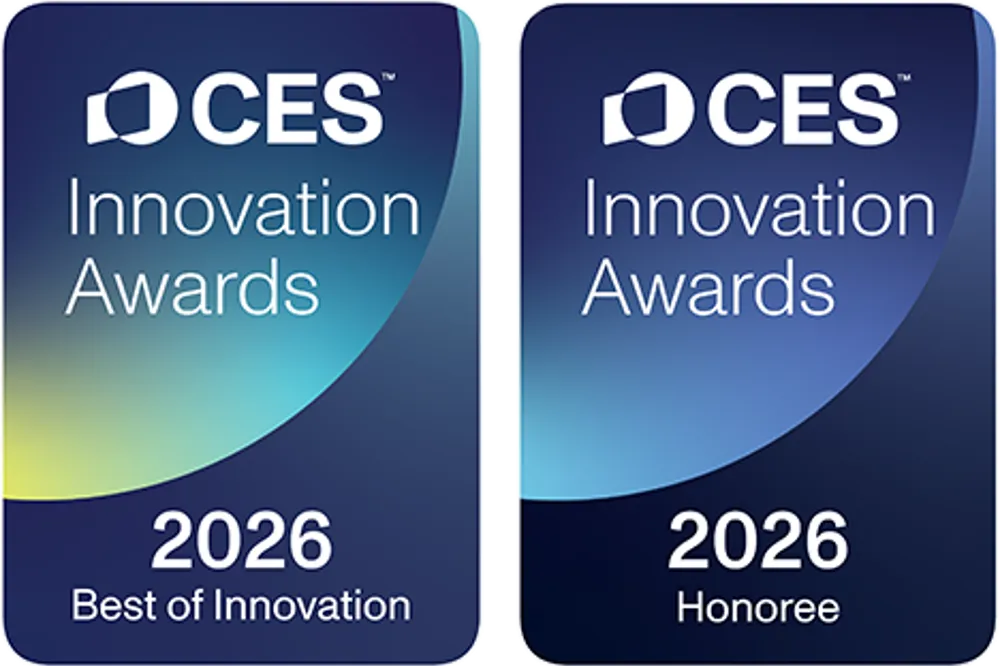 I'm once again pretty gobsmackingly happy to have been named a judge for the 2026 CES Innovation Awards, focusing on digital health, longevity, and fitness. Preceding every year's global conference, CES receives hundreds of applications from innovators around the world building tech-based solutions to big challenges. So glad to be part of this annual initiative to see what global health-tech pioneers are cooking up to address and scale the health and well-being of fellow health citizens, globally.
You can see the results of the Digital Health Awardees here on the #CES2026 website.
I'm once again pretty gobsmackingly happy to have been named a judge for the 2026 CES Innovation Awards, focusing on digital health, longevity, and fitness. Preceding every year's global conference, CES receives hundreds of applications from innovators around the world building tech-based solutions to big challenges. So glad to be part of this annual initiative to see what global health-tech pioneers are cooking up to address and scale the health and well-being of fellow health citizens, globally.
You can see the results of the Digital Health Awardees here on the #CES2026 website. Stay tuned to Health Populi in early January as I'll be attending Media Days and meeting with innovators in digital health, longevity, and the home-for-health during CES 2026 in Las Vegas. I'll be at the conference for an entire week meeting with clients and exhibitors at the biggest-meeting-of-the-year on consumer-facing technology. I'll be reporting daily from Vegas here in the blog, sharing with you insights about the latest breakthroughs, products, and services that enable people to manage health, well-being, and medical issues in their own hands and homes.
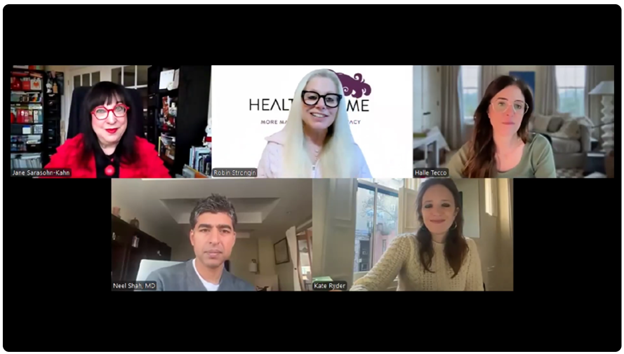 Jane collaborated on Robin Strongin's Health Dame webcast to discuss Halle Tecco's new book, Massively Better Healthcare, due out in early 2026. We brainstormed with Maven Founder Kate Ryder and the company's Chief Medical Officer Dr. Neel Shah about the state of U.S. healthcare and solutions not just to tweak at the margins but to "massively" improve health care delivery, financing, outcomes, and equity in America. It was a delightful, enlightening conversation -- I hope you'll check it out.