


Superconsumers and value mining: health care’s uber-trends driving care, everywhere
There’s a shift in power in health care moving away from providers and suppliers like pharma and medical device companies, toward patients and payers. This is the new health world according to Ernst & Young‘s latest Progressions report called, The third place: health care everywhere. What’s underneath this tectonic shift is the need to bend that stubborn cost curve and address public health outcomes through behavior change. E&Y says look for new entrants, like retailers, IT companies, and telecomms, to be part of the solution beyond traditional health care stakeholders. These participants will be part of both delivery of care
The economics of mHealth – incentives align more easily outside of U.S., but times (and incentives) are a’changing
A global analysis of mobile health (mHealth) by the Boston Consulting Group (BCG) for Telenor, the telecomms company, illustrates many forms of return-on-investment using mobile platforms in health: Improved quality of life for individuals and families A more educated society Lower absenteeism for employers, and Greater incomes for people. Together, these micro-benefits yield macro societal benefits such as freeing up (acute) health systems due to a lower burden of chronic care; positive impacts on people, labor participation, and productivity; and, long-term economic growth. BCG believes that, “the smartphone is the most popular technology among doctors since the stethoscope.” That phone can
Trust in doctors breeds trust in health IT – context-setting for patient engagement, HIMSS 2012
While the vast majority of people find value in electronic health records (EHRs) — both those whose doctors currently use them and those patients whose personal health information still resides in paper-based systems — most remain concerned about their patient rights, privacy and security of that data. Making IT Meaningful: How Consumers Value and Trust Health IT, a report based on a survey from the National Partnership for Women & Families (NPWF) published in February 2012, weaves the story of an American public, keen to have their PHI digitized, but deeply concerned about their rights to access and protect that
Connected Health: countries’ vary in their health IT connectedness, but US patients are ready, willing and welcoming EHRs
How electronically connnected and communicative are nations’ health information infrastructures? Accenture has answered that question in its report, Making the Case for Connected Health. Accenture built a “connected health maturity index,” analyzing a nation’s level of health information exchange among users along with their level of health IT adoption among specialists and primary care doctors. Adoption was defined across four HIT functions: administrative tools, electronic patient notes, electronic alerts/reminders, and computerized decision support systems. Health information exchange was defined across seven connectivity dimensions: electronic communications, e-notifications, e-referrals, e-access to clinical data about patients who see a different provider, e-prescribing, and
The digital future in focus, according to comScore: health grew fastest in 2011
comScore has issued its annual report on the state of the American digital consumer in U.S. Digital Future in Focus 2012 and the topline is that mobile and Facebook are redefining communication in both the digital and physical worlds. This disruptive phenomenon has transformational implications for health and health care. comScore’s macro observations are that: – Social networking, and especially Facebook, is capturing a growing proportion of online users’ time, thus redefining how brands and organizations must interact with customers offline and on-. – Google remains the search leader but Bing has grown, surpassing Yahoo! as #2 in 2011. –
The state of health IT in America: thinking about the Bipartisan Policy Center report on health IT
There are few issue areas within the Beltway of Washington, DC, that have enjoyed more support across the political aisle than health care information technology. In 2004, George Bush asserted that every American would/should have an electronic medical record by 2014. Since then, Democrats and Republicans alike have supported the broad concept of wiring the U.S. health information infrastructure. With the injection of ARRA stimulus funds earmarked in the HITECH Act to promote health providers’ adoption of electronic health records, we’re now on the road to Americans getting access to their health information electronically. It won’t be all or even
The Connected Consumer – she loves her iPad, and she’ll be able to Connect for Health
She’s likely to be female, Facebooking, smartphoning, and digitally shopping. She’s the Connected Consumer, and she’s a lot older than you might expect: on average, 40 years of age, and with a mean household income of $63,000. And Connected she is: in addition to having a PC or laptop computer, 43% have a smartphone, and 16%, a tablet. Meet the Connected Consumer is a report from Zmags, a digital design company. Zmags surveyed 1,500 U.S. adults in November 2012 who owned a tablet, a smartphone and/or a computer, asking people their views on shopping, apps and the digital lifestyle. Connected
On the road to retail health: healthcareDIY and primary care, everywhere
At the ConvUrgent Care Symposium in Orlando, attendees from the worlds of clinics, ambulatory care, hospital beds, pharmacies, medical devices, life sciences, health information, health IT, health plans, academic medical centers and professional medical societies came together to share and learn about the morphing landscape of retail health. The topline message: primary care is everywhere, and based on the response to my keynote talk this morning, every stakeholder segment gets it. My mantra, courtesy of the U.S. Surgeon General Regina Benjamin: don’t look at health in isolation, that is, where the doctor and hospital are. Health happens wherever the person
Stop SOPA
Health Populi’s Hot Points: Please stop censorship in the United States of America. Click on this hyperlink to easily contact your Congressional representatives and express your opinion on SOPA and PIPA – two laws that would limit basic freedom in the marketplace of ideas and commerce.
Hey, Big Spender: 1% of US health citizens consume 20% of costs
Cue up the song “Hey Big Spender” from the Broadway hit, Sweet Charity, when you read the January 2012 AHRQ report with the long-winded title, The Concentration and Persistence in the Level of Health Expenditures over Time: Estimates for the U.S. Population, 2008-2009.” The report’s headline is that 1% of the U.S. population consumed 20% of all health costs spent in the U.S. in 2008 and 2009, illustrated by the chart. These Big Health Spenders tend to be in poor or fair health, older, female, non-Hispanic whites and people with only publicly-provided health insurance. Their mean expenditure was $90,061. The top 10%
Health IT in 2012: a dynamic sector in the context of a fiscally-challenged health system
2012 will be a dynamic year for health information technology (health IT) in the U.S., which I outline in my annual health IT forecast in iHealthBeat, the online publication on technology and health care published by the California HealthCare Foundation. The full forecast can be found here. The key headlines for you Reader’s Digest abridged fans are that: The Health IT sector will continue to grow jobs in the ongoing Great Depression, particularly in key competencies in data security, analytics, integration, and EHR implementation. There will be more data breaches, and consumers will be justifiably concerned about data security. Government will more consistently
UK finds telehealth reduces mortality by 45%; telehealth’s tipping point in 2012
As we approach 2012, we health prognosticators like to forecast what we’ll likely see in 2012. One of the for-certain trends will be the uptake of telehealth programs, which will be publicly, privately, and jointly-funded. The business case is clear for telehealth, both in the U.S. and globally. Jon Linkous, CEO of the American Telemedicine Association, told the mHealth Summit last week that, the “shift in the way healthcare is paid will put providers in driver’s seat when it comes to choosing the best way to deliver healthcare and whether or not to use telemedicine.” The forces are converging for telehealth
Designing health technology for people at home
The Internet, broadband, mobile health platforms, and consumers’ demand for more convenient health care services are fueling the development and adoption of health technologies in peoples’ homes. However, designing products that people will delight in using is based on incorporating human factors in design. Human factors are part of engineering science and account for the people using the device, the equipment being used, and the tasks the people are undertaking. The model illustrates these three interactive factors, along with the outer rings of environments: health policy, community, social, and physical. Getting these aspects right in the design of health technologies meant for
Primary care, everywhere: how the shortage of PCPs is driving innovation – especially for patient participation in their own care
The signs of the primary care crisis in America are visible: A growing number of visits to the emergency room for treating commonplace ailments Waiting lists for signing up with and queuing lines to see primary care doctors Fewer med students entering primary care disciplines Maldistribution of primary care practitioners (PCPs) in underserved areas, rural, exurban and urban. The implementation of the Affordable Care Act will (try to) enroll at least 30 million newly-insured health citizens into the U.S. health system. That’s the objective: whether being insured will actually provide people access to needed primary care is a big question given the current supply of
Consumer electronics comes to health care — but don’t overestimate consumer demand just yet
More people with higher levels of concern about their health feel they are in good health, see their doctors regularly for check-ups, take prescription meds “exactly” as instructed, feel they eat right, and prefer lifestyle changes over using medicines. And 40% of these highly-health-concerned people have also used a health technology in the past year. At the other end of the spectrum are people with low levels of health concern: few see the doctor regularly for check-ups, less than one-half take their meds as prescribed by their doctors, only 31% feel they eat right, and only 36% feel they’re in
Tech fast forward families are ripe for health care self-care
Kids lead their parents in the adoption of digital technologies; that’s why the youngers are called Digital Natives. An intriguing survey of adults’ use of technologies finds that those who do so like “childlike play,” and at the same time, for kids, make them feel more grown up. The trend, Ogilvy says, is blurring generational lines: market to adults as kids, and kids as adults. This convergence is leading families to become more “units” — parents and kids increasingly on the same page in purchase decisions. In Tech Fast Forward: Plug in to see the brighter side of life, from
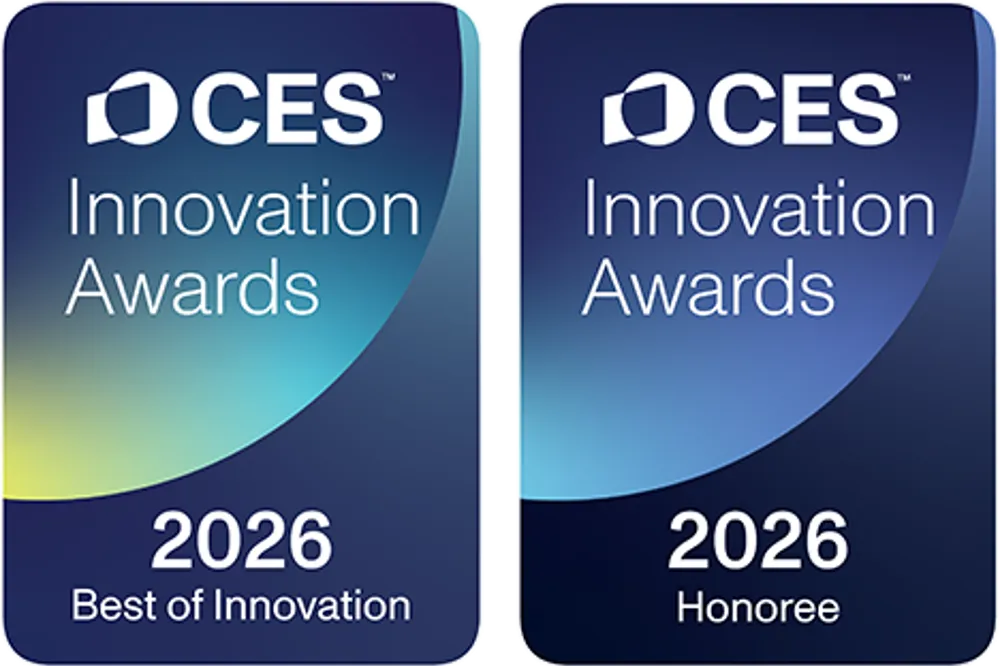 I'm once again pretty gobsmackingly happy to have been named a judge for the 2026 CES Innovation Awards, focusing on digital health, longevity, and fitness. Preceding every year's global conference, CES receives hundreds of applications from innovators around the world building tech-based solutions to big challenges. So glad to be part of this annual initiative to see what global health-tech pioneers are cooking up to address and scale the health and well-being of fellow health citizens, globally.
You can see the results of the Digital Health Awardees here on the #CES2026 website.
I'm once again pretty gobsmackingly happy to have been named a judge for the 2026 CES Innovation Awards, focusing on digital health, longevity, and fitness. Preceding every year's global conference, CES receives hundreds of applications from innovators around the world building tech-based solutions to big challenges. So glad to be part of this annual initiative to see what global health-tech pioneers are cooking up to address and scale the health and well-being of fellow health citizens, globally.
You can see the results of the Digital Health Awardees here on the #CES2026 website. Stay tuned to Health Populi in early January as I'll be attending Media Days and meeting with innovators in digital health, longevity, and the home-for-health during CES 2026 in Las Vegas. I'll be at the conference for an entire week meeting with clients and exhibitors at the biggest-meeting-of-the-year on consumer-facing technology. I'll be reporting daily from Vegas here in the blog, sharing with you insights about the latest breakthroughs, products, and services that enable people to manage health, well-being, and medical issues in their own hands and homes.
 Jane collaborated on Robin Strongin's Health Dame webcast to discuss Halle Tecco's new book, Massively Better Healthcare, due out in early 2026. We brainstormed with Maven Founder Kate Ryder and the company's Chief Medical Officer Dr. Neel Shah about the state of U.S. healthcare and solutions not just to tweak at the margins but to "massively" improve health care delivery, financing, outcomes, and equity in America. It was a delightful, enlightening conversation -- I hope you'll check it out.