


Doctors become health economists
The rising costs of health care in America, and consumers’ growing cost burdens, has many impacts on the U.S. health ecosystem. In particular, patients have been self-rationing due to costs, without necessarily paying attention to quality or medical outcomes. Doctors have begun to pay more attention to costs and their impacts on patients in their practices, addressed in today’s New York Times article, Treatment costs could influence doctors’ advice to patients. Andrew Pollack writes in the Times about the morphing role of doctors, some of whom are taking on the mantle of being a “steward of society,” as characterized by
Affordable medicine: a preferred future
The price of medicines is a barrier for about one billion people on the planet, for citizens in developing countries as well as middle-class families in the richest country in the world, the United States. Today is World Health Day, when for 24 hours public health advocates (including me) are calling out key issues preventing people from fully living life. One obstacle for too many people is the cost of drugs and supplies that save lives and help people add life to years. For example, bug bites can be deadly if you’re talking about the 50% of the world’s population
The New Chief Patient Officer
There’s a new member in the C-suite in health care, and her name is the Chief Patient Officer (CPO). That new role in health-town is filled by Dr. Anne Beal, appointed by Sanofi, the global biopharma company, to fill this new job description. Here she is, shaking hands with Colin Powell in one of the many awards ceremonies where Dr. Beal’s work in public health has been lauded. But what is a CPO? Because it’s a new job, Dr. Beal can create the role, at least within the environment and mission of Sanofi and the larger life sciences world. Some
Health care in a multiscreen world
In 2014, we are digital omnivores. Most people “consume” information and entertainment on more than one screen: 7 hours’ worth over a 5-hour period. You read that right: most people who watch TV, use a laptop or PC, smartphone or tablet are multitasking use of these devices in parallel. And above all, people are using smartphones as their primary screen. The AdReaction: Marketing in a multiscreen world report from Millward Brown paints a picture of global consumers who are cobbling together multiscreen experiences. The smartphone has become the “do it all” device if you don’t carry a laptop or tablet around, especially favored
HIMSS14 Monday Morning Quarterback – The Key Takeaways
Returning to terra firma following last week’s convening of the 2014 annual HIMSS conference…taking some time off for family, a funeral, the Oscars, and dealing with yet another snowstorm…I now take a fresh look back at #HIMSS14 at key messages. In random order, the syntheses are: Healthcare in America has entered an era of doing more, with less...and health information technology is a strategic investment for doing so. The operational beacon going forward is moving toward The Triple Aim: building population health, enhancing the patient’s experience, and lowering costs per patient. The CEO of Aetna, Mark Bertolini, spoke of the
Watson goes wellness
IBM’s data analytics engine Watson, having cut its teeth on complex health care conditions like cancer, is now entering an even more challenging space: wellness. Why is wellness more challenging? Because understanding a person’s wellness goes beyond mining data from health care claims silos in hospitals, pharmacies, and physicians’ electronic health records. Wellness happens where we live, work, play and pray. Wellness is nurtured through choices made every day at home, in the workplace, and at moments-of-truth in the grocery store and restaurant where slick marketing messages planted in our subconscious compete with our more rational minds that tell us to
U.S. families face medical financial burdens; health care in the SOTU
A growing proportion of American families are facing money problems related to health care, according to the report, Financial Burden of Medical Care: A Family Perspective, No. 142 in the NCHS Data Brief series from the CDC, published January 2014 and based on 2012 data. 1 in 4 families are dealing with some financial burden due to medical care. “Financial burdens” in health include problems paying medical bills in the past 12 months, shared by 16.5% of families; and medical bills being paid over time, faced by 21.4% of families. 1 in 10 families (9%) have medical bills they are
Food and money matter for health – more hospital admissions at the end of the month
If your wallets are lighter at the end of the month, you’re likely to have less access to quality food, and more likely to be admitted to the hospital if you have diabetes. The hypothesis that people with low incomes whose household budgets are spent before the end of the month have greater health inequities was tested in the article, Exhaustion of Food Budgets At Month’s End And Hospital Admissions For Hypoglycemia, published in the January 2014 issue of Health Affairs. Researchers from the University of California – San Francisco found that, indeed, the health in households with low-income suffer from
Schizo about smoking
There’s truly good news for public health about smoking: January 11th marked the 50th anniversary of the U.S. Surgeon General’s Report on Smoking and Health. That’s five decades’ worth of progress raising peoples’ awareness about the toxic impact of nicotine and chemicals embodied in cigarettes, and deleterious impacts on health and the economy. As a result, smoking rates have been cut in half since 1964, as the downward-sloping graph illustrates. With that happy news in my subconscious, I took a long walk, tracked by my digital device, through the Venetian Hotel in Las Vegas last week, bound for the 2014 Consumer Electronics
Health Care Everywhere at the 2014 Consumer Electronics Show
When the head of the Consumer Electronics Association gives a shout-out to the growth of health products in his annual mega-show, attention must be paid. The #2014CES featured over 300 companies devoted to “digital health” as the CEA defines the term. But if you believe that health is where we live, work, play, and pray, then you can see health is almost everywhere at the CES, from connected home tech and smart refrigerators to autos that sense ‘sick’ air and headphones that amplify phone messages for people with hearing aids, along with pet activity tracking devices like the Petbit. If
Investing in technology that lowers health costs – the growing role of mobile
At the Venture+ Forum at the 2013 Mobile Health Summit yesterday, Lisa Suennen, Managing Director of Psilos Ventures was asked what she and her venture capital fund look for in choosing new investments for their health care portfolio. She succinctly said, “technologies that lower costs.” With nearly $1 in $5 of the U.S. economy attributable to health spending, Lisa’s got a point. Technology in U.S. health care has been mostly additive and expense-inducing, not reducing: fax machines and printers, for example, continue to proliferate in health care settings as part of “networking,” and once you add a new clinical technology
Mobile health apps – opportunity for patients and doctors to co-create the evidence
There are thousands of downloadable apps that people can use that touch on health. But among the 40,000+ mobile health apps available in iTunes, which most effectively drive health and efficient care? To answer that question, the IMS Institute for Healthcare Informatics analyzed 43,689 health, fitness and medical apps in the Apple iTunes store as of June 2013. These split into what IMS categorized as 23,682 “genuine” health care apps, and 20,007 falling into miscellaneous categories such as product-specific apps, fashion and beauty, fertility, veterinary, and apps with “gimmicks” (IMS’s word) with no obvious health benefit. Among the 23,682 so-called
Delaying aging to bend the cost-curve: balancing individual life with societal costs
Can we age more slowly? And if so, what impact would senescence — delaying aging — have on health care costs on the U.S. economy? In addition to reclaiming $7.1 trillion over 50 years, we’d add an additional 2.2 years to life expectancy (with good quality of life). This is the calculation derived in Substantial Health And Economic Returns From Delayed Aging May Warrant A New Focus For Medical Research, published in the October 2013 issue of Health Affairs. The chart graphs changes in Medicare and Medicaid spending in 3 scenarios modeled in the study: when aging is delayed, more people qualify
Economics of obesity and heart disease: We, the People, can bend the curves
The “O” word drives health costs in America ever-upward. Without bending the obesity curve downward toward healthy BMIs, America won’t be able to bend that stubborn cost curve, either. The Economic Impacts of Obesity report from Alere Wellbeing accounts for the costs of chronic diseases and how high obesity rates play out in the forms of absenteeism, presenteeism, and direct health care costs to employers, workers and society-at-large. Among the 10 costliest physical health conditions, the top 3 are angina, hypertension and diabetes — all related to obesity and amenable to lifestyle behavior change. The top-line numbers set the context:
7 Women and 1 Man Talking About Life, Health and Sex – Health 2.0 keeping it real
Women and binge drinking…job and financial stress…sleeplessness…caregiving challenges…sex…these were the topics covered in Health 2.0 Conference’s session aptly called “The Unmentionables.” The panel on October 1, 2013, was a rich, sobering and authentic conversation among 7 women and 1 man who kept it very real on the main stage of this mega-meeting that convenes health technology developers, marketers, health providers, insurers, investors, patient advocates, and public sector representatives (who, sadly, had to depart for Washington, DC, much earlier than intended due to the government shutdown). The Unmentionables is the brainchild of Alexandra Drane and her brilliant team at the Eliza
Health care and survey taking at the Big Box Store
Where can you shop the health and beauty aisles, pick up some groceries and a prescription, get a flu vaccine, and weigh in on Obamacare and what digital health tools you like? Why, at one of several thousand retail stores where you can find a SoloHealth kiosk. As of yesterday afternoon, over 32 million encounters were recorded on SoloHealth kiosks, based on an app I saw on the company CEO Bart Foster’s smartphone. Kiosks are locatted around the United States in retailers including Walmart and Sam’s Clubs, along with major grocery chains like Schnuck’s and Publix, and the CVS pharmacy
Taking vitamins can save money and impact the U.S. economy – and personal health
When certain people use certain dietary supplements, they can save money, according to a report from the Council for Responsible Nutrition and Frost and Sullivan, the analysts. The report is aptly titled, Smart Prevention – Health Care Cost Savings Resulting from the Targeted Use of Dietary Supplements. Its subtitle emphasizes the role of dietary supplements as a way to “combat unsustainable health care cost growth in the United States.” Specifically, the use of eight supplements in targeted individuals who can most benefit from them can save individuals and health systems billions of dollars. The eight money-saving supplements are: > Omega-3 > B
People not up-close-and-personal about personalized medicine…yet
Only 1 in 4 U.S. adults over 30 know what “personalized medicine” (PM) really is, and only 8% of people feel very knowledgeable about the concept based on Consumer Perspectives on Personalized Medicine from GfK, published online in August 2013. GfK surveyed 602 online adults 30 years and over between February and March 2013 drawn from the company’s KnowledgePanel sample of U.S. adults. Only 4% of people who have heard of personalized medicine describe it accurately as “medicine based on genome/genetic make up.” About one-half of people (52%) defined PM as medical care, treatment, or medicine geared toward individual needs. The poll
Chief Health Officers, Women, Are In Pain
Women are the Chief Health Officers of their families and in their communities. But stress is on the rise for women. Taking an inventory on several health risks for American women in 2013 paints a picture of pain: of overdosing, caregiver burnout, health disparities, financial stress, and over-drinking. Overdosing on opioids. Opioids are strong drugs prescribed for pain management such as hydrocodone, morphine, and oxycodone. The number of opioid prescriptions grew in the U.S. by over 300% between 1999 and 2010. Deaths from prescription painkiller overdoses among women have increased more than 400% since 1999, compared to 265% among men.
Eat fruits and vegetables: it’s worth $11 trillion to you and the U.S. economy
More than 127,000 people die every year in America from cardiovascular disease, accruing $17 billion in medical spending. Heart disease is a “costly killer,” according to the Union of Concerned Scientists, who has calculated The $11 trillion reward: how simple dietary changes can save lives and money, and how we get there, published in August 2013. That $11 trillion opportunity is equal to the present value of lives saved. The solution to bolstering heart (and overall health) and saving money (medical spending and personal productivity) is in food. We’re not talking about genetically engineering anything special or out-of-the-ordinary. We are talking
10 Reasons Why ObamaCare is Good for US
When Secretary Sebelius calls, I listen. It’s a sort of “Help Wanted” ad from the Secretary of Health and Human Services Kathleen Sebelius that prompted me to write this post. The Secretary called for female bloggers to talk about the benefits of The Affordable Care Act last week when she spoke in Chicago at the BlogHer conference. Secretary Sebelius’s request was discussed in this story from the Associated Press published July 25, 2013. “I bet you more people could tell you the name of the new prince of England than could tell you that the health market opens October 1st,” the
Healthways buys into Dr. Ornish’s approach: will “Ornish-inside” scale wellness in America?
People who live in U.S. cities with low levels of well-being have twice the rate of heart attacks as people who live in healthier America. That’s 5.5% of the population in sicker America versus 2.8% of the population living in healthy America. The first chart illustrates this disparity, taken from the Gallup-Healthways index that examined 190 metropolitan areas in 2012. Based on this study, it’s good to live in parts of Utah, Nebraska and Colorado, but not so healthy to be a resident in West Virginia, Alabama, and parts of Kentucky and Ohio. Heart disease and diabetes are killing a plurality
Google, your new-tritionist
Your new-nutritionist is now Google, which launched a nutrition utility through Google Search. “From the basics of potatoes and carrots to more complex dishes like burritos and chow mein, you can simply ask, ‘How much protein is in a banana?’ or ‘How many calories are in an avocado?’ and get your answer right away,” the official Google Search blog explains. Over 1,000 items – fruits, vegetables, meats, dairy items, and prepared meals like Chinese and Mexican take out, as mentioned in Google’s quote above – are searchable via web and mobile, powered by Google’s Knowledge Graph. The Knowledge Graph is the
Cost prevents people from seeking preventive health care
3 in 4 Americans say that out-of-pocket costs are the main reason they decide whether or not to seek preventive care, in A Call for Change: How Adopting a Preventive Lifestyle Can Ensure a Healthy Future for More Americans from TeleVox, the communications company, published in June 2013. TeleVox surveyed over 1,015 U.S. adults 18 and over. That’s the snapshot on seeking care externally: but U.S. health consumers aren’t that self-motivated to undertake preventive self-care separate from the health system, either, based on TeleVox’s finding that 49% of people say they routinely exercise, and 52% say they’ve attempted to improve eating habits.
Driving innovation in health through the use of open data: Health Datapalooza, Year 4
In the $3 trillion economy that is American health care, the role of information technology is central to transforming this huge piece of U.S. fiscal activity. This week convened the fourth annual Health Datapalooza (HDP) in Washington DC, with the underlying theme, “health engagement is the blockbuster drug of the 21st century” (quoting Leonard Kish). This meeting of over 2,000 registrants – huge growth from the first year’s 400 attendees — is organized by the Health Data Consortium (HDC) , whose CEO Dwayne Spradlin kicked off remarks on Day 2 of HDP4. He described the HDC, a public-private collaboration led
The role of internet technologies in reducing health care costs: Meeker inspirations
Tablets, wearables, smartphones, video and QR codes: these are fast-growing platforms moving data around the global economy. They’re also fast=growing platforms for health care where we live, work, play and pray. Mary Meeker’s annual presentation on Internet Trends at the D11 Conference, is fresh off the virtual press in its shiny new 2013 version. Meeker has been with the investment firm Kleiner Perkins Caulfield Byers (KPCB) since 2011, and was with Morgan Stanley from 1991 to 2010. She’s a veteran who’s watched the Internet basically from The Beginning. Of the 117 slides in her informative, gargantuan deck (a Meeker hallmark every
The health and wellness gap between insured and uninsured people
If you have health insurance, chances are you take several actions to bolster your health such as take vitamins and supplements (which 2 in 3 American adults do), take medications as prescribed (done by 58% of insured people), and tried to improve your eating habits in the past two years (56%). Most people with insurance also say they exercise at least 3 times a week. Fewer people who are uninsured undertake these kinds of health behaviors: across-the-board, uninsured people tend toward healthy behaviors less than those with insurance. This is The Prevention Problem, gleaned from a survey conducted by TeleVox
Marketing Digital Health to Mom 2.0 on Mother’s Day 2013
Mainstream media, both print and online, peppered their 2013 Mother’s Day gift suggestions including pod coffeemakers, bangle bracelets, candy-colored accessories and digital health devices. Say, what? In Parade magazine, Mother’s Day 2013 gift ideas included the Fitbit “smart pedometer,” linked to a “buy” site at REI. You can’t get much more mainstream than Parade. In Entertainment Weekly, Bronwyn Barnes, style maven for the magazine, wrote a one-page “Get Ready for Mom 2.0” and her recommendations included the Pebble Smartwatch, the Jawbone Up wristband, and the HoodieBuddie with earbuds built into the drawstrings. Men’s Health told sons and husbands to check
A physical activity shortage: Let’s Move!
Only 1 in 5 Americans got the minimum recommended amount of physical activity in 2011, based on guidelines offered by the U.S. Centers for Disease Control. More men than women met the standard: 23.4% of men versus 17.9% of women. There are wide variations across the 50 states, as the map shows, with the healthiest folks exercise-wise living in the west, Alaska, upper midwest, and New England. The range runs from a 12.7% low in West Virginia and Tennessee to 27.3 at the high end in Colorado. That bar is set at 150 minutes a week (that’s 2.5 hours) of
FDA goes DTP(atient)
The Food & Drug Administration (FDA) launched its new website for and about patients, the Patient Network, with the tagline, “Bringing your voice to drug and device approval and safety.” With this move, the FDA moves toward social health, someplace where at least one-third of U.S. consumers already opine, shop, share personal info, crowdsource cures, and support each other on all-matters-health-and-illness. The objective of the Patient Network is, “to help FDA help patients have a bigger voice.” Dr. Margaret Hamburg, the Commissioner of the FDA, talks about the concept here. The rationale? “When patients better understand the intricacies of how
Food = Health for employers, hospitals, health plans and consumers
Food is inextricably bound up with health whether we are well or not. Several key area of the Food=Health ecosystem made the news this week which, together, will impact public and personal health. On the employer health benefits front, more media are covering the story on CVS strongly incentivizing employees to drop body mass index (BMI) through behavioral economics-inspired health plan design of a $50 peer month penalty. Michelin, whose bulky advertising icon Bibendum has more than one “spare tire,” introduced a program to combat health issues, including but not limited to BMI and high blood pressure, according to the
The value of big data in health care = $450 billion
Exploiting Big Data in industry is Big News these days, and nowhere is the potential for leveraging the concept greater than in health care. McKinsey & Company estimates that harnessing big data across five dimensions of health care could yield nearly one-half trillion dollars’ worth of value in The ‘big data’ revolution in healthcare. The chart summarizes McKinsey’s calculations on the value of Big Data in health care at its maximum. Before digging into the value potential, just what is Big Data in health care? Statistics and information are generated in the health care system about patients: say, during visits
Walgreens Steps with Balance program rewards both consumers and the store
Consumers who patronize Walgreens can get rewarded for tracking their physical activity For the Steps with Balance program kickoff, self-tracking consumers can earn 20 points for every mile walked or run and 20 points for tracking weight. Walgreens implemented the Walk with Walgreens program in 2012. The program won an Effie Award for an outstanding marketing program. With the success of Walk with Walgreens, the retail pharmacy company has expanded the program beyond simple steps to include weight tracking and health goals for earning loyalty points. The program enables a few of the most popular self-tracking devices to sync so
The Not-So-Affordable Care Act? Cost-squeezed Americans still confused and need to know more
While health care cost growth has slowed nationally, most Americans feel they’re going up faster than usual. 1 in 3 people believe their own health costs have gone up faster than usual, and 1 in 4 feel they’re going out about “the same amount” as usual. For only one-third, health costs feel like they’re staying even. As the second quarter of 2013 begins and the implementation of the Affordable Care Act (ACA, aka “health reform” and “Obamacare”) looms nearer, most Americans still don’t understand how the ACA will impact them. Most Americans (57%) believe the law will create a government-run health plan,
An American Nanny State? Most Americans support government tactics addressing lifestyle impacts on chronic disease
Most people like government policies targeting reducing tobacco use, requiring food manufacturers and restaurants to reduce salt content, and mandating schools to require 45 minutes of daily activity for students. A large majority of Americans (at least 8 in 10 people) support government actions to promote public health that stem chronic disease, from preventing cancer (89%) and heart disease (86%) to helping people control their diabetes (84%) and preventing childhood obesity (81%). A Survey Finds Public Support For Legal Interventions Directed At Health Behavior To Fight Noncommunicable Disease (NCD). This poll, published in the March 2013 issue of Health Affairs, profiles the
Arianna and Lupe and Deepak and Sanjay – will the cool factor drive mobile health adoption?
Digital health is attracting the likes of Bill Clinton, Lupe Fiasco, Deepak Chopra, Dr. Sanjay Gupta, Arianna Huffington, and numerous famous athletes who rep a growing array of activity trackers, wearable sensors, and mobile health apps. Will this diverse cadre of popular celebs drive consumer adoption of mobile health? Can a “cool factor” motivate people to try out mobile health tools that, over time, help people sustain healthy behaviors? Mobile and digital health is a fast-growing, good-news segment in the U.S. macroeconomy. The industry attracted more venture capital in 2012 than other health sectors, based on Rock Health’s analysis of the year-in-review. Digital health
The Sitting Disease: health is growing at SXSW
If it’s March, it must be time for South by Southwest (SXSW), the annual conference weaving music, film and interactive tracks of speakers and conferees that overcrowds and excites Austin, Texas, with a cool vibe and even cooler ideas. I’ll be participating on Sunday 10 March 2013 at 5 pm on a panel, Sitting Will Kill You: Can Mobile Save Us?, featuring Fran Melmed, developer of the HotSeat app that nudges us to all Get Up Offa Our Things when living our typical sedentary lives; Peter Katzmarzyk, public health researcher who knows all about the relationship between too much sitting
Bill Clinton’s public health, cost-bending message thrills health IT folks at HIMSS
In 2010, the folks who supported health care reform were massacred by the polls, Bill Clinton told a rapt audience of thousands at HIMSS13 yesterday. In 2012, the folks who were against health care reform were similarly rejected. President Clinton gave the keynote speech at the annual HIMSS conference on March 6, 2013, and by the spillover, standing-room-only crowd in the largest hall at the New Orleans Convention Center, Clinton was a rock star. Proof: with still nearly an hour to go before his 1 pm speech, the auditorium was already full with only a few seats left in the
Eric Topol creatively destroys medicine at #HIMSS13
Wearing his Walking Gallery jacket painted by (im)patient advocate, Regina Holliday, Dr. Eric Topol evangelized the benefits of digital medicine and consumer empowerment in health care, largely summarizing his epic (pun intended – wait for Hot Point, below) book, The Creative Destruction of Medicine. A founder of the West Wireless Health Institute (now known as West Health), Dr. Topol is a physician and researcher at Scripps and was recently named as editor at Medscape. A new piece of Topol Trivia for me is that GQ magazine called him a rock star of science. Dr. Topol is one of the more
A health economics lesson from Jonathan Bush, at the helm of athenahealth
At HIMSS13 there are the equivalent of rock stars. Some of these are health system CIOs and health IT gurus who are driving significant and positive changes in their organizations, like Blackford Middleton, Keith Boone, Brian Ahier, and John Halamka. Others are C-level execs at health IT companies. In this latter group, many avoid the paparazzi (read: health trade reporters) and stay cocooned behind closed doors in two-story pieces of posh real estate on the exhibition floor. A few walk the floor, shake hands with folks, and take in the vibe of the event. We’ll call them open-source personalities. The
Managing the abundance of mHealth apps in the urban flea market
The proliferation of mobile health (mHealth) apps appears to be an abundant cornucopia of “lite” tools that look simple to access and easy to use. But this growing menu of a la carte choices that promise to keep us healthy, track our numbers, and access useful health information can also, in the words of three Dutch health researchers, “drive us crazy.” Why mobile health app overload drives us crazy, and how to restore the sanity, by Lex van Velsen and colleagues, makes the case that the plethora of mHealth apps available in online app stores is a fragmented, disorganized marketplace
Dark chocolate as health food – a healthy salute to Valentine’s Day
On a recent Whole Living segment on Martha Stewart’s Sirius XM radio channel, I learned of the artisan chocolatier, Gnosis. The company, whose name is Greek for “knowledge,” grew out of the kitchen of a holistic health counselor, Vanessa Berg, who began to make nutritionally-infused sweets for her private clientele. Word-of-mouth made its way to a buyer from Whole Foods, who subsequently did a deal with Berg to sell Gnosis goods in some of the company’s stores in New Jersey and New York. Here’s a link to the radio interview. Chocolate is a health food for this company, and for
Americans are first in un-health: the US health disadvantage
In the U.S., we’ll be the #1 oil producer by 2020. We’re the largest national economy in the world (to be surpassed by China before 2030). And, we’re #1 in terms of the lowest taxes paid as a percentage of national GDP. That’s all heartening news for the time being. But we’re also #1 in what I’ll call “un-health:” in auto accident mortality for adolescents, obesity rates, infant mortality, prevalence of sexually transmitted diseases, and among other public health metrics. A report from the National Research Council and Institute of Medicine (NRC/IOM) calls out what JAMA terms The US Health Disadvantage:
The more engaged a patient is, the lower their costs
There are many ways to measure and express “patient engagement.” One such metric is “patient activation,” innovated by Dr. Judith Hibbard, long affiliated with the University of Oregon. Dr. Hibbard has written extensively about the Patient Activation Measure, PAM, first described in 2004. She and a team of researchers have determined that the higher a patient’s PAM score, the lower their health costs. Hibbard et. al. published these findings in the February 2013 issue of Health Affairs, which is entirely devoted to patient engagement – a top topic in Health Populi. The team analyzed the medical records of 33,163 patients
The flu shot economy
4 in 10 Americans got flu shots in this epidemic season, and most of these didn’t receive their immunization in their doctor’s office. The Flu Vaccination Survey from Ipsos Public Affairs, conducted in January 2013, paints a picture of U.S. health consumers who are project managing their personal approaches to preventing the flu in this historically hard-hitting flu season. The most expressed demand for flu shots has been among people 55 and over, one-half of whom have received vaccinations, with the lowest use been in the 25-35 year age group. Geographically, the most covered health citizens live in New England
Butter over guns in the minds of Americans when it comes to deficit cutting
Americans have a clear message for the 113th Congress: I want my MTV, but I want my Medicare, Medicaid, Social Security, health insurance subsidies, and public schools. These budget-saving priorities are detailed in The Public’s Health Care Agenda for the 113th Congress, conducted by the Kaiser Family Foundation, Robert Wood Johnson Foundation, and the Harvard School of Public Health, published in January 2013. The poll found that a majority of Americans placed creating health insurance exchanges/marketplaces at top priority, compared with other health priorities at the state level. More people support rather than oppose Medicaid expansion, heavily weighted toward 75%
Think about health disparities on Martin Luther King Day 2013
On this day celebrating Martin Luther King, Jr., I post a photo of him in Detroit in 1963, giving a preliminary version of his “I Have a Dream” speech he would give two months later in Washington, DC. As I meditate on MLK, I think about health equity. By now, most rational Americans know the score on the nation’s collective health status compared to other developed countries: suffice it to say, We’re Not #1. But underneath that statistic is a further sad state of health affairs: that people of color in the U.S. have lower quality of health than white
Health and consumer spending may be flat, but consumers hard hit due to wage stagnation & self-rationing
There’s good news on the macro-health economics front: the growth rate in national health spending in the U.S. fell in 2011, according to an analysis published in Health Affairs January 2013 issue. Furthermore, this study found that consumers’ spending on health has fallen to 27.7% of health spending, down from 32% in 2000, based on three spending categories: 1. Insurance premiums through the workplace or self-paid 2. Out-of-pocket deductibles and co-pays 3. Medicare payroll taxes. A key factor driving down health spending is the growth of generic drug substitution for more expensive Rx brands. Generics now comprise 80% of prescribed
We are all health deputies in the #digitalhealth era: live from the 2013 Consumer Electronic Show
Reed Tuckson of UnitedHealthGroup was the first panelist to speak at the kickoff of the Digital Health Summit, the fastest-growing aspct of the 2013 Consumer Electronics Show (#2013CES). Tuckson implored the spillover audience to all, “self-deputize as national service agents in health,” recognizing that technology developers in the room at this show that’s focused on developers building Shiny New Digital Things have much to bring to health. As Andrew Thompson of Proteus Medical (the “invisible pill” company) said, “we can’t bend the health care cost curve; we have to break it.” This pioneering panel was all about offering new-new technologies
Americans #1 health care priority for the President: reduce costs
Reducing health care costs far outranks improving quality and safety, improving the public’s health, and upping the customer experience as Americans’ top priority for President Obama’s health care agenda, according to a post-election poll conducted by PwC’s Health Research Institute. In Warning signs for health industry, PwC’s analysis of the survey results, found that 7 in 10 Americans point to the high costs of health care as their top concern in President Obama’s second term for addressing health care issues. Where would cost savings come from if U.S. voters wielded the accountant’s scalpel? The voters have spoken, saying, Reduce payments
Most smartphone owners seek health information online via mobile
The ubiquity of mobile phones, increasingly smart ones (one-half of all mobile phones in the U.S. ), means people are walking around, working, playing and driving with self-tracking devices and ultra-mini computers in their pockets and totebags. 52% of smartphone owners seek health information on their phones, and overall 1 in 3 people seek health information on all mobile phones — nearly doubling the percent of those seeking health info via mobile in 2010 (17%). People who are sicker, caregivers, and those who have had a big change in health are also more prone to using phones for health, as
The 3 cliffs of health care
As I prepare remarks to present a talk about health reform and the pharmaceutical market landscape for tomorrow, Election Day, it struck me that the health industry is now facing 3 Cliffs: the patent cliff, the health care cost cliff, and the Fiscal Cliff. The patent cliff represents about $290 billion worth of sales losses to the pharmaceutical industry between 2012 and 2018. The first chart illustrates that dramatic slope downward, with this year, 2012, being the height of patent losses for the industry. EvaluatePharma, a UK consultancy, says that falling revenue for a pharma is usually a precursor to
Wired health: living by numbers – a review of the event
Wired magazine, longtime evangelist for all-things-tech, has played a growing role in serving up health-tech content over the past several years, especially through the work of Thomas Goetz. This month, Wired featured an informative section on living by numbers — the theme of a new Wired conference held 15-16 October 2012 in New York City. This feels like the week of digital health on the east coast of the U.S.: several major meetings have convened that highlight the role of technology — especially, the Internet, mobile platforms, and Big Data — on health. Among the meetings were the NYeC Digital Health conference, Digital
Food and health update: candy at the cash register and farmers markets in supermarkets
Grocery stores are incorporating farmers market-like shelves into produce departments, offering shoppers locally grown fruits and vegetables. Kraft Foods is reinventing itself as a health brand, with Consumers are shifting away from white starchy breakfast foods toward beans and greens. These are a few of the food-meets-health trends from the past quarter that reflect how American health citizens are incorporating new food habits into overall health behaviors. Let’s begin with the October 11, 2012, issue of The New England Journal of Medicine, which focuses on obesity, food, and health policy. Along with an excellent overview of Obama v. Romney
From fragmentation and sensors to health care in your pocket – Health 2.0, Day 1
The first day of the Health 2.0 Conference in San Francisco kicked off with a video illustrating the global reach of the Health 2.0 concept, from NY and Boston to Mumbai, Madrid, London, Tokyo and other points abroad. Technology is making the health world flatter and smarter…and sometimes, increasing problematic fragmentation, which is a theme that kept pinching me through the first day’s discussions and demonstrations. Joe Flowers, health futurist, offered a cogent, crisp forecast in the morning, noting that health care is changing, undergoing fundamental economic changes that change everything about it. These are driving us to what may
What Jerry the Bear means for Health 2.0
A teddy bear in the arms of a child with diabetes can change health care. At least, Jerry the Bear can. Yesterday kicked off the sixth autumn mega-version of the Health 2.0 Conference in San Francisco. Co-founded by Matthew Holt and Indu Subaiya, a long-time health analyst and physician, respectively, this meeting features new-new tools, apps and devices aimed at improving individual and population health, as well as health processes and workflows for physicians, hospitals, pharma, and other stakeholders in the health care ecosystem – even health lawyers, who met on October 7 to discuss up-to-the-minute e-health law issues. Yesterday was
Patients want to see the notes their doctors write about them: the power of transparency in health care
Transparency in health care can bring greater empowerment and enable more rational decision making for health consumers. Physicians acknowledge this: “We believe that increasing transparency in the health care system can be beneficial to both patients and physicians,” said J. Fred Raslton, Jr., MD, FACP, president of the American College of Physicians. There’s an indication that patients will embrace transparency in the form of accessing their physicians’ notes about them, based on the OpenNotes project research published in the Annals of Internal Medicine this week. The objective of the study was to measure the impact on doctors and patients of extending
Democratizing Health IT – it’s National Health IT Week
Among factors that contribute to patients’ positive experiences with health care providers, the doctor’s ability to access ‘my’ overall medical history is nearly as important to consumers as the doctor’s overall knowledge, training and expertise. This enlightening data point comes to us from a Harris Interactive poll conducted in July 2012 and published this week. This news is important because it’s National Health IT Week. I attended the kickoff meeting for #NHITWeek yesterday in Washington, DC, held in the Department of Health and Human Services headquarters building named for Hubert Humphrey – an early public health proponent (and trained pharmacist,
Free statins at the grocery: retail health update
I spotted this sign yesterday at my local Wegmans, the family-owned grocery chain founded in upstate NY and growing down the northeast corridor of the U.S. Many months ago, a similar sign promoted “free antibiotics” at the store. What does a grocery chain’s pharmacy doling out “Free” [asterisked] generic Lipitor mean to the larger health ecosystem? On the upside, health is where we live, work, play and pray, as Dr. Regina Benjamin, the Surgeon General, has said. This has become a mantra for us at THINK-Health, and regular Health Populi readers may be tiring of my repeated use of this
Why Fidelity Investments is talking health care in a YouTube video
I tore out a two-page ad from the June 17, 2012, New York Times Magazine sponsored by Fidelity Investments with the headline, “Your genetic secrets may not be a secret much longer…and we see opportunity.” The ad copy went on to talk about the emerging era of personalized medicine and big data to help patients…and to be an investment growth area. Fidelity has launched a video online as part of its ThinkingBig series at Fidelity.com/thinkingbig which talk about this complex issue. Fidelity is onto something big here. In the first iteration of the Edelman Health Barometer survey, launched in 2008, we
Converging for health care: how collaborating is breaking down silos to achieve the Triple Aim
On Tuesday, 9 July 2012, health industry stakeholders are convening in Philadelphia for the first CONVERGE conference, seeking to ignite conversation across siloed organizations to solve seemingly intractable problems in health care, together. Why “converge?” Because suppliers, providers, payers, health plans, and consumers have been fragmented for far too long based on arcane incentives that cause the U.S. health system to be stuck in a Rube Goldbergian knot of inefficiency, ineffectiveness and fragmentation of access….not to mention cost increases leading us to devote nearly one-fifth of national GDP on health care at a cost of nearly $3 trillion…and going up.
58% of Americans self-rationing health care due to cost
Since the advent of the Great Recession of 2008, more Americans have been splitting pills, postponing needed visits to doctors, skipping dental care, and avoiding recommended medical tests due to the cost of those health care services. Call it health care self-rationing: the Kaiser Family Foundation (KFF) has been tracking this trend for the past several years, and the proportion of American adults rationing health demand is up to 58%. This KFF Health Tracking Poll interviewed 1,218 U.S. adults age 18 and older via landline and cell phone in May 2012. As the chart illustrates, 38% of people are “DIYing” health care
Patients in emerging countries value mHealth, but sustaining mHealth behaviors is tough
Half of patients globally expect that mobile health will improve health care. These health citizens expect that mobile health will help them manage their overall health, chronic conditions, how they manage their medications and measure and share their vital health information. Welcome to the new mobile health world, a picture captured in PwC’s report, Emerging mHealth: Paths for growth, published in June 2012 and written by the Economist Intelligence Unit. Patients’ views on mHealth are bullish, and while most doctors and payors share that vision, they also expect mHealth to come into focus more slowly, recognizing the institutional, cultural and
Improving health care through Big Data: a meeting of the minds at SAS
Some 500 data analytics gurus representing the health care ecosystem including hospitals, physician practices, life science companies, academia and consulting came together on the lush campus of SAS in Cary, North Carolina, this week to discuss how Big Data could solve health care’s Triple Aim, as coined by keynote speaker Dr. Donald Berwick: improve the care experience, improve health outcomes, and reduce costs. Before Dr. Berwick, appointed as President Obama’s first head of the Centers for Medicare & Medicaid Services, Clayton Christensen of the Harvard Business School, godfather of the theory of disruptive innovation in business, spokee about his journey
Patients want to collaborate with physicians, but are reluctant to do so
“Knowing they may need to return at some later time, patients felt they were vulnerable and dependent on the good will of their physicians. Thus, deference to authority instead of genuine partnership appeared to be the participants’ mode of working,” asserts a study into physician-patient relationships published this week in Health Affairs. The study’s title captures the top-line research finding Authoritarian Physicians and Patients’ Fear of Being Labeled ‘Difficult’ Among Key Obstacles To Shared Decision Making. Researchers at the Palo Alto Medical Foundation Research Institute analyzed data on patients participating in focus grooups, from the age of forty and over, from
Americans continue to self-ration health care in the economic recovery
Even though Inside-the-Beltway economists have said The Great Recession of 2007 is officially over, it doesn’t look that way when you ask consumers about health spending in 2012, based on results from a survey conducted on behalf of the American Osteopathic Association (AOA). One in 5 U.S. adults is trying to lower their personal health spending. One in four is seeking free or alternate sources of health care. Overall, 1 in 5 people says their health has been negatively impacted by the economy. The AOA discovered that people in the U.S. whose health has been negatively impacted by the economic downturn were
What the FDA needs to know about Rx health consumers: most Americans see value in pharma-sponsored health social networks
In PwC‘s landmark report, Social Media “Likes” Healthcare, there’s a data point obscured by lots of great information generated by the firm’s survey of 1,060 U.S. adults: that over one-half of people value patient support groups and social networks with other patients that are offered by drug companies. Not surprisingly, U.S. consumers. who are taking on increasing financial responsibility to pay for health care products and services, also highly value discounts and coupons, and access to information that helps them find the “cheapest” medications — both favored by two-thirds of people. The report found, overall, that over one-third of U.S. adults
Leverage the American DIY attitude for health
As I leave Asia, where I’ve been for the past two weeks, for the U.S. today, I am reading the daily newspaper, the Korea Joongang News. On today’s op-Ed age is The Fountain column titled, Embracing the do-it-yourself attitude. In it, Lee Na-ree writes, “Making something with your own hands is part of the American pioneer spirit.” He describes the Maker Faire events and the project of Caine’s Arcade, a game developed by a Los Angeles boy who used auto parts from his dad’s shop. Na-ree observes that Americans are ‘regretting’ mass consumption. Health Populi’s Hot Points: I happened upon
Patient engagement and medical homes – core drivers of a high-performing health system
It was Dr. Charles Safran who said, “Patients are the most under-utilized resource in the U.S. health system,” which he testified to Congress in 2004. Seven years later, patients are still under-utilized, not just in the U.S. but around the world. Yet, “when patients have an active role in their own health care, the quality of their care, and of their care experience improves,” assert researchers from The Commonwealth Fund in their analysis of 2011 global health consumer survey data published in the April/June 2010 issue of the Journal of Ambulatory Care Management. This analysis is summarized in International Perspectives on
Wellness Ignited! Edelman panel talks about how to build a health culture in the U.S.
Dr. Andrew Weil, the iconic guru of all-things-health, was joined by a panel of health stakeholders at this morning’s Edelman salon discussing Wellness Ignited – Now and Next. Representatives from the American Heart Association, Columbia University, Walgreens, Google, Harvard Business School, and urban media mavens Quincy Jones III and Shawn Ullman, who lead Feel Rich, a health media organization, were joined by Nancy Turett, Edelman’s Chief Strategist of Health & Society, in the mix. Each participant offered a statement about what they do related to health and wellness, encapsulating a trend identified by Jennifer Pfahler, EVP of Edelman. Trend 1: Integrative
Public health is valued by Americans, but health citizens balance personal responsibility with a Nanny State
While most Americans largely believe in motorcycle helmet laws, seatbelt-wearing mandates, and regulations to reduce sale in packaged foods, most are also concerned about the nation turning into the United States of Nanny. The Harris Interactive/Health Day poll of March 20, 2012, finds a health citizenry “pro” most public and safety regulations, from banning texting while driving to requiring the HPV vaccination (e.g., Gardasil). Specifically, as the chart shows, – 91% of U.S. adults are for banning texting while driving – 86% are for requiring vaccination of young children against mumps, measles, and other diseases – 86% also like to
Superconsumers and value mining: health care’s uber-trends driving care, everywhere
There’s a shift in power in health care moving away from providers and suppliers like pharma and medical device companies, toward patients and payers. This is the new health world according to Ernst & Young‘s latest Progressions report called, The third place: health care everywhere. What’s underneath this tectonic shift is the need to bend that stubborn cost curve and address public health outcomes through behavior change. E&Y says look for new entrants, like retailers, IT companies, and telecomms, to be part of the solution beyond traditional health care stakeholders. These participants will be part of both delivery of care
Job #1 in data analytics for health care: get the data, and make sure you can trust it
The ability to get the data is the #1 obstacle that will slow the adoption of data analytics in health care, according to IBM’s report, The value of analytics in healthcare: from insights to outcomes. Healthcare “high performers,” as IBM calls them, use data analytics for guiding future strategy, product research and development, and sales and marketing functions. 90% of healthcare CIOs told IBM that developing “insight and intelligence” were key focuses of their organizations over the next 3 to 5 years. Underneath this macro objective are 3 business goals that data analytics addresses in healthcare: to improve clinical effectiveness
Wellness and the global health citizen – carrying our own doctors, inside
Every patient carries her or his doctor inside, said the great Renaissance man, Albert Schweitzer. Based on Euro RSCG Worldwide’s Prosumer Report – My Body, Myself, Our Problem: Health and Wellness in Modern Times, health citizens globally have begun to take on Dr. Schweitzer’s vision. Clement Boisseau of Euro RSCG points out that people, globally, are fairly schizophrenic when it comes to thinking about empowerment over illness: check out the chart for perceptions by condition and disease state. Boisseau says that people perceive health today both in modern terms (such as feeling empowered to control some conditions), and archaic or “magically
Happy birthday, dear Watson: what the 1st anniversary means for health care today, and in future
IBM is celebrating the first birthday of Watson this week. I had the opportunity to brainstorm some of the short- and long-term meanings of Watson in health care this week at HIMSS 2012 in Las Vegas. When most people think of Watson, an image of the Jeopardy! game featuring the technology versus the legendary player Ken Jennings comes to mind. However, Watson has the potential to play a transformational role in health care, globally – for population health, and for the patient N=1. Watson is a supercomputer’s supercomputer: underneath the formidable hood are dozens of programs that enable Watson to
Food = health: JWT foodspotting
35% of consumers who have been altering their food intake to lose weight are eating fewer processed foods, according to a recent Nielsen Global Survey. This percentage has grown from 29% in 2008. Health and wellness is one of three driving forces shaping food in 2012, according to JWT‘s What’s Cooking: Trends in Food. The other two forces, technology and foodie culture, combine with health/wellness and yield some interesting consumer trends in the milieu of food. JWT’s top food issues to watch are: – Fooducate – Nutrition scores – Fat taxes – Health and fresh vending machines – Gluten-free –
Stop SOPA
Health Populi’s Hot Points: Please stop censorship in the United States of America. Click on this hyperlink to easily contact your Congressional representatives and express your opinion on SOPA and PIPA – two laws that would limit basic freedom in the marketplace of ideas and commerce.
The social determinants of health – U.S. doctors feel unable to close the gap and deliver quality care
Most U.S. primary care physicians realize the health of their patients is largely out of their hands — with their social needs ranking as important as addressing their medical conditions, according to the 2011 Physicians’ Daily Life Report, conducted on behalf of the Robert Wood Johnson Foundation by Harris Interactive in September-October 2011, results published in November 2011. In fact, unmet social needs are directly leading to worse health for Americans, say 9 in 10 doctors. With that recognition, most physicians feel they’re unable to address patients’ health concerns caused by unmet social needs. This has led to most doctors confessing
Food choice and overweight Americans: it’s not just about self-control
Per capita calorie intake has grown by 9 to 30 calories a day since the 1980s. Portion sizes have grown; as a result, so has the level of overweight and obesity in America. By 2020, 83% of men will be overweight or obese in the U.S.; so will 72% of U.S. women, according to Mark Huffman in a paper presented to the American Heart Association meeting in November 2011. “An individual’s decision to eat is not a result of personal weakness, but rather is determined, to a great extent, by the many environmental cues that have emerged since the early
Sustainable health care: patients, doctors and hospital execs see different futures
There is broad consensus among doctors, patients and health administrators that the current U.S. health system is broken and unsustainable; preventive services is under-utilized and -valued, quality is highly variable from region to region and patient to patient, and costs continue to spiral upward without demonstrating value. While these 3 segments – physicians, people-patient-consumers, and hospital execs, agree on this topline assessment, what they see about the future of health delivery in America varies, according to a new survey from the new Optum Institute for Sustainable Health, Sustainable health communities: A manifesto for improvement. This is the kick-off of the Optum Institute, a member of the
Consumer electronics comes to health care — but don’t overestimate consumer demand just yet
More people with higher levels of concern about their health feel they are in good health, see their doctors regularly for check-ups, take prescription meds “exactly” as instructed, feel they eat right, and prefer lifestyle changes over using medicines. And 40% of these highly-health-concerned people have also used a health technology in the past year. At the other end of the spectrum are people with low levels of health concern: few see the doctor regularly for check-ups, less than one-half take their meds as prescribed by their doctors, only 31% feel they eat right, and only 36% feel they’re in
Health is a team sport: the 2011 Edelman Health Barometer
Lifestyle, nutrition, the environment and the health system are four key factors that people globally say have the most impact on their health. Underlying these influences, its friends and family who most shape our health, followed by government and business. Welcome to the 2011 Edelman Health Barometer, the third year the communications firm has polled health citizens around the world on their views on health, behavior change, and the use of information and digital tools. Edelman conducted 15,165 interviews 12 countries in North America, Asia and Europe to gather health citizens’ perspectives. The top-line, globally, is that there is a knowledge-action
The tough nut of health behavior change: it’s about today, not next week
While women may equally ‘value’ healthy aging in the long-run, it’s their daily quality of life that may motivate them to stick with exercise routines. Simply put, immediate payoffs are more motivating to sustaining behavior change than the long-term promise of “health.” In Rebranding exercise: closing the gap between values and behavior, Michelle Segar and colleagues from the University of Michigan (disclosure: my beloved alma mater) describe the state of women and chronic illness, and the difficulty in sustaining physical activity especially in middle age. “While a number of interventions can help individuals successfully initiate an exercise program, most interventions have failed
Brand “Health:” where is it in the Top 100 most valuable brands?
Apple has supplanted Google as the world’s #1 most valuable brand, worth more brand-wise than Microsoft and Coca-Cola combined (#5 and #6). the other most valuable global brands are IBM, McDonalds, AT&T, Marlboro, China Mobile, and GE. Technology brands have significantly grown in value with consumers allocating more personal disposable income to products like tablet computers and smartphones, even in the face of recessionary economics the world over. Technology companies are now 1/3 of the top 100 brands. Millward Brown, the brand consultancy that is part of WPP, the global communications firm, has conducted the BrandZ top 100 most valuable
What telehealth can do for the Health of Nations
Health care cost increases are unsustainable the world over; in developed nations, the forecast is even more dire given exploding demand for health services as citizens age. Cisco polled senior leaders in health systems globally to gauge their views on the challenging state of health care in their respective nations, and prospects for health system improvement. The triple-mantra for senior health leaders is access, efficiency, and quality. Access takes the form in this survey in maldistribution and insufficient number of health professionals. Efficiency looks like patients referred for unnecessary care coupled with long lines (queues) for needed services. Quality measurement continues to
What the US health system can learn from mHealth expertise in emerging countries
There’s cameraphone hacking that morphs the phone into a blood test device. Embrace Labs in India builds an incubator for $25. Micro- mobile payments are financing health care on the ground in emerging economies. At SXSW in Austin, TX, on March 12, 2011, a globally experienced quartet of panelists shared their observations of working with highly constrained budgets in developing countries during the session, Mobile Health in Africa: What Can We Learn? The answer is: plenty. Doug Naegele of Infield Health moderated the panel, which included Patricia Mechael of the Center for Global Health and Economic Development at the Earth Institute, part of Columbia University; Josh
How an EHR can help manage population health
There’s a lot of chatter about Meaningful Use in the context of electronic health records adoption; if you Googled the term today you’d find millions of references to the concept. The Centers for Medicare and Medicaid Services (CMS)’s website offers three main components of Meaningful Use as specified in The American Recovery and Reinvestment Act of 2009: – The use of a certified EHR in a meaningful manner, such as e-prescribing – The use of certified EHR technology for electronic exchange of health information to improve quality of health care – The use of certified EHR technology to submit clinical quality and other
Mayor Bloomberg Gets an “A” for Health
One of the favorite holiday gifts I sent people this season was Mark Bittman’s work, The Food Matters Cookbook: 500 recipes for conscious eating. Health Populi’s definition of ‘health’ comes from the World Health Organization: Health is a state of complete physical, mental and social well-being and not merely the absence of disease or infirmity. So with an eye toward conscious eating as part of everyday health, I headed to two wonderful restaurants on a trip to New York City last week that fit the definition: Rouge Tomate, built on a philosophy of great design and sustainable, balanced food (with locations in
An Rx for improving health care: lessons from Target
Target, fondly known as “Tar-zhay“ in my home, won the Design of the Decade award from the Industrial Designers Society of America for the innovation called ClearRx — a pill bottle. While a pill bottle might seem to be a commoditized sort of item, this bottle was designed to prevent medication mistakes committed by patients who take maintenance medications for chronic conditions. The National Coordinating Council for Medication Error Reporting and Prevention (NCCMERP) defines medication errors as preventable events that can cause or lead to inappropriate medication use or patient harm while the medication is in hands of patients or providers. The Institute of Medicine estimated that
Trust in hospitals highest over all health industry groups; pharma flat, and health plans rank lowest
Americans trust their supermarkets and local hospitals more than other industries they deal with. while tobacco and oil companies remain at the bottom of the trust-list for U.S. consumers, health insurance and managed care aren’t much ahead of them. Pharmaceutical companies rank fairly low, with only 11% of U.S. adults seeing them as “honest and trustworthy.” As a result, nearly one-half of Americans would like to see increased regulation on pharma. Over 1 in 3 Americans would like to see managed care and health insurance companies more regulated. The latest Harris Poll has found that oil, pharmaceutical, health insurance and tobacco are
Kids in America have unequal health compared to most of the world’s rich nations
In a nation where ‘no child left behind’ has been a mantra, it’s clear that in the U.S., many children are left behind when it comes to health. UNICEF’s Report Card #9 is out from the Innocenti Research Centre, providing the league table for child well-being in the world’s 24 richest countries. In health inequality — that is, the gap between kids who have ‘average’ well-being in the U.S. and those who fall below — the U.S. ranks #22 among the 24 wealthiest nations in the world. While an educated guess might put U.S. kids’ health inequality below Switzerland, Norway, and Denmark,
There is nothing like a Dane – when it comes to health and IT
Virtually every primary care doctor in Denmark uses an electronic medical record. Danish health citizens can access their laboratory results, medication profiles, waiting list information, and other information through a digital signature: over 1 million of 5.5 million Danes have done so. This week, I had the honor of kicking off the online health track at the J. Boye 2010 conference in Aarhus, Denmark. I spent time with an HIT guru from a major Scandinavian university hospital; a member of the Danish public sector HIT organization; marketers from the pharmaceutical industry; an entrepreneur building a portal for the growing private health sector to bring transparency of quality,
It’s not the media…it’s the social – reflections on health activists online
When four self-described health activists share their personal stories in the same physical (not virtual) room at the same time, in real time, it’s an exponentially moving and learning moment. WEGO Health convened a Socialpalooza event (#socialpalooza on Twitter) this week where an influential handful of health activists met face to face with some people who work in health industries. The result was a fruitful dialogue where both empowered patients and the suppliers who research, develop and market products serving those patients, learned a lot from each other. These Four Musketeers of health activism included Alicia Staley (@stales on Twitter), who passionately shares her hard-won experiences in beating
The new medical home is….at home
With peoples’ adoption of mobile phones, broadband, and apps for which they pay out-of-pocket, the new person-centered medical home is…the home. Policy wonks can wax lyrically and econometrically spin models about how to bend the health cost curve. But patients are the most under-utilized resource in the U.S. health system, as Dr. Charles Safran testified to Congress in 2004. In 2010, patients are getting more engaged as they DIY more at-home: photograph development, travel planning, stock trades, and home improvement. So health care comes home. A column written by Dr. Steven Landers of the Cleveland Clinic, featured in the October 20th 2010 issue of
Mobile health search is on the rise – but not yet at the tipping point
The oracle (and I use the word here in the classic sense) of health internet statistics, Susannah Fox (@susannahfox on Twitter), along with the Pew Internet & American Life Project and the California HealthCare Foundation, find that 17% of mobile phone users look up health information online — and nearly 1 in 3 young adults 18-29 do so, while between 5-6% of people 50 and seek health information via mobile. The Mobile Health 2010 report tells the story. Beneath these macro statistics are the ones shown in the chart: people who have used cell phones to look up health information, which is a larger base
The Other Half Struggles for Health Care in the Great Recession
There are two faces of America in The Great Recession: one is doing pretty well, thank you very much; the other is losing ground, and a lot of it. One Recession, Two Americas from the Pew Research Center is a survey of Americans’ home economics 30 months since the start of the recession which began in December 2007. The recession technically ended in June 2009, according to the National Bureau of Economic Research (NBER). One year after that ‘technical’ end, though, it appears about 1 in 2 Americans haven’t gotten the memo. Some of the Pew’s survey results appear in the chart. See the
Talk to me healthy, baby – Health 2.0 gets personal
Sex, drugs, rock and roll, Victoria’s secret bras manufactured with formaldehyde, motivating kids to move about more, and texting potential sex partners your latest STD test results: the 2010 Health 2.0 Conference in San Francisco was more about real, whole health and the person-patient than about cool new tech. Furthermore, the Health 2.0 Conference turned a lot of preconceptions on their head on October 7 and 8, 2010, in a standing-room–only ballroom at the Hilton Union Square. Who could have predicted that government employees would light the room up with high energy and innovative thinking more than a panel of illustrious
More Americans Covered by Government Health Programs As Employers’ Coverage Drops
In 2010, fewer Americans are receiving health coverage from employers. At the same time, more health citizens are being covered by government programs, including Medicaid, Medicare, military and veterans’ benefits. The proportion of people on government health insurance rolls increased from 22.5% in January 2008 to 25.4% in August 2010. This represents an increase of about 13%. The proportion of Americans covered by employers fell from 50% to 45.5%, a 9% decline. Thus, the number of U.S. health citizens getting absorbed into government-sponsored health programs is growing faster than the loss in the ranks of people covered by private sector health insurance. Data
Cause branding permeates all industries, including health
8 in 10 people want companies to help them make changes to their own behavior, including getting more physical activity, eating healthier, and reducing their impact on the environment, according to the 2010 Cone Cause Evolution Study. Even more moms — 9 in 10 — are looking for this kind of support from companies with which they do business. Health is top-of-mind when it comes to cause marketing. 8 in 10 people think that companies should support health and disease. Cone’s study shows that cause marketing hasn’t just gone mainstream: it’s been absorbed into shoppers’ consciousness and figures into personal spending
Eroding confidence in the U.S. health system, and more self-rationing
4 in 5 U.S. health citizens are trying to take better care of ourselves in light of increasing health care costs. A growing number of people are also talking with doctors about treatment options and costs, and searching for cheaper health insurance and less expensive providers. One-quarter of people didn’t fill or skipped doses of prescribed medications in response to increased costs, the same proportion as in 2009. The 2010 Health Confidence Survey from EBRI shows an eroding sense of faith in the American health system, with people expecting challenges for accessing health services and paying for health care in the future.
 I'm once again pretty gobsmackingly happy to have been named a judge for the 2026 CES Innovation Awards, focusing on digital health, longevity, and fitness. Preceding every year's global conference, CES receives hundreds of applications from innovators around the world building tech-based solutions to big challenges. So glad to be part of this annual initiative to see what global health-tech pioneers are cooking up to address and scale the health and well-being of fellow health citizens, globally.
You can see the results of the Digital Health Awardees here on the #CES2026 website.
I'm once again pretty gobsmackingly happy to have been named a judge for the 2026 CES Innovation Awards, focusing on digital health, longevity, and fitness. Preceding every year's global conference, CES receives hundreds of applications from innovators around the world building tech-based solutions to big challenges. So glad to be part of this annual initiative to see what global health-tech pioneers are cooking up to address and scale the health and well-being of fellow health citizens, globally.
You can see the results of the Digital Health Awardees here on the #CES2026 website. Stay tuned to Health Populi in early January as I'll be attending Media Days and meeting with innovators in digital health, longevity, and the home-for-health during CES 2026 in Las Vegas. I'll be at the conference for an entire week meeting with clients and exhibitors at the biggest-meeting-of-the-year on consumer-facing technology. I'll be reporting daily from Vegas here in the blog, sharing with you insights about the latest breakthroughs, products, and services that enable people to manage health, well-being, and medical issues in their own hands and homes.
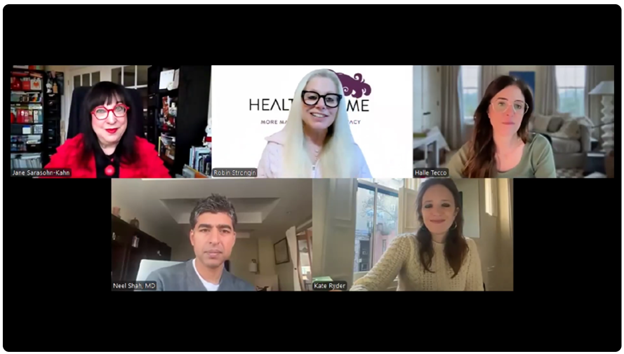 Jane collaborated on Robin Strongin's Health Dame webcast to discuss Halle Tecco's new book, Massively Better Healthcare, due out in early 2026. We brainstormed with Maven Founder Kate Ryder and the company's Chief Medical Officer Dr. Neel Shah about the state of U.S. healthcare and solutions not just to tweak at the margins but to "massively" improve health care delivery, financing, outcomes, and equity in America. It was a delightful, enlightening conversation -- I hope you'll check it out.