


To Garner Patient Loyalty, Focus on Convenience, Availability, and Affordability. Consumers Trust AI to Help the Journey.
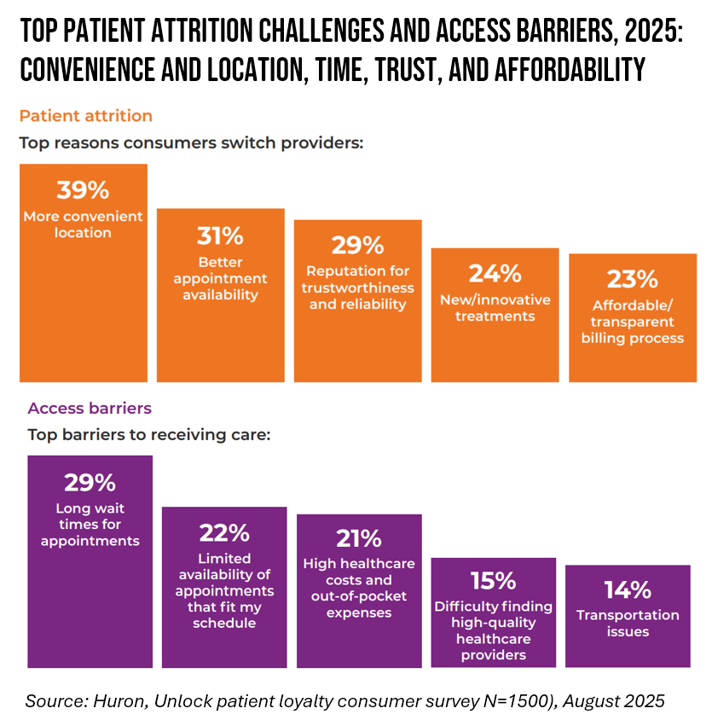
U.S. health consumers are roughly split 40/40 when it comes to AI analyzing personal health data to provide personalized advice, with 21% feeling neutral about that. But using AI for regular health updates and guiding us through a pre- or post-care medical journey would be welcome by one in two people, we learn in how to Unlock patient loyalty: New healthcare consumer insights, Huron Consulting Group’s consumer research report polling 1,500 U.S. healthcare consumers. Start with peoples’ top reasons for switching health care providers, along with main barriers preventing consumers from
Women Walk a Financial Tightrope: What That Means for Women’s Health, Mind, Body, & Wallet
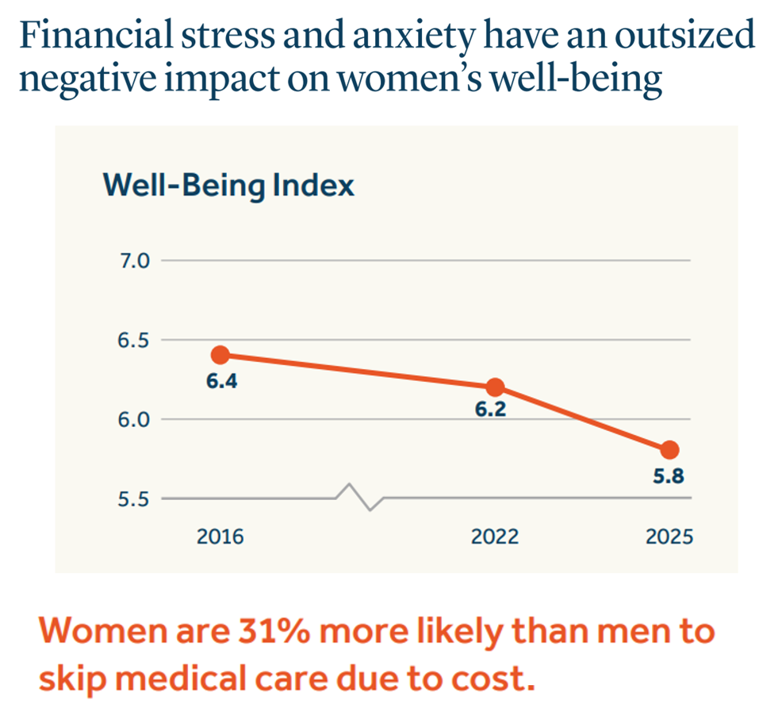
Financial stress and anxiety have an ‘outsized’ negative impact on the well-being of women in America, compared to male counterparts, we learn in Health. Wealth, and Happiness – Helping to overcome roadblocks to women’s well-being, a report from the Guardian Life Insurance Company. This report is part of Guardian’s annual research program called Mind, Body, Wallet, which the company launched 14 years ago. The goal of Mind, Body. Wallet is to assess how health citizens define “well-being” in daily living, making the crucial connections between mental health (“Mind”), physical health (“Body”), and money
Ozempic: A Medicine, and a “Cultural Shorthand” – What The Harris Poll Knows About Gen Z Consumers and Health Care in America

Among the top 20 fastest-growing growth brands beloved by Americans between 18 and 28 years of age — that is, Gen Z consumers — we see brand-equity love for companies channeling athleisure, fashion, new-fangled financial products, and food & beverage brands. And then there’s Ozempic, which gained 10 full percentage points from Q1-2025 to Q2-2025, according to The Harris Poll’s QuestBrand research. What does it mean that a prescription drug has joined these brand-loved rankings? The QuestBrand research found that as of the second quarter of 2025, more than one in 3
Why a Grocery Store Signed On to “Make Health Tech Great Again”

Joining the ranks of technology heavyweights Amazon, Anthropic, Apple, Google, and OpenAI, as well as digital health innovators Noom, Oura, Virta Health and Welldoc, who have pledged to “Make Health Tech Great Again,” Albertsons, one of the largest grocery chains in the U.S., put its name on the list with these and other early adopter collaborators. The Albertsons’ company blog published on 31 July discussed the background and rationale for this decision. “Specifically, we pledge to explore how our Sincerely Health platform can connect to The Centers for Medicare and Medicaid Services (CMS) Aligned
The Patient as Consumer – Updates from Fidelity on Retiree Health Care Costs ($172,500), Delaying Care, Tariff Impacts on Spending, and Roche Going DTPatient for Rx’s?

As of August 2025, U.S. patients of all demographics and geographies face many uncertainties with respect to their care. Issues such as health plan coverage, prescription drug costs, and access to services, among other challenges, continue to re-shape patients-as-health-consumers seeking transparency, clinical choices, and trust-worthy relationships with touchpoints in their personal health ecosystems. Four just-breaking stories across the health/care ecosystem illustrate several of these uncertainties and forces in U.S. health care — some adding friction and angst in a patient’s life, others perhaps providing some relief for certain health consumers. These news items address health care costs in retirement, the
Medicare at 60: Prior Authorizations Are a Problem for People in the U.S., Regardless of One’s Political Party, Income, or Insurance Type
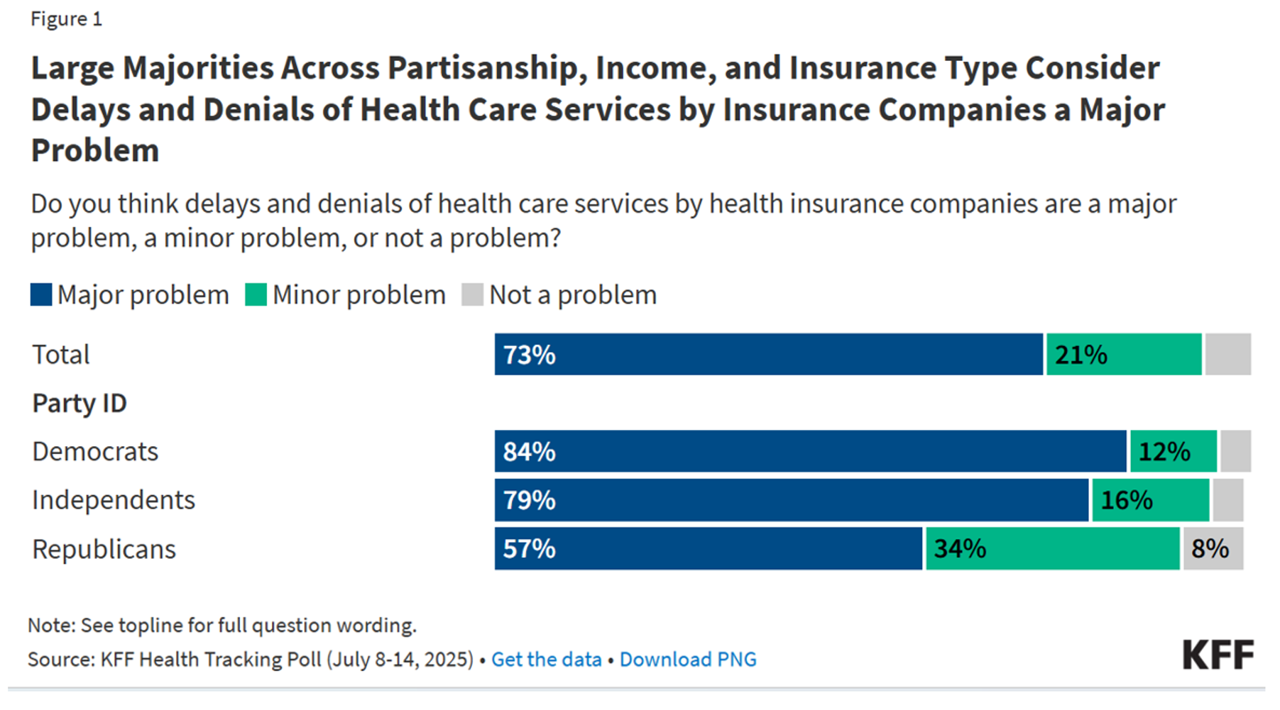
Happy 60th Anniversary Medicare, today marking six decades since the passage of this law which was a landmark milestone for The Great Society, U.S. style. Since its inception and implementation, Medicare quite often leads in adoption of new medicines, new processes, new technologies in health care. But as I track the phenomenon of health citizenship in the U.S., I observe growing consensus among American patients — cross health plan type — increasingly impatient for health care access. We can now add Americans’ growing dissatisfaction with the prior authorization process, an opinion that now spans majorities of consumers regardless of their
How Taking Care of Our Pets Could Inspire Us to Care Better for Ourselves (and Each Other)

In a recent study which was part of the American Heart Association’s Healthy Bond for Life initiative, two-thirds of Americans told the AHA that they took better care of their pets than themselves. So with a lens on how to help inspire peoples’ self-care, I was keen to dive into research from Pet Partners Insurance (PPI), a pet health insurance provider, collaborating with the Human Animal Bond Research Institute (HABRI), to learn more about The Power of Pet Perks: How Pet-Inclusive Benefits Drive Employee Engagement, Retention, and Positive Workplace Culture. My interest
Most People Would Choose Food Over Meds to Get Healthy. But Barriers to Consumers Doing So Will Require Collaborative Approaches That Get Closer and Personal
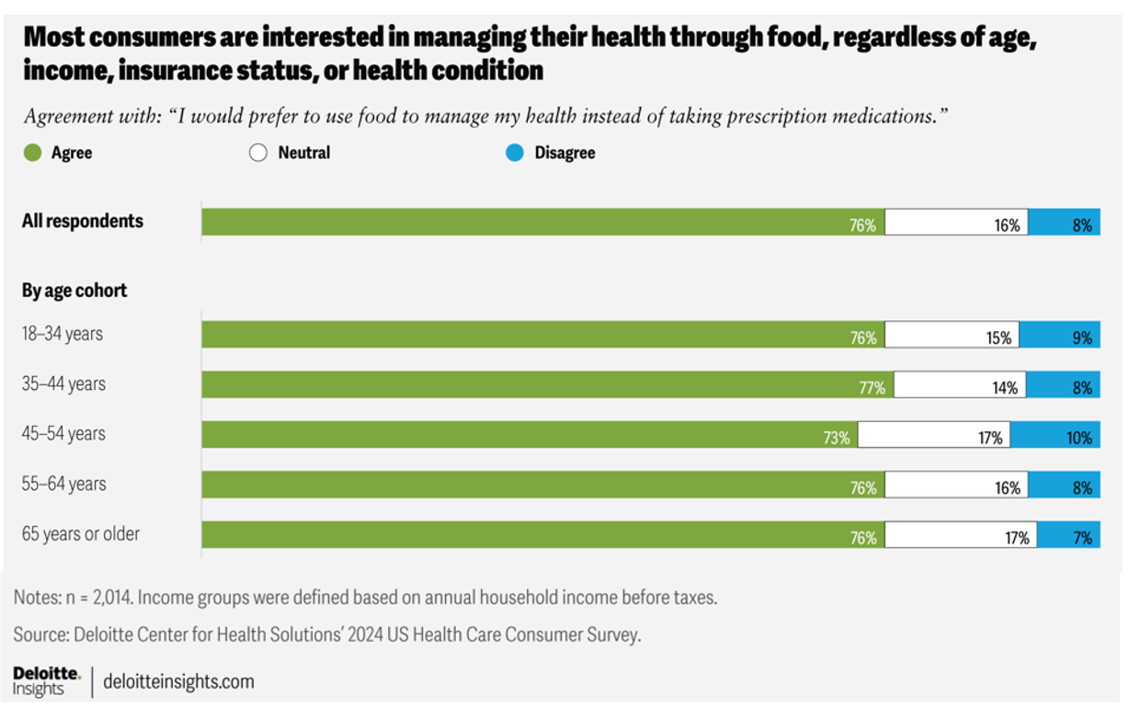
The pandemic era re-shaped consumers’ views on food as an input for health across all dimensions. We look back with affection for our local grocery stores and pharmacies which played leading roles as first responders f0r our health and, quite literally, the basic needs at the base of our personal hierarchies the way Maslow conceived them. As I tracked home-bound consumers’ behaviors from the start of COVID-19 in March 2020, I hunted-and-gathered data from Nielsen, Acosta, Circana, Gallup, Harris, and other sources of consumers @ retail. The DIY food-health concept, coined by Nielsen, was the build-up of our “pandemic pantries.”
U.S. Workers Who Get Health Insurance From Work Can Expect Greater Cost-Sharing and New Networks in 2026

At least one-half of employers will likely raise employee cost-sharing amounts in 2026, according to the Survey on health & benefit strategies for 2026 from Mercer. Mercer surveyed 711 organizations for this study, fielded in April 2025, to assess employers’ views on and strategies for health benefits in 2026. There are three challenging pillars underlying employers’ 2026 approaches to workers’ benefits: How to disrupt cost growth with what Mercer coins as “bolder” strategies How to consider and address all dimensions of affordability, and, How to design and implement inclusive benefits that build workforce
Medical Cost Trend at 8.5% in 2026? PwC Sees “No End in Sight” for Increased Healthcare Spending
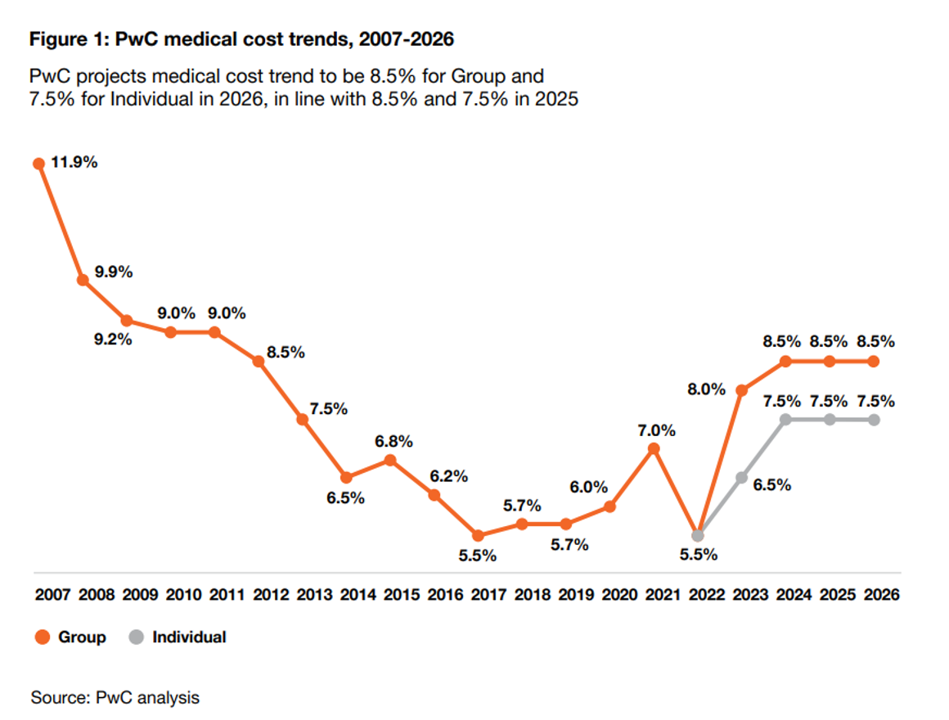
For the third year in a row, medical cost trend — the expected increase of health care costs by health plans — will be 8.5% for group health insurance. This contrasts with a low of 5.5% in 2022 when cost trend dipped coming out of the COVID-19 pandemic….then shot up to 8.0% the following year in patients’ healthcare catch-up mode. Welcome to Behind the Numbers 2026, the annual medical trend report from PwC. What’s continuing to drive up health care costs? PwC identifies 4 medical cost inflators, and 2 “deflators” (these being
As Time Becomes More of a Luxury Thing, Consumers Ration Visits to Health Care Providers

When it comes to luxury goods, forget about that Rolex watch, a Louis Vuitton bag, or Porsche. The top luxury item among U.S. consumers in 2025 is time, and with many luxury goods, time is in short supply for most people. An important new report from Duckbill explores the Permission to Ask: Why Americans Need Help — And Why They Struggle to Get It. The top-line finding gleaned through Duckbill’s survey of 2.069 U.S. consumers in early May 2025 was that 2 in 3 Americans are just trying to get through the day. This struggle
Consumers Look to Brands to Both “Do Good” and Help Me “Feel Good” – Another Riff on the Edelman Trust Barometer and What This Means for Health Care
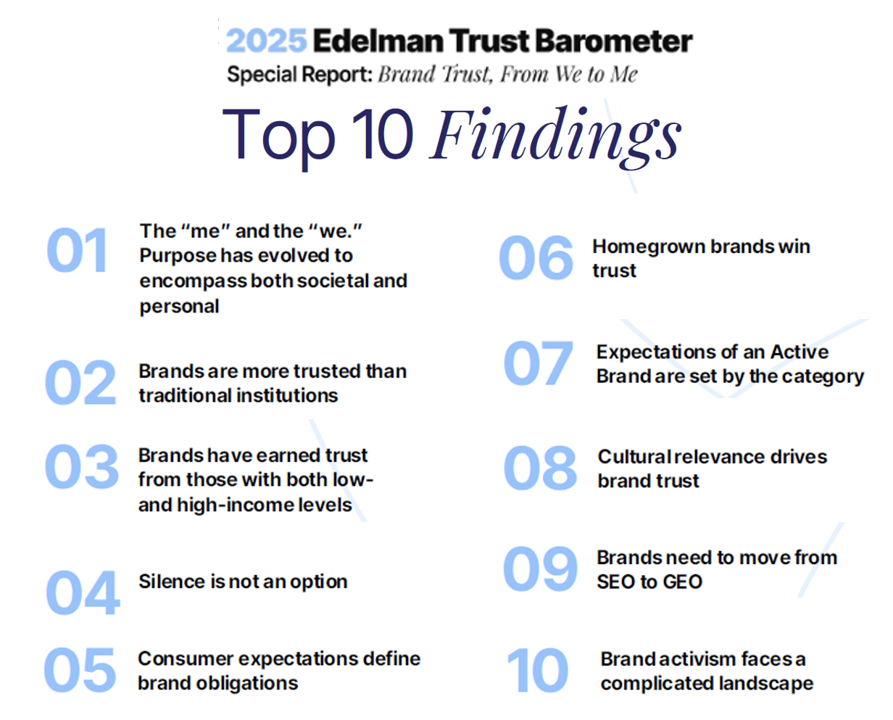
With consumers the world over feeling greater financial stress and social chasms in 2025, people are trusting brands more than institutions to help them both feel good and expecting them to “do” good, we learn in Brand Trust, From We to Me, a special report from the 2025 Edelman Trust Barometer. The overall theme of this year’s Trust Barometer was “Trust and the Crisis of Grievance.” One artifact of peoples’ grievance is their shift from “we” to “me;” in this new report with a lens on brands, Edelman finds that consumers expect
National Health Spending in the U.S. in 2033: What 20.3% of the GDP Will Be Spent On
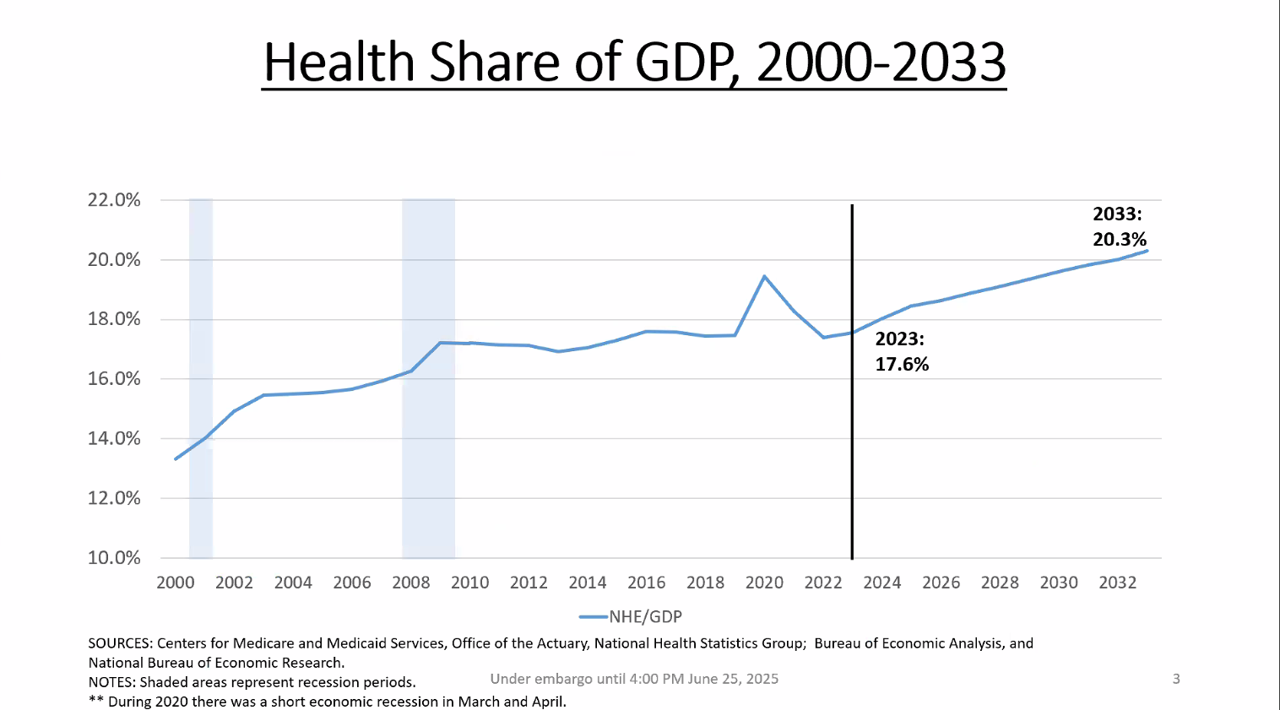
By 2033, national health spending will comprise 20.3% of the U.S. GDP, based on the latest national health expenditure projections developed by researchers from the Centers for Medicare and Medicaid Services (CMS). This growth will be happening as CMS projects coverage of insured people to decline over the period. Earlier today, I attended a media briefing hosted by Health Affairs to receive the CMS team’s top-line forecast of NHE from 2024 to 2033 discussing these findings. Fuller details on the projections will be released in the July issue of Health Affairs on 7
Consumers’ Favorite Brands for 2025 Look a Lot Like Pandemic Times: All About Hygiene, Safety, Personal Care, and Packages

Shades of the year 2020; it’s déjà vu all over again when it comes to consumers’ most trusted brands in 2025 featured in Morning Consult’s Most Reputable Brands report. Here’s the list of the top 25 most trusted brands across all consumer touch-points and industries for all adults, ages 18 and older. A quick calculation reveals that consumers most trust brands covering, Home keeping and hygiene – Dawn, Clorox, Lysol, Mr. Clean, Home Depot Self- and personal care – Dove, Oral-B, Kleenex, Colgate Health – BAND-AID, Tylenol Packages
That Big Beautiful Bill’s Healthcare Proposals Aren’t So Pretty in the Views of Most People in the U.S. – Including Josh Hawley (R-Mo.) – Listening to the Kaiser Family Foundation June Health Tracking Poll

Across all U.S. voters, the so-called “Big Beautiful Bill” Act (BBB) is seen unfavorably by nearly a 2:1 margin. Underneath that top-line, Democrats, Independents, and non-MAGA Republicans oppose it, while MAGA supporters favor it. But favorability erodes when people hear about possible health impacts, we learn in the June 2025 Health Tracking Poll from the Kaiser Family Foundation. The details on views of the BBB Act are shown in the first bar chart, with overwhelming disfavor among Democrats and Independents, and majority unfavorability among non-MAGA GOP supporters. Next check into partisans’ lenses
Americans Hear More Frequently About GLP-1 Drugs Than About Menopause, Sleep, or Bird Flu
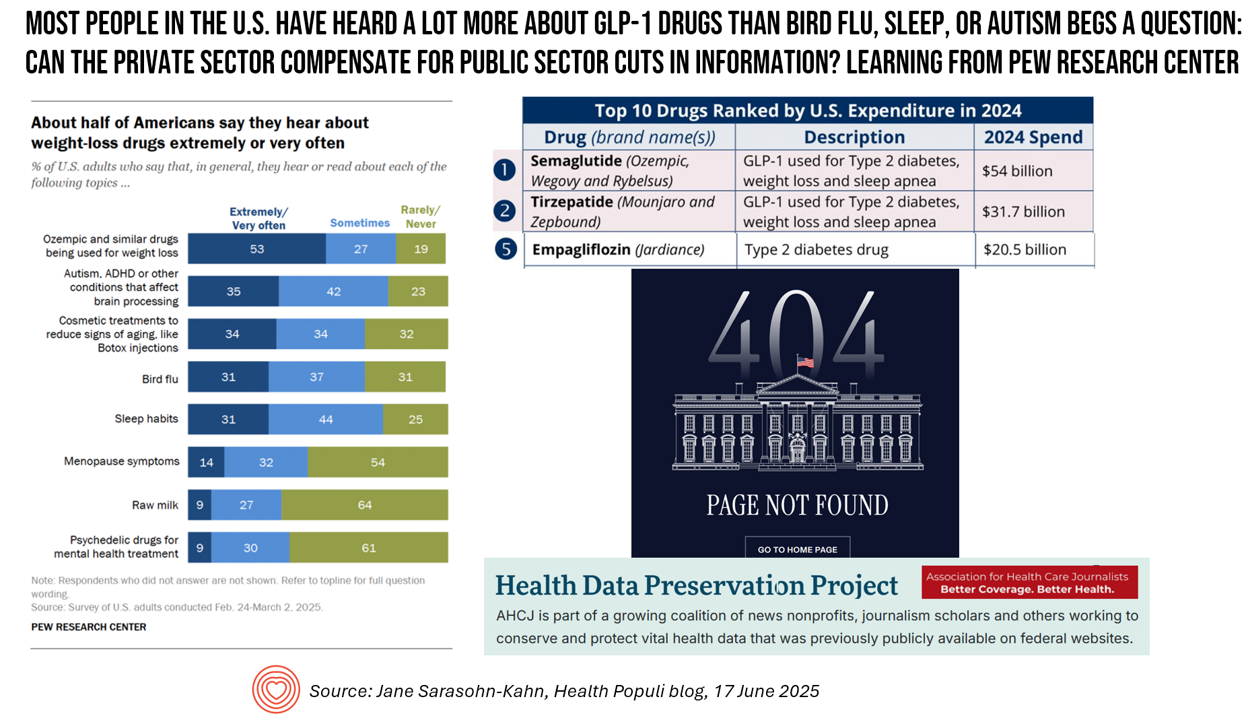
Yu In a sign of our health communications times, GLP-1s are a much more frequently health topic Americans hear about than autism and ADHD, cosmetic treatments like Botox, Bird flu, sleep issues, or menopause. The Pew Research Center polled 5,123 U.S. consumers in February and March 2025 to gauge peoples’ perspectives on health information and communications trends in America. In the study summary titled, From weight-loss drugs to raw milk, Americans hear more often about some health topics than others, the Pew Research team. The finding that
What Children Can Teach Us About Using GenAI – Insights from The Alan Turing Institute and LEGO

“While children are the group that may be most impacted by the widespread deployment of generative AI, they are simultaneously the group least represented in decision-making processes relating to the design, development, deployment or governance of AI,” we learn in Understanding the Impacts of Generative AI Use on Children, research conducted by The Alan Turing Institute in partnership with the LEGO Group. But it’s the children who shared their perspectives who can teach adults about some potential positive and negative aspects of GenAI, and help inform us in managing downside risks. FYI, The Institute is headquartered in the British Library
What GoFundMe and Crowdfunding Campaigns Tell Us About Healthcare in America

“Can people afford to pay for health care?” a report from the World Health Organization asked and answered, with a focus on European health citizens. The same question underpins a new research paper published in Health Affairs Scholar, Insights from crowdfunding campaigns for medical hardship, Here, crowdfunding is a proxy for “can’t afford to pay for health care” in America. Here in blazing colors we have a snapshot of the study’s data in the form of a “heatmap.” FYI, a heatmap is a data visualization format that represents the magnitude of values of a dataset as a color — generally
How Texting Is a Lifeline for Health Access and Equity – Time to Address the TCPA is “Now”

The Telephone Consumer Protection Act (TCPA) was put into law in 1991. The first smartphone was launched by IBM the following year in 1992 known as the IBM Simon. Then Steve Jobs unveiled the iPhone in 2007. Now in 2025, smartphones are ubiquitous, landlines more cut than connected, and texting is the way people communicate. But for many patients, caregivers, health plan members, and health citizens, whichever persona we are in our individual health care journeys at a point in time, the TCPA remains a barrier for people in the U.S. trying to connect with their health care.
The Spirit for Eating Healthier Is Willing, But the Cost of Doing So “Outweighs” the Will – Listening to Escoffier

It’s been a full week’s coverage on food-as-medicine and food as a driver of health in America this week on the Health Populi blog. Today we turn to the chefs at Escoffier who know food, teach food, and now offer programs in holistic nutrition and wellness through the lens of culinary arts. With that lens, Escoffier recently published a report on the future of healthy eating, which will round out this week’s Health Populi landscape on food and health. In the paper, the Escoffier team curated data points from many studies — via Gallup, Mintel, Innova,
 Thank you Aaron Strout for hosting our conversation on the Reaching Higher Podcast, now live on Apple, Spotify, and YouTube. We covered a lot of ground addressing health care and health citizenship, the growing prospects for our homes as our health hubs, and how our humanity is a key ingredient in health-making for all.
 Jane joined host Dr. Geeta "Dr. G" Nayyar and colleagues to brainstorm the value of vaccines for public and individual health in this challenging environment for health literacy, health politics, and health citizen grievance. Click onto the Pfizer Value of Vaccines site and you can watch four episodes covering the challenges with adult vaccination, the employer and health plan member's journey to vaccination, reimbursement, and collaborating for proactive prevention.
 I'm grateful to be part of the Duke Corporate Education faculty, sharing perspectives on the future of health care with health and life science companies. Once again, I'll be brainstorming the future of health care with a cohort of executives working in a global pharmaceutical company.