


US doctors less sanguine about the benefits of health IT
To doctors working in eight countries around the globe, the biggest benefit of health IT is better access to quality data for clinical access, followed by reducing medical errors, improving coordination of care across care settings, and improving cross-organizational workflow. However, except for the issue of health IT’s potential to improve cross-organizational working processes, American doctors have lower expectations about these benefits than their peers who work in the 7 other nations polled in a global study from Accenture‘s Eight-Country Survey of Doctors Shows Agreement on Top Healthcare Information Technology Benefits, But a Generational Divide Exists. Accenture polled over 3,700 doctors working in
Paying medical bills is a chronic problem for 1 in 3 uninsured, and 1 in 5 insured people under 65
Over 20% of U.S. families had problems paying medical bills in 2010 — about the same proportion as in 2007. The Center for Studying Health System Change found this datapoint “surprising,” given the Great Recession of 2008 that lingers into 2012. However, HSC points out that the leveling of medical bill problems may be a “byproduct” of reduced medical care utilization; in Health Populi-speak, self-rationing of health care. In the Tracking Report, Medical Bill Problems Steady for U.S. Families, 2007-2010, HSC analyzed data from the 2010 Health Tracking Household Survey and discovered that since 2003, the proportion of families facing problems with medical debt
What’s baked into the Affordable Care Act? Half of Americans still don’t realize there’s no-cost preventive care
The U.S. public’s views on health reform — the Affordable Care Act (ACT) – remain fairly negative, although the percent of people feeling favorably toward it increased from 34% to 37% between October and November. Still, that represents a low from the 50% who favored the law back in July 2010. It’s quite possible that American health citizens’ views on health reform are largely reflective of their more general feelings about the direction of the country and what’s going on in Washington right now, versus what’s specifically embodied in the health care law, according to the November 2011 Kaiser Health
Workplace wellness: the cost of unhealthy behaviors in the American workforce is $623 per worker
The health status of the American workforce is declining. Every year, unhealthy behaviors of the U.S. workforce cost employers $623 per employee annually, according to the Thomson Reuters Workforce Wellness Index. People point to smoking, obesity and stress as the 3 most important factors impacting health costs. Thomson Reuters and NPR polled over 3,000 Americans on their health behaviors, utilization and costs of health care, publishing their results in a summary, Paying for Unhealthy Behaviors in October 2011. 4 in 5 overall — and 9 in 10 of those with over $50,000 annual income — believe that people with healthy behaviors should receive a
Primary care, everywhere: how the shortage of PCPs is driving innovation – especially for patient participation in their own care
The signs of the primary care crisis in America are visible: A growing number of visits to the emergency room for treating commonplace ailments Waiting lists for signing up with and queuing lines to see primary care doctors Fewer med students entering primary care disciplines Maldistribution of primary care practitioners (PCPs) in underserved areas, rural, exurban and urban. The implementation of the Affordable Care Act will (try to) enroll at least 30 million newly-insured health citizens into the U.S. health system. That’s the objective: whether being insured will actually provide people access to needed primary care is a big question given the current supply of
Health insurance: employers still in the game, but what about patient health engagement?
U.S. employers’ health insurance-response to the nation’s economic downturn has been to shift health costs to employees. This has been especially true in smaller companies that pay lower wages. As employers look to the implementation of health reform in 2014, their responses will be based on local labor market and economic conditions. Thus, it’s important to understand the nuances of the paradigm, “all health care is local,” taking a page from Tip O’Neill’s old saw, “all politics is local.” The Center for Studying Health System Change (HSC) visited 12 communities to learn more about their local health systems and economies, publishing their
Walmart’s rollback of health insurance for employees: just another employer facing higher health care costs?
Walmart is increasing premium sharing costs for employees subscribing to health insurance, and cutting the benefit for part-timers. Quoted in the New York Times, a company rep said, “over the last few years, we’ve all seen our health care rates increase and it’s probably not a surprise that this year will be no different. We made the difficult decision to raise rates that will affect our associates’ medical costs.” In so doing, Walmart told the Times that they will, “strike a balance between managing costs and providing quality care and coverage.” MarketWatch wrote that Walmart will increase health care premium costs
Telemedicine is an enabler of health reform
Globally, in developed economies, the challenges of increasing health care costs, access to quality health care, aging citizens and the supply of clinicians are universal. CSC says telemedicine can address these challenges as part of reforming health care delivery and financing throughout the world. In Telemedicine: An Essential Technology for Reformed Healthcare, CSC sees telemedicine as an enabler for health reforms’ goals the world over. In the U.S., telemedicine is explicitly mentioned in the Affordable Care Act. In April 2011, the Federal Register included language about health financing reform that said, “The ACO shall define processes to promote evidence-based medicine and patient engagement, report
Employers continue to worry about health costs in 2011, and expect to expand defined benefit plans
With health reform uncertainties, growing health regulations, and ever-increasing costs, employers who sponsor health plans for their workforce will continue to cover active employees. That is, at least until 2017, according to the crystal ball used by Mercer, explained in the Health & Benefits Perspective called Emerging challenges…and opportunities…in the new health care world, published in May 2011. Note that it’s “active” employees who Mercer expects will retain access to health benefits. For retirees, however, it’s another story. They need to be ready to take on more responsibility, financially and perhaps going-to-market to select coverage, while employers may continue some level
The average annual health costs for a U.S. family of four approach $20,000, with employees bearing 40%
Health care costs have doubled in less than nine years for the typical American family of four covered by a preferred provider health plan (PPO). In 2011, that health cost is nearly $20,000; in 2002, it was $9,235, as measured by the 2011 Milliman Medical Index (MMI). To put this in context, The 2011 poverty level for a family of 4 in the 48 contiguous U.S. states is $22,350 The car buyer could purchase a Mini-Cooper with $20,000 The investor could invest $20K to yield $265,353 at a 9% return-on-investment. The MMI increased 7.3% between 2010 and 2011, about the same
Retail health options expand with American Well and Activ Doctors going direct
The traditional venues for retail health are found in pharmacies, grocery chains, and on the ground floor storefronts in hospitals. Joining these bricks-based models are digital, online health ventures that are expanding the definition and space of retail health. This week, two announcements illustrate this phenomenon, from American Well and Active Doctors. American Well, which launched in 2008, is an online physician consultation service in the U.S. that has successfully worked with health plans to channel consults to patients in Hawaii, Minnesota, and New York, among other local programs. Last year, American Well went live with the Rite Aid pharmacy chain in Pennsylvania. This week, American
The online digital health divide persists for African Americans and Hispanics; implications for health reform
Differences in race, ethnicity and income drive online health disparities, according to a poll from The Washington Post/Kaiser Family Foundation (KFF)/Harvard University Race and Recession Survey, based on data from early 2011. The underlying issue here is the online digital divide, which still persists for African Americans and Hispanics of lower socioeconomic status. Overall, 84% of U.S. adults use the Internet or email at least occasionally. However, only 69% of African Americans and 64% of Hispanics with less than $40,000 annual income use the Internet or email. However, income flattens Internet/email use: for people who earn over $40K a year, 95% of whites, 94% of African
Even the most wealthy, healthy U.S. citizens worry about future health access and finance
It is no surprise that sicker, poorer people in the U.S. have concerns about how they’ll access and pay for health care in the future. What stands out in the latest Commonwealth Fund Survey of Public Views of the U.S. Health System, published in an April 11, 2011, Issue Brief, is that most U.S. health citizens in the healthiest, wealthiest demographic groups worry about accessing and paying for health care in the future. The chart highlights these findings: overall, 7 in 10 people worry about not getting high-quality care when they will need it, or that they won’t be able to pay
Where have all the doctors gone? What physician supply means for health reform
The good news that was packaged in the Patient Protection and Affordable Care Act (PPACA), that is, health reform, was that millions of uninsured Americans would receive health insurance coverage through the Medicaid program. But insurance doesn’t equal access; there’s a limiting factor that’s a formidable obstacle in many of these millions of newly-insured people getting care: the physician supply in the U.S., which varies from region to region of the U.S. There’s both a quantitative aspect to this challenge along with a qualitative one. The U.S. has long had a maldistribution of physicians in both urban cores and rural towns; that’s the quantitative challenge.
Health consumers like integrated health plans – and medical homes, based on J.D. Power’s latest survey
J.D. Power and Associates, known for its insights into consumers’ opinions on cars, insurance and telecomms, published its latest poll on consumers’ favorite health plans. The verdict: health citizens like integrated health insurance plans where providers and insurance are part of the same organization like Kaiser Foundation Health Plans (rated in the top 3 in virtually every market where they operate polled by J.D. Power), Health Alliance Plan of Michigan, Geisinger in Pennsylvania, Dean Health Plan of Minnesota, and Group Health Cooperative of the northwest. Each of these integrated plans grew up based on local medical, economic and political cultures.
Will providers be ready for patient-centricity in health IT?
In October 2012, Stage 2 of the HITECH Act’s meaningful use begins. That means that providers, both hospitals and physicians, who adopt electronic medical records systems and are looking to receive a financial incentive from the ARRA stimulus funds, must meet criteria defined as “meaningful use” (MU). Stage 2 will feature standards for providers to communicate health information to patients, based on the draft set of criteria issued by the U.S. Department of Health and Human Services. Will providers be ready to put patients in the center of the EMR? PricewaterhouseCoopers assesses the complex answer to this question in their report,
The health IT talent shortage could slow HIT adoption in U.S. health care
For hospital CIOs, 2011 and 2012 are all about achieving meaningful use, focusing on clinical systems, safe-keeping health information, and staying financially healthy as an organization. These insights are brought to you by the 22nd Annual HIMSS Leadership Survey, sponsored by Citrix. This survey has become the most important snapshot of health CIOs’ priorities looking ahead. This year’s survey results, unveiled week at HIMSS 2011 in Orlando, held some important findings. While achieving meaningful use is the top IT priority for the next two years (with 81% of organizations believing they’ll quality for MU in 2011 or 2012), clinical systems implementation and
Robert Reich connects the dots between the macroeconomy, angst, politics and health care costs
“I’m not a class warrior. I’m a class worrier,” Robert Reich told a standing-room only crowd of thousands of health IT geeks as he delivered the first keynote address of the annual meeting of HIMSS, the Healthcare Information Management and Systems Society. This year’s crowd will have reached about 31,000 people interested in health information technology’s transformative role in health care. The 31K represents an 18% increase in attendance from last year’s crowd. The HIMSS economy is strong. Robert Reich warns, however, that the U.S. macroeconomy is far from healthy…and health care costs will be a long-term threat to the
U.S. employers put health care cost containment at the top of reform priorities
1 in 5 among all U.S. employers (22%) would likely drop health insurance coverage and let workers buy a plan through a health insurance exchange. However, most employers would expand wellness programs driven by incentives in health reform. Employers’ perspectives on the Affordable Care Act/health reform are mixed, according to a survey conducted by the Midwest Business Group on Health, co-sponsored by the National Business Coalition on Health, Business Insurance and Workforce Management. Not surprisingly, these views vary by whether the firm is large (>500 employees) or small. More large employers support the creation of Health Insurance Exchanges and would expand wellness services;
Rent, Buy or Wait? A post-mortem of HIMSS ’10
It’s been a year since the American Recovery and Reinvestment Act and the HITECH Act got the president’s signature. Since then, there have been countless meetings of standards-setters, CIO experts and medical informatics pros, all opining on the meaning of “meaningful use,” the criteria for certifying electronic health records and the vision for a Nationwide Health Information Network. As they asked in “Seasons of Love” from Rent, “525,600 minutes…how do you measure a year?” The chorus’s response: “In cups of coffee, in inches, in miles, in laughter, in strife.” And 525,000 journeys to plan. That’s about the number of physicians
Designing for meaningful use
In the crush of crowds on the vendor floor at the HIMSS10 exhibition this week in Atlanta, booths are strategically designed with Pantone-matched colors and icons and clever taglines. Sales teams are festooned in corporate logo-emblazoned polo shirts (orange is popular this year). Colorful banners exclaim this year’s HIT mantras: lots of “HIE spoken here!” and “We are connectivity.” With all the thought and dollars allocated to health information technology sales and marketing, I wonder how much the line item known as “design” gets? As I spend a lot of time with pharmaceutical companies in the past two decades, I’m
Help wanted: primary care docs, nurses and health information professionals
In the coming months and years, I anticipate that Monster.com and other online job services will grow their revenues from the health industry. Three important studies this month confirm that, while health care eats up nearly one-fifth of the U.S. economy, there are shortages of professionals to fill two important jobs that are growing: primary care physicians (PCPs), nurses, and health information technology (HIT) workers. Let’s talk about the doctors, first. The Journal of the American Medical Association (JAMA) reports this week that doctors cut back their working hours since 1998 to 2008. At the same time, the second chart
Health reform and healthy food
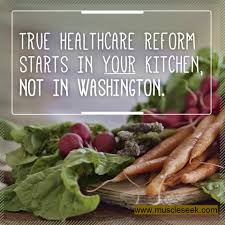
While the policy wonks and economists and legislators and lobbyists convene to come to “yes” on a coherent approach to health reform for America, there is some (literally) low-hanging fruit that will help the nation bend the health cost curve: it’s healthy eating. Last year, the only two stocks on the Dow Jones Index that moved in a positive direction were Walmart and McDonald’s. Both have received bad raps concerning their role in the nation’s diabesity. Surprisingly, McDonald’s ended up on Health magazine’s list of the Top 10 America’s Healthiest Fast Food Restaurants this week. With 14,000 locations, this chain
Only 1 in 10 unemployed people buy into COBRA
Because of high premiums, only 9 percent of unemployed workers have COBRA coverage. Maintaining Health Insurance During a Recession: Likely COBRA Eligibility, a study from The Commonwealth Fund (CMWF), clarifies how COBRA is actually used by unemployed people in the U.S. CMWF calculates that: – Two of three working adults are eligible to buy into COBRA under the 1985 Consolidated Omnibus Budget Reconciliation Act (COBRA) if they became unemployed. – Under COBRA, workers pay 4 to 6 times their current premium for health benefits. – Thus, only 9 percent of unemployed workers have COBRA coverage due to the high price
 Thank you Aaron Strout for hosting our conversation on the Reaching Higher Podcast, now live on Apple, Spotify, and YouTube. We covered a lot of ground addressing health care and health citizenship, the growing prospects for our homes as our health hubs, and how our humanity is a key ingredient in health-making for all.
 Jane joined host Dr. Geeta "Dr. G" Nayyar and colleagues to brainstorm the value of vaccines for public and individual health in this challenging environment for health literacy, health politics, and health citizen grievance. Click onto the Pfizer Value of Vaccines site and you can watch four episodes covering the challenges with adult vaccination, the employer and health plan member's journey to vaccination, reimbursement, and collaborating for proactive prevention.
 I'm grateful to be part of the Duke Corporate Education faculty, sharing perspectives on the future of health care with health and life science companies. Once again, I'll be brainstorming the future of health care with a cohort of executives working in a global pharmaceutical company.