


As Medical Cost Trend Remains Flat, Patients Face Growing Health Consumer Financial Stress

When it comes to healthcare costs, lines that decline over time are generally seen as good news. That’s how media outlets will cover the top-line of PwC’s report Medical cost trend: Behind the numbers 2019. However, there are other forces underneath the stable-looking 6.0% medical trend growth projected for 2019 that will impact healthcare providers, insurers, and suppliers to the industry. There’s this macro-health economic story, and then there’s the micro-economics of healthcare for the household. Simply put: the impact of growing financial risk for healthcare costs will be felt by patients/consumers themselves. I’ve curated the four charts from the
Doctors Say EHRs Are Good for Storage, But Risky for Patient Relationships and Burnout

Doctors have a complicated relationship with electronic health records (EHRs): two-thirds of primary care providers (PCPs) see value in digital records (EHRs), but at the same time believe the technology has weakened relationships with patients, detracted from clinical effectiveness, and lack streamlined user experience. That deficiency is, in three words, lack of interoperability; that challenge has required one-half of physician-users to use work-around’s to make their EHR investments more useful. These insights come out of a survey conducted among primary care providers by The Harris Poll for Stanford Medicine, published to coincide with the medical school’s convening of the EHR
How to Make Healthcare More Intelligent and Trustworthy: Accenture’s Digital Health Tech Vision 2018
“Do no harm” has been the professional and ethical mantra of physicians since the Hippocratic Oath was first uttered by medical students. The origins of that three-word objective probably came out of Hippocrates’ Corpus, which included a few additional words: “to do good or to do no harm.” The proliferation and evolution of digital technologies in health care have the potential to do good or harm, depending on their application. Doing good and abstaining from doing harm can engender trust between patients, providers, and other stakeholders in health. Trust has become a key currency in provider/patient/supplier relationships: 94% of health executives
How the Latest on Facebook and the “Deep State” Could Undermine Patient Data Sharing and AI
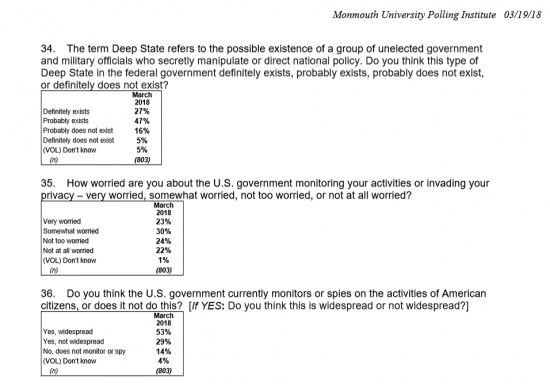
There’s a potential large obstacle that could prevent the full benefits of the current go-go, bullish forecasts for artificial intelligence (AI) to help make healthcare better: a decline in consumers’ willingness to share their personal data. Along with the overall erosion of peoples’ trust in government and other institutions comes this week’s revelations about Facebook, Cambridge Analytica, and the so-called Deep State. Three-fourths of Americans believe that some type of “Deep State” in the federal government exists, a new poll from Monmouth University published yesterday. I clipped the responses to three of the survey’s most relevant questions here. Not only
Health/Care Data Ecosystems E-merge at CES 2017
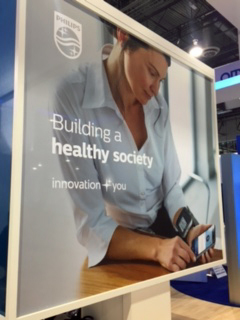
Digital health innovations were fast-proliferating at CES 2017. The bad news is there are so many of them, it’s dizzying and fragmented. The good news is that there are emerging health data ecosystems that will streamline consumers’ user experience so that people can derive knowledge, actionable advice and value out of using these tools. Walking miles of aisles in the Sands Convention Center in the first week of January 2017 can be a dizzying prospect, with hype and best-faces-forward in every single exhibitor at the show. In the health segment at CES, there’s a long list of digital tools to
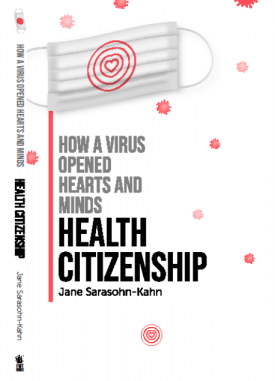
 One of the best aspects of my work is collaborating across the health/care ecosystem to address how health citizens can deal with health care costs and and care for families. I'm grateful to have collaborated with Fidelity on their research into this issue, which you can access at the link here.
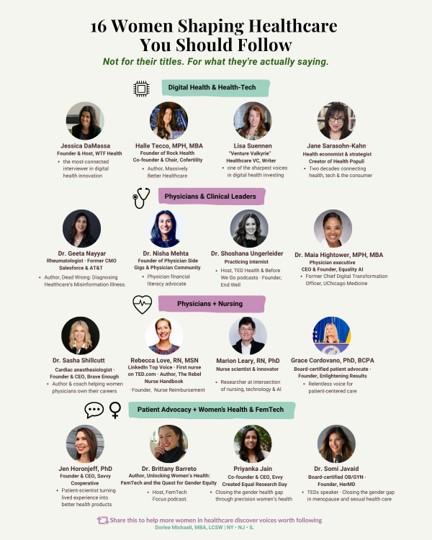 I'm gratified to be named on this updated list of 16 women's voices who are shaping health care. The curator of the list, Dorlee Michaeli, asked the question: "If someone wanted a smarter healthcare LinkedIn feed tomorrow, who should they follow today?" Glad to be one of these voices.
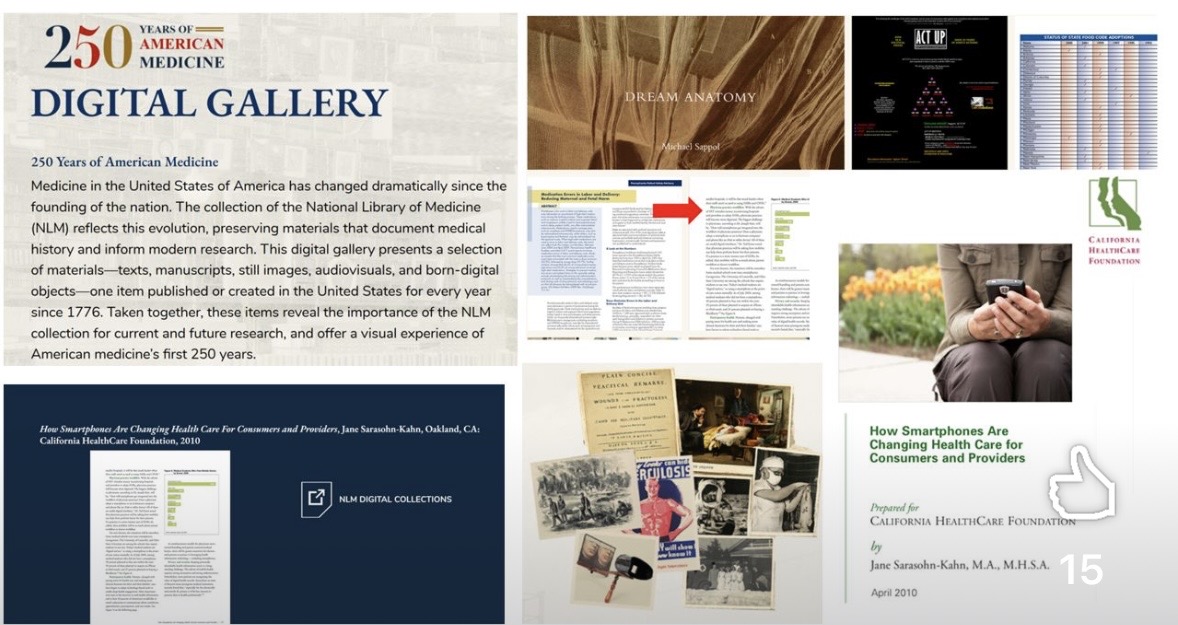 I’m celebrating America’s 250th birthday both patriotically and professionally, honored that the NLM included my 2010 paper, “How Smartphones Are Changing Healthcare for Consumers and Patients” as one of 250 items curated for the digital archive of 250 Years of American Medicine.