


Mayo finds heart patients skip meds due to costs; self-rationing in health continues
If you are a person with heart disease and you have received treatment at the Mayo Clinic, you’re certainly a fortunate health citizen. The hospital was just ranked #2 best hospital in the U.S. by US News & World Report. However, if that’s you and the costs of post-op treatment — namely prescription drugs — are out of your financial reach, then you might skip them; thus, undoing your top-notch acute care. This scenario is discussed in the April 2011 issue of Mayo Clinic Proceedings, which describes a study by Mayo researchers among 209 patients with heart failure who were prescribed
Health consumers spend more out-of-pocket than the Federal government counts
Consumers have been shell-shocked with health care costs — an increasing proportion of household spending in the U.S. This is true for the increasing costs consumers bear in the traditional health system. However, consumers are continuing to spend discretionary income on non-traditional health services such as complementary and alternative medicine (CAM) providers and products, along with vitamins/minerals/supplements and weight loss regimes. With increasing health cost burdens on households, those householders have less money to allocate to other aspects of life. In particular, growing medical costs have translated into greater credit problems for American consumers, according to The hidden costs of
Branded prescription drug prices increased between 2006-2010 while generic prices fell
The Federal government covers about $1 in every $3 of spending on prescription drugs in the U.S. That equates to $78 bn of the total $250 bn spent on Rx in 2009. Between 2006 and 2010, the indexed cost of the usual and customary price for commonly used branded prescription drugs grew by 8.3%; in that period the price of commonly used generic drugs fell by 2.6%. The General Accounting Office (GAO), those nonpartisan bean-counters in Washington DC, analyzed pricing trends of prescription drugs over the most recent five years, based on changes from first quarter to first quarter in each subsequent year. The GAO also
Welcome Migraine.com to the health care community
About 1 in 10 people in the U.S. suffer from migraine headaches. The direct cost to business for medical care and wage replacement is over $1 bn, but this underestimates the total economic impact of lost productivity to the economy and personal lives (for more on whole-health costs, read yesterday’s Health Populi, Lost Costs: Lost Productivity Represents One-Half of Health Costs for U.S. Employers). There are actually 14 kinds of headaches, as classified by the International Headache Society (IHS). Among these, there are four primary headache types: migraine, tension-type headaches, cluster headaches and trigeminal autonomic cephalagias, and a fourth
Bending the health cost curve by spending more on Rx: adherence can lower costs
For every $1 spent on health care in the U.S., 10 cents goes to prescription drugs, 31 cents goes to hospital care, and 27 cents goes to professionals (doctors, dentists, and other services), based on 2009 health spending reported to the Centers for Medicare and Medicaid Services (CMS). There’s evidence that by spending a bit more on medication and bolstering prescription drug adherence among patients, total health spending can be lowered for vascular medical conditions. The study and data which leads to this conclusion is published in Medication Adherence Leads to Lower Health Care Use And Costs Despite Increased Drug Spending appears in
From the fiscal to the physical: insured workers try to lower their medical costs
This is open enrollment season for those workers fortunate enough to (1) still be employed and (2) still be offered a health benefit. It’s also the season of economic decline. According to Watson Wyatt, these workers are making different health and benefit decisions in this fiscally-constrained era. Watson Wyatt has released its 2008 version of the report, Employee Perspective on Health Care. Some of the most dramatic health behavior changes this year include: Only 19% of employees are willing to pay higher premiums to keep deductibles and copayments lower. In 2007, 38% were willing to do so. 66% of
Drugstore Dominance, and the Walmart Wild Card
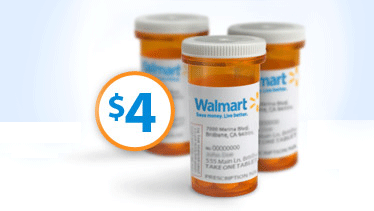
While reading the August 16/17 2008 issue of the Financial Times to keep up with the global political news in Russia and Georgia, and Olympic medal drama in Beijing, I ran across a story that hit much closer-to-home: “Bitter pills in fight for drugstore dominance.” The announcement by CVS Caremark that it would acquire the Longs Drugs store chain for over $2.5 billion is the latest salvo in the battle for the neighborhood pharmacy. This is CVS’s major incursion into California and other western states, where Walgreens enjoys a dominant market share. The most important point in the FT article
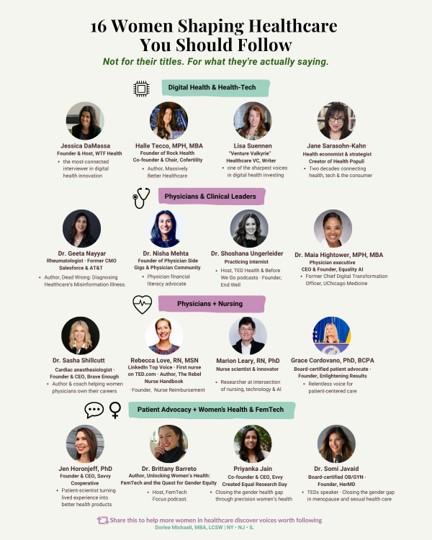 I'm gratified to be named on this updated list of 16 women's voices who are shaping health care. The curator of the list, Dorlee Michaeli, asked the question: "If someone wanted a smarter healthcare LinkedIn feed tomorrow, who should they follow today?" Glad to be one of these voices.
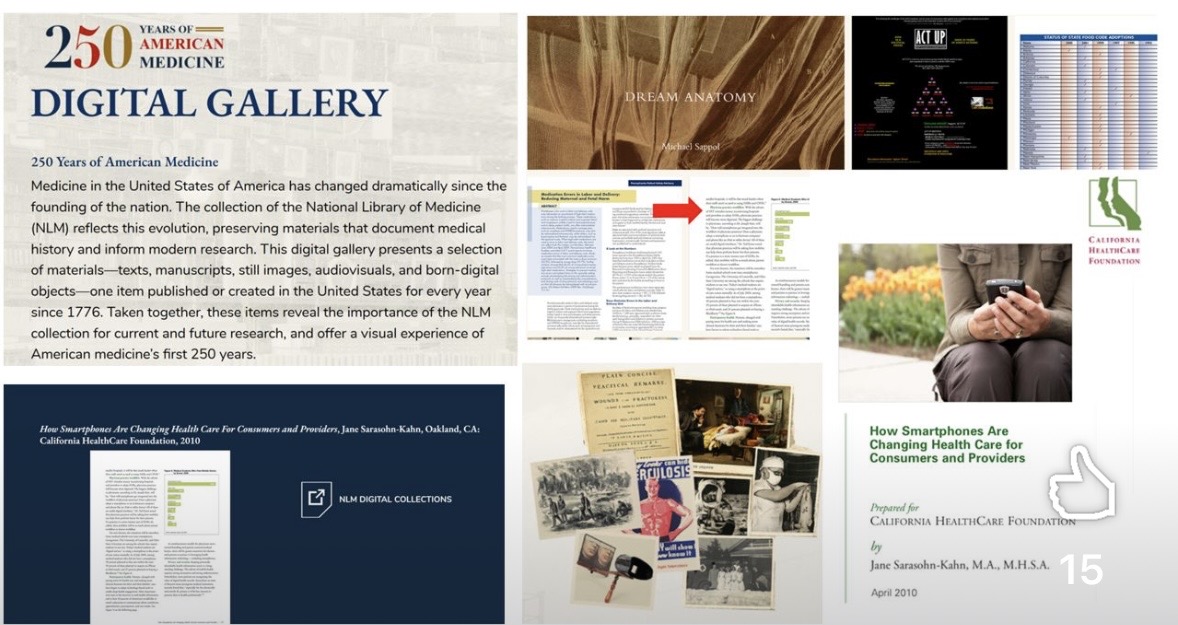 I’m celebrating America’s 250th birthday both patriotically and professionally, honored that the NLM included my 2010 paper, “How Smartphones Are Changing Healthcare for Consumers and Patients” as one of 250 items curated for the digital archive of 250 Years of American Medicine.
 I'm grateful to be part of the Duke Corporate Education faculty, sharing perspectives on the future of health care with health and life science companies. Once again, I'll be brainstorming the future of health care with a cohort of executives working in a global health care enterprise.