


The growing costs of health scuttle Boomers’ retirement plans
As household incomes in the U.S. have been, at best, stagnating in the past several years, the cost of health insurance premiums rose three times faster between 2003 and 2009. By 2015, the average premium for a family of four will reach nearly $18,000, according to The Commonwealth Fund. State Trends in Premiums and Deductibles, 2003-2009: How Building on the Affordable Care Act Will Help Stem the Tide of Rising Costs and Eroding Benefits from the Fund calculates that deductibles per insured person in the U.S. increased an average of 77% between 2003-09. In a related analysis, the Fund forecasts the
Mayor Bloomberg Gets an “A” for Health
One of the favorite holiday gifts I sent people this season was Mark Bittman’s work, The Food Matters Cookbook: 500 recipes for conscious eating. Health Populi’s definition of ‘health’ comes from the World Health Organization: Health is a state of complete physical, mental and social well-being and not merely the absence of disease or infirmity. So with an eye toward conscious eating as part of everyday health, I headed to two wonderful restaurants on a trip to New York City last week that fit the definition: Rouge Tomate, built on a philosophy of great design and sustainable, balanced food (with locations in
When with the “Future of Health” happen?
It’s year-end, so the forecasts abound whether we’re talking about trends in technologies, products and services. Gartner says cloud and mobile computing are hot, but managing customer expectations will require heavy lifting On the food front, Epicurious predicts that food halls will be all the rage (think Harrods in London or Takashimaya in Tokyo), Korean cuisine in demand, and sweet potatoes crowned the vegetable of 2011. For colors, Pantone is Queen and they see that honeysuckle (a salmon-pink) is the new black. In health technology, there’s no better list to read than CSC’s The Future of Healthcare: It’s Health, Then Care, which offers up top 10 technologies
Trust in hospitals highest over all health industry groups; pharma flat, and health plans rank lowest
Americans trust their supermarkets and local hospitals more than other industries they deal with. while tobacco and oil companies remain at the bottom of the trust-list for U.S. consumers, health insurance and managed care aren’t much ahead of them. Pharmaceutical companies rank fairly low, with only 11% of U.S. adults seeing them as “honest and trustworthy.” As a result, nearly one-half of Americans would like to see increased regulation on pharma. Over 1 in 3 Americans would like to see managed care and health insurance companies more regulated. The latest Harris Poll has found that oil, pharmaceutical, health insurance and tobacco are
iPhone health apps fast-growing – but chronic care and med adherence still small segments
“If more than 5 billion people in the world have access to mobile phones (not TVs or PCs), then content delivered to or accessed from mobile phones is the best mass media pick for sharing health information,” asserts a report released in November 2010 from MobiHealthNews, The Fastest Growing and Most Successful Health & Medical Apps. Overall, health and medical apps grew by 66%. However, growth rates by categories vary: medication adherence, still a small category, was the single fastest-growing category of iPhone health apps between February and August 2010 growing by 131%, followed by three areas with similarly high growth rates
The new medical home is….at home
With peoples’ adoption of mobile phones, broadband, and apps for which they pay out-of-pocket, the new person-centered medical home is…the home. Policy wonks can wax lyrically and econometrically spin models about how to bend the health cost curve. But patients are the most under-utilized resource in the U.S. health system, as Dr. Charles Safran testified to Congress in 2004. In 2010, patients are getting more engaged as they DIY more at-home: photograph development, travel planning, stock trades, and home improvement. So health care comes home. A column written by Dr. Steven Landers of the Cleveland Clinic, featured in the October 20th 2010 issue of
Mobile health search is on the rise – but not yet at the tipping point
The oracle (and I use the word here in the classic sense) of health internet statistics, Susannah Fox (@susannahfox on Twitter), along with the Pew Internet & American Life Project and the California HealthCare Foundation, find that 17% of mobile phone users look up health information online — and nearly 1 in 3 young adults 18-29 do so, while between 5-6% of people 50 and seek health information via mobile. The Mobile Health 2010 report tells the story. Beneath these macro statistics are the ones shown in the chart: people who have used cell phones to look up health information, which is a larger base
Health is a growing business for Nestlé
Their website now talks about it being the “Nutrition, Health and Wellness Company.” Most of us still think of it as the biggest food company in the world. It’s spending one-half billion dollars to expand in health. Nestlé, which brings baby food, bottled water, bars of chocolate and breakfast cereal to kitchen tables is now bringing us Health. The new group will be known as Nestlé Health Science. The company’s existing health business is already valued at about $1.6 billion. “The combination of health economics, changing demographics and advances in health science show that our existing health care systems, which focus on treating
More Americans Covered by Government Health Programs As Employers’ Coverage Drops
In 2010, fewer Americans are receiving health coverage from employers. At the same time, more health citizens are being covered by government programs, including Medicaid, Medicare, military and veterans’ benefits. The proportion of people on government health insurance rolls increased from 22.5% in January 2008 to 25.4% in August 2010. This represents an increase of about 13%. The proportion of Americans covered by employers fell from 50% to 45.5%, a 9% decline. Thus, the number of U.S. health citizens getting absorbed into government-sponsored health programs is growing faster than the loss in the ranks of people covered by private sector health insurance. Data
Eroding confidence in the U.S. health system, and more self-rationing
4 in 5 U.S. health citizens are trying to take better care of ourselves in light of increasing health care costs. A growing number of people are also talking with doctors about treatment options and costs, and searching for cheaper health insurance and less expensive providers. One-quarter of people didn’t fill or skipped doses of prescribed medications in response to increased costs, the same proportion as in 2009. The 2010 Health Confidence Survey from EBRI shows an eroding sense of faith in the American health system, with people expecting challenges for accessing health services and paying for health care in the future.
Giving consumers an “active voice” in pharmacy nudges healthy decisions
The U.S. health system could conserve $170 billion in avoidable medical costs related to patients not taking prescription drugs as-prescribed. That’s known as “sub-optimal pharmacy care,” and it’s estimated that 3 in 4 prescription drug users fall into this category. In other words, only 1 in 4 patients on Rx drugs take their prescriptions as directed by their physicians (known as compliance) or weren’t prescribed the optima drug therapy in the first place. At least 1 in 4 patients never even fill their first prescription for a drug their physician has prescribed. CVS Caremark has found that health citizens can become more
A primer on primary care
More patients find doctor is not in, NPR asserted on August 30, 2010, as part of its ongoing series covering the primary care shortage in America. To understand why this statement is so important, let’s go back to the definition of “primary care.” The American Association of Family Physicians says the domain of primary care includes the primary care physician, other physicians who include some primary care services in their practices, and some non-physician providers. Central to the concept of primary care is the patient, according to AAFP. Thus, the first definition of primary care, AAFP says, is “care provided by physicians specifically
So many health apps: is this a Field of Dreams?
“If you build it, he will come,” Shoeless Joe whispers to Ray in the baseball class movie, Field of Dreams. Ray then takes a leap of faith, building a baseball field on top of his corn fields there in the middle of Iowa, and miracles happen. Will it take a miracle for people to adopt health apps? A panel, now in the midst of PanelPicking as one of many Interactive sessions for South-by-Southwest 2011 (SXSW), will respond to that question. The panel is called, Health: Is There Really an App for That? Voting ends midnight CDT on Friday, August 27,
Mobile health and the FDA: what WellDoc’s approval means for mHealth
WellDoc received approval from the Food & Drug Administration (FDA) on August 2 2010 to market the company’s DiabetesManager system. This signals the regulator’s openness to mobile health solutions — a market moment that may usher in the new-and-improved era of personal health management. DiabetesManager uses the mobile phone as a platform for patients with Type 2 diabetes to gather, store and communicate personal health data such as blood glucose measurements; these data then feed into WellDoc’s algorithms that communicate personalized health coaching support back to patients in real-time. This process creates a closed-loop system that helps bolster patients’ decisions and behaviors throughout the day. Health
Bienvenido, HolaDoctor!
Welcome, HolaDoctor, to the growing roster of consumer-facing health portals. La differencia, this time, is that HolaDoctor is an entirely Spanish-speaking website of comprehensive health information. The site focuses on health content and tools highly targeted to Hispanics and health issues of most concern. Known previously as DrTango, founded in 1999, HolaDoctor has at least 1.3 million Hispanic consumers who have registered on its site, and operates over 500 multilingual health websites under its corporate umbrella. The morphing from DrTango to HolaDoctor has to do with the organization’s launch of its consumer-focused health and wellness portal reaching out to Spanish speakers in the
Caveat emptor for consumers buying medicine
Two weeks ago, I bought a package containing 100 caplets of Tylenol PM caplets from my grocery store’s pharmacy aisle. I checked the lot number marked on the box against the list on the McNeil consumer healthcare website, and my lot appears to be fine. Today, Avandia, the prescription drug that treats diabetes, hit the headlines of the world’s major newspapers: Avandia Panel Hints At Doubts of Credibility, says the New York Times Avandia Hearings To Reveal True Dangers of Popular Drug, according to FOXNews GlaxoSmithKline Hid Negative Avandia Data: Lawmakers, reads ABC News Glaxo to Pay $460 million in Avandia Settlement, notes Reuters. And there’s also
Employee Health Benefits: Wellness Up, Rx Down
As the recession continues to negatively impact U.S. business, employers are tightly managing benefits across-the-line, from health to housing and travel categories. Benefits overall are experiencing a downward trend versus 5 years ago. In the health arena, benefits that show staying power include wellness resources (covered by 75% of employers), on-site flu vaccinations (68%), wellness programs (59%), and 24-hour nurse lines (59%). On the downside, benefit programs that are expected to erode in the next 12 months are prescription drug coverage, dental insurance mail-order drug programs, and chiropractic coverage, among others shown in the chart. The Society for Human Resource
Most Americans have self-rationed health care due to cost in the past year
The health care cost crisis has hit at least 1 in 2 American families, based on the latest Kaiser Family Foundation Health Tracking Poll. KFF found that 30% of Americans have had trouble paying medical bills in the past 12 months. Challenges paying for health care increase if you’re black, Hispanic, earning under $40,000 a year, or….in poor health. There are two angles on dealing with the costs of health care dealt with in the KFF poll. First, looking to the government to regulate health costs: 42% of Americans said the government doesn’t regulate the cost of health insurance
The #1 focus for employees: physical health, fiscal health
While Congress and the President arm-wrestled through the Health Summit, the private sector doesn’t sit still waiting in a frozen state for the result of inside-Beltway-health-baseball. Employees/consumers and employers have aligning in mutual self-interest when it comes to health care benefits, costs, and disease management, according to a survey sponsored jointly by Deloitte and the International Society of Certified Employee Benefit Specialists, 2010 Top Five Total Rewards Priorities Survey. This latest recession has focused the minds of companies and their workers and driven the collective priority of managing health costs while maintaining job and retirement security. In this 16th annual
Penny-wise and pound-foolish: how increasing payments for ambulatory care grows inpatient admissions

Did you ever play the whac-a-mole game? As Wikipedia describes it, “A typical Whac-A-Mole machine consists of a large, waist-level cabinet with five holes in its top and a large, soft, black mallet. Each hole contains a single plastic mole and the machinery necessary to move it up and down. Once the game starts, the moles will begin to pop up from their holes at random. The object of the game is to force the individual moles back into their holes by hitting them directly on the head with the mallet, thereby adding to the player’s score.” Health care
Taco Bell does nutrition at the drive-thru window – pondering Pollan’s Food Rules
1 in 2 Americans visits so-called quick service restaurants (QSR) twice a month, 29% visit 3-5 times a month, and 16% visit 6 or more times a month. Taco Bell sponsored the America’s Drive-Thru Survey and found that 7 in 10 Americans think having better choices in drive-thru’s would encourage them to eat better. Only 50% of Americans believe they can stick to a low-calorie diet while ordering through drive-thru’s. 9 in 10 would try better choices of their favorite menu items if they were offered. Taco Bell generates 70% of its business via drive-thru. This press release explains the
Health is contagious: the nature of connected-ness
The book Connected was recommended by my colleague, intellectual beacon and friend, Susannah Fox of the Pew Internet & American Life Project. In the midst of late nights analyzing health reform scenarios and medical microeconomics, I’ve made the time to read this book in its entirety. It’s been a worthwhile investment. Previously, the authors of Connected, Nicholas Christakis and James Fowler, found evidence on connectedness in health in the areas of obesity, smoking cessation, binge drinking, and other lifestyle behaviors that directly impact good or bad health. This week, another team of innovative thinkers led by John Caccioppo from the
How to save $290 billion in health care in America? Improve medication adherence
13% of the $2.4 trillion U.S. health economy could be saved by improving adherence to medication, according to an analysis from the New England Healthcare Institute (NEHI). Poor medical adherence leads to poor outcomes and increased medical costs, as described in NEHI’s report, Thinking Outside the Pillbox: a System-wide approach to improving patient medication adherence for chronic disease.. NEHI identified poor medication adherence as a key component in the overall waste and inefficiency in American health care, where poor adherence leads to preventable worsening of disease and increasing health risks — especially among people with chronic disease(s). Since
People without a connection to a primary care doctor don’t proactively manage health
The relationship between patients and their physicians is a key driver in how and if people proactively manage their health. But cost often gets in the way of that relationship between a patient-consumer and a primary care doctor. The #1 reason why Americans deter proactive health care is cost. No American, whether insured and unemployed or working and covered, is immune from postponing or otherwise actively managing care when they are still well, according to a survey from IBM on health consumers in the U.S. 55% of Americans say they can’t afford the cost of wellness visits out-of-pocket. This is
Americans’ spending on complementary and alternative medicine is up, but most of the increase is "do-it-yourself" care
U.S. adults spent $33.9 billion on complementary and alternative medicine (CAM) in 2007. The largest expenditure on CAM was on self-care costs of $22.0 billion, the largest component of which was $14.8 billion spent on non-vitamin, non-mineral natural products. In addition, Americans spent $11.9 out-of-pocket (OOP) on practitioners such as chiropractic, osteopathic manipulation, naturopathy and chelation therapy; $4.1 billion on yoga (equal to 12% of the total), $2.9 billion on homeopathy, and $0.2 billion on relaxation techniques. The National Health Statistics Reports series published Costs of Complementary and Alternative Medicine (CAM) and Frequency of Visits to CAM Practitioners: United
Infection prevention is a casualty of the recession
U.S. hospital finances are so stretched in the current recession, infection prevention efforts have begun to be curtailed. 32% of health facilities say that reductions in staffing and infection prevention (IP) departments have reduced their capacity to deal with IP in their institutions. The Association for Professionals in Infection Control & Epidemiology (APIC) has released the 2009 APIC Economic Survey – The Economic Downturn and Infection Prevention, published in June 2009. 41% of APIC’s polled members reported budget cutbacks for infection prevention in the past 18 months, due to the economic downturn. Among several areas negatively impacted that
Vaccines update – more news, less confusion, and part of economic stimulus
In 2008, mass media coverage of vaccines seemed more focused on pop celebrity fights, pro- and con-, versus scientific revelations. Will 2009 yield more knowledge and less confusion? 2008 was something of an Amanda Peet-versus-Jenny McCarthy show, pro v. con, taking place on the covers of People magazine and in YouTube videos. But just in the past few weeks, there’s been a subtle shift in news about vaccines toward more solid information. The headline points are: Minnesota children came down with the Hib virus, with blame going first to the Hib vaccine shortage and possibly, too, to 3 in 5
Of fish oil and back pain – complementary medicine utilization shifts since 2002
The use of complementary and alternative medicine (CAM) by Americans has held steady since 2002; however, the types of therapies adopted have changed over five years. The Use of Complementary and Alternative Medicine in the United States, from the NIH’s National Center for Complementary and Alternative Medicine, follows up the agency’s 2002 report. This round, NCCAM offers more details on the use of CAM in kids, as well as CAM use by demographic factors including racial and ethnic groups. CAM is “Complementary” when used with conventional medicine, and “Alternative” when used as a substitute. The most commonly used CAM
Nearly 1 in 2 women delayed health care in the past year due to costs – the economic impact on a woman’s physical, emotional, and fiscal health
Nearly 1 in 2 women put off seeking health care because the cost was too high. The kinds of services delayed included visits to the doctor, medical procedures, and filling prescription medications. The fourth annual T.A.L.K. Survey was released this week by the National Women’s Health Resource Center (NWHRC), focusing on the declining economy and its impact on women and three dimensions of their health — physical, emotional, and fiscal. 40% of women say that their health has worsened in the past five years due to increasing stress and gaining weight, according to the survey. One of the most interesting
Urban planners and landscape architects are public health professionals
There’s more evidence that green = health. No, not tea, but more green space. More specifically, access to green space lessens health disparities between the wealthy and the not-so-rich in the community. Green spaces reduce the health gap between rich and poor, according to a study published in the Lancet, Effect of exposure to natural environment on health inequities: an observational population study by Dr. Richard Mitchell and Dr. Frank Popham, Scottish researchers in public health and geography, respectively. Mitchell and Popham found that health disparities between the rich and the poor can be halved with citizens’
Moving up the health care value chain: J&J in health services
Johnson & Johnson (J&J) has acquired the online health coaching company, HealthMedia. This will move the health supply company up the health care value chain further into the provision of health services. Nine years ago, I teamed with a Big Pharma on a scenario planning exercise about consumers and health care. One of our scenarios told the future-story of the consolidation/integration of information technology, pharma/life sciences, and health services to benefit consumer health. We now meet up with this future-story, and it’s J&J’s to tell. I’ve written here in Health Populi about Walmart’s move toward pharmacy benefits management and
Employers’ wellness programs in a Health 2.0 era
Employee wellness is a growth business: 57% of large employers provide wellness programs to employees, increasing from 49% of large employers in 2006. According MetLife’s Sixth Annual Employee Benefits Trends Study, nine of ten companies that offer wellness believe these programs are effective in reducing medical costs. For the average employer, MetLife found, 58% of the total benefits spend goes to medical coverage — an even higher percentage for smaller employers. The most popular wellness programs include smoking cessation, weight management, an exercise regimen and cancer screening among others. While 4 in 5 employers provide incentives to “nudge” people into
The health impacts of the economic downturn: stress begets illness
Stress due to the economic downturn is causing more of us to be irritable, angry, sleepless, and self-medicating through food. And stress in the workplace is costing business $300 billion a year, according to the American Psychological Association (APA), due to the loss of productivity, absenteeism, turnover and increased medical costs. The APA completed its survey, Stress in America, in August 2008 — more than a month ago, well before yesterday’s biggest stock market fall in 4 years. The APA warns that the levels of stress felt by Americans due to the financial downturn can wreak significant havoc
Employee health and productivity — a growth segment
If employers got their collective hands on Aladdin’s lamp, they’d wish for: Increased employee accountability Reduced health risks Tailored health management programs that account for risk Health data and measurement tools that feed into analytics and outcomes measures, and Integrated and well-managed benefits and programs. These wishes are brought to you by Hewitt Associates’ 2008 survey, The Road Ahead: Driving Productivity by Investing in Health. 38% of employers plan to develop strategies for employee health and productivity in the next 1 to 2 years; 21% plan to do so within 3 to 5 years. 1 in 5 (19%) aren’t
Insured and confused: people want alternative medicine, yet disconnect from wellness programs
Most employees covered by health insurance favor health plans that provide access to and cover alternative medicine services. Yet only one-half of these employees feel it’s important for a health plan to require employees to eat properly and exercise, and to provide evidence of such healthy behavior. There’s a disconnect in consumers’ minds between actual lifestyle behaviors and understanding how to use health benefits. I’ve talked about health plan literacy in Health Populi before. Guardian’s survey demonstrates a facet of that phenomenon. According to the 2008 Benefits & Behavior: Spotlight on Medical survey from Guardian Life Insurance Company,
A View from the UK: Is Preventive Care "Worth It?"
I’m enjoying a weekend with London-based friends who travel the world and know what’s what. Today, we spent hours relishing (literally) the Borough Market in Southwark, located south of the Thames. This is London’s oldest food market, established when the Romans built the first London Bridge. The Market in its current state has been around for a quarter of a millenium. The Market boasts and hosts a glorious array of green grocers, bread bakers, Spanish food purveyors, brownie makers, organic tofu purveyors, and parmigiano reggiano vendors in one spot I’ve seen, perhaps ever. It is foodie heaven and a
Stress through the ages (or, it’s good to be 65)
Younger people are way more stressed out than people over 65, according to a poll sponsored by the American Psychological Association. HarrisInteractive has published data in its latest Healthcare Newsletter titled, “Adults Over 65 Experience Far Less Stress Than Adults in All Other Age Groups.” These findings are part of a deeper dive into the APA’s report published in October 2007, Stress in America. The highest levels of stress in America are in the 35-49 age cohort, followed by people aged 25-34. 6 in 10 people aged 35-49 say they are concerned about the level of stress in their
When health becomes beautiful, consumers will pay
Or, The Lovely Bones (health care version). I have an acquaintance whose bone density scan told her she is at high risk for osteoporosis. No surprise: the condition runs in her family. For several years, she has been paying a luxury-segment department store counter $300 every two months for her skin creme, which promises that she will be ageless as she ages into her fifties, sixties, and beyond. But she has not yet filled her prescription for an osteoporosis-preventing drug. She doesn’t have prescription drug coverage. She thinks the drug is too high-priced. It’s about $300 for
Health, the New Status Symbol
We’d rather be healthy than wealthy, according to a new survey from Manning Selvage & Lee (MS&L), the PR firm that’s part of the global communications company, Publicis. MS&L polled Americans’ beliefs on health and self-esteem. Three-quarters (72%) of Americans say that being physically healthy is a symbol of personal success. 91% of Americans said they’d rather be described ads “healthy” than “wealthy.” 71% said they’d rather be seen as someone who “looks really healthy” vs. someone who’s nicely “put together or well-dressed.” These will be glad tidings for MS&L’s client base. MS&L serves a global health clientele which includes
Hearts and the hospital bill – and the role of health IT
The annual national hospital bill may reach $1 trillion by 2008. This forecast is brought to you in a new report from the Agency for Healthcare Research and Quality (AHRQ). Hospital charges in 2005 totalled $873 billion in 2005, nearly doubling in ten years. The hospital bill was covered primarily by three payor segments: Medicare, which paid nearly one-half of the total hospital bill; private insurance, covering nearly one-third; and Medicaid, at 14% of the total. What are we spending money on in hospitals? Putting aside pregnancy/childbirth and infant care, the top three conditions are heart-related: coronary artery disease ($46
Health, the new green: Toyota’s RiN
While health has blurred into a score of consumer product categories, here’s the latest crossover from Toyota: the first car to engineer health and wellness into its design, recently unveiled at the 2007 Tokyo Auto Show. The Toyota RiN is a concept car based on comfort and what Toyota’s PR calls, “serene, healthy living.” The RiN was one of 21 cars Toyota showed under the theme, “Harmonious Drive — a New Tomorrow for People and the Planet.” This isn’t high performance; it’s high-minded health by way of Dr. Weil, wrapped up in a golf cart-cum-Popemobile. Toyota’s press says the car’s
Happy birthday, Prozac!
The Financial Times celebrates the 20th birthday of Prozac in the newspaper’s Nov 17/18th issue. It’s valuable to look at the rise and fall of Prozac, the brand; the rise of its generic equivalent; and how the drug has profoundly impacted one consumer’s life. Prozac Market. Before it treated depression, Prozac was thought to be an anti-hypertensive. When that didn’t seem to work, Eli Lilly considered it for an anti-obesity treatment. Strike two, clinical-wise. Finally, Lilly took the drug to market to fight depression after it was approved by the FDA on December 29, 1987. In two years, Prozac became
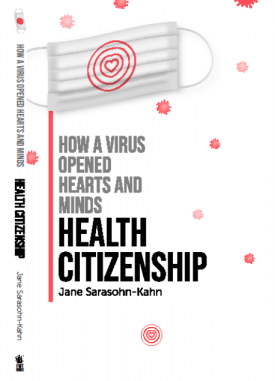
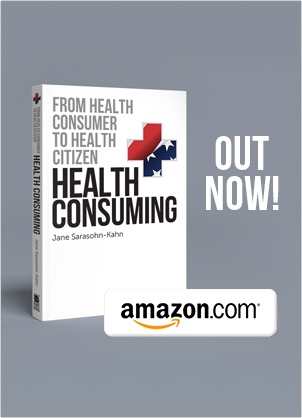
 Jane will be working with EU- and UK-based clients in September and October 2026, collaborating with stakeholders in digital health, public/community health, retail health, and growing opportunities for health-at-home. Stay tuned to her updates here on Health Populi on-the-ground as she lives the digital nomadic work-life in Italy, Belgium, the Netherlands, and in London.
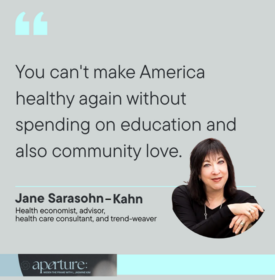 I was grateful to be Jasmine's first conversation-guest on her new podcast, "Aperture - Widen the Frame," where this expert in narrative medicine is bringing together the broad range of voices to sit at the table and address what health care needs: those humans in the health-system-loop who address health equity and empathy along with delivering evidence-based medicine for all.
 Jane joined host Dr. Geeta "Dr. G" Nayyar and colleagues to brainstorm the value of vaccines for public and individual health in this challenging environment for health literacy, health politics, and health citizen grievance. Click onto the Pfizer Value of Vaccines site and you can watch four episodes covering the challenges with adult vaccination, the employer and health plan member's journey to vaccination, reimbursement, and collaborating for proactive prevention.