


What Retail Telemedicine Means For Healthcare Providers
Direct-to-consumer retail health options are fast-growing in the U.S. health ecosystem. CVS Health brought three telemedicine vendors to its pharmacy brick-and-mortar stores. CVS also acquired Target’s pharmacies, expanding its retail health footprint. Rite Aid has added HealthSpot kiosks to its pharmacies, while Walgreens expanded its relationship with MDLive. And, Cox Cable acquired Trapollo to bring remote health monitoring into subscribers’ homes, along with the cable company’s venture with Cleveland Clinic, Vivre Health. Coupled with the growing supply side of telemedicine vendors, the latest National Business Group on Health survey found that most large employers plan to expand the telemedicine services they
From Pedometers to Premiums in Swiss Health Insurance
A Switzerland-based health insurance company is piloting how members’ activity tracking could play a role in setting premiums. The insurer, CSS, is one of the largest health insurance companies in the country and received a “most trusted general health insurance” brand award in 2015 from Reader’s Digest in Switzerland. The company is conducting the pilot, called the MyStep project, with volunteers from the Federal Institute of Technology in Zurich and the Unviersity of St. Gallen. According to an article on the program published in the Swiss newspaper The Local, “the pilot aims to discover to what extend insured people are
36 Mobile Health Apps Account for Half of All Downloads
Of the over 165,000 mobile health (mHealth) apps available in the Apple iTunes and Google Play (Android) stores, 36 are responsible for one-half of all downloads, based on IMS Institute‘s latest research into Patient Adoption of mHealth: Use, Evidence and Remaining Barriers to Mainstream Adoption published today. This report updates IMS Institute’s 2013 report on mHealth, covered here in Health Populi. For the 2015 research, IMS Institute looked at the state of mHealth apps, number and type, uptake and usage, evidence of the impact apps have on patient care, and consideration of barriers and progress made for apps becoming a
How Cable TV Can Make Your House Your Medical Home
Taking literally the maxim that health is where we live, work, play and pray, Cox Communications acquired Trapollo, a remote health monitoring company, extending the core business of cable TV into the world of health services to the home. “We believe that the home will be an increasingly important node within the healthcare delivery architecture,” Asheesh Saksena, executive vice president and chief strategy officer, Cox Communications, said in the company’s press release. In the past year, Cox Communications entered in a joint venture with the Cleveland Clinic, to form Vivre Health for developing digital health care services. Cox also invested in
The Rise And Fall Of Wearables?
Within a handful of months of Fitbit’s multibillion dollar IPO in June 2015 comes a report from Argus Insights foretelling the precipitous fall of consumer demand for wearable technology just weeks ahead of the start of the 2015 holiday shopping season. The first chart illustrates Argus Insights’ sobering forecast on wearable demand since reaching a peak in January 2015 — part of the 2014 holiday shopping frenzy. In fact, wearables from Fitbit, Garmin, Jawbone and Misfit Wearables marketed heavily in Sunday newspaper ads and via online promotions in late 2014 to bolster sales with the theme of gifting loved ones with
Health, Wearables and the IoT in the Windy City

Health is everywhere, where we live, work, play, pray and shop. So while I’m in Chicago staying off The Magnificent Mile in The Windy City, I took a several-thousand step walk along this shopping mecca and found health and wellness in the form of wearable technology, fitness, smart homes and the Internet of Things spanning the eastern end of Michigan Avenue to the western Gold Coast lakefront. Here’s a photo of the Garmin store, whose windows feature wearable tracking device promotions and devices. It was surprising to see Garmin investing in this expensive piece of real estate, with its logo
Health consumers: in search of authentic consumer experiences
In the growing value-based era of health care, patients are looking for real consumer experiences: being treated well, with respect, and with a high level of service people find in other industries. PwC polled about 2,300 U.S. adults online in June 2014, resulting in the paper, Personal health management: The rise of the empowered consumer, part of PwC’s research into The New Health Economy. In that New Health Economy, more consumers want to take control of their health, PwC discovered through the survey. The three key parameters for this empowered health consumer are personal, proactive health management, service, and value,
How value will impact the business of pharma
The top 25 life science companies grew a paltry 1% in 2014, and 70% of recent brand launches underperformed analysts’ expectations. The introductory page of a new report from KPMG describes, in a single sentence, the very challenging market environment for bio/life sciences: “The pharmaceutical industry is caught between a blockbuster-driven past and a future comprising precision medicine, curative therapies, and payment for outcomes. The years of consistent double-digit growth and unconstrained pricing power are fading into memory.” The assertively titled, “Change in pharma? Not optional,” offers 10 “integrated imperatives” for the pharma industry to follow to best respond to
Women and the Internet of Things – Learning from the IBM Selectric
What happened when Rosie the Robot started ordering Jane Jetson around? Not a happy scenario for the Jetsons family. The same scenarios can be played out in the future of the Internet of Things (IoT) without attending to people-centered design principles, and for the home — women-centered design and ethos. The design process can play out future scenarios and anticipate unexpected consequences that can, ultimately, inform delightful user experience. Women are the Chief Household Officer, making the majority of home-based financial decisions. In fact, increasingly, women are taking on the job of Chief Financial Officer at home, too. To learn more,
Yelp For Health Grows With ProPublica
In addition to checking out local restaurants, auto repair shops, and dry cleaners, you can check out health care providers on a new-and-improving consumer review portal on Yelp. While Yelp has been serving up consumer comments on doctors, hospitals, clinical labs, nursing homes and dentists for several years, the review site is partnering with ProPublica, the journalism portal, to complement the data collected on health in local communities. Yelp’s CEO, Jeremy Stoppelman, made the announcement in the company blog on August 5 2015. Yelp has amassed over 1.3 million health reviews, and ProPublica will have access to those as part
It’s My Body And I’ll Test If I Want To
While health consumers in America have more skin in the game in terms of paying more via high-deductible health plans and out-of-pocket costs, they are largely unempowered when it comes to diagnostic testing in labs. Theranos is working to change that and empower consumers to access convenient lab testing and get results quickly and online. Describing the lab-disempowerment story in a Wall Street Journal op-ed dated July 28, Elizabeth Holmes writes about How to Usher In a New Era of Preventive Health Care. Holmes is the founder and CEO of Theranos (named by joining the words “therapy” and “diagnosis”), a health technology company
Older People and Activity Tracking: AARP Weighs In
Activity and sleep trackers hold promise for the health and wellbeing of people over 50. But they’ve miles to go before their design and usefulness get props from older people. The AARP’s Project Catalyst report, Building a Better Tracker: Older Consumers Weigh in On Activity and Sleep Monitoring Devices, presents research conducted with Georgia Tech’s Home Lab which gave 92 people a digital wearable to track activity or sleep over a six week period. The second graphic shows the devices used in the study. 3 in 4 of the activity tracking users said their devices were, or had the potential to
Fitness tech will boost holiday retail sales for consumer electronics
Sales of computers and tablets and LCD TVs won’t be hot on peoples’ holiday shopping lists in 2015. But smartwatches, health and fitness tech, and 4K Ultra HD TVs will be in peoples’ gift wish-lists and under homes’ holiday trees. The Consumer Electronics Association (CEA) published its 2015 U.S. Consumer Electronics Sales and Forecasts report, and it shows a shifting retail picture where traditional consumer electronics categories — notably computers and mainstream TVs — are declining in demand. But new-new categories are expected to buoy 2015 retail sales. The new categories of consumer electronics will generate about $10 bn (wholesale
Sports and the Internet of Things: the Scoop & Score podcast
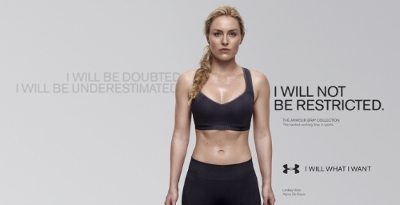
From elite soccer and football fields to youth athletes in public school gyms, wearable technology has come to sports bringing two big benefits of gathering data at the point of exercise: to gauge performance and coach back to the athlete in real time, and to prevent injury. I discussed the advent of the Internet of Things in sports on the Scoop and Score podcast with Andrew Kahn, sports journalist and writer, and Stephen Kahn, sports enthusiast and business analyst. [In full disclosure these two Kahn’s are also my brilliant nephews.] We recorded the podcast on July 14, 2015, the day
Collaboration in health/care drives value – in & beyond bio/pharma
“Tomorrow [drug makers] may not get paid for the molecule, they may only get paid for the outcome,” expects Brian Niznik of Qualcomm Life. He’s quoted in a report from PwC’s Health Research Institute, 21st Century Pharmaceutical Collaboration: The Value Convergence. What Brian’s comment recognizes is the growing value-based environment for healthcare, which couples purchasers driving down drug costs via discounts and stringent formulary (approved drug list) contracts, and growing patient responsibility for paying for prescription drugs — especially financially costly for specialty drugs that are new-new molecules. But as Brian points out, if the high-cost molecule doesn’t perform as
IoT in Healthcare, Take 3 – Accenture & the Internet of Me in Health
We’re entering the era of personalized healthcare promising convenient and meaningful health experiences, according to Accenture’s 2015 Healthcare IT Vision articulated in their report, Top 5 eHealth Trends. This post is third in three published here on Health Populi this week, exploring the growing role of the Internet of Things in health/care. On 8th July, we dug into McKinsey Global Institute’s research on IoT’s influence over nine industries, including human health; and on the 9th, we reviewed Goldman Sachs’ report on digital health’s potential impact on the U.S. healthcare system. Accenture’s five eHealth trends include: The Internet of Me; the Outcome Economy, with
IoT in Healthcare, Take 2: Goldman Sachs weighs in
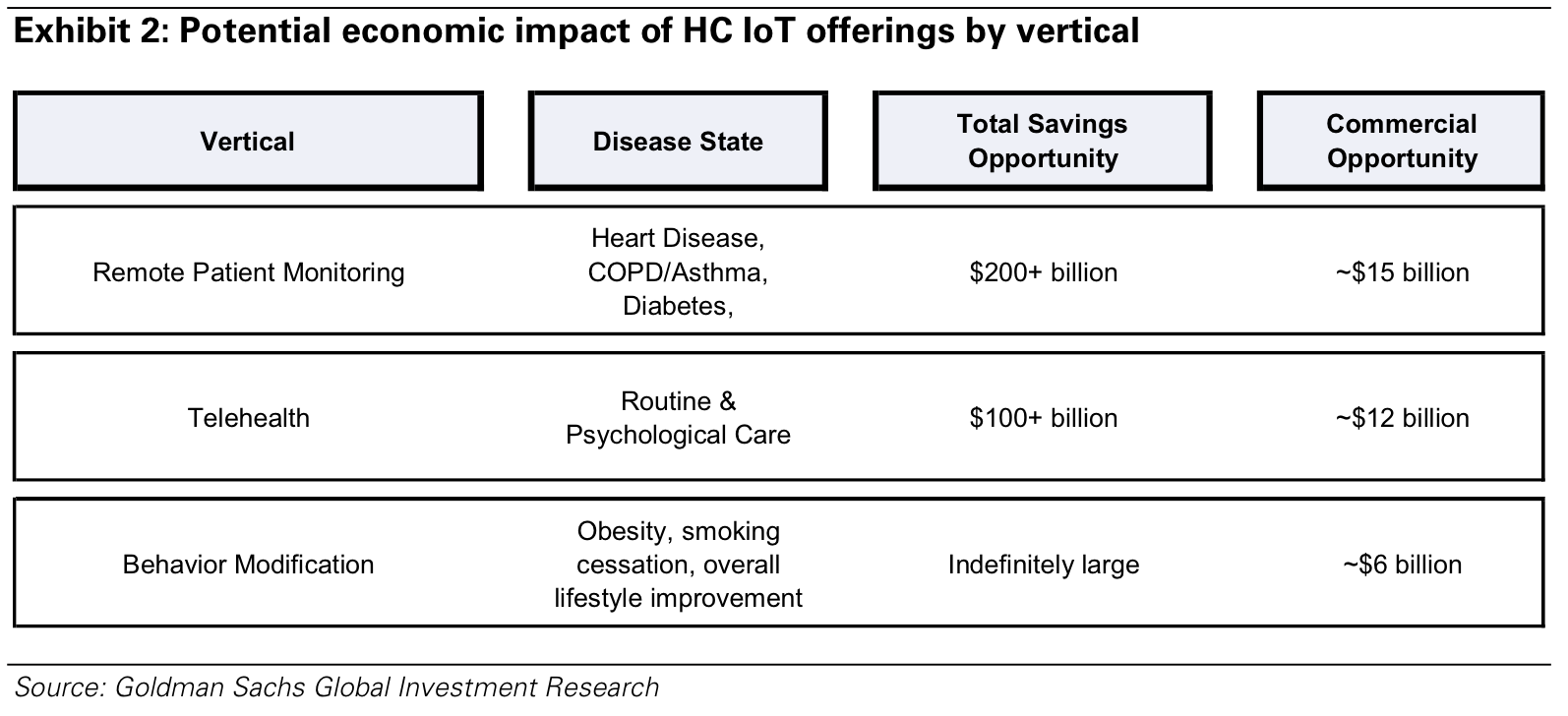
In this week’s posts on Health Populi, we’re diving into three big reports focused on digital health and the Internet of Things (IoT) in healthcare: from the McKinsey Global Institute, Goldman Sachs, and Accenture. In this post, we dig into Goldman Sachs’ analysis, The Digital Revolution comes to US Healthcare, the investment firm’s fifth volume in their Internet of Things report series. Goldman Sachs’ definition of the Healthcare IoT is, “a device that is connected via the Internet and informs clinical decision making,” which bridges digital and physical worlds “to change physician and patient behavior.” The firm identifies three IoT
The Internet of Things in Health: McKinsey Sees $1.6 T Value
‘Tis the summer of big, smart reports covering the Internet of Things (IoT) impact on health and fitness. Just this month, three of these missives have come to my inbox, and they all contribute sound thinking about the topic. Today, tomorrow and Friday, I’ll cover each of these here in Health Populi. We begin with McKinsey Global Institute’s The Internet of Things: Mapping the Value Beyond the Hype. [In full disclosure, I was an outside adviser to the MGI team members who focused on the human/health and fitness aspects of this report, and thank MGI for the opportunity to provide
Digital health mainstreams at CE Week 2015
Digital health is a fast-growing category of consumer electronics, and many new mobile and wearable health devices were featured at the 2015 CE Week held in New York City. The major themes of the “Fresh Gear” unveiled at the meeting included connected cars, connected home devices, 3-D printing, and a growing array of wristbands, apps, and wearable devices focused on the already-crowded health/wellness segment, and the emerging health/care area. The five I’ll focus on are good examples of digital health tech’s aimed at mainstream consumers shopping at retail at the middle of the market: an area that’s ripe to be served.
How digital ‘everything’ and consumer expectations are re-shaping health care
Two forces are converging to shape a new era of “living services,” Accenture posits: the digitization of “everything” and consumers’ “liquid” expectations — which are demands for personalized, engaging and adaptable experiences. Accenture’s report on this phenomenon, The Era of Living Services, spans the broad range of consumers’ daily lives where these services will impact: homes, families, transportation, shopping, leisure time, jobs, finances, education, cities, and above all for Health Populi readers, “our bodies.” Living services are physically close to us, as Accenture sees them, “wrapping themselves around the everyday things we do.” They are digital services that are aware
Congratulations, Fitbit – what $4.1 bn looks like
When I clipped you to my underwear for the first time in 2011, I’d no idea that you were about to change my life, health and mindfulness. You were my first digital activity tracker and since then, I’ve purchased three versions of you…as well as others. Fitbit, you really did change my life and help me become more mindful of my activity, my calorie burn, ultimately supporting me in losing weight and keeping it off. Since its launch in 2009, the brand name “Fitbit” has become synonymous with digital activity tracking, the most popular digital pedometer on the market —
The 3 tectonic forces shaping patients – it’s BIO week
Patients in the U.S. are transforming into health care consumers, and in 2015 there are 3 underlying forces shaping that new consumer. This week kicks off the annual BIO conference in Philadelphia, and today Klick Health, the digital communications firm, convenes a group of thought leaders in healthcare to brainstorm markets, financing, and the state of pharmaceutical and life science innovation. An underlying theme throughout this meet-up is patient’s role in health/care. Patients are people, consumers, caregivers, mothers, fathers, sisters, brothers, friends, neighbors, community members, taxpayers, all. We’re old, we’re young, we’re mobile and not-so-much, we’re amputees, we’re migraneurs, we’re cancer
Telehealth goes retail
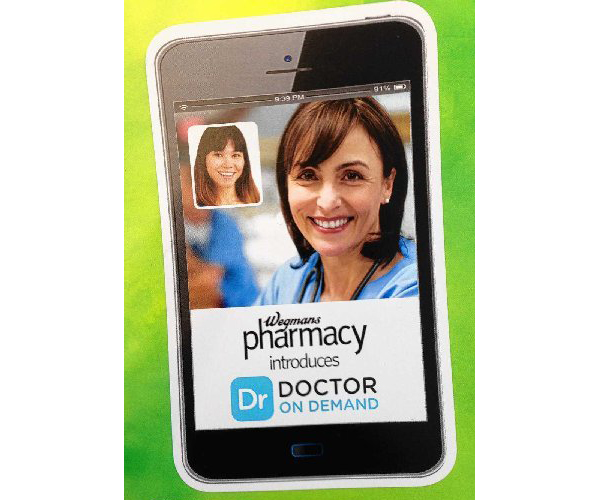
In the past couple of weeks, a grocery store launched a telemedicine pilot, a pharmacy chain expanded telehealth to patients in 25 states, and several new virtual healthcare entrants received $millions in investments. On a parallel track, the AMA postponed dealing with medical ethics issues regarding telemedicine, the Texas Medical Association got stopped in its tracks in a case versus Teladoc, and the Centers for Medicare and Medicaid Services (CMS) issued a final rule for the Medicare Shared Savings Program that falls short of allowing Accountable Care Organizations (ACOs) to take full advantage of telehealth services. These events beg the
Musings with Mary Meeker on the Digital/Health Nexus
People in the U.S. spend over five-and-a-half hours a day with digital media in 2015, with time on mobile devices exceeding use of laptop and desktop computers. The growth of mobile means people are using and seeking more just-in-time services in daily living, and this has big implications for health/care, based on the annual mega-report on Internet Trends from Mary Meeker, KPCB’s internet analyst. “People” in health/care are patients, consumers and caregivers; people in health/care are also health plan administrators, employer benefits managers, doctors, nurses, allied health professionals, financial managers in hospitals, pharmacists, and the entire range of humans who
Purchase of wearable fitness trackers expected to grow in 2015, but one-half of Americans would “never” buy one
Headphones and smartphones are the top two electronics products U.S. consumers intend to purchase in 2015. But the emerging consumer electronics categories of wearable fitness trackers, smart watches, and smarthome devices (especially “smart” thermostats) are positioned to grow, too, in 2015, according to the 17th Annual CE Ownership and Market Potential Study from the Consumer Electronics Association (CEA). Wearable trackers have an installed base of about 17 million devices in the U.S., with 11% of U.S. households intending to purchase a tracker in 2015 — 6 percentage points up from 2014 (about a 50% increase over 2014). There are about 6 million smart
Consumers seek retail convenience in healthcare financing and payment
Health care consumers face a fragmented and complicated payment landscape after receiving services from hospitals and doctors, and paying for insurance coverage. People want to “view their bills, make a few clicks, pay…and be done,” according to Jamie Kresberg, product manager at Citi Retail Services, a unit of Citibank. He’s quoted in Money Matters: Billing and payment for a New Health Economy from PwC’s Health Research Institute. The healthcare service segment most consumers are satisfied with when it comes to billing and payment is pharmacies, who score well on convenience, affordability, reliability, and seamless transactions – with only transparency being
Moms are the most important social determinant of health
It’s Mother’s Day 2015, so it’s time to praise moms and their role in making health: in their families, in their communities, and long-overlooked, for themselves. Mothers play a defining role in driving health in the world. Moms may be the most important social determinant of health. The National Partnership for Women & Families advocates for the role of women in building a healthy society, broadly defined. From the womb via the Childbirth Connection and Reproductive Health through economic security (such as fair wages and paid maternity leave) and women’s ability to access health information on behalf of their families and themselves,
Capital investments in health IT moving healthcare closer to people

In recent weeks, an enormous amount of money has been raised by organizations using information technology to move health/care to people where they live, work, and play… This prompted one questioner at the recent ANIA annual conference to ask me after my keynote speech on the new health economy, “Is the hospital going the way of the dinosaur?” Before we get to the issue of possible extinction of inpatient care, let’s start with the big picture on digital health investment for the first quarter of 2015. Some $429 mm was raised for digital health in the first quarter of 2015,
Nurses are consumers’ trusted partners-in-health
The two most trusted health professionals in the eyes of U.S. consumers are nurses and pharmacists, and both of these health workers will be key partners for people wanting to engage in health/care. That was my introductory message kicking off the annual conference of ANIA, the American Nursing Informatics Association, in Philadelphia on April 24, 2015. Meeting in the City of Brotherly Love gave ANIA the opportunity to theme the meeting a “Declaration of Nursing Informatics,” carrying that theme through the exhibition hall with a Benjamin Franklin lookalike walking the floor availing himself of attendees’ requests for selfie-taking with the
It’s a retail health world: consumers at the helm of health/care
Retail health v1.0 encompassed the pharmacy, then embraced urgent care and retail health clinics co-located in brick-and-mortar pharmacy chain stores. In v2.0, retail health encompasses all health/care, really, because people, patients and consumers are essentially self-insured up to the point when their health plan kicks in some cash. The high-deductible health plan era is ushering in the retail health era, broadly writ. Hospitals & Health Networks magazine (HHN) ran a story titled Think Like a Retailer to Engage Patients, covering founder of WEGO Health Jack Barrette‘s and my panel presentation at the 2015 HIMSS conference in Chicago last week. Writer
Health is where we live, work, and shop…at Walgreens
Alex Gourley, President of The Walgreen Company, addressed the capacity crowd at HIMSS15 in Chicago on 13th April 2015, saying his company’s goal is to “make good health easier.” Remember that HIMSS is the “Health Information and Management Systems Society” — in short, the mammoth health IT conference that this year has attracted over 41,000 health computerfolk from around the world. So what’s a nice pharmacy like you, Walgreens, doing in a Place like McCormick amidst 1,200+ health/tech vendors? If you believe that health is a product of lifstyle behaviors at least as much as health “care” services (what our
“What If 1 Million Americans Asked for Medical Records on the Same Day?”
This was not a theoretical question Dr. Farzad Mostashari, former head of the Office of the National Coordinator of Health IT in the Department of Health and Human Services, asked yesterday at the closing keynote of Day 1 of the Patient Engagement Forum. Dr. Mostashari issued a challenged to the community of mischief-makers in health/tech patient advocacy: tell everyone you know to contact their doctors — by phone, email, patient portal, or in-person, on one designated day which he called a “Day of Action.” Health IT journalist Neil Versel (disclosure: also a long-time friend in the field) covered this news
Consumers trust retailers to manage health as much as health providers
40% of U.S. consumers trust Big Retail to manage their health; 39% of U.S. consumers trust healthcare providers to manage their health. What’s wrong with this picture? The first chart shows the neck-and-neck tie in the horse race for consumer trust in personal health management. The Walmart primary care clinic vs. your doctor. The grocery pharmacy vis-a-vis the hospital or chain pharmacy. Costco compared to the chiropractor. Or Apple, Google, Microsoft, Samsung or UnderArmour, because “digitally-enabled companies” are virtually tied with health providers and large retailers as responsible health care managers. Welcome to The Birth of the Healthcare Consumer according
Doctors who write right: Gawande, Topol and Wachter put people at the center of health/care
There’s a trifecta of books written by three brilliant doctors that, together, provide a roadmap for the 21st century continuum of health care: The Patient Will See You Now by Eric Topol, MD; The Digital Doctor from Robert Wachter, MD; and, Being Mortal, by Atul Gawande. Each book’s take provides a lens, through the eyes of a hands-on healthcare provider, on healthcare delivery today (the good, the warts and all) and solutions based on their unique points-of-view. This triple-review will move, purposefully, from the digitally, technology optimistic “Gutenberg moment” for democratizing medicine per Dr. Topol, to the end-game importance of
Transparency in health care: not all consumers want to look
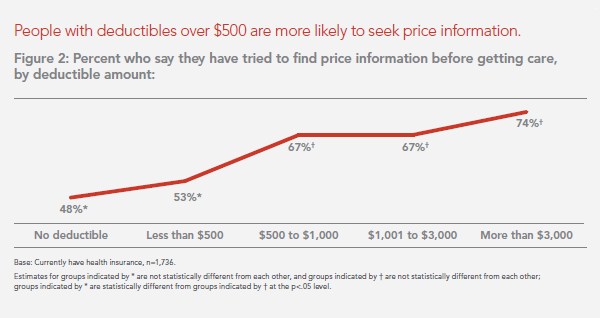
Financial wellness is integral to overall health. And the proliferation of high-deductible health plans for people covered by both public insurance exchanges as well as employer-sponsored commercial (private sector) plans, personal financial angst is a growing fact-of-life, -health, and -healthcare. Ask any hospital Chief Financial Officer or physician practice manager, and s/he will tell you that “revenue cycle management” and patient financial medical literacy are top challenges to the business. For pharma and biotech companies launching new-new specialty drugs (read: “high-cost”), communicating the value of those products to users — clinician prescribers and patients — is Job #1 (or #2,
Health is a growth industry at SXSW
Health is the hot topic at SXSW. While edgy new movies and hot music are the foundational elements of the annual South-by-Southwest festival, health and health care are the fast-growing themes at the meet-up, where the new-new, month-old beautiful JW Marriott Hotel by the Convention Center hosted most of the digital health track sessions. Digital health today goes well beyond mobile apps and genomic futures. Philips was a major presence this year at SXSW with its vision, shared by me, THINK-Health, and the HeathcareDIY team, of connected health where we live, work, play, pray and learn. In the case of
The Internet of Things in health care – technology for good in HuffPo
As sensors begin to proliferate our “Things,” from refrigerators to cars, toasters to t-shirt, our health could benefit mightily. Approaching this weekend’s South-by-Southwest Interactive meet-up in Austin, several authors have crowdsourced views on using technology for good in ImpactX, a special section in the Huffington Post sponsored by Cisco. I was asked to develop a view on using technology for good — for health and health care. Here’s my offering: How the Internet of Things Can Bolster Health. The promise of sensor-laden stuff in our lives can work for personal and public health in myriad ways — from perceiving impending epidemics
The blurring landscape of digital health: the Health 2.0 team puts it in focus
They’re the team that built a brand with the phrase “Health 2.0” before the world barely recognized v 1.0 in healthcare. This week, those folks that brought you the Health 2.0 Conference unveiled the Market Intel database of over 3,000 companies, trying to make sense out of a very blurry and fast-morphing market landscape. I spoke with Matthew Holt and Kim Krueger of Health 2.0 earlier this week to discuss just what’s in this mine of information, and what they intend to do with it. In full disclosure, I have been a colleague and friend of Matthew Holt since his
Digital health love – older people who use tech like health-tech, too
As people take on self-service across all aspects of daily living, self-care in health is growing beyond the use of vitamins/minerals/supplements, over-the-counter meds, and trying out the blood-pressure cuff in the pharmacy waiting for a prescription to be filled. Today, health consumers the world over have begun to engage in self-care using digital technologies. And this isn’t just a phenomenon among people in the Millennial generation. Most seniors who regularly use technology (e.g., using computers and mobile phones) are also active in digitally tracking their weight, for example, learned in a survey by Accenture. Older people who use technology in daily
Most people want to go digital for health – especially the un-well
2 in 3 people in the U.S. would use a mobile app to manage their health, especially for diet and nutrition, medication reminders, tracking symptoms, and recording physical activity. The fifth annual Pulse of Online Health survey from Makovsky finds that digital health is blurring into peoples’ everyday lives. We’ve covered previous Makovsky digital health surveys here on Health Populi; last year, we focused on consumers managing risk in digital health platforms, and in 2013, the state of seeking health information online. That most consumers would go beyond health information search to the more engaging pursuit of managing health over
Employers grow wellness programs, and ramp up support for fitness tech
Offering wellness programs is universal among U.S. employers, who roughly divide in half regarding their rationale for doing so: about one-half offer wellness initiatives to invest in and increase worker health engagement, and one-half to control or reduce health care costs. Two-thirds of companies offering wellness will increase their budgets, according to the International Foundation of Employee Benefit Plans (IFEBP) report, Workplace Wellness Trends, 2015 survey results. The IFEBP polled 479 employers in October 2014, covering corporate, public, and multi-employer funds in the U.S. and Canada. The statistics discussed in this post refer solely to U.S. organizations included in the study
Physicians and mobile health – moving from “mobile” to simply “care”
February may be American Heart Month, African-American History Month, and Marfan Syndrome Awareness Month. But based on the volume of studies and reports published in the past two weeks, ’tis also the season for talking mobile health and doctors. This Health Populi post trend-weaves the findings. The big picture for mobile in health is captured by Citrix in its Mobile Analytics Report, dated February 2015. Everyday people are using mobile in work and daily living, blurring the distinctions between the various hats people wear. These roles, whether business or pleasure or life, happen 24×7, enabling through mobile platforms, Citrix found.
Left Swipe Dat – this is how health messaging is done
In our ADHD-addled, over-messaged and noisy world, it’s hard to break through the media clutter and binge-watching to get a health message out. Here’s the way it’s done: an engaging, humorous, impactful and crisp campaign focusing on making smoking so un-sexy and un-cool, you swipe the prospective date off of your Tinder app. Watch and learn, from The Truth. You can follow the campaign on Twitter using the hashtag #LeftSwipeDat. Kudos to the truth® anti-smoking campaign and the creative team who got this blend of message and medium so right. truth® is part of the Legacy project which is funded by the
Fiscal and physical fitness: TD Bank makes the link
What does a bank have to do with health? Plenty, if you listen to 70% of consumers who say that financial health has a positive impact on physical health. TD Bank released the Fiscal Fitness survey this week, finding that consumers make a direct connection between fiscal and physical fitness. That’s what we here at THINK-Health refer to as financial wellness. TD learned that 80% of consumers made a health resolution in the New Year and 69% of people made a financial resolution 40% of people want to save more and spend less, and 42% want to get healthy and
Hug your physician – chances are, s/he’s burned out
If you’re meeting with a physician in the next week or two, put on your empathy hat: chances are, they are feeling burned-out. Overall 46% of physicians report they were burned out in 2014, up from just under 40% last year. Medscape’s Physician Lifestyle Report 2015 finds that at least one-half of physicians are burned-out who work in critical care, emergency medicine, family medicine, internal medicine, general surgery, and infectious disease (including HIV). And, at least 37% of physicians are burned-out working in all other specialties, shown in the first chart. Medscape gauges doctors’ self-assessments of burnout with a lens
Telehealth is in demand, driven by consumer convenience and cost – American Well speaks
Evidence of the rise of retail health grows, with the data point that on-demand health care is in-demand by 2 in 3 U.S. adults. American Well released the Telehealth Index: 2015 Consumer Survey, revealing an American health public keen on video visits with doctors as a viable alternative to visiting the emergency room. Virtual visits are especially attractive to people who have children living at home. [For context, this survey defines “telehealth” as a remote consultation between doctor and patient]. Convenience drives most peoples’ interest in telehealth: saving time and money, not leaving home if feeling unwell, and “avoiding germs
People in consumer-directed health plans are — surprise! — getting more consumer-directed
People with more financial skin in the health care game are more likely to act more cost-consciously, according to the latest Employee Benefits Research Institute (EBRI) poll on health engagement, Findings from the 2014 EBRI/Greenwald & Associates Consumer Engagement in Health Care Survey published in December 2014. Health benefit consultants introduced consumer-directed health plans, assuming that health plan members would instantly morph in to health care consumers, seeking out information about health services and self-advocating for right-priced and right-sized health services. However, this wasn’t the case in the early era of CDHPs. Information about the cost and quality of health care services was scant,
Building the health ecosystem: new bedfellows coming together
2015 is already becoming a year where bedfellows of different stripes are joining together to build a health care ecosystem well beyond hospitals, doctors and health plans. Announcements launched last week at the 2015 Consumer Electronics Show in Las Vegas, and coming out this week at the J.P. Morgan Conference in San Francisco, the first two weeks of 2015 reveal that new entrants and legacy health stakeholders are crossing corporate and cultural chasms to (try and) solve challenges that prevent us from getting to that Holy Grail of The Triple Aim: improving health care outcomes, driving down per capita costs,
More from the 2015 CES – Shelly Palmer’s 3 Laws of the Digital World and What They Mean for Health Care
Three laws that shape the digital world have kicked into high gear, changing our lives in ways we cannot yet imagine. Those three forces are Metcalfe’s Law (in brief, the increasing value of networks), Moore’s Law (that processing power doubles every 18 months, or even faster), and the Law of Accelerating Returns (the fast pace of technological change). The guy who told me about that at the 2015 Consumer Electronics Show (#CES2015) was Shelly Palmer, something of a Renaissance Man in the evolving digital world, advising communications companies, composing music, patenting TV technology, investing in ventures, hosting shows on digital living,
Getting real about consumer demand for wearables: Accenture slows us down
Are you Feelin’ Groovy about wearables? Well slow down, you move too fast… …at least, according to Accenture’s latest survey into consumers’ perspectives on new technologies, published this week in conjunction with the 2015 Consumer Electronics Show in Las Vegas, the largest annual convention in the U.S. featuring technology for people. At #CES2015, we’re seeing a rich trove of blinged-out, multi-sensor, shiny new wearable things at the 2015 Consumer Electronics Show. Swarovski crystals are paired with Misfit Wearables, called the Swarovski Shine, shown here as a shiny new thing, indeed. Withings launched its Activite fitness tracking watch in new colors.
The Internet of Healthy Me – putting digital health in context for #CES2015
Men are from Mars and Women, Venus, when it comes to managing health and using digital tools and apps, based on a poll conducted by A&D Medical, who will be one of several hundred healthcare companies exhibiting at the 2015 Consumer Electronics Show this week in Las Vegas. Digital health, connected homes and cars, and the Internet of Things (IoT) will prominently feature at the 2015 Consumer Electronics Show in Las Vegas this week. I’ll be attending this mega-conference, meeting up with digital health companies and platform providers that will enable the Internet of Healthy “Me” — consumers’ ability to self-track,
Trend-weaving the 2015 health care trends
‘Tis the season for annual health trendcasting, which is part of my own business model. Here’s a curated list of some of my favorite trend reports for health care in the new year, with my Hot Points in the conclusion, below, summarizing the most salient trends among them. TechCrunch’s Top 5 Healthcare Predictions for 2015: In this succinct forecast, Walmart grows its presence as a health plan, startups get more pharm-funding, hospitals channel peer-to-peer lending, Latinos emerge as a “most-desired” health care segment, and Amazon disrupts the medical supply chain. Experian 2015 Data Breach Forecast: Healthcare security breaches will be
Patients and providers on health care: whose cost is it, anyway?
The one aspect of American health care that unites consumers and providers alike is cost, which is driving high anxiety among both providers and patients. Most of them also agree that the American health care system is on the wrong track. For patients, the anxiety is about ability to pay for and access the health care service to which they’ve become accustomed. For providers (and especially those over 55 years of age), the anxiety about costs is doctors’ and hospitals’ ability to survive in the uncertain health-economic environment. The survey report, How We View Health Care in America, marks the first
People don’t know much about patient portals: Xerox’s 5th EHR study
The Field of Dreams works in nostalgic plotlines about baseball, but as I’ve pointed out since the advent of consumer-facing health technologies, there’s no Field of Dreams effect in health care when it comes to consumer health engagement. U.S. health consumers aren’t using the patient portals that health care providers have built as part of their efforts to bolster health engagement via EHRs and health IT, Xerox found in the company’s 5th annual survey on electronic health records. I spoke with Tamara St. Claire to discuss the implications of the consumer poll, which was conducted among 2,017 U.S. adults in
Health IT Forecast for 2015 – Consumers Pushing for Healthcare Transformation
Doctors and hospitals live and work in a parallel universe than the consumers, patients and caregivers they serve, a prominent Chief Medical Information Officer told me last week. In one world, clinicians and health care providers continue to implement the electronic health records systems they’ve adopted over the past several years, respond to financial incentives for Meaningful Use, and re-engineering workflows to manage the business of healthcare under constrained reimbursement (read: lower payments from payors). In the other world, illustrated here by the graphic artist Sean Kane for the American Academy of Family Practice, people — patients, healthy consumers, newly insured folks,
Irrational exuberance in mobile health? Live from the mHealth Summit 2014
Mobile and digital technologies will bend the health care cost curve, drive individual and population health, and solve the nagging challenge of health disparities. Mobile and digital technologies will increase costs to health providers, disrupt work flows and lower clinicians’ productivity, and hit a market bubble. Depending on your lens into mHealth, and what product categories and user segments you’re looking at, all of the above can be true. The plenary session of the 2014 mHeath Summit kicked off with Dr. Harry Leider, Chief Medical Information Officer of Walgreens, who spoke of the pharmacy’s evolving role across the entire continuum of care,
Self-care is the new black in health care
Consumers’ growing health care cost burden is competing with other household spending: basic costs for Americans are eroding what’s left of the traditionally-defined Middle Class. At the front end of health costs is the health insurance premium, the largest single line item for a family. It looks like a big number because it is: Milliman gauged the cost for an employer to cover a family of four in a PPO in the U.S. at around $23K, with the employee bearing an increasing percent of the premium, copays, coinsurance, and a larger deductible this year than last, on average. There are
Women-centered design and mobile health: heads-up, 2014 mHealth Summit
This post is written as part of the Disruptive Women on Health’s blog-fest celebrating the 2014 mHealth Summit taking place 7-11 December 2014 in greater Washington, DC. Women and mobile health: let’s unpack the intersection. On the supply side of the equation, Good Housekeeping covered health tracking-meets-fashion bling in the magazine a few weeks ago in article tucked between how to cook healthy Thanksgiving side dishes and tips on getting red wine stains out of tablecloths. This ad appeared in a major sporting goods chain’s 2014 Black Friday pre-print in my city’s newspaper last week. And along with consumer electronics brand faves like
Thinking about Tony on World Aids Day
I lost my dear friend Tony M. in 1987 in the first generation of deaths from the scourge of AIDS. Remembering Tony, here he is helping me get dressed on my wedding day, along with my BFF Susan. When Tony was diagnosed within months of this photo being taken, he was with full-blown AIDS. At that time, Tony had no access to the portfolio of drug therapies available to an HIV+ patient today. Those were the days of denial, experimentation, toxicity, and really, really tough side effects. We remember Tony and all our loved ones everyday and especially today, on
Digital and mobile health: can doctors and consumers get on the same wavelength?
There’s growing interest among both consumers and clinicians in people DIY’ing healthcare. Consumers are even keener than their doctors about the self-care concept, PwC’s Health Research Institute has found. Doctors who are already in value-based payment mode — participating in accountable care organizations, at-risk for reimbursement, doing population health — are earlier adopters of digital health tools that enable patients to care for themselves outside of the health care setting. These providers are also working more on care teams, where physicians can work at their ‘highest and best use,’ complemented by nurse practitioners, physician assistants, diabetes educators, and other ancillary
Power to the health care consumer – but how much and when?
Oliver Wyman’s Health & Life Sciences group names its latest treatise on the new-new health care The Patient-to-Consumer Revolution, subtitled: “how high tech, transparent marketplaces, and consumer power are transforming U.S. healthcare.” The report kicks off with the technology supply side of “Health Market 2.0,” noting that “the user experience of health care is falling behind” other industry segments — pointing to Uber for transport, Amazon for shopping, and Open Table for reserving a table. The authors estimate that investments in digital health and healthcare rose “easily ten times faster” than the industry has seen in the past. Companies like
Live from the 11th annual Connected Health Symposium – Keeping Telehealth Real
Dr. Joseph Kvedar has led the Center for Connected Health for as long as I’ve used the word “telehealth” in my work – over 20 years. After two decades, the Center and other pioneers in connected health have evidence proving the benefits, ROI (“hard” in terms of dollars, and “soft” in terms of patient and physician satisfaction), and technology efficacy for connecting health. The 11th Annual Connected Health Symposium is taking place as I write this post at the Seaport Hotel in Boston, bringing health providers, payers, plans and researchers together to share best practices, learnings and evidence supporting the
PwC on wearables – the health opportunity is huge, but who will pay?
“A wearable future is around the corner,” PwC says. So it’s appropriate the consulting firm’s new report is indeed titled The Wearable Future. Wearable technologies — smartwatches, sensor-laden workout gear, activity tracking wristbands, and Google Glass, among them — are more than individual tracking and information devices. They’re part of a larger ecosystem called The Internet of Things (IoT), which is made of lots of stuff, each ‘thing’ incorporating a sensor that measures something. Those measurements can track virtually everything that someone does throughout the day: beyond the obvious steps taken, hours slept, and GPS coordinates, sensors can sense movement
Walgreens+WebMD: reinventing retail pharmacy
With the goal of driving a digital health platform for well-informed, effective self-care, the nation’s largest retail pharmacy chain and prominent consumer-facing health information portal are allying to move from serving up pills and information to health “care.” Walgreens and WebMD launched their joint effort on 2nd October 2014, a few weeks after CVS/pharmacy re-branded as CVS Health. Welcome to the reinvention of the retail pharmacy. I spoke for a few minutes with David Schlanger, CEO, WebMD, and Alex Gourlay, President, Customer Experience and Daily Living, Walgreens, the day of the launch, to get early insights into the vision for
Activity tracking is consumers’ #1 demand for smartwatches
Of all the functions a smartwatch could play, it’s activity tracking that’s top of most consumers’ minds. GfK conducted a survey in August 2014 among 5,000 smartphone-owning consumers in five countries — China, Germany, South Korea, the UK, and the U.S. The market research firm found that 29% of people see “activity tracking” the most important function. Phone calls ranked second with 13% of consumers, telling time 11%, and 10% voted for basic apps and navigation system. 7% of consumers noted the smartwatch would be desirable for basic web search. In this survey, activity tracking included the broad definition covering
Health-wear – at Health 2.0, health met fashion, function and care
Wearables met health and medicine at the 8th annual Health 2.0 Conference in Santa Clara, CA, last week. I had the real pleasure of shepherding a wearables panel of five innovators during the conference, in a well-attended session followed by an energetic Q&A. The organizations who demonstrated their tools and brainstormed the wearables market included, in alphabetical order, Atlas Wearables, Heartmath, MySugr, SunSprite and Withings. I hasten to add that among the five presenters, two were women: that 2 in 5 = 40% gender representation is, happily to my way of thinking about women’s roles in health-making, a very good
Crossing the digital health chasm between consumers and providers – talking with Dr. Eric Topol
More than twice as many patients than physicians are embracing consumers’ use of new digital technologies to self-diagnose medical conditions on their own. On the other hand, 91% of doctors are concerned about giving patients access to their detailed electronic health records, anticipating patients will feel anxious about the results; only 34% of consumers are concerned about anxiety-due-to-EHR-exposure. Welcome to the digital health chasm, that gap between what consumers want out of digital health, and what doctors believe patients can handle at this stage in EHR adoption in doctors’ offices and in patients’ lives. I have the video of Jack
Health info disconnect: most people view accessing online records important, but don’t perceive the need to do so
There’s a health information disconnect among U.S. adults: most people believe online access to their personal health information is important, but three-quarters of people who were offered access to their health data and didn’t do so didn’t perceive the need to. The first two graphs illustrate each of these points. When people do access their online health records, they use their information for a variety of reasons, including monitoring their health (73%), sharing their information with family or care providers (44%), or downloading the data to a mobile device or computer (39%). In this context, note that 1 in 3
Inflection point for telehealth in 2014
The supply side of telehealth has been readying itself for nearly a decade. The demand side appears to be aligning in 2014 for adoption to grow and sustain (some) solid business models. On the demand side, Towers Watson’s 2014 survey of large employers forecasts growth among companies that will offer telemedicine in 2015. Towers found that 37% of employers planned to offer telemedicine to workers as a lower-cost site of care; 34% more employers were considering telemedicine in 2016 or 2017. The health benefits adviser calculates that employers could save over $6 billion if industry replaces virtual health consultations with
Blurred lines: health, pharmacy, food and care
In the past few weeks, several events bolster the reality that health and health care are in Blurred Lines mode. Not Robin Thicke Blurred Lines, mind you, but the Venn Diagram overlapping kind. Walmart launched real primary care clinics in South Carolina and Texas. These will provide services beyond urgent care, charging $4 a visit for company employees and $40 a visit for other people The U.S. Department of Agriculture issued a report promoting “nudges” to grocery shoppers enrolled in the Supplemental Nutrition Access Program (SNAP) to buy healthy foods Apple is talking with Cleveland Clinic, Johnson Hopkins, and Mount Sinai Medical
Novel concept: people + health pricing information = market competition
In the post-Recession American economy, people shop for value in all things. And that includes health care services like MRIs — when patients are informed of pricing differences among imaging facilities and given free rein to pick-and-choose among them. In addition to lowering imaging costs in a community, price transparency also generated competition between providers. Health Affairs published this research detailed in Price Transparency for MRIs Increased Use of Less Costly Providers And Triggered Provider Competition in August 2014. An Economics 101 course teaches us that a well-oiled (perfect) market depends on lots of sellers of a product and lots of
Do EHRs “chill” patient disclosures to clinicians?
Patients are concerned about private risks of personal health data, resulting in some patients not disclosing certain information to health providers to protect their perceived EHR privacy and security risks. Peoples’ mixed feelings about sharing personal health information with their providers and EHRs is explored in The double-edged sword of electronic health records: implications for patient disclosure, published in the July 2014 issue of JAMIA, the Journal of the American Medical Informatics Association (AMIA). “The perception of the [EHR] technology may elicit non-disclosure as a privacy-protecting behavior,” the authors warn. Celeste Campos-Castillo and Denise Anthony, the paper’s researchers who work in
Who’s Looking at You? consumer-generated data, Big Data, & health
Opportunities abound for sharing data “for good” – to turbocharge clinical trials, inform medical research, anticipate and better manage epidemics, and focus on individual health goals benchmarking oneself vs. peers. At the same time, third party data brokers and marketing interests with which consumers have no direct connection of knowledge are scraping together bits of personal information from internet clouds, social networks, and retail data from which profits are made. And that value does not accrue to the very individuals whose data are being sold. Here’s Looking At You: How Personal Health Information Gets Tracked And Used, published by California HealthCare
Big Data Come to Health Care…With Big Challenges – Health Affairs July 2014
“For Big Data, Big Questions Remain,” an article by Dawn Falk in the July 2014 issue of Health Affairs, captures the theme of the entire journal this month. That’s because, for every opportunity described in each expert’s view, there are also obstacles, challenges, and wild cards that impede the universal scaling of Big Data in the current U.S. healthcare and policy landscape. What is Big Data, anyway? It’s a moving target, Falk says: computing power is getting increasingly powerful (a la Moore’s Law), simpler and cheaper. At the same time, the amount of information applicable to health and health care
Homo informaticus – the global digital consumer
Consumers around the world are feeling more knowledgeable, self-confident and realistic, enabled by mobile platforms, the democratic power of social “choruses,” and a more sharing economy featuring collaborative consumption. As peoples’ phones get smarter and smarter, they carry more powerful multichannel information devices in their hands which empower Homo Informaticus – the new global digital consumer, described in EY’s report, How to copilot the multichannel journal. EY polled 29,943 consumers in the Consumers on Board survey living in 34 countries: across the Americas, Asia-Pacific, the Middle East, India and Africa. Homo informaticus is the rational consumer smartly using technology to filter information.
How smart do you want your home to be?
Smarter homes can conserve energy, do dirty jobs, and remind you to take your medicine. In doing all these things, smart homes can also collect data about what you do inside every single room of that home. The fast convergence of Wi-Fi and sensors are laying the foundation for the Internet of Things, where objects embedded with sensors do things they’re specially designed to do, and collect information while doing them. This begs the questions: what do you want to know about yourself and your family? How much do you want to know? And, with whom do you want to
The battle of the bands, digital health style – live from #CEWeek in NYC
There’s a growing number of wearable digital health devices on the market, and more will appear at the 2015 Consumer Electronics Show in Las Vegas. Four new such products competed live today at CE Week’s Battle of the Bands, an event launched by Living in Digital Times. The competitors included GoQii, Healbe, Skulpt, and Wellograph, Wellograph calls itself “the world’s first wellness watch.” Made of sapphire crystal, the watch has a sleek design, targeting a working professional audience who wants a view on health throughout the day. The watch has an Integrated heart rate sensor, taking readings from the wrist for pulse,
Dialing Dr. Verizon – the telecomms company launches virtual house calls
Expanding its wireless footprint in health care, Verizon, the telecommunications company, announced the start of Verizon Virtual Visits today. The program will be marketed to employers and health plans to enable patients to see doctors at home or when traveling, via Verizon’s wireless network. I spoke with Christine Izui, Verizon’s quality officer, mobile health solution, earlier this week about Virtual Visits. We discussed the market forces that support the growth of telehealth and, in particular, physician visits “anywhere:” There is an under-supply and poor distribution of primary care doctors and certain specialties around the U.S. Employers and health plan sponsors are
People want mobile health by phone, and FICO knows it
Most people (54%) want their mobile phones to enable health care interactions, according to Mobile Thought Leadership, a paper from FICO that summarizes data from a survey conducted with health citizens around the world. FICO conducted research among 2,239 adult smartphone users in the UK, Australia, Brazil, China, France, Germany, India, Italy, Japan, Korea, Mexico, Russia, Turkey and the United States. The data discussed here in Health Populi refer to a subset covering just U.S. consumers. Among the one-half of consumers interested in doing more health care interactions via mobile in the future, the most popular options are: receiving reminders of appointments,
The VA is a telehealth leader
“Telehealth isn’t about seeing a provider by video: it’s about decision making,” Dr. Adam Darkins, leader of the U.S. Department of Veterans Affairs National Telehealth Programs, told the audience in his keynote address at the Government Health IT Conference in Washington, DC, on June 17, 2014. Dr. Darkins, trained as a neurosurgeon, realized earlier in his career “time and again,” he said, that he should have seen his patients more frequently in-between face-to-face visits. “A good decision downstream can make a lot of difference to someone’s longevity,” Dr. Darkins recognized. He’s worked with a team at the VA to build
Apple and Google and Samsung, Oh My!
Three of the world’s biggest technology companies – Apple, Google and Samsung — have made big announcements in the world of connected health in the past few weeks. A fourth is positioned to enter the fray. These major announcements illustrate the convergence of consumer technology, health, and wearables, with the potential for Big Data and population health impacts. Among the three tech giants, Samsung announced its consumer health/tech story first, on May 28, 2014, at its Digital Health Initiative meeting. Samsung unveiled the Samsung Architecture Multimodal Interactions platform, SAMI, along with the Simband prototype wristband that would enable users to
Online is to go-to place for health insurance info, but lots of uninsured people live offline
A vast majority of people shopping for a health plan on a Health Insurance Exchange for coverage in 2014 obtained information online via websites. One-half of these shoppers used only online information, and 29% combined both websites and other sources like direct assistance, informal assistance, and via (offline) media. In the Health Reform Monitoring Survey from the Urban Institute Health Policy Center, a research team, funded by the Robert Wood Johnson Foundation and the Ford Foundation, looked into data collected from the Health Reform Monitoring Survey in March 2014 at the end of the 2014 open enrollment period for the
Practice Fusion joins the open health data community with Insight
Open data is a growing trend in health care. Analyzing data sets across lots and lots of people can help researchers identify medical cures, anticipate epidemics, and solve knotty problems where social and behavioral issues complicate clinical questions and solutions. Joining the open health data community is the health IT company Practice Fusion, which is sharing with the public aggregated data on some 81 million patients collected through over 100,000 active users every month recording patient data in the company’s cloud-based electronic health records system. Insight, the searchable database, is freely available to people, researchers, policymakers, and anyone who wants to look at top line
Privatizing health privacy in the US?
8 in 10 people in the U.S. believe that total privacy in the digital world is history, based on a survey from Accenture conducted online in March and April 2014 and published in the succinctly-titled report, Eighty Percent of Consumers Believe Total Data Privacy No Longer Exists. 84% of U.S. consumers say they’re aware what tracking personal behavior can enable – receiving customized offers and content that match one’s interests. At the same time, 63% of people in the U.S. also say they have a concern over tracking behavior. Only 14% of people in the U.S. believe there are adequate safeguards
World No Tobacco Day v2014 – let’s raise (more) taxes on tobacco
Tomorrow is World No Tobacco Day. The use of tobacco is one of the most preventable public health issues on the planet. And the global tobacco epidemic contributed to 100 million deaths around the world in the 20th century. 6 million people die every year due to tobacco use — including 600,000 deaths due to exposure to secondhand smoke. About 500 million people living today will be dead from the use of tobacco products if current smoking habits continue, the World Health Organization (WHO) expects. WHO sponsors the World No Tobacco Day every year on May 31. For this year’s
Health care at an inflection point: digital trends via Mary Meeker
When Mary Meeker talks, the digerati listen. Meeker is the digital industry analyst who’s a partner at KPCB, a venture capital company, in Silicon Valley. Each year she publishes a report on the state of the digital marketplace. Her 2014 paper, Internet Trends 2014 – Code Conference (dated May 28 2014) is online, and as usual, it’s full of data points on both digital technology segments along with some vertical industry findings – in education, financial services, and health, among other segments. I’ve combed through the 164 pages of the PDF to trend-weave the health implications. When it comes to health, the
The Season of Healthcare Transparency – Consumer Payments and Tools, Part 4
“The surge in HDHP enrollment is causing patients to become consumers of healthcare,” begins a report documenting the rise of patients making more payments to health providers. Patients’ payments to providers have increased 72% since 2011. And, 78% of providers mail paper statements to patients to collect what they’re owed. “HDHPs” are high-deductible health plans, the growing thing in health insurance for consumers now faced with paying for health care first out-of-pocket before their health plan coverage kicks in. And those health consumers’ expectations for convenience in payment methods is causing dissatisfaction, negatively affecting these individuals and their health providers’
The Season of Healthcare Transparency – Will Your Health Plan Be Your Transparency Partner? – Part 3
Three U.S. health plans cover about 100 million people. Today, those three market-dominant health plans — Aetna, Humana and UnitedHealthcare — announced that they will post health care prices on a website in early 2015. Could this be the tipping point for health care transparency so long overdue? These 3 plans are ranked #1, #4 and #5 in terms of market shares in U.S. health insurance. Together, they will share price data with the Health Care Cost Institute (HCCI), a not-for-profit organization dedicated to research on U.S. health spending. An important part of the backstory is that the HCCI was
The Season of Healthcare Transparency – HFMA’s Price Transparency Manifesto – Part 1
As Big Payors continue to shift more costs onto health consumers in the U.S., the importance of and need for transparency grows. 39% of large employers offered consumer-directed health plans (CDHPs) in 2013, and by 2016, 64% of large employers plan to offer CDHPs. These plans require members to pay first-dollar, out-of-pocket, to reach the agreed deductible, and at the same time manage a health savings account (HSA). In the past several weeks, many reports have published on the subject and several tools to promote consumer engagement in health finance have made announcements. This week of posts provides an update on
In a world of digital health data, more sick people trade off privacy risks
People managing chronic diseases are more likely to have accessed information in their electronic medical records — and are also less likely to worry about the privacy risks of their personal electronic health information compared with people who are healthy. Over 2,000 people, both those who say they’re healthy and those with chronic conditions, were surveyed by Accenture in February-March 2014, and their responses are summarized in the report, Consumers with Chronic Conditions Believe the Ability to Access Electronic Medical Records Outweighs Concern of Privacy Invasion. Slight more consumers are concerned about privacy risks related to online banking, online shopping,
The retailization of digital health: Consumer Electronics Association mainstreams health
The Consumer Electronics Association (CEA) has formed a new Health and Fitness Technology Division, signalling the growing-up and mainstreaming of digital health in everyday life. The CEA represents companies that design, manufacture and market goods for people who pay for stuff that plugs into electric sockets and operate on batteries — like TVs, phones, music playing and listening, kitchen appliances, electronic games, and quite prominent at the 2014 Consumer Electronics Show, e-cigarettes (rebranding “safe smoking” as “vaping” technology). In its press release announcing this news, CEA President and CEO Gary Shapiro says, “Technology innovations now offer unprecedented opportunities for consumers to
Consumers and health data sharing: managing risk via anonymity
9 in 10 U.S. adults would be willing to share their personal health information to help researchers better understand a disease or improve care and treatment options — with varying desires to control the anonymity of their data, according to the fourth Makovsky Health/Kelton Survey published April 24, 2014. This study gauged peoples’ perspectives on personal data privacy based on 1,001 responses from Americans ages 18 and older and was fielded in March 2014. The chart shows four variations on the theme of consumers’ interest in sharing their personal health data with researchers, finding that: – 40% of people
Wearable tech + the workplace: driving employee health
Employer wellness programs are growing in the U.S., bundled with consumer-directed plans and health savings accounts. A wellness company’s work with employee groups is demonstrating that workers who adopt mobile health technologies — especially “wearables” coupled with smartphone apps — helps change behavior and drive health outcomes. Results of one such program are summarized in Wearables at Work, a technical brief from Vitality, a joint venture of Humana and Discovery Ltd., published April 23, 2014. Vitality has been working in workplace wellness since 2005, first using pedometers to track workers’ workouts. In 2008, Vitality adopted the Polar heart rate monitor for
The appification of health – a bullish outlook from Mobiquity
Over half of people using health and fitness apps began using them over six months ago, and one-half of these people who have downloaded health and fitness apps use them daily according to survey research summarized in the report, Get Mobile, Get Healthy: The Appification of Health and Fitness from Mobiquity. The company contracted a survey conducted among 1,000 U.S. adults in March 2014 who use or plan to use mobile apps to track health and fitness. Thus the “N” in this study was a group of people already interested in self-tracking health and not representative of the broader U.S. consumer
Your health score: on beyond FICO
Over one dozen scores assessing our personal health are being mashed up, many using our digital data exhaust left on conversations scraped from Facebook and Twitter, via our digital tracking devices from Fitbit and Jawbone, retail shopping receipts, geo-location data created by our mobile phones, and publicly available data bases, along with any number of bits and pieces about ‘us’ we (passively) generate going about our days. Welcome to The Scoring of America: How Secret Consumer Scores Threaten Your Privacy and Your Future. Pam Dixon and Robert Gellman wrote this well-documented report, published April 2, 2014 by The World Privacy Forum.
Doctors and mHealth apps: chaos, evidence, creation
Over one year ago, an eClinicalWorks survey found that 9 in 10 physicians would be interested in prescribing a mobile health app to a patient. That’s a big number. That’s “interest,” but that demand hasn’t yet been expressed in the current go-go app-happy environment. An opinion piece in this week’s Online First edition of the Journal of the American Medical Association (JAMA) demonstrates the fork-in-the-road facing clinicians and the disruption/opportunity that is mobile health. In “In Search of a Few Good Apps,” a Boston-based trio of writers (two physicians and one PhD) talk about “the bewildering diversity of apps available
People want to DIY with pharma
In our increasingly-DIY society, most consumers expect high levels of access and customer service from the organizations with whom we engage. With more consumers reaching into their pockets to pay for health services and products, the health industry is increasingly a retail-facing environment. So expect quality service levels from their healthcare touch points. The pharmaceutical and prescription drug touch point is not exempt from this expectation, as learned by an Accenture survey analyzed in Great Expectations: Why Pharma Companies Can’t Ignore Patient Services. As the first picture shows, 70% of patients think pharma companies are responsible for bundling information and services
Health care in a multiscreen world
In 2014, we are digital omnivores. Most people “consume” information and entertainment on more than one screen: 7 hours’ worth over a 5-hour period. You read that right: most people who watch TV, use a laptop or PC, smartphone or tablet are multitasking use of these devices in parallel. And above all, people are using smartphones as their primary screen. The AdReaction: Marketing in a multiscreen world report from Millward Brown paints a picture of global consumers who are cobbling together multiscreen experiences. The smartphone has become the “do it all” device if you don’t carry a laptop or tablet around, especially favored
Pharma warming up to the cloud to drive efficiencies and support analytics
Over the next few years, large global pharma companies will need to wring out an additional $35 billion worth of efficiencies in order to drive profitability. While the industry has most of the patent cliff challenge behind it, companies face price constraints with respect to health reform, static national economies, and access demands. As the pharmaceutical industry enters the value-based health care era, the industry must catch up with other vertical markets in adopting information technology. In particular, pharma has been slower to migrate to the cloud than other businesses, with concerns about security and health care particular needs. Today, the
The digital health bubble – is it about to burst? #SXSW
That’s a useful and timely question, given the news that Castlight Health will launch its IPO with valuations north of $1 billion. Yes, “billions,” and according to a MarketWatch analysis, “it’s a bargain at $1 billion.” So then – do we anticipate a bubble? asked Marc Monseau of the Mint Collective, the convener of our panel who brought together Robert Stern, a successful health-tech entrepreneur whose latest venture, @PointofCare, focuses on patient engagement; Marco Smit of Next Innovation Health Partners (parting from the Health 2.0 Conference family where he led Health 2.0 Advisors for several years); and me. Some key
 I'm once again pretty gobsmackingly happy to have been named a judge for the 2026 CES Innovation Awards, focusing on digital health, longevity, and fitness. Preceding every year's global conference, CES receives hundreds of applications from innovators around the world building tech-based solutions to big challenges. So glad to be part of this annual initiative to see what global health-tech pioneers are cooking up to address and scale the health and well-being of fellow health citizens, globally.
You can see the results of the Digital Health Awardees here on the #CES2026 website.
I'm once again pretty gobsmackingly happy to have been named a judge for the 2026 CES Innovation Awards, focusing on digital health, longevity, and fitness. Preceding every year's global conference, CES receives hundreds of applications from innovators around the world building tech-based solutions to big challenges. So glad to be part of this annual initiative to see what global health-tech pioneers are cooking up to address and scale the health and well-being of fellow health citizens, globally.
You can see the results of the Digital Health Awardees here on the #CES2026 website. Stay tuned to Health Populi in early January as I'll be attending Media Days and meeting with innovators in digital health, longevity, and the home-for-health during CES 2026 in Las Vegas. I'll be at the conference for an entire week meeting with clients and exhibitors at the biggest-meeting-of-the-year on consumer-facing technology. I'll be reporting daily from Vegas here in the blog, sharing with you insights about the latest breakthroughs, products, and services that enable people to manage health, well-being, and medical issues in their own hands and homes.
 Jane collaborated on Robin Strongin's Health Dame webcast to discuss Halle Tecco's new book, Massively Better Healthcare, due out in early 2026. We brainstormed with Maven Founder Kate Ryder and the company's Chief Medical Officer Dr. Neel Shah about the state of U.S. healthcare and solutions not just to tweak at the margins but to "massively" improve health care delivery, financing, outcomes, and equity in America. It was a delightful, enlightening conversation -- I hope you'll check it out.