


A View from the UK: Is Preventive Care "Worth It?"
I’m enjoying a weekend with London-based friends who travel the world and know what’s what. Today, we spent hours relishing (literally) the Borough Market in Southwark, located south of the Thames. This is London’s oldest food market, established when the Romans built the first London Bridge. The Market in its current state has been around for a quarter of a millenium. The Market boasts and hosts a glorious array of green grocers, bread bakers, Spanish food purveyors, brownie makers, organic tofu purveyors, and parmigiano reggiano vendors in one spot I’ve seen, perhaps ever. It is foodie heaven and a
Stress through the ages (or, it’s good to be 65)
Younger people are way more stressed out than people over 65, according to a poll sponsored by the American Psychological Association. HarrisInteractive has published data in its latest Healthcare Newsletter titled, “Adults Over 65 Experience Far Less Stress Than Adults in All Other Age Groups.” These findings are part of a deeper dive into the APA’s report published in October 2007, Stress in America. The highest levels of stress in America are in the 35-49 age cohort, followed by people aged 25-34. 6 in 10 people aged 35-49 say they are concerned about the level of stress in their
When health becomes beautiful, consumers will pay
Or, The Lovely Bones (health care version). I have an acquaintance whose bone density scan told her she is at high risk for osteoporosis. No surprise: the condition runs in her family. For several years, she has been paying a luxury-segment department store counter $300 every two months for her skin creme, which promises that she will be ageless as she ages into her fifties, sixties, and beyond. But she has not yet filled her prescription for an osteoporosis-preventing drug. She doesn’t have prescription drug coverage. She thinks the drug is too high-priced. It’s about $300 for
Health, the New Status Symbol
We’d rather be healthy than wealthy, according to a new survey from Manning Selvage & Lee (MS&L), the PR firm that’s part of the global communications company, Publicis. MS&L polled Americans’ beliefs on health and self-esteem. Three-quarters (72%) of Americans say that being physically healthy is a symbol of personal success. 91% of Americans said they’d rather be described ads “healthy” than “wealthy.” 71% said they’d rather be seen as someone who “looks really healthy” vs. someone who’s nicely “put together or well-dressed.” These will be glad tidings for MS&L’s client base. MS&L serves a global health clientele which includes
Virgin grows in health care
A new brand of clinic is entering the health care market…aligning itself in a public/private partnership with none other than the largest health system in the world, the National Health Service in the UK. Richard Branson is a master brander, having started up Virgin records in 1970 and Virgin airlines in 1984,. When he took on the Old School airlines, he was seen as the enfant terrible of the industry. But he re-imagined the airline business model and made it fun to fly. Can he do the same for health in the United Kingdom? Here’s the deal: Virgin Healthcare will
Hearts and the hospital bill – and the role of health IT
The annual national hospital bill may reach $1 trillion by 2008. This forecast is brought to you in a new report from the Agency for Healthcare Research and Quality (AHRQ). Hospital charges in 2005 totalled $873 billion in 2005, nearly doubling in ten years. The hospital bill was covered primarily by three payor segments: Medicare, which paid nearly one-half of the total hospital bill; private insurance, covering nearly one-third; and Medicaid, at 14% of the total. What are we spending money on in hospitals? Putting aside pregnancy/childbirth and infant care, the top three conditions are heart-related: coronary artery disease ($46
Health Care IT by way of Hollywood and Hip-Hop
The double-barreled news of Dennis Quaids’ twins receiving heparin doses 1,000x the prescribed dose while receiving medical treatment at Cedars-Sinai Medical Center, coupled with the tragic death of Kanye West’s mother following cosmetic surgery, focuses this health care paparazzi’s lens squarely on the role of information technology in health care. The Cedars-Sinai Chief Medical Officer has termed the Quaid event a “preventable error.” Donda West’s doctor has been described by the likes of People magazine and the Los Angeles Times as a clinician with at least 2 DUI’s and an assortment of malpractice suits — as well as a recommendation
Happy birthday, Prozac!
The Financial Times celebrates the 20th birthday of Prozac in the newspaper’s Nov 17/18th issue. It’s valuable to look at the rise and fall of Prozac, the brand; the rise of its generic equivalent; and how the drug has profoundly impacted one consumer’s life. Prozac Market. Before it treated depression, Prozac was thought to be an anti-hypertensive. When that didn’t seem to work, Eli Lilly considered it for an anti-obesity treatment. Strike two, clinical-wise. Finally, Lilly took the drug to market to fight depression after it was approved by the FDA on December 29, 1987. In two years, Prozac became
Target marketing: no pink guns left behind?
In 2004, 20% of homicides were directly associated with intimate partner conflict (i.e., one in which an intimate partner killed another partner). Intimate partner violence resulting in death was most common among victims aged 40-44 years. Murder is the leading cause of death for pregnant women, according to the National Organization of Women. The National Center for Injury Prevention and Control, part of the Centers for Disease Control and Prevention, spends about $43 million a year on ways to reduce deaths and injuries from drowning, poisoning, suicide, industrial accidents, house fires and domestic violence. Of that sum, only $2.3 million
Plastic’s growing role in health care
There are many forms of plastic in health care. No, I’m not talking about new polymers used for medical implants. I’m talking about financial services. A new card from Humana and Republic Bank illustrates the continuing integration of consumer personal finance and health care. The new VISA card, private labelled as the HumanaAdvance card, will be offered to Humana’s employer groups for enrollees to use at hospitals, doctor and dentist offices, drugstores and other locations providing health-related products and services. Of course, as with all plastic, this card comes with its own fine print: 0% interest rate (APR) on
The Future of Retail – Implications for Health
I’ve been looking at health care through a retail lens for some time. Perhaps it’s that I’m a rag trader’s daughter, or that I’ve been known to like shopping, that I have clients in consumer goods, or that I understand how tiered drug pricing impacts the consumption of medicines (answer: it’s all of the above). I’ve just reviewed the latest trend report from PricewaterhouseCoopers and TNS Retail Forward on the future of retailing. My mind is connecting the dots between the future of retail and the American health care consumer. Four future retail trends are already embedding in health care
Purchasing Pink
Pink is all around. It’s October 1st. The annual proliferation of pink products promoting breast cancer awareness pervades purchasers’ prospective pickings. This year, there are lots of cosmetics to choose from, along with a Filofax, a vacuum cleaner, kitchen appliances, an iPod and various accessories to dress it up, foods, a Swiss army knife, and a set of pink knitting needles. Prevention Magazine online has several suggestions for “Beauty that Gives Back,” cosmetic companies offering products with some percentage of proceeds going to a variety of breast cancer charities. For example, La Mer Skin Creme can be purchased for
My Magazine, My Health Portal
U.S. News and World Report is well-known for its Top 100 “best” lists assessing hospitals, doctors, and health plans. Watch for it to further build its position as consumer health information provider for Americans by expanding into a comprehensive health portal online. U.S. News published this cover in November 2004. So the magazine is no newcomer to this role. However, the publication and its editors (and savvy financial management) recognize the opportunity to exploit their brand position in the consumer health information space. This isn’t just about arming Americans with health information to be ‘smart.’ This is a smart move
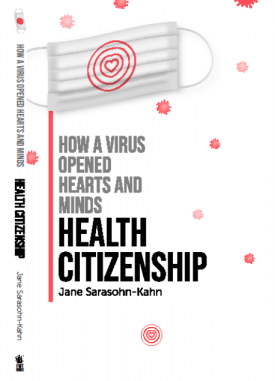
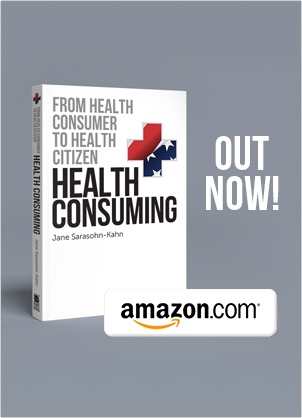
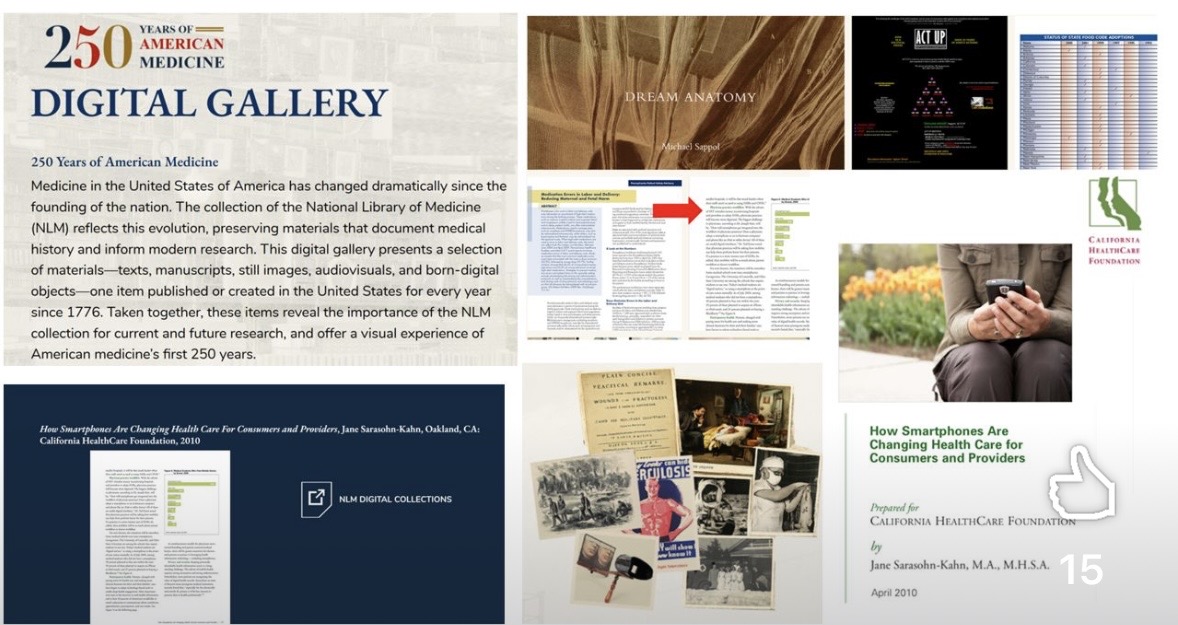 I’m celebrating America’s 250th birthday both patriotically and professionally, honored that the NLM included my 2010 paper, “How Smartphones Are Changing Healthcare for Consumers and Patients” as one of 250 items curated for the digital archive of 250 Years of American Medicine.
 I'm grateful to be part of the Duke Corporate Education faculty, sharing perspectives on the future of health care with health and life science companies. Once again, I'll be brainstorming the future of health care with a cohort of executives working in a global health care enterprise.
 Jane joined host Dr. Geeta "Dr. G" Nayyar and colleagues to brainstorm the value of vaccines for public and individual health in this challenging environment for health literacy, health politics, and health citizen grievance. Click onto the Pfizer Value of Vaccines site and you can watch four episodes covering the challenges with adult vaccination, the employer and health plan member's journey to vaccination, reimbursement, and collaborating for proactive prevention.