


The Latest Health Technology Vision and Consumer Behavior Insights From Accenture
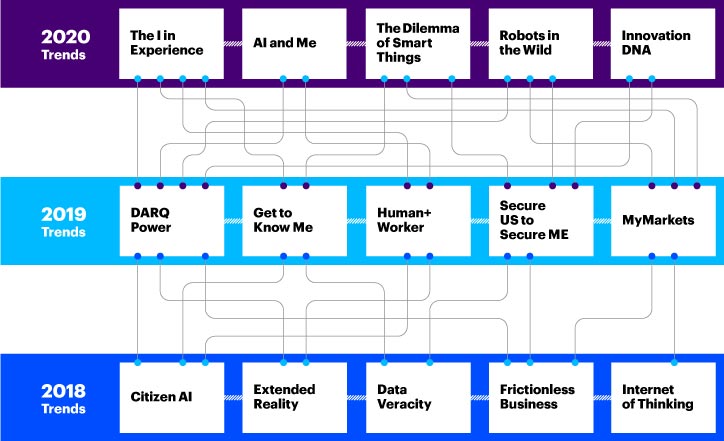
The COVID-19 pandemic hastened digital transformation for both the health care industry and for individuals — as health consumers, patients, caregivers, and health citizens. Two new reports from Accenture update our understanding of the changed health consumer in the context of both “home: and the health care ecosystem. These reports are Accenture’s annual Digital Health Technology Vision 2020, and an analysis of the firm’s Wave 7 of consumer research, answering the question, How will COVID-19 change the consumer? The 2020 tech vision for health is summarized here, tying to Accenture’s previous two years of forecasts. This year, the five pillars
The Mental Health Impacts of COVID-19 – Trauma- and Stress-Related Disorders in the Pandemic
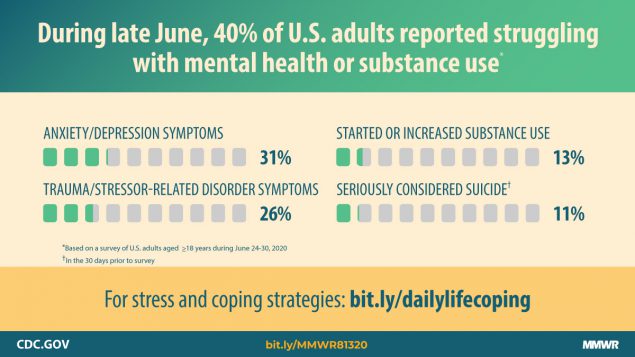
The CDC calculated that some 200,000 American lives would be lost to the coronavirus pandemic by Labor Day weekend 2020. Beyond the tragic mortality in the U.S. come morbidity impacts hitting mental health in America, hard. And some people are being hit-harder than others, a report from the Centers for Disease Control details. Overall, 4 in 10 people in the U.S. reported at least one adverse mental or behavioral health symptom in the last week of June 2020. These symptoms included anxiety disorder, depressive disorder, COVID-19 related trauma- or stress-related disorder (TSRD), substance use (either starting or increasing), and serious
My ABCovid-19 Journal – Day 5 of 5, Letters “U” through “Z”
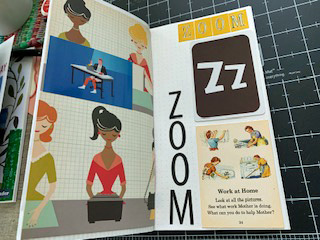
We’ve had a lovely week on Seneca Lake, re-setting our physical, mental, and emotional clocks in the #KahnCave. It’s been blissful. I’ve enjoyed receiving feedback on the past four days of ABCovid-19 journal shares on my LinkedIn page and Twitter feed @HealthyThinker. My #arttherapy is yours for the sharing and taking. We are all, truly, on this pandemic journey together. That’s public health, for you. Today, I bring you the fifth and last day of sharing my COVID-19 alphabet with you: the letters “U” through “Z.” Read on, and please let me know after seeing all 26 alpha’s which page(s)
My ABCovid-19 Journal – Day 4 of 5, Letters “P” through “T”
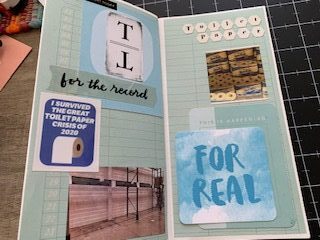
While I’m on holiday this week, restoring and re-setting, I’ve been sharing pages from my ABCovid-19 Journal with readers of Health Populi. I created this journal during the early phase of the pandemic in the U.S., as a form of art therapy, creative outlet, and learning. Today is Day 4 of sharing: we consider the letters “P” through “T,” and what I saw in the early coronavirus era. P is for pandemic This “P” was self-evidence in our collective early COVID-19 lexicon. The “P” word was uttered by the Secretary General of the World Health Organization on March 11, confirming
My ABCovid-19 Journal – Day 3 of 5, Letters “K” through “O”

Welcome back to my ABCovid-19 Journal, which I created/curated in the early weeks of the coronavirus pandemic. This week, I’m sharing all the letters of the alphabet with you which reminded me keywords and themes emerging as we were learning about this dastardly public health threat beginning early in 2020. In today’s Health Populi blog I bring you letters “K” through “O,” continuing through the rest of the alphabet tomorrow and Friday while I’m on a lake-side holiday that’s good for mind, body, and spirit. K is for Kirkland, Washington state In the U.S., one of the earliest hotspots for
My ABCovid-19 Journal, Day 2 of 5 – Letters “F” through “J”

Welcome to Day 2 of my #COVID19 holiday break, welcome to my ABCovid Journal, letters “F” through “J. If you hadn’t tuned into the Health Populi blog yesterday, 10th August 2020, you missed the first five letters of my Age of Corona alphabet, curated in my art journal created in the early weeks of the pandemic. Click the link to back-track and catch up with us… I should explain why I’m sharing this project in the Health Populi blog this week. Last month, long-time colleague and friend Colin Hung interviewed me on the #HITMC broadcast to discuss a lovely recognition
My ABCovid-19 Journal – Day 1 of 5, “A” through “E”

My friends… It’s time in this pandemic journey that I take a full week to re-charge and bask in the midst of nature, a lake, farm-to-table food, wine-making, and the love of and therapeutic time with my wonderful husband. My gift to you all this week, 10th – 14th August, is to share with you pages from my “ABCovid-19 Journal” that I created/curated in the first weeks of the coronavirus pandemic. We all have our hacks for managing stress and discomfort, and in the first weeks of COVID-19, this was my life-saver. Journaling is one of my self-care strategies; think
Pharmacies Grow for Primary Care On-Ramps – And J.D. Power Says Consumers Like That
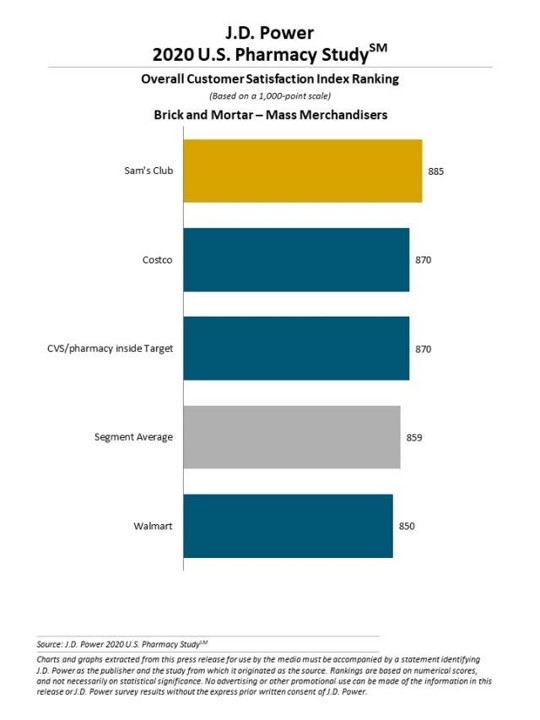
The use of health and wellness services delivered in retail pharmacies is growing, and health consumers’ satisfaction increases with use. That’s the headline for J.D. Power’s 2020 U.S. Pharmacy Study. This is the 12th year of J.D. Power’s U.S. Pharmacy Study, this year based on a survey of 13,378 pharmacy customers who filled a prescription between June 2019 and February 2020. The study assessed four retail prescription drug channels for consumers: brick and mortar chain drug stores, brick and mortar mass merchandisers, supermarket pharmacies, and mail order. The top ranked brands were: For brick and mortar chains, Good Neighbor Pharmacy
The Next Site for Hospital Care Is the Original One — Your Home
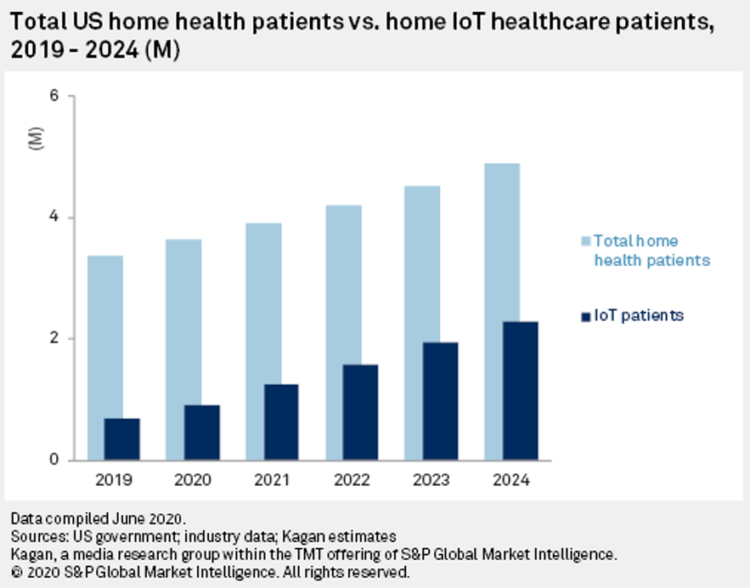
The coronavirus pandemic accelerated many trends and new workflows for patients and consumers, and health care providers, too. The convergence of basic needs like hygiene and safety, financial and health security, and living-working-learning-and-cooking-at-home has turbocharged a migration of more acute care delivered at home. I explore this growing concept in my latest essay on Medecision’s Liberation blog, How the Pandemic Is Accelerating the Hospital-At-Home Concept. The key points are that: Hospital-at-home services (H-a-H) combine home visits with virtual care and remote monitoring Think: advanced home care, enabled through virtual health technologies and wrap-around services both clinical and scaled social determinants
The She-Cession – a Financially Toxic Side-Effect of the Coronavirus Pandemic
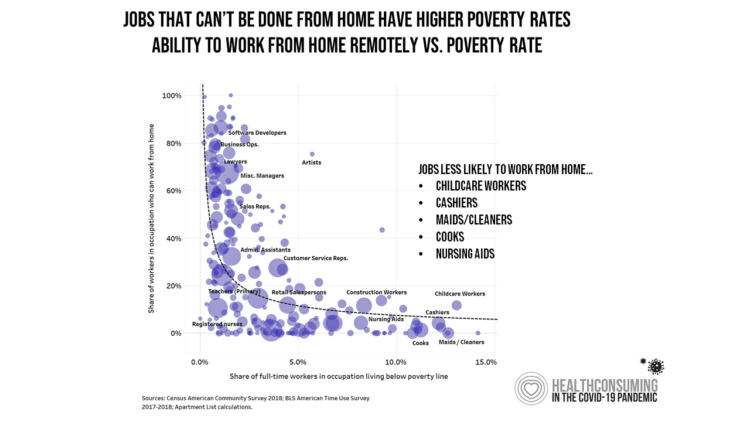
Along with the life-threatening impact of the coronavirus on physical health, and the accompanying mental health distress activated by self-distancing comes a third unintended consequence with the pandemic: a hard hit on women’s personal economies. The recession of the pandemic is considered by many economists as a “She-Cession,” a downturn in the economy that’s negatively impacting women more acutely than men. This is markedly different than the Great Recession of 2008, the last major financial crisis: that financial decline was coined a “ManCession,” taking a more significant toll out of more typically men’s jobs like construction and manufacturing where fewer
The Racial Divide Due to COVID-19 Also Applies to Healthcare and Pharma Costs
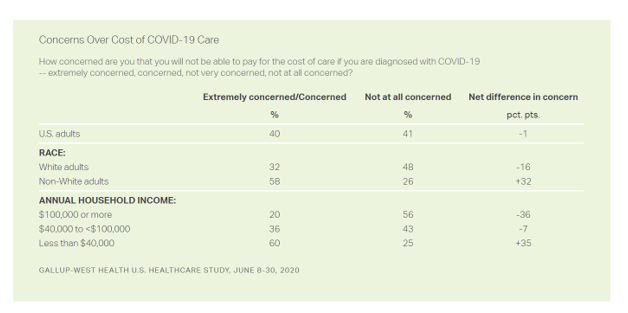
Into the sixth month of the coronavirus pandemic in the U.S., it’s clear that COVID-19 has wreaked a greater mortality and morbidity impact on people of color than on white adults. A new Gallup-West Health poll found that the coronavirus also concerns more non-white Americans than whites when it comes to the cost of health care and medicines to deal with the effects of COVID-19. Considering the cost of COVID-19 treatment, across all U.S. adults, 40% of people are concerned (extremely/concerned), and 41% are “not at all concerned.” Broken down by race, there is a stark difference in levels of
We Are All About Hygiene, Groceries, and Personal Care in the Midst of the Coronavirus Pandemic
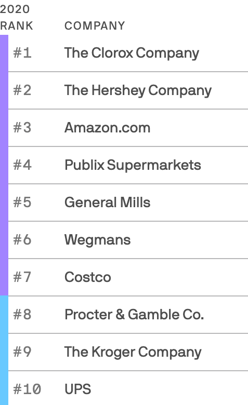
Pass me the Clorox…tip the UPS driver…love thy grocer. These are our daily life-flows in the Age of COVID-19. Our basic needs are reflected in the new 2020 Axios-Harris Poll, released today. For the past several years, I’ve covered the Harris Poll of companies’ reputation rankings here in Health Populi. Last year, Wegmans, the grocer, ranked #1; Amazon, #2. In the wake of the COVID-19 pandemic, U.S. consumers’ basic needs are emerging as health and hygiene, food, and technology, based on the new Axios-Harris Poll on the top 100 companies. This year’s study was conducted in four waves, with the
News from the Consumer Technology Association and Withings Further Demonstrates Private Sector’s Role in the Pandemic and Public Health
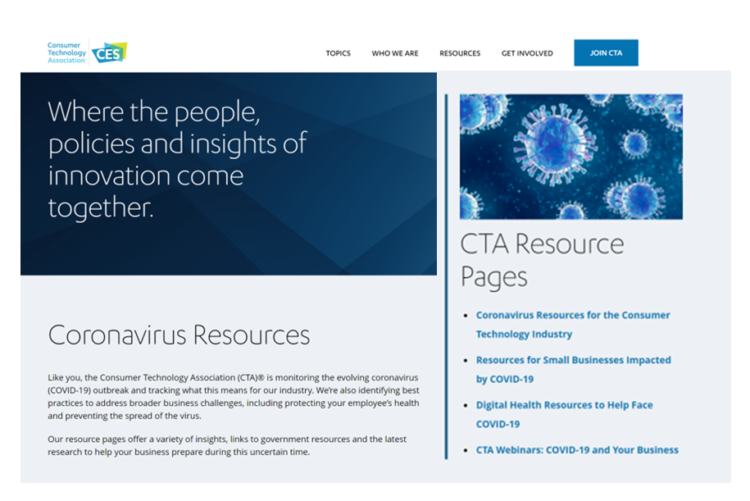
This week, announcements from the Consumer Technology Association (CTA) and Withings further bolster the case for the private sector bolstering public health in this pandemic…and future ones to come beyond the Age of the Coronavirus. Since the pandemic emerged, CTA has been reaching out to members and stakeholders to be a useful resource for the consumer electronics industry and its customers. Digital health resources have been an especially useful touch point for CTA’s constituents (including me, as a member who is active with the Association). On 27th July, CTA announced the Association’s launch of the Public Health Tech Initiative. In
The Home and Low-Touch Health Care – a Health Consumer Update from Capgemini
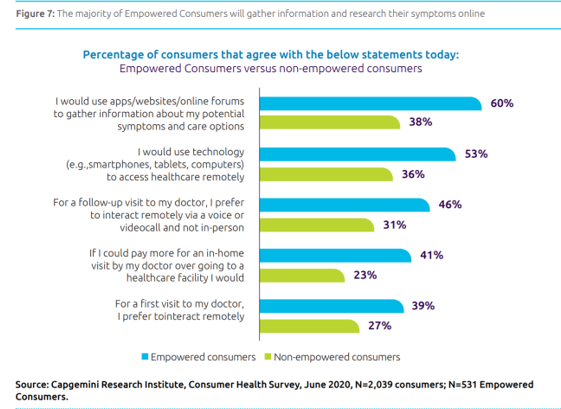
The coronavirus pandemic has been a wake-up call for patients-as-consumers, seeking lower-touch health care services at home or closer-to-home in community health hubs. The need for a holistic platform the serves up a continuum-of-care tools across the patient journey became evident in a matter of months, Capgemini Research Institute calls out in The Health Fix, a research report assessing peoples’ perspectives on health care in the Age of COVIOD-19. Capgemini conducted a survey among over 2,000 consumers living in France, Germany, the United Kingdom, and the U.S. in mid-June 2020. The report found three big shifts in global health citizens’
The Unbearable Heaviness of Healthcare in America – the Change Healthcare/Harris Poll
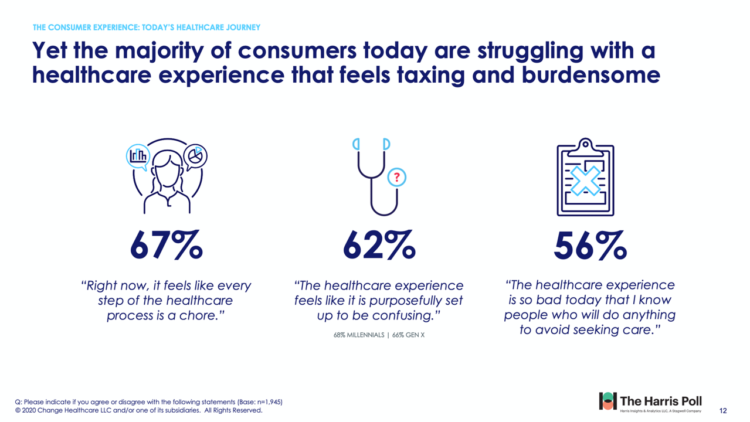
The phrase, “burden of health care,” has two usual meanings: one, to do with the massive chronic care burden, and the other, involving costs. There’s a third area of burden in U.S. health care — the onerous patient experience in finding and accessing care, assessed in the 2020 Change Healthcare – Harris Poll Consumer Experience Index. Two in three U.S. consumers feel like “every step of the healthcare process is a chore.” That burdensome patient experience leads to one in two people in America avoiding seeking care, the poll found. That’s not just self-rationing health care due to costs, but due
Return-To-School Is Stressing Out U.S. Parents Across Income, Race and Political Party
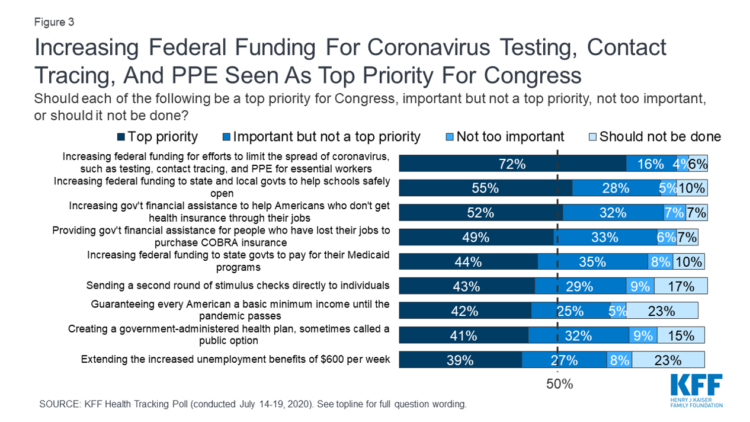
The worse of the coronavirus pandemic is yet to come, most Americans felt in July 2020. That foreboding feeling is shaping U.S. parents’ concerns about their children returning to school, with the calendar just weeks away from educators opening their classrooms to students, from kindergarten to the oldest cohort entering senior year of high school. The Kaiser Family Foundation’s July 2020 Health Tracking Poll focuses on the COVID-19 pandemic, return-to-school, and the governments’ response. KFF polled 1,313 U.S. adults 18 and older between July 14 to 19, 2020. The first line chart illustrates Americans’ growing concerns about the coronavirus, shifting
Telehealth Platforms: Building Blocks for Omnichannel, Networked Healthcare
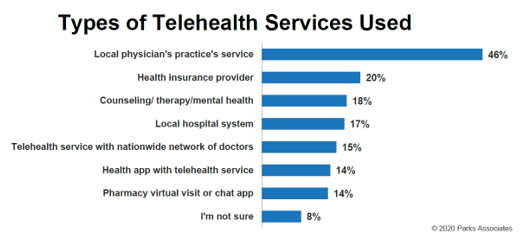
In the U.S., the use of telehealth services tripled in the past year, as healthcare providers limited patients from in-person visits for care and patients sought to avoid exposure to the coronavirus in medical settings. With this alignment of virtual care supply-and-demand, it is like telehealth will see “permanent usage increases,” according to Parks Associates’ survey report, COVID-19 – Impact on Telehealth Use and Perspectives. Parks Associates fielded this study the second half of May 2020, surveying 5,008 heads-of-broadband households balancing the sample of respondents for age, gender, income, and education. The report reminds us for context that at the
More Americans Pivot to Distancing and Mask-Wearing in the Hot Summer of 2020
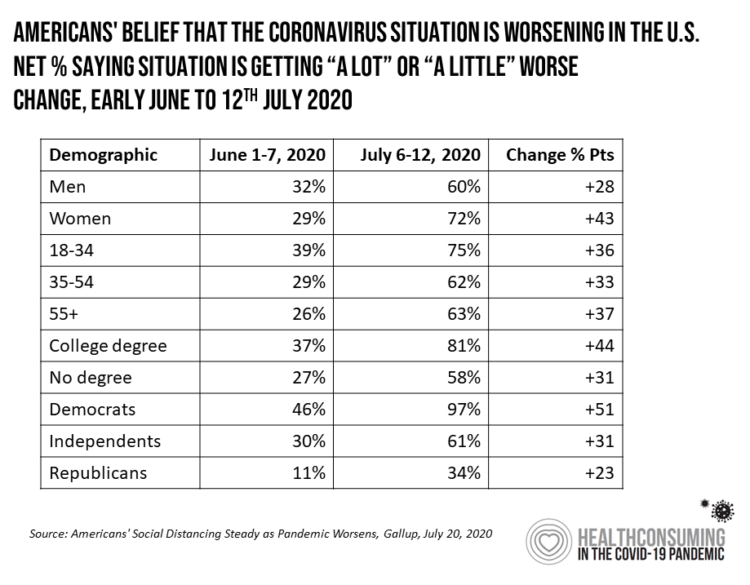
With growing coronavirus case hotspots in southern and western states, more Americans perceive the pandemic is worsening this summer, shown by a Gallup poll published 20 July 2020. Gallup titles the analysis, Americans’ social distancing steady as pandemic worsens. The first table organizes Gallup’s data by demographics, illustrating a significant gap between how women perceive the exacerbating pandemic compared with men. In early June, roughly one-third of both men and women saw COVID-19 was getting “worse”; five weeks later, in the second week of July, men and women’s perceptions were 12 points apart with more women concerned about the situation
A New Era of Virtual Care Has Begun, Accenture Finds
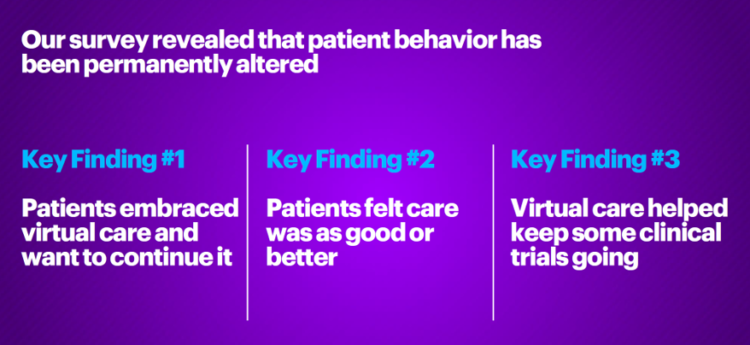
Patients embraced virtual care and communications at very high rates in the first months of the pandemic, and want to continue to use telehealth platforms after the pandemic ends. The new era of virtual care has begun and is here to stay, Accenture expects in its latest look at How COVID-19 will permanently alter patient behavior, a patient survey conducted in May 2020. Accenture polled 2,700 patients around the world, 450 participants each from China, France, Germany, Japan, the U.K., and the U.S. Patients represented one of three conditions, with one-third each managing cardiovascular, immunology/rheumatology, and oncology. Topline, consumers “faced
The Median Hospital Charge In the U.S. for COVID-19 Care Ranges From $34-45K
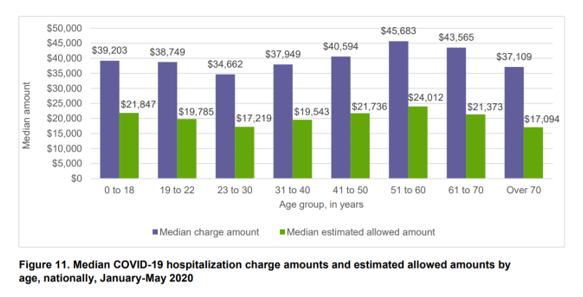
The median charge for hospitalizing a patient with COVID-19 ranged from $34,662 for people 23 to 30, and $45,683 for people between 51 and 60 years of age, according to FAIR Health’s research brief, Key Characteristics of COVID-19 Patients published July 14th, 2020. FAIR Health based these numbers on private insurance claims associated with COVID-19 diagnoses, evaluating patient demographics (age, gender, geography), hospital charges and estimated allowed amounts, and patient comorbidities. They used two ICD-10-CM diagnostic codes for this research: U07.1, 2019-nCoV acute respiratory disease; and, B97.29, other coronavirus as the cause of disease classified elsewhere which was the original code
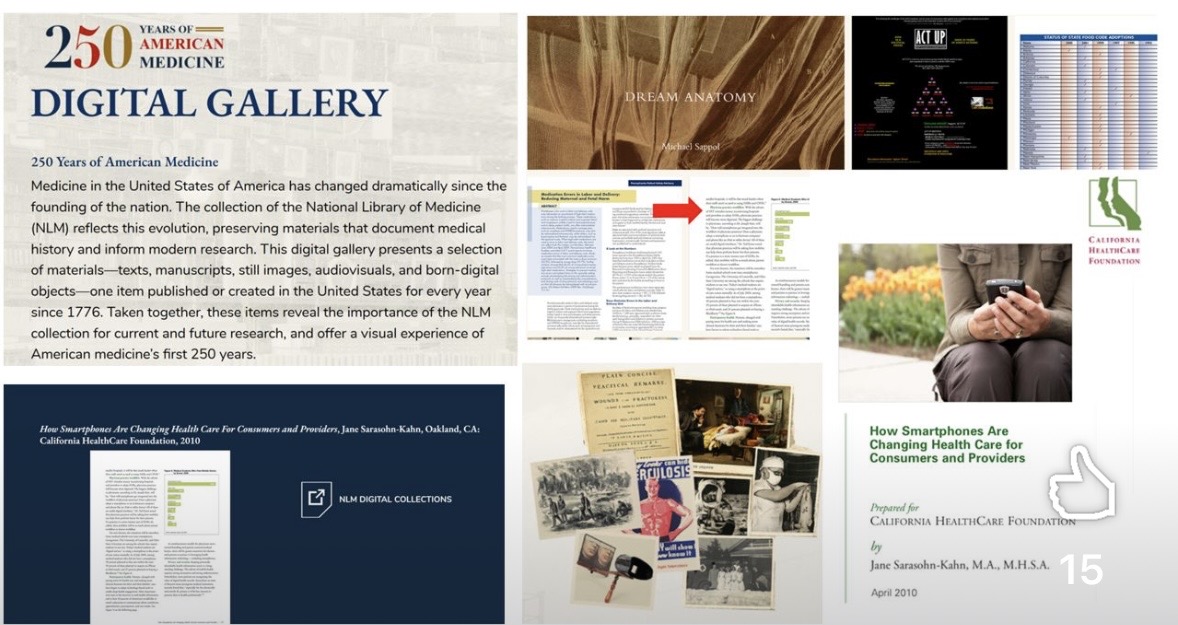 I’m celebrating America’s 250th birthday both patriotically and professionally, honored that the NLM included my 2010 paper, “How Smartphones Are Changing Healthcare for Consumers and Patients” as one of 250 items curated for the digital archive of 250 Years of American Medicine.
 I'm grateful to be part of the Duke Corporate Education faculty, sharing perspectives on the future of health care with health and life science companies. Once again, I'll be brainstorming the future of health care with a cohort of executives working in a global health care enterprise.
 Jane joined host Dr. Geeta "Dr. G" Nayyar and colleagues to brainstorm the value of vaccines for public and individual health in this challenging environment for health literacy, health politics, and health citizen grievance. Click onto the Pfizer Value of Vaccines site and you can watch four episodes covering the challenges with adult vaccination, the employer and health plan member's journey to vaccination, reimbursement, and collaborating for proactive prevention.