


How Tariffs Could Wreak Havoc on Health Care Costs and Supply Chains in the U.S.
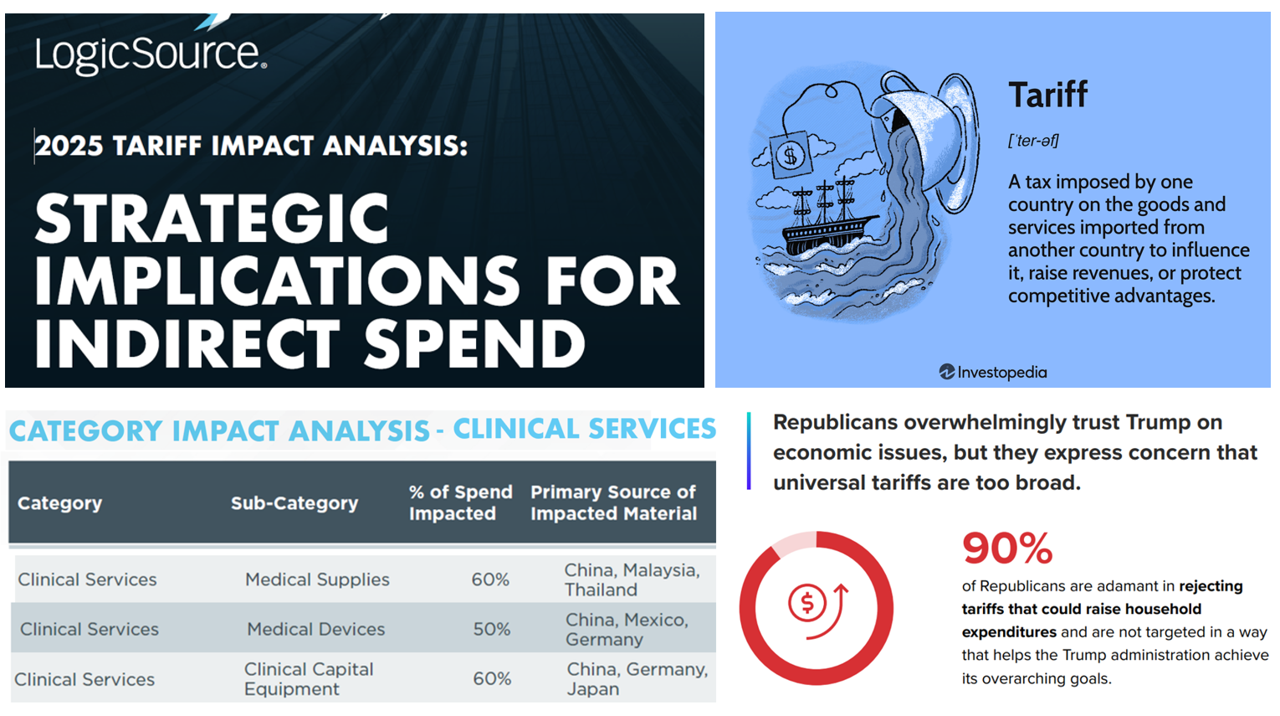
Non-clinical goods and services can comprise $1 in $5 of net patient revenue in the U.S. health care economy, research from LogicSource gauges. The possible tariffs proposed by the next U.S. President could drive those costs up, eroding financial margins in many parts of American health care — from hospitals to drug companies and med-tech innovators. Simply put, “President-elect Donald Trump’s pledge to enact across-the-board tariffs isn’t going over well in the health care industry,” POLITICO reported. Why worry about tariffs’ impacts on health care? Ask the CFO of Reckitt, Shannon Eisenhardt, who spoke
Connecting for Health at Home: A Unified Field Theory from #CES2025 (On Samsung, Withings, and Panasonic)
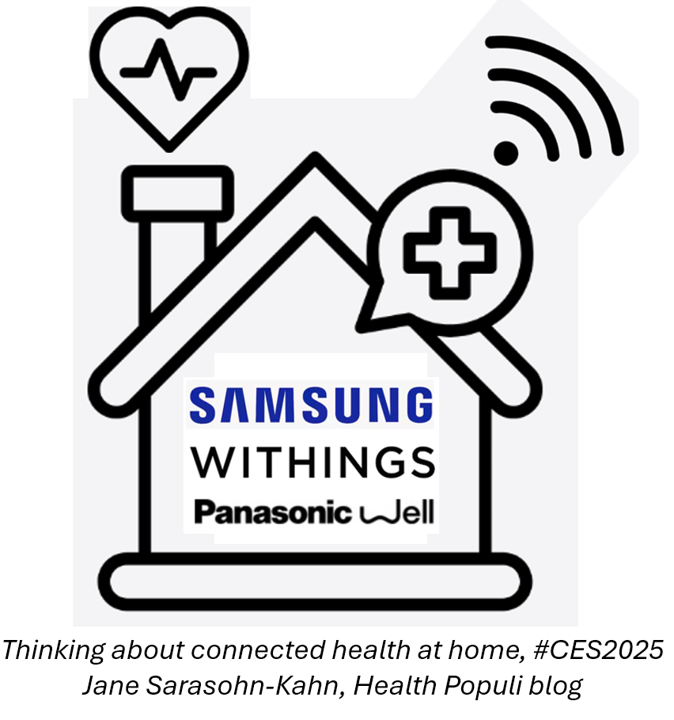
There were over 4,500 exhibitors on the show floor of the 2025 CES in Las Vegas last week, addressing every imaginable aspect of consumers’ daily lives as we increasingly coexist with technology to support life, liberty, and our personal pursuits of happiness….. ….and health. My focus is always on health, and in the past decade and a half, health/care, everywhere. So my lens on #CES2025 looked out for specific point solutions for health, medical care, fitness and well-being, along with adjacencies for mobility/auto, environmental health (think: clean air, clean water), kitchen appliances and food-tech, and home care (not the medical
Nurses Rank Highest in Honesty and Ethics in Professions Far Above All Other Work Roles in America – The Gallup Annual Survey 2025
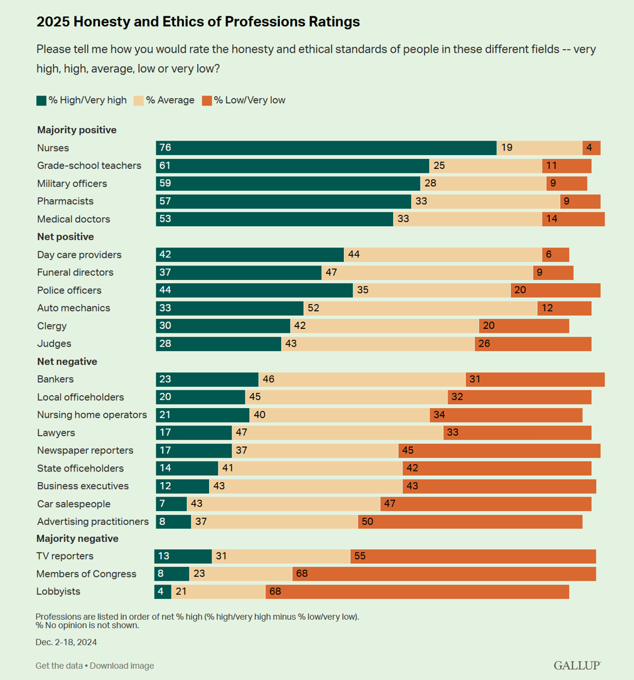
While nursing has ranked top of U.S. professions for honesty and ethics for over a decade, U.S. adults speak even more assuredly in 2025 that nurses far outrank other professions in America. according to the latest Gallup Poll. The study summary report is titled, “Americans’ Ratings of U.S. Professions Stay Historically Low.” The data speak for itself — in 2025, the margin of people who put nurses on top of all other professions in America is much wider than in past years — and physicians have fallen further down
Healthy Aging at Home – Learning from AARP at #CES2025
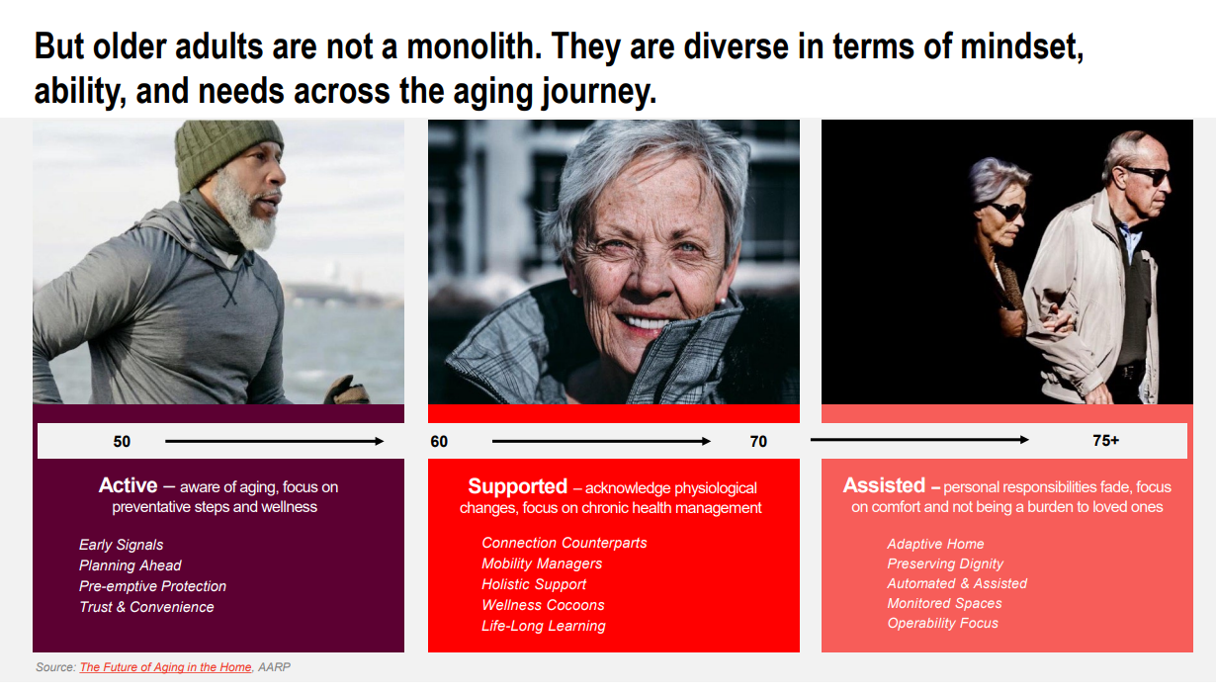
You would expect an auto manufacturer, a Big Tech, or a big-screen TV company would commandeer the largest exhibit booths at CES 2025, the largest annual conference of consumer-facing technology stakeholders. We can add another exhibitor to the largest CES “real estate” presences at #CES2025: that would be AARP hosting the AgeTech Collaborative. And a pickleball court, too! Why feature pickleball at a AARP booth at CES? Well, IMHO health is everywhere at #CES2025, and pickleball, the fastest-growing sport in the U.S., is good for many facets of health: physical to be sure, and also social
How Disrupting the Generic ED Meds Sales Model Marries to Our Digital Coexistences – Mark Cuban at the Shelly Palmer Innovation Series Breakfast #CES2025

What was Mark Cuban doing “gate-crashing” Shelly Palmer’s Innovation Breakfast? My worlds of content and health care collided in a serendipitous way this morning when, at the conclusion of my annual beloved experience attending and learning at the Shelly Palmer Innovation Series breakfast which focuses on content, media, entertainment, and now AI mashing up everywhere, all at once, Mark Cuban appeared as a late-breaking guest in fireside chat with Shelly. Here’s my photo to prove it, circa 903 am this morning. Before even chatting about AI, X, and his
Vitamin Sleep – Sleep-Tech Innovations from #CES2025
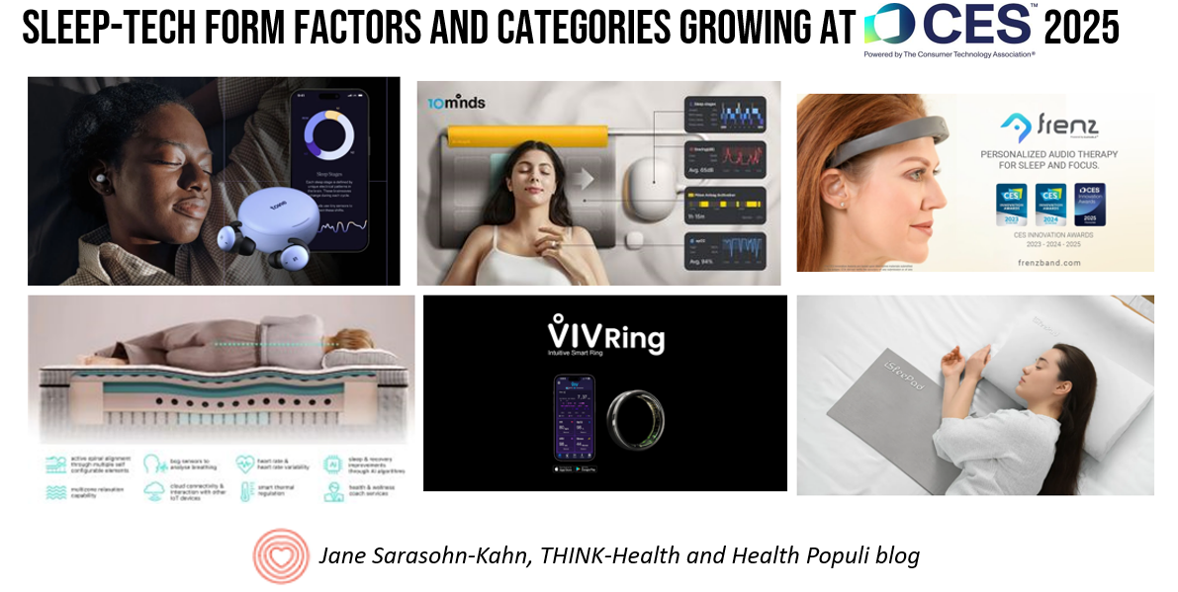
Sleep, or lack thereof, is a public health challenge around the world whatever your postal code or demographic profile. Can technology help us bridge the sleep deprivation gap, or is technology destined to ruin our mind-body-spirit health? At CES 2025, you won’t be surprised that it’s a bull market for sleep-tech across a growing portfolio of device and product types. Beyond the always visible display of new-and-improved beds which have tempted CES-goers into cat-nap trials for many years on the show floor, we find many form-factors for sleep assistance this year. First, some
How GLP-1s Are Showing Up at CES 2025
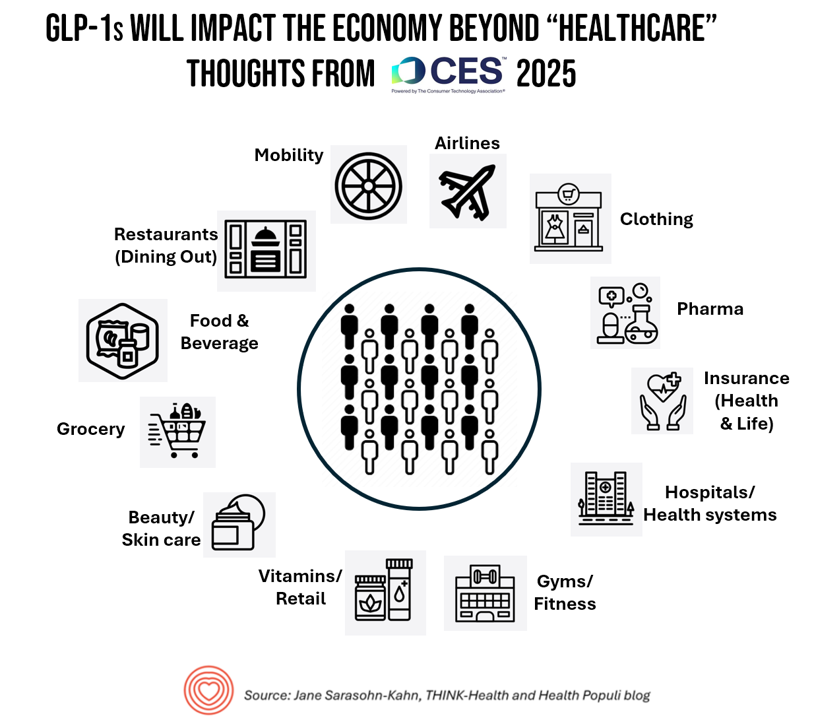
CES 2025: as you read the acronym and year, your brain registered an image like consumer technology and the start of a new year, or some variation of those thoughts. When you saw the title of this post with the acronym “GLP-1,” your brain might not have connected the dots between a medicine and “CE,” consumer electronics. But here we are in real-time, in real life, at the convergence of pharmaceuticals and medicines and consumer-facing technology. And keep in mind that we’re at the annual meeting of CES which is convened by the Consumer Technology Association, CTA. GLP-1s are showing
CTA Tech Trends to Watch for 2025 – Health-Context for Kicking off #CES2025
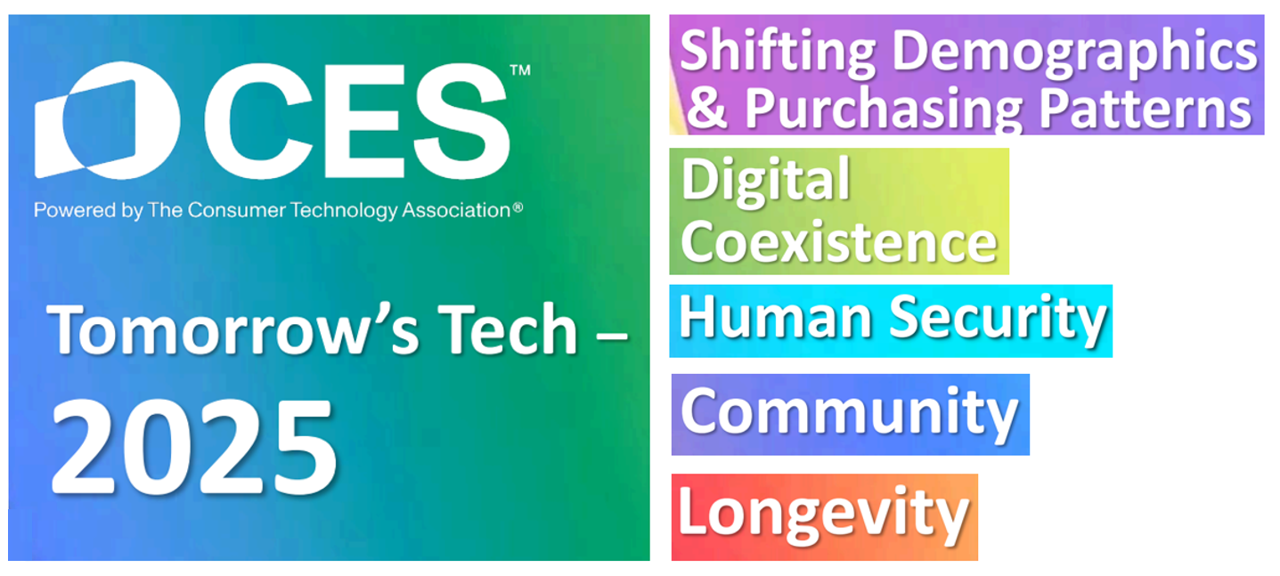
People are living everyday life in digital coexistence — where the connected technologies we use for communication and entertainment now enable life-flows across our lives, morning to night, at work and play and even while we’re sleeping. Welcome to the five key tech-trends for 2025, brought to life Sunday afternoon by Melissa Harrison, CTA’s Vice President of Marketing & Communications tag-teaming with Brian Comiskey, Senior Director, Innovation & Trends. This annual session at CES always provides a practical context for exploring the annual conference, the largest in the world covering technology used by everyday people. And this year, the trends
Seeing Health/Care Everywhere at CES 2025: My Preview for #CES2025

Health/care is everywhere is the mantra on the back of my business card. And at #CES2025, that will indeed be the situation. The 2025 convening of CES (once known as the Consumer Electronics Show) in Las Vegas officially kicks off on 7 January 2025. But I’ll be there beginning 3rd January, scheduling pre-show meetings with innovators, analysts, and my own clients who will be attending the meeting. This will be my 15th year participating in CES, and marking over a decade as a member of the Consumer Technology Association (CTA). As someone who has tracked
The Rough Guide to Health/Care Consumers in 2025: The 2025 Health Populi TrendCast
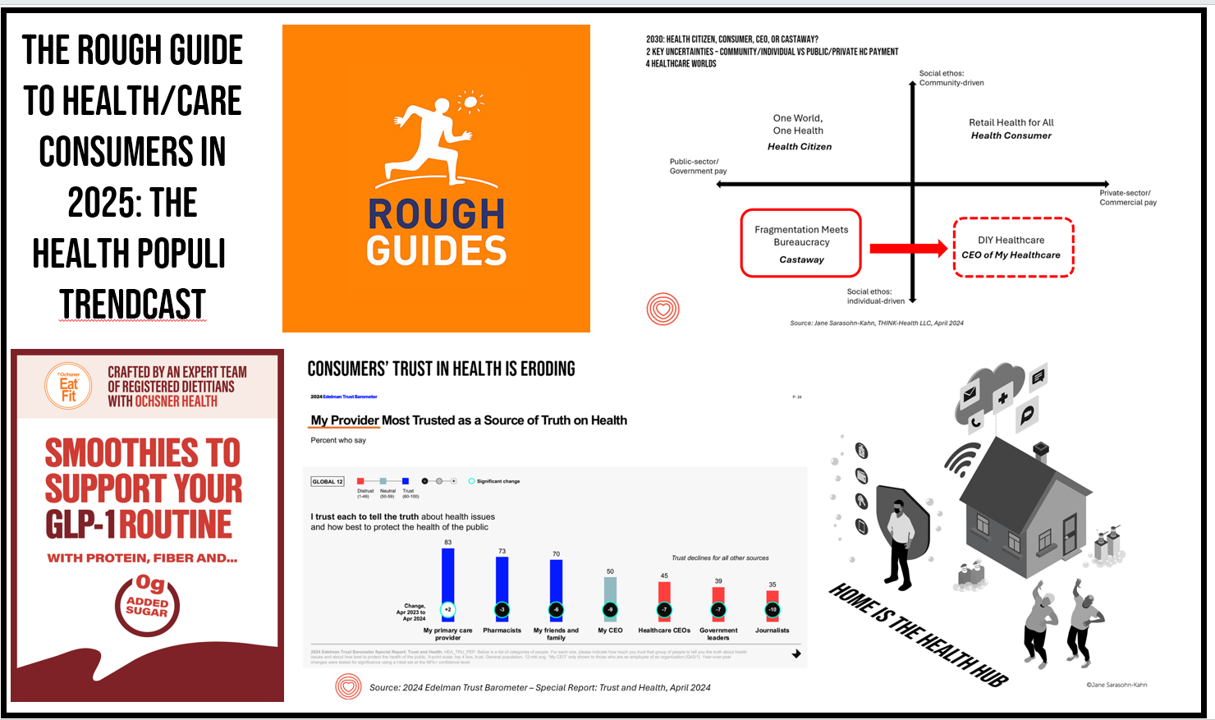
At this year-end time each year, my gift to Health Populi readers is an annual “TrendCast,” weaving together key data and stories at the convergence of people, health care, and technology with a look into the next 1-3 years. If you don’t know my work and “me,” my lens is through health economics broadly defined: I use a slash mark between “health” and “care” because of this orientation, which goes well beyond traditional measurement of how health care spending is included in a nation’s gross domestic product (GDP); I consider health across the many dimensions important to people, addressing physical,
National Healthcare Spending in the U.S. Was Nearly $5 Trillion (with a “T”) in 2023 – New Data from CMS
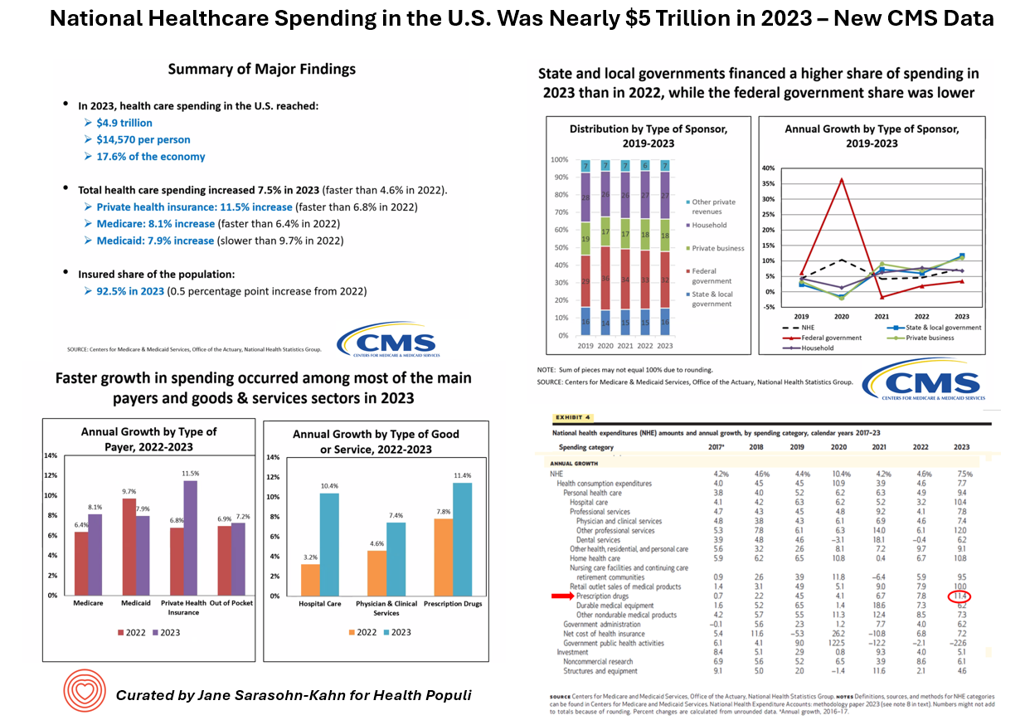
What would $5 trillion be valued around the world or on the stock market? The economy of Germany was gauged around $5 trillion in 2024. India could be the world’s 3rd largest economy by 2026 valued at $5 trillion. Nvidia could be a $5 trillion company in 2025, as could Amazon. But today we report out the latest data from the Centers for Medicare and Medicaid Services (CMS) that national health spending in America reached $4.9 trillion in 2023. The full report on national health expenditures (NHE) in the U.S. was published today in Health Affairs, which came off embargo
Health-Tech at the Holidays: 2024 Consumer Health-Tech Trends Under the Tree
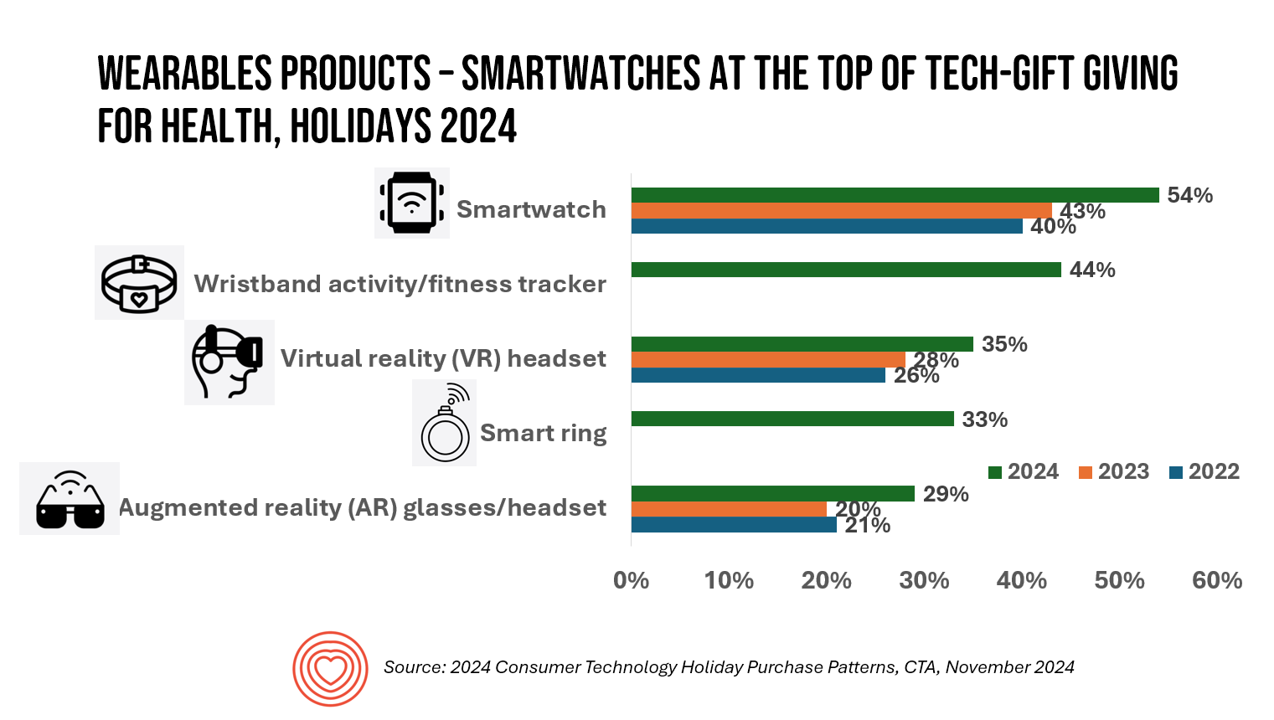
One in two U.S. adults plans to purchase at least one health and wellness digital health technology product to gift during the winter 2024 holiday season, according to the 2024 Consumer Technology Holiday Purchase Patterns study served up by CTA, the Consumer Technology Association — aka the annual host of CES. Specifically, 41% of givers are looking to buy a dedicated health monitoring device, and 31% a product covering connected sports or fitness. For this annual study, CTA conducted an online survey among 1,205 U.S. adults 18 and over in August-September 2024 to gauge
Most People in the U.S. Trust the CDC and NIH for Health Information, and Most Want President Trump to Strengthen Health Institutions
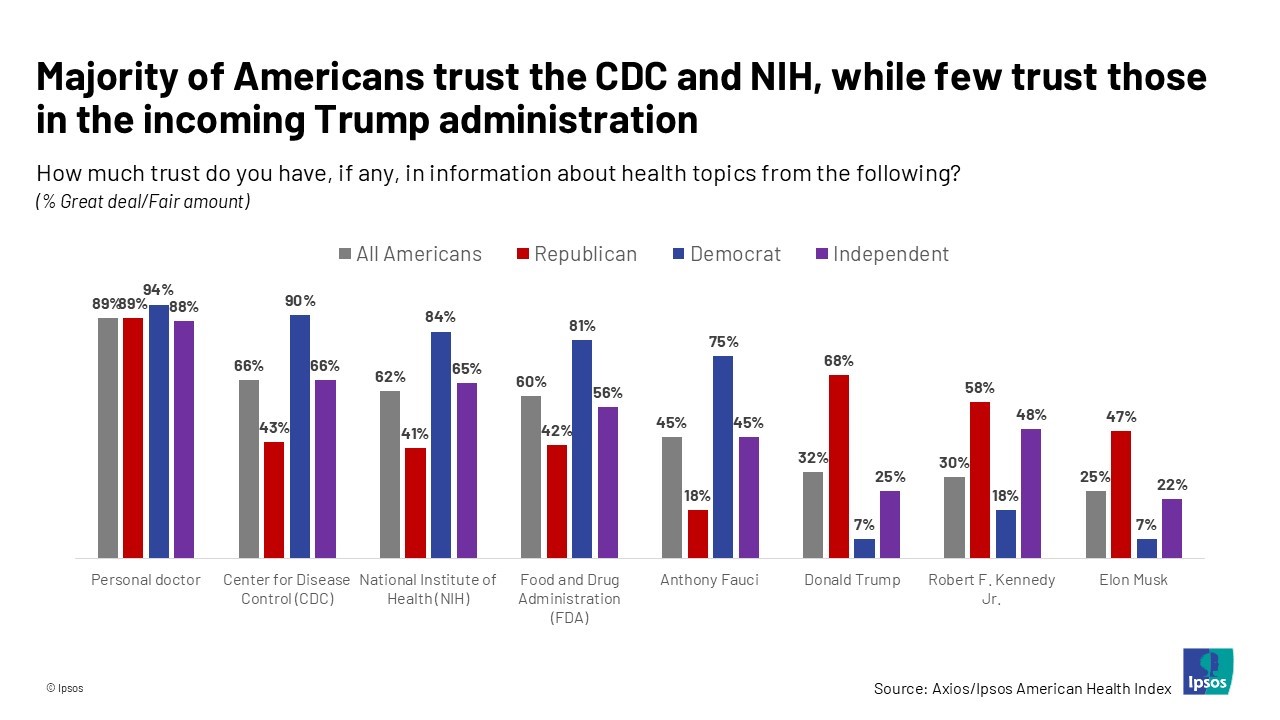
Most health citizens in the U.S. trust the CDC, NIH, and FDA, and most people also want the 47th incoming President Donald Trump to strengthen health/care institutions — from the VA and FDA to Medicare, Medicaid, as well as the CDC and Affordable Care Act. The Axios/Ipsos American Health Index, published this week, reveals both concurrence among U.S. health consumers with some striking differences across political party ID. Axios and Ipsos fielded a survey among 1,002 U.S. adults in early December to glean peoples’ perspectives on health, trust, and a variety of health and social policies.
Americans’ Views on the Quality of Healthcare Fell to a Record Low — with Costs Ranking as the Most Urgent Problem for Health in the U.S.
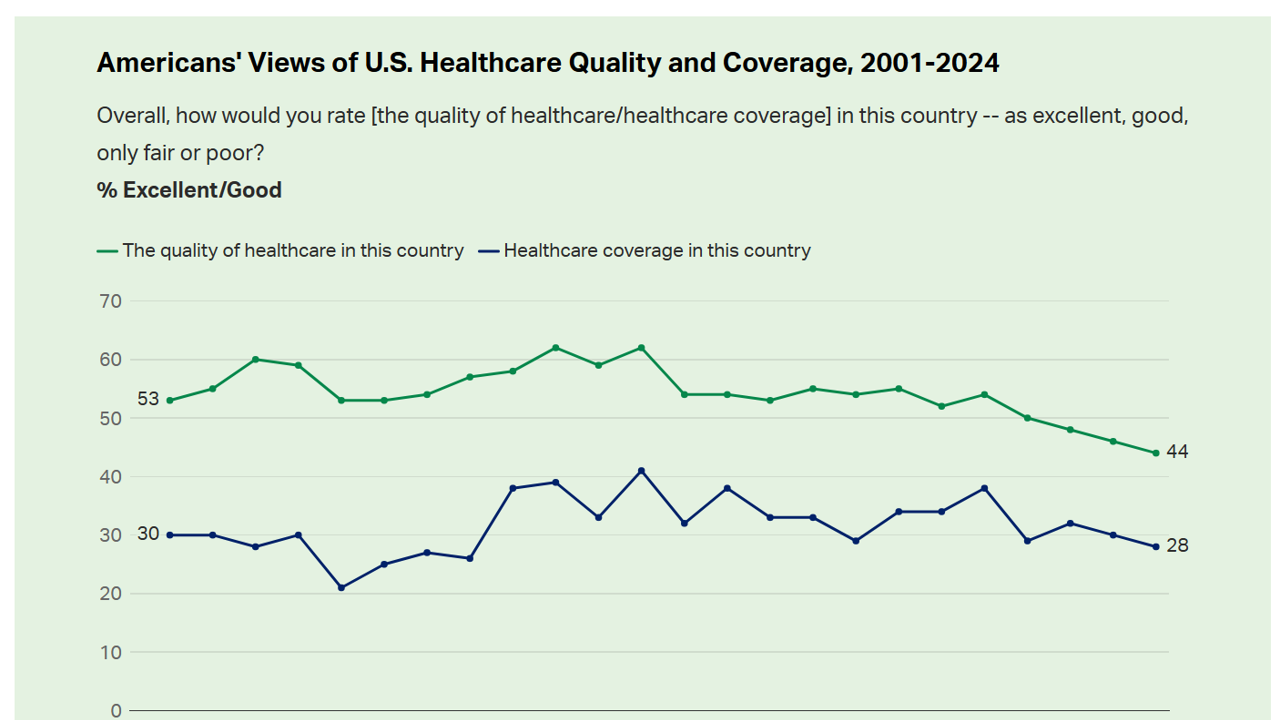
Americans’ perception of the quality of health care in the U.S. fell to the lowest level since 2001, Gallup found in a poll of U.S. health citizens’ views on health care quality, published December 6, 2024. In 2024, only 44% of Americans said that the quality of health care int he U.S. was excellent or good — conversely, 56% of Americans though health care quality was only fair or poor. By political party, that included 50% of Democrats evaluating the quality of care highly compared with 42% of Republicans. Only 28% of people in
How Trauma-Informed Design Principles Can Be Health-Ful for All of Us – Learning from IKEA

As a long-time fan and customer of IKEA, I receive daily Google Alerts about the company, from business finances to design trends. When I read this piece on IKEA’s work on a home designed for people who were homeless, I paid special attention to learn about the concept of trauma-informed design. Thanks to the publication Retail TouchPoints and the author of the story, Adan Blair, for covering this project. The story has lit a lot of lightbulb inspirations for me in thinking through the role housing plays in human health and well-being, and also to
Digital Divides and Disability – Ranking Health Determinants in a Digital Age: Learning from WHO and LSE
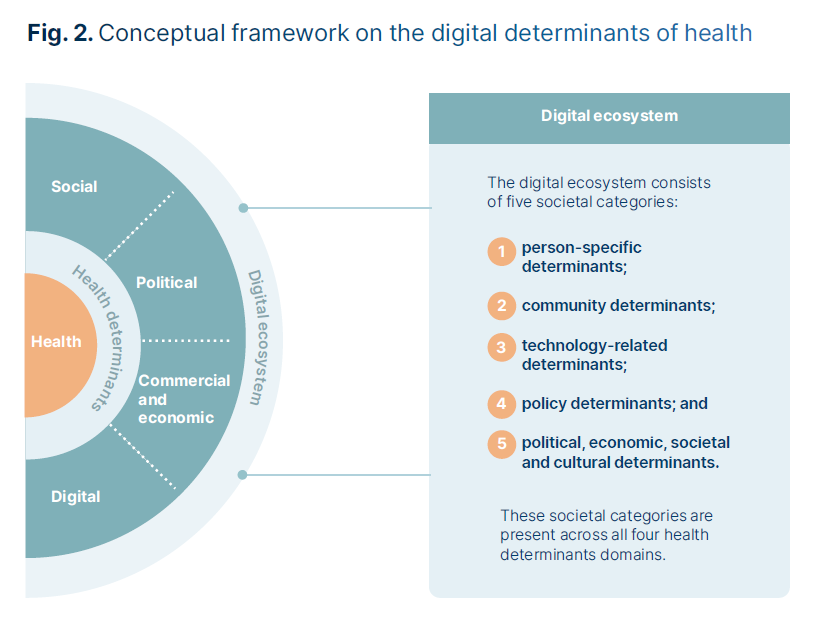
Among 127 health determinants, two rank highest: digital divides in the era of tech-enabled health and care: digital divides that shape a person’s political, economic, and social environment, and the person’s health/disability status. The digital transformation of health and care compel us to re-consider and re-frame social determinants of health in the “digital age,” which is what the World Health Organization in collaboration with the London School of Economics have done in research, published this week in the report, Addressing health determinants in a digital age. The report was funded by the European
How World AIDS Day 2024 Can Inform Healthcare in 2025

December 1 2024 was World AIDS Day, which was observed by the Biden White House with the display of the entire AIDS Memorial Quilt on the South Lawn — all 54 tons of it. The Biden-Harris Administration announced efforts, in advance of World AIDS Day, to continue to fight HIV/AIDS “at home and abroad.” The press release for the effort noted that, ”We remember those who have died from AIDS-related illnesses—honoring their courage and contributions as essential to the progress made thus far. We also stand in solidarity with the more than 39 million people with HIV around the world.
The Evidence for Gratitude and Health, 2024 Giving Thanks
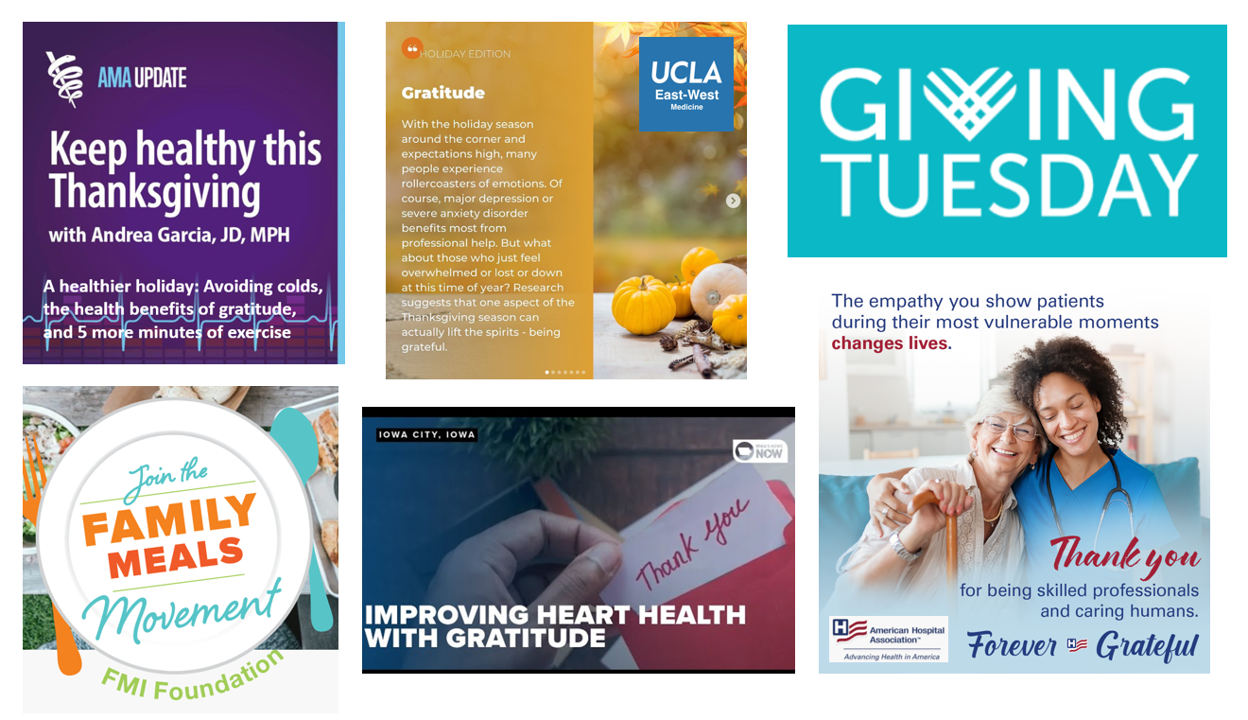
In our home, we’re feeling very grateful for our healthy lives and work-flows right now, being very mindful about seeing blessings around me and within me…. So I’m sharing the love (or “scaling the love” as I recently coined at OSF’s Digital Health Symposium!) to honor American Thanksgiving 2024 here in Health Populi pointing out several sources highlighting the evidence on gratitude and health….underpinned with love, the ultimate driver of health and well-being. Leslie Sarasin, President and CEO of FMI, the Food Industry Association, reminds us that, “Our immigrant ancestors, the pilgrim settlers, worked hard
Workers Feel “Stuck,” Under-Insured, Financially Stressed, and Neglecting Mental Health
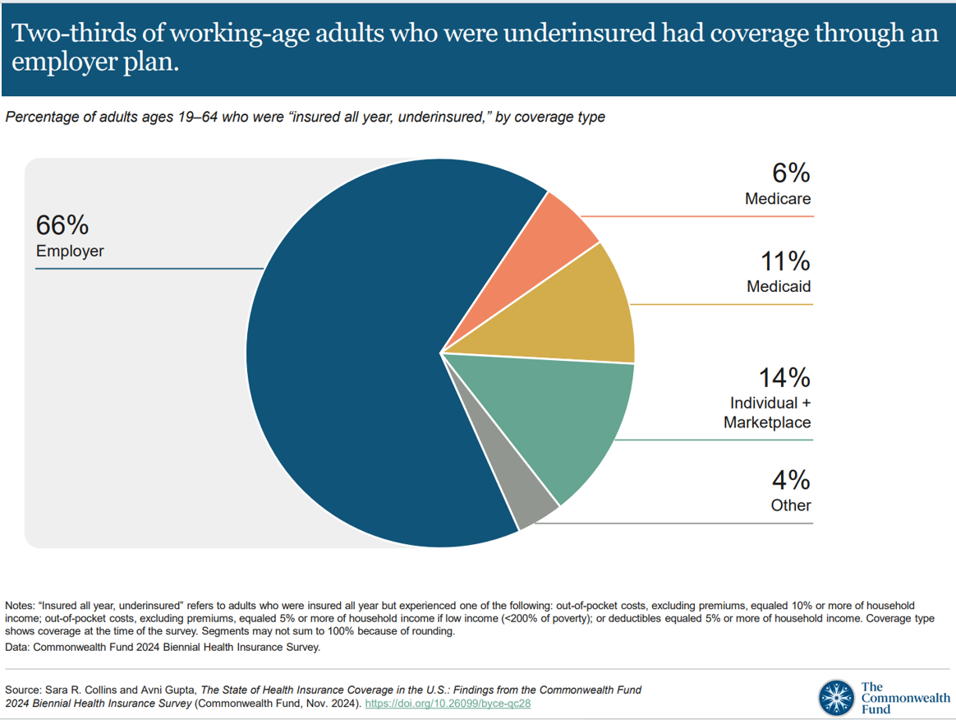
“It’s the economy stupid,” Jennifer Tescher, CEO of the Financial Health Network, titles her latest column in Forbes. Published two weeks after the 2024 U.S. elections, Jennifer’s assertion sums up what, ex post facto, we know about what most inspired American voters at the polls in November 2024: the economy, economics, inflation, the costs of daily living….pick your noun, but it’s all about those Benjamins right now for mainstream American consumers across many demographic cuts. With that realization, we must remind ourselves as we enter a new year under a second-term President Trump that health care spending for everyday people
3 in 4 U.S. Patients Say the Healthcare System is Broken — But Technology Can Help
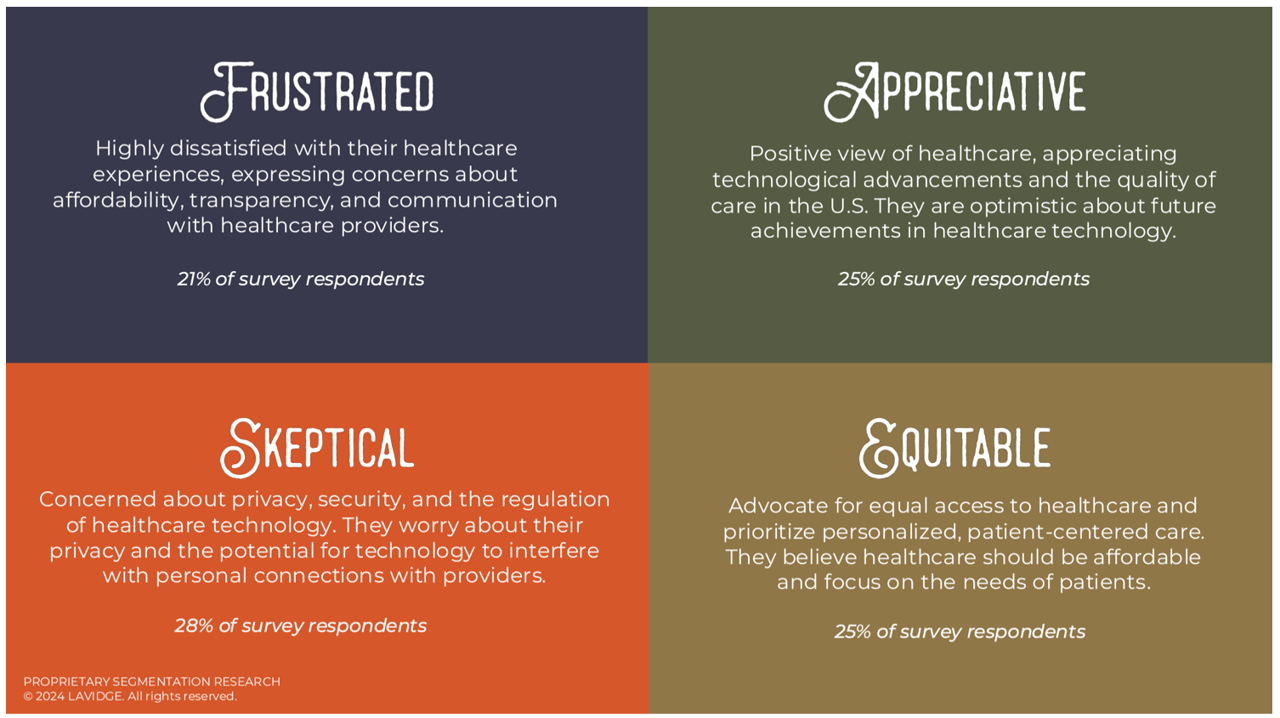
Patients “yearn” for personalized services and relationships in health care — optimistic that technology can help deliver on that hope — we learn in Healthcare’s Future: Balancing Progress and Perception, a health consumer survey report from Lavidge. Lavidge, a communications/PR/marketing consultancy, polled U.S. patients’ attitudes about health care and technology in June 2024, publishing the report earlier this month. Start with over-arching finding that, “Three out of four patients believe the U.S. healthcare system is broken and there is a strong sense of distrust,” Lavidge asserts right at the top of
 Jane will be working with EU- and UK-based clients in September and October 2026, collaborating with stakeholders in digital health, public/community health, retail health, and growing opportunities for health-at-home. Stay tuned to her updates here on Health Populi on-the-ground as she lives the digital nomadic work-life in Italy, Belgium, the Netherlands, and in London.
 I was grateful to be Jasmine's first conversation-guest on her new podcast, "Aperture - Widen the Frame," where this expert in narrative medicine is bringing together the broad range of voices to sit at the table and address what health care needs: those humans in the health-system-loop who address health equity and empathy along with delivering evidence-based medicine for all.
 Jane joined host Dr. Geeta "Dr. G" Nayyar and colleagues to brainstorm the value of vaccines for public and individual health in this challenging environment for health literacy, health politics, and health citizen grievance. Click onto the Pfizer Value of Vaccines site and you can watch four episodes covering the challenges with adult vaccination, the employer and health plan member's journey to vaccination, reimbursement, and collaborating for proactive prevention.