


The Business Case for Baking Health and Wellness Into Products – Listening to McKinsey and GWI
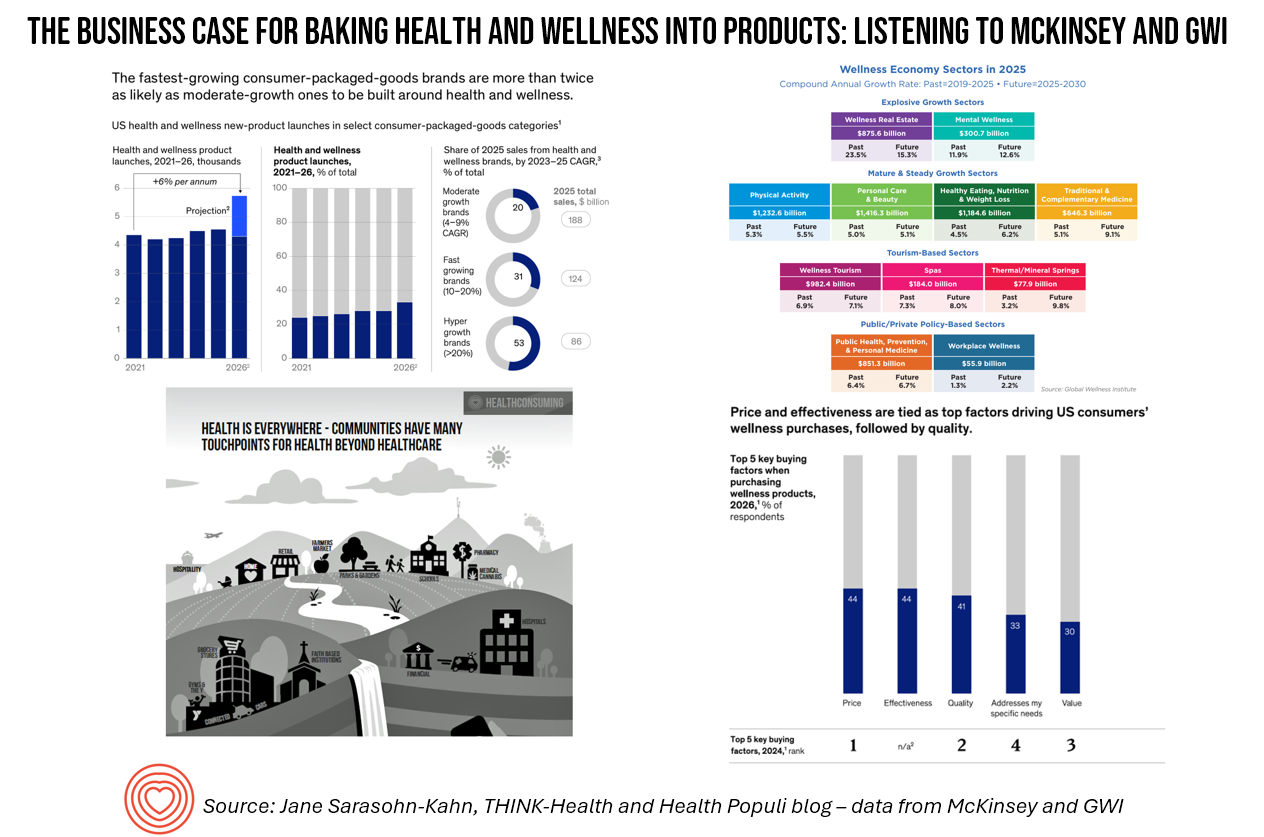
“The pursuit of wellness is changing what everyday life looks like….A few years ago, [consumers’] behaviors would have sounded fringe. Today, they describe what we call the wellness takeover: Two in three US consumers say they prioritize wellness more than they did a year ago,” McKinsey analysts (the “we” in this sentence] assert in their latest report on the Future of Wellness 2027: Inside the $2.7 trillion takeover. That so-called “takeover” can be a win-win for both the consumers, seeking value and evidence in their health+wellness spending, and the companies and organizations providing
A Healthcare Blue Wave? What the U.S. 2026 Midterm Elections Revealed

MINA Medical Marketing, an agency based in Canada, recently asked the question, “Why are most health care marketing logos blue?” “In healthcare, blue is a color that evokes feelings of trust, reliability, calmness, and professionalism, all attributes that are essential in healthcare,” Team MINA explained. “Patients need to feel that they are in safe hands, that the care they receive is trustworthy, and that their healthcare providers are knowledgeable and competent.” And blue, the color psychologists attest, communicates these qualities. Today political analysts describe the results of the U.S.
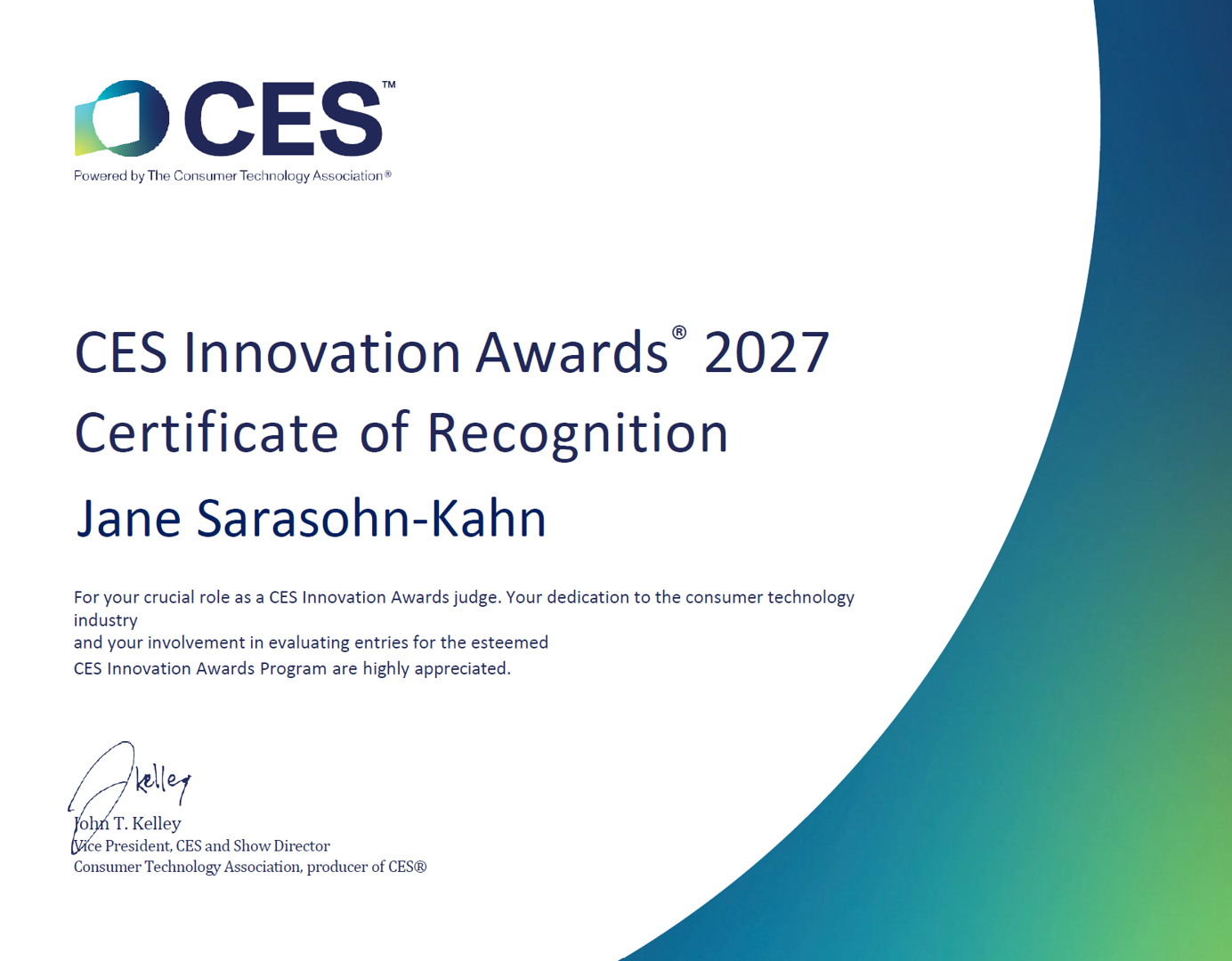 It was an honor to be a CES Innovation Awards 2027 judge once again for the digital health category. Based on the new-new things I reviewed in the process, we'll be seeing some amazing developments that should have positive impacts on peoples' health and well-being, from head and brain to toe. Viva Las Vegas, as usual, right after New Year January 2027!
 January 2027 is in our sights, and that means we're making plans for #CES2027. I've attended the largest consumer electronics show for nearly 20 years, tracking the evolution of digital health which enables people for greater self-care and health agency and literacy. I'm looking forward to collaborating on this webcast with fellow CES experts in their fields to brainstorm what we expect in this "All Things CES" Zoom session organized by the great Robin Raskin and the Virtual Events Group on December 10.
 Jane joined host Dr. Geeta "Dr. G" Nayyar and colleagues to brainstorm the value of vaccines for public and individual health in this challenging environment for health literacy, health politics, and health citizen grievance. Click onto the Pfizer Value of Vaccines site and you can watch four episodes covering the challenges with adult vaccination, the employer and health plan member's journey to vaccination, reimbursement, and collaborating for proactive prevention.