


Employers continue to worry about health costs in 2011, and expect to expand defined benefit plans
With health reform uncertainties, growing health regulations, and ever-increasing costs, employers who sponsor health plans for their workforce will continue to cover active employees. That is, at least until 2017, according to the crystal ball used by Mercer, explained in the Health & Benefits Perspective called Emerging challenges…and opportunities…in the new health care world, published in May 2011. Note that it’s “active” employees who Mercer expects will retain access to health benefits. For retirees, however, it’s another story. They need to be ready to take on more responsibility, financially and perhaps going-to-market to select coverage, while employers may continue some level
Botox over preventive health: health consumers have spoken, delaying diagnoses
Americans are opting for Botox and cosmetic procedures more than colonoscopies and cancer tests, according to a story in Reuters. This trend makes companies like Allergan, makers of Botox and the Lap-Band for gastric surgery, very happy indeed. Plastics and gastric bypass surgeries are back up to pre-recession levels as of 2Q11. However, for companies and providers in other segments of the health care and surgery value-chain, prospects for bounceback in 2011 aren’t as promising. Various indices on consumers’ health care sentiment — such as the Thomson-Reuters Consumer Healthcare Sentiment Index and the EBRI Health Confidence Survey, show U.S. consumers’ perceptions of their ability to
The average annual health costs for a U.S. family of four approach $20,000, with employees bearing 40%
Health care costs have doubled in less than nine years for the typical American family of four covered by a preferred provider health plan (PPO). In 2011, that health cost is nearly $20,000; in 2002, it was $9,235, as measured by the 2011 Milliman Medical Index (MMI). To put this in context, The 2011 poverty level for a family of 4 in the 48 contiguous U.S. states is $22,350 The car buyer could purchase a Mini-Cooper with $20,000 The investor could invest $20K to yield $265,353 at a 9% return-on-investment. The MMI increased 7.3% between 2010 and 2011, about the same
The online digital health divide persists for African Americans and Hispanics; implications for health reform
Differences in race, ethnicity and income drive online health disparities, according to a poll from The Washington Post/Kaiser Family Foundation (KFF)/Harvard University Race and Recession Survey, based on data from early 2011. The underlying issue here is the online digital divide, which still persists for African Americans and Hispanics of lower socioeconomic status. Overall, 84% of U.S. adults use the Internet or email at least occasionally. However, only 69% of African Americans and 64% of Hispanics with less than $40,000 annual income use the Internet or email. However, income flattens Internet/email use: for people who earn over $40K a year, 95% of whites, 94% of African
Wellness is the new health benefit (a double entendre)
Wellness and disease prevention were the meta-themes at Health 2.0’s Spring Fling held earlier this week in San Diego. where the discussions, technology demonstrations, and keynote speakers were all-health (as opposed to health care), all-the-time. Dr. Dean Ornish told the attendees in the standing-room-only ballroom space that the joy of living is a greater motivator than the fear of death. And the 1.0 version of managing health risks has been more the latter than the former. As a result, Ornish’s two decades of research have shown that health is more a function of lifestyle choices than it is drugs and surgery. In fact, people have
Health consumers like integrated health plans – and medical homes, based on J.D. Power’s latest survey
J.D. Power and Associates, known for its insights into consumers’ opinions on cars, insurance and telecomms, published its latest poll on consumers’ favorite health plans. The verdict: health citizens like integrated health insurance plans where providers and insurance are part of the same organization like Kaiser Foundation Health Plans (rated in the top 3 in virtually every market where they operate polled by J.D. Power), Health Alliance Plan of Michigan, Geisinger in Pennsylvania, Dean Health Plan of Minnesota, and Group Health Cooperative of the northwest. Each of these integrated plans grew up based on local medical, economic and political cultures.
The Post-Health Plan Health Plan: Humana
“If nothing else, the health reform bill has signaled the beginning of the end of the health plan as we know and love it,” David Brailer, once health IT czar under President GW Bush and now venture capitalist, is quoted in Reuters on Hot Healthcare Investing Trends for 2011. One health plan Brailer called out that could be relevant in the post-reform, post-recessionary US health world is Humana. I had the opportunity to spend time with Paul Kusserow, Chief Strategy Officer for Humana, during the HIMSS11 meeting. Our conversation began with me asking why the chief strategist for Humana would
Consumers connecting for health: what does it mean for health plans?
I’m talking today at the 2011 Annual PPO Forum held by the American Association of Preferred Provider Organizations (AAPPO) on the track called, “Technology Changing the Face of Health Care: What Does 21st Century Care Look Like?” It looks like consumers connecting for health, which is the topic of my discussion. People already DIY-many aspects of daily living online, from financial management through Schwab and eTrade online to buying travel via Priceline and shopping for shoes on Zappos. A growing number of health citizens are engaging with health online — way past the tipping point for health search online, as Susannah
U.S. employers put health care cost containment at the top of reform priorities
1 in 5 among all U.S. employers (22%) would likely drop health insurance coverage and let workers buy a plan through a health insurance exchange. However, most employers would expand wellness programs driven by incentives in health reform. Employers’ perspectives on the Affordable Care Act/health reform are mixed, according to a survey conducted by the Midwest Business Group on Health, co-sponsored by the National Business Coalition on Health, Business Insurance and Workforce Management. Not surprisingly, these views vary by whether the firm is large (>500 employees) or small. More large employers support the creation of Health Insurance Exchanges and would expand wellness services;
1 in 2 employers will continue to offer health insurance even if HIEs are competitive in 2014
Just over one-half of U.S. employers plan to maintain their health plans in 2014 even if health insurance exchanges (HIEs) offer competitive priced health plans for individual employee health coverage, according to a survey of 1,400 employers by Willis and Diamond Management & Technology Consultants. 1 in 3 employers is not sure whether they’ll maintain their own health plan or shift employees toward an HIE. The Health Care Reform Survey 2010 measured U.S. employers’ knowledge of the Affordable Care Act (ACA) and its expected impact on employers’ benefits. 9 in 10 employers (88%) believe that ACA will increase the costs of the health plans with
Trust in hospitals highest over all health industry groups; pharma flat, and health plans rank lowest
Americans trust their supermarkets and local hospitals more than other industries they deal with. while tobacco and oil companies remain at the bottom of the trust-list for U.S. consumers, health insurance and managed care aren’t much ahead of them. Pharmaceutical companies rank fairly low, with only 11% of U.S. adults seeing them as “honest and trustworthy.” As a result, nearly one-half of Americans would like to see increased regulation on pharma. Over 1 in 3 Americans would like to see managed care and health insurance companies more regulated. The latest Harris Poll has found that oil, pharmaceutical, health insurance and tobacco are
Frugal America and what it means for health care
Trading down is the spending ethos among American consumers in 2010: will shoppers’ frugality persist? That’s the question explored by Strategy& (formerly Booz and Company) in their survey, which begs, Forever Frugal? 2010 U.S. Consumer Survey Confirms Persistent Frugality. The firm points out that while the recession officially ‘ended’ in September 2009, most consumers don’t behave bullish in shopping matters 14 months later. In the post-recession shopping ethos, more consumers have traded down to store brands and generic labels, buying through the value-maximizing lens. “On average, consumers continue to economize everywhere — they are buying fewer discretionary items,” as detailed in the
People with chronic conditions self-ration health care more than healthy people
3 in 4 American workers who receive health insurance at the workplace have been impacted by increasing health care costs. As a result, more are self-rationing health care; this is taking many forms, including delaying visits to the doctor, skipping a recommended visit, and not filling prescriptions written by the doctor. Most concerning is that the 14% drop in the percent of employees trying to take better care of themselves in the past year, according to Employee Perspectives on Health Care: The Affordability Gap, from Towers Watson. As health costs rise, employee satisfaction is falling — this is particularly true
Blondie and Dagwood on the health economy
People in the U.S. covered by employer-sponsored health insurance assess their health insurance choices with the help of their human resource departments. Here, Blondie and Dagwood are having a discussion about three alternatives: A low cost plan A higher cost plan with better coverage A high-deductible health plan for doctors who are outside of the plan’s network. Dagwood’s solution? “Stay healthy.” Would that it were so easy! Evaluating health insurance options is no simple task, even for the savviest, Consumer Reports-reading consumers. Health citizens who want to engage as health care consumers look for trusted sources on how to make rational
Consumers look to insurance and pharma companies to lower health costs
Americans feel pretty helpless about their individual ability to lower health care costs. Most people look to health insurance companies and the pharmaceutical industry to be responsible for lowering health costs in the U.S. A survey from Chadwick Martin Bailey and South Street Strategy looks at Americans’ views on health reform and health care costs in late summer 2010 and finds people still confused about how health reform will impact them, and impotent in their ability to lower their costs. American Consumers Uncertain About Health Reform summarizes the survey results, with the top line finding that 74% of people expect that
The story of Kaiser Permanente’s EHR
“To call health care’s information management for the most part ‘twentieth century’ is as wrong as calling it ‘twenty-first century;’ it’s nineteenth century,” begins Dr. Donald Berwick, Administrator of the Centers for Medicaid and Medicare Services, in the foreword to a new book that tells the story about how the world’s largest health IT project was successfully implemented. Connected for Health was edited by Dr. Louise L. Liang who was senior vice president, Quality and Clinical Systems Support, for the Kaiser Foundation Health Plan and Kaiser Foundation Hospitals between 2002 and 2009. It was during that time that Kaiser envisioned and implemented KP
Benefits and costs: the growing burden of health insurance on American families
Since 2000, American workers’ contributions to health insurance premiums more than doubled, to nearly $4,000 a year from $1,619 ten years earlier. The total premium going to health insurance per worker for family coverage is $13,770 in 2010, with nearly $10,000 being borne by the employer. Workers’ share of premium increased 147%, and employers’ grew 114%. The Kaiser Family Foundation/Health Research & Educational Trust’s (KFF/HRET) annual 2010 Employer Health Benefits survey tells the story of health insurance costs that continue to grow, the rates of which depend on the type of health insurance purchased. For example, workers in high-deductible health plans saw
More employers will offer health insurance, RAND forecasts
What will employers do with their health insurance sponsorship once health reform kicks into full-implementation in 2014? Will they drop coverage? There’s been some speculation that more employers would exit covering employees, but researchers at RAND see quite the opposite scenario. An additional 13.6 million workers will be offered health insurance coverage in a post-ACA America, based on a forecasting model the RAND team constructed. This increases the percentage of employers offering workers health insurance from 84.6% of workers to 94.6% of workers post-reform. The increase is driven, the model predicts, by two key factors: More demand for coverage by workers due
Mayberry RFDHHS
Now showing in a 60-second spot during the 6 o’clock news: Andy Griffith’s got the starring role in promoting the peoples’ use of the Patient Protection and Affordable Care Act of 2010 (PPACA). Here is the announcement of the ad in The White House blog of July 30 2010. In the ad, Andy, now 84, recalls the signing of Medicare by President Johnson and moves into some details about the good things PPACA brings to seniors in the U.S. The Christian Science Monitor covers the story and shows the video here. This has caused quite a stir among Republicans who say
Women win in health reform
Women, on average, have far more contact with the health care system over their lifetimes than men do. So kicks off an analysis of the Patient Protection and Affordable Care Act of 2010’s (PPACA) impact on women, published by The Commonwealth Fund. Realizing Health Reform’s Potential explains that PPACA should insure some 15 million women as well as give fiscal relief to those women who are under-insured or have pre-existing conditions. One of the key underlying factors which stacks the deck against women in health insurance coverage is the fact that insurance companies see young women a higher risk than
Employee Health Benefits: Wellness Up, Rx Down
As the recession continues to negatively impact U.S. business, employers are tightly managing benefits across-the-line, from health to housing and travel categories. Benefits overall are experiencing a downward trend versus 5 years ago. In the health arena, benefits that show staying power include wellness resources (covered by 75% of employers), on-site flu vaccinations (68%), wellness programs (59%), and 24-hour nurse lines (59%). On the downside, benefit programs that are expected to erode in the next 12 months are prescription drug coverage, dental insurance mail-order drug programs, and chiropractic coverage, among others shown in the chart. The Society for Human Resource
I’d rather be Blues: Blue Cross/Blue Shield has highest brand equity for health plans
Health insurance companies aren’t the most beloved stakeholder in health in America these days, based on polls from J.D. Power, HarrisInteractive, and Gallup, among many others. Nonetheless, within the category, it’s good to be #1, and when it comes to health plan brand equity, it’s good to bear Blue Cross/Blue Shield branding in 2010. This finding comes from Harris Interactive’s EquiTrend study on health plan branding, where brand equity is a metric built on U.S. consumers’ perceptions of familiarity, quality, and purchase consideration. After being Blue, Aetna and United follow in second and third brand rankings. The survey was conducted in January 2010 among
Health plans are in a service business: it’s not only about costs and benefit design for employers
J.D. Power, an expert in understanding satisfaction across industries, has looked under the hood of employers and their satisfaction with health plans. In summary: it’s not only about the benefits and costs when it comes to health plan satisfaction. For employers, satisfaction is also based on near-equal parts of “service” in 3 guises: account servicing from the employer’s point of view (where more communication from the plan is seen as better than less); employee plan service experiences; and problem resolution. For the 4 in 5 employers who have had problems with health plans (that’s 79% of employers), it’s less about costs and
More money, less effective: the U.S. ranks last again in health system effectiveness
Among seven developed countries – Australia, Canada, Germany, the Netherlands, New Zealand, the United Kingdom and the United States of America — it’s the U.S. that ranks dead last in the effectiveness of the nation’s health system. In particular, the U.S. rates poorly on the issues of coordination of health care, cost-related problems causing access challenges for health citizens, efficiency, equity, and long/healthy/productive lives for citizens. Of course, it also figures in that the U.S. spends more per capita on health care than any other country on the planet: $7,290 per person compared with Health Nation #1, the Netherlands, which
Health insurance DIY – most unable to pay
61% of American health citizens have difficulty paying for health insurance when they go out on the open market to purchase it as individual customers. A survey from the Kaiser Family Foundation (KFF) finds that most people in the U.S. who go for health insurance on their own have trouble paying for it. 14 million people in the U.S. aren’t covered by employers and seek so-called non-group or individual health insurance policies. Premium increases for these policies averaged 20% in early 2010. Nearly 1/2 of these people are self-employed or work in small business. The average out-of-pocket health spending for
After health reform, employers will play, not pay – but employees will
$18,074 is the medical cost for a typical family four in the U.S. in 2010
Today, $18,074 could cover… A new 2010 Honda Civic A year of college at Hampton University in Virginia The per capita income in Waterloo, NY. Or, you could cover health insurance for a typical family of four in America. In the past year, the average cost of health care for a family of four in the U.S. has increased by $1,303, the large single dollar increase seen in the past 10 years since the start of the Milliman Medical Index (MMI). The total medical cost for a family of four is $18,074 in 2010. Employers will pay, on average, 59% of the
Half of employers will offer consumer-directed health plans in 2015
The growth of consumer-directed health plans (CDHPs) continues as employers look for ways to rationalize their health spending in the midst of annual double-digit health cost increases. By 2015, 61% of large employers will off CDHPs. Overall, 45% of employers think they’ll be offering CDHPs in five years. These data were found through the Mercer National Survey of Employer-Sponsored Health Plans, sponsored by the American Association of Preferred Provider Organizations (AAPPO), published in April 2010. In 2009, 15% of all employers offered a CDHP: this grew from 10% in 2008. 18% of employers are likely to offer a CDHP this
Employers seek to maintain benefits while reducing costs, in MetLife survey
When it comes to health plans sponsored by U.S. employers, there are two realities facing benefits managers: on one side of the coin, most U.S. employers held the line on employee benefits in the recession. The other reality: controlling costs is the most important objective for employee benefits, according to most U.S. employers polled in MetLife’s 8th Annual Study of Employee Benefits Trends. Under the cost-control priority, though, is a novel finding in the MetLife study. That is that employers see a link between benefits and employee productivity and loyalty. Thus, when productivity is viewed as a benefits objective, employers can connect the dots
The health care cost blame-game
71% of Americans are worried about how to pay for rising health care and insurance costs. 6 in 10 Americans blame increases in the cost of health premiums on the profits of insurance companies and prescription drug manufacturers. 1 in 2 Americans point to hospital prices as the cause of higher health costs. Only 18% of people blame their own higher use of medical services as a prime cost of health care cost increases. This Harris Interactive/Health Day survey, Nearly Half of Americans Worried About Rising Health-Care Costs, examines Americans’ health care cost concerns and who’s to blame for them. In
Health cost increases will hit double-digits in 2010 – another reason for real health reform
So much for America’s ability to manage health care costs without health reform: health costs will increase in the double-digits this year, according to Buck Consultants‘ 21st National Health Care Trend Survey. This annual survey monitors medical trend — the factors that drive cost increases. These include inflation, service utilization, technology, adding new programs, changes in service mix, and benefit mandates. The chart illustrates that medical trend varies across plans — but not my much. High-deductible consumer-driven health plans expect growth of 10.4%: hardly a significantly lower rate of growth than for the most open, rich plans (PPO, POS). Buck
Geography is health insurance destiny
Where you live is a determining factor in whether you have health insurance. The darker green on the map illustrates states with the highest percentage penetration of people with private health insurance among people under 65. Note the concentration in the Upper Midwest, scattered Midwest, and bits of the northeast. It’s also helpful to live in Utah when it comes to health insurance coverage. The lowest proportions of privately insured Americans are in much of the south, from Florida west to Texas and into southern New Mexico, Arizona and much of California. The Urban Institute has studied health insurance coverage
Eroding and unaffordable: health care for workers in America
Rosie the Riveter reminds us to Honor Labor. In that vein, with the Labor Day holiday upon us, this post assembles data to paint the latest picture of health insurance and the American worker in 2009… Workscape’s Annual Benefits Study for 2009 found that employees have a heightened appreciation of benefits. The declining economy clearly has increased awareness and appreciation of workplace benefits. Trends In Underinsurance And The Affordability Of Employer Coverage, 2004-2007, in Health Affairs online, found eroding health insurance coverage among employers who continued to provide insurance, and further moves for employees to have more financial “skin in
$16,771 is the cost of health care for a family of four in 2009
$16,771 is roughly the cost of health care for an American family of four in 2009, according to the Milliman Medical Index. If the median family income in 2008 was about $67,000, then health care costs represent about 25% of the annual household paycheck (remember, that’s gross, not net, income). As the chart illustrates, 1 in 3 health care dollars goes to physicians, with another third paid to inpatient services. Outpatient services and prescription drugs consume 15-17 cents on the health dollar in 2009. The greatest increase in cost trends in 2008-9 is with hospital outpatient services, which grew more
Only 1 in 10 unemployed people buy into COBRA
Because of high premiums, only 9 percent of unemployed workers have COBRA coverage. Maintaining Health Insurance During a Recession: Likely COBRA Eligibility, a study from The Commonwealth Fund (CMWF), clarifies how COBRA is actually used by unemployed people in the U.S. CMWF calculates that: – Two of three working adults are eligible to buy into COBRA under the 1985 Consolidated Omnibus Budget Reconciliation Act (COBRA) if they became unemployed. – Under COBRA, workers pay 4 to 6 times their current premium for health benefits. – Thus, only 9 percent of unemployed workers have COBRA coverage due to the high price
Universal coverage and controlling costs – health priorities for President Obama
The most important elements of the economic stimulus package for health would be investing in health information technology, providing COBRA funding assistance for recently laid-off workers, and allowing unemployed Americans access to a public health insurance program. In the longer-run, getting to universal coverage while controlling costs and improving quality and efficiency should be the health care reform priorities for President Obama, according to 2 in 3 opinion leaders. These are the results of the 17th Commonwealth Fund/Modern Healthcare Health Care Opinoin Leaders Survey, conducted by Harris Interactive. The poll was conducted among 194 health care opinion leaders culled from
Health insurance at your shopping mall: Highmark’s consumer-facing strategy
Call it the health insurance Blue-tique. Highmark Blue Cross Blue Shield is opening storefronts in shopping malls to talk health insurance. Highmark Direct will be the name on the front of this store, whose mission it will be to meet with sales staff from the insurance company to learn more about health insurance options and, before leaving the store, sign up for insurance the way a consumer might by a bed from a SelectComfort shop or a stereo component from Bose. The first Highmark Direct shop will be in Pittsburgh, PA. Highmark isn’t the first Blues plan to go
Employers’ wellness programs in a Health 2.0 era
Employee wellness is a growth business: 57% of large employers provide wellness programs to employees, increasing from 49% of large employers in 2006. According MetLife’s Sixth Annual Employee Benefits Trends Study, nine of ten companies that offer wellness believe these programs are effective in reducing medical costs. For the average employer, MetLife found, 58% of the total benefits spend goes to medical coverage — an even higher percentage for smaller employers. The most popular wellness programs include smoking cessation, weight management, an exercise regimen and cancer screening among others. While 4 in 5 employers provide incentives to “nudge” people into
Small business and health care costs – 25 years of hurt
The cost of health insurance is the #1 problem cited by small business owners. Health costs beat gas prices, the #2 most severe problem cited by small business, as of March 2008 (when the survey was conducted). This week, small business leaders convened at the annual National Small Business Summit conference of the National Federation of Independent Business (NFIB). The report notes the downturn in the economy during the second half of 2007 when the NFIB Small Business Optimism Index dropped to 94.6 in December, the lowest since 2001. Health care costs rank first in small business problems regardless of
Insured and confused: people want alternative medicine, yet disconnect from wellness programs
Most employees covered by health insurance favor health plans that provide access to and cover alternative medicine services. Yet only one-half of these employees feel it’s important for a health plan to require employees to eat properly and exercise, and to provide evidence of such healthy behavior. There’s a disconnect in consumers’ minds between actual lifestyle behaviors and understanding how to use health benefits. I’ve talked about health plan literacy in Health Populi before. Guardian’s survey demonstrates a facet of that phenomenon. According to the 2008 Benefits & Behavior: Spotlight on Medical survey from Guardian Life Insurance Company,
Medical costs for a family of four = $15,609
$15,609 could cover a lot of household needs for the average American family in the course of a year: utilities, mortgage, gas tank fills. It’s also the cost of health care to cover a family of four in 2008. Milliman notes that the average annual medical cost for a family of four increased by 7.6% from 2007 to 2008. This rate of increase is lower than the 8.4% average annual increase between 2003-2007; however, the burden of overall expense is “steadily shifting to employees,” Milliman attests. Health spending splits into five components, as the Milliman Medical Index
Health Plan Illiteracy, or how not to benefit from the Benefit
Health plan illiteracy is alive and well, according to J.D. Power and Associates. The consumer market research firm’s 2008 National Health Insurance Plan Study finds that 1 in two plan members don’t understand their plan. In this second year of the survey, J.D. Power notes that, as consumers understand the benefits of their Benefit, their satisfaction with the plan increases. Thus, there is a virtuous cycle that happens between a plan and an enrollee when communication is clear and understood. J.D. Power looked at member satisfaction in 107 health plans throughout the U.S. in terms of 7 key metrics:
Nudging our way to healthy behavior
The traditional health behavioralists haven’t succeeded too well in changing our un-healthy behaviors. It may take an economist and a lawyer to sort this out. In the new book, Nudge, Richard Thaler (the economist) and Cass Sunstein (the lawyer) present a useful approach to motivating people toward better health behaviors. One of the scenarios that particularly resonated with me was the empirical evidence that, if you put healthy food at the front of the school cafeteria, kids will eat it. Thaler and Sunstein term this moving of the healthy stuff to the front of the line
Health care ratings games
Most Americans believe there are fair and reliable ways to gauge the quality of health care. 9 in 10 Americans are interested in their health plans having a website where you can rate doctors on issues like trust, communications, medical knowledge, availability and office environment – and participating on such social networks (THINK: The Health CAre Scoop or Zagat/WellPoint). The latest Wall Street Journal/HarrisInteractive survey published March 25 finds that 3 in 4 consumers favor patient satisfaction surveys – once again asserting they value opinions from peers (aka “people like me”) even more than those coming from institutions, whether private
Health Populi’s Tea Leaves for 2008
I “leave” you for the year with some great, good, and less-than-sanguine expectations for health care in 2008. These are views filtered through my lens on the health care world: the new consumer, health information technology, globalization, politics, and health economics. Health politics shares the stage with Iraq. Health care is second only to Iraq as the issue that Americans most want the 2008 presidential candidates to talk about, according to the latest Kaiser Health Tracking Poll. Several candidates have responded to the public’s interest with significant health care reform proposals. But major health reform – such as universal access
The gap between consumer opinions and health plans
An iconic image from Matisse’s Jazz portfolio comes to my mind as I think about the chasm between social media and health on one side, and health plan data on the other. The image is shown on the left; I’m including him here to represent the health consumer engaged with social media, sharing opinions about his experience with health providers, payers, and other touchpoints in his health interactions. A new survey published by the National Business Coalition on Health (NBCH) finds that only 31% of health plans collect and publish patient experience data. And, like the readers of the National
Hammers, nails and health spending – regional variations in the U.S.
There is more money spent on health care for each citizen of Massachusetts and Pennsylvania than for a citizen in Utah, Arizona or Nevada. In fact, per capita health spending was 59% lower in Utah than Massachusetts in 2004. The latest state-by-state spending variations are highlighted in Health Affairs’ web-exclusive feature. Welcome to the statistical phenomenon in health care known as “regional variation.” The guru-researcher of regional variation is John Wennberg, who has detailed these trends in fhe Dartmouth Atlas. New regional health spending data were published in Health Affairs, which we health economists and policy wonks eagerly anticipate
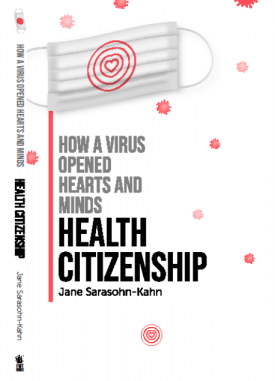
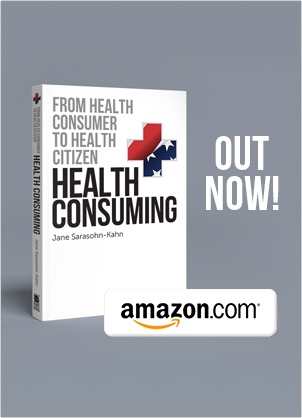
 I'm grateful to be part of the Duke Corporate Education faculty, sharing perspectives on the future of health care with health and life science companies. Once again, I'll be brainstorming the future of health care with a cohort of executives working in a global pharmaceutical company.
 Jane joined host Dr. Geeta "Dr. G" Nayyar and colleagues to brainstorm the value of vaccines for public and individual health in this challenging environment for health literacy, health politics, and health citizen grievance. Click onto the Pfizer Value of Vaccines site and you can watch four episodes covering the challenges with adult vaccination, the employer and health plan member's journey to vaccination, reimbursement, and collaborating for proactive prevention.
 I'm grateful to be part of the Duke Corporate Education faculty, sharing perspectives on the future of health care with health and life science companies. Once again, I'll be brainstorming the future of health care with a cohort of executives working in a global health care enterprise.