


Will the Apple Watch, Samsung Galaxy or Oura Rings Become “Intelligent Guardians” For Health?
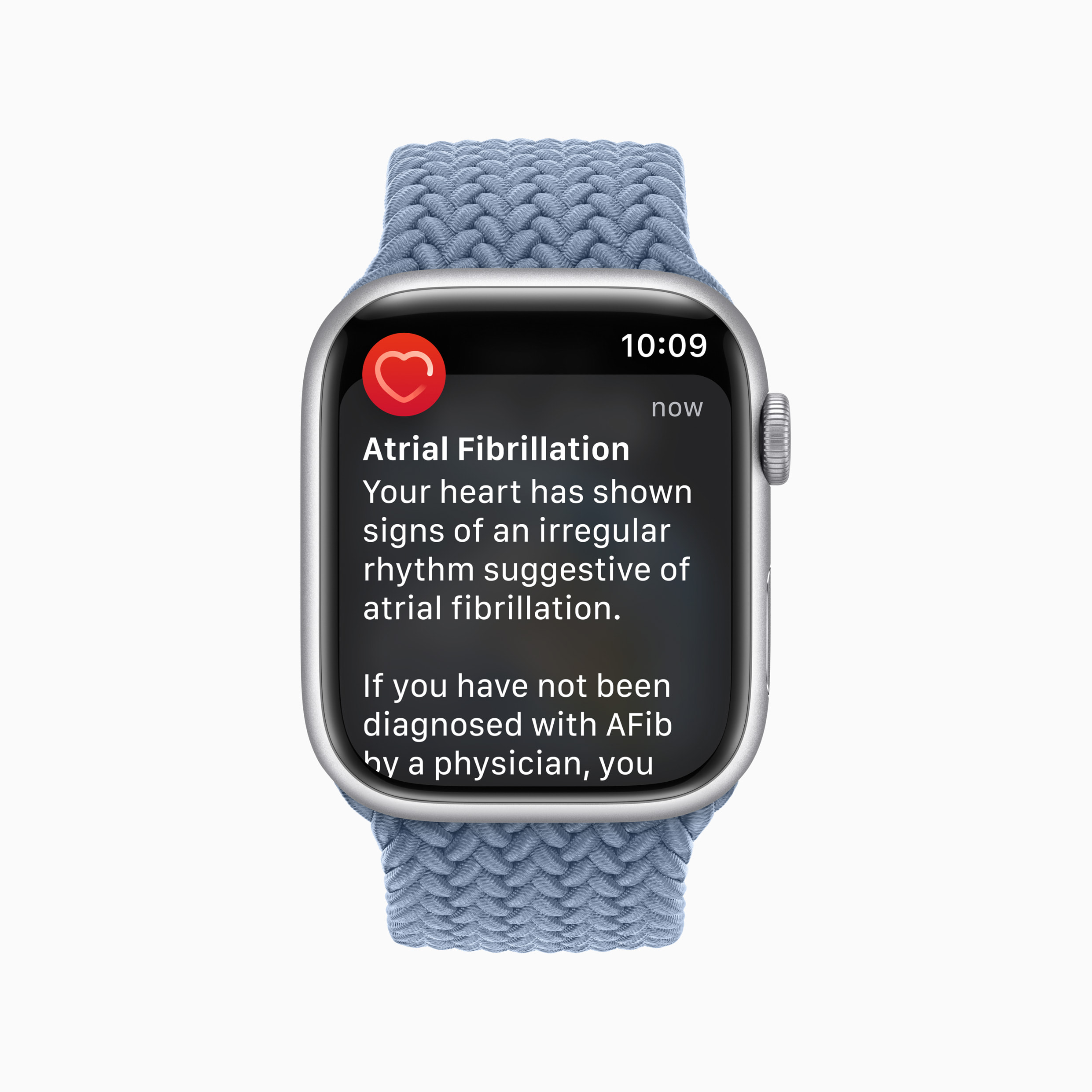
One of the few bright spots in consumer technology spending in the past couple of years of the U.S. economic “vibecession” has been the category of smartwatches. The Wall Street Journal recently talked, specifically, about the growing role of the Apple Watch for health care, gaining traction as a part of cardiologists’ and other physicians’ testing for and adoption of the wearable tech device for patients who are managing medical conditions. Data from CTA, the Consumer Technology Association, has been tracking such spending which I’ve often discussed here in Health Populi
How to Get Better Care to More People? Address Burnout, Bridge Insights with AI, Embed Sustainability – the Philips Future Health Index 2024
Health care access is a challenge in rural and urban areas, cities and suburbs, and across more demographic groups than you might realize, as we see wait times grow for appointments, primary care shortages, and delays in screening plaguing health systems around the world. In the Future Health Index 2024, Philips’ latest annual report presents a profile of the state of health care focused on how to provide better care for more people. For the report, Philips surveyed a total of 2,800 healthcare leaders consisting of 200 respondents in 14 countries: Australia, Brazil, China,
Healthcare 2030: Are We Consumers, CEOs, Health Citizens, or Castaways? 4 Scenarios On the Future of Health Care and Who We Are – Part 2
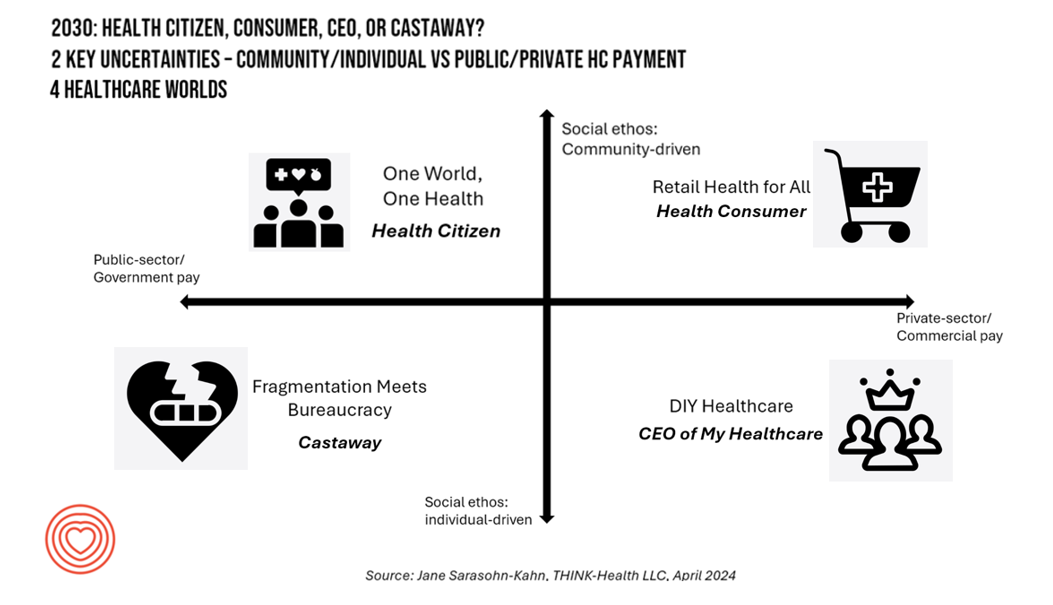
This post follows up Part 1 of a two-part series I’ve prepared in advance of the AHIP 2024 conference where I’ll be brainstorming these scenarios with a panel of folks who know their stuff in technology, health care and hospital systems, retail health, and pharmacy, among other key issues. Now, let’s dive into the four alternative futures built off of our two driving forces we discussed in Part 1. The stories: 4 future health care worlds for 2030 My goal for this post and for the AHIP panel is to brainstorm what the person’s
A Springtime Re-Set for Self-Care, From Fitness to Cozy Cardio: Peloton’s Latest Consumer Research
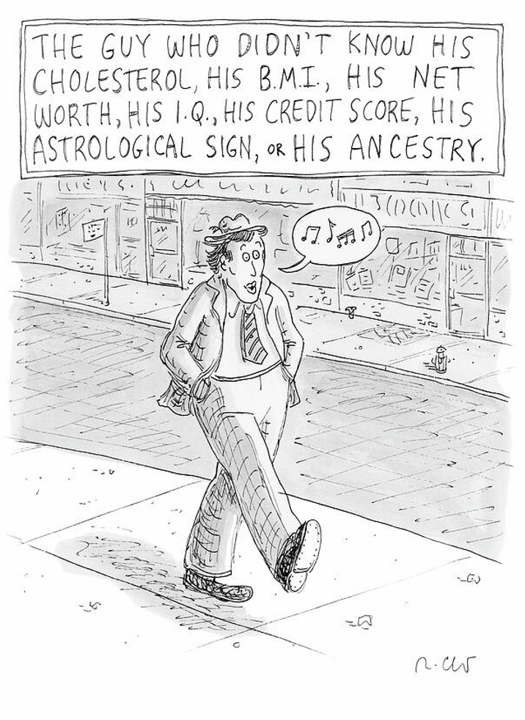
How many people do you know that don’t know their cholesterol or their BMI, their net worth or IQ, their credit score, astrological sign, or ancestry pie-chart? Chances are fewer and fewer as most people have gained access to medical records and lab test results on patient portals, calorie burns on smartwatches, credit scores via monthly credit card payments online, and completing spit tests from that popularly gifted Ancestry DNA test kits received during the holiday season. Meet “The Guy Who Didn’t Know His Cholesterol” conceived by Roz Chast,
The Self-Prescribing Consumer: DIY Comes to Prescriptions via GLP-1s, the OPill, and Dexcom’s CGM
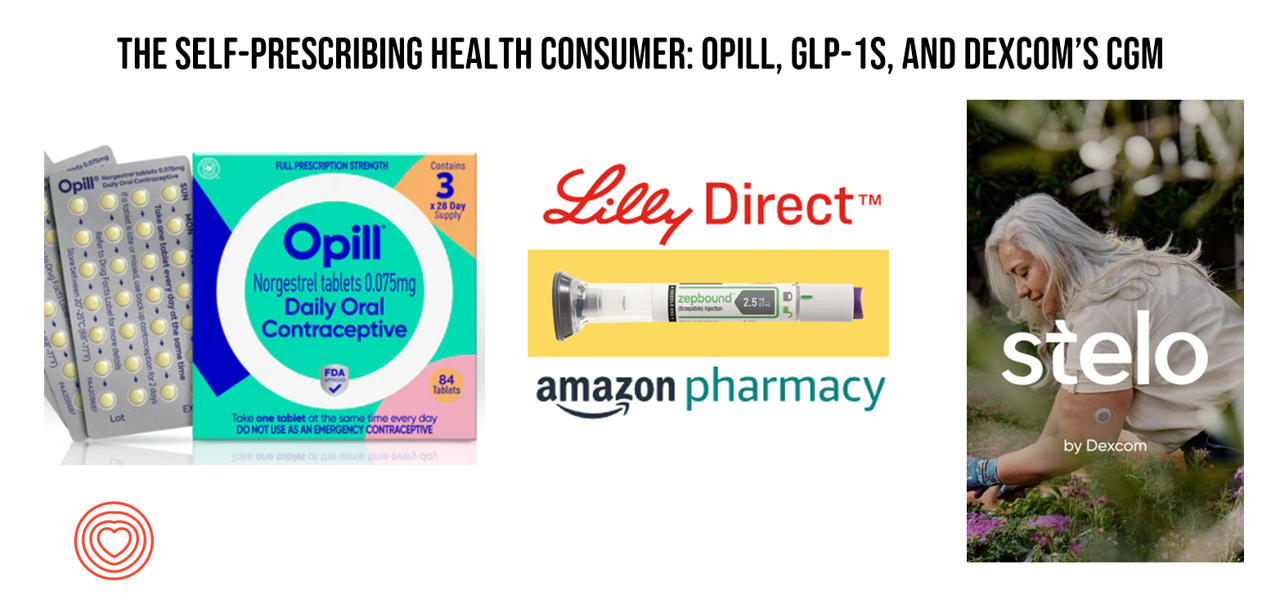
Three major milestones marked March 2024 which compel us to note the growing role of patients-as-consumers — especially for self-prescribing medicines and medical devices. This wave of self-prescribed healthcare is characterized by three innovations: the Opill, GLP-1 receptor agonists, and Dexcom’s Continuous Glucose Monitoring (CGM) system that’s now available without a prescription. Together, these products reflect a shift in health care empowerment toward patients as consumers with greater autonomy over their health care when the products and services are accessible, affordable, and designed with the end-user central to the value proposition and care flows. Let’s take a look at each
Celebrating World Sleep Day 2024 – Sleep Equity for Global Health
On the long list of things people can do to bolster their well-being, sleep ranks third after eating well and being physically active. We are calling out sleep as a key ingredient for health today, World Sleep Day 2024. Yes, it’s a real thing, and this year speaks to the theme of Sleep Equity for Global Health. The data point here comes from Datassential‘s latest consumer survey conducted across all adult age groups in the U.S. This information was shared with us yesterday during the company’s session covering Health and the Food & Beverage
Hospital at Home: Prospects and Challenges, and Learnings from Best Buy Health
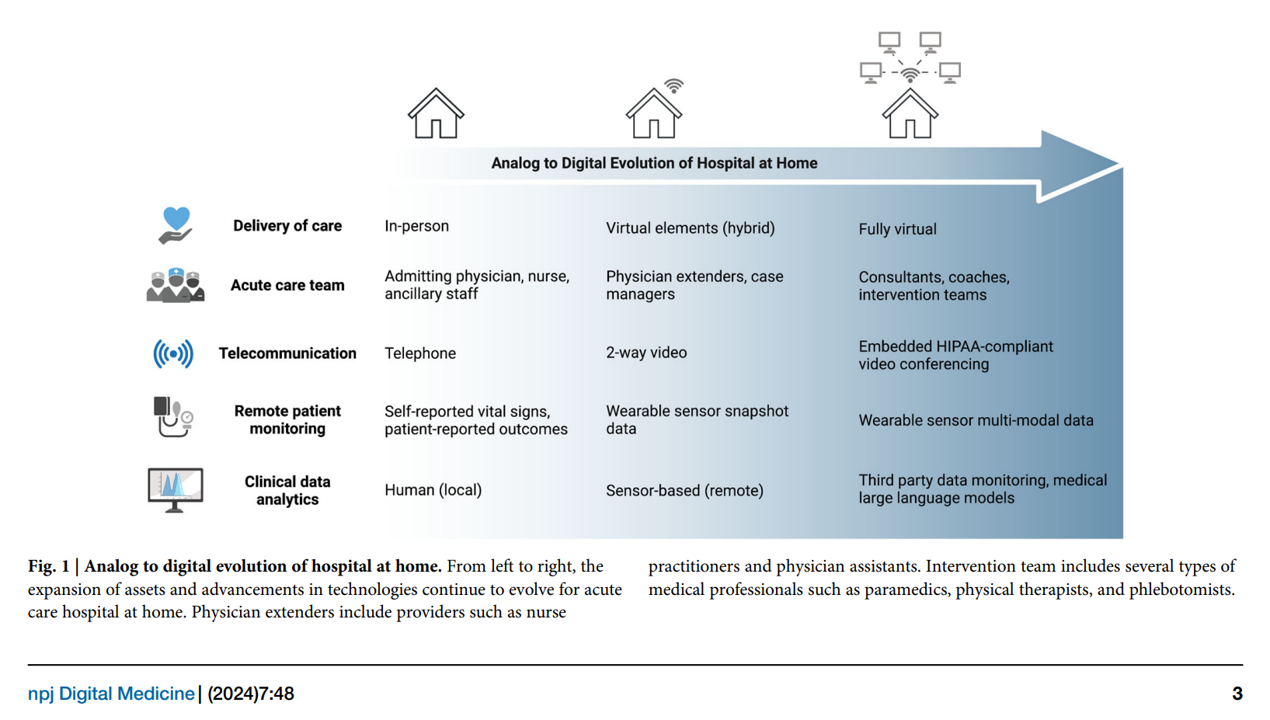
With the urgent need to identify more efficient and lower-cost health care delivery models, we look to growing evidence for digital health technologies that support the Hospital at Home (HaH) model, considered in a new review article published in late February in npj Digital Medicine, The hospital at home in the USA: current status and future prospects. Clinicians from Scripps Research and Johns Hopkins School of Medicine collaborated on this work, calling out the relatively fast adoption of HaH programs during the peak of the COVID-19 pandemic. In some parts of the world, such as Australia and Norway, “in-person at-home
Rebel Health: The Personal and Professional Passion of Susannah Fox
A “rebel” is both a noun and a verb. As a noun, Merriam-Webster tells us that a rebel is a person who opposes or takes up arms against a government or a ruler. As a verb, “to rebel” is to oppose or disobey one in authority or control, or otherwise renounce and resist by force the authority of one’s government.” An additional definition of the verb is, “to feel or exhibit anger or revulsion.” If you’ve been a patient facing a diagnosis of an illness, whether rare or common, you may well have felt these various feelings stirring inside your self.
The Wellness Market Shaped by Health at Home, Wearable Tech, and Clinical Evidence – Thinking McKinsey and Target
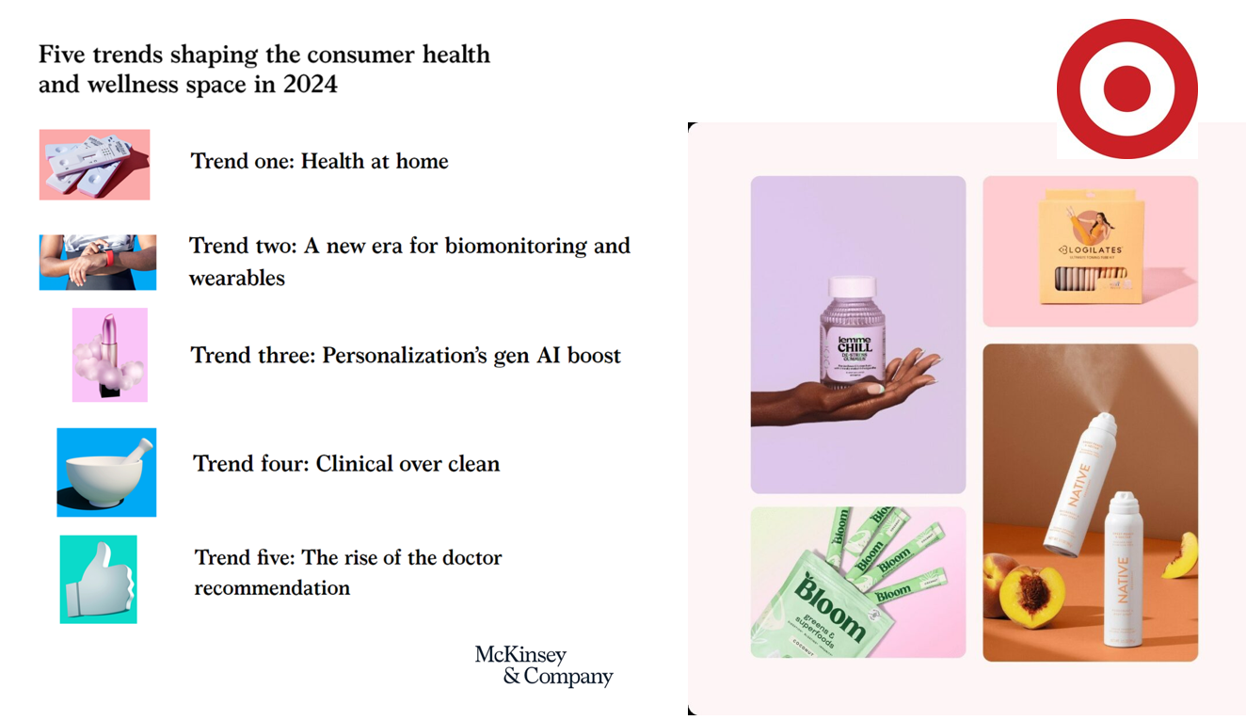
Target announced that the retail chain would grow its aisles of wellness-oriented products by at least 1,000 SKUs. The products will span the store’s large footprint, going beyond health and beauty reaching into fashion, food, home hygiene and fitness. The title of the company’s press release about the program also included the fact that many of the products would be priced as low as $1.99. So financial wellness is also baked into the Target strategy. Globally, the wellness market is valued at a whopping $1.8 trillion according to a report published last week by McKinsey. McKinsey points to five trends
A Tale of Two Houses: House Calls at #CES2024 with Amazon and AARP + Samsung
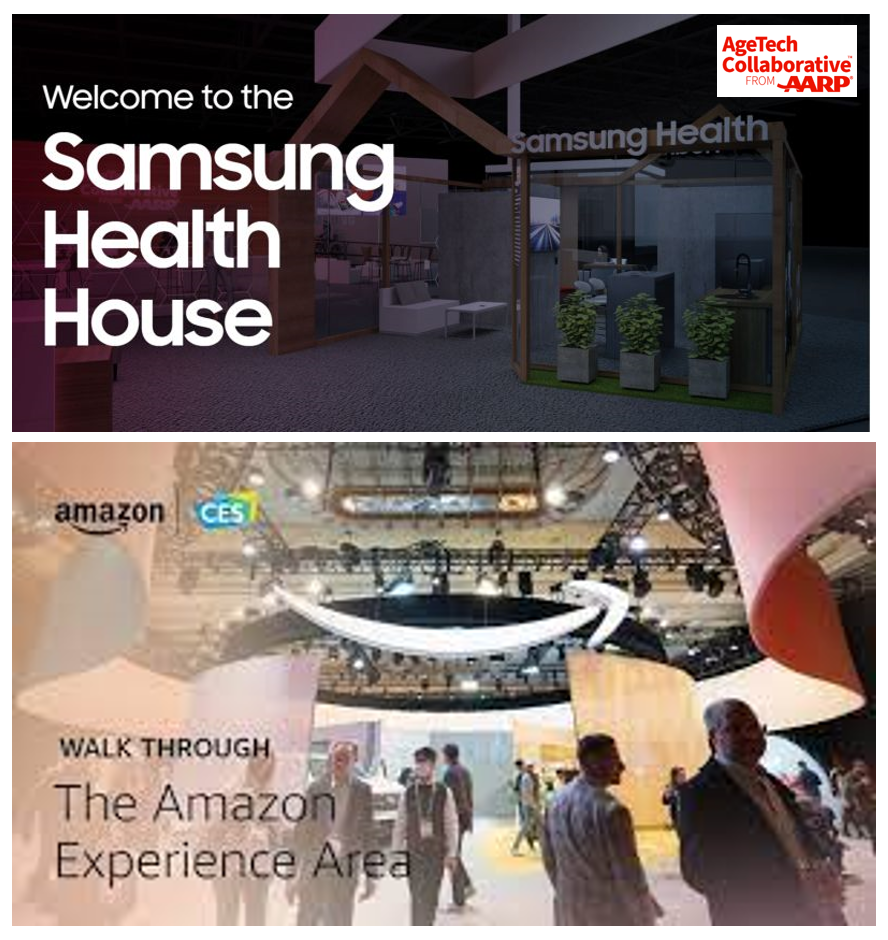
The growing movement of health care to the home is evident by a growing list of point solutions featured at CES 2024. Digital health has been a fast-growing category of consumer-facing devices at CES for over a decade. But with the growing ubiquity of connectivity, cloud computing, sensors and this year AI “everywhere,” a person’s home as their health-hub is an increasingly practical scenario. I track many categories of products at CES each year, and this year added into my portfolio the smart kitchen and smart bathroom. We’ve had components of these two
Mainstreaming the Connected Life, with a Side of Trust — Insights from Capgemini at the Start of #CES2024
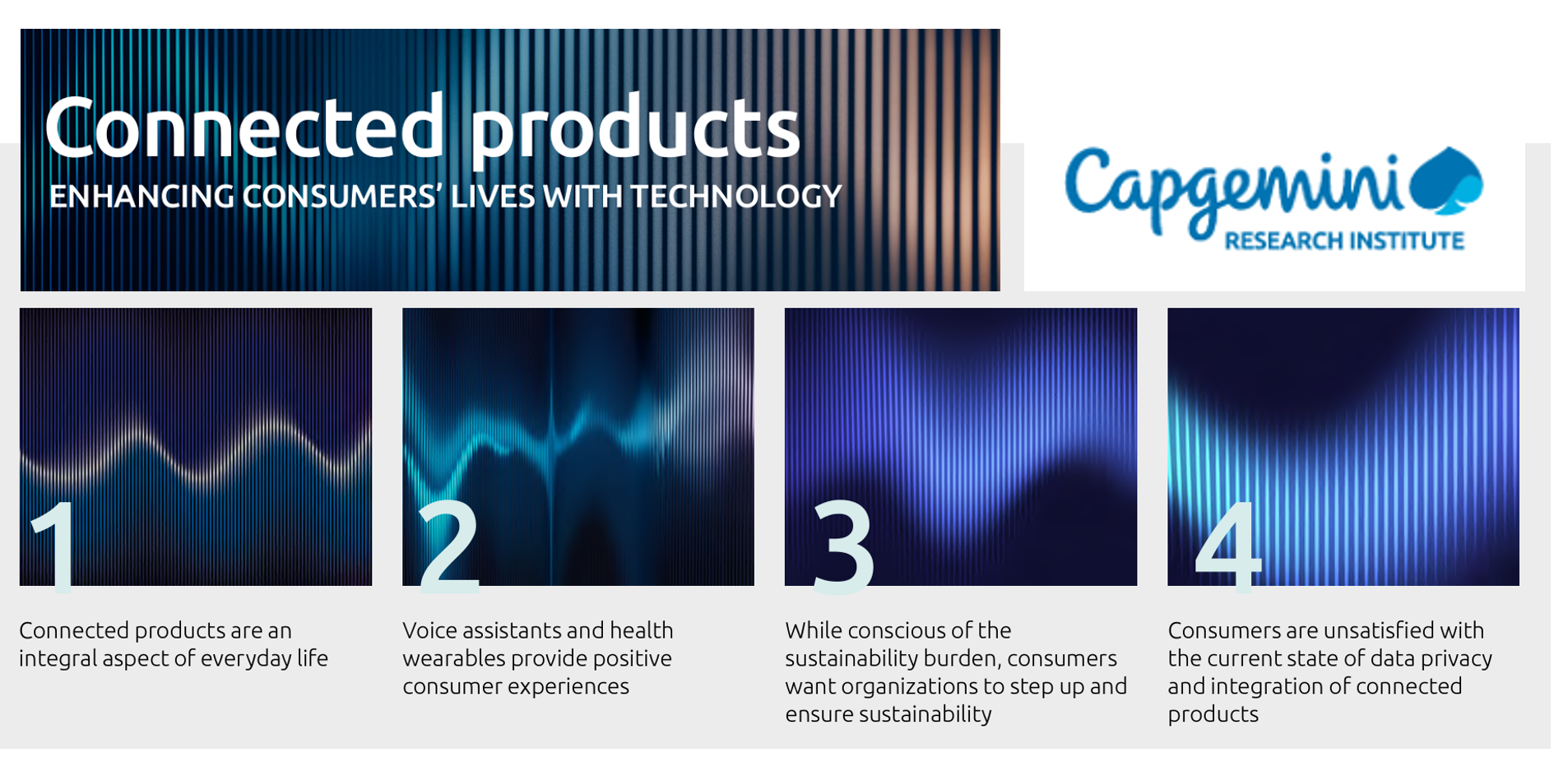
Even with serious concerns about personal data privacy and lack of integration, “connected products” are an integral aspect of peoples’ everyday lives. That’s the central thesis in a timely report from Capgemini Research Institute, Connected products: Enhancing consumers’ lives with technology. This study is well-timed as we begin a week-long exploration into the latest technology innovations being unveiled at CES 2024, the annual mega-conference hosted by the Consumer Technology Association (CTA). For the consumer research, Capgemini’s team polled the perspectives of 10,000 consumers age 18+ in November, among people from 13 countries: Australia, Canada, France, Germany,
Consumers’ Spending on Tech in 2024 Will Increase: CTA’s #CES2024 Forecast
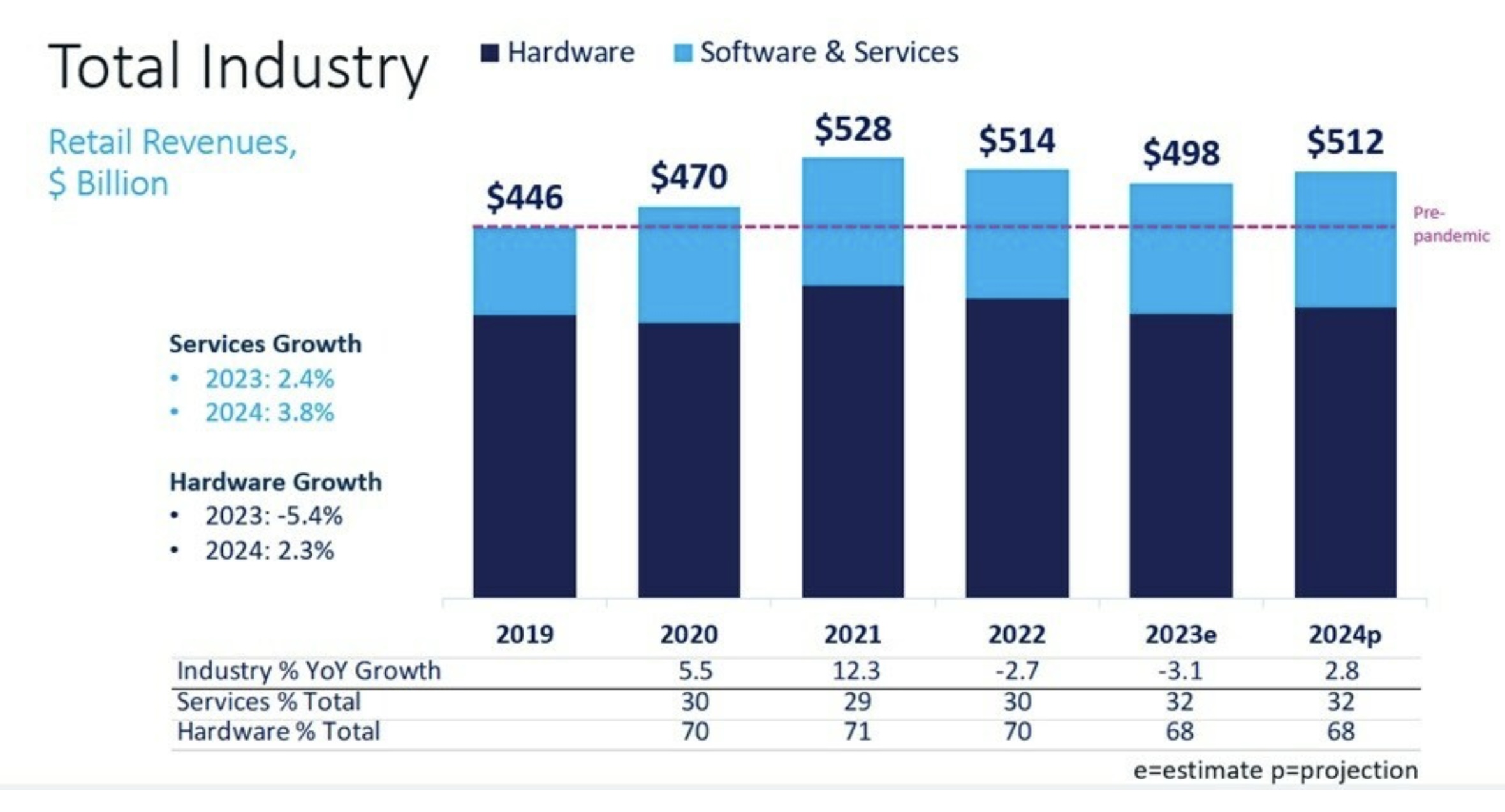
2023 was a pretty lackluster year for consumers’ spending on technology: inflation, concerns about global instability, and general household economic ennui caused consumers to ration spending on most electronic gadgets last year. Enter a more cash-positive mood for many consumers keener in the new year to acquire updated and upgraded tech, from computer hardware to wearable tech for health, according to the forecast released by the Consumer Technology Association (CTA) research team. The study results, announced on the first of two pre-conference Media Days, kicks off CES 2024 convening this week in Las Vegas. The bullish spending statistics reverse a two-year
What to Expect For Health/Care at CES 2024
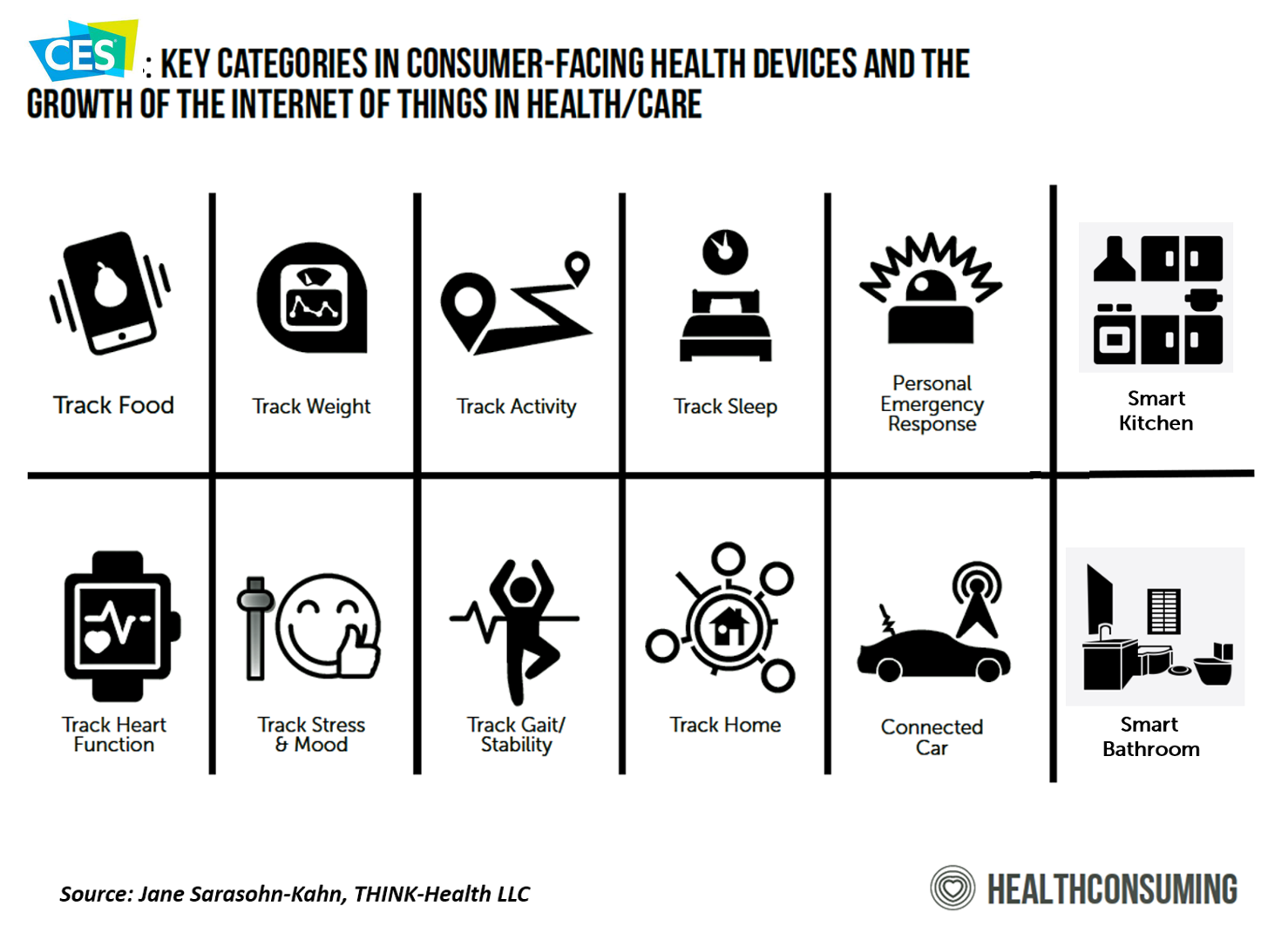
Not known for its salubrious qualities, Las Vegas will nonetheless be a locus for health, medical care, and well-being inspiration next week when the Consumer Technology Association convenes the annual CES featuring innovations in consumer technology. Ten years ago here in Health Populi, I wrote about New Year’s Resolutions for Health and the 2013 Consumer Electronics Show. Then, one-third of consumers were keen to buy health tracking technology but most of those people were healthy, CTA’s research found. I talked about the “battle of the (wrist)bands” witnessed at CES 2013, and spotted the
Technology Is Playing a Growing Role in Wellness and Healthy Aging – AARP’s Latest Look Into the 50+ Tech Consumer
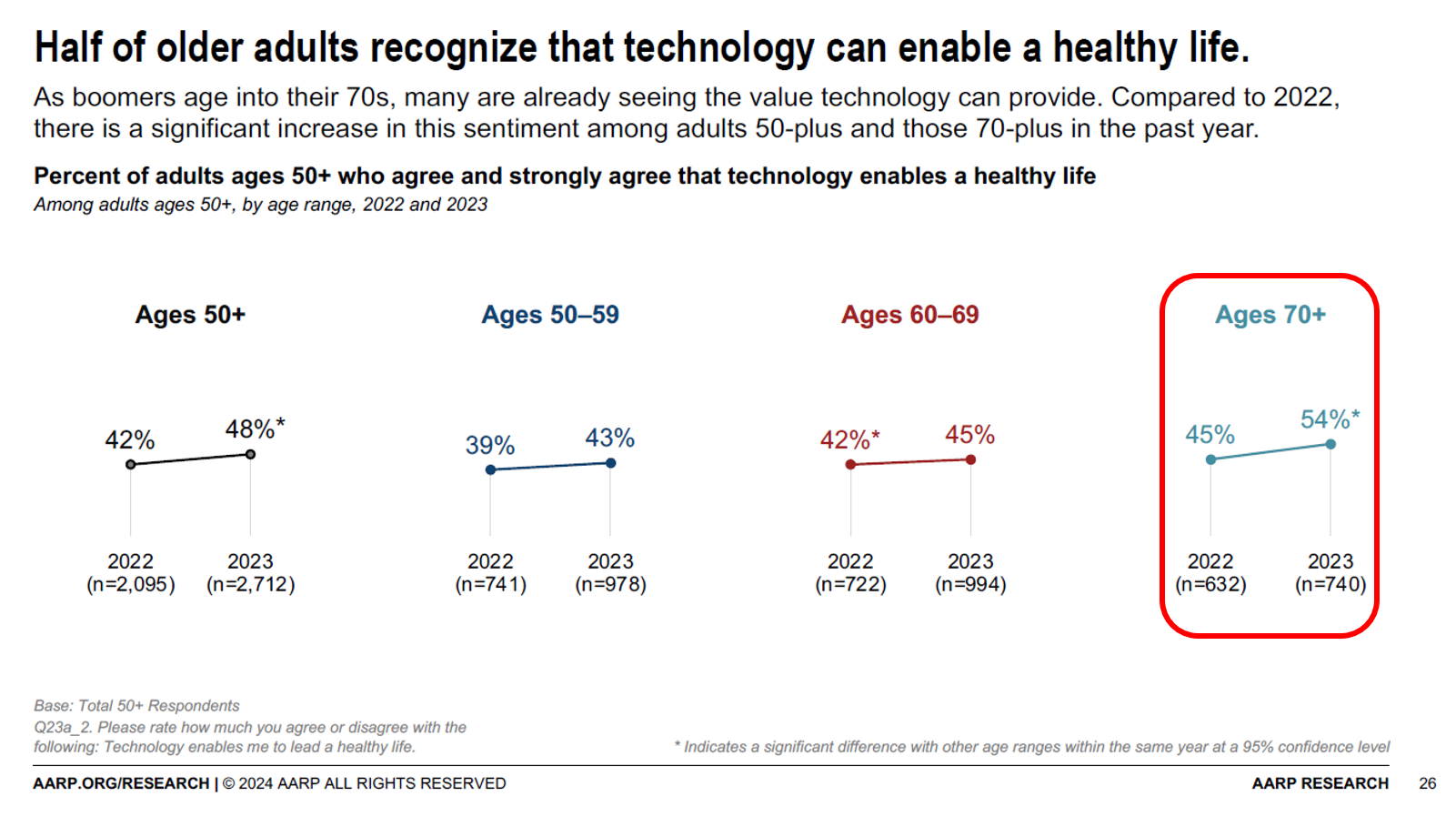
Most people over 70 years of age recognize technology’s role in supporting peoples’ health, we learn from a new report on 2024 Tech Trends and Adults 50+ from AARP. But adoption and ongoing use of digital innovations among older people will be tempered without attending to four key barriers that carry equal weight in the minds of 50+ consumers: design and user experience, awareness and interest, cost and acquisition, and trust and privacy concerns. [Spoiler alert: in the Hot Points, below, I add a fifth consideration: health equity + dignity]. To gauge older Americans’ views on
“My Doctor’s Office” Should Accept Wearable Tech Health Data, Most Patients Say
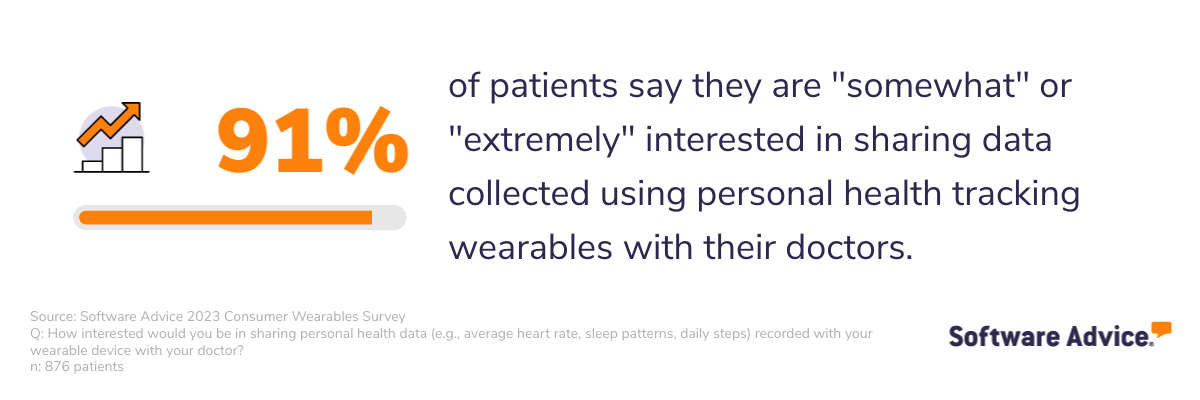
“Do personal health trackers belong in the doctor’s office?” Software Advice wondered. “Yes,” the company’s latest consumer survey found, details of which are discussed in a report published on their website. Unique to this study is the patient sample polled: Software Advice surveyed 876 patients in September 2023 to gauge their perspectives on wearable tech and health. Note that the patient sample was limited to consumers who had seen a health care provider in the past two years and who also owned and used a personal wearable health device such as an Apple Watch or Fitbit. Thus, the responses shared
AI is the New Health Literacy Challenge for Patients and the Health/Care Industry
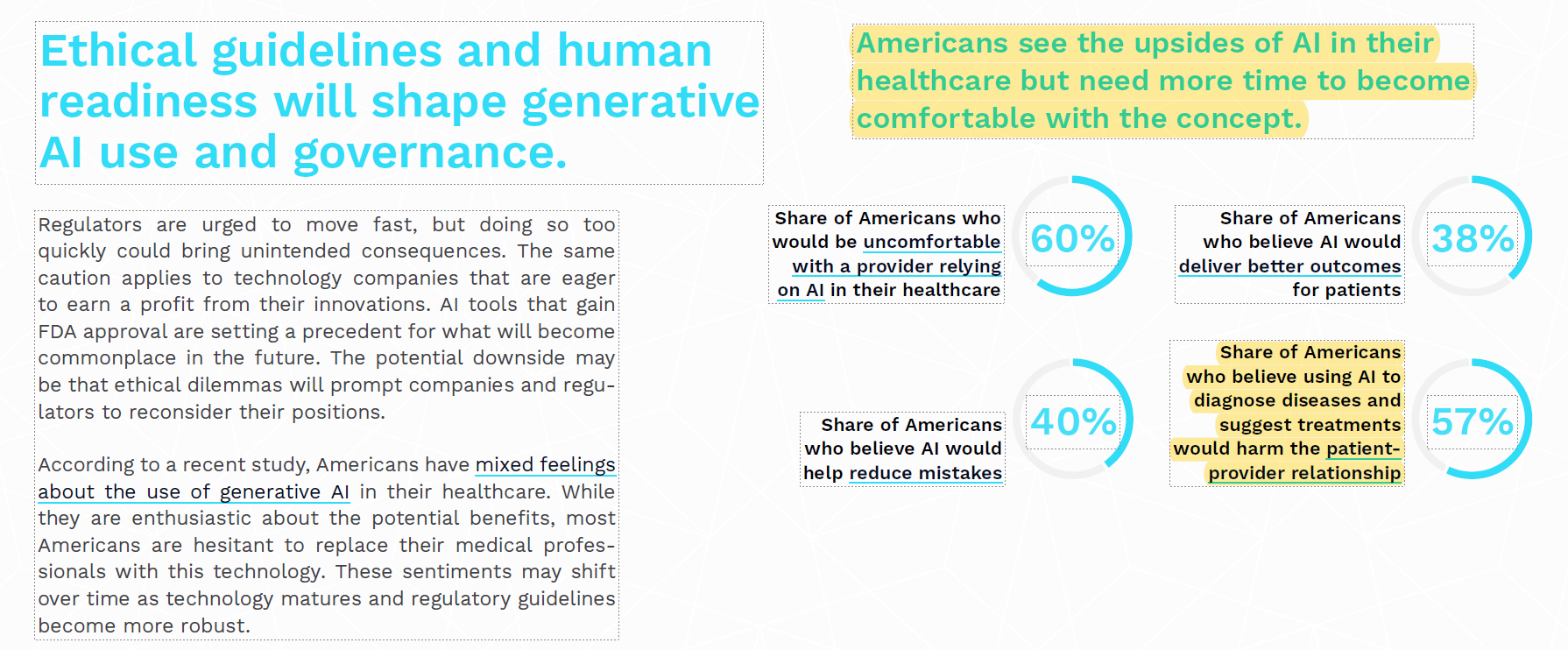
Patients’ comfort in artificial intelligence is linked to familiarity with the technology, a consumer survey from GlobalData learned. Among patients unfamiliar with AI, 42% are uncomfortable, and another 50% feel neither comfortable nor uncomfortable with the technology. However, among patients familiar with AI, 60% feel comfortable with visiting a medical practice that uses AI. Welcome to the new health literacy challenge the health care sector will have to deal with, and soon: lack of patients’ awareness of AI, its promises and pitfalls. “It is imperative to prioritize patient education regarding this technology,” Urte Jakimaviciute
The Clinician of the Future: A Partner for Health, Access, Collaboration, and Tech-Savviness
One-half of clinicians working in the U.S., doctors and nurses alike, are considering leaving their current role in the next two to three years. That 1 in 2 clinicians is significantly greater than the global 37% of physicians and nurses thinking about leaving their roles in the next 3 years, according to the report Clinician of the Future 2023 from Elsevier. Elsevier first conducted research among doctors and nurses for the Clinician of the Future report in 2022, following up this year’s survey research online among 2,607 clinicians working around the world: Elsevier polled
Consumers Continue to Spend on Technology, Seeking “A Happy, Healthy Connected Life”
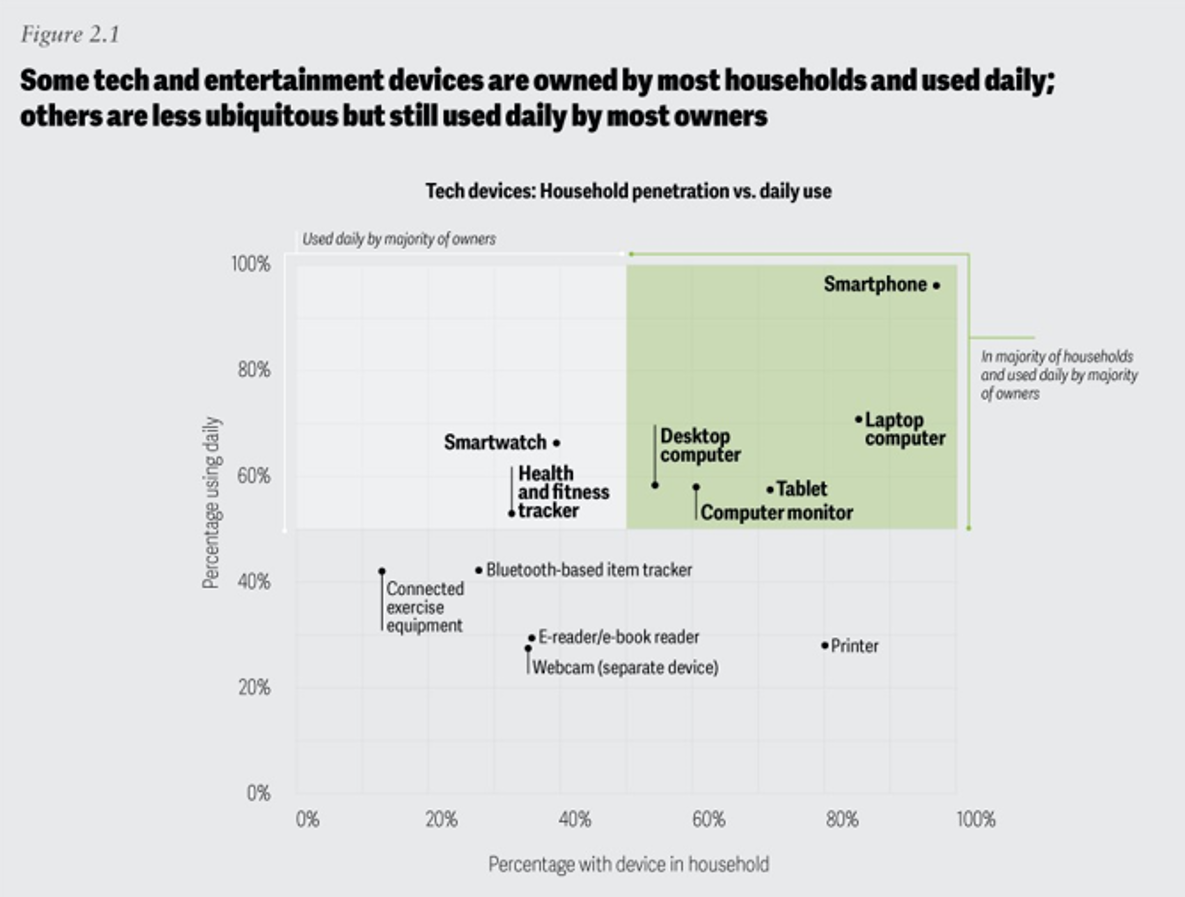
Most U.S. consumers will continue to spend their disposable incomes on connected consumer devices, but will be looking for more balance in their digital lives according to Deloitte’s fourth annual 2023 Connected Consumer Survey. In this year’s update, the Deloitte Center for Technology, Media & Telecommunications found that most households use five key digital devices daily: above all, smartphones, followed by laptop and desktop computers, tablets, and computer monitors. Most consumers who own smartwatches and health and fitness trackers also use those devices every day, as shown in the household penetration/usage chart
Hims and Hers and Hearts – Cardiology Blurs Into DTC Retail Health

Statin therapy has been used for decades to lower cholesterol with the goal of reducing mortality and preventing cardiovascular problems such as heart attacks and strokes. Hims & Hers announced a new service offering for health consumers and clinicians concerned about heart health called Heart Health by Hims. This is Hims & Hers’ first foray into cardiovascular health, working in collaboration with the American College of Cardiology (ACC). ACC clinical guidelines will inform the Hims’ provider platform for the program. “Prevention is the ideal mechanism to decrease cardiovascular events and ensure optimal heart
The Doctor Will See You Now…At Home? The AMA Launches a Health at Home Framework
An aging U.S. population with a preference for growing older at home — and a fiscally challenging health care financing outlook — are setting the demographic and financial table for the shift of medical care to peoples’ homes discussed in The State of Health at Home Models: Key Considerations and Opportunities, published by the American Medical Association (AMA). Note that this framework has been developed by the AMA, the largest professional organization of doctors. While moving health care to the home will involve quite different workflows and disruptions to current general medical practice, it
To Avert a GLP-1 Cost Tsunami, Add Lifestyle Interventions: Learning from Virta Health
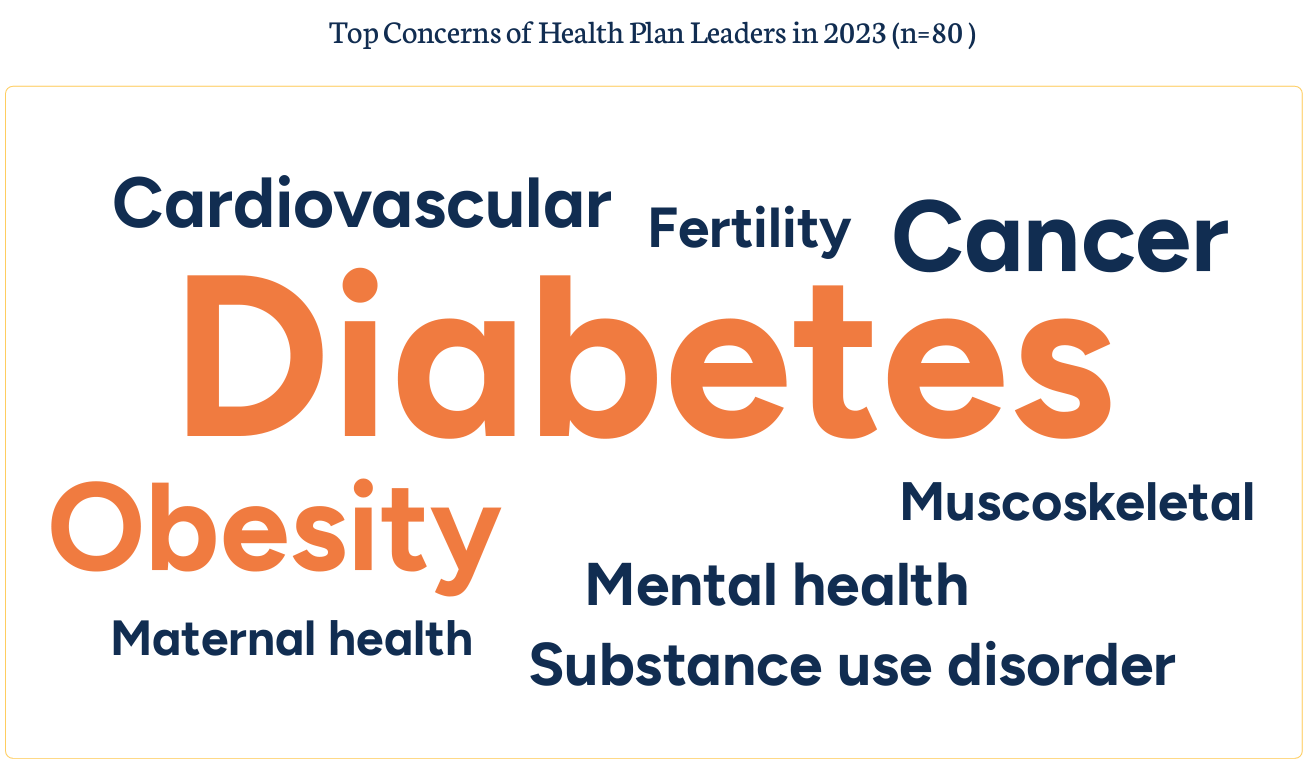
With consumer and prescriber interest in GLP-1 receptor agonist drugs “soaring,” health plan managers have a new source of financial stress and clinical questions on their to-do list. A team of Virta Health leaders held a webinar on 13th July 2023 to explain the results of a study the company just completed assessing health plan execs’ current views on Ozempic and other GLP-1 medicines with a view on both clinical outcomes and cost implications for this growing category of drugs that address diabetes and obesity. Indeed, diabetes and obesity are top health concerns among the
It Will Be a “Meh” Year for Consumers Buying Connected Health Devices, Based on CTA’s 2023 Forecast
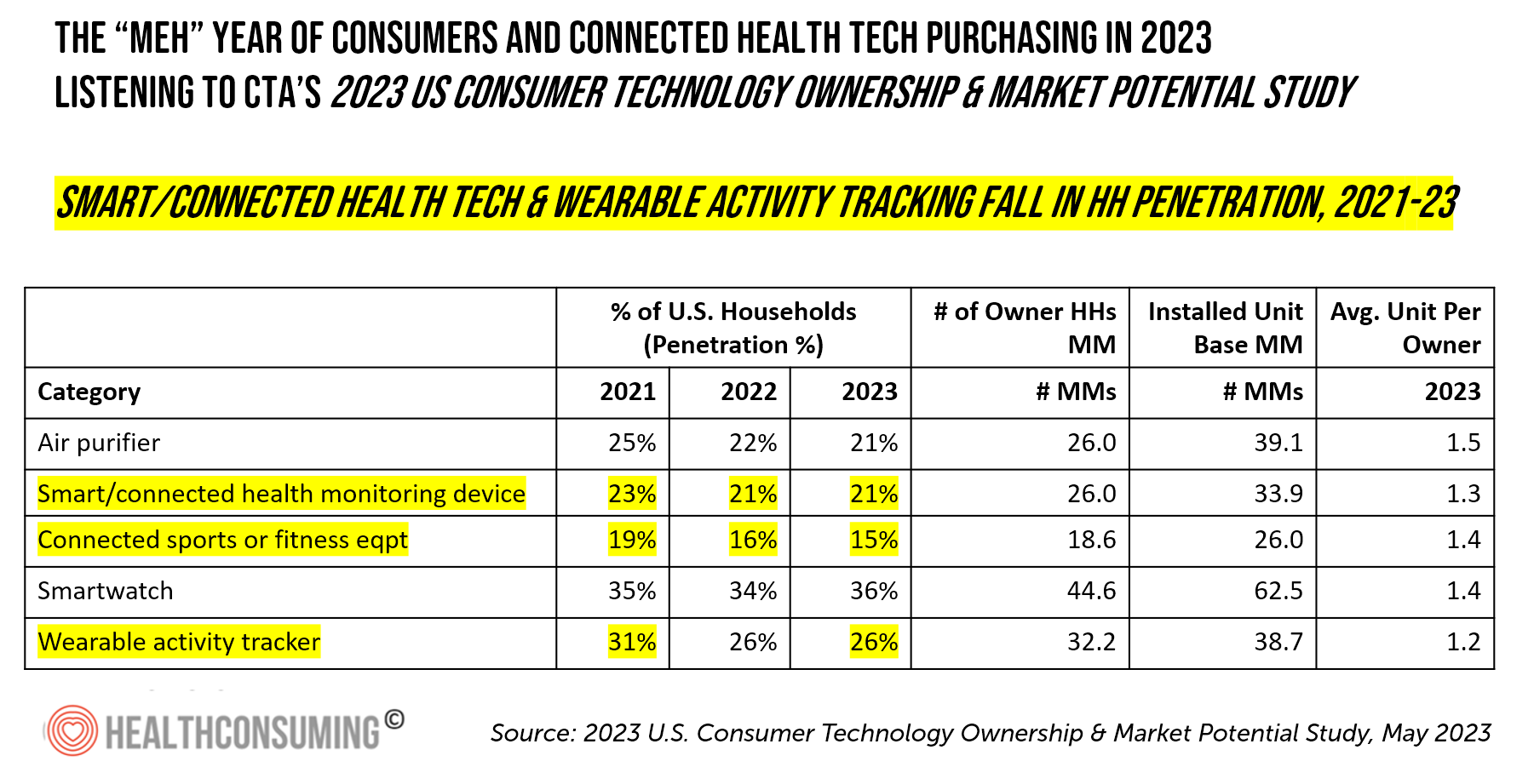
In 2023, U.S. consumers’ purchases of technology in their households will contract this year. Consumer-facing health-tech categories won’t be spared, we learn in the 2023 U.S. Consumer Technology Ownership & Market Potential Study, an annual update from the Consumer Technology Association (CTA). On the upside, smartwatch market penetration held steady in 2023, as this favorite form of wearable technology is “providing consumers a personalized digital health and fitness dashboard at their fingertips.” Many of these new smartwatch purchases will be cellular-enabled, blurring the space between smartphones and watches. One in five households intends to purchase
Health Systems Must Move “Beyond the Walls” to Support Consumers’ Well-Being
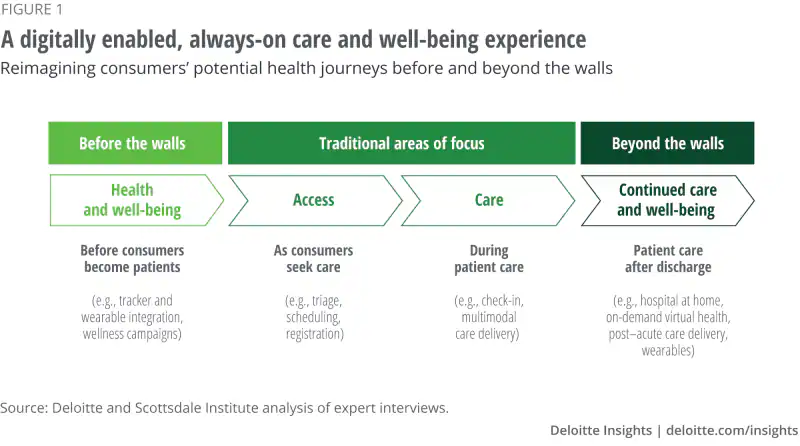
Hospitals’ and health systems’ core competencies have been serving patients “within the walls” of their organizations and institutions. As health systems continue to evolve value-based services while meeting patients’ consumer-oriented demands for convenience and personalization, digital transformation is required, enabling care “beyond-the-walls.” We learn more about this vision and how to map the journey to getting there in the report Integrating digital health tools to help improve the whole consumer experience from the Deloitte Center for Health Solutions and the Scottsdale Institute. This report is based on detailed interviews with experts in 30 US health
“Your care, your way:” Learning from the Philips Future Health Index 2023
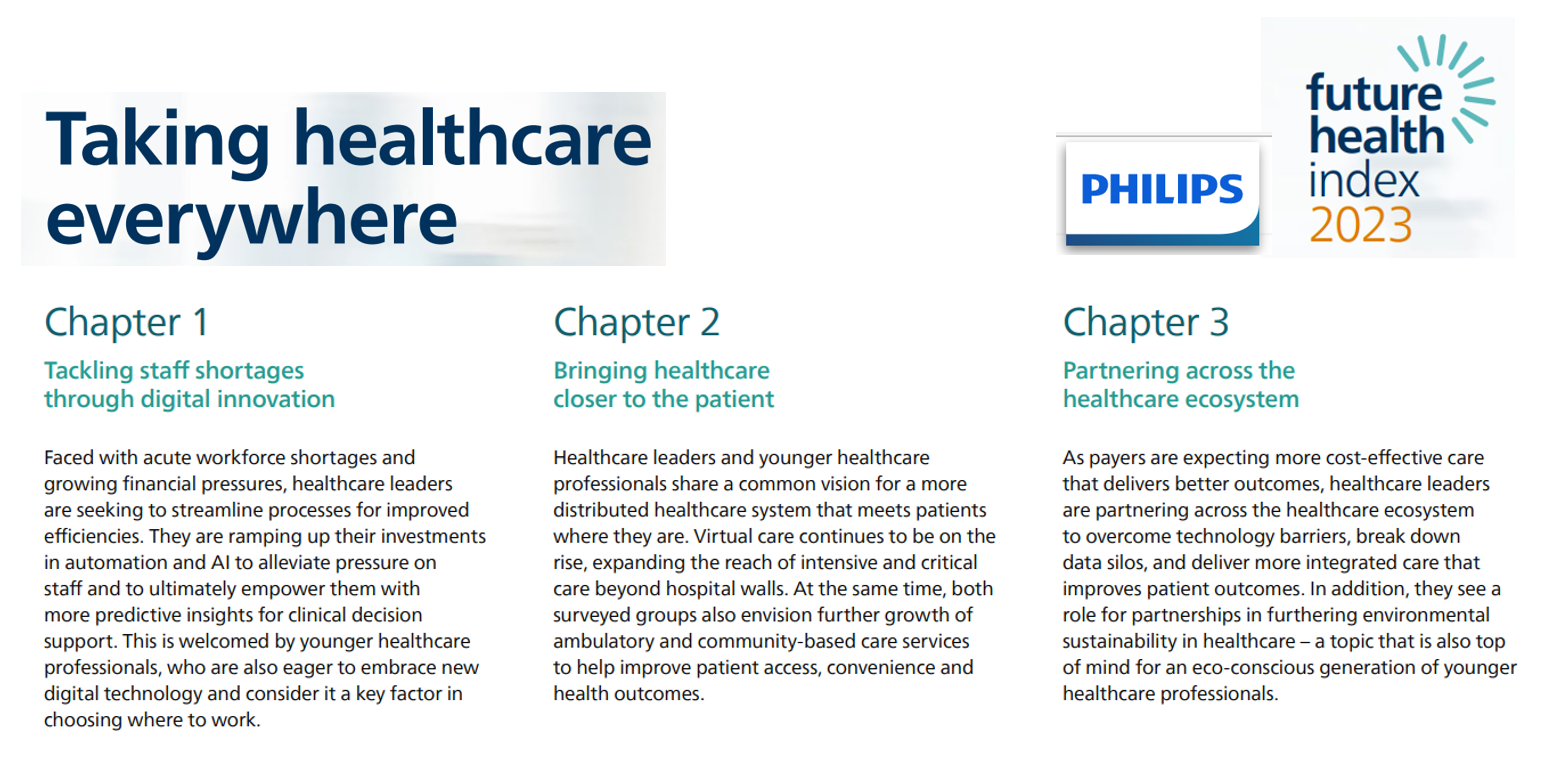
Consider the key drivers of supply and demand in health care, globally, right now: On the medical delivery supply side, the shortage of staff is a limiting factor to continuing to deliver care based on the usual work-flows and payment models. On the demand side, patients are taking on more demanding roles as consumers with high expectations for service, convenience, and safe care delivered closer to home — or at home. This dynamic informs The Future Health Index 2023 report from Philips, launched this week at HIMSS 2023. This is the eighth annual global FHI report, with detailed country-specific analyses to
Enabling better health care, everywhere – my conversation with Microsoft
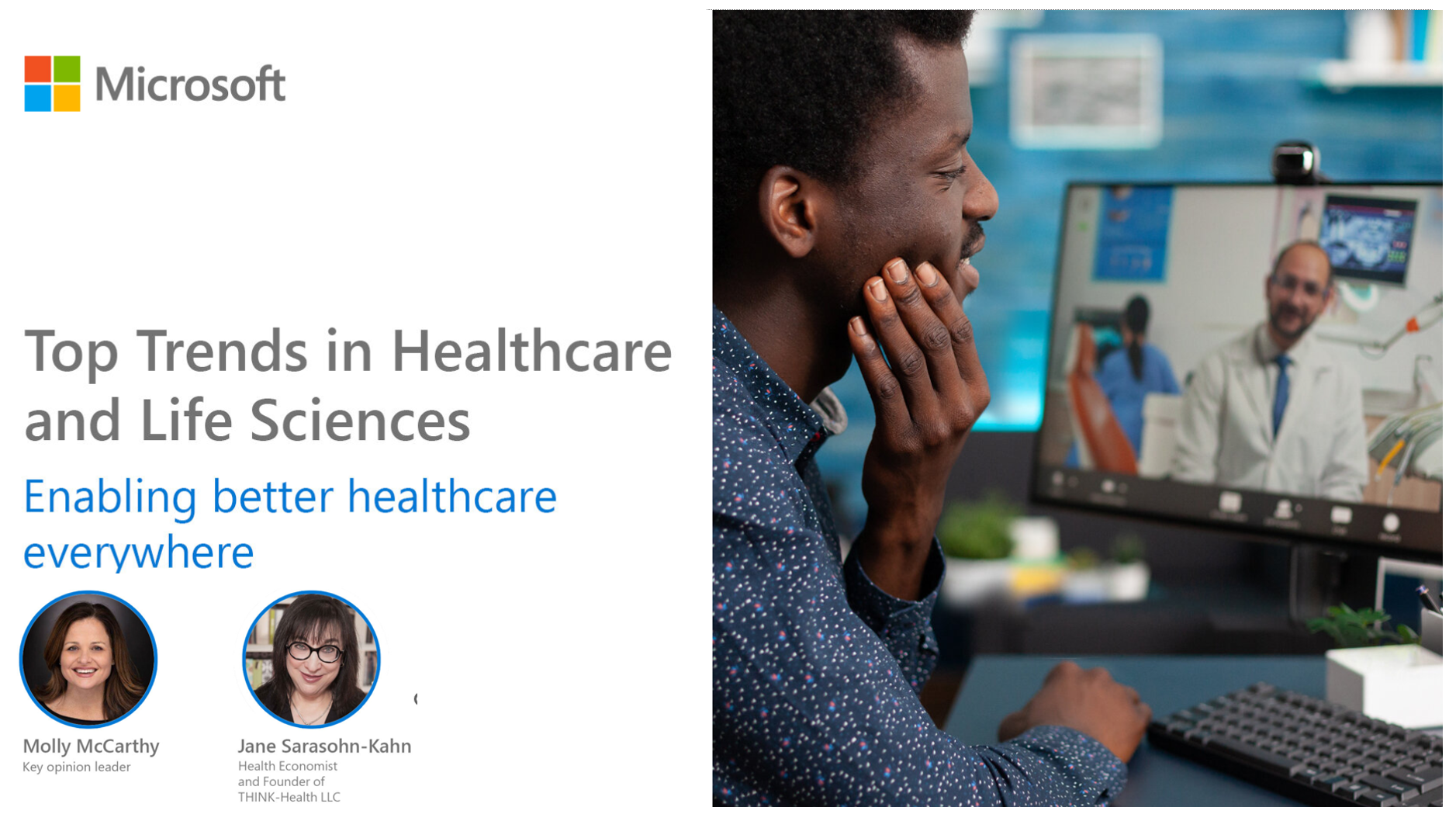
I am grateful to have been given the opportunity to brainstorm omnichannel health care for people to enable better health care for all, anywhere and everywhere, with Team Microsoft. Key opinion leader Molly McCarthy and I covered a lot of ground in this webcast conversation as part of Microsoft’s series of three “Expert perspectives on trends driving change in healthcare.” Molly and I covered a lot of ground here, starting with the key forces shaping and accelerating virtual care across the continuum. While these were in place before the COVID-19 pandemic, the public health
People Using Health Apps and Wearable Tech Most Likely Track Exercise and Heart Rate, Sleep and Weight – But Cost Is Still A Barrier
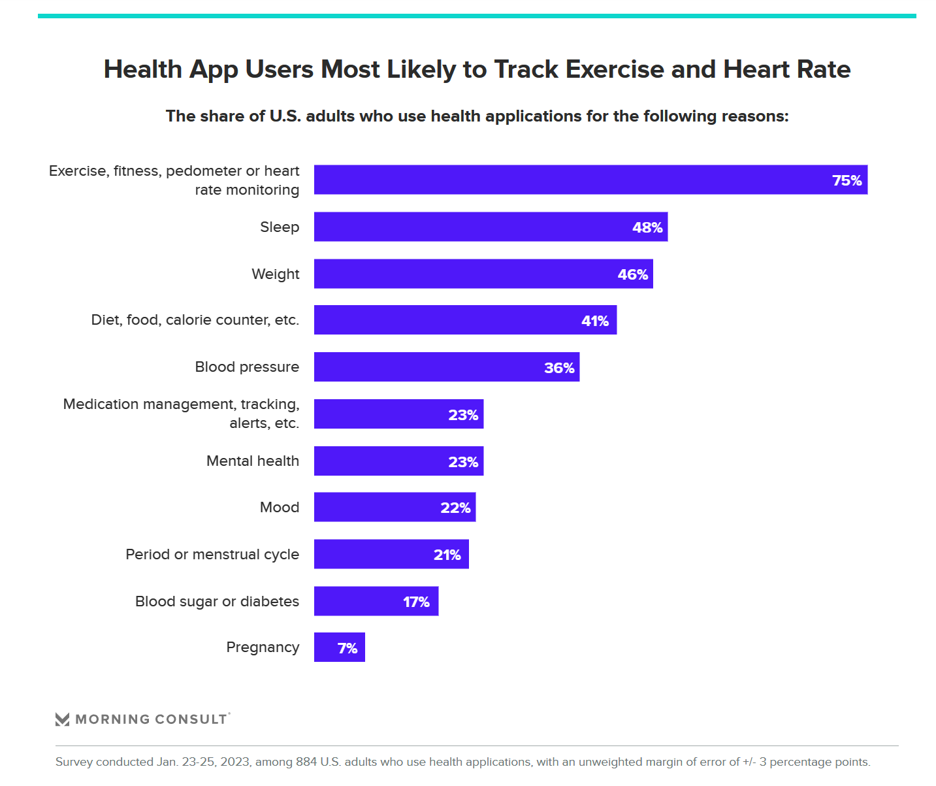
Over one in three U.S. consumers use a health app or wearable technology device to track some aspect of their health. “The public’s use of health apps and wearables has increased in recent years but digital health still has room to grow,” a new poll from Morning Consult asserts, published today. Among digital health tech users, most check into them at least once every day in the past month. One in four use these tech’s multiple times a day, the first pie chart illustrates. Eighteen percent of people use their digital
Integration is the New Innovation for Healthcare in 2023: Reflections on CES2023 and JPM2023

The peak of venture investment for digital health was in 2020 and 2021, precipitously declining later in 2022. And the outlook for 2023 is practical and Show-Me: that is, demonstrate clinical outcomes and return-on-investment before “I” (for investors) can take a leap of faith to spend a dollar, a Yen, a Euro, or British pound on a shiny new-new healthcare thing. If it’s January, then CES and JP Morgan convene their influential annual meetings which feature health technology for globally engaged health industry stakeholders — investors, surely, but also providers, innovators, analysts, and insurers. In my January
The Heart Health Continuum at #CES2023 – From Prevention and Monitoring to Healthy Eating and Sleep
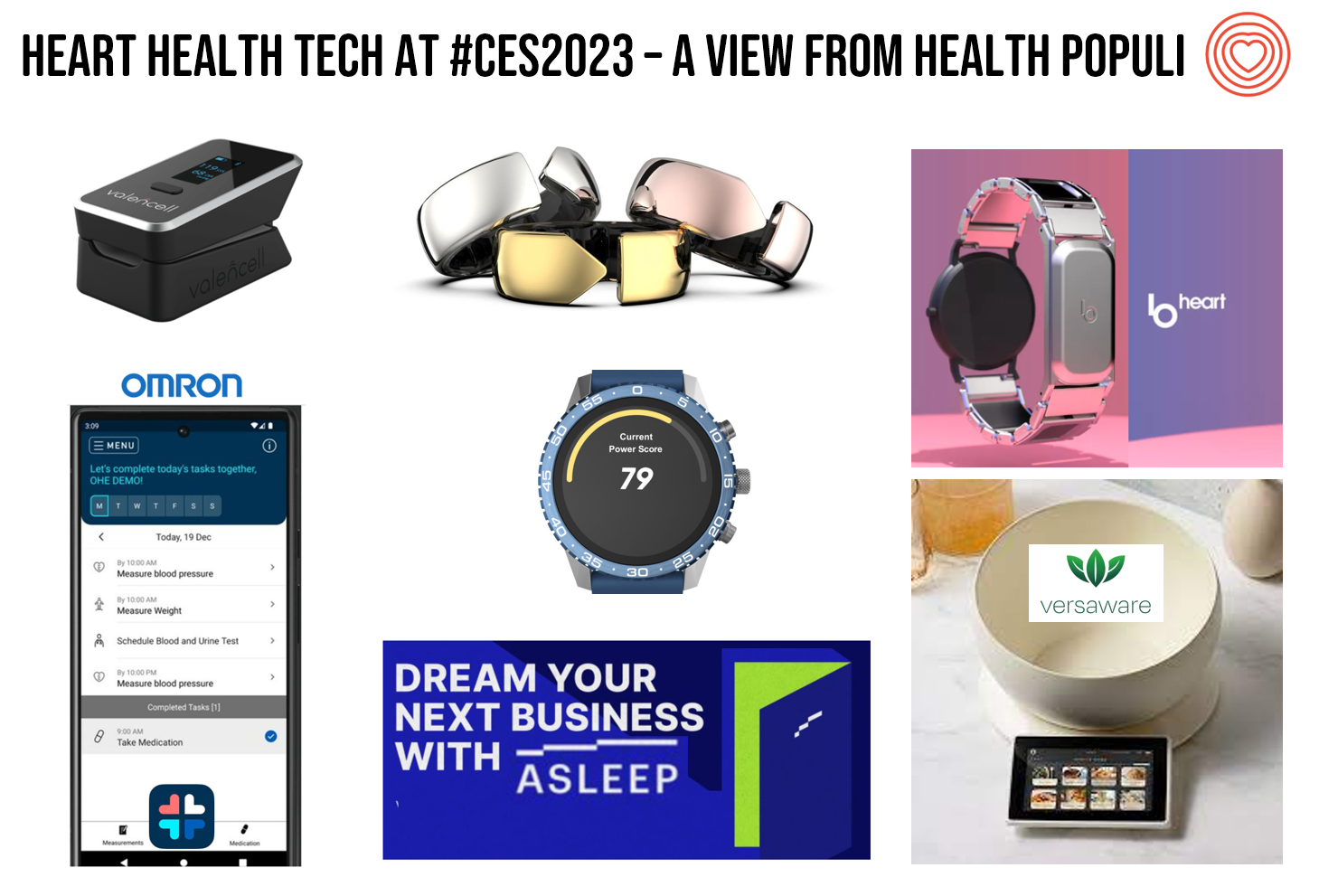
“Are we losing the battle against heart disease?” asks the lead article featured in the January 2023 issue of the AARP Bulletin. “Despite breathtaking medical advancements since President Harry Truman declared war on heart disease 75 years ago, researchers have observed a disturbing trend that started in 2009: America’s death rate from heart-related conditions is climbing again,” the detailed essay explains. AARP is in fact a very visible stakeholder in the 2023 CES, collaborating on the AgeTech content track at the tech conference. The track covers all aspects of aging well, from financial health to entertainment,
Consumers Continue to Lean Into Digital Services: Beyond Tech and Hardware at #CES2023
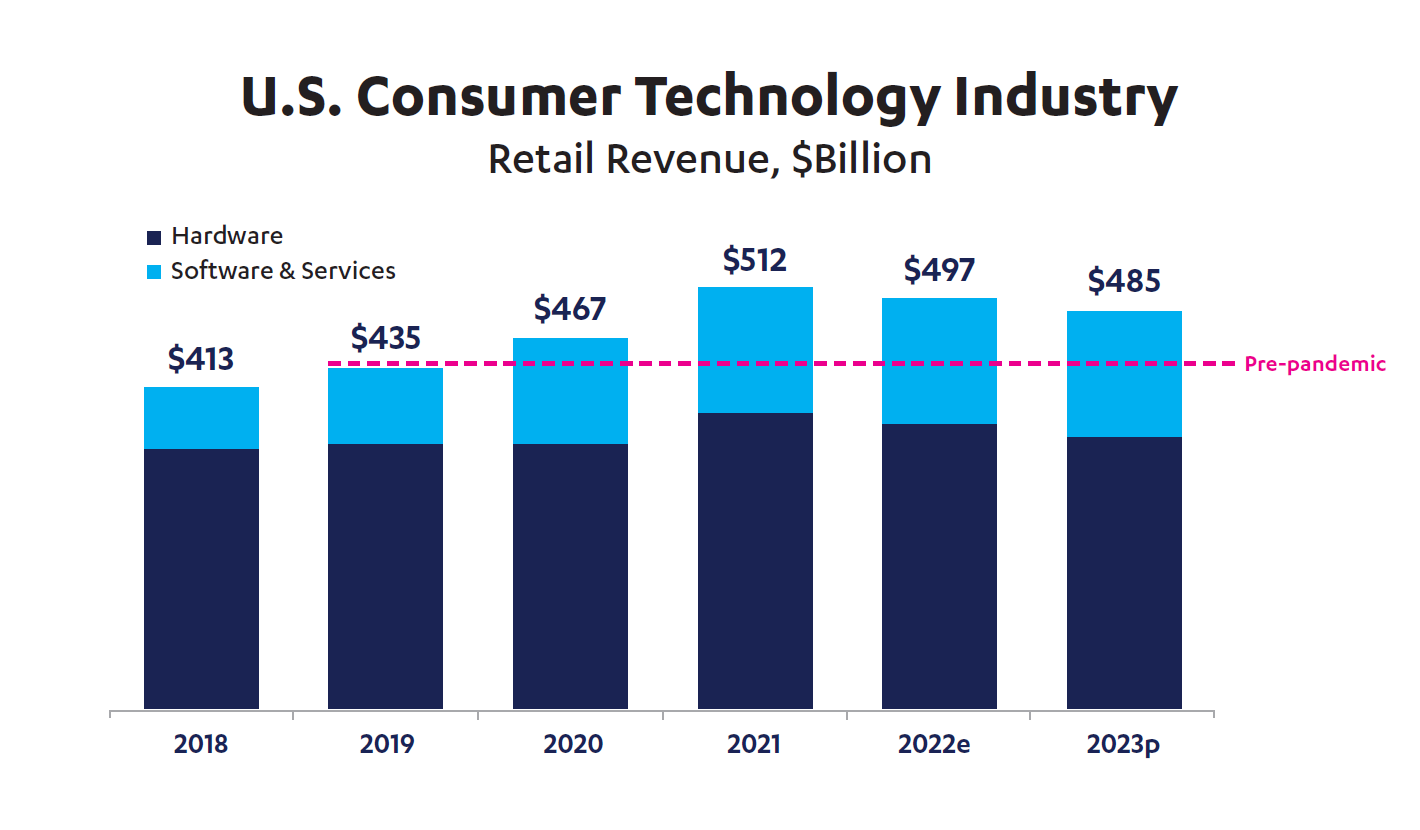
While CTA forecasts a sobering consumer technology revenue picture for 2023, one of the few bright spots is health and fitness technology services, expected to increase by 9 percent in 2023. For the forecast, CTA looked at various spending categories, including gaming, automotive and transportation tech, video and audio streaming, consumer electronics (like big-screen TVs), and fitness and health devices. The chart illustrates that consumers’ spending on software and services is expected to hold steady in 2023, still above pre-pandemic levels. On 3 January, in the annual #CES
Your Home as Clinical Lab: Withings Brings “Your Urine, Your Self” to #CES2023

We’ve all been morphing our homes into our personal HealthQuarters since the start of the coronavirus era. Millions of global health citizens have taken to telehealth who never used a health care “digital front door” before. Other patients adopted remote health monitoring to avoid perennial visits to doctors for managing chronic conditions like diabetes or heart disease. From the kitchen to the bedroom, our homes have become our health hubs. And now, to the bathroom and specifically, the toilet. Withings, maker of my personally favorite connected weight scale, announced U-Scan, a direct-to-consumer lab test platform that analyzes our urine from
Can Consumer Electronics Help Stem the Decline of U.S. Life-Years? A Preface for #CES2023
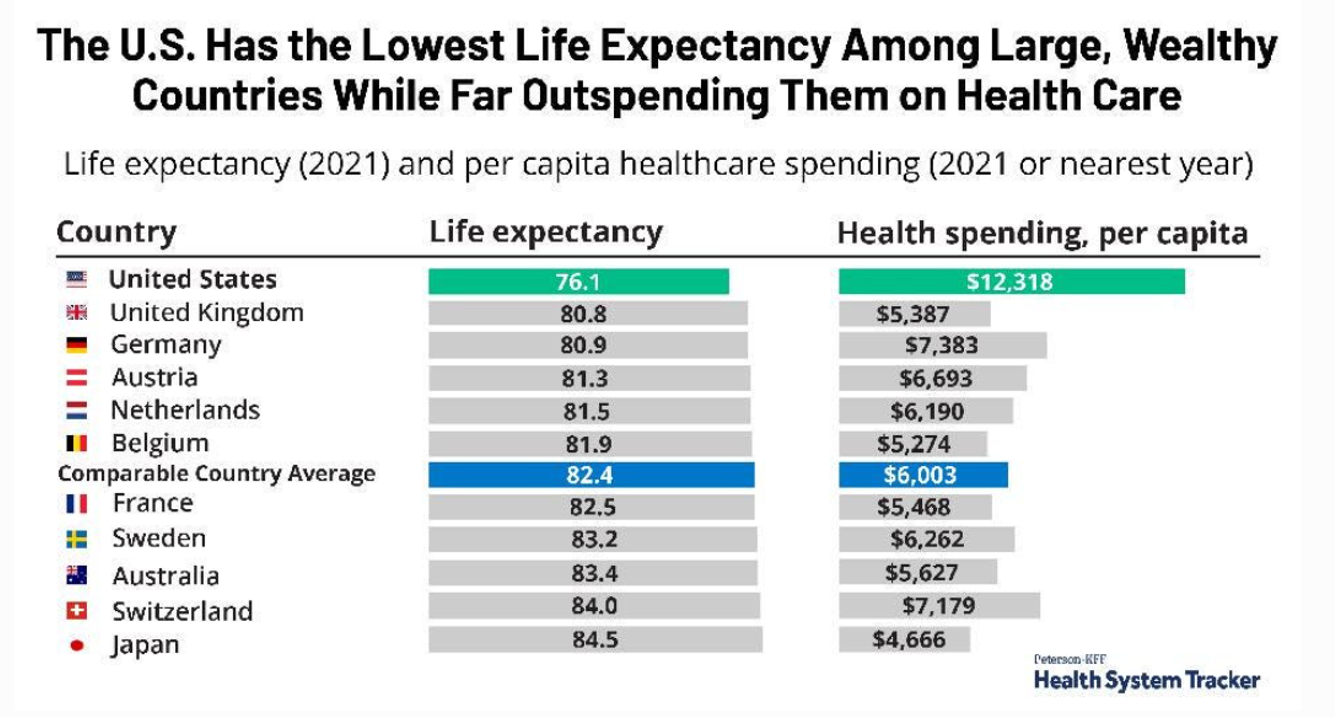
Life expectancy in the U.S. dropped nearly three years between 2019 and 2021, from close to 79 years down to 76. We ended 2022 with this new, sobering statistic from the Centers tor Disease Control (CDC). We begin 2023 with the opening of CES 2023, the world’s largest annual meet-up of consumer electronics innovators, companies, and retailers. How can digital health and other consumer-facing technologies help our health? First, consider the stark data point(s), and then we can better respond to the question’s answer in the Hot Points, below. In case you
When Household Economics Blur with Health, Technology and Trust – Health Populi’s 2023 TrendCast
People are sick of being sick, the New York Times tells us. “Which virus is it?” the title of the article updating the winter 2022-23 sick-season asked. Entering 2023, U.S. health citizens face physical, financial, and mental health challenges of a syndemic, inflation, and stress – all of which will shape peoples’ demand side for health care and digital technology, and a supply side of providers challenged by tech-enabled organizations with design and data chops. Start with pandemic ennui The universal state of well-being among us mere humans is pandemic ennui: call it languishing (as opposed to flourishing), burnout, or
Our Homes as HealthQuarters – Finding Health and Well-Being at CES 2023
For over ten years, digital health technology has been a fast-growing area at the annual CES, the largest convention covering consumer electronics in the world. When the meet-up convenes over 100,000 tech-folk in Las Vegas at the start of 2023, we’ll see even more health and self-care tools and services at #CES23 — along with new-new things displayed in aisles well outside of the physical space on the Las Vegas Convention Center map labeled “digital health” at this year’s CES in the North Hall. Some context: my company has been a member
Dr. Santa Intends to Deliver Consumer Health-Tech for the 2022 Holidays
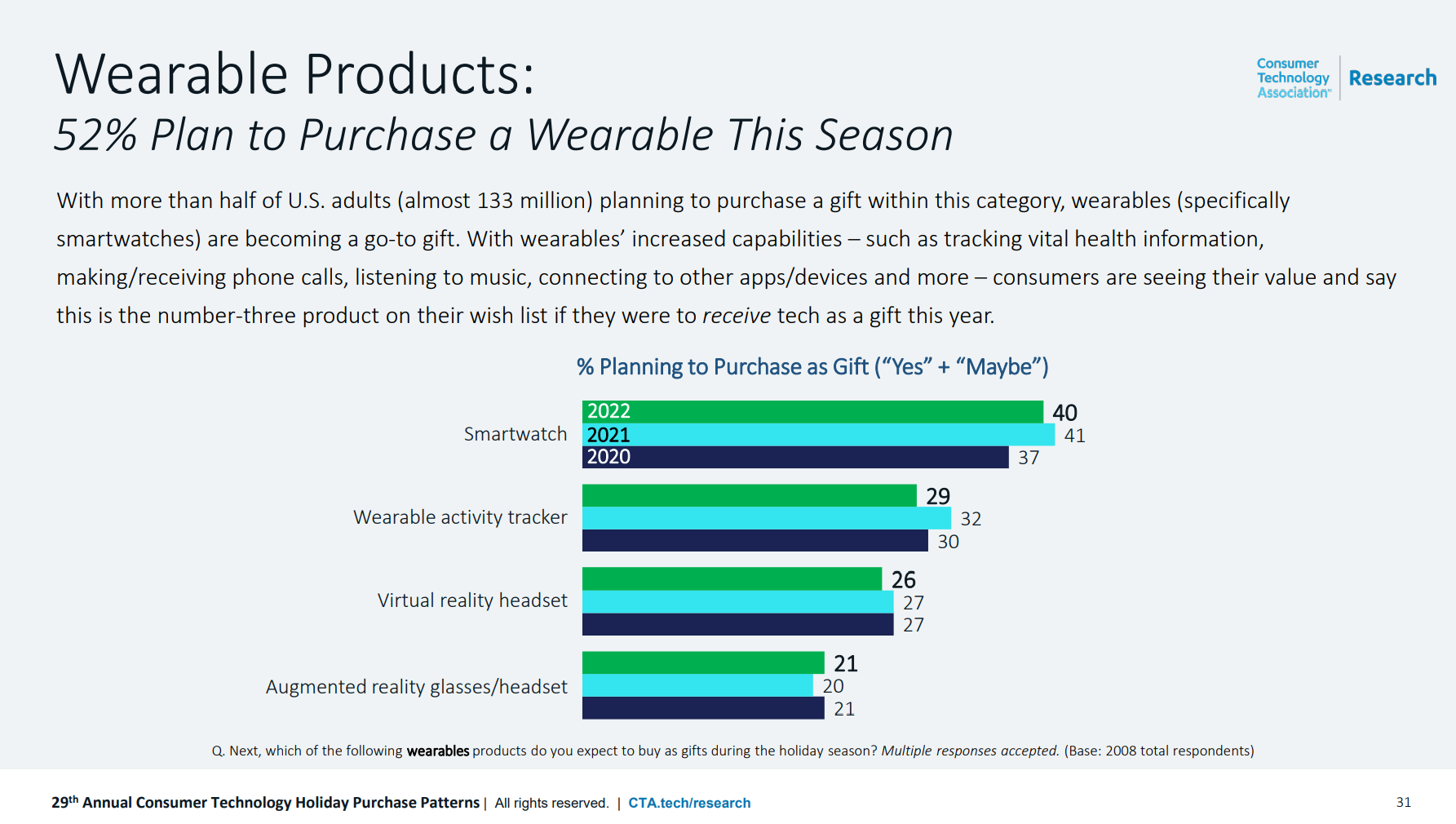
Even as consumers’ confess a tighter spending economy for 2022 holiday shopping, peoples’ intent to buy wearable tech for health and fitness and other wellness devices appear on gifting lists in the U.S., according to the 29th Annual Consumer Technology Holiday Purchase Patterns report from the Consumer Technology Association (CTA). In general, technology will be a top-selling category for 2022 holiday gift-giving, somewhat tempered by inflation and the increased cost of living that challenge household budgets in the fourth quarter of 2022. Tech spending will be down about 6% in 2022 according to CTA’s
Health Is Social, With More People Using Apps for Physical and Emotional Wellbeing
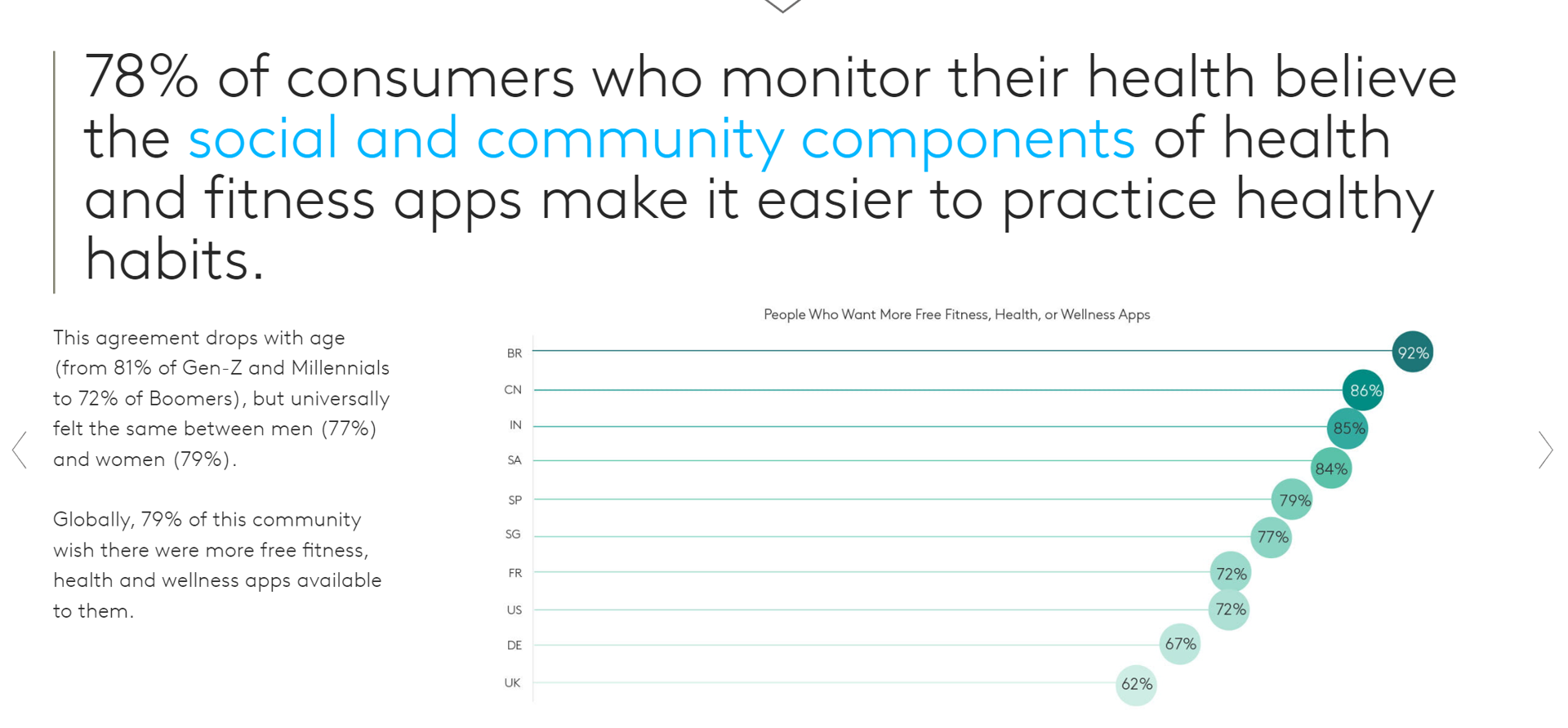
People who need people aren’t just the luckiest people in the world: they derive greater benefits through monitoring their health via apps that make it easier to make healthy choices. Channeling Barbra Streisand here to call out a key finding in new consumer research from Kantar on Connecting with the Health & Wellness Community. Kantar polled 10,000 online consumers in ten countries to gain perspectives on health citizens’ physical and emotional health and the role of technology to bolster (or diminish) well-being. The nations surveyed included Brazil, China, France, Germany, India, Singapore, South Africa, Spain,
Wearable Tech for Health Tracking, Online Dating and Banking: Exploring the “Fluidity” of Peoples’ Data Privacy Views
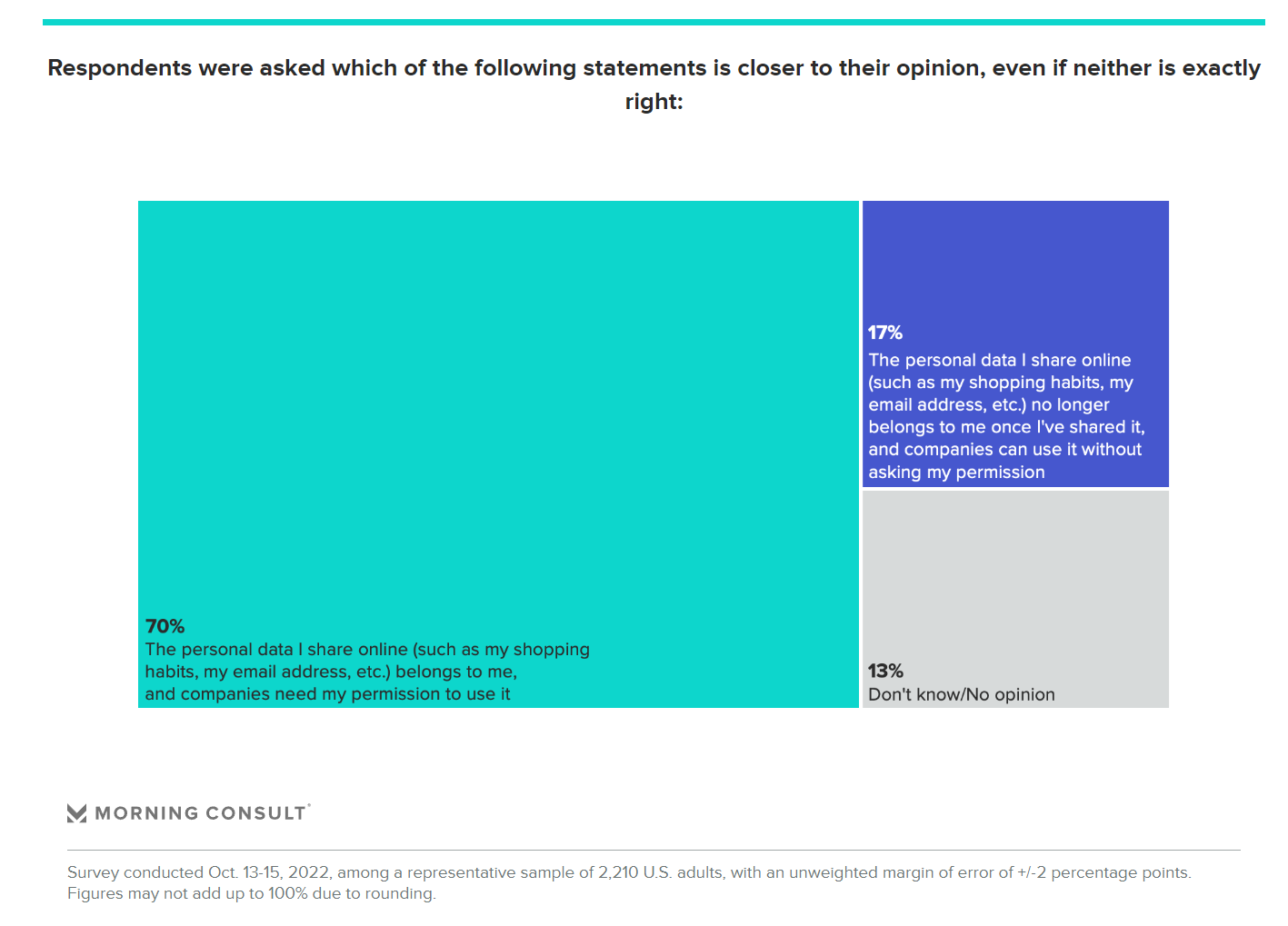
“The security of online data is the top consideration for consumers across many forms of online activities including email, search, social media, banking, shopping and dating”….and using health apps. A new poll from Morning Consult, explained on their website, explains that For Consumers, Data Privacy Has a Fluid Definition. Those privacy nuances and concerns vary by activity, shown in the first chart here from the study. For online banking, the most important consideration among most consumers (55%) is the privacy and security of their online data. Privacy and security of personal data was
Connected Wellness Growing As Consumers Face Tighter Home Economics
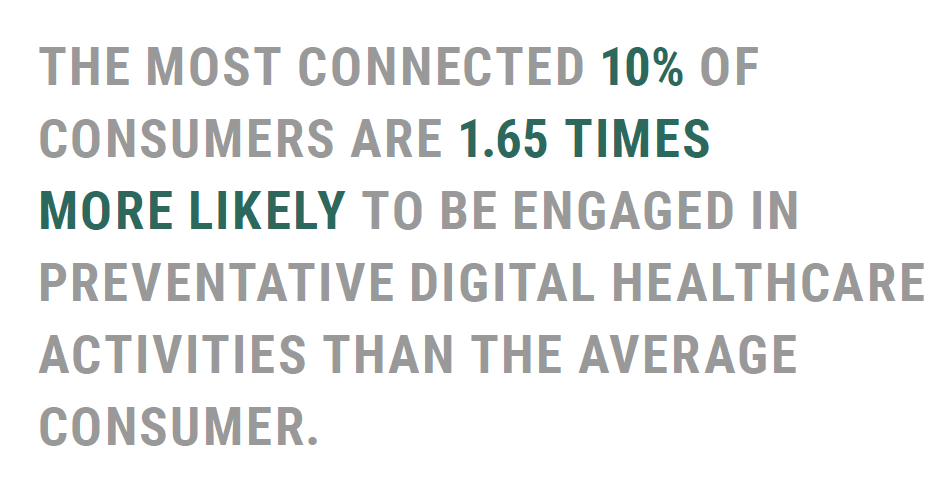
“Consumers are using the Internet to take their health into their own hands,” at least for 1 in 2 U.S. consumers engaging in some sort of preventive health care activity online in mid-2022. The new report on Connected Wellness from PYMNTS and Care Credit profiles American health consumers’ use of digital tools for health care promotion and disease prevention. The bottom-line here is that the most connected 10% of consumers were 1.65 times more likely to be engaged in preventive digital health activities than the average person. Peoples’ engagement with digital health
Physicians More Bullish On the Benefits of Digital Tools for Patient Care, the AMA Tells Us
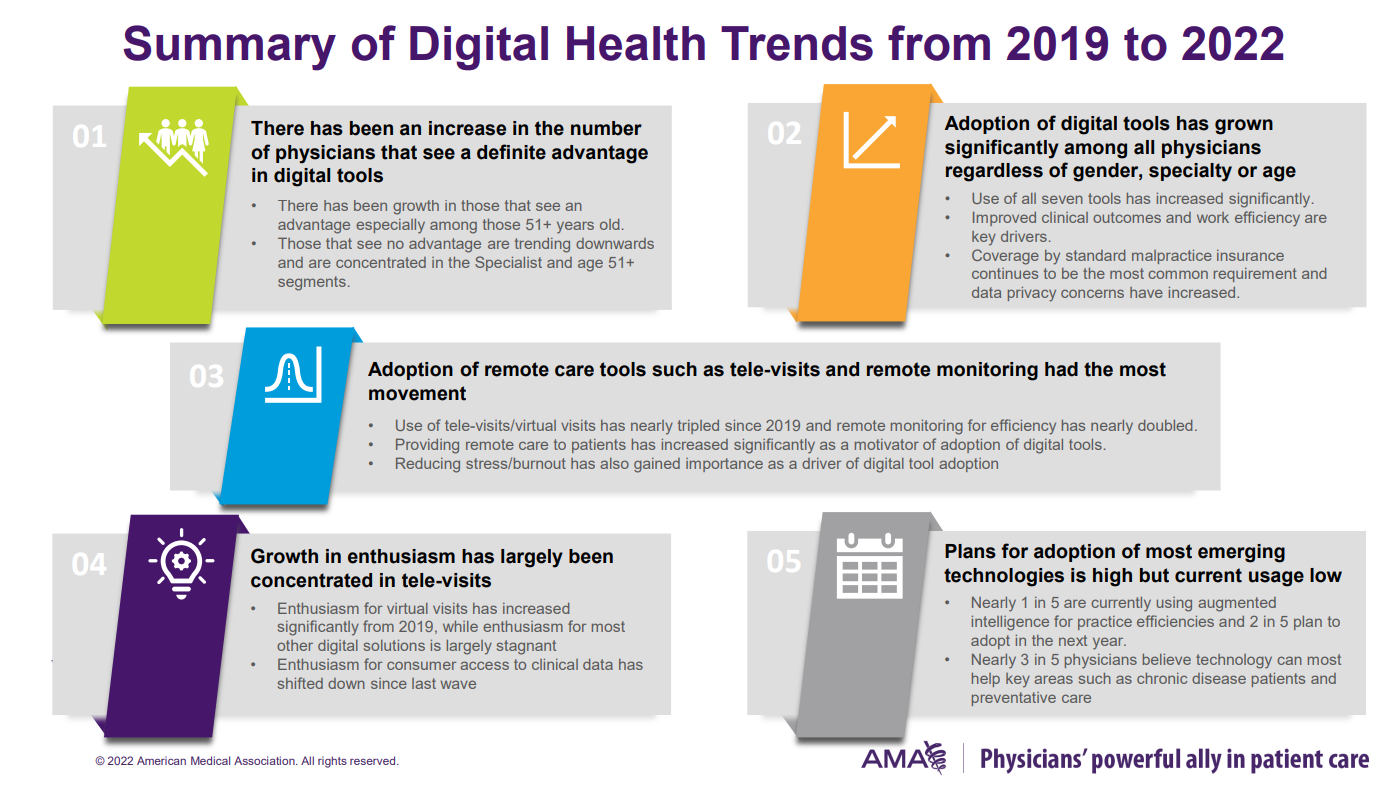
Most doctors see the advantages of digital health tools like telehealth, consumers’ access to their health information, and point-of-care workflow solutions, the American Medical Association found in a survey of 1300 physicians, published in September 2022. The AMA first conducted research with physicians and their views on digital health in July 2016. This year’s study was designed to compare current clinicians’ perspectives with those garnered in the 2016 and 2019 studies. There is a clear and positive shift of doctors’ adoption of and appreciation for digital tools, with “growth in enthusiasm” concentrated in tele-visits, the
Partnering Up in the Health Care Ecosystem to Drive Transformation – for Organizations and Health Consumers Alike
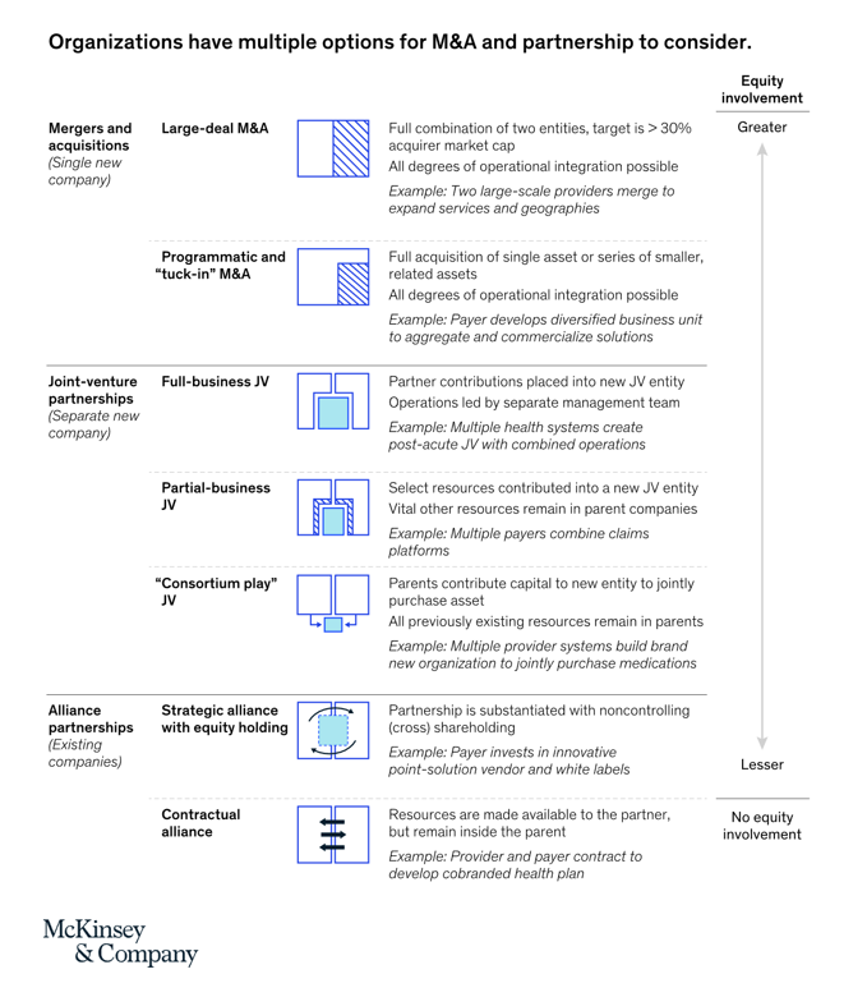
“Partnerships, including JVs and alliances with other healthcare organizations and with new entrants, are just one way to access new capabilities, unlock speed to market, and achieve capital, scale, and operational efficiencies” in health care transformations. “In an environment with continued competition for attractive assets and significant capital in play from institutional investors, these partnerships may also be the most accessible way for organizations to capture value in expanding healthcare services and technology value pools,” we learn in Overcoming the cost of healthcare transformation through partnerships from a team of health care folks with McKinsey & Company.
Consumers’ Blurring Digital Worlds of Health, Learning, Shopping, and Living
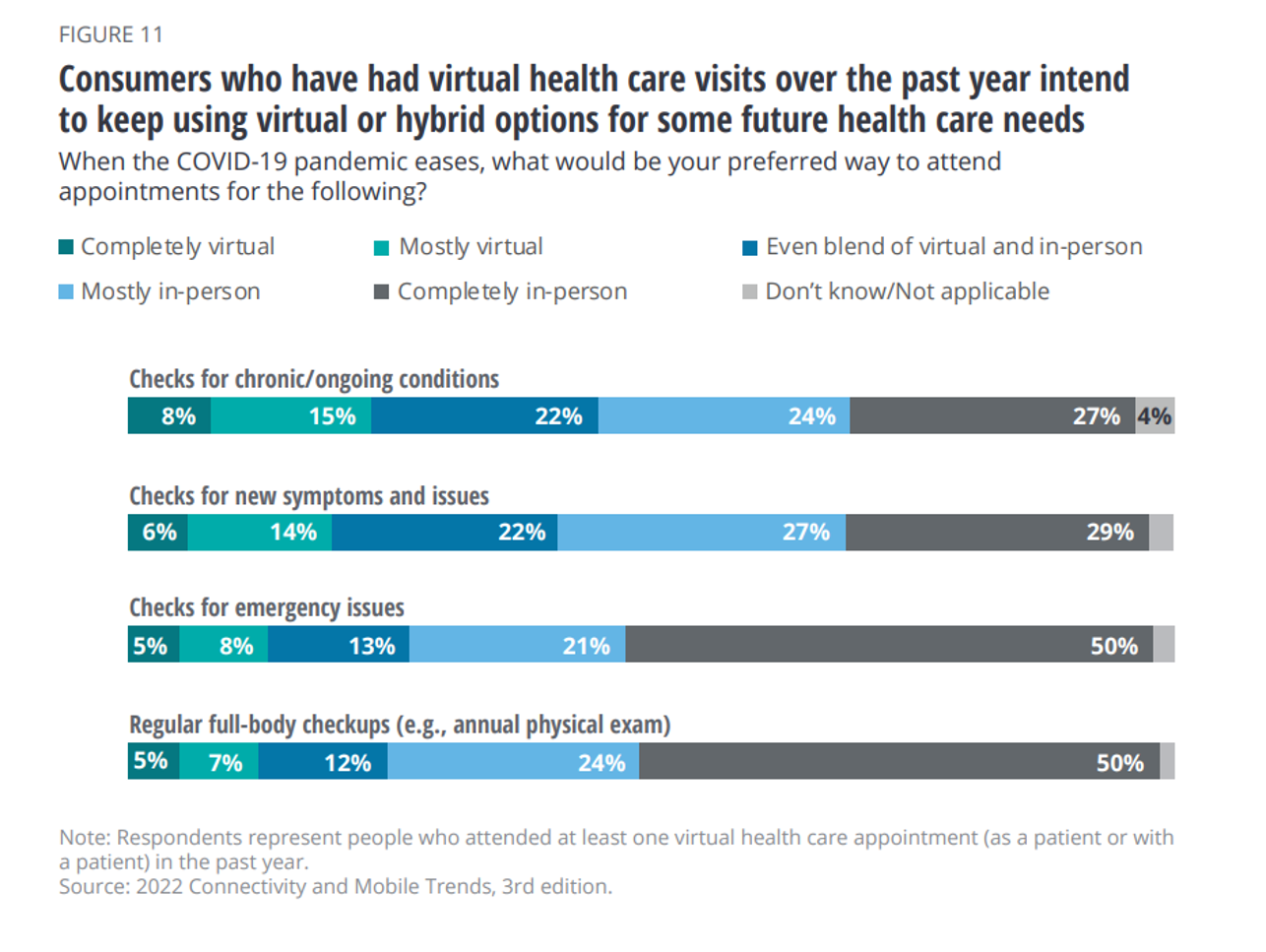
“Almost overnight, lines blurred between consumers’ physical and digital worlds, and home became the headquarters for virtual working, learning, fitness, health care, shopping, socializing, and entertaining.” That blur has reshaped peoples’ Everyday Normal we learn in Mastering the new digital life from Deloitte, a survey conducted among 2,005 U.S. consumers in the first quarter of 2022. The report is part of Deloitte’s ongoing Connectivity and Mobile Trends research in this third iteration. The report covers peoples’ new digital transformations for work, school and health; in this post, I’ll focus on the last element,
“Beyond the Bubble Bath,” Self-Care Must Be Rooted in Science To Build Trust Among Consumers
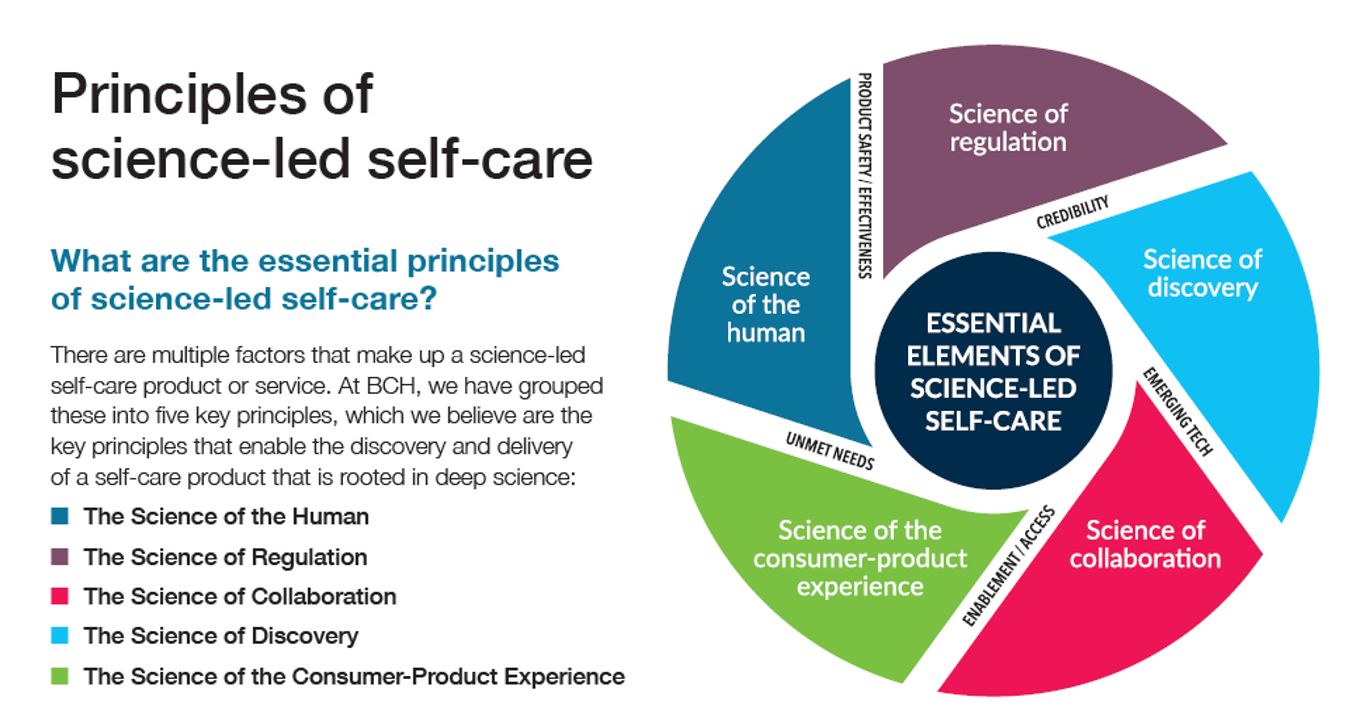
The goal of self-care for health-making is to improve lives by scaling health-and-wellness accessible to all, Bayer believes, giving people more control over their personal health. Self-care work-flows must be based in science to ensure products and services are trusted and deliver on their clinical promise, Bayer explains in Science-Led Self-Care: Principles for Best Practice, a paper published this week which the company intends to be a blueprint for the industry. Bayer recognizes that self-care is growing among health consumers around the world — albeit underpinned by peoples’ cultures, demographics, and “readiness”
Patient Support Isn’t Just About the Price of Therapy: It’s About Safety, Really Rich Data and Trust
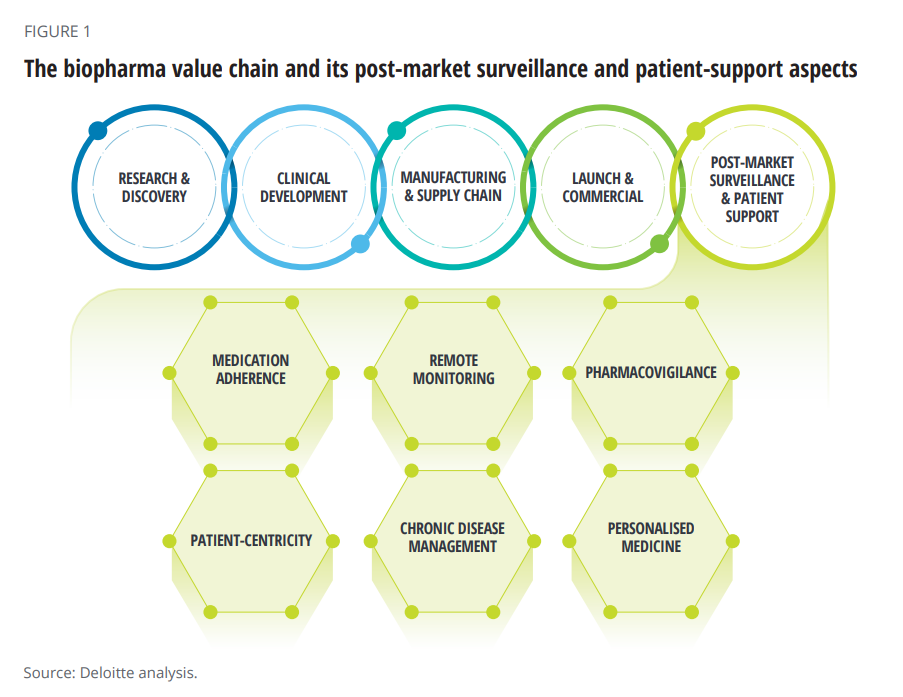
When I talk about patient support programs (PSPs), I’m most often focused on supporting peoples’ access to medicines due to costs, bolstering health literacy, and addressing health citizens’ risks of drivers of health that can be obstacles to optimal health outcomes (those challenging social determinants of health). A new report from Deloitte on Intelligent post-launch patient support speaks to another crucial definition of patient support: post-market surveillance and patient safety. The paper’s central thesis is that improving patient support is a critical step in the biopharma value chain, illustrated in the first diagram
The Retail Health Battle Royale, Day 5 – Consumer Demands For a Health/Care Ecosystem (and What We Can Learn from Costco’s $1.50 Hot Dog)
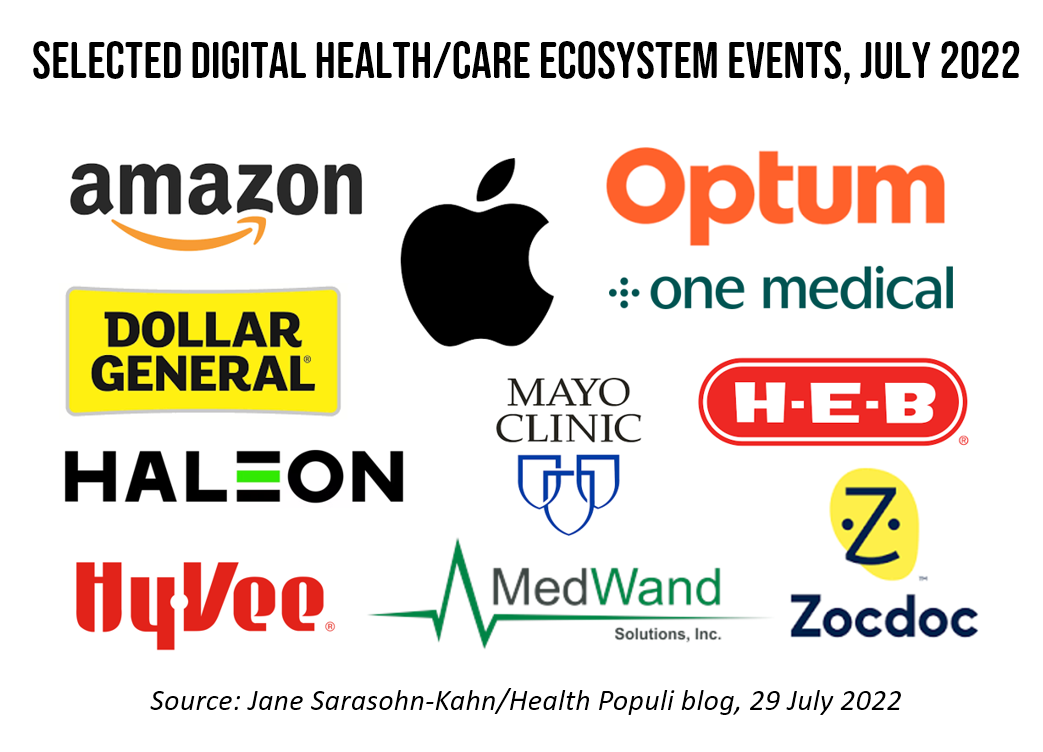
In another factor to add into the retail health landscape, Dollar General (DG) the 80-year old retailer known for selling low-priced fast-moving consumer goods in peoples’ neighborhoods appointed a healthcare advisory panel this week. DG has been exploring its health-and-wellness offerings and has enlisted four physicians to advise the company’s strategy. One of the advisors, Dr. Von Nguyen, is the Clinical Lead of Public and Population Health at Google….tying back to yesterday’s post on Tech Giants in Healthcare. Just about one year ago, DG appointed the company’s first Chief Medical Officer, which I covered here in
The Retail Health Battle Royale in the U.S. – A Week-Long Brainstorm, Day 2 of 5 – Amazon and One Medical

Today we review the various viewpoints on Amazon’s announced acquisition of One Medical (ONEM, aka 1life Healthcare) which has been a huge story in both health care trade publications, business news, and mainstream media outlets. Welcome to Day 2 of The Retail Health Battle Royale in the U.S., my week-long update of the American retail health/care ecosystem weaving the latest updates from the market and implications and import for health care consumers. The deal was announced on 21 July, with Amazon striking the price at about $3.9 billion. Goldman Sachs and Morgan Stanley put the deal together,
The Retail Health Battle Royale in the U.S. – A Week-Long Brainstorm, Day 1 of 5
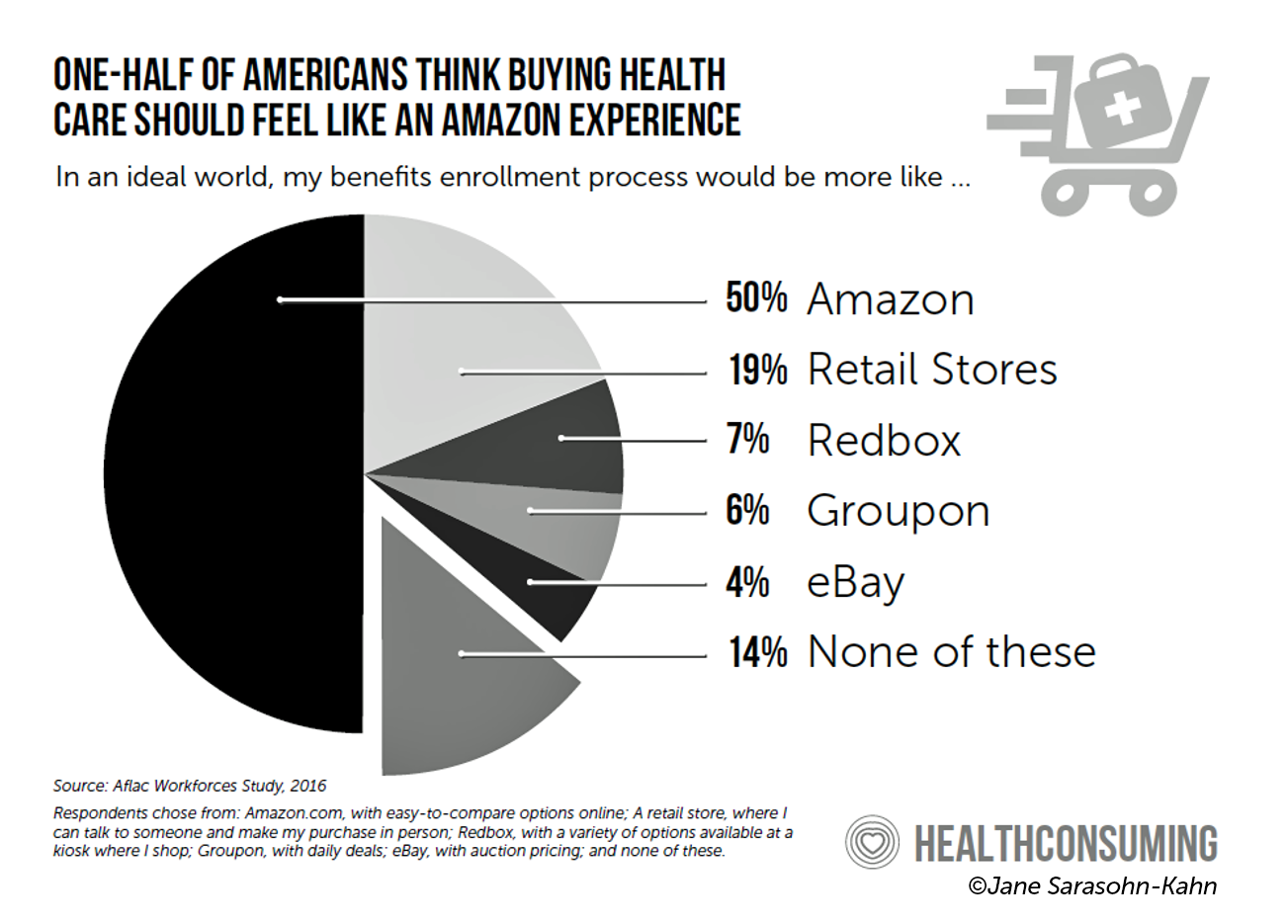
I’ve returned to the U.S. for a couple of months, having lived in and worked from Brussels, Belgium, since October 2021 (save for about ten days in March 2022). Work and life slow down in Europe in July and August, giving us the opportunity to return to our U.S. home base, reunite with friends and family, and re-join life and living this side of the Atlantic. The timing of my return to the U.S. coincides with a retail health hurricane of big announcements shaking up the health/care ecosystem. Among these events are Amazon’s plan to acquire One Medical, Apple’s publication of
In A Declining Consumer Tech Spending Forecast, Consumer Health Tech Will Grow in 2022: Reading the CTA Tea Leaves
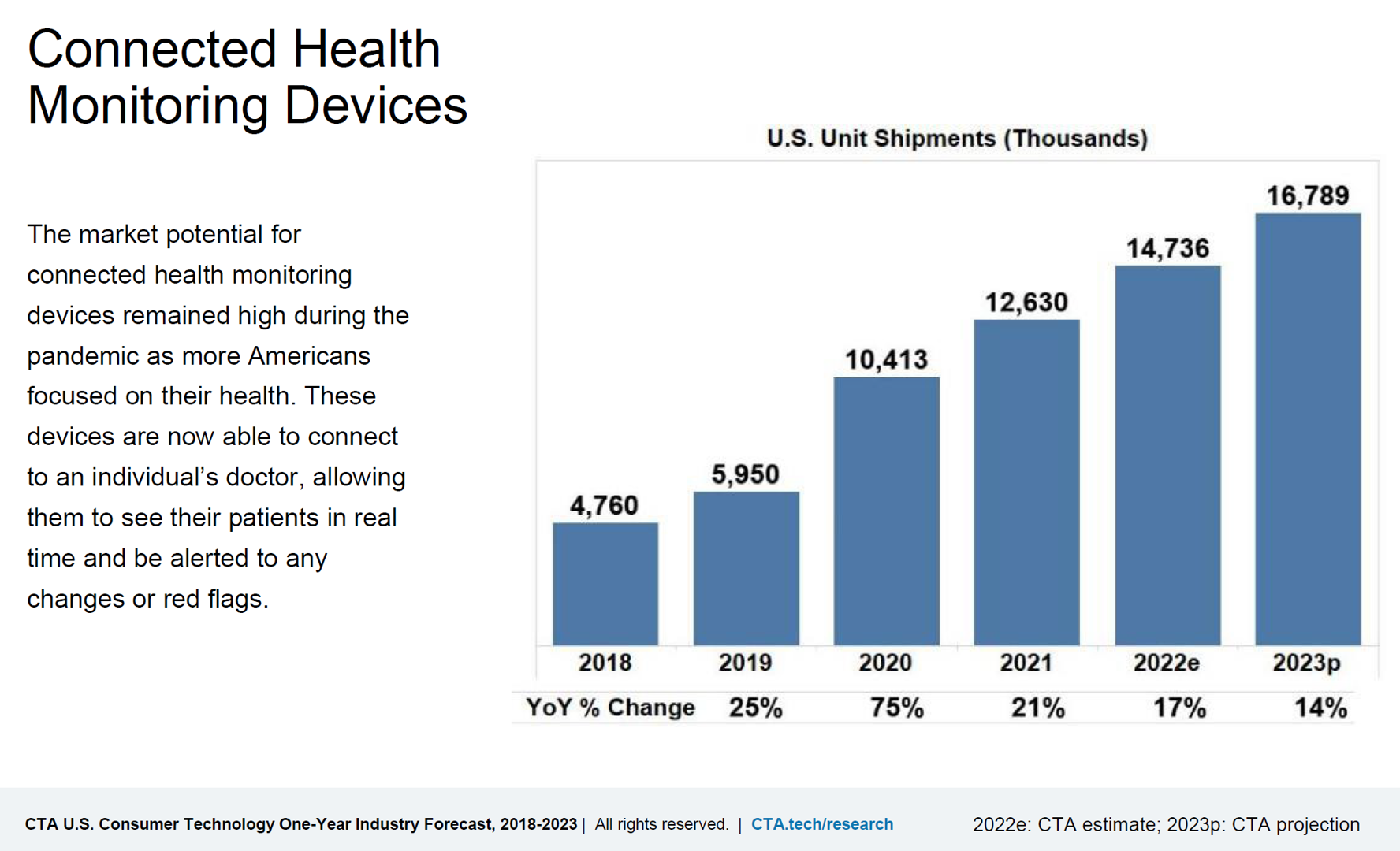
Supply chain challenges, inflation, and plummeting consumer economic sentiment are setting the stage for a decline in consumer electronics revenues for 2022. However, there will be some bright spots of growth for consumer tech spending, for 5G smartphones, smart home applications, gaming, and health technologies, noted in the Consumer Technology Association’s CTA U.S. Consumer Technology One-Year Industry Forecast, 2018-2023. Underneath the overall industry spend of $503 billion, a 0.2% drop from 2021, CTA expects software, gaming, video and audio streaming spending will grow by 3.5% and hardware to fall by 1.4% this year. With
Consumers’ Dilemma: Health and Wealth, Smartwatches and Transparency
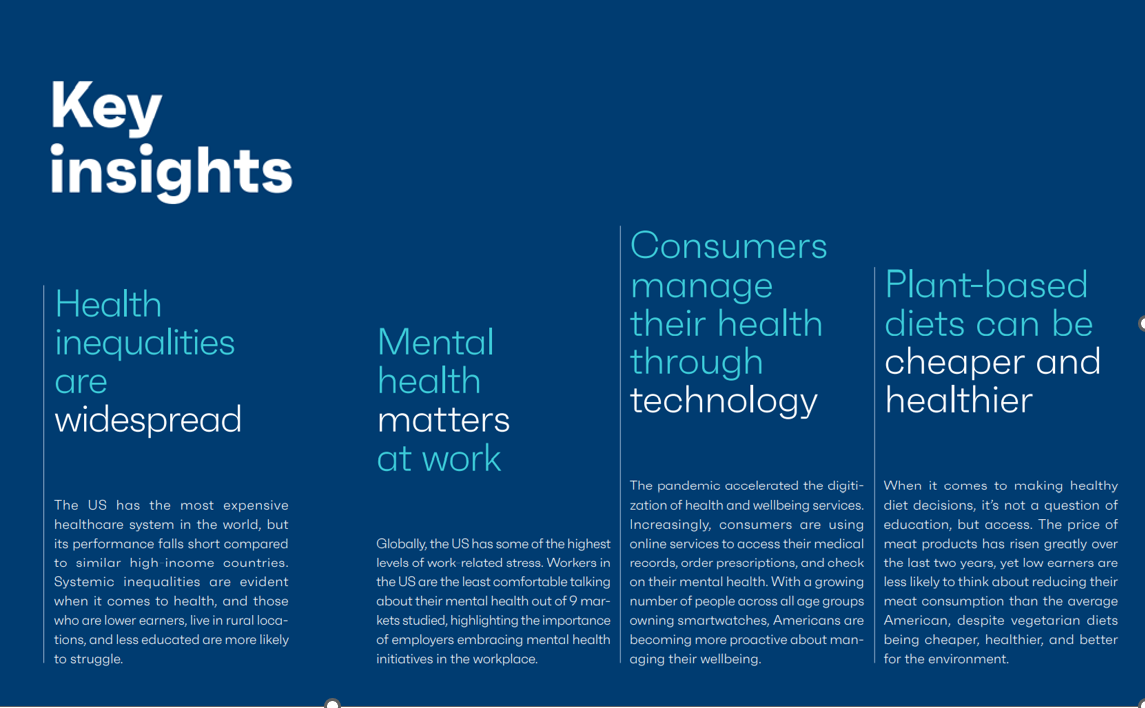
Even as spending on healthcare per person in the United States is twice as much as other wealthy countries in the world, Americans’ health status ranks rock bottom versus those other rich nations. The U.S. health system continues to be marred by health inequalities and access challenges for man health citizens. Furthermore, American workers’ rank top in the world for feeling burnout from and overworked on the job. Welcome to The Consumer Dilemma: Health and Wellness,, a report from GWI based on the firm’s ongoing consumer research on peoples’ perspectives in the wake of
The Legacy of COVID-19 Is Shaping Consumers’ Purchases for Health-At-Home
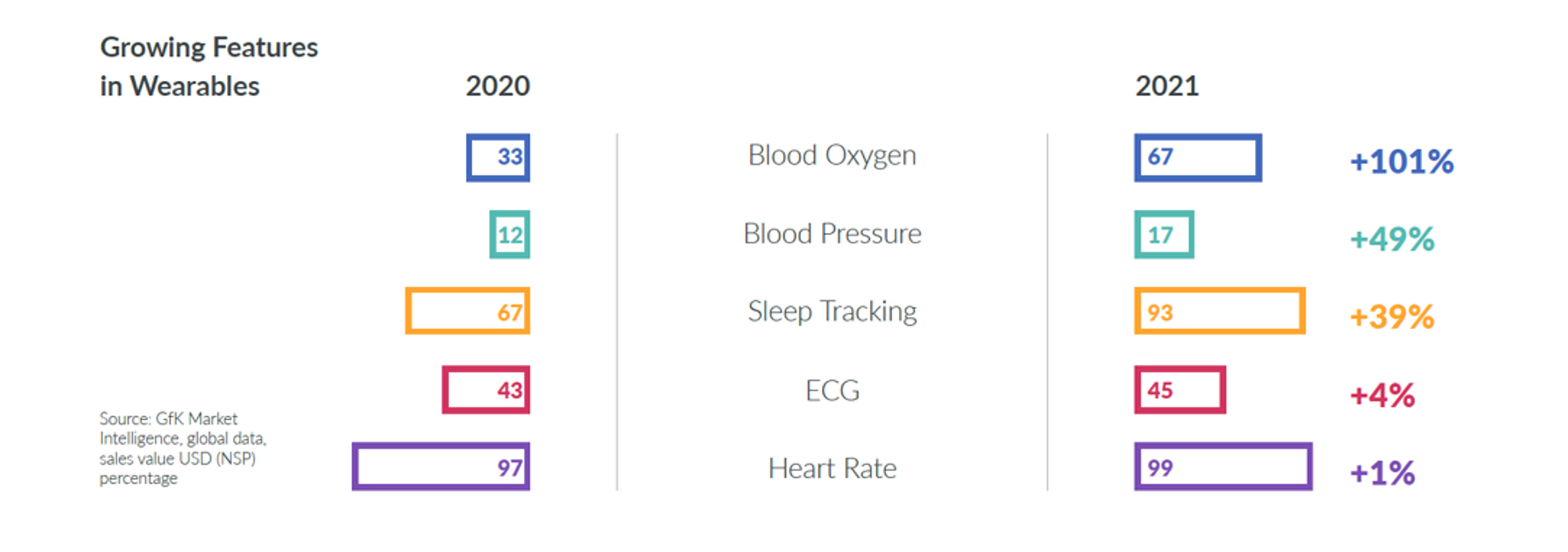
While inflation and financial stress is depressing consumer demand for many purchases the “legacy of COVID-19” is having lost-lasting impacts on how people see their homes — especially as sites for health and wellness. GfK highlights the growing interest in wellbeing and device demand in The State of Consumer Technology and Durables 2002 insights from GfK. In 2021, peoples’ spending on technology and durable goods (like home appliances) grew by 15%, with several categories seeing spectacularly high growth rates — most notably entertainment and health, a category in which core wearables purchases
Consumers Intend to Invest in Technology — With Budget and Value in Mind
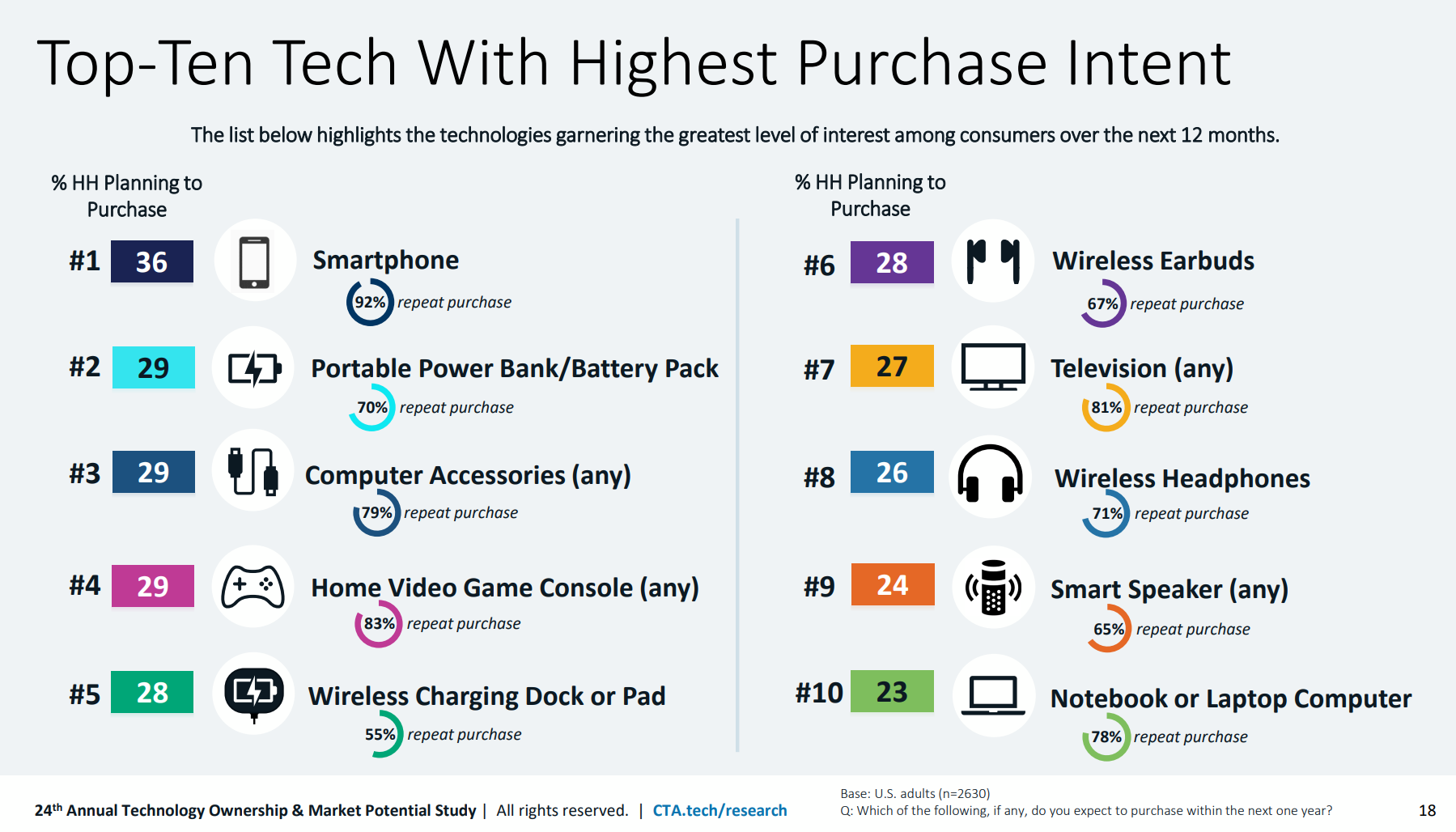
Consumers continued to invest in and use several technologies that supported self-care at home in 2021, with plans to purchase connected health devices, sports and fitness equipment in the next year. But these purchases will be made with greater attention to budget and value consumer mindsets firmly focused on (and stressed by) inflation. The 24th Annual Technology Ownership & Market Potential Study from the Consumer Technology Association (CTA) tells us that Americans in 2022 will have to manage challenging economic headwinds, shopping for technology is preparing people for their new normal —
Jasper, Scaling a Human Touch for People Dealing with Cancer, Now With Walgreens

Each year, the first Sunday in June marks National Cancer Survivors Day. This year’s NCSD occurred two days ago on Sunday, 5th June. When you’re a cancer survivor, or happen to love one, every day is time to be grateful and celebrate that survival of someone who has come through a cancer journey. We all know (or are) people who have survived cancer. We know that the recipe for battling cancer goes beyond chemotherapy. We know of the resilience and grit required in the process: body, mind, and spirit. “Celebrate Life” is the mantra of NCSD, as this year’s campaign
Digital Health Adoption Across Communities is Uneven By Rurality, Race, Health Plan, and Gender
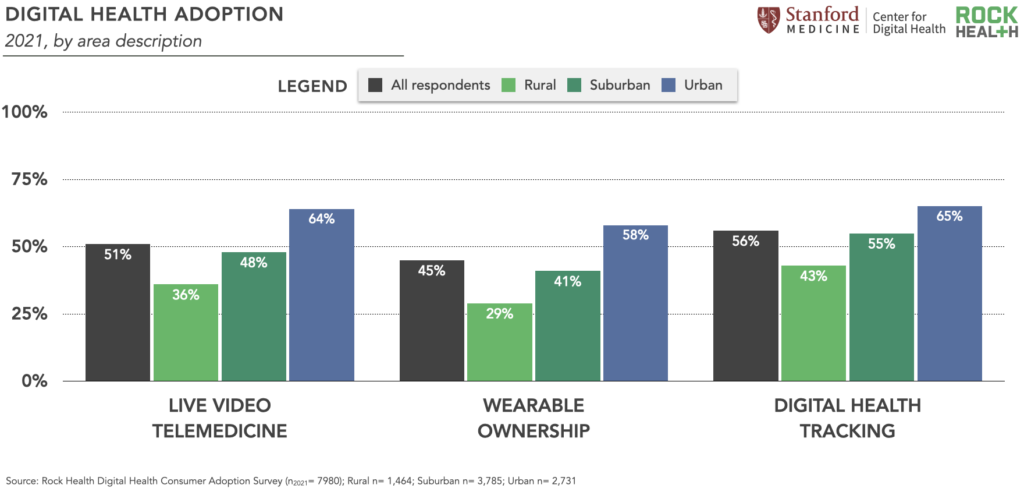
While telehealth, mobile health apps, and wearable technology are all growing for mainstream consumers, there are gaps in adoption based on where a person lives, their health insurance plan type, race/ethnicity, sexual orientation and gender. Thanks to the team at Rock Health, we know more about these gaps explained in their report, Startup innovation for underserved groups: 2021 digital health consumer adoption insights, published this week. The report examines three areas of digital health adoption: Live video telemedicine Wearable technology ownership, and Digital health tracking. We all know the mantra that our ZIP code impacts our
Reimagining Health Care Without Walls – Deloitte’s Vision
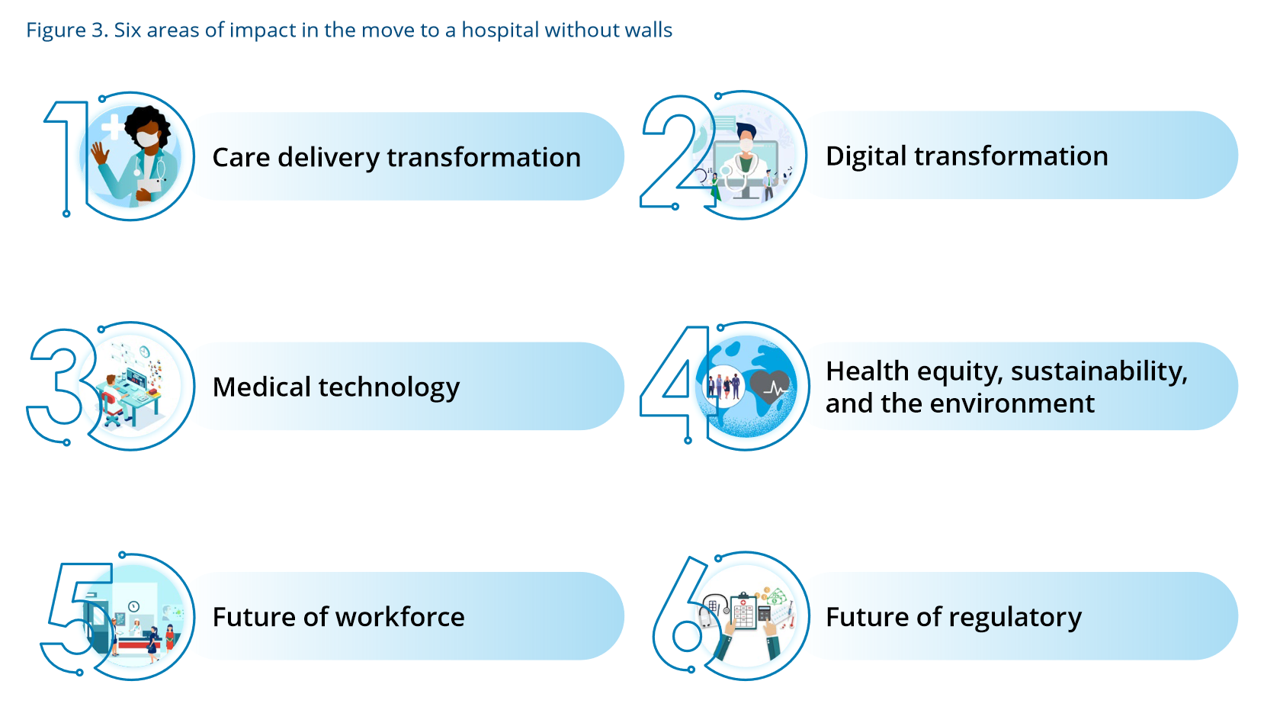
Delivering health care during the heights of the COVID-19 pandemic proved to both patients and their clinicians that virtual care was not only a viable channel for care, but very often a preferable “place” to collaborate for treatment. Even before the coronavirus pandemic emerged in early 2020, telehealth and the hospital-to-home movement were beginning to become part of a portfolio of delivery modes across the continuum of care. Deloitte spells out the current and future prospects for the Hospital in the future “without” walls in a new report that spells out driving forces, future scenarios, and impacts on a business long
What Person-Centered Interoperability Looks Like: Seqster
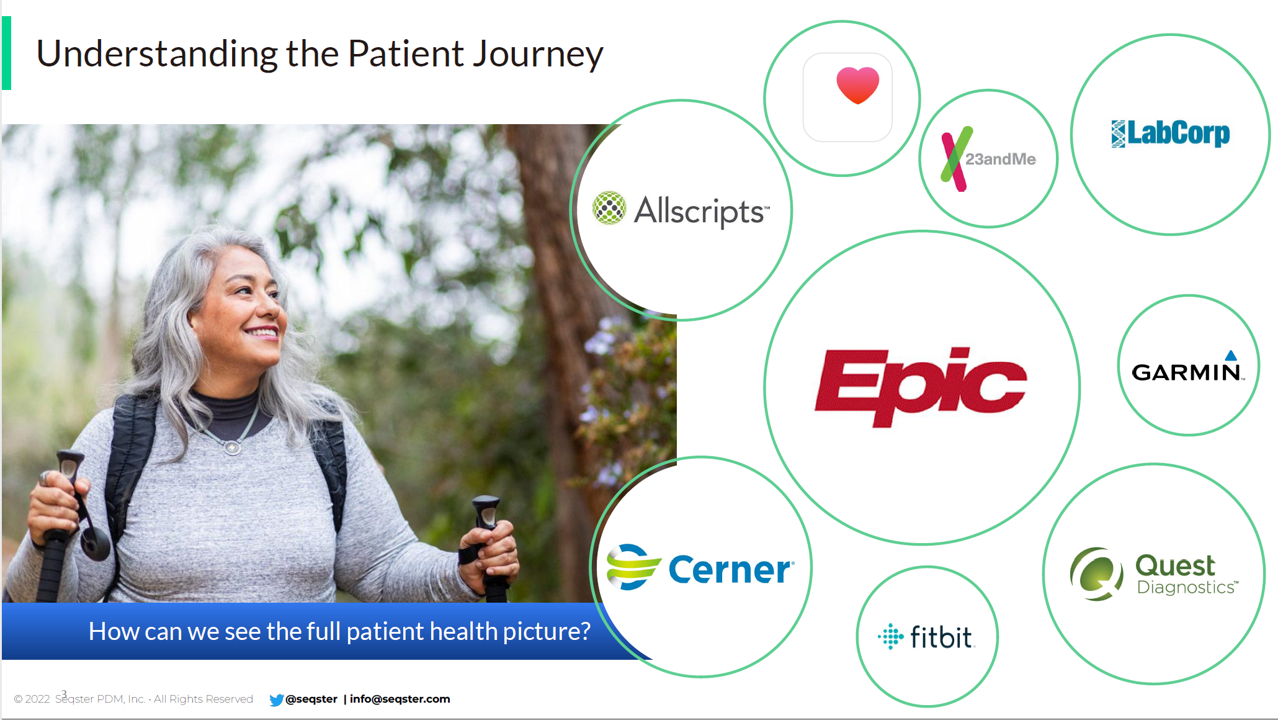
He had me at the statement, “I believe health data is medicine.” Those were the words of Ardy Arianpour, CEO and Co-Founder of Seqster, when sharing with me how his company was founded. We met up last week at the DIA Europe 2022 meeting (Drug Information Association) in the cool SQUARE Conference Center in Brussels, Belgium (my current home base for work and life). It was a rare opportunity to sit still with this on-the-go guy with whom an hour spent is the equivalent of three hours with most other folks. Ardy and the team call Seqster “the operating system
Brand Relevance Has A Lot To Do with Health, Wellness, and Empowerment – Listening to (the) Prophet
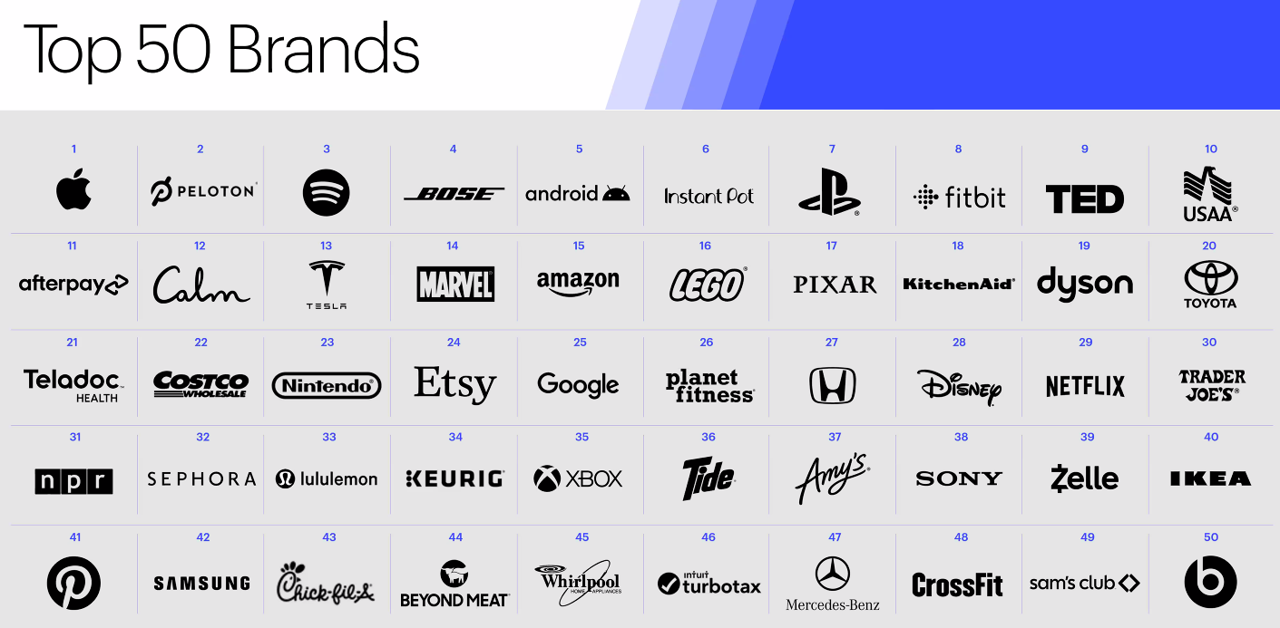
s in the seventh annual 2022 Brand Relevance Index from Prophet. The research developed a list of 50 companies representing what Prophet characterizes “the brands that people can’t live without in 2022.” For the 7th year in a row, Apple tops the study. Following Apple, the nine companies rounding out the top ten most relevant brands were Peloton, Spotify, Bose, Android, Instant Pot, Pixar, Fitbit, TED, and USAA. There are relative newbies in this list, representing consumers’ collective response to the COVID-19 pandemic and new life-flows. Put Calm and AfterPay in that category, along with Beyond Meat, and Zelle. The
The CES 2022 Tech Trends to Watch Have Everything To Do With Health/Care
The four top trends to watch for this week at CES 2022 are transportation, space tech, sustainable technology, and digital health, based on Steve Koenig’s annual read-out that kicks off this largest annual conference featuring innovations in consumer electronics. Last night, Steve discussed these trends for media attendees, of which I am one (gratefully) participating in #CES2022 virtually from the hygienic comfort and safety of my home health hub (more on that later in this post). All four of these mega-themes impact health and well-being in some way. “Space Tech?” you might wonder. Yes. My friend Dorit Donoviel can be
Mental Health at CES 2022 – The Consumer’s Context for Wellbeing in the New Year
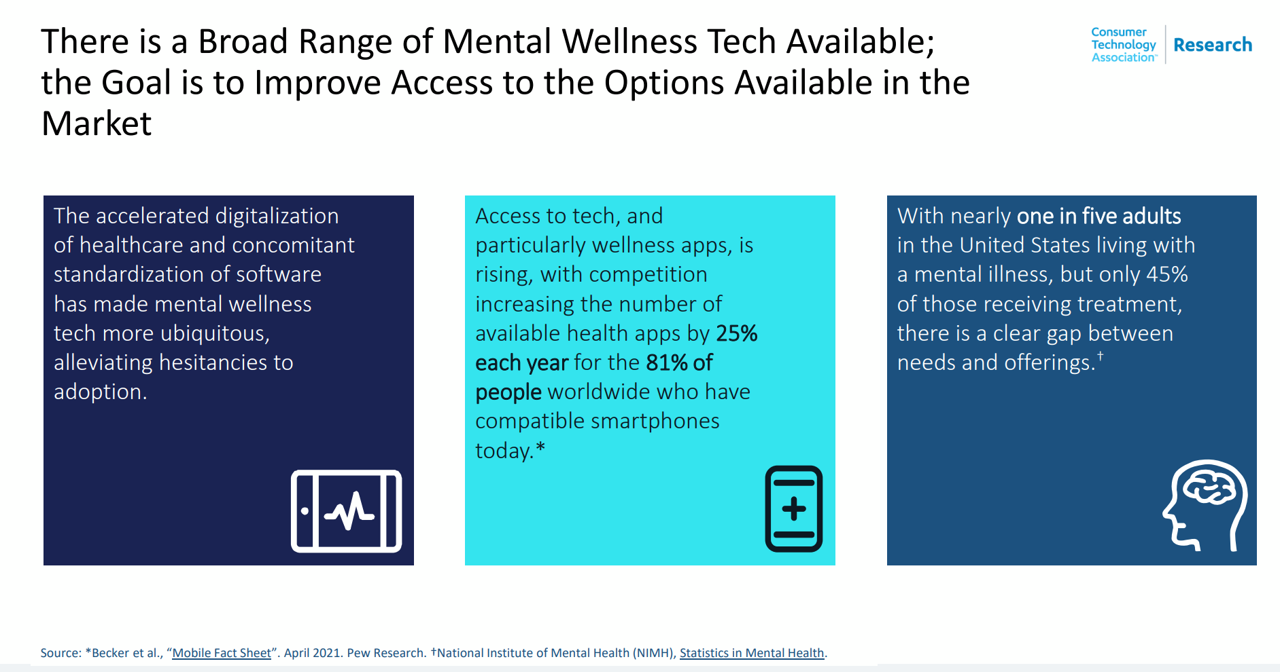
As we enter COVID-19’s “junior year,” one unifying experience shared by most humans are feelings of pandemic fatigue: anxiety, grief, burnout, which together diminish our mental health. There are many signposts pointing to the various flavors of mental and behavioral health challenges, from younger peoples’ greater risk of depression and suicide ideation to increased deaths of despair due to overdose among middle-aged people. And about one-in-three Americans has made a 2022 New Year’s resolution involving some aspect of mental health, the American Psychiatric Association noted approaching the 2021 winter holiday season. Underneath this overall statistic are important differences across various
The 2022 Health Populi TrendCast for Consumers and Health Citizens
I cannot recall a season when so many health consumer studies have been launched into my email inbox. While I have believed consumers’ health engagement has been The New Black for the bulk of my career span, the current Zeitgeist for health care consumerism reflects that futurist mantra: “”We tend to overestimate the effect of a technology in the short run and underestimate the effect in the long run,” coined by Roy Amara, past president of Institute for the Future. That well-used and timely observation is known as Amara’s Law. This feels especially apt right “now” as we enter 2022,
Best Buy Buys Current Health As Our Homes Morph Into Health Spaces
Best Buy continues to grow its health/care market footprint and service portfolio through remote health monitoring, first announced in the press release, Best Buy to acquire Current Health to help make home the center of health. The financial deal was disclosed yesterday at £300 million, about $400 million US dollars (FYI, Current Health is based in Scotland, thus value given in pounds sterling, with a particularly strong US $ exchange right now at 1.34). Remote monitoring has been part of Best Buy Health’s vision from the time the company explained its big audacious goals for the health ecosystem in 2018
Health Consumers, Health Citizens, and Wearable Tech – My Chat with João Bocas
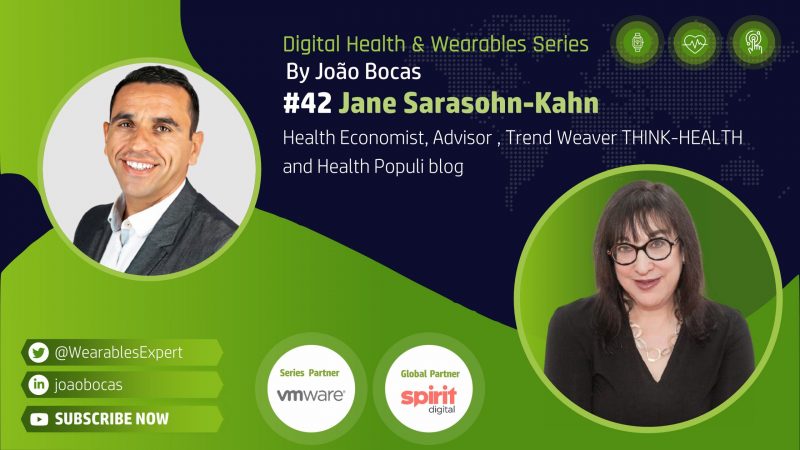
The most effective, engaging, and enchanting digital health innovations speak to patients beyond their role as health consumers and caregivers: digital health is at its best when it addresses peoples’ health citizenship. I had the great experience brainstorming the convergence of digital health, wearable tech, user-centered (UX) design, and health citizenship with João Bocas, @WearablesExpert, in a on his podcast. And if those topics weren’t enough, I wove in the role of LEGO for our well-being, “playing well,” and inspiring STEM- and science-thinking. João and I started our chat first defining health citizenship, which is a phrase I first learned from
Be Mindful About What Makes Health at HLTH
“More than a year and a half into the COVID-19 outbreak, the recent spread of the highly transmissible delta variant in the United States has extended severe financial and health problems in the lives of many households across the country — disproportionately impacting people of color and people with low income,” reports Household Experiences in America During the Delta Variant Outbreak, a new analysis from the Robert Wood Johnson Foundation, NPR, and the Harvard Chan School of Public Health. As the HLTH conference convenes over 6,000 digital health innovators live, in person, in Boston in the wake of the delta
Health Privacy and Our Ambivalent Tech-Embrace – Lessons for Digital Health Innovators
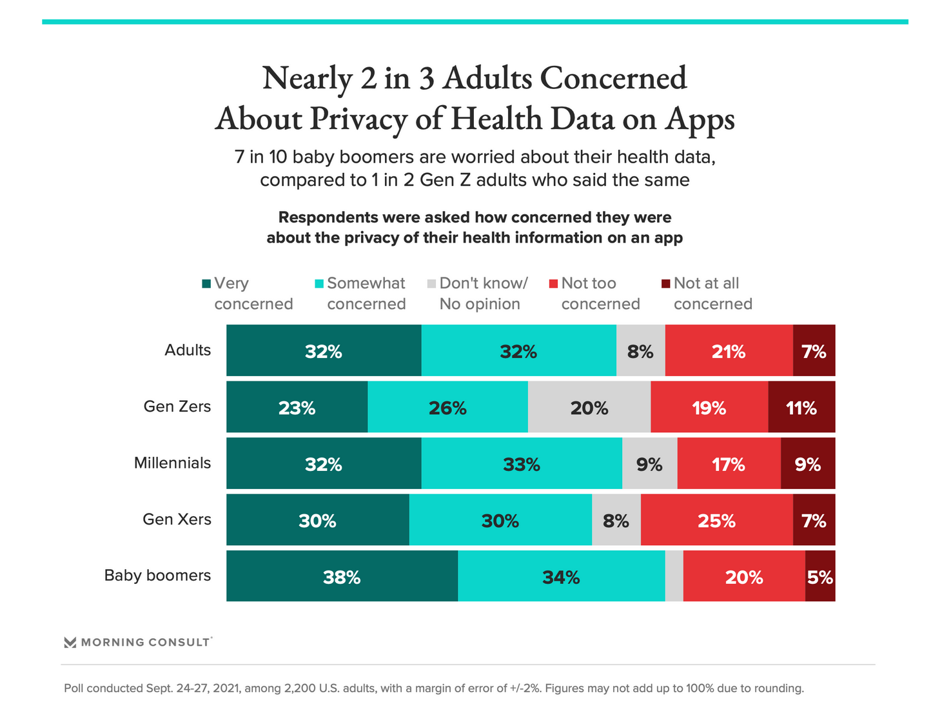
A new look into Americans’ views on health privacy from Morning Consult provides a current snapshot on citizens’ concerned embrace of technology — worried pragmatism, let’s call it. This ambivalence will flavor how health citizens will adopt and adapt to the growing digitization of health care, and challenge the healthcare ecosystem’s assumption that patients and caregivers will universally, uniformly engage with medical tools and apps and technologies. More Boomers are concerned with health data app privacy than Gen Z consumers, as the chart illustrates. 46% of U.S. adults said that health monitoring apps were not an invasion of privacy; 32%
Why CES 2022 Will Be Keynoted by a Health Care Executive
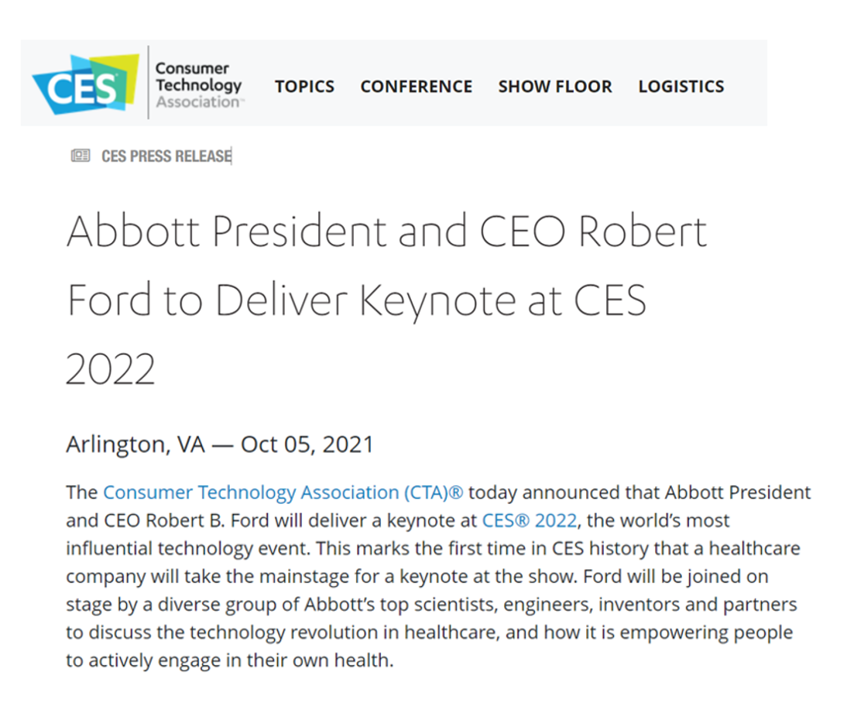
The Consumer Technology Association (CTA) announced that Robert Ford, CEO and President of Abbott, will give a keynote speech at CES 2022, the world’s largest annual convention of the technology industry. This news is a signal that health care and the larger tech-enabled ecosystem that supports health and well-being is embedded in peoples’ everyday lives. Digital health as a category has been a growing feature at CES for over a decade, starting with the early wearable tech era of Fitbit, Nike, Omron and UnderArmour, early exhibitors at CES representing the category. By 2020, the most recent “live, in person” CES,
Necessity is the Mother(board) – How COVID-19 Inspires Local Communities to Build Broadband
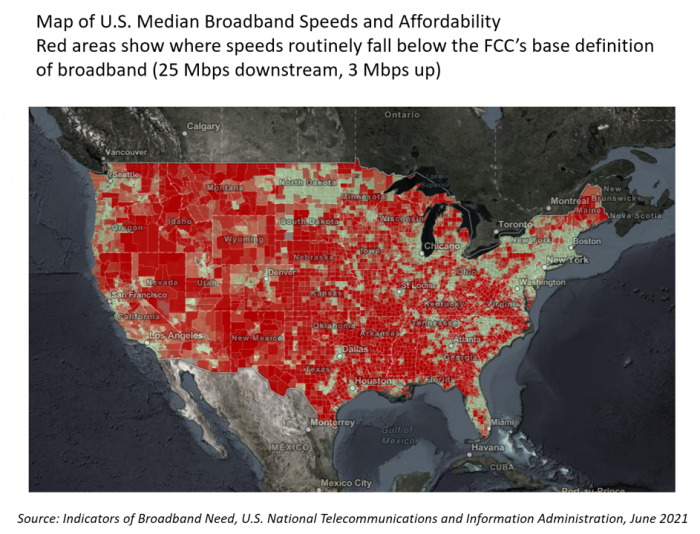
“The simple fact is that the federal and state governments are doing almost nothing to help people who have a broadband service available that partially meets their needs but abuses them with regular price hikes, spotty reliability, and poor customer service. Local governments will continue to step in to build better networks because communities have very few other options.” That “necessity is the mother” motivation to build broadband comes from Christopher Mitchell, Director of the Community Broadband Networks Initiative at the Institute for Local Self-Reliance (ILSR). [FYI, Mitchell’s Twitter handle is @communitynets]. Mitchell is quoted in the story, New data
IoT and The Rise of the Machines in Healthcare
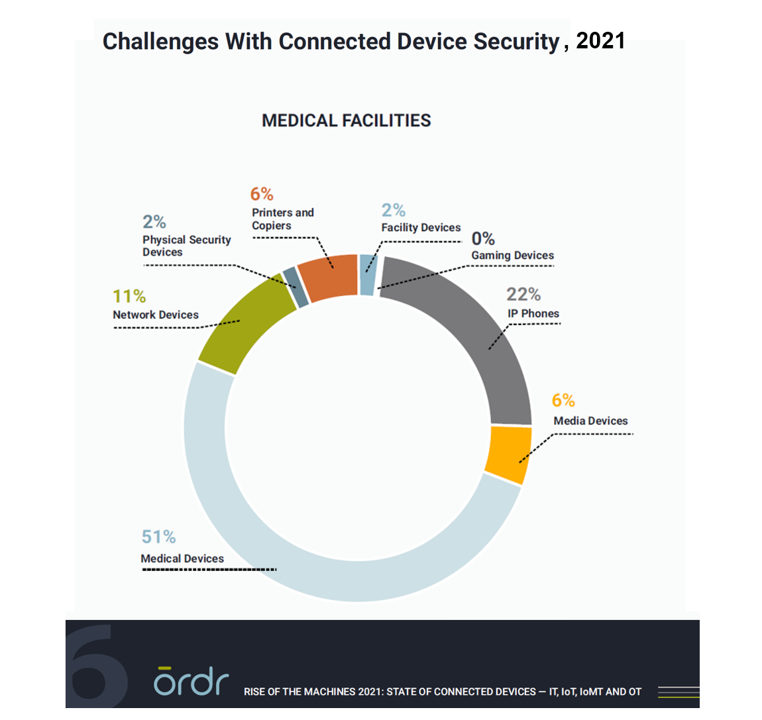
As connected devices proliferate within health care enterprises and across the health care ecosystem, cybersecurity risks abound. During the first year of the COVID-19 pandemic, the health care sector was profoundly affected by cyber-attacks on connected devices, we learn in the report, Rise of the Machines 2021: State of Connected Devices – IT, IoT, IoMT and OT from Ordr. For this annual report, Ordr analyzed security risks across over 500 deployments in healthcare, life sciences, retail, and manufacturing sectors for the 12 months June 2020 through June 2021. In health care, outdated operating systems present some of the greatest risks:
Digital Health Tools Are Finding Business Models – IQVIA’s 2021 Read on the Health of Digital Health
In the Age of COVID, over 90,000 new health apps were released, as the supply of digital therapeutics and wearables grew in 2020. Evidence supporting the use of digital health tools if growing, tracked in Digital Health Trends 2021: Innovation, Evidence, Regulation, and Adoption from IQVIA Institute for Human Data Science. IQVIA has been closely following the growth, investment in, and clinical evidence for digital health since 2013, when I reviewed their first paper on “mHealth” here in Health Populi. Then, IQVIA evaluated the universe of about 40,000 apps available in the iTunes store. In today’s report, the company quantifies
Digital Inclusion As Upstream Health Investment
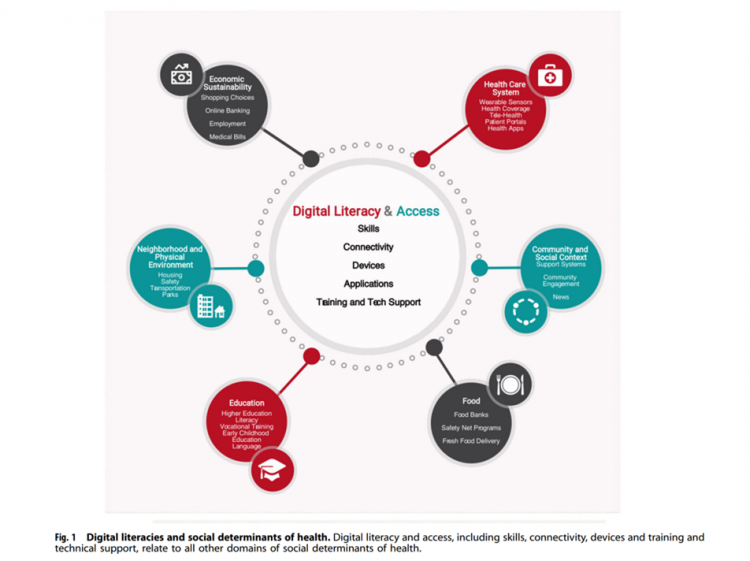
Without access to connectivity during the pandemic, too many people could not work for their living, attend school and learn, connect with loved ones, or get health care. The COVID-19 era has shined a bright light on what some of us have been saying since the advent of the Internet’s emergence in health care: that digital literacies and connectivity are “super social determinants of health” because they underpin other social determinants of health, discussed in Digital inclusion as a social determinant of health, published in Nature’s npj Digital Medicine. On the downside, lack of access to digital tools and literacies
The Digital Home: A Platform for Health, via Deloitte and the COVID-19 “Stress Test”
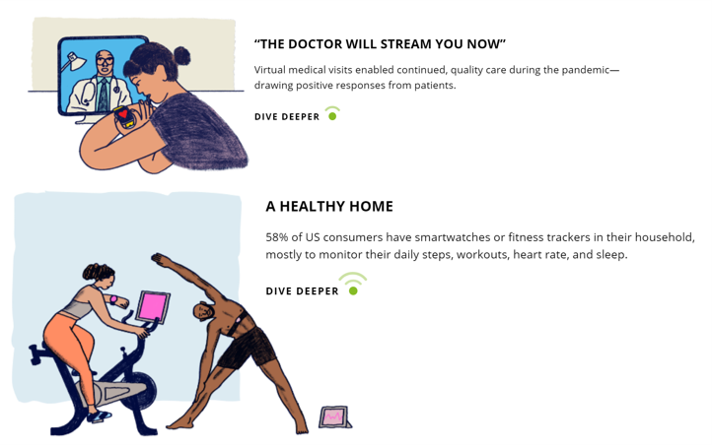
Wherever you live in the world touched by the coronavirus pandemic, you felt (and were) stress-tested. Both you were, and your home was as well. In this year’s 2021 annual report by Deloitte into Connectivity & Mobile Trends, their report details How the pandemic has stress-tested the crowded digital home. This analysis was done, as it is every year, by the Deloitte Center for Technology, Media & Telecommunications. Deloitte’s Center commissioned an online survey among 2,009 U.S. consumers to gauge five generations of peoples’ perspectives on connected life in the context of COVID. The report covers the various life-flows of
Wearables Are Good For Older People, Too — The Latest From Laurie Orlov
The COVID-19 pandemic accelerated a whole lot of digital transformation for people staying home. For digital natives, that wasn’t such an exogenous shock. For older people who are digital immigrants, they will remember their initial Zoom get-together’s with much-missed family, ordering groceries online in the first ecommerce purchase, and using telemedicine for the first time as a digital health front-door. Laurie Orlov, tech industry veteran, writer, speaker and elder care advocate, is the founder of the encyclopedic Aging and Health Technology Watch website. She takes this propitious moment to assess The Future of Wearables and Older Adult in a new report.
Virtual Health Tech Enables the Continuum of Health from Hospital to Home
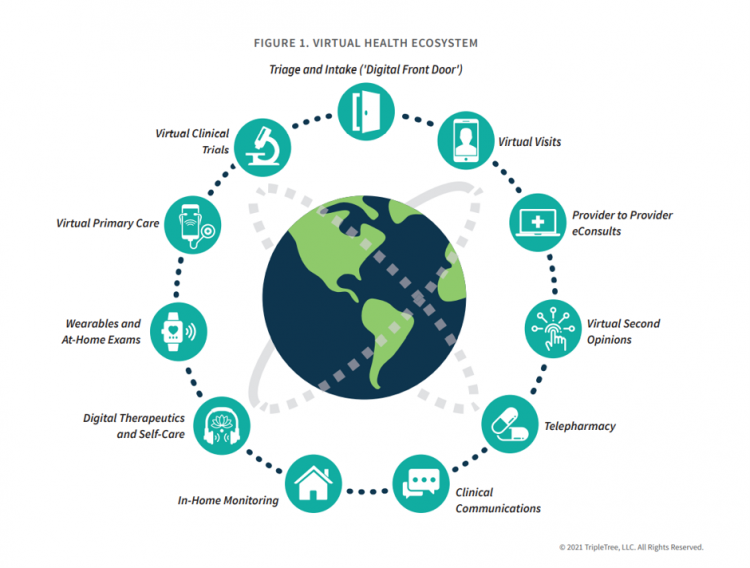
In the COVID-19 pandemic, as peoples’ daily lives shifted closer and closer to home, and for some weeks and months home-all-the-time, health care, too, moved beyond brick-and-mortar hospitals and doctors’ offices. The public health crisis accelerated “what’s next” for health care delivery, detailed in A New Era of Virtual Health, a report published by TripleTree. TripleTree is an investment bank that has advised health care transactions since 1997. As such, the team has been involved in digital health financing and innovation for 24 years, well before the kind of platforms, APIs, and cloud computing now enabling telehealth and care, everywhere. The
How Footwear Became Our Favorite Apparel Item in the Pandemic
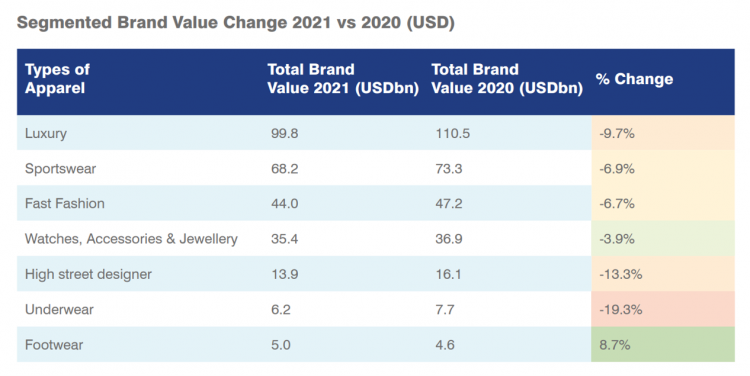
Our feet have become an important health focus during the pandemic, as the importance of exercise-as-medicine and mental health helper has looked to walking, running, and biking as good-for-us physical activities. The Mayo Clinic published an informative piece on Feet and the COVID-19 Pandemic, and the Cleveland Clinic posted advice on exercising during the pandemic earlier this month with the strong recommendation of walking. So it makes sense that the apparel category whose brand equity grew most between 2020 and 2021 was footwear, announced in the Brand Finance Apparel 50. Each year, Brand Finance evaluates the value of “brands,” as
Managing the Risks of Fast-Growing Digital Health
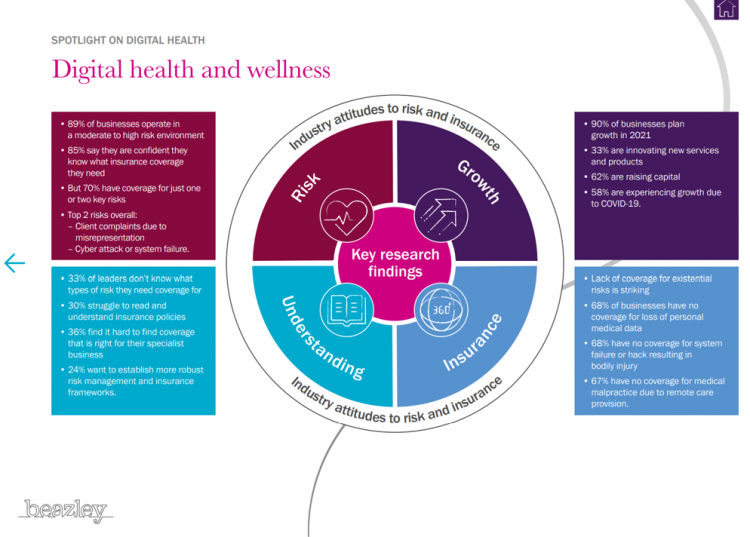
Investments in the digital health sector have fast-grown in the past decade, reaching $14bn in 2020 based on Rock Health’s latest read on the market. The COVID-19 pandemic accelerated the field across many industry segments. With such turbocharged growth on the supply side, Beazley, experts in specialty insurance, explores the risks of digital health and wellness in a new report, Digital health, telehealth and wellness: Attitudes to risk and insurance. With great potential for both innovation and reward comes great risks: Beazley points to the facts that, over two-thirds of digital health companies lack insurance coverage for medical malpractice for
How Grocery and Retail Companies Are Delivering Health and Healthcare
The Wall Street Journal featured the grocery chain Kroger in an article yesterday titled, COVID-19 Vaccinations, Tests Give Boost to Kroger’s Health Ambitions. “With 2,250 pharmacies and 220 clinics largely in the Midwest and the southern U.S., Kroger is the fourth-largest pharmacy operator by script count,” the Journal noted, adding details about Walmart, CVS Health, and Walgreens all fast-expanding their respective health care footprints. As more consumers view their homes as personal and safe health havens, there is no shortage of suppliers in the food, retail, and mobility sectors working fast to meet that demand for convenient and accessible services.
The Digital Transformation of Patients – Update from Rock Health and Stanford
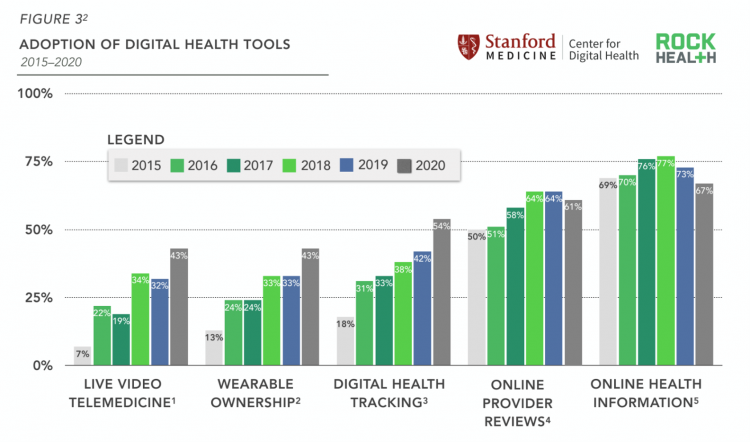
The coronavirus pandemic accelerated digital transformation of organizations, including health care providers. But another patient side-effect of COVID-19 has been the digital transformation of many patients, documented by data gathered by Rock Health and Stanford Center for Digital Health and analyzed in their latest report explaining how the public health crisis accelerated digital health “beyond its years,” noted in the title of the report. Rock Health and Stanford commissioned an online survey among 7,980 U.S. adults from early September to early October 2020 to gauge peoples’ interest in and utilization of digital health tools and telehealth. Rock Health has conducted a consumer digital
A New Health Literacy Pillar: Personal Data Stewardship
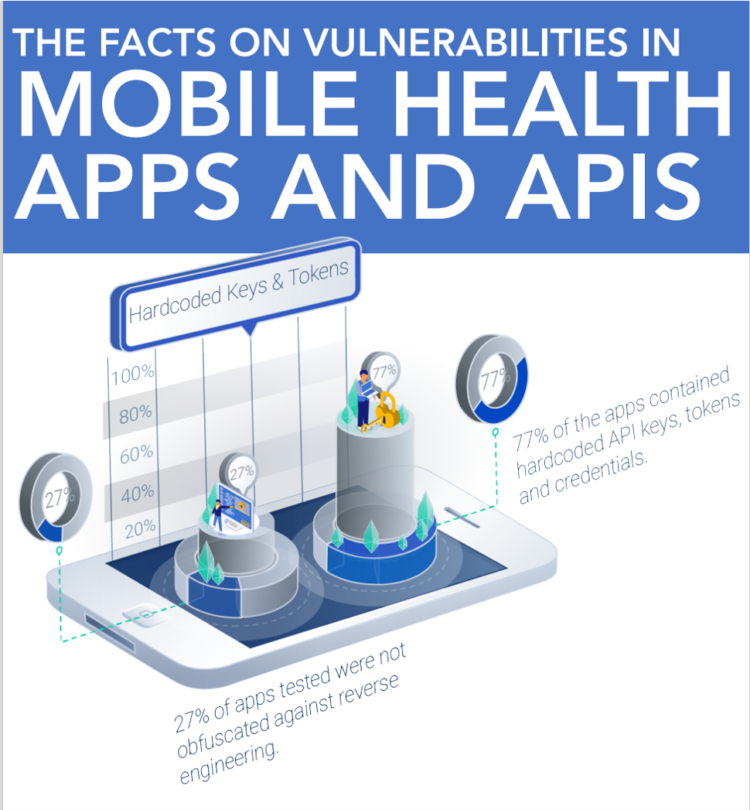
The growing use of APIs in health information technology innovation for patient care has been a boon to speeding development placed in the hands of providers and patients. Using APIs can help drive interoperability and make data “liquid” and useable. APIs can enable “Data liberación,” a concept proposed by Todd Park when he worked in the Obama administration. Without securing patients’ personal health data leveraging APIs, those intimate details are highly hackable explained in All That we Let In, a report from Knight Ink and Appr0ov. It is likely that behind growing health data hacks is the marginally greater financial
The Digital Transformation of Home for Health – Brainstorming with Karsten Russell-Wood of Philips
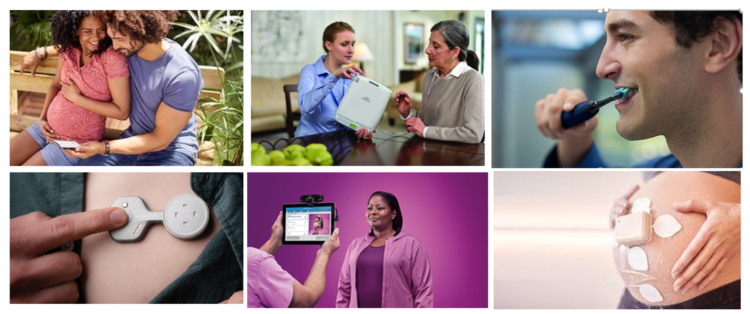
At the start of CES 2021, I had the opportunity to catch up with Karsten Russell-Wood, Portfolio Marketing Leader, Post Acute & Home, Connected Care at Philips. We brainstormed just as CES 2021 was going to “open,” virtually, for the consumer electronics conference’s first all-virtual meeting. Philips, a longtime major exhibitor at CES, created an entirely new online experience for the CES attendees – a sort of virtual gallery of different exhibits that are accessed from a single point in a “room” with various entry points. One of the company’s key messages for CES 2021 was health care delivered outside
Ensuring That Humanity Retains Control of Connected Things: A Message from Microsoft at CES 2021

Artificial intelligence (AI) has begun to play a role in health care for predictive analytics, personalization, and public health. On 26th January, I’ll moderate a tweetchat at 1 pm Eastern time, brainstorming the current and future state of and opportunities for AI in health care. I’ll be co-chatting with Microsoft’s AI leader, Tom Lawry (@TCLawry on Twitter). In advance of that discussion, I wanted to feature remarks shared by Brad Smith, Microsoft President, that I recently heard at CES 2021, the annual (this year, virtual) meeting convening the largest community of consumer electronics stakeholders globally Smith wove a crucial, impactful
Our Homes Are Health Delivery Platforms – The New Home Health/Care at CES 2021
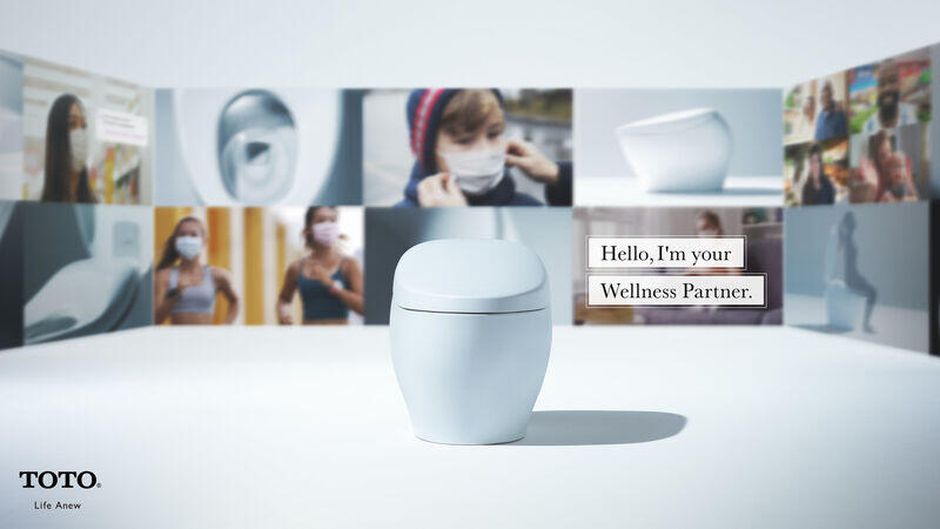
The coronavirus pandemic disrupted and re-shaped the annual CES across so many respects — the meeting of thousands making up the global consumer tech community “met” virtually, both keynote and education sessions were pre-recorded, and the lovely serendipity of learning and meeting new concepts and contacts wasn’t so straightforward. But for those of us working with and innovating solutions for health and health care, #CES2021 was baked with health goodness, in and beyond “digital health” categories. In my consumer-facing health care work, I’ve adopted the mantra that our homes are our health hubs. Reflecting on my many conversations during CES
Do-It-Yourself Innovation Comes to Health at Home – Telehealth, Fjord 2021 Trends and #CES2021
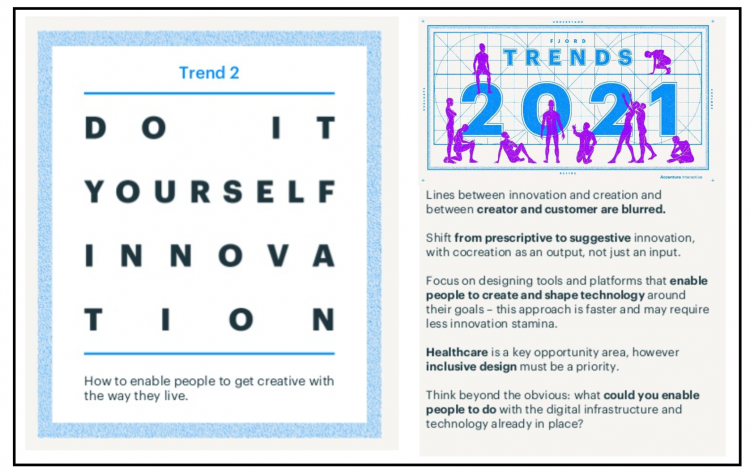
The pandemic has digitally transformed those people who could work from home, school at home, and undertake daily life-flows as health citizens tried to keep the coronavirus (and other people) at-a-distance. “Emerging hand-in-hand with place displacement, activity displacement is simply about the change in how people do things. Almost overnight, school lessons and doctors’ appointments were online. Yoga classes, concerts and weddings were streamed via Zoom,” Fjord Trends 2021 from Accenture Interactive observes. “Historically, people have often been quick to adopt new digital technology and slower to adapt to what it can help them achieve,” Fjord noted. But COVID-19 has
Health Is Everywhere at #CES2021 – CTA’s CES 2021 Tech Trends to Watch
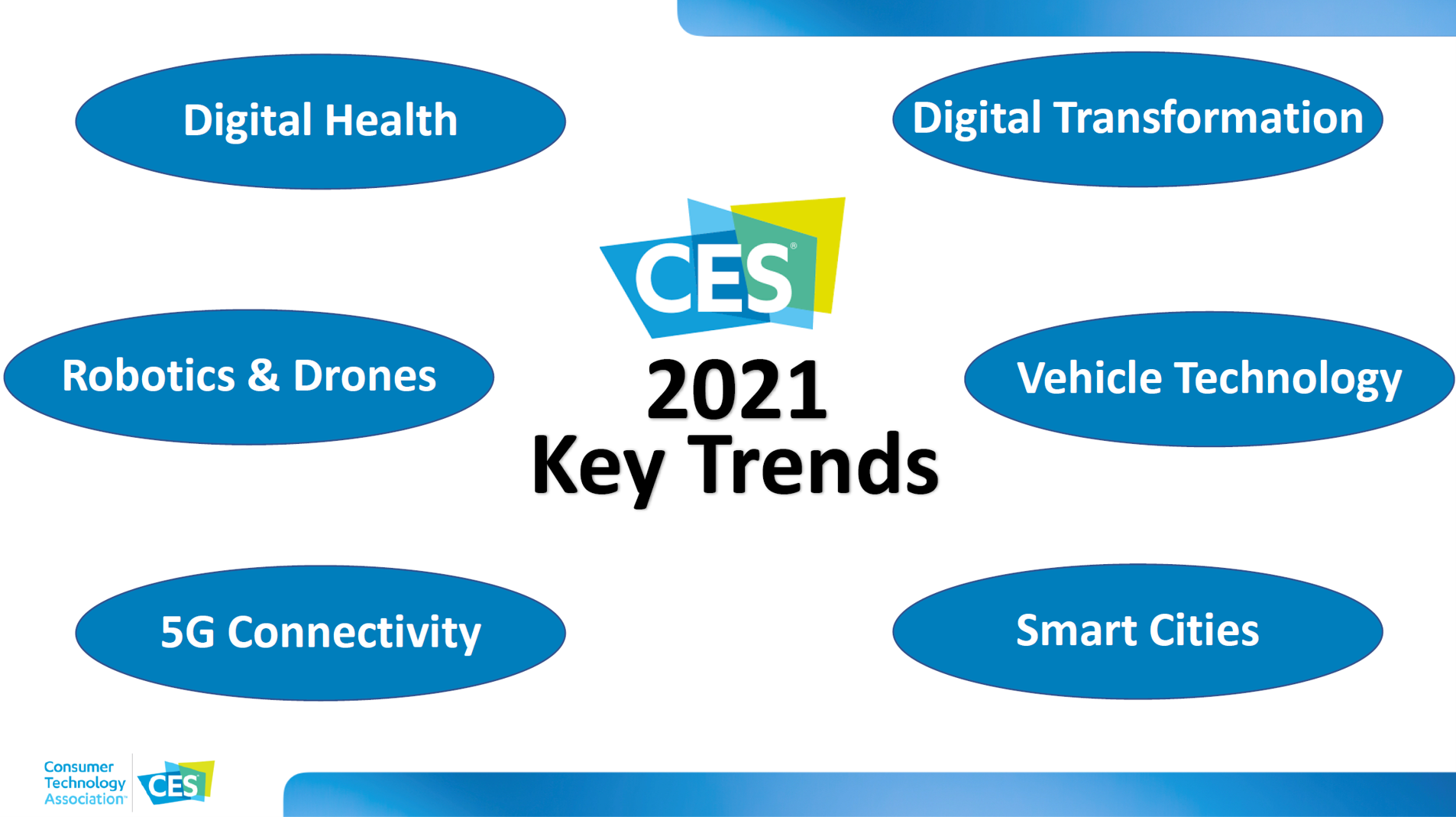
Spending on connected health monitoring devices in the U.S. will reach $845 million based on the forecast of the Consumer Technology Association, convening the annual 2021 CES this week in a virtual format. CTA unveiled the 2021 key trends we’ll see presented this week through the online exhibition hall and in educational sessions on the CES.Tech platform. Six major themes emerge at #CES2021: digital health, robotics and drones, 5G connectivity, vehicle technology, smart cities, and over all — digital transformation. All of these have applications in health and health care, especially accelerated in need by the COVID-19 pandemic which has
The Digital Consumer, Increasingly Connected to Health Devices; Parks Associates Kicking Off #CES2021
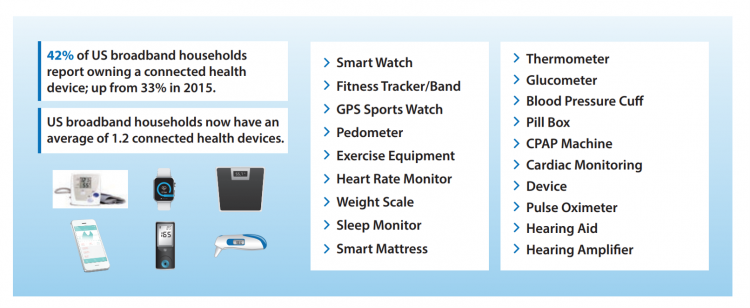
In 2020, the COVID-19 pandemic drove U.S. consumers to increase spending on electronics, notably laptops, smartphones, and desktop computers. But the coronavirus era also saw broadband households spending more on connecting health devices, with 42% of U.S. consumers owning digital health tech compared with 33% in 2015, according to research discussed in Supporting Today’s Connected Consumer from Parks Associates. developed for Sutherland, the digital transformation company. Consumer electronics purchase growth was, “likely driven by new social distancing guidelines brought on by COVID-19, which requires many individuals to work and attend school from home. Among the 26% of US broadband households
Preparing for a Long-COVID Lifestyle in 2021 – A Health-At-Home Focus for CES 2021
In the U.S., the latest read on supply-and-demand for COVID-19 vaccines illustrates a gap between what had been promised for the first phase of vaccine rollout versus the reality of supply chain challenges, cold storage, and 50-state and local fragmentation at the last mile for U.S. health citizens. An op-ed published in yesterday’s Washington Post by Dr. Robert Wachter of UCSF and Dr. Ashish Jha of Brown University found these two wise physicians feeling “punched in the face” with the state of coronavirus vaccination in America. As a result, they soberly, pragmatically recommended administering just the first jab of vaccine
The 2021 Health Populi TrendCast – Health Care, Self-Care, and the Rebirth of Love in Public Health
In numerology, the symbolic meaning behind the number “21” is death and re-birth. In tarot cards, 21 is a promise of fulfillment, triumph, and victory. How apropos that feels right now as we say goodbye and good riddance to 2020 and turn the page for a kinder, gentler, healthier New Year. It would be sinful to enter a New Year as challenging as 2021 promises to be without taking the many lessons of our 2020 pandemic life and pain into account. For health care in America, it is a time to re-build and re-imagine a better, more equitable landscape for
How COVID-19 Mobilized Participatory Health and the Importance of “Correct” Personal Health Records
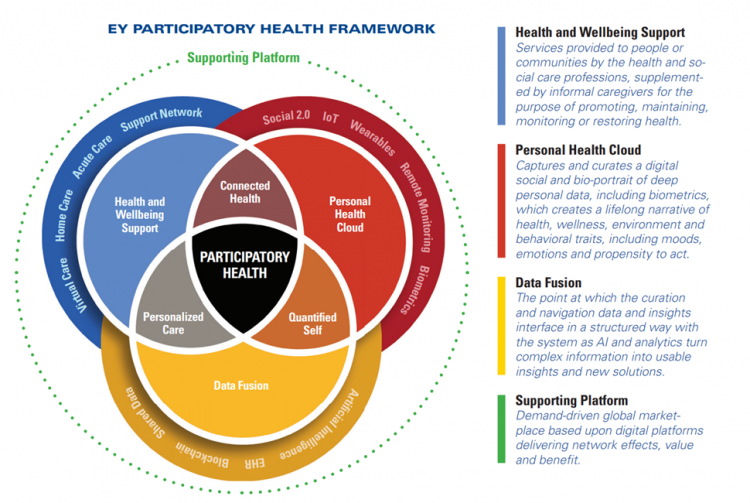
explained in a new report from EY co-sponsored by the American Hospital Association (AHA) and the AHA Center for Health Innovation. Digital Transformation – Anywhere Care envisions “health care with no address, or bringing care to the consumer or patient rather than expecting the patient to go to the hospital” as a “vital sign” of health care’s changes going into the new year of 2021. COVID-19 accelerated a movement in which I’ve been involved for over a decade, known as “participatory health.” In its early phase in the U.S., Dr. Tom Ferguson identified the emerging role of the internet in
The Comforts of Home Drive Demand for Healthcare There
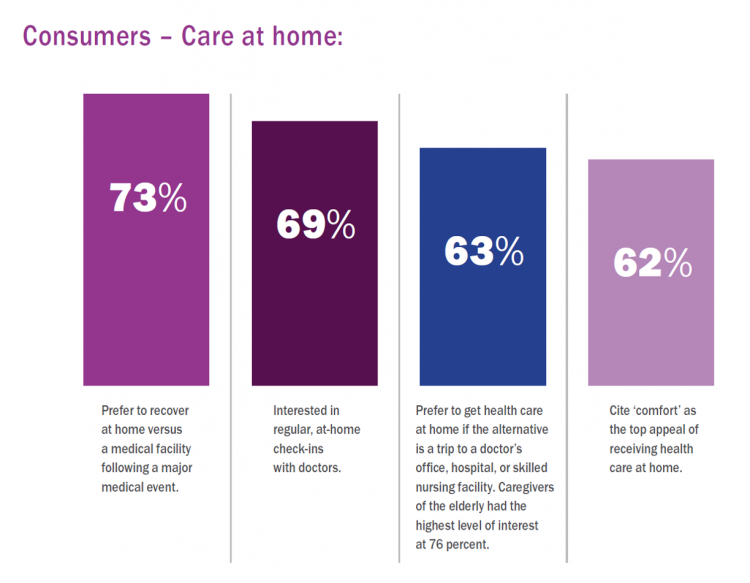
Two in three U.S. consumers skipped or delayed getting in-person medical care in 2020. One in 2 people had a telehealth visit int he last year. Most would use virtual care again. The coronavirus pandemic has mind-shifted how patients envision a health care visit. Today, most consumers prefer the idea of getting health care at home compared with going to a doctor’s office. Most Americans also like the idea of recovering at home instead of at a medical facility after a major medical event, according to the report, Health-at-Home 2020: The New Standard of Care Delivery from CareCentrix. COVID-19 has
The COVID-19 Era Has Grown Health Consumer Demand for Virtual Care
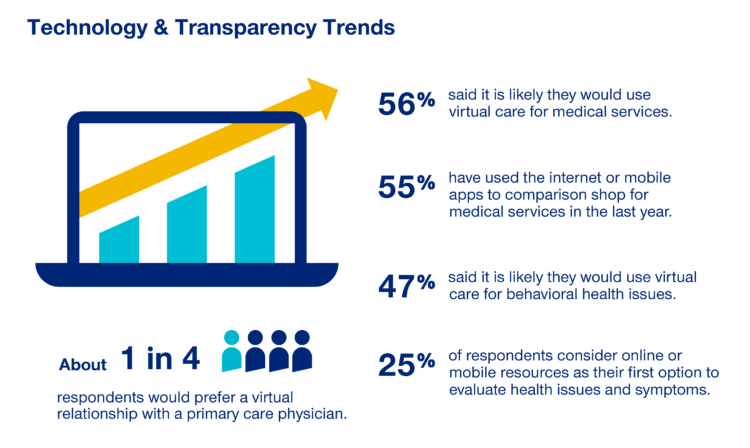
Over one-half of Americans would likely use virtual care for their healthcare services, and one in four people would actually prefer a virtual relationship with a primary care physician, according to the fifth annual 2020 Consumer Sentiment Survey from UnitedHealthcare. What a difference a pandemic can make in accelerating patients’ adoption of digital health tools. This survey was conducted in mid-September 2020, and so the results demonstrate U.S. health consumers’ growing digital health “muscles” in the form of demand and confidence in using virtual care. One in four people would consider online options as their first-line to evaluating personal health
COVID-19 Has Accelerated Consumers’ Interest in Healthy Home Tech
One in two U.S. adults say their concerns about personal health and wellness increased in the past year: in particular, stress and anxiety, and sleep and eating habits. Despite spending more time at home due to the COVID-19 pandemic, few people believe they live in a “healthy home.” The vast majority of consumers are concerned about some aspect of their home’s health, like air or water quality, according to Healthy Home Technologies , a report published in October 2020 by the Consumer Technology Association (CTA), convener of the annual CES. For the research, CES interviewed 1,500 U.S. adults in late
Our Home Is Our Health Hub: CTA and CHI Align to Address Digital and Health Equity
In the pandemic, I’ve been weaving together data to better understand how people as consumers are being re-shaped in daily life across their Maslow Hierarchies of Needs. One of those basic needs has been digital connectivity. People of color have faced many disparities in the wake of the pandemic: the virus itself, exacting greater rates of mortality and morbidity being the most obvious, dramatic inequity. Another has been digital inequity. Black people have had a more difficult time paying for phone and Internet connections during the COVID-19 crisis, we learned in a Morning Consult poll fielded in June 2020. In
Consumers Connecting for Health for Body, Mind & Spirit – A View from the Consumer Technology Association
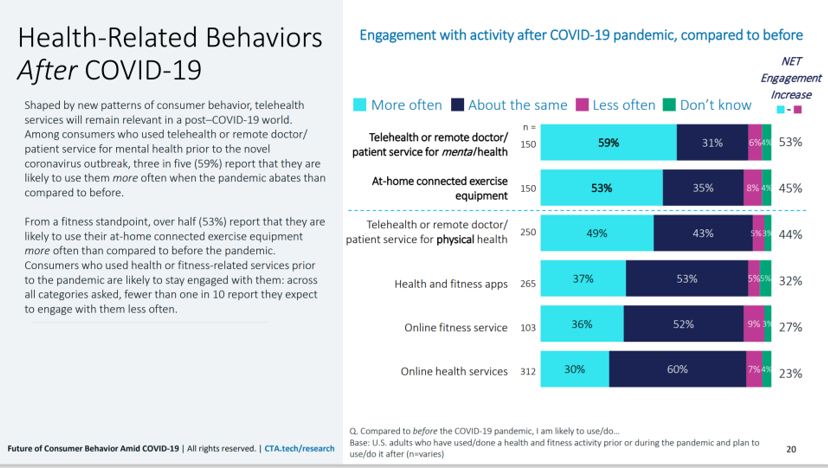
In January 2020, before we knew how to spell “coronavirus,” millions of consumers were already “Amazon-Primed” for everyday life-flows and consumer behaviors. The pandemic has accelerated consumer trends already in motion early this year when the Consumer Technology Association (CTA) convened the annual CES 2020 in Las Vegas. I covered the event here in Health Populi, as I have for most of the past decade, highlighting the growth of digital health and, this year, the expanding Internet of Healthy Things called-out by Dr. Joseph Kvedar in 2015. What a difference a public health crisis makes, accelerating digital health beyond fitness
Health Happens at Home: Lessons from the Parks Connected Health Summit
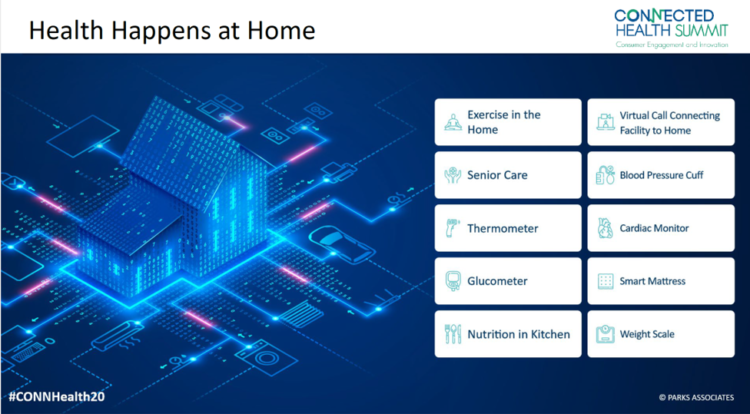
Home is where the health is, we know in the wake of the COVID-19 pandemic. To be sure, many of us who have been preaching that our ZIP codes are more impactful to our health than our genetic codes have known the evidence backing the social and behavioral determinants of health for a long time. This week, Parks Associates convened the Connected Health Summit, focused on the theme of consumer engagement and innovation. I attended all three days’ worth of sessions in this well-planned and -executed virtual meeting. In this post, I’ll weave my favorite themes of consumer health engagement
Pharma’s Future Relevance Depends on Empathy, Messaging, Partnering, and Supporting Patients and Providers
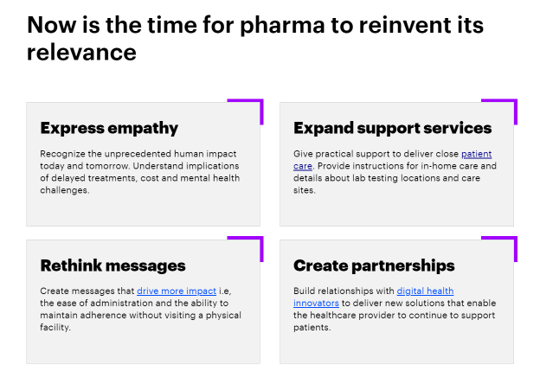
COVID-19 is re-shaping all industries, especially health care. And the pharma industry is challenged along with other health care sectors. In fact, the coronavirus crisis impacts on pharma are especially accelerated based on how the pandemic has affected health care providers, as seen through research from Accenture published in Reinventing Relevance: New Models for Pharma Engagement with Healthcare Providers in a COVID-19 World. For the study, Accenture surveyed 720 health care providers in general practice, oncology, immunology, and cardiology working in China, France, Japan, the United Kingdom, and the U.S., in May and June 2020. Top-line, Accenture points to four
News from the Consumer Technology Association and Withings Further Demonstrates Private Sector’s Role in the Pandemic and Public Health
This week, announcements from the Consumer Technology Association (CTA) and Withings further bolster the case for the private sector bolstering public health in this pandemic…and future ones to come beyond the Age of the Coronavirus. Since the pandemic emerged, CTA has been reaching out to members and stakeholders to be a useful resource for the consumer electronics industry and its customers. Digital health resources have been an especially useful touch point for CTA’s constituents (including me, as a member who is active with the Association). On 27th July, CTA announced the Association’s launch of the Public Health Tech Initiative. In
More Americans Pivot to Distancing and Mask-Wearing in the Hot Summer of 2020
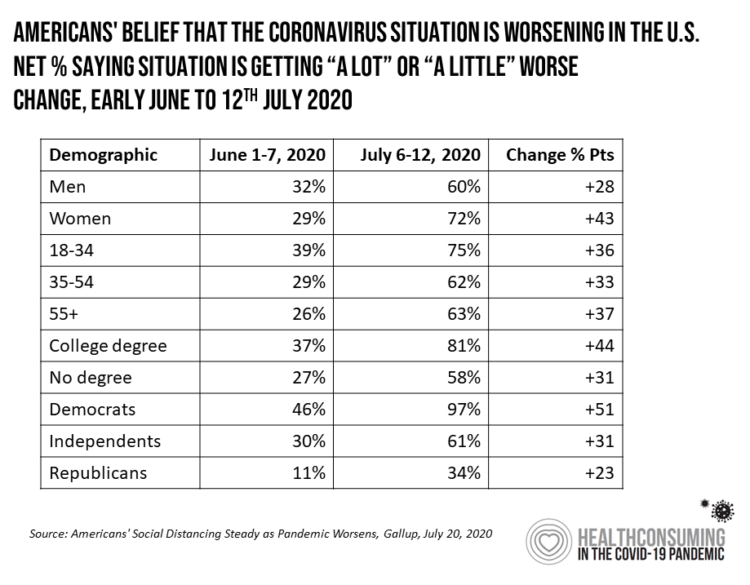
With growing coronavirus case hotspots in southern and western states, more Americans perceive the pandemic is worsening this summer, shown by a Gallup poll published 20 July 2020. Gallup titles the analysis, Americans’ social distancing steady as pandemic worsens. The first table organizes Gallup’s data by demographics, illustrating a significant gap between how women perceive the exacerbating pandemic compared with men. In early June, roughly one-third of both men and women saw COVID-19 was getting “worse”; five weeks later, in the second week of July, men and women’s perceptions were 12 points apart with more women concerned about the situation
From Dr. Fauci to Peloton, Healthcare and Wellness Baked Into Ad Age’s Top 20 Brands for 2020
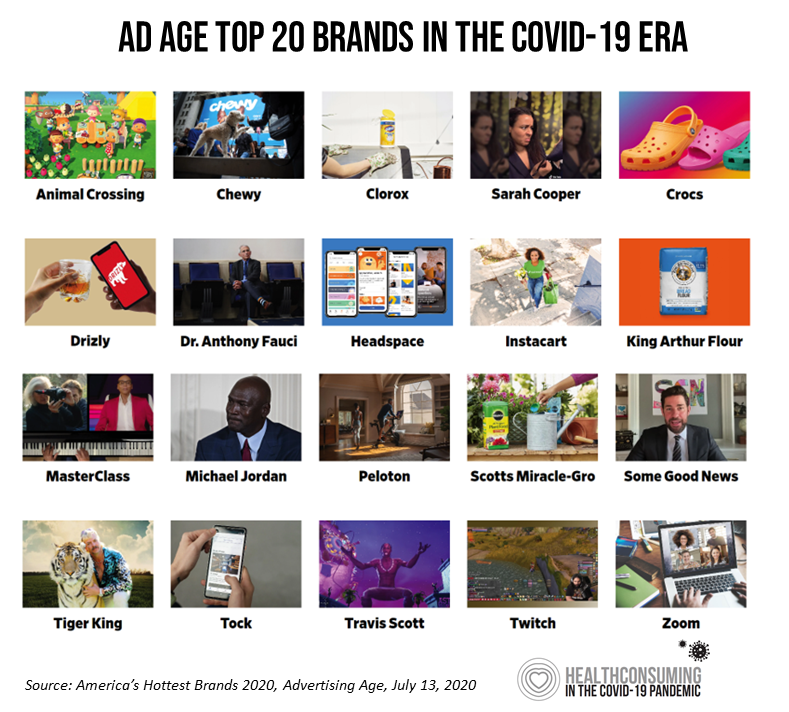
Advertising Age announced their list of the top 20 brands in 2020 this week. Ad Age’s lens on these was heavily tinted by consumers’ lives coping with the coronavirus pandemic: “The coronavirus has brought new attention to typically boring, decades-old consumer staples, while hastening the rise of digital newcomers that were only just beginning to gain traction pre-pandemic,” Ad Age explains in the introduction to the list of the selected brands. As the editors of the MadMen-and-Women’s most influential industry publication, they explain, “Ad Age chronicles 20 brands that are having a moment.” This moment to them as well as
How Philips Has Pivoted In the COVID-19 Pandemic: Connected Care From Hospital to Home

What a difference 90 days makes. I was scheduled to meet with Roy Jakobs, Chief Business Leader of Connected Care at Philips, at HIMSS in Orlando on 9th March 2020. I’d interviewed Roy at CES 2020 in Las Vegas in January to catch up on consumer health developments, and the March meeting was going to cover Philips’ innovations on the hospital and acute care side of the business, as well as to learn more about Roy’s new role as head of Connected Care. HIMSS cancelled the conference just days before it was to commence….due to the great disruption of COVID-19.
Telehealth Is Just Healthcare Now – One Post-COVID Certainty, Three Reports
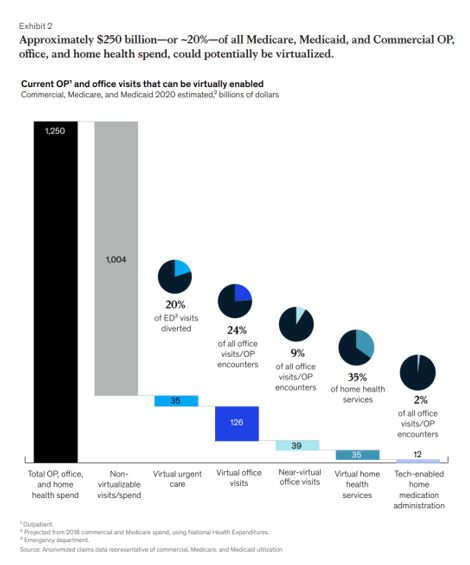
As we wrestle with just “what” health care will look like “after COVID,” there’s one certainty that we can embrace in our health planning and forecasting efforts: that’s the persistence of telehealth and virtual care into health care work- and life-flows, for clinicians and consumers alike and aligned. There’s been a flurry of research into this question since the hockey-stick growth of telemedicine visits were evident in March 2020, just days after the World Health Organization uttered the “P-word:” pandemic. Three recent reports (among many others!) bolster the business and clinical cases for telehealth in America in terms of: A
The Coronavirus Impact on American Life, Part 2 – Our Mental Health
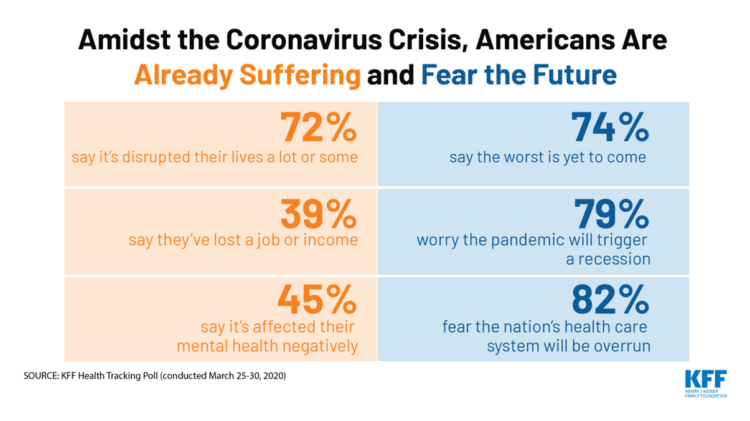
As the coronavirus pandemic’s curve of infected Americans ratchets up in the U.S., people are seeking comfort from listening to Dolly Parton’s bedtime stories, crushing on Dr. Anthony Fauci’s science-wrapped-with-empathy, and streaming the Tiger King on Netflix. These and other self-care tactics are taking hold in the U.S. as most people are “social distancing” or sheltering in place, based on numbers from the early April 2020 Kaiser Family Foundation health tracking poll on the impact of the coronavirus on American life. While the collective practice of #StayHome to #FlattenTheCurve is the best-practice advice from the science leaders at CDC, the NIAID
Steps Count: More Steps Are Self-Care Goodness in the COVID-19 Lifestyle
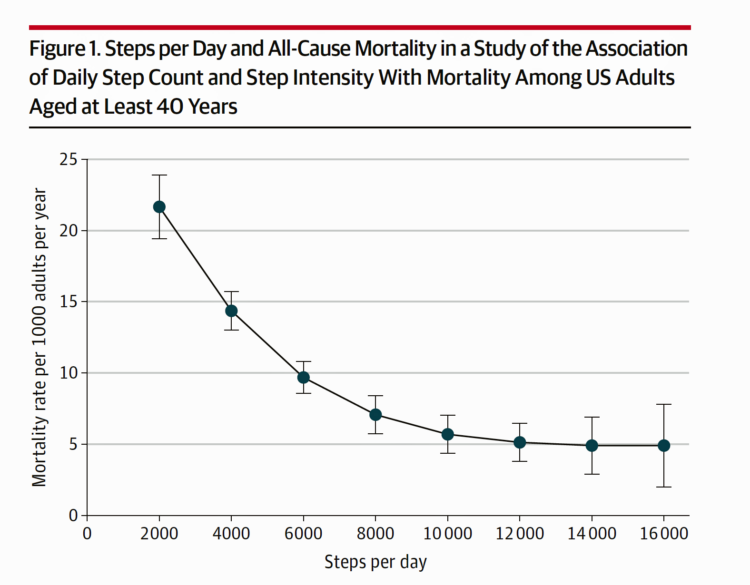
There’s evidence in this week’s JAMA of a dose-response relationship between peoples’ steps and lower mortality. In other words: more steps done daily is statistically significantly associated with death from all causes. Furthermore, step intensity didn’t make a difference in mortality rates, shown in the JAMA-published study, Association of Daily Step Count and Step Intensity With Mortality Among US Adults. The publication of this study is incredibly well-timed given the fact that hundreds of millions of people around the world are in lockdown, #StayHome lifestyles this week, and will be for many weeks to come. Going outside for fresh air
Consumers’ Embrace of Digital Health Tech Stalls, and Privacy Concerns Prevail – Accenture’s 2020 Research
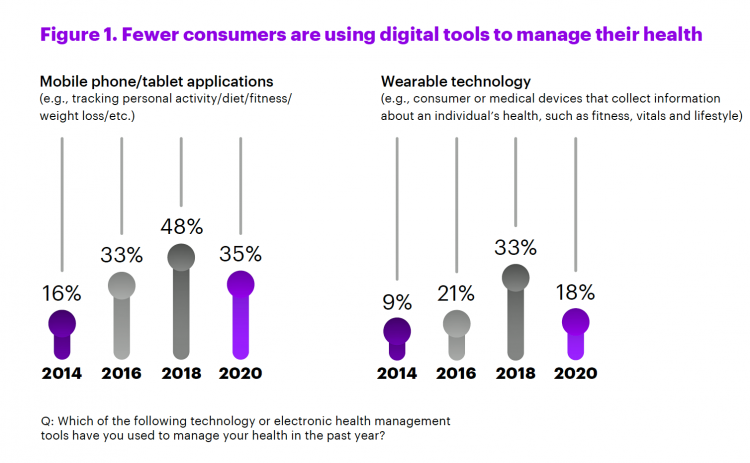
Millions of dollars and developers’ time have been invested in conceiving and making digital health tools. Yet with that bullish supply side of digital health, there was a marked decline in peoples’ use of them in the past two years, found by Accenture in their latest health consumer survey, Digital is Transforming Health, So Why is Consumer Adoption Stalling? Use of mobile apps to track personal health activity fell from nearly 1 in 2 consumers to 1 in 3. Use of wearable tech nearly halved, from 33% to 18%, between 2018 and 2020. Some, but not necessarily a majority, of
Why CTA’s Shepherding AI Is Important for Re-Imagining Healthcare

The Consumer Technology Association (CTA), collaborating with industry stakeholders, has ushered in a standard for artificial intelligence in health care. CTA is the membership organization for companies that innovate, manufacture and market consumer-facing tech like big-screen TVs, slick new autos, video games and voice assistants. So what’s an organization like CTA doing with AI and health care? Let me connect the dots. Check out this graphic taken from my book, HealthConsuming: From Health Consumer to Health Citizen. This shows the ten categories of tech I revisit each year at CES, CTA’s annual mega-conference of new-new things in consumer electronics
Will Trade Data for (Cheaper) Health Care – USC’s View of the Future
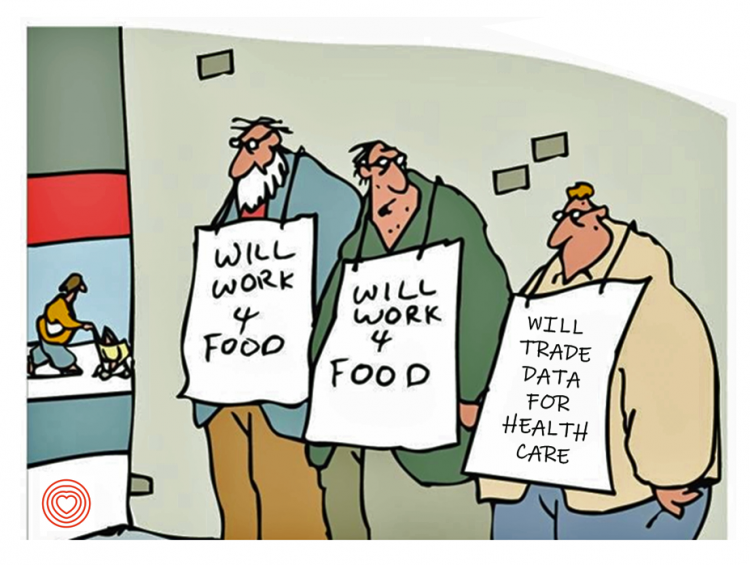
Patients are now front-line payors in the U.S. health care system. As such, American health consumers are wrestling with sticker shock from surgical procedures, surprise medical bills weeks after leaving the hospital, and the cost of prescription drugs — whether six-figure oncology therapies or essential medicines like insulin and EpiPens. To manage personal health finances, patients-as-payors are increasingly willing to face trade-offs and change personal behaviors to lower health care costs, based on research in The Future of Health Care Study from USC’s Center for the Digital Future. The Center analyzed the perspectives of 1,000 U.S. adults in August 2019 regarding
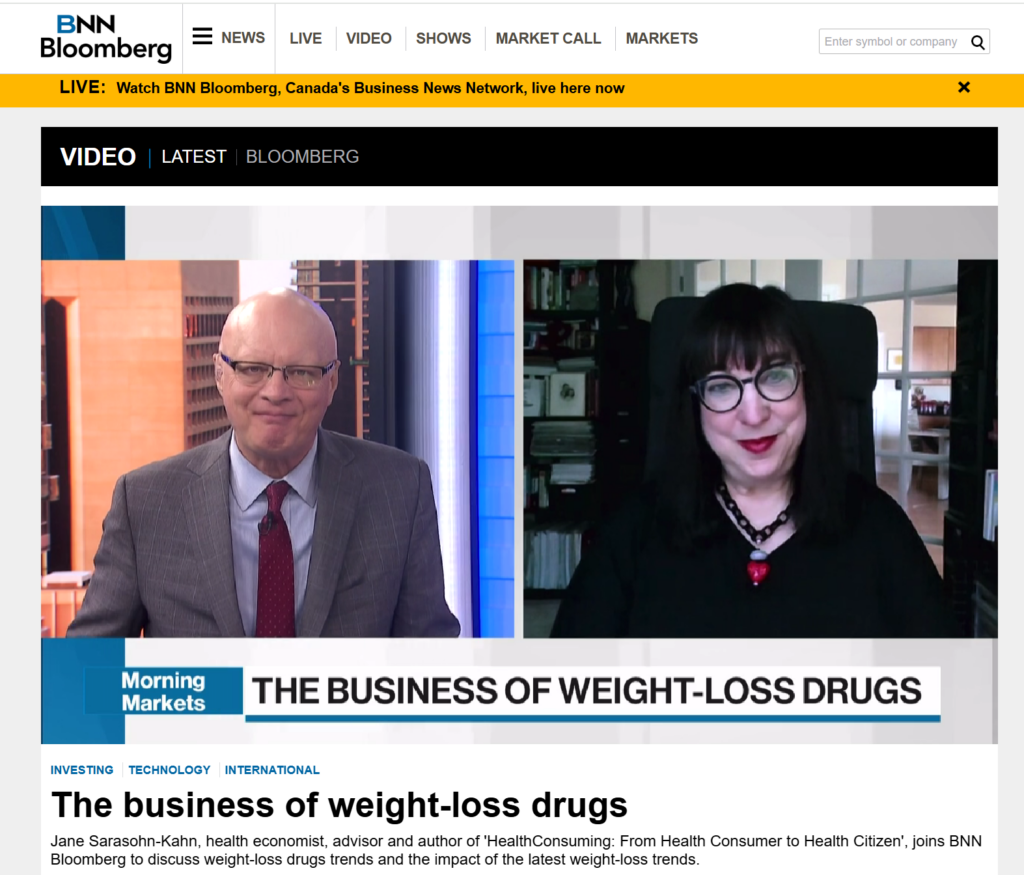 Interviewed live on BNN Bloomberg (Canada) on the market for GLP-1 drugs for weight loss and their impact on both the health care system and consumer goods and services -- notably, food, nutrition, retail health, gyms, and other sectors.
 Thank you, Feedspot, for citing the Health Populi blog as one of the best in the field this year! Very grateful to be among the company of some of my own go-to's such as Everyday Health, NPR Health Shots, Health Affairs, and Kaiser Health News, among others...
 As you may know, I have been splitting work- and living-time between the U.S. and the E.U., most recently living in and working from Brussels. In the month of September 2024, I'll be splitting time between London and other parts of the U.K., and Italy where I'll be working with clients on consumer health, self-care and home care focused on food-as-medicine, digital health, business and scenario planning for the future...