


The New-New Health Fair – Care Goes Shopping
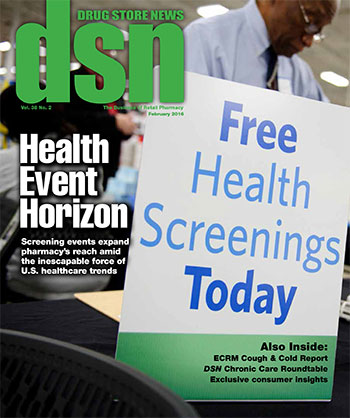
As consumers’ growing financial skin in the health care game compels them to seek care in lower-cost settings, the pharmacy business recognizes the opportunity to provide healthcare services beyond the core business of filling prescriptions. This month, Drug Store News (DSN) published a special section called which profiles several pharmacy companies’ expanding reach into retail health – in particular, re-defining the concept of the “health fair.” A health fair is “an educational and interactive event designed for outreach to provide basic prevention and medical screening to people in the community,” according to the latest Wikipedia definition. But the health fairs described
Health Consumers Look For Cost and Convenience
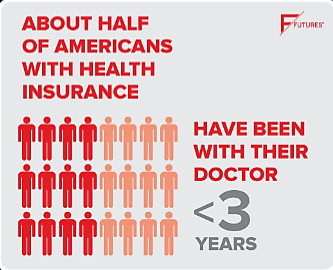
In a growing on-demand society, coupled with a burden of more out-of-pocket health care costs, U.S.health consumers tend to vote with their pocketbooks for healthcare based on cost and convenience, at least when it comes to prescription drug demand, according to the Finn Futures Health Poll conducted by Finn Partners. The survey was conducted in November 2015 among 1,000 U.S. online adults. 51% of consumers have been with their current health plans and primary care physicians for three years or less, which Finn Partners sees as a sign that brand loyalty isn’t a top motivation for health consumers signing on
Improving the Patient Experience in Legacy Health Systems – My Start-Up Health Interview
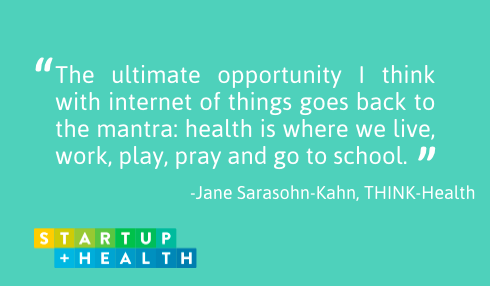
The so-called legacy healthcare system are the incumbents in American health care — hospitals, physician practices, pharma, health plans, and other organizations that have long-served and been reimbursed by traditional volume-based payment. Patients, now morphing in to health consumers, look to these stakeholders to provide new levels of service, accessibility, convenience, transparency and value — the likes of which people find in their daily life in other market sectors. Those consumer demands are pressuring the health system as we know it in many new ways, which I discussed with Unity Stoakes, Co-Founder of Startup Health, at the Health 2.0 Conference in
Building Health Bridges — Health:Further Goes Beyond the Disruptive

Most people in the U.S. acknowledge that their richest country in the world has a broken healthcare system, especially when it comes to costs. A handful of think tanks and lawmakers offer fixes for American healthcare. Now there’s a new problem-solver in healthcare town, Health:Further, and they aim to move U.S. health forward by building bridges between stakeholders in the U.S. health ecosystem. My longtime colleague and friend, Andre Blackman of Pulse+Signal, has joined the organization as “Producer.” Here, we’ll learn more from my (JSK) interview with Andre (AB) about the organization, their mission, and plans to go beyond “disruption”
Welcome to the Era of Personal Health IT – a #HIMSS16 Preview
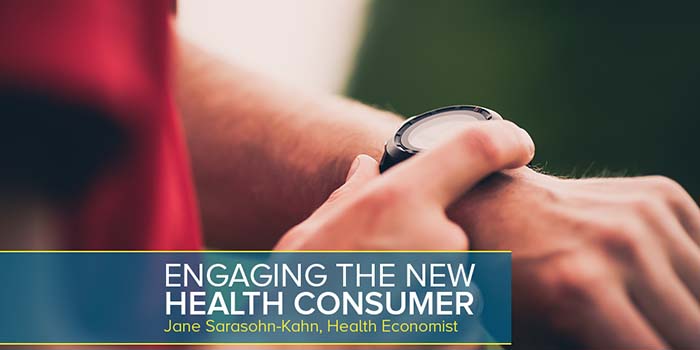
People – patients, caregivers, health consumers all – have begun to use the digital tools they use in daily life for booking taxis, managing money, seeking information — for their health. This is the growing adoption of Personal Health IT (PHIT), and it’s a growing aspect of the annual HIMSS Conference that the planet’s health IT folk will attend from 29th February until 4th March in Las Vegas. I talk about the phenomenon of PHIT and #HIMSS16 in The State of Health IT to Engage the New Health Consumer, a summary of the driving forces of the trend and opportunities
Getting Beyond Consumer Self-Rationing in High-Deductible Health Plans
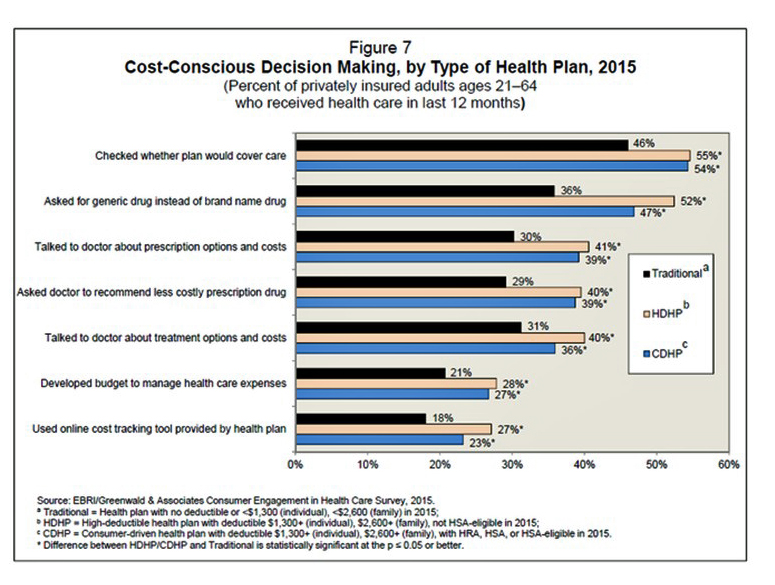
The rising cost of health care for Americans continues to contribute to self-rationing care in the forms of not filling prescriptions, postponing necessary services and tests, and avoiding needed visits to doctors. Furthermore, health care costs are threatening the livelihood of most American families, according to the Pioneer Institute. “What Will U.S. Households Pay for Health Care in the Future?” asks the title of a study by the Institute, noting that health care costs for an American family of average income could increase annually to $13,213 by 2025 — and as high as $18,251. Pioneer calculates that this forecasted spend will
Let’s Make a Deal: Patients Weigh Privacy Paybacks
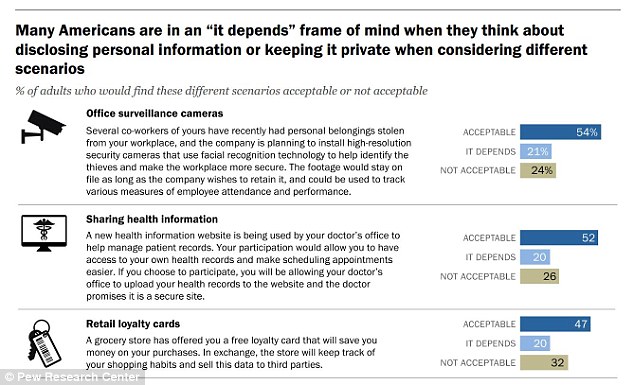
“It depends” is the hedge-phrase that characterizes how Americans see disclosing personal information versus keeping private information private, according to the consumer survey report, Privacy and Information Sharing, published by the Pew Research Center (PRC) in January 2016. U.S. adults see a privacy trade-off, living in the convenience-context of 21st century digital economy in exchange for some form of value. The “it depends” is a factor of what kind of data is geing collected, especially by third parties, how long that data area retained, for what use — vis-à-vis what a person is trading in return which could be a hard dollar
In 2016 Reaching For The Triple Aim Will Drive Health IT Spending
Adoption of telehealth, remote health monitoring, patient engagement platforms, mobile and digital health applications, and the emergence of the Internet of Things in health care will all be bolstered in 2016 based on health care providers’ having to do more with less (money, labor, resources). The value-based healthcare world — the migration of payment “from volume to value” — requires greater investment in information and communications technology that moves care to lower-cost sites, with lower-priced labor (as appropriate), and shifting greater clinical self-care and financial skin-in-the-game to patients. My annual health IT forecast was published yesterday in iHealthBeat, 2016: Technology
The U.S. Will Cover the Bulk of Medicines Spending in 2020
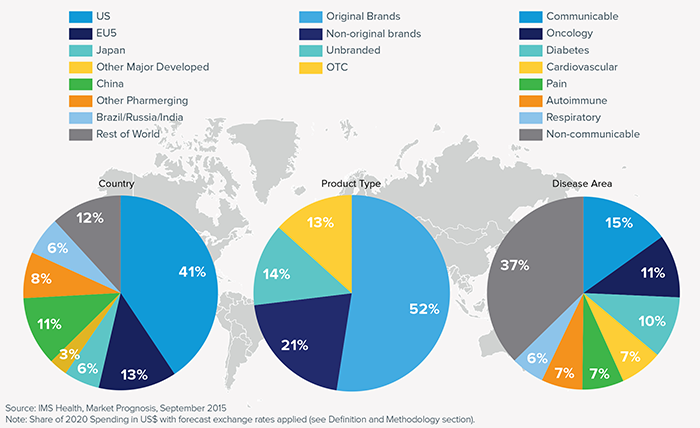
U.S. spending on medicines will approach $590 billion in 2020, increasing 34% over 2015, IMS Institute for Healthcare Informatics projects in its forecast, Global Medicines Use in 2020. Growth in spending will be attributable to innovation (new products), price increases and some patent losses of exclusivity (e.g., branded drugs going generic). The U.S. will cover the bulk of drugs spending in 2020 at 41% of the world medicines market, shown in the first pie in the first chart. U.S. medicines spending dwarfs any other country or region in the world, including China which is expected to account for 11% of
The Average Price of a New Specialty Drug Exceeds Median U.S. Annual Income; and a Tweet from Pam Anderson
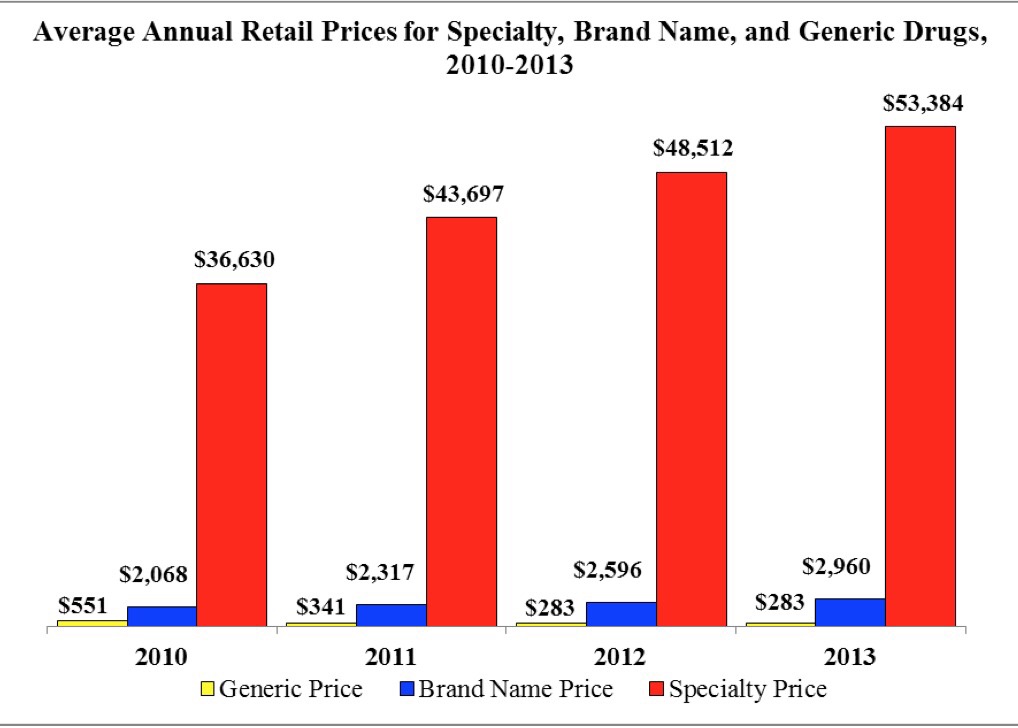
The average price for a specialty drug was $53,384 in 2013; the average household income was $52,250. Thus, even allocating 100% of a family’s annual earnings to pay for a drug wouldn’t stretch far enough to cover it in 2013, nor would it do so today in 2015. This sober health economic artifact comes from the latest Rx Price Watch Report from the AARP, detailing cost trends for prescription drugs across all segments — generics, brands and specialty drugs. Contrast, as well, the $53K for the average specialty drug with the median 2013 Social Security benefit payout of $15,526 and median Medicare
American health citizens hungry for cost controls
Most Americans support price controls on drug and medical device manufacturers, hospitals, and payments to doctors, along with allowing Medicare to negotiate drug prices. U.S. health citizens, now consumers, have been experiencing sticker-shock when it comes to prices on medical bills upon hospital discharge, leaving the doctor’s office, filling a prescription at a pharmacy or receiving a specialty drug recommended for a serious medical condition. The HealthDay/Harris Poll of 5 November 2015 quantifies their observation that Americans Want Bold Steps to Keep Health Care Costs in Check. The topline of the Poll shows that: 73 percent support price controls on
Retail Health Landscape Expanding Through Clinic Growth, Accenture Forecasts
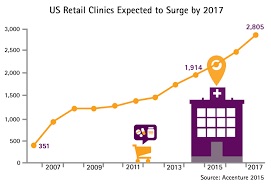
The Old School retail clinic is going beyond checking your child’s ear infection and sore throat, giving immunizations and filling out back-to-school forms just-in-time over LaborDay weekend. The new-new retail clinic is supporting patients’ chronic disease management, partnering with academic medical centers, and bolstering medication management. Accenture’s bullish forecast is titled “US Retail Health Clinics Expected to Surge by 2017,” making the case that these brick-and-mortar providers are shifting from a relatively limited retail scope to a broader and deeper clinical focus. The so-called surge in the number of retail clinics is projected to be nearly 50% growth between 2014 and 2017,
The Tricky Journey From Volume To Value In Health Care – Prelude To Health 2.0
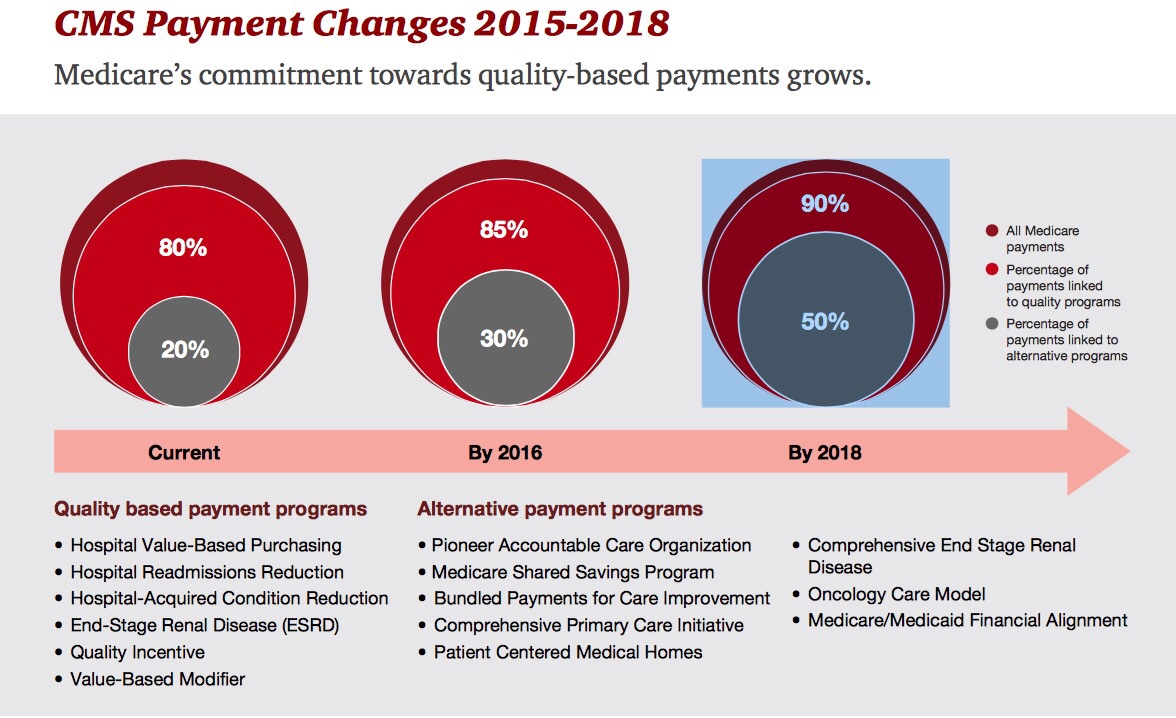
By 2018, 90% of health care delivered to people enrolled in Medicare will be paid-for on the basis of quality, not on the amount of services delivered (that is, volume). But as providers must up their game in that new value-oriented health payment world, they are bound up in work flows and organizational structures built for fee-for-service reimbursement. This changing future is discussed in Healthcare’s alternative payment landscape, PwC’s Healthcare Research Institute report on the volume-to-value shift. PwC notes that health care providers’ ability to adapt to changing payment regimes vary and fall into four categories: traditional, lagging, vanguard and
Wellness Is In Target’s Bullseye
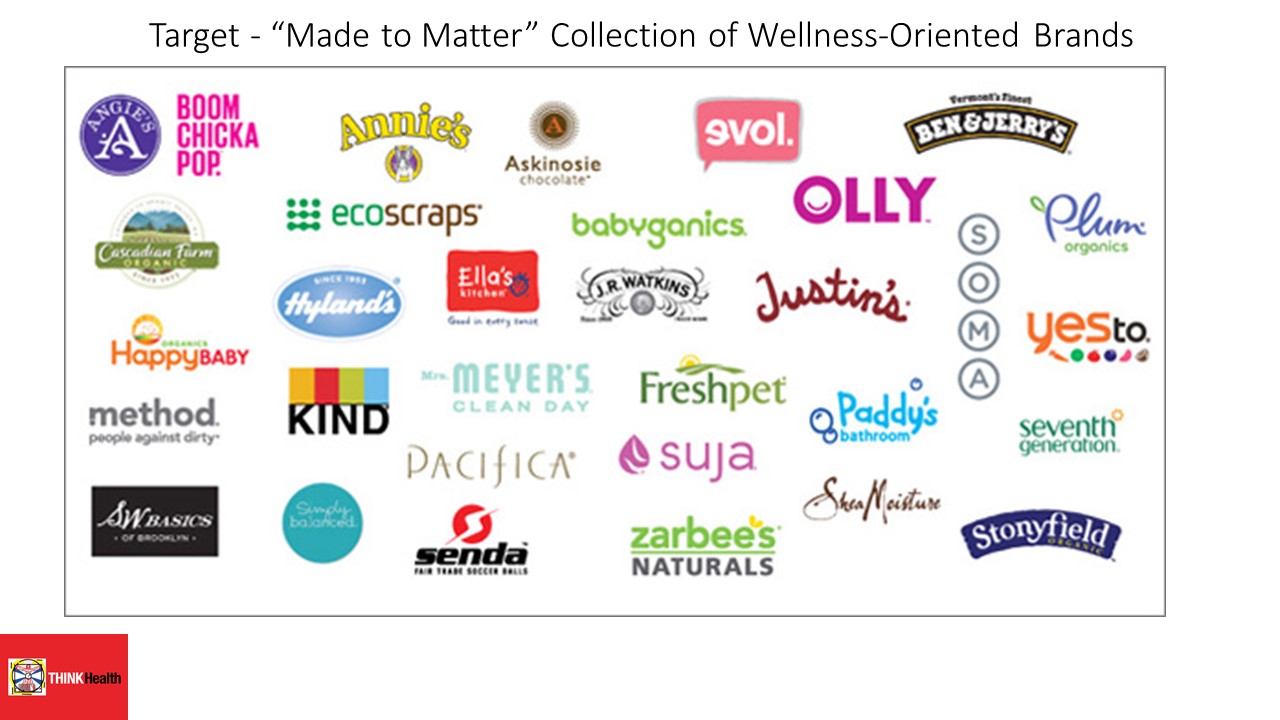
Health is where we live, work, play, pray, learn, and increasingly, shop. The new Retail Health goes well beyond the pure-play pharmacy. Part of Target’s re-imagined market positioning is in this expanding sweet-spot as healthcare morphs from institutional providers like hospitals and doctors’ offices to the community. Don’t think pharmacy’s not important: it will remain a core business and revenue center in retail health. But that business is fast-changing, as the role of pharmacy benefits management companies change, more (expensive) specialty drug benefits come out of pipeline and into the market, and health insurance continues to shift financial risk to
Health consumers’ cost increases far outpace wage growth
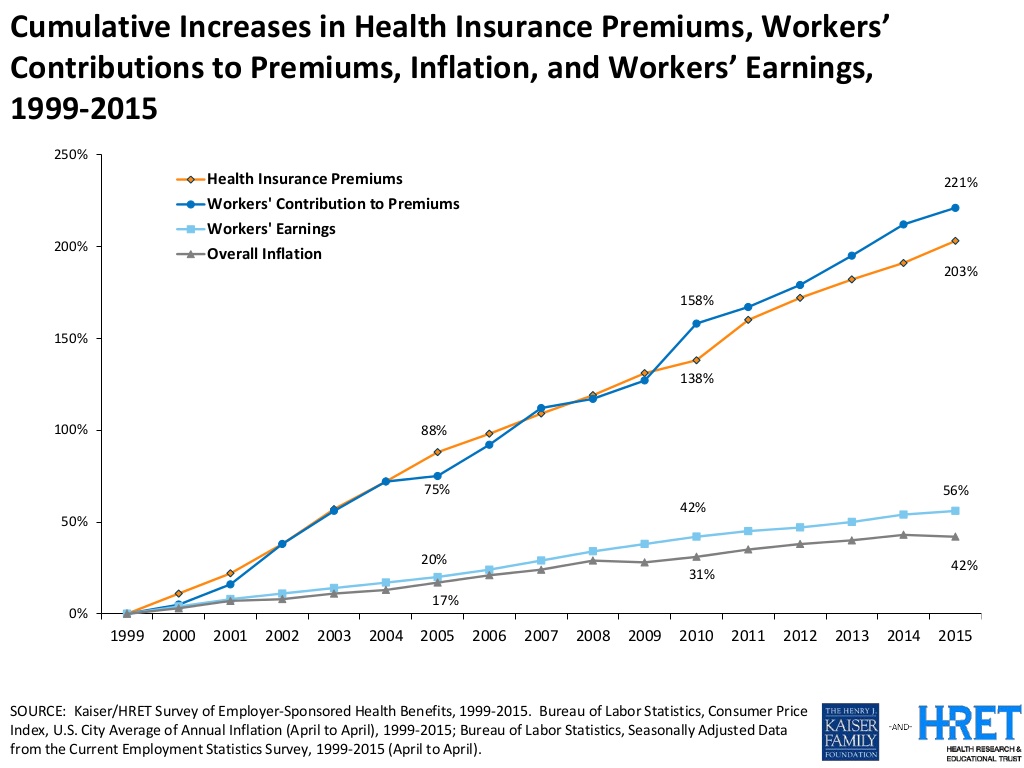
American workers are working to pay for health care costs, having traded off wage increases for health premiums, out-of-pocket costs and growing high deductibles. Welcome to the 2015 Employer Health Benefits survey conducted annually by the Kaiser Family Foundation (KFF) and Health Research & Educational Trust (HRET). Premiums are growing seven times faster than wages. The report calculates that high-deductibles for health insurance have grown 67% from 2010 to 2015. In the same period, wages grew a paltry 10%, while the Consumer Price Index rose 9%. The first chart illustrates that growing gap between relatively flat wages and spirally health
Wegmans tops pharmacy satisfaction – and it’s not even a pharmacy
Think of the word “pharmacy,” and what names come to your mind? CVS Health, Walgreens, Rite-Aid, perhaps. But it’s Wegmans who’s #1 across all pharmacy brands and types, according to the 2015 J.D. Power Pharmacy Study. The big improvement in pharmacy satisfaction in 2015 has been among supermarket drug stores, up to an index score of 851 (of 1,000), the highest consumer score. The satisfaction score for chain pharmacies increased a small 2 points, whereas satisfaction for two other channels for pharmacies — mass merchandisers and mail order — both fell from 2014. It may come as no surprise to Health
Yelp For Health Grows With ProPublica
In addition to checking out local restaurants, auto repair shops, and dry cleaners, you can check out health care providers on a new-and-improving consumer review portal on Yelp. While Yelp has been serving up consumer comments on doctors, hospitals, clinical labs, nursing homes and dentists for several years, the review site is partnering with ProPublica, the journalism portal, to complement the data collected on health in local communities. Yelp’s CEO, Jeremy Stoppelman, made the announcement in the company blog on August 5 2015. Yelp has amassed over 1.3 million health reviews, and ProPublica will have access to those as part
IoT in Healthcare, Take 3 – Accenture & the Internet of Me in Health
We’re entering the era of personalized healthcare promising convenient and meaningful health experiences, according to Accenture’s 2015 Healthcare IT Vision articulated in their report, Top 5 eHealth Trends. This post is third in three published here on Health Populi this week, exploring the growing role of the Internet of Things in health/care. On 8th July, we dug into McKinsey Global Institute’s research on IoT’s influence over nine industries, including human health; and on the 9th, we reviewed Goldman Sachs’ report on digital health’s potential impact on the U.S. healthcare system. Accenture’s five eHealth trends include: The Internet of Me; the Outcome Economy, with
People-powered health/care – celebrating Patient Independence & Empowerment
In the growing shared economy, one centerpiece is people-powered health – co-creating, shared decision-making, and a greater appreciation for the impact of social on health. As we approach the mid-point of 2015, there are several signposts pointing to people-powered health/care. FasterCures launched the Science of Patient Input Project, with the objective of getting the patient’s voice into clinical discovery and decision-making. This video describes the intent of the program and its potential for people-powered health and user/patient-centered drug design, beyond the pure clinical efficacy of therapies. Another example of people-powered health comes from The Wall Street Journal dated 29 June 2015, which
What the SCOTUS ACA ruling means for health consumers
Now that the Affordable Care Act is settled, in the eyes of the U.S. Supreme Court, what does the 6-3 ruling mean for health/care consumers living in America? I wrote the response to that question on the site of Intuit’s American Tax & Financial Center here. The top-line is that people living in Michigan, where the Federal government is running the health insurance exchange for Michiganders, and people living in New York, where the state is running the exchange, are considered equal under the ACA’s health insurance premium subsidies: health plan shoppers, whether resident New Yorkers or Michiganders, can qualify for
Telehealth goes retail
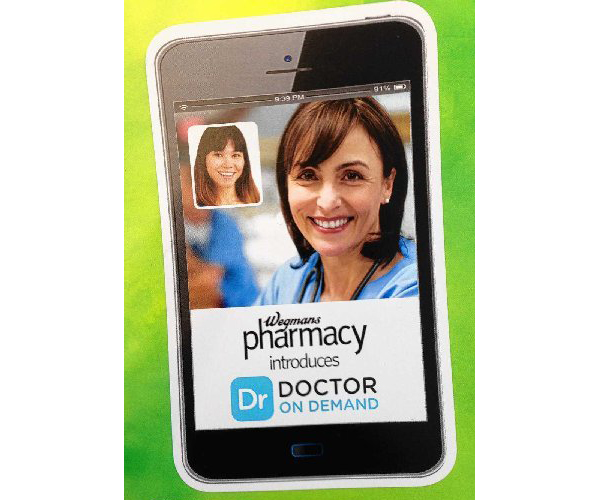
In the past couple of weeks, a grocery store launched a telemedicine pilot, a pharmacy chain expanded telehealth to patients in 25 states, and several new virtual healthcare entrants received $millions in investments. On a parallel track, the AMA postponed dealing with medical ethics issues regarding telemedicine, the Texas Medical Association got stopped in its tracks in a case versus Teladoc, and the Centers for Medicare and Medicaid Services (CMS) issued a final rule for the Medicare Shared Savings Program that falls short of allowing Accountable Care Organizations (ACOs) to take full advantage of telehealth services. These events beg the
It’s still the prices, stupid – health care costs drive consumerism
“It’s the prices, stupid,” wrote Uwe Reinhardt, Gerald F. Anderson and colleagues in the May 2003 issue of Health Affairs. Exactly twelve years later, three reports out in the first week of June 2015 illustrate that salient observation that is central to the U.S. healthcare macroeconomy. Avalere reports that spending on prescription drugs increased over 13% in 2014, with half of the growth attributable to new product launches over the past two years. Spending on pharmaceuticals has grown to 13% of overall health spending, and the growth of that spending between 2013-14 was the fastest since 2001. In light of
All women are health workers
The spiritual and emotional top the physical in women’s definition of “health,” based on a multi-country survey conducted in Brazil, Germany, Japan, the UK and the U.S. The Power of the Purse, a research project sponsored by the Center for Talent Innovation, underscores women’s primary role as Chief Medical Officers in their families and social networks. The research was sponsored by health industry leaders including Aetna, Bristol-Myers Squibb, Cardinal Health, Eli Lilly and Company, Johnson & Johnson, Merck & Co., Merck KGaA, MetLife, Pfizer, PwC, Strategy&, Teva, and WPP. The study’s summary infographic is titled How the Healthcare Industry Fails
Health care costs for a family of four in the U.S. reach $24,671 in 2015
The cost of a PPO for a family of four in America hits $24,671 in 2015, growing 6.3% over 2014’s cost. The growth in health care costs will be driven by high specialty prescription drug costs. The 6.3% growth rate in health costs is a stark increase compared with the twelve month April 2014-March 2015 decline in the Consumer Price Index of -0.1%. Welcome to the 2015 Milliman Medical Index, subtitled “Will the typical American family of four be driving a ‘Cadillac plan’ by 2018?” The MMI gauges the average cost of an employer-sponsored preferred provider organization (PPO) health plan and includes all
Purchase of wearable fitness trackers expected to grow in 2015, but one-half of Americans would “never” buy one
Headphones and smartphones are the top two electronics products U.S. consumers intend to purchase in 2015. But the emerging consumer electronics categories of wearable fitness trackers, smart watches, and smarthome devices (especially “smart” thermostats) are positioned to grow, too, in 2015, according to the 17th Annual CE Ownership and Market Potential Study from the Consumer Electronics Association (CEA). Wearable trackers have an installed base of about 17 million devices in the U.S., with 11% of U.S. households intending to purchase a tracker in 2015 — 6 percentage points up from 2014 (about a 50% increase over 2014). There are about 6 million smart
Happy 25 million, MinuteClinic and CVS Health!
Call it a Silver Million Anniversary, if you will: The MinuteClinic just saw its 25 millionth patient. This is a milestone in the evolution and growth of retail health in America, a trend-marker in this growing health industry segment that will become increasingly used by consumers, patients, parents, and caregivers. CVS bought the MinuteClinic in 2006, when the organization treated seven illnesses. Today, MinuteClinic offers 65 services and vaccinations in nearly 1,000 clinics located in 31 states and Washington, DC. In addition, MinuteClinic will grow the number of clinic locations in both existing and new markets. The company will open
Consumers seek retail convenience in healthcare financing and payment
Health care consumers face a fragmented and complicated payment landscape after receiving services from hospitals and doctors, and paying for insurance coverage. People want to “view their bills, make a few clicks, pay…and be done,” according to Jamie Kresberg, product manager at Citi Retail Services, a unit of Citibank. He’s quoted in Money Matters: Billing and payment for a New Health Economy from PwC’s Health Research Institute. The healthcare service segment most consumers are satisfied with when it comes to billing and payment is pharmacies, who score well on convenience, affordability, reliability, and seamless transactions – with only transparency being
The Consumer in the New Health Economy: Out-of-Pocket
The costs of healthcare in the U.S. have trended upward since 2000, with a slowdown in cost growth between 2009 to 2013 due to the impact of the Great Recession. That’s no surprise. What stands out in the new U.S. News & World Report Health Care Index is that people covered by private health insurance through employers are bearing more health care costs while publicly-covered insureds (in Medicare and Medicaid) are not. Blame it on the fast-growth of high-deductible health plans, the Index finds, resulting in what U.S. News coins as a “massive increase in consumer cost.” U.S. News &
Capital investments in health IT moving healthcare closer to people

In recent weeks, an enormous amount of money has been raised by organizations using information technology to move health/care to people where they live, work, and play… This prompted one questioner at the recent ANIA annual conference to ask me after my keynote speech on the new health economy, “Is the hospital going the way of the dinosaur?” Before we get to the issue of possible extinction of inpatient care, let’s start with the big picture on digital health investment for the first quarter of 2015. Some $429 mm was raised for digital health in the first quarter of 2015,
Nurses are consumers’ trusted partners-in-health
The two most trusted health professionals in the eyes of U.S. consumers are nurses and pharmacists, and both of these health workers will be key partners for people wanting to engage in health/care. That was my introductory message kicking off the annual conference of ANIA, the American Nursing Informatics Association, in Philadelphia on April 24, 2015. Meeting in the City of Brotherly Love gave ANIA the opportunity to theme the meeting a “Declaration of Nursing Informatics,” carrying that theme through the exhibition hall with a Benjamin Franklin lookalike walking the floor availing himself of attendees’ requests for selfie-taking with the
Health is where we live, work, and shop…at Walgreens
Alex Gourley, President of The Walgreen Company, addressed the capacity crowd at HIMSS15 in Chicago on 13th April 2015, saying his company’s goal is to “make good health easier.” Remember that HIMSS is the “Health Information and Management Systems Society” — in short, the mammoth health IT conference that this year has attracted over 41,000 health computerfolk from around the world. So what’s a nice pharmacy like you, Walgreens, doing in a Place like McCormick amidst 1,200+ health/tech vendors? If you believe that health is a product of lifstyle behaviors at least as much as health “care” services (what our
“What If 1 Million Americans Asked for Medical Records on the Same Day?”
This was not a theoretical question Dr. Farzad Mostashari, former head of the Office of the National Coordinator of Health IT in the Department of Health and Human Services, asked yesterday at the closing keynote of Day 1 of the Patient Engagement Forum. Dr. Mostashari issued a challenged to the community of mischief-makers in health/tech patient advocacy: tell everyone you know to contact their doctors — by phone, email, patient portal, or in-person, on one designated day which he called a “Day of Action.” Health IT journalist Neil Versel (disclosure: also a long-time friend in the field) covered this news
John Hancock flips the life insurance policy with wellness and data
When you think about life insurance, images of actuaries churning numbers to construct mortality tables may come to mind. Mortality tables show peoples’ life expectancy based on various demographic characteristics. John Hancock is flipping the idea life insurance to shift it a bit in favor of “life” itself. The company is teaming with Vitality, a long-time provider of wellness tools programs, to create insurance products that incorporate discounts for healthy living. The programs also require people to share their data with the companies to quality for the discounts, which the project’s press release says could amount to $25,000 over the
Workers at work for the health benefits but absent when it comes to talking costs
As much as the Affordable Care Act is bolstering health insurance rolls for the uninsured, people who have enjoyed health insurance at work continue to highly value that benefit, according to a survey from Benz Communications and Quantum Workplace published April 2015. Based on a national sample of over 2,000 employees surveyed in October 2014 about workplace benefits. The research re-confirms the long-term reality of workers working in America for the health benefit. Benz/Quantum note that 89% of workers say health benefits play a part in remaining on-the-job, and half say the health benefit is a “major” part of remaining
Consumers trust retailers to manage health as much as health providers
40% of U.S. consumers trust Big Retail to manage their health; 39% of U.S. consumers trust healthcare providers to manage their health. What’s wrong with this picture? The first chart shows the neck-and-neck tie in the horse race for consumer trust in personal health management. The Walmart primary care clinic vs. your doctor. The grocery pharmacy vis-a-vis the hospital or chain pharmacy. Costco compared to the chiropractor. Or Apple, Google, Microsoft, Samsung or UnderArmour, because “digitally-enabled companies” are virtually tied with health providers and large retailers as responsible health care managers. Welcome to The Birth of the Healthcare Consumer according
Doctors who write right: Gawande, Topol and Wachter put people at the center of health/care
There’s a trifecta of books written by three brilliant doctors that, together, provide a roadmap for the 21st century continuum of health care: The Patient Will See You Now by Eric Topol, MD; The Digital Doctor from Robert Wachter, MD; and, Being Mortal, by Atul Gawande. Each book’s take provides a lens, through the eyes of a hands-on healthcare provider, on healthcare delivery today (the good, the warts and all) and solutions based on their unique points-of-view. This triple-review will move, purposefully, from the digitally, technology optimistic “Gutenberg moment” for democratizing medicine per Dr. Topol, to the end-game importance of
Transparency in health care: not all consumers want to look
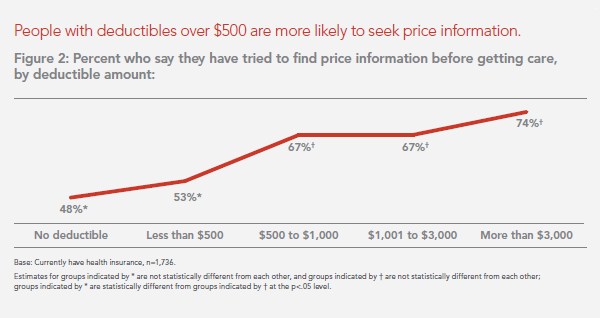
Financial wellness is integral to overall health. And the proliferation of high-deductible health plans for people covered by both public insurance exchanges as well as employer-sponsored commercial (private sector) plans, personal financial angst is a growing fact-of-life, -health, and -healthcare. Ask any hospital Chief Financial Officer or physician practice manager, and s/he will tell you that “revenue cycle management” and patient financial medical literacy are top challenges to the business. For pharma and biotech companies launching new-new specialty drugs (read: “high-cost”), communicating the value of those products to users — clinician prescribers and patients — is Job #1 (or #2,
Left Swipe Dat – this is how health messaging is done
In our ADHD-addled, over-messaged and noisy world, it’s hard to break through the media clutter and binge-watching to get a health message out. Here’s the way it’s done: an engaging, humorous, impactful and crisp campaign focusing on making smoking so un-sexy and un-cool, you swipe the prospective date off of your Tinder app. Watch and learn, from The Truth. You can follow the campaign on Twitter using the hashtag #LeftSwipeDat. Kudos to the truth® anti-smoking campaign and the creative team who got this blend of message and medium so right. truth® is part of the Legacy project which is funded by the
The phone is a gateway drug to health: what MyFitnessPal knows, and what Under Armour gets
65 million people know that food journaling works for losing weight, that it’s engaging to do on a well-designed app, and that health is social. MyFitnessPal (MFP) has the distinction of being a top health app used longer by more people and more effectively than probably any other mobile health tool. Under Armour, the athletic goods company, now has MFP under its corporate umbrella, along with Endomondo, another very popular motivating mobile health tool. You may know Under Armour as a company that manufactures and markets functional workout gear. But this deal is so not about the wearable. It’s about
Privacy and the Internet of Your Healthy Things – the FTC says less (data) is more
The FTC has weighed in on privacy and security and the Internet of Things (IoT) in a report published on 27th January 2015. When it comes to IoT and devices that connect to the internet, the FTC will focus on Enforcing privacy laws Educating consumers and business on privacy and security for connected devices Participate in multi-stakeholder groups such as the NTIA’s team considering guidelines for facial recognition, and Advocate with other agencies, at the state level, and with courts. The report summarizes input received in a FTC workshop conducted in November 2013 with IoT industry experts, and offers recommendations
Telehealth is in demand, driven by consumer convenience and cost – American Well speaks
Evidence of the rise of retail health grows, with the data point that on-demand health care is in-demand by 2 in 3 U.S. adults. American Well released the Telehealth Index: 2015 Consumer Survey, revealing an American health public keen on video visits with doctors as a viable alternative to visiting the emergency room. Virtual visits are especially attractive to people who have children living at home. [For context, this survey defines “telehealth” as a remote consultation between doctor and patient]. Convenience drives most peoples’ interest in telehealth: saving time and money, not leaving home if feeling unwell, and “avoiding germs
Health care costs still top financial problems for Americans
“Health care spending grows at lowest-ever rate,” USA Today celebrated in their December 3, 2014 headline. The announcement was drawn from national health spending data gleaned from an annual report from the Centers for Medicare and Medicare Services (CMS), which tallied U.S. health spending at $2.9 trillion. From the bird’s-eye view, slowing healthcare cost growth is indeed good news. But from the point-of-view of consumers’ own pockets, health care costs are rising. And, a survey published today by Gallup points to this reality: that people in American say the most important financial problem they face is healthcare costs, tied for first place
People in consumer-directed health plans are — surprise! — getting more consumer-directed
People with more financial skin in the health care game are more likely to act more cost-consciously, according to the latest Employee Benefits Research Institute (EBRI) poll on health engagement, Findings from the 2014 EBRI/Greenwald & Associates Consumer Engagement in Health Care Survey published in December 2014. Health benefit consultants introduced consumer-directed health plans, assuming that health plan members would instantly morph in to health care consumers, seeking out information about health services and self-advocating for right-priced and right-sized health services. However, this wasn’t the case in the early era of CDHPs. Information about the cost and quality of health care services was scant,
Building the health ecosystem: new bedfellows coming together
2015 is already becoming a year where bedfellows of different stripes are joining together to build a health care ecosystem well beyond hospitals, doctors and health plans. Announcements launched last week at the 2015 Consumer Electronics Show in Las Vegas, and coming out this week at the J.P. Morgan Conference in San Francisco, the first two weeks of 2015 reveal that new entrants and legacy health stakeholders are crossing corporate and cultural chasms to (try and) solve challenges that prevent us from getting to that Holy Grail of The Triple Aim: improving health care outcomes, driving down per capita costs,
Getting real about consumer demand for wearables: Accenture slows us down
Are you Feelin’ Groovy about wearables? Well slow down, you move too fast… …at least, according to Accenture’s latest survey into consumers’ perspectives on new technologies, published this week in conjunction with the 2015 Consumer Electronics Show in Las Vegas, the largest annual convention in the U.S. featuring technology for people. At #CES2015, we’re seeing a rich trove of blinged-out, multi-sensor, shiny new wearable things at the 2015 Consumer Electronics Show. Swarovski crystals are paired with Misfit Wearables, called the Swarovski Shine, shown here as a shiny new thing, indeed. Withings launched its Activite fitness tracking watch in new colors.
Women-centered design and mobile health: heads-up, 2014 mHealth Summit
This post is written as part of the Disruptive Women on Health’s blog-fest celebrating the 2014 mHealth Summit taking place 7-11 December 2014 in greater Washington, DC. Women and mobile health: let’s unpack the intersection. On the supply side of the equation, Good Housekeeping covered health tracking-meets-fashion bling in the magazine a few weeks ago in article tucked between how to cook healthy Thanksgiving side dishes and tips on getting red wine stains out of tablecloths. This ad appeared in a major sporting goods chain’s 2014 Black Friday pre-print in my city’s newspaper last week. And along with consumer electronics brand faves like
Health care costs, access and Ebola – what’s on health care consumers’ minds
The top 3 urgent health problems facing the U.S. are closely tied for first place: affordable health care/health costs, access to health care, and the Ebola virus. While the first two issues ranked #1 and #2 one year ago, Ebola didn’t even register on the list of healthcare stresses in November 2013. Gallup polled U.S. adults on the biggest health issues facing Americans in early November 2014, and 1 in 6 people named Ebola as the nation’s top health problem, ahead of obesity, cancer, as well as health costs and insurance coverage. Gallup points out that at the time of
Health-committed consumers look to food to be healthy, wealthy, and wise
There’s an emerging health-committed consumer, one of over 70% of people who believe they’re less healthy than the generations who came before them. 9 in 10 consumers overall believe that what you eat impacts how you feel. Those who are health-committed spend 70% of their grocery budgets on healthy products, read food labels, spend more and shop more frequently than low health-committed consumers, according to Healthy, Wealthy, & Wise, a survey report from Dunnhumby. The number of health-committed consumers globally grew by 38% since 2009. Most consumers look first to themselves to drive health, then to doctors, and third to food companies
Power to the health care consumer – but how much and when?
Oliver Wyman’s Health & Life Sciences group names its latest treatise on the new-new health care The Patient-to-Consumer Revolution, subtitled: “how high tech, transparent marketplaces, and consumer power are transforming U.S. healthcare.” The report kicks off with the technology supply side of “Health Market 2.0,” noting that “the user experience of health care is falling behind” other industry segments — pointing to Uber for transport, Amazon for shopping, and Open Table for reserving a table. The authors estimate that investments in digital health and healthcare rose “easily ten times faster” than the industry has seen in the past. Companies like
Rationing health care, driven by high deductibles
Concerns about Death Panels and government restricting health services for people that have been key arguments used against the Affordable Care Act’s (ACA) detractors and, even before the advent of the ACA, proposed health reforms under President Clinton. But it’s peoples’ self-rationing in the U.S. health system that’s causing true rationing — driven by high deductible health plans (HDHPs) that are fast-growing in the health insurance market, and by the high cost of specialty drugs and prescriptions. There are plenty of data demonstrating the consumer health rationing trend being collected and reviewed by think tanks like RAND here, and by The
Health care as a retail business
The health care industry is undergoing a retail transformation, according to Retail Reigns in Health Care: The rise of consumer power and its organization & workforce implications from Deloitte. Deloitte’s report published in October 2014 focuses on the health insurance business, which is newly-dealing with uninsured people largely unfamiliar with how to evaluate health plan options. This by any definition requires new muscles for both buyers and sellers on a health insurance exchange: new product access + uninformed consumer = retail challenge. Deloitte notes another supply and demand challenge, and that’s with the health insurance company workforce: while 93% of health
Health and financial well-being are strongly linked, CIGNA asks and answers
The modern view on wellness is “having it all” in terms of driving physical, emotional, mental and financial health across one’s life, according to CIGNA’s survey report, Health & Financial Well-Being: How Strong Is the Link? The key elements of whole health, as people define them are: – Absence of sickness, 37% – Feeling of happiness, 32% – Stable mental health, 32% – Management of chronic disease, 15% – Financial health, 14% – Living my dreams, 9%. 1 in 2 people (49%) agree that health and wellness comprise “all of these” elements, listed above. This holistic view of health is
Specialty pharmaceuticals’ costs in the health economic bulls-eye
This past weekend, 60 Minutes’ Leslie Stahl asked John Castellani, the president of PhRMA, the pharmaceutical industry’s advocacy (lobby) organization, why the cost of Gleevec, from Novartis, dramatically increased over the 13 years it’s been in the market, while other more expensive competitors have been launched in the period. (Here is the FDA’s announcement of the Gleevec approval from 2001). Mr. Castellani said he couldn’t respond to specific drug company’s pricing strategies, but in general, these products are “worth it.” Here is the entire transcript of the 60 Minutes’ piece. Today, Health Affairs, the policy journal, is hosting a discussion
Crossing the digital health chasm between consumers and providers – talking with Dr. Eric Topol
More than twice as many patients than physicians are embracing consumers’ use of new digital technologies to self-diagnose medical conditions on their own. On the other hand, 91% of doctors are concerned about giving patients access to their detailed electronic health records, anticipating patients will feel anxious about the results; only 34% of consumers are concerned about anxiety-due-to-EHR-exposure. Welcome to the digital health chasm, that gap between what consumers want out of digital health, and what doctors believe patients can handle at this stage in EHR adoption in doctors’ offices and in patients’ lives. I have the video of Jack
Health info disconnect: most people view accessing online records important, but don’t perceive the need to do so
There’s a health information disconnect among U.S. adults: most people believe online access to their personal health information is important, but three-quarters of people who were offered access to their health data and didn’t do so didn’t perceive the need to. The first two graphs illustrate each of these points. When people do access their online health records, they use their information for a variety of reasons, including monitoring their health (73%), sharing their information with family or care providers (44%), or downloading the data to a mobile device or computer (39%). In this context, note that 1 in 3
Understanding the patient journey – using real-world data
It’s de rigueur for any organization marketing a product or service in health care to be “patient-centered” these days. “Patient engagement” and “health engagement” are phrases found on health conference agendas, whether pitching to attendees in pharma and life sciences, health IT, health insurance, or healthcare (to hospitals and physicians, alike). One paradigm for patient-centricity that’s more mature than most is IMS Health’s Patient Journey construct, which the data-driven company has been talking about since 2012. While the concept focused mainly on pharmaceutical marketing and medication adherence, it’s useful for all industry segments looking to motivate behavior change in health
Employers engaging in health engagement
Expecting health care cost increases of 5% in 2015, employers in the U.S. will focus on several tactics to control costs: greater offerings of consumer-directed health plans, increasing employee cost-sharing, narrowing provider networks, and serving up wellness and disease management programs. The National Business Group on Health’s Large Employers’ 2015 Health Plan Design Survey finds employers committed to health engagement in 2015 as a key strategy for health benefits. More granularly, addressing weight management, smoking cessation, physical activity, and stress reduction, will be top priorities, shown in the first chart. An underpinning of engagement is health care consumerism — which
Novel concept: people + health pricing information = market competition
In the post-Recession American economy, people shop for value in all things. And that includes health care services like MRIs — when patients are informed of pricing differences among imaging facilities and given free rein to pick-and-choose among them. In addition to lowering imaging costs in a community, price transparency also generated competition between providers. Health Affairs published this research detailed in Price Transparency for MRIs Increased Use of Less Costly Providers And Triggered Provider Competition in August 2014. An Economics 101 course teaches us that a well-oiled (perfect) market depends on lots of sellers of a product and lots of
Best Hospitals, Marketing and Money – more on transparency in health care
As Americans become health care shoppers, learning to spend “their” money to meet high deductibles and manage expenses in health savings accounts, they seek information — made transparent through trusted, sometimes branded, sources. One of these is U.S. News & World Reports, which has published the U.S. News & World Reports Best Hospitals list since 1990, and as such, has become a popular go-to source for engaged patients looking for information on hospitals before receiving surgery, seeking second opinions for a medical condition, or moving to a new town looking to affiliate with a health system. But in February 2014, a
Self-care – the role of OTCs for personal health financial management
Make-over your medicine cabinet. That’s a key headline for International Self-Care Day (ISD) on July 24, 2014, an initiative promoting the opportunity for people to take a greater role in their own health care and wellness. Sponsored by the Consumer Healthcare Products Association (CHPA), consumer products companies, health advocacy organizations, and legislators including John Barrow (D-GA), a co-sponsor of H.R. 2835 (aka the Restoring Access to Medications Act), the Day talked about the $102 billion savings opportunity generated through people in the U.S. taking on more self-care through using over-the-counter medicines. After the 2008 Recession hit the U.S. economy, industry analysts
Hyperconnected Healthcare – The Need for Cyber-Resilience
The growth of data, small and Big, in health care motivates the industry’s stakeholders to adopt technologies that help store, manage and analyze data to drive knowledge and, ultimately, individual and public health. Healthcare is embracing cloud technology, mobile platforms, social networks, e-commerce, robotics, and the Internet of Things (IoT), among a growing list of tech innovations. Each of these innovations, which enable productivity and economic growth, also present cybersecurity risks. The value of these risks is estimated to be as much as $3 trillion to the global economy, according to McKinsey’s calculations in the report Risk and Responsibility in
Big Data Come to Health Care…With Big Challenges – Health Affairs July 2014
“For Big Data, Big Questions Remain,” an article by Dawn Falk in the July 2014 issue of Health Affairs, captures the theme of the entire journal this month. That’s because, for every opportunity described in each expert’s view, there are also obstacles, challenges, and wild cards that impede the universal scaling of Big Data in the current U.S. healthcare and policy landscape. What is Big Data, anyway? It’s a moving target, Falk says: computing power is getting increasingly powerful (a la Moore’s Law), simpler and cheaper. At the same time, the amount of information applicable to health and health care
Homo informaticus – the global digital consumer
Consumers around the world are feeling more knowledgeable, self-confident and realistic, enabled by mobile platforms, the democratic power of social “choruses,” and a more sharing economy featuring collaborative consumption. As peoples’ phones get smarter and smarter, they carry more powerful multichannel information devices in their hands which empower Homo Informaticus – the new global digital consumer, described in EY’s report, How to copilot the multichannel journal. EY polled 29,943 consumers in the Consumers on Board survey living in 34 countries: across the Americas, Asia-Pacific, the Middle East, India and Africa. Homo informaticus is the rational consumer smartly using technology to filter information.
Privatizing health privacy in the US?
8 in 10 people in the U.S. believe that total privacy in the digital world is history, based on a survey from Accenture conducted online in March and April 2014 and published in the succinctly-titled report, Eighty Percent of Consumers Believe Total Data Privacy No Longer Exists. 84% of U.S. consumers say they’re aware what tracking personal behavior can enable – receiving customized offers and content that match one’s interests. At the same time, 63% of people in the U.S. also say they have a concern over tracking behavior. Only 14% of people in the U.S. believe there are adequate safeguards
The Milliman Medical Index at $23,215: A Toyota Prius, a tonne of tin, or health insurance for a family?
It costs $23,215 to cover a family of four for health care, according to the 2014 Milliman Medical Index (MMI), the annual gauge of healthcare costs from the actuarial firm. The growth rate of 5.4% from 2013 is the lowest annual change since Milliman launched the Index in 2002. This is equivalent to a new Toyota Prius or a tonne of tin. While employers cover most of these costs, the portion employees bear continues to increase. This year, insured workers will take on 42% of the total, or on average, $9,695. This is up by $552 over 2013, or 6%
We are all self-insured until we get sick – especially if we are women
During my conversation with a prominent pharma industry analyst yesterday, he observed, “As a consumer, you are self-insured until you get sick.” My brain then flashed back to a graph from the 2013 Employer Health Benefits Survey conducted annually by the Kaiser Family Foundation (KFF). The chart is shown here. It illustrates the upward line indicating that in 2013, 4 in 5 workers were enrolled in a health plan that included an annual deductible. That’s the “self-insurance” part of the observation my astute conversationalist noted. Simply put, when you are enrolled in a high-deductible health plan, You, The Consumer, are responsible for
The Season of Healthcare Transparency – Chaos, then Creation, Part 5
The consumer demand side for healthcare transparency is hungry for the light to shine on health care costs, quality and information that’s relevant and meaningful to the individual. The supply side is fast-growing, with websites and portals, government-sponsored projects, commercial-driven start-ups, and numerous mobile apps. These tools endeavor to: Help people find and access services Schedule appointments Compare peer consumers’ reviews for those providers Calculate and prepare for out-of-pocket co-payments deriving from their health plan Negotiate prices with providers Pay for the services, and Reconcile the payment with a high-deductible health plan or health savings account. On the demand side, consumers
The Season of Healthcare Transparency – Consumer Payments and Tools, Part 4
“The surge in HDHP enrollment is causing patients to become consumers of healthcare,” begins a report documenting the rise of patients making more payments to health providers. Patients’ payments to providers have increased 72% since 2011. And, 78% of providers mail paper statements to patients to collect what they’re owed. “HDHPs” are high-deductible health plans, the growing thing in health insurance for consumers now faced with paying for health care first out-of-pocket before their health plan coverage kicks in. And those health consumers’ expectations for convenience in payment methods is causing dissatisfaction, negatively affecting these individuals and their health providers’
The Season of Healthcare Transparency – Will Your Health Plan Be Your Transparency Partner? – Part 3
Three U.S. health plans cover about 100 million people. Today, those three market-dominant health plans — Aetna, Humana and UnitedHealthcare — announced that they will post health care prices on a website in early 2015. Could this be the tipping point for health care transparency so long overdue? These 3 plans are ranked #1, #4 and #5 in terms of market shares in U.S. health insurance. Together, they will share price data with the Health Care Cost Institute (HCCI), a not-for-profit organization dedicated to research on U.S. health spending. An important part of the backstory is that the HCCI was
The Season of Healthcare Transparency – Shopping in a World of High Cost and High Variability – Part 2
Yesterday kicked off this week in Health Populi, focusing on the growing role of transparency in health care in America. Today’s post discusses the results from Change Healthcare’s latest Healthcare Transparency Index report, based on data from the fourth quarter of 2013, published in May 2014. Charges for health services — dental, medical and pharmacy – varied by more than 300% in Q42013 — even within a single health network. Change Healthcare found this, based on their national data on 7 million health-covered lives. The company analyzed over 180 million medical claims. The company built the Healthcare Transparency Index (HCTI)
The Season of Healthcare Transparency – HFMA’s Price Transparency Manifesto – Part 1
As Big Payors continue to shift more costs onto health consumers in the U.S., the importance of and need for transparency grows. 39% of large employers offered consumer-directed health plans (CDHPs) in 2013, and by 2016, 64% of large employers plan to offer CDHPs. These plans require members to pay first-dollar, out-of-pocket, to reach the agreed deductible, and at the same time manage a health savings account (HSA). In the past several weeks, many reports have published on the subject and several tools to promote consumer engagement in health finance have made announcements. This week of posts provides an update on
In a world of digital health data, more sick people trade off privacy risks
People managing chronic diseases are more likely to have accessed information in their electronic medical records — and are also less likely to worry about the privacy risks of their personal electronic health information compared with people who are healthy. Over 2,000 people, both those who say they’re healthy and those with chronic conditions, were surveyed by Accenture in February-March 2014, and their responses are summarized in the report, Consumers with Chronic Conditions Believe the Ability to Access Electronic Medical Records Outweighs Concern of Privacy Invasion. Slight more consumers are concerned about privacy risks related to online banking, online shopping,
Consumers and health data sharing: managing risk via anonymity
9 in 10 U.S. adults would be willing to share their personal health information to help researchers better understand a disease or improve care and treatment options — with varying desires to control the anonymity of their data, according to the fourth Makovsky Health/Kelton Survey published April 24, 2014. This study gauged peoples’ perspectives on personal data privacy based on 1,001 responses from Americans ages 18 and older and was fielded in March 2014. The chart shows four variations on the theme of consumers’ interest in sharing their personal health data with researchers, finding that: – 40% of people
The new health economy, starring the consumer
“In the New Health Economy, ‘patients’ will be ‘consumers’ first, with both the freedom and responsibility that come with making more decisions and spending their own money.” This vision of the near-future is brought to you by the New Health Economy, a report from PwC’s Health Research Institute (HRI). The chart attests the fact that U.S. “consumers” are already spending nearly $3 trillion (with a capital “T”) on products and services that bolster personal health. This spending includes $94 billion on nutrition, $62 billion on weight loss, $59 billion on sporting goods and apparel, $45 billion on (so-called) organic and
The New Chief Patient Officer
There’s a new member in the C-suite in health care, and her name is the Chief Patient Officer (CPO). That new role in health-town is filled by Dr. Anne Beal, appointed by Sanofi, the global biopharma company, to fill this new job description. Here she is, shaking hands with Colin Powell in one of the many awards ceremonies where Dr. Beal’s work in public health has been lauded. But what is a CPO? Because it’s a new job, Dr. Beal can create the role, at least within the environment and mission of Sanofi and the larger life sciences world. Some
Doctors and mHealth apps: chaos, evidence, creation
Over one year ago, an eClinicalWorks survey found that 9 in 10 physicians would be interested in prescribing a mobile health app to a patient. That’s a big number. That’s “interest,” but that demand hasn’t yet been expressed in the current go-go app-happy environment. An opinion piece in this week’s Online First edition of the Journal of the American Medical Association (JAMA) demonstrates the fork-in-the-road facing clinicians and the disruption/opportunity that is mobile health. In “In Search of a Few Good Apps,” a Boston-based trio of writers (two physicians and one PhD) talk about “the bewildering diversity of apps available
FICO scores for health – chatting with a #BigData pioneer
I had the pleasure of spending quality time brainstorming with Mikki Nasch, co-founder of AchieveMint, yesterday. Mikki worked on the early days of building the FICO score with Fair Isaac, so has been involved in Big Data well before it became the well-#hashtagged buzzword it is today. In our conversation, we talked about the history of FICO and how it took about a decade for consumers to understand it, accept it, and use it as a tool for bettering their credit ratings. When a FICO score was below an acceptable threshold to a lender – say, for a new car
People want to DIY with pharma
In our increasingly-DIY society, most consumers expect high levels of access and customer service from the organizations with whom we engage. With more consumers reaching into their pockets to pay for health services and products, the health industry is increasingly a retail-facing environment. So expect quality service levels from their healthcare touch points. The pharmaceutical and prescription drug touch point is not exempt from this expectation, as learned by an Accenture survey analyzed in Great Expectations: Why Pharma Companies Can’t Ignore Patient Services. As the first picture shows, 70% of patients think pharma companies are responsible for bundling information and services
Pharma warming up to the cloud to drive efficiencies and support analytics
Over the next few years, large global pharma companies will need to wring out an additional $35 billion worth of efficiencies in order to drive profitability. While the industry has most of the patent cliff challenge behind it, companies face price constraints with respect to health reform, static national economies, and access demands. As the pharmaceutical industry enters the value-based health care era, the industry must catch up with other vertical markets in adopting information technology. In particular, pharma has been slower to migrate to the cloud than other businesses, with concerns about security and health care particular needs. Today, the
Risk-shift: employers continue to push more risk to employees and families for health costs
With health costs increase increasing at 4.4% in 2014, a slightly higher rate of growth than the 4.1% seen in 2013. While this is lower than the double-digit increases U.S. employers faced in 2001-2004, it’s still twice the rate of general consumer price inflation. That’s what the first graph shows, based on the The 19th Annual Towers Watson/National Business Group on Health Employer Survey on Purchasing Value in Health Care. Employers generally want to continue to provide health insurance…for the time being. 92% of companies expect to make changes in health plan provisions in 2014, with 1 in 2 anticipating “significant
HIMSS14 Monday Morning Quarterback – The Key Takeaways
Returning to terra firma following last week’s convening of the 2014 annual HIMSS conference…taking some time off for family, a funeral, the Oscars, and dealing with yet another snowstorm…I now take a fresh look back at #HIMSS14 at key messages. In random order, the syntheses are: Healthcare in America has entered an era of doing more, with less...and health information technology is a strategic investment for doing so. The operational beacon going forward is moving toward The Triple Aim: building population health, enhancing the patient’s experience, and lowering costs per patient. The CEO of Aetna, Mark Bertolini, spoke of the
Managing cost and utilization are top goals for specialty pharmacy buyers
While the prescription drug bill makes up about 10% of U.S. national health spending, the fastest-growing component of pharmacy spending is specialty medications. These are categorized as “specialty” drugs because they rarely have generic equivalents, and treat serious or life-threatening diseases (such as cancer, MS, and rheumatoid arthritis). They are also “special” because specialty pharmaceuticals average $3,000 per patient per month and can surpass $100,000 a year for certain products. As a result, the top two goals for managing specialty medications among employers are #1, to reduce inappropriate utilization, and #2, to reduce drug acquisition costs, based on a survey
Connected Health – the technology is ready, providers on the cusp
The convergence of technology developments – such as the internet, mobile phone adoption, cloud computing, sensors, electronic health records – with societal evolution including consumerism, demand for transparency, and “flatter” organizations – enable the phenomenon of Connected Health. Connected Health by definition includes mobile health (mHealth), telehealth and telemedicine, as presented in the February 2014 issue of Health Affairs which is dedicated to this theme. Why Connected Health’s time is Now relates to those factors cited above, and the underlying challenge of managing health care costs. While all nations in the developed world are facing difficult health economies, the U.S. spends so
U.S. families face medical financial burdens; health care in the SOTU
A growing proportion of American families are facing money problems related to health care, according to the report, Financial Burden of Medical Care: A Family Perspective, No. 142 in the NCHS Data Brief series from the CDC, published January 2014 and based on 2012 data. 1 in 4 families are dealing with some financial burden due to medical care. “Financial burdens” in health include problems paying medical bills in the past 12 months, shared by 16.5% of families; and medical bills being paid over time, faced by 21.4% of families. 1 in 10 families (9%) have medical bills they are
Pharma and the health industry: when will they finally meet us Where We Live?
Millions of health citizens, consumers, patients and caregivers flock to Facebook, Twitter and Wikipedia every day the world over to seek health information, advocate for patients’ access to a cancer therapy on a health blog, engage in peer-to-peer health care in a social network, and bolster each others’ management of chronic medical conditions in a chat community. Yet the pharmaceutical and medical device industries rank well behind other industries vis-à-vis the use of social media, asserts Engaging patients through social media, with the punchline question: is healthcare ready for empowered and digitally demanding patients? from the IMS Institute for Healthcare Informatics, published on
mHealth will join the health ecosystem – prelude to the 2014 Consumer Electronics Show
The rise of digital health at the 2014 Consumer Electronics Show signals the hockey-stick growth of consumer-facing health devices for fitness and, increasingly, more medical applications in the hands of people, patients, and caregivers. This year at #CES2014, while the 40% growth of the CES digital health footprint will get the headlines, the underlying story will go beyond wristbands and step-tracking generating data from an N of 1 to tools that generate data to bolster shared-decision making between people and the health system, and eventually support population health. For example: – Aetna is partnering with J&J to deploy their Care4Today
3 Things I Know About Health Care in 2014
We who are charged with forecasting the future of health and health care live in a world of scenario planning, placing bets on certainties (what we know we know), uncertainties (what we know we don’t know), and wild cards — those phenomena that, if they happen in the real world, blow our forecasts to smithereens, forcing a tabula rasa for a new-and-improved forecast. There are many more uncertainties than certainties challenging the tea leaves for the new year, including the changing role of health insurance companies and how they will respond to the Affordable Care Act implementation and changing mandates
Supermarkets and hospitals most-trusted industries in the U.S.
See the yellow highlighted rows? That single yellow bar at the top, that’s hospitals; at the bottom, you’ll see pharma, health insurance, and managed care. Hospitals, trusted; pharma, insurance, managed care? Down south on the trust barometer with oil, tobacco, phone companies and social media. The Harris Poll has gauged U.S. consumers’ views on honesty and trustworthiness across industries for the past ten years. Over those ten years, trust in these industries has eroded, from huge falls-from-grace for banks (a 17 point fall), packaged food (falling 12 points), and computer hardware and software substantially falling, as well. Hospitals are
Employers will strongly focus on costs in health benefit plans for 2014; so must consumers
Employers who sponsor health insurance in America are at a fork on a cloudy road: they know that they’re in the midst of changes happening in the U.S. health system. Except for one certainty: that health care costs too much. So employers’ plans for health benefits in 2014 strongly focus on getting a return-on-investment from health spending in an uncertain climate, according to Deloitte’s 2013 Survey of U.S. Employers. Key findings are that: Employers will grow their use of workers’ cost-sharing, continuing to shift more financial responsibility onto employees They will expand other tactics they believe will help address cost
23andme & Me
23andme received word from the Food & Drug Administration (FDA) on November 22, 2013, that they must cease and desist selling the company’s Saliva Collection Kit and Personal Genome Service (PGS). FDA explained in their Warning Letter, “Most of the intended uses for PGS listed on your website, a list that has grown over time, are medical device uses under section 201(h) of the FD&C Act. Most of these uses have not been classified and thus require premarket approval or de novo classification, as FDA has explained to you on numerous occasions. “Some of the uses for which PGS is intended are
Make health care “feel” more like retail via transparency
Consumers who are well-covered by health insurance are in favor of talking about costs with their doctors. This research finding illustrates the fact that price transparency in health care isn’t just the concern of un- and under-insured people, but that shining the light on the price of health care is everybody’s business. But it’s also the case that most physicians aren’t yet involved in these health-financial conversations with their patients. Two studies presented at the recent 2013 annual meeting of the American Society of Clinical Oncology (ASCO) learned that patients are keen to know more about health care costs from
Health at SXSW13 vs. HIMSS13: the Yin, the Yang, and the Blur
I endured what very few people could (or would) do in the past ten days: I traveled to New Orleans to the annual conference of HIMSS, the Health Information Management Systems Society, which features hundreds of suppliers to the health care information technology industry. I returned home to kiss my family hello and goodbye, and a day later flew to Austin for the annual South-by-Southwest conference for music, movie and digital folks. The health track at SXSW has grown over the past five years, and provides a start contrast to “health care” as embodied at HIMSS, and “health” translated through
Demand for health products and services is down in the recession; thinking about value and self-care in health
What is value in health care? Every year we spend more and seem to get less, John Seng, Founder of Spectrum, told attendees of a webinar on the Spectrum Health Value Study on 12th May 2009. As we consumers spend more of our own money, we’ll be looking for greater value and “health ROI” from our health spending. Measuring value across a population is confounded by the fact that what one person decides to spend on ‘health’ can be different from another’s health spending choices. In other words, our personal health “marketbaskets” for health spending vary from person to person.
Nearly 1 in 2 women delayed health care in the past year due to costs – the economic impact on a woman’s physical, emotional, and fiscal health
Nearly 1 in 2 women put off seeking health care because the cost was too high. The kinds of services delayed included visits to the doctor, medical procedures, and filling prescription medications. The fourth annual T.A.L.K. Survey was released this week by the National Women’s Health Resource Center (NWHRC), focusing on the declining economy and its impact on women and three dimensions of their health — physical, emotional, and fiscal. 40% of women say that their health has worsened in the past five years due to increasing stress and gaining weight, according to the survey. One of the most interesting
Who do you trust? Edelman’s Trust Barometer says “people like me,” tech, life science, and banks — not insurance, media, or government
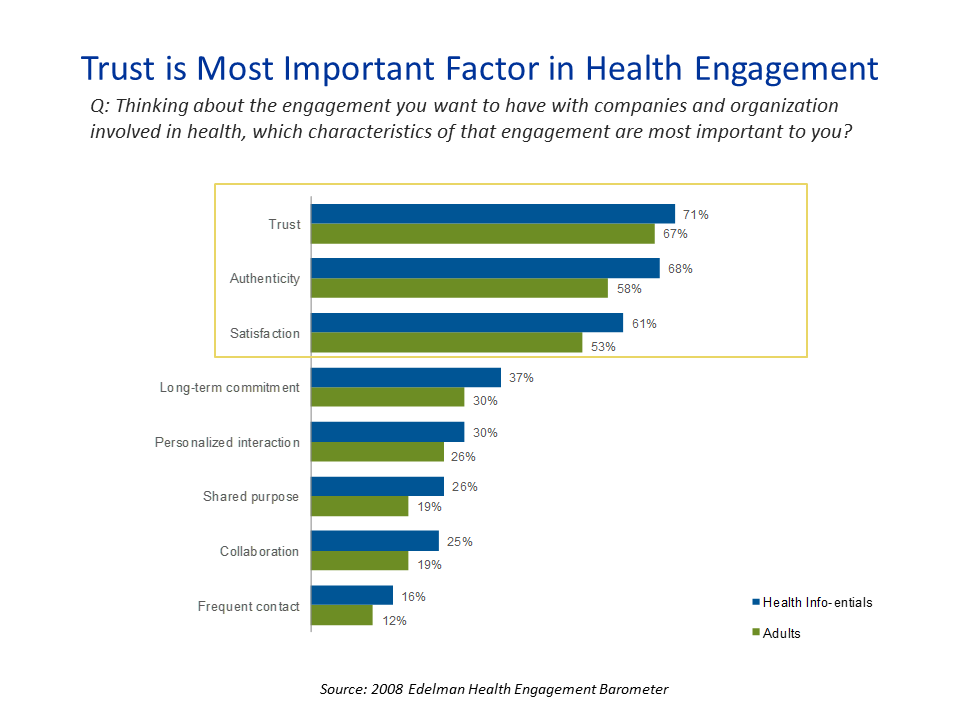
The 2008 Edelman Health Engagement Barometer is out alongside the company’s annual Trust Barometer, and more than ever, people are trusting “people like me” more than they do institutions. This is the ninth iteration of the Trust survey. The toplines of the past four years show an important change in peoples’ trust perspectives. In 2005, Edelman found that trust in ‘established institutions’ and figures of authority began shifting to peers. By 2006, “A person like me” was the most credible spokesperson for companies. That year, people trusted employees significantly more than company CEOs. Edelman defines “a person like me” as
 Thank you Aaron Strout for hosting our conversation on the Reaching Higher Podcast, now live on Apple, Spotify, and YouTube. We covered a lot of ground addressing health care and health citizenship, the growing prospects for our homes as our health hubs, and how our humanity is a key ingredient in health-making for all.
 I'm grateful to be part of the Duke Corporate Education faculty, sharing perspectives on the future of health care with health and life science companies. Once again, I'll be brainstorming the future of health care with a cohort of executives working in a global pharmaceutical company.
 Jane joined host Dr. Geeta "Dr. G" Nayyar and colleagues to brainstorm the value of vaccines for public and individual health in this challenging environment for health literacy, health politics, and health citizen grievance. Click onto the Pfizer Value of Vaccines site and you can watch four episodes covering the challenges with adult vaccination, the employer and health plan member's journey to vaccination, reimbursement, and collaborating for proactive prevention.