


What’s Expected to Drive Up Health Plan Costs in 2025: GLP-1s, Behavioral Health, and Inflationary Pressures for Hospitals and Doctors – PwC’s Behind the Numbers 2025
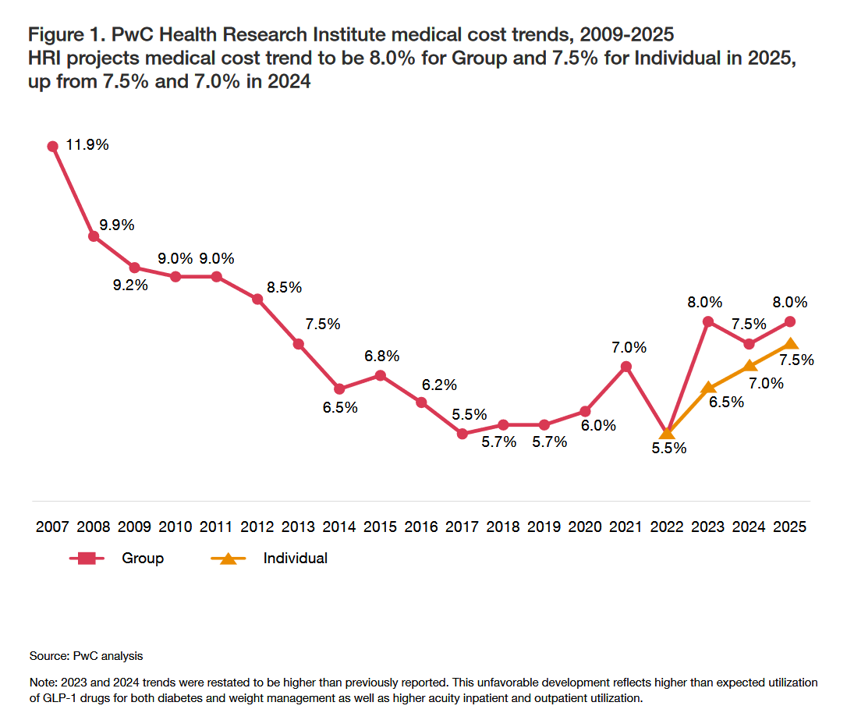
The U.S. Bureau of Labor Statistics had good news for American consumers long-facing inflation for household spending over the past couple of years, announcing on July 11, 2024, that the general consumer price index (CPI) fell, lowering real prices for people buying airline tickets, used cars and trucks, communication, and petrol to fill auto tanks. That positive economic news did not extend to medical care and personal care, the BLS reported, whose costs increased by 3.3% and 3.2%, respectively. (Motor vehicle insurance costs grew a whopping 19.5% in the report, FYI). Following the
Trust in Institutions Among Americans: Small Biz, the Military and Police More than the Medical System
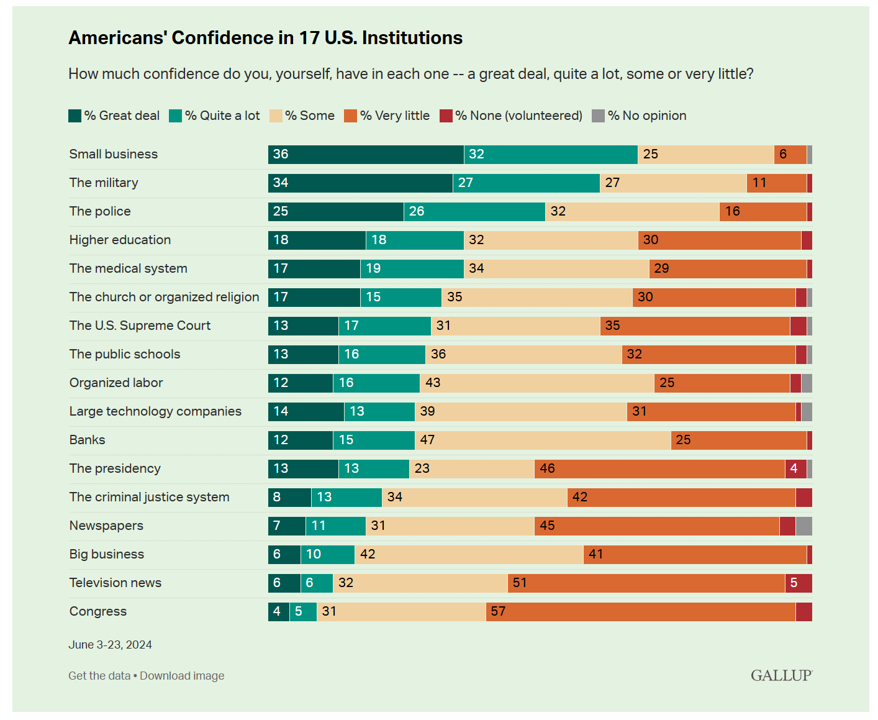
Two-thirds of Americans have a lot of confidence in small business in the U.S. In second place, 61% of people in the U.S. have confidence in the military, followed by 51% with the police. The Gallup Poll on Americans’ confidence in 17 U.S. institutions is out today, reflecting a snapshot of U.S. adults’ views on the organizations that touch their daily lives. And health care doesn’t fare too well in this latest read. Only 36% of Americans have confidence in the U.S. medical system, tied with peoples’ feelings of lack of confidence
Financial Strain Among Older People in America, and What Project 2025 Could Mean for Their Well-Being
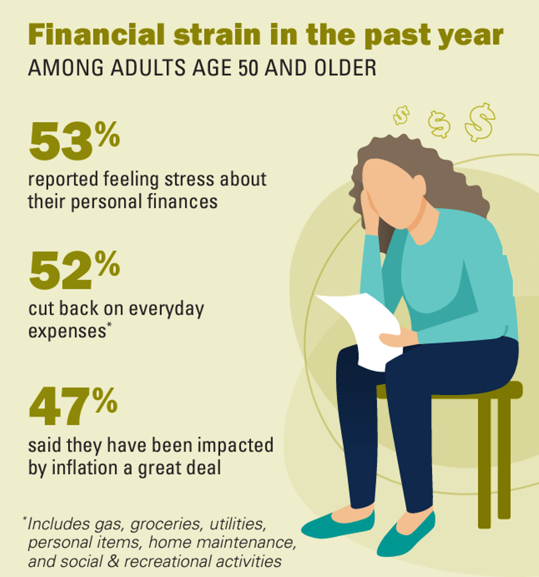
Over one-half of people 50 years of age and older in the U.S. have felt financial strain in the past year, resulting in 1 in 2 folks cutting back on everyday expenses like groceries and gas. We learn that nearly one-half of people 50 and over say they’ve been impacted by inflation “a great deal” in Making Ends Meet: Financial Strain and Well-Being Among Older Adults, the latest report from the Institute for Healthcare Policy and Innovation’s National Poll on Healthy Aging based at the University of Michigan (my alma mater). The poll was conducted by NORC at the University
Can AI Help to Improve Health Equity? U.S. Scientists Weigh In With “Yes,” Baking in Ethics and Accountability
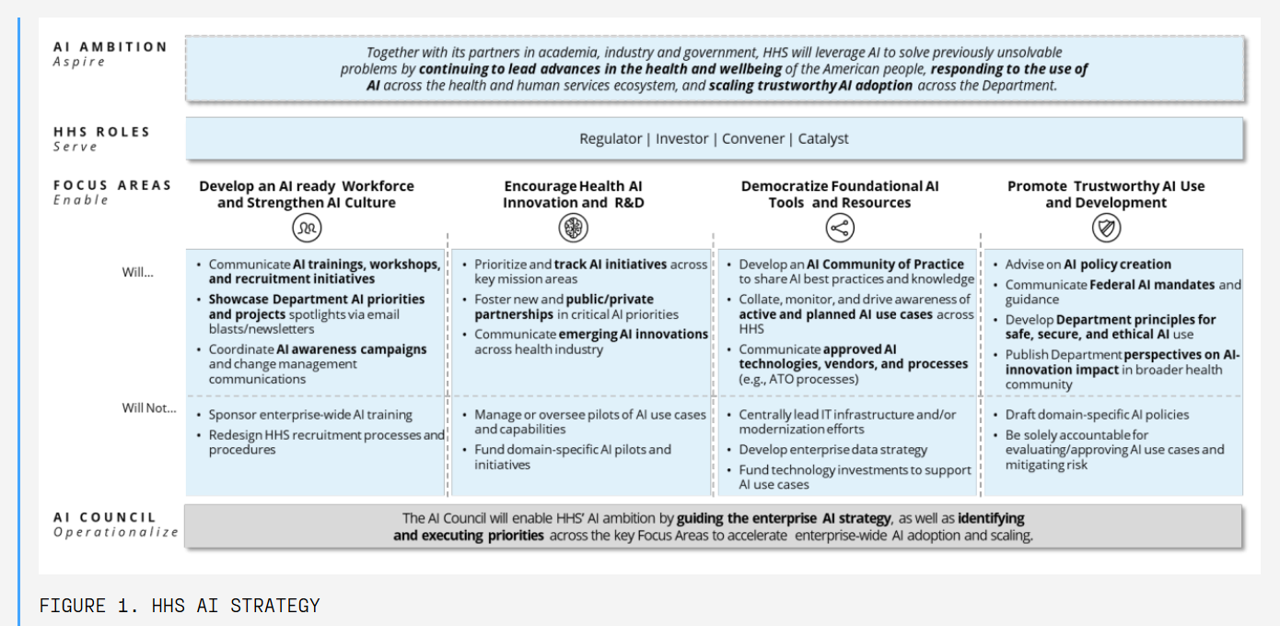
The Federation of American Scientists (FAS) was founded in 1945 by a group of scientists concerned about the atomic bomb — sharing a mission to focus on technology, science, and innovation to, in the Association’s words, “work toward a safer, more equitable, and more peaceful world.” Nearly 80 years after the organization’s launch, the FAS is focusing on the growing role of artificial and augmented intelligence across the many areas that touch peoples’ lives — including health care and well-being. The FAS published a state-of-the-nation essay on June 27 on Improving Health Equity Through AI.
Medical Debt, Aflac on Eroding Health Benefits, the CBO’s Uninsured Forecast & Who Pays for Rising Health Care Prices: A Health Consumer Financial Update
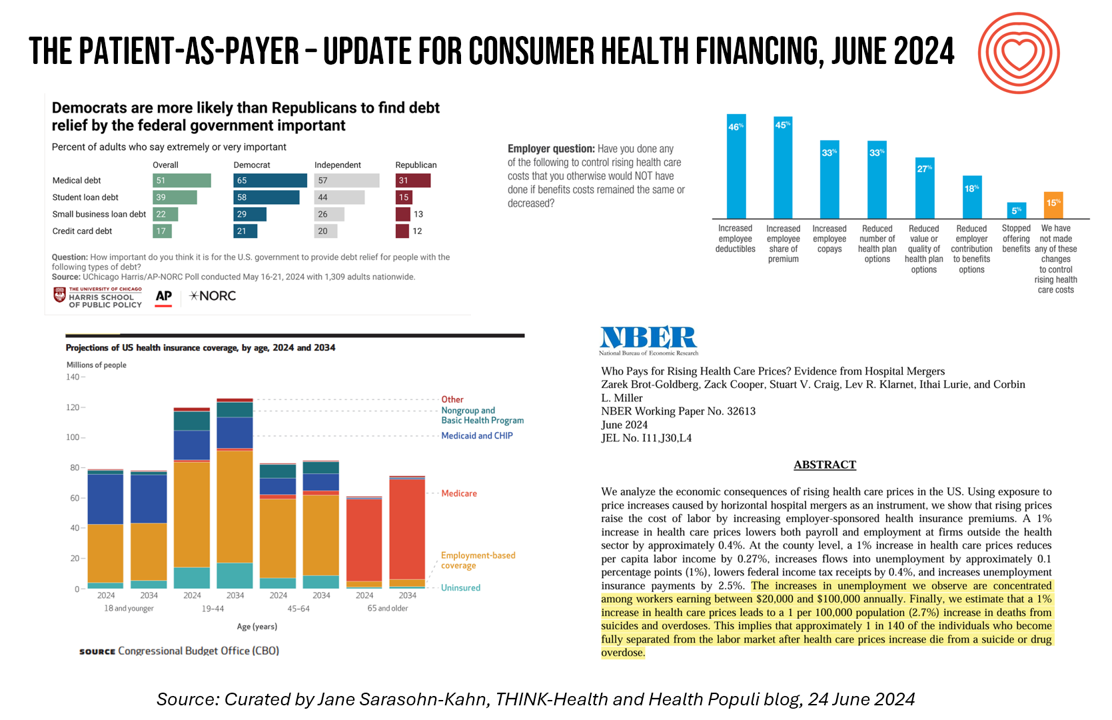
On June 11, Rohit Chopra, the Director of the Consumer Financial Protection Bureau (CFPB) announced the agency’s vision to ban Americans’ medical debt from credit reports. He called out that, “In recent years, however, medical bills became the most common collection item on credit reports. Research from the Consumer Financial Protection Bureau in 2022 showed that medical collections tradelines appeared on 43 million credit reports, and that 58 percent of bills that were in collections and on people’s credit records were medical bills.” Chopra further explained that medical debt on a consumer credit report was quite different than other kinds
Most Americans, Both Younger and Older, Worry About the Future of Medicare and Social Security
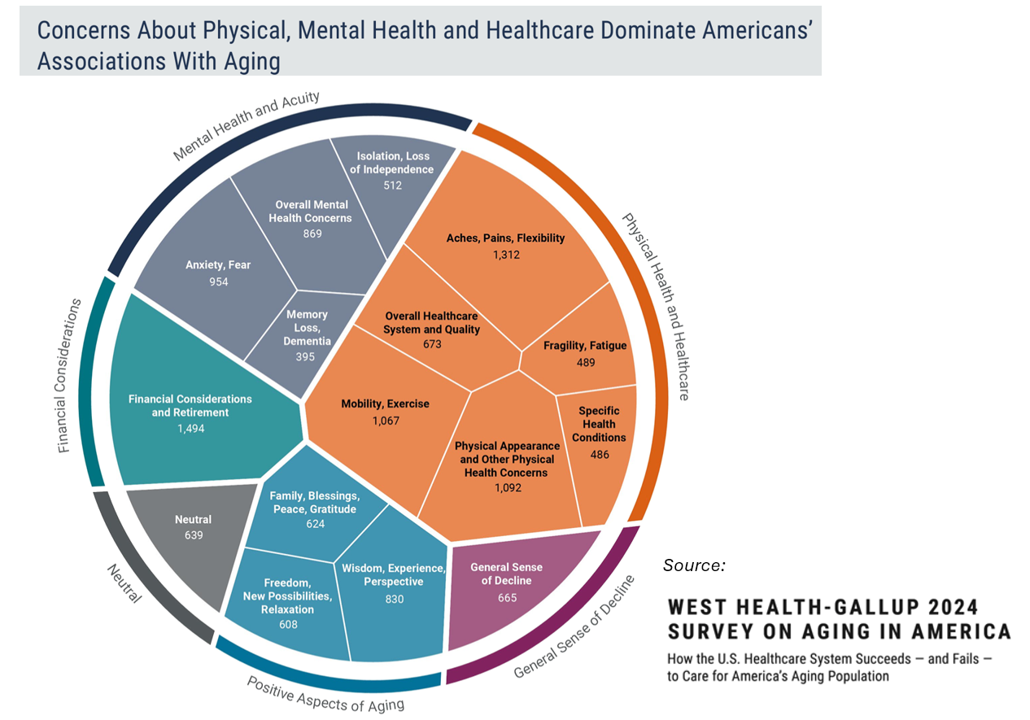
You would assume that most people over 50 would be worried about the financial future of Medicare to cover health care as those middle-aged Americans age. But a surprising two-thirds of young Americans between 18 and 29, and 7 in 10 between 30 and 39 years of age, are concerned that Medicare’s solvency will worsen leading to their not being able to receive Medicare when eligible to receive it, discovered in the 2024 Healthcare in America Report from West Health and Gallup. This year’s research focused on aging in America, exploring areas of U.S. health care system successes as well
The Thematic Roadmap for AHIP 2024: What the Health Insurance Conference Will Cover

Health insurance plans make mainstream media news every week, whether coverage deals with the cost of a plan, the cost of out-of-network care, prior authorizations, or cybersecurity and ransomware attacks, among other front-page issues. This week, AHIP (the acronym for the industry association of America’s Health Insurance Plans) is convening in Las Vegas for its largest annual 2024 meeting. We expect at least 2,400 attendees registered for the meeting, and they’ll not just be representing the health insurance industry itself; folks will attend #AHIP2024 from other industry segments including pharmaceuticals, technology, hospitals and health systems, and the investment and financial services
Inflation, Health, and the American Consumer – “The Devil Wears Kirkland”
The Wall Street Journal reported yesterday that surging hospital prices are helping to keep inflation high. Hospital costs rose 7.7% last month, the highest increase in 13 years. This chart from WSJ’s reporting illustrates the >2x change in the CPI for hospitals vs the overall rate of price increases. Hospitals are not alone in price cliffs, with health insurance premiums spiking last year at the fastest rate in a decade, the Labor Statistics data showed. “For patients and their employers, the increases have meant higher health-insurance premiums, as well as limiting wage
The Cost of Medical Care, Long-Term Care, and Prescription Drugs Top Older Americans’ Health-Related Concerns – With Social Security and Medicare Top of Mind
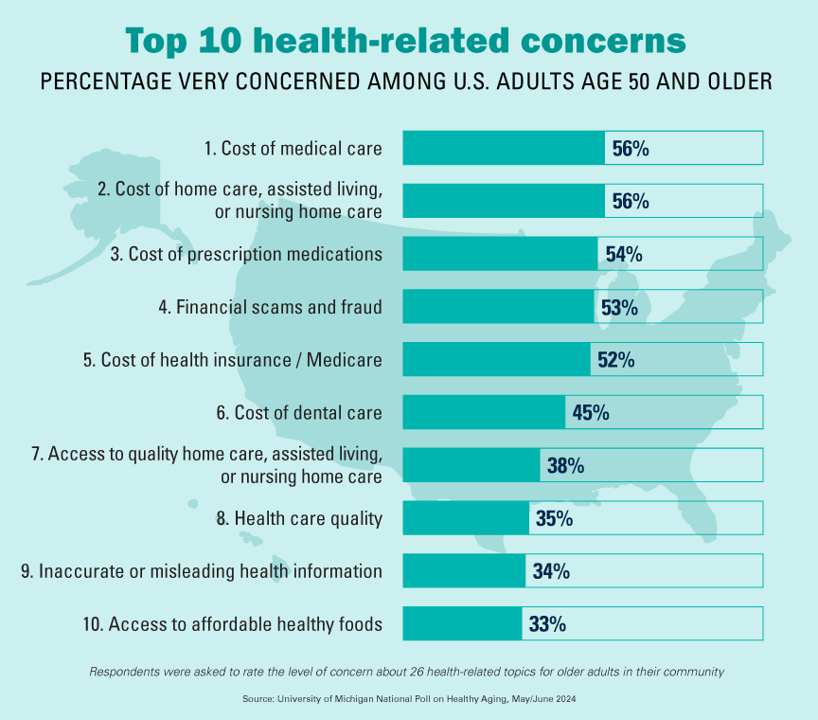
Among Americans 50 years of age and over, the top health-related concerns are Cost, Cost, and Cost — for medical services, for long-term and home care, and for prescription medications. Quality of care ranks lower as a concern versus the financial aspects of health care in America among people 50 years of age and older, as we learn what’s On Their Minds: Older Adults’ Top Health-Related Concerns from the University of Michigan Institute for Healthcare Policy and Innovation. AARP sponsors this study, which is published nearly every month of the year on the Michigan Medicine portal.
Most Americans See Rise of Mental Health Issues, Poorly Treated by the Health System (with a postscript on Walmart Health)
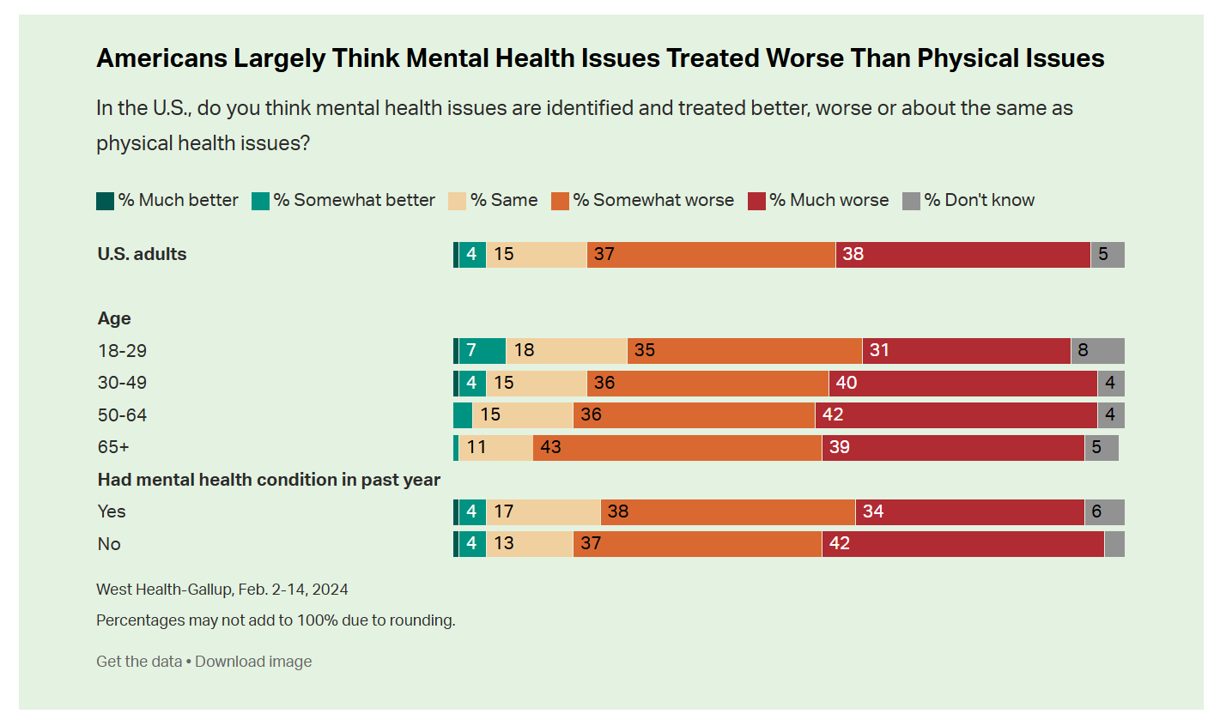
While people in the U.S. perceive a dramatic rise in mental health conditions among fellow health citizens growing over the past five years, people note barriers of cost, insufficient supply of providers, and stigma as barriers to getting care in the latest Gallup and West Health poll on the subject. In West Health’s words, three-quarters of Americans feel that, “mental health takes a back seat to physical health” in the U.S. A key theme of the research found that Americans find that mental health is not treated as well as physical health in
A Tax on Moms’ Financial and Physical Health – The 2024 Women’s Wellness Index
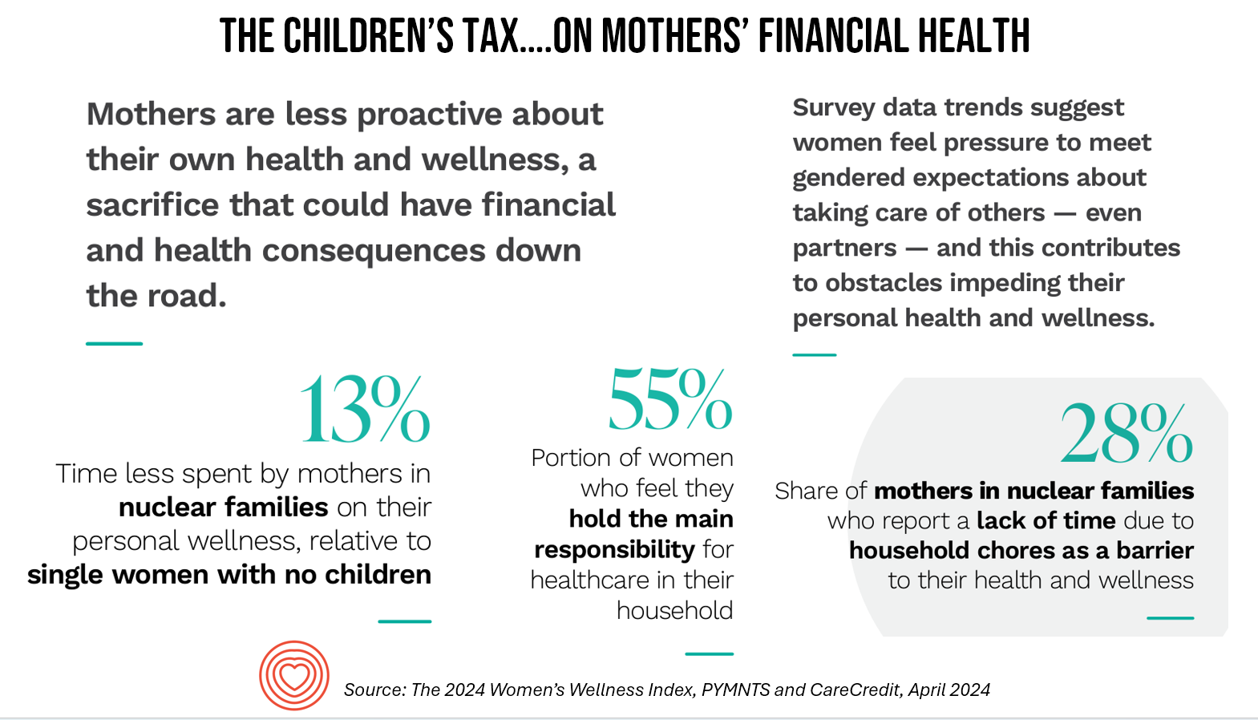
“Motherhood is the exquisite inconvenience of being another person’s everything” is a quote I turn to when I think about my own Mom and the remarkable women in my life raising children. With Mother’s Day soon approaching, the 2024 Women’s Wellness Index reminds us that the act of “being another person’s everything” has its cost. The Index, sponsored by PYMNTS in collaboration with CareCredit, was built on survey responses from 10,045 U.S. consumers fielded in November-December 2023. The study gauged women’s perspectives on finances, family, social life impacts on health and well-being. My key takeaway from
Healthcare 2030: Are We Consumers, CEOs, Health Citizens, or Castaways? 4 Scenarios On the Future of Health Care and Who We Are – Part 2
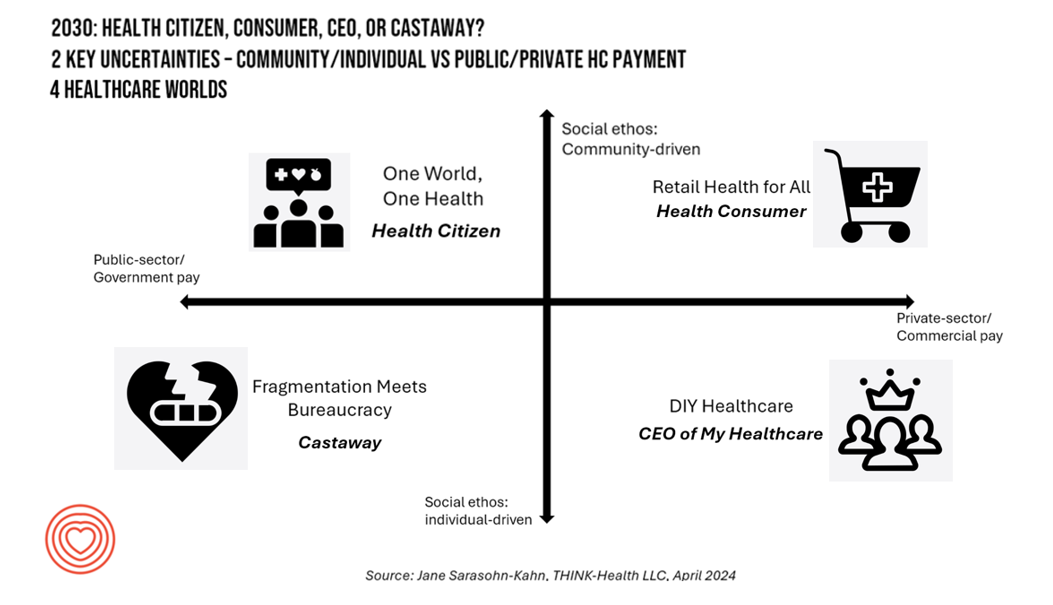
This post follows up Part 1 of a two-part series I’ve prepared in advance of the AHIP 2024 conference where I’ll be brainstorming these scenarios with a panel of folks who know their stuff in technology, health care and hospital systems, retail health, and pharmacy, among other key issues. Now, let’s dive into the four alternative futures built off of our two driving forces we discussed in Part 1. The stories: 4 future health care worlds for 2030 My goal for this post and for the AHIP panel is to brainstorm what the person’s
Healthcare 2030: Are We Consumers, CEOs, Health Citizens, or Castaways? 4 Scenarios On the Future of Health Care and Who We Are – Part 1
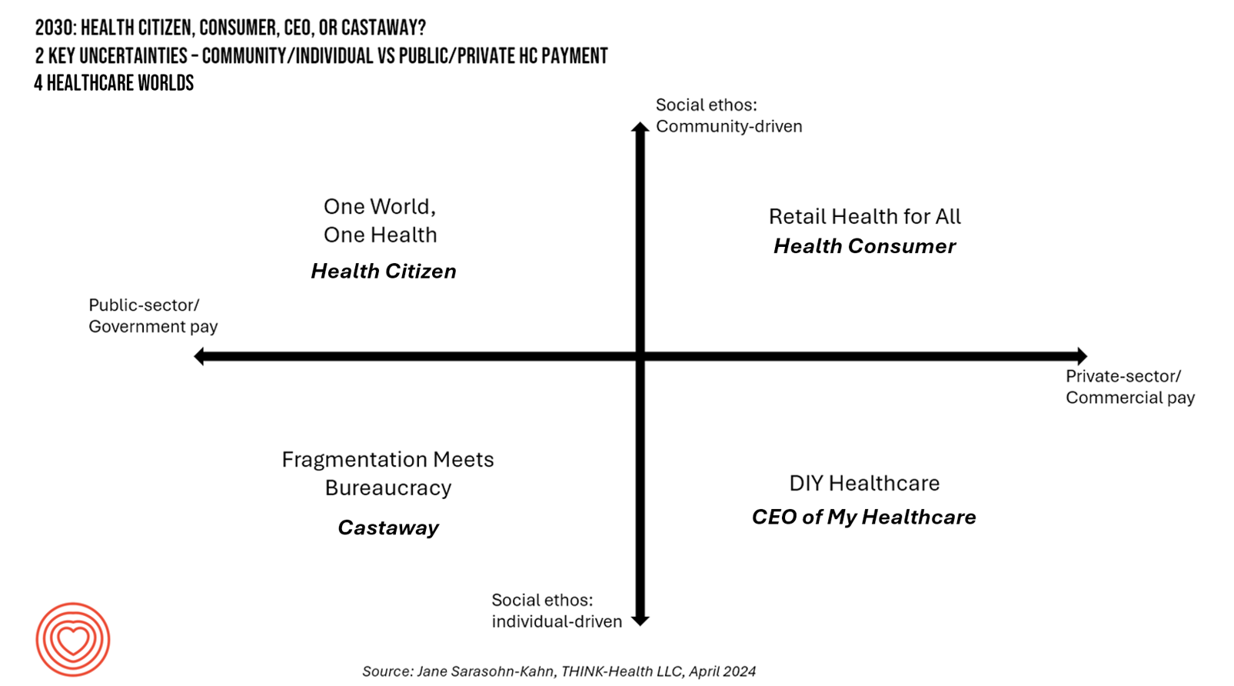
In the past few years, what event or innovation has had the metaphorical impact of hitting you upside the head and disrupted your best-laid plans in health care? A few such forces for me have been the COVID-19 pandemic, the emergence of Chat-GPT, and Russia’s invasion of Ukraine. That’s just three, and to be sure, there are several others that have compelled me to shift my mind-set about what I thought I knew-I-knew for my work with organizations spanning the health care ecosystem. I’m a long-time practitioner of scenario planning, thanks to the early education at the side of Ian
A Springtime Re-Set for Self-Care, From Fitness to Cozy Cardio: Peloton’s Latest Consumer Research
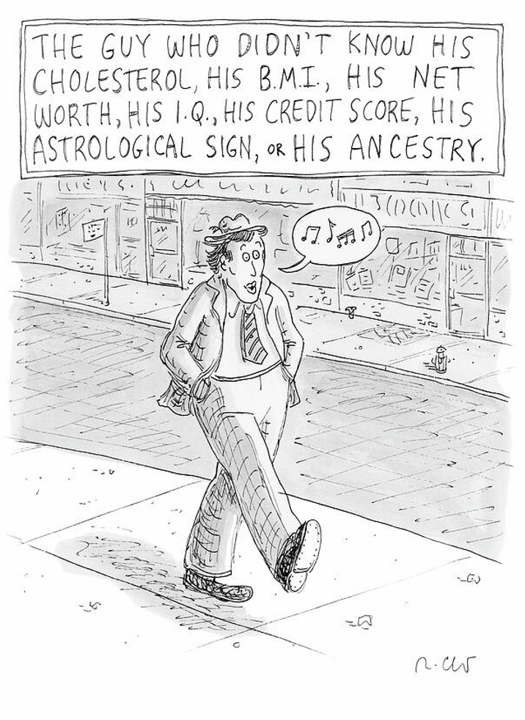
How many people do you know that don’t know their cholesterol or their BMI, their net worth or IQ, their credit score, astrological sign, or ancestry pie-chart? Chances are fewer and fewer as most people have gained access to medical records and lab test results on patient portals, calorie burns on smartwatches, credit scores via monthly credit card payments online, and completing spit tests from that popularly gifted Ancestry DNA test kits received during the holiday season. Meet “The Guy Who Didn’t Know His Cholesterol” conceived by Roz Chast,
Peering Into the Hidden Lives of Patients: a Manifesto from Paytient and Nonfiction
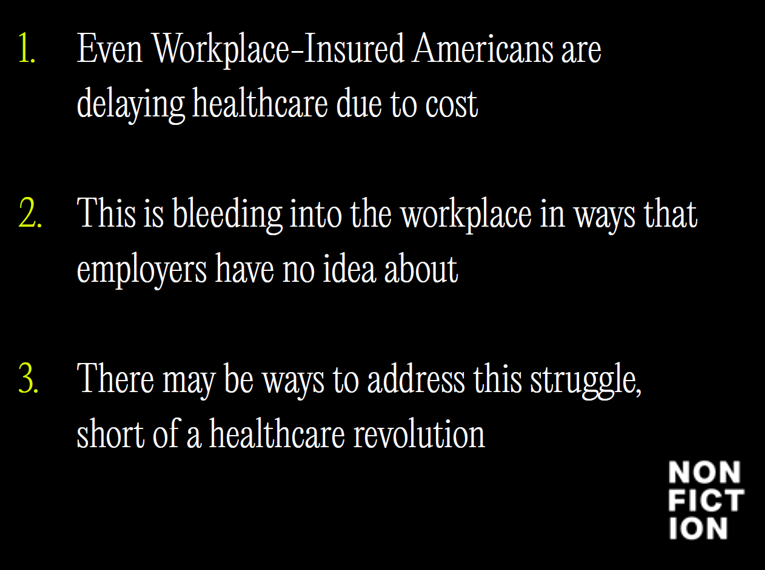
Having health insurance in America is no guarantee of actually receiving health care. It’s a case of having health insurance as “necessary but not sufficient,” as the cost of deductibles, out-of-pocket coinsurance sharing, and delaying care paint the picture of The Hidden Lives of Workplace-Insured Americans. That’s the title of a new report that captures the results of a survey conducted in January 2024 among 1,516 employed Americans who received employer-sponsored health insurance. The study was commissioned by Paytient, a health care financial services company, engaging the research firm Nonfiction to conduct the study
AI: Patients Included

“Clinical transformation with AI is easier without patients.” When Dr. Grace Cordovano heard this statement on a panel of physicians convening to share perspectives on the future of AI in health care held in early March 2024, the board-certified patient advocate felt, in her words, “insulted on behalf of the patient communities I know that are working tirelessly to advance AI that works for them.” “The healthcare ecosystem and policy landscape must formally recognize patients as end-users and co-creators of AI,” Cordovano wrote to me in an e-mail exchange. “Patients, their care partners, caregivers, and advocates are already utilizing AI
A Health Consumer Bill of Rights: Assuring Affordability, Access, Autonomy, and Equity
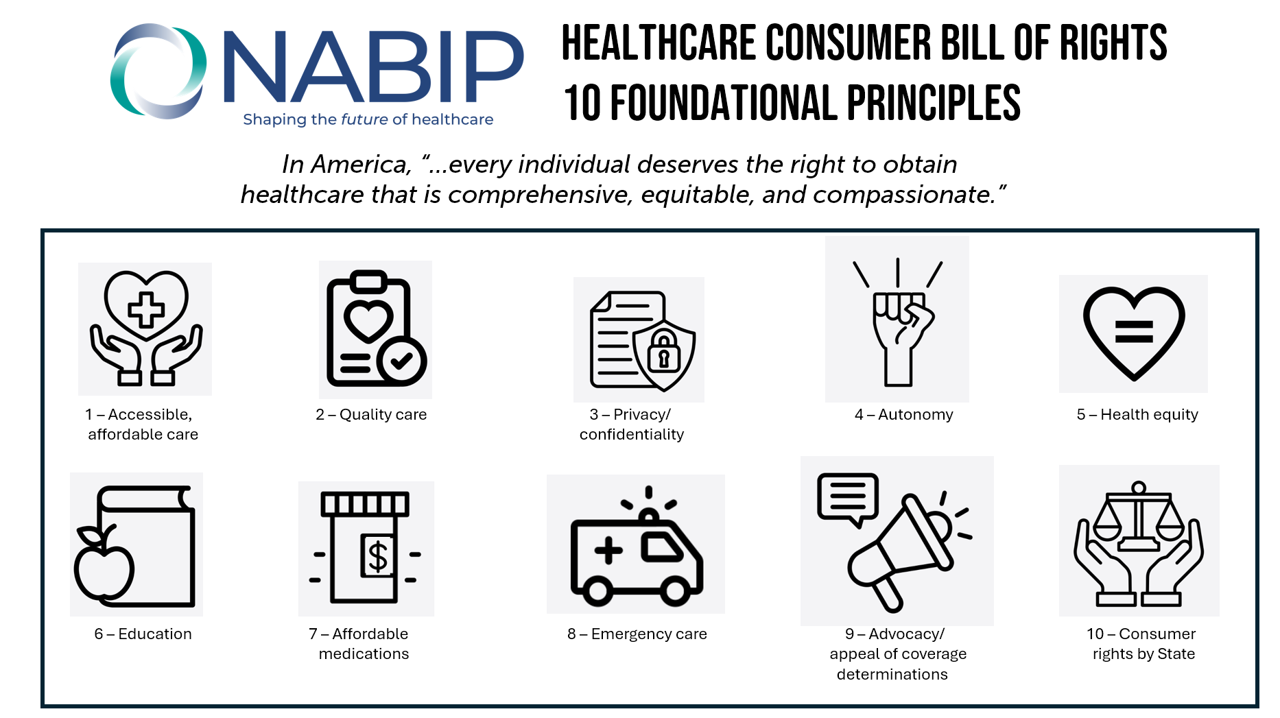
Let’s put “health” back into the U.S. health care system. That’s the mantra coming out of this week’s annual Capitol Conference convened by the National Association of Benefits and Insurance Professionals (NABIP). (FYI you might know of NABIP by its former acronym, NAHU, the National Association of Health Underwriters). NABIP, whose members represent professionals in the health insurance benefits industry, drafted and adopted a new American Healthcare Consumer Bill of Rights launched at the meeting. While the digital health stakeholder community is convening this week at VIVE in Los Angeles to share innovations in health tech, NABIP
Americans Come Together in Worries About Medical Bills, the Cost of Health Care, and Prescription Drug Costs
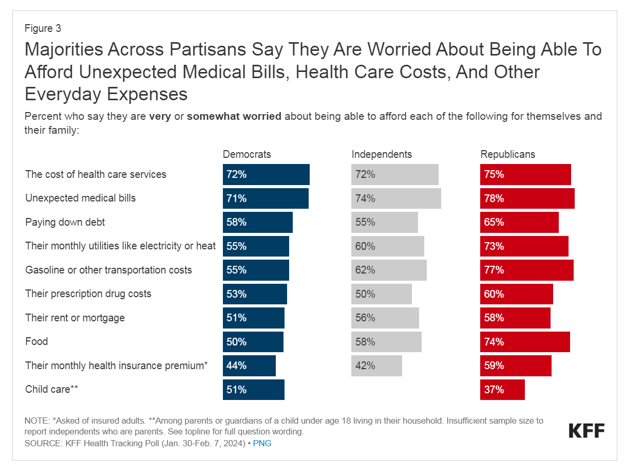
In the U.S., national news media, Federal statistics, dozens of business leaders and the Federal Reserve Bank have been talking about an historically positive American economy on a macro level. But among individual residents of the U.S., there is still a negative feeling about the economy in a personal context, revealed in the Kaiser Family Foundation Health Tracking Poll for February 2024. I’ve selected three figures of data from the KFF’s Poll which make the point that in peoples’ negative feelings about the national economy, their personal feelings about medical costs rank high
As Food-As-Medicine Gains Momentum, Watch for Dietitians and Pharmacists to Sit at The FaM Table – And A Lesson from George Washington Carver
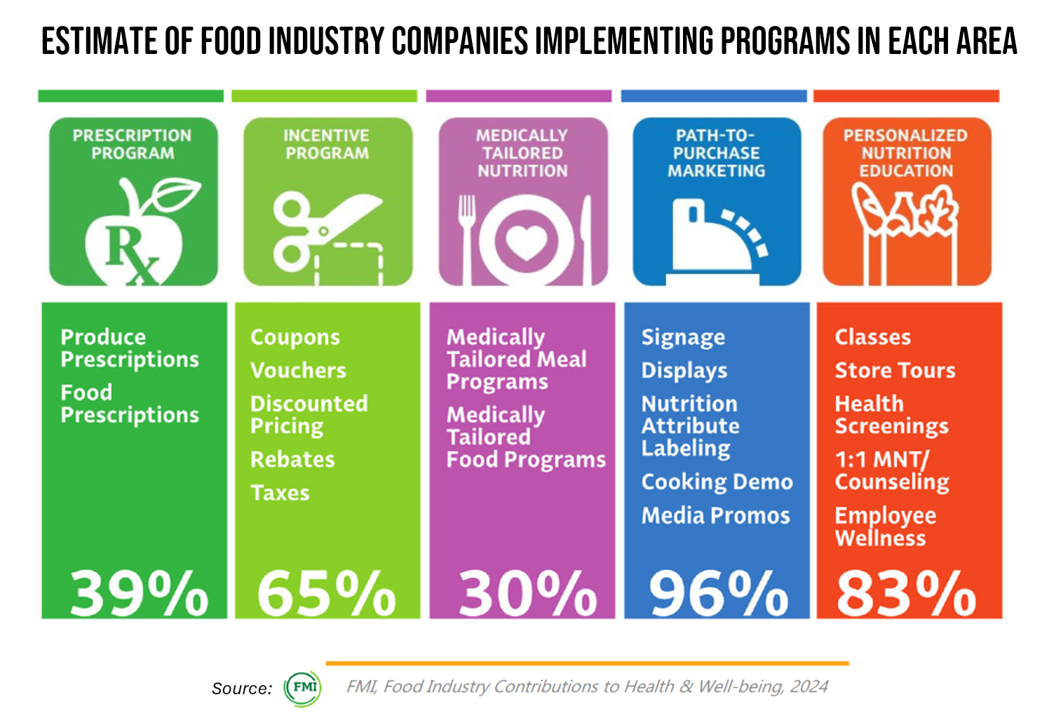
The food industry, both retail food chains and food suppliers, has found health and nutrition are having a positive impact on their businesses both for margins and for missions, we learn in the latest annual survey on Food Industry Contributions to Health & Well-being, 2024, from FMI. Most retail food channels operate pharmacies, three in five operate clinics in stores, and 2 in 5 of the clinics are health system-owned and operated. FMI, the Food Industry Association, conducted this industry poll in October 2023 among food retail and supplier members, totaling 36 organizations representing over
People With Medical Debt Are Much More Likely to Be in Financial Distress in America
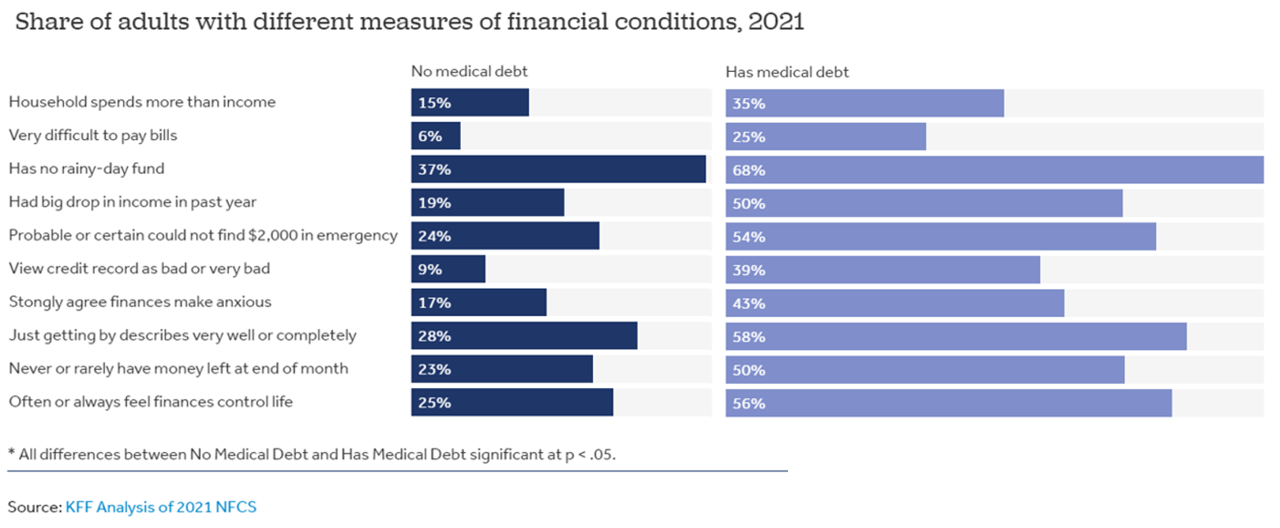
How financially vulnerable are people with medical debt in the U.S.? Significantly more, statistically speaking, we learn from the latest survey data revealed by the National Financial Capabilities Study (NFCS) from the FINRA Foundation. The Kaiser Family Foundation and Peterson Center on Healthcare analyzed the NFCS data through a consumer health care financial lens with a focus on medical debt. Financial distress takes many forms, the first chart inventories. People with medical debt were most likely lack saving for a “rainy day” fund, feel they’re “just getting by” financially, feel their finances control their life, and
Nurses Continue to Rank Highest in Ethics and Honesty for Professions in the US — But Peoples’ Opinions for All Jobs, Including Nursing, Have Eroded in Gallup’s Latest Poll
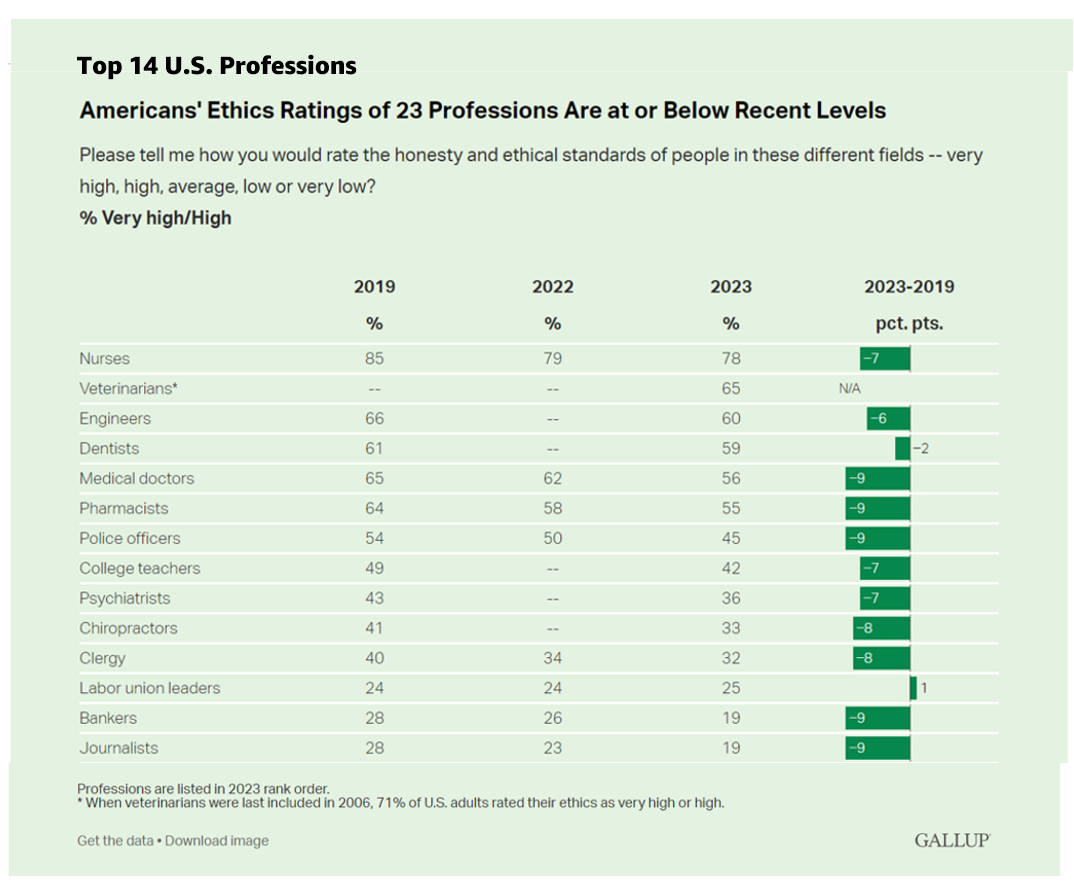
Ratings of honesty and ethics in professions have fallen down in the U.S., we find the Gallup Poll’s annual assessment of rankings for occupations that touch peoples’ lives in America. Each year for over a decade, nurses have ranked highest in this survey, representing the most-trusted profession working in America. However, even nurses’ ethic-equity has dropped in the hearts and minds of Americans over the past four years, falling 7 percentage points from a high of 85% of citizens ranking nurses at the greatest level of honesty and ethics to
Why Elevance Health is “Prescribing” Phones for Members
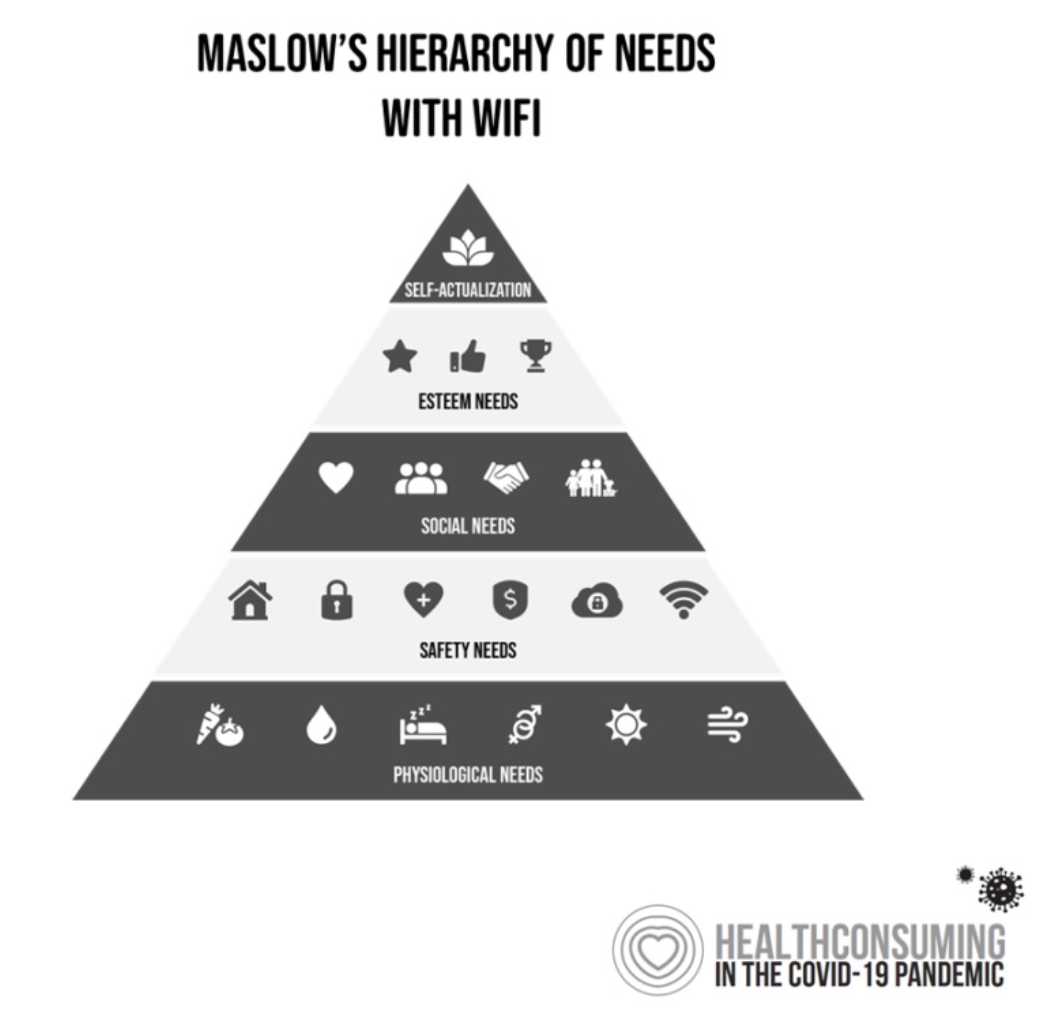
You’ve heard of food-as-medicine and exercise-as-medicine. Now we see the emergence of telecomms-as-medicine — or more specifically, a driver of health, access, and empowerment. Elevance Health, the health plan organization serving 117 million members, launched a program to channel mobile phones and data plans into the hands of some Medicaid plan enrollees, explained in the organization’s press release on the program. To implement this program and get connectivity into consumers’ hands and homes, Elevance Health is collaborating with several telecomms companies including Verizon, AT&T, Samsung, and T-Mobile. Funding is supported by the FCC’s Affordable Connectivity Program.
The Trust-Innovation Gap – Welcome to the 2024 Edelman Trust Barometer
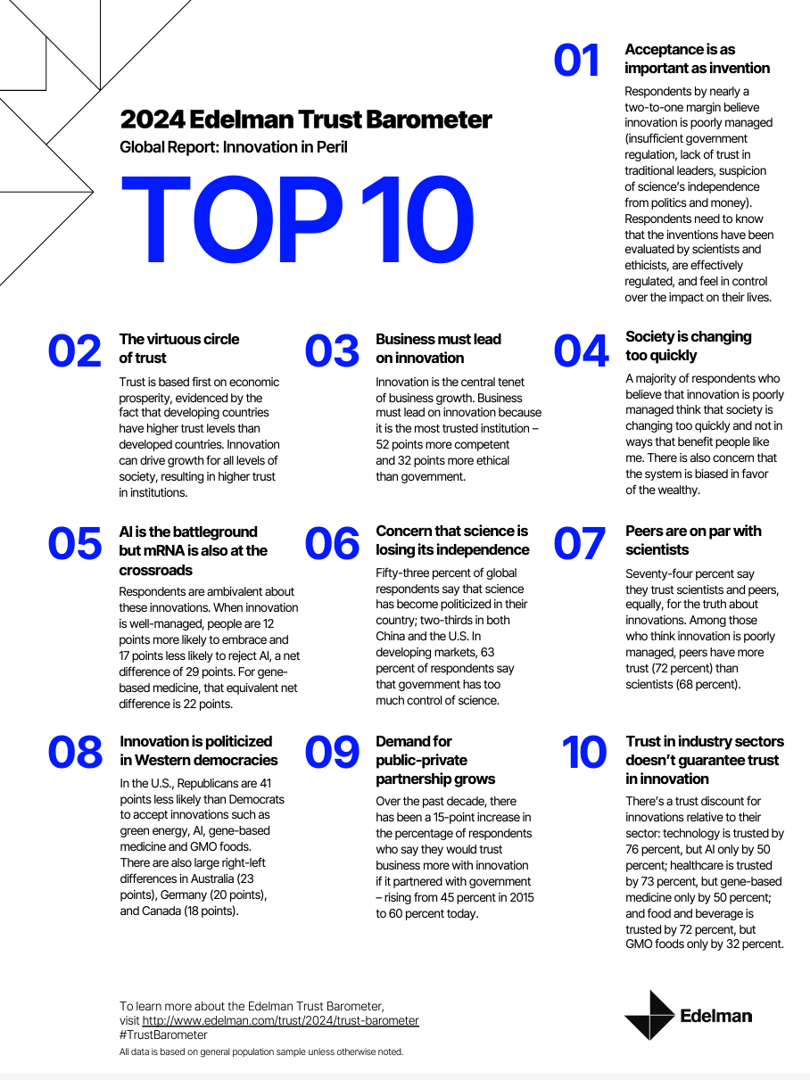
If it’s January, it’s Davos-time — that is the annual meeting of the World Economic Forum convening global experts and passionistas focused on big ideas and challenges facing us mere humans living on Planet Earth. Parallel with the WEF is the annual publication of the 2024 Edelman Trust Barometer, now in its 24th year, focusing on global citizens’ concerns that unite people around the world. For the 2024 study, Edelman’s team fielded the survey in November 2023, collecting input from over 32,000 people living in 28 countries. About 1,150 interviews (plus or minus) were done in each nation which included
Access to Technology Is the New Pillar for Well-Being: CES & the UN Partner for Human Security for All
In kicking off #CES2024, CTA’s researchers noted the acceleration of global connectivity, with gaps in peoples’ ability to connect depending where they live: by region, the percent of people connected to the internet today are, according to CTA’s data, 92% in the U.S. 87% in the E.U. 76% in Latin America 73% in China 55% in Nigeria 46% in India. Such gaps in connectivity threaten peoples’ individual well-being, but also social and political stability that impacts the entire world’s security. And not to overlook, as well, the promise of AI to do good at scale at the enterprise-level, globally.
The Health Consumer in 2024 – The Health Populi TrendCast
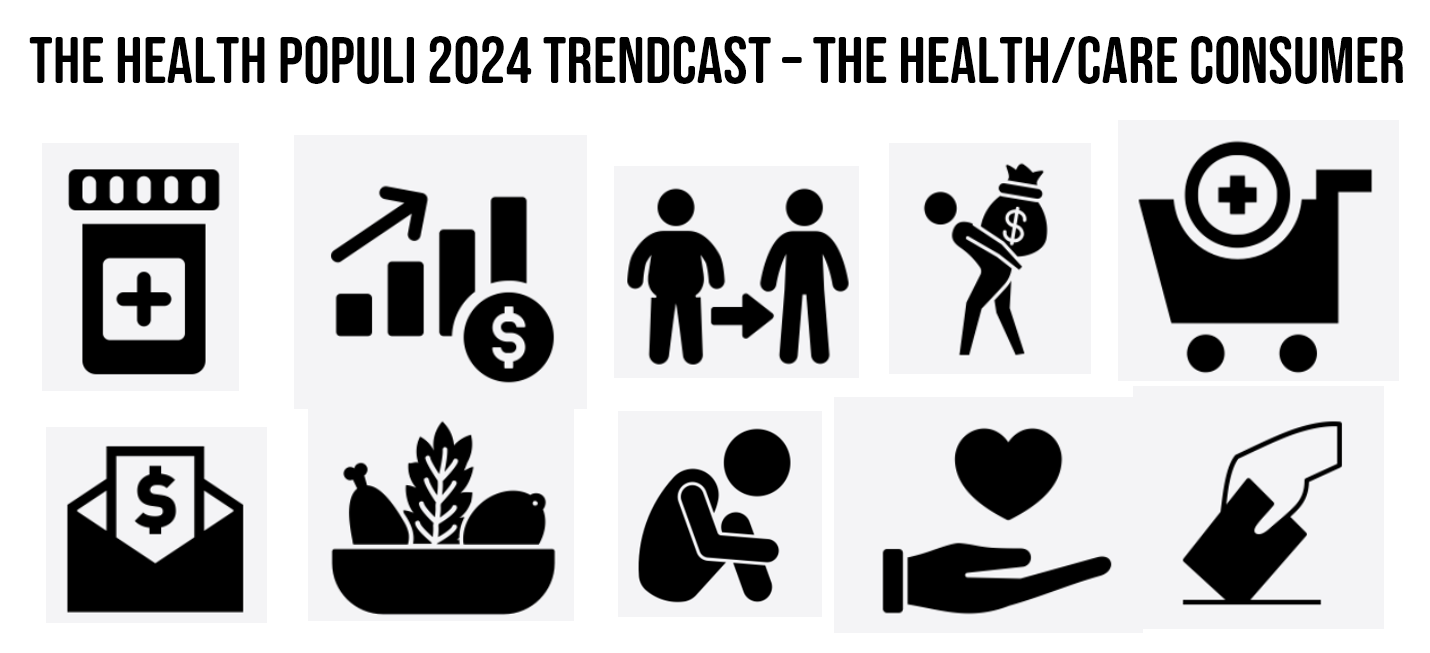
At the end of each year since I launched the Health Populi blog, I have put my best forecasting hat on to focus on the next year in health and health care. For this round, I’m firmly focused on the key noun in health care, which is the patient – as consumer, as Chief Health Officer of the family, as caregiver, as health citizen. As my brain does when mashing up dozens of data points for a “trendcast” such as this, I’ll start with big picture/macro on the economy to the microeconomics of health care in the family and household,
An Extraordinary Life and Voice: A Call-to-Action from Casey Quinlan, featured in the Journal of Participatory Medicine
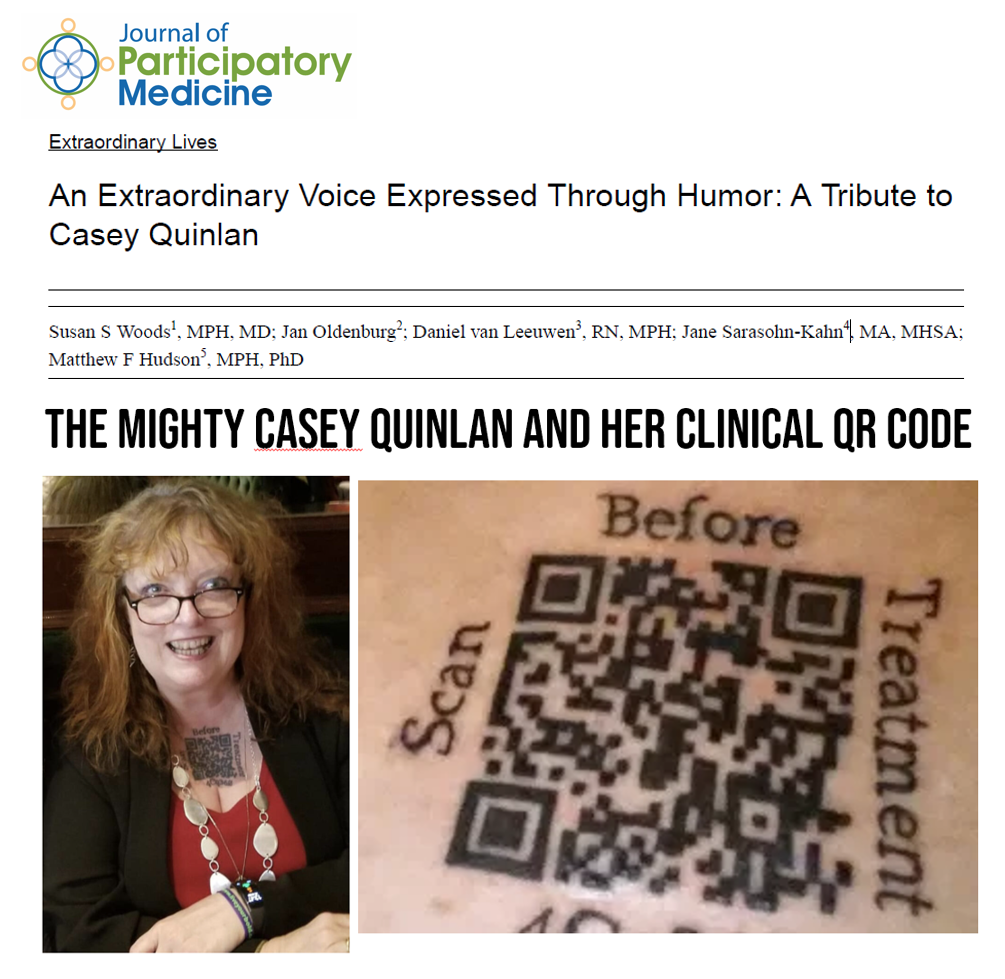
It is about time that a healthcare journal features examples of patient-leaders who have pioneered activism, innovation, and The first exemplar in this vein is Casey Quinlan, whom we lost all-too-soon earlier this year on 24th August. A team of her appreciative colleagues and friends wrote up the first in a new series called “Extraordinary Lives” published in the Journal of Participatory Medicine (JPM) titled “An Extraordinary Voice Expressed Through Humor: A Tribute to Casey Quinlan.” I played a minor role in getting this essay to the finish line, and am grateful to have had the opportunity to do so
Inflation and the cost of health care top U.S. voters’ issues for 2024 elections
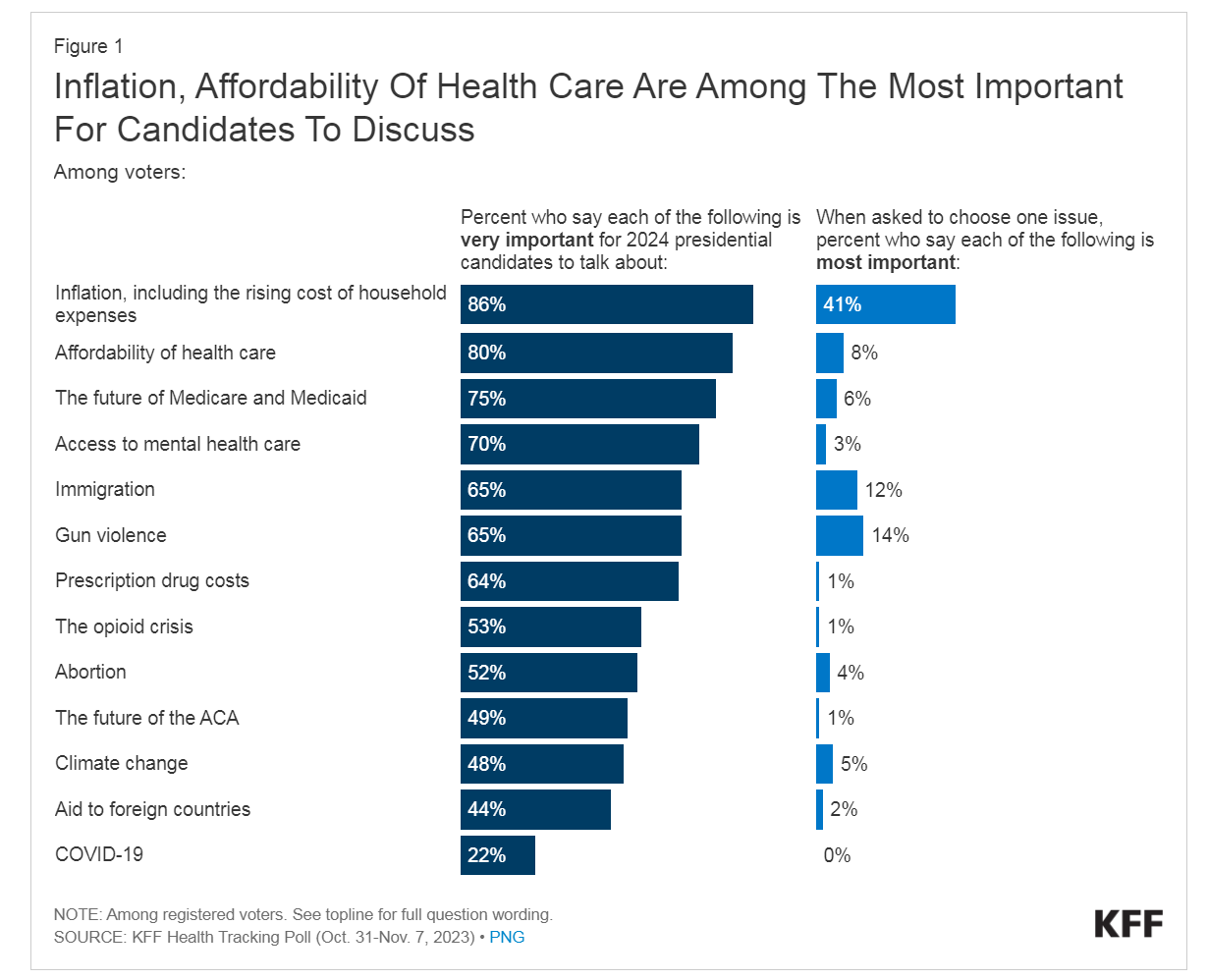
The cost of living ranks top in U.S. voters’ minds among many issues Americans are feeling and following in late 2023. A close second in line is affordability of health care, as consumers’ household budgets must make room for paying medical bills — with prescription drug costs also very important as a discussion topic for 2024 Presidential candidates, we learn from the latest KFF Health Tracking Poll published 1 December. The monthly study focused on U.S. voters’ top issues and perspectives on the health system and care approaching the new year of 2024. KFF fielded the study among 1,301 U.S.
Workforce Shortages and Health Care Cost Pressures Inspire RSNA 2023 (and yes, AI’s in the mix, too)
Radiology and radiologists play starring roles in our health care, with he core work flow of diagnostic imaging supporting prevention, disease detection, diagnosis, delivering and monitoring therapy, linking specialists to other providers in telehealth, and as a medium for teaching clinicians, patients and caregivers. As health care delivery continues to change and adapt to technological innovations, demographic shifts, and economic-social-political forces, so, too, are the roles of radiology and radiologists in motion. Every year when American Thanksgiving weekend comes along, you’ll find folks involved in digital imaging flocking to chilly Chicago to convene at McCormick Place for
A Digital Health Checkup for the US – #1 in AI, Meh in Interoperability – An OECD Update
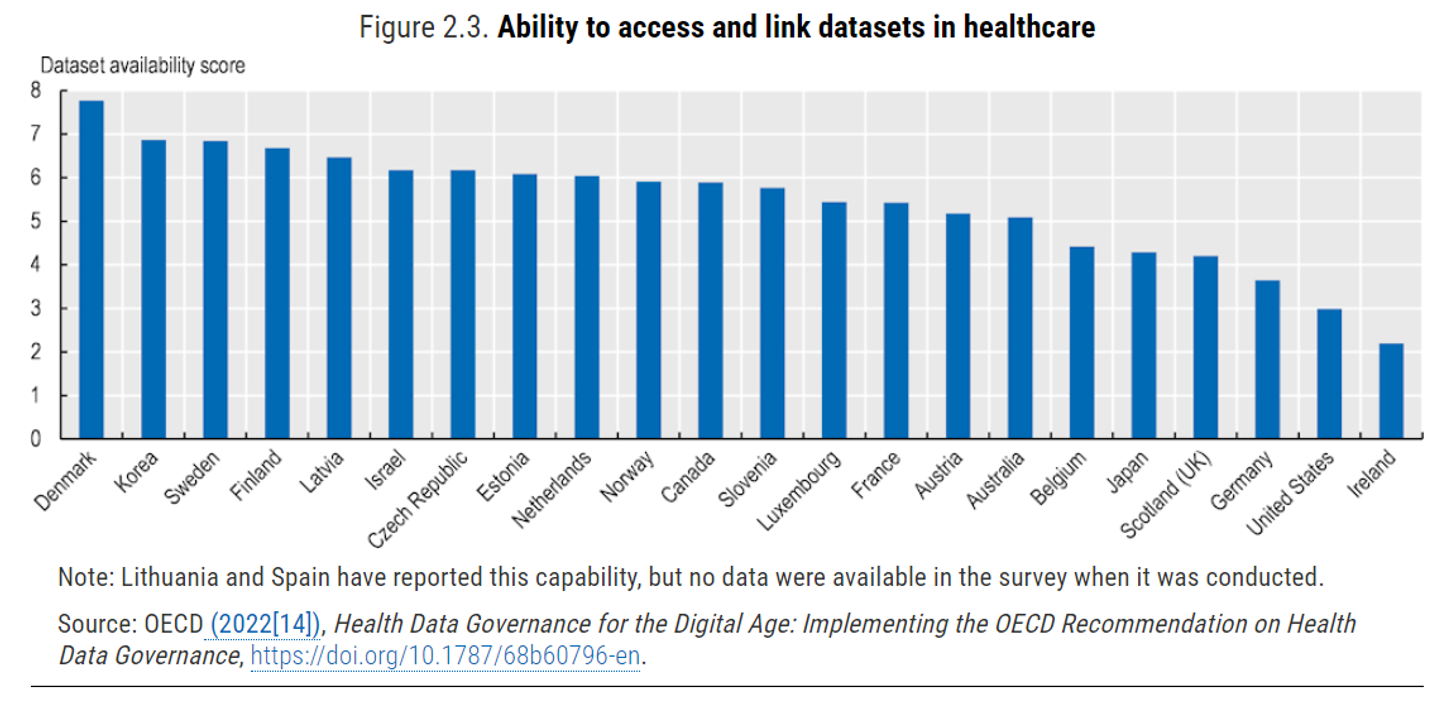
While health care has been slower than other industries to leverage digital transformation, COVID-19 accelerated change — revealing some key barriers blocking the potential for more fulsome transformation, the OECD explains in its latest version of Health At A Glance for 2023 with a detailed chapter on “digital health at a glance.” The OECD report assesses digital health maturity across 22 countries: in addition to the U.S., the report provides details digital health traits in (alphabetically) Australia, Austria, Belgium, Canada, Czech Republic, Denmark, Estonia, Finland, France, Germany, Ireland, Israel, Japan, Korea,
Everybody is Stressed in America, and It’s Not Good for Our Health: the 2023 Update from the American Psychological Association
The U.S. is “a nation recovering from collective trauma,” the according to the latest survey on Stress in America 2023 from the American Psychological Association (APA). The APA has been quantifying Stress in America since 2007; for context, at the end of that year The Great Recession kicked in, and in response President Obama’s team put together assistance to bolster the national economy, jobs, and health technology (codified in the American Recovery and Reinvestment Act). American health citizens are experiencing a deja vu in 2023 akin to their financial stress experienced in the APA 2008 Stress
Clinician Burnout – Lessons from BDO’s Clinician Experience Survey for Patient Experience and Primary Care
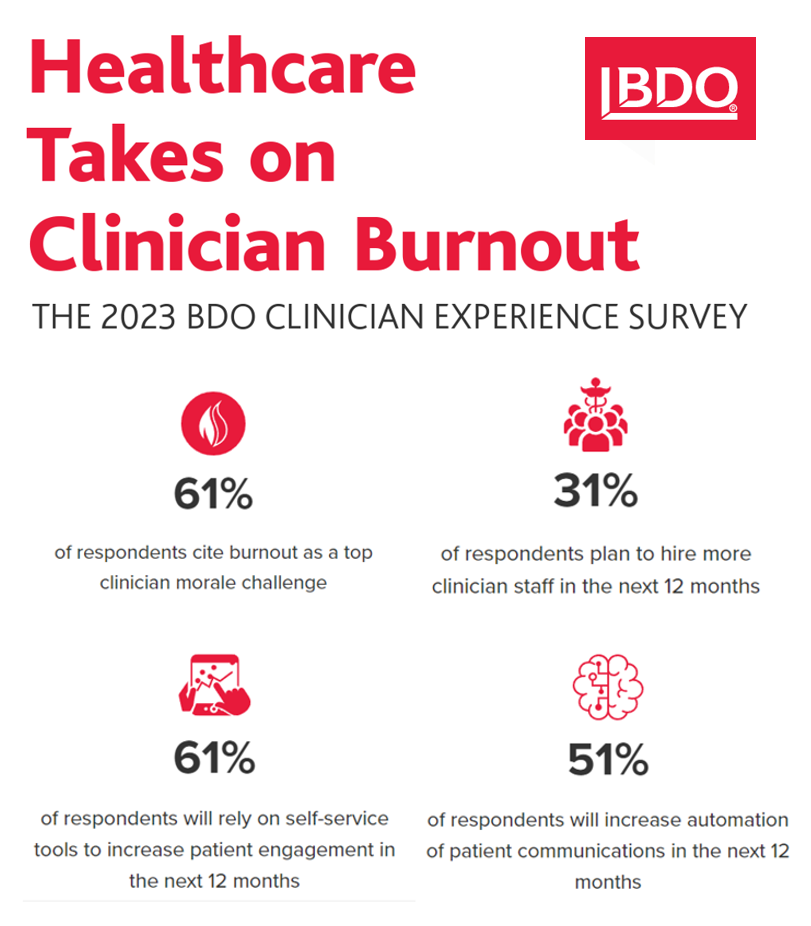
Clinicians’ feeling burnout is the top morale challenge facing U.S. doctors, driven by turnover and understaffing, compassion fatigue, and challenges using digital tools — think EHRs. The 2023 BDO Clinician Experience Survey “takes on” clinician burnout, connecting the strategic dots between the clinician experience and the patient experience. BDO surveyed 153 clinician leaders in June and July 2023; one-half of the clinicians were executive leaders, and one-fourth were each direct clinician providers and clinician directors. Roles reached into the C-suite (one-third), and other levels in their organizations.
AI is the New Health Literacy Challenge for Patients and the Health/Care Industry
Patients’ comfort in artificial intelligence is linked to familiarity with the technology, a consumer survey from GlobalData learned. Among patients unfamiliar with AI, 42% are uncomfortable, and another 50% feel neither comfortable nor uncomfortable with the technology. However, among patients familiar with AI, 60% feel comfortable with visiting a medical practice that uses AI. Welcome to the new health literacy challenge the health care sector will have to deal with, and soon: lack of patients’ awareness of AI, its promises and pitfalls. “It is imperative to prioritize patient education regarding this technology,” Urte Jakimaviciute
How Healthcare and Patients Can Benefit From a “Simplicity Premium”
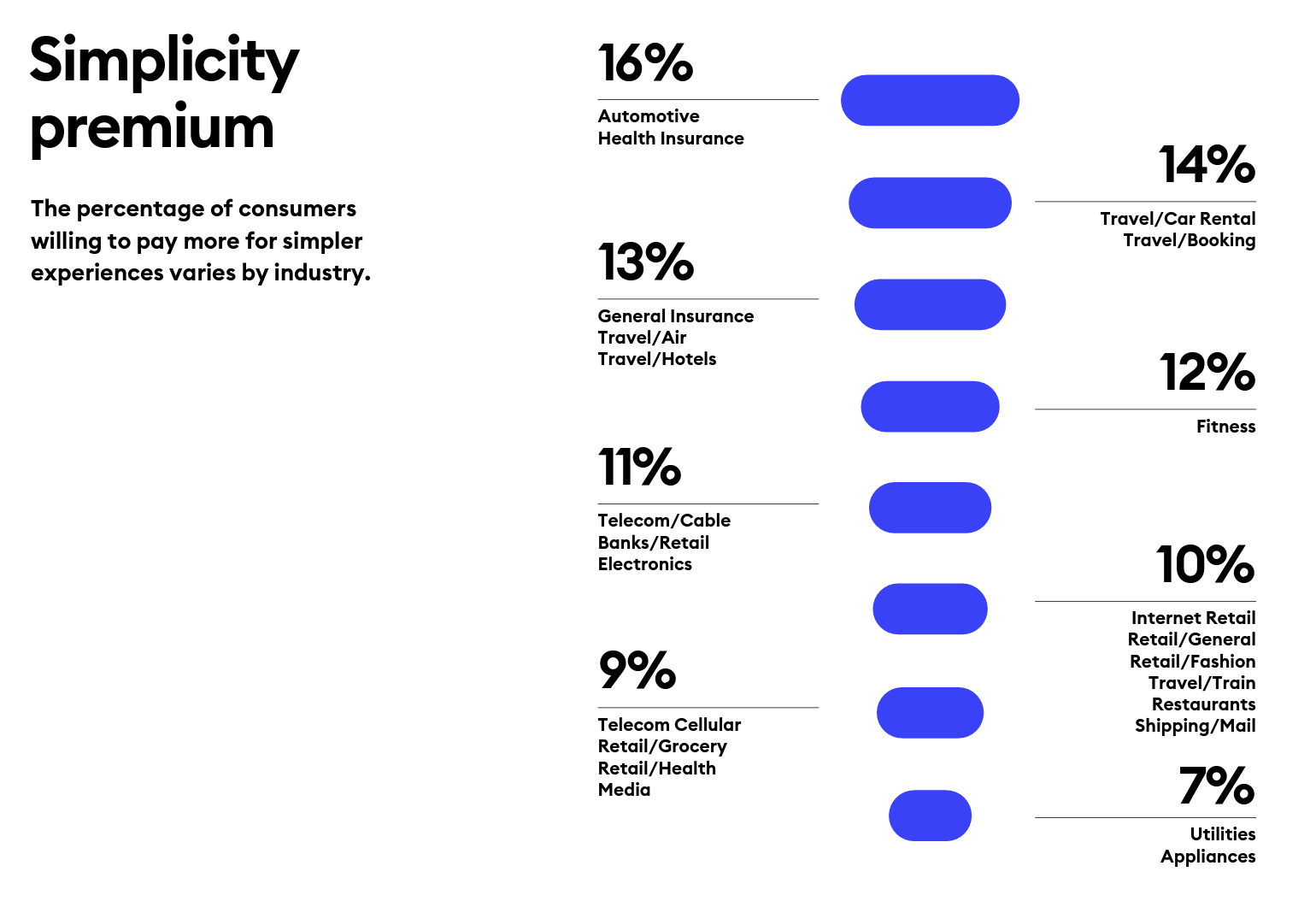
“Simplicity is the ultimate sophistication,” Leonardo DaVinci wrote through his lens on innovation. Simplicity can be a transformational cornerstone of health/care innovation, we learn from Siegel+Gale’s report on the World’s Simplest Brands Tenth Edition (WSBX). Siegel+Gale found the most consumers are willing to pay more for simpler brand experiences and are more likely to recommend a brand for those simpler experiences, as well. Across the 15,000 consumers the firm polled globally (across nine countries), five key factors underpin peoples’ experiences with the enchantingly “simple” companies: they are, Easy to understand Transparent and honest Caring for
Food-As-Medicine Grows Its Cred Across the Health/Care and Retail Ecosystem
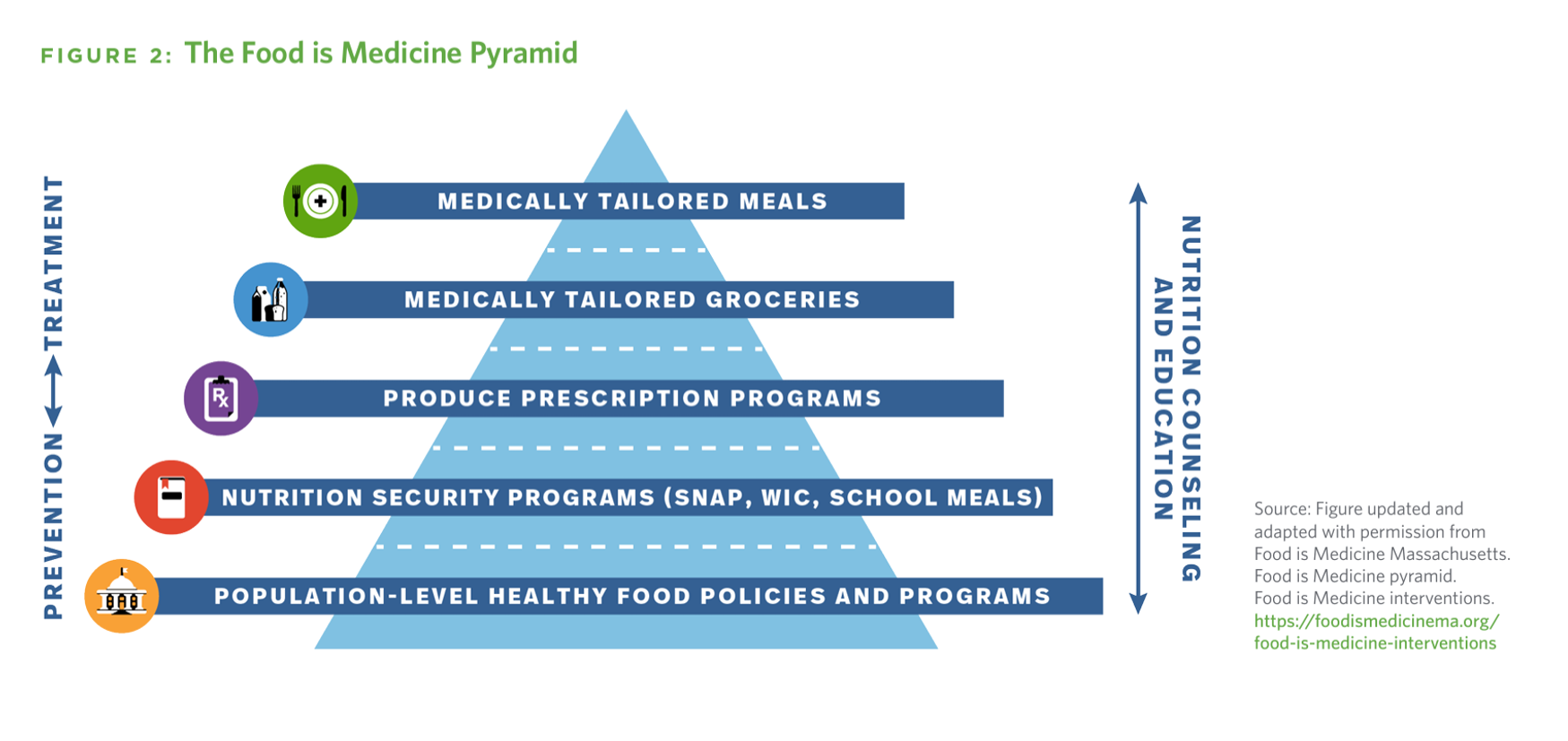
In the nation’s search for spending smarter on health care, the U.S. could save at least $13 billion a year through deploying medically-tailored meals for people enrolled in Medicare, Medicaid, and private insurance programs, according to the True Cost of Food, research published by the Tufts School of Nutrition Science and Policy collaborating with The Rockefeller Foundation. It’s been one year since the White House convened the Conference on Hunger, Nutrition, and Health, kicking off the Biden Administration’s national strategy to improve health citizens’ access to healthy food as a matter of public health and economic security.
The 2023 Health Economy – The Evolving Primary Care and Retail Health Convergence Through Trilliant Health’s Lens
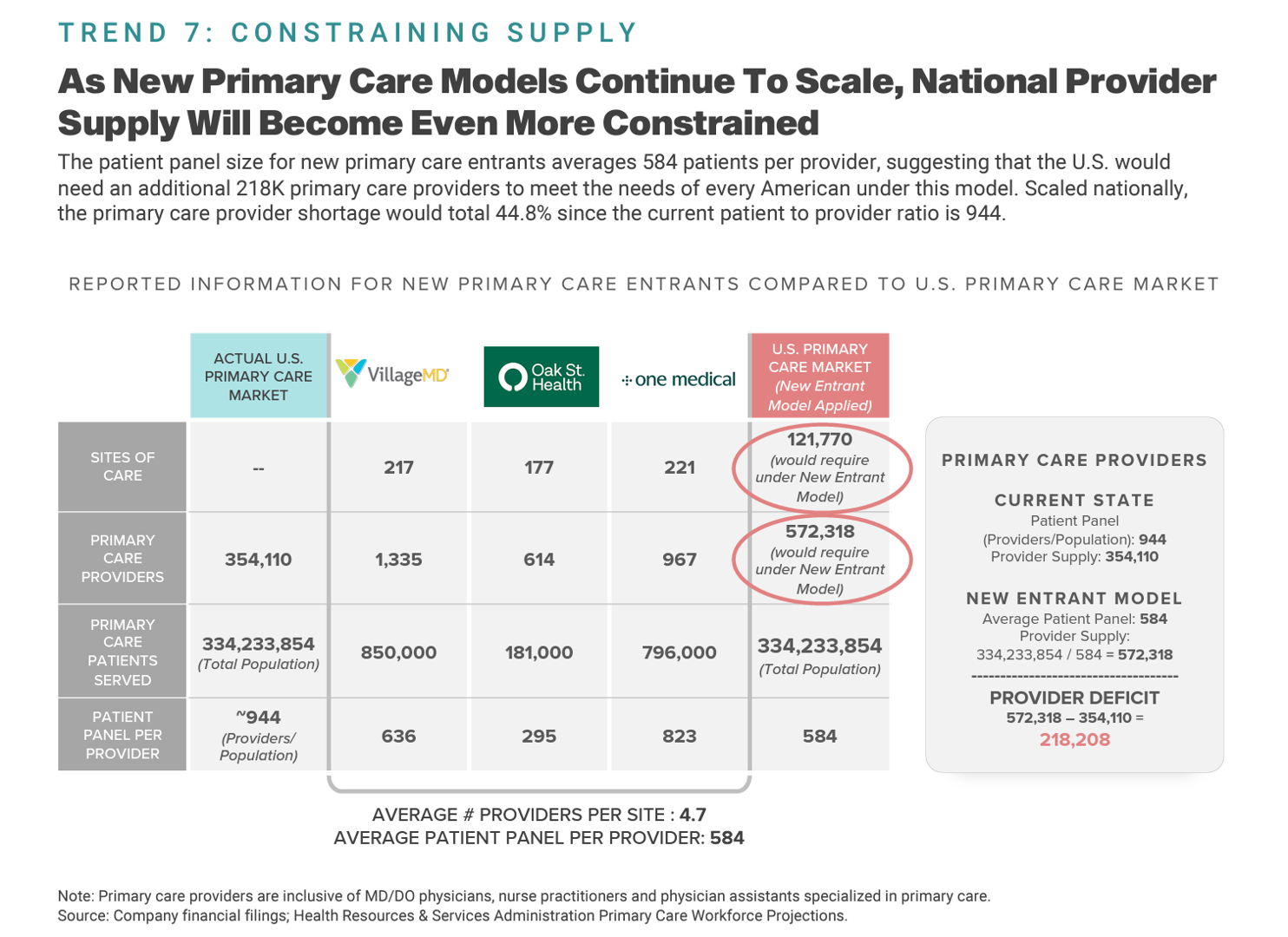
In U.S. health care’s negative-sum game, stakeholders who survive and win that game will have to deliver value-for-money, we learn from Trilliant Health’s 2023 Trends Shaping the Health Economy Report. “Report” is one word for this nearly 150-page compendium of health care data that is an encyclopedic treasure trove for health service researchers, marketers, strategists, journalists, and those keen to explore questions about the current state of health care in America. As Sanjula Jain points out in the Report’s press release, the publication resembles another huge report many of us appreciated for
The Omnichannel Imperative for Healthcare: Supporting Telehealth Awareness Week 2023
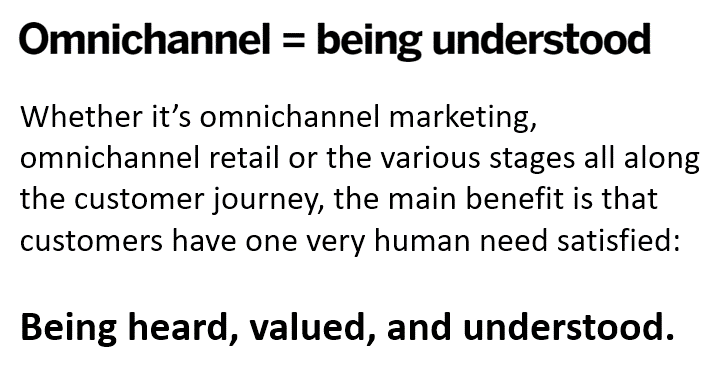
“What omnichannel really means: hearing the customer wherever they are and making them feel heard, valued, and understood.” That statement comes from Qualtrics’ explanation of omnichannel experience design. The very human needs of feeling one is heard, is valued, and is understood, underpin the rasion d’etre of omnichannel marketing. And these very values are those that underpin the trust between patients and providers and the large healthcare ecosystem. It’s Telehealth Awareness Week, led by the ATA. I celebrate and support the effort; this Health Populi post explains the Association’s mantra that Telehealth is Health, and that
Slip Slidin’ Away: the Reputations of Pharma and Healthcare in the U.S. Decline in the Latest Gallup Poll
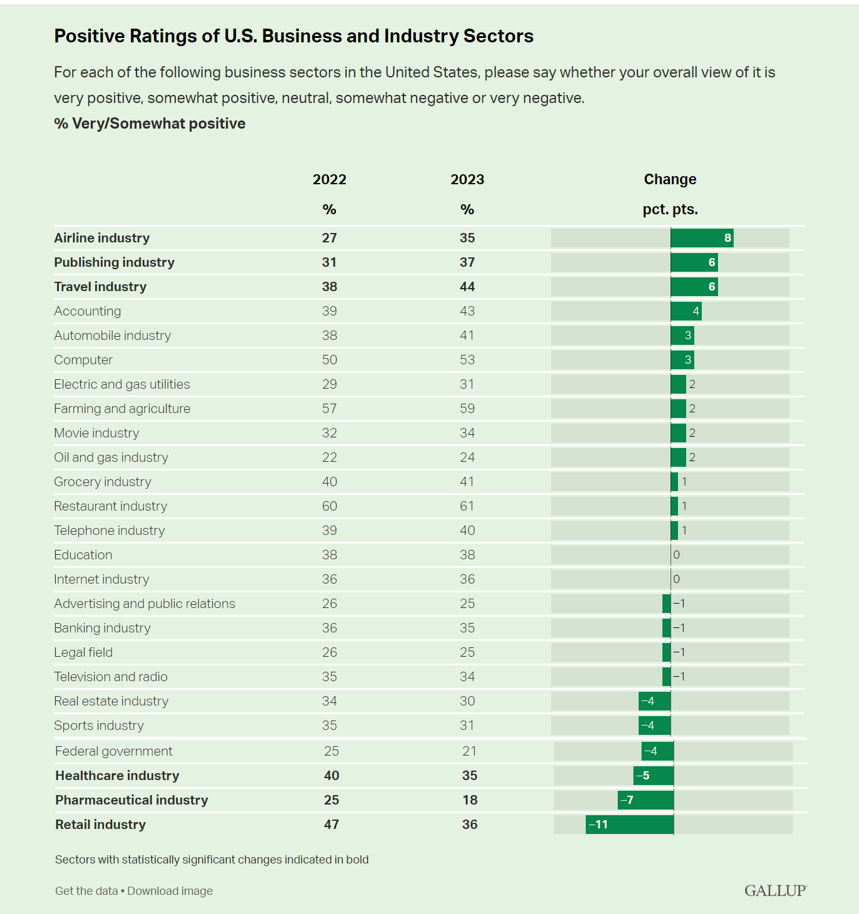
Oh, how quickly people forget…and slow to forgive. U.S. consumers’ positive views for healthcare, pharma and retail have significantly fallen in just one year, the latest annual Gallup poll of industry rankings in America found as of August 2023. This stat for the pharma industry was the lowest Gallup ever recorded for the sector since 2001. I can’t help hearing Paul Simon’s lyrics to Slip Slidin’ Away….”you know the nearer your destination, the more you’re slip slidin’ away” when it comes to health citizens’ perceptions of pharma and the healthcare
“Healthcare Isn’t Healthy:” the Global Challenge of Health Equity, and Calls-to-Action
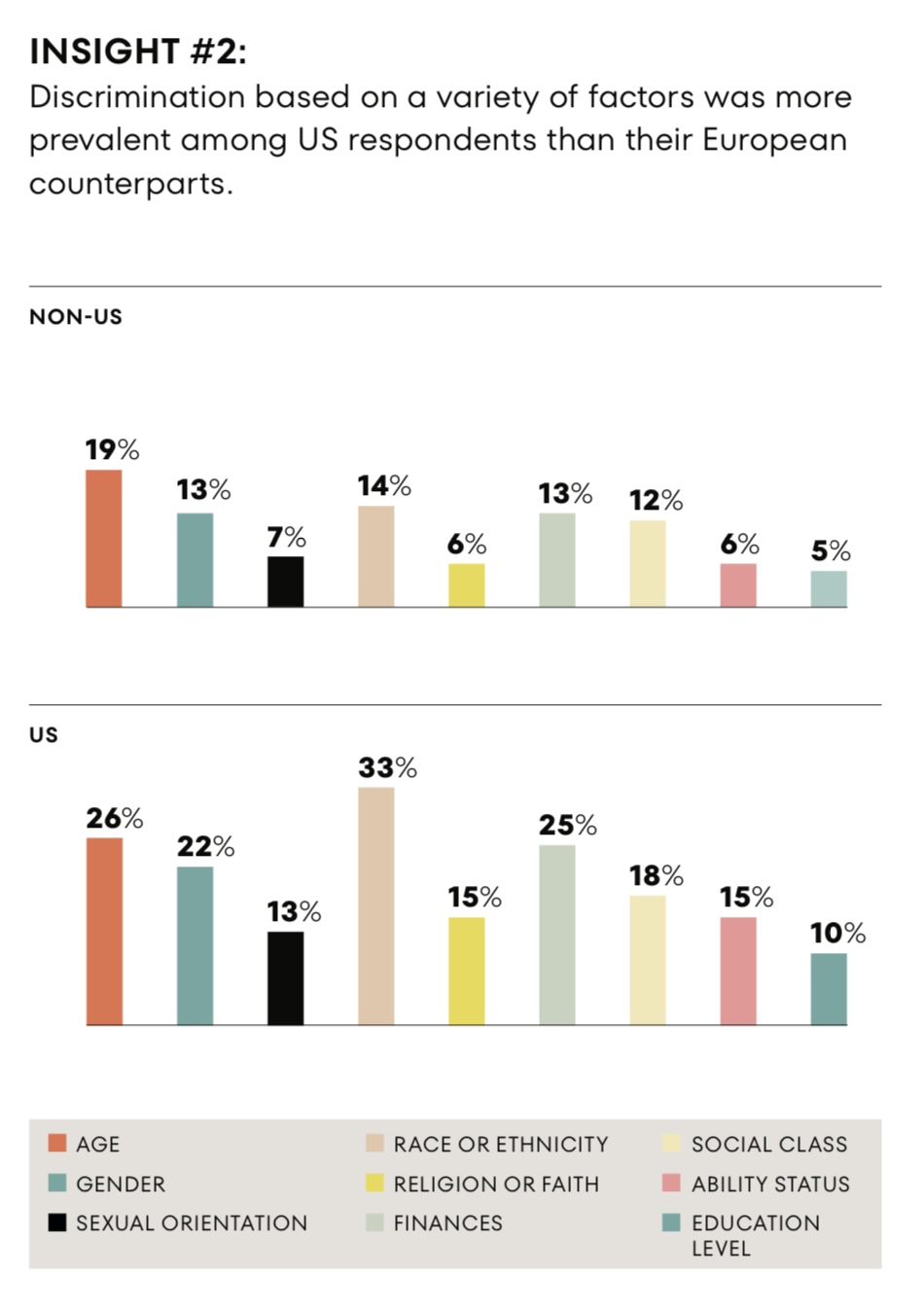
Discrimination in health care is reported by more people in the U.S. than in Germany, Spain, or the U.K., we learn in the research reported in The Intersection of Health Equity in Communities & Business Strategy: A Call-to-Action, from Omnicomm PR Group (OPRG) and Atlantic Insights. The study was conducted among 6,000 people living in Germany, Spain, the United Kingdom and the United States, fielding 1,500 interviews in each of the four countries in March 2023. The U.S. survey sample included 375 people identifying as Black, White, Hispanic, or
The Elevator, Trust and the Data Commons: Bart de Witte Makes the Case for Open AI for Health at WHO/Europe

“I’m in Berlin, and we don’t like walls,” Bart De Witte responded in a concluding Q&A session yesterday at the 2nd Symposium on the Future of Health Systems, convened by the World Health Organization (WHO) in Porto on 5th September. Over two days, this meeting convened stakeholders focused on WHO’s European Region to support the Organization’s digital health action plan for 2023-2030 – which fosters cross-nation health planning covering the EU space. AI’s promise in health care to automate and streamline administration, and augment diagnosis and treatment, comes with accompanying risks that can
How Misinformation in Health Care Can Lead to Being “Dead Wrong” — KFF and Dr. G Connect the Dots
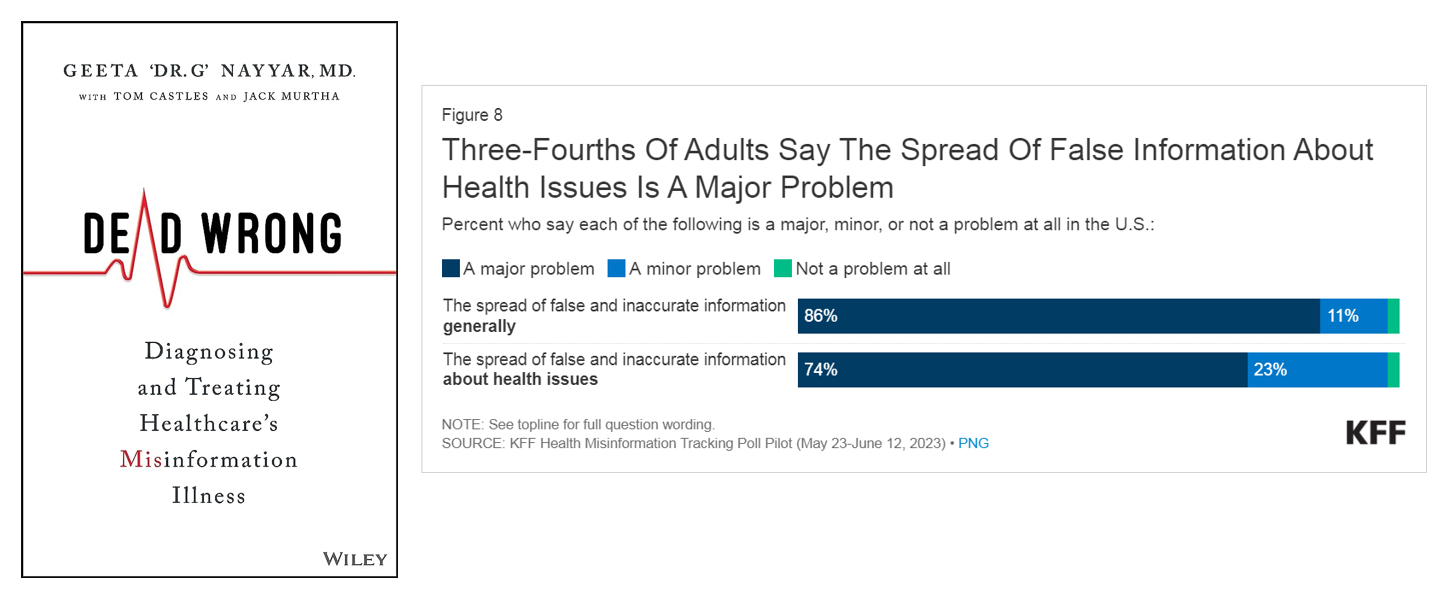
Three in four U.S. health citizens say the spread of false information about health issues is a major problem, found in Kaiser Family Foundation’s Health Misinformation Tracking Poll Pilot published earlier this month. KFF’s press release on the study summarized the top-line with, “Most Americans Encounter Health Misinformation, and Most Aren’t Sure Whether It’s True or False.” Explaining the implications of the broad reach of health misinformation in the U.S., Dr. Geeta Nayyar has written the book Dead Wrong: Diagnosing and Treating Healthcare’s Misinformation Illness, due out on October 17th and available now for pre-purchase
Large Employers Expect More Employees Will Experience Prolonged Health Impacts Due to COVID-19. and a Note About Telehealth Engagement
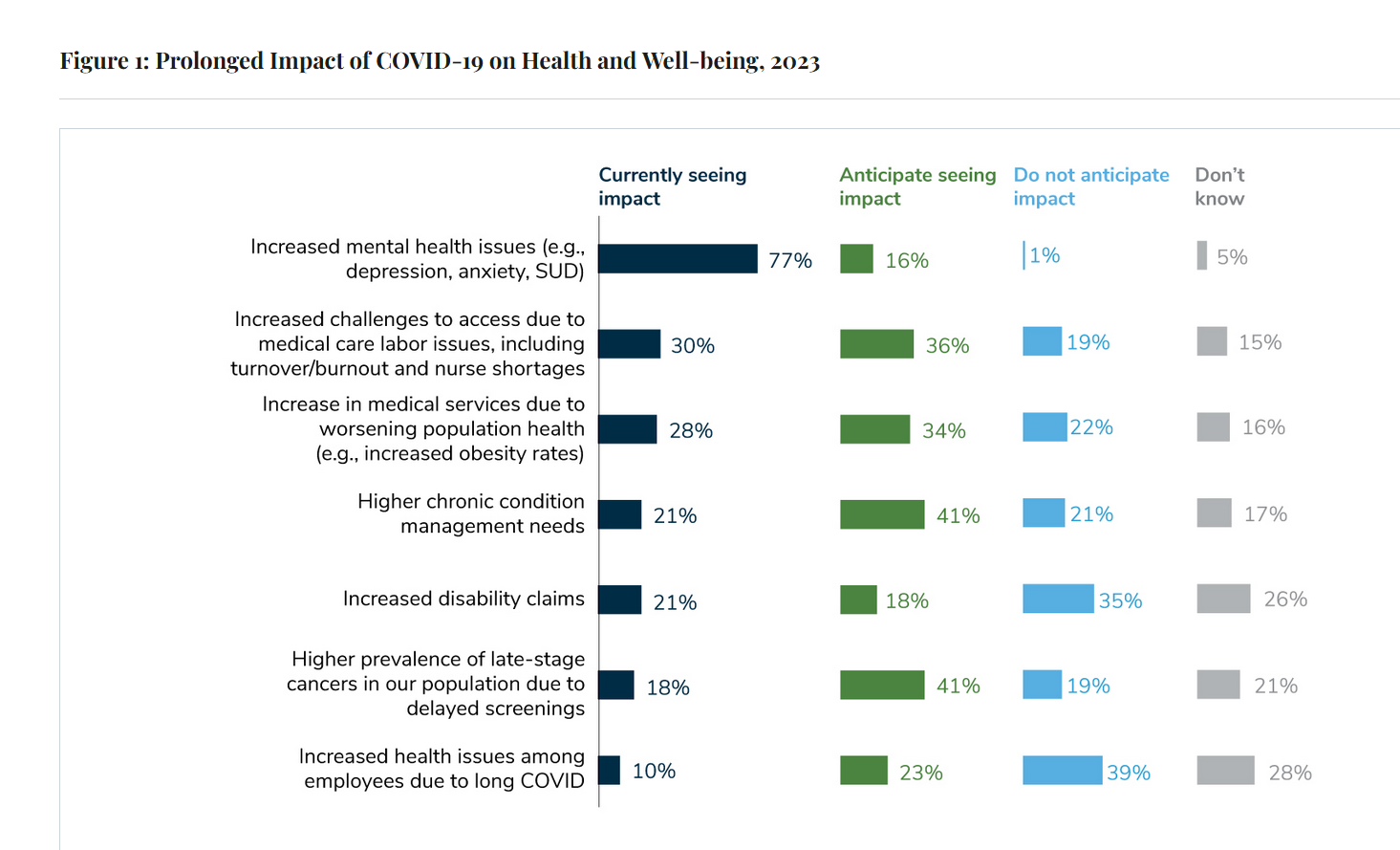
Due to their delayed return to medical services and diagnostic testing in the COVID-19 pandemic era, U.S. employees are expected to sustain serious health impacts that will drive employers’ health care costs, envisioned in the 2024 Large Employer Health Care Strategy Survey from the Business Group on Health (BGH). Dealing with mental health issues is the top health and well-being impact workers in large companies are addressing in 2023. Looking forward, large employers foresee their workers will be seeking care for chronic conditions and later-stage cancers that are diagnosed due to delayed screenings.
A Tale of Barbie, Beyonce and Taylor, the Economy and the Gynecologist
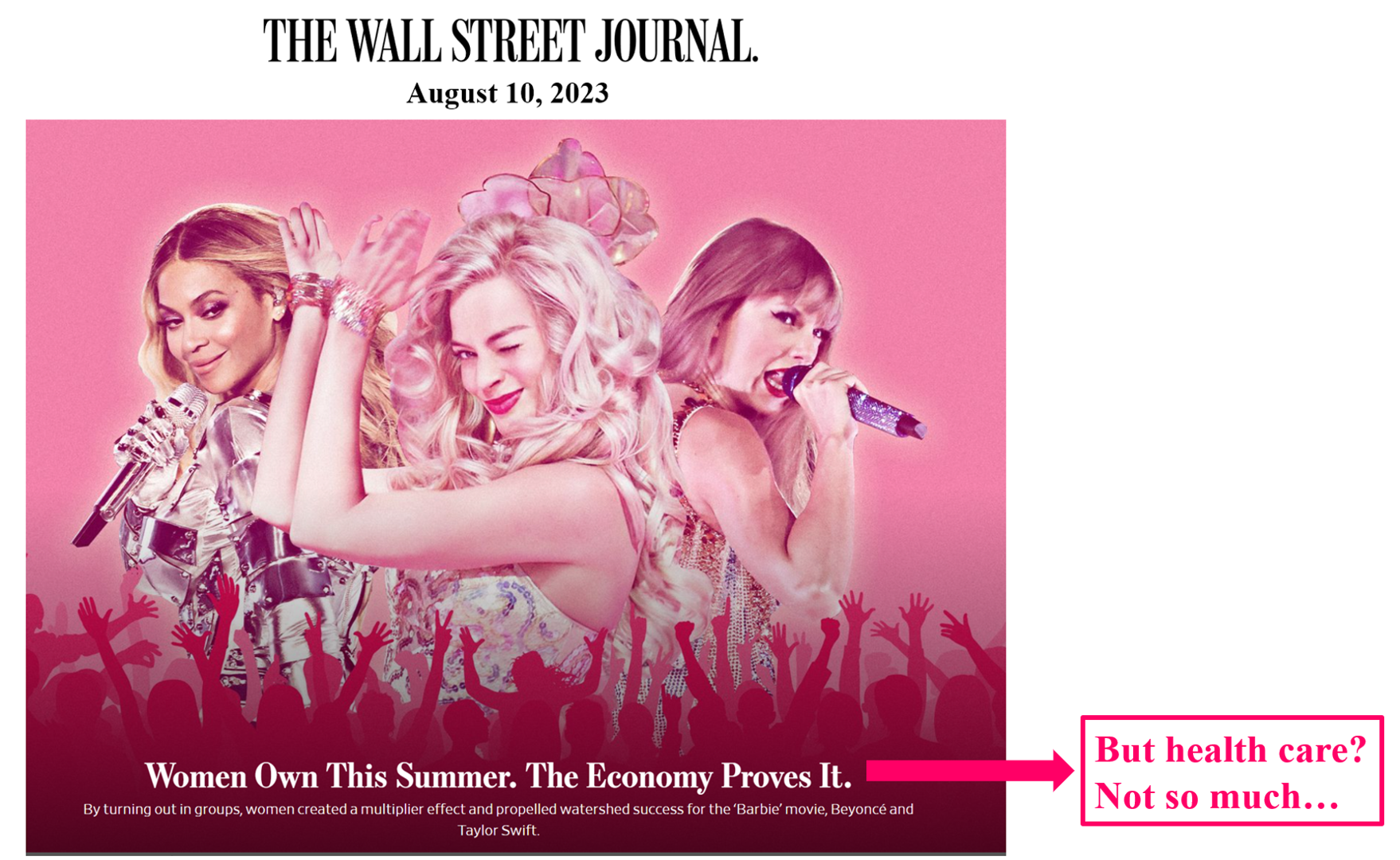
This weekend’s Wall Street Journal Saturday/Sunday edition featured a big story on the economic force of women in the summer of 2023, termed “the women’s multiplier effect” — that women’s spending is a powerful force in the U.S. economy (and as it turns out, in Sweden’s economy as well). The article was titled, “Women Own This Summer. The Economy Proves It,” and featured a Photoshopped image in various shades of pink with Margot Robbie as Barbie in the center, flanked by Beyonce to the left and Taylor Swift to the right. I’m
Patients Don’t Trust Big Tech with Personal Health Information Much Preferring Healthcare Providers as Data Stewards
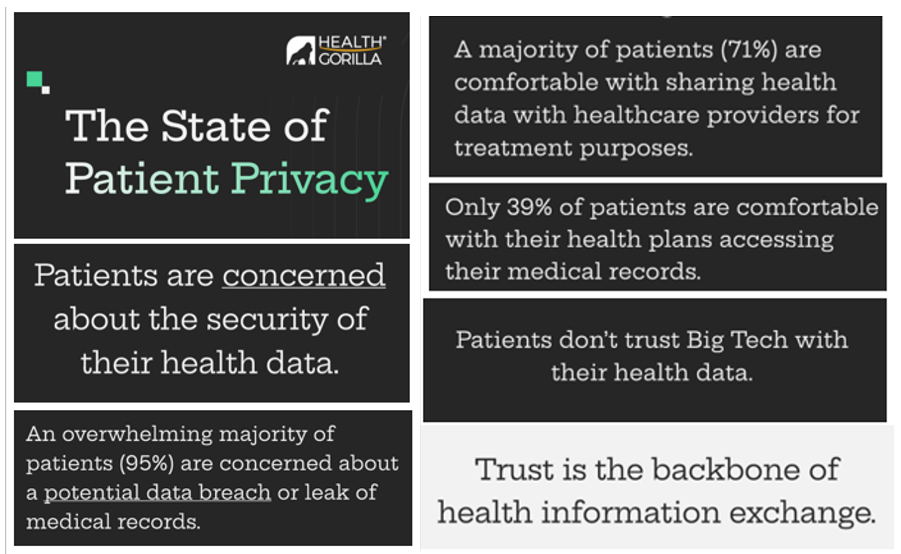
Nearly all patients are concerned about their medical records getting leaked or breached, which is The State of Patient Privacy, the title of a consumer study from Health Gorilla with a headline finding that “Patients don’t trust Big Tech with their health data.” With trust the “backbone” of health information exchange, Health Gorilla calls out, we have to face a big challenge here as health care enters its own sort of industrial revolution embedded AI and data analytics across the health/care ecosystem. How to re-build trust with the very technology that can help health care,
Can Artists Help to Remake Medicine? A New Book Asks and Answers (Yes!)
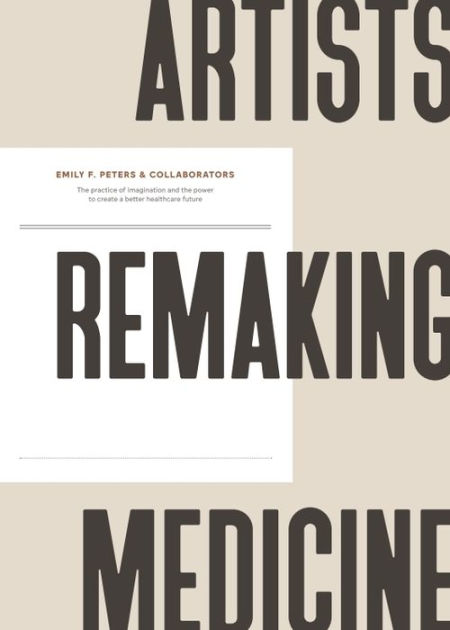
What if we asked an artist to re-imagine what health care could be? How might Van Gogh redesign a patient room akin to his room at Arles, or Michelangelo re-think general surgery? How might Thoreau take us on a nature walk for our mental health, or Basquiat channel his inner Da Vinci for a version of Jean-Michel’s Anatomy? In her new book, Artists Remaking Medicine. Emily Peters confronts health care’s paralyzing complexity (her words in the introduction) to invite a community of artists and artful thinkers to share their visions for remaking health care.
Happy 75th Birthday, NHS – Through A U.S. Health Care Lens
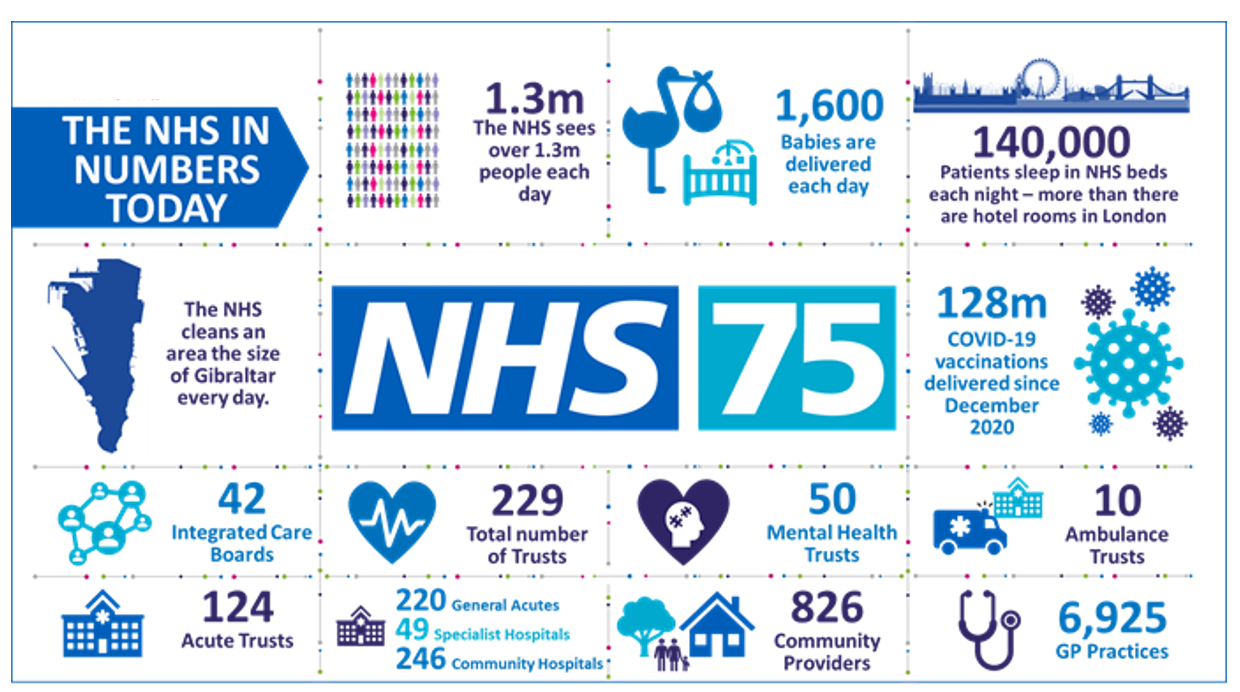
The UK’s National Health Service (NHS) turns 75 today. The NHS was the brainchild of Minister of Health Aneurin Bevan; he wrote in a statement to doctors and nurses in The Lancet on July 3, 1948, “My job is to give you all the facilities, resources, apparatus and help I can, and then to leave you alone as professional men and women to use your skill and judgement without hindrance.” This week in The Lancet, the editors assert, “The founding principles of the NHS put into practice 75 years ago are at risk of
Technologies That Bolster Health Will Be Baked Into the Fourth Industrial Revolution: Listening to the World Economic Forum
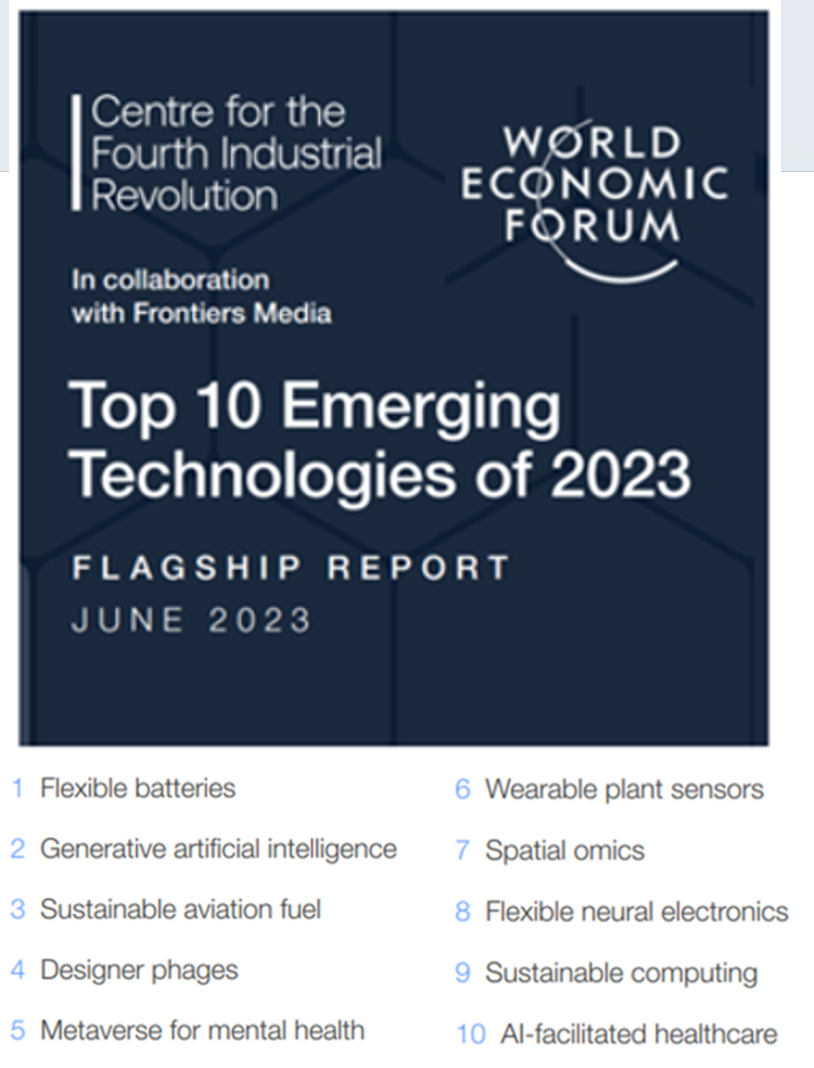
The technologies that will drive the Fourth Industrial Revolution have health baked into most of them, based on the Top 10 Emerging Technologies of 2023, a flagship report from the World Economic Forum, Two of the ten technologies making up this forecast directly speak to health and health care” AI-facilitated healthcare, and The metaverse for mental health. But seven of the remaining eight all address health somewhere in their discussions, and even the tenth non-obvious tech — #3, sustainable aviation fuel — would resonate with many researchers working on the opportunity
The Latest KFF Poll on Consumer Experiences with Health Insurance Speaks Volumes About Patients’ Administrative Burden
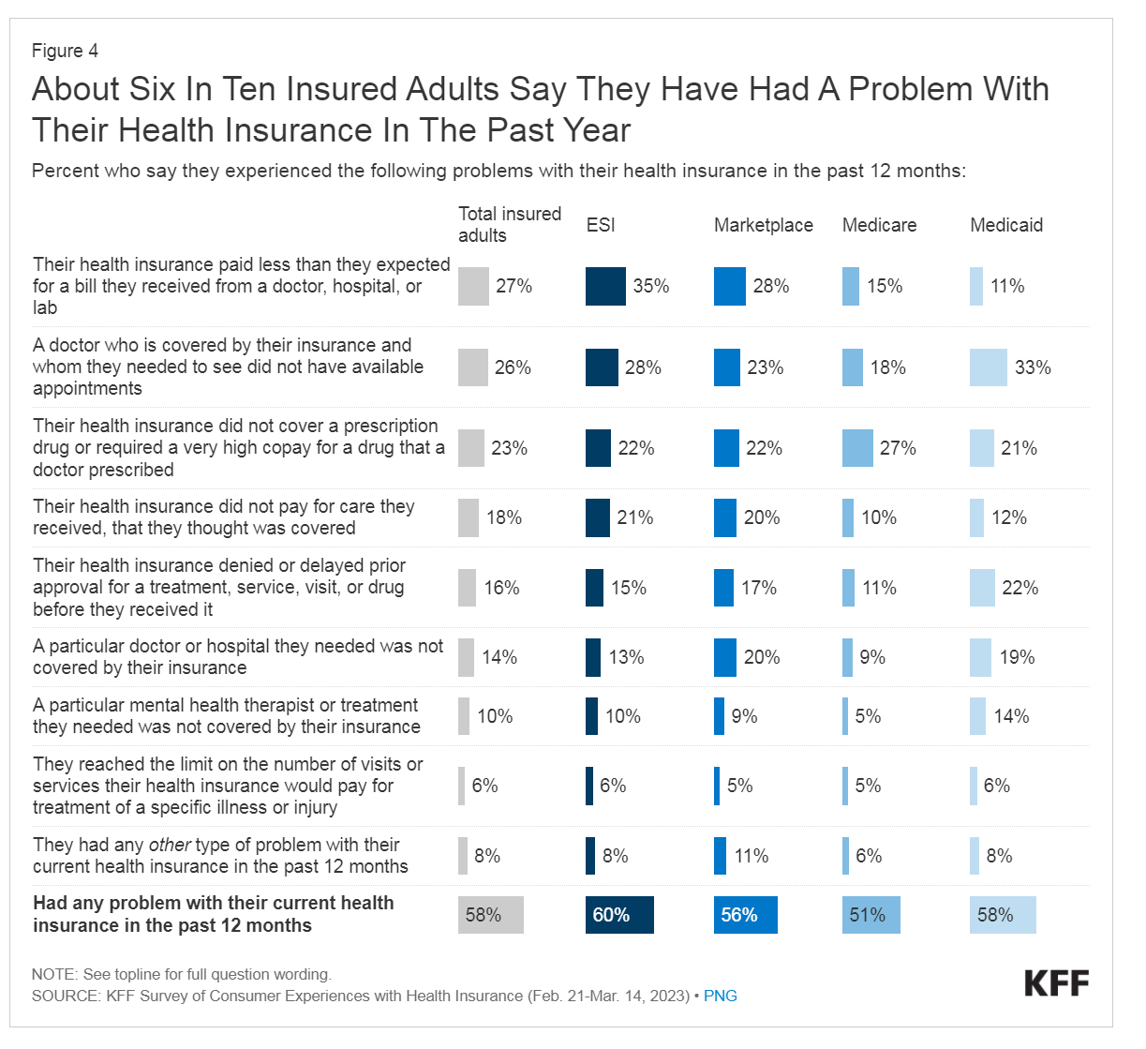
People love being health-insured, but their negative experiences with health plans create serious burdens on patients-as-consumers. And those burdens impact even more people who are unwell than healthier folks. The 2023 Kaiser Family Foundation Survey of Consumer Experiences with Health Insurance updates our understanding of and empathy for insured peoples’ Patient Administrative Burdens (PAB). For this study, KFF polled 3,605 U.S. adults 18 and over in February and March 2023 who had health insurance across different plan types. Over the past several years, I’ve come to appreciate the concept of PAB by listening to and learning from colleagues Dr, Grace
The State of Healthcare in America, State-By-State
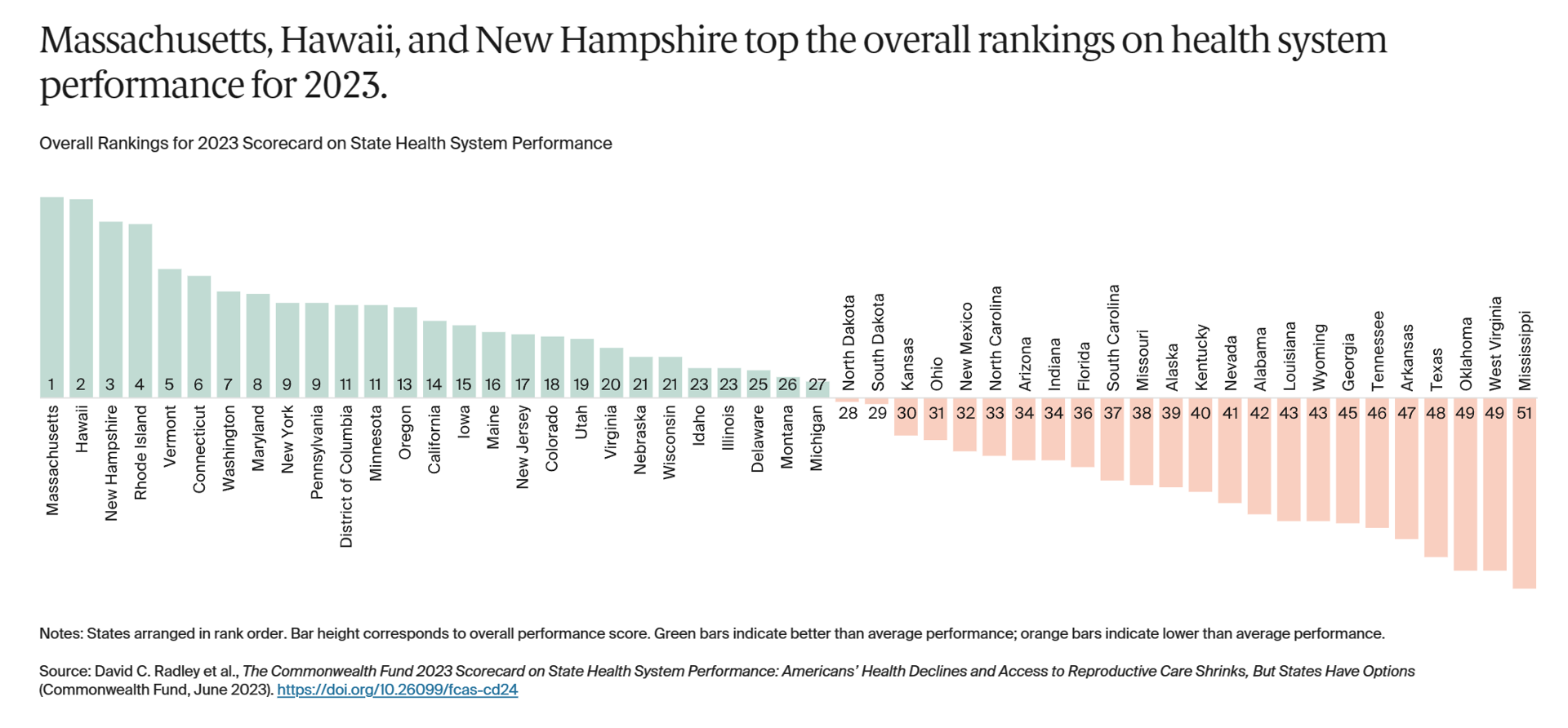
If you live in Massachusetts, Hawaii, and New Hampshire, you win a kind of state lottery for public health and well-being, based on this year’s read of the 2023 Scorecard on State Health System Performance from The Commonwealth Fund. Here’s a picture of the annual study’s top-line findings, a roster of the fifty U.S. states ranked by a mash-up of health system indicators. As Annie Burkey of FierceHealthcare succinctly summed it up, the “Commonwealth Fund gives healthcare in southeastern states failing grades across the board.” I’ll give you more details about the Top and Bottom
Consumers and Cancer: 3 Patient-Focused Charts From IQVIA on the State of the Oncology in 2023 – and Introducing CancerX
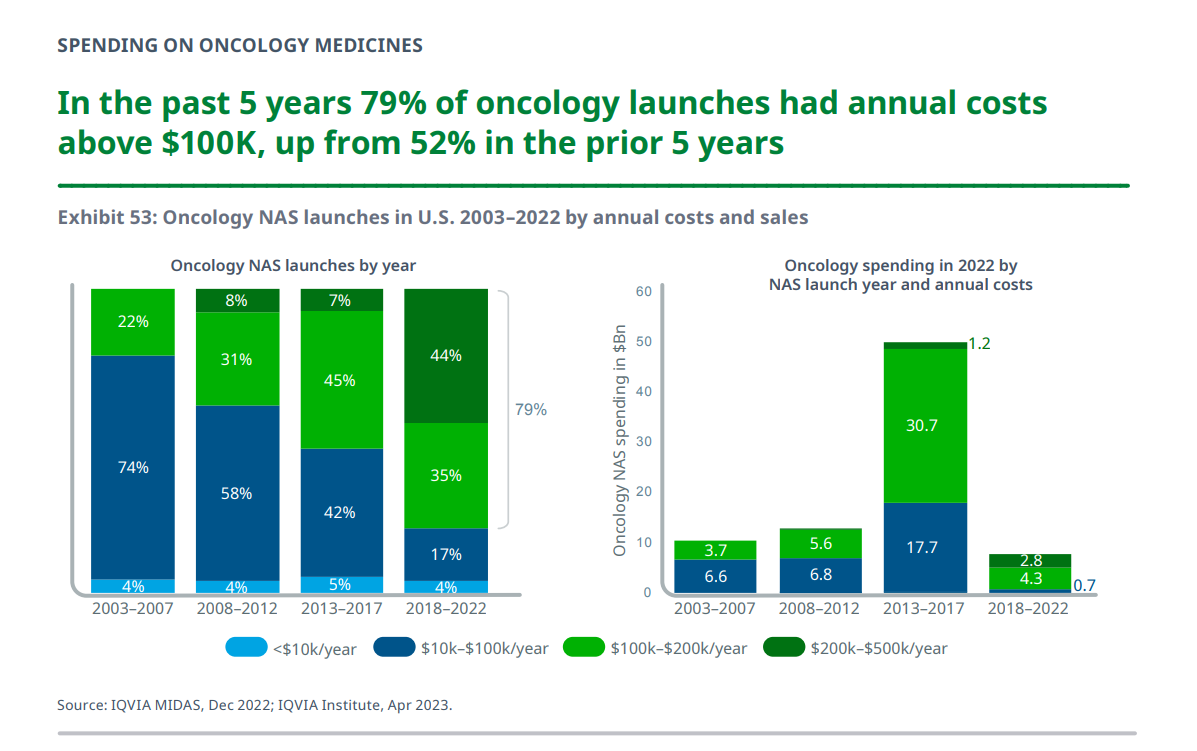
It’s time for the annual ASCO conference, currently convening the American Society for Clinical Oncology in Chicago. Starting 2nd June, there have been dozens of positive announcements updating research and therapies bringing hope to the 2 million new patients who will be diagnosed with cancer in the U.S. in 2023, and millions of more people worldwide. Just in time for #ASCO2023, the IQVIA Institute published their annual report on Global Oncology Trends 2023 – Outlook to 2027, an update featuring pipelines, therapy approvals, research updates, costs of oncology products, and patients.
Virtual Health Care Can Reduce Carbon Emissions: the Environmental ROI on Telehealth
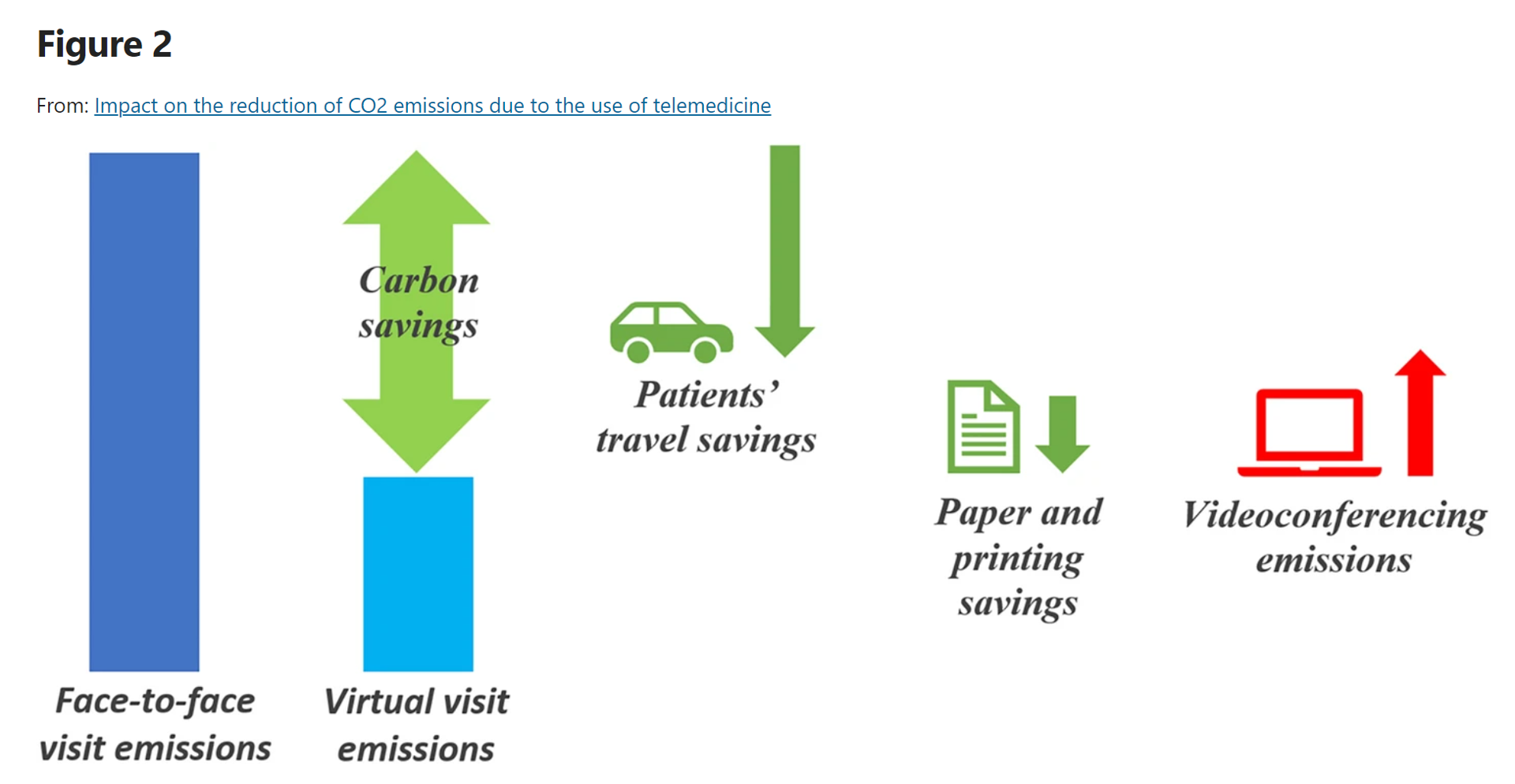
As implemented in the COVID-19 era and its immediate wake, the most obvious environmental benefits offered by telehealth visits replacing in-person patient encounters have been achieved through reduced patient travel, considering The Role of Virtual Consulting in Developing Environmentally Sustainable Health Care, a systematic literature review published in the Journal of Medical Internet Research. This study, led by researchers at the University of Oxford, UK, and the University of Oslo, Norway, identified over 1,600 scientific papers, narrowing the most rigorous and relevant to 23 papers focusing on virtual consulting and carbon emissions. This is an important question for two major
A Public Health Wake-Up Call: Reading Between the Lines in IQVIA’s 2023 Use of Medicines Report
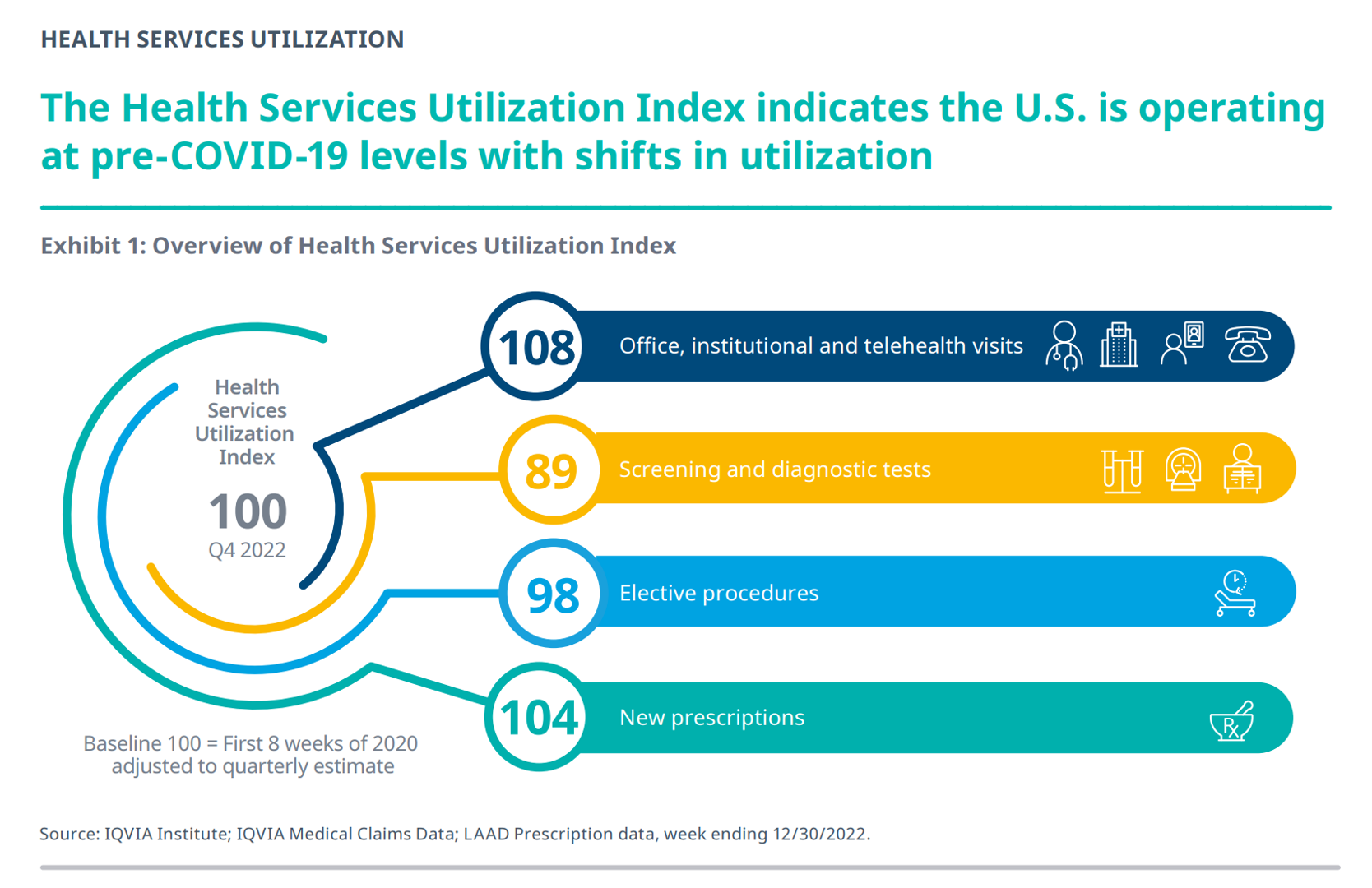
Reviewing the annual 2023 report from the IQVIA Institute for Human Data Science discussing The Use of Medicines in the U.S. is always a detailed, deep, and insightful dive into the state of prescription drugs. It’s a volume speaking volumes on the current picture of prescribed meds, spending and revenues, health care utilization trends, and a forecast looking out to 2027. In my read of this year’s review, I see a flashing light for U.S. health care: “Wake up, public health!” I’ve pulled out a few of the data points that speak to me about population health, prevention and early
Thinking Pharma on a Friday: Europe’s Big Reforms for a Health Union & the U.S. 50-State Fragments
The COVID-19 pandemic re-shaped European Union leaders to reimagine healthcare, public health, and health citizenship in the EU. Welcome to #HealthUnion, the hashtag that the European Commission has adopted with the vision of assuring access to medicines for all people living in the 27-nation EU area — regardless of socioeconomic status. On 26th April 2023, the EC unveiled the most significant reforms for the region’s pharmaceutical industry in twenty years. It’s really a package or “toolkit” in the words of EC Health and Food Safety Commissioner Stella Kyriakides for addressing several strategic health pillars
Food Is Medicine, Especially When You Are Hungry – The American Heart Association‘s FIM Initiative

Food is a basic need, fundamental to our lives and well-being. And for millions of people around the world, and innumerable health citizens in the U.S., food security is part of daily life in 2023. Furthermore, as the U.S. Congress faces voting on the debt ceiling, the issue of SNAP benefits for nutritional assistance (aka “food stamps”) has been identified as a negotiating line-item by certain Federal budget-cut minded folks. That’s why the Food Is Medicine Initiative, launched collaboratively between the American Heart Association and The Rockefeller Foundation, is so timely and welcome. “The vision for
Consumers Expect Every Company to Play a Meaningful Role in “My Health” – New Insights from the 2023 Edelman Trust Barometer
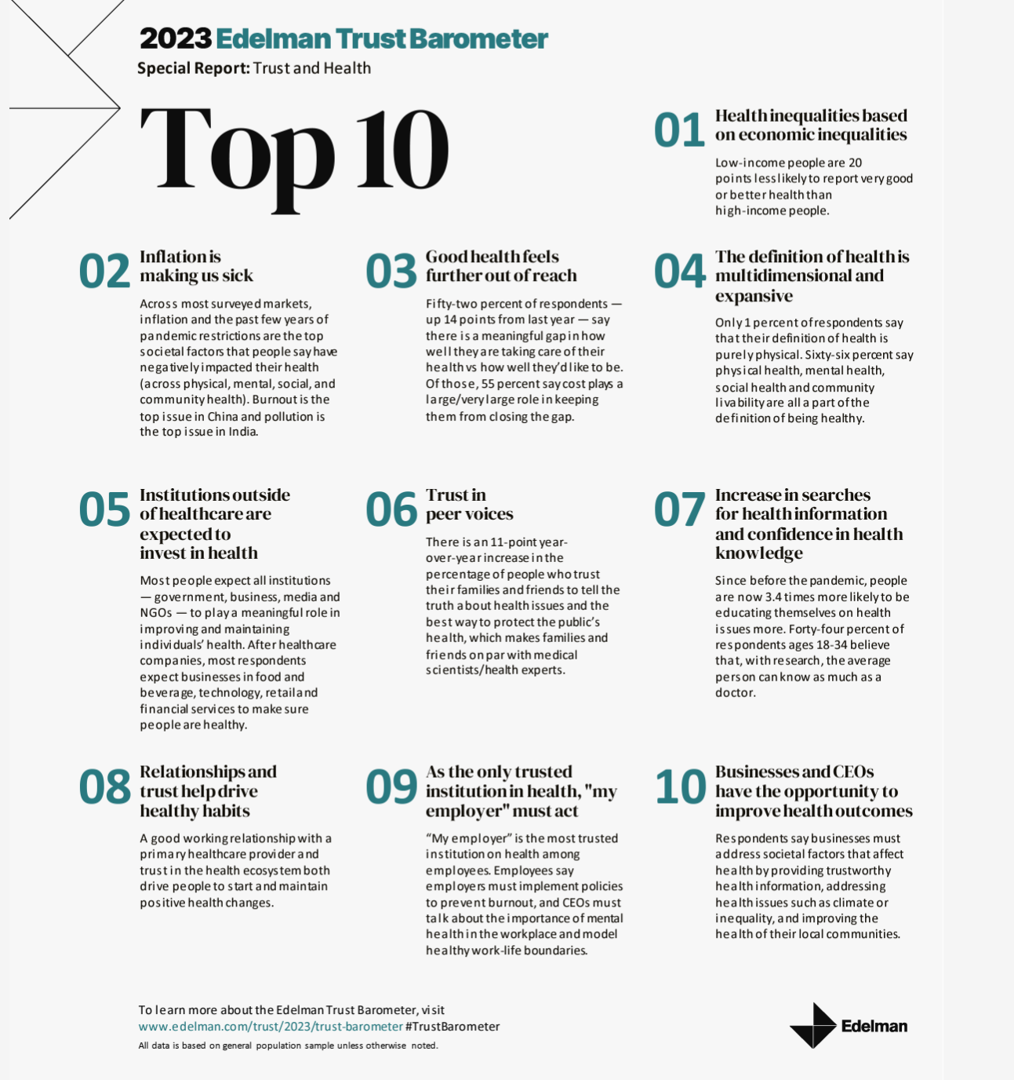
People have expanded their definitions of health in 2023, with mental health supplanting physical health for the top-ranked factor in feeling healthy. Welcome to the Edelman Trust Barometer Special Report: Trust and Health, released this week, with striking findings about how the economic, post-pandemic life, pollution and climate change all feed mis-trust among citizens living in 13 countries — and their eroding trust for health care systems. While these factors vary by country in terms of relative contribution to citizen trust, note that in the U.S., social polarization plays an outsized role in factors that “make us
My Health, My Data – Thinking Consumers, Privacy and Self-Care at HIMSS 2023
The Washington State legislature passed House Bill 1155, aka the My Health, My Data Act, last week. Governor Jay Inslee is expected to sign this into State law later this year. The bill expands privacy protections for Washington State’s health citizens beyond HIPAA’s provisions. The My Health, My Data Act defines “consumer health data” as “personal information that is linked or reasonably linkable to a consumer and that identifies a consumer’s past, present, or future physical or mental health.” The ethos of the name and the intent of this law is a perfect vision for
Appreciating Water as a Driver of Health: Designing for Good, from the UN to Liberia and Flint, Michigan
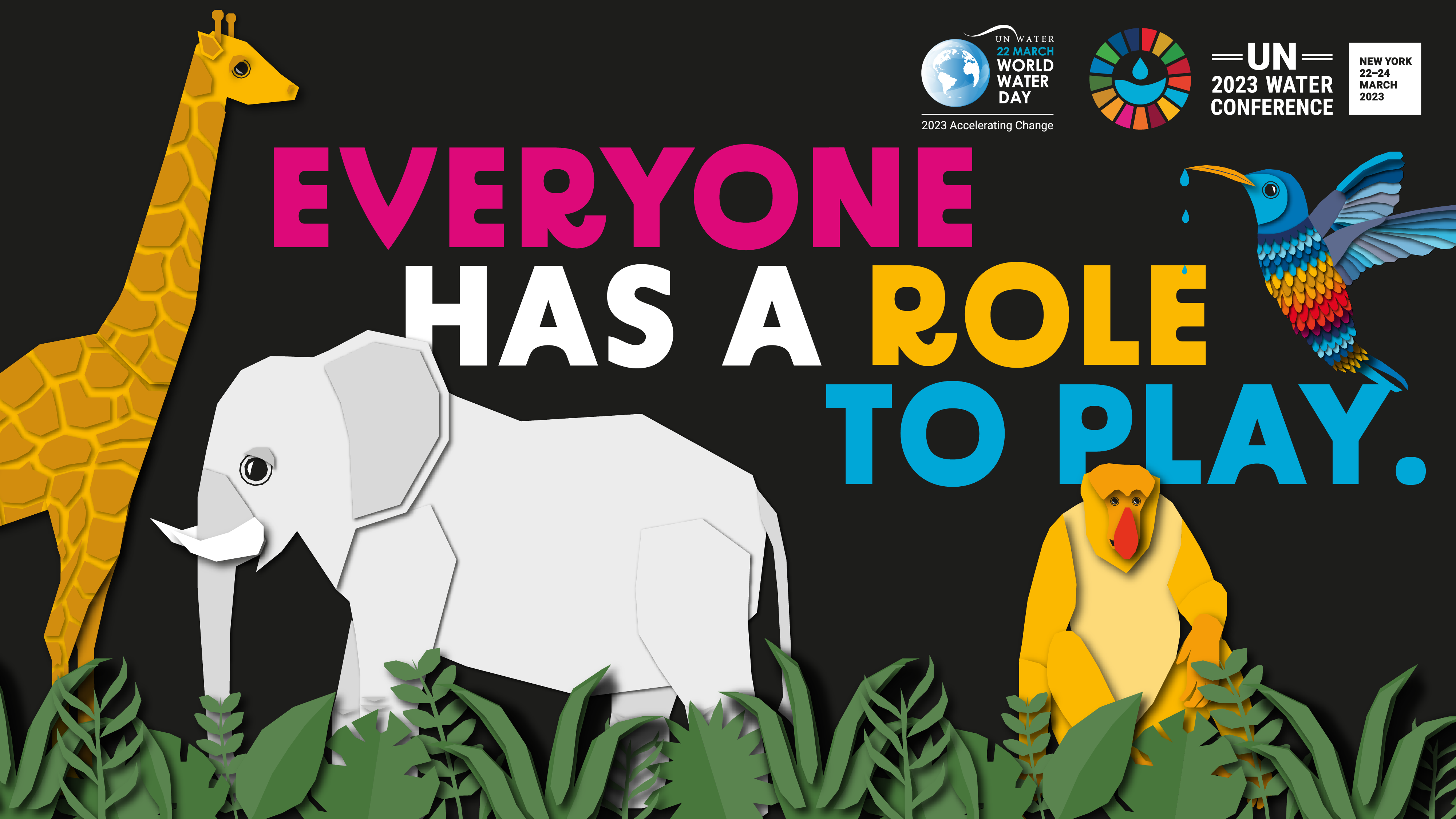
The United Nations (UN) convened the 2023 Water Conference convened March 22-24, 2023, in New York City. The meeting brought together stakeholders from all over the world to brainstorm how to meet UN sustainability development goals (SDGs) for #6 of the 17 SDGs addressing clean water and sanitation. This event was billed in the words of the conveners, a “watershed moment to tackle the global water crisis and ensure a water-secure future.” That water-secure future is a critical factor in the well-being for both people and Planet Earth, quantified in the first
More Consumers Expect Health/Care Companies to Be Purpose-Ful Versus All Other Industries
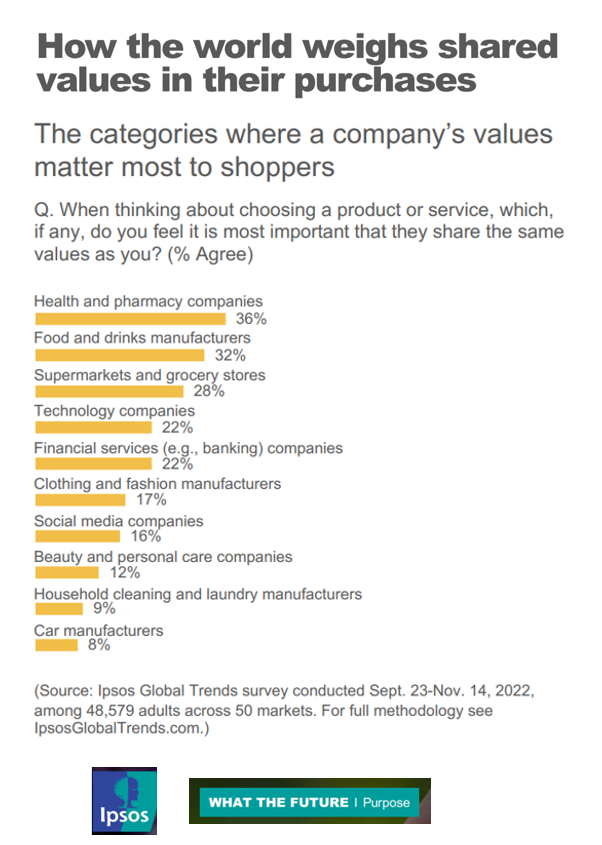
If your organization serves health consumers, patients, and caregivers, and you’re asking them to spend money on your services or products, then you’ll do well to be clear on your values and sense of purpose. In the latest Ipsos look into the future of “Purpose,” we find that consumers look most to health and pharmacy companies for shared values, compared with other industries people patronize such as food and grocery, technology and banks. To understand where Ipsos is coming from on this aspect of ESG, we’ll start with their territory map
Don’t Mess with Medicare and Medicaid, Washington: They Remain Popular with Americans Across Party ID
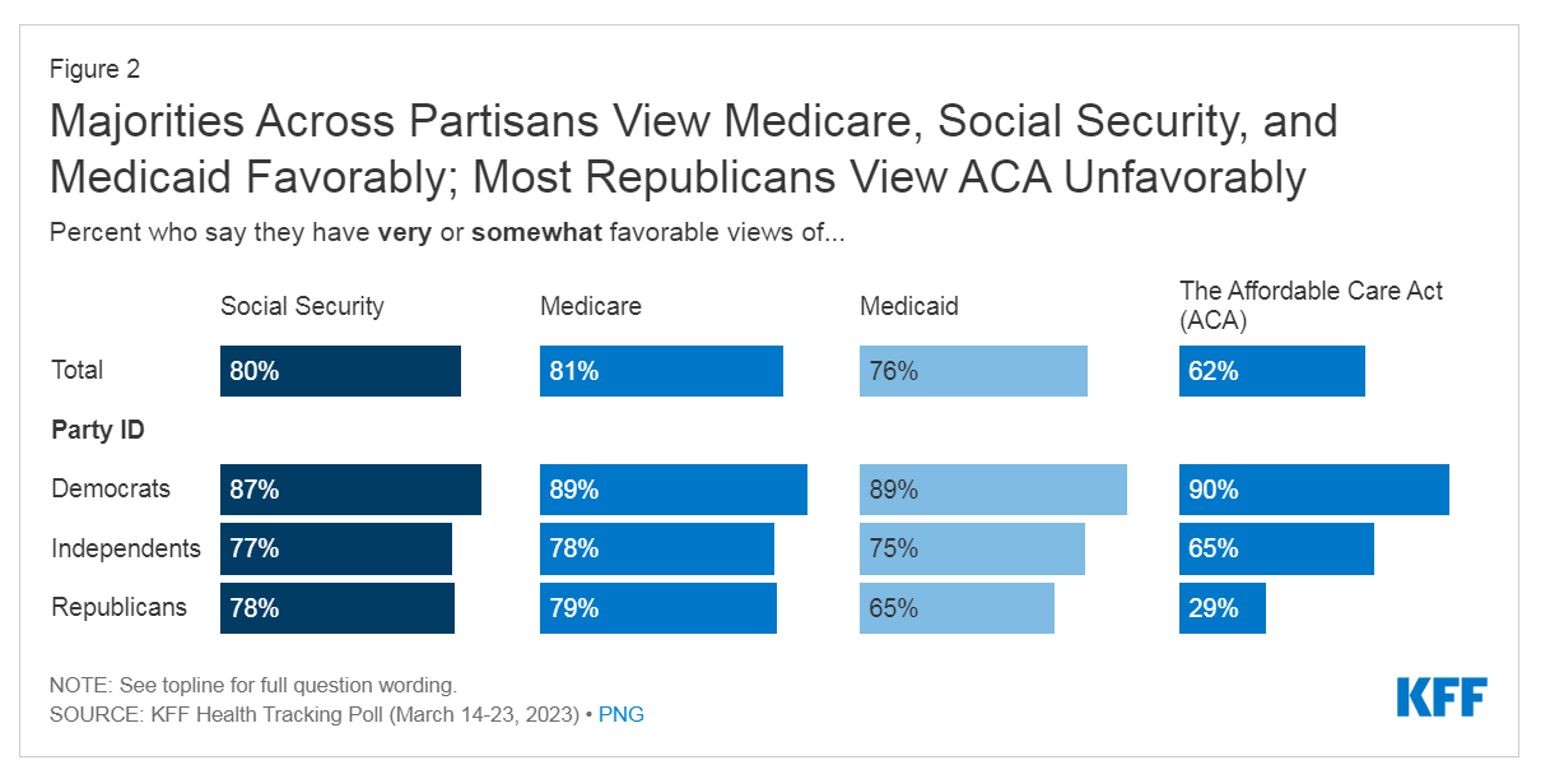
A majority of the U.S. public does not want politicians to “up-end” government-funded health programs, according to the Kaiser Family Foundation’s March 2023 Health Tracking Poll. Social Security, Medicare, and Medicaid all garner most partisans’ support whether identifying as Democrat, Independent, or Republican, KFF found in their monthly poll of U.S. voters ages 18 and over. The survey was conducted online and by telephone among 1,271 U.S. adults between March 14-23, 2023. Among all the important findings in this well-timed poll, I’ll point to the issue of public
Techquity: Getting Healthy Through Equity-by-Design
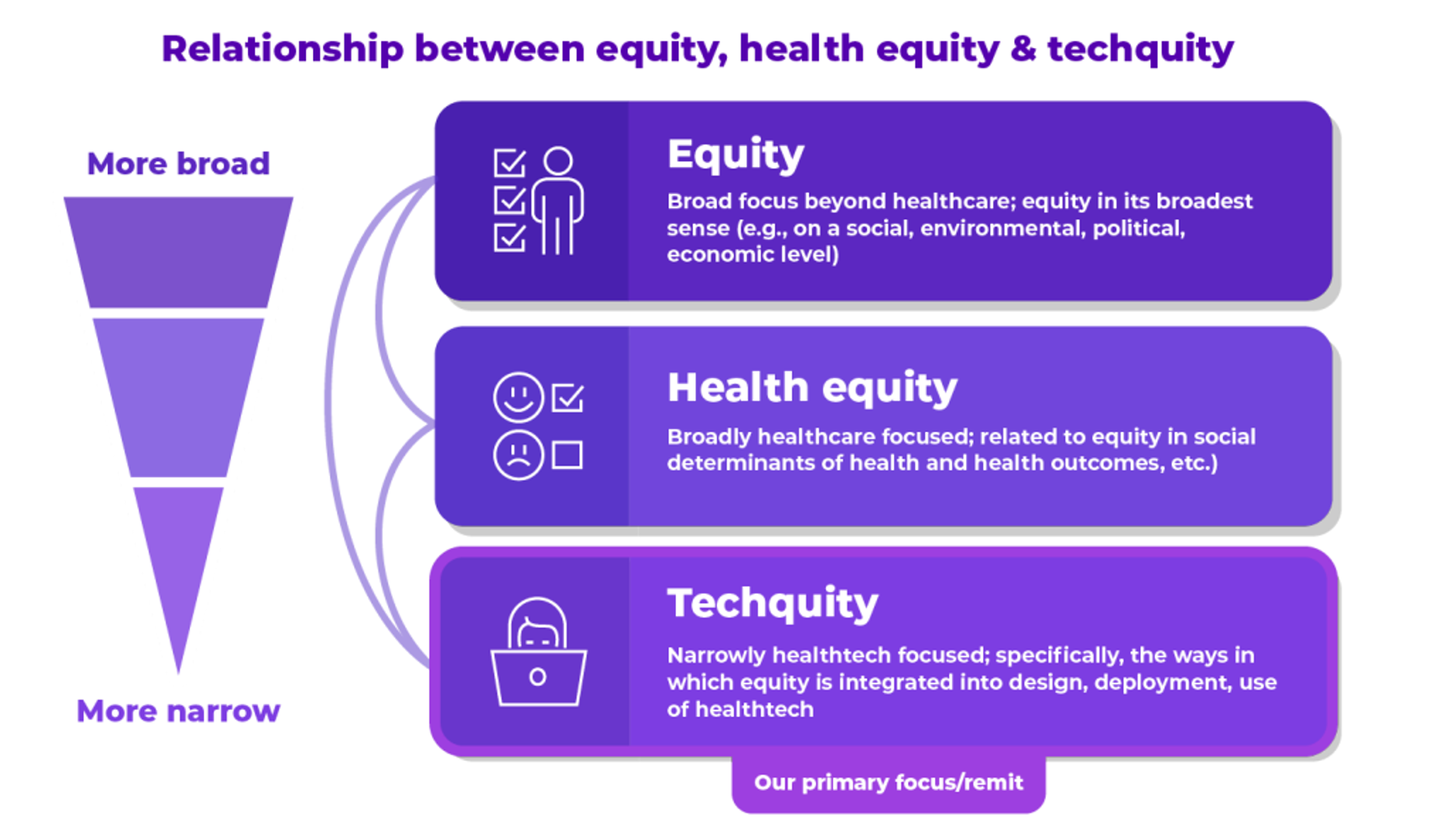
The U.S. spends more on health care than any other nation in the world. Yet Americans’ health outcomes rank relatively low compared with other wealthy peer nations on Planet Earth, manifesting a low return-on-investment for this huge financial spend. Nowhere is this more evident than in America’s place in equity compared with nine countries, shown in the graph on health care system performance from The Commonwealth Fund’s perennial study, Mirror, Mirror – the latest version of which was subtitled, “reflecting poorly” on health care in the U.S. Equity is an over-arching concept that the
The New Deaths of Despair in America – Among U.S. Children
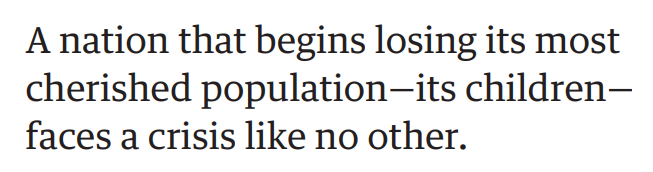
The phenomenon of Deaths of Despair is the short-hand name for rising mortality among certainly people living in the U.S. due to overdose, accidents, and suicide. Angus Deaton and Anne Case published their first of many research papers on Deaths of Despair in 2015. Their research uncovered the risks of dying a Death of Despair to be higher among men, especially those between the ages of 25 and 64. But mortality isn’t only going in the wrong direction for those people most closely associated with the Deaths of Despair demographic: there’s another life-span line graph moving in the wrong direction,
Patients Have AI-Disconnect When it Comes to Their Health Care – Pew Research Center Insights
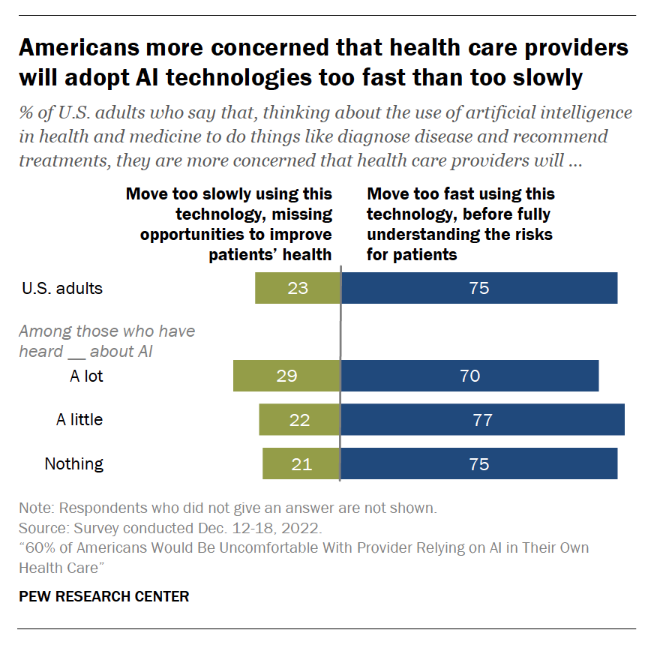
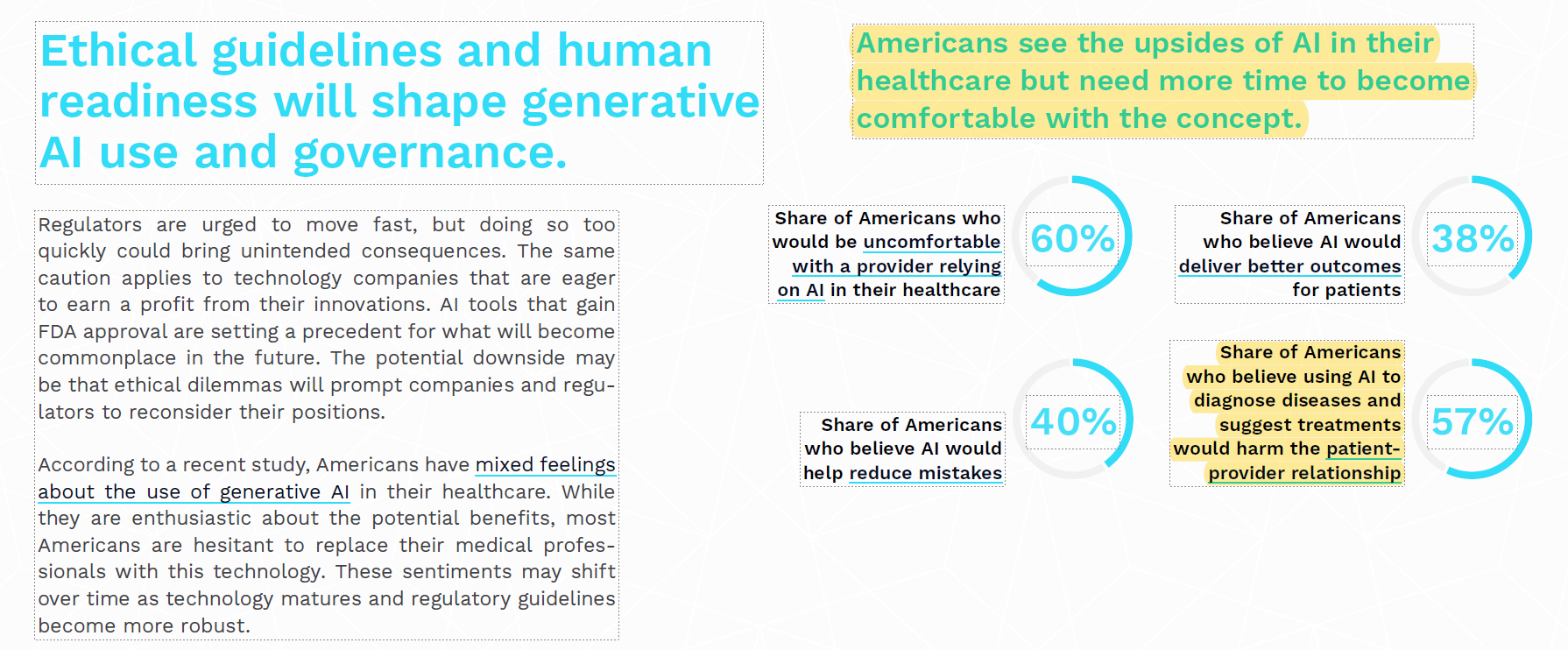
Most U.S. health citizens think AI is being adopted in American health care too quickly, feeling “significant discomfort…with the idea of AI being used in their own health care,” according to consumer studies from the Pew Research Center. The top-line is that 60% of Americans would be uncomfortable with [their health] provider relying on AI in their own care, found in a consumer poll fielded in December 2022 among over11,000 U.S. adults. Most consumers who are aware of common uses of AI know about wearable fitness trackers that can analyze exercise and sleep
The Patient Is Still the Payor – And May Skip Paying for Prevention (Eyes on the ACA & Texas)
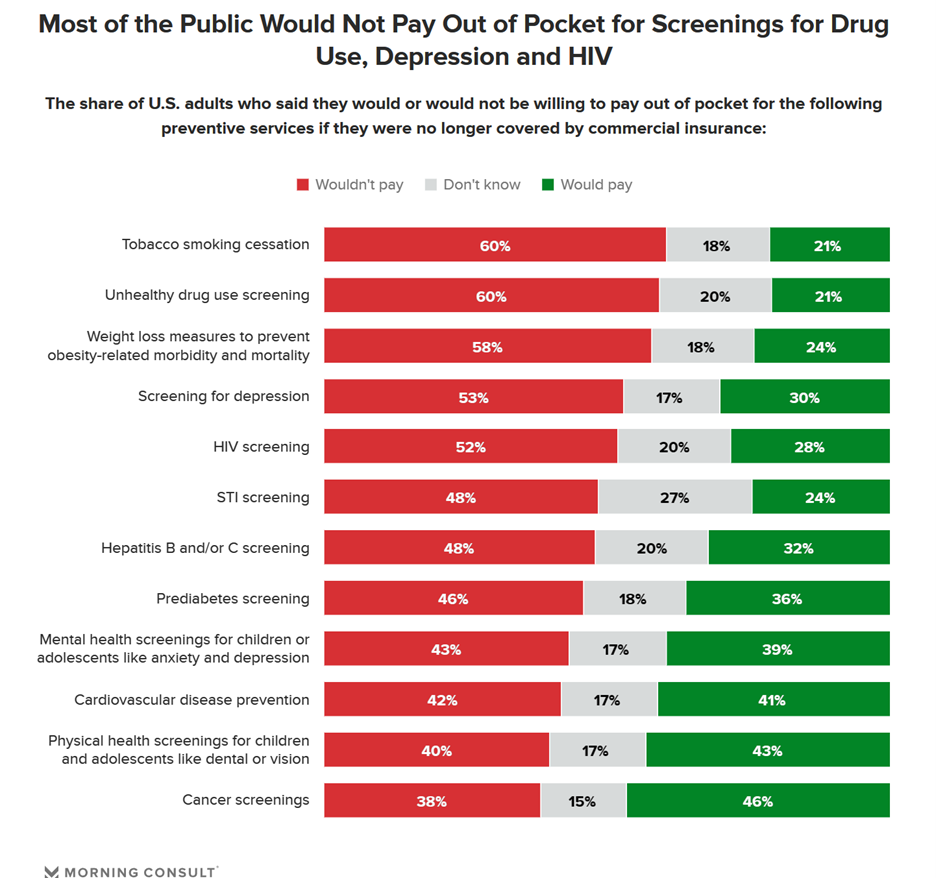
Many health citizens in the U.S. would likely skip receiving preventive health care services if the Affordable Care Act’s (ACA) coverage for them goes away, a Morning Consult survey found. The first chart illustrates the top-line of this research: that most U.S. adults would not pay out of pocket for several preventive services including tobacco cessation, drug use screening, weight loss measures to prevent obesity-related illnesses, as well as screening for depression or HIV. One of the key benefits embedded in the ACA was “free” without co-pay shares for preventive care. These
The Future of Love and How It Could Shape Health, Well-Being, and Daily Living
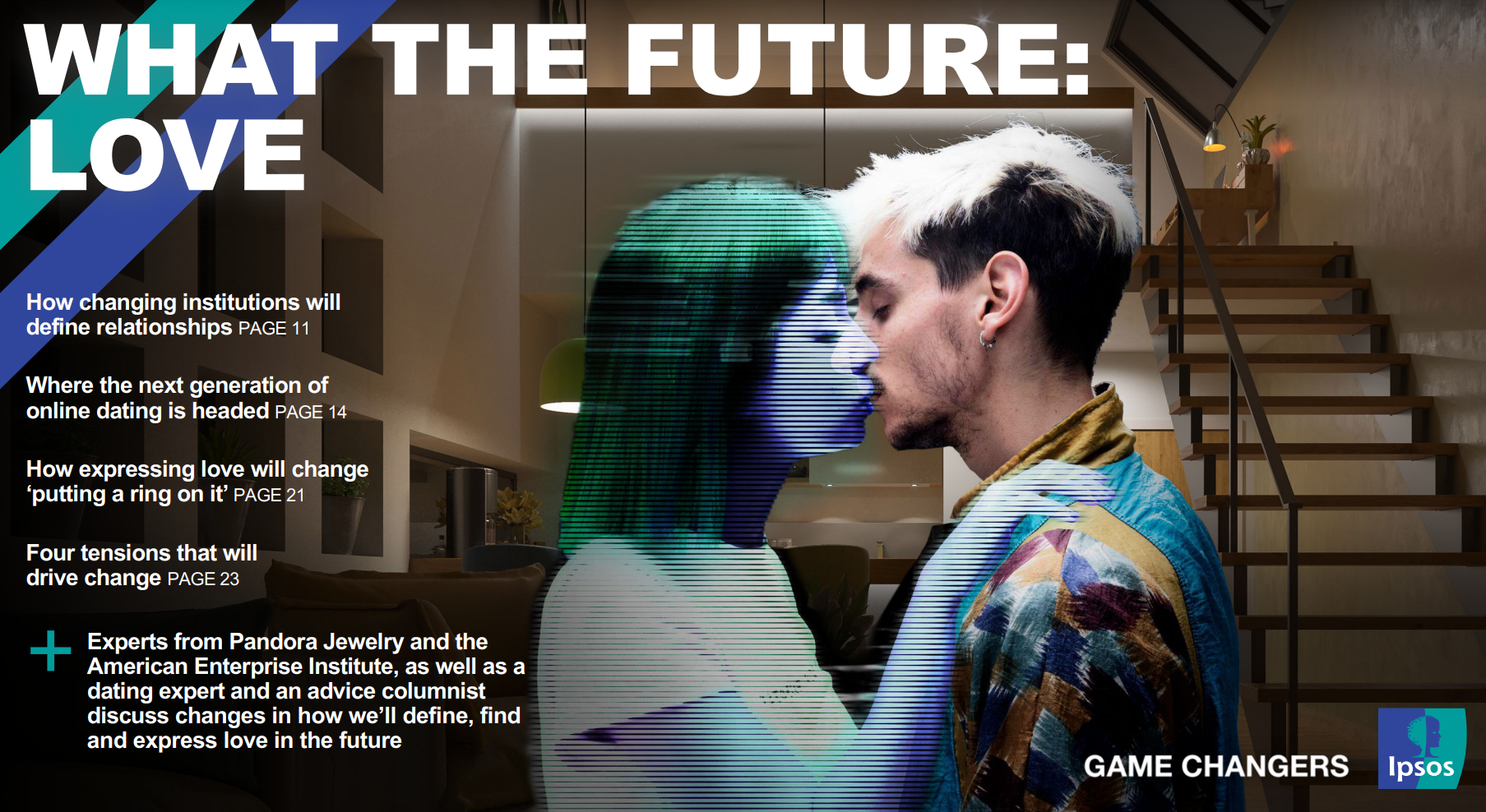
“The future of love is bound to the institutions that have historically shaped and defined it,” Ipsos’s What the Future: Love report begins. Consider: religion, government, financial institutions….and the health care ecosystem, as well. On this Valentine’s Day 14th February 2023, it is a good time to consider this convergence as health politics, financial well-being, and emerging technologies will be re-shaping institutions and consumers in the coming months and near-term. The Ipsos researchers have been assessing the future of many aspects of our lives over the past couple of years, such as the future of wellness,
The Reputation of Pharma Among U.S. Consumers Is Tied More to Pricing Than to Innovation
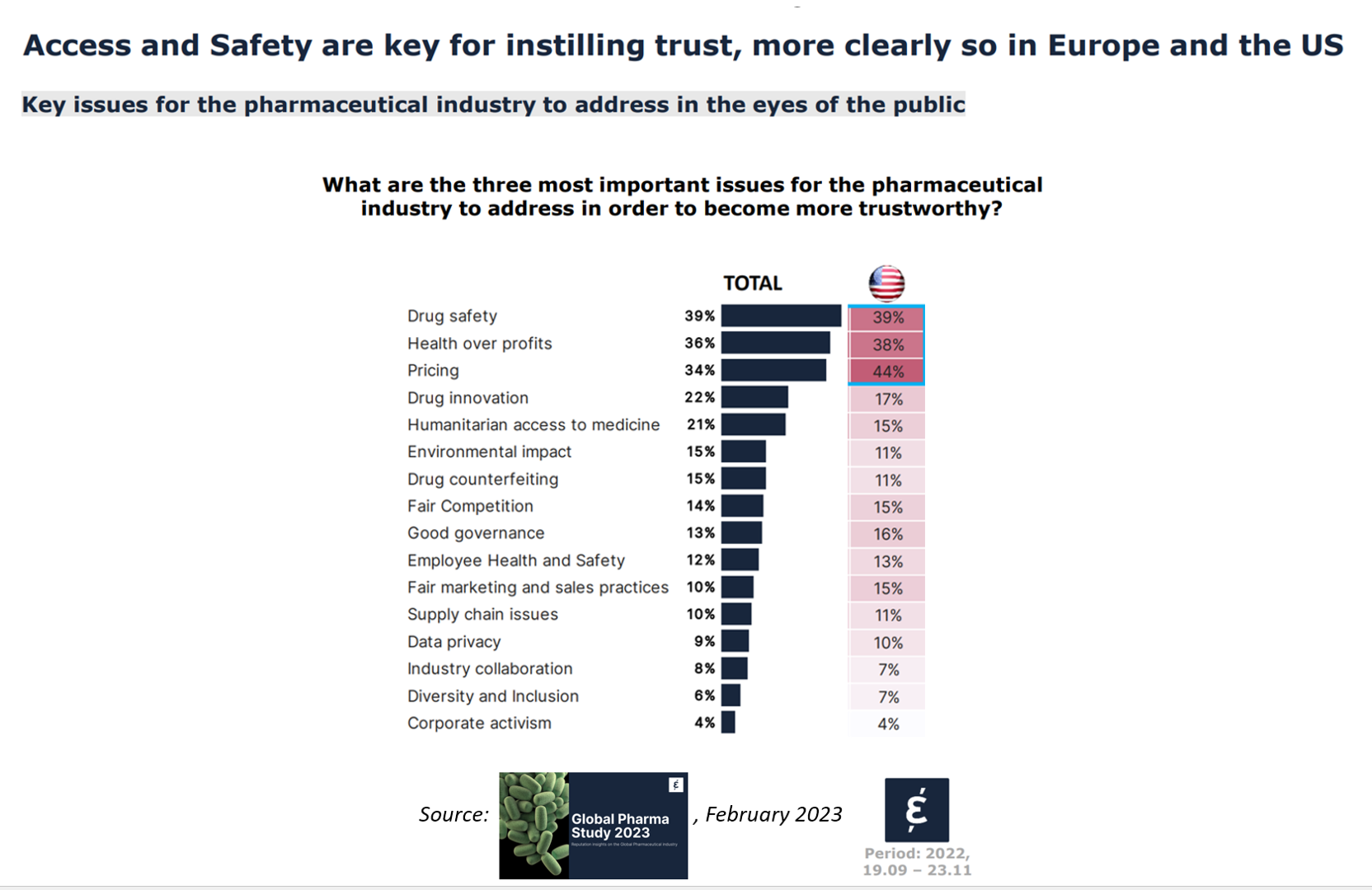
In the U.S., price and the cost of medicines is tied to how people feel about the pharma industry, evidenced in the Global Pharma Study 2023 from Caliber. Caliber, a reputation and corporate strategy consultancy, fielded survey research among over 17,000 health consumers including U.S. adults between 18 and 75 years of age as well as health citizens living in Brazil, China, France, Germany, Japan, and the UK. Caliber assessed the reputation of 16 industries, globally, finding that pharma ranked 10th among the 16, just below automotive and just above chemicals (and well
The US Healthcare System Outspends and Underperforms While Most People Live Paycheck to Paycheck
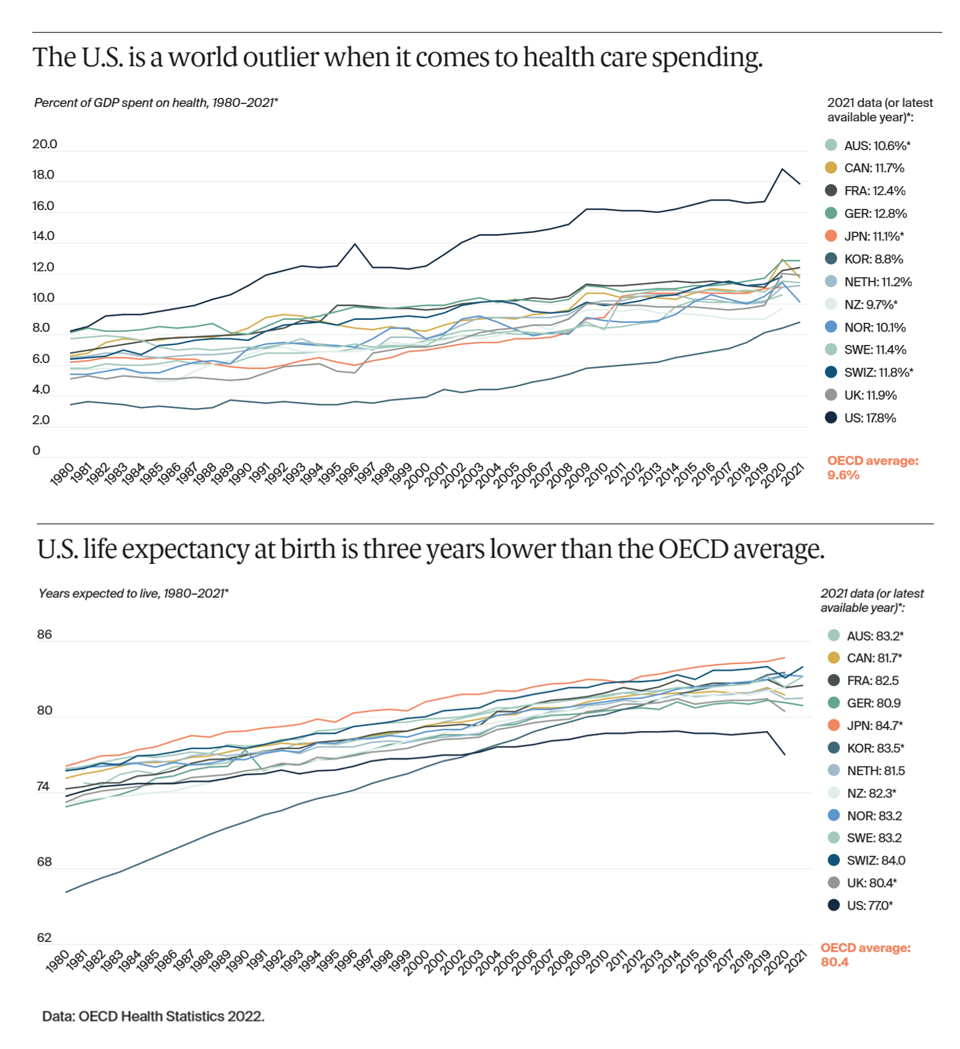
The U.S. is an outlier in the world for high health care spending, as well as in low achievement for life expectancy at birth — 3 years less than that in peer OECD countries — discussed in U.S. Health Care from a Global Perspective, 2022: Accelerating Spending, Worsening Outcomes, the latest look into American health system performance in a global context from The Commonwealth Fund. Another study published in JAMA this week talks about the Organization and Performance of US Health Systems, calling out the fact that, “Small quality differentials combined with large price differentials suggests that health systems have
What Are Patients Looking for in a Doctor? It Depends on Who You Ask…and Their Race
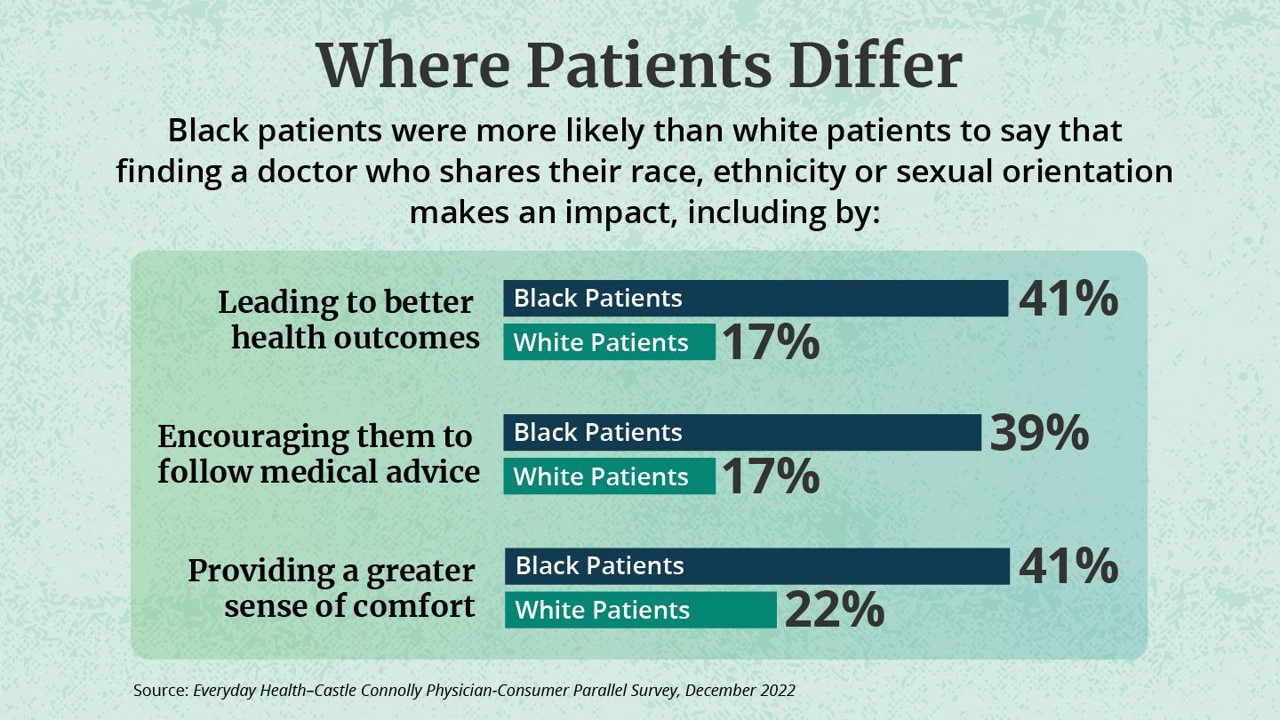
While the same proportion of Black and White patients say they are looking for a doctor with empathy and compassion, there are relatively large differences between patients based on their race, found in the Everyday Health-Castle Connolly Physician-Consumer study. The survey was conducted in December 2022 among a group of 1,001 U.S. consumers and 277 Castle Connolly health care professionals. As the first bar chart illustrates “where patients differ, “Black people were nearly twice as likely as white people (41 percent versus 22 percent) to completely agree that they would be more comfortable and
Your Grocery Store as Health/Care Destination: Welcome Kroger to the Clinical Trials Community

Our grocery stores were essential touchpoints for us during the COVID-19 lockdown era and thereafter, addressing our basic needs for food and medicines and even social health from early 2020 and since. Grocery stores have been morphing into health/care destinations for the past decade, in the best cases bolstering nutrition, supporting medication adherence and patient outcomes, and helping us curate healthy grocery carts with nutritionists as part of the store pharmacy team. Now Kroger continues to expand its health/care footprint and capabilities, becoming a clinical trials channel as announced in its January 24th press
The Polarization of Trust in 2023 – What It Means for Health, via Edelman at Davos WEF 23
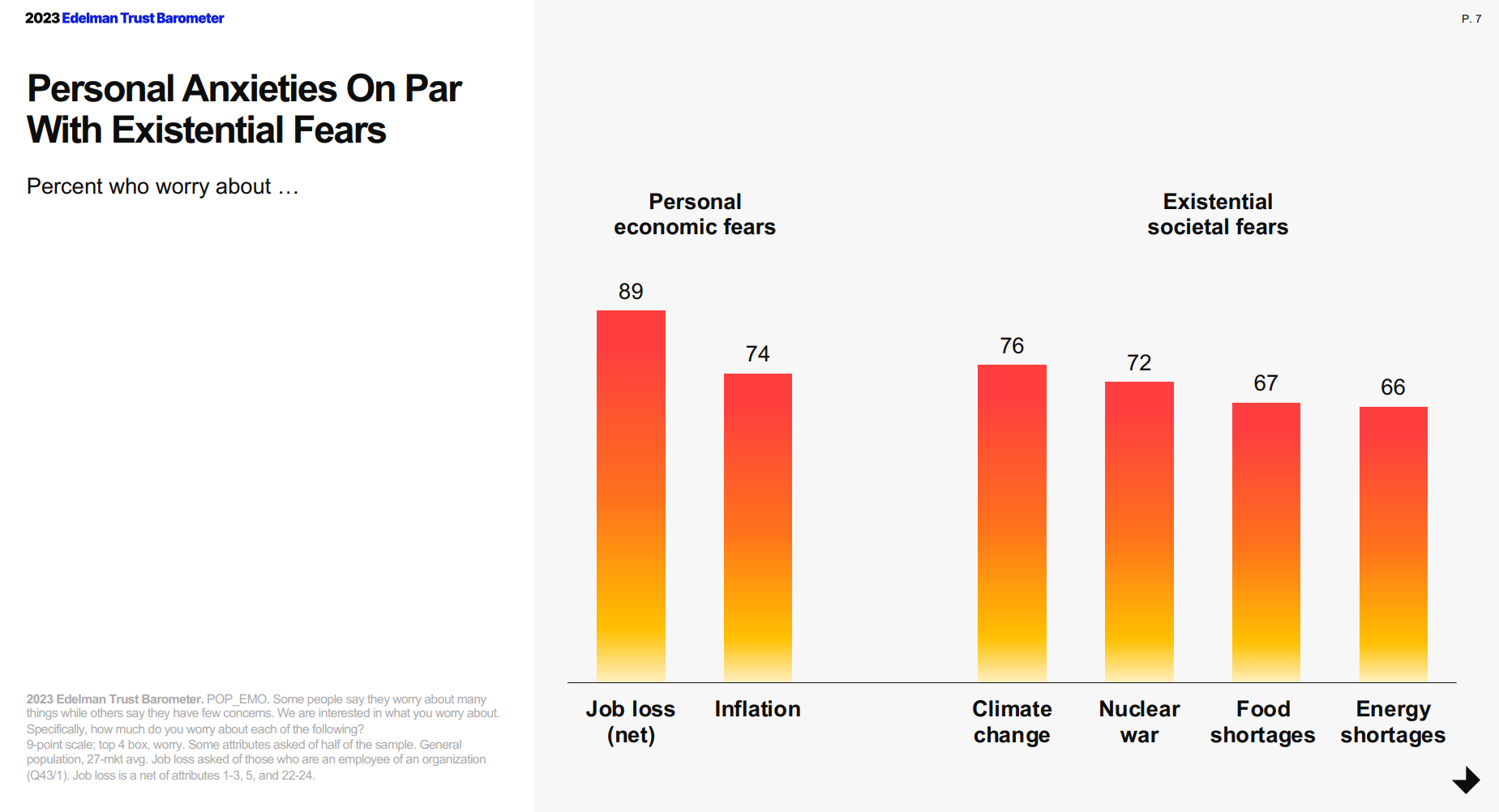
For the third year in a row, citizens in most of the world see business as the most-trusted institution, above government, media, and NGOs, found in the 2023 Edelman Trust Barometer, unveiled this week at the annual World Economic Forum in Davos, Switzerland. The Edelman team conducted this 23rd annual study in November 2022 in 28 countries, among over 32,000 people — some 1,150 residents per country polled. (Note that Russia, studied in the surveys between 2007 and 2022, was not included in the 2023 research). The first chart arrays
Of All Forms of Inequality, Injustice in Health Care is the Most Shocking and Inhumane: Listening to Martin Luther King, Jr.

Today as we appreciate the legacy of Martin Luther King, Jr., I post a photo of him in my hometown of Detroit in 1963, giving a preliminary version of the “I Have a Dream” speech he would deliver two months later in Washington, DC. Wisdom from the speech: “But now more than ever before, America is forced to grapple with this problem, for the shape of the world today does not afford us the luxury of an anemic democracy. The price that this nation must pay for the continued oppression and exploitation of the
Can Consumer Electronics Help Stem the Decline of U.S. Life-Years? A Preface for #CES2023
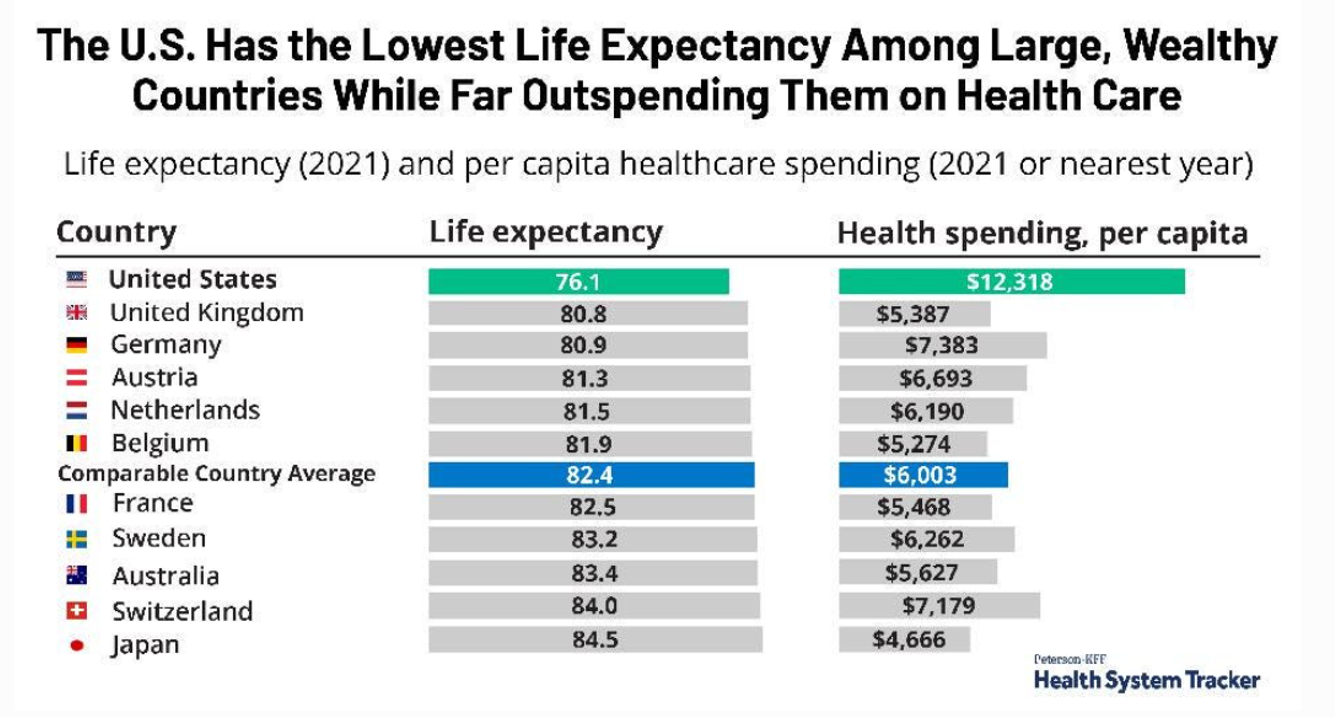
Life expectancy in the U.S. dropped nearly three years between 2019 and 2021, from close to 79 years down to 76. We ended 2022 with this new, sobering statistic from the Centers tor Disease Control (CDC). We begin 2023 with the opening of CES 2023, the world’s largest annual meet-up of consumer electronics innovators, companies, and retailers. How can digital health and other consumer-facing technologies help our health? First, consider the stark data point(s), and then we can better respond to the question’s answer in the Hot Points, below. In case you
When Household Economics Blur with Health, Technology and Trust – Health Populi’s 2023 TrendCast
People are sick of being sick, the New York Times tells us. “Which virus is it?” the title of the article updating the winter 2022-23 sick-season asked. Entering 2023, U.S. health citizens face physical, financial, and mental health challenges of a syndemic, inflation, and stress – all of which will shape peoples’ demand side for health care and digital technology, and a supply side of providers challenged by tech-enabled organizations with design and data chops. Start with pandemic ennui The universal state of well-being among us mere humans is pandemic ennui: call it languishing (as opposed to flourishing), burnout, or
Site-Shifting: the Consumer-Driven Pressure on Traditional Healthcare Utilization
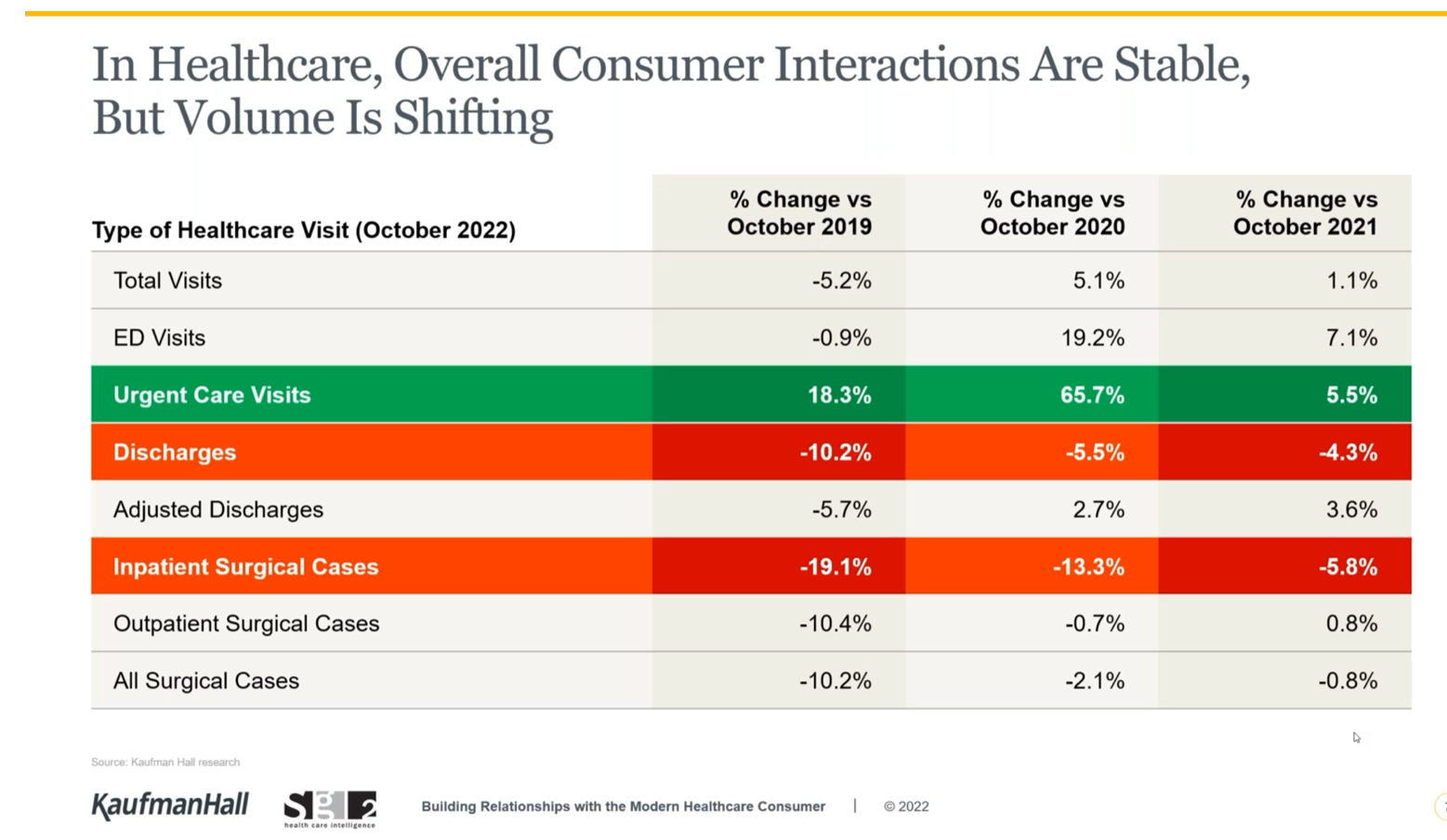
While overall U.S. consumers’ utilization of health care has been pretty stable, the type of visit encounters is shifting away from hospital inpatient cases to ambulatory care, urgent and retail health care sites, data from Kaufman Hall and Sg2 tell us. The companies shared insights in a session on Building Relationships with the Modern Healthcare Consumer last week, warning that hospitals are facing economic challenges with implications on how they should engage and interact with patients in the coming months and years. Wearing a consumer-centric lens, Dan Clarin of Kaufman Hall and Charlotte Brown-Zalewa
The Tik Tok’ing of Medical Mis-Information: Doctors’ and Patients’ Roles in Curating Healthy Advice
Doctors in the U.S. believe that the medical mis-information problem is worsening, learned in survey research from Merck Manuals. Doctors and patients, both, have roles to play in addressing medical misinformation online. Less than half of consumers, 44%, said that that there is more medical mis-information online than previously. That’s less than half of the percentage of doctors saying so — 98%, virtually all U.S. physicians, citing the problem. There were several disconnects noted in the Merck Manuals study showing starkly different perceptions of health information online between doctors and patients:
Health Care in the 2022 U.S. Midterm Elections – Considerations for Conversations at HLTH
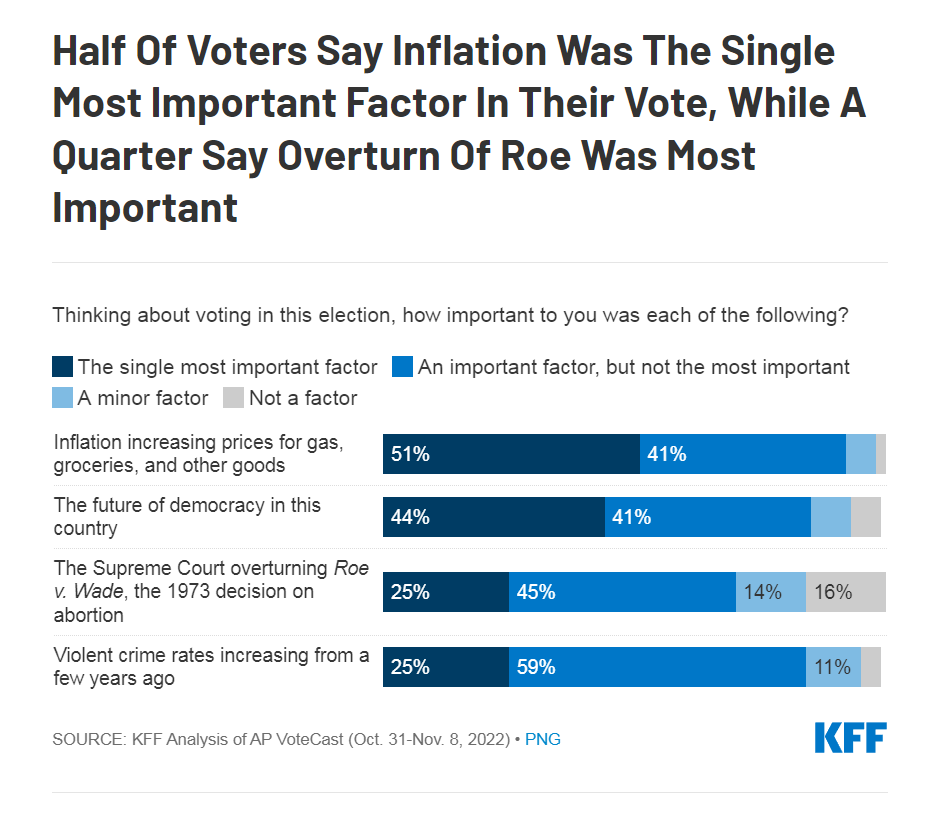
You and I are ending this week looking back three days, Friday morning quarterback style, wondering how the U.S. 2022 midterm elections could impact health and health care in America. We can never know with 101% certainty the answer to this question following any U.S. election. This year’s midterms leave us especially in need of scenario planning, especially as on this day, we still do not know what the final balance of power in the U.S. Congress will be. Nor can we ascertain, just yet, what the jockeying for power within both the Democratic party and the Republican party will
A Call to Embrace Civic Engagement (Including Voting Access) as a Driver of Health
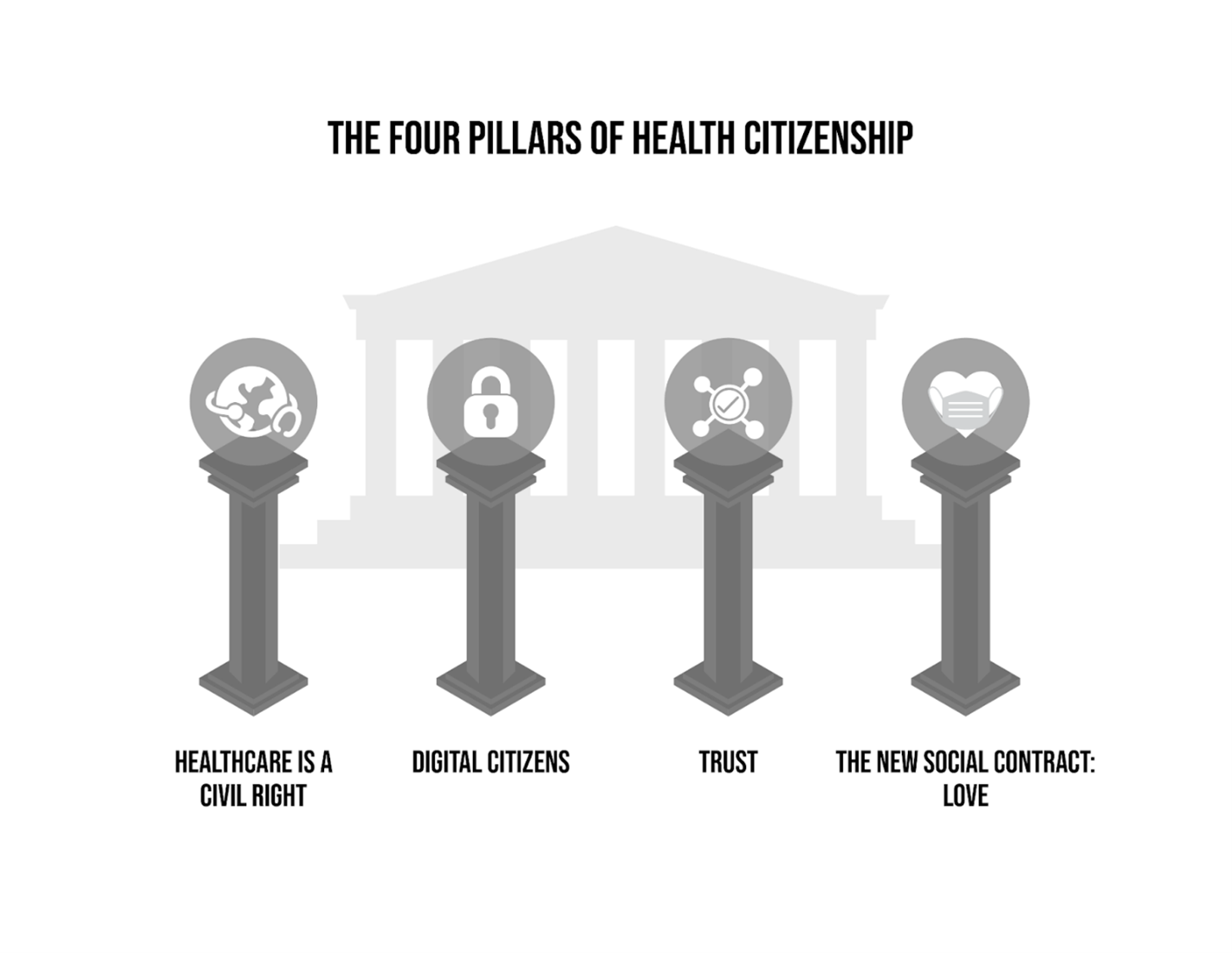
“Two intersecting and interdependent systems comprise democracy in the United States,” Eileen Salinsky, Program Advisor with Grantmakers in Health, wrote in a compelling essay in April 2022. Those systems are, Eileen described, “A political system of representative government, which includes the legislative, executive, and judicial branches at the federal, state, and local levels; and, A collective system of self-governance, which includes how individuals interact with each other and their political system through many forms of civic engagement.” Civic Engagement is a Social Determinant of Health, Eileen titled this piece in which she discusses philanthropy’s role in both strengthening democracy and
Health Is Social, With More People Using Apps for Physical and Emotional Wellbeing
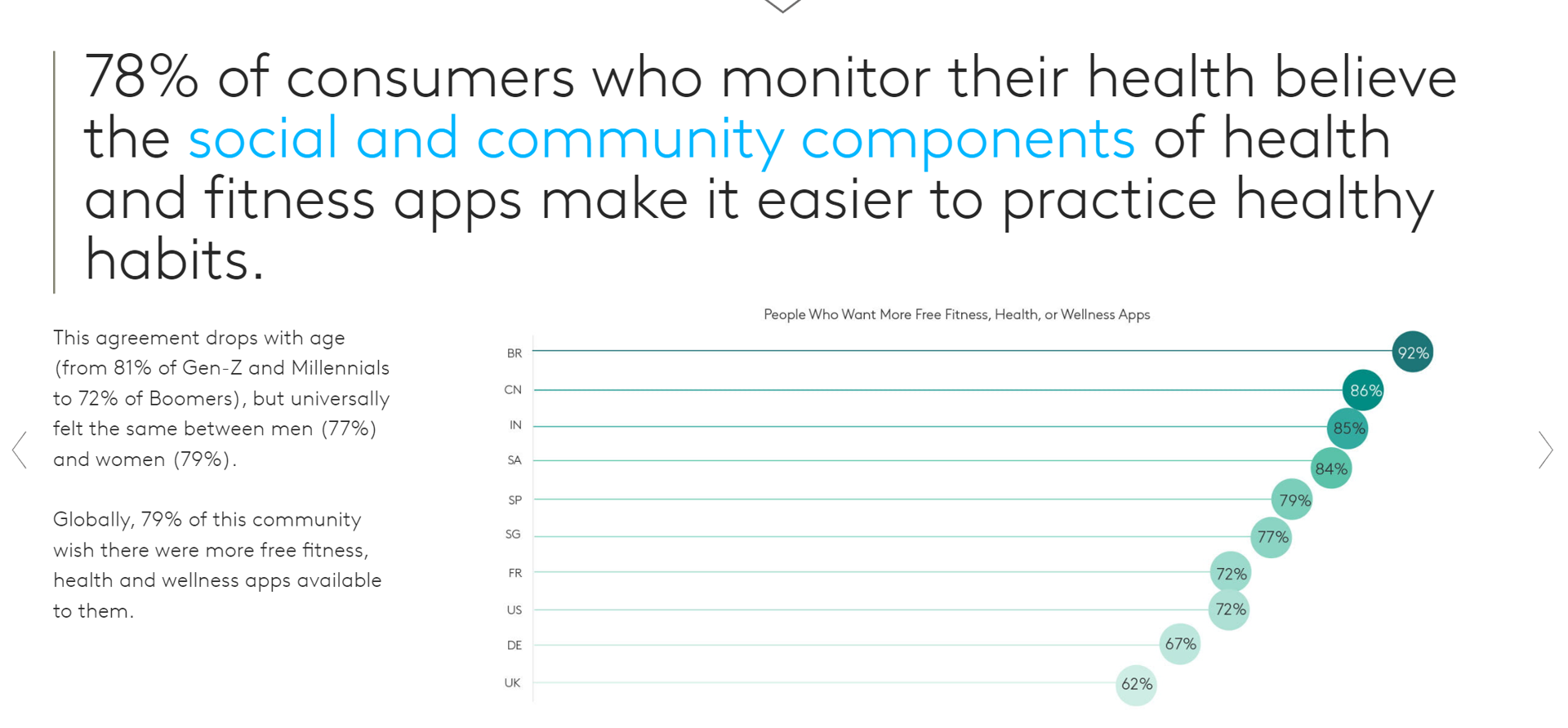
People who need people aren’t just the luckiest people in the world: they derive greater benefits through monitoring their health via apps that make it easier to make healthy choices. Channeling Barbra Streisand here to call out a key finding in new consumer research from Kantar on Connecting with the Health & Wellness Community. Kantar polled 10,000 online consumers in ten countries to gain perspectives on health citizens’ physical and emotional health and the role of technology to bolster (or diminish) well-being. The nations surveyed included Brazil, China, France, Germany, India, Singapore, South Africa, Spain,
Wearable Tech for Health Tracking, Online Dating and Banking: Exploring the “Fluidity” of Peoples’ Data Privacy Views
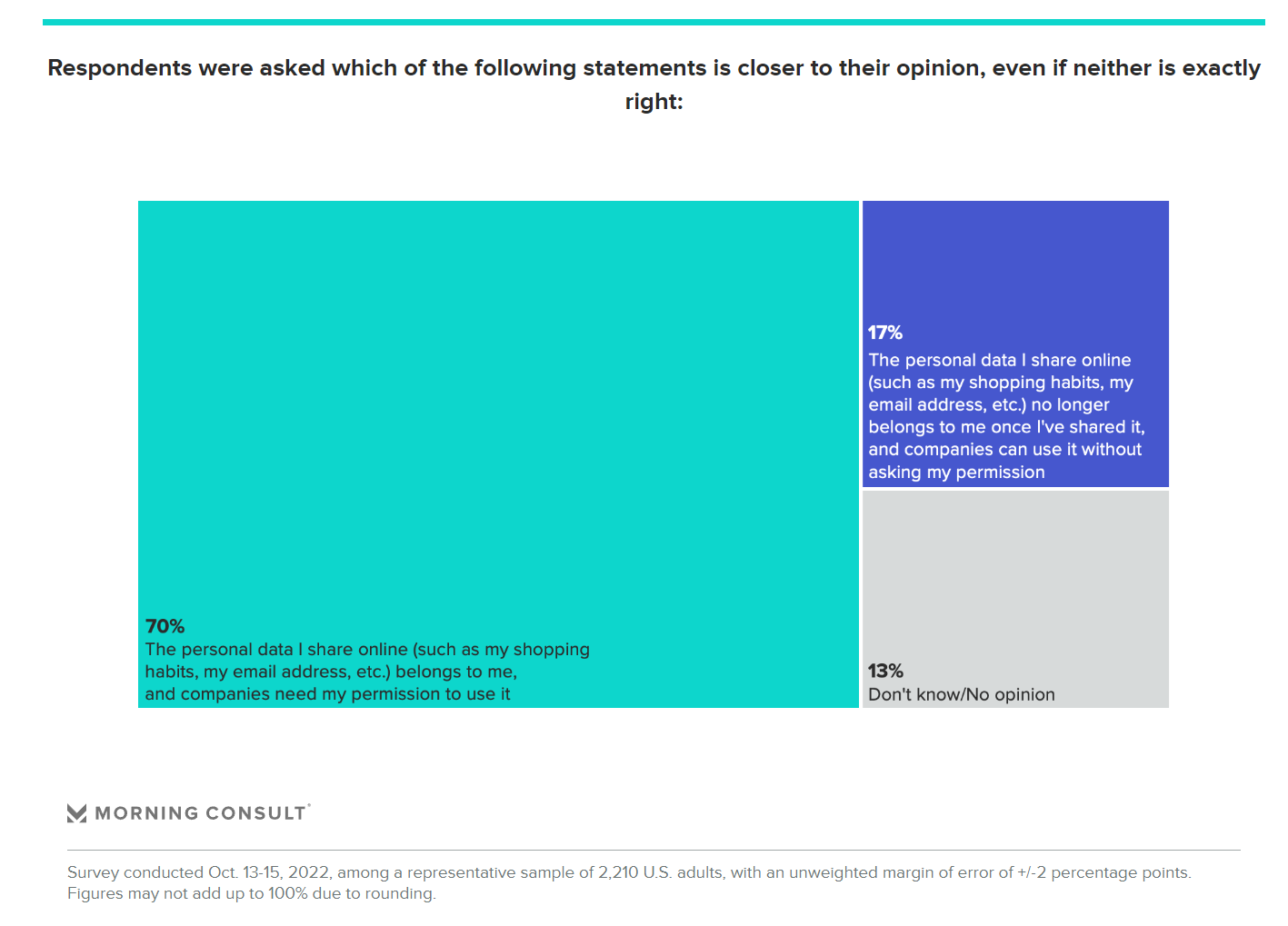
“The security of online data is the top consideration for consumers across many forms of online activities including email, search, social media, banking, shopping and dating”….and using health apps. A new poll from Morning Consult, explained on their website, explains that For Consumers, Data Privacy Has a Fluid Definition. Those privacy nuances and concerns vary by activity, shown in the first chart here from the study. For online banking, the most important consideration among most consumers (55%) is the privacy and security of their online data. Privacy and security of personal data was
How Will the “New” Health Economy Fare in a Macro-Economic Downturn?
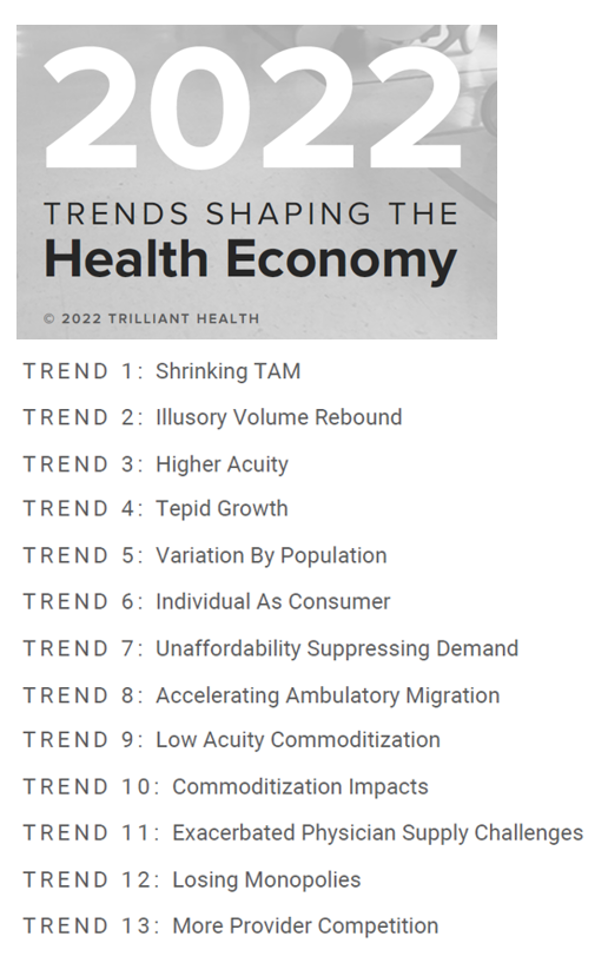
What happens to a health care ecosystem when the volume of patients and revenues they generate decline? Add to that scenario a growing consensus for a likely recession in 2023. How would that further impact the micro-economy of health care? A report from Trilliant on the 2022 Trends Shaping the Health Economy helps to inform our response to that question. Start with Sanjula Jain’s bottom-line: that every health care stakeholder will be impacted by reduced yield. That’s the fewer patients, less revenue prediction, based on Trilliant’s 13 trends re-shaping the U.S. health
How Will Consumers’ Declining Trust in Technology Impact Health Tech?

Americans’ trust in technology as “plummeted” in the past decade, according to the 2022 Edelman Trust Barometer’s focused look on trust and technology. How might this play into U.S. health citizens’ trust in digital health technology? To answer that, let’s start with the macro-view on trust in tech. Richard Edelman convened a virtual meeting launch for the Trust Barometer’s tech perspectives yesterday, looking broadly at the global study findings. For these trust-tech insights, Edelman surveyed 15,000 citizens between August 31 and September 12, 2022, residing in 12 countries: Australia, Brazil, Canada, China, France, Germany,
Consumers’ and the White House’s Growing Focus on Food and Nutrition
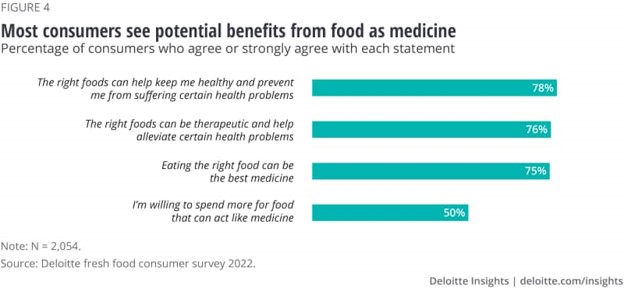
Today, the White House is convening a Conference on Hunger, Nutrition and Health. So it’s a propitious time to weave together some of the latest research and insights into food-as-medicine and a key determinant of health and well-being. This is the first White House conference focused on nutrition and food in over 50 years. The National Strategy was released today, and covers a range of programs that bake health and nutrition into Federal policies going beyond “food” itself: we see various determinants of health embedded into the Strategy, such as supporting physical activity,
Most Consumers Are Health and Wellness Consumers Even in Hard Financial Times, Accenture Finds
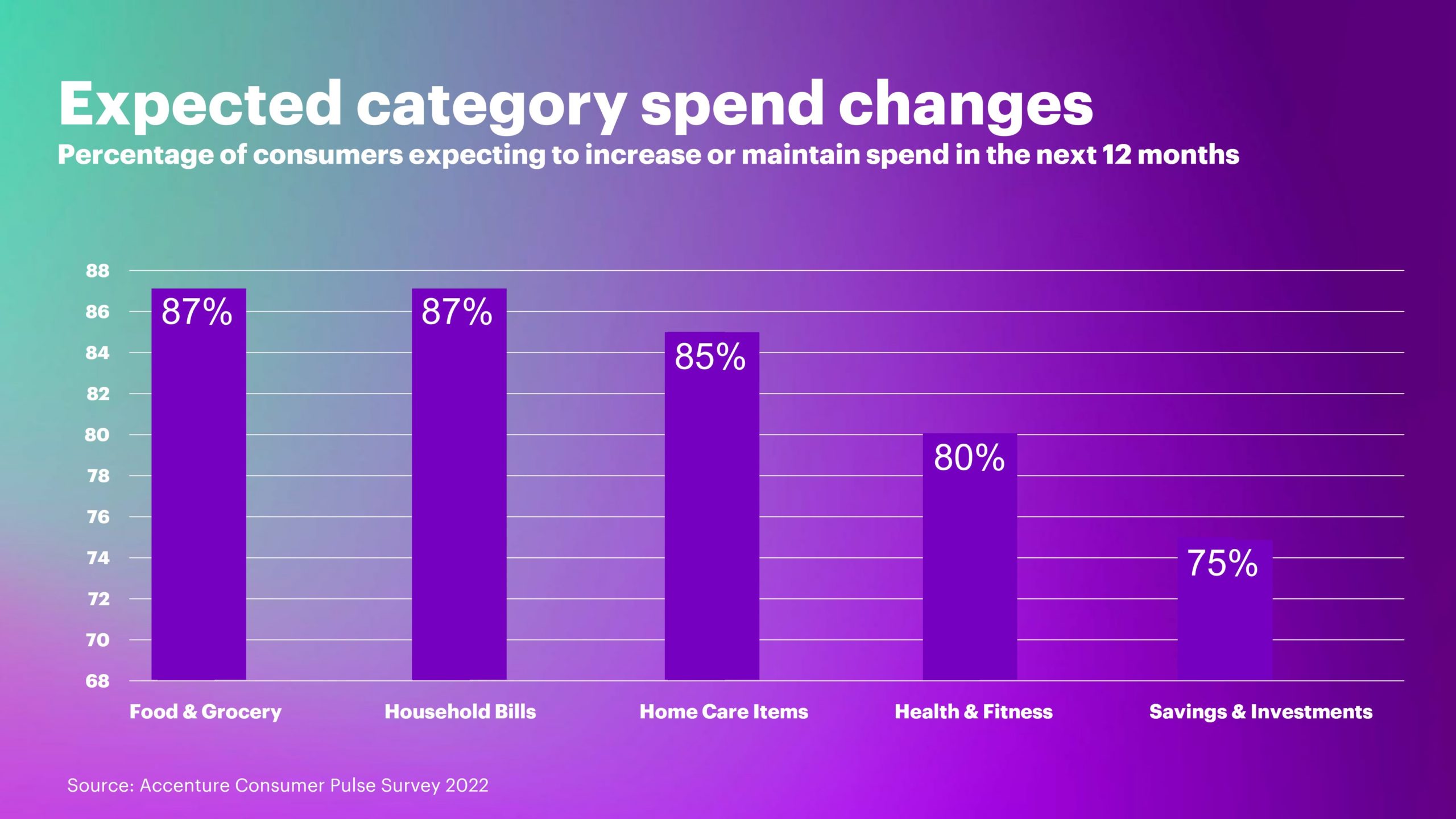
Consumers consider health and well-being as an “essential” household spending category based on new research from Accenture. Accenture polled over 11,000 consumers in 17 countries, considering how people are faring amid “widespread uncertainty and personal financial strains,” in the firm’s words. While two in three consumers feel financially stressed, 4 in 5 intend to grow or hold their personal spending on health and fitness steady in the next year. The first chart graphs data from Accenture’s global survey. In the U.S., more granularly, 26% of consumers intend to increase spending on health and wellness
The More Chronic Conditions, the More Likely a Patient Will Have Medical Debt
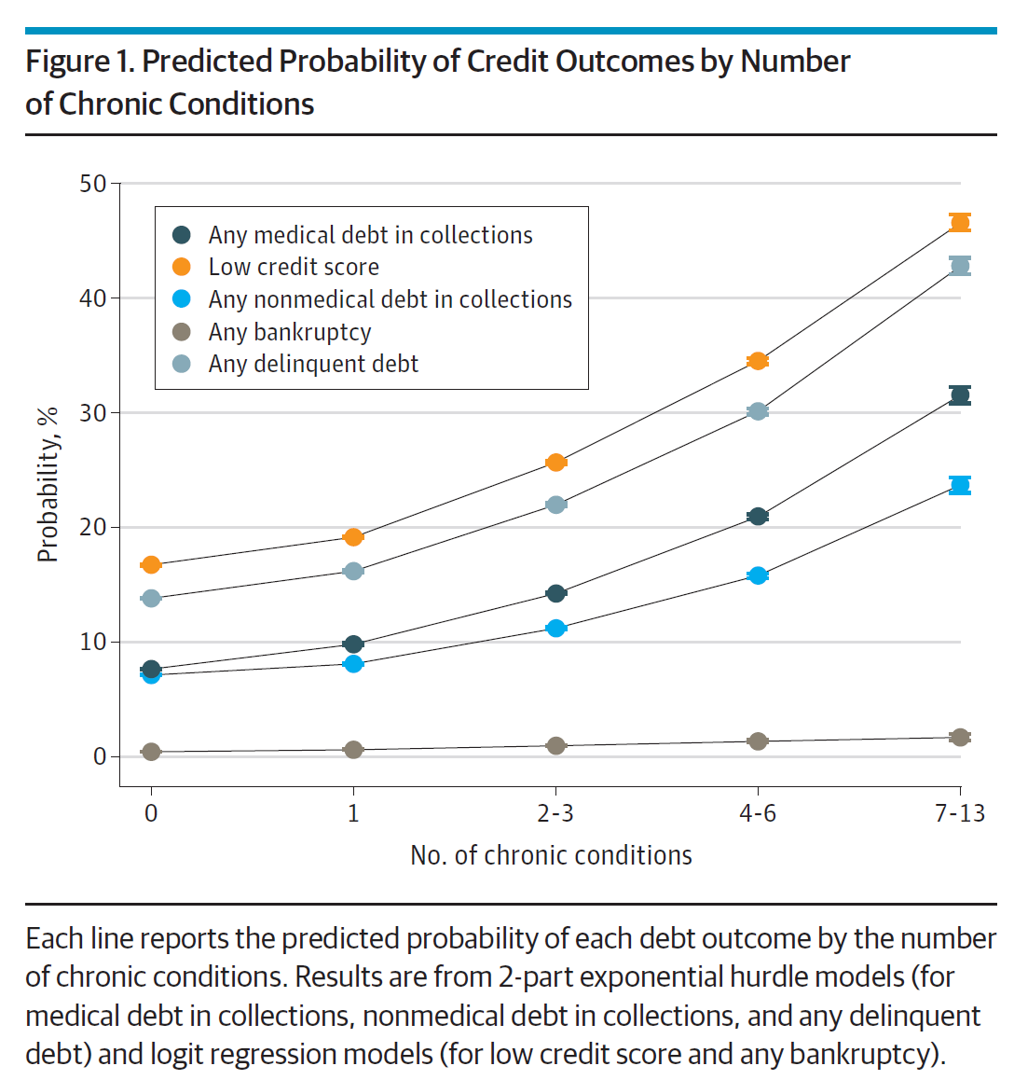
There is a direct association between a person’s health status and patient outcomes and their financial health, quantified in original research published this week in JAMA Internal Medicine. Researchers from the University of Michigan (my alma mater) Medical School and Institute for Healthcare Policy and Innovation analyzed two years of commercial insurance claims data generated between January 2019 and January 2021, linking to commercial credit data from January 2021 for patients enrolled in a preferred providers organization in Michigan. The first chart illustrates the predicted probability of credit outcomes based on the
Climate Change Is Not Good for Health and Living Things
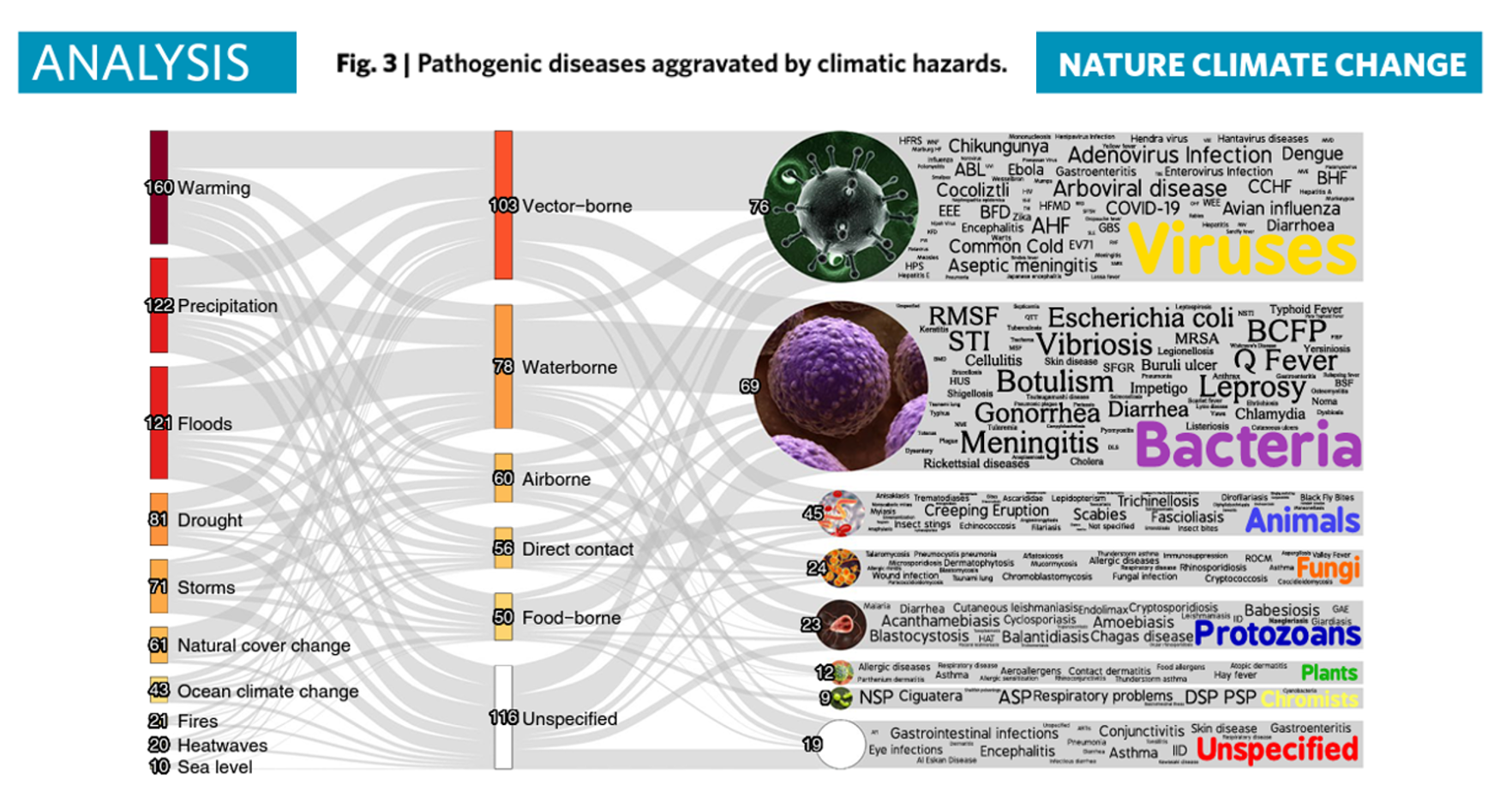
There is an image from my childhood, drawn by Lorraine Schneider, which reads “War is not healthy for children and other living things.” As I read through a paper published this week on climate change’s contribution to the burden of chronic disease, I couldn’t help but conjure up Lorraine’s observation from my little girl memory bank. One of the largest meta-analyses mashing up research evidence on the impact of climate change on human health was featured in the journal Nature Climate Change this week. Lorraine could replace the word “war” with “climate change” and be clinically sound in the eyes
“Beyond the Bubble Bath,” Self-Care Must Be Rooted in Science To Build Trust Among Consumers
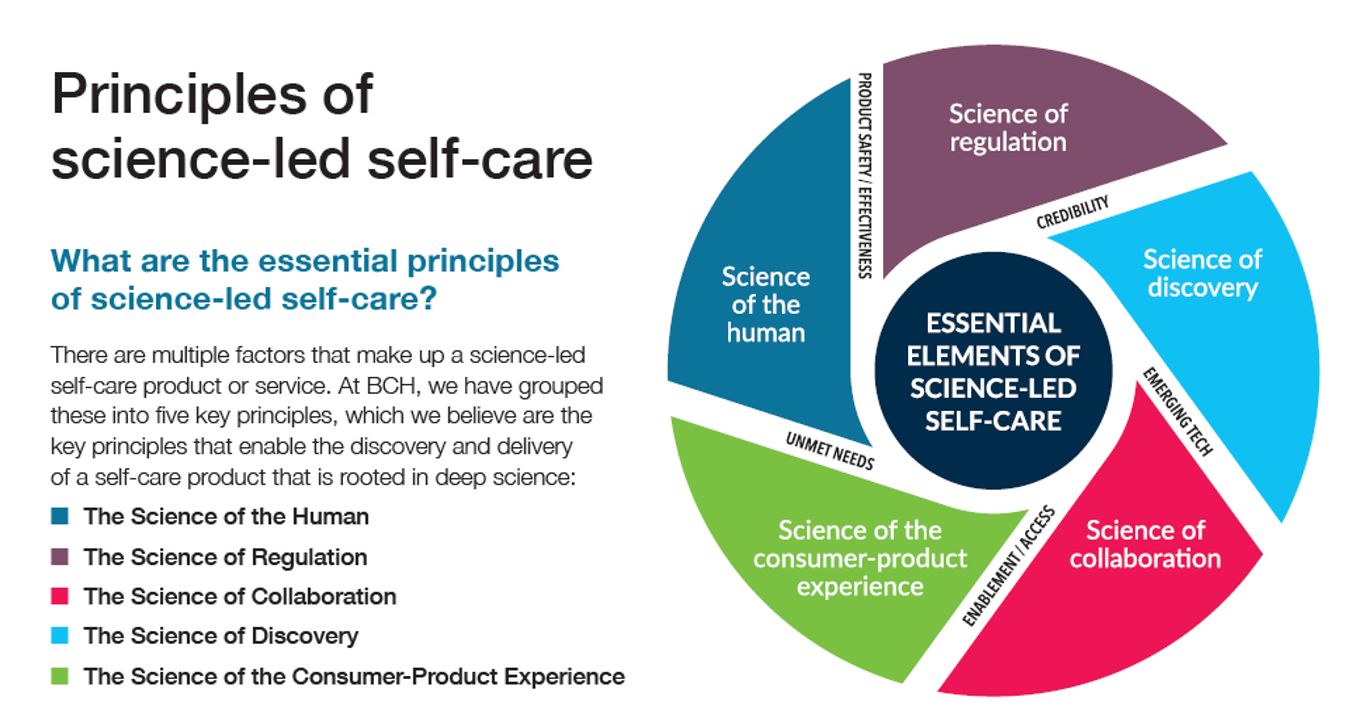
The goal of self-care for health-making is to improve lives by scaling health-and-wellness accessible to all, Bayer believes, giving people more control over their personal health. Self-care work-flows must be based in science to ensure products and services are trusted and deliver on their clinical promise, Bayer explains in Science-Led Self-Care: Principles for Best Practice, a paper published this week which the company intends to be a blueprint for the industry. Bayer recognizes that self-care is growing among health consumers around the world — albeit underpinned by peoples’ cultures, demographics, and “readiness”
Health, Politics, Inflation and Women: Health Engagement at the Voting Booth
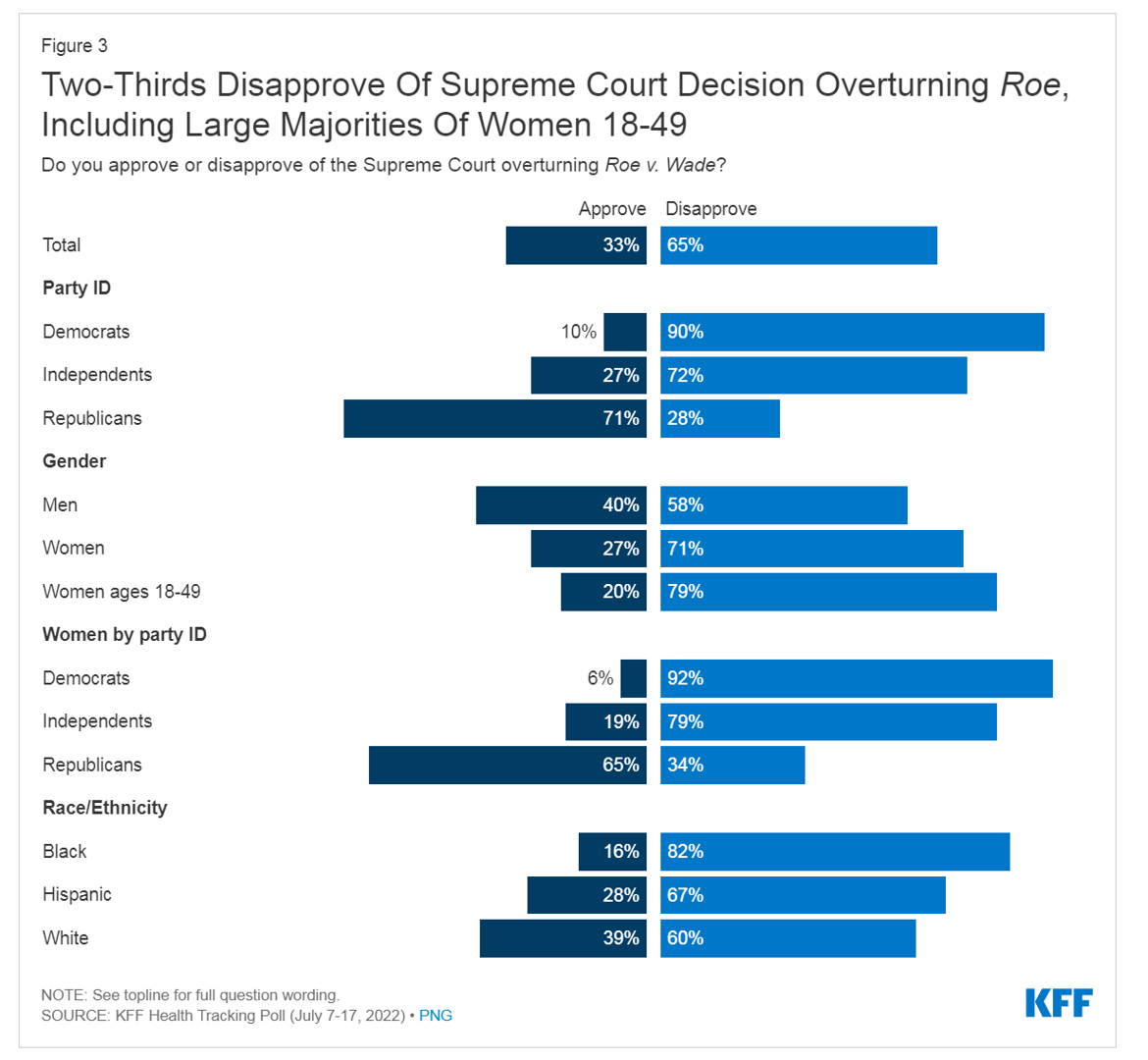
Two in three Americans disapproved of the Supreme Court’s decision to overturn the Roe v. Wade decision (aka the Dobbs case), the latest Kaiser Family Foundation Health Tracking Poll found. While inflation tops voters’ priorities, abortion access resonates for key voting blocs. KFF conducted this survey among 1,847 U.S. adults 18 and over between July 7 and 17, 2022. KFF published the study findings this week on August 2, a day of political primaries and ballot considerations in several U.S. states. Consider Kansas: a majority of Kansans voted on Tuesday to protect abortion rights
The Retail Health Battle Royale, Day 5 – Consumer Demands For a Health/Care Ecosystem (and What We Can Learn from Costco’s $1.50 Hot Dog)
In another factor to add into the retail health landscape, Dollar General (DG) the 80-year old retailer known for selling low-priced fast-moving consumer goods in peoples’ neighborhoods appointed a healthcare advisory panel this week. DG has been exploring its health-and-wellness offerings and has enlisted four physicians to advise the company’s strategy. One of the advisors, Dr. Von Nguyen, is the Clinical Lead of Public and Population Health at Google….tying back to yesterday’s post on Tech Giants in Healthcare. Just about one year ago, DG appointed the company’s first Chief Medical Officer, which I covered here in
The Retail Health Battle Royale, Day 4 – Tech Giants in Healthcare, U.S. Lessons from Europe
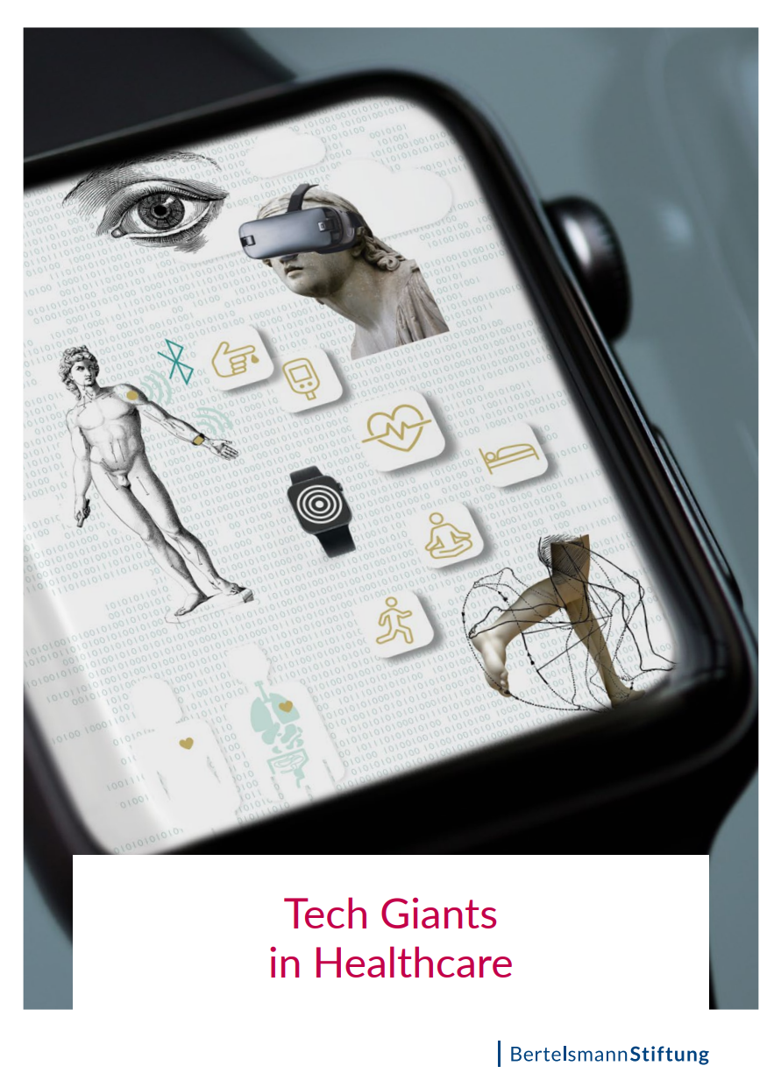
“Tech giants are the primary forces driving digital transformation forward,” and this is especially the case for health care systems re-imagining how health care services are delivered and “consumed.” This observation comes from a new report, Tech Giants in Healthcare, written by four European-based experts in healthcare and bioethics. The 200-page paper details the activities of sixteen global technology companies in the health/care ecosystem, followed by a so-called “ethical analysis” of these companies’ work with health data. The report was published in Germany by Bertelsmann Stiftung, a not-for-profit think tank addressing broad political, social and
The Retail Health Battle Royale in the U.S. – A Week-Long Brainstorm, Day 1 of 5
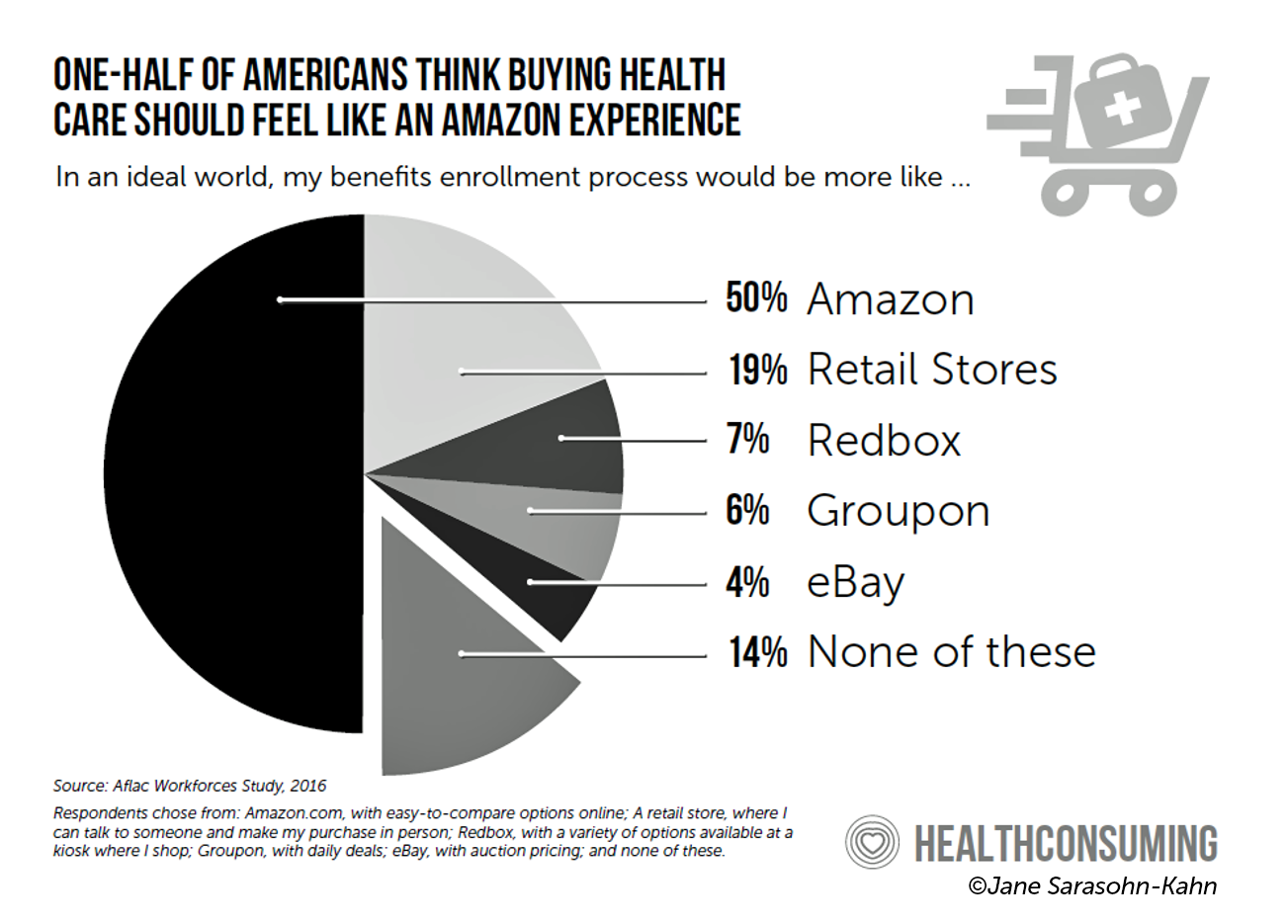
I’ve returned to the U.S. for a couple of months, having lived in and worked from Brussels, Belgium, since October 2021 (save for about ten days in March 2022). Work and life slow down in Europe in July and August, giving us the opportunity to return to our U.S. home base, reunite with friends and family, and re-join life and living this side of the Atlantic. The timing of my return to the U.S. coincides with a retail health hurricane of big announcements shaking up the health/care ecosystem. Among these events are Amazon’s plan to acquire One Medical, Apple’s publication of
The Old Gays Working with Walgreens on TikTok: Breaking Down Stereotypes and Having Fun with Health

How much do I love this media campaign from Walgreens, collaborating with the foursome The Old Gays who have a growing multi-million person fan base on TikTok? How much? A whole lot! Kudos to Walgreens for creating engaging, informative, and fun! content to learn about how people can benefit from using the company’s app ….for, Ordering prescriptions (90-day supply) Receiving delivery same-day 24/7 pharmacy chat on pricing, prescription drug information, and medications. The plotline kicks off with 3 of the 4 quartet (Jessay Martin, Robert Reeves and Mick Peterson) looking for their friend Bill Lyons, who is missing from their
Your State as a Determinant of Health: Sharecare’s 2021 Community Well-Being Index
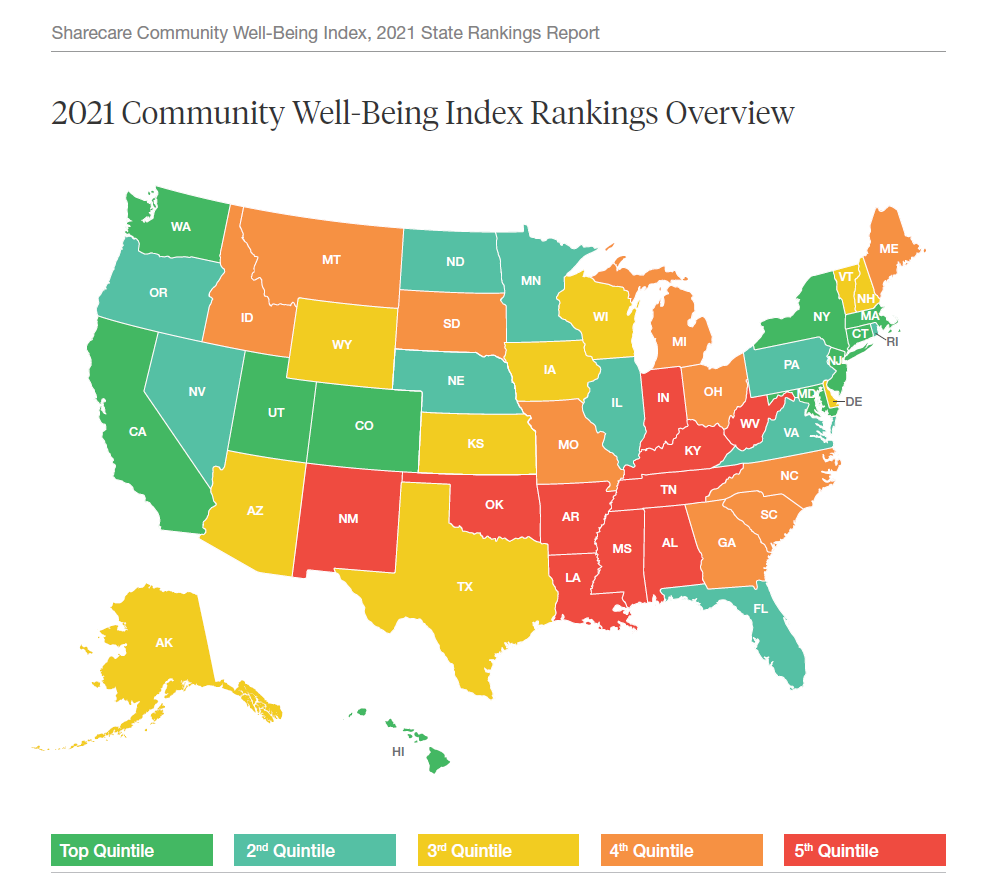
People whose sense of well-being shifted positively in the past two years are finding greater personal purpose and financial health, we see in Sharecare’s Community Well-Being Index – 2021 State Rankings Report. Sharecare has been annually tracking well-being across the 50 U.S. states since 2008. When the study launched, Well-Being Index evaluated five domains: physical, social, community, purpose, and financial. In 2020, Sharecare began a collaboration with the Boston University School of Public Health to expand the Index, including drivers of health such as, Healthcare access (like physician supply per 1,000
Living La Vida Hybrid, for Work, Shopping, Entertainment and Healthcare – Emerging from the Pandemic
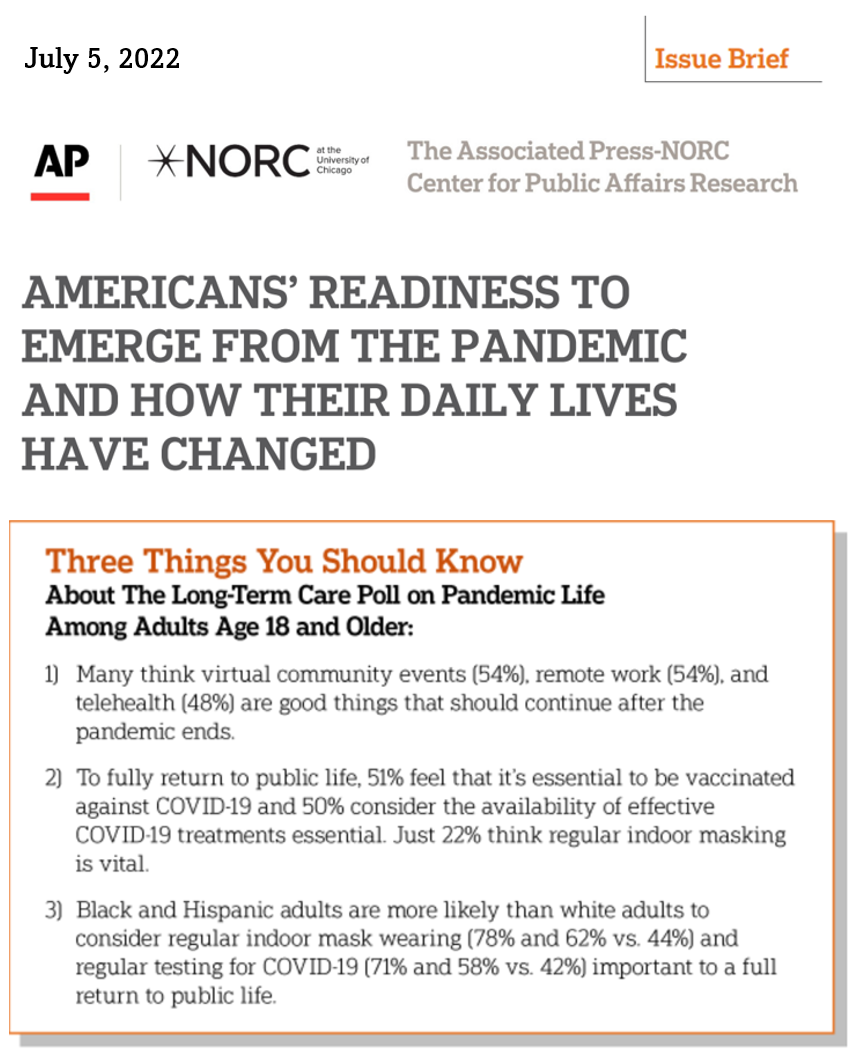
With only 1 in 10 people in the U.S. thinking their lives are the same as they were before the COVID-19 pandemic, about one-half of Americans believe that remote work, virtual community events, and telehealth should continue “once the pandemic ends.” As of mid-May 2022, most people in the U.S. have resumed activities like socializing with friends and neighbors in person, going to restaurants and bars, traveling, meeting with older relatives face-to-face, and returning to exercising in gyms. But a return-to-nearly-normal isn’t a universal phenomenon across all people in America:
More Americans Trust Small Biz and the Military than the Medical System, Gallup Finds
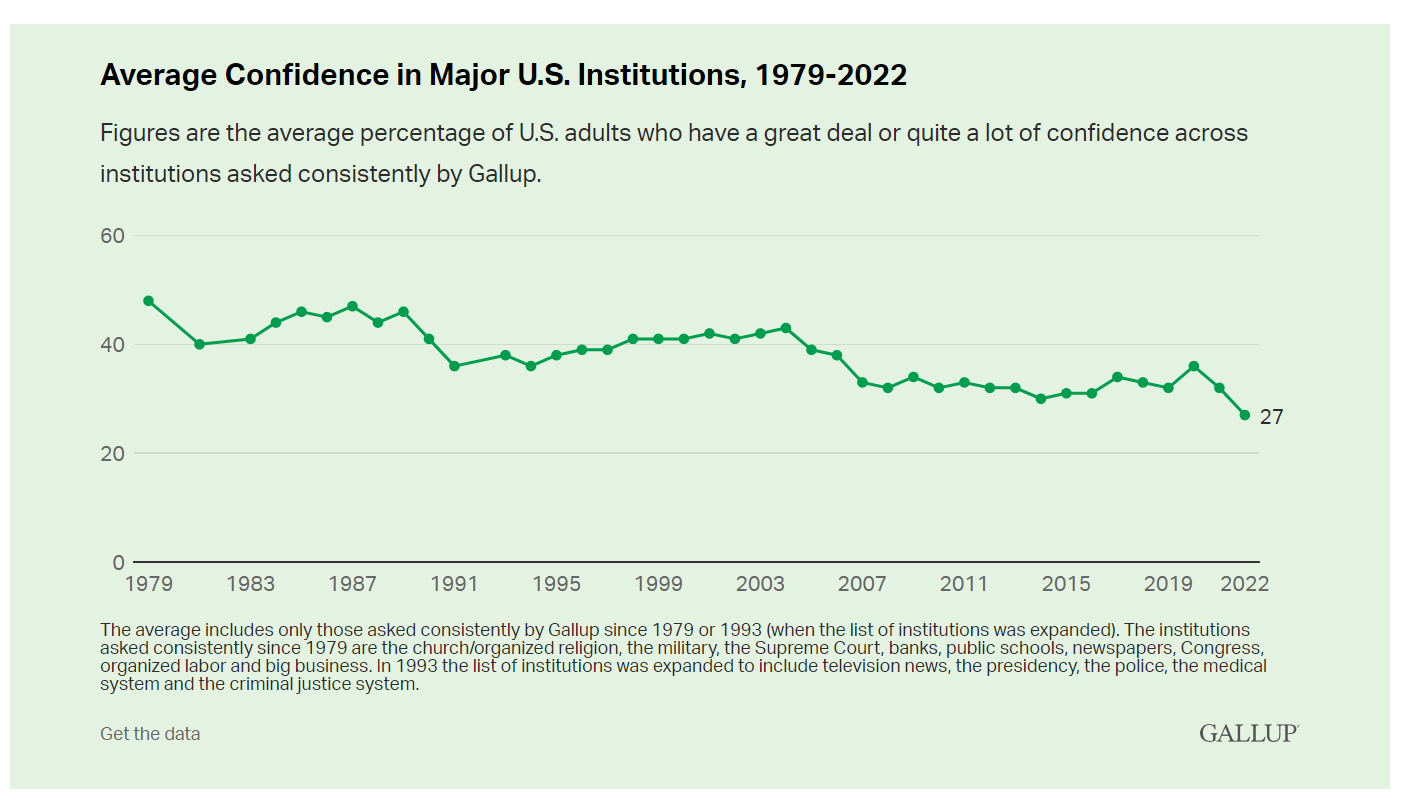
The most trusted institutions in the U.S. are small business and the military, the only two sectors in which a majority of Americans have confidence. Americans’ trust in institutions hit new historic lows in 2022, Gallup found in its latest poll of U.S. sentiment across all major sectors. Today, more Americans have faith in the police than in the medical system, according to a Gallup poll finding that Confidence in U.S. Institutions Down; Average at New Low. published this week of Independence Day 2022. Confidence runs from a higher of 68% for
Consumers’ Dilemma: Health and Wealth, Smartwatches and Transparency
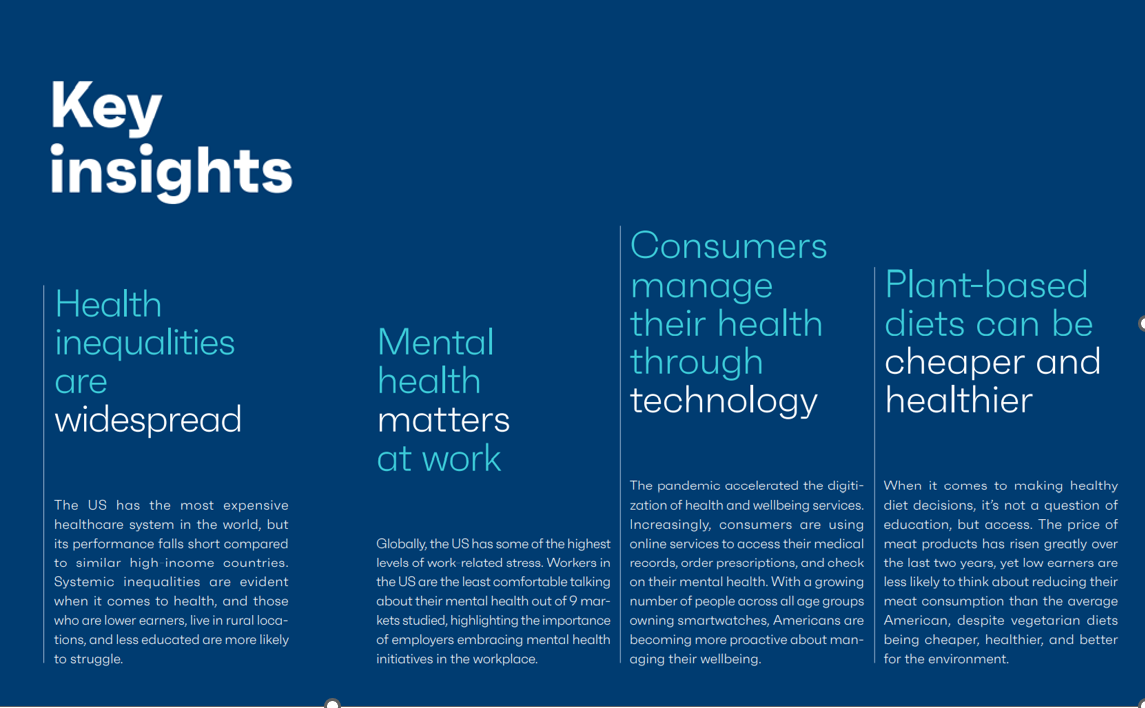
Even as spending on healthcare per person in the United States is twice as much as other wealthy countries in the world, Americans’ health status ranks rock bottom versus those other rich nations. The U.S. health system continues to be marred by health inequalities and access challenges for man health citizens. Furthermore, American workers’ rank top in the world for feeling burnout from and overworked on the job. Welcome to The Consumer Dilemma: Health and Wellness,, a report from GWI based on the firm’s ongoing consumer research on peoples’ perspectives in the wake of
Changing Views of Retirement and Health Post-COVID: Transamerica’s Look At Workers’ Disrupted Futures
As more than 1 in 3 U.S. workers were unemployed during the pandemic and another 38% had reductions in hours and pay, Americans’ personal forecasts and expectations for retirement have been disrupted and dislocated. In its look at The Road Ahead: Addressing Pandemic-Related Setbacks and Strengthening the U.S. Retirement System from the Tramsamerica Center for Retirement Studies (TCRS), we learn about the changing views of U.S. workers on their future work, income, savings, dreams and fears. Since 1988, TCRS has assessed workers’ perspectives on their futures, this year segmented the 10,003 adults
Use of Preventive Health Services Declined Among Commercially Insured People – With Big Differences in Telehealth for Non-White People, Castlight Finds
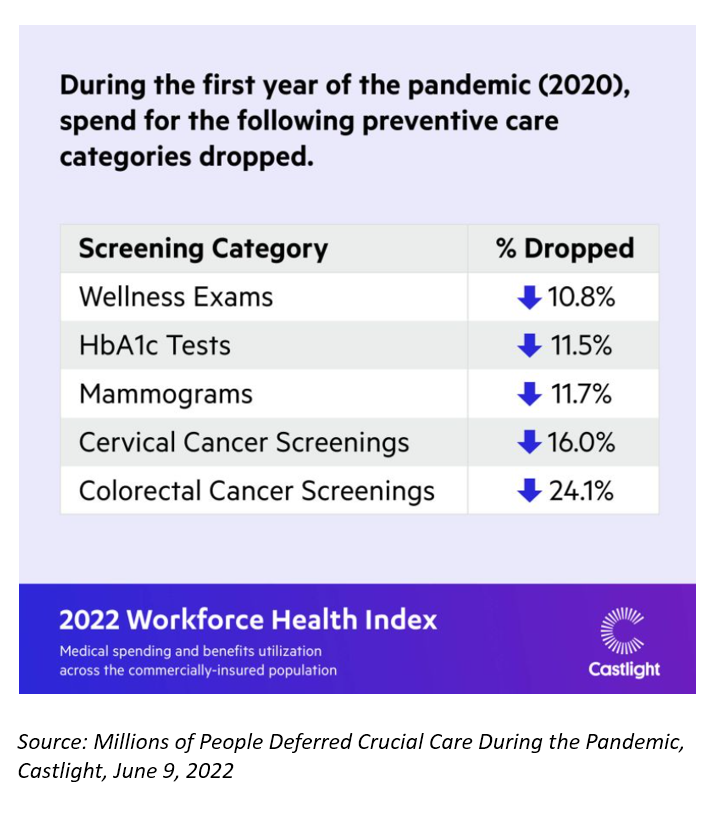
Declines in preventive care services like cancer screenings and blood glucose testing concern employers, whose continued to cover health insurance for employees during the pandemic. “As we enter the third year of the COVID-19 pandemic, employers continue to battle escalating clinical issues, including delayed care for chronic conditions, postponed preventive screenings, and the exponential increase in demand for behavioral health services,” the Chief Medical Officer for Castlight Health notes in an analysis of medical claims titled Millions of People Deferred Crucial Care During the Pandemic, published in June. The
The Unbearable Heaviness of Inflation: Will Consumers’ Financial Stress Erode Their Health?
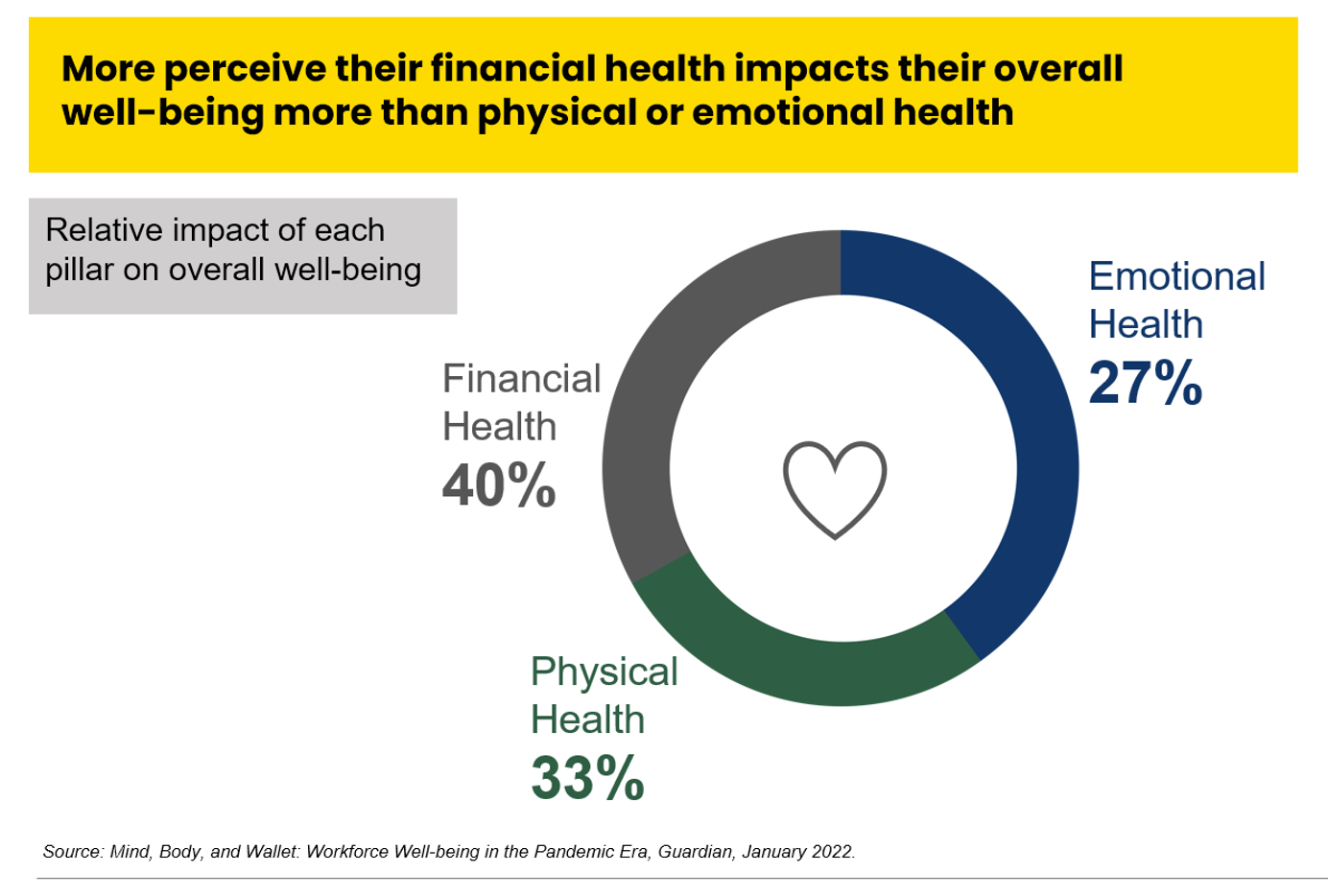
“Inflation is the big story,” the economics team at Morning Consult told us yesterday in a call on “How to Think Like An Economist.” While I already thought I did that, Team @MorningConsult updated us on the current state of consumers and what’s weighing most heavily on their minds…inflation being #1. An hour after the Morning Consult session, I brainstormed the topic of consumers-as-payers of medical bills and prescription drugs with GoodRx strategy leaders. In my data wonkiness, inflation certainly played a starring role in setting the stage for Mind, Body and Wallet — the title of one of the sources
The 2022 US Health System Report Card: Pretty Terrific If You Live in Hawaii or Massachusetts
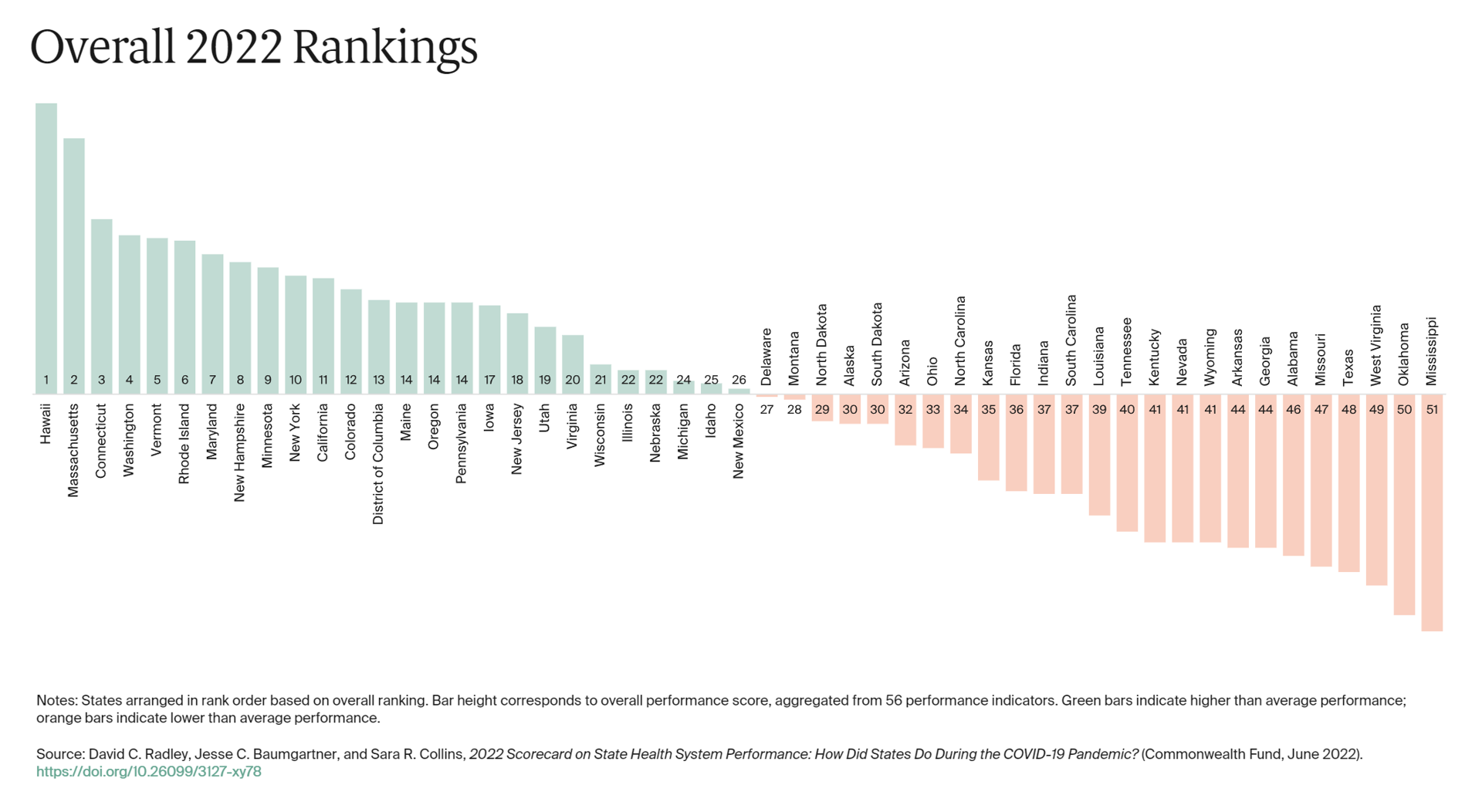
The best U.S. states to live in for health and health care are Hawaii, Massachusetts, Connecticut, Washington, Vermont, Rhode Island, and Maryland… Those are the top health system rankings in the new 2022 Scorecard on State Health System Performance annual report from the Commonwealth Fund. If you live in Mississippi, Oklahoma, West Virginia, Texas, Missouri, Alabama, Georgia, or Arkansas, your health care and outcomes are less likely to be top-notch, the Fund’s research concluded. The Commonwealth Fund has conducted this study since 2006, assessing a range
Only in America: Medical Debt Is Most Peoples’ Problem, KHN and NPR Report
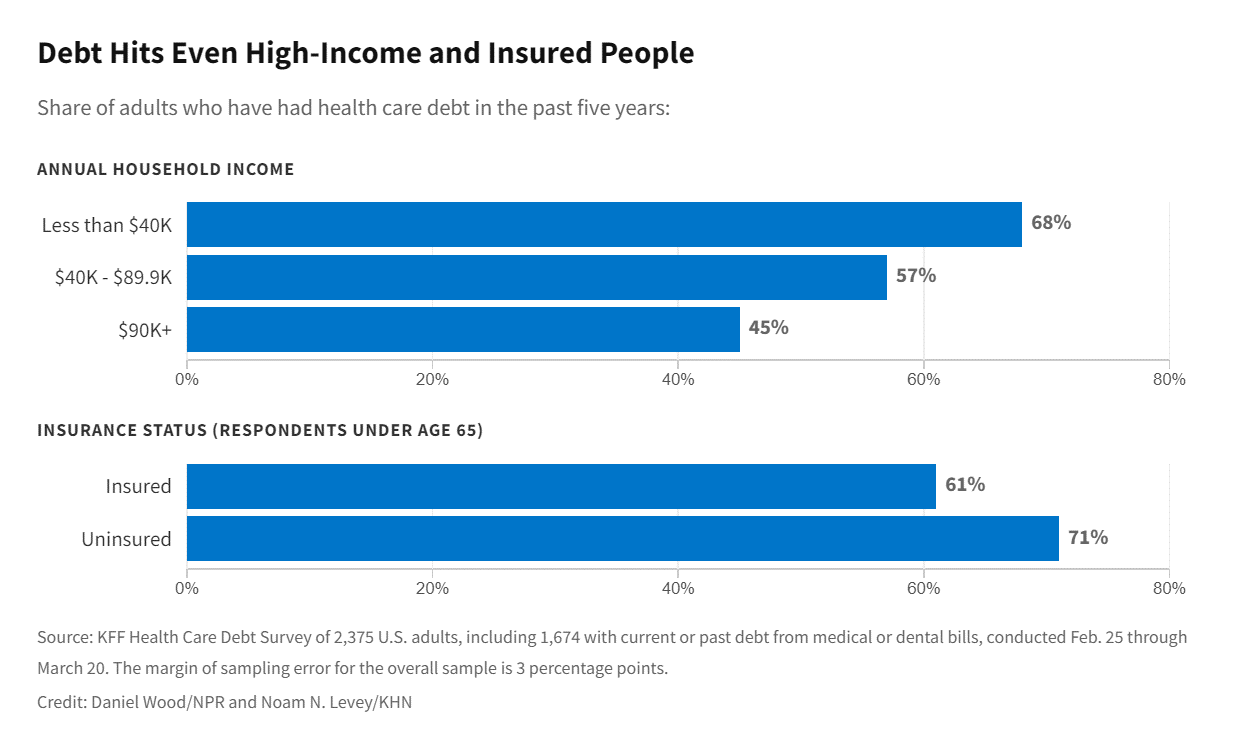
When high-deductible health plans became part of health insurance design in America, they were lauded as giving patients “more skin in the game” of health care payments. The theory behind consumer-directed care was that patients-as-consumers would shop around for care, morph into rational consumers of medical services just as they would do purchasing autos or washing machines, and shift the cost-curve of American health care ever downward. That skin-in-the-game has been a risk factor for .some patients to postpone care as well as take on medical debt — the strongest predictor of which is dealing with multiple chronic conditions. “The
The Patient as Consumer and Payer – A Focus on Financial Stress and Wellbeing
Year 3 into the COVID-19 pandemic, health citizens are dealing with coronavirus variants in convergence with other challenges in daily life: price inflation, civil and social stress, anxiety and depression, global security concerns, and the safety of their families. Add on top of these significant stressors the need to deal with medical bills, which is another source of stress for millions of patients in America. I appreciated the opportunity to share my perspectives on “The Patient As the Payer: How the Pandemic, Inflation, and Anxiety are Reshaping Consumers” in a webinar hosted by CarePayment on 25 May 2022. In this
Pondering War, Peace, Democracy and Dad on Memorial Day, 2022

My father, Charles Sarasohn, was a member of the U.S. Army serving as a Jungleer in World War II. He fought in the Pacific Theatre, in New Guinea and the Philippines. Dad’s the one on the right, holding what was a cheeky pin-up drawing. The root of the noun “Jungleer” is “jungle.” Dad carried a long gun with a bayonet on the end, a sort of small sword he and his Best Generation Band of Brothers in the 41st Infantry Division of the U.S, Army used to slash their way through the
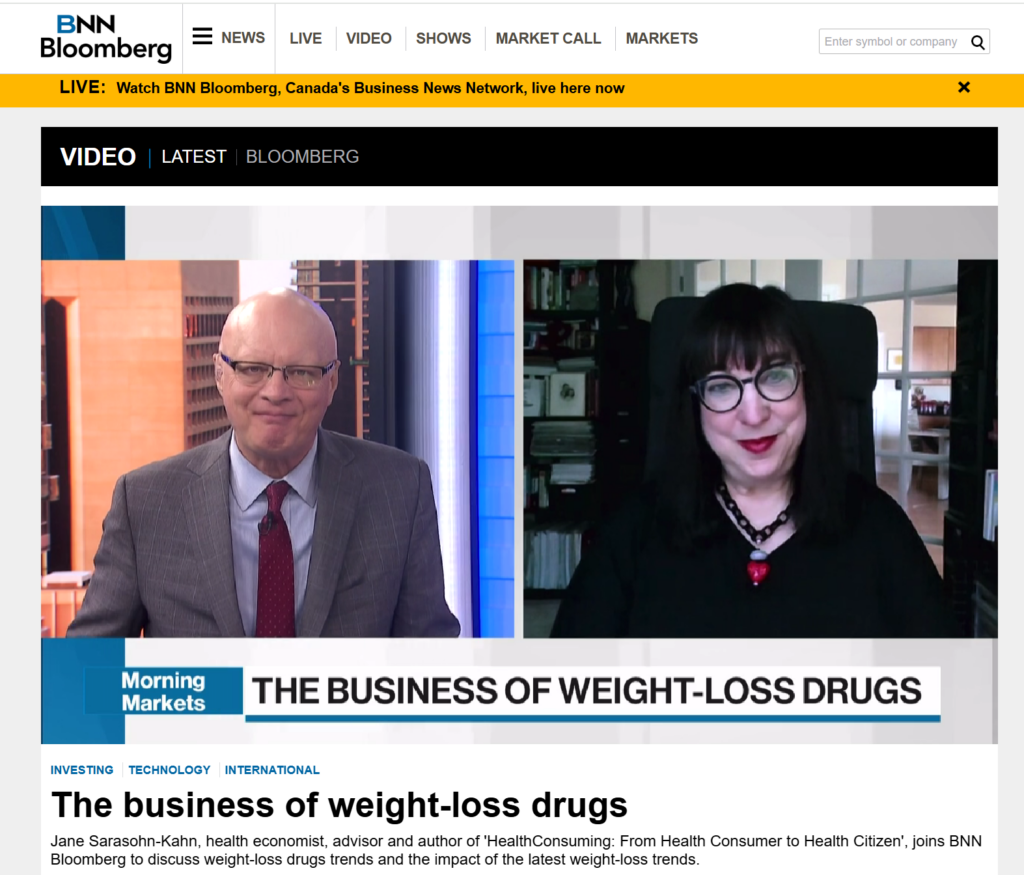 Interviewed live on BNN Bloomberg (Canada) on the market for GLP-1 drugs for weight loss and their impact on both the health care system and consumer goods and services -- notably, food, nutrition, retail health, gyms, and other sectors.
 Thank you, Feedspot, for citing the Health Populi blog as one of the best in the field this year! Very grateful to be among the company of some of my own go-to's such as Everyday Health, NPR Health Shots, Health Affairs, and Kaiser Health News, among others...
 As you may know, I have been splitting work- and living-time between the U.S. and the E.U., most recently living in and working from Brussels. In the month of September 2024, I'll be splitting time between London and other parts of the U.K., and Italy where I'll be working with clients on consumer health, self-care and home care focused on food-as-medicine, digital health, business and scenario planning for the future...