


A Blueprint for dealing with the health of aging Americans
“Usually, when you wade out into the ocean, you don’t know exactly when a wave will roll in, and it’s often hard to estimate, from a distance, how large a wave is coming at you. But in this case, we know when and where this wave will hit the shore.” (from the introduction of Blueprint for Change) Readers of Health Populi should be well aware of the age wave that’s hitting the U.S., the aging of Baby Boomers (so-called aging hipsters) and maturing of already-older Americans. The demographic phenomenon is well-documented by that demographic Delphi known as the U.S. Bureau
The new health math: < education = < life
Welcome to the new health math in America: > education = > life > income = > life less income = less life less income = more chronic illness Got that? A new report from the Robert Wood Johnson Foundation (RWJF), Overcoming Obstacles to Health, codifies the relationship between socioeconomics and health. Health disparities go way beyond simple race and ethnicity categories — the combination of income, education, wealth, and neighborhood conditions could be more useful in explaining differences in Americans’ health status. Based on per capita GDP, Americans should live nearly three years longer than we do. Instead, we
Breakfast with Newt: talking about health and information technology
I was invited to attend a breakfast on Wednesday morning with Newt Gingrich, hosted by Allscripts. They’re an important innovator in health care connectivity, and work closely with Gingrich’s Center for Health Transformation (CHT). Gingrich has become an evangelist for the role that information technology can play in improving health care quality and efficiency. His organization’s CHT Press recently published Paper Kills, a book that highlights the impact of IT in health care. “We are in the early stage of how we’re going to deal with the health system” in the U.S., which Gingrich believes is in or nearing crisis-mode.
The doubling of health costs in America: still, hopeful at HIMSS
Here’s the story that trumps any HIMSS announcement today because it sets the context for the future health of health care in America: spending on health care could double by 2017. This would calculate to $1 in every $5 in our economy. The story, written by researchers from the Centers for Medicare and Medicaid Services (CMS), was published yesterday in Health Affairs. That’s the macro view; within that spending trajectory, more would shift from the private to the public sector. The burdens will be on Medicare (read: the first phase of Baby Boomer retirements) and Medicaid. At a steady growth
The implications of free: reflections on day 1 @ HIMSS
As I reflect on the marathon walk through the Orange County Convention Center at HIMSS in Orlando yesterday and my many conversations with vendors, analysts, financiers, and reporters, the results of the 19th Annual HIMSS survey of hospital CIOs ring like a bothersome case of tinnitus in my mind. This is in the context of reading the latest issue of Wired, featuring an important story by Chris Anderson on the impact of “free” on business. While CIOs say that quality, safety, and implementation of an electronic medical record at the 3 priorities for IT spending in 2008, it’s not clear
Prelude to HIMSS — follow the money, especially Medicare
On this eve of the annual meeting of the Healthcare Information and Management Systems Society (HIMSS) in Orlando, I’m meditating and getting myself prepared for the next three days at the Orange County Convention Center. Why? Medicare. Last week, President Bush has already announced a budget cutting hospital funding for fiscal year 2008. The President proposes cuts in Medicare and Medicaid spending by $196 billion over five years, with hospitals in the bulls’-eye of the reductions. Hospitals are a primary target audience attending HIMSS. HIMSS is akin to a shopping mall with stores featuring every conceivable aspect of health IT:
Google and Cleveland Clinic — a tidy project built for disruption, and a word on privacy
The Google–Cleveland Clinic health records venture has been announced. Cleveland Clinic is a leader among providers when it comes to health IT, so Google has chosen well. This is a small, quick pilot between two mega-brands in their respective spaces. Word is that the project will last only a couple of months. While Cleveland Clinic has electronic health records for over 100,000 patients, this project will have an N of 10,000. I will be exploring more about the project with Googlefolks at HIMSS next week. For now, I’m in research mode. I’ve already come across several useful posts
A portrait of new health consumers — snapshot courtesy of Deloitte
Two-thirds of Americans support state-mandated health insurance, with roughly the same percent supporting a tax increase to cover the uninsured. Welcome to the latest picture of health care consumers, brought to you by those clever researchers at the Center for Health Solutions at Deloitte. Deloitte’s 2008 Survey of Health Care Consumers presents the latest numbers on Americans and how they feel about the US health system, health politics, and innovations in health care delivery. The survey was conducted among people age 18-75 in September 2007. Top-line: 9 in 10 Americans don’t believe they are prepared to meet the costs of
Health Care For All: Lewin examines the devils in the details
A proposal from health reform has been cobbled together by Jacob Hacker in concert with the Economic Policy Institute (EPI). The Lewin Group (part of Ingenix) has analyzed the costs of the proposal, and based on their assumptions, they find it’s a zero sum scenario. Lewin’s must-read cost impact analysis can be found here at the EPI’s website.The original Health Care For All plan was published in January 2007 as an EPI Briefing Paper by Jacob Hacker. Leave it to Hacker, the author of the terrific book The Great Risk Shift, to put together a more-than-modest proposal that Lewin calculates
Health plans and medical loss ratios: no solace in government programs
Six of the 7 largest publicly-traded health insurers had profits increasing 10% or more in 2007. However, for many of these plans, medical loss ratios went up, too. The February 25th issue of American Medical News explores this fiscal phenomenon. American Medical News is the weekly newspaper targeted to physicians. AMNews’s mission is to keep doctors apprised of the latest information they need to know for practicing the business of medicine. The story is potentially potent for doctors because Wall Street analysts are focusing in on medical loss ratios — that is, the cost of health services provided by an
A View from the UK: Is Preventive Care "Worth It?"
I’m enjoying a weekend with London-based friends who travel the world and know what’s what. Today, we spent hours relishing (literally) the Borough Market in Southwark, located south of the Thames. This is London’s oldest food market, established when the Romans built the first London Bridge. The Market in its current state has been around for a quarter of a millenium. The Market boasts and hosts a glorious array of green grocers, bread bakers, Spanish food purveyors, brownie makers, organic tofu purveyors, and parmigiano reggiano vendors in one spot I’ve seen, perhaps ever. It is foodie heaven and a
Social networks can ease the pain
Take comfort in this latest study into health benefits derived from social networks: that is that people who participate in larger social networks are better able to manage their pain than people who are not part of networks. In a peer reviewed article in the Journal of the American College of Surgeons, Social Connectedness and Patient Recovery After Major Operations, researchers find that whether a patient has a social network in her life has a direct impact on health outcomes following surgery. In fact, the larger the person’s social network, the better the outcomes. The study assesses social networks and
Where do you stand on health policy issues? The Poligraph knows
What do you stand on covering the uninsured in America? Do you support government mandates for health insurance or a market-based approach? Should the Federal government directly negotiate drug prices with pharma companies? Go visit Health Central’s Healthcare ’08 website to visually see where you stand on health issues compared to the Presidential candidates. Since the site’s inception early this year, many candidates have dropped out. As of today, there are two Democratic candidates (Clinton and Obama), and three Republicans (Huckabee, McCain, and Paul). The measurement tool which HealthCentral calls “the Poligraph” is a clever two-by-two matrix arrayed on six
The worker's eroding paycheck pays for health
Health insurance premiums rose 78% between 2001 and 2007, increasing families’ concerns about health care costs in America. Overall inflation grew 17% in this period. A new report from Kaiser Family Foundation (KFF), Wages and Benefits: A Long-Term View, sheds more light on health insurance cost trends, revealing an increasingly difficult scenario for average American families…even affluent ones. The figure on the right illustrates that the total amount spent by employers on group health insurance policies from 1960 to 2006 increased more than 20x from $23 billion in 1960 to $537 billion in 2006. [I note parenthetically that the GDP
Stress through the ages (or, it’s good to be 65)
Younger people are way more stressed out than people over 65, according to a poll sponsored by the American Psychological Association. HarrisInteractive has published data in its latest Healthcare Newsletter titled, “Adults Over 65 Experience Far Less Stress Than Adults in All Other Age Groups.” These findings are part of a deeper dive into the APA’s report published in October 2007, Stress in America. The highest levels of stress in America are in the 35-49 age cohort, followed by people aged 25-34. 6 in 10 people aged 35-49 say they are concerned about the level of stress in their
What's so nice about NICE?
Sicko has come to that great time-honored health model of England. I’m heading to London this week, and in preparation received a report to review published for the Parliament’s House of Commons Health Committee on NICE — the National Institute for Health and Clinical Excellence. You can think of this Committee akin to the U.S. Senate Subcommittee on Health. It’s responsible for assessing spending, administrative issues, and policy for the UK’s Department of Health (the peer of the U.S. Department of Health and Human Services), which is responsible for the National Health Service (NHS). NICE was established nearly a decade
Selling the beauty of health: Metamucil gets it
Question: do women care more about their hair or their hearts?I wrote about companies marketing health through the lens of beauty last week in the context of promoting osteoporosis drugs. P&G gets this approach. This isn’t surprising to me because P&G also understands, psychographically, why I (an economist married to a banker) still buy expensive Tide when I know from Consumer Reports that Costco’s Kirkland brand works at least as well! Welcome to the “Heart of Beauty” campaign, promoting the heart-healthy benefits of Metamucil. Metamucil has been recommended by the American Heart Association as a useful product to help lower
The global epidemic of rising health costs
Just in case you’re feeling lonely about the state of health care costs in the U.S., note that we’re in good company: medical costs will accelerate around the world over the next five years. Watson Wyatt brings you this news based on the results of a poll conducted among 85 insurers that cover medical for global employers in the Americas, Africa, Asia and Europe. The benefits consulting group found that health cost increases are growing faster than rates of inflation in 80% of countries surveyed. Thus, hyperinflation of health costs isn’t just an American malaise, but a problem for most
Dazed, confused and depressed about health care
It’s a case of “I’m falling but I can’t get up,” or knowing you’re sick but not knowing the cure. Consumer Reports‘ (CR’s) latest health poll shows that Americans know they have a sick health care system, but haven’t a clue about the antidote. Most Americans are pessimistic about health care costs across gender, income, political orientation, and age. This issue isn’t ‘just’ about seniors anymore. Looking ahead, 8 in 10 Americans are concerned about health care affordability in retirement, and 2/3 of peopel worry about both medical bankruptcy and losing employer-based health insurance. Americans say they want: To cover
Health and the American Dream
Snoopy’s googling for his American Dream. He lost it somewhere in the trajectory of rising energy prices, health costs and personal debt. The American Dream is defined, first and foremost, as financial security, in MetLife‘s second annual American Dream survey. Concerns abound in the American worker’s mindset focused on dropping home values, incrasing energy costs, and rising personal debt. Thus, only one in three Americans believe they’ve achieved the Dream of financial security. Still, three-quarters of Americans believe it’s possible to achieve this Dream in their lifetime. Nearly all Americans see themselves working harder than ever “to get by.” Half
Comparative effectiveness could stem health cost growth
For 40 years, health costs have grown faster than the general economy in the U.S. Technological advances in theory can reduce costs. However, a new study done for the Senate Budget Committee finds that, surprise surprise, the “increased capabilities of medicine” tend to raise spending. Technological Change and the Growth of Health Care Spending, the Congressional Budget Office (CBO)’s report issued last week, details the history of rising technology spending in health and offers a sobering warning about how health care costs are overtaking the American economy. In the report, “technological advances” cover the broad range of health technologies —
Yahoo! Inside Microsoft in Health
Pundits are focused on the impact on search and ads, but I’ll be quick to point out that the breaking news that Microsoft has bid $44+ billion for Yahoo! has big implications for health. Yahoo! has made a successful mark in health on many fronts. One of many distinctions, for example, is Yahoo! Health & Wellness Groups where countless people convene to meet, share, and debate health issues, from medications and their side effects to what to do when you’re newly diagnosed. It’s all about the stories and the sharing and the wisdom of health crowds over there. If you’re
When health becomes beautiful, consumers will pay
Or, The Lovely Bones (health care version). I have an acquaintance whose bone density scan told her she is at high risk for osteoporosis. No surprise: the condition runs in her family. For several years, she has been paying a luxury-segment department store counter $300 every two months for her skin creme, which promises that she will be ageless as she ages into her fifties, sixties, and beyond. But she has not yet filled her prescription for an osteoporosis-preventing drug. She doesn’t have prescription drug coverage. She thinks the drug is too high-priced. It’s about $300 for
The health care rift between Democrat and Republican voters
Democrats are all for expanded access; Republicans dread tax increases to expand access, and are more concerned with managing costs (downard). This rift is described, in some detail, by Bob Blendon et. al. in an important analysis published this week in the New England Journal of Medicine. NEJM feels so strongly about this content that they’ve made it freely available to all comers. I urge all of you who are tracking health politics this year to read this document. Blendon’s politically savvy team analyzed polling surveys from a variety of sources, so this is a sort of meta-analysis of voters’
Taking the health reform temperature in Washington State
While fairly satisfied with their own health care, Washingtonians are frustrated about health care costs and the lack of access to care for their fellow Americans. These findings are similar to a similar poll of Iowans conducted by CodeBlueNow!, an advocacy organization focused on health reform. Health Populi blogged about the Iowa survey here. The most striking similarity between both polls is that people don’t trust the government to reform the health system. Instead, health professionals and the “common people” are seen as trusted health reformers. There is mass dissatisfaction with the costs of health care, about which 2/3 of
Health, the New Status Symbol
We’d rather be healthy than wealthy, according to a new survey from Manning Selvage & Lee (MS&L), the PR firm that’s part of the global communications company, Publicis. MS&L polled Americans’ beliefs on health and self-esteem. Three-quarters (72%) of Americans say that being physically healthy is a symbol of personal success. 91% of Americans said they’d rather be described ads “healthy” than “wealthy.” 71% said they’d rather be seen as someone who “looks really healthy” vs. someone who’s nicely “put together or well-dressed.” These will be glad tidings for MS&L’s client base. MS&L serves a global health clientele which includes
Wal-Mart’s leading role in health care — now, as PBM
When the health care Oscars are announced in 2010 for top roles, the health care academy won’t know whether to cast Wal-Mart as the lead, supporting, director, or producer in health care. Wal-Mart is the third largest pharmacy chain in the U.S. As #1 on the Fortune 500 list, the retailer’s role as a jumbo employer means it has clout in health care negotiations and in the entire American health system. According to the company’s CEO, the company may enter the pharmacy benefits management business. During the company’s annual “Year Beginning Meeting” last week, Wal-Mart CEO Lee Scott talked about
Can openness transform health care?
In a thoughtful new report, the Committee for Economic Development (CED) suggests that by being open, the U.S. health system could be transformed. The concept of “openness,” as described by CED in Harnessing Openness to Transform American Health Care, goes beyond what we traditionally think of as transparency. Of course, transparency is critical for helping markets freely flow. But CED uses openness as an M.O. for transforming markets. Think: open source computing, where information or intellectual property is generated at some origin, and then others build on that initial idea (that’s the open-source Linux mascot, Tux the Penguin, pictured on
For those with health insurance, a growing bounty of benefits
For those employees fortunate enough to receive health insurance from work, there’s a bountiful array of health care services that are still covered by plans. The International Foundation of Employee Benefit Plans (IFEBP) polled its membership in late 2007 and found that employers are not only continuing to cover a broad range of services, but also new services the likes of which weren’t covered even two years ago…from medical tourism to biofeedback. These results are documented in IFEBP’s publication, Health Care Benefits: Eligibility, Coverage and Exclusions. The usual suspects are covered by well over 97% of employers, such as ER
Consumers and health care through the Euro-lens
What nations deliver consumer-centric health care? The top five destinations for consumer-friendly health systems would be Austria, the Netherlands, France, Switzerland, and Germany, at least according to the latest iteration of the Euro-Canadian Health Care Index (ECHCI). The US is not part of this analysis. The concept of consumerism in health care has migrated to Europe. The Health Consumer Powerhouse, a self-described “do-tank” (as opposed to “think-tank”) based in Brussels and Stockholm, innovated and perenially updates the ECHCI. This year, the Powerhouse has added sister-nation Canada to the mix, and the results are fascinating. A key objective for the Index
Connecting the dots between health premiums and food purchases
In what is among the most up-close-and-personal incentives offered by an employer to motivate healthy behaviors, Safeway, the grocer, is implementing a program to reduce health insurance premiums for those employees who buy healthier foods at checkout. Among a group of employees who participated in the FoodFlex pilot last year, the program resulted in a 13% decline in medical costs per capita. FoodFlex is an online program linked to Safeway’s loyalty card program. Once someone enrolls in FoodFlex, the program tracks the nutritional quality of food that the consumer purchases at any Safeway store. Participants can provide various information about
Values vs. value in consumer-driven health care
What motivates a consumer to choose one health plan over another, or commit to managing his newly-diagnosed chronic condition, or take on health behaviors to keep her well? It’s their values, stupid. Borrowing from the fields of social psychology and health behavior and education, the Employee Benefit Research Institute (EBRI) has published a provocative paper on how consumer-directed health plans (CDHPs) risk failure when plans and providers ignore consumers’ inner values. Listening to Consumers: Values-Focused Health Benefits and Education offers insights into the current complexion of CDHPs and how consumers make health decisions. Among the reports’ findings are that, Some
People who need people use social media
In the most bullish forecast yet on the adoption of social media in health, iCrossing has found that 34% of Americans turn to social media for health research. iCrossing has been analyzing “How America Searches” for financial services, travel, and other vertical market information over the past two years. Now, they’ve researched Americans’ search for health and wellness information.It will be no surprise to Health Populi readers that health search is a normal part of most Americans’ online activities, based on previous research by the Pew Internet & American Life Project, California HealthCare Foundation, JupiterMedia, and other credible research teams.
Medicare will consume 20% of the Federal budget in 2017
Nine years from now, one in every 5 dollars will go to health care for older Americans. This forecast is presented in detailed context in a new report published by the Kaiser Family Foundation. Financing Medicare: An Issue Brief reminds us that Medicare is among the fastest-growing Federal programs in the U.S. By 2016, Medicare spending will exceed that of the forecasted cost of Social Security in 2028. These findings are based on the budget estimates presented by the Congressional Budget Office in August 2007.Simply said, it is escalating health care costs that cause Medicare to consume increasing chunks of
The health risks of Life in the Fast Lane – Insta-Americans
A new report talks about the health risks of our demand for instant-everything. “Today, we expect all information to come fast and free,” writes the Center for Medicine in the Public Interest. That expectation can lead to disastrous consequences in the context of accessing health information without questioning its source. The “fast” expectation is proliferating every aspect of our lives. Here’s but one example I’ve been using lately with my clients: a few years ago, I noticed a proliferation of packaged foods to enable the busy householder to cook slow food, faster. One of these is pictured on the left
Virgin grows in health care
A new brand of clinic is entering the health care market…aligning itself in a public/private partnership with none other than the largest health system in the world, the National Health Service in the UK. Richard Branson is a master brander, having started up Virgin records in 1970 and Virgin airlines in 1984,. When he took on the Old School airlines, he was seen as the enfant terrible of the industry. But he re-imagined the airline business model and made it fun to fly. Can he do the same for health in the United Kingdom? Here’s the deal: Virgin Healthcare will
Tapping doctors' minds is big business in a $2+ trillion health economy
Getting access to physicians’ opinions is Big Business. Now, institutional investors will have access to the brains of doctors through a relationship between Goldman Sachs and Epocrates, the point-of-care health information company. Why is this so important? Because the health sector in the U.S. is now valued at over $2 trillion, according to a new estimate published by CMS this week. The prescription drug program, known as Medicare Part D, was responsible for driving health costs above the $2 trillion mark. This piece of the national economy can be an attractive place for investors to seek returns; however, not every
Zagat's live with Anthem BCBS
However you might “Brangelina” up the name — call it Zagthem or Angat — Zagat has met up with Anthem Blue Cross and Blue Shield to create a consumer-oriented guide to physicians. The tool is now live and free to access for members of the Lumenos plan in Cincinnati and Dayton, as well as in California and Connecticut. By the end of 1Q08, the Zagat Health Survey tool will be accessible to Anthem’s enrolleess throughout Ohio. The consumer-generated ratings will include scores on trust, communication, availability, and environment. So the Lumenos member will learn more about a prospective physician’s exam
À votre santé, France — US Last in Preventable Deaths
Break out the Bordeaux and eat those escargots: France ranks first in preventing deaths, according to a new study from The Commonwealth Fund. Compared to 19 industrialized countries, the US ranks dead (pardon the pun) last. The top three nations who do best at preventing death are France, Japan and Australia. The study in Health Affairs found that if the US health system performed as well as these three countries, we would see 101,000 fewer deaths each year. In Measuring the Health of Nations, Ellen Nolte and Martin McKee of the London School of Hygiene and Tropical Medicine, the authors
Americans are working for health care, not money
Health care and security top money when it comes to American workers’ priorities, according to a new survey from The Center for State and Local Government Excellence. The report, Security: what Americans want from a job, examines 15 job characteristics: among them, 84% of Americans rate “the health insurance plan” as the #1 aspect of a job. Coming in second place are job security and working in an environment with clear policies. Retirement security comes in fourth place with 76% of workers ranking pensions as “very important.” Americans rank a family-friendly workplace in fifth place of the 15 job characteristics.
Big Pharma's Big Spending
Pharmaceutical companies spend twice as much money on marketing as they do on research and development, according to a new study published in PLoS Medicine, an online peer-reviewed journal. According to the study, U.S. drug companies spent $57.5 billion on marketing versus $31.5 billion on R&D, in 2004.The chart on the right details the researchers’ updated estimates on pharmaceutical companies’ promotion. The authors, Marc-André Gagnon and Joel Lexchin, are Canadian academics who built a new estimation model for pharma marketing expenditures. They begin their paper by critiquing data from IMS, which is the primary pharma marketing information source used by
Market Justice vs. Social Justice in Health Care – Our National Identity Crisis
An outstanding commentary in this week’s Journal of the American Medical Association succinctly traces the history of U.S. health care in the context of “market justice.” Peter Budetti, MD, PhD, who teaches health policy at the University of Oklahoma, observes, “Fragmented and struggling to come to terms with externally imposed pressures, medicine is losing both its political force and moral compass.” Those so-called externally imposed pressures come from stakeholders behaving according to their own self-interest in the health market: employers, physicians, hospitals, suppliers, insurers, public officials, and of course, consumers. Dr. Budetti concludes that, “Market justice may have outlived its
Butter and health beat guns, for now
The latest Associated Press-Yahoo News poll, published just days before the Iowa and New Hampshire presidential races, shows Americans more concerned about health care and the economy than the Iraq War. US presidential politics in 2008 may turn into a classic race between guns and butter. For the next president, addressing health care is Job 1: 53% of Americans say that health care is “extremely important,” a positive swing of the pendulum of 5 points since the question was asked the previous month in November 2007. On health care and the economy, Democrats are more trusted than Republicans: on health
Health Populi’s Tea Leaves for 2008
I “leave” you for the year with some great, good, and less-than-sanguine expectations for health care in 2008. These are views filtered through my lens on the health care world: the new consumer, health information technology, globalization, politics, and health economics. Health politics shares the stage with Iraq. Health care is second only to Iraq as the issue that Americans most want the 2008 presidential candidates to talk about, according to the latest Kaiser Health Tracking Poll. Several candidates have responded to the public’s interest with significant health care reform proposals. But major health reform – such as universal access
The high cost of 14 physicians and 50 Rx's in a year
Patients with at least one chronic condition spend more than five times of those with no chronic conditions. Increase the number of chronic conditions to five or more, and people have 25 times the inpatient hospital spending — the high-priced line item in the medical bill.Bottom line: “By the late 20th century and continuing into the 21st century, the major reason for mortality and morbidity in the United States and other industrialized countries has become chronic disease.”In Chronic Conditions: Making the Case for Ongoing Care, Dr. Gerard Anderson of Johns Hopkins quantifies the relationship between chronic disease and health spending.
Hearts and the hospital bill – and the role of health IT
The annual national hospital bill may reach $1 trillion by 2008. This forecast is brought to you in a new report from the Agency for Healthcare Research and Quality (AHRQ). Hospital charges in 2005 totalled $873 billion in 2005, nearly doubling in ten years. The hospital bill was covered primarily by three payor segments: Medicare, which paid nearly one-half of the total hospital bill; private insurance, covering nearly one-third; and Medicaid, at 14% of the total. What are we spending money on in hospitals? Putting aside pregnancy/childbirth and infant care, the top three conditions are heart-related: coronary artery disease ($46
"Health Consumers" and the hype cycle
IBM calls 2007, “The Year of the Omni Consumer.” In the area of health, IBM points to consumers’ eroding trust in food safety. However, in its press release on the Omni Consumer, health care is not a major feature. The IBM analysts are smart (or lucky). If this is an oversight, then it’s providence; if it’s an explicit omission, it’s spot-on. In my work and research, I remain unconvinced that Americans are truly behaving as health care consumers. Nor do I believe they want to embrace that role…yet. Notwithstanding the pronouncements of Ivy League professors in business bestsellers and human
Getting the health care scoop: health opinions meet social media in Minnesota
While many health analysts usually point to California as the state for vanguard health movements, I keep my eye on Minnesota. Once again, I discovered a new-new health project that I expect will be a model that will be replicated. The Health Care Scoop is among the first epinions.com-style websites where patient/consumers can log their opinions about local health care experiences with plans and providers. While many health plans have begun to provide report cards on quality and price lists for services, the Scoop is among the first social media websites provided by a health plan that allows the good,
Real doctors don't just Google
Four out of ten physicians are e-mailing patients. In fact, most doctors are going online for way more than search. That’s what Jupiter Research found in their latest report, the US Online Physician Executive Survey, 2007. Doctors have turbocharged their use of web-based applications in just the past two years. What’s caused the increased adoption in so short a period? Well, doctors are Missourian in spirit; they are a “prove it to me” bunch. Physicians are finding richer content and tools online: 50% say that the Internet helps them be more efficient in their practices. Fully 3/4 of physicians are
Small business's Top 10 list for reforming health care
The National Federal of Independent Business (NFIB) laid out its latest principles for health reform. This “voice of small business” says that universal access to health care is especially important to small businesses in the US. The NFIB believes that the most important issue facing small business for the past twenty years has been access to quality, affordable health care. NFIB cites several reasons for supporting universal access. Access to affordable health insurance options has been a particular problem for small business in the US, which employs so many of the millions of uninsured workers in America. This segment of
The medical FICO score: a tool for hospital risk management or patient discrimination?
Suze Orman, heads-up; there’s a new FICO score in town. Fair Isaac knows a lot about credit risk and data analytics, and they’re behind the development of the medFICO score that will help hospitals manage the financial risks they take on when they admit patients to hospitals. The medFICO will represent a patient’s “medical credit” score. While consumer advocates are concerned that hospitals will use this data point pre-admission — thus giving the institution information about patients’ ability-to-pay their co-payments and coinsurance amounts — the project’s sponsors say the score will only be gleaned once the patient is discharged
GE brings good things to life….now, vaccines
Here’s a recipe for starting a vaccine revolution without breaking any eggs: take one Goliath in the health care industry with a disposable fast-tracking manufacturing method, and combine with a David-sized novel biotech company with a speedy way of growing cells. Mix, bake, and wait one-half of the usual time to yield a vaccine. Welcome to a new era in vaccine development, brought to you by GE Healthcare (aka Goliath) and Novavax (aka David). These two partners think they’ve got a speedy way of making a pandemic flu vaccine. The potential for this venture could significantly impact global public health.
The beginning of the end of employer-sponsored health?
EBRI’s latest report says we’re at the “tipping point” of employer-sponsored health insurance. But it’s not a tipping point for dropping insurance benefits; it’s a tipping point for changing the status quo of how these benefits are delivered. In The Future of Employment-Based Health Benefits, the Employee Benefits Research Institute asks whether employers have reached the point when they will stop providing health benefits. Data do not show that health benefits are disappearing from the workplace. Nonetheless, some employers believe that the current system of providing benefits is inefficient, lacks transparency, and is “not intelligent.” Employers concur that the current
Health consumers are getting smart!
A new survey from HarrisInteractive reveals that one in 3 patients don’t think doctors have a complete picture of their medical history. But if the doctor has an electronic medical record (EMR), 9 out of 10 Americans want access to it. Compared to the same survey done in 2006, more consumers have faith in EMRs’ ability to reduce medical errors (57% of consumers thought that the use of EMRs could decrease the frequency of errors in 2006; in 2007, 63% did). On privacy, consumers appear to be trusting EMRs more. Overall, 60% of Americans believe that the benefits of EMRs
Doctors call for universal health care access
The American College of Physicians has developed a position paper on universal access in health care — they’re for it. Why? Because as the good doctors point out, “The U.S. health care system is inefficient and inconsistent.”The ACP’s rationale for universal access is not driven by a moral imperative to cover all Americans; rather, they argue that by serving a strong central mission of primary care and implementing a robust IT infrastructure, we’ll achieve a high-performance health system. That is, we’ll deliver health care well and efficiently. In a far-reaching, richly-researched paper to be published in the January 1, 2008,
A new and improved FDA – for 3 cents more
A strong FDA is crucial for the health of our country. The benefits of a robust, progressive Agency are enormous; the risks of a debilitated, under-performing organizaiton are incalculable. These are the findings of the latest critical analysis of the Subcommittee on Science and Technology prepared for the FDA Science Board, FDA Science and Mission at Risk. FDA Commissioner von Eschenbach requested a hard look at the FDA one year ago, and this report is the sobering culmination of that effort. The Subcommittee included leading members of the scientific community familiar with emerging science, the external marketplace, and the
Health insurance — necessary, but not sufficient
Not sufficient, that is, to guarantee access to health care. The latest release of that great publication of the Centers for Disease Control, Health 2007, has the theme of health care access at its core. Think of Health 2007 as the State of the States’ Health (all 50 collectively). This is the 31st annual version of this huge compendium. The book features updated data that paints a comprehensive picture about Americans’ health care, health status, financing, and resources (financial, labor, technological). Health 2007 is one of my health care “must-reads” each year; it makes me feel better about paying my
Health, the new green: Toyota’s RiN
While health has blurred into a score of consumer product categories, here’s the latest crossover from Toyota: the first car to engineer health and wellness into its design, recently unveiled at the 2007 Tokyo Auto Show. The Toyota RiN is a concept car based on comfort and what Toyota’s PR calls, “serene, healthy living.” The RiN was one of 21 cars Toyota showed under the theme, “Harmonious Drive — a New Tomorrow for People and the Planet.” This isn’t high performance; it’s high-minded health by way of Dr. Weil, wrapped up in a golf cart-cum-Popemobile. Toyota’s press says the car’s
The health care cost burden on American families, with epilogue by Paul Simon
Families USA examined health care costs for families in four states, including Arkansas, Missouri, New Hampshire, and my home state of Pennsylvania. Nationally, one in four Americans under 65 will spend more than 10% of their income on health care next year. Take a look at the report on Pennsylvania. In the state reside over 2 million people who are under 65, 87% of them are insured, and more than 18% of these families will spend over 10% of pre-tax household income on health care costs in 2008. In addition, nearly 5% of Pennsylvania’s families will spend over 25% of
Shopping for health care – ‘tis the season, says Regence
Perhaps our collective shopping jones has kicked in, but The Regence Group of Blues plans has found that more consumers are comparison shopping for health services these days. A new survey from the Blues plans that cover the Pacific Northwest Idaho, Oregon, Utah and Washington found that the number of people who comparison shop based on price and quality for medical services has grown to 70%. Note that this study was framed to assess Internet-based shopping habits. That consumers adopt information-seeking behaviors in health care is a sine qua non for consumerism: information availability, access, flow and consumption makes markets
Home, sweet medical home
The concept of the Medical Home is emerging as an antidote to America’s fragmented health care landscape. Several large employers and physicians are pushing the concept, driven by different incentives but united in the effort. Medicaid plans have become early adopters of the Medical Home, too. The Medical Home is not a new concept; pediatricians have been lobbying for the concept since 1992, as this paper in Pediatrics defined the idea 15 years ago. It’s akin to a next-gen HMO gatekeeper, with a twist: the Medical Home features a primary care doctor at the center of care, but looks to
The true costs of cigarettes = $222 a pack, and the Rolling Stone ad
A pack of cigarettes ranges in price from a low of $3.35 in South Carolina to a high of $6.45 in New Jersey. But the real personal costs of cigarettes — per pack smoked — are 66 times greater (in the case of that smoking South Carolinian). The analysis can be found in a new working paper for the National Bureau of Economic Research. W. Kip Viscusi and Joni Hersch calculate this cost in terms of personal health risks: for a man, each pack of cigarettes smoked reduces the value of his life by $222; for a woman, each pack
Docs' mistakes in medical records, straight out of Sermo
79% of Americans are interested in reading their medical records, according to a recent survey. That’s a good thing, because doctors can make mistakes recording notes in medical records that can lead to unintended health consequences based on faulty data. Doctors are chatting about finding mistakes in their own patient medical records. The chat is happening on the social networking site Sermo – a website that is accessible only by clinicians. The site is attracting thousands of physicians who want a place to talk about issues of concern in a safe environment…the way they might have done on the golf
Health Care IT by way of Hollywood and Hip-Hop
The double-barreled news of Dennis Quaids’ twins receiving heparin doses 1,000x the prescribed dose while receiving medical treatment at Cedars-Sinai Medical Center, coupled with the tragic death of Kanye West’s mother following cosmetic surgery, focuses this health care paparazzi’s lens squarely on the role of information technology in health care. The Cedars-Sinai Chief Medical Officer has termed the Quaid event a “preventable error.” Donda West’s doctor has been described by the likes of People magazine and the Los Angeles Times as a clinician with at least 2 DUI’s and an assortment of malpractice suits — as well as a recommendation
As costs rise, employers drop health: Mercer (with a Wal-Mart health update and a gift card from Highmark)
Employer costs for health coverage are rising twice as fast as general price increases. This is leading to more employers dropping health coverage for employees. Mercer brings us this evidence in their new health cost survey, to be published in March 2008. The consultancy found that health costs increased 6.1%, equivalent to 2006 cost increases. This equated to $7,983 per employee. The forecast for 2008 is a 5.7% health cost price increase. These cost increases are outpacing wage increases. More small employers – where job growth is – are exiting health coverage, according to Mercer. The percentage of small employers
Happy birthday, Prozac!
The Financial Times celebrates the 20th birthday of Prozac in the newspaper’s Nov 17/18th issue. It’s valuable to look at the rise and fall of Prozac, the brand; the rise of its generic equivalent; and how the drug has profoundly impacted one consumer’s life. Prozac Market. Before it treated depression, Prozac was thought to be an anti-hypertensive. When that didn’t seem to work, Eli Lilly considered it for an anti-obesity treatment. Strike two, clinical-wise. Finally, Lilly took the drug to market to fight depression after it was approved by the FDA on December 29, 1987. In two years, Prozac became
Big business likes retail clinics
The National Business Group on Health (NBGH) has endorsed the retail health clinic concept in a new policy statement issued on November 15. The Physician Advisory Group of NBGH reviewed the available evidence on retail health clinics, also known as “convenience care,” to come to this policy decision. The bottom line: NBGH finds that retail clinics meet unmet needs for employees to use for selected, urgent, non-emergent medical problems. Helen Darling, NBGH Executive Director, said that the unique value proposition of retail clinics is that they are, “easily accessible, open to everyone, lower in cost than emergency rooms, and available
Home, future home: talking to aging parents
Talking to your parents about their future living arrangements is difficult. I’ve been there. Trust me. A new study from AARP, who knows a thing or two about dealing with older people, sheds some light on the challenge. It’s easy for me to say this, but…it’s good to plan ahead and have these conversations before your parent becomes sick, or infirm, or both. According to AARP’s report, Are Americans Talking with Their Parents About Independent Living: A 2007 Study Among Boomer Women, most women 45 and over have had this talk with parents, but most have not made plans ahead
The gap between consumer opinions and health plans
An iconic image from Matisse’s Jazz portfolio comes to my mind as I think about the chasm between social media and health on one side, and health plan data on the other. The image is shown on the left; I’m including him here to represent the health consumer engaged with social media, sharing opinions about his experience with health providers, payers, and other touchpoints in his health interactions. A new survey published by the National Business Coalition on Health (NBCH) finds that only 31% of health plans collect and publish patient experience data. And, like the readers of the National
Universal coverage doesn't have to kill innovation
The current issue of The New Republic is devoted to health care. An essay by Jonathan Cohn presents a thoughtful and personal analysis of how universal coverage would not necessarily slow medical innovation. Cohn talks about how his good friend and fellow writer, Michael Kinsley, was diagnosed with Parkinson’s Disease over ten years ago. In the past decade, Kinsley has searched for an effective treatment, and came upon Deep Brain Stimulation (DBS). DBS represents a medical innovation: a new-new treatment that was approved by the FDA only 10 years ago. Cohn is quick to point out that DBS costs a
The Mayo Clinic Clinic — Mayo Goes Retail
The Mayo Clinic, one of the most prestigious names in health care, is planning to open several retail clinics in early 2008. Does this signal the beginning of an upper tier of retail clinic — where Nordstrom- or Neimans-meets-medicine? At this early stage, Mayo’s plans are to locate the branded “Mayo Express Care” centers around their immediate target market of Rochester, Minnesota, which includes part of Wisconsin. By implementing this plan, Mayo, known for its stellar inpatient services, expands its reach into community-based primary care role. Mayo was named one of America’s best hospitals by US News and World Report
The embattled health benefits manager–some cut benefits, but many fight hard for health
About 15% of employers who provide health care to employees plan to cut benefits in the next 12 months, according to a survey of U.S. CFOs and comptrollers chief financial officers and senior comptrollers conducted by Grant Thornton. On the other hand, there is a large portfolio of cases where employers are creatively addressing employee health management. A new report from the Business Roundtable has found that Doing Well Through Wellness really pays off. BR surveyed their member companies (which include 160 jumbo and large companies that cover 35 million Americans and collectively generate $4.5 trillion in annual revenues). BR
Using evidence-based medicine to lower health costs – a view from the CBO, and HR 2184
Evidence-based medicine (EBM) can reduce health spending, according to two analysts at the Congressional Budget Office. Note that there’s a piece of legislation in Congress to fund EBM research.The very level-headed essay in the November 8th issue of the New England Journal of Medicine explains the positive role that EBM could play in preventing Medicare and Medicaid from consuming 20% of the GDP by 2050.Peter Orszag and Philip Ellis, the CBO’s Director and senior analyst, respectively, talk about the merits of marrying EBM — which generates information about the effectiveness of medical treatments — with rewarding clinicians when they adopt
The state of the states' health (and what's Vermont got?)
Is it the maple syrup, the brilliant fall foliage, or those ever-lovin’ teddy bears? Vermont’s been named the healthiest state in the union, due to a complex interplay of social, political, clinical, and behavioral factors. Vermont may have improved its health profile, but speaking top-line, the overall health of the US declined over the past year. While progress has been made in reducing cancers and deaths from heart disease, we’ve miles to go when it comes to obesity, healthy risk behaviors (especially tobacco use and violent crimes), growing uninsured population, and childhood poverty. The 18th annual report on the state
The cowboy riding the camel in Oregon: voting for kids' health
Today, election day, is a day to watch the states closely for on-the-ground action on health. In particular, the outcome of the vote in Oregon which would raise the state’s cigarette tax to cover children’s health care could provide impetus to move the vote pro-kid’s health at the Federal level. Oregon has a history of being leading-edge in health care politics. A Health Affairs article from December 2006 discusses that history, and subsequent gap between Oregon’s health aspirations versus declining enrollment in its ambitious health plan. Today’s vote could fill that gap.If Oregonians reject Measure 50, those who diss SCHIP
Love thy kidneys; a sobering 2020 forecast
It’s Renal Week, the education meeting of the American Nephrology Society. The latest research on that under-appreciated organ, the kidney, is being presented by the best minds focused on nephrology. The critical headline from the meeting is that, in 2020, there will be a huge rise in the incidence and prevalence of end-stage renal disease (ESRD). The number of Americans wil ESRD in 2020 is expected to be 785,000, an increase of more than 60% from 2005. The key factor driving the growth of kidney disease is diabetes, in part driven by obesity projections and the aging of baby
Target marketing: no pink guns left behind?
In 2004, 20% of homicides were directly associated with intimate partner conflict (i.e., one in which an intimate partner killed another partner). Intimate partner violence resulting in death was most common among victims aged 40-44 years. Murder is the leading cause of death for pregnant women, according to the National Organization of Women. The National Center for Injury Prevention and Control, part of the Centers for Disease Control and Prevention, spends about $43 million a year on ways to reduce deaths and injuries from drowning, poisoning, suicide, industrial accidents, house fires and domestic violence. Of that sum, only $2.3 million
All aboard! The next phase of medical tourism
Medical tourism is no longer in start-up mode. About 500,000 Americans traveled outside of the US for health care in 2005. For most medical tourists, the decision to leave one’s country for heatlh care is a financial one. That drive has built a $40-60 billion market today, projected to rise as high as $100 billion in 2012. The National Center for Policy Analysis (NCPA) just published a comprehensive look at medical tourism titled, Medical Tourism: Global Competition in Health Care. The report points out that in the earliest phase of medical tourism, Americans tended to travel to Mexico and Latin
Swimming pools and supermarkets — recipe for health
This week’s Forbes magazine features a story on Americas Most Sedentary Cities. Translation: which cities in America have the highest levels of obesity, and why? The answer to “why?” is a complex but understandable interaction between several factors: suburban sprawl, lifestyles of convenience, and some local factors that vary city-by-city.It turns out that transportation planning and the larger context of urban planning — or lack thereof — are contributing mightily to our lack of exercise and communities’ ‘walkability.’ Research is finding that the lack of greenspace and parkland in a community contributes to sedentary lifestyles and, thus, obesity. The Forbes
CVS Ad Targets Caregiving Women — Comforting or Condescending?
Women determine the bulk of health spending in American households. Furthermore, caregiving women can be passionate health care consumers. CVS is tapping into this consumer segment through its ad campaign, For All the Ways You Care. Part of this campaign asks women to share their caregiving stories online. CVS hopes to make this website a viable online community that will support caregivers (and of course, drive traffic into the store). The TV ad plays the sweet song, “Ordinary Miracle,” as a soundtrack to the caregiver’s storyline. (This song was part of the recent remake of Charlotte’s Web. A bit of
The Importance of Being Iowan; an early snapshot into voter feelings about health care
Iowa gained early-bird status for primary season as it set the date for its caucus as early in the new year as it could: January 3, 2008. A new survey indicates that Iowans are restless about health care. CodeBlueNow!, a consumer-led health advocacy group, sponsored the Iowa survey as part of its “Pulse” research program. Iowans believe that (1) health care services should stress disease prevention over high-technology cures, (2) more public accountability is needed in how health care dollars are spent, and, (3) “basic” health services should include access to any licensed health care professional. While the survey results
Colds, kids and labels
Over-the-counter medicines (OTC meds) don’t cure colds in kids. The FDA has spoken, and said that the kinds of kid-targeted medicines photographed on the right aren’t only useless — they can be dangerous. The offending incredients are dextromethorphan, used in cough suppressants; pseudoephedrine and phenylephrine, used in decongestants; guaifenesin, an expectorant; and, brompheniramine, chlorpheniramine maleate, or diphenhydramine, used in OTC meds labelled as antihistamines. If ever there was a time for a parent to get into label-reading, it’s now. The good news is that more of us are reading labels, according to the Hartman Group, the food and wellness research
Declining income, declining health care
Health and wealth are intimately related. This week’s (October 24/31 2007) Journal of the American Medical Association (JAMA) is devoted to poverty and human development. Another important publication this week highlights the relationship between income and health: EBRI has just published its the 2007 Health Confidence Survey, the Institute’s tenth annual report on how Americans perceive the US health system. Together, these two documents shine a light on the health/wealth relationship. This relationship holds true whether we’re talking about rural India, Zambia, Beijing, east LA or Ames, Iowa. In JAMA, take a look at Dr. Steven Woolf’s commentary, Future Health
The heart of marketing? DTC and stents
No one doubts whether Johnson & Johnson is a crackerjack consumer health marketer; can this expertise inform how well the company does going direct-to-consumer (DTC) with medical devices? Now that DTC advertising has matured for the pharmaceutical industry, the medical device industry has begun to stick its toe in those promotional waters. Earlier this week, I saw an ad for a medical device — one of the first I can recall. The specific ad was for a stent. This is intriguing because stents have come under tremendous scrutiny since the FDA began re-examining the safety of drug eluting stents in
Plastic’s growing role in health care
There are many forms of plastic in health care. No, I’m not talking about new polymers used for medical implants. I’m talking about financial services. A new card from Humana and Republic Bank illustrates the continuing integration of consumer personal finance and health care. The new VISA card, private labelled as the HumanaAdvance card, will be offered to Humana’s employer groups for enrollees to use at hospitals, doctor and dentist offices, drugstores and other locations providing health-related products and services. Of course, as with all plastic, this card comes with its own fine print: 0% interest rate (APR) on
Zagat comes to health care
Love the doctor’s exam room manner, hate the wait in the anteroom? Know the customer experience before you visit your doctor once the first round of Zagat’s ratings for WellPoint physicians get published in March 2008. Zagat is a well-known brand for reporting consumers’ reviews of restaurants, hotels, and spas. The famous report card publisher now comes to health care, specifically to WellPoint, the largest member of the Blue Cross and Blue Shield Association. Instead of ratings on decor, food, service and pricing, Zagat will review WellPoint physicians on availability, communication, trust and office environment. Like the Zagat guides on
The Future of Retail – Implications for Health
I’ve been looking at health care through a retail lens for some time. Perhaps it’s that I’m a rag trader’s daughter, or that I’ve been known to like shopping, that I have clients in consumer goods, or that I understand how tiered drug pricing impacts the consumption of medicines (answer: it’s all of the above). I’ve just reviewed the latest trend report from PricewaterhouseCoopers and TNS Retail Forward on the future of retailing. My mind is connecting the dots between the future of retail and the American health care consumer. Four future retail trends are already embedding in health care
Disappearing docs, and the new house call
By 2010, nearly 50% of doctors between 50 and 65 years of age will be cutting down on doctoring – choosing to retire, work in non-clinical jobs, go part-time, or close their doors to new patients. The loss of this wise cadre of clinicians to the physician supply could exacerbate a forecasted shortage of doctors in the U.S. Overall, 24% of the older physicians will opt out of patient care within one to three years, and 14% will completely retire. These sobering results were published in the 14th annual survey of Merritt Hawkins & Associates, a physician recruiting firm, in
Who Are Uninsured People?
Where you live, who you work for, and what color you were born are predictors of whether you have health insurance in America. New data from those hard-working, non-partisan researchers at the Employee Benefits Research Institute (EBRI) have published their latest portrait of insured, and uninsured, Americans. The report is based on data from the March 2007 Current Population Survey of the U.S. census. For the details, see EBRI Issue Brief No. 310, October 2007. Geography is destiny as a factor for being insured. The highest level of uninsurance is in the south central US, where about 20% of the
My home, my hearth, my health
Yesterday was one of those days you want to bottle: perfect, crisp-as-an-apple autumn temperature, long walks through New York City between meetings, meaningful discussions, on-time trains. I spent most of the day talking and thinking about home and hearth and health. I savored lunch at the delectable and health-ful Josie’s East restaurant in Murray Hill, NYC, with a client/colleague who values home, hearth and health as much as I do.On the train ride home, I delved into the latest (November/December 2007) issue of Blueprint, part of Martha Stewart Living Omnimedia. The magazine’s tagline is Design Your Life. While I had
Beyond tooth whitening: the decline of oral health
For 50 years, the oral health of Americans had been improving. By 2004, the trend reversed.The state of oral health in the US is on the decline, with 100 million people lacking dental insurance and cavities going unfilled. This, while so many millions are spending on tooth whitening and breath freshening.Oral health is an integral part of a person’s overall health. According to the Academy of General Dentistry, there is a relationship between gum (periodontal) disease and heart disease. A recent study on periodontal disease and atherosclerosis confirmed this finding. flossing showed evidence to support flossing to fight disease. Over
A Broad Vision of Health 2.0: an invitation to dialogue!
/Health20%2010-12.pptBefore you start reading, download the document above. It’s a single PowerPoint slide that’s animated to build. Go into presentation mode, then read along with the narrative below.A Broad Vision of Health 2.0Reformulating Data for Transparency, Decision Support & Revitalized Health Care Markets Brian Klepper and Jane Sarasohn-KahnThe term Health 2.0 refers to the concept, described by O’Reilly, of Web-based platforms that allow users to reformulate data for their own purposes. The Health 2.0 movement is rapidly gaining steam and traction, propelled by established and startup firms. The efforts displayed at the recent Health 2.0 meeting in San Francisco, convened
The cost of health illiteracy = 47 million uninsured
The annual financial burden of health illiteracy costs between $106 and $238 billion. This is enough money to cover the 47 million uninsured people in America. That metric, and many other insights, were published this week in an important new report called, Low Health Literacy: Implications for National Health Policy. The report was written by Dr. John Vernon, a professor of finance at the University of Connecticut, and three colleagues from the University of Central Florida, George Washington University, and an executive from Pfizer. This research was sponsored by Pfizer, which has been promoting health literacy as part of
The grocery store as health destination
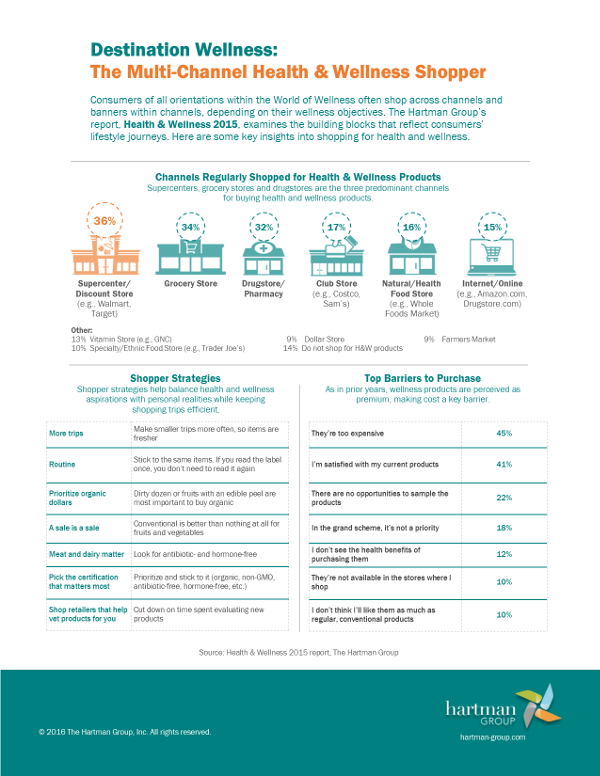
We love new food products, as evidenced by the ever-growing array and permutation of new goodies at our grocery stores. Among those who say new food products are important to them, the top reason why they buy new food products is health. Open your eyes when you’re next grocery shopping and look around you — your favorite grocer is morhping into a health destination. Whole Foods has launched its Whole Body store-within-a-store concept. Wegmans offers their Eat Well Live Well program. Even Wal-Mart, home of the $4 generic drug price-point, has begun to offer organic food based on demand according
The value of medicine: from Beijing to London
Consider, a definition of value: Worth in usefulness or importance to the possessor; utility or merit: as in, the value of an education.Hey Mr. Webster, how about, “the value of health?”This week, the ground beneath Philadelphia and Research Triangle Park moved as the announcement of Andrew Witty’s nomination to the post of CEO of GlaxoSmithKline shook the headquarter offices of the second biggest pharmaceutical company in the world. Among his American colleagues, Witty was generally not considered to be the front-runner in the triple-threat horse race launched by J-P Garnier, current honcho, to head the company. Among the 3 contenders
ePatients are Passionate! says Pew
The population of adults living with a disability or chronic disease comprises a relatively higher proportion of people over age 50 and people who do not use a computer on a regular basis. New insights from the great researchers at the Pew Internet & American Life Project find that adults living with a disability or chronic illness are less likely than others to go online. However, once they go online, these people become what the Pew calls, “avid health consumers.” Their latest health report, E-patients With a Disability or Chronic Disease, offers a lot of data into this overlooked group
A Majority Wants All Americans to Have Adequate Health Coverage
Covering the uninsured tops Americans’ health care priorities for presidential candidates. That’s the #1 health issue for Democrats and Independents; managing health care costs is the top health policy concern for Republicans. This, according to the latest Wall Street Journal Online/Harris Interactive poll published on October 4, 2007. Health care coverage is emerging as a front-burner for the American middle class. 61% of Americans said that health care ‘works’ better for the very poor and the rich versus the middle class. Furthermore, nearly 2/3 of Americans believe that health care in the U.S. works just fine if you are healthy
The Health Data Vault, circa 1999
Today, October 4, Microsoft unveiled its long-awaited electronic health records system, Health Vault. In a white paper called Concepts of the Health Data Vault, the author discusses the value of an individual’s “health data bitstream.” The author goes on to say that, “The value of this bitstream is based on its organization and communication within an individual’s context. This value is not necessarily reflected in specific dollars and cents savings, but rather in the individual’s health, trust in the healthcare system, and community. It has the potential to radically shift the balance of power in today’s health care system.” This
The Unbearable Heaviness of Chronic Disease = $1 Trillion
It is no surprise that chronic disease costs, but the burden of chronic disease is staggering: pegged at $1 trillion, according to the Milken Institute’s latest report, An Unhealthy America: the Economic Burden of Chronic Disease. This report highlights the sobering statistics about this critical cost driver in our system. The chronic diseases most burdensome to the economy including pulmonary conditions, hypertension, mental disorders, heart disease, diabetes, and cancer. What factors are contributing to America’s heavy chronic disease burden? The Milken team identifies them as: > Air quality > Alcohol > Cholesterol > Illicit drug use > Obesity (BMI ?
The Value of Medical Innovation – personal, global, fiscal
One of the key drivers of the medical cost spiral in the U.S. is technology. But it’s also one of the brilliant aspects of our national and state economies, and one of the few positive line items in our balance of trade (exports minus imports). The U.S. is still a leader in med tech innovation. But how do we fund medical innovation as we aim to wring costs out of our system? This week, medical technology is meeting in Washington DC for the annual AdvaMed conference to wrestle with the key issues challenging the industry. Costs and access to care
 Jane will be working with EU- and UK-based clients in September and October 2026, collaborating with stakeholders in digital health, public/community health, retail health, and growing opportunities for health-at-home. Stay tuned to her updates here on Health Populi on-the-ground as she lives the digital nomadic work-life in Italy, Belgium, the Netherlands, and in London.
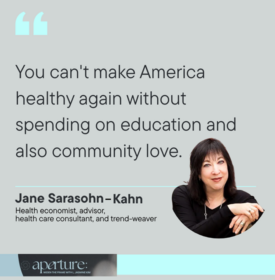 I was grateful to be Jasmine's first conversation-guest on her new podcast, "Aperture - Widen the Frame," where this expert in narrative medicine is bringing together the broad range of voices to sit at the table and address what health care needs: those humans in the health-system-loop who address health equity and empathy along with delivering evidence-based medicine for all.
 Jane joined host Dr. Geeta "Dr. G" Nayyar and colleagues to brainstorm the value of vaccines for public and individual health in this challenging environment for health literacy, health politics, and health citizen grievance. Click onto the Pfizer Value of Vaccines site and you can watch four episodes covering the challenges with adult vaccination, the employer and health plan member's journey to vaccination, reimbursement, and collaborating for proactive prevention.