


U.S. Physicians Have to Deal with the Growing Info-Demic of Disinformation Meant to Mislead Patients
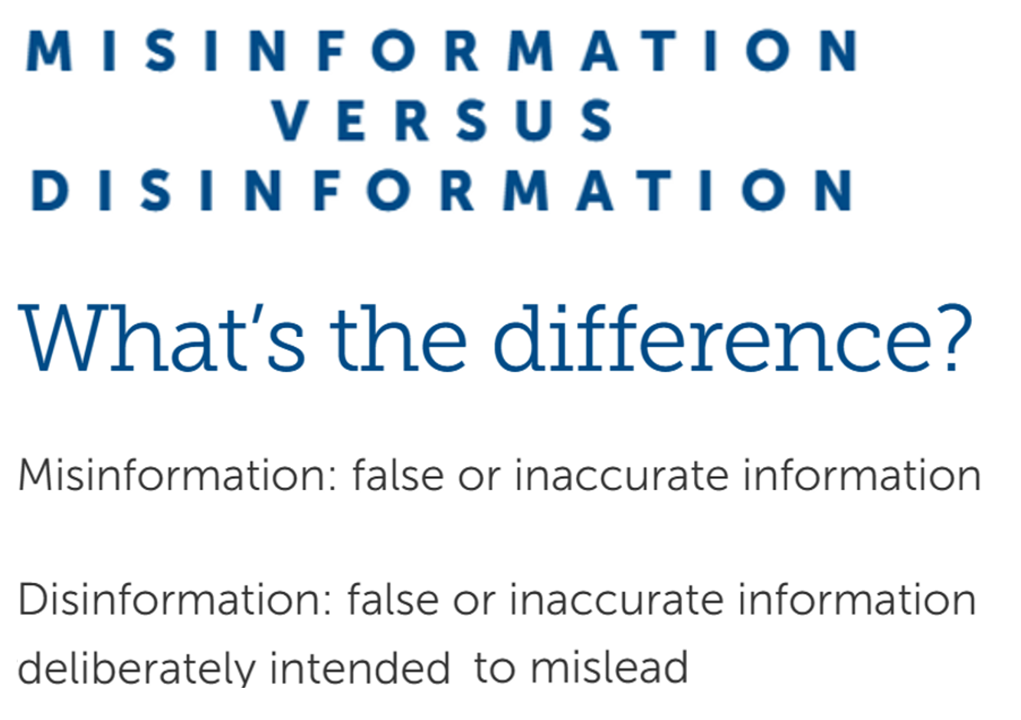
Close to 100% of U.S. doctors agree that misinformation and/or disinformation undermines patient care, according to a new survey from the Physicians Foundation. The Foundation polled over 1,000 U.S. physicians in late May 2025 to gauge doctors’ perspectives on information and patients’ health literacy. Furthermore, over one-half of physicians believe that misinformation – and/or disinformation — significantly impacts the ability to deliver quality patient care. The first graphic differentiates between “misinformation” and “disinformation,” where the latter is false or inaccurate information deliberately intended to mislead people. Misinformation is somewhat more benign in
Prescription Drug Pricing in America – a 3-Part Update, From the Over- the-Counter OPill and “Half-Price” Ozempic to Most-Favored-Nation Rx (Part 3)
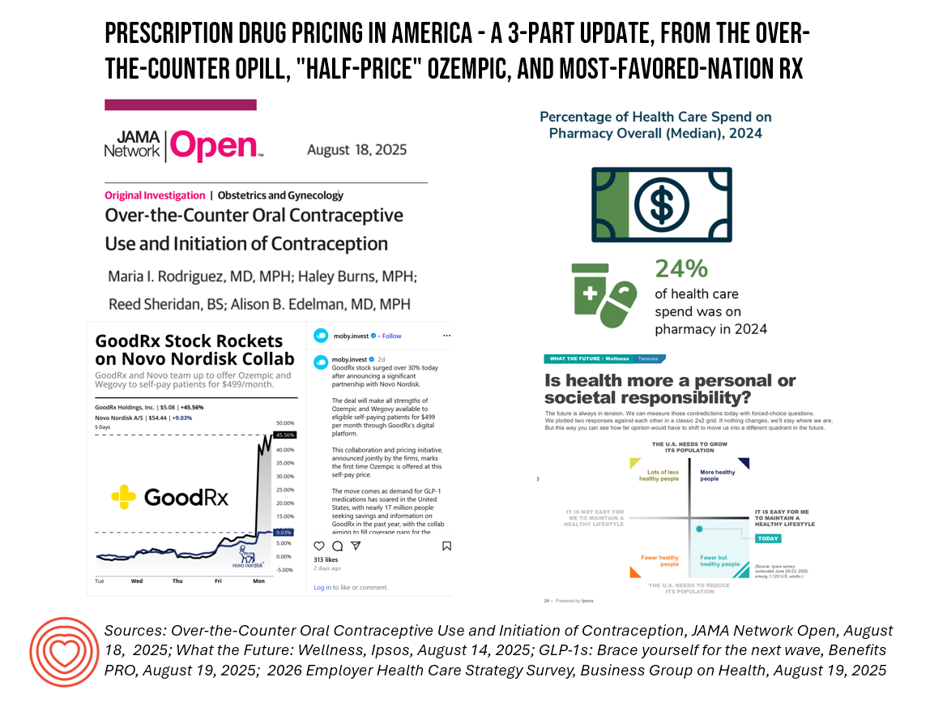
Welcome to Part 2 of 3 in my consideration of Prescription Drug Pricing in America. You can catch up with yesterday’s Part 1 post here, and Part 2 here. The macro-context for these 3 posts are the forecasts for health care spending for the coming year. Health care cost increases forecasted for 2026 will, in significant part, be driven by prescription drug trend. This graphic from this week’s release of the Business Group on Health’s employer survey on healthcare cost growth to 2026 illustrates a key finding that’s echoed in other similar studies recently released and covered here in Health Populi.
Prescription Drug Pricing in America – a 3-Part Update, From the Over- the-Counter OPill and “Half-Price” Ozempic to Most-Favored-Nation Rx (Part 2)
“Big Pharma has a new vision for selling drugs. It’s going to the mattresses,” writes Josh Nathan-Kazis in MSN earlier this week. That is, going direct-to-consumer (DTC) the way the mattress industry has done in the past decade, cutting out brick-and-mortar sleep shops at retail. In the case of “Make(ing” like a mattress company,” Josh explains, the pharma manufacturers “sell shots and pills straight to the consumer.” In this case, that’s cutting out the pharmacy benefits managers and other intermediaries that have taken dollars in the transactions of drug benefit claims which have added costs to payers (health plan sponsors
Prescription Drug Pricing in America – a 3-Part Update, From the Over- the-Counter OPill and “Half-Price” Ozempic to Most-Favored-Nation Rx (Part 1)
Health care costs will increase, overall, as much as 10% in 2026, the consensus of several health benefit analysts inform us. And, “workers to bear brunt of health cost increases in 2026,” reads today’s Axios headline on the topic, weaving together several studies from the Business Group on Health, Mercer, and the International Foundation of Employee Benefit Plans. A kay cost-contributor cited in all of these health cost forecasts is the prescription drug line item: specialty drug prices, and specifically the costs of GLP-1 medicines and cancer therapies. One strategy gaining fast-traction on both the
What U.S. Consumers Are Thinking About Tariffs’ Impacts on Health Care: Looking to Ipsos, QCentrix and Goldman Sachs
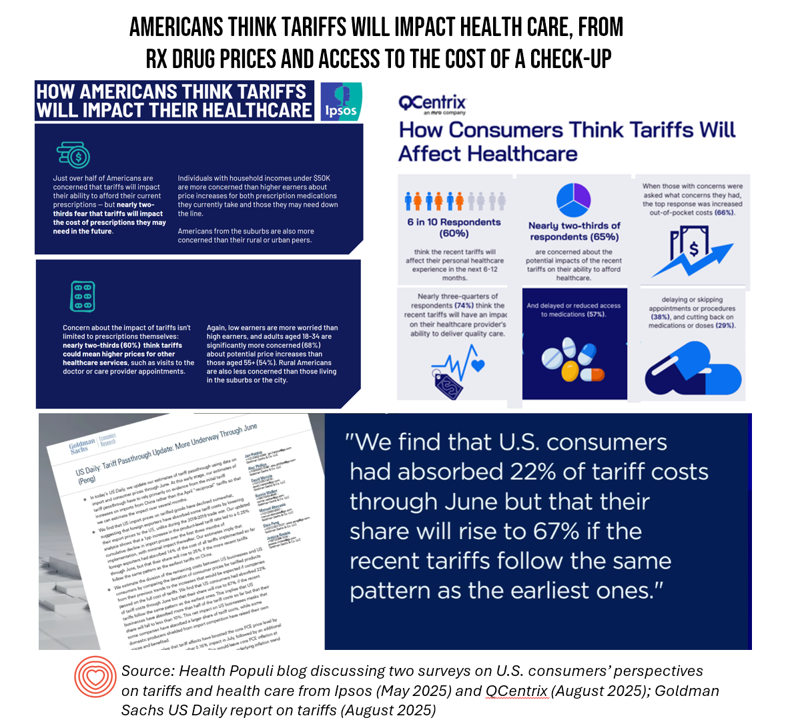
Most Americans, thinking as health consumers, believe that tariffs could impact peoples’ ability to pay for costly prescription drugs and be priced out of paying for check-ups and medical supplies, based on results from two studies on consumers’ views on tariffs and their health care from Ipsos and Q-Centrix. Ipsos’s consumer survey found that younger consumers, people earning lower incomes, and folks living in the suburbs feel even more stressed about tariffs’ impact on medical care — along with more people identifying as Democrats or Independent voters. With
To Garner Patient Loyalty, Focus on Convenience, Availability, and Affordability. Consumers Trust AI to Help the Journey.
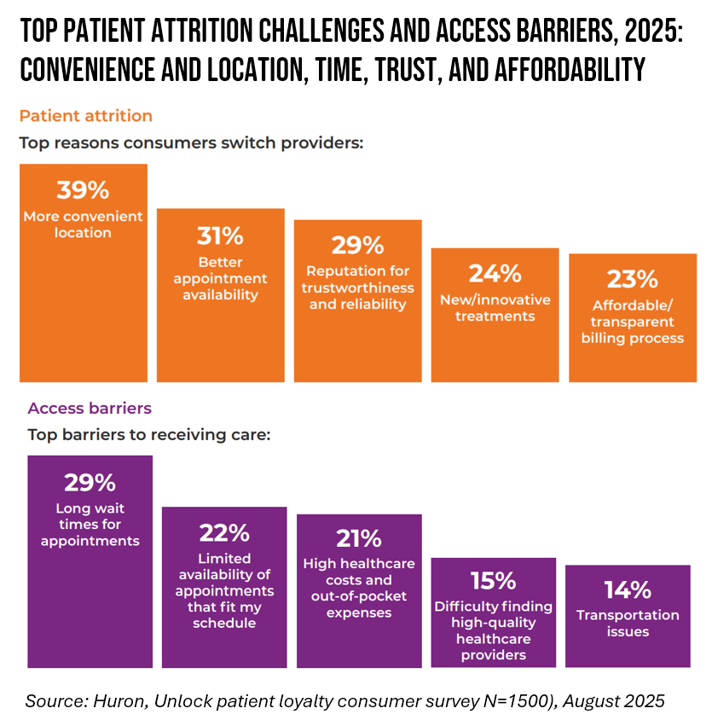
U.S. health consumers are roughly split 40/40 when it comes to AI analyzing personal health data to provide personalized advice, with 21% feeling neutral about that. But using AI for regular health updates and guiding us through a pre- or post-care medical journey would be welcome by one in two people, we learn in how to Unlock patient loyalty: New healthcare consumer insights, Huron Consulting Group’s consumer research report polling 1,500 U.S. healthcare consumers. Start with peoples’ top reasons for switching health care providers, along with main barriers preventing consumers from
Women Walk a Financial Tightrope: What That Means for Women’s Health, Mind, Body, & Wallet
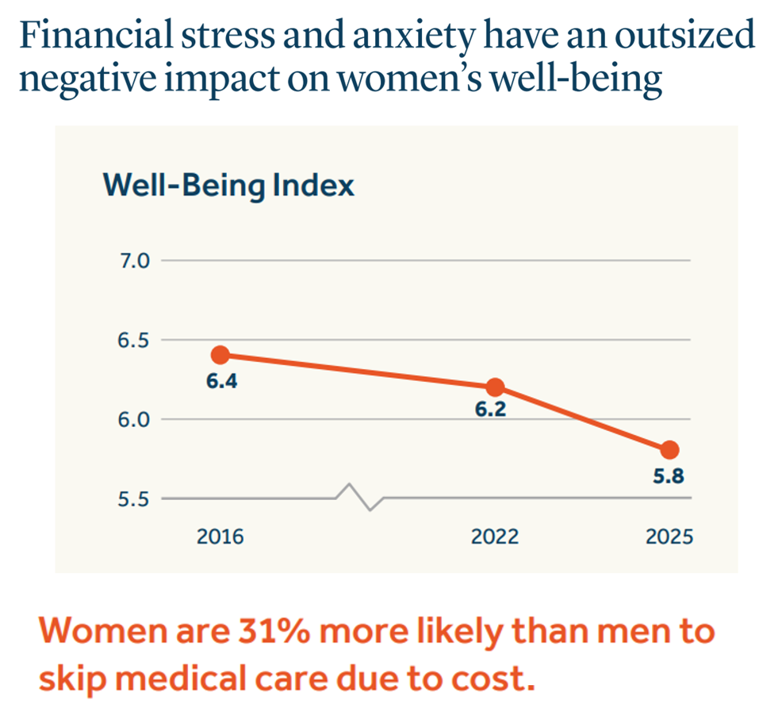
Financial stress and anxiety have an ‘outsized’ negative impact on the well-being of women in America, compared to male counterparts, we learn in Health. Wealth, and Happiness – Helping to overcome roadblocks to women’s well-being, a report from the Guardian Life Insurance Company. This report is part of Guardian’s annual research program called Mind, Body, Wallet, which the company launched 14 years ago. The goal of Mind, Body. Wallet is to assess how health citizens define “well-being” in daily living, making the crucial connections between mental health (“Mind”), physical health (“Body”), and money
Ozempic: A Medicine, and a “Cultural Shorthand” – What The Harris Poll Knows About Gen Z Consumers and Health Care in America

Among the top 20 fastest-growing growth brands beloved by Americans between 18 and 28 years of age — that is, Gen Z consumers — we see brand-equity love for companies channeling athleisure, fashion, new-fangled financial products, and food & beverage brands. And then there’s Ozempic, which gained 10 full percentage points from Q1-2025 to Q2-2025, according to The Harris Poll’s QuestBrand research. What does it mean that a prescription drug has joined these brand-loved rankings? The QuestBrand research found that as of the second quarter of 2025, more than one in 3
Why a Grocery Store Signed On to “Make Health Tech Great Again”

Joining the ranks of technology heavyweights Amazon, Anthropic, Apple, Google, and OpenAI, as well as digital health innovators Noom, Oura, Virta Health and Welldoc, who have pledged to “Make Health Tech Great Again,” Albertsons, one of the largest grocery chains in the U.S., put its name on the list with these and other early adopter collaborators. The Albertsons’ company blog published on 31 July discussed the background and rationale for this decision. “Specifically, we pledge to explore how our Sincerely Health platform can connect to The Centers for Medicare and Medicaid Services (CMS) Aligned
The Patient as Consumer – Updates from Fidelity on Retiree Health Care Costs ($172,500), Delaying Care, Tariff Impacts on Spending, and Roche Going DTPatient for Rx’s?

As of August 2025, U.S. patients of all demographics and geographies face many uncertainties with respect to their care. Issues such as health plan coverage, prescription drug costs, and access to services, among other challenges, continue to re-shape patients-as-health-consumers seeking transparency, clinical choices, and trust-worthy relationships with touchpoints in their personal health ecosystems. Four just-breaking stories across the health/care ecosystem illustrate several of these uncertainties and forces in U.S. health care — some adding friction and angst in a patient’s life, others perhaps providing some relief for certain health consumers. These news items address health care costs in retirement, the
 Thanks to Jennifer Castenson for her article in Green Builder Media tracking the growing trend of home-building baked with wellness inside and out. She interviewed me for the piece and I'm grateful to have my perspectives covered in this important issue. Here's one snippet: “Now, we are starting to see areas of the home purposed for health and we have started to think about how to repurpose the home for health."
 Jane joined host Dr. Geeta "Dr. G" Nayyar and colleagues to brainstorm the value of vaccines for public and individual health in this challenging environment for health literacy, health politics, and health citizen grievance. Click onto the Pfizer Value of Vaccines site and you can watch four episodes covering the challenges with adult vaccination, the employer and health plan member's journey to vaccination, reimbursement, and collaborating for proactive prevention.
 I'm grateful to be part of the Duke Corporate Education faculty, sharing perspectives on the future of health care with health and life science companies. Once again, I'll be brainstorming the future of health care with a cohort of executives working in a global pharmaceutical company.