


Being Digital Doesn’t Always Mean You’re Young, Demographically Speaking
Being younger demographically doesn’t mean you’re younger, digitally-speaking. Your Real Age isn’t your Digital Age, according to Wells Fargo‘s survey into Americans’ use of advanced tools for daily tasks. The categories of peoples’ digital maturity include: – Digital teens, who are people who are online but don’t use all tools at a ‘high level’ – Digital novices are those people who manage basic tasks online but aren’t yet connecting with others online or managing more complex tasks – Digital adults have the highest digital age, as demonstrated by their using online tools for daily tasks, interacting with others online, and
Caregiving in the USA – the burden intensifies, and technology’s promise
29% of people in the U.S. have served as unpaid family caregivers in the past year. That’s 66 million people, mostly female (66%), middle age (on average 48 years old), usually taking care of a relative (86%).These sobering stats come out of Caregiving in the U.S. 2009, a study from the National Alliance for Caregiving in collaboration with AARP. The research, funded by the MetLife Foundation, follows up a similar study in 2004 and shows the proportion of Americans caregiving has substantially changed over the past five years.But both caregivers of adults and those for whom they provide care are
Cost increases for drugs most-used by older Americans are higher than inflation
For a consumer who’s enrolled in Medicare and takes three brand name prescription drugs on a chronic basis, the average increase in the cost of the medications used to treat those conditions increased by nearly $2,100 between 2002 and 2008. Between 2007 and 2008, the average increase in drug price over 3 therapies was $556. These findings, and other details describing price increases for 211 prescription drugs int he “Medicare Rx market basket,” are found in the AARP’s latest Rx Watchdog Report: Trends in Prices of Prescription Drugs Used by Medicare Beneficiaries. AARP began the series of drug price Watchdog
Seniors grab brands for Part D, and generics for self-pay
Seniors are acting like true, Adam Smith-style Rational Economic Man and Woman when it comes to their behavior as Medicare Part D enrollees. They go for the more expensive prescription drug brands when covered by the government; once getting to the ‘donut hole,’ though, seniors opt for lower-cost generics. Medco Health discovered this in their latest study into Medicare drug trends. Their conclusion is that Medicare could save more money if seniors went for generics 100% of the time. Rational selection, indeed. In a study from the Kaiser Family Foundation (KFF), Medicare Prescription Drug Plans in 2008 and
The cost of beauty, an American obsession
About $7 billion is spent each year on cosmetics. Another $1.5 billion is spent on breast augmentation, $1.3 billion on lipoplasty, and nearly $1 billion on abdominoplasty — aka, “tummy tucks.” Beauty At Any Cost is an important report from the YWCA. The organization has quantified the economic costs of the never-ending search for ‘beauty,’ and broken down the health implications, and impacts on interpersonal relationships — especially as these issues translate to young girls. One of the most serious behaviors cited in this report include that fact that over 1/2 of teenage girls use unhealthy weight control behaviors such
Centenarians say a long life is all about staying connected
The key to longevity isn’t about taking vitamins or consuming health care or yogurt…it’s staying connected to family, friends, and world events. That news comes to us from the third Evercare 100 @ 100 Survey which details ultra-seniors’ views on politics and the good life. Evercare surveyed in-depth 100 centenarians. Collectively, their views challenge stereotypes of the oldest Americans alive today. There are 84,000 of them, according to the U.S. Bureau of the Census. For example, 19% of centenarians use cell phones, 7% email, and 3% online date. Google is a boon to looking for old, lost friends.
Aging, economics and consumer-generated media — implications for health
Advertising Age analyzes census data on aging and diversity in America, and comes up with some interesting conclusions for consumer marketers. Here at Health Populi, we’re all-health, all-the-time, so I’m going to discuss author Peter Francese’s findings through our health lens. In addition, McKinsey published its insights into aging boomers in the report, Talkin’ ‘Bout My Generation, which I will also discuss. Francese begins with the one-two punch that marketers in the U.S. are already faced with the economic downturn coupled with consumer-generated media (e.g., blogs, online videos, e-pinions.com, ad infinitum). The third challenge to add to these two market-shapers
A profile of silver surfers: don’t discount older web-searchers
There’s a growing cadre of older people online, and they’re an attractive demographic, according to Focalyst, a joint venture of the AARP and Millward Brown, a market research and branding company. The researchers found that “matures” spend 750,000,000 minutes a day on the Internet (sounds like a song from Rent–the AARP version of 525,600 Minutes). Focalyst calls the group of people age 62 and over “Matures Online.” The Insight Report: April 2008 finds that matures are just as likely to be persuaded by an Internet ad as younger consumers. Is this what Martha would consider a “good thing” or not-so-good?
Profiles of older health care consumers: living longer, longing for technology
Older Americans are healthier and more prosperous than previous generations. Furthermore, older people want to adopt technologies that will help them age well in their homes. Two new reports together provide a new look into aging in America. Older Americans 2008: Key Indicators of Well-Being is a wide-reaching data compendium which paints a current profile on aging in America through 38 measures that depict the well-being of older Americans. Measures include demographics, economics, health status, health risks and behaviors, and the cost and use of health services. The Chartbook is well worth reviewing to gain insights into this fast-growing population
Health, the New Status Symbol
We’d rather be healthy than wealthy, according to a new survey from Manning Selvage & Lee (MS&L), the PR firm that’s part of the global communications company, Publicis. MS&L polled Americans’ beliefs on health and self-esteem. Three-quarters (72%) of Americans say that being physically healthy is a symbol of personal success. 91% of Americans said they’d rather be described ads “healthy” than “wealthy.” 71% said they’d rather be seen as someone who “looks really healthy” vs. someone who’s nicely “put together or well-dressed.” These will be glad tidings for MS&L’s client base. MS&L serves a global health clientele which includes
Love thy kidneys; a sobering 2020 forecast
It’s Renal Week, the education meeting of the American Nephrology Society. The latest research on that under-appreciated organ, the kidney, is being presented by the best minds focused on nephrology. The critical headline from the meeting is that, in 2020, there will be a huge rise in the incidence and prevalence of end-stage renal disease (ESRD). The number of Americans wil ESRD in 2020 is expected to be 785,000, an increase of more than 60% from 2005. The key factor driving the growth of kidney disease is diabetes, in part driven by obesity projections and the aging of baby
Purchasing Pink
Pink is all around. It’s October 1st. The annual proliferation of pink products promoting breast cancer awareness pervades purchasers’ prospective pickings. This year, there are lots of cosmetics to choose from, along with a Filofax, a vacuum cleaner, kitchen appliances, an iPod and various accessories to dress it up, foods, a Swiss army knife, and a set of pink knitting needles. Prevention Magazine online has several suggestions for “Beauty that Gives Back,” cosmetic companies offering products with some percentage of proceeds going to a variety of breast cancer charities. For example, La Mer Skin Creme can be purchased for
Universal Health Care, American Style
Timing is everything. Presidential hopeful Hillary Clinton wants to have universal health care implemented by the end of her second term. If she wins the leadership post in November 2008, then all Americans would be covered by a health plan by late 2015. According to my watch, that’s about 5 years into the first phase of Baby Boomer retirements. Health Populi’s Hot Points: We’ve entered the next wave of health reform discussions in the U.S. The phrase, “Universal Health Care,” will be a centerpiece of the debate. Be part of the conversation with your providers, payers, neighbors, communities. Be open
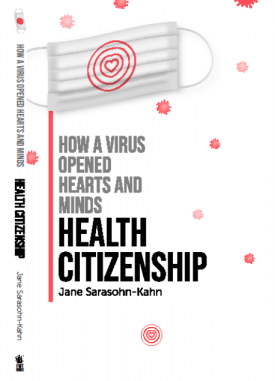
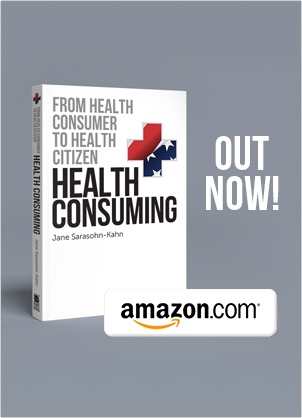
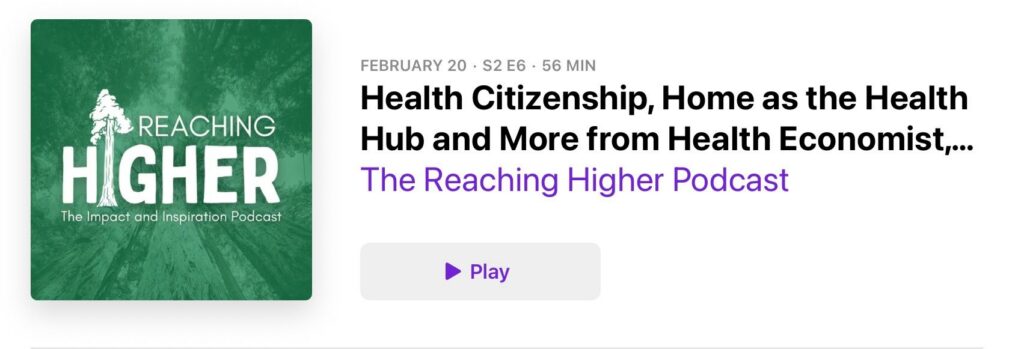 Thank you Aaron Strout for hosting our conversation on the Reaching Higher Podcast, now live on Apple, Spotify, and YouTube. We covered a lot of ground addressing health care and health citizenship, the growing prospects for our homes as our health hubs, and how our humanity is a key ingredient in health-making for all.
 Jane joined host Dr. Geeta "Dr. G" Nayyar and colleagues to brainstorm the value of vaccines for public and individual health in this challenging environment for health literacy, health politics, and health citizen grievance. Click onto the Pfizer Value of Vaccines site and you can watch four episodes covering the challenges with adult vaccination, the employer and health plan member's journey to vaccination, reimbursement, and collaborating for proactive prevention.
 I'm grateful to be part of the Duke Corporate Education faculty, sharing perspectives on the future of health care with health and life science companies. Once again, I'll be brainstorming the future of health care with a cohort of executives working in a global pharmaceutical company.