


Lockdown Economics for U.S. Health Consumers
The hashtag #StayHome was ushered onto Twitter by 15 U.S. national healthcare leaders in a USA Today editorial yesterday. The op-ed co-authors included Dr. Eric Topol, Dr. Leana Wen, Dr. Zeke Emanuel, Dr. Jordan Shlain, Dr. Vivek Murthy, Andy Slavitt, and other key healthcare opinion leaders. Some states and regions have already mandated that people stay home; at midnight last night, counties in the Bay Area in California instituted this, and there are tightening rules in my area of greater Philadelphia. UBS economist Paul Donovan talked about “Lockdown Economics” in his audio commentary today. Paul’s observations resonated with me as
The Book on Deaths of Despair – Deaton & Case On Education, Pain, Work and the Future of Capitalism
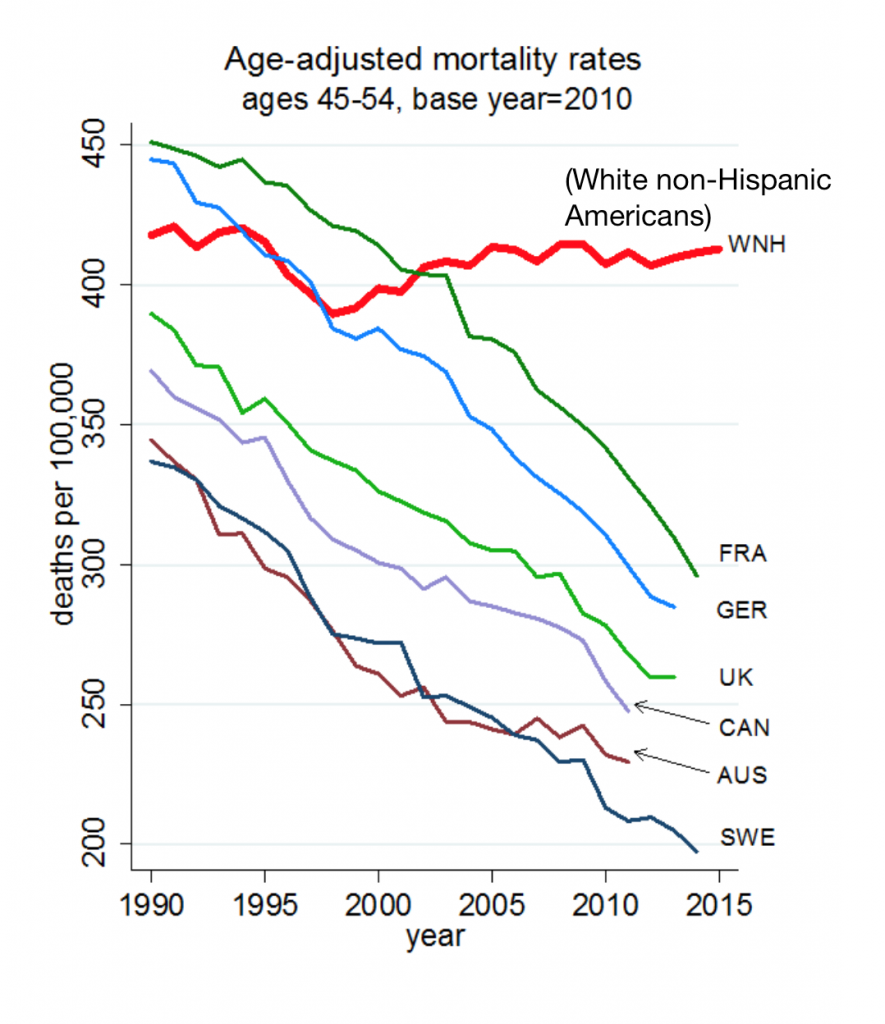
Anne Case and Angus Deaton were working in a cabin in Montana the summer of 2014. Upon analyzing mortality data from the U.S. Centers for Disease Control, they noticed that death rates were rising among middle-aged white people. “We must have hit a wrong key,” they note in the introduction of their book, Deaths of Despair and the Future of Capitalism. This reversal of life span in America ran counter to a decades-long trend of lower mortality in the U.S., a 20th century accomplishment, Case and Deaton recount. In the 300 pages that follow, the researchers deeply dive into and
The Suicide Rate in America Increased by 40% between 2000 and 2017. Blue Collar Workers Were Much More At Risk.
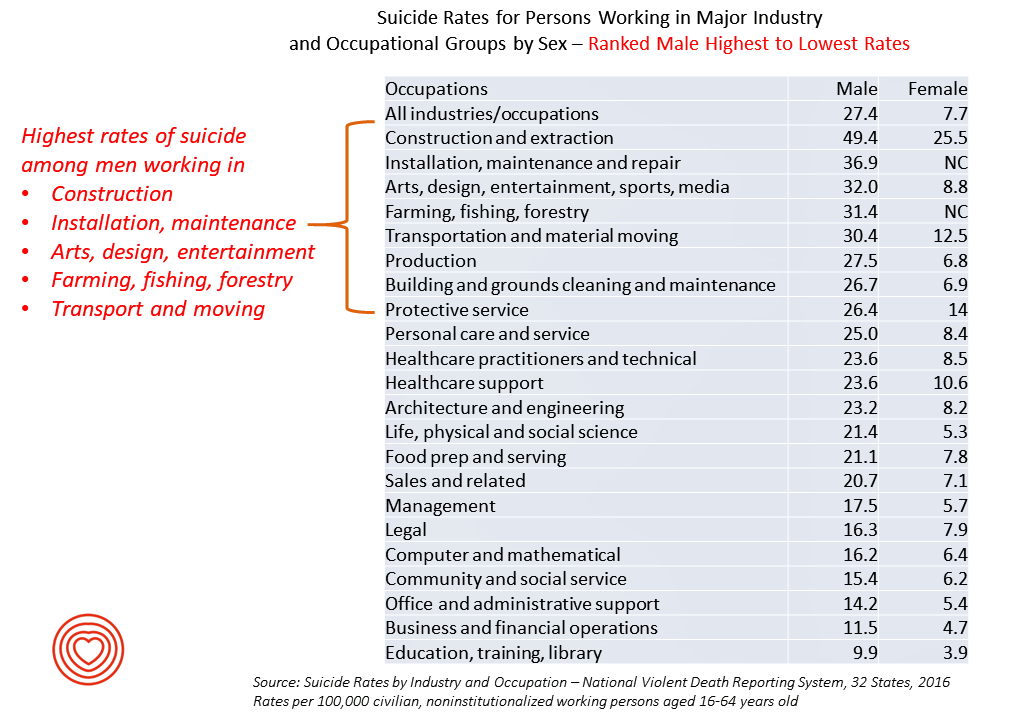
The rate of suicide in the U.S. rose from 12.9 per 100,000 population to 18.0 between 2000 and 2017, a 40% increase. Those workers most at-risk for suiciding were men working in construction and mining, maintenance, arts/design/entertainment/sports/media, farming and fishing, and transportation. For women, working in construction and mining, protective service, transportation, healthcare (support and practice), the arts and entertainment, and personal care put them at higher risk of suicide. The latest report from the CDC on Suicide Rates by Industry and Occupation provides a current analysis of the National Violent Death Reporting System which collects data from 32 states,
“Digital Health Is An Ecosystem of Ecosystems” – CTA’s 2020 Trends to Watch Into the Data Age
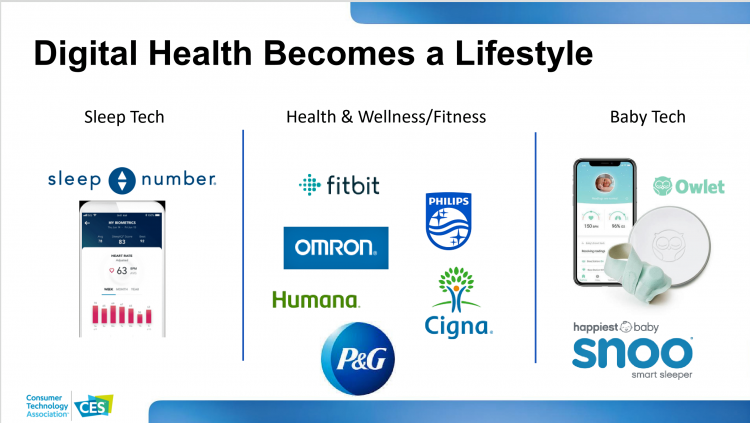
In CTA’s 2020 Consumer Tech Forecast launched yesterday at Media Day 1 at CES, Steve Koenig VP of Research, said that, “digital health is an ecosystem of ecosystems.” Health, medical and wellness trends featured large in the forecast, which brought together key trends for 5G, robotics, voice tech, AR/VR/XR, and the next iteration of IoT — which Steve said will still be called “IoT,” but in this phase will morph into the “Intelligence of Things.” That speaks to Steve’s phrase, “ecosystem of ecosystems,” because that’s not just “digital” health — that’s now the true nature of health/care, and what is
The 2020 Social Determinants of Health: Connectivity, Art, Air and Love
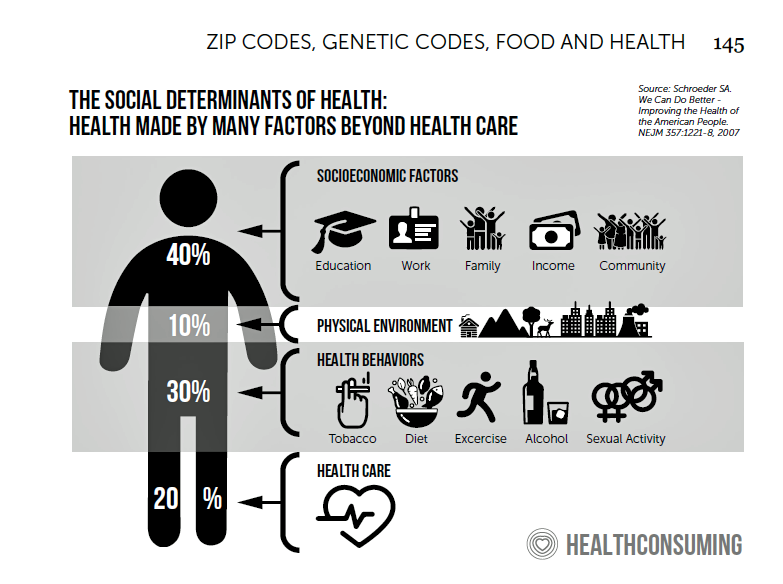
Across the U.S., the health/care ecosystem warmly embraced social determinants of health as a concept in 2019. A few of the mainstreaming-of-SDoH signposts in 2019 were: Cigna studying and focusing in on loneliness as a health and wellness risk factor Humana’s Bold Goal initiative targeting Medicare Advantage enrollees CVS building out an SDOH platform, collaborating with Unite US for the effort UPMC launching a social impact program focusing on SDoH, among other projects investing in social factors that bolster public health. As I pointed out in my 2020 Health Populi trendcast, the private sector is taking on more public health
Social Determinants of Health – My Early Childhood Education and Recent Learnings, Shared at the HealthXL Global Gathering
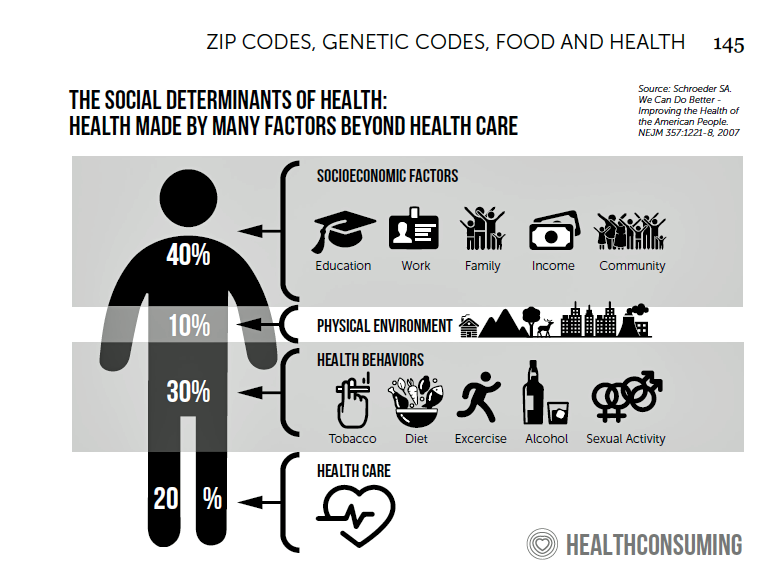
My cousin Arlene got married in Detroit at the classic Book Cadillac Hotel on July 23, 1967, a Sunday afternoon wedding. When Daddy drove us back out to our suburban home about 30 minutes from the fancy hotel, the car radio was tuned to WWJ Newsradio 950, all news all the time. As soon as Daddy switched on the radio, we were shocked by the news of a riot breaking out in the city, fires and looting and gunshots and chaos in the Motor City. Two days later, my father, who did business with Mom-and-Pop retail store owners in the
Art As Medicine – WHO Weaves the Evidence for Arts’ Role in Improving Health

“What’s the evidence on the role of the arts in improving health and well-being?” asks a report from the World Health Organization‘s Europe region team (WHO-Europe). There’s a lot of proof supporting arts-as-medicine, WHO details in this paper, which synthesizes research published in over 3,000 studies. The first chart illustrates the logic model that bridges arts to health in three segments: “Components” of arts programs, including but not limited to cognitive stimulation (e.g., learning a new arts skill such as painting, drawing or journaling), social interaction (e.g., participating in theatre), physical activity (e.g., dance), and evocation of emotion (e.g., listening
Making Health Care Better, from the N of 1 to the Public’s Health – Trend-Weaving Medecision Liberation 2019
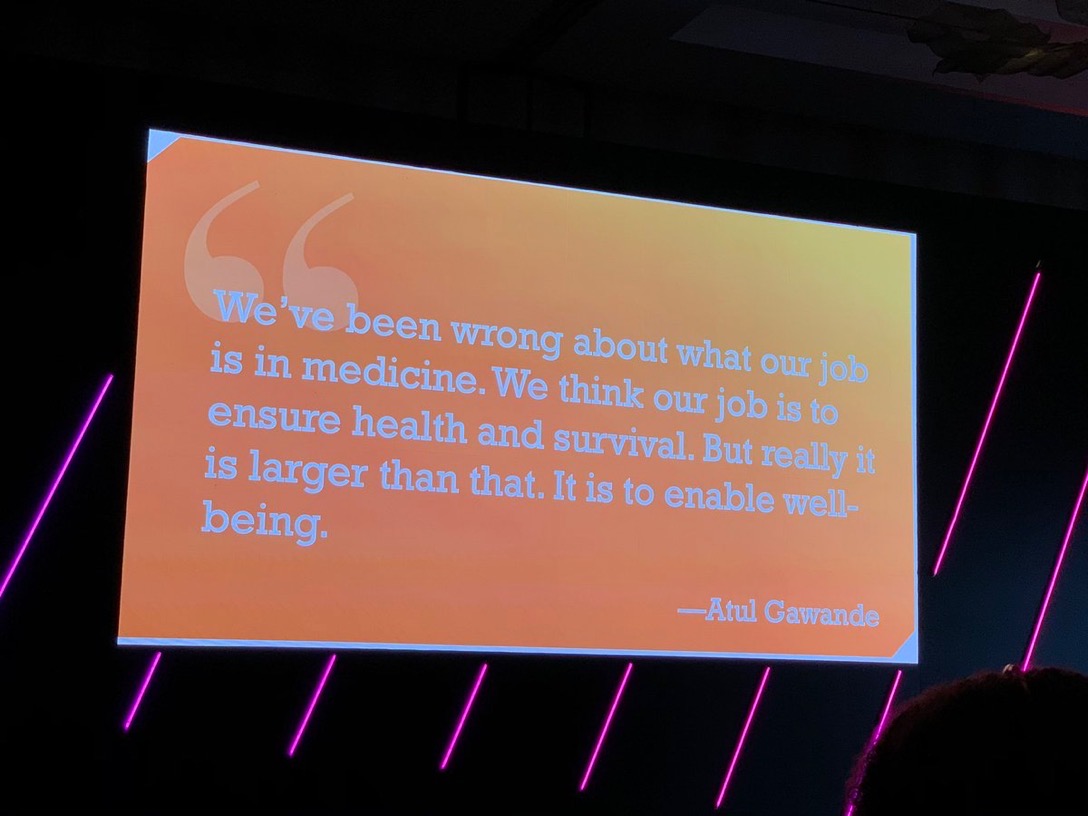
Health and our health information are deeply personal. Changing health care and inspiring positive health behaviors is hard to do. But we must and we will, a group of inspiring and inspired people who work across the health/care ecosystem affirmed this week in Dallas at the conference of Medecision Liberation 2019. I was engaged at this conference to wear several hats — as a keynote speaker, a sort of “emcee,” and, finally, to trend-weave the many talks and discussions happening throughout the meeting. This post is my synthesis of the summary I delivered live at the end of the conference,
The Promise of Telehealth for Older People – the U-M National Poll on Healthy Aging
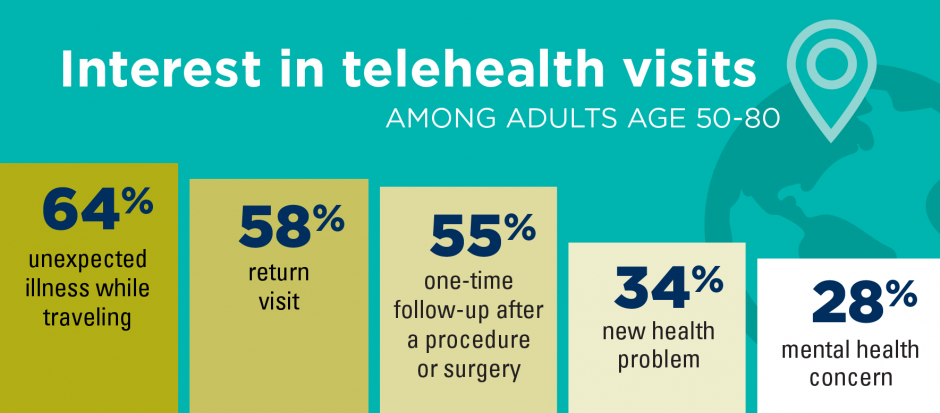
Older people are re-framing their personal images and definitions of aging, from continuing to work past typical retirement age, Skyping and texting with grandchildren, and traveling to destinations well beyond the “snowbird” locales of Florida and Arizona to more active and often charitable/volunteer situations in developing economies. And so, too, are older folks re-imagining how and where their health care services could be delivered and consumed. Most people over 50 years of age are cautious but open to receiving health care virtually via telehealth platforms, according to the National Poll on Healthy Aging from my alma mater, the University of Michigan. U-M’s
The Rise of Social Determinants of Health in Healthcare is Just Real Life Stuff for People, Patients, Consumers

Based on the influx of research studies and position papers on social determinants of health flowing into my email box and Google Alerts, I can say we’re past the inflection point where SDoH is embraced by hospitals, professional societies, health plans and even a couple of pioneering pharma companies. PwC published a well-researched global-reaching report this week appropriately titled, Action required: The urgency of addressing social determinants of health. The “wheel of determinants” illustrates potential partners for collaborating in communities to address SDoH factors. The collaborators include governments, health care providers, payors, life science and pharma, tech and telecomms, policy
Phone Calls, Social Plans, and Entertainment As Prescriptions for Older Peoples’ Loneliness
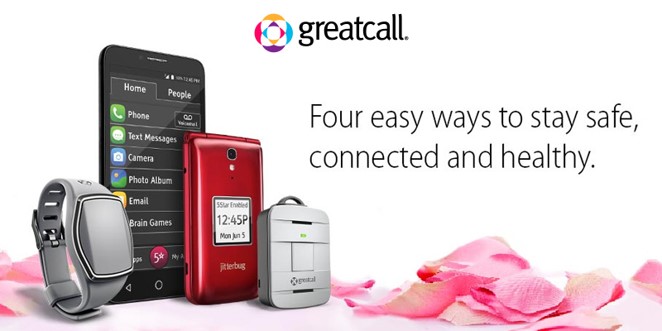
Loneliness is a killer, a health risk factor that’s been equated to smoking 15 cigarettes a day. There’s a Loneliness Epidemic in America, according to the Health Resources & Services Administration, part of the U.S. Department of Health and Human Services. HRSA’s infographic here tells us that there’s a 45% greater risk of mortality among older people who feel lonely. Given that millions of seniors in the U.S. feel lonely on a regular basis, that translates into a huge risk of death for so many older people who feel disconnected from others. “As a force in shaping our health, medical
What the Pew Report on Trust and Distrust in America Means for Health/Care, El Paso and Dayton — Pogo Rears His Head Again

Two in three Americans believe their trust in each other has been shrinking. And most people connect the dots between that low level of trust and America’s ability to solve problems. It’s been well-documented that Americans’ trust in institutions, and especially government and media, has eroded over the past decade. I’ve tracked that social trend here in Health Populi each year since covering the Edelman Trust Barometer, which has traced the downward sloping curve on trust globally and certainly in the U.S. The precipitous decline in trust in America among fellow Americans is described in Pew Research Gr0up’s report, Trust
100 Million People in America Lack Broadband — an On-Ramp to Health and Safety

One in three Americans does not have a broadband connection, according to a new report from the NPD Group. This means that about 100 million people in the U.S. can’t benefit from telehealth and other digital health connections that can bolster self-care, home care, and lower cost care. Most of these folks in the broadband-digital divide live in rural America/ “The so-called digital divide, between those that can or cannot make the best use of the Internet, can be clearly felt in rural markets where the lack of broadband impacts everything from entertainment to the educational system,” Eddie Hold, President
Intent, Insiders/Outsiders and Insights — Disney Institute’s Women’s Leadership Summit
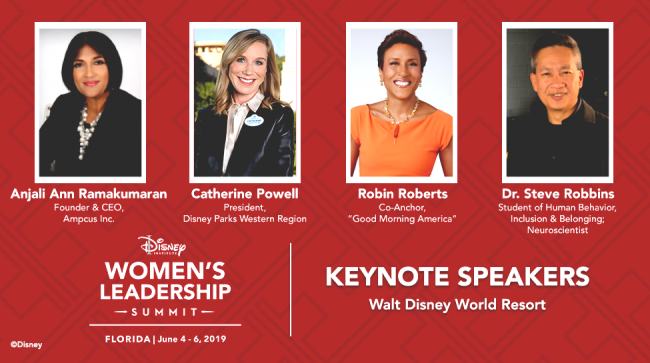
There are many forms of magic inspired by Disney, the company. There’s the obvious attraction, the Magic Kingdom, that was Walt’s original destination vision, “imagineered” in 1932. Then there are other kinds of magic. The one I’m deep into in the moment is inspiration, ideation, and “reimagineering” my own thinking about work, legacy, and social justice. I’m grateful to have had the opportunity to spend much of this week at the inaugural Disney Institute Women’s Leadership Summit. The Institute convened about 300 women (and a handful of brave “He-for-She” men keen on diversity) in Orlando to learn about and brainstorm
People Want to Flourish, Not Just Live – Speaking Health Politics to Real People
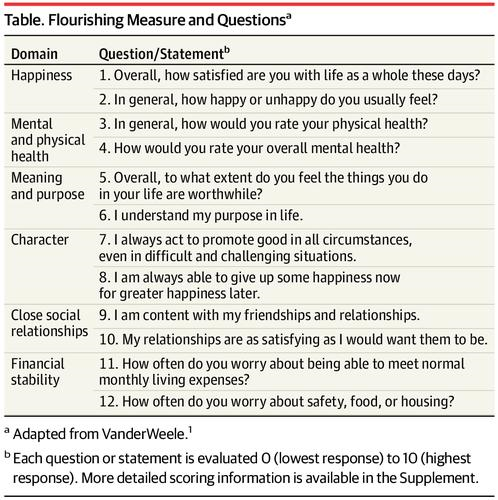
“How should we define ‘health?'” a 2011 BMJ article asked. The context for the question was that the 1948 World Health Organization definition of health — that health is, “a state of complete physical, mental and social well-being and not merely the absence of disease or infirmity”– was not so useful in the 21st century. The authors, a global, multidisciplinary team from Europe, Canada and the U.S., asserted that by 2011, human health was marked less by infectious disease and more by non-communicable conditions that could be highly influenced, reversed and prevented through self-care by the individual and public health policy
How Consumers’ Belt-Tightening Could Impact Health/Care – Insights from Deloitte’s Retail Team

Over the ten years between 2007 and 2017, U.S. consumer spending for education, food and health care substantially grew, crowding out spending for other categories like transportation and housing. Furthermore, income disparity between wealthy Americans and people earning lower-incomes dramatically widened: between 2007-2017, income for high-income earners grew 1,305 percent more than lower-incomes. These two statistics set the kitchen table for spending in and beyond 2019, particularly for younger people living in America, considered in Deloitte’s report, The consumer is changing, but perhaps not how you think. The authors are part of Deloitte Consulting’s Retail team. The retail spending data
How Consumers Look At Social Determinants of Health for Cancer, Diabetes and Mental Health

Enlightened health/care industry and public policy stakeholders have begun to embrace and address social determinants of health. These are the inputs that bolster health beyond health care services: they include economic stability like job security and income level (and equity), education, and access to healthy food, food security, safe neighborhoods, social support, clean environments (water and air), and in my own update on SDoH factors, access to broadband connectivity. As physician leaders in the AMA, technology advocates from AMIA, and numerous health plans focus efforts on strengthening social determinants, what do people – consumers, patients, caregivers — think about these
Patients’ Expectations for Health Beyond Care: Think Food, Exercise, Emotions, Sleep and Finance

People want to make health with their health care providers, and they want more than care from them: most patients are looking for support with healthy eating, exercise, emotional support, sleep, stress management, social relationships, and financial health. And in case physicians, nurses and pharmacists aren’t sufficiently business with that punch-list for health, two in three U.S. patients would also like to receive help in finding a higher purpose. This is the health consumer’s mass call-out for holistic health, Welltok discovered in a survey conducted among over 1,600 U.S. adults in March 2019. The results are detailed in the assertively
Scaling the Social Determinants of Health – McKinsey and Kaiser’s Bold Move

People who are in poor health or use more health care services are more likely to report multiple unmet social needs, such as food insecurity, unsafe neighborhoods, lack of good housing, social isolation, and poor transportation access, found through a survey conducted by McKinsey. The results are summarized in Addressing the Social Determinants of Health. The growing recognition of the influence of social determinants reached a tipping point last week with the news that Kaiser-Permanente would work with Unite US to scale services to people who need them. The mainstreaming of SDoH speaks to the awareness that health is made
Will Health Consumers Morph Into Health Citizens? HealthConsuming Explains, Part 5

The last chapter (8) of HealthConsuming considers whether Americans can become “health citizens.” “Citizens” in this sense goes back to the Ancient Greeks: I return to Hippocrates, whose name is, of course, the root of The Hippocratic Oath that physicians take. Greece was the birthplace of Democracy with a capital “D.” Hippocrates’ book The Corpus is thought to be one of the first medical textbooks. The text covered social, physical, and nutritional influences, and the concept of “place” for health and well-being. Here, the discussion detailed the roles of air and water for health. The Hippocratic texts also coached doctors to
The Promise of Digital Health and the Privacy Perils – HealthConsuming Explains, Part 4

The supply side of digital health tools and tech is growing at a hockey-stick pace. There are mobile apps and remote health monitors, digital therapeutics and wearable tech from head-to-toe. Today in America, electronic health records (EHRs) are implemented in most physician offices and virtually all hospitals. Chapter 5 of my book, HealthConsuming: From Health Consumer to Health Citizen, details the promise of digital health: wearable, shareable and virtual. Today, we can also call on Alexa to remind us to take medications, play nostalgic music when we are lonely, check our physical activity status with Fitbit, and query WebMD about
What We Know We Know About ZIP Codes, Food, and Deaths of Despair – HealthConsuming Explains, Part 3

“There’s a 15-year difference in the life expectancy between the richest and poorest Americans.” That’s the first sentence of Chapter 7 in my book, HealthConsuming: From Health Consumer to Health Citizen. This data point comes from research published in JAMA in April 2016 on the association between income and life expectancy in the U.S. (That’s endnote #399 in the back of the book, one of 519 notes I use to support the plotline). Today, the Brookings Institution convened a meeting on the funding for social determinants of health to address disparities, costs, and quality of healthcare in America. The overall
Digital Health As A Basic Human Need – the Dentsu Digital Society Index 2019
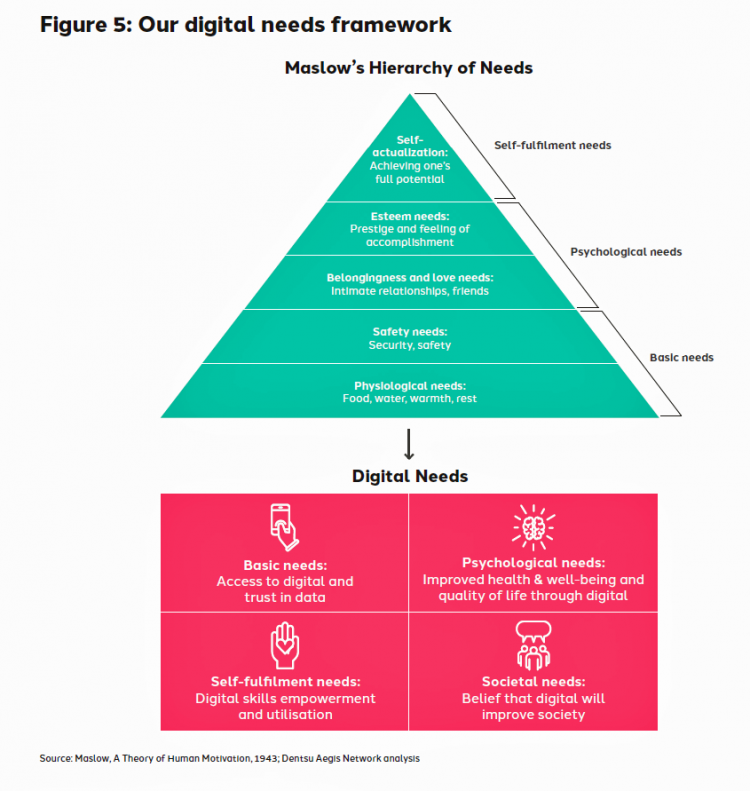
We are all Homo informaticus these days, multi-channel, multi-platform beings using digital platforms. “Computing is not about computers anymore. It is about living,” Nicholas Negroponte wrote in Being Digital. He said that in 1995. In that quarter-century since Negroponte made that prescient observation, we come to better understand that being a Digital Society has its upsides and downfalls, alike. We need a “new needs model” for the digital age, asserts a new report, Human Needs in a Digital World, the 2019 Digital Society Index report from the Dentsu Aegis network. Taking Maslow’s Hierarchy of Needs as a basic construct, the Index
World Health Day 2019: Let’s Celebrate Food, Climate, Insurance Coverage and Connectivity
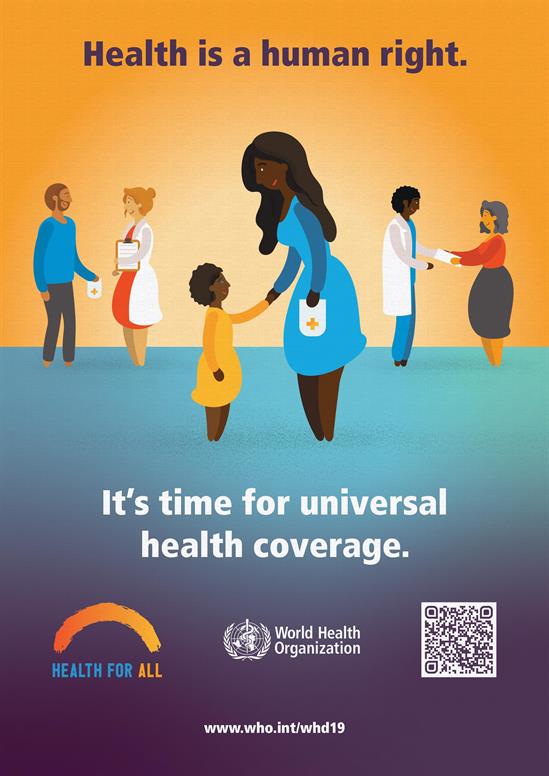
Today, 7 April, is World Health Day. With that in mind, I devote this post to three key social determinants of health (SDOH) that are top-of-mind for me these days: food for health, climate change, and universal health coverage. UHC happens to be WHO’s focus for World Health Day 2019. [As a bonus, I’ll add in a fourth SDOH in the Hot Points for good measure and health-making]. Why a World Health Day? you may be asking. WHO says it’s, “a chance to celebrate health and remind world leaders that everyone should be able to access the health care they need,
Loneliness Is A Health Risk, Especially Among Older People
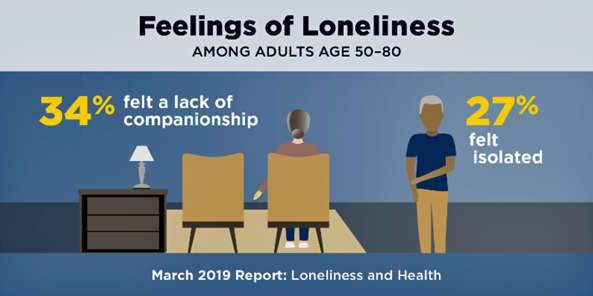
In America, one in three people over 50 years of age feels a lack of companionship, and one-fourth feel isolated from other people, according to a new poll on loneliness and aging from the University of Michigan, sponsored by AARP. The University of Michigan National Poll on Healthy Aging surveyed some 2,000 U.S. adults age 50–80 in October 2018, assessing older peoples’ health, health behaviors, experiences and feelings related to companionship and social isolation. While three in four people have frequent social contact with family, friends and neighbors outside of their home, the remaining one in four have social contact once a
Consumers’ Trust In Health And Personal Care Stores: The Growing Retail Health Ecosystem
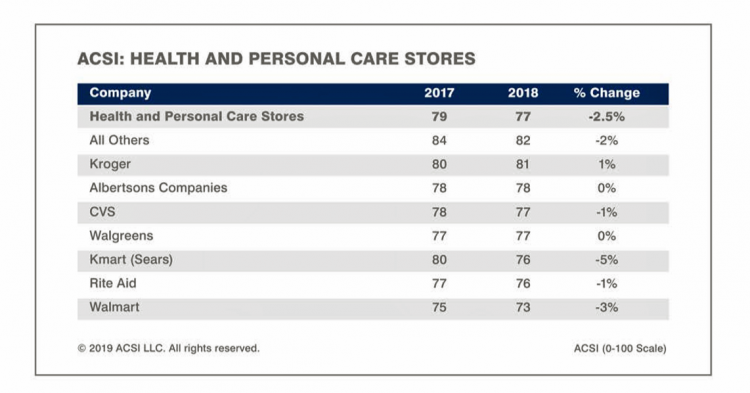
CVS + Aetna have merged to evolve a new business model for health and medical care. Walgreen’s continues to add new services beyond the core pharmacy business, and Walmart is expanding telehealth and healthier food aisles in the grocery. More grocery stores added dietitians to their operations in 2018, as well. As people take on more self-care for health care, they are looking to access products and services in retail bricks-and-mortar and ecommerce channels in the same places they buy food and other products. ACSI’s latest customer satisfaction benchmark study into retailers provides insights into the trusted channels for retail health
National Health Spending Will Reach Nearly 20% of U.S. GDP By 2027
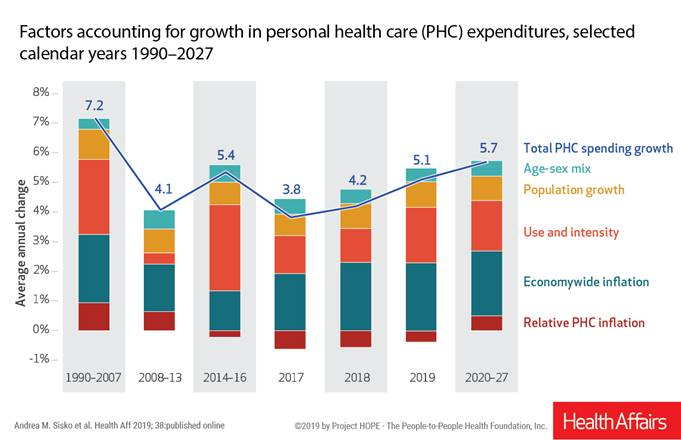
National health spending in the U.S. is expected to grow by 5.7% every year from 2020 to 2027, the actuaries at the Centers for Medicare and Medicaid Services forecast in their report, National Health Expenditure Projections, 2018-2927: Economic And Demographic Trends Drive Spending And Enrollment Growth, published yesterday by Health Affairs. For context, note that general price inflation in the U.S. was 1.6% for the 12 months ending January 2019 according to the U.S. Bureau of Labor Statistics. This growth rate for health care costs exceeds every period measured since the high of 7.2% recorded in 1990-2007. The bar chart illustrates the
The Consumer as Payor – Retail Health at CES 2019
All health/care is retail now in America. I say this as most people in the U.S. who have health insurance must take on a deductible of some amount, which compels that insured individual to spend the first dollar on medical services up until they meet their financial commitment. At that point, health insurance kicks in, and then the insured may have to spend additional funds on co-payments for general medicines and services, and coinsurance for specialty drugs like injectables and high-cost new therapies. The patient is a consumer is a payor, I asserted today during my talk on the expanding
Broadband As Social Determinant of Health – Microsoft’s Plan to Bolster Rural Access

In the U.S., the highest levels of unemployment are in places that often have the lowest access to broadband connectivity. And, “without a proper broadband connection, these communities can’t start or run a modern business, access telemedicine, take an online class, digitally transform their farm, or research a school project online,” Microsoft President Brad Smith said yesterday as the company announced their continued commitment to expanding broadband in rural America. Microsoft is expanding a program the company launched last year to address the rural broadband gap in the U.S. The Airband Initiative is working from Northwest Georgia to South Africa to bolster
The Ultimate Health Outcome, Mortality, Is Rising in America

How long can people living in the U.S. expect to live? 78.6 years of age, if you were born in 2017. That’s a decline of 0.1 year from 2016. This decline especially impacted baby boys: their life expectancy fell to 76.1 years, while baby girls’ life expectancy stayed even at 81.1 years. That’s the latest data on Mortality in the United States, 2017, soberly brought to you by the Centers for Disease Control and Prevention, part of the U.S. Department of Health and Human Services. Underneath these stark numbers are the specific causes of death: in 2017, more Americans died
Radicalizing Kindness for Health: Learning from Bhutan

“Happiness is within, but not within you alone as it is among us. If we can create happiness in a community, then we will be able to attain happiness as individuals,” observed Saamdu Chetri speaking at the International Psychological Congress last week. Chetri is head of Bhutan’s Gross National Happiness Centre, which developed the Gross National Happiness Index. The phrase “Gross National Happiness” was first mentioned in 1972 by the 4th King of Bhutan, King Jigme Singye Wangchuck in an interview with the Financial Times. King Wangchuck said that, “Gross National Happiness is more important than Gross Domestic Product.” The GNH
Financial Stress Is An Epidemic In America, Everyday Health Finds

One in three working-age people in the U.S. have seen a doctor about something stress-related. Stress is a way of American life, based on the findings in The United States of Stress, a survey from Everyday Health. Everyday Health polled 6,700 U.S. adults between 18 and 64 years of age about their perspectives on stress, anxiety, panic, and mental and behavioral health. Among all sources of stress, personal finances rank as the top stressor in the U.S. Over one-half of consumers say financial issues regularly stress them out. Finances, followed by jobs and work issues, worries about the future, and relationships cause
Food and Cooking for Health: a UK Perspective from Hammersmith & Fulham
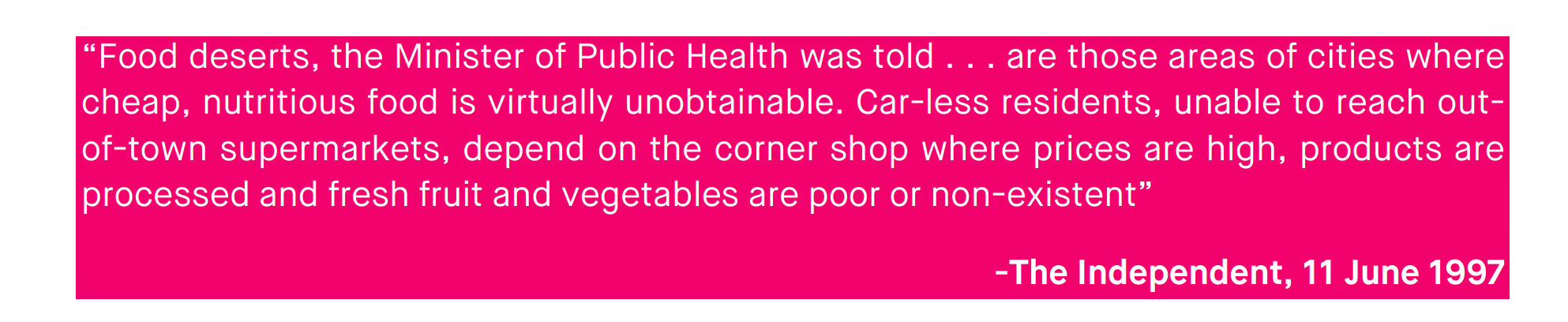
Food deserts aren’t just a U.S. phenomenon. They’re found all around the world. This week as I explore social determinants of health and technology solutions in several parts of Europe, I’ve learned more about food access challenges in the UK. These are discussed in a report published this month by the Social Market Foundation asking, What are the barriers to eating healthily in the UK? The research was supported by Kellogg’s, the food manufacturer. The first table comes from the report, and the topline shows that about 4 in 10 Britons shopped at a cheaper food store in response to high
Loneliness, Public Policy and AI – Lessons From the UK For the US
There’s a shortage of medical providers in the United Kingdom, a nation where healthcare is guaranteed to all Britons via the most beloved institution in the nation: The National Health Service. The NHS celebrated its 70th anniversary in July this year. The NHS “supply shortage” is a result of financial cuts to both social care and public health. These have negatively impacted older people and care for people at home in Great Britain. This article in the BMJ published earlier this year called for increasing these investments to ensure further erosion of population and public health outcomes, and to prevent
 I'm once again pretty gobsmackingly happy to have been named a judge for the 2026 CES Innovation Awards, focusing on digital health, longevity, and fitness. Preceding every year's global conference, CES receives hundreds of applications from innovators around the world building tech-based solutions to big challenges. So glad to be part of this annual initiative to see what global health-tech pioneers are cooking up to address and scale the health and well-being of fellow health citizens, globally.
You can see the results of the Digital Health Awardees here on the #CES2026 website.
I'm once again pretty gobsmackingly happy to have been named a judge for the 2026 CES Innovation Awards, focusing on digital health, longevity, and fitness. Preceding every year's global conference, CES receives hundreds of applications from innovators around the world building tech-based solutions to big challenges. So glad to be part of this annual initiative to see what global health-tech pioneers are cooking up to address and scale the health and well-being of fellow health citizens, globally.
You can see the results of the Digital Health Awardees here on the #CES2026 website. Stay tuned to Health Populi in early January as I'll be attending Media Days and meeting with innovators in digital health, longevity, and the home-for-health during CES 2026 in Las Vegas. I'll be at the conference for an entire week meeting with clients and exhibitors at the biggest-meeting-of-the-year on consumer-facing technology. I'll be reporting daily from Vegas here in the blog, sharing with you insights about the latest breakthroughs, products, and services that enable people to manage health, well-being, and medical issues in their own hands and homes.
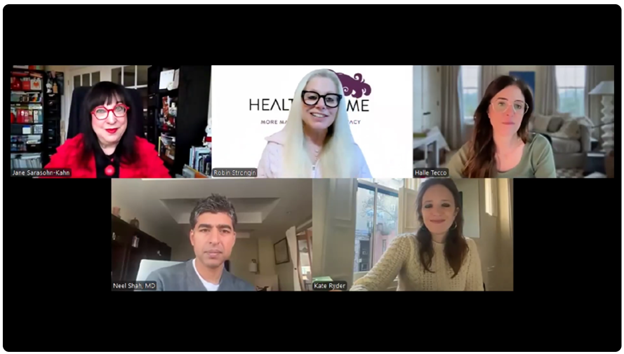 Jane collaborated on Robin Strongin's Health Dame webcast to discuss Halle Tecco's new book, Massively Better Healthcare, due out in early 2026. We brainstormed with Maven Founder Kate Ryder and the company's Chief Medical Officer Dr. Neel Shah about the state of U.S. healthcare and solutions not just to tweak at the margins but to "massively" improve health care delivery, financing, outcomes, and equity in America. It was a delightful, enlightening conversation -- I hope you'll check it out.