


Self-care – the role of OTCs for personal health financial management
Make-over your medicine cabinet. That’s a key headline for International Self-Care Day (ISD) on July 24, 2014, an initiative promoting the opportunity for people to take a greater role in their own health care and wellness. Sponsored by the Consumer Healthcare Products Association (CHPA), consumer products companies, health advocacy organizations, and legislators including John Barrow (D-GA), a co-sponsor of H.R. 2835 (aka the Restoring Access to Medications Act), the Day talked about the $102 billion savings opportunity generated through people in the U.S. taking on more self-care through using over-the-counter medicines. After the 2008 Recession hit the U.S. economy, industry analysts
Consumer healthcare spending is up, and “fun spending” is down
This is the summer of big spending leaps for groceries, gas and health care. Here’s hoping that food, energy and visits to doctors make us happy, because we won’t be getting much joy from travel, dining out, leisure activities, or consumer electronics purchases, all of which are declining in terms of consumer spending. The Gallup survey published July 12, 2014, finds that 59% of people are spending more on groceries, 58% on gas/fuel, and 42% on health care. Net spending on each of those spending categories increased 49%, 46%, and 34% respectively this week compared with one year ago. Personal
Big Data Come to Health Care…With Big Challenges – Health Affairs July 2014
“For Big Data, Big Questions Remain,” an article by Dawn Falk in the July 2014 issue of Health Affairs, captures the theme of the entire journal this month. That’s because, for every opportunity described in each expert’s view, there are also obstacles, challenges, and wild cards that impede the universal scaling of Big Data in the current U.S. healthcare and policy landscape. What is Big Data, anyway? It’s a moving target, Falk says: computing power is getting increasingly powerful (a la Moore’s Law), simpler and cheaper. At the same time, the amount of information applicable to health and health care
Stress Is US
“Reality is the leading cause of stress among those in touch with it,” Lily Tomlin once quipped. Perhaps in 2014, America is the land of stress because we’re all so in touch with reality. THINK: reality TV, social networks as the new confessional, news channeling 24×7, and a world of too much TMI. So no surprise, then, that one-half of the people in the U.S. have had a major stressful event or experience in the last year. And health tops the list of stressful events in This American Life in the forms of illness and disease (among 27% of people)
Health consumers – largely in charge, engaged and cost conscious
3 in 5 people in the U.S. would like to take the lead on making medical decisions for themselves, according to the Altarum Institute Survey of Consumer Health Care Opinions, Spring 2014 edition, published July 2014. Another 30% of people want to make a joint decision with equal input from their doctor. Together, the math calculates to 9 in 10 Americans seeking major roles in medical decisions. Altarum’s survey paints a picture of consumers looking to take charge in health care, seeking information about symptoms and clinical issues. 7 in 10 people look up health information before seeing their doctor,
In pursuit of healthiness – Lancet talks US public health
It’s Independence Day week in America, and our British friends at The Lancet, the UK’s grand peer reviewed medical journal, dedicate this week’s issue to the Health of Americans – exploring life, death (mortality), health costs, chronic disease, and the Pursuit of Healthiness. This project is a joint venture between The Lancet and the U.S. Centers for Disease Control (CDC) which took 18 months to foster, called The Health of Americans Series. Americans mostly die from chronic diseases, aka non-communicable diseases, which are largely amenable to lifestyle changes like eating right, quitting smoking, drinking alcohol in moderation, and moving around more. 1 in
World No Tobacco Day v2014 – let’s raise (more) taxes on tobacco
Tomorrow is World No Tobacco Day. The use of tobacco is one of the most preventable public health issues on the planet. And the global tobacco epidemic contributed to 100 million deaths around the world in the 20th century. 6 million people die every year due to tobacco use — including 600,000 deaths due to exposure to secondhand smoke. About 500 million people living today will be dead from the use of tobacco products if current smoking habits continue, the World Health Organization (WHO) expects. WHO sponsors the World No Tobacco Day every year on May 31. For this year’s
The Milliman Medical Index at $23,215: A Toyota Prius, a tonne of tin, or health insurance for a family?
It costs $23,215 to cover a family of four for health care, according to the 2014 Milliman Medical Index (MMI), the annual gauge of healthcare costs from the actuarial firm. The growth rate of 5.4% from 2013 is the lowest annual change since Milliman launched the Index in 2002. This is equivalent to a new Toyota Prius or a tonne of tin. While employers cover most of these costs, the portion employees bear continues to increase. This year, insured workers will take on 42% of the total, or on average, $9,695. This is up by $552 over 2013, or 6%
We are all self-insured until we get sick – especially if we are women
During my conversation with a prominent pharma industry analyst yesterday, he observed, “As a consumer, you are self-insured until you get sick.” My brain then flashed back to a graph from the 2013 Employer Health Benefits Survey conducted annually by the Kaiser Family Foundation (KFF). The chart is shown here. It illustrates the upward line indicating that in 2013, 4 in 5 workers were enrolled in a health plan that included an annual deductible. That’s the “self-insurance” part of the observation my astute conversationalist noted. Simply put, when you are enrolled in a high-deductible health plan, You, The Consumer, are responsible for
The Season of Healthcare Transparency – Chaos, then Creation, Part 5
The consumer demand side for healthcare transparency is hungry for the light to shine on health care costs, quality and information that’s relevant and meaningful to the individual. The supply side is fast-growing, with websites and portals, government-sponsored projects, commercial-driven start-ups, and numerous mobile apps. These tools endeavor to: Help people find and access services Schedule appointments Compare peer consumers’ reviews for those providers Calculate and prepare for out-of-pocket co-payments deriving from their health plan Negotiate prices with providers Pay for the services, and Reconcile the payment with a high-deductible health plan or health savings account. On the demand side, consumers
The Season of Healthcare Transparency – Consumer Payments and Tools, Part 4
“The surge in HDHP enrollment is causing patients to become consumers of healthcare,” begins a report documenting the rise of patients making more payments to health providers. Patients’ payments to providers have increased 72% since 2011. And, 78% of providers mail paper statements to patients to collect what they’re owed. “HDHPs” are high-deductible health plans, the growing thing in health insurance for consumers now faced with paying for health care first out-of-pocket before their health plan coverage kicks in. And those health consumers’ expectations for convenience in payment methods is causing dissatisfaction, negatively affecting these individuals and their health providers’
The Season of Healthcare Transparency – Will Your Health Plan Be Your Transparency Partner? – Part 3
Three U.S. health plans cover about 100 million people. Today, those three market-dominant health plans — Aetna, Humana and UnitedHealthcare — announced that they will post health care prices on a website in early 2015. Could this be the tipping point for health care transparency so long overdue? These 3 plans are ranked #1, #4 and #5 in terms of market shares in U.S. health insurance. Together, they will share price data with the Health Care Cost Institute (HCCI), a not-for-profit organization dedicated to research on U.S. health spending. An important part of the backstory is that the HCCI was
The Season of Healthcare Transparency – Shopping in a World of High Cost and High Variability – Part 2
Yesterday kicked off this week in Health Populi, focusing on the growing role of transparency in health care in America. Today’s post discusses the results from Change Healthcare’s latest Healthcare Transparency Index report, based on data from the fourth quarter of 2013, published in May 2014. Charges for health services — dental, medical and pharmacy – varied by more than 300% in Q42013 — even within a single health network. Change Healthcare found this, based on their national data on 7 million health-covered lives. The company analyzed over 180 million medical claims. The company built the Healthcare Transparency Index (HCTI)
The Season of Healthcare Transparency – HFMA’s Price Transparency Manifesto – Part 1
As Big Payors continue to shift more costs onto health consumers in the U.S., the importance of and need for transparency grows. 39% of large employers offered consumer-directed health plans (CDHPs) in 2013, and by 2016, 64% of large employers plan to offer CDHPs. These plans require members to pay first-dollar, out-of-pocket, to reach the agreed deductible, and at the same time manage a health savings account (HSA). In the past several weeks, many reports have published on the subject and several tools to promote consumer engagement in health finance have made announcements. This week of posts provides an update on
Human capital is health capital – RIP Gary Becker
“Economy is the art of making the most of life,” Gary Becker said. This Big Thinker in economics has died, and he helped shape how economists – and specifically health economists – view the world. Gary Becker was an economist who lived and thought about the real world: how we earn money, how we learn, how we live, and how our local environment impacts us. He taught at the University of Chicago, but lectured around the world. I was fortunate enough to meet him, twice, and attend his talks. While as an economist, he was masterful with numbers, he complemented
The retailization of digital health: Consumer Electronics Association mainstreams health
The Consumer Electronics Association (CEA) has formed a new Health and Fitness Technology Division, signalling the growing-up and mainstreaming of digital health in everyday life. The CEA represents companies that design, manufacture and market goods for people who pay for stuff that plugs into electric sockets and operate on batteries — like TVs, phones, music playing and listening, kitchen appliances, electronic games, and quite prominent at the 2014 Consumer Electronics Show, e-cigarettes (rebranding “safe smoking” as “vaping” technology). In its press release announcing this news, CEA President and CEO Gary Shapiro says, “Technology innovations now offer unprecedented opportunities for consumers to
The new health economy, starring the consumer
“In the New Health Economy, ‘patients’ will be ‘consumers’ first, with both the freedom and responsibility that come with making more decisions and spending their own money.” This vision of the near-future is brought to you by the New Health Economy, a report from PwC’s Health Research Institute (HRI). The chart attests the fact that U.S. “consumers” are already spending nearly $3 trillion (with a capital “T”) on products and services that bolster personal health. This spending includes $94 billion on nutrition, $62 billion on weight loss, $59 billion on sporting goods and apparel, $45 billion on (so-called) organic and
Health costs in retirement: the standard of living
On their list of top financial worries, 1 in 2 Americans is most concerned about not having enough money for retirement, not being able to pay medical costs if they get sick, and not being able to maintain a desired standard of living. Gallup’s annual Economy and Personal Finance poll, conducted in early April 2014, finds that even in the wake of a healthier economy, people feel health-finance insecure. While ability to pay medical bills ranked #2 on the list of 9 fiscal worries, the proportion of Americans with this concern fell from a high of 62% in 2012 to
The appification of health – a bullish outlook from Mobiquity
Over half of people using health and fitness apps began using them over six months ago, and one-half of these people who have downloaded health and fitness apps use them daily according to survey research summarized in the report, Get Mobile, Get Healthy: The Appification of Health and Fitness from Mobiquity. The company contracted a survey conducted among 1,000 U.S. adults in March 2014 who use or plan to use mobile apps to track health and fitness. Thus the “N” in this study was a group of people already interested in self-tracking health and not representative of the broader U.S. consumer
Consumers’ spending on medicine grows – the retailization of health care
People are spending more out of their own pockets on health care, and particularly for medications. There are two sides to the medicine-spending coin: there’s the low-end which are generic drugs, most of which carry a co-pay of $10 or less. Then there’s the high end of specialty pharmaceuticals, a fast-growing category of very expensive products for which many consumers dearly pay — if and when they choose to take their doctors’ recommendations. In Medicine use and shifting costs of healthcare, IMS Institute for Healthcare Informatics reports that while (inexpensive) generic drugs comprise 86% of prescriptions in the U.S., it’s high
Doctors become health economists
The rising costs of health care in America, and consumers’ growing cost burdens, has many impacts on the U.S. health ecosystem. In particular, patients have been self-rationing due to costs, without necessarily paying attention to quality or medical outcomes. Doctors have begun to pay more attention to costs and their impacts on patients in their practices, addressed in today’s New York Times article, Treatment costs could influence doctors’ advice to patients. Andrew Pollack writes in the Times about the morphing role of doctors, some of whom are taking on the mantle of being a “steward of society,” as characterized by
Affordable medicine: a preferred future
The price of medicines is a barrier for about one billion people on the planet, for citizens in developing countries as well as middle-class families in the richest country in the world, the United States. Today is World Health Day, when for 24 hours public health advocates (including me) are calling out key issues preventing people from fully living life. One obstacle for too many people is the cost of drugs and supplies that save lives and help people add life to years. For example, bug bites can be deadly if you’re talking about the 50% of the world’s population
The New Chief Patient Officer
There’s a new member in the C-suite in health care, and her name is the Chief Patient Officer (CPO). That new role in health-town is filled by Dr. Anne Beal, appointed by Sanofi, the global biopharma company, to fill this new job description. Here she is, shaking hands with Colin Powell in one of the many awards ceremonies where Dr. Beal’s work in public health has been lauded. But what is a CPO? Because it’s a new job, Dr. Beal can create the role, at least within the environment and mission of Sanofi and the larger life sciences world. Some
Health consumers building up the U.S. economy
U.S. consumer spending on health care is boosting the nation’s economy, based on some new data points. First, health care spending grew at an annual rate of 5.6% at the end of 2013, USA Today reported. This was the fastest-growth seen in ten years, reversing the fall of health spending experienced in the wake of America’s Great Recession of 2008. Furthermore the Centers for Medicare and Medicaid Services (CMS) anticipates health spending to grow by 6.1% in 2014 with the influx of newly-insured health plan members. Healthcare was responsible for one-fourth of America’s GDP growth rate of 2.6%, which is
The new math for Rx: HSAs up, adherence down
A consumer who is faced with greater financial skin-in-the-healthcare game, cost-sharing, is expected to become a smart shopper for lower-priced health products and services. When it comes to patients given prescriptions for medicines, the theory is that patients will choose less expensive generic drugs over brand names it people think the cheaper meds are good substitutes. This is referred to as the generic-drug dispensing rate (GDR). But the theory doesn’t consistently hold true in real life, a study from the Employee Benefit Research Institute (EBRI), Brand-Name and Generic Prescription Drug Use After Adoption of a Full-Replacement, Consumer-Directed Health Plan With a
FICO scores for health – chatting with a #BigData pioneer
I had the pleasure of spending quality time brainstorming with Mikki Nasch, co-founder of AchieveMint, yesterday. Mikki worked on the early days of building the FICO score with Fair Isaac, so has been involved in Big Data well before it became the well-#hashtagged buzzword it is today. In our conversation, we talked about the history of FICO and how it took about a decade for consumers to understand it, accept it, and use it as a tool for bettering their credit ratings. When a FICO score was below an acceptable threshold to a lender – say, for a new car
People want to DIY with pharma
In our increasingly-DIY society, most consumers expect high levels of access and customer service from the organizations with whom we engage. With more consumers reaching into their pockets to pay for health services and products, the health industry is increasingly a retail-facing environment. So expect quality service levels from their healthcare touch points. The pharmaceutical and prescription drug touch point is not exempt from this expectation, as learned by an Accenture survey analyzed in Great Expectations: Why Pharma Companies Can’t Ignore Patient Services. As the first picture shows, 70% of patients think pharma companies are responsible for bundling information and services
The four futures of health care: simple, guru, ecosystem, self-care
In the not-too-distant future, will our health care be universally available to all, standardized with limited choices? Or, will we be in self-care mode, able to “buy up” if we can afford it like luxury goods? Will health care delivery be totally tech- and information-driven? Or, will care be driven by insurers’ health plans with artful designs that (almost) predetermine our choices? Welcome to four futures of health care, brought to us by PA Consulting whose report, How Can We Stop Healthcare From Bankrupting Our Children? speaks to scenarios based on 2 uncertainties, whether: Health care will be a personal
Pharma warming up to the cloud to drive efficiencies and support analytics
Over the next few years, large global pharma companies will need to wring out an additional $35 billion worth of efficiencies in order to drive profitability. While the industry has most of the patent cliff challenge behind it, companies face price constraints with respect to health reform, static national economies, and access demands. As the pharmaceutical industry enters the value-based health care era, the industry must catch up with other vertical markets in adopting information technology. In particular, pharma has been slower to migrate to the cloud than other businesses, with concerns about security and health care particular needs. Today, the
The digital health bubble – is it about to burst? #SXSW
That’s a useful and timely question, given the news that Castlight Health will launch its IPO with valuations north of $1 billion. Yes, “billions,” and according to a MarketWatch analysis, “it’s a bargain at $1 billion.” So then – do we anticipate a bubble? asked Marc Monseau of the Mint Collective, the convener of our panel who brought together Robert Stern, a successful health-tech entrepreneur whose latest venture, @PointofCare, focuses on patient engagement; Marco Smit of Next Innovation Health Partners (parting from the Health 2.0 Conference family where he led Health 2.0 Advisors for several years); and me. Some key
Risk-shift: employers continue to push more risk to employees and families for health costs
With health costs increase increasing at 4.4% in 2014, a slightly higher rate of growth than the 4.1% seen in 2013. While this is lower than the double-digit increases U.S. employers faced in 2001-2004, it’s still twice the rate of general consumer price inflation. That’s what the first graph shows, based on the The 19th Annual Towers Watson/National Business Group on Health Employer Survey on Purchasing Value in Health Care. Employers generally want to continue to provide health insurance…for the time being. 92% of companies expect to make changes in health plan provisions in 2014, with 1 in 2 anticipating “significant
HIMSS14 Monday Morning Quarterback – The Key Takeaways
Returning to terra firma following last week’s convening of the 2014 annual HIMSS conference…taking some time off for family, a funeral, the Oscars, and dealing with yet another snowstorm…I now take a fresh look back at #HIMSS14 at key messages. In random order, the syntheses are: Healthcare in America has entered an era of doing more, with less...and health information technology is a strategic investment for doing so. The operational beacon going forward is moving toward The Triple Aim: building population health, enhancing the patient’s experience, and lowering costs per patient. The CEO of Aetna, Mark Bertolini, spoke of the
Hillary Clinton wows the HIMSS14 crowd
At last year’s annual HIMSS conference, I had the pleasure of experiencing Bill Clinton’s keynote speech in New Orleans, which I wrote about here. As a long-time member of HIMSS, this was a great moment in my many years attending HIMSS conferences. Another special moment in HIMSS conference history happened today, as, I had the honor of attending Hillary Clinton’s keynote speech at HIMSS 2014 in Orlando today. I am blessed with fast-typing fingers thanks to my mother’s genes, and took constant notes during Hillary’s talk. My favorite paragraphs are quoted below, indicating “Applause” pauses where Hillary was lauded.
Patient engagement and mobile health – design and timing matter
Thinking about personal health information technology – the wearable devices, remote health monitors, digital weight scales, and Bluetooth-enabled medical equipment scaled for the home – there are two glasses. One is half-full and the other, half-empty. The half-full glass is the proliferation of consumer-facing devices like Fitbit, Jawbone and Nike, which comprise the lion’s market share in the health wearables segment; the mass adoption of mobile phones and tablets; consumers’ multi-screen media behavior (as tracked by Nielsen); and consumers’ growing share of medical spending, now about 40% of annual spending (or something north of $8,000 for a family of four
The new retail health: Bertolini of Aetna connects dots between the economy and health consumers
3 in 4 people in America will buy health care at retail with a subsidy within just a few years, according to Mark Bertolini, CEO of Aetna. Bertolini was the first keynote speaker this week at the 2014 HIMSS conference convened in Orlando. Bertolini’s message was grounded in health economics 101 (about which frequent readers of Health Populi are accustomed to hearing). A healthy community drives a healthy local economy, and healthier people are more economically satisfied, Bertolini explained. The message: health care can move from being a cost driver to being an economic engine. But getting to a healthy
Patients play a starring role at #HIMSS14 – Best In Show
Even before stepping into the Orlando Convention Center on Sunday 23 February 2014, my clairvoyant powers know the forecast of the Best in Show: the growing role of patients in health care, reflected in both the education session at the annual 2014 meeting of HIMSS as well as the product/service mix being proffered on the convention show floor. As a member of HIMSS Connected Patient Committee, I know first-hand the conscious effort and energy that the organization has committed to getting real about patients’-peoples’-caregivers’ central role in health care. The organization was built on providers and technology. When I first
Where’s TripAdvisor for health care? JAMA on physician ratings sites
As more U.S. health citizens enroll in high-deductible health plans – now representing about 30% of health-insured people in America – health plan members are being called on to play the role of consumer. Among the most important choices the health consumer makes is for a physician. Ratings sites and health care report cards ranking doctors by various characteristics have been in the market for over a decade. However, little has been known on the public’s knowledge about the availability of these information sources, nor of peoples’ use of physician rating sites. This question is addressed in Public Awareness, Perception, and
Why Health IT (Should) Matter to Consumers
This is the first of four posts that are written for the HIMSS 2014 Blog Carnival. The theme, provided by HIMSS (the Healthcare Information and Management Systems Society): “Why Health IT Matters to Consumers.” You’ll note the title here has been purposefully changed. Health IT “should” matter to consumers. Since George Bush declared in 2004 that within 10 years’ time, U.S. health citizens would each have an electronic medical record, there’s been as more bipartisan support inside the Beltway for EHRs than possibly for any other issue in Congress. The American Recovery & Reinvestment Act of 2009 (ARRA), aka the
Managing cost and utilization are top goals for specialty pharmacy buyers
While the prescription drug bill makes up about 10% of U.S. national health spending, the fastest-growing component of pharmacy spending is specialty medications. These are categorized as “specialty” drugs because they rarely have generic equivalents, and treat serious or life-threatening diseases (such as cancer, MS, and rheumatoid arthritis). They are also “special” because specialty pharmaceuticals average $3,000 per patient per month and can surpass $100,000 a year for certain products. As a result, the top two goals for managing specialty medications among employers are #1, to reduce inappropriate utilization, and #2, to reduce drug acquisition costs, based on a survey
A CT for $300 or $2,781 – why health price transparency matters
Charges for medical, pharmacy and dental services can vary by more than 300%. This means that in one place, a procedure that costs $100 can cost $300 for the same treatment in another location or practice, discovered by Change Healthcare in their latest Healthcare Transparency Index 2013 Q3 Report, published in January 2014. The 300% is the average overall across dozens of health services used by the 67,000 plan members Change Healthcare analyzed based on health plan enrollees’ health care utilization in the third quarter of 2013. These health care services include office visits (behavioral health, physical therapy and
What CVS going tobacco-free means for health and business

Bravo! to CVS/pharmacy who today announced it would pull tobacco products from store shelves by October 2014. “The sale of tobacco products is inconsistent with our purpose,” the company’s press release asserts. The move will cost CVS $1.5 billion in revenue annually, as the company seeks to consolidate its position as a health company. CVS/pharmacy is part of CVS Caremark, which includes the retail pharmacy chain (the second-largest in the U.S.), a pharmacy benefit management company (Caremark), and retail health clinics (Minute Clinics). CVS Caremark also participates in a healthy communities program issuing grants for projects that focus on health
Connected Health – the technology is ready, providers on the cusp
The convergence of technology developments – such as the internet, mobile phone adoption, cloud computing, sensors, electronic health records – with societal evolution including consumerism, demand for transparency, and “flatter” organizations – enable the phenomenon of Connected Health. Connected Health by definition includes mobile health (mHealth), telehealth and telemedicine, as presented in the February 2014 issue of Health Affairs which is dedicated to this theme. Why Connected Health’s time is Now relates to those factors cited above, and the underlying challenge of managing health care costs. While all nations in the developed world are facing difficult health economies, the U.S. spends so
U.S. families face medical financial burdens; health care in the SOTU
A growing proportion of American families are facing money problems related to health care, according to the report, Financial Burden of Medical Care: A Family Perspective, No. 142 in the NCHS Data Brief series from the CDC, published January 2014 and based on 2012 data. 1 in 4 families are dealing with some financial burden due to medical care. “Financial burdens” in health include problems paying medical bills in the past 12 months, shared by 16.5% of families; and medical bills being paid over time, faced by 21.4% of families. 1 in 10 families (9%) have medical bills they are
Pharma and the health industry: when will they finally meet us Where We Live?
Millions of health citizens, consumers, patients and caregivers flock to Facebook, Twitter and Wikipedia every day the world over to seek health information, advocate for patients’ access to a cancer therapy on a health blog, engage in peer-to-peer health care in a social network, and bolster each others’ management of chronic medical conditions in a chat community. Yet the pharmaceutical and medical device industries rank well behind other industries vis-à-vis the use of social media, asserts Engaging patients through social media, with the punchline question: is healthcare ready for empowered and digitally demanding patients? from the IMS Institute for Healthcare Informatics, published on
What, We Worry? Thinking About Healthcare (Costs) Is Stressing Us Out
Three-quarters of us are concerned about health care, a fraction fewer than those of us worried about the economy. Underneath stress about healthcare, people are worried about costs and the impact of the Affordable Care Act (ACA). Say hello to the Healthcare Worry Scale, developed by Chase Communications, a firm focused on marketing and media, largely in the health industry. Chase found that: – 93% believe that their health care costs will continue to increase – 49% say the ACA’s impact is a “major” worry – 43% say getting a disease, medical condition, or injury that health insurance doesn’t fully
Do People Really Want To Tech Their Health? in Huffington Post
This post appeared in my Huffington Post column on January 16, 2013. In the afterglow of the 2014 Consumer Electronics Show (CES), away from the neon lights of Las Vegas, 4D curved TV screens, and uber-hip Google Glass wearers, a big question remains: Do we, the people, really want to tech our way to self-health? The number of digital health companies exhibiting at CES grew by 40 percent, exceeding 300 based on the count of the International Consumer Electronics Association, sponsor of the event. The hockey-stick growth of “wearable technology” seen at the 2014 Consumer Electronics Show begs the question: Are there
Schizo about smoking
There’s truly good news for public health about smoking: January 11th marked the 50th anniversary of the U.S. Surgeon General’s Report on Smoking and Health. That’s five decades’ worth of progress raising peoples’ awareness about the toxic impact of nicotine and chemicals embodied in cigarettes, and deleterious impacts on health and the economy. As a result, smoking rates have been cut in half since 1964, as the downward-sloping graph illustrates. With that happy news in my subconscious, I took a long walk, tracked by my digital device, through the Venetian Hotel in Las Vegas last week, bound for the 2014 Consumer Electronics
Health costs and wellness: can digital tools bridge the gap? Altarum’s Fall 2013 consumer survey
More than twice as many people value the opinions of friends and family for health care provider choices than turn to online ratings for doctors’ bedside manner, waiting times, or clinical quality, according to the Altarum Institute Survey of Consumer Health Care Opinions, Fall 2013, released on January 8, 2014. 1 in 3 consumers also looks into the cost and quality of services recommended by nurses, doctors, labs and hospitals before choosing a provider. However, most people (4 in 5) say they are comfortable asking their doctor about how much treatment will cost: 43% are “very comfortable,” and 38% somewhat comfortable,
4 in 10 Americans keen to buy an app or device for health/fitness: Accenture’s 2014 digital lifestyle survey
Wearable technology is the new fashion accessory, Accenture observes in its 2014 survey report, Racing Toward a Complete Digital Lifestyle: Digital Consumers Crave More. In parallel with the supply-side growth of wearable technology that is seen this week at the 2014 Consumer Electronics Show, Accenture brings a sanguine story to the supply side of the equation, finding consumers “craving more” than one function from a digital device. Over one-half of consumers surveyed in six countries favored vehicle navigation, home safety/security monitors, health monitor, home comfort and control, fitness monitors, and personal safety monitors. Nearly one half (46%) liked smartwatches, and
mHealth will join the health ecosystem – prelude to the 2014 Consumer Electronics Show
The rise of digital health at the 2014 Consumer Electronics Show signals the hockey-stick growth of consumer-facing health devices for fitness and, increasingly, more medical applications in the hands of people, patients, and caregivers. This year at #CES2014, while the 40% growth of the CES digital health footprint will get the headlines, the underlying story will go beyond wristbands and step-tracking generating data from an N of 1 to tools that generate data to bolster shared-decision making between people and the health system, and eventually support population health. For example: – Aetna is partnering with J&J to deploy their Care4Today
3 Things I Know About Health Care in 2014
We who are charged with forecasting the future of health and health care live in a world of scenario planning, placing bets on certainties (what we know we know), uncertainties (what we know we don’t know), and wild cards — those phenomena that, if they happen in the real world, blow our forecasts to smithereens, forcing a tabula rasa for a new-and-improved forecast. There are many more uncertainties than certainties challenging the tea leaves for the new year, including the changing role of health insurance companies and how they will respond to the Affordable Care Act implementation and changing mandates
Supermarkets and hospitals most-trusted industries in the U.S.
See the yellow highlighted rows? That single yellow bar at the top, that’s hospitals; at the bottom, you’ll see pharma, health insurance, and managed care. Hospitals, trusted; pharma, insurance, managed care? Down south on the trust barometer with oil, tobacco, phone companies and social media. The Harris Poll has gauged U.S. consumers’ views on honesty and trustworthiness across industries for the past ten years. Over those ten years, trust in these industries has eroded, from huge falls-from-grace for banks (a 17 point fall), packaged food (falling 12 points), and computer hardware and software substantially falling, as well. Hospitals are
A certain forecast: health consumers will be more cost-squeezed in 2014 for Rx and insurance
Gird your wallets, U.S. consumers: watch the dollars flow out-of-pocket for prescription drugs in 2014, as predicted by the 2013-2014 Prescription Drug Benefit Cost and Plan Design Report published by the Pharmacy Benefit Management Institute (PBMI) this week. Constraints covering most plan members are: Step therapy Prior authorization (to get approvals to fill high-cost drugs, notably growth hormones, injectables, controlled substances, Retin-A, and medications for sleep disorders, and Compulsory 90 day refills at retail (90-day dispensing for chronic meds). This Report, sponsored by Takeda, is the gold standard of drug benefit trends, having been published since 1995. Average 30-day copayments
Investing in technology that lowers health costs – the growing role of mobile
At the Venture+ Forum at the 2013 Mobile Health Summit yesterday, Lisa Suennen, Managing Director of Psilos Ventures was asked what she and her venture capital fund look for in choosing new investments for their health care portfolio. She succinctly said, “technologies that lower costs.” With nearly $1 in $5 of the U.S. economy attributable to health spending, Lisa’s got a point. Technology in U.S. health care has been mostly additive and expense-inducing, not reducing: fax machines and printers, for example, continue to proliferate in health care settings as part of “networking,” and once you add a new clinical technology
Employers will strongly focus on costs in health benefit plans for 2014; so must consumers
Employers who sponsor health insurance in America are at a fork on a cloudy road: they know that they’re in the midst of changes happening in the U.S. health system. Except for one certainty: that health care costs too much. So employers’ plans for health benefits in 2014 strongly focus on getting a return-on-investment from health spending in an uncertain climate, according to Deloitte’s 2013 Survey of U.S. Employers. Key findings are that: Employers will grow their use of workers’ cost-sharing, continuing to shift more financial responsibility onto employees They will expand other tactics they believe will help address cost
There’s fear of health care costs in peoples’ retirement visions
While working people in the U.S. are feeling better about the nation’s economy, Americans aren’t putting much money into savings for retirement. The reasons for this are many, but above all is what Mercer calls “the specter of health care costs in retirement” in the Mercer Workplace Survey for 2013. In addition to peoples’ concerns about future health care costs, reasons for not putting money away for the future include flat personal income, slow economic growth and financial literacy challenges around how much 401(k) savings can be tax-deferred. On the slow economic growth perception, Mercer found that, on the upside, people
Bundles in health care are the prix fixe menu
Ordering up and financing health care in the U.S. looks like the proverbial Chinese food menu, picking and paying for “one from column A, and one from column C.” But that’s no way to operate a well-oiled machine for delivering quality health care, according to Healthcare Shifts from á la Carte to Prix Fixe from Strategy&, an analysis of the fragmented, high-cost and only fair quality American health system. One solution to this challenge is bundled payment. “No one has an overarching view of the entire process,” the report opines, “with an eye toward improving customer service, quality, or costs.” Further exacerbating the sub-optimal
Make health care “feel” more like retail via transparency
Consumers who are well-covered by health insurance are in favor of talking about costs with their doctors. This research finding illustrates the fact that price transparency in health care isn’t just the concern of un- and under-insured people, but that shining the light on the price of health care is everybody’s business. But it’s also the case that most physicians aren’t yet involved in these health-financial conversations with their patients. Two studies presented at the recent 2013 annual meeting of the American Society of Clinical Oncology (ASCO) learned that patients are keen to know more about health care costs from
Health care and costs on front-burner for people in America (again)
This week in America, the concept of “health care consumer” is in a tug-of-war, and those of us trying to behave as such feel bloodied in the skirmish. One side of the tug-of-war is the obvious, post October 1st reality of the sad state of the Health Insurance Exchanges. This has been well covered in mass media, right, left and center. And Americans polled by Gallup last week express their knowledge of that fact — even if they didn’t know what Healthcare.gov was on the 1st of October. The first chart shows that health care is now a front-burner issue
When health care costs are a side effect
4 in 5 U.S. patients – 81% of them – want an equal say in health care decisions with their care provider, according to a 2013 Institute of Medicine study. At the same time, patients choose to take “drug holidays,” opting out of taking three or more doses of medicines in a row, or adopt “trail mix” approaches to taking prescriptions, casually and inappropriately mixing Rx drugs. Welcome to your world, pharma industry: where people say they want control, but somehow don’t exercise it in the way you — drug companies — define as “compliance” or “adherence.” Customer experience in
Health costs up, credit down: health consumers face tightening credit markets in the face of rising medical costs
People who received health care in the U.S. between the second quarters of 2012 and 2013 faced 38% higher out-of-pocket costs, growing from $1,862 to $2,568 in just one year. These were payments for common procedures like joint replacements, Caesarean sections, and normal births. At the same time, consumers’ access to revolving credit lines fell by $1,000 over the twelve months. (Credit lines here include bank-issued credit cards, store credit cards, and home equity loans). The TransUnion Healthcare Report from TransUnion, the credit information company, paints a picture of tightening money for all consumers in the face of rising household
Moneytalk: why doctors and patients should talk about health finances
Money and health are two things most people don’t like to talk about. But if people and their doctors spoke more about health and finance, outcomes (both fiscal and physical) could improve. In late October 2013, Best Practices for Communicating with Patients on Financial Matters were published by the Healthcare Financial Management Association (HFMA). Michael Leavitt, former head of the Department of Health and Human Services, led the year-long development effort on behalf of HFMA, with input from patient advocates, the American Hospital Association, America’s Health Insurance Plans, the American Academy of Family Physicians and the National Patient Advocate Foundation, along
Mobile health apps – opportunity for patients and doctors to co-create the evidence
There are thousands of downloadable apps that people can use that touch on health. But among the 40,000+ mobile health apps available in iTunes, which most effectively drive health and efficient care? To answer that question, the IMS Institute for Healthcare Informatics analyzed 43,689 health, fitness and medical apps in the Apple iTunes store as of June 2013. These split into what IMS categorized as 23,682 “genuine” health care apps, and 20,007 falling into miscellaneous categories such as product-specific apps, fashion and beauty, fertility, veterinary, and apps with “gimmicks” (IMS’s word) with no obvious health benefit. Among the 23,682 so-called
Getting to health engagement will require more than a patient portal
Patient and health engagement is the flavor du jour in health circles these days, from the corridors of hospitals to the caffeinated marketing meetings in Big Pharma’s east coast meet-ups. But there’s no standard agreement on what we mean by peoples’ health engagement, whether by patient or well consumer. In Market Insights: The Evolution of Consumer Engagement in Health Care, Porter Research endeavors to deepen our understanding of this important concept. In the introductory section of the paper, “Understanding Engagement,” Porter proffers that industry – providers, payers and employers – consider engagement as “changing consumer behavior through increased participation in consumers’ own health
Innovating and thriving in value-based health – collaboration required
In health care, when money is tight, labor inputs like nurses and doctors stretched, and patients wanting to be treated like beloved Amazon consumers, what do you do? Why, innovate and thrive. This audacious Holy Grail was the topic for a panel II moderated today at the Connected Health Symposium, sponsored by Partners Heathcare, the Boston health system that includes Harvard’s hospitals and other blue chip health providers around the region. My panelists were 3 health ecosystem players who were not your typical discussants at this sort of meeting: none wore bow ties, and all were very entrepreneurial: Jeremy Delinsky
Consumers trust and welcome health and insurance providers to go DTC with communications
Consumers embrace ongoing dialog with the companies they do business with, Varolii Corporation toplines in a survey report, What Do Customers Want? A Growing Appetite for Customer Communications. Across all vertical industries consumers trust for this dialogue, health care organizations – specifically doctors, pharmacists, and insurance companies – are the most trusted. Examples of “welcome-comms” would be reminders about upcoming appointments or vaccinations (among 69% of people), notices to reorder or pick up a prescription (57%), and messages encouraging scheduling an appointment (39%). In banking, notices about fraudulent activity on one’s account is the most welcomed message beating out appointment
The new era of consumer health risk management: employers “migrate” risk
The current role of health insurance at work is that it’s the “benefits” part of “compensation and benefits.” Soon, benefits will simply be integrated into “compensation and compensation.” That is, employers will be transferring risk to employees for health care. This will translate into growing defined contribution and cost-shifting to employees. Health care sponsorship by employers is changing quite quickly, according to the 2013 Aon Hewitt Health Care Survey published in October 2013. Aon found that companies are shifting to individualized consumer-focused approaches that emphasize wellness and “health ownership” by workers to bolster behavior change and, ultimately, outcomes. The most
A new medical side-effect: out-of-pocket health care costs
When we say the phrase “side effects,” what do we think of? The FDA says that “all medicines have benefits and risks. The risks of medicines are the chances that something unwanted or unexpected could happen to you when you use them. Risks could be less serious things, such as an upset stomach, or more serious things, such as liver damage.” There’s a new risk in town in health care, and it’s the equivalent of an upset stomach when it comes to a co-pay for a branded on-formulary drug, or liver damage if it involves a coinsurance percent of “retail”
Shopping, everywhere, for health
When it comes to retail shopping, most people spend most of their time shopping in brick-and-mortar stores – not online. 92% of spending happens in stores. 3 in 10 people spend most their shopping time online. Brick-and-mortar is far from dead, concludes the report Recasting the Retail Store in Today’s Omnichannel World from AT Kearney. This study looked into the shopping behaviors for consumers in the US and the UK in February 2013. What is true is that the growth of online retail has taught consumers how to shop on the basis of more transparent pricing and supply. This then drives
Whither price transparency in health care? The supply side may be growing faster than consumer demand
Online shopping for health care can drive costs down, according to research conducted by HealthSparq, a company that works with health insurance companies to channel health cost information to plan members (that is, consumers). Healthsparq partnered with one of the company’s health insurance company clients to conduct this study, which demonstrated that, over two years, consumers who used an online treatment cost estimator saved money on care for hernia conditions, digestive conditions, and women’s health issues. It’s early days for health care price transparency in health care, but HealthSparq’s findings demonstrate positive evidence that when consumers are offered a tool
Economics of obesity and heart disease: We, the People, can bend the curves
The “O” word drives health costs in America ever-upward. Without bending the obesity curve downward toward healthy BMIs, America won’t be able to bend that stubborn cost curve, either. The Economic Impacts of Obesity report from Alere Wellbeing accounts for the costs of chronic diseases and how high obesity rates play out in the forms of absenteeism, presenteeism, and direct health care costs to employers, workers and society-at-large. Among the 10 costliest physical health conditions, the top 3 are angina, hypertension and diabetes — all related to obesity and amenable to lifestyle behavior change. The top-line numbers set the context:
U.S. Health Citizens Needed a Dummies Guide to the ACA
The Affordable Care Act (ACA) was signed in March 2010; that month, 57% of U.S. adults did something to self-ration health care, such as splitting prescription pills, postponing necessary health care, and putting off recommended medical tests, according to the Kaiser Family Foundation (KFF) Health Tracking Poll of March 2010. 57% of U.S. adults are still self-rationing health care in September 2013, according to KFF’s latest Health Tracking Poll, completed among 1,503 U.S. adults just two weeks before the launch of the Health Insurance Marketplaces on October 1, 2013. As of September 2013, only 19% of U.S. adults said they had heard
7 Women and 1 Man Talking About Life, Health and Sex – Health 2.0 keeping it real
Women and binge drinking…job and financial stress…sleeplessness…caregiving challenges…sex…these were the topics covered in Health 2.0 Conference’s session aptly called “The Unmentionables.” The panel on October 1, 2013, was a rich, sobering and authentic conversation among 7 women and 1 man who kept it very real on the main stage of this mega-meeting that convenes health technology developers, marketers, health providers, insurers, investors, patient advocates, and public sector representatives (who, sadly, had to depart for Washington, DC, much earlier than intended due to the government shutdown). The Unmentionables is the brainchild of Alexandra Drane and her brilliant team at the Eliza
Taking vitamins can save money and impact the U.S. economy – and personal health
When certain people use certain dietary supplements, they can save money, according to a report from the Council for Responsible Nutrition and Frost and Sullivan, the analysts. The report is aptly titled, Smart Prevention – Health Care Cost Savings Resulting from the Targeted Use of Dietary Supplements. Its subtitle emphasizes the role of dietary supplements as a way to “combat unsustainable health care cost growth in the United States.” Specifically, the use of eight supplements in targeted individuals who can most benefit from them can save individuals and health systems billions of dollars. The eight money-saving supplements are: > Omega-3 > B
Consumers’ out-of-pocket health costs rising faster than wages – and a surprising hit from generic drug prices
U.S. health consumers faced greater out-of-pocket health care costs in 2012, especially for outpatient services (think: doctors’ visits) and generic drugs, as presented in The 2012 Health Care Cost and Utilization Report from the Health Care Cost Institute (HCCI) published in September 2013. At the same time between 2011 and 2012, wages grew about 3%, remaining fairly flat over the past decade as health care costs continued to grow much faster. HCCI found that per capita (per person) out-of-pocket growth for outpatient visits amounted to an average of $118 between 2011 and 2012. But the biggest share of out-of-pocket costs for
The slow economy is driving slower health spending; but what will employers do?
By 2022, $1 in every $5 worth of spending in the U.S. will go to health care in some way, amounting to nearly $15,000 for each and every person in America. From biggest line item on down, health spending will go to payments to: Hospitals, representing about 32% of all spending Physicians and clinical costs, 20% of spending Prescription drugs, 9% of spending Nursing, continuing care, and home health care, together accounting for over 8% of health spending (added together for purposes of this analysis) Among other categories like personal care, durable medical equipment, and the cost of health insurance.
Healing the Patient-Doctor Relationship with Health IT
A cadre of pioneering Americans has been meaningfully using personal health information technology (PHIT), largely outside of the U.S. health care system. These applications include self-tracking and wearable health technologies, mobile health apps, and digital medical tracking devices like glucometers that streamline tracking and recording blood glucose levels. In the meantime, only 21% of doctors surveyed by Accenture currently allow patients to have online access to their medical summary or patient chart – very basic components of the electronic health record. We know what’s primarily driving health providers’ adoption of health IT: namely, the HITECH Act’s provisions for incentives. But
Defining Mobile Health – the blur between health and health care
Mobilising Healthcare, a new report from Juniper Research, segments the mobile health sector into “healthcare” and “health & fitness” segments. The research summary notes that fitness is a relatively new market compared with health “care,” which has been around for eons. Fitness, the analysts say, “is exempt from government intervention.” Mobile healthcare (“mHealth”) applications explored include SMS health messaging, remote health provision such as cardiac monitoring, electronic health records and personal health records. In mFitness, Juniper looks into mobile tech for athletes and fitness conscious people, and activity tracking including heart function, distance, respiration, and perspiration, among other parameters. mHealth
Food and the household health budget: one pocket, shrinking access
Over 1 in 5 people in the U.S. have not had enough money to buy food for themselves or their families in the past year, according to the August 2013 Gallup Healthways Index. This is as many consumers as those who couldn’t afford food during the deepest months of the last recession. Lack of access to food is a challenge for a cadre of Americans who lack access to other basic needs such as shelter and health care. Gallup’s Basic Access Index looks at this market basket, and has found that Americans’ access to basic needs at 81.4 in August
Consumers don’t get as much satisfaction with high-deductible health plans
Since the advent of the so-called consumer-directed health care era in the mid-2000s, there’s been a love-gap between health plan members of traditional plans, living in Health Plan World 1.0, and people enrolled in newer consumer-driven plans – high-deductible health plans (HDHPs) and consumer-directed health plans (CDHPs). That gap in plan satisfaction continues, according to the Employee Benefits Research Institute (EBRI)’s poll of Americans’ consumer engagement in health care. The survey was conducted with the Commonwealth Fund. As the bar chart illustrates, some 62% of members in traditional plans were satisfied (very or extremely) with their health insurance in 2012.
Criticizing health reform has jumped the shark for mainstream Americans
You might see potato and I might see po-tah-to when looking at the Affordable Care Act – health reform — but it’s clear we don’t want to call the whole thing off. (Go to 1:44 seconds in this video to get my drift, thanks to the Gershwin’s). I’m talking about the latest August 2013 Kaiser Health Tracking Poll from Kaiser Family Foundation finds a health citizenry suffering ennui or a form of split personality about health reform: while many Americans don’t believe the Affordable Care Act (ACA) will help them, most don’t want Congress to de-fund it, either. Several graphs from
People not up-close-and-personal about personalized medicine…yet
Only 1 in 4 U.S. adults over 30 know what “personalized medicine” (PM) really is, and only 8% of people feel very knowledgeable about the concept based on Consumer Perspectives on Personalized Medicine from GfK, published online in August 2013. GfK surveyed 602 online adults 30 years and over between February and March 2013 drawn from the company’s KnowledgePanel sample of U.S. adults. Only 4% of people who have heard of personalized medicine describe it accurately as “medicine based on genome/genetic make up.” About one-half of people (52%) defined PM as medical care, treatment, or medicine geared toward individual needs. The poll
HSAs for Dummies: improving health insurance literacy
Most Americans don’t understand what a health savings account (HSA) is – including people who are enrolled in the plans. While health literacy is generally acknowledged to be a public health challenge in America, health insurance literacy is not well recognized. Yet in the emerging consumer-directed health plan era of U.S. health care, peoples’ lack of understanding of health financial accounts will get in the way of people who really need care seeking care at the right time. This leads to greater health spending later when the consumer-patient can develop a health condition that could have been prevented (say, pre-diabetes
Chief Health Officers, Women, Are In Pain
Women are the Chief Health Officers of their families and in their communities. But stress is on the rise for women. Taking an inventory on several health risks for American women in 2013 paints a picture of pain: of overdosing, caregiver burnout, health disparities, financial stress, and over-drinking. Overdosing on opioids. Opioids are strong drugs prescribed for pain management such as hydrocodone, morphine, and oxycodone. The number of opioid prescriptions grew in the U.S. by over 300% between 1999 and 2010. Deaths from prescription painkiller overdoses among women have increased more than 400% since 1999, compared to 265% among men.
Working for health care in 2013: workers’ health insurance cost burden still grows faster than wages
Insurance premium costs grew 4% for families between 2012 and 2013, with workers now bearing 39% of health premiums in 2013 compared with only 26% ten years ago, in 2003. That’s a 50% increase in health plan premium “burden” for working families, by my calculation. This snapshot of health insurance in 2013 comes to us from the 2013 Employer Health Benefits Survey, provided by the Kaiser Family Foundation (KFF) and the Health Research & Educational Trust (HRET). This research is one of the most important annual reports to hit the health care industry every year, and this year’s analysis provides strategic context
Eat fruits and vegetables: it’s worth $11 trillion to you and the U.S. economy
More than 127,000 people die every year in America from cardiovascular disease, accruing $17 billion in medical spending. Heart disease is a “costly killer,” according to the Union of Concerned Scientists, who has calculated The $11 trillion reward: how simple dietary changes can save lives and money, and how we get there, published in August 2013. That $11 trillion opportunity is equal to the present value of lives saved. The solution to bolstering heart (and overall health) and saving money (medical spending and personal productivity) is in food. We’re not talking about genetically engineering anything special or out-of-the-ordinary. We are talking
The health care automat – Help Yourself to healthcare via online marketplaces
Imagine walking into a storefront where you can shop for an arthroscopy procedure, mammogram, or appointment with a primary care doctor based on price, availability, quality, and other consumers’ opinions? Welcome to the “health care automat,” the online healthcare marketplace. This is a separate concept from the new Health Insurance Marketplace, or Exchange. This emerging way to shop for and access health care services is explored in my latest paper for the California HealthCare Foundation (CHCF), Help Yourself: The Rise of Online Healthcare Marketplaces. What’s driving this new wrinkle in retail health care are: U.S. health citizens morphing into consumers,
Happy today, nervous about health and money tomorrow: an Aging in America update
Most older Americans 60 years of age and up (57%) say the last year of their lives has been “normal” – a large increase from the 42% who said life was normal in 2012. And nearly 9 in 10 older Americans are confident in their ability to maintain a high quality of life in their senior years. The good news is that seniors are maintaining a positive outlook on aging and their future. The downside: older people aren’t doing much to invest in their future health for the long run. They’re also worried about the financial impact of living longer.
People are growing their health-consumer muscles in 2013
Most Americans are concerned about their ability to for medical bills, even when they have health insurance. As a result, most are comfortable asking their doctor about how much their medical treatment will cost. People are becoming savvier health care shoppers largely because they have to: 37% of people in the U.S. have an annual health insurance deductible over $2,000, according to the Spring/Summer 2013 Altarum Institute Survey of Consumer Health Care Opinion, published on 11th July 2013. Many of the media stories coming out of the Altarum survey since its publication have been about people and their trust in
10 Reasons Why ObamaCare is Good for US
When Secretary Sebelius calls, I listen. It’s a sort of “Help Wanted” ad from the Secretary of Health and Human Services Kathleen Sebelius that prompted me to write this post. The Secretary called for female bloggers to talk about the benefits of The Affordable Care Act last week when she spoke in Chicago at the BlogHer conference. Secretary Sebelius’s request was discussed in this story from the Associated Press published July 25, 2013. “I bet you more people could tell you the name of the new prince of England than could tell you that the health market opens October 1st,” the
In the US health care cost game, doctors have seen the enemy – and it’s not them
When it comes to who’s most responsible for reducing the cost of health care in America, most doctors put the onus on trial lawyers, health insurance companies, pharma and medical device manufacturers, hospitals, and even patients. But physicians themselves ? Not so much responsibility – only 36% of doctors polled said doctors should assume major responsibility in reducing health care costs. And, in particular, most U.S. physicians have no enthusiasm for reducing health care costs by changing payment models, like penalizing providers for hospital re-admissions or paying a group of doctors a fixed, bundled price for managing population health. Limiting
Health and wellness, the economy and the grocery store
Consumers in America are spending more, and especially at the grocery store. Most people say they want to eat healthy — but, although they’re spending more at the food store, one-half of supermarket shoppers say cost is the main obstacle for healthy eating. 2 in 3 U.S. grocery shoppers define health and wellness as being physically fit and active, and over half believe that feeling good about yourself is another facet of health. Not being overweight equals health for about one-half of U.S. shoppers. The Why? Behind the Buy, from Acosta Sales & Marketing, explores buying patterns among U.S. consumers
Cost prevents people from seeking preventive health care
3 in 4 Americans say that out-of-pocket costs are the main reason they decide whether or not to seek preventive care, in A Call for Change: How Adopting a Preventive Lifestyle Can Ensure a Healthy Future for More Americans from TeleVox, the communications company, published in June 2013. TeleVox surveyed over 1,015 U.S. adults 18 and over. That’s the snapshot on seeking care externally: but U.S. health consumers aren’t that self-motivated to undertake preventive self-care separate from the health system, either, based on TeleVox’s finding that 49% of people say they routinely exercise, and 52% say they’ve attempted to improve eating habits.
Urgent care centers: if we build them, will all patients come?
Urgent care centers are growing across the United States in response to emergency rooms that are standing-room-only for many patients trying to access them. But can urgent care centers play a cost-effective, high quality part in stemming health care costs and inappropriate use of ERs for primary care. That’s a question asked and answered by The Surge in Urgent Care Centers: Emergency Department Alternative or Costly Convenience? from the Center for Studying Health System Change by Tracy Yee et. al. The Research Brief defines urgent care centers (UCCs) as sites that provide care on a walk-in basis, typically during regular
Americans’ health not keeping up with the world: why to spend more on social determinants of health
The American health infrastructure is not First World or First Rate, based on the outcomes. This, despite spending more on health care per-person than any country on the planet. Two seminal reports are out this week reminding Americans that our return-on-investment in health spending is poor. The first research comes from JAMA titled The State of US Health, 1990-2010: Burden of Diseases, Injuries, and Risk Factors. There is some good news in this report at the top line: that life expectancy for Americans increased in the two decades from 75.2 years to 78.2 years. But this positive quantitative outcome comes with
What to expect from health care between now and 2018
Employers who provide health insurance are getting much more aggressive in 2013 and beyond in terms of increasing employees’ responsibilities for staying well and taking our meds, shopping for services based on cost and value, and paying doctors based on their success with patients’ health outcomes and quality of care. Furthermore, nearly one-half expect that technologies like telemedicine, mobile health apps, and health kiosks in the back of grocery stores and pharmacies are expected to change the way people regularly receive health care. What’s behind this? Increasing health care costs, to be sure, explains the 18th annual survey from the National
Money and health, migraines and sleep: how stress directly impacts health and wealth
There’s an issue that doctors and patients don’t discuss that’s among the most important contributors to ill health: it’s money, and it’s something Alexandra Drane calls an “Unmentionable.” Alex, Founder, Chief Visionary, and Board Chair at Eliza Corporation, coined Unmentionables as those aspects of daily living which everyone deals with, but few like to talk about: like sex (whether too much, too little), drugs (abusing), drinking (too much), toileting problems (such as incontinence or pooping problems), sleep trouble, and caring for others (not ourselves so much). These daily life challenges can negatively impact health, with financial stress being one of
The promise of ObamaCare isn’t comforting Americans worrying about money and health in 2013
In June 2013, even though news about the economy and jobs is more positive and ObamaCare’s promise of health insurance for the uninsured will soon kick in, most Americans are concerned about (1) money and (2) the costs of health care. The Kaiser Health Tracking poll of June 2013 paints an America worried about personal finances and health, and pretty clueless about health reform – in particular, the advent of health insurance exchanges. Among the 25% of people who have seen media coverage about the Affordable Care Act (alternatively referred to broadly as “health reform” or specifically as “ObamaCare”), 3
They call it “primary” care because it comes first — and it should
It’s called “primary” care for a reason: it’s first and foremost important in the health care services a person can use. In its report, Primary care: our first line of defense, The Commonwealth Fund explains why primary care is crucial to one’s individual health, and how primary care is morphing into medical teams and patient-centered medical homes. And that’s a good thing for you and me, the Fund says. That’s because people in the U.S. who have a primary care doctor have 33% lower health costs and 19% lower risk of dying than people who see only a specialist (Source:
Health consumers, meet the medical bank
Health consumers, meet a new player in your health care world: the bank. Financial services companies will play a growing role in U.S. health care as patients morph into health care consumers responsible for making more money-based decisions about their health care. This shift could make paying for health care just like paying other bills in the consumer retail market. And that’s a new role for health providers – doctors and hospitals – to fill. The Impact of Growing Patient Financial Responsibility on Healthcare Providers, prepared for Citi Enterprise Payments by Boundary Information Group, discusses what the impact of consumers’ payments in
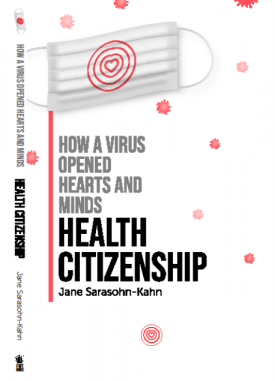
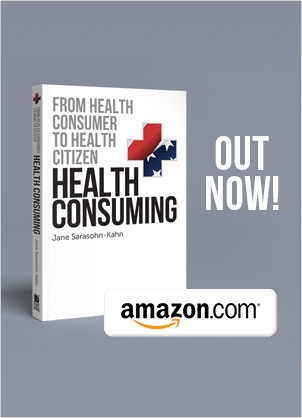
 It was an honor to be a CES Innovation Awards 2027 judge once again for the digital health category. Based on the new-new things I reviewed in the process, we'll be seeing some amazing developments that should have positive impacts on peoples' health and well-being, from head and brain to toe. Viva Las Vegas, as usual, right after New Year January 2027!
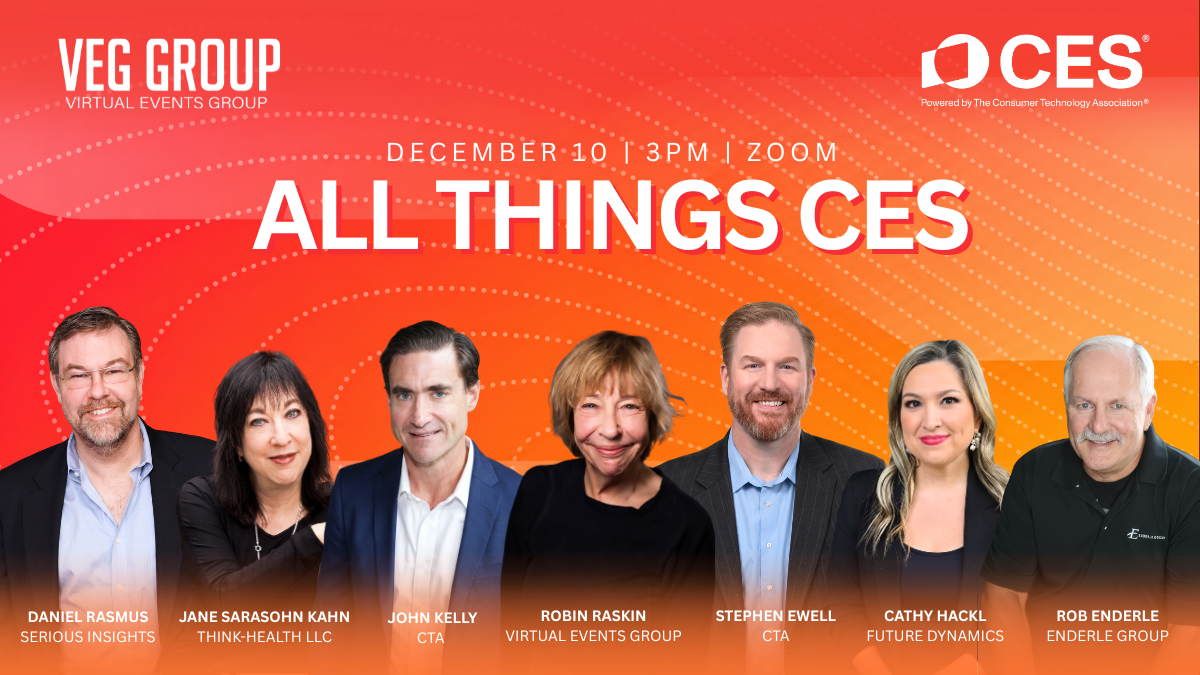 January 2027 is in our sights, and that means we're making plans for #CES2027. I've attended the largest consumer electronics show for nearly 20 years, tracking the evolution of digital health which enables people for greater self-care and health agency and literacy. I'm looking forward to collaborating on this webcast with fellow CES experts in their fields to brainstorm what we expect in this "All Things CES" Zoom session organized by the great Robin Raskin and the Virtual Events Group on December 10.
 Jane joined host Dr. Geeta "Dr. G" Nayyar and colleagues to brainstorm the value of vaccines for public and individual health in this challenging environment for health literacy, health politics, and health citizen grievance. Click onto the Pfizer Value of Vaccines site and you can watch four episodes covering the challenges with adult vaccination, the employer and health plan member's journey to vaccination, reimbursement, and collaborating for proactive prevention.