


A Primer on Health Consumers for CES 2026 – How Macro Consumer Trends Will Shape Healthcare Consumers in 2026
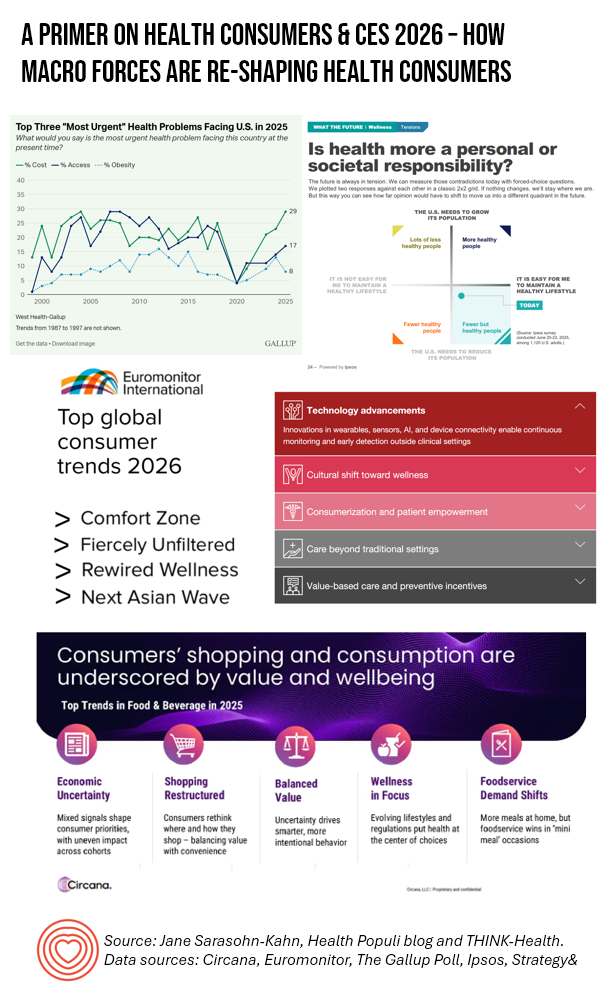
Increasingly, people are engaging more in health care decision making due to many factors impacting their personal medical choices — from the cost and access to health insurance to co-payments for prescription drugs and the supply of primary care doctors, more patients developed and exercised their health consumer muscles in 2025, For 2026, the health consumer muscle-building will grow as people will be re-shaped by macro market factors we are currently gleaning from forecasts looking into the new year: for personal finances, social issues, technology adoption, views on AI and privacy, and other issues. Here are some data points to
Navigating a Constellation of Uncertainties: Health/Care in 2026 (My Un-Forecast)
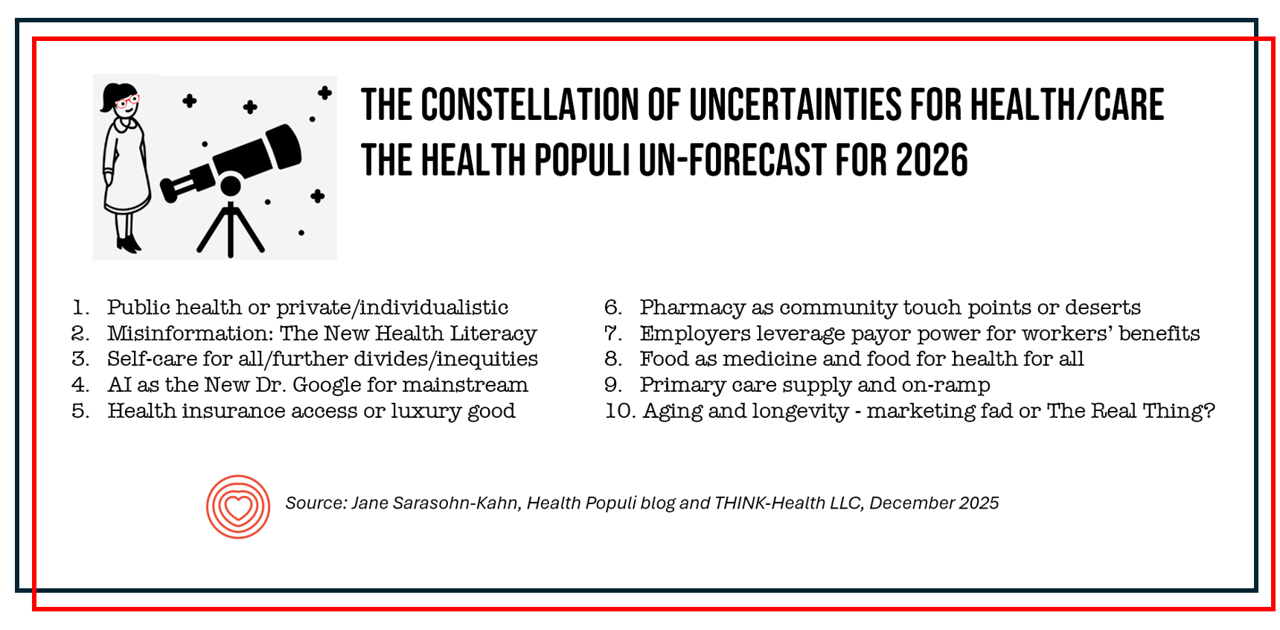
Almost from the first year of launching Health Populi in 2007, I’ve written a “TrendCast” for the coming year of health care. Over many years, there weren’t so many blogs devoted to health care which featured such prognostications, and so readers could divine signal from noise and move forward into new years with manageable lists of What To Expect Next Year in Healthcare. Here’s one from ten years ago that brings a sense of déjà vu: most of the findings are consistent with what we know for sure about 2026 and it’s useful to look back with today’s eyes to
The New Health Consumer Mindset and Wallet: From GLP-1s to Trading Up for Health & Longevity
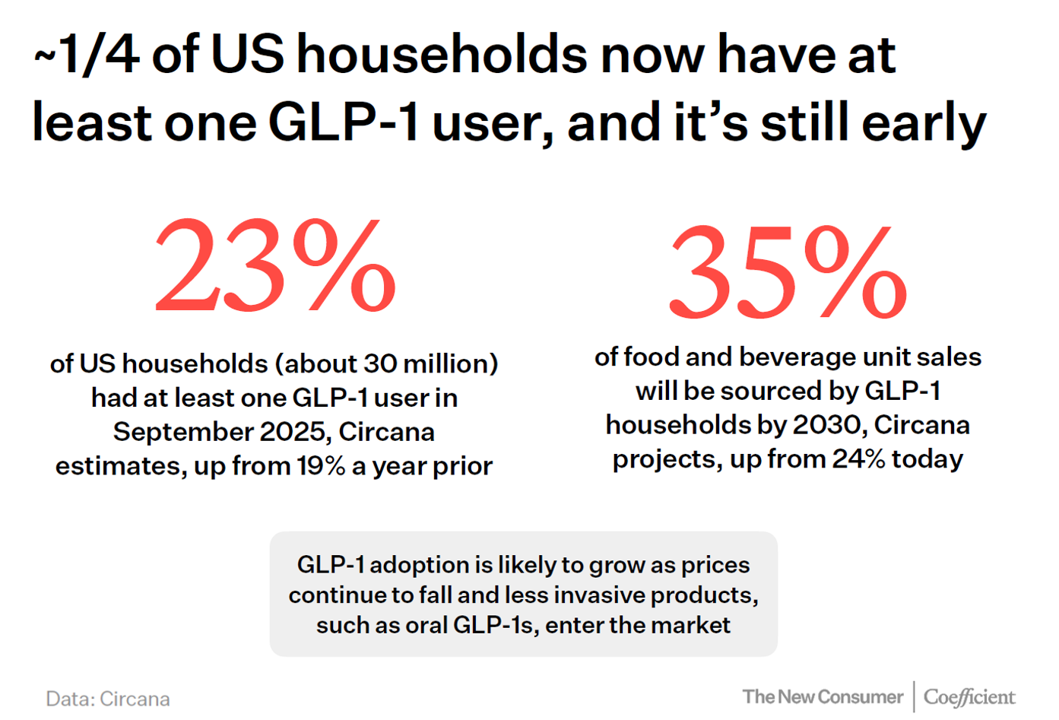
From GLP-1s to longevity and new views on self-care for healthcare, the people are taking their health in-hand, at-home, and via-tech to complement and sometimes replace the legacy health system touchpoints which are the traditional categories for care: hospitals, doctors, rehab centers, diagnostics and labs, and health care financing and plans — some opting out of plans and going full-risk (cash, out-of-pocket) truly self-insuring against future medical risks. As I prepare to publish my Year-End/New Year TrendCast for 2026, I felt like front-ending next week’s annual long post with details on the demand side of the forecast — a focus
Men’s Fertility Feelings – The Influence of Trust and Social Media (My Progyny Post #3)

Trust is a key enabler for people’s health engagement. As the American Medical Colleges’ Center for Health Justice defines it, trustworthiness is “rooted in honesty and honors lived experience….. key to a successful patient-provider partnership.” In his book, Notes On Being A Man, Scott Galloway calls out that men’s fertility issues are formed as part of a larger societal context and crisis point, exacerbated by economic pressures and lack of opportunities for male bonding and in-person social touchpoints. In the second post in this series of three, we discussed those economic pressures Galloway notes, and the financial stressors that shape
Trust and AI in Healthcare: At a Crossroads, Edelman Finds
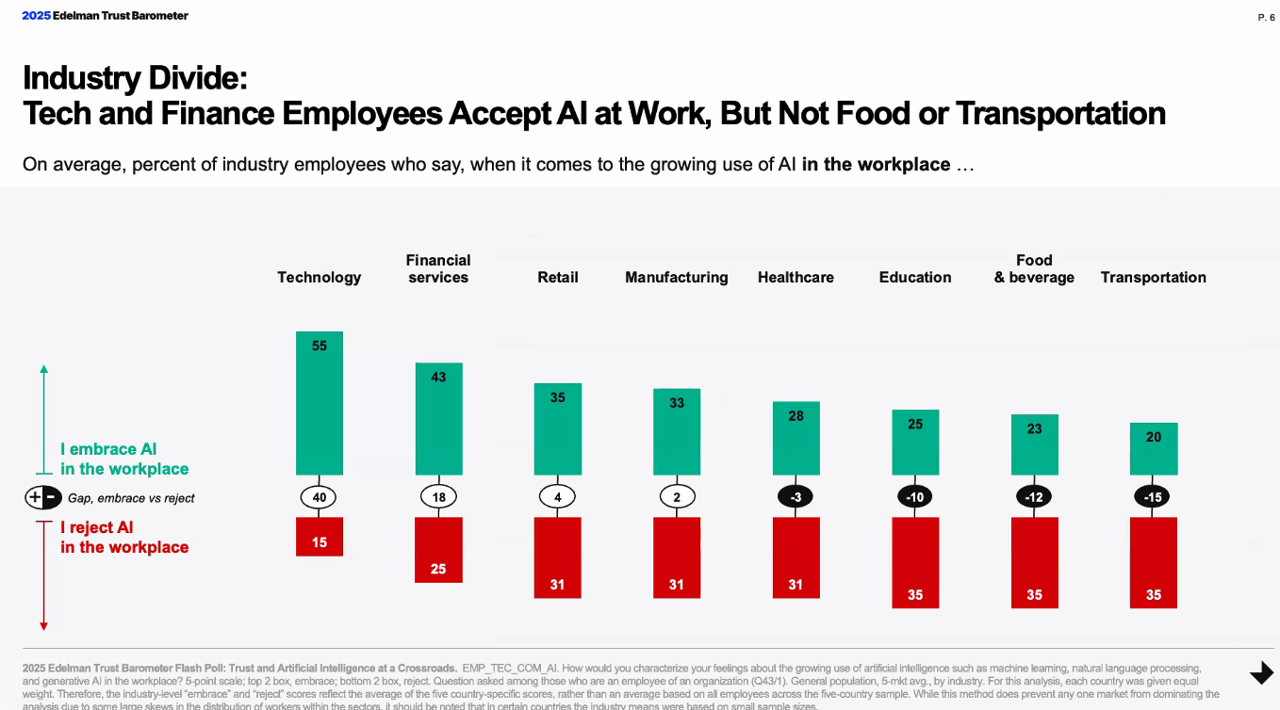
Enthusiasm for innovation is not a guaranteed thing; furthermore, trust in AI lags trust in the overall technology sector, we find in the 2025 Edelman Trust Barometer research through a Flash Poll: Trust and Artificial Intelligence at a Crossroads, discussed in a webcast on 3 December. People in the U.S. are more than twice as likely to reject the growing use of AI than embrace it, with the embrace of AI much lower than peoples’ enthusiasm for it. Edelman conducted the poll in five countries — Brazil, China, Germany, the UK and the US — with sample sizes at least 1,000+
A Month Until #CES2026 – The Journey to Our Personal Health Operating Systems

In a month, I’ll board a plane for Las Vegas to spend a week at CES 2026, the annual electronics conference that last year brought together over 140,000 global technology stakeholders to display, demonstrate, and sell the latest in consumer-facing tech. This will be my fourteenth CES (including the virtually convened meeting held in 2021). If you want to time travel, here’s a link to an early CES post featuring “The Battle of the (Wrist)bands.” Indeed, the digital health aisle at the time had many wrist-worn activity trackers, largely amped-up pedometers, with the likes
The Home Economics of Family and Fertility: Men’s Financial Views on Their Fertility Journeys (My Progyny Post #2)
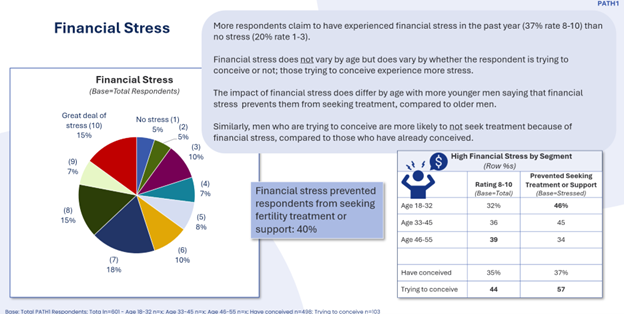
Cost is a leading reason why people say they could not obtain the fertility care they need. But the costs of IVF and other forms of fertility care lie within a larger home economics framework of family-building and -raising. The context and costs of raising a child in America. Consider the layers of a household budget starting with the home’s “macro”-economics of income. Then within that circle, especially in the U.S., the factor of whether that household is covered by employer-sponsored health insurance. The next layer of more health micro-economics in the family is the
 I'm grateful to be part of the Duke Corporate Education faculty, sharing perspectives on the future of health care with health and life science companies. Once again, I'll be brainstorming the future of health care with a cohort of executives working in a global pharmaceutical company.
 Thank you Aaron Strout for hosting our conversation on the Reaching Higher Podcast, now live on Apple, Spotify, and YouTube. We covered a lot of ground addressing health care and health citizenship, the growing prospects for our homes as our health hubs, and how our humanity is a key ingredient in health-making for all.
 Jane joined host Dr. Geeta "Dr. G" Nayyar and colleagues to brainstorm the value of vaccines for public and individual health in this challenging environment for health literacy, health politics, and health citizen grievance. Click onto the Pfizer Value of Vaccines site and you can watch four episodes covering the challenges with adult vaccination, the employer and health plan member's journey to vaccination, reimbursement, and collaborating for proactive prevention.