


In the Post-Weinstein Era, How to Market Health to Women: Philips, Kalenji, and Libresse Getting It Right

“With Mad Men still in charge, ad campaigns miss the mark,” an editorial published this week in the Financial Times asserts. Leave it to a fiscally conservative British publication to be spot-on about a particularly, but not uniquely, American challenge, in this post-Weinstein (Miramax), -Price (Amazon), and today, -Halperin (MSNBC) moment of sexual harassment revelations. In health/care, women are key consumers, buyers and influencers, yet under-represented in the Mad Men demographic of senior advertising executives, as the data-driven FT essay points out. So it’s especially heartening to find this month a few examples of empowering, inspiring ad campaigns getting health/care marketing
Health (Healthcare, Not So Much) Abounds in Prophet’s Top 50 Brands
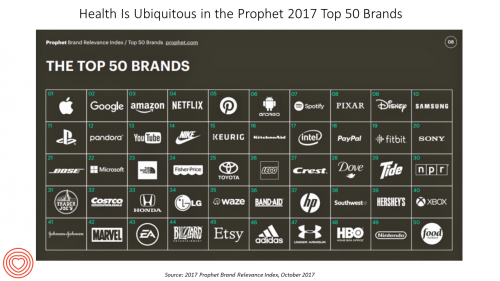
U.S. consumers’ most-valued brands include Apple, Google, Amazon, Netflix, Pinterest, Android, Spotify, PIXAR, Disney and Samsung, according to the 2017 Brand Relevance Index from Prophet. The top 50 are shown in the first chart. On the second chart, I’ve circled in red the brands that have reach into healthcare, health, fitness, and wellness. Arguably, I could have circled every brand in the top 50 because in one way or another, depending on the individual, people find health “everywhere” that’s relevant to them based on their own definitions and value-systems. This is Prophet’s third year conducting this study, and I was
Four Things We Want in 2017: Financial Health, Relationships, Good Food, and Sleep
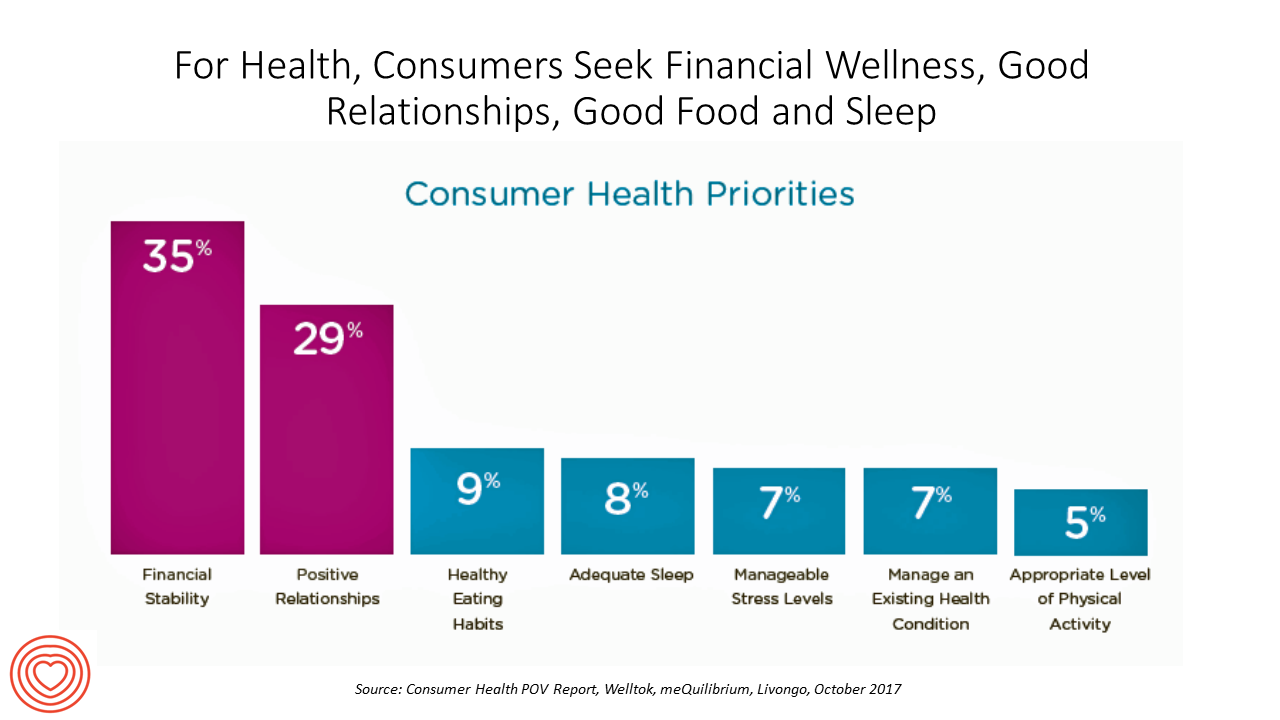
THINK: money and love. To find health, working-aged people seek financial stability and good relationships, according to the Consumer Health POV Report from Welltok, meQuilibrium, and Zipongo, featured in their webinar broadcast today. The online consumer survey was conducted among 2,000 full-time working U.S. adults in August 2017, segmented roughly into thirds by Boomers (37%), Gen Xers (32%), and Millennials (31%). Much lower down the priority list for healthy living are managing food, sleep, and stress based on the poll. Feeling stress is universal across most consumers in each of the three generational cohorts, especially related to work and finance.
What Health Plans Must Learn from Amazon
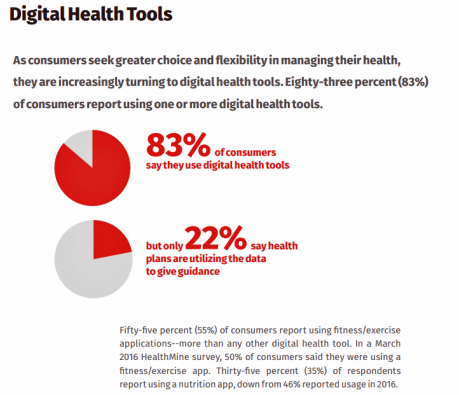
One in two U.S. consumers told Aflac that enrolling in health insurance should feel like an experience on Amazon. But health consumers still lack that high benchmark retail experience with health plans, based on new research published in HealthMine’s 2017 Health Intelligence Report focusing on communication and digital healthcare tools. “Most members believe health plan communications are impersonal and centered around bills rather than healthcare guidance,” HealthMine asserts in the introduction to the report. That’s about as un-Amazon as we can imagine. Top findings from HealthMine’s research are that: 3 in 4 consumers don’t think their health insurance plan
What Patients Feel About Technology, Healthcare Costs and Social Determinants
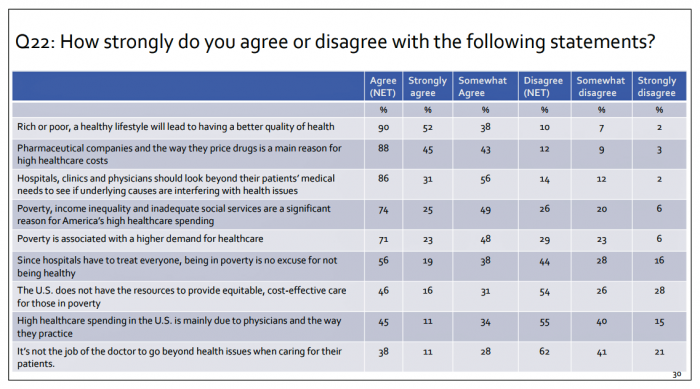
U.S. consumers feel positive about the roles of technology and social determinants in improving healthcare, but are concerned about costs, according to the 2017 Patient Survey Report conducted for The Physicians Foundation. The survey gauged patients’ perspectives across four issues: the physician-patient relationship, the cost of healthcare, social determinants of health, and lifestyle choices. Two key threads in the research explain how Americans feel about healthcare in the U.S. at this moment: the role of technology and the cost of health care. First, the vast majority of consumers view technology, broadly defined, as important for their health care. 85% of people
Consumers Use Digital Health Tools But Still Struggle with Health Literacy
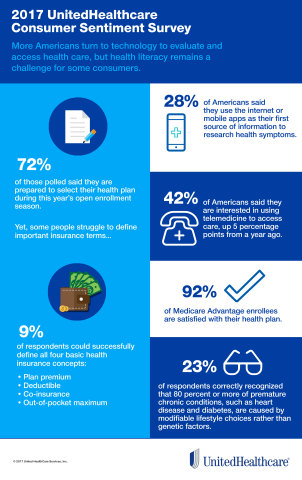
While more U.S. patients are use digital health tools and take on more clinical and financial decision making for their health care, people also have gaps in health engagement and health literacy. Three studies published in early October 2017 provide insights into the state of healthcare consumerism in America. The 2017 UnitedHealthcare Consumer Sentiment Survey found that a plurality of Americans (45%) turn first to primary care providers (doctors or nurses) as their source for the first source of information about specific health symptoms, conditions or diseases. 28% of people also use the internet or mobile health apps as their
The Rx is UX: A Prescription for EHRs and Patient Engagement
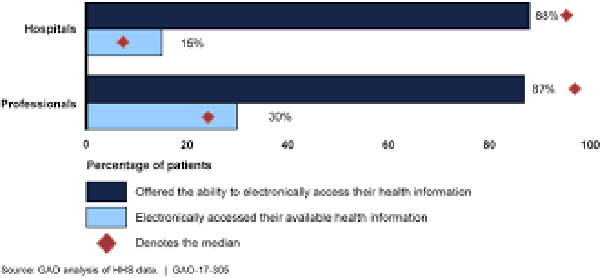
It’s National Health IT Week (#NHIT Week), and I’m revisiting research published earlier this year to connect the dots between EHR implementation (good news: it’s nearly universal in doctors’ offices and hospitals) and patients embracing their health information (not-so-much). What’s missing: UX design and respect for peoples’ life-flows. Most physician practices and hospitals in the U.S. have installed electronic health records (EHRs). But in a classic Field of Dreams scenario, we have made patients’ medical records digital, but people aren’t asking for them or accessing them en masse. “How do we make it easier for patients to request and manage their
The Patient Is The Vector: Health 2.0 – Day 2 Learnings
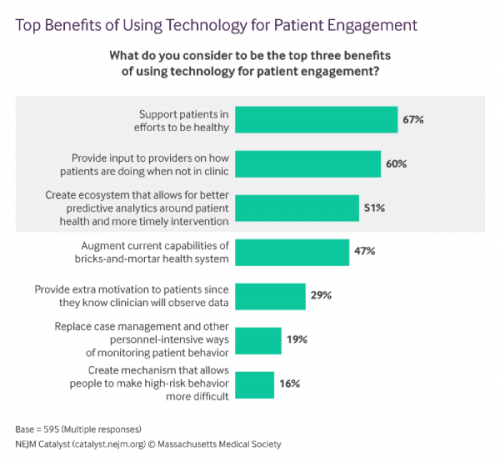
Question: “What is the opposite of ‘patient-centered care?'” asked a panelist on Day 1 of the 11th Annual Health 2.0 Conference. Answer: “‘Physician-centered care.'” Even physicians today see the merits of patient engagement, as this survey from New England Journal of Medicine found earlier this year. Since the launch of the first Health 2.0 Conference in 2007, the patient has played a growing role in session content and, increasingly, on the big stage and panel breakout sessions. A panel I attended on Day 2 convened five developers of patient engagement platforms and digital tools to help healthcare look and
Leveraging the Essential Data of Life: Health 2.0 – Day 1 Learnings

The future of effective and efficient healthcare will be underpinned by artful combinations of both digital technologies and “analog humans,” if the first day of the Health 2.0 Conference is a good predictor. Big thoughts about a decentralized future in healthcare kicked off Day 1 of the 11th annual Health 2.0 Conference in Santa Clara, CA. The co-founders of Health 2.0 (H20), Matthew Holt and Indu Subaiya, explained the five drivers of the tech-enabled health future. 1. The new interoperability, underpinned by FHIR standards and blockchain. “FHIR” stands for fast healthcare interoperability resources, which are informatics standards that enable data
To Meet Health Consumers’ Digital Demands, Think Netflix and Verizon
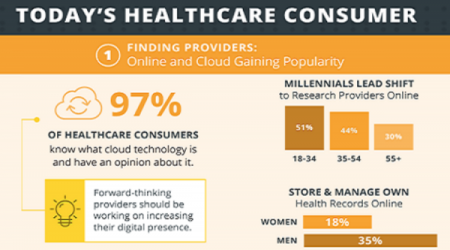
Health consumers have become savvy about the role of technology in their healthcare, according to a survey from Ambra, a company that is in the health cloud business. The survey paints a picture of health consumers hungry for digital health connections. The most popular activities patients do online for health were: To research symptoms and treatments To renew and/or fill prescriptions To view lab reports To make appointments To pay medical bills To correspond with the nurse or doctor To view imaging reports To get virtual care, and, To participate in patient communities. To meet patients where they want
Envisioning Healthcare Innovation and Value with Microsoft
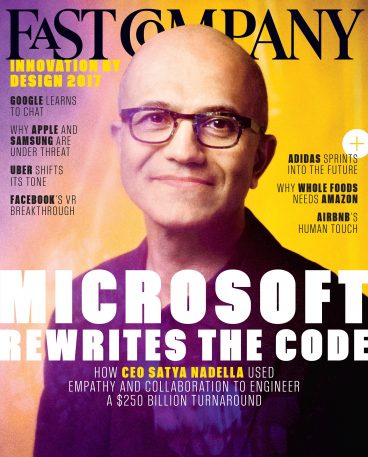
Fast Company’s October 2017 issue leads with a cover story featuring Microsoft’s CEO Satya Nadella, with the title, “Microsoft Rewrites the Code.” The issue of Fast.Co is devoted to the theme of innovation by design, and the 8-page story on the company emphasizes the themes of empathy and collaboration in re-imagining the organization. I lead with this because I’m now in Orlando preparing to participate in Microsoft’s annual meeting called Envision. This conference brings together the company’s clients from around the world, representing major industry segments. I’m grateful to be invited to participate in the first of six sessions devoted
Patients Are Looking to Finance Healthcare Over Time
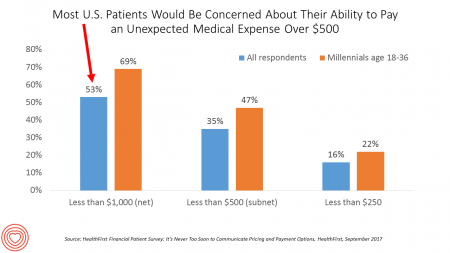
Most U.S. patients want healthcare providers to offer cost information before a procedure, and whether doctors offer financial options to help them extend payments over time. This is an automotive or home appliance procedure we’re talking about. It’s healthcare services, and American patients are now the third largest payors to providers in the nation. Thus, the title of a new report summarizing a consumer survey from HealthFirst notes, “It’s Never Too Soon to Communicate Pricing and Payment Options. The study found that two-thirds of U.S. consumers would like healthcare providers to discuss financing options; however, only 18 percent of providers have
Decline in Pharmacy Reputations Related to Prescription Drug Prices, J.D. Power Finds
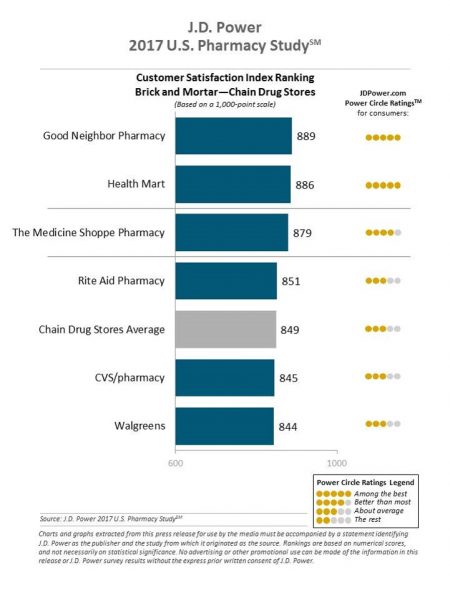
Cost is the number one driver among consumers declining satisfaction with pharmacies, J.D. Power found in its 2017 U.S. Pharmacy Study. Historically in J.D. Power’s studies into consumer perceptions of pharmacy, the retail segment has performed very well, However, in 2017, peoples’ concerns about drug prices negatively impact their views of the pharmacy — the front-line at the point-of-purchase for prescription drugs. In the past year, dissatisfaction with brick-and-mortar pharmacies related to the cost of drugs and the in-store experience. For mail-order drugs, consumer dissatisfaction was driven by cost and the prescription ordering process. Among all pharmacy channels, supermarket drugstores
Transparency in Drug Prices, from OTC to Oncology

While on vacation in Bermuda, I found a box of private label ibuprofen for $2.45 for 20 – 200mg tablets, and one for Advil PM for $10.50 for the same number of pills, same strength. I’ve just returned from a lovely week’s holiday. When I travel, whether for work or vacation, it’s always a sort of Busman’s Holiday for me as I love to seek out health destinations wherever I go. So it was natural for me to spot the Dockyard Pharmacy at the port in Hamilton and wander in. I made my way back to the well-stocked pharmacy counter,
The Digital Gap in Health Consumer/Patient Experience
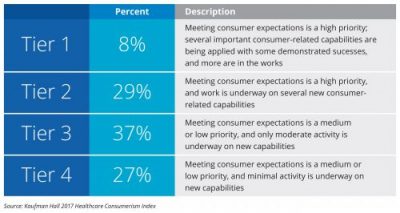
9 in 10 hospitals and health systems prioritize improving the consumer/patient experience, but only 30% of providers are building these capabilities. This consumer experience gap was found by Kaufman Hall in their survey research published in the report, 2017 State of Consumerism in Healthcare: Slow Progress in Fast Times. Digital health innovations will play big roles in supporting that consumer health experience for most health providers: 58% prioritize offering digital tool and information for consumer engagement, and 56% of providers look to develop a range of virtual/telehealth access points. But it appears that while healthcare providers’ spirits are willing, their flesh
Cost and Personalization Are Key For Health Consumers Who Shop for Health Plans
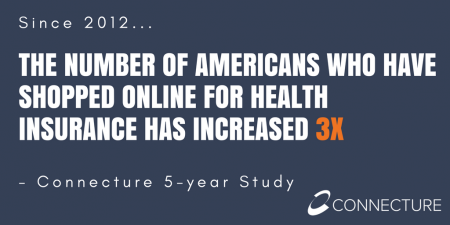
Between 2012 and 2017, the number of US consumers who shopped online for health insurance grew by three times, from 14% to 42%, according to a survey from Connecture. Cost first, then “keeping my doctor,” are the two top considerations when shopping for health insurance. 71% of consumers would consider switching their doctor(s) to save on plan costs. Beyond clinician cost, health plans shoppers are also concerned with prescription drug costs in supporting their decisions. 80% of consumers would be willing to talk with their doctors about prescription drug alternatives, looking for a balance between convenience
Price-Shopping for Healthcare Still A Heavy Lift for Consumers
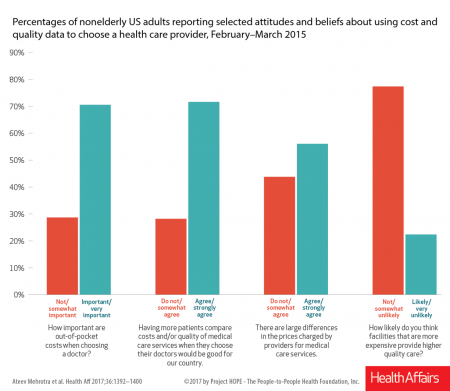
Most U.S. consumers support the idea of price-shopping for healthcare, but don’t practice it. While patients “should” shop for health care and perceive differences in costs across providers, few seek information about their personal out-of-pocket costs before getting treatment. Few Americans shop around for health care, even when insured under a high-deductible health plan, conclude Ateev Mehrotra and colleagues in their research paper, Americans Support Price Shopping For Health Care, But Few Actually Seek Out Price Information. The article is published in Health Affairs‘ August 2017 issue. The bar chart shows some of the survey results, with the top-line finding
Weaving Accenture’s Five Digital Health Technology Trends for 2017
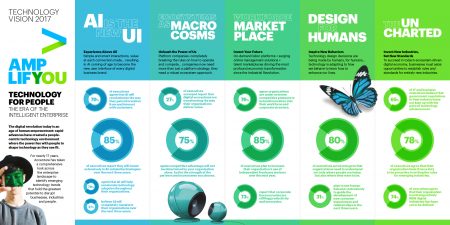
Technology should serve people, and Accenture has identified five major key trends that, together, could forge a person-centered, -friendly, -empowering healthcare system. This is Accenture’s Digital Health Technology Vision for 2017. “Should” and “could” are the important adverbs here, because if tech doesn’t deliver, driving efficiency and effectiveness, personalizing medical treatments, and inspiring people to become more health literate and health-engaging, then tech is just a Field of Dreams being built and available, with no people taking advantage of the potential benefits. The five new-new tech trends are: AI is the new UI, where healthcare experience is everything Ecosystem power
Pharmacies Morph Into Primary Care Health Destinations
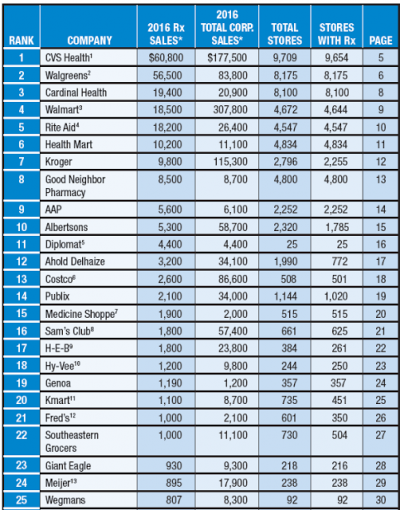
The business and mission of pharmacies are being re-shaped by several major market forces, most impactful being uncertain health reform prospects at the Federal level — especially for Medicaid, which is a major payor for prescription drugs. Medicaid covered 14% of retail prescriptions dispensed in 2016, according to QuintilesIMS; Medicare accounted for 27% of retail prescriptions. “But if affordability, accessibility, quality, innovation, responsiveness and choices are among the standards that will be applied to any future changes, pharmacy has strong legs to stand on,” Steve Anderson, president and CEO of the National Association of Chain Drug Stores, said in the PoweRx Top 50
The Art of Emojis in Constipation-Conversation
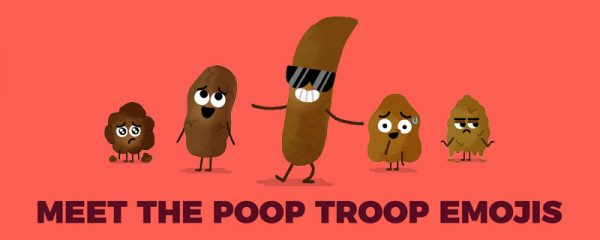
“Constipation is hard. Talking about it is even harder,” reads a card I received from the senior director of marketing at Synergy Pharmaceuticals. Emojis-meet-direct-to-consumer pharmaceutical promotion in a new campaign from the drug company, which is embarking on a disease education campaign to bring greater awareness to the condition of chronic idiopathic constipation (CIC). This condition impacts 14% of the global population. The messengers for this effort are a cast of emojis who populate a continuum from constipation-to-diarrhea and every poop step in-between. Meet The Poop Troop: Stressed-Out Stooly Clogged Chris Left-Out Lumpy Plugged-Up Paulie Miss La Poop Mr. Smooth Sausage Sally
Patients Switch Doctors Based on Service, Not Just Care or Costs – Think “Text”
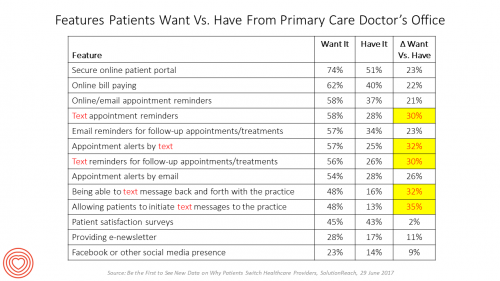
There’s more evidence of shopping behavior among patients: there’s new data showing that patients-as-consumers switch healthcare providers not due to quality of care or costs, but because of lack of service. I discovered one key verb and feature patient-consumers expect from doctors: it’s the ability to text, for appointment reminders, alerts, treatments, and communicating with the practice. SolutionReach, in the business of patient engagement, conducted a survey among 500 consumers asking about primary care providers, communication experience and satisfaction levels. The company presented the research results in a webinar on 29 June 2017. The research was also written up in
Health care in every pot – what we can learn from Costco

And the pot will be from Costco, not Williams-Sonoma. The most telling point about health reform in President Obama’s budget is that, “Some researchers believe that healthcare costs could be reduced by a stunning 30 percent — or about $700 billion a year — without harming quality if we moved as a nation toward the proven and successful practices adopted by the lower-cost areas and hospitals.” That sentence gives us some grist for forecasting some of the elements of health reform — in particular, the last phrase which talks about moving from higher-cost, unproven health practices to lower-cost proven approaches.
Mourning the death of Elephant, the alternative pharmacy

Elephant Pharm, the six-year-old alternative pharmacy chain based in northern California, filed Chapter 11 bankruptcy papers two days ago. The vision of Elephant was to provide customers with both traditional medicines along with homeopathic treatments. The store’s footprint of 12,000 feet held space for both product and services. Practitioners were available in the store with whom consumers could consult on a range of issues, from Ayurvedic herbs to treat headaches to yoga. Note that a similar company, Pharmaca, shares Elephant’s commitment to integrative medicines, but is based on a much smaller design of about 5,000 square feet. Pharmaca has 23

 Jane will be working with EU- and UK-based clients in September and October 2026, collaborating with stakeholders in digital health, public/community health, retail health, and growing opportunities for health-at-home. Stay tuned to her updates here on Health Populi on-the-ground as she lives the digital nomadic work-life in Italy, Belgium, the Netherlands, and in London.
 I was grateful to be Jasmine's first conversation-guest on her new podcast, "Aperture - Widen the Frame," where this expert in narrative medicine is bringing together the broad range of voices to sit at the table and address what health care needs: those humans in the health-system-loop who address health equity and empathy along with delivering evidence-based medicine for all.
 Jane joined host Dr. Geeta "Dr. G" Nayyar and colleagues to brainstorm the value of vaccines for public and individual health in this challenging environment for health literacy, health politics, and health citizen grievance. Click onto the Pfizer Value of Vaccines site and you can watch four episodes covering the challenges with adult vaccination, the employer and health plan member's journey to vaccination, reimbursement, and collaborating for proactive prevention.