


The Magic of Getting Fit Starring Penn Jillette (With Help From Withings)
Health is where we live, work, play, pray and have fun. And if you’re Penn Jillette, the magician who collaborates with Teller, it took more than sleight of hand or a magic trick to lose 100 pounds — one-third of his body weight. He did it, according to this video, with the help of hard work, and using activity tracking tools from Withings. [youtube https://www.youtube.com/watch?v=EQWCVLvuBzI?rel=0] Unlike many people who quantify themselves for wellness and fitness, Penn did so to avoid having a medical procedure (i.e., the implantation of a stomach sleeve for weight loss) and also to reduce the six
In 2016 Reaching For The Triple Aim Will Drive Health IT Spending
Adoption of telehealth, remote health monitoring, patient engagement platforms, mobile and digital health applications, and the emergence of the Internet of Things in health care will all be bolstered in 2016 based on health care providers’ having to do more with less (money, labor, resources). The value-based healthcare world — the migration of payment “from volume to value” — requires greater investment in information and communications technology that moves care to lower-cost sites, with lower-priced labor (as appropriate), and shifting greater clinical self-care and financial skin-in-the-game to patients. My annual health IT forecast was published yesterday in iHealthBeat, 2016: Technology
TIME Sees Lots of Health in the Best Inventions of 2015
Among TIME magazine’s 25 best inventions of 2015, most relate directly or adjacently to health and health care. Among the 25 are: The EKO Stethoscope A gluten-sniffing sensor, the 6SensorLabs Nima The Sproutling baby monitor Nike Flyease 8 shoes, that you can tie with one hand Cogni-Toys Dino, the toy that talks back A smart refrigerator that can fix you a glass of nutrient-enriched water The TZOA environmental tracker for personal pollution sensing, measuring atmosphere in a specific area (e.g., temperature, particulates such as dust, pollen, mold, and car exhaust), and UV exposure Doppler Labs Here Active Listening earbuds The
Where You Go Can Define Who You Are – Health/Apps Privacy Update
A start-up company called Factual was profiled in the Wall Street Journal on December 11, 2015. Factual profiles consumers using mobile devices based on the digital dust users’ apps create — “streams of location data supplied by apps,” as Elizabeth Dwoskin (@lizzadwoskin), author of the article, put it. The primary goal? To help publishers finely target ads to specific audiences. “If we know you go to the gym five times a week,” Lindy Jones of the Goodway Group is quoted, “it’s likely you’ll be interested in workout gear.” Factual garnered $35 mm of additional funding last week, “to make data
The Internet of Healthy Things According to Dr. Kvedar
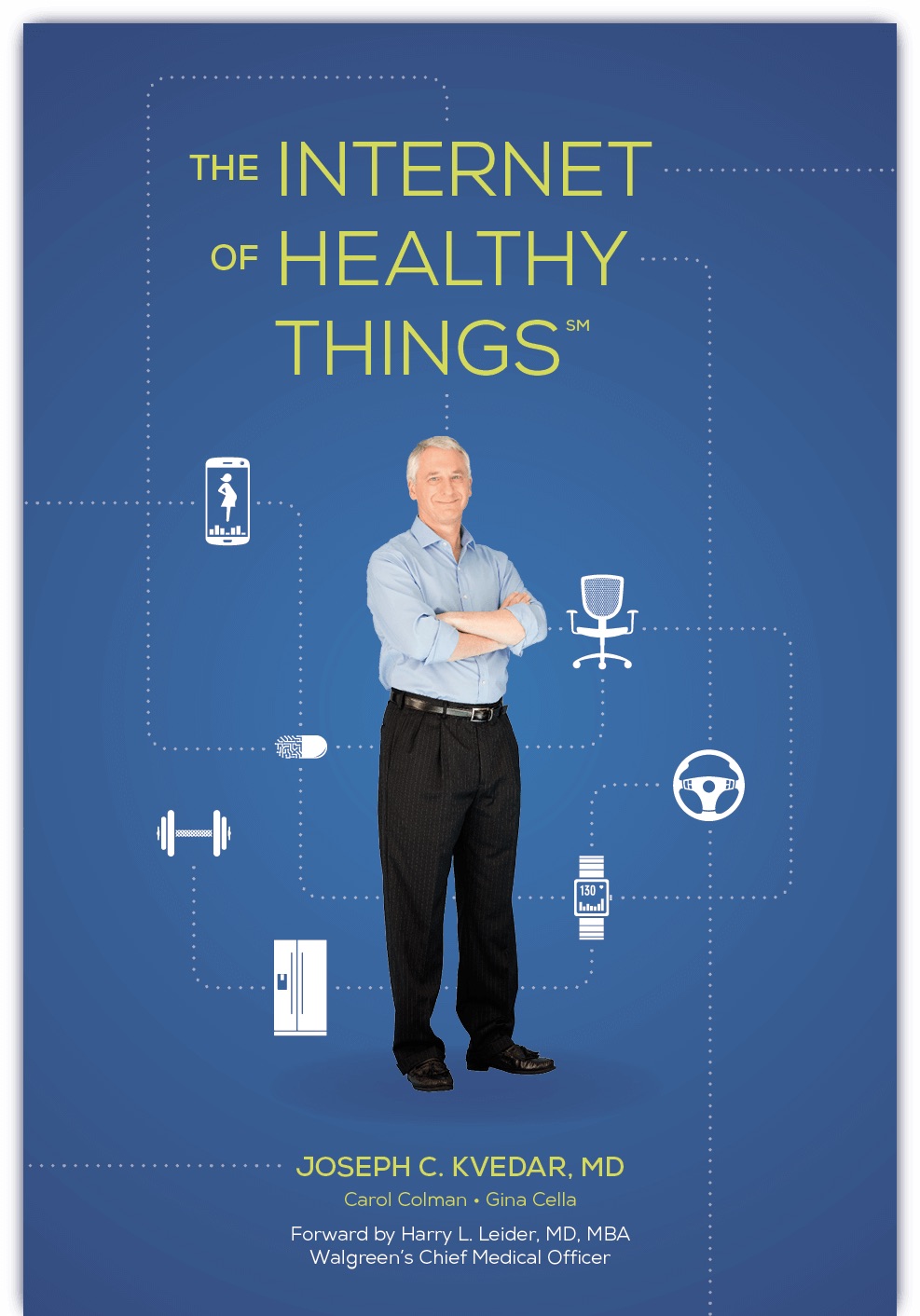
By 2020, according to the World Economic Forum, more than 5 billion people and 30 billion “things” will be connected to the Internet — cars, refrigerators, TVs, washing machines and coffeemakers, among those 5 bn folks’ electronic stuff. But so will medical devices, activity trackers, and a host of sensor-enabled “things” to help people and clinicians optimize health and manage illness. The Internet of Things (IoT) phenomenon, which is already penetrating households with energy management and security applications, is reaching health care. One of the pioneers in this connected health market is Dr. Joseph Kvedar, who leads the Center for
Activity Wearables on Black Friday 2015 – Doorbusters Abound
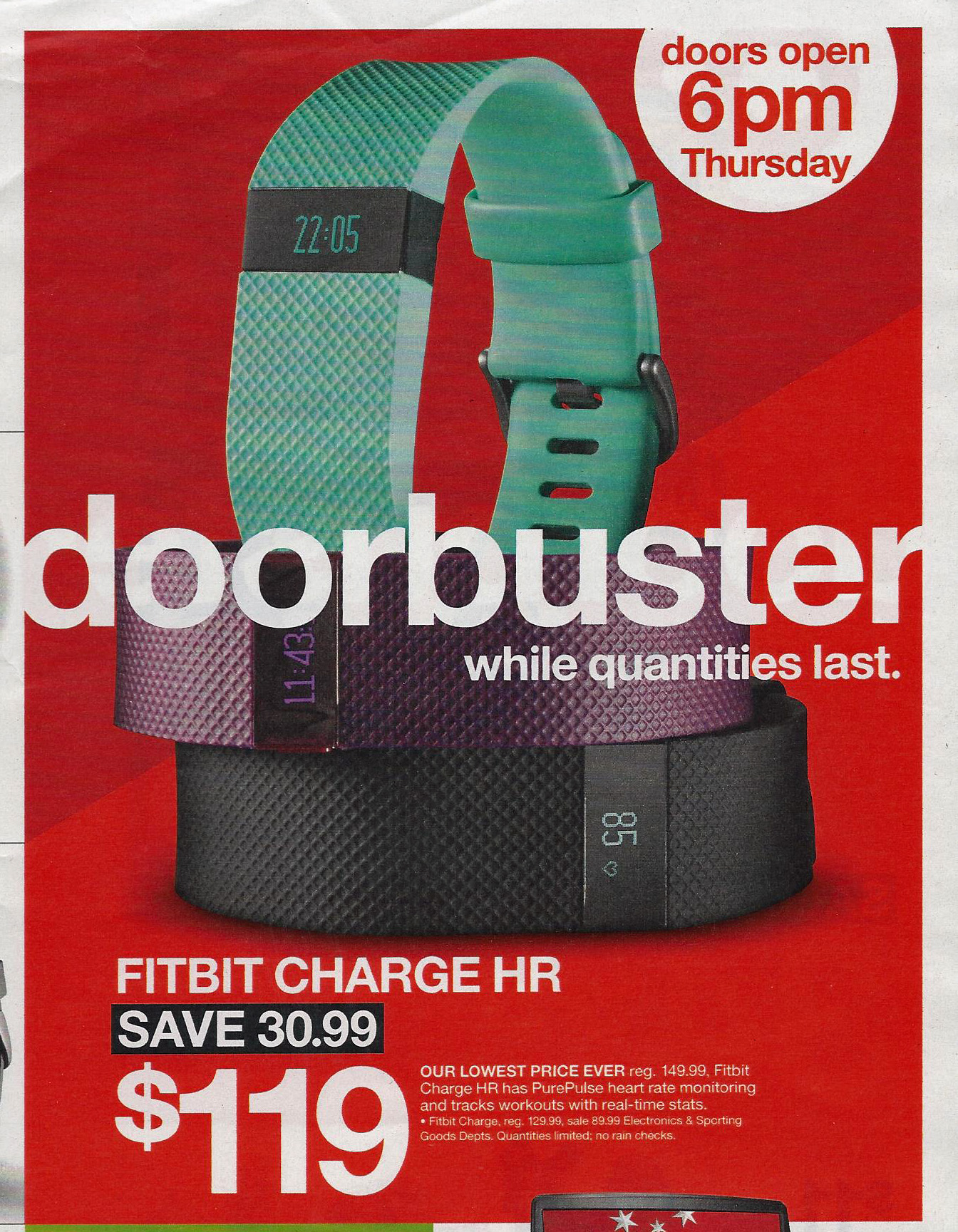
The 2015 holiday shopper can find activity trackers for gifting discounted as much as 50% and more over Thanksgiving weekend. In greater Philadelphia, the Thursday print newspaper ads were chock full of examples from Best Buy, Dick’s Sporting Goods, Kohl’s, Target, and Walmart, among others. Among the many “Doorbusters” and deep discounts were a Misfit Flash tracker for $14.99 at Best Buy (a 50% discount), a Fitbit Zip at both Kohl’s and Walmart for $39 ($20 off the manufacturers’ suggested retail price), and a Fitbit Flex at Dick’s Sporting Goods for $49.95 — 50% off full retail. That trackers are
Walgreens Extends Telehealth On Your Smartphone
In the U.S., if you walk 3 miles in any direction, there’s a 3 in 4 chance you’ll find yourself in front of a Walgreens pharmacy. The company often says that 75% of people in the America live within 3 miles of a Walgreens storefront. What’s a pharmacy storefront anymore? Both Walgreens and CVS are re-defining that with a dizzying pace of new announcements. The latest for Walgreens: people in 25 states will be able to use the Walgreens app on their smartphones to access physicians virtually. Consumers living in Alabama, Arizona, California, Colorado, Connecticut, Florida, Indiana, Illinois, Iowa, Maryland,
Getting to Connected Health Is A Marathon, Not A Sprint
Consumers may demand connected experiences in daily living, but there have been many barriers to health care industry stakeholders delivering on that expectation: among them, privacy and security concerns, and provider resistance. This demand-and-supply chasm is noted in Deloitte’s Center for Health Solutions’ latest look into the healthcare landscape, Accelerating the adoption of connected health. The objectives of connected health, or cHealth, are: To improve digital connectivity among consumers, providers, health plans and life sciences companies To facilitate self-managed care in a secure environment that protects privacy To deliver care outside of traditional institutional settings To enable chronic care management
The Telephone Is As Digital As It Gets in Mainstream U.S. Health Care
The phone continues to be the platform technology used in this digital age of health care, according to Better Together: High Tech and High Touch, a survey report sponsored by the Bipartisan Policy Center and the Council of Accountable Physician Practices. Nielsen’s Strategy Health Perspectives project polled 5,014 U.S. adults in June and July 2015 for this study. According to the study sponsors, this is the largest consumer population studied conducted to-date on the topic of digital health use and demand. The first chart illustrates the reality of digital health in the U.S. 2015: that notwithstanding the availability of telehealth,
Growing Signs Of Consumer Health Engagement, Via Deloitte
A growing desire for shared decision making with doctors. Increasing trust and consumption of health care information online, in social media, and report cards. Reliance on technology for monitoring health adn wellness, and medical conditions. Together, these three signals converge, illustrating a growing sense of consumer engagement among U.S. patients, found in the 2015 Deloitte Center for Health Solutions Survey of US Health Care Consumers. In Deloitte’s research summary, the title states that “No ‘one-size-fits-all’ approach” will work, given diversity among American health consumers. The sickest health consumers, Deloitte notes, have higher levels of health engagement and index higher on
Social Networking Is The New Normal, Pew Finds
Two-thirds of all internet users, and 65% of all adults over 18 years of age, use social networking sites. Social Media Usage: 2005-2015, the latest report from the Pew Research Center, finds social networking is the new normal for people up to 65 years of age. One-third of people over 65 use social networking sites. Peoples’ use of social media impacts every aspect of daily living beyond sharing social updates, from home keeping and political discussions to work, parenting, and managing stress, the Pew research found. Key findings in the report are that: Seniors’ use of social networks rose from
The Fast-Growing Consumer Digital Health Ecosystem – Health 2.0 Day 2
The fastest-growing category of products and services at Health 2.0 is consumer-facing digital health, and a panel of companies demonstrated various flavors of the New Retail Health. One of the most prominent companies featured in Health 2.0’s conferences from the inception has been MyFitnessPal (MFP), a long-time helpful tool I’ve used to manage my own health-life. Under Armour acquired MFP earlier this year, which I covered here in Health Populi. Under Armour’s original mission was to make all athletes better. With the company’s acquisition of MyFitnessPal, Under Armour continued its morphing from a textile and sports gear company to a
More consumers expect a connected health experience
When most patients in the U.S. visit their doctors, they find their medical history missing or incomplete. 1 in 2 American patients say their doctors do not have a complete list of their medications. But the new health consumer expects a connected health experience the likes of which, as consumers, they expect and generally find in their everyday lives. One-half of consumers would prefer to get lab test results, access their medical records, and fill out paperwork from a doctor’s office ahead of a visit online versus via phone or in person. Surescripts conducted a survey with Kelton Global in
What Retail Telemedicine Means For Healthcare Providers
Direct-to-consumer retail health options are fast-growing in the U.S. health ecosystem. CVS Health brought three telemedicine vendors to its pharmacy brick-and-mortar stores. CVS also acquired Target’s pharmacies, expanding its retail health footprint. Rite Aid has added HealthSpot kiosks to its pharmacies, while Walgreens expanded its relationship with MDLive. And, Cox Cable acquired Trapollo to bring remote health monitoring into subscribers’ homes, along with the cable company’s venture with Cleveland Clinic, Vivre Health. Coupled with the growing supply side of telemedicine vendors, the latest National Business Group on Health survey found that most large employers plan to expand the telemedicine services they
From Pedometers to Premiums in Swiss Health Insurance
A Switzerland-based health insurance company is piloting how members’ activity tracking could play a role in setting premiums. The insurer, CSS, is one of the largest health insurance companies in the country and received a “most trusted general health insurance” brand award in 2015 from Reader’s Digest in Switzerland. The company is conducting the pilot, called the MyStep project, with volunteers from the Federal Institute of Technology in Zurich and the Unviersity of St. Gallen. According to an article on the program published in the Swiss newspaper The Local, “the pilot aims to discover to what extend insured people are
Fitbit Means Business When It Comes To Privacy
Fitbit, the company that makes and markets the most popular activity tracker, is getting serious about its users’ personal data. The company announced that it will enter into HIPAA business associate agreements with employers, health plans, and companies that offer workers the devices and the apps that organize and analyze consumers’ personal data. The Health Insurance Portability and Accountability Act (HIPAA) protects patients’ personal health information generated in a doctor’s office, a hospital, lab, and other healthcare entities covered under the law (as such, “covered entities”). However, data generated through activity tracking devices such as Fitbit’s many wearable technologies have
36 Mobile Health Apps Account for Half of All Downloads
Of the over 165,000 mobile health (mHealth) apps available in the Apple iTunes and Google Play (Android) stores, 36 are responsible for one-half of all downloads, based on IMS Institute‘s latest research into Patient Adoption of mHealth: Use, Evidence and Remaining Barriers to Mainstream Adoption published today. This report updates IMS Institute’s 2013 report on mHealth, covered here in Health Populi. For the 2015 research, IMS Institute looked at the state of mHealth apps, number and type, uptake and usage, evidence of the impact apps have on patient care, and consideration of barriers and progress made for apps becoming a
How Cable TV Can Make Your House Your Medical Home
Taking literally the maxim that health is where we live, work, play and pray, Cox Communications acquired Trapollo, a remote health monitoring company, extending the core business of cable TV into the world of health services to the home. “We believe that the home will be an increasingly important node within the healthcare delivery architecture,” Asheesh Saksena, executive vice president and chief strategy officer, Cox Communications, said in the company’s press release. In the past year, Cox Communications entered in a joint venture with the Cleveland Clinic, to form Vivre Health for developing digital health care services. Cox also invested in
Health, Wearables and the IoT in the Windy City

Health is everywhere, where we live, work, play, pray and shop. So while I’m in Chicago staying off The Magnificent Mile in The Windy City, I took a several-thousand step walk along this shopping mecca and found health and wellness in the form of wearable technology, fitness, smart homes and the Internet of Things spanning the eastern end of Michigan Avenue to the western Gold Coast lakefront. Here’s a photo of the Garmin store, whose windows feature wearable tracking device promotions and devices. It was surprising to see Garmin investing in this expensive piece of real estate, with its logo
The Internet Of Things, Privacy and Women
A Congressional hearing on the Internet of Things was held on July 29, 2015. “As we talk about your home, your lighting, your messaging, your voice, and, of course, your health and your actual biological function, issues like privacy and data security for these interoperable technologies become not just something to talk about but an area in which we in Congress play a large and potentially destructive — if we’re not careful — role in the development of these technologies,” cautioned the Honorable Bob Goodlatte, Chairman of the Judiciary Committee, U.S. House of Representatives. Pictured with Chairman Goodlatte are the other witnesses
Older People and Activity Tracking: AARP Weighs In
Activity and sleep trackers hold promise for the health and wellbeing of people over 50. But they’ve miles to go before their design and usefulness get props from older people. The AARP’s Project Catalyst report, Building a Better Tracker: Older Consumers Weigh in On Activity and Sleep Monitoring Devices, presents research conducted with Georgia Tech’s Home Lab which gave 92 people a digital wearable to track activity or sleep over a six week period. The second graphic shows the devices used in the study. 3 in 4 of the activity tracking users said their devices were, or had the potential to
The $20 Fitness Tracker
Misfit Wearables launched a fitness tracker, the Flash Link, for under $20. The device offers “more powerful at a lower price,” according to the title of the company’s press release yesterday. Available now on Misfit’s website, the Flash Link is described as “an easy-to-use activity tracker and smart button. A low priced, modular, and multi-functional wearable, Flash Link gives users even more ways to connect with the world around them. Use any Flash or Flash Link with the Misfit Link app to take a selfie, control your music (pause, play, skip songs, adjust the volume), or advance slides in a presentation.”
Fitness tech will boost holiday retail sales for consumer electronics
Sales of computers and tablets and LCD TVs won’t be hot on peoples’ holiday shopping lists in 2015. But smartwatches, health and fitness tech, and 4K Ultra HD TVs will be in peoples’ gift wish-lists and under homes’ holiday trees. The Consumer Electronics Association (CEA) published its 2015 U.S. Consumer Electronics Sales and Forecasts report, and it shows a shifting retail picture where traditional consumer electronics categories — notably computers and mainstream TVs — are declining in demand. But new-new categories are expected to buoy 2015 retail sales. The new categories of consumer electronics will generate about $10 bn (wholesale
Sports and the Internet of Things: the Scoop & Score podcast
From elite soccer and football fields to youth athletes in public school gyms, wearable technology has come to sports bringing two big benefits of gathering data at the point of exercise: to gauge performance and coach back to the athlete in real time, and to prevent injury. I discussed the advent of the Internet of Things in sports on the Scoop and Score podcast with Andrew Kahn, sports journalist and writer, and Stephen Kahn, sports enthusiast and business analyst. [In full disclosure these two Kahn’s are also my brilliant nephews.] We recorded the podcast on July 14, 2015, the day
IoT in Healthcare, Take 3 – Accenture & the Internet of Me in Health
We’re entering the era of personalized healthcare promising convenient and meaningful health experiences, according to Accenture’s 2015 Healthcare IT Vision articulated in their report, Top 5 eHealth Trends. This post is third in three published here on Health Populi this week, exploring the growing role of the Internet of Things in health/care. On 8th July, we dug into McKinsey Global Institute’s research on IoT’s influence over nine industries, including human health; and on the 9th, we reviewed Goldman Sachs’ report on digital health’s potential impact on the U.S. healthcare system. Accenture’s five eHealth trends include: The Internet of Me; the Outcome Economy, with
IoT in Healthcare, Take 2: Goldman Sachs weighs in
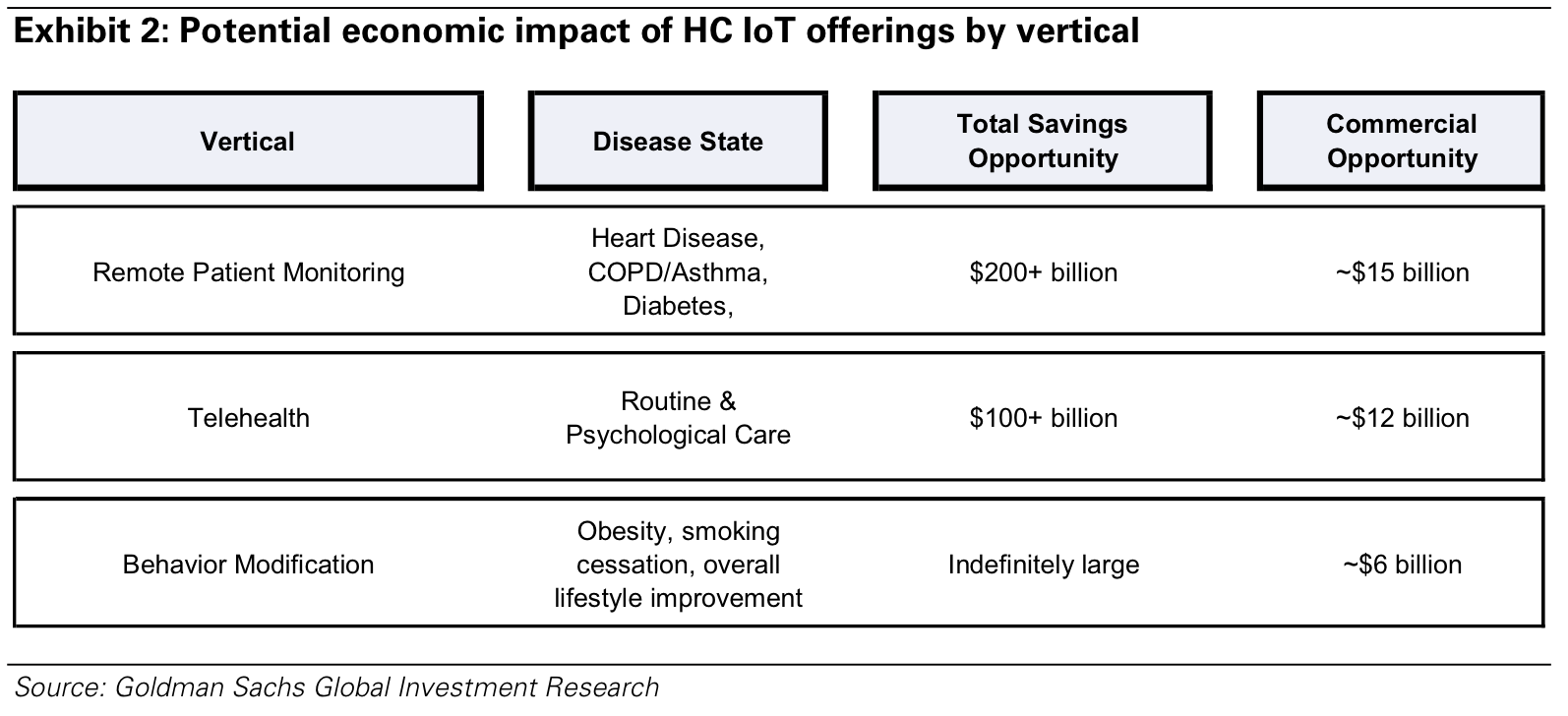
In this week’s posts on Health Populi, we’re diving into three big reports focused on digital health and the Internet of Things (IoT) in healthcare: from the McKinsey Global Institute, Goldman Sachs, and Accenture. In this post, we dig into Goldman Sachs’ analysis, The Digital Revolution comes to US Healthcare, the investment firm’s fifth volume in their Internet of Things report series. Goldman Sachs’ definition of the Healthcare IoT is, “a device that is connected via the Internet and informs clinical decision making,” which bridges digital and physical worlds “to change physician and patient behavior.” The firm identifies three IoT
The Internet of Things in Health: McKinsey Sees $1.6 T Value
‘Tis the summer of big, smart reports covering the Internet of Things (IoT) impact on health and fitness. Just this month, three of these missives have come to my inbox, and they all contribute sound thinking about the topic. Today, tomorrow and Friday, I’ll cover each of these here in Health Populi. We begin with McKinsey Global Institute’s The Internet of Things: Mapping the Value Beyond the Hype. [In full disclosure, I was an outside adviser to the MGI team members who focused on the human/health and fitness aspects of this report, and thank MGI for the opportunity to provide
People-powered health/care – celebrating Patient Independence & Empowerment
In the growing shared economy, one centerpiece is people-powered health – co-creating, shared decision-making, and a greater appreciation for the impact of social on health. As we approach the mid-point of 2015, there are several signposts pointing to people-powered health/care. FasterCures launched the Science of Patient Input Project, with the objective of getting the patient’s voice into clinical discovery and decision-making. This video describes the intent of the program and its potential for people-powered health and user/patient-centered drug design, beyond the pure clinical efficacy of therapies. Another example of people-powered health comes from The Wall Street Journal dated 29 June 2015, which
Digital health mainstreams at CE Week 2015
Digital health is a fast-growing category of consumer electronics, and many new mobile and wearable health devices were featured at the 2015 CE Week held in New York City. The major themes of the “Fresh Gear” unveiled at the meeting included connected cars, connected home devices, 3-D printing, and a growing array of wristbands, apps, and wearable devices focused on the already-crowded health/wellness segment, and the emerging health/care area. The five I’ll focus on are good examples of digital health tech’s aimed at mainstream consumers shopping at retail at the middle of the market: an area that’s ripe to be served.
How digital ‘everything’ and consumer expectations are re-shaping health care
Two forces are converging to shape a new era of “living services,” Accenture posits: the digitization of “everything” and consumers’ “liquid” expectations — which are demands for personalized, engaging and adaptable experiences. Accenture’s report on this phenomenon, The Era of Living Services, spans the broad range of consumers’ daily lives where these services will impact: homes, families, transportation, shopping, leisure time, jobs, finances, education, cities, and above all for Health Populi readers, “our bodies.” Living services are physically close to us, as Accenture sees them, “wrapping themselves around the everyday things we do.” They are digital services that are aware
Congratulations, Fitbit – what $4.1 bn looks like
When I clipped you to my underwear for the first time in 2011, I’d no idea that you were about to change my life, health and mindfulness. You were my first digital activity tracker and since then, I’ve purchased three versions of you…as well as others. Fitbit, you really did change my life and help me become more mindful of my activity, my calorie burn, ultimately supporting me in losing weight and keeping it off. Since its launch in 2009, the brand name “Fitbit” has become synonymous with digital activity tracking, the most popular digital pedometer on the market —
Telehealth goes retail
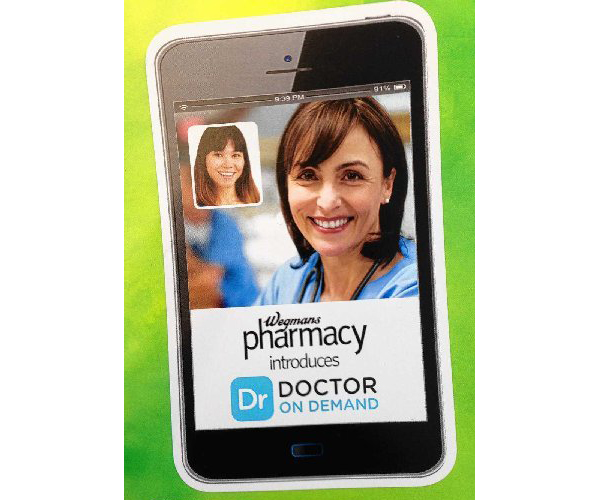
In the past couple of weeks, a grocery store launched a telemedicine pilot, a pharmacy chain expanded telehealth to patients in 25 states, and several new virtual healthcare entrants received $millions in investments. On a parallel track, the AMA postponed dealing with medical ethics issues regarding telemedicine, the Texas Medical Association got stopped in its tracks in a case versus Teladoc, and the Centers for Medicare and Medicaid Services (CMS) issued a final rule for the Medicare Shared Savings Program that falls short of allowing Accountable Care Organizations (ACOs) to take full advantage of telehealth services. These events beg the
Musings with Mary Meeker on the Digital/Health Nexus
People in the U.S. spend over five-and-a-half hours a day with digital media in 2015, with time on mobile devices exceeding use of laptop and desktop computers. The growth of mobile means people are using and seeking more just-in-time services in daily living, and this has big implications for health/care, based on the annual mega-report on Internet Trends from Mary Meeker, KPCB’s internet analyst. “People” in health/care are patients, consumers and caregivers; people in health/care are also health plan administrators, employer benefits managers, doctors, nurses, allied health professionals, financial managers in hospitals, pharmacists, and the entire range of humans who
Purchase of wearable fitness trackers expected to grow in 2015, but one-half of Americans would “never” buy one
Headphones and smartphones are the top two electronics products U.S. consumers intend to purchase in 2015. But the emerging consumer electronics categories of wearable fitness trackers, smart watches, and smarthome devices (especially “smart” thermostats) are positioned to grow, too, in 2015, according to the 17th Annual CE Ownership and Market Potential Study from the Consumer Electronics Association (CEA). Wearable trackers have an installed base of about 17 million devices in the U.S., with 11% of U.S. households intending to purchase a tracker in 2015 — 6 percentage points up from 2014 (about a 50% increase over 2014). There are about 6 million smart
Happy 25 million, MinuteClinic and CVS Health!
Call it a Silver Million Anniversary, if you will: The MinuteClinic just saw its 25 millionth patient. This is a milestone in the evolution and growth of retail health in America, a trend-marker in this growing health industry segment that will become increasingly used by consumers, patients, parents, and caregivers. CVS bought the MinuteClinic in 2006, when the organization treated seven illnesses. Today, MinuteClinic offers 65 services and vaccinations in nearly 1,000 clinics located in 31 states and Washington, DC. In addition, MinuteClinic will grow the number of clinic locations in both existing and new markets. The company will open
Consumers seek retail convenience in healthcare financing and payment
Health care consumers face a fragmented and complicated payment landscape after receiving services from hospitals and doctors, and paying for insurance coverage. People want to “view their bills, make a few clicks, pay…and be done,” according to Jamie Kresberg, product manager at Citi Retail Services, a unit of Citibank. He’s quoted in Money Matters: Billing and payment for a New Health Economy from PwC’s Health Research Institute. The healthcare service segment most consumers are satisfied with when it comes to billing and payment is pharmacies, who score well on convenience, affordability, reliability, and seamless transactions – with only transparency being
Capital investments in health IT moving healthcare closer to people

In recent weeks, an enormous amount of money has been raised by organizations using information technology to move health/care to people where they live, work, and play… This prompted one questioner at the recent ANIA annual conference to ask me after my keynote speech on the new health economy, “Is the hospital going the way of the dinosaur?” Before we get to the issue of possible extinction of inpatient care, let’s start with the big picture on digital health investment for the first quarter of 2015. Some $429 mm was raised for digital health in the first quarter of 2015,
Banks — a new entrant in the health/care landscape
TD Bank gifted free Fitbit activity trackers to new customers signing up for savings accounts in the 2015 New Year. John Hancock is discounting life insurance premiums for clients who track steps and take on preventive care strategies. And Banco Sabadell in Spain, along with Westpac in New Zealand and Standard Chartered in the United Kingdom are all piloting wearable technology for consumer financial management. Financial wellness is an integral part of peoples’ overall health, so financial services companies are putting their collective corporate feet into the health/care market. Banks and consumer investment companies are new entrants in health/care as
#OwnYourHealth: Health is everywhere, even underground
Living my mantra of Health is Everywhere, where we live, work, play, pray, and shop, I am always on the lookout for signs of health in my daily life. Today I’m in Washington, DC, speaking on a webinar led by the National Council on Patient Information and Education (NCPIE), discussing the findings in a survey of U.S. adults on self-care health care – my shorthand for healthcareDIY. And the hashtag for the webinar also speaks volumes: #OwnYourHealth. Here’s the link to the survey resources. On my walk from Farragut North Metro station to a nearby office where the meeting will take place,
It’s a retail health world: consumers at the helm of health/care
Retail health v1.0 encompassed the pharmacy, then embraced urgent care and retail health clinics co-located in brick-and-mortar pharmacy chain stores. In v2.0, retail health encompasses all health/care, really, because people, patients and consumers are essentially self-insured up to the point when their health plan kicks in some cash. The high-deductible health plan era is ushering in the retail health era, broadly writ. Hospitals & Health Networks magazine (HHN) ran a story titled Think Like a Retailer to Engage Patients, covering founder of WEGO Health Jack Barrette‘s and my panel presentation at the 2015 HIMSS conference in Chicago last week. Writer
Health is where we live, work, and shop…at Walgreens
Alex Gourley, President of The Walgreen Company, addressed the capacity crowd at HIMSS15 in Chicago on 13th April 2015, saying his company’s goal is to “make good health easier.” Remember that HIMSS is the “Health Information and Management Systems Society” — in short, the mammoth health IT conference that this year has attracted over 41,000 health computerfolk from around the world. So what’s a nice pharmacy like you, Walgreens, doing in a Place like McCormick amidst 1,200+ health/tech vendors? If you believe that health is a product of lifstyle behaviors at least as much as health “care” services (what our
“What If 1 Million Americans Asked for Medical Records on the Same Day?”
This was not a theoretical question Dr. Farzad Mostashari, former head of the Office of the National Coordinator of Health IT in the Department of Health and Human Services, asked yesterday at the closing keynote of Day 1 of the Patient Engagement Forum. Dr. Mostashari issued a challenged to the community of mischief-makers in health/tech patient advocacy: tell everyone you know to contact their doctors — by phone, email, patient portal, or in-person, on one designated day which he called a “Day of Action.” Health IT journalist Neil Versel (disclosure: also a long-time friend in the field) covered this news
Doctors who write right: Gawande, Topol and Wachter put people at the center of health/care
There’s a trifecta of books written by three brilliant doctors that, together, provide a roadmap for the 21st century continuum of health care: The Patient Will See You Now by Eric Topol, MD; The Digital Doctor from Robert Wachter, MD; and, Being Mortal, by Atul Gawande. Each book’s take provides a lens, through the eyes of a hands-on healthcare provider, on healthcare delivery today (the good, the warts and all) and solutions based on their unique points-of-view. This triple-review will move, purposefully, from the digitally, technology optimistic “Gutenberg moment” for democratizing medicine per Dr. Topol, to the end-game importance of
Transparency in health care: not all consumers want to look
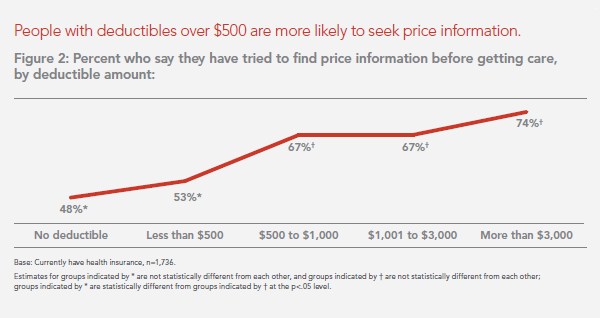
Financial wellness is integral to overall health. And the proliferation of high-deductible health plans for people covered by both public insurance exchanges as well as employer-sponsored commercial (private sector) plans, personal financial angst is a growing fact-of-life, -health, and -healthcare. Ask any hospital Chief Financial Officer or physician practice manager, and s/he will tell you that “revenue cycle management” and patient financial medical literacy are top challenges to the business. For pharma and biotech companies launching new-new specialty drugs (read: “high-cost”), communicating the value of those products to users — clinician prescribers and patients — is Job #1 (or #2,
Health is a growth industry at SXSW
Health is the hot topic at SXSW. While edgy new movies and hot music are the foundational elements of the annual South-by-Southwest festival, health and health care are the fast-growing themes at the meet-up, where the new-new, month-old beautiful JW Marriott Hotel by the Convention Center hosted most of the digital health track sessions. Digital health today goes well beyond mobile apps and genomic futures. Philips was a major presence this year at SXSW with its vision, shared by me, THINK-Health, and the HeathcareDIY team, of connected health where we live, work, play, pray and learn. In the case of
The Internet of Things in health care – technology for good in HuffPo
As sensors begin to proliferate our “Things,” from refrigerators to cars, toasters to t-shirt, our health could benefit mightily. Approaching this weekend’s South-by-Southwest Interactive meet-up in Austin, several authors have crowdsourced views on using technology for good in ImpactX, a special section in the Huffington Post sponsored by Cisco. I was asked to develop a view on using technology for good — for health and health care. Here’s my offering: How the Internet of Things Can Bolster Health. The promise of sensor-laden stuff in our lives can work for personal and public health in myriad ways — from perceiving impending epidemics
The blurring landscape of digital health: the Health 2.0 team puts it in focus
They’re the team that built a brand with the phrase “Health 2.0” before the world barely recognized v 1.0 in healthcare. This week, those folks that brought you the Health 2.0 Conference unveiled the Market Intel database of over 3,000 companies, trying to make sense out of a very blurry and fast-morphing market landscape. I spoke with Matthew Holt and Kim Krueger of Health 2.0 earlier this week to discuss just what’s in this mine of information, and what they intend to do with it. In full disclosure, I have been a colleague and friend of Matthew Holt since his
Digital health love – older people who use tech like health-tech, too
As people take on self-service across all aspects of daily living, self-care in health is growing beyond the use of vitamins/minerals/supplements, over-the-counter meds, and trying out the blood-pressure cuff in the pharmacy waiting for a prescription to be filled. Today, health consumers the world over have begun to engage in self-care using digital technologies. And this isn’t just a phenomenon among people in the Millennial generation. Most seniors who regularly use technology (e.g., using computers and mobile phones) are also active in digitally tracking their weight, for example, learned in a survey by Accenture. Older people who use technology in daily
Most people want to go digital for health – especially the un-well
2 in 3 people in the U.S. would use a mobile app to manage their health, especially for diet and nutrition, medication reminders, tracking symptoms, and recording physical activity. The fifth annual Pulse of Online Health survey from Makovsky finds that digital health is blurring into peoples’ everyday lives. We’ve covered previous Makovsky digital health surveys here on Health Populi; last year, we focused on consumers managing risk in digital health platforms, and in 2013, the state of seeking health information online. That most consumers would go beyond health information search to the more engaging pursuit of managing health over
Employers grow wellness programs, and ramp up support for fitness tech
Offering wellness programs is universal among U.S. employers, who roughly divide in half regarding their rationale for doing so: about one-half offer wellness initiatives to invest in and increase worker health engagement, and one-half to control or reduce health care costs. Two-thirds of companies offering wellness will increase their budgets, according to the International Foundation of Employee Benefit Plans (IFEBP) report, Workplace Wellness Trends, 2015 survey results. The IFEBP polled 479 employers in October 2014, covering corporate, public, and multi-employer funds in the U.S. and Canada. The statistics discussed in this post refer solely to U.S. organizations included in the study
Physicians and mobile health – moving from “mobile” to simply “care”
February may be American Heart Month, African-American History Month, and Marfan Syndrome Awareness Month. But based on the volume of studies and reports published in the past two weeks, ’tis also the season for talking mobile health and doctors. This Health Populi post trend-weaves the findings. The big picture for mobile in health is captured by Citrix in its Mobile Analytics Report, dated February 2015. Everyday people are using mobile in work and daily living, blurring the distinctions between the various hats people wear. These roles, whether business or pleasure or life, happen 24×7, enabling through mobile platforms, Citrix found.
Privacy and the Internet of Your Healthy Things – the FTC says less (data) is more
The FTC has weighed in on privacy and security and the Internet of Things (IoT) in a report published on 27th January 2015. When it comes to IoT and devices that connect to the internet, the FTC will focus on Enforcing privacy laws Educating consumers and business on privacy and security for connected devices Participate in multi-stakeholder groups such as the NTIA’s team considering guidelines for facial recognition, and Advocate with other agencies, at the state level, and with courts. The report summarizes input received in a FTC workshop conducted in November 2013 with IoT industry experts, and offers recommendations
Telehealth is in demand, driven by consumer convenience and cost – American Well speaks
Evidence of the rise of retail health grows, with the data point that on-demand health care is in-demand by 2 in 3 U.S. adults. American Well released the Telehealth Index: 2015 Consumer Survey, revealing an American health public keen on video visits with doctors as a viable alternative to visiting the emergency room. Virtual visits are especially attractive to people who have children living at home. [For context, this survey defines “telehealth” as a remote consultation between doctor and patient]. Convenience drives most peoples’ interest in telehealth: saving time and money, not leaving home if feeling unwell, and “avoiding germs
Building the health ecosystem: new bedfellows coming together
2015 is already becoming a year where bedfellows of different stripes are joining together to build a health care ecosystem well beyond hospitals, doctors and health plans. Announcements launched last week at the 2015 Consumer Electronics Show in Las Vegas, and coming out this week at the J.P. Morgan Conference in San Francisco, the first two weeks of 2015 reveal that new entrants and legacy health stakeholders are crossing corporate and cultural chasms to (try and) solve challenges that prevent us from getting to that Holy Grail of The Triple Aim: improving health care outcomes, driving down per capita costs,
More from the 2015 CES – Shelly Palmer’s 3 Laws of the Digital World and What They Mean for Health Care
Three laws that shape the digital world have kicked into high gear, changing our lives in ways we cannot yet imagine. Those three forces are Metcalfe’s Law (in brief, the increasing value of networks), Moore’s Law (that processing power doubles every 18 months, or even faster), and the Law of Accelerating Returns (the fast pace of technological change). The guy who told me about that at the 2015 Consumer Electronics Show (#CES2015) was Shelly Palmer, something of a Renaissance Man in the evolving digital world, advising communications companies, composing music, patenting TV technology, investing in ventures, hosting shows on digital living,
Getting real about consumer demand for wearables: Accenture slows us down
Are you Feelin’ Groovy about wearables? Well slow down, you move too fast… …at least, according to Accenture’s latest survey into consumers’ perspectives on new technologies, published this week in conjunction with the 2015 Consumer Electronics Show in Las Vegas, the largest annual convention in the U.S. featuring technology for people. At #CES2015, we’re seeing a rich trove of blinged-out, multi-sensor, shiny new wearable things at the 2015 Consumer Electronics Show. Swarovski crystals are paired with Misfit Wearables, called the Swarovski Shine, shown here as a shiny new thing, indeed. Withings launched its Activite fitness tracking watch in new colors.
The Internet of Healthy Me – putting digital health in context for #CES2015
Men are from Mars and Women, Venus, when it comes to managing health and using digital tools and apps, based on a poll conducted by A&D Medical, who will be one of several hundred healthcare companies exhibiting at the 2015 Consumer Electronics Show this week in Las Vegas. Digital health, connected homes and cars, and the Internet of Things (IoT) will prominently feature at the 2015 Consumer Electronics Show in Las Vegas this week. I’ll be attending this mega-conference, meeting up with digital health companies and platform providers that will enable the Internet of Healthy “Me” — consumers’ ability to self-track,
Health IT Forecast for 2015 – Consumers Pushing for Healthcare Transformation
Doctors and hospitals live and work in a parallel universe than the consumers, patients and caregivers they serve, a prominent Chief Medical Information Officer told me last week. In one world, clinicians and health care providers continue to implement the electronic health records systems they’ve adopted over the past several years, respond to financial incentives for Meaningful Use, and re-engineering workflows to manage the business of healthcare under constrained reimbursement (read: lower payments from payors). In the other world, illustrated here by the graphic artist Sean Kane for the American Academy of Family Practice, people — patients, healthy consumers, newly insured folks,
Women are natural disruptors for health
“Disruption” is a well-used word these days in business and, in the past few years, in the health care business. That’s because there’s a general consensus that the U.S. health care system is broken. “System” is a word that I shouldn’t use as my friend J.D. Kleinke smartly argued that it’s that lack of system-ness that makes using the phrase “health care system” an Oxymoron. The fragmented health care environment creates innumerable pain points when accessing, receiving, and paying for services. And it’s women who feel so much of that pain. In that context, I’m gratified and humbled to be one
Irrational exuberance in mobile health? Live from the mHealth Summit 2014
Mobile and digital technologies will bend the health care cost curve, drive individual and population health, and solve the nagging challenge of health disparities. Mobile and digital technologies will increase costs to health providers, disrupt work flows and lower clinicians’ productivity, and hit a market bubble. Depending on your lens into mHealth, and what product categories and user segments you’re looking at, all of the above can be true. The plenary session of the 2014 mHeath Summit kicked off with Dr. Harry Leider, Chief Medical Information Officer of Walgreens, who spoke of the pharmacy’s evolving role across the entire continuum of care,
Self-care is the new black in health care
Consumers’ growing health care cost burden is competing with other household spending: basic costs for Americans are eroding what’s left of the traditionally-defined Middle Class. At the front end of health costs is the health insurance premium, the largest single line item for a family. It looks like a big number because it is: Milliman gauged the cost for an employer to cover a family of four in a PPO in the U.S. at around $23K, with the employee bearing an increasing percent of the premium, copays, coinsurance, and a larger deductible this year than last, on average. There are
Digital and mobile health: can doctors and consumers get on the same wavelength?
There’s growing interest among both consumers and clinicians in people DIY’ing healthcare. Consumers are even keener than their doctors about the self-care concept, PwC’s Health Research Institute has found. Doctors who are already in value-based payment mode — participating in accountable care organizations, at-risk for reimbursement, doing population health — are earlier adopters of digital health tools that enable patients to care for themselves outside of the health care setting. These providers are also working more on care teams, where physicians can work at their ‘highest and best use,’ complemented by nurse practitioners, physician assistants, diabetes educators, and other ancillary
Power to the health care consumer – but how much and when?
Oliver Wyman’s Health & Life Sciences group names its latest treatise on the new-new health care The Patient-to-Consumer Revolution, subtitled: “how high tech, transparent marketplaces, and consumer power are transforming U.S. healthcare.” The report kicks off with the technology supply side of “Health Market 2.0,” noting that “the user experience of health care is falling behind” other industry segments — pointing to Uber for transport, Amazon for shopping, and Open Table for reserving a table. The authors estimate that investments in digital health and healthcare rose “easily ten times faster” than the industry has seen in the past. Companies like
Live from the 11th annual Connected Health Symposium – Keeping Telehealth Real
Dr. Joseph Kvedar has led the Center for Connected Health for as long as I’ve used the word “telehealth” in my work – over 20 years. After two decades, the Center and other pioneers in connected health have evidence proving the benefits, ROI (“hard” in terms of dollars, and “soft” in terms of patient and physician satisfaction), and technology efficacy for connecting health. The 11th Annual Connected Health Symposium is taking place as I write this post at the Seaport Hotel in Boston, bringing health providers, payers, plans and researchers together to share best practices, learnings and evidence supporting the
PwC on wearables – the health opportunity is huge, but who will pay?
“A wearable future is around the corner,” PwC says. So it’s appropriate the consulting firm’s new report is indeed titled The Wearable Future. Wearable technologies — smartwatches, sensor-laden workout gear, activity tracking wristbands, and Google Glass, among them — are more than individual tracking and information devices. They’re part of a larger ecosystem called The Internet of Things (IoT), which is made of lots of stuff, each ‘thing’ incorporating a sensor that measures something. Those measurements can track virtually everything that someone does throughout the day: beyond the obvious steps taken, hours slept, and GPS coordinates, sensors can sense movement
Health care as a retail business
The health care industry is undergoing a retail transformation, according to Retail Reigns in Health Care: The rise of consumer power and its organization & workforce implications from Deloitte. Deloitte’s report published in October 2014 focuses on the health insurance business, which is newly-dealing with uninsured people largely unfamiliar with how to evaluate health plan options. This by any definition requires new muscles for both buyers and sellers on a health insurance exchange: new product access + uninformed consumer = retail challenge. Deloitte notes another supply and demand challenge, and that’s with the health insurance company workforce: while 93% of health
Walgreens+WebMD: reinventing retail pharmacy
With the goal of driving a digital health platform for well-informed, effective self-care, the nation’s largest retail pharmacy chain and prominent consumer-facing health information portal are allying to move from serving up pills and information to health “care.” Walgreens and WebMD launched their joint effort on 2nd October 2014, a few weeks after CVS/pharmacy re-branded as CVS Health. Welcome to the reinvention of the retail pharmacy. I spoke for a few minutes with David Schlanger, CEO, WebMD, and Alex Gourlay, President, Customer Experience and Daily Living, Walgreens, the day of the launch, to get early insights into the vision for
Activity tracking is consumers’ #1 demand for smartwatches
Of all the functions a smartwatch could play, it’s activity tracking that’s top of most consumers’ minds. GfK conducted a survey in August 2014 among 5,000 smartphone-owning consumers in five countries — China, Germany, South Korea, the UK, and the U.S. The market research firm found that 29% of people see “activity tracking” the most important function. Phone calls ranked second with 13% of consumers, telling time 11%, and 10% voted for basic apps and navigation system. 7% of consumers noted the smartwatch would be desirable for basic web search. In this survey, activity tracking included the broad definition covering
Health-wear – at Health 2.0, health met fashion, function and care
Wearables met health and medicine at the 8th annual Health 2.0 Conference in Santa Clara, CA, last week. I had the real pleasure of shepherding a wearables panel of five innovators during the conference, in a well-attended session followed by an energetic Q&A. The organizations who demonstrated their tools and brainstormed the wearables market included, in alphabetical order, Atlas Wearables, Heartmath, MySugr, SunSprite and Withings. I hasten to add that among the five presenters, two were women: that 2 in 5 = 40% gender representation is, happily to my way of thinking about women’s roles in health-making, a very good
Crossing the digital health chasm between consumers and providers – talking with Dr. Eric Topol
More than twice as many patients than physicians are embracing consumers’ use of new digital technologies to self-diagnose medical conditions on their own. On the other hand, 91% of doctors are concerned about giving patients access to their detailed electronic health records, anticipating patients will feel anxious about the results; only 34% of consumers are concerned about anxiety-due-to-EHR-exposure. Welcome to the digital health chasm, that gap between what consumers want out of digital health, and what doctors believe patients can handle at this stage in EHR adoption in doctors’ offices and in patients’ lives. I have the video of Jack
Health info disconnect: most people view accessing online records important, but don’t perceive the need to do so
There’s a health information disconnect among U.S. adults: most people believe online access to their personal health information is important, but three-quarters of people who were offered access to their health data and didn’t do so didn’t perceive the need to. The first two graphs illustrate each of these points. When people do access their online health records, they use their information for a variety of reasons, including monitoring their health (73%), sharing their information with family or care providers (44%), or downloading the data to a mobile device or computer (39%). In this context, note that 1 in 3
Health on the 2014 Gartner Hype Cycle
Remote health monitoring is in the Trough of Disillusionment. Wearables are at the Peak of Inflated Expectations, with Big Data leapfrogging wearables from the 2013 forecast — both descending toward the Disillusionment Trough. Mobile (remote) health monitoring, however, has fallen into that Trough of Disillusionment as RHM has been undergoing reality checks in the health care system especially for monitoring and patient self-management of heart disease (most notably heart failure) and diabetes. Welcome to the 2014 edition of the Gartner Hype Cycle, one of my most-trusted data sources for doing health industry forecasts in my advisory work. Compared with last year’s
Inflection point for telehealth in 2014
The supply side of telehealth has been readying itself for nearly a decade. The demand side appears to be aligning in 2014 for adoption to grow and sustain (some) solid business models. On the demand side, Towers Watson’s 2014 survey of large employers forecasts growth among companies that will offer telemedicine in 2015. Towers found that 37% of employers planned to offer telemedicine to workers as a lower-cost site of care; 34% more employers were considering telemedicine in 2016 or 2017. The health benefits adviser calculates that employers could save over $6 billion if industry replaces virtual health consultations with
Blurred lines: health, pharmacy, food and care
In the past few weeks, several events bolster the reality that health and health care are in Blurred Lines mode. Not Robin Thicke Blurred Lines, mind you, but the Venn Diagram overlapping kind. Walmart launched real primary care clinics in South Carolina and Texas. These will provide services beyond urgent care, charging $4 a visit for company employees and $40 a visit for other people The U.S. Department of Agriculture issued a report promoting “nudges” to grocery shoppers enrolled in the Supplemental Nutrition Access Program (SNAP) to buy healthy foods Apple is talking with Cleveland Clinic, Johnson Hopkins, and Mount Sinai Medical
Novel concept: people + health pricing information = market competition
In the post-Recession American economy, people shop for value in all things. And that includes health care services like MRIs — when patients are informed of pricing differences among imaging facilities and given free rein to pick-and-choose among them. In addition to lowering imaging costs in a community, price transparency also generated competition between providers. Health Affairs published this research detailed in Price Transparency for MRIs Increased Use of Less Costly Providers And Triggered Provider Competition in August 2014. An Economics 101 course teaches us that a well-oiled (perfect) market depends on lots of sellers of a product and lots of
Do EHRs “chill” patient disclosures to clinicians?
Patients are concerned about private risks of personal health data, resulting in some patients not disclosing certain information to health providers to protect their perceived EHR privacy and security risks. Peoples’ mixed feelings about sharing personal health information with their providers and EHRs is explored in The double-edged sword of electronic health records: implications for patient disclosure, published in the July 2014 issue of JAMIA, the Journal of the American Medical Informatics Association (AMIA). “The perception of the [EHR] technology may elicit non-disclosure as a privacy-protecting behavior,” the authors warn. Celeste Campos-Castillo and Denise Anthony, the paper’s researchers who work in
Hyperconnected Healthcare – The Need for Cyber-Resilience
The growth of data, small and Big, in health care motivates the industry’s stakeholders to adopt technologies that help store, manage and analyze data to drive knowledge and, ultimately, individual and public health. Healthcare is embracing cloud technology, mobile platforms, social networks, e-commerce, robotics, and the Internet of Things (IoT), among a growing list of tech innovations. Each of these innovations, which enable productivity and economic growth, also present cybersecurity risks. The value of these risks is estimated to be as much as $3 trillion to the global economy, according to McKinsey’s calculations in the report Risk and Responsibility in
Who’s Looking at You? consumer-generated data, Big Data, & health
Opportunities abound for sharing data “for good” – to turbocharge clinical trials, inform medical research, anticipate and better manage epidemics, and focus on individual health goals benchmarking oneself vs. peers. At the same time, third party data brokers and marketing interests with which consumers have no direct connection of knowledge are scraping together bits of personal information from internet clouds, social networks, and retail data from which profits are made. And that value does not accrue to the very individuals whose data are being sold. Here’s Looking At You: How Personal Health Information Gets Tracked And Used, published by California HealthCare
Homo informaticus – the global digital consumer
Consumers around the world are feeling more knowledgeable, self-confident and realistic, enabled by mobile platforms, the democratic power of social “choruses,” and a more sharing economy featuring collaborative consumption. As peoples’ phones get smarter and smarter, they carry more powerful multichannel information devices in their hands which empower Homo Informaticus – the new global digital consumer, described in EY’s report, How to copilot the multichannel journal. EY polled 29,943 consumers in the Consumers on Board survey living in 34 countries: across the Americas, Asia-Pacific, the Middle East, India and Africa. Homo informaticus is the rational consumer smartly using technology to filter information.
How smart do you want your home to be?
Smarter homes can conserve energy, do dirty jobs, and remind you to take your medicine. In doing all these things, smart homes can also collect data about what you do inside every single room of that home. The fast convergence of Wi-Fi and sensors are laying the foundation for the Internet of Things, where objects embedded with sensors do things they’re specially designed to do, and collect information while doing them. This begs the questions: what do you want to know about yourself and your family? How much do you want to know? And, with whom do you want to
Dialing Dr. Verizon – the telecomms company launches virtual house calls
Expanding its wireless footprint in health care, Verizon, the telecommunications company, announced the start of Verizon Virtual Visits today. The program will be marketed to employers and health plans to enable patients to see doctors at home or when traveling, via Verizon’s wireless network. I spoke with Christine Izui, Verizon’s quality officer, mobile health solution, earlier this week about Virtual Visits. We discussed the market forces that support the growth of telehealth and, in particular, physician visits “anywhere:” There is an under-supply and poor distribution of primary care doctors and certain specialties around the U.S. Employers and health plan sponsors are
People want mobile health by phone, and FICO knows it
Most people (54%) want their mobile phones to enable health care interactions, according to Mobile Thought Leadership, a paper from FICO that summarizes data from a survey conducted with health citizens around the world. FICO conducted research among 2,239 adult smartphone users in the UK, Australia, Brazil, China, France, Germany, India, Italy, Japan, Korea, Mexico, Russia, Turkey and the United States. The data discussed here in Health Populi refer to a subset covering just U.S. consumers. Among the one-half of consumers interested in doing more health care interactions via mobile in the future, the most popular options are: receiving reminders of appointments,
The VA is a telehealth leader
“Telehealth isn’t about seeing a provider by video: it’s about decision making,” Dr. Adam Darkins, leader of the U.S. Department of Veterans Affairs National Telehealth Programs, told the audience in his keynote address at the Government Health IT Conference in Washington, DC, on June 17, 2014. Dr. Darkins, trained as a neurosurgeon, realized earlier in his career “time and again,” he said, that he should have seen his patients more frequently in-between face-to-face visits. “A good decision downstream can make a lot of difference to someone’s longevity,” Dr. Darkins recognized. He’s worked with a team at the VA to build
Online is to go-to place for health insurance info, but lots of uninsured people live offline
A vast majority of people shopping for a health plan on a Health Insurance Exchange for coverage in 2014 obtained information online via websites. One-half of these shoppers used only online information, and 29% combined both websites and other sources like direct assistance, informal assistance, and via (offline) media. In the Health Reform Monitoring Survey from the Urban Institute Health Policy Center, a research team, funded by the Robert Wood Johnson Foundation and the Ford Foundation, looked into data collected from the Health Reform Monitoring Survey in March 2014 at the end of the 2014 open enrollment period for the
Practice Fusion joins the open health data community with Insight
Open data is a growing trend in health care. Analyzing data sets across lots and lots of people can help researchers identify medical cures, anticipate epidemics, and solve knotty problems where social and behavioral issues complicate clinical questions and solutions. Joining the open health data community is the health IT company Practice Fusion, which is sharing with the public aggregated data on some 81 million patients collected through over 100,000 active users every month recording patient data in the company’s cloud-based electronic health records system. Insight, the searchable database, is freely available to people, researchers, policymakers, and anyone who wants to look at top line
Privatizing health privacy in the US?
8 in 10 people in the U.S. believe that total privacy in the digital world is history, based on a survey from Accenture conducted online in March and April 2014 and published in the succinctly-titled report, Eighty Percent of Consumers Believe Total Data Privacy No Longer Exists. 84% of U.S. consumers say they’re aware what tracking personal behavior can enable – receiving customized offers and content that match one’s interests. At the same time, 63% of people in the U.S. also say they have a concern over tracking behavior. Only 14% of people in the U.S. believe there are adequate safeguards
Health care at an inflection point: digital trends via Mary Meeker
When Mary Meeker talks, the digerati listen. Meeker is the digital industry analyst who’s a partner at KPCB, a venture capital company, in Silicon Valley. Each year she publishes a report on the state of the digital marketplace. Her 2014 paper, Internet Trends 2014 – Code Conference (dated May 28 2014) is online, and as usual, it’s full of data points on both digital technology segments along with some vertical industry findings – in education, financial services, and health, among other segments. I’ve combed through the 164 pages of the PDF to trend-weave the health implications. When it comes to health, the
The Season of Healthcare Transparency – Consumer Payments and Tools, Part 4
“The surge in HDHP enrollment is causing patients to become consumers of healthcare,” begins a report documenting the rise of patients making more payments to health providers. Patients’ payments to providers have increased 72% since 2011. And, 78% of providers mail paper statements to patients to collect what they’re owed. “HDHPs” are high-deductible health plans, the growing thing in health insurance for consumers now faced with paying for health care first out-of-pocket before their health plan coverage kicks in. And those health consumers’ expectations for convenience in payment methods is causing dissatisfaction, negatively affecting these individuals and their health providers’
The Season of Healthcare Transparency – HFMA’s Price Transparency Manifesto – Part 1
As Big Payors continue to shift more costs onto health consumers in the U.S., the importance of and need for transparency grows. 39% of large employers offered consumer-directed health plans (CDHPs) in 2013, and by 2016, 64% of large employers plan to offer CDHPs. These plans require members to pay first-dollar, out-of-pocket, to reach the agreed deductible, and at the same time manage a health savings account (HSA). In the past several weeks, many reports have published on the subject and several tools to promote consumer engagement in health finance have made announcements. This week of posts provides an update on
In a world of digital health data, more sick people trade off privacy risks
People managing chronic diseases are more likely to have accessed information in their electronic medical records — and are also less likely to worry about the privacy risks of their personal electronic health information compared with people who are healthy. Over 2,000 people, both those who say they’re healthy and those with chronic conditions, were surveyed by Accenture in February-March 2014, and their responses are summarized in the report, Consumers with Chronic Conditions Believe the Ability to Access Electronic Medical Records Outweighs Concern of Privacy Invasion. Slight more consumers are concerned about privacy risks related to online banking, online shopping,
The retailization of digital health: Consumer Electronics Association mainstreams health
The Consumer Electronics Association (CEA) has formed a new Health and Fitness Technology Division, signalling the growing-up and mainstreaming of digital health in everyday life. The CEA represents companies that design, manufacture and market goods for people who pay for stuff that plugs into electric sockets and operate on batteries — like TVs, phones, music playing and listening, kitchen appliances, electronic games, and quite prominent at the 2014 Consumer Electronics Show, e-cigarettes (rebranding “safe smoking” as “vaping” technology). In its press release announcing this news, CEA President and CEO Gary Shapiro says, “Technology innovations now offer unprecedented opportunities for consumers to
The new health economy, starring the consumer
“In the New Health Economy, ‘patients’ will be ‘consumers’ first, with both the freedom and responsibility that come with making more decisions and spending their own money.” This vision of the near-future is brought to you by the New Health Economy, a report from PwC’s Health Research Institute (HRI). The chart attests the fact that U.S. “consumers” are already spending nearly $3 trillion (with a capital “T”) on products and services that bolster personal health. This spending includes $94 billion on nutrition, $62 billion on weight loss, $59 billion on sporting goods and apparel, $45 billion on (so-called) organic and
Wearable tech + the workplace: driving employee health
Employer wellness programs are growing in the U.S., bundled with consumer-directed plans and health savings accounts. A wellness company’s work with employee groups is demonstrating that workers who adopt mobile health technologies — especially “wearables” coupled with smartphone apps — helps change behavior and drive health outcomes. Results of one such program are summarized in Wearables at Work, a technical brief from Vitality, a joint venture of Humana and Discovery Ltd., published April 23, 2014. Vitality has been working in workplace wellness since 2005, first using pedometers to track workers’ workouts. In 2008, Vitality adopted the Polar heart rate monitor for
The appification of health – a bullish outlook from Mobiquity
Over half of people using health and fitness apps began using them over six months ago, and one-half of these people who have downloaded health and fitness apps use them daily according to survey research summarized in the report, Get Mobile, Get Healthy: The Appification of Health and Fitness from Mobiquity. The company contracted a survey conducted among 1,000 U.S. adults in March 2014 who use or plan to use mobile apps to track health and fitness. Thus the “N” in this study was a group of people already interested in self-tracking health and not representative of the broader U.S. consumer
Your health score: on beyond FICO
Over one dozen scores assessing our personal health are being mashed up, many using our digital data exhaust left on conversations scraped from Facebook and Twitter, via our digital tracking devices from Fitbit and Jawbone, retail shopping receipts, geo-location data created by our mobile phones, and publicly available data bases, along with any number of bits and pieces about ‘us’ we (passively) generate going about our days. Welcome to The Scoring of America: How Secret Consumer Scores Threaten Your Privacy and Your Future. Pam Dixon and Robert Gellman wrote this well-documented report, published April 2, 2014 by The World Privacy Forum.
Doctors and mHealth apps: chaos, evidence, creation
Over one year ago, an eClinicalWorks survey found that 9 in 10 physicians would be interested in prescribing a mobile health app to a patient. That’s a big number. That’s “interest,” but that demand hasn’t yet been expressed in the current go-go app-happy environment. An opinion piece in this week’s Online First edition of the Journal of the American Medical Association (JAMA) demonstrates the fork-in-the-road facing clinicians and the disruption/opportunity that is mobile health. In “In Search of a Few Good Apps,” a Boston-based trio of writers (two physicians and one PhD) talk about “the bewildering diversity of apps available
People want to DIY with pharma
In our increasingly-DIY society, most consumers expect high levels of access and customer service from the organizations with whom we engage. With more consumers reaching into their pockets to pay for health services and products, the health industry is increasingly a retail-facing environment. So expect quality service levels from their healthcare touch points. The pharmaceutical and prescription drug touch point is not exempt from this expectation, as learned by an Accenture survey analyzed in Great Expectations: Why Pharma Companies Can’t Ignore Patient Services. As the first picture shows, 70% of patients think pharma companies are responsible for bundling information and services
Health care in a multiscreen world
In 2014, we are digital omnivores. Most people “consume” information and entertainment on more than one screen: 7 hours’ worth over a 5-hour period. You read that right: most people who watch TV, use a laptop or PC, smartphone or tablet are multitasking use of these devices in parallel. And above all, people are using smartphones as their primary screen. The AdReaction: Marketing in a multiscreen world report from Millward Brown paints a picture of global consumers who are cobbling together multiscreen experiences. The smartphone has become the “do it all” device if you don’t carry a laptop or tablet around, especially favored
Why a grocery chain supports health data liquidity
The CEO of a family-owned grocery store chain wrote a letter to New York State lawmakers to support $65 million worth of spending on a computer system for health information in the state. That grocer is Danny Wegman, and that project is the Statewide Health Information Network, aka SHIN-NY. In his letter beginning, “Dear New York Legislator,” Wegman identifies several benefits he expects would flow out of the health IT project: 1. Improve health care for all New Yorkers 2. Lower health care costs, through reducing hospital readmission rates and reducing duplicate testing. 3. Lead to health data “liquidity” (my
The four futures of health care: simple, guru, ecosystem, self-care
In the not-too-distant future, will our health care be universally available to all, standardized with limited choices? Or, will we be in self-care mode, able to “buy up” if we can afford it like luxury goods? Will health care delivery be totally tech- and information-driven? Or, will care be driven by insurers’ health plans with artful designs that (almost) predetermine our choices? Welcome to four futures of health care, brought to us by PA Consulting whose report, How Can We Stop Healthcare From Bankrupting Our Children? speaks to scenarios based on 2 uncertainties, whether: Health care will be a personal
 Jane will be working with EU- and UK-based clients in September and October 2026, collaborating with stakeholders in digital health, public/community health, retail health, and growing opportunities for health-at-home. Stay tuned to her updates here on Health Populi on-the-ground as she lives the digital nomadic work-life in Italy, Belgium, the Netherlands, and in London.
 I was grateful to be Jasmine's first conversation-guest on her new podcast, "Aperture - Widen the Frame," where this expert in narrative medicine is bringing together the broad range of voices to sit at the table and address what health care needs: those humans in the health-system-loop who address health equity and empathy along with delivering evidence-based medicine for all.
 Jane joined host Dr. Geeta "Dr. G" Nayyar and colleagues to brainstorm the value of vaccines for public and individual health in this challenging environment for health literacy, health politics, and health citizen grievance. Click onto the Pfizer Value of Vaccines site and you can watch four episodes covering the challenges with adult vaccination, the employer and health plan member's journey to vaccination, reimbursement, and collaborating for proactive prevention.