


Your Zip Code Is Your Wellness Address
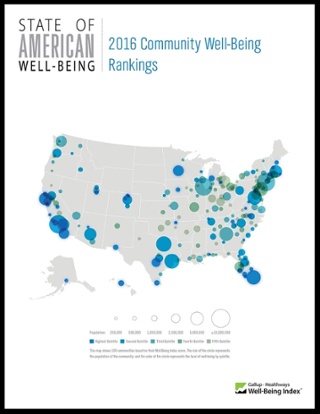
Geography is destiny, Napoleon is thought to have first said. More recently, the brilliant physician Dr. Abraham Verghese has spoken about “geography as destiny” in his speeches, such as “Two Souls Intertwined,” The Tanner Lecture he delivered at the University of Utah in 2012. Geography is destiny for all of us when it comes to our health and well-being, once again proven by Gallup-Healthways in The State of American Well-Being 2016 Community Well-Being Rankings. The darkest blue circles in the U.S. map indicate the metro areas in the highest-quintile of well-being. The index of well-being is based on five metrics, of consumer self-ranking
Stress Is A Social Determinant of Health – Money and Politics Top the List in 2017

The American Psychological Association reports that Americans are experiencing greater levels of stress in 2017 for the first time since initiating the Stress in America Survey ten years ago in 2007. This is a statistically significant finding, APA calculated. The member psychologists of the American Psychological Association (APA) began to report that patients were coming to appointments increasingly anxious about the 2016 Presidential election. So the APA polled U.S. adults on politics for the first time in ten years of conducting the Stress in America survey. Two-thirds of Americans are stressed and/or anxious about the future of the nation, and
How Amazon Has Primed Healthcare Consumers – My Update with Frances Dare, Accenture

“I want what I want, when and how I want it.” If you think that sounds like a spoiled child, that’s not who I’m quoting. It’s you, if you are a mainstream consumer in the U.S., increasingly getting “primed” by Amazon which is setting a new bar for retail experience in terms of immediacy, customer service, and breadth of offerings. I talked about this phenomenon in my Health Populi post, How Amazon Has Primed Healthcare Consumers. The blog discussed my take on Accenture’s latest study into healthcare consumers based on the report’s press release. I appreciated the opportunity to sit
Doctors See Benefits in Patient Engagement Via Health IT
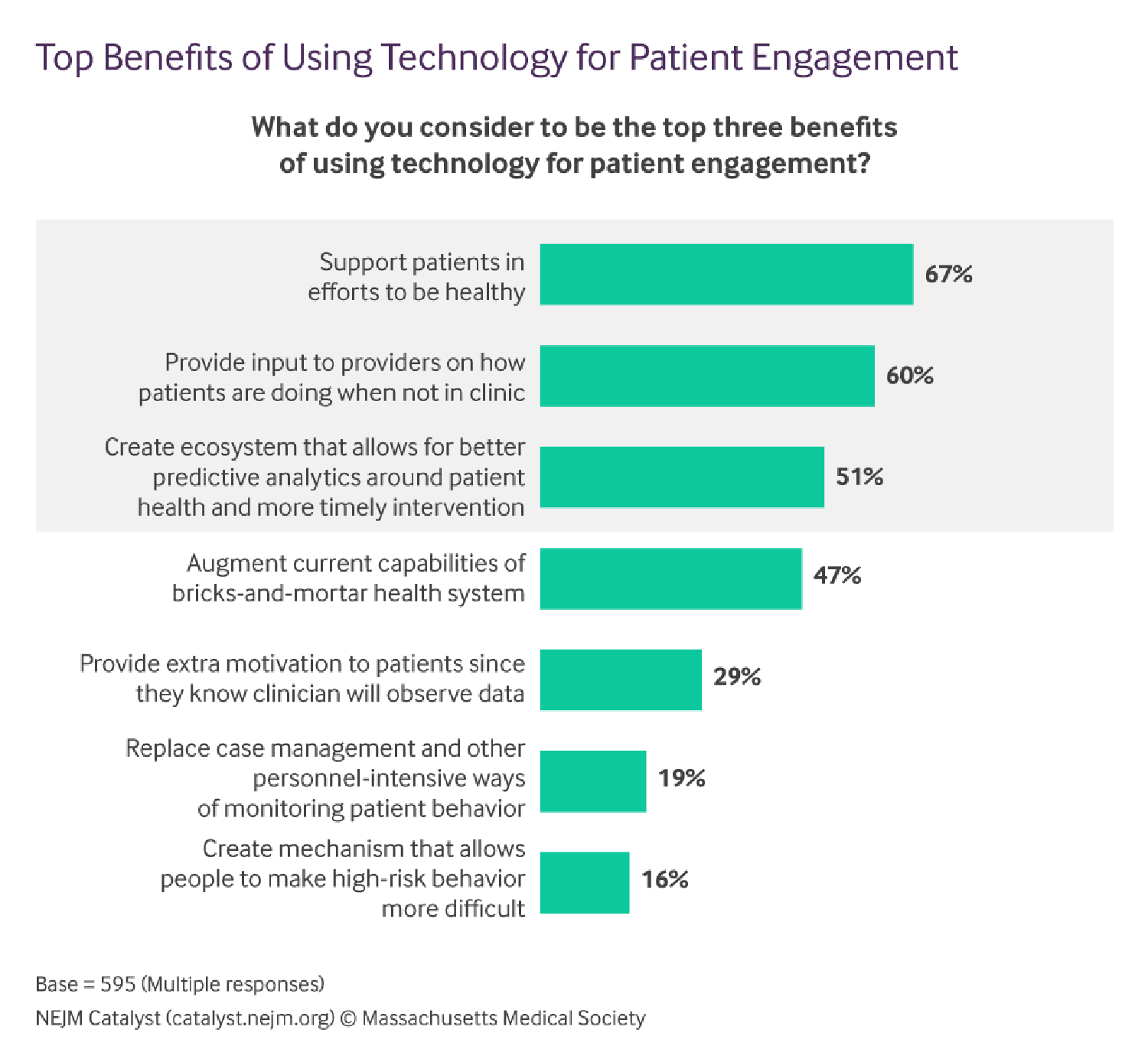
A special report on patient engagement and digital technology was published this month in the New England Journal of Medicine (NEJM). Based on a survey of doctors and healthcare executives, the research found that clinicians and managers welcome the opportunity to use digital tech — when it makes financial sense. That conclusion inspired the title of the article, Patient Engagement Survey: Technology Tools Gain Support – But Cost Is a Hurdle. NEJM polled 595 members of the NEJM Catalyst Insights Council, which included healthcare executives and clinicians who deliver healthcare. Here is NEJM’s scenario on patient-engaging health IT, a Holy Grail of sorts:
The Health Disparity of Information Access
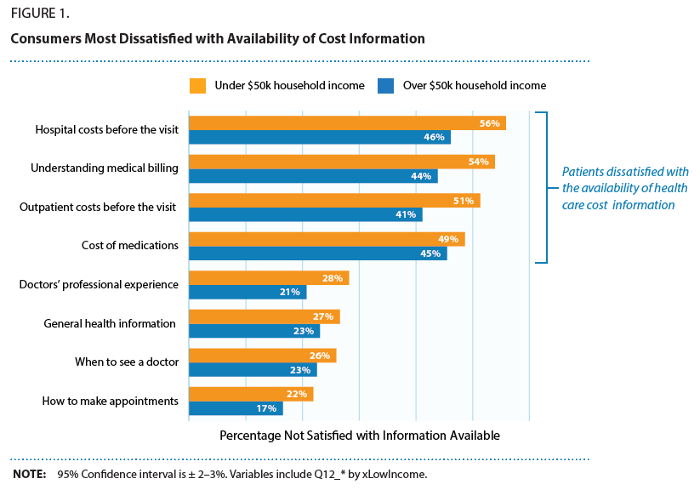
Among many health disparities which mar healthcare quality in the United States, there’s another one to add to the list: health and healthcare information access. Access to health care is underpinned in large part on a health consumer’s access to information about available health care services, their location, price, and if the patient is very fortunate to glean, quality. As people take on more responsibility for managing their health care utilization and financing in America, their access to information that is easy-to-find, clear, comprehensive and current is critical to personal and public health outcomes. But consumers are dissatisfied with the
Health/Care Data Ecosystems E-merge at CES 2017

Digital health innovations were fast-proliferating at CES 2017. The bad news is there are so many of them, it’s dizzying and fragmented. The good news is that there are emerging health data ecosystems that will streamline consumers’ user experience so that people can derive knowledge, actionable advice and value out of using these tools. Walking miles of aisles in the Sands Convention Center in the first week of January 2017 can be a dizzying prospect, with hype and best-faces-forward in every single exhibitor at the show. In the health segment at CES, there’s a long list of digital tools to
Replacing Opioids with Digital Tech for Pain at CES 2017
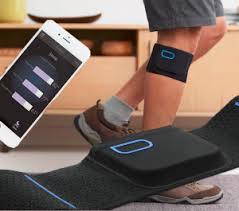
Pain management is a growing story at CES 2017. I covered the topic of Sleep and Pain at CES one year ago in the Huffington Post, and this year, the category has grown in both number of innovations and mode of pain management. At CES 2017, there were exhibitors of FDA-approved devices, sleep-and-pain focused tech, wristbands for relaxation and nausea-management, and a $5,999 device for calming meditation that’s being used in addiction programs. What’s driving growth and acceptance of this health tech segment is the opioid crisis which has become a public health epidemic across the U.S. The maps with increasing orange
Health Is Personal at the Connected Health Summit
“Because health is personal” is the tagline at the 2016 Connected Health Conference being held at the Gaylord Resort in National Harbor in metro Washington, DC. “Personal,” “Connected,” and “Health” are the three words that comprise the adjectives in the Personal Connected Health Alliance, the host of this conference. PCHA was formed through the merger of HIMSS, the health IT association, and Continua, the organization advocating for health technology “interoperability” — the ability for digital and communications technologies to communicate with each other, to remove friction from health data exchange. This week, PCHA announced that it will bring the Wireless-Life Sciences Alliance into
Dying Younger in America
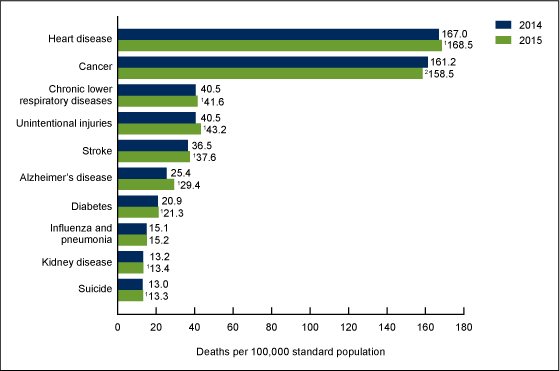
For the first time since 1993, expanding life expectancy in the United States has reversed, based on the latest report from the Centers for Disease Control, Mortality in the United States, 2015. “The last time U.S. life expectancy at birth declined was in 1993, when it dropped from 75.6 to 75.4, according to World Bank data,” as quoted in the Washington Post. Life expectancy at birth in 2015 was 78.8 years, a slight fall from 2014 at 78.9 years. The larger decline fell among men, from 76.5 to 76.3 years. For women, life expectancy at birth in 2015 was 81.2,
The Digital Health Gap For High-Cost, High-Need Patients
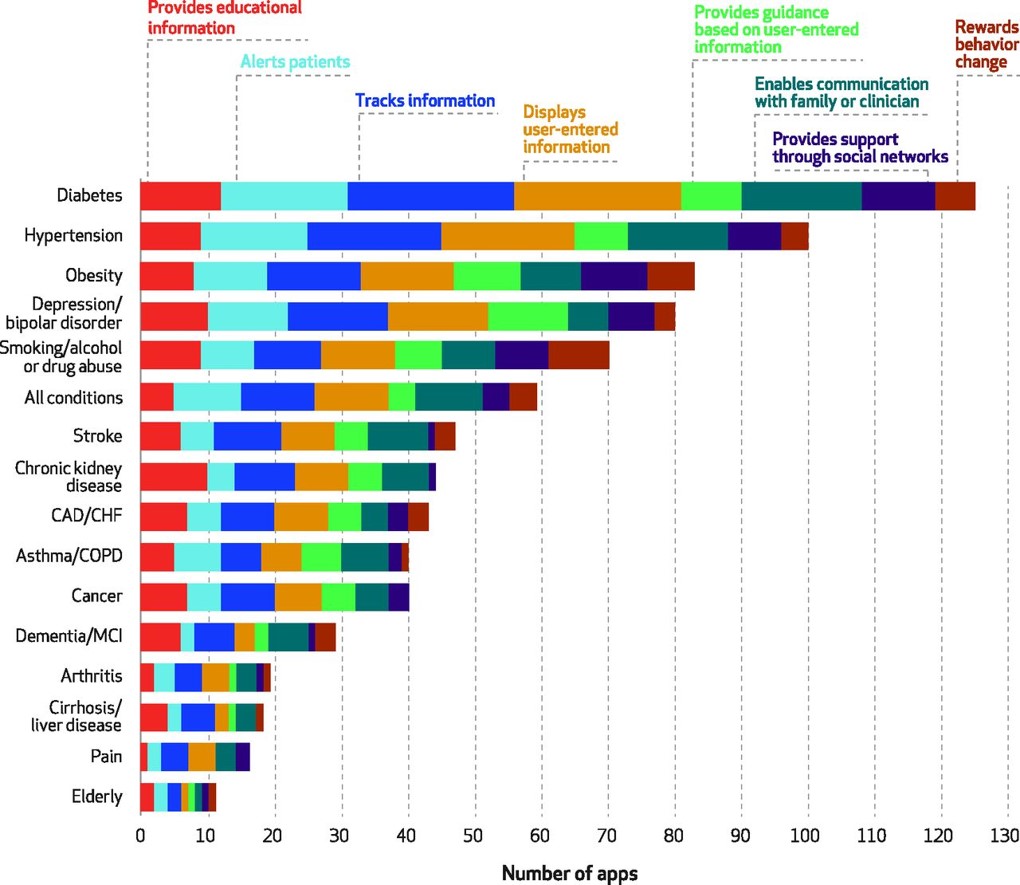
Several market forces are converging that boost patients’ ability to engage in their health and self-care, including peoples’ growing adoption of smartphones, demand for self-service and DIY lifestyles, and Americans’ growing responsibility as health consumers. Health consumers are using a growing array of self-health tools, enabled through digital technologies. However, these tools aren’t yet engaging some of the very people who need them the most: high-need, high-cost patients. Research into this situation is discussed in the December 2016 Health Affairs article, Many Mobile Heaath Apps Target High-Need, High-Cost Populations, But Gaps Remain, published in the December 2016 issue of Health Affairs. For
Talk #EndOfLife at the End of the Thanksgiving Meal: Engage With Grace
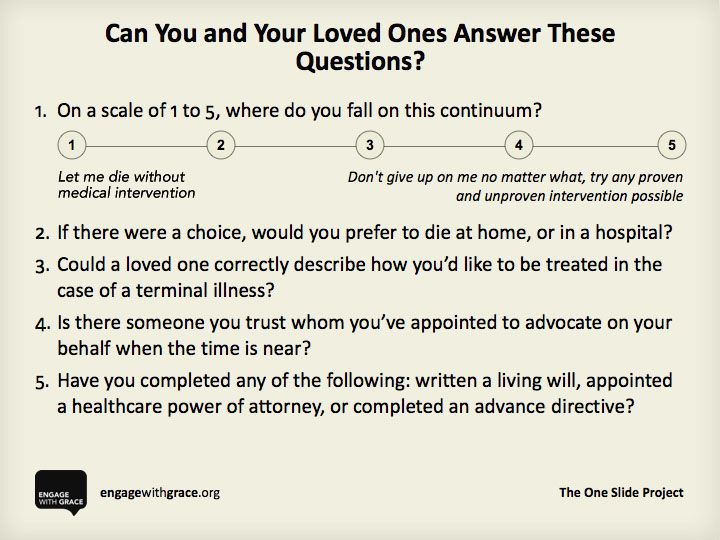
“Thanksgiving.” Merriam-Webster’s dictionary defines the word, first, as “the act of giving thanks.” Second, it’s “a prayer of expressing gratitude.” And, third, the word means a public acknowledgment or celebration of divine goodness. We each have our stories about how a loved one’s life has ended. If we’re lucky, that beloved person had a good death: in sleep, perhaps, or simply of old age with no hospital events or trauma. Then there are the Rest-of-Us who have the stories of long and painful endings, in institutional settings and costly, futile care. When you’re already in the situation of making tough health
The Patient Is The Best Sensor – Consumers At the Center of Health
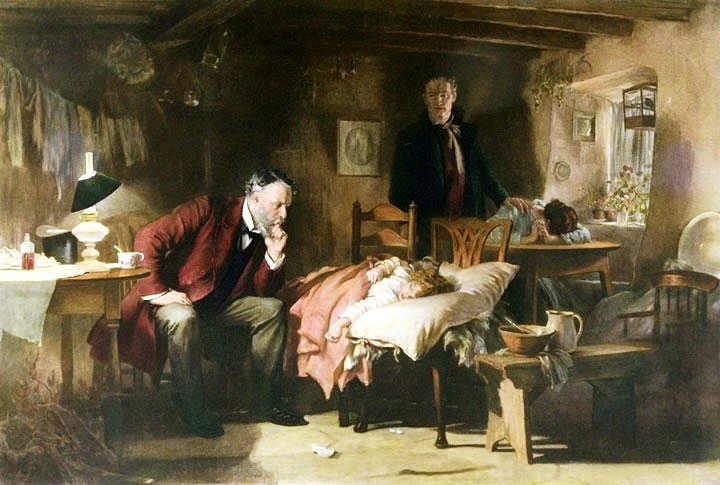
“The patient is the best sensor,” asserted Jamie Heywood, founder of Patients Like Me, during the perennial meeting sponsored by PwC, the 180° Health Forum. This event featured several panels of PwC’s curated group of so-called “provocateurs” in healthcare, and I was grateful to be one of nine selected for the event. Heywood joined Dr. Leanna Wen, Baltimore City Health Commissioner, and me in a panel called, “Strange Bedfellows or Soul Mates? The New Dating Game in Health.” The theme of our collective brainstorm was how collaborations across the ecosystem could help make health and healthcare better. The drawing is
The Growth of Digital Health @Retail
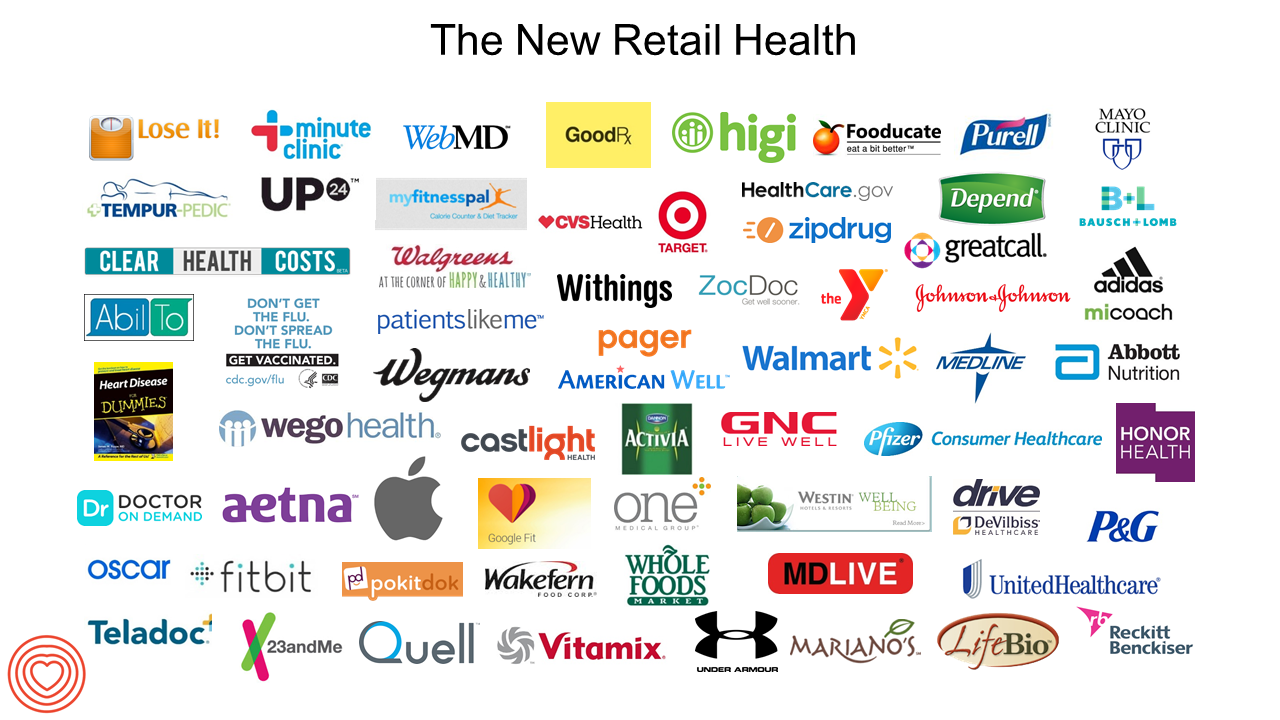
This post was written to support the upcoming meeting of the PCHA, the Personal Connected Health Alliance, to be held 11-14 December 2016 at the Gaylord Hotel in greater Washington, DC. You can follow the events and social content via Twitter using the hashtag #Connect2Health. Have you visited your local Big Box, discount or consumer electronics store lately? You’ll find expanding shelf space for digital health technologies aimed squarely at consumers. 2017 promises even more of them, aimed at helping people accomplish health tasks once performed in hospitals and by healthcare providers, or tasks not yet delivered in today’s healthcare
Evidence That Mainstream Consumers Growing Digital Health Muscles
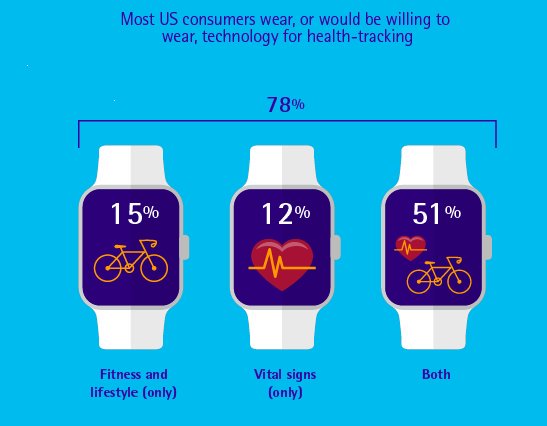
About 1 in 2 patients in the US are accessing their electronic health records in early 2016, according to Accenture’s 2016 Consumer Survey on Patient Engagement, Patients Want a Heavy Dose of Digital. This post is based on a presentation I attended by Accenture’s Dr. Kipp Webb yesterday. Accenture conducted survey research with consumers in seven countries for this study. The data and insights shared in this post are based only on the survey results from 2,225 US patients. The proportion of US health consumers accessing their health records grew from 27% in 2014 to 45% in 2016 — an increase of
Healthcare Reform in President Trump’s America – A Preliminary Look
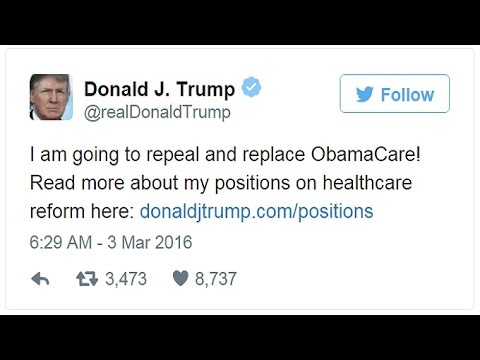
It’s the 9th of November, 2016, and Donald Trump has been elected the 45th President of the United States of America. On this morning after #2016Election, Health Populi looks at what we know we know about President Elect-Trump’s health policy priorities. Repeal-and-replace has been Mantra #1 for Mr. Trump’s health policy. With all three branches of the U.S. government under Republican control in 2018, this policy prescription may have a strong shot. The complication is that the Affordable Care Act (aka ObamaCare in Mr. Trump’s tweet) includes several provisions that the newly-insured and American health citizens really value, including: Extending health
All I Want For Christmas Is A Health Tracker – CTA on Shopping Tech for the Holidays
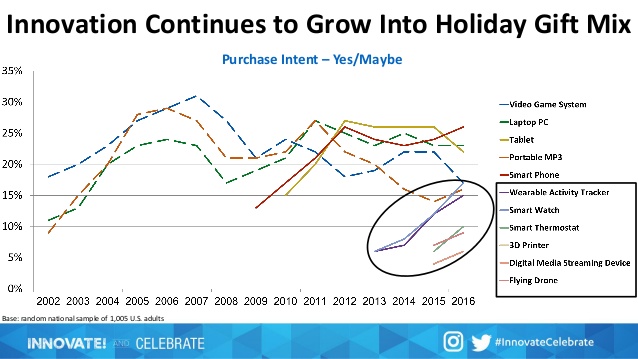
Technology is high on U.S. consumers’ holiday shopping lists for the 2016 holiday season, according to the CTA (Consumer Technology Association). And wearable activity trackers are a fast-growing segment of consumer technology purchases expected in shoppers’ carts (both physical and online virtual) this fourth quarter of 2016, CTA notes in its 23rd Annual Holiday Outlook consumer survey research. The line graph illustrates the hot categories in this year’s holiday gift mix, led by smart phones (in red), tablets, laptops, and video game systems. But the proportion of people intending to purchase smartwatches now ties with video game system sales, closely followed
Let’s Go Healthcare Shopping!
Healthcare is going direct-to-consumer for a lot more than over-the-counter medicines and retail clinic visits to deal with little Johnny’s sore throat on a Sunday afternoon. Entrepreneurs recognize the growing opportunity to support patients, now consumers, in going shopping for health care products and services. Those health consumers are in search of specific offerings, in accessible locations and channels, and — perhaps top-of-mind — at value-based prices as defined by the consumer herself. (Remember: value-based healthcare means valuing what matters to patients, as a recent JAMA article attested). At this week’s tenth annual Health 2.0 Conference, I’m in the zeitgeist
Older Couples Have Lower Out-of-Pocket Healthcare Costs Than Older Singles
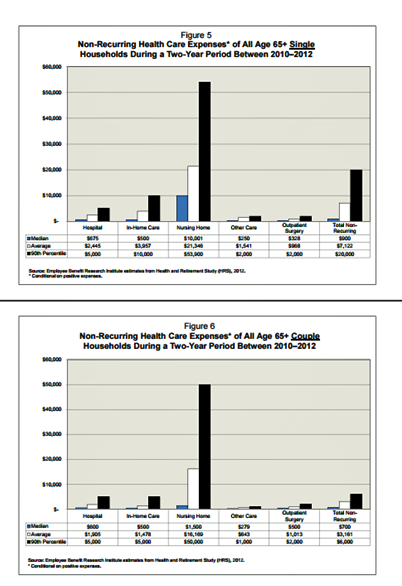
It takes a couple to bend the health care cost curve when you’re senior in America, according to the EBRI‘s latest study into Differences in Out-of-Pocket Health Care Expenses of Older Single and Couple Households. In previous research, The Employee Benefit Research Institute (EBRI) has calculated that health care expenses are the second-largest share of household expenses after home-related costs for older Americans. Health care costs consume about one-third of spending for people 60 years and older according to Credit Suisse. But for singles, health care costs are significantly larger than for couples, EBRI’s analysis found. The average per-person out-of-pocket spending for
The State of Mobile Apps in 2016 and Healthcare Implications
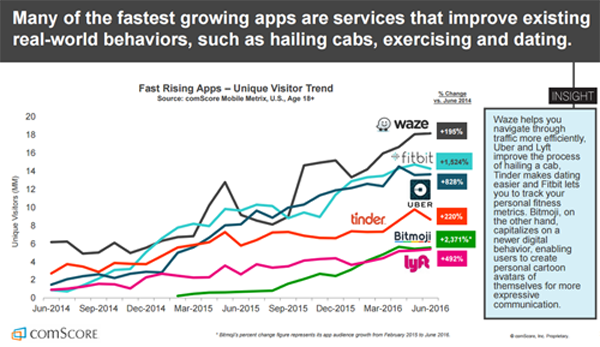
Some of the fastest-growing mobile phone apps help people manage life-tasks every day, like getting real-time directions when driving, finding dates, getting rides, and tracking health, according to The 2016 U.S. Mobile App Report from comScore. The chart from the comScore Mobile Metrix survey illustrates some popular apps well-used by people on smartphones, with one of the fastest growth rates found for the Fitbit app — 1,524% growth over two years, from June 2014 to June 2016. In comparison, the Uber app visits increased 828% in the period, half as fast, and the Tinder app, 220%. Some key topline results of
Consumers Seek Quality and Privacy In Tech-Enabled Healthcare
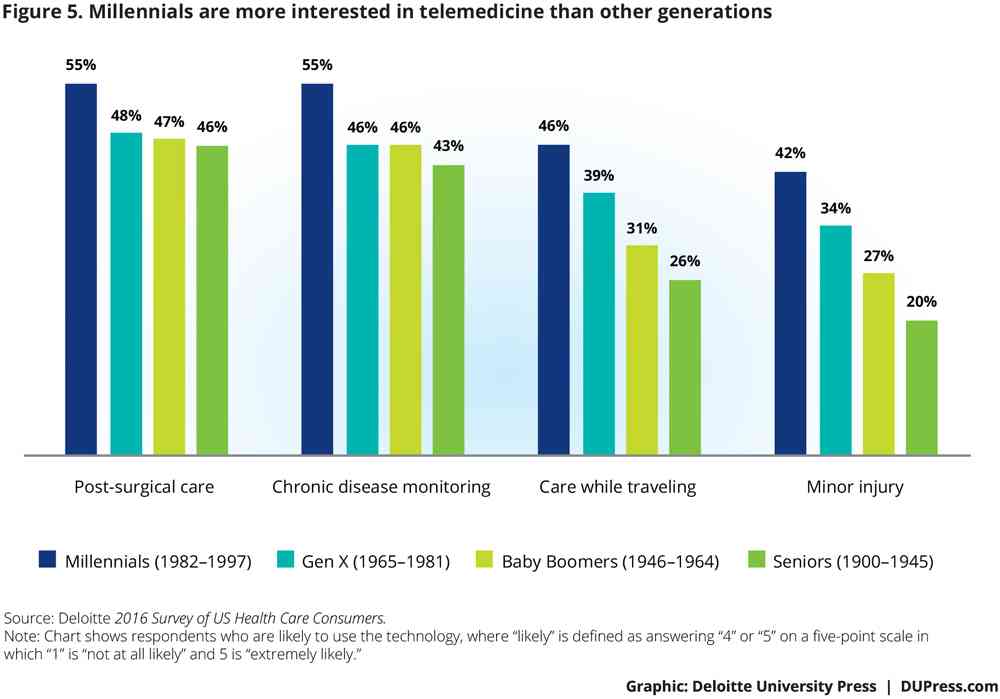
Consumers are open to technology-enabled healthcare, but look to providers to ensure quality and privacy of patients’ personal health information, according to Will Patients and Caregivers Embrace Tech-Enabled Healthcare?, based on the Deloitte 2016 Survey of US Health Care Consumers. Seven in 10 consumers would use at least one of the technologies Deloitte served up in its study, with telemedicine at the top of the list: 49% of people favor telemedicine for post-surgical care, 48% for chronic disease management, 36% for care while traveling, and 32% for minor health issues. While Millennials are generally keener across-the-board for tech-enabled health care,
7 Signs of the Retail Health Revolution
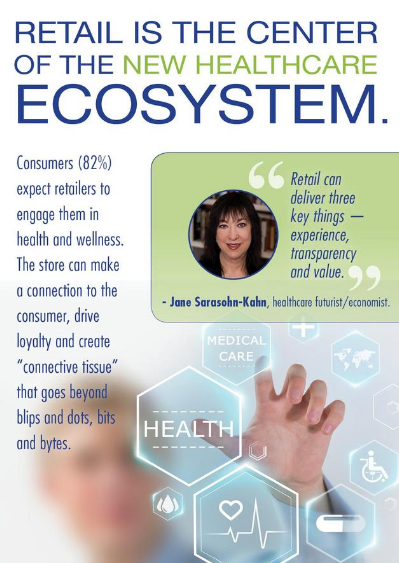
There are many signposts in the marketplace pointing the way toward the new retail health/care for consumers. They include: Food and exercise as the new medicine Loneliness as the new smoking as a health risk Prevention as the new sustainability Home as the new long-term care locus Balancing humanity and technology, the analog and the digital, and Retail as a center of the new healthcare ecosystem. Read more about the 7 Signs of the Retail Health Revolution, published by Drug Store News. This graphic-rich publication was based on a speech I gave at a recent retail health summit convened with healthcare’s
 Thank you Aaron Strout for hosting our conversation on the Reaching Higher Podcast, now live on Apple, Spotify, and YouTube. We covered a lot of ground addressing health care and health citizenship, the growing prospects for our homes as our health hubs, and how our humanity is a key ingredient in health-making for all.
 Jane joined host Dr. Geeta "Dr. G" Nayyar and colleagues to brainstorm the value of vaccines for public and individual health in this challenging environment for health literacy, health politics, and health citizen grievance. Click onto the Pfizer Value of Vaccines site and you can watch four episodes covering the challenges with adult vaccination, the employer and health plan member's journey to vaccination, reimbursement, and collaborating for proactive prevention.
 I'm grateful to be part of the Duke Corporate Education faculty, sharing perspectives on the future of health care with health and life science companies. Once again, I'll be brainstorming the future of health care with a cohort of executives working in a global pharmaceutical company.