


Getting Real About Social Determinants of Health
New research points out that real people live real lives, and our assumptions about social determinants of health (SDOH) may need to be better informed by those real lives. I read three reports in the past week sobering up my bullish #SDOH ethos dealing with food deserts, transportation, and health service access — three key social determinants of health. To remind you about the social determinants, here’s a graphic from Kaiser Family Foundation that summarizes the key pillars of SDOH. Assumption 1: Food deserts in and of themselves diminish peoples’ healthy nutrition lifestyles. Low-income households who are exposed to the same food-buying
Heart-Love – Omron’s Holy Grail of Blood Pressure Tracking on the Wrist

It’s February 1st, which marks the first of 28 days of American Heart Month – a time to get real, embrace, learn about, and engage with heart health. Heart disease kills 610,000 people in the U.S. every year, equal to 1 in 4 deaths in America. It’s the leading cause of death for both men and women in the U.S. Knowing your blood pressure is an important step for managing the risks of heart disease. That hasn’t yet been available to those of us who quantify our steps, weight, sleep, food intake, and other health metrics. In 2017, Hugh Langley
What Healthcare Can Learn from A Pig and Piggy Bank via Santander Bank

When patients feel disrespected in a medical exam room, they will be less likely to follow instructions they receive from a doctor. Research from the Altarum Institute revealed this fundamental finding. The chart shows that feeling respected reduces a patient’s diabetes medication adherence by a factor of nearly 2x, and is a risk factor for poorly managed diabetes. Furthermore, consumers who feel disrespected by providers are three times more likely to not believe doctors are accurate sources of information than consumers who do feel respected. And, patients with diabetes who do not feel respected are one-third more likely to have poorly
What A Duck Can Teach Us at CES 2018

We’re spending more time at CES 2018 calling out the societal and health impacts of technologies, especially for children and under-served people. How surprised and delighted I am to find a positive, enchanting impact at the convergence of kids and tech…from a duck. When I say “duck,” there are a few images that probably swim up in your mind’s eye: Donald, Daisy, Daffy, Howard, Darkwing, and the brand-famous Aflac Duck (who has his own Twitter handle @AflacDuck). It’s this last-named web-footed feathered friend who is a major star here at CES 2018 in the persona of My Special Aflac Duck.
Healthy Living in Digital Times at CES 2018

Connecting Life’s Dots, the organization Living in Digital Times partners with CES to deliver conference content during the show. At CES 2018, LIDT is connecting a lot of dots to help make health streamline into daily living. Robin Raskin, founder, kicked off LIDT’s press conference setting the context for how technology is changing lifestyles. Her Holy Grail is to help make tech fun for everybody, inclusive for everybody, and loved by everybody, she enthused. LIDT has been a presence at CES for many years, conceiving the contest the Last Gadget Standing, hosting tech-fashion shows with robots, and supporting a young innovators
Smarter, Streamlined, Connected Consumers – The Promise of CES 2018

Journalists and industry analysts from around the globe have come to Las Vegas which, this week, is the mecca for new-new electronic things that companies think consumers will be keen to buy. On media day 1, I spoke with a colleague from the Netherlands who covers audio, a sector that’s certainly in disruption; an automotive analyst from India covering autonomous vehicles; and, a mobile tech guru based in Dubai, to identify just a few of my media friends who have gathered here to research and write on their respective beats. In these conversations, there are some common buzzwords floating around
Searching Las Vegas for Health at CES 2018

While a phrase containing the words “health” and “Las Vegas” may seem a dichotomy, there will be a lot of health-tangent goods and services I’ll be seeking next week at the annual CES. This year, health will be ubiquitous at this huge conference, whose three-letter acronym for “consumer electronics show” typically conjures up images of shiny new things in the guise of automobiles, video games, big TV screens, and drones. At CES 2018, health will go beyond wearable tech and the first phase of fitness that’s been growing at the meeting over the past five years since I began attending
The Cloud’s Growing Role in Consumer-Pharma Health Engagement

The pharmaceutical industry is facing a multitude of political, regulatory, and financial uncertainties in and beyond 2018. But there’s one thing I know for sure about pharma’s morphing business model: it’s that patients are playing a growing role in the industry’s future well-being. That is, if the industry can meet health consumers where they want to be met. Patients want more communication and support from pharma companies, a new study from Accenture found. In fact, over one-third of patients tell their health care providers about pharma patient-service programs: this chart from Accenture’s study illustrates the top seven ways providers hear
Will Getting Bigger Make Hospitals Get Better?
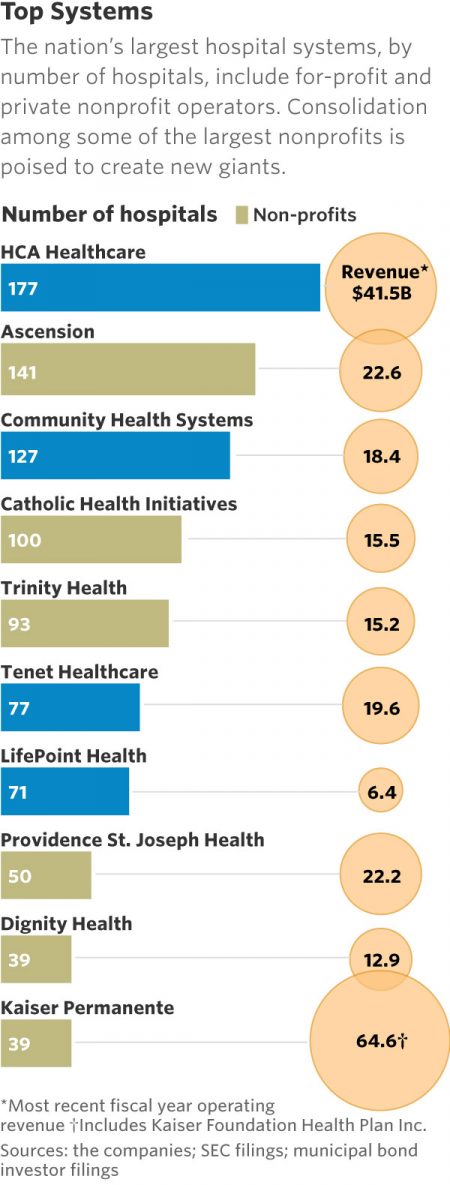
This month, two hospital mega-mergers were announced between Ascension and Providence, two of the nation’s largest hospital groups; and, between CHI and Dignity Health. In terms of size, the CHI and Dignity combination would create a larger company than McDonald’s or Macy’s in terms of projected $28 bn of revenue. (Use the chart of America’s top systems to do the math). For context, other hospital stories this week discuss in southern New Jersey. And this week, the New Jersey Hospital Association annual report called the hospital industry the “$23.4 billion economic bedrock” of the state. Add a third important item
CVS + Aetna: An Inflection Point for American Healthcare
The nation’s largest retail pharmacy chain signed a deal to combine with one of the top three health insurance companies. The deal is valued at $69 billion. I wrote about this inflection point for U.S. healthcare four weeks ago here in Health Populi. CVS is both the biggest pharmacy and pharmacy benefit manager in the U.S., as the first chart shows. In my previous post, I talked about the value of vertical integration bringing together the building blocks of retail pharmacy and pharmacist care, retail clinics, the PBM (Caremark), along with Aetna’s health plan member base and business. As Amazon and other
Consumers Seek Health Engagement Everywhere: the Case for Alcohol and Breweries

More consumers are seeking health-making opportunities everywhere, both within and outside of traditional healthcare touch-points. That includes peoples’ consumption of beer. We learned from the Edelman Health Engagement Barometer that consumers seek to engage for health beyond healthcare organizations – namely, hospitals, providers, over-the-counter medicines, pharma and insurance. What was perhaps the most surprising industry segment consumers called on for personal health engagement was brewing and alcohol. Fully 8 in 10 consumers expect brewing and spirits companies to engage in health. The bar chart shows this finding, arraying beer and liquor producers on par with retail and consumer technology, along
TIME Magazine’s Best Inventions – Health-y Things and Privacy Questions
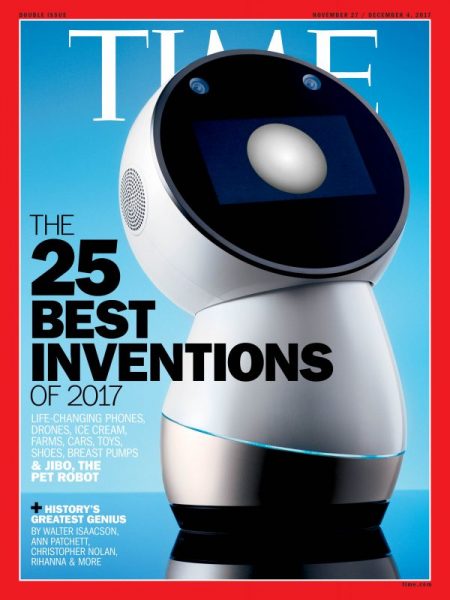
Health permeates a plethora of TIME magazine’s 25 Best Inventions of 2017. From head to foot, health is the mother of invention, based on TIME’s curation of “the best” things launched to market in the past year. Starting with “the head,” the Oculus Go virtual reality (VR) headset from Facebook. While the first function with which VR is associated is fun and games, Dr. Brennan Spiegel at UCLA Geffen School of Medicine has been proving out VR‘s value in helping patients deal with pain and medical management. Keep your eye on his and others’ research into VR’s use in healthcare. The
Rx Delivery to the Patient’s Door: Home Is Where the Health/Care Is

Talk about the last mile in healthcare. CVS Pharmacy will deliver prescription drugs to patients’ homes, the company announced this week. “Same-day prescription delivery gives customers the easy option of having the pharmacy they trust deliver right to their front door at no cost,” Helen Foulkes, President of CVS Pharmacy, said in the press release. Rx home delivery may not be “the” last mile to conquer all healthcare access challenges, but it’s nonetheless a signal that healthcare industry suppliers are focusing on helping patients streamline their health-consumer lives. In this case, it’s also CVS morphing towards Amazon’s Prime delivery model. Amazon
Evidence is Growing for Using Digital Health Apps, Says IQVIA
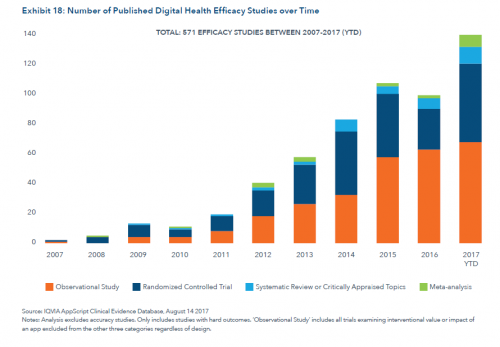
The evidence of the value of digital health tools is growing, based on research published in The Growing Value of Digital Health, from the IQVIA Institute for Human Data Science. With this report, the IMS Institute ushers in the organization’s new name, IQVIA Institute (THINK: “I” for “IMS,” and “Q” for “Quintiles). This is the organization’s third report on digital health, following the original analysis from 2013, updated in 2015. Here’s my take on the 2013 report, which found that 36 mobile health apps represented one-half of all downloads. On a conference call held last week, the company’s SVP and Executive
Health Care Is 2.5 More Expensive Than Food for the Average U.S. Family
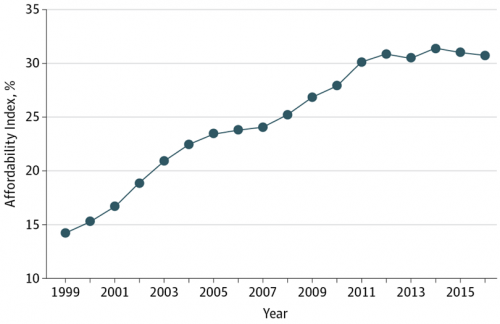
The math is straightforward. Assume “A” equals $59.039, the median household income in 2016. Assume “B” is $18,142, the mean employer-sponsored family insurance premium last year. B divided by A equals 30.7%, which is the percent of the average U.S. family’s income represented by the premium cost of health insurance. Compare that to what American households spent on food: just over $7,000, including groceries and eating out (which is garnering a larger share of U.S. eating opportunities, a topic for another post). Thus, health care represents, via the home’s health insurance premium, represents 2.5 times more than food for the
A Health Consumer Perspective on CVS+Aetna
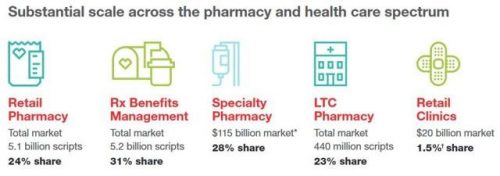
A response to Amazon’s potential moves in healthcare and pharmacy…strategic positioning for the post-Trump healthcare landscape…vertical integration to better manage healthcare utilization and costs…these, and other rationale have been offered by industry analysts and observers of the discussions between CVS and Aetna, for the former to acquire the latter. “A pharmacy chain buying a health insurance company?” many have asked me over the past few days. These inquiring minds include people who work both inside and outside of health/care. I ask back: in 2017 and in the future, “What is a pharmacy? What is a health plan?” See the
In the Post-Weinstein Era, How to Market Health to Women: Philips, Kalenji, and Libresse Getting It Right

“With Mad Men still in charge, ad campaigns miss the mark,” an editorial published this week in the Financial Times asserts. Leave it to a fiscally conservative British publication to be spot-on about a particularly, but not uniquely, American challenge, in this post-Weinstein (Miramax), -Price (Amazon), and today, -Halperin (MSNBC) moment of sexual harassment revelations. In health/care, women are key consumers, buyers and influencers, yet under-represented in the Mad Men demographic of senior advertising executives, as the data-driven FT essay points out. So it’s especially heartening to find this month a few examples of empowering, inspiring ad campaigns getting health/care marketing
Health (Healthcare, Not So Much) Abounds in Prophet’s Top 50 Brands
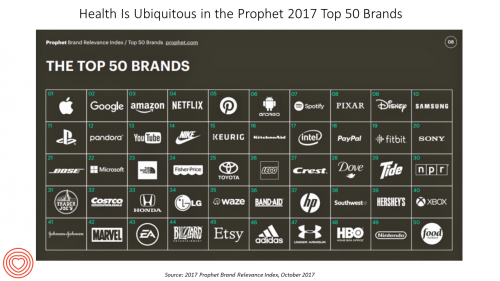
U.S. consumers’ most-valued brands include Apple, Google, Amazon, Netflix, Pinterest, Android, Spotify, PIXAR, Disney and Samsung, according to the 2017 Brand Relevance Index from Prophet. The top 50 are shown in the first chart. On the second chart, I’ve circled in red the brands that have reach into healthcare, health, fitness, and wellness. Arguably, I could have circled every brand in the top 50 because in one way or another, depending on the individual, people find health “everywhere” that’s relevant to them based on their own definitions and value-systems. This is Prophet’s third year conducting this study, and I was
Four Things We Want in 2017: Financial Health, Relationships, Good Food, and Sleep
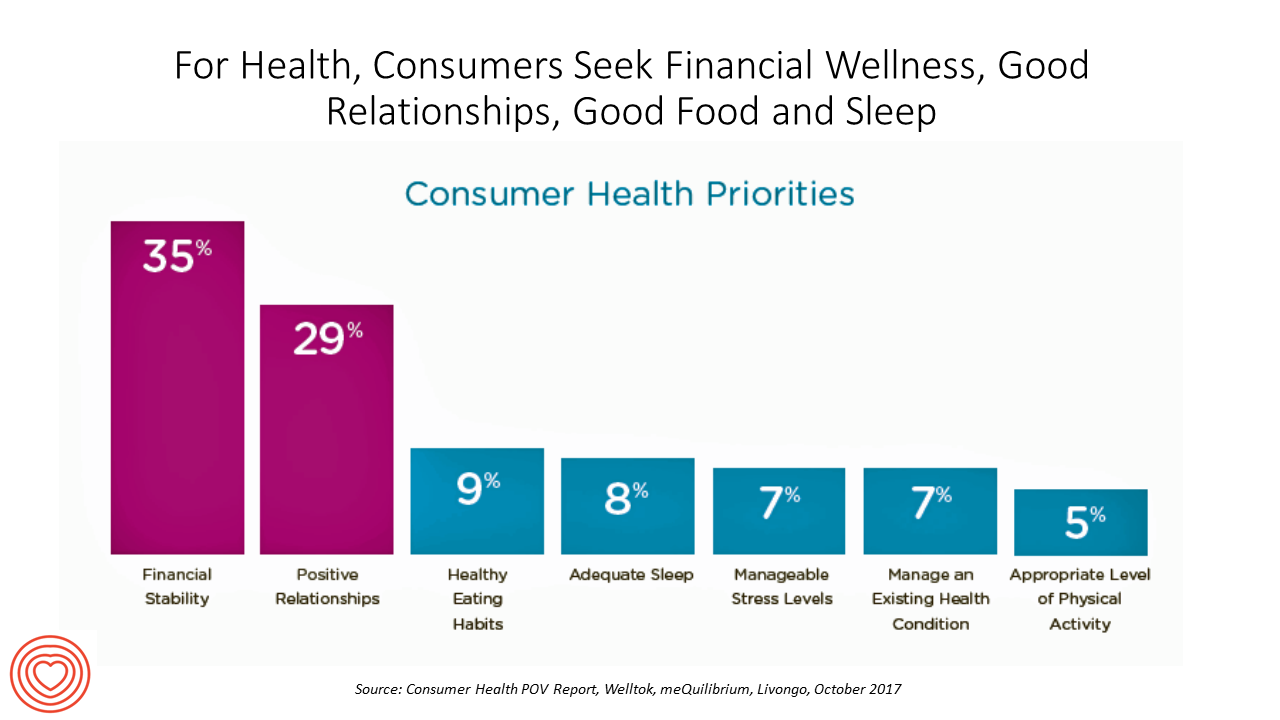
THINK: money and love. To find health, working-aged people seek financial stability and good relationships, according to the Consumer Health POV Report from Welltok, meQuilibrium, and Zipongo, featured in their webinar broadcast today. The online consumer survey was conducted among 2,000 full-time working U.S. adults in August 2017, segmented roughly into thirds by Boomers (37%), Gen Xers (32%), and Millennials (31%). Much lower down the priority list for healthy living are managing food, sleep, and stress based on the poll. Feeling stress is universal across most consumers in each of the three generational cohorts, especially related to work and finance.
Income Inequality For Older Americans Among Highest in the World – What This Means for Healthcare
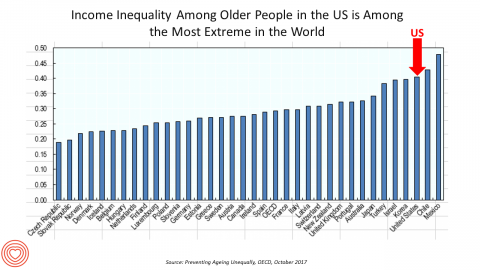
Old-age inequality among current retirees in the U.S. is already greater than in ever OECD country except Chile and Mexico, revealed in Preventing Ageing Unequally from the OECD. Key findings from the report are that: Inequalities in education, health, employment and income start building up from early ages At all ages, people in bad health work less and earn less. Over a career, bad health reduces lifetime earnings of low-educated men by 33%, while the loss is only 17% for highly-educated men Gender inequality in old age, however, is likely to remain substantial: annual pension payments to the over-65s today are
What Health Plans Must Learn from Amazon
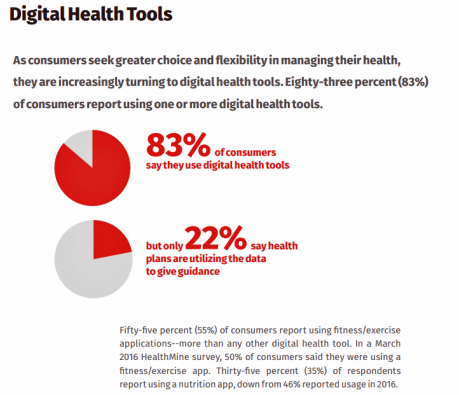
One in two U.S. consumers told Aflac that enrolling in health insurance should feel like an experience on Amazon. But health consumers still lack that high benchmark retail experience with health plans, based on new research published in HealthMine’s 2017 Health Intelligence Report focusing on communication and digital healthcare tools. “Most members believe health plan communications are impersonal and centered around bills rather than healthcare guidance,” HealthMine asserts in the introduction to the report. That’s about as un-Amazon as we can imagine. Top findings from HealthMine’s research are that: 3 in 4 consumers don’t think their health insurance plan
Consumers Use Digital Health Tools But Still Struggle with Health Literacy
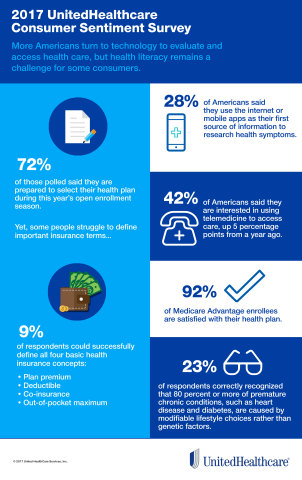
While more U.S. patients are use digital health tools and take on more clinical and financial decision making for their health care, people also have gaps in health engagement and health literacy. Three studies published in early October 2017 provide insights into the state of healthcare consumerism in America. The 2017 UnitedHealthcare Consumer Sentiment Survey found that a plurality of Americans (45%) turn first to primary care providers (doctors or nurses) as their source for the first source of information about specific health symptoms, conditions or diseases. 28% of people also use the internet or mobile health apps as their
The Rx is UX: A Prescription for EHRs and Patient Engagement
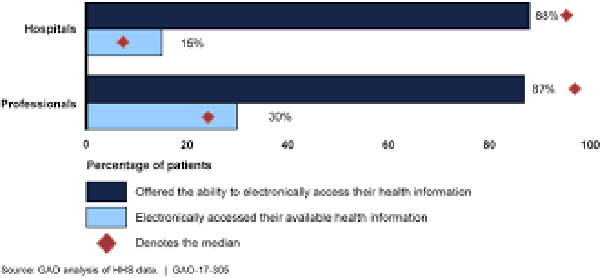
It’s National Health IT Week (#NHIT Week), and I’m revisiting research published earlier this year to connect the dots between EHR implementation (good news: it’s nearly universal in doctors’ offices and hospitals) and patients embracing their health information (not-so-much). What’s missing: UX design and respect for peoples’ life-flows. Most physician practices and hospitals in the U.S. have installed electronic health records (EHRs). But in a classic Field of Dreams scenario, we have made patients’ medical records digital, but people aren’t asking for them or accessing them en masse. “How do we make it easier for patients to request and manage their
The Patient Is The Vector: Health 2.0 – Day 2 Learnings
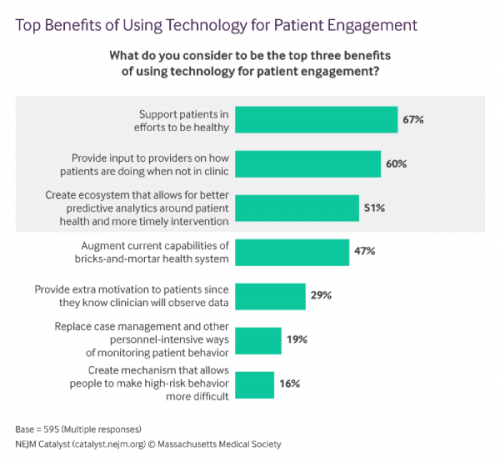
Question: “What is the opposite of ‘patient-centered care?'” asked a panelist on Day 1 of the 11th Annual Health 2.0 Conference. Answer: “‘Physician-centered care.'” Even physicians today see the merits of patient engagement, as this survey from New England Journal of Medicine found earlier this year. Since the launch of the first Health 2.0 Conference in 2007, the patient has played a growing role in session content and, increasingly, on the big stage and panel breakout sessions. A panel I attended on Day 2 convened five developers of patient engagement platforms and digital tools to help healthcare look and
Leveraging the Essential Data of Life: Health 2.0 – Day 1 Learnings

The future of effective and efficient healthcare will be underpinned by artful combinations of both digital technologies and “analog humans,” if the first day of the Health 2.0 Conference is a good predictor. Big thoughts about a decentralized future in healthcare kicked off Day 1 of the 11th annual Health 2.0 Conference in Santa Clara, CA. The co-founders of Health 2.0 (H20), Matthew Holt and Indu Subaiya, explained the five drivers of the tech-enabled health future. 1. The new interoperability, underpinned by FHIR standards and blockchain. “FHIR” stands for fast healthcare interoperability resources, which are informatics standards that enable data
To Meet Health Consumers’ Digital Demands, Think Netflix and Verizon
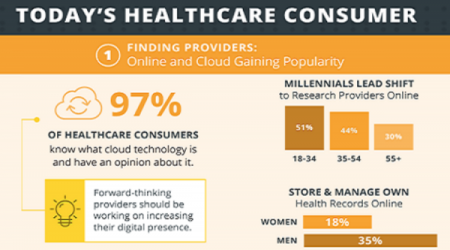
Health consumers have become savvy about the role of technology in their healthcare, according to a survey from Ambra, a company that is in the health cloud business. The survey paints a picture of health consumers hungry for digital health connections. The most popular activities patients do online for health were: To research symptoms and treatments To renew and/or fill prescriptions To view lab reports To make appointments To pay medical bills To correspond with the nurse or doctor To view imaging reports To get virtual care, and, To participate in patient communities. To meet patients where they want
The Mainstreaming of Wellness
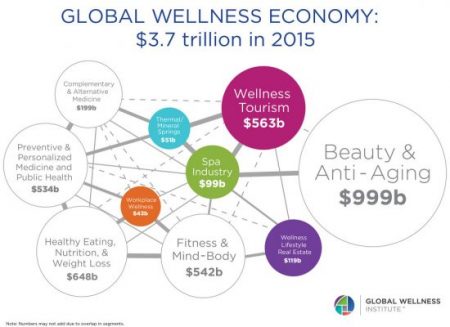
“Wellness is a way to cope with the demands and rigors of new modern lifestyles,” according to Ogilvy in their latest report, The Wellness Movement Pioneers: New Global Research Findings. The report makes the case that the mass public are project-managing life adopting mental health, nutrition, physical activity and sleep to boost personal wellness. There is a big business model underneath this, which has inspired Ogilvy to start up the company’s Health & Wellness Practice. Think of this report as the group’s own business case to address the $3.7 trillion global wellness economy, illustrated by the first image. The report
Envisioning Healthcare Innovation and Value with Microsoft
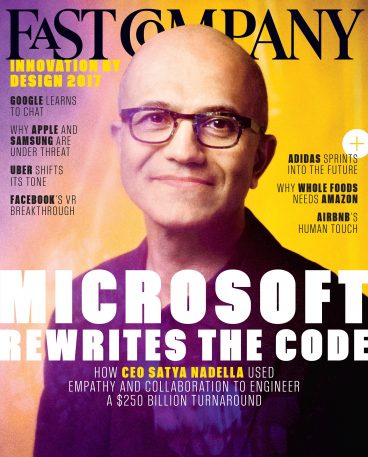
Fast Company’s October 2017 issue leads with a cover story featuring Microsoft’s CEO Satya Nadella, with the title, “Microsoft Rewrites the Code.” The issue of Fast.Co is devoted to the theme of innovation by design, and the 8-page story on the company emphasizes the themes of empathy and collaboration in re-imagining the organization. I lead with this because I’m now in Orlando preparing to participate in Microsoft’s annual meeting called Envision. This conference brings together the company’s clients from around the world, representing major industry segments. I’m grateful to be invited to participate in the first of six sessions devoted
Patients Are Looking to Finance Healthcare Over Time
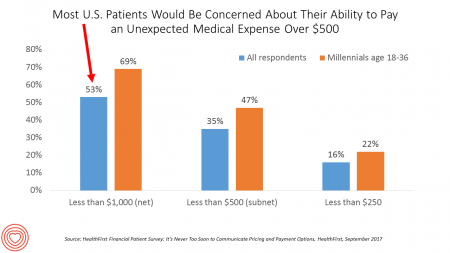
Most U.S. patients want healthcare providers to offer cost information before a procedure, and whether doctors offer financial options to help them extend payments over time. This is an automotive or home appliance procedure we’re talking about. It’s healthcare services, and American patients are now the third largest payors to providers in the nation. Thus, the title of a new report summarizing a consumer survey from HealthFirst notes, “It’s Never Too Soon to Communicate Pricing and Payment Options. The study found that two-thirds of U.S. consumers would like healthcare providers to discuss financing options; however, only 18 percent of providers have
Healthcare Overtreatment in the U.S. – Risky and Costly
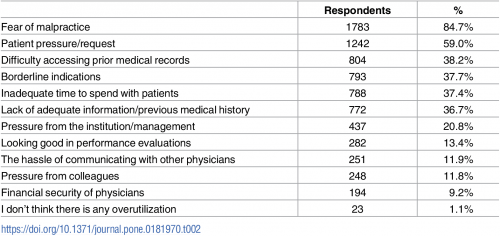
Overtreatment is a major contributor to waste and patient risk in America. Most U.S. physicians say it’s a common fact of life in American healthcare, gleaned through physician survey detailed in Overtreatment in the United States, published in PLOS One on September 6, 2017. The overwhelming majority (8 in 10 physicians) identified malpractice as the reason for overtreatment, followed by patient pressure/request (59%). Other reasons cited for overtreatment included: Difficulty accessing prior medical records Borderline indications Inadequate time to spend with patients, and Lack of adequate information or previous medical history. Overall, physicians judged 20% of healthcare to fall into
The Digital Gap in Health Consumer/Patient Experience
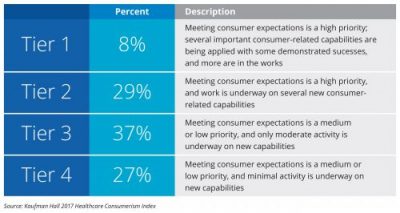
9 in 10 hospitals and health systems prioritize improving the consumer/patient experience, but only 30% of providers are building these capabilities. This consumer experience gap was found by Kaufman Hall in their survey research published in the report, 2017 State of Consumerism in Healthcare: Slow Progress in Fast Times. Digital health innovations will play big roles in supporting that consumer health experience for most health providers: 58% prioritize offering digital tool and information for consumer engagement, and 56% of providers look to develop a range of virtual/telehealth access points. But it appears that while healthcare providers’ spirits are willing, their flesh
Cost and Personalization Are Key For Health Consumers Who Shop for Health Plans
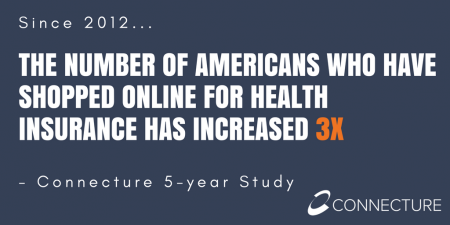
Between 2012 and 2017, the number of US consumers who shopped online for health insurance grew by three times, from 14% to 42%, according to a survey from Connecture. Cost first, then “keeping my doctor,” are the two top considerations when shopping for health insurance. 71% of consumers would consider switching their doctor(s) to save on plan costs. Beyond clinician cost, health plans shoppers are also concerned with prescription drug costs in supporting their decisions. 80% of consumers would be willing to talk with their doctors about prescription drug alternatives, looking for a balance between convenience
Price-Shopping for Healthcare Still A Heavy Lift for Consumers
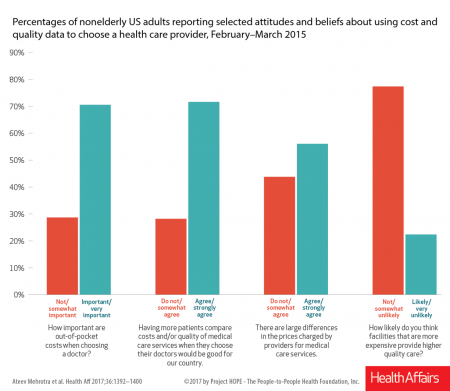
Most U.S. consumers support the idea of price-shopping for healthcare, but don’t practice it. While patients “should” shop for health care and perceive differences in costs across providers, few seek information about their personal out-of-pocket costs before getting treatment. Few Americans shop around for health care, even when insured under a high-deductible health plan, conclude Ateev Mehrotra and colleagues in their research paper, Americans Support Price Shopping For Health Care, But Few Actually Seek Out Price Information. The article is published in Health Affairs‘ August 2017 issue. The bar chart shows some of the survey results, with the top-line finding
Learning From Adam Niskar – Living Beyond The Wheelchair

After diving into Walnut Lake in suburban Detroit, Adam Niskar sustained a spinal injury that would paralyze much of his body for the rest of his life. The trauma didn’t paralyze his life and living, though. But today, my family will celebrate that life at Adam’s memorial service. Adam was my cousin. He was one of the best-loved people on the planet, and that was part of a therapeutic recipe that sustained him from the traumatic accident in 1999 until Monday, July 31st, 2017, when Adam passed away from complications due to an infection that, this time around, his body
Health Equity Lessons from July 23, 1967, Detroit

On July 23, 1967, I was a little girl wearing a pretty dress, attending my cousin’s wedding at a swanky hotel in mid-town Detroit. Driving home with my parents and sisters after the wedding, the radio news channel warned us of the blazing fires that were burning in a part of the city not far from where we were on a highway leading out to the suburbs. Fifty years and five days later, I am addressing the subject of health equity at a speech over breakfast at the American Hospital Association 25th Annual Health Leadership Summit today. In my talk,
The Art of Emojis in Constipation-Conversation
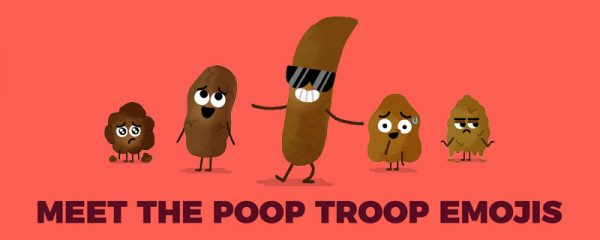
“Constipation is hard. Talking about it is even harder,” reads a card I received from the senior director of marketing at Synergy Pharmaceuticals. Emojis-meet-direct-to-consumer pharmaceutical promotion in a new campaign from the drug company, which is embarking on a disease education campaign to bring greater awareness to the condition of chronic idiopathic constipation (CIC). This condition impacts 14% of the global population. The messengers for this effort are a cast of emojis who populate a continuum from constipation-to-diarrhea and every poop step in-between. Meet The Poop Troop: Stressed-Out Stooly Clogged Chris Left-Out Lumpy Plugged-Up Paulie Miss La Poop Mr. Smooth Sausage Sally
Patients Switch Doctors Based on Service, Not Just Care or Costs – Think “Text”
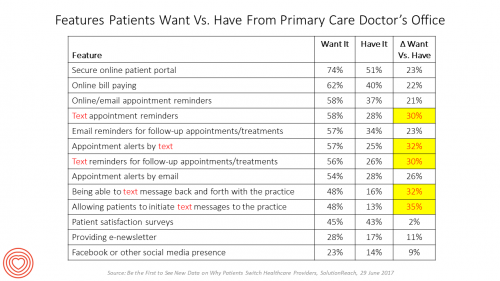
There’s more evidence of shopping behavior among patients: there’s new data showing that patients-as-consumers switch healthcare providers not due to quality of care or costs, but because of lack of service. I discovered one key verb and feature patient-consumers expect from doctors: it’s the ability to text, for appointment reminders, alerts, treatments, and communicating with the practice. SolutionReach, in the business of patient engagement, conducted a survey among 500 consumers asking about primary care providers, communication experience and satisfaction levels. The company presented the research results in a webinar on 29 June 2017. The research was also written up in
Consumer Experience Is An Integral Part of the Healthcare Experience
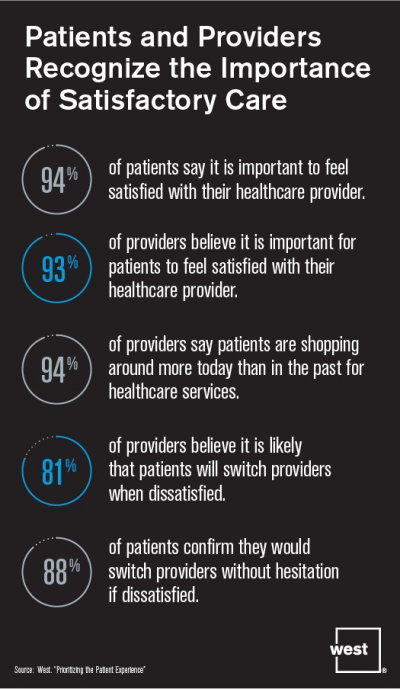
Patient satisfaction should be baked into healthcare provider service goals, according to Prioritizing the Patient Experience from West Corporation, the communications company. West is in the business of improving communications systems, and has a vested interest in expanding comms in health. This research polled patients and providers to assess how each healthcare stakeholder perceives various patient satisfaction issues, which when done well are grounded in sound communications strategy and technologies. Patient satisfaction is directly linked to the bottom lines of healthcare organizations, West contends, due to two key drivers: Evolving payment models are increasingly tying patient satisfaction to reimbursements; and,
Helping People On A Path to Better Health with CVS @Retail
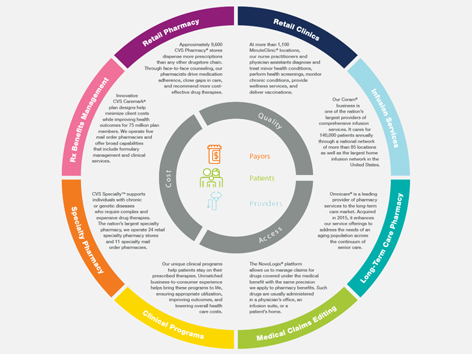
“Helping people on their path to better health” is the mission-mantra of CVS Health. Re-branded from its previous identity as CVS/pharmacy, the organization convened a Health Innovation Summit with its vendor partners whose products fill the front-of-store shelves to empower, inspire and support consumers to manage health and wellness for themselves and their families. I was grateful for the opportunity to provide the first talk for the day, setting the context for the evolving retail health/care landscape with the consumer at the center. The consumer is, at any point in a 24-hour day: a person wearing many hats (a worker,
Healthcare Cost Concerns Trump All Others Across the Generations
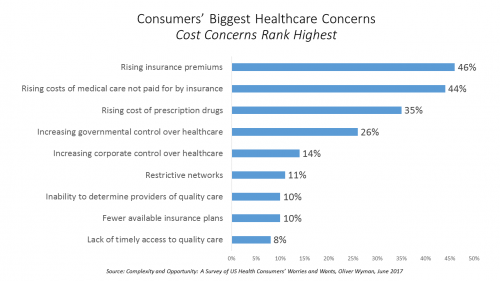
Patients, evolving into health consumers, seek a better healthcare experience. While most people are pretty satisfied with their medical care, cost and confusion reign. This is the topline finding of a study from Oliver Wyman appropriately titled, Complexity and Opportunity, a survey of U.S. health consumers’ worries and wants. Oliver Wyman collaborated on the research with the FORTUNE Knowledge Group. Consumers’ biggest healthcare concerns deal with costs: rising insurance premiums; greater out-of-pocket costs for care not covered by insurance; and, the growing costs of prescription drugs together rank as the top 3 healthcare concerns in this study. After costs, consumers cite government
U.S. Consumers Expect, But Don’t See, Innovation From the Health & Wellness Industry
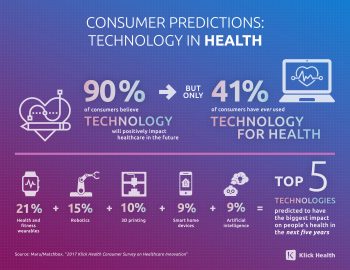
U.S. consumers consider Consumer Electronics to be the most innovative industry they know. But people believe that Health & Wellness should be the most innovative sector in the economy. Welcome to the 2017 Klick Health Consumer Survey, which focuses on health innovation in the context of peoples’ hopes for technology to improve health and healthcare. 1 in 2 people say that technology has had a positive impact on their health and wellness, skewing slightly more toward younger people (although 45% of people 55 years of age and older agree that tech positively contributes to health. 41% of consumers say they’ve
From Hospitality to Health-pitality to Sportspitality
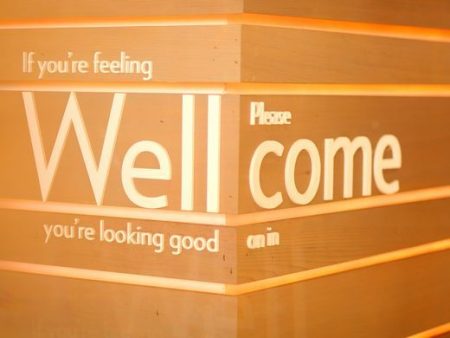
“Stay well, even on the road,” welcomes the chain of EVEN Hotels. That message from a hospitality company is part of the growth of the retail health landscape, driven by consumers’ desire to live well and make healthy decisions every day – even during business trips. The message is that, “Wellness is more than a word. It’s your way of life. But when it’s time to travel, it all falls apart,” Who among us road warriors for work doesn’t get that message? This is a real trend that engaged health consumers have begun to demand. A friend of mine traveled this week
Amazon’s Health Care Building Blocks
In the past few weeks, two announcements from Amazon point to a strategy, whether intended or my dot-connecting, that the ecommerce leader has the health of its customers in its sights. In late May, CNBC first published the news that Amazon was seeking out a candidate to be a general manager for a pharmacy business. Here’s the video telling the story. Getting into the retail pharmacy channel is in itself a huge message to this health industry segment, which is very competitive between chain pharmacies (led by CVS, Walgreens, and Rite-Aid), grocery pharmacies (the largest of which are Kroger and
A New Health Risk: Hacked Personal Medical Devices
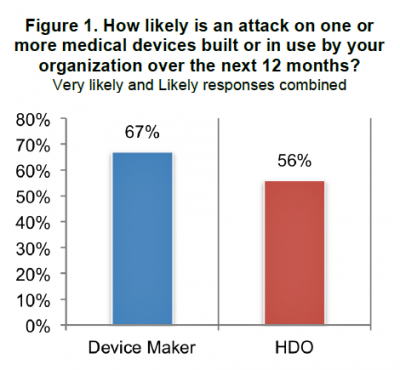
We have entered an era of insecurity in healthcare in America. While major attention is being paid to healthcare insurance and service insecurity, food insecurity and financial insecurity, there’s another one to add to this list: medical device security. As more medical devices have moved into the digital internet-connected mode, the risk for malware, ransomware, and overall hack-ability grows. This increasing and challenging risk is covered in the report, Medical Device Security: An Industry Under Attack and Unprepared to Defend from Ponemon Institute. Ponemon Institute has been tracking information security across industries, including healthcare, for several years. In this survey, sponsored
The Consumer Trust Deficit In Health Engagement
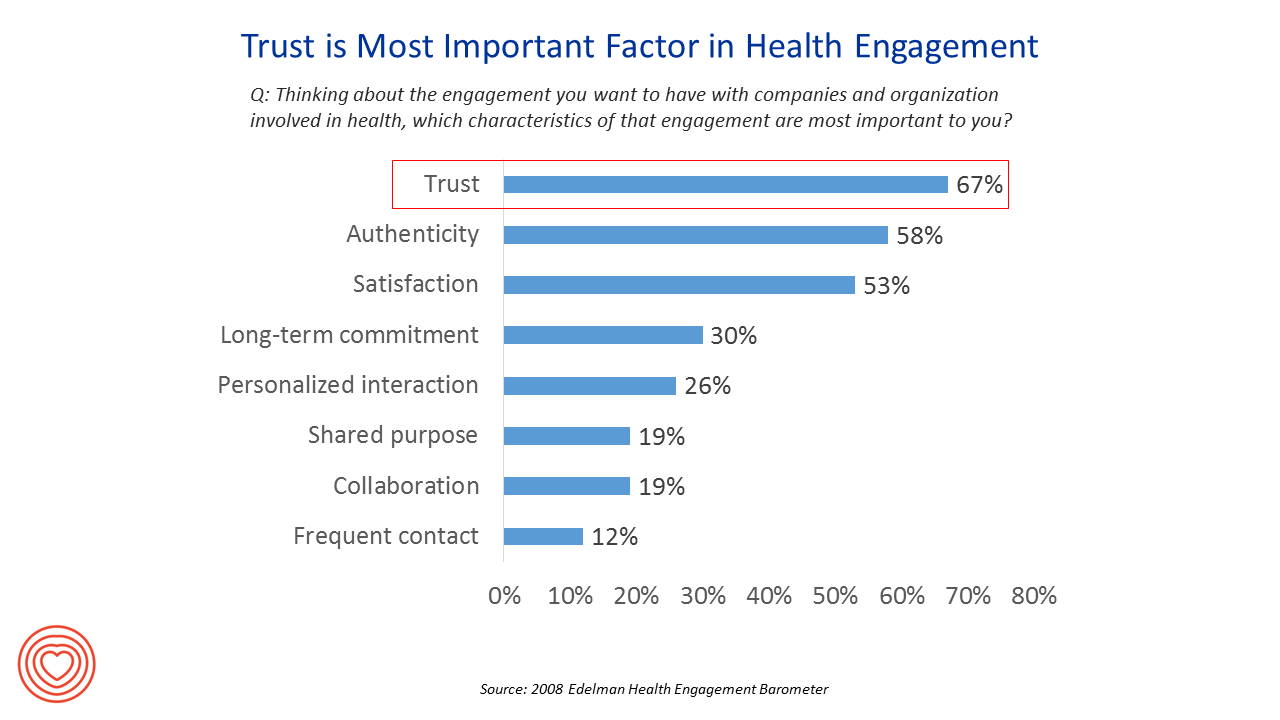
While trust in major institutions is eroding the world over, peoples’ trust in healthcare is on the rise, according to the 2017 Edelman Trust Barometer. Still, compared to other industry sectors, healthcare is still barely positive — and just one spot ahead of financial services. When it comes to trust, “the healthcare industry is making slow but steady progress,” notes Kym White who leads Edelman’s healthcare practices. Consumers’ trust in the five healthcare segments of pharmaceutical/drug companies, consumer health/over the counter, biotech/life sciences, insurance and hospitals/clinics is improving over 2016. In the U.S., for pharma and biotech, trust is reversing a
Healthcare Costs for a Family of Four Will Reach $27,000 in 2017
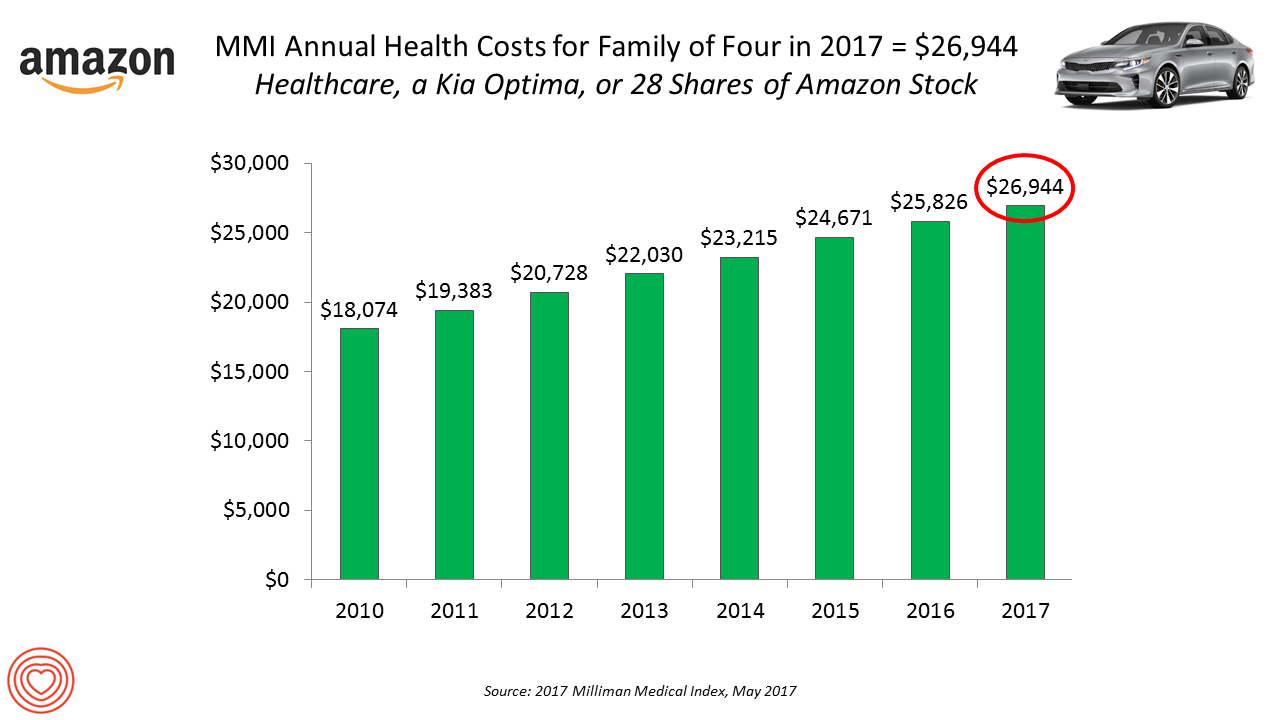
If you had $27,000 in your wallet, would you spend it on a 2017 Kia Optima sedan, 28 shares of Amazon stock, or healthcare? $26,944 is this year’s estimate of what healthcare will cost a family of four in the U.S., based on the 2017 Milliman Medical Index (MMI). This is based on the projected total costs of healthcare for a family covered by an employer-sponsored PPO plan. Milliman, the actuarial consulting firm, has conducted the MMI going back to 2001. I’ve watched the rise and rise of this index for years, explained annually in the Health Populi blog since its inception
Home Is the New and Future Medical Home for Dialysis
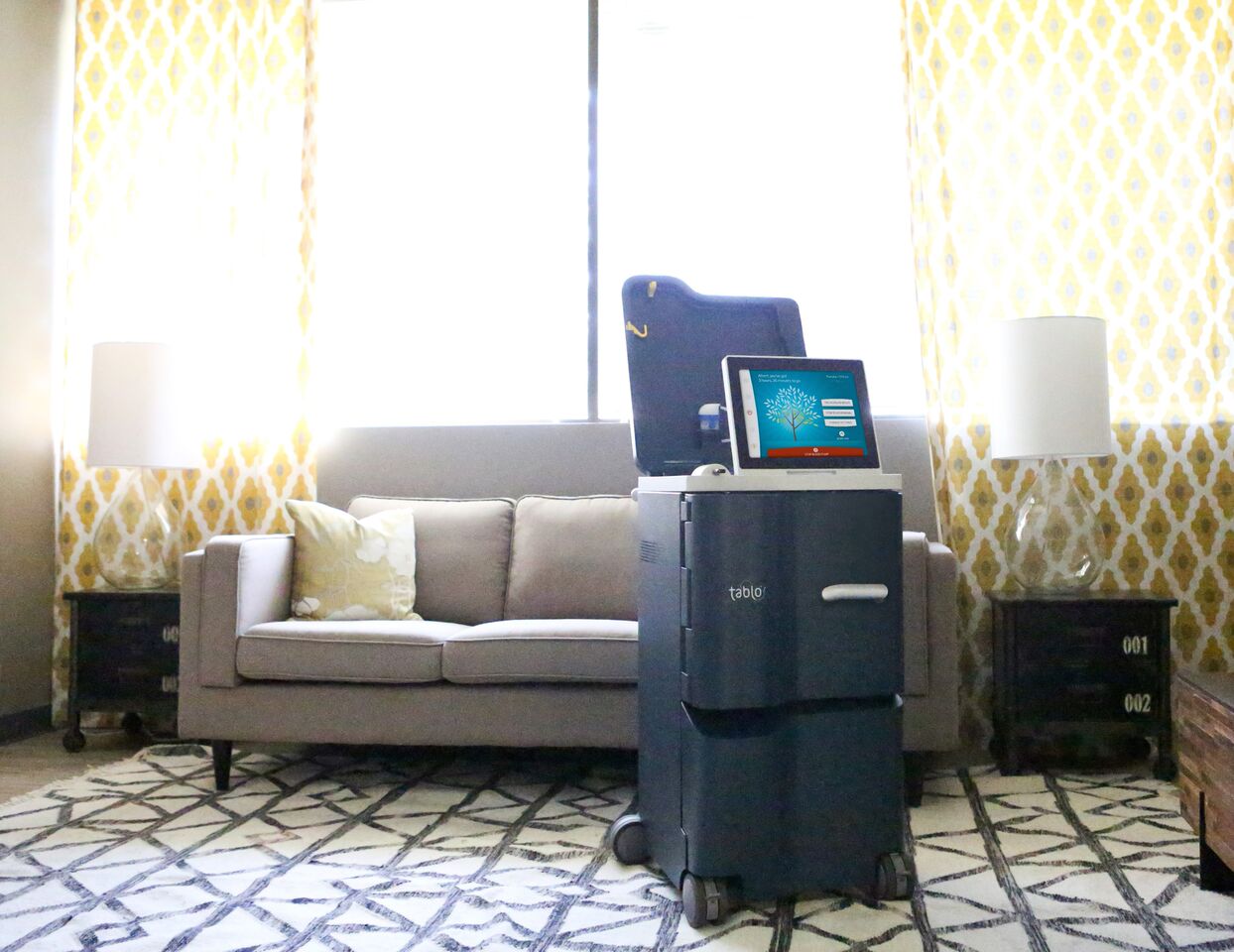
The economics of kidney disease in America is a hefty burden: about 26 million people in the U.S. have some aspect of chronic kidney disease and are at-risk of kidney failure. The number of people diagnosed with kidney disease doubled during each of the last two decades, according to the American Society of Nephrology. The annual cost of treating end-stage renal disease (ESRD) is over $32 billion, consuming 28% of Medicare expenditures…and increasing. Now consider the personal costs of dialysis in America: about $500 for a single hemodialysis treatment in a center, roughly $72,000 a year for one patient. There
The Pharmacy as Herbalist – An Italian Prescription

CNN called it, “the ancient perfume store you never heard of,” but the Officina Profumo-Farmaceutica di Santa Maria Novella had its literal roots in medicinal herbs. With scents wafting onto a 13th century Florence piazza, the Farmacia now operates as a pharmacy storefront for homeopathic and herbal supplements, along with perfumes and home scents. A visit to the pharmacy today is a journey into medicinal time-travel, back to the year 1221. I spent time in the pharmacy today to learn about the literal roots of the shop in medicinal herbs cultivated in a monastery garden and reformulated by monks into
Valuing Children = Valuing Health: Learning From Florence, Italy

This week I celebrate two spring holy holidays in one city that embraces spirituality, civility, and culture: Florence, Italy. Today, I had the special opportunity to tour Ospedale degli Innocenti: the Hospital of the Innocents. The hospital is now an institute for studying the culture and economics of children, and a museum telling a unique story of Florentine babies born in the early 15th century, spanning our contemporary era. The founding and root history of this beautiful place has lessons to teach us even today. It is key to realize, first, that Florentine humanism exalted the ideal virtues of the
Finding Health in Consumer Goods
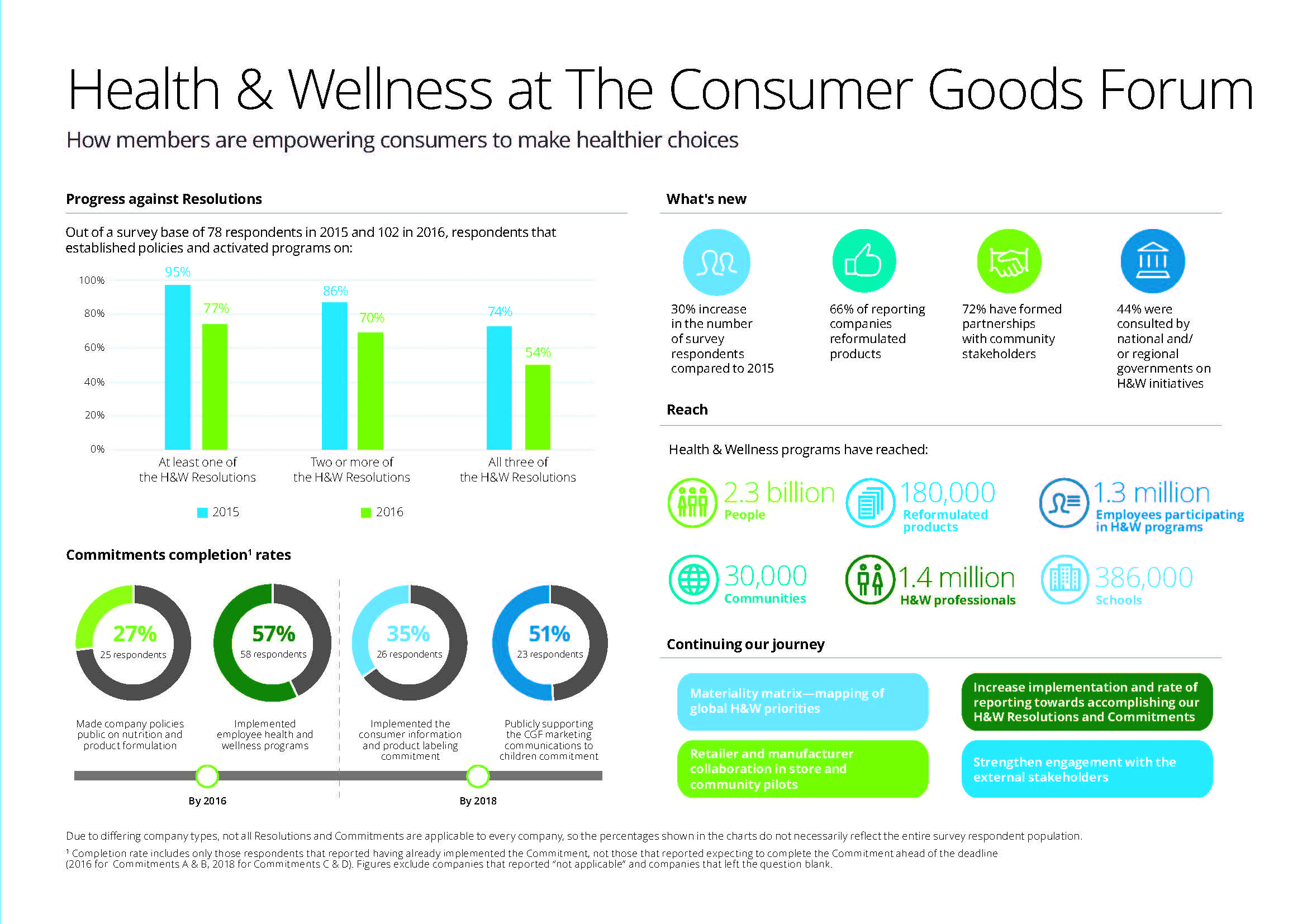
People want to live healthier lives, and consumer good companies are responding to these demands to keep and gain market share and profit margins. Consumer product firms reformulated over 180,000 consumer products in 2016 for in response to consumers’ health and wellness wishes, based on data collected by Deloitte for The Consumer Goods Forum project (CGF) and published in The CGF Health & Wellness Progress Report. The CGF is an industry network of some 400 consumer goods, retail, and service companies supporting the global adoption of standards and practices. This Report focused on the CGF members’ progress toward health and wellness
Health Insurance Plans Rank Lowest In Consumer Experience
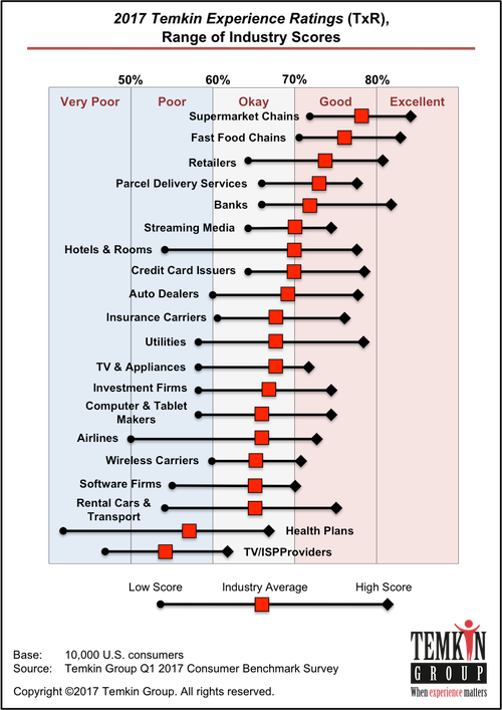
Consumers love their supermarkets, fast food shops, retailers, delivery services, and banks. These industries rank highest in the 2017 Temkin Experience Ratings, my go-to source for understanding consumer service Nirvana. Health insurance companies and internet service providers (ISPs) are at the bottom of the Temkin Ratings, as shown in the first chart. Note that health plans range from a score approaching 70 to under 50, illustrating the very wide range of consumer experience from okay-to-good, too very poor. The top-ranked health plan was Kaiser Permanente, with a rating of 67%; Health Net was ranked the worst of the health plans
A New Risk Factor For Mental Health: Climate Change
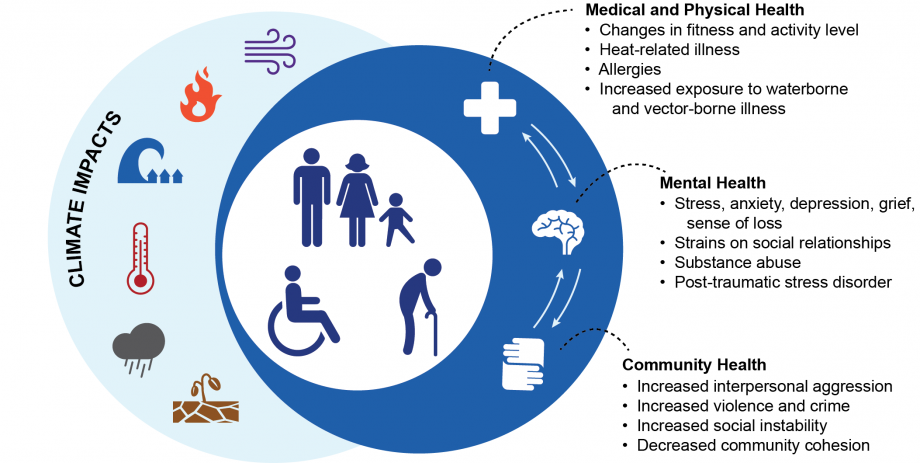
We make our health across many dimensions: via nutrition, safe physical/built environments, financial wellness, education, and the environment among them. In this last category, the environment, new research finds that climate change has a significant impact on health. The report, Mental Health and Our Changing Climate: Impacts, Implications, and Guidance, was sponsored by the American Psychological Association in conjunction with Climate for Health and ecoAmerica. “Climate change-induced severe weather and other natural disasters have the most immediate effects on mental health in the form of the trauma and shock due to personal injuries, loss of a loved one, damage to
The Fall of the TrumpCare is Retail Health’s Gain in 2017
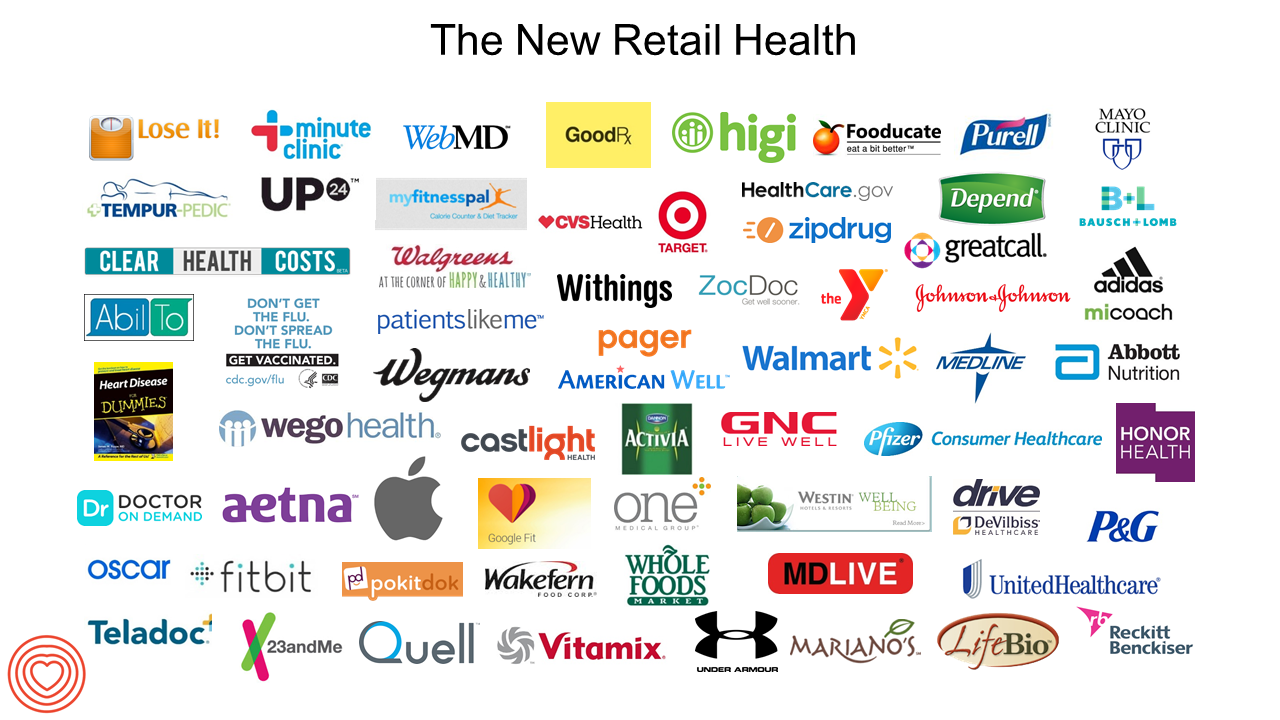
The non-vote for and withdrawal of The American Health Care Act on March 24, 2017, was a win for the retail health market, at least in the short-run. Before the vote, there had been some pronouncements that the passage of the AHCA would have been a boon to retail health. Here’s one story stating that, “A boom in medical tourism to Mexico predicted if Obamacare ends.” Another article asserts, “Why the American Health Care Act Works for Retailers,” a public policy statement from the National Retail Federation (NRF). But NRF, please don’t fret. Retail health is consumer-driven and will persist beyond the
Most Medicare Patients Haven’t Accessed Their EHR Information (Yet)
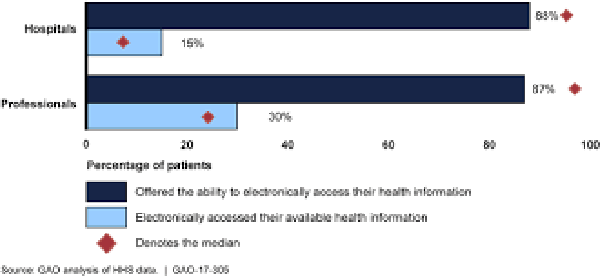
The HITECH Act, part of the Stimulus Bill (officially, the 2009 American Recovery and Reinvestment Act, ARRA) invested $35 billion of U.S. taxpayer funds to incentivize health care providers (doctors and hospitals) to acquire and use electronic health record systems (EHRs). Most providers have taken advantage of these financial incentives, so that EHRs are now part of mainstream medical practice and workflow among providers. For patients, and particularly those enrolled in the government programs of Medicare and Medicaid, personal access to their personal data in EHRs has been largely elusive. While nearly 9 in 10 doctors and hospitals have offered these
Patients Grow Comfortable With Digital Health Tools, CDW Finds
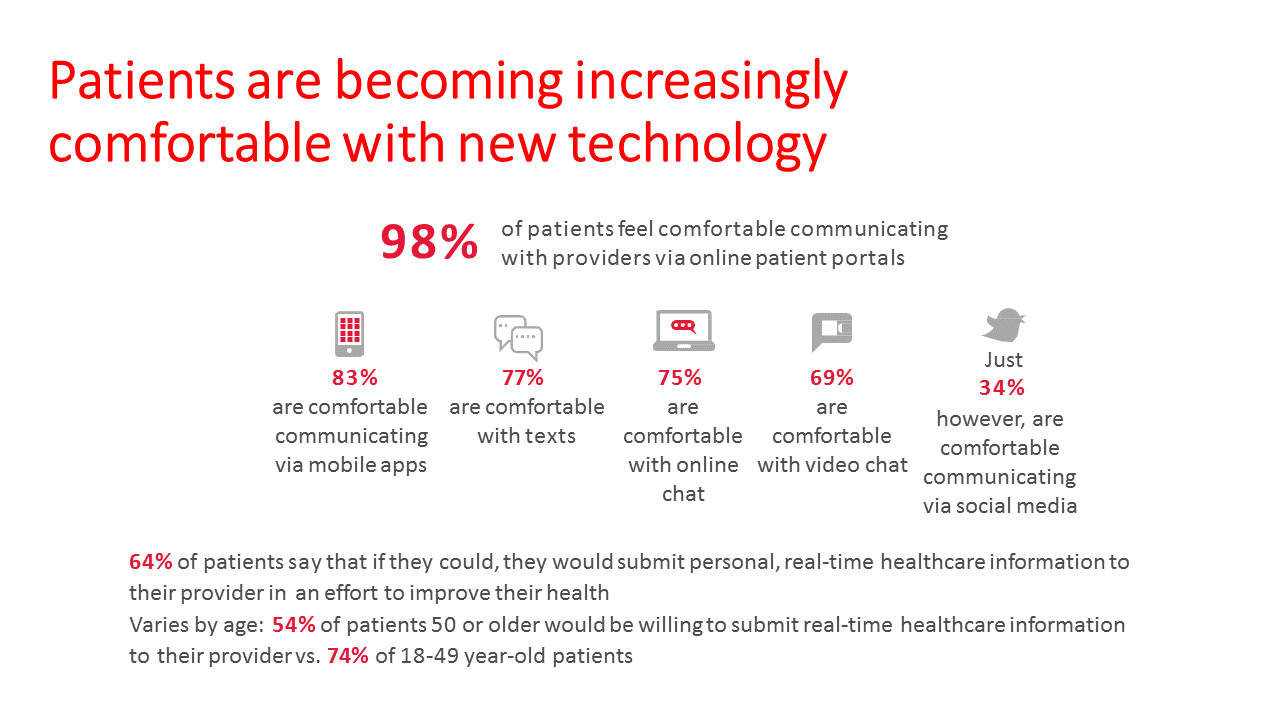
It’s generally thought that healthy people are more health-engaged than people diagnosed with medical issues. But that’s old health school thinking: most health consumers managing chronic conditions say they’ve become more engaged with healthcare over the past two years, according to CDW’s 2017 Patient Engagement Perspectives Study. In 2017, 70% of patients told CDW they’d become more engaged with healthcare, up from 57% in 2016. That’s a 20% growth in the proportion of patients engaging in healthare in just one year. Growing signs of patient engagement are in people driven to access online patient portals for their personal healthcare records: People
What’s the Future Of Fit? Join adidas At #SXSW17

The truest form of health reform and consumer-directed health care isn’t in a high-deductible health plan or a health savings account, and it doesn’t come out of Washington DC or your employer’s health benefits office. It comes from you in the form of self-care and DIY healthcare. In this case, think “inspired by sport, powered by you.” I’ll be participating on a panel at this weekend’s South-by-Southwest Festival in Austin, Texas, along with three wellness innovators: Nick Buettner of the Blue Zones project, Mary Liz McCurdy of Google, and John Wilbanks from Sage Bionetworks. Together, our quartet will brainstorm the
Your Zip Code Is Your Wellness Address
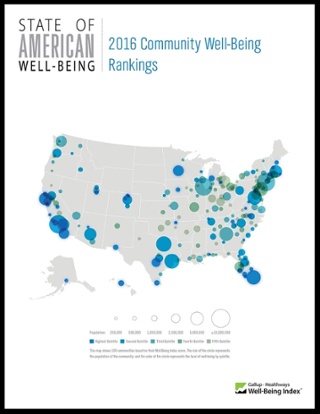
Geography is destiny, Napoleon is thought to have first said. More recently, the brilliant physician Dr. Abraham Verghese has spoken about “geography as destiny” in his speeches, such as “Two Souls Intertwined,” The Tanner Lecture he delivered at the University of Utah in 2012. Geography is destiny for all of us when it comes to our health and well-being, once again proven by Gallup-Healthways in The State of American Well-Being 2016 Community Well-Being Rankings. The darkest blue circles in the U.S. map indicate the metro areas in the highest-quintile of well-being. The index of well-being is based on five metrics, of consumer self-ranking
Images of Health, Vitality and Life at #HIMSS17

The plane has left the Orlando airport, and I’m looking back at the past week at the 2017 annual meeting of HIMSS, the annual health IT conference that has been my pleasure and (foot) pain to attend for the past two+ decades (for real). Walking the exhibition floor, I encountered some new flavors of imaging that went way beyond bits and bytes, data and technology. These images spoke to me of health, vitality, and life. I’m sharing them with you here, with no intention of selling you company products or services but simply sharing some images that speak to these
How Amazon Has Primed Healthcare Consumers – My Update with Frances Dare, Accenture

“I want what I want, when and how I want it.” If you think that sounds like a spoiled child, that’s not who I’m quoting. It’s you, if you are a mainstream consumer in the U.S., increasingly getting “primed” by Amazon which is setting a new bar for retail experience in terms of immediacy, customer service, and breadth of offerings. I talked about this phenomenon in my Health Populi post, How Amazon Has Primed Healthcare Consumers. The blog discussed my take on Accenture’s latest study into healthcare consumers based on the report’s press release. I appreciated the opportunity to sit
Healthcare and the Autonomous Car: Setting the Stage for HIMSS17

The autonomous car is a metaphor for healthcare: that’s how my first interview kicking off the HIMSS marathon began. The annual 2017 HIMSS conference isn’t your father’s or mother’s HIMSS of ten years ago, or even the HIMSS of 2010 — the year that financial incentives for EHR adoption began to stream from the HITECH Act of 2009, motivating thousands of healthcare providers to acquire and meaningfully use digital health records systems. Then, the HIMSS conference floor was abuzz with EHR frenzy. This week, over 43,000 people working at the intersection of healthcare and technology have converged in Orlando, Florida, for
How Amazon Has Primed Healthcare Consumers
We are all Amazon Prime primed as consumers now. So it should not surprise healthcare providers, plans and suppliers that consumers expect just-in-time convenience for their healthcare, Accenture has found. Mind the gap: 8 in 10 U.S. patients would welcome some aspect of virtual healthcare, but only 1 in 5 providers is meeting that need. The consumer demand for virtual care is palpable for: Tracking biometrics, among 77% of consumers (say, for measuring blood pressure or blood glucose for people managing diabetes) Following up appointments, for 76% of people after seeing a doctor or being discharged from hospital Receiving reminders
My $100 Flu Shot: How Much Paper Waste Costs U.S. Healthcare

An abbreviated version of this post appeared in the Huffington Post on 9 February 2017. This version includes the Health Populi Hot Points after the original essay, discussing the consumer’s context of retail experience in healthcare and implications for the industry under Secretary of Health and Human Services Tom Price — a proponent of consumer-directed healthcare and, especially, health savings accounts. We’ll be brainstorming the implications of the 2016 CAQH Index during a Tweetchat on Thursday, February 16, at 2 pm ET, using the hashtag #CAQHchat. America ranks dead-last in healthcare efficiency compared with our peer countries, the Commonwealth Fund
Patients Anxiously Prep to Be Healthcare Consumers, Alegeus Finds

Healthcare consumers are in a “state of denial,” according to research conducted for Alegeus, the consumer health benefits company. Overall, 3 in 4 consumers feel fear when it comes to their healthcare finances: most people worry about being hit with unexpected healthcare costs they can’t afford, and nearly half fear they won’t be able to afford their family’s healthcare needs. The wordle illustrates consumers’ mixed feelings about healthcare: while people feel frustrated, overwhelmed, powerless, confused and skeptical about healthcare in America, there are some emerging adjectives hinting at growing consumer health muscle-building: optimistic, hopeful, supported, engaged, accountable. Still, denial and
Doctors See Benefits in Patient Engagement Via Health IT
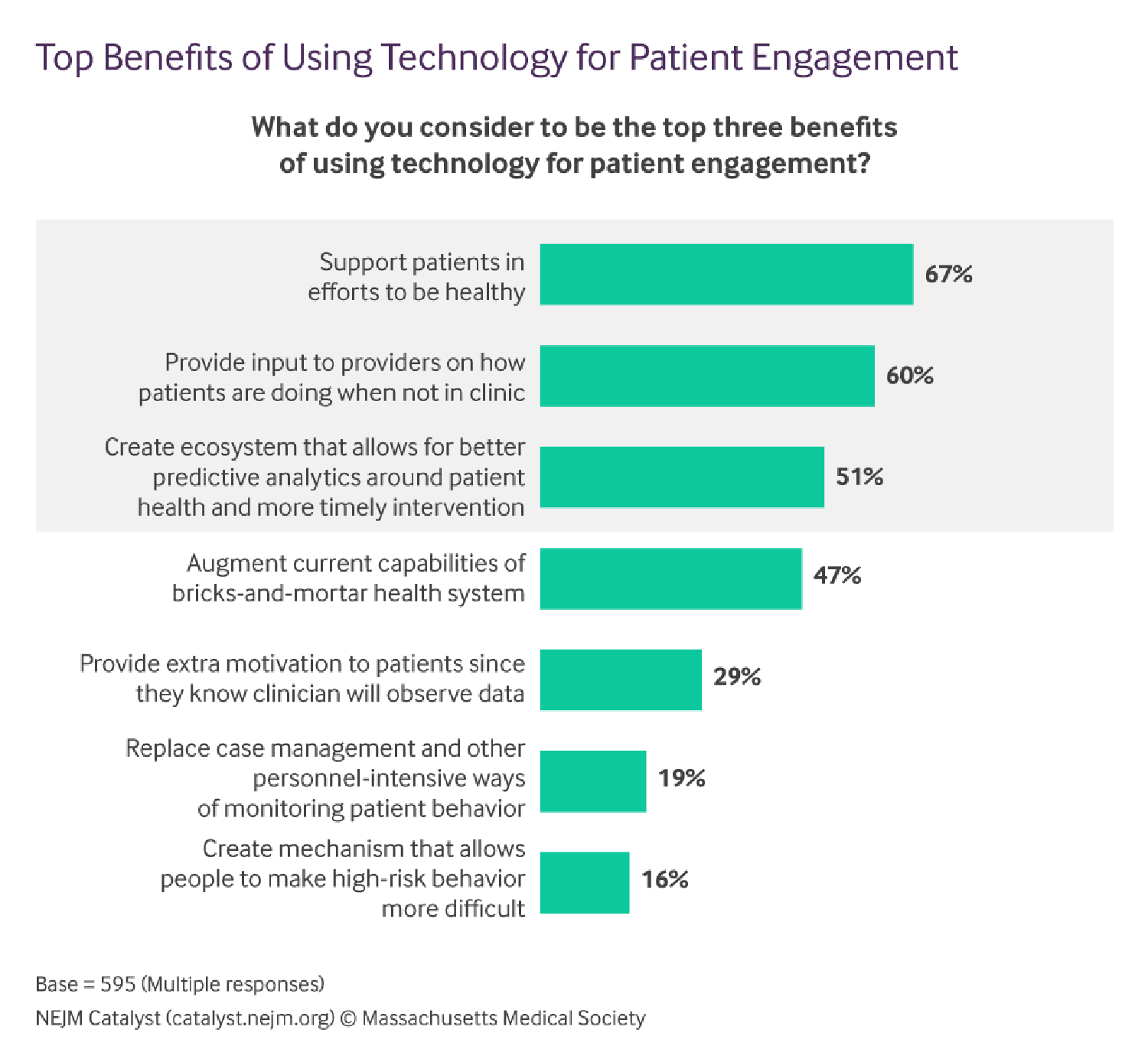
A special report on patient engagement and digital technology was published this month in the New England Journal of Medicine (NEJM). Based on a survey of doctors and healthcare executives, the research found that clinicians and managers welcome the opportunity to use digital tech — when it makes financial sense. That conclusion inspired the title of the article, Patient Engagement Survey: Technology Tools Gain Support – But Cost Is a Hurdle. NEJM polled 595 members of the NEJM Catalyst Insights Council, which included healthcare executives and clinicians who deliver healthcare. Here is NEJM’s scenario on patient-engaging health IT, a Holy Grail of sorts:
The Health Disparity of Information Access
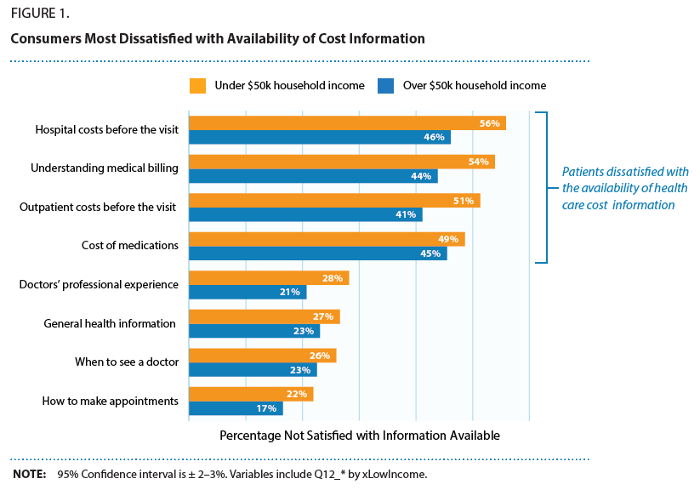
Among many health disparities which mar healthcare quality in the United States, there’s another one to add to the list: health and healthcare information access. Access to health care is underpinned in large part on a health consumer’s access to information about available health care services, their location, price, and if the patient is very fortunate to glean, quality. As people take on more responsibility for managing their health care utilization and financing in America, their access to information that is easy-to-find, clear, comprehensive and current is critical to personal and public health outcomes. But consumers are dissatisfied with the
Replacing Opioids with Digital Tech for Pain at CES 2017
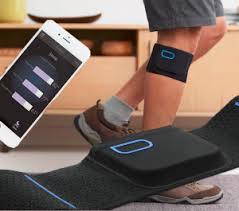
Pain management is a growing story at CES 2017. I covered the topic of Sleep and Pain at CES one year ago in the Huffington Post, and this year, the category has grown in both number of innovations and mode of pain management. At CES 2017, there were exhibitors of FDA-approved devices, sleep-and-pain focused tech, wristbands for relaxation and nausea-management, and a $5,999 device for calming meditation that’s being used in addiction programs. What’s driving growth and acceptance of this health tech segment is the opioid crisis which has become a public health epidemic across the U.S. The maps with increasing orange
Your Car as Mobile Health Platform, at CES 2017
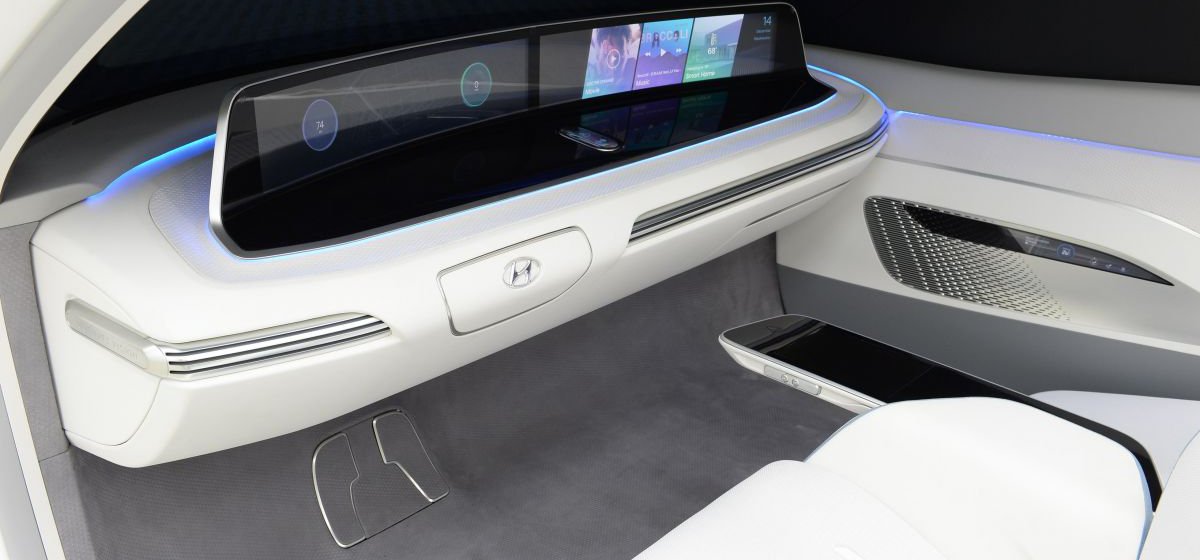
Mobile health (mHealth) has been long defined as care (broadly defined) delivered via mobile communications platforms, such as smartphones, text phones, and tablets. This week at CES, the automobile joins these consumer technologies based on the concepts and demos presented by several auto manufacturers at #CES2017 in Las Vegas. The most far-reaching mobile health scenario was developed by Hyundai, unveiled as the Health + Mobility Cockpit. The innovation was featured in the Las Vegas Convention Center in an immersive virtual reality room. The concept car is embedded with sensors, which are designed to read the driver’s levels of stress, alertness
Looking Beyond Tech for Health at CES 2017 – the Social Determinants
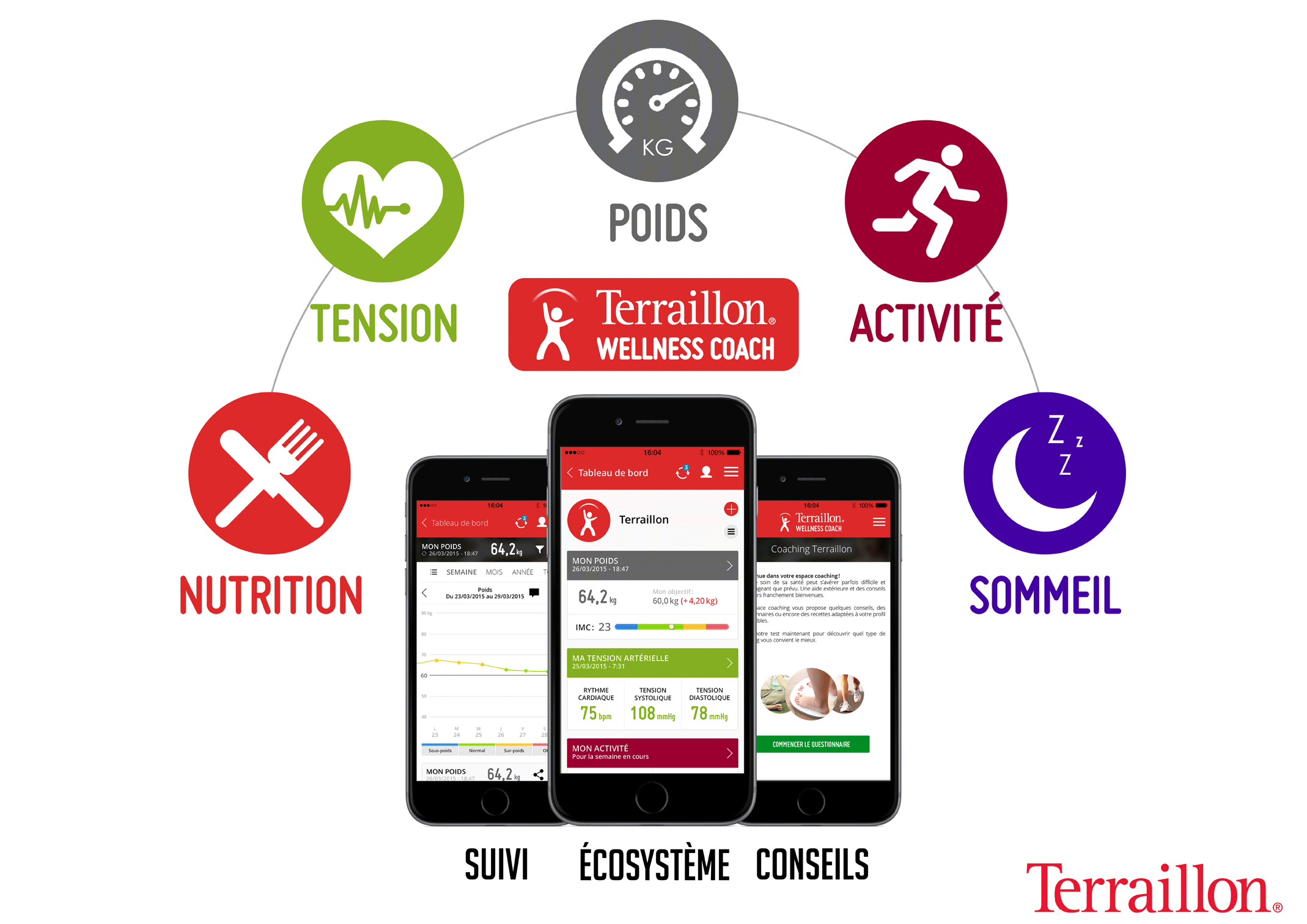
I’m at CES 2017 in Las Vegas all this week looking for signs of health in new technology announcements. While it’s no surprise there are hundreds of new and new-and-improved digital health innovations on the exhibition floor, you can look beyond those aisles to other companies who are new entrants in health. Arguably, these companies can bolster peoples’ health at least as much as activity tracking and calorie counting. Here are five examples I wrote about in my Huffington Post column yesterday, The Social Determinants of Health Live At CES 2017: Safety – Liberty Mutual Nutrition – Terraillon Healthy Sex
Consumers Taking Healthcare Into Own Hands at CES 2017
Consumer electronics (CE) aren’t just big screen TVs, sexy cars, and videogames anymore. Among the fastest-growing segments in CE is digital health, and health-tech will be prominently featured at the 2017 CES in Las Vegas hours after the champagne corks have popped at the start of the new year. On the second day of 2017, I’ll be flying to Las Vegas for several days of consumer technology immersion, learning about connected and smart homes and cars, and shiny new things all devoted to personal health. Welcome to my all-health lens on CES 2017, once referred to as the Consumer Electronics
Consumers Want a Retail Experience in Healthcare
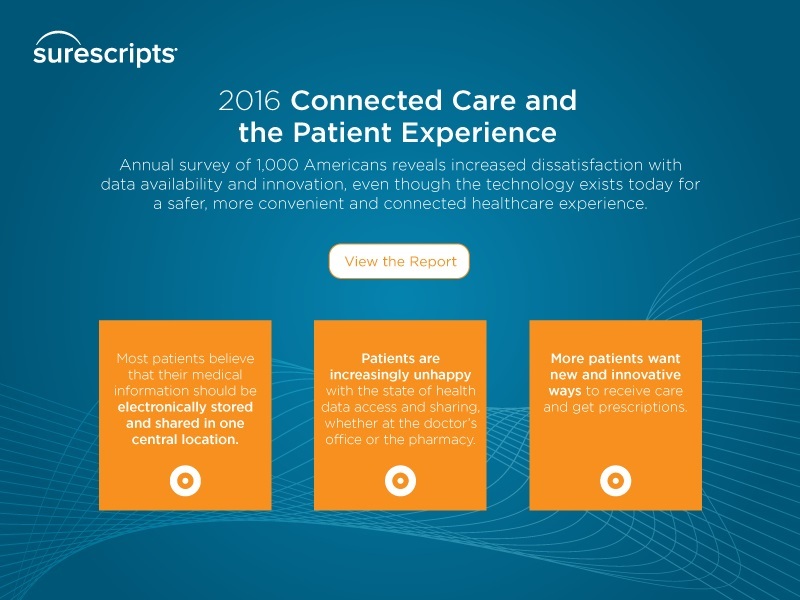
Why can’t the healthcare consumer experience be as easy as online banking? asks Tom Skelton, the CEO of Surescripts. That’s the expectation of most U.S. healthcare consumers, based on Surescripts latest survey results, summarized in the 2016 Connected Care and the Patient Experience report. The key findings are that U.S. consumers, Want their medical information delivered electronically, easily accessible and shareable; Are dissatisfied with the time and effort they spend on dealing with their medical information and waiting times in health care offices, both doctors and pharmacies; and, Prefer and expect innovative ways to get care and prescriptions. People are getting
Health Is Personal at the Connected Health Summit
“Because health is personal” is the tagline at the 2016 Connected Health Conference being held at the Gaylord Resort in National Harbor in metro Washington, DC. “Personal,” “Connected,” and “Health” are the three words that comprise the adjectives in the Personal Connected Health Alliance, the host of this conference. PCHA was formed through the merger of HIMSS, the health IT association, and Continua, the organization advocating for health technology “interoperability” — the ability for digital and communications technologies to communicate with each other, to remove friction from health data exchange. This week, PCHA announced that it will bring the Wireless-Life Sciences Alliance into
The Digital Health Gap For High-Cost, High-Need Patients
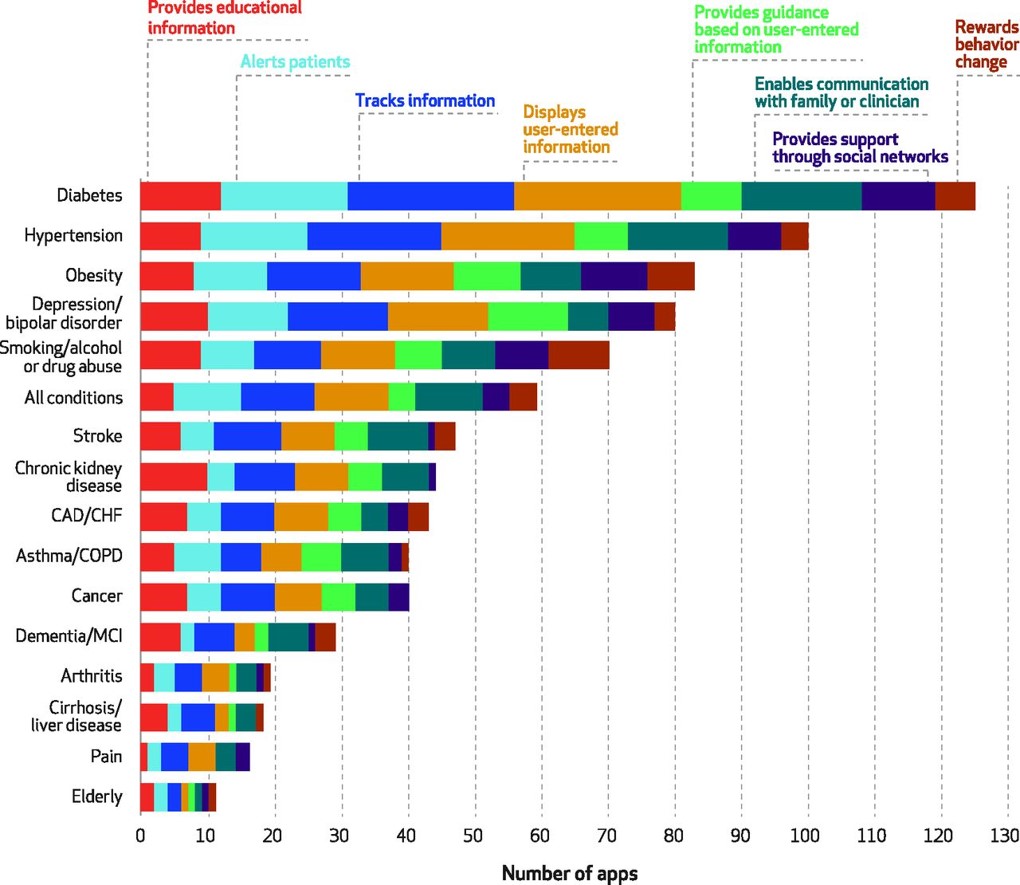
Several market forces are converging that boost patients’ ability to engage in their health and self-care, including peoples’ growing adoption of smartphones, demand for self-service and DIY lifestyles, and Americans’ growing responsibility as health consumers. Health consumers are using a growing array of self-health tools, enabled through digital technologies. However, these tools aren’t yet engaging some of the very people who need them the most: high-need, high-cost patients. Research into this situation is discussed in the December 2016 Health Affairs article, Many Mobile Heaath Apps Target High-Need, High-Cost Populations, But Gaps Remain, published in the December 2016 issue of Health Affairs. For
The Patient Is The Best Sensor – Consumers At the Center of Health
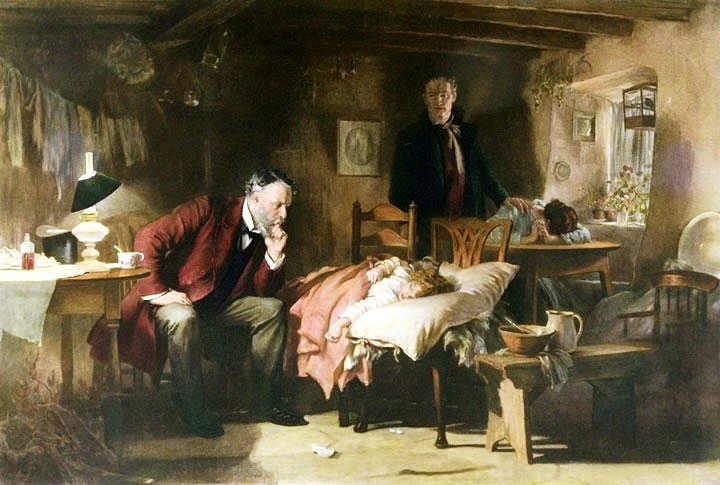
“The patient is the best sensor,” asserted Jamie Heywood, founder of Patients Like Me, during the perennial meeting sponsored by PwC, the 180° Health Forum. This event featured several panels of PwC’s curated group of so-called “provocateurs” in healthcare, and I was grateful to be one of nine selected for the event. Heywood joined Dr. Leanna Wen, Baltimore City Health Commissioner, and me in a panel called, “Strange Bedfellows or Soul Mates? The New Dating Game in Health.” The theme of our collective brainstorm was how collaborations across the ecosystem could help make health and healthcare better. The drawing is
The Growth of Digital Health @Retail
This post was written to support the upcoming meeting of the PCHA, the Personal Connected Health Alliance, to be held 11-14 December 2016 at the Gaylord Hotel in greater Washington, DC. You can follow the events and social content via Twitter using the hashtag #Connect2Health. Have you visited your local Big Box, discount or consumer electronics store lately? You’ll find expanding shelf space for digital health technologies aimed squarely at consumers. 2017 promises even more of them, aimed at helping people accomplish health tasks once performed in hospitals and by healthcare providers, or tasks not yet delivered in today’s healthcare
Digital Health Continues to Grow at CES 2017

I attended CES Unveiled in New York this week, which is a preview of what will be featured at the CES in Las Vegas in January 2017. CES, previously known as the Consumer Electronics Show, is celebrating a 50 year anniversary, having been born in Manhattan in 1967 when transistor radios, stereos, and black-and-white TVs were all the rage. Today, CES is the world’s largest innovation event, and the longest-lived. 10 of the original 1967 exhibitors still show at CES, including 3M, Philips, Sharp, SONY, Toshiba, and Westinghouse, among others. Meet George Jetson, who might have been an attendee at
Evidence That Mainstream Consumers Growing Digital Health Muscles
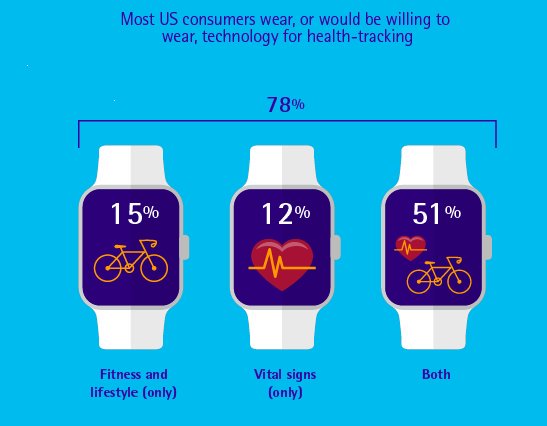
About 1 in 2 patients in the US are accessing their electronic health records in early 2016, according to Accenture’s 2016 Consumer Survey on Patient Engagement, Patients Want a Heavy Dose of Digital. This post is based on a presentation I attended by Accenture’s Dr. Kipp Webb yesterday. Accenture conducted survey research with consumers in seven countries for this study. The data and insights shared in this post are based only on the survey results from 2,225 US patients. The proportion of US health consumers accessing their health records grew from 27% in 2014 to 45% in 2016 — an increase of
Hospitals Need to Cross the Health Consumer Chasm
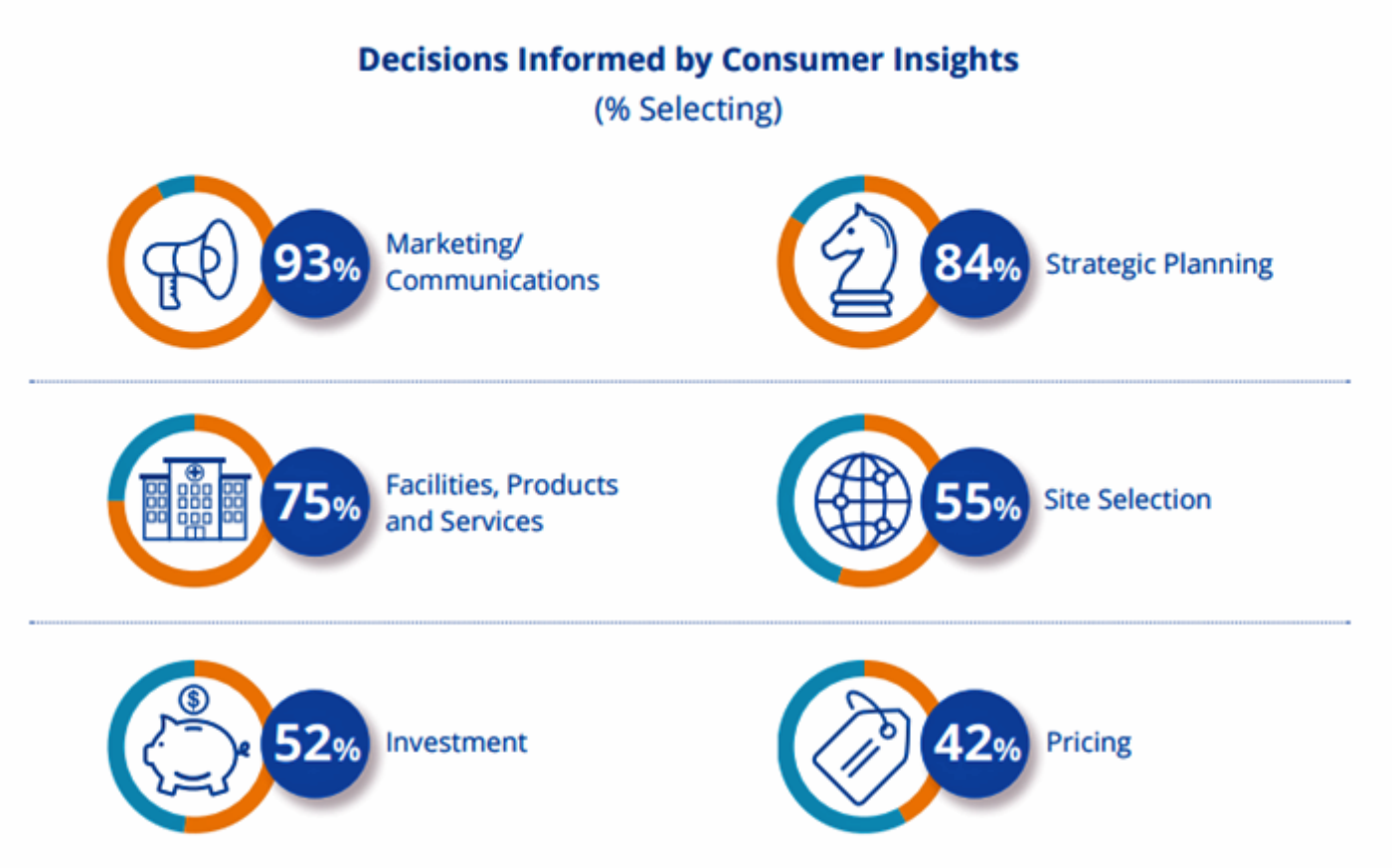
Most U.S. hospitals have not put consumerism into action, a new report from KaufmanHall and Caden’s Consulting asserts from the second paragraph. Patient experience is the highest priority, but has the biggest capability gap for hospitals, the report calls out. KaufmanHall surveyed 1,000 hospital and health system executives in 100 organizations to gauge their perspectives on health consumers and the hospital’s business. KaufmanHall points out several barriers for hospitals working to be consumer-centered: Internal/institutional resistance to change Lack of urgency Competing priorities Skepticism Lack of clarity (vis-a-vis strategic plan) Lack of data and analytics. The key areas identified for consumer centricity
Consumers Feel More Respect from Personal Care and Grocery Brands Than Pharma or Insurance
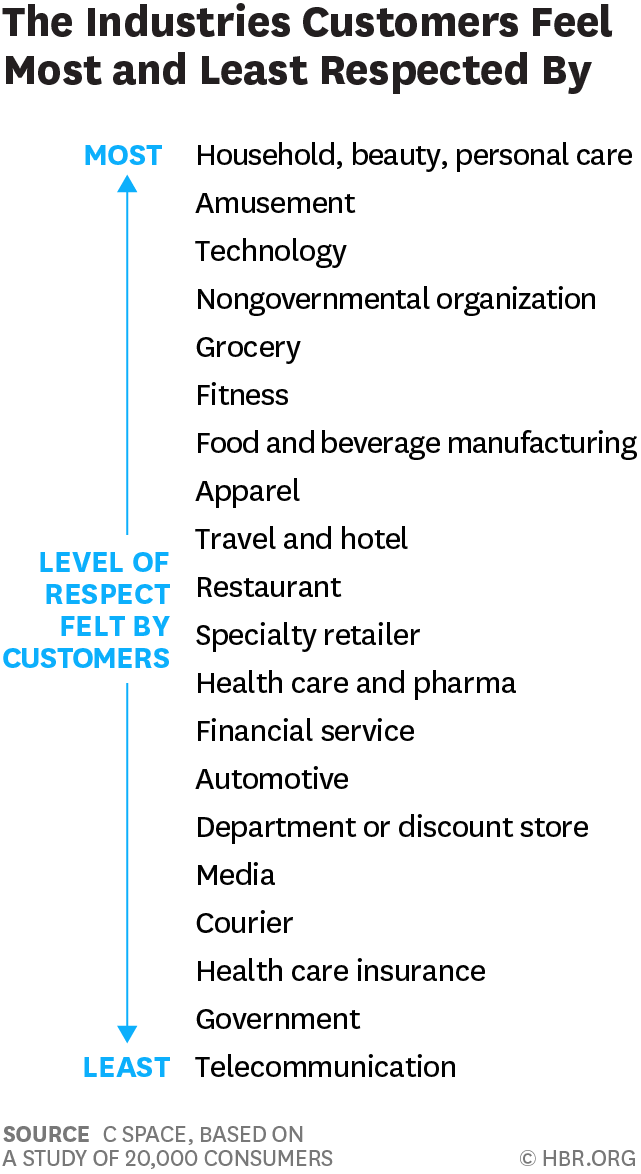
People feel like get-no-respect Rodney Dangerfield when they deal with health insurance, government agencies, or pharma companies. Consumers feel much more love from personal care and beauty companies, grocery and fitness, according to a brand equity study by a team from C Space, published in Harvard Businss Review. As consumer-directed health care (high deductibles, first-dollar payments out-of-pocket) continues to grow, bridging consumer trust and values will be a critical factor for building consumer market share in the expanding retail health landscape. Nine of the top 10 companies C Space identified with the greatest “customer quotient” are adjacent in some way to health:
The Mobile Health App Glut
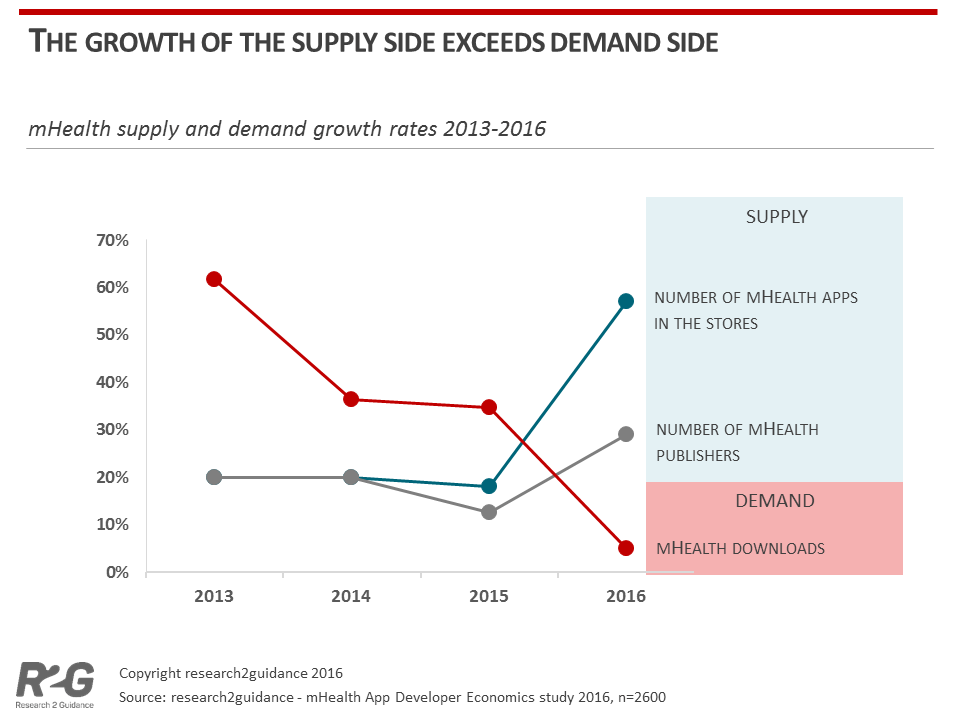
Supply of mobile health apps greatly exceeds the demand for them, based on research2guidance’s report on the mHealth App Developer Economics 2016, analyzing the status and trends of the mobile health apps market. This is research2guidance’s sixth annual study on the topic. The line chart illustrates the hockey stick growth rate of the number of mHealth apps in app stores in blue, reaching some 259,000 apps available in major app stores in 2016. The declining red line shows the growth rate of the demand for apps, falling to 7% in 2016 after growing 35% in 2015. It’s not a money-making enterprise
A Baby Onesie Teaches CPR – How A Grocer & Ambulance Company Come Together for Health
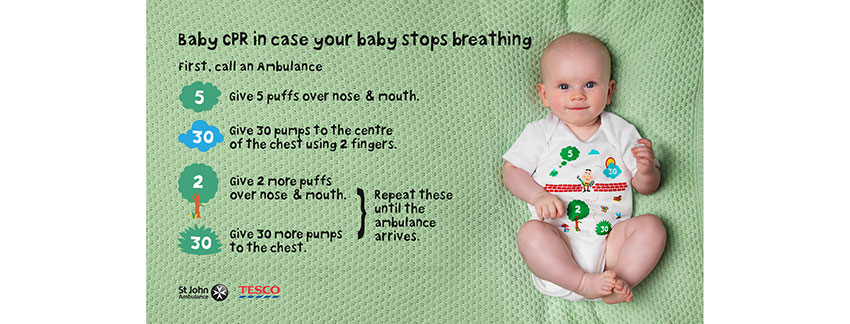
Here’s a new definition of “wearable” that’s Old School stuff: a baby onesie. But this onesie doesn’t just look cute and keep baby’s bum warm. The onesie helps teach caregivers baby CPR. This health education project was sponsored by Tesco in collaboration with St. John Ambulance, one of the largest health charities in the United Kingdom. Tesco ranks among the biggest retailers in the world (after Walmart, Costco, Kroger, and Lidl), operating in the UK, Ireland, Asia and Europe. Watch this video and get charmed by adorable, telegenic Baby Lucy – your CPR model. Tesco held live CPR classes at over
All I Want For Christmas Is A Health Tracker – CTA on Shopping Tech for the Holidays
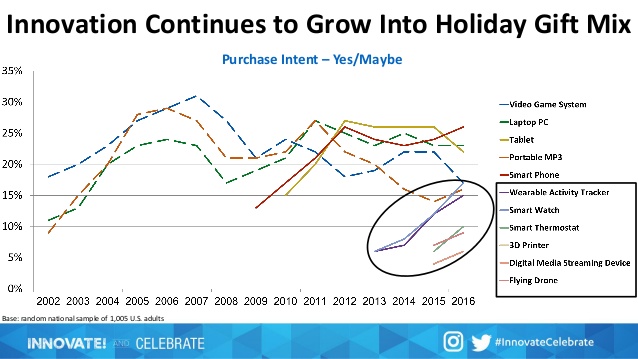
Technology is high on U.S. consumers’ holiday shopping lists for the 2016 holiday season, according to the CTA (Consumer Technology Association). And wearable activity trackers are a fast-growing segment of consumer technology purchases expected in shoppers’ carts (both physical and online virtual) this fourth quarter of 2016, CTA notes in its 23rd Annual Holiday Outlook consumer survey research. The line graph illustrates the hot categories in this year’s holiday gift mix, led by smart phones (in red), tablets, laptops, and video game systems. But the proportion of people intending to purchase smartwatches now ties with video game system sales, closely followed
Looking for Amazon in Healthcare
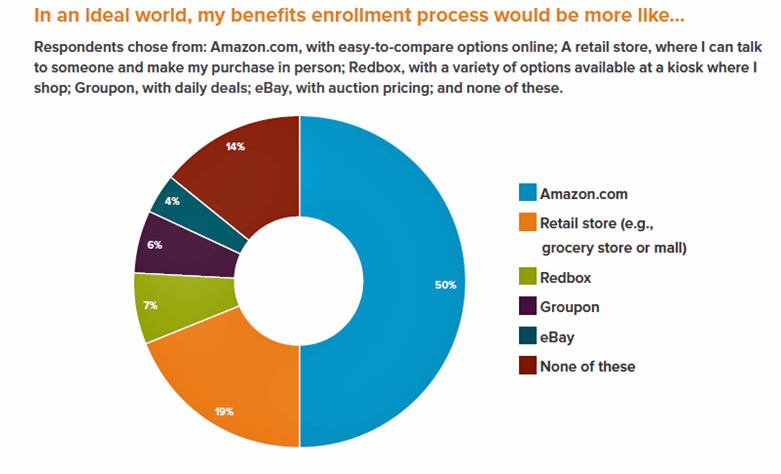
Consumers have grown accustomed to Amazon, and increasingly to the just-in-time convenience of Amazon Prime. Today, workers who sign onto employee benefit portals are looking for Amazon-style convenience, access, and streamlined experiences, found in the Aflac Workforces Report 2016. Aflac polled 1,900 U.S. adults employed full or part time in June and July 2016 to gauge consumers’ views on benefit selections through the workplace. Consumers have an overall angst and ennui about health benefits sign-ups: 72% of employees say reading about benefits is long, complicated, or stressful 48% of people would rather do something unpleasant like talking to their ex or
Doctors Are Growing to Like Digital Health Tools, Says the AMA
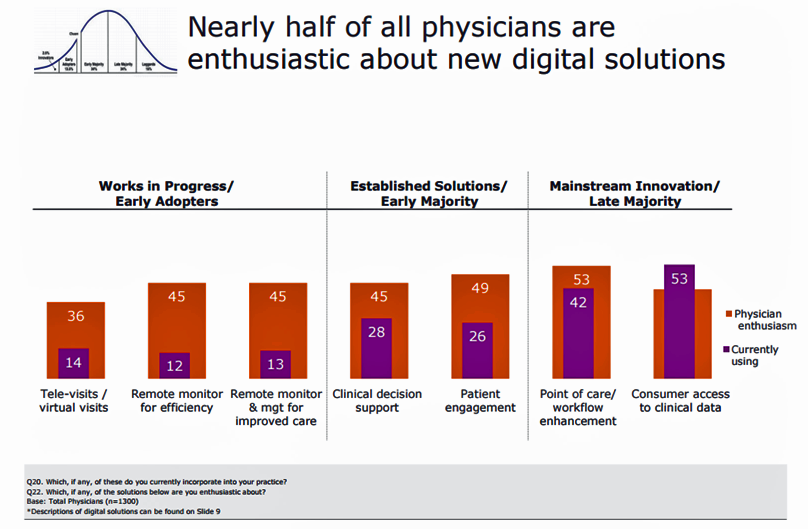
Notwithstanding the head of the AMA recently referring to digital health technologies as “snake oil,” it appears that one-half of physicians is keen on digital health. And scale, not age, matters when it comes to doctors using digital health tools. The American Medical Association (AMA) surveyed physicians on their use of digital health tools, finding that primary care physicians (PCPs) and doctors working in larger and more complex practices tend to be more digital. In Physicians’ motivations and requirements for adopting digital clinical tools, the AMA’s digital health study, “Physicians are optimistic about digital health innovation and its game-changing potential
Let’s Go Healthcare Shopping!
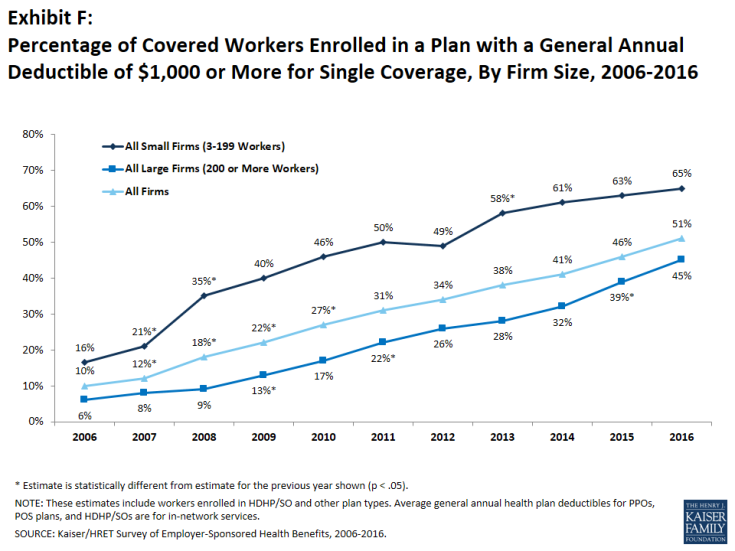
Healthcare is going direct-to-consumer for a lot more than over-the-counter medicines and retail clinic visits to deal with little Johnny’s sore throat on a Sunday afternoon. Entrepreneurs recognize the growing opportunity to support patients, now consumers, in going shopping for health care products and services. Those health consumers are in search of specific offerings, in accessible locations and channels, and — perhaps top-of-mind — at value-based prices as defined by the consumer herself. (Remember: value-based healthcare means valuing what matters to patients, as a recent JAMA article attested). At this week’s tenth annual Health 2.0 Conference, I’m in the zeitgeist
Most Digital Health Consumers Say They Benefit from Connected Health
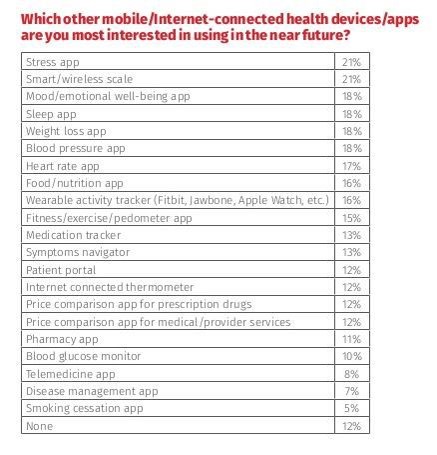
Managing stress, weight, mental health, sleep, and heart function are among the top-most desired reasons already-connected health consumers are interested in further connecting their health, according to The 2016 HealthMine Digital Health Report. The most popular tools people use to digitally manage their health deal with fitness and exercise (among 50% of connected health consumers), food and nutrition (for 46%), and weight loss (for 39%). 3 in 4 people who use digital health tools say they have improved their health by connecting to these tools. 57% of digital health users also say going health-digital has lowered their healthcare costs. The survey
The State of Mobile Apps in 2016 and Healthcare Implications
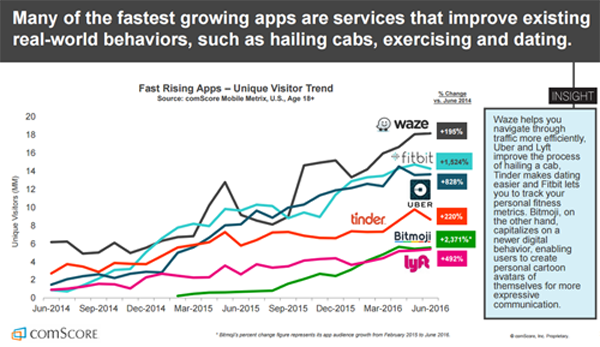
Some of the fastest-growing mobile phone apps help people manage life-tasks every day, like getting real-time directions when driving, finding dates, getting rides, and tracking health, according to The 2016 U.S. Mobile App Report from comScore. The chart from the comScore Mobile Metrix survey illustrates some popular apps well-used by people on smartphones, with one of the fastest growth rates found for the Fitbit app — 1,524% growth over two years, from June 2014 to June 2016. In comparison, the Uber app visits increased 828% in the period, half as fast, and the Tinder app, 220%. Some key topline results of
Consumers Seek Quality and Privacy In Tech-Enabled Healthcare
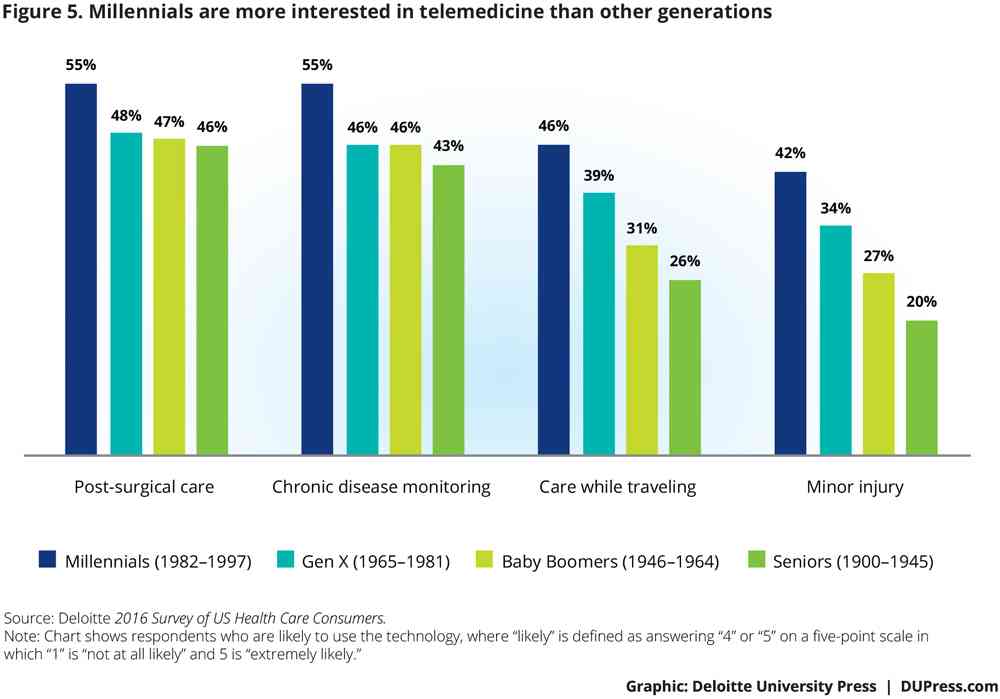
Consumers are open to technology-enabled healthcare, but look to providers to ensure quality and privacy of patients’ personal health information, according to Will Patients and Caregivers Embrace Tech-Enabled Healthcare?, based on the Deloitte 2016 Survey of US Health Care Consumers. Seven in 10 consumers would use at least one of the technologies Deloitte served up in its study, with telemedicine at the top of the list: 49% of people favor telemedicine for post-surgical care, 48% for chronic disease management, 36% for care while traveling, and 32% for minor health issues. While Millennials are generally keener across-the-board for tech-enabled health care,
Consumers Show Low Demand For Connected Health, Parks Finds
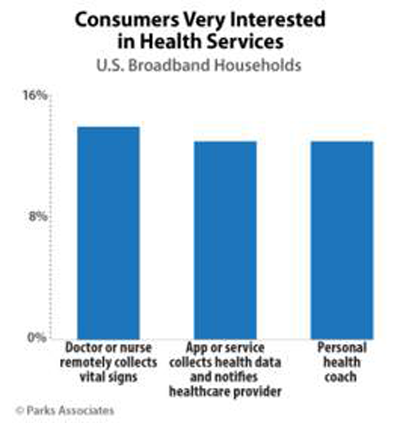
People living in only 1 in 10 homes with broadband are “very interested” in connected health services, like a personal health coach, a remote health monitoring app that connects to and notifies a healthcare provider, or a clinician collecting vital signs virtually. This finding comes out of a survey from Parks Associates. This is a relatively low consumer demand statistic for digital health, compared with many other surveys we’ve mined here on Health Populi. While these are not apples-to-apples comparisons — note that Parks Associates focus on broadband households — a recent study to consider is Accenture’s consumer research published in March
Knowing And Acting On How Patients Think Will Improve Health and Healthcare

“In the developed world, patient disengagement has become the new killer disease — not the lack of diagnostic devices, trained physicians or efficacious treatment options,” argues Andrea LaFountain, PhD, in her book, How Patients Think. Disbanding prescription drugs in advance of doctors’ instructions, postponing lab and diagnostic tests, and avoiding daily blood glucose testing when managing diabetes are just some examples of “how patients think” about health care and the many tasks involved in caring for oneself and the health of loved ones. But better understanding how patients think — technically speaking, the cognitive neuropsychology underneath the thinking — can
The Connected Fitness Consumer

Personal fitness equipment is getting connected in the growing Internet of Things ecosystem (IoT), and fitness enthusiasts are getting more digitally connected well beyond their wristband tracking device. , a healthy living portal, looked into fitness consumers’ digital habits and found a health-engaged cohort that’s online in the Web 1.0 world — sharing workout tips in social media communities but not so much product information. Product information is still learned Old School-wise, via product websites, traditional magazines, from peers and word-of-mouth (offline), and trying new gear out at the gym in real time. This survey was conducted among HellaWella’s readers,
The Growing Aisles of Wearable Health Devices
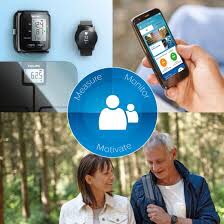
When a person dons a piece of wearable technology, they first look to engage with some aspect of health or fitness before they seek entertainment. To satisfy that demand side of the market equation, we’re seeing a stream of devices, platforms, and corporate strategies trying to reach the wearable tech consumer. Today, Philips announced its expanding strategy for digital health, launching devices to help people, in Philips’ words, measure, monitor, and stay motivated for personal health. The company is offering a health smartwatch, a weight scale, an ear thermometer, and two blood pressure monitors (for wrist and upper arm), all
Most Wired Hospitals Spending on Cybersecurity, Telehealth and Population Health
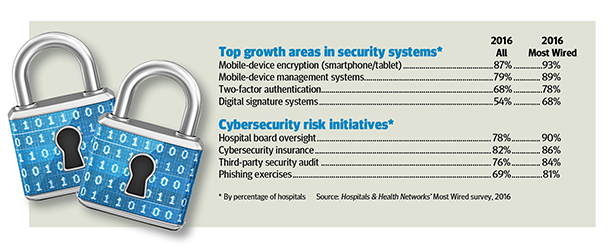
Investing information technology dollars in telehealth and mobile platforms, patient engagement, and cybersecurity are major focuses for leading IT-savvy hospitals in America, according to the 2016 Most Wired survey of healthcare organizations, released in July 2016 sponsored by Hospitals and Health Networks and Health Forum, a division of the American Hospitals Association. This survey, in its 18th year, has become an important benchmark measuring the adoption of information technology tools and services among American hospitals and health systems. The complete list of Most Wired hospitals for 2016 can be found here. The most popular telehealth services offered by the Most Wired hospitals are
More Patients Morph Into Financially Burdened Health Consumers
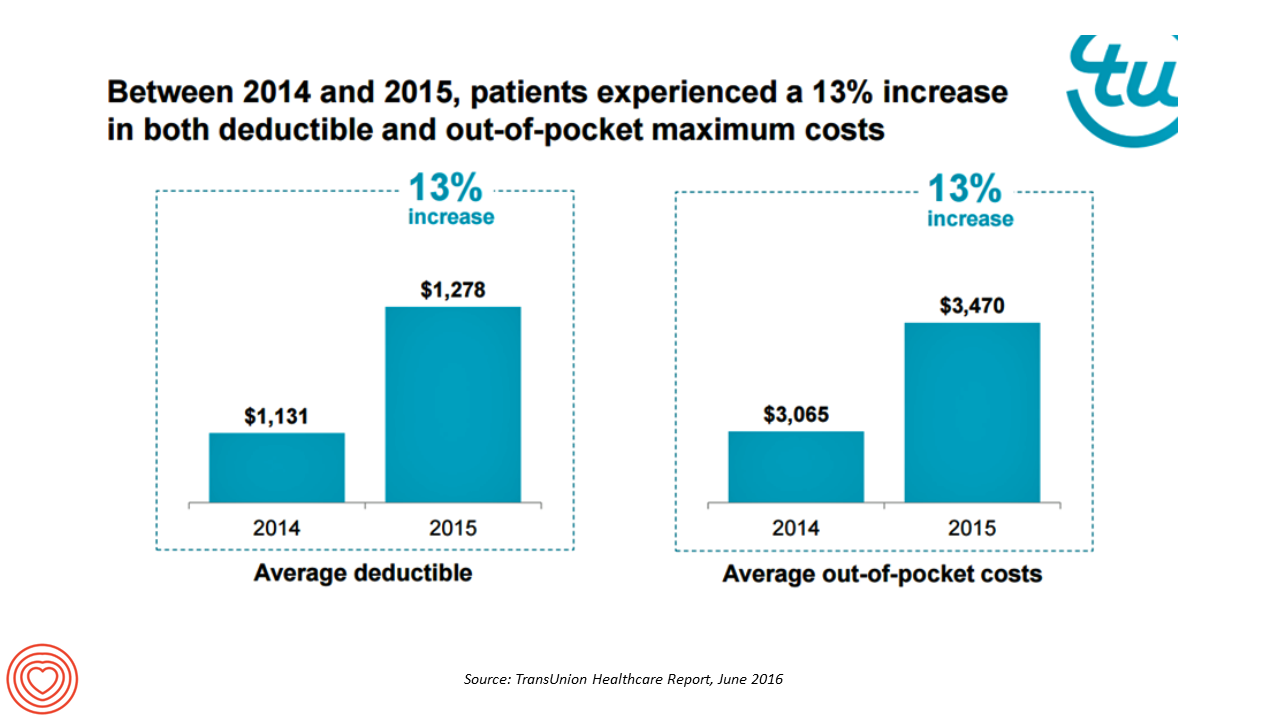
Health care payment responsibility continues to shift from employers to employee-patients, More of those patients are morphing into financially burdened health consumers, according to TransUnion, the credit agency and financial risk information company, in the TransUnion Healthcare Report published in June 2016. Patients saw a 13% increase in their health insurance deductible and out-of-pocket (OOP) maximum costs between 2014 and 2015. At the same time, the average base salary in the U.S. grew 3% in 2015, SHRM estimated. Thus, deductibles and OOP costs grew for consumers more than 4 times faster than the average base salary from 2014 to 2015. In
Salesforce on the State of the Connected Patient: Willing But Not There Yet
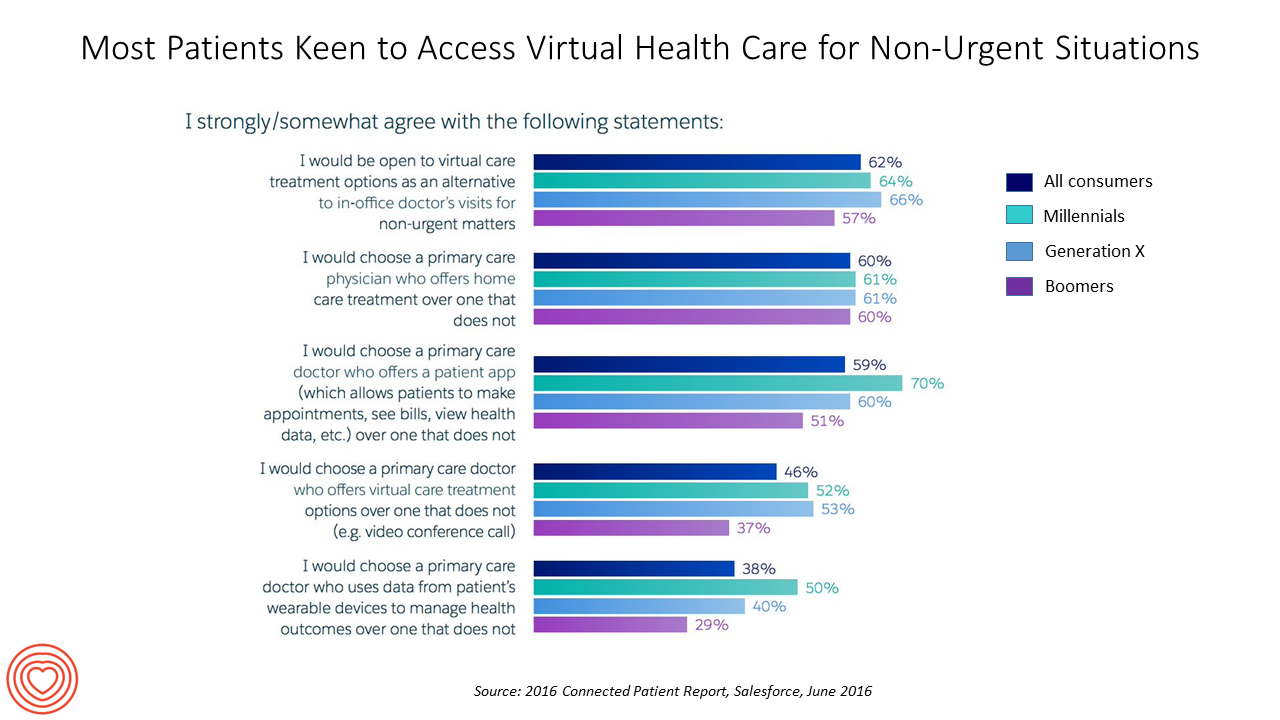
About two-thirds of health consumers would be open to virtual health care options for non-urgent situations, according to the 2016 Connected Patient Report from Salesforce Research. Salesforce conducted the survey with the Harris Poll online among 2,025 U.S. adults in June 2016. 1,736 of these health consumers had health insurance and a primary care physician. Among the many findings in the report, Salesforce found that: In terms of communications and relationship… The vast majority of consumers with primary care physicians are very satisfied with them (91% of people with PCPs) However, one-third of people with a PCP believe their physicians would
Accountable Care Will Happen Best When Patients Engage
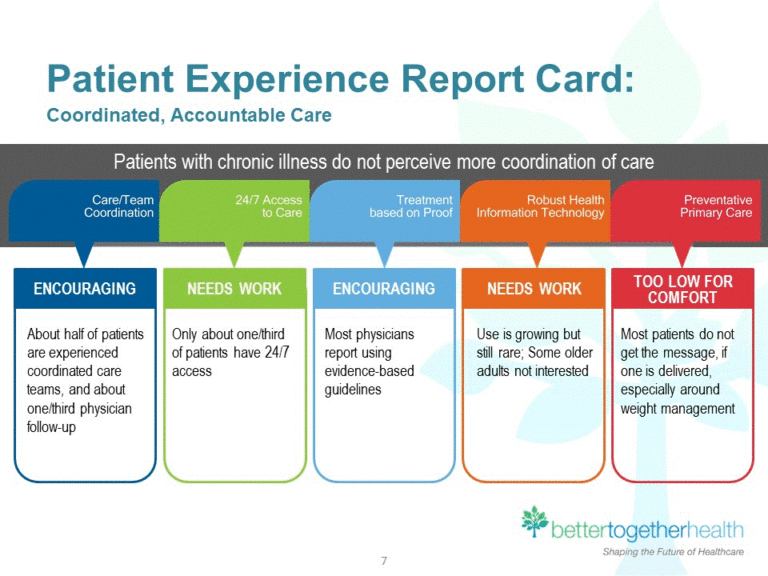
Technology alone won’t improve health care in America, especially in people with chronic health problems don’t want to use it. Furthermore, too many clinicians who have invested in digital health technologies (namely, electronic health records systems), aren’t fully taking advantage of what they have. This and other health care realities are explored in Better Together: Patient Expectations and the Accountability Gap, based on a consumer survey conducted by Nielsen Strategic Health Perspectives for the Council of Accountable Physician Practices, an affiliate of the American Medical Group Foundation. The survey polled 30,007 consumers in March 2016, and combined physician data culled from Nielsen’s
The Promise of the Platform Economy for Health
There’s a lot of talk about the growing platform economy. If well-designed platforms get adopted in healthcare, they may help our ailing healthcare systems get better. The quality, safety, and convenience of healthcare in America suffer from a lack of patients’ personal health data being essentially locked in data siloes. The diagnosis is lack of data “liquidity:” the ability for our health information generated in various touch points in the healthcare system and in our personal lives each day to move outside of the locations where the bits and bytes were first created: to our clinicians, researchers, health providers, and to
The Primacy of People as Health/Care Goes Digital: Accenture
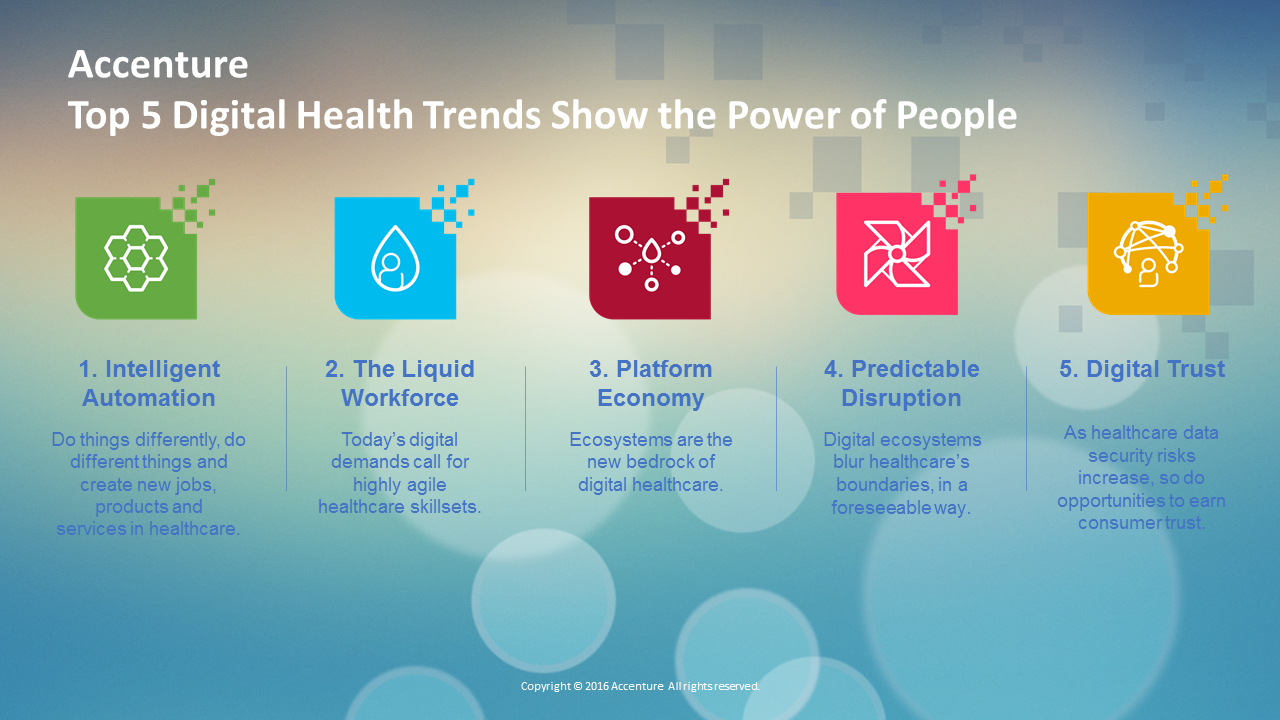
Digital platforms and tools are fast-advancing in all industries, and especially in health and health care. But it’s people-first, and digital PLUS analog, based on Accenture’s latest forecast of five macro technology trends. The five forces are: Intelligent automation – 70% of health executives expect to invest more in artificial intelligence; Liquid workforce – 42% of health/care workers are expected to be contractors or free agents within organizations within 3 years’ Platform economy – 10x growth is expected in application programming interfaces (APIs) in the next five years, which will enable data to liquidly move across healthcare platforms Predictable disruption
Will the Big Box Store Be Your Health Provider?
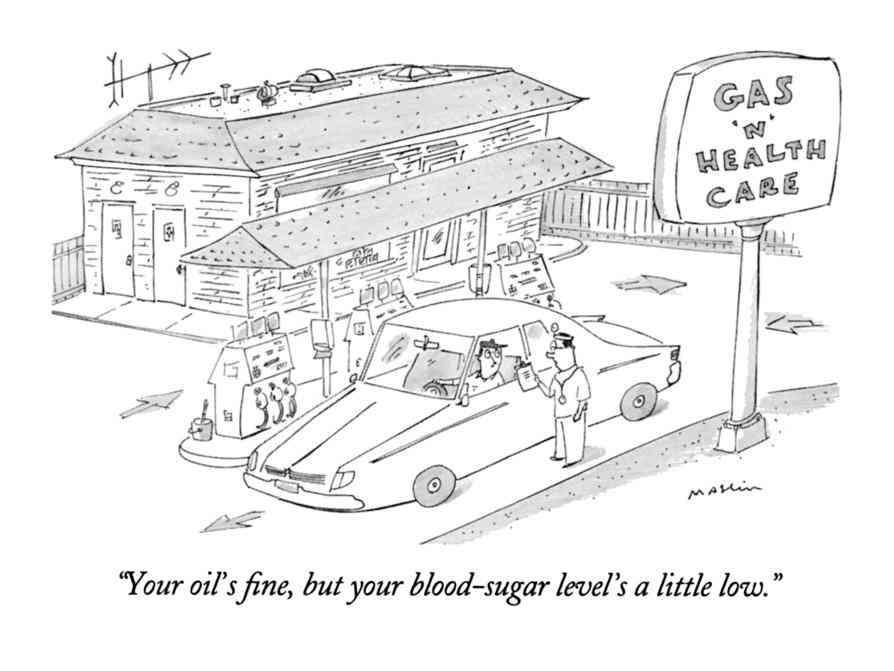
“Gas ‘N’ Health Care” is one of my most-used cartoons these days as I talk with health/care ecosystem stakeholders about the growing and central role of consumers in health care. You may be surprised to learn that the brilliant cartoonist Michael Maslin created this image back in 1994. That’s 22 years ago. When I first started using this image in my meetings with health care folks, they’d all giggle and think, ‘isn’t that funny?’ Legacy health care players — hospitals, doctors, Pharma, and medical device companies — aren’t laughing at this anymore. At a Costco a 20 minutes’ drive from
Love, Mercy and Virtual Healthcare

Virtual healthcare – call it telemedicine, remote monitoring, or the umbrella term, telehealth – is coming of age. And it’s a form of healthcare that a growing percentage of consumers in the U.S. want. I’m in Branson, Missouri, today, meeting with the State’s Hospital Association to talk about consumers in the growing DIY health/care economy. So “telehealth,” broadly defined, is part of my message. This week Xerox announced its survey results focused on consumers’ interests in telehealth. “Xerox helps healthcare providers serve patients anytime, anywhere,” the press release starts. Convenience, cost-savings, and the ability to consult physicians quickly and get e-refills are
One in Two People Use Wearable Tech in 2016
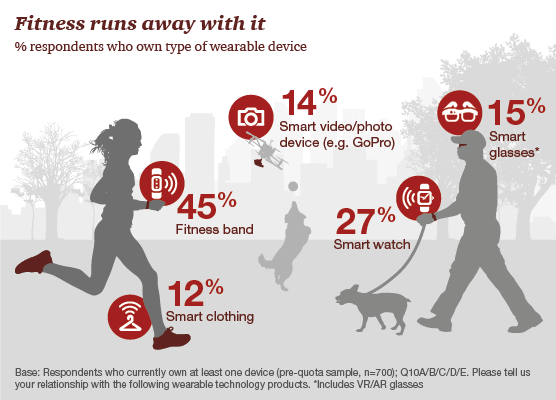
Nearly 1 in 2 people own at least one wearable device, up from 21% in 2014; one-third of people own more than one such device that tracks some aspect of everyday life, according to PwC’s latest research on the topic, The Wearable Life 2.0 – Connected living in a wearable world, from PwC. Wearable technology in this report is defined as accessories and clothing incorporating computer and advanced electronic technologies, such as fitness trackers, smart glasses (e.g., Google Glass), smartwatches, and smart clothing. Specifically, 45% of people own a fitness band, such as a Fitbit, the most popular device in this
 Thank you Aaron Strout for hosting our conversation on the Reaching Higher Podcast, now live on Apple, Spotify, and YouTube. We covered a lot of ground addressing health care and health citizenship, the growing prospects for our homes as our health hubs, and how our humanity is a key ingredient in health-making for all.
 Jane joined host Dr. Geeta "Dr. G" Nayyar and colleagues to brainstorm the value of vaccines for public and individual health in this challenging environment for health literacy, health politics, and health citizen grievance. Click onto the Pfizer Value of Vaccines site and you can watch four episodes covering the challenges with adult vaccination, the employer and health plan member's journey to vaccination, reimbursement, and collaborating for proactive prevention.
 I'm grateful to be part of the Duke Corporate Education faculty, sharing perspectives on the future of health care with health and life science companies. Once again, I'll be brainstorming the future of health care with a cohort of executives working in a global pharmaceutical company.