


Most Americans Blame Drug Companies, Insurers, and Hospitals for High Health Care Costs
There’s little agreement between Democrats and Republicans on a plethora of issues in American public life. But one issue that brings U.S. citizens together is agreement that the cost of health care is too high in the country, and that pharma, health plans, and providers are to blame. Welcome to health politics in America as of March 2019, according to The Public and High U.S. Health Care Costs, a poll conducted by POLITICO and the Harvard T.H. Chan School of Public Health. The first chart illustrates the common ground shared by Americans by party affiliation, with vast majorities across parties playing
Isn’t It Eyeconic? Vision Care in the Evolving Health Care Ecosystem
The vision/optical industry is one piece of the health/care ecosystem, but the segment has not been as directly impacted by patients’ new consumer muscles until just about now. It feels like the vision industry is at an inflection point at this moment, I intuited during yesterday’s convening of Decoding the Consumer: The new science of customer behavior, the theme of the 13th annual global leadership summit hosted by Vision Monday, a program of Jobson Medical Information which is part of the WebMD family. I was grateful to have an opportunity to share my views with attendees on the vision patient as
The Evolution of Self-Care for Consumers – Learning and Sharing at CHPA
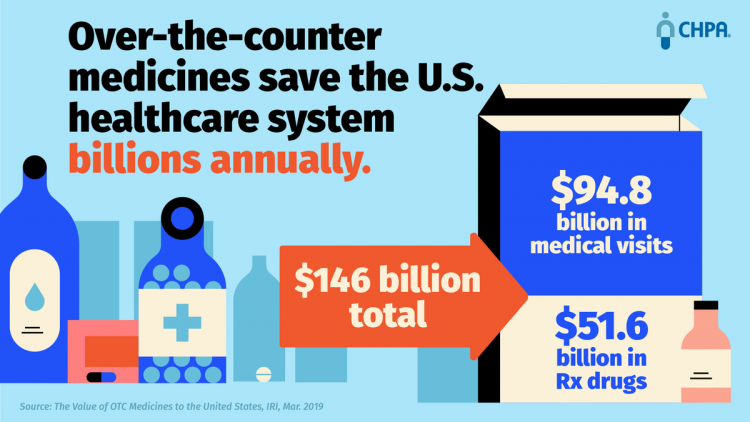
Self-care in health goes back thousands of years. Reading from Hippocrates’ Corpus about food and clean air’s role in health sounds contemporary today. And even in our most cynical moments, we can all hearken back to our grandmothers’ kitchen table wisdom for dealing with skin issues, the flu, and broken hearts. The annual conference of the Consumer Healthcare Products Association (CHPA) convened this week, and I was grateful to attend and speak on the evolving retail health landscape yesterday. Gary Downing, CEO of Clarion Brands and Chairman of the CHPA Board, kicked off the first day with a nostalgic look
Medical Issues Are Still The #1 Contributor to Bankruptcy in the U.S., An AJPH Study Asserts
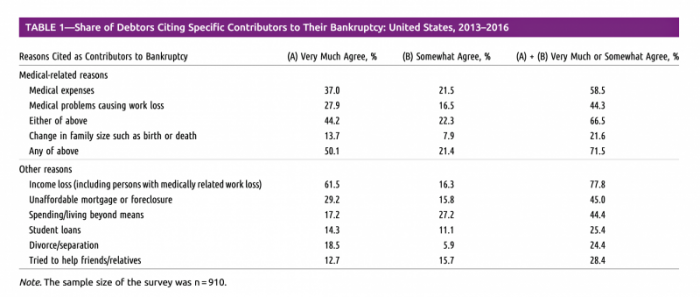
Medical costs in America are still the top contributor to personal bankruptcy in the U.S., a risk factor in two-thirds of bankruptcies filed between 2013 and 2016. That’s a sad fiscal fact, especially as more Americans gained access to health insurance under the Affordable Care Act, according to a study published this month in the American Journal of Public Health (AJPA). Between 2013 and 2016, about 530,000 bankruptcies were filed among U.S. families each year associated with medical reasons, illustrated in Table 1 from the study. The report, Medical Bankruptcy: Still Common Despite the Affordable Care Act, updates research from 2007 which
Self-Care Is Healthcare In Consumers’ Hands, Peaking on Google Trends
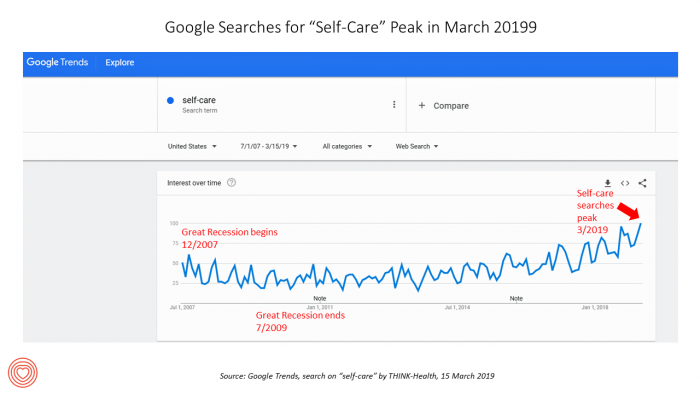
Today, the number of searches on Google using the phrase “self-care” reached a high, shown in the line graph I created on Google Trends and marked up in red. A Google search overall yielded over 2 billion results. I started this search when the Great Recession began in the U.S. in December 2007, and tracked “self-care” searches to today, 15 March 2019. I ran this little test because I’m speaking on Monday 18 March at the annual meeting of the Consumer Healthcare Products Association. CHPA was founded in 1881 as the “Proprietary Association.” In 1989, over 100 years later, the
Patients, Health Consumers, People, Citizens: Who Are We In America?
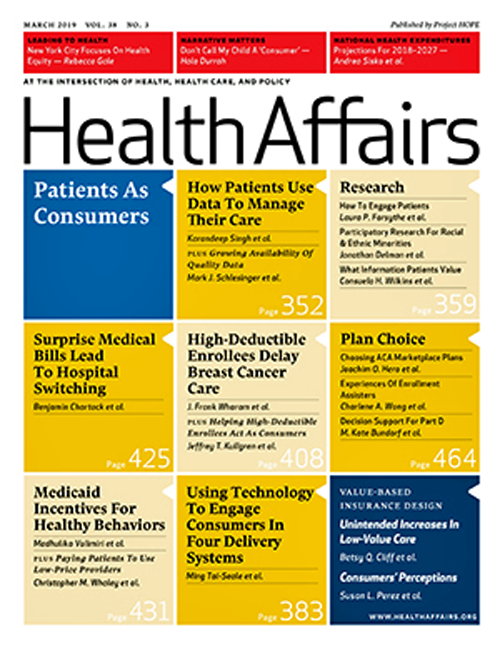
“Patients as Consumers” is the theme of the Health Affairs issue for March 2019. Research published in this trustworthy health policy publication covers a wide range of perspectives, including the promise of patients’ engagement with data to drive health outcomes, citizen science and participatory research where patients crowdsource cures, the results of financial incentives in value-based plans to drive health care “shopping” and decision making, and ultimately, whether the concept of patients-as-consumers is useful or even appropriate. Health care consumerism is a central focus in my work, and so it’s no surprise that I’ve consumed every bit of this publication. [In
Loving Wegmans and Amazon, Hating on the US Government: the Axios Harris Poll 100 in 2019
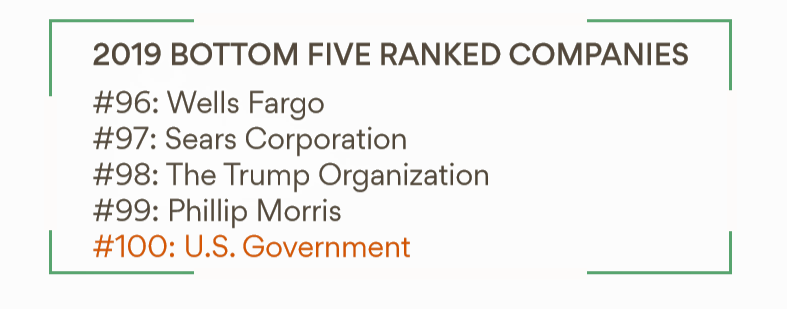
Americans love grocery stores, responsible retailers, technology and Amazon, Axios and Harris Poll found in this year’s top 100 visible company poll. The bottom five of the 100 include a big bank that ripped off consumers, a bankrupt retailer, a Big Tobacco company, and two organizations led by President Trump: The Trump Organization (#98) and the U.S. Government (#100). The summary points to five key findings in the report: The U.S. Government is the worst “company” in America according to “The Citizens of America,” in the words of Axios and Harris Poll. Americans have acquired “prime” tastes and expectations through
The Balance of Personalization and Privacy For Health/Care – Amazon and Beyond
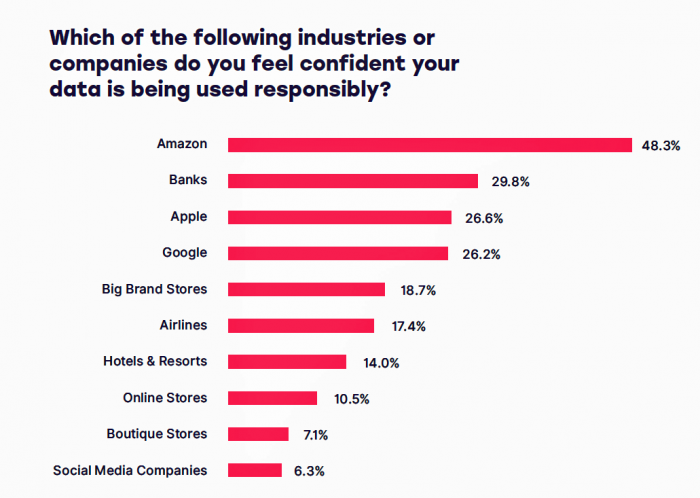
“Is it possible to take personalization too far for consumers?” asks a paper on Privacy and Personalization from SmarterHQ. The answer is, “it depends.” Consumers are sending mixed messages to marketers about their preferences for being forgotten versus being engaged and recognized. This tension has extreme relevance for personal health and healthcare, as AI and data analytics become quickly adopted by payors, insurance companies, providers, pharma, and consumer tech companies that lie outside of HIPAA privacy and security regulations. SmarterHQ polled over 1,000 consumers and found that: Most consumers are concerned about their data privacy, and believe that companies know too
Most Americans Across Party ID Favor U.S. Government Negotiation to Lower Rx Drug Costs
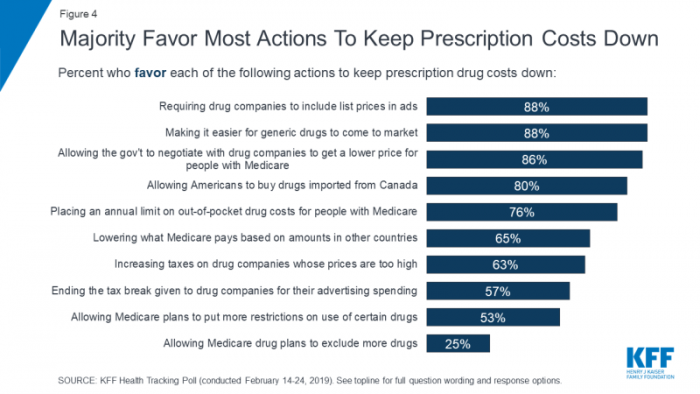
There’s little Americans, by political party, agree upon in 2019. One of the only issues bringing people together in the U.S. is prescription drug prices — that they’re too high, that the Federal government should negotiate to lower costs for Medicare enrollees, and that out-of-pocket costs for drugs should be limited. The Kaiser Family Foundation has been tracking this topic for a few years, and this month, their March 2019 Health Tracking Poll shows vast majorities of Democrats, Independents and Republicans all share these sentiments. It’s not that patients who take prescription drugs don’t appreciate them – most (58%) say medicines
Digital Transformation Is The New Mantra But Can’t Happen Without Access To Connectivity
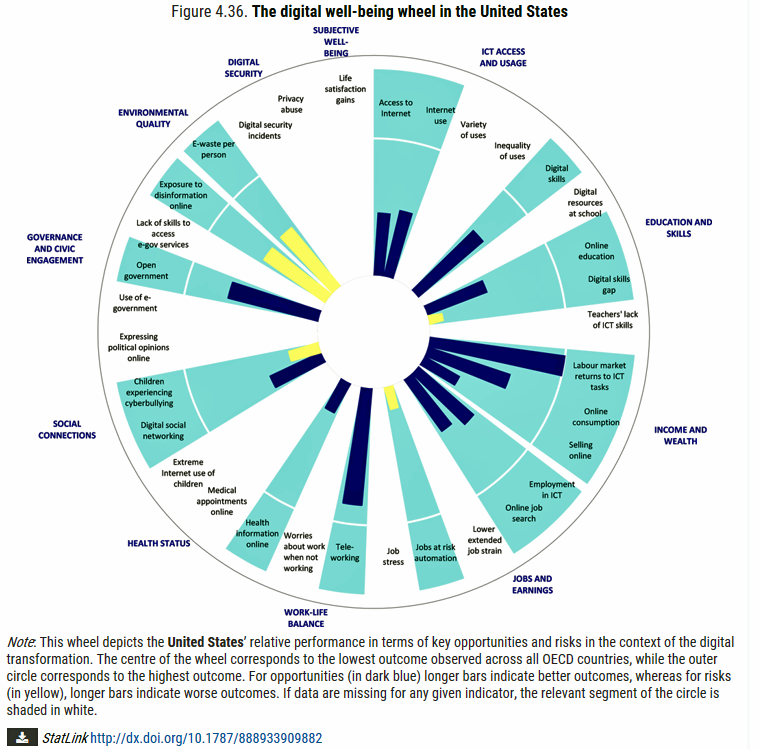
As more of our “things” get digitally connected, there’s an unanswered question about how our connected lives impact human life and health. A new report from the OECD asks and answers: How’s Life in the Digital Age? Opportunities and Risks of the Digital Transformation for People’s Well-being. This research is part of OECD’s ongoing series asking the Big Question, “How’s Life?” A prevailing current mantra in work and daily living is “digital transformation.” The OECD broadly defined the phrase in their 2017 paper on the topic as follows: Mobility, cloud computing, the Internet of things (IoT), artificial intelligence (AI) and big
Consumers’ Trust In Health And Personal Care Stores: The Growing Retail Health Ecosystem
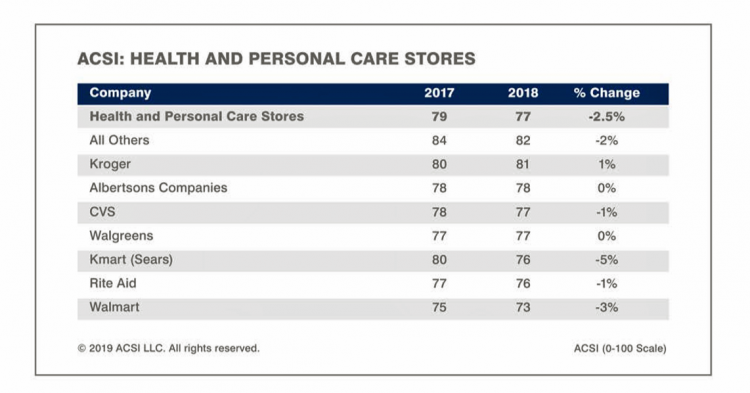
CVS + Aetna have merged to evolve a new business model for health and medical care. Walgreen’s continues to add new services beyond the core pharmacy business, and Walmart is expanding telehealth and healthier food aisles in the grocery. More grocery stores added dietitians to their operations in 2018, as well. As people take on more self-care for health care, they are looking to access products and services in retail bricks-and-mortar and ecommerce channels in the same places they buy food and other products. ACSI’s latest customer satisfaction benchmark study into retailers provides insights into the trusted channels for retail health
Time To Travel And Wait In Health Care: The Opportunity For Self-Care At Home
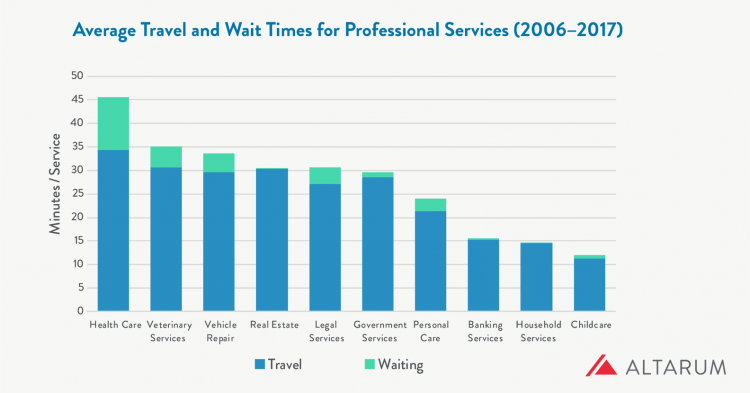
What industry compels its “consumers” to wait longer and travel further for services more than any other in a person’s daily life? That would be health care, a report from Altarum notes. People travel further and wait longer for medical services than for veterinary care (second in this line-up), auto repair, banking, and household services. The annual opportunity cost for travel and wait time in health care is $89 billion, Altarum estimated. For the average person, that translates to 34 minutes of travel time and 11 minutes waiting time at the provider’s office. In terms of personal opportunity costs, Altarum gauged the
How Genomics Can Battle Killer Bacterial Infections in the Hospital – Talking With Philips at HIMSS19
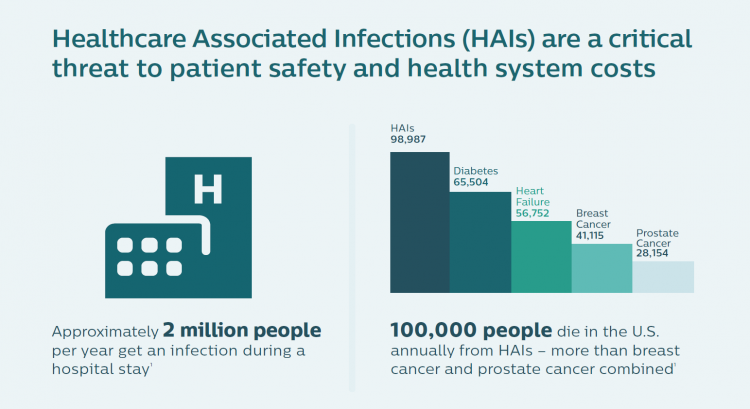
When you think “genomics,” your mind probably pictures a human DNA strand. Well, my mind did, prior to meeting with Dr. Joseph Frassica and Dr. Felix Baader at HIMSS19 to discuss Philips’ approach to the tragic problem of healthcare-acquired infections that kill patients. Ever since that conversation, my mind’s eye is filled with images of MRSA cells like those shown here. At HIMSS19, Philips launched a solution that couples clinical informatics with genomic sequencing of bacteria to quickly identify and treat patients that are affected with tough-to-treat infections that, so often, result in death. Healthcare-acquired infections (HAIs) are a worldwide
National Health Spending Will Reach Nearly 20% of U.S. GDP By 2027
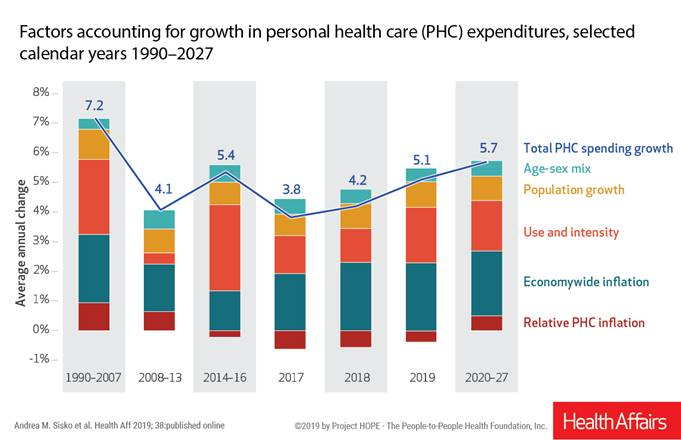
National health spending in the U.S. is expected to grow by 5.7% every year from 2020 to 2027, the actuaries at the Centers for Medicare and Medicaid Services forecast in their report, National Health Expenditure Projections, 2018-2927: Economic And Demographic Trends Drive Spending And Enrollment Growth, published yesterday by Health Affairs. For context, note that general price inflation in the U.S. was 1.6% for the 12 months ending January 2019 according to the U.S. Bureau of Labor Statistics. This growth rate for health care costs exceeds every period measured since the high of 7.2% recorded in 1990-2007. The bar chart illustrates the
Cost and Convenience Underpin Patient Demands As Health Consumers
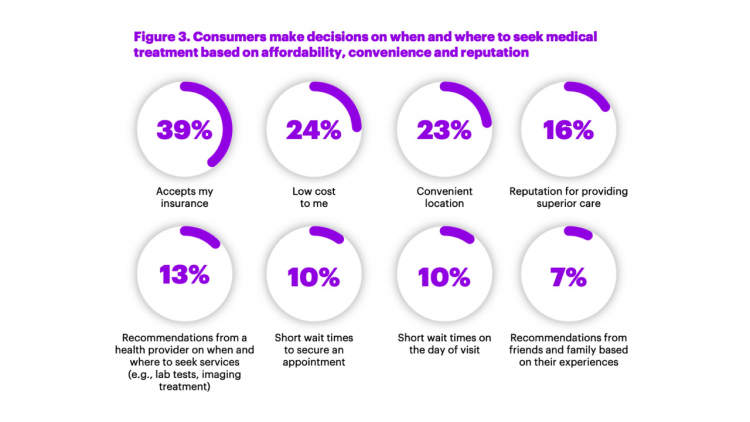
Across generations, from younger to older patients, cost, transparency and convenience drive consumer satisfaction, Accenture’s latest health consumer survey found. I had the opportunity to brainstorm the study’s findings in real-time on the day of survey launch, 12 February, with Dr. Kaveh Safavi, Brian Kalis, and Jenn Francis at HIMSS19. Our starting point was the tipping-point statistic that over 50% of people in the U.S. have chosen to use a non-traditional health care setting. Those non-traditional sites of care include walk-in and retail clinics, outpatient surgery centers, virtual health (whether on the phone, on video or via mobile apps), on-demand services,
Open Table for Health: Patients Are Online For Health Search and Physician Reviews
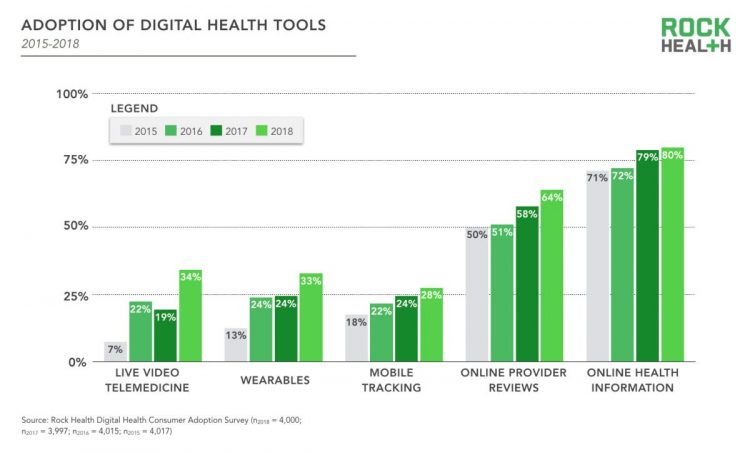
Seeking health information online along with researching other patients’ perspectives on doctors are now as common as booking dinner reservations and reading restaurant reviews, based on Rock Health’s latest health consumer survey, Beyond Wellness for the Healthy: Digital Health Consumer Adoption 2018. Rock Health has gauged consumes’ digital health adoption fo a few years, showing year-on-year growth for “Googling” health information, seeking peer patients’ physician and hospital reviews, tracking activity, donning wearable tech, and engaging in live telehealth consultations with providers, as the first chart shows. The growth of tracking and wearable tech is moving toward more medical applications beyond fitness
“Telehealth is a digital distribution channel for health care” – catching up with Roy Schoenberg, President and CEO of American Well
Ten years ago, two brothers, physicians both, started up a telemedicine company called American Well. They launched their service first in Hawaii, where long distances and remote island living challenged the supply and demand sides of health care providers and patients alike. A decade later, I sat down for a “what’s new?” chat with Roy Schoenberg, American Well President and CEO. In full transparency, I enjoy and appreciate the opportunity to meet with Roy (or very occasionally Ido, the co-founding brother-other-half) every year at HIMSS and sometimes at CES. In our face-to-face brainstorm this week, we covered a wide range
Deep Human Interactions: The Antidote To More AI In Health Care – Learning From Philips’ CEO At HIMSS19
“The promise of AI is undeniable…could AI help clinicians deliver better and more humanistic care?” This question is asked and answered in a JAMA viewpoint published January 1/8 2019 titled, Humanizing Artificial Intelligence. This theme motivated a conversation held over a dinner convened by Philips hosted by Frans Van Houten this week at HIMSS19. To provide context Geoff Colvin, Fortune‘s Senior Editor, first talked about taking friction out of industries, as Lyft and Uber have done in the transport sector. “Taking friction out of industries challenges and changes business models,” Geoff noted. With Uber’s IPO valuation approaching $100 billion, I’d say that’s
Telehealth and Virtual Care Are Melting Into “Just” Health Care at HIMSS19
Just as we experienced “e-business” departments blurring into ecommerce and everyday business processes, so is “telehealth” morphing into, simply, health care delivery as one of many channels and platforms. Telehealth and virtual care are key education topics and exhibitor presences at HIMSS19. Several factors underpin the adoption of telehealth in 2019: Consumers’ demand for accessible, lower-cost health care services as people face greater financial responsibility for paying the medical bill (via high-deductible health plans and greater out-of-pocket costs for co-payments) Some consumers’ lacking or losing health insurance as ACA coverage eroded in the past two years, resulting in these patients
The Cost of Prescription Drugs, Doctors and Patient Access – A View from HIMSS19
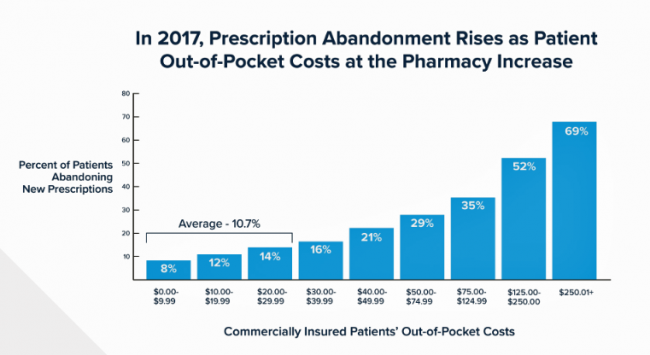
Most patient visits to doctors result in a prescription written for a medicine that people retrieve from a pharmacy, whether retail in the local community or via mail order for a maintenance drug. This one transaction generates a lot of data points, which individually have a lot of importance for the individual patient. Mashed with other patients’, prescription drug utilization data can combine with more data to be used for population health, cost-effectiveness, and other constructive research pursuits. At HIMSS19, there’s an entire day devoted to a Pharma Forum on Tuesday 12 February, focusing on pharma-provider-payor collaborations. Allocating a full
HIMSS 2019: The Mainstreaming of Health IT, from Jim Cramer to Opioid Risk Scores
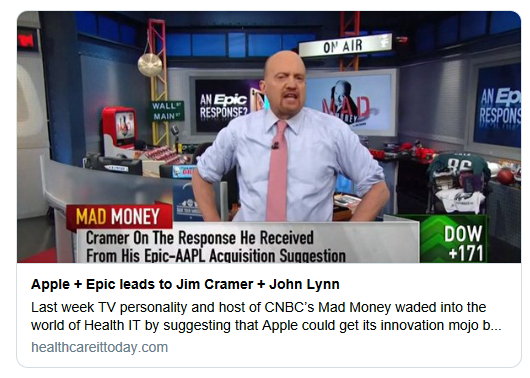
On January 10, 2019, Jim Cramer of CNBC’s Mad Money recommended that Apple buy Epic, a market leader in EHRs. At that moment in the Twitterverse, it occurred to me that health IT as a consumer-facing industry was beginning to mainstream in America. Cramer’s pronouncement led to a tweetstorm where hundreds of tweeters in and outside of health/care talked back and with Cramer. A few of my favorite comments were: “Jim Cramer needs a crash course in FHIR standards” from the wonkier section of peanut gallery. “They are not even in the same universe” among people dissing the idea in
The Expectation Gap Between What Patients Want Vs What They Get
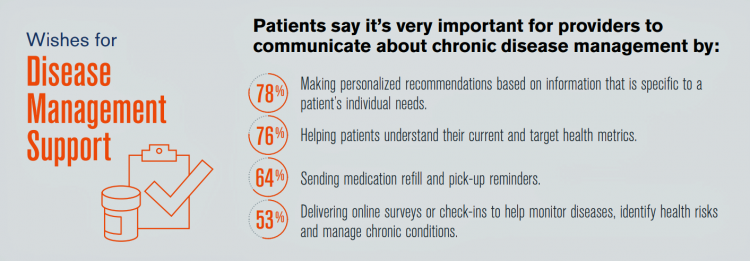
Talk to me, patients are demanding in unison. Most health consumers expect providers to communicate about routine health care and prevention; this is especially true among those patients trying to manage chronic conditions we learn from 10 Ways to Fulfill Patients’ Communication Wish List, a report based on a consumer survey from West, the communications and network infrastructure company. Four in five patients say that talking to “me” means they want personalized recommendations to their unique needs – but only one-third of patients say they’re getting that level of service from their healthcare providers. Most health consumers expect providers to communicate about
Care Gets Personal at Philips for Parents and Babies

Our homes should nurture our health. In addition to nutrition and good food, positive relationships, clean air and water, and the basic needs that bolster whole health, technology is playing a growing role to help us manage health at home. At CES 2019, I spent time with Roy Jakobs, Chief Business Leader of Personal Health with Philips, to discuss the company’s evolving portfolio of products that help fulfill the mission to support people across their own continuum of health. Following CES, I wanted to further dive into one part of the portfolio very important to family health at home: the
Consumers’ and Physicians’ Growing Embrace of Digital Health via PwC
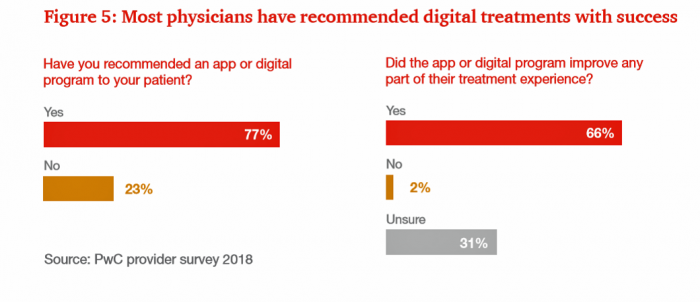
Most consumers would be willing to try an FDA-approved app or online to treat a medical condition, as well as receiving hospital care at home if would be less costly. We’ve reached an inflection point on the demand side among consumers for digital health options, PwC suggests in their report on the New Health Economy coming of age. The report outlines health/care industry issues for 2019, with a strong focus on digital health. Whether a menu of care options including virtual health to access specialists across the U.S., post-hospital virtual visits, or hospital care at-home, a majority of Americans supports
Kohl’s and the Rebranded Weight Watchers in Retail Health

For the past two holiday shopping seasons in 2017 and 2018, I’d noticed pre-print ads in my local Sunday newspaper from Kohl’s, the value-priced retailer, featuring wearable technology for health. There were devices branded Fitbit on the front page of Black Friday’s 2018 ad, shown here, with other tech brands promoted inside the pages. These ads were bundled in my newspaper along with ones from Best Buy, Target, Walmart, and other retailers featuring the same or similar wearable health-tech. This week, Kohl’s announced a collaboration with WW, the newly-rebranded Weight Watchers, for the retailer to bring a WW “salon” space
In 2023, the U.S. Will Still Be the #1 Prescription Drug Spender in the World, IQVIA Forecasts
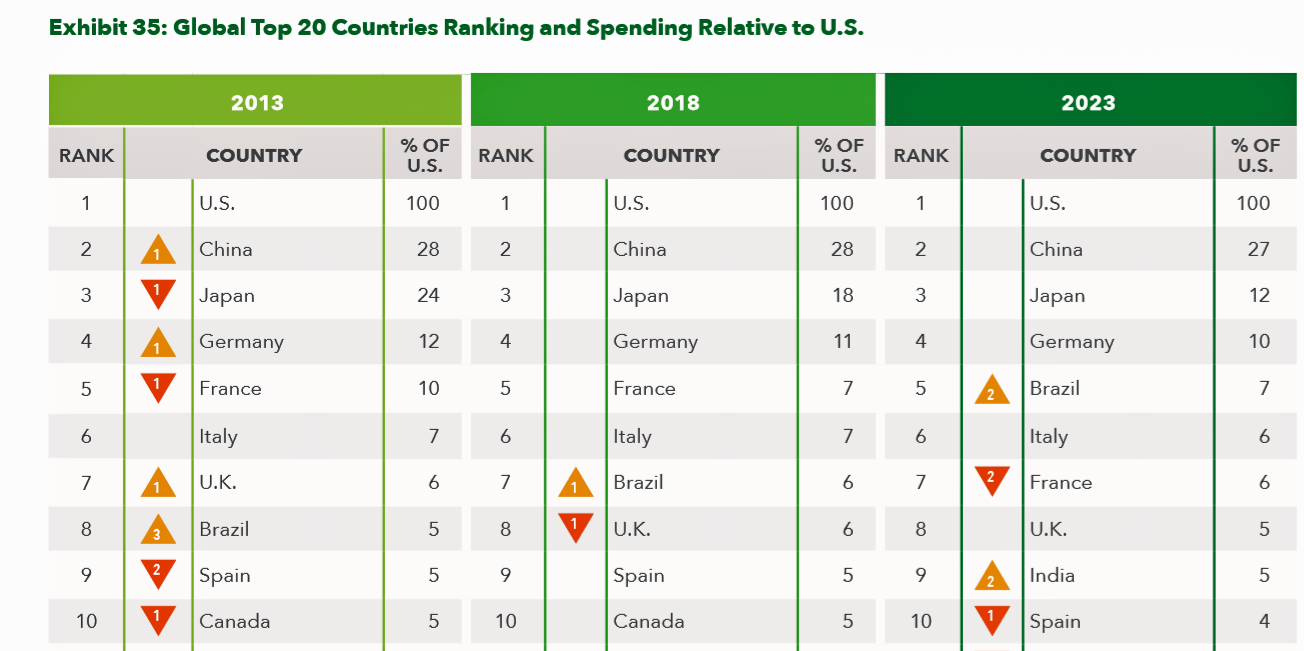
Today, as Congress kicks off hearings about the cost of prescription drugs in the United States, IQVIA published its 2019 report on The Global Use of Medicine in 2019 and Outlook to 2023. The top-line of the research is the robust pharma market growth will be driven by two factors, and limited by two others: spending in the U.S. and emerging markets (coined “pharmerging” by IQVIA) will push up spending, while limiting factors on growth will be increasing generics and expiration of brand patents. The U.S. will continue to be the number 1 prescription drug spender in the world to
Americans Are Warming to Universal Health Care, Kaiser Poll Finds
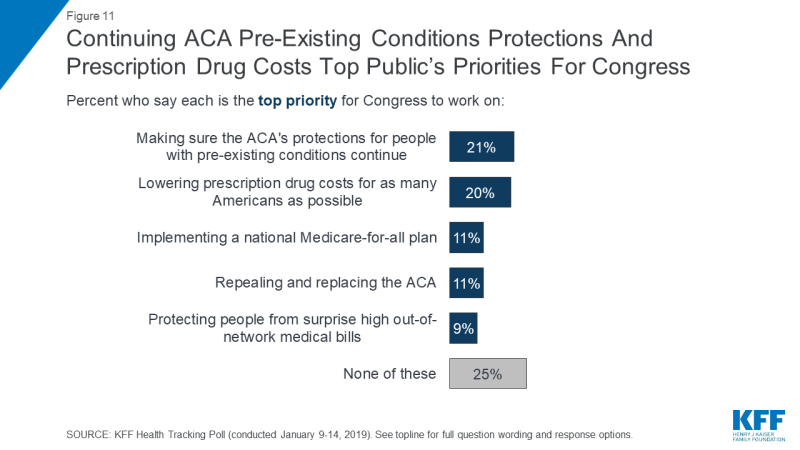
Most Americans like the idea of universal health care as a guaranteed right, Kaiser Family Foundation learned in this month’s Health Tracking Poll. This finding reinforces the voter turnout for the 2018 mid-term elections which was largely driven by peoples’ concerns for losing health access for pre-existing conditions. The first chart notes important nuances under the majority support for a national health plan which, in this case, asked whether people favored a plan “sometimes called ‘Medicare for all.'” I note that note all national health plan designs would need to be tied to Medicare. There are many ways to deliver
What If Marie Kondo Reorganized Health Care in the U.S.?

Have you read the life changing magic of tidying up, or Spark Joy, books by Marie Kondo? Her new Netflix series, Tidying Up with Marie Kondo debuted on January 1, and has enjoyed passionate early viewership by consumers in America who are among the world’s major hoarders. If you opened any pop culture magazine or newspaper in the past week, you probably saw the results of a PR blitz promoting KonMari, the trademarked name for Marie’s clean-out method. As an example, the Wall Street Journal discussed the phenomenon in Ben Zimmer’s profile, “A Guru of Organizing Becomes A Verb” published this weekend
From Yorkshire Lad to Global Design for Health: A Profile of Sean Carney of Philips
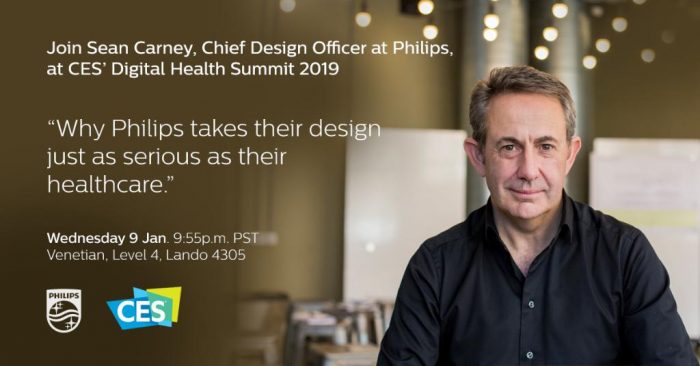
Have you heard the story about a boy born in Yorkshire, England, who studies art in Birmingham, finds his way to Finland to work with design maestro Alvar Aalto, and then crafts a printer that Steve Jobs loved? I have, at CES 2019, when I sat down with Sean Carney, Chief Designer at Philips. It’s well-known that Philips has been firmly focused on health and health care, covering both clinical/professional healthcare as well as personal health for self-care. What you may not know is that underpinning the company’s innovations is a major commitment to all aspects of design. Design is embedded
In U.S. Health Care, It’s Still the Prices, Stupid – But Transparency and Consumer Behavior Aren’t Working As Planned
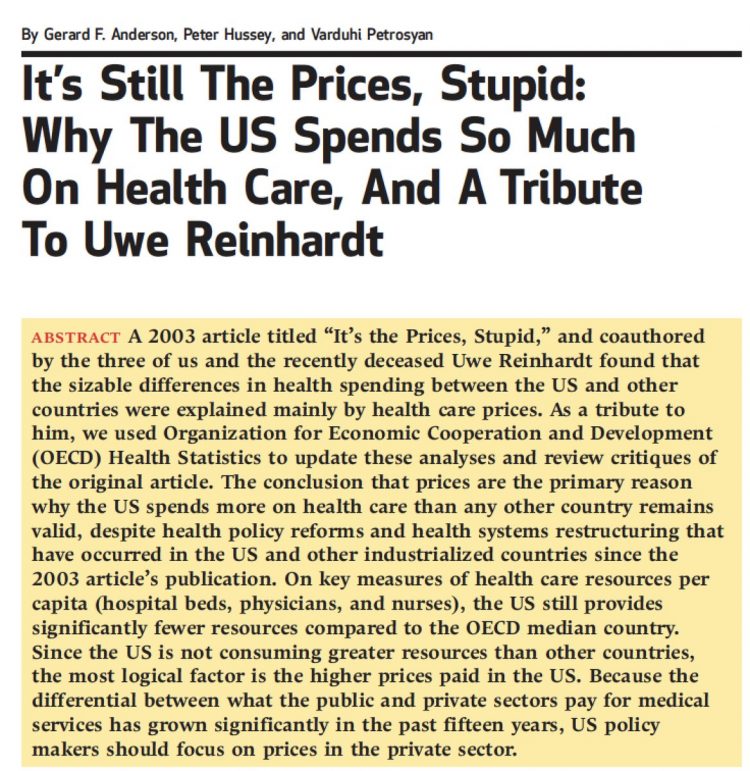
I’m glad to be getting back to health economic issues after spending the last couple of weeks firmly focused on consumers, digital health technologies and CES 2019. There’s a lot for me to address concerning health care costs based on news and research published over the past couple of weeks. We’ll start with the centerpiece that will provide the overall context for this post: that’s the ongoing research of Gerard Anderson and colleagues under the title, It’s Still The Prices, Stupid: Why The US Spends So Much On Health Care, And A Tribute To Uwe Reinhardt. It is bittersweet to
A Smarter Home for Healthy Living at CES 2019….and a nod to Microsoft

Health begins at home. I found evidence for that, beyond my own N of 1 understanding, in a research article published in the UK in 2000 by Lyn Harrison and Frances Heywood. Lyn and Frances tested three assumptions that they believed linked housing and health: that housing contributes to health; that housing is not routinely included in health or social planning;’ and that the potential contribution of primary care is wasted. Their conclusion: that the housing-health link was not receiving the recognition that connection needs. Nearly two decades later, that housing-health link still isn’t universally embraced by health care stakeholders. But
The Caveats for Health/Care at CES 2019

According to the Cambridge Dictionary, a “caveat” is, “a warning to consider something before doing anything more.” It is fitting that CES is held in Las Vegas, land of high risk and, with a lot of luck, reward. With that theme in mind, I depart LAS airport tonight on an aptly-named red-eye flight back home after spending an entire week here. I’m pondering not what I saw — some of which I covered daily over the past week — but what I didn’t see. Consider these the caveats for health/care at #CES2019. In no particular order… Where was the Chairman of
It’s Not All About Pink for Women’s Tech at CES 2019
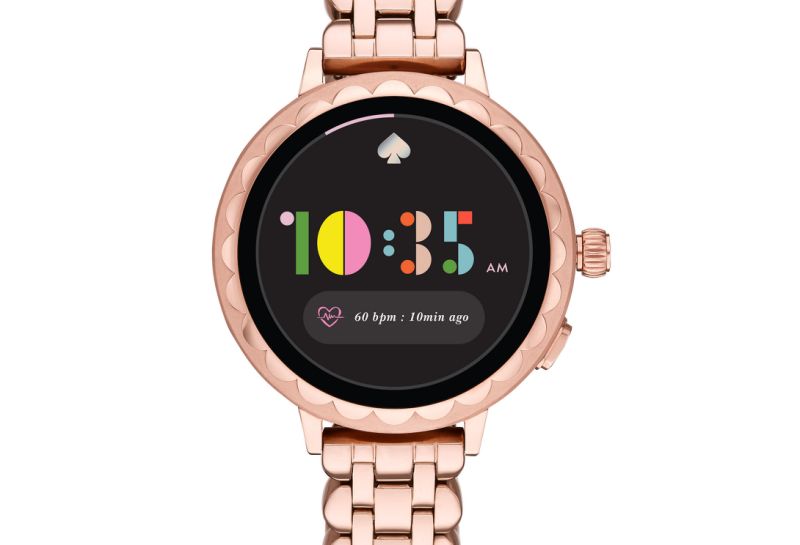
This is not a watch. Well, not just a watch. It can track heart rate. And it’s not even pink. Well, rose gold, perhaps. One of the benefits about being a woman attending CES is that there are no lines in the loos. The men’s rooms, however, are, shall we say, over-subscribed due to the big disparity between the number of male attendees versus females. Clearly, women are under-represented in technology companies at all levels, as the ladies’ room observation and many other more statistical reports recognize. But I’ve good news to report on the product front about women-focused consumer
The Consumer as Payor – Retail Health at CES 2019
All health/care is retail now in America. I say this as most people in the U.S. who have health insurance must take on a deductible of some amount, which compels that insured individual to spend the first dollar on medical services up until they meet their financial commitment. At that point, health insurance kicks in, and then the insured may have to spend additional funds on co-payments for general medicines and services, and coinsurance for specialty drugs like injectables and high-cost new therapies. The patient is a consumer is a payor, I asserted today during my talk on the expanding
Shelly Palmer De-Hypes CES 2019 & Has Lessons for Health/Care
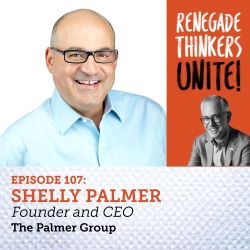
I had the pleasure once again of attending Shelly Palmer’s annual kick-off breakfast where he level-sets our expectations for CES two hours before the tech halls open. Shelly is a consumer tech expert and leads the Palmer Group; comments on Fox 5 in NYC, CNN, and CNBC; writes a weekly column in Advertising Age; composes music; and he’s a Renaissance Man who’s a generous sharer of knowledge with a great sense of humor and humanity. Shelly is one of my trusted touchpoints for all-things-consumer-tech. His message at the start of #CES2019: this year, the show is about connectivity and partnership.
Heart Health at #CES2019 – Food and Tech as Medicine

Self-care is the new health care as patients, now consumers at greater financial risk for medical spending, are learning. At #CES2019, I’m on the lookout for digital technologies that can help people adopt and sustain healthy behaviors that can help consumers save money on medical care and enhance quality of life-years. This week’s heart-and-food tech announcements at #CES2019 coincide with an FDA recall on a popular drug prescribed to treat hypertension (high blood pressure). Using food and tech as medicine can help people avoid going on medications like statins and others for heart health. An important example of this self-care
What #CES2019 5 Tech Trends to Watch Mean for Health/Care

As #CES2019 kicks off in Las Vegas with today’s first Media Day, the Consumer Technology Association presented its forecast on the 5 Technology Trends to Watch in 2019 — and they all play into health, wellness, and medical care. The five trends are: Artificial Intelligence on the Rise Envisioning the Smart Home of the Future Digital Health Tech Empowers Patients Esports and Sports Technology, and Smart Cities Promote Resilience. Here are how these five mega-trends can bolster our health and healthcare products and services over the next decade. AI is indeed on-the-rise in healthcare: as I have begun planning my agenda for
Here’s Looking at Health at CES 2019
If I’m going to spend a week someplace, it usually has to be Italy. So next week in Las Vegas, I’ll deal with that bias by staying at the Venetian Hotel for the entire week to cover all-things-health at CES 2019, the annual convening of electronics retailers and enthusiasts. Most of the 180,000+ folks come to Vegas from over 150 countries to kick the proverbial tires on TVs, autos, games, virtual reality, 3-D printing, drones, and other shiny new things. For me, for the past eight years, CES means consumer-facing health in a person’s hands, on her phone, and increasingly
Nurses are the most trusted profession in America, followed by doctors and pharmacists

Nurses rank top in Americans’ minds for the seventeenth year-in-a-row, Gallup found in its annual survey of honesty and ethics in professions. At the bottom of the list for honesty and ethics in 2018, Gallup points to U.S. Congressional representatives, “Mad Men” and Women of advertising, telemarketers, and folks who sell autos. Congress-folk and car salespeople have ranked at the low-trust bottom for many years in this Gallup poll. While the 3 health care professions rose once again to the top of the job-trust roster, nurses rank far greater than doctors and pharmacists by a 17-point margin of consumers rating the
Costs, Consumerism, Cyber and Care, Everywhere – The 2019 Health Populi TrendCast

Today is Boxing Day and St. Stephens Day for people who celebrate Christmas, so I share this post as a holiday gift with well-wishes for you and those you love. The tea leaves have been brewing here at THINK-Health as we prepared our 2019 forecast at the convergence of consumers, health, and technology. Here’s our trend-weaving of 4 C’s for 2019: costs, consumerism, cyber and care, everywhere… Health care costs will continue to be a mainstream pocketbook issue for patients and caregivers, with consequences for payors, suppliers and ultimately, policymakers. Legislators inside the DC Beltway will be challenged by the
Blood Pressure From the Wrist for the First Time – Welcome, Omron HeartGuide
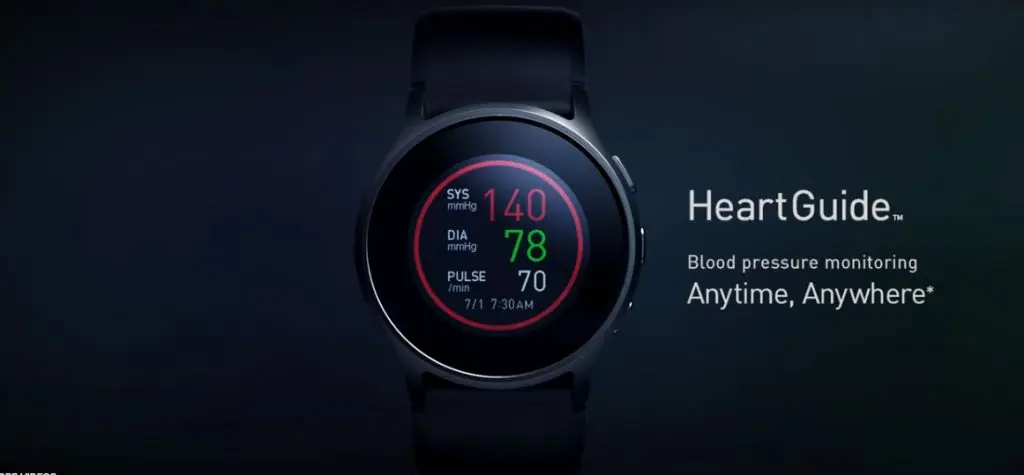
For the first time, we can take a clinically accurate blood pressure measurement from our wrist — welcome to the first of its kind wrist-worn blood pressure monitor, HeartGuide, brought to market by Omron. I know this journey has been a long, patient one, as I came to know Ranndy Kellogg, Omron’s President and CEO, several years ago at CES. Back in 2017, I spoke with Ranndy about the vision for BP measurement for Everyday People that would be a streamlined, simple consumer experience that the traditional armband and pump didn’t offer. I wrote about
Rationing Care in America: Cost Implications Getting to Universal Health Coverage

It would not be surprising to know that when the Great Recession hit the U.S. in 2008, one in three Americans delayed medical treatment due to costs. Ten years later, as media headlines and the President boast an improved American economy, the same proportion of people are self-rationing healthcare due to cost. That percentage of people who delay medical cost based on the expense has remained stable since 2006: between 29 and 31 percent of Americans have self-rationed care due to cost for over a decade. And, 19% of U.S. adults, roughly one-in-five people who are sick and dealing with
Americans End 2018 Worried About Healthcare Costs

Nearly one-half of Americans are quite concerned they won’t have enough money to pay for medical care, according to the latest Gallup poll. Health insurance in-security is mainstream as of November 2018, when Gallup polled U.S. adults about views on healthcare costs. It’s a major concern among six in ten people that their health plan would require they pay higher premiums or a bigger portion of their healthcare expenses. It’s also a big concern for four in ten people that someone in their family would be denied health insurance covering for a pre-existing condition, or that they might have to
Retail Health Ends 2018 With Big Plans for 2019

As the CVS + Aetna merger crosses its last regulatory hurdle at the close of 2018, we enter 2019 facing a fast-growing and -morphing retail health landscape. I brainstormed retail health yesterday with Patrick Freuler, CEO of Audicus (developer of hearing aids sold direct-to-consumer over-the-counter) and Shai Gozani, CEO of NeuroMetrix, maker of the Quell device for pain management. The three of us will be on a panel addressing retail health disruption at CES 2019 on 9th January 2019 at the Digital Health Summit. I explained to Shai what I’m going to say in my talk about retail health at
Most Americans Want the Federal Government to Ensure Healthcare for All

Most people in the U.S. believe that the Federal government should ensure that their fellow Americans, a new Gallup Poll found. This sentiment has been relatively stable since 2000 except for two big outlying years: a spike of 69% in 2006, and a low-point in 2003 of 42%. In 2006, Medicare Part D launched, which may have boosted consumers’ faith in Federal healthcare programs. In contrast, in 2013 the Affordable Care Act was in implementation and consumer-adoption mode, accompanied by aggressive anti-“Obamacare” campaigns in mass media. That’s the top lighter green line in the first chart. But while there’s majority support
JWT’s Future 100 Tells Us Tomorrow Is All About Health

From culture to travel, food and drink to retail and beauty, health will be baked into consumer goods and experiences in 2019. Welcome to The Future 100: 2019 from The Innovation Group at JWT. In the 100 emerging trends across ten categories, the future is clearly health-driven, according to the tea-leaf readers at JWT.a Health is all over, Culture Tech and innovation Travel and hospitality Brands and marketing Food and drink Beauty Retail Luxury Health (as a category itself) Lifestyle. I’ve mined this report in previous years – you can review my findings from the 2017 report here in the Health
Data Privacy and Healthcare Access: Top Issues Shaping Consumers’ Societal ROI

Organizations that address consumers’ data privacy and access to healthcare create greater social brand equity, inspiring people to say nice things about the companies, recommend them as good employers, and be welcomed as businesses operating in peoples’ community. In The Societal ROI Index: A Measure for The Times We Find Ourselves In, Finn Partners and The Harris Poll measure U.S. companies’ reputations for social good, the project’s press release explains. “Our new data shows that the public has a definite opinion about what issues they feel companies should address and the social impact bar has been set high,” according to Amy Terpeluk,
“Seeing Is Not Believing:” Consumers Concerned About the Accuracy of Online Health Information

“Seeing is not believing” when it comes to people seeing health information on social networks. Four in five people seeking healthcare information online in social media are concerned about the accuracy of that information served up. Therefore, most consumers a very satisfied with the healthcare information they receive from nurses, eye doctors, pharmacists, dentists, nurse practitioners, doctors, and dietitians. But social media influencers. patient organizations, online patient forums, and pharmaceutical companies? Not so much. Only one-half of U.S. consumers believe that health-related information on the internet is as reliable as information from medical professionals. Welcome to The Great American Search for
The Smartphone Is the Consumer’s Personal Health Platform – Implications from Deloitte’s 2018 Survey

American consumers are now viewing their phones an average of 52 times daily, with 39 percent of consumers believing they use their smartphones too much. In fact, 60 percent of 18 to 34-year-olds admit to smartphone overuse, the highest level of any age group. However, 63 percent of the respondents reported trying to limit their smartphone usage, roughly half succeeding in cutting back. Smartphones also are helping blur the lines between work and leisure with 70 percent of respondents using personal smartphones at least occasionally for after-hours work. Furthermore, voice technologies are “making noise,” according to Deloitte in A New Era
The Growing State of Diabetes in America on World Diabetes Day 2018

Diabetes is a family issue, and its prevalence is growing in America. November 14, 2018, is World Diabetes Day, and the International Diabetes Federation reminds us that this condition impacts the whole household — not just the person diagnosed with diabetes. Why the family? Because diabetes is one disease that is largely preventable: through eating right, being physically active, and making healthy choices every day. The family is the primary ecosystem for daily living, and this environment can foster an individual’s healthy choices…or not. The IDF reminds us that family members can and should be aware of the signs and
Physicians Don’t Talk Enough with Patients About Non-Medical Needs

Most patients wish their doctors would have a conversation with them about non-medical issues. The Doctor-Patient Conversation, a survey conducted for the Samueli Foundation by the Harris Poll, examined how patients feel about their health, healthcare, and relationships with physicians. The Samueli Institute, has several missions including integrative health with a focuses on evidence-based practices for healing, wellbeing and resilience. Patients are keen to learn about non-medication alternatives, like food-as-medicine, meditation, and acupuncture. But most doctors base their conversations with patients on purely medical options like lab test results and surgical procedures. The top issues doctors discuss with patients are
Vote As If Your Health Depended Upon It; Learning from Governor Kasich on Voting Day 2018

…because it does. “Citizens scare politicians,” I heard Governor John Kasich say to Nicole Wallace on her show Deadline: White House yesterday, just hours from today’s U.S. 2018 midterm elections. Governor Kasich has led the Buckeye State since 2011, and his second and final term ends in January 2019. The Governor expanded Medicaid under the Affordable Care Act in the State of Ohio, discussed in this insightful Washington Post article. “I am my brothers’ and sisters’ keeper,” Kasich told Wallace. The Governor asserted this in the context of the role of protecting his fellow citizens for health and well-being, for
Healthcare and the F-Word: Health Politics Rank High on November 6, 2018

“Let’s get this thing f-ing done,” Martha McSally passionately asserted on May 4, 2017. Paul Ryan said, on the floor of the U.S. House of Representatives without cursing, “A lot of us have waited seven years to cast this vote.” McSally, who represents Tucson, Arizona, in the U.S. Congress, is running to replace retiring Senator Jeff Flake. McSally was one of the 217 Republicans in the House who voted to repeal the Affordable Care Act, subsequently celebrating a victory in the Rose Garden of the White House with jubilant peers. The final vote was 217-213. Here’s the final roll call
Consumers Want Help With Health: Can Healthcare Providers Supply That Demand?

Among people who have health insurance, managing the costs of their medical care doesn’t rank as a top frustration. Instead, attending to health and wellbeing, staying true to an exercise regime, maintaining good nutrition, and managing stress top U.S. consumers’ frustrations — above managing the costs of care not covered by insurance. And maintaining good mental health and staying on-track with health goals come close to managing uncovered costs, Oliver Wyman’s 2018 consumer survey learned. These and other important health consumer insights are revealed in the firm’s latest report, Waiting for Consumers – The Oliver Wyman 2018 Consumer Survey of US
Healthcare Costs Stress Out U.S. Voters One Week Ahead of 2018 Mid-Term Elections

With seven days until voters go to the polls for what some call the most momentous U.S. election in decades, most Americans say that healthcare costs are a major stress, second only to money. So warns the Sixth Annual Nationwide TCHS Consumers Healthcare Survey, with the tagline: “Stressed Out: Americans and Healthcare.” Perhaps this is why healthcare has become a top voting issue for the 2018 mid-term elections that will be held on November 6 one week from today. The first chart illustrates that healthcare costs, the economy, and family responsibilities all closely cluster as sources of stress for a
Financial Stress Is An Epidemic In America, Everyday Health Finds

One in three working-age people in the U.S. have seen a doctor about something stress-related. Stress is a way of American life, based on the findings in The United States of Stress, a survey from Everyday Health. Everyday Health polled 6,700 U.S. adults between 18 and 64 years of age about their perspectives on stress, anxiety, panic, and mental and behavioral health. Among all sources of stress, personal finances rank as the top stressor in the U.S. Over one-half of consumers say financial issues regularly stress them out. Finances, followed by jobs and work issues, worries about the future, and relationships cause
Food and Cooking for Health: a UK Perspective from Hammersmith & Fulham
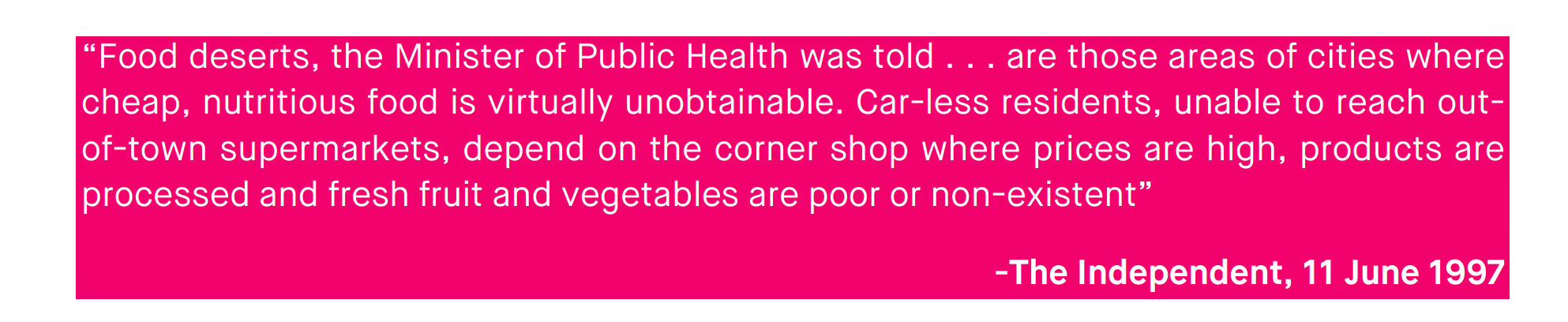
Food deserts aren’t just a U.S. phenomenon. They’re found all around the world. This week as I explore social determinants of health and technology solutions in several parts of Europe, I’ve learned more about food access challenges in the UK. These are discussed in a report published this month by the Social Market Foundation asking, What are the barriers to eating healthily in the UK? The research was supported by Kellogg’s, the food manufacturer. The first table comes from the report, and the topline shows that about 4 in 10 Britons shopped at a cheaper food store in response to high
Loneliness, Public Policy and AI – Lessons From the UK For the US
There’s a shortage of medical providers in the United Kingdom, a nation where healthcare is guaranteed to all Britons via the most beloved institution in the nation: The National Health Service. The NHS celebrated its 70th anniversary in July this year. The NHS “supply shortage” is a result of financial cuts to both social care and public health. These have negatively impacted older people and care for people at home in Great Britain. This article in the BMJ published earlier this year called for increasing these investments to ensure further erosion of population and public health outcomes, and to prevent
Koen Kas, the Gardener of Health Tech Delights

The future of healthcare is not about being sick, Prof. Dr. Koen Kas believes. Having spent many years in life sciences in both research and as an entrepreneur, Koen now knows that getting and staying healthy isn’t about just developing medicines and med-tech: optimally, health requires a tincture of delight, Koen advises in his breakthrough, innovative book, Your Guide to Delight. Healthcare must go beyond traditional user-centered design, Koen’s experience has shown, and aspire toward design-to-delight. The concept of “delight” in healthcare, such as we experience in hospitality, grocery stores, and entertainment, is elusive. I’ve observed this, too, in my
On World Food Day 2018, Imagine A Chef Cooking for Patients

Today, October 16, is World Food Day. At Health Populi and THINK-Health, we celebrate the birthday of the Food and Agriculture Organization (FAO), allied with the United Nations. FAO was founded to address malnutrition and bolster a sustainable, healthy food supply for people. World Food Day 2018 has four objectives: Don’t waste food Produce more food with fewer resources Advocate for #ZeroHunger by 2030, and, Adopt a healthier, more sustainable diet. All four of these pillars play a role in health, but I’ll focus today on the fourth: the role of food as a major social determinant of health. Hunger
The Single Market for Healthcare in Europe: Learnings for the U.S.

When I asked my longtime colleague and friend Robert Mittman, with whom I collaborated at Institute for the Future for a decade, how he managed international travel and jet lag, he said simply, “The time zone you’re in is the time zone you’re in.” This lesson has stayed with me since I received Robert’s advice over twenty years ago. Over the next two weeks, as I work alongside colleagues and clients in the EU and soon-to-Brexit UK, I am in time zones five and six hours later than my home-base of US Eastern Time. But the time zones I’m working
CVS + Aetna: Inflection Point in US Healthcare, Merger Approved Update

CVS Health’s acquisition of Aetna was approved this week by U.S. Federal regulators after months of scrutinizing the antitrust-size-market control implications of the deal. I wrote this post on the deal as an inflection point in American healthcare on 3rd December 2017 when CVS and Aetna announced their marriage intentions. This post updates my initial thoughts on the deal, given the morphing US healthcare market on both the traditional health services front and fast-evolving retail health environment. The nation’s largest retail pharmacy chain signed a deal to combine with one of the top three health insurance companies. The deal
Open Source Health Care Will Liberate Patients
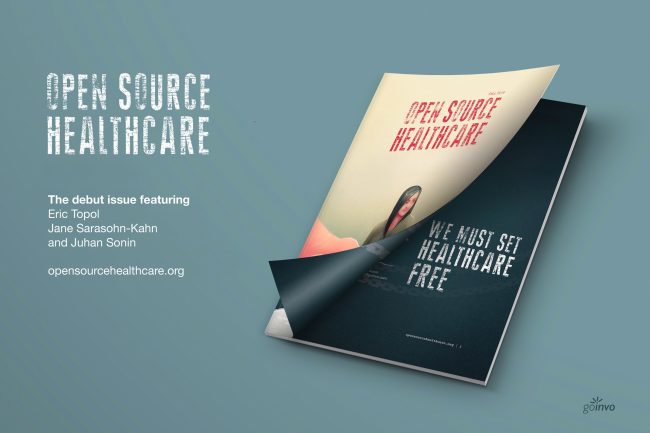
Information is power in the hands of people. When it’s open in the sunshine, it empowers people — whether doctors, patients, researchers, Presidents, teachers, students, Everyday People. Welcome to the era of Open Source Healthcare, not only the “about time” for patients to own their health, but for the launch of a new publication that will support and continue to evolve the concept. It’s really a movement that’s already in process. Let’s go back to some definitions and healthcare basics to understand just why Open Source Healthcare is already a thing. When information access is uneven, it’s considered
How MedModular Fits Into the New Lower-Cost, High-Quality, Consumer-Enchanted Healthcare World

In American health economics, there’s a demand side and a supply side. On the demand side, we’ve done a poor job trying to nudge patients and consumers toward rational economic decision making, lacking transparency, information symmetry, and basic health literacy. On the supply side, we’ve engaged in a medical arms race allocating capital resources to shinier and shinier new things, often without cost-benefit rationale or clinical evidence. On that supply side, though, I met up with an innovation that can help to bend the capital cost curve of how we envision and build new hospitals and clinics. This week, I
As Workers’ Healthcare Costs Increase, Employers Look to Telehealth and Wearable Tech to Manage Cost & Health Risks
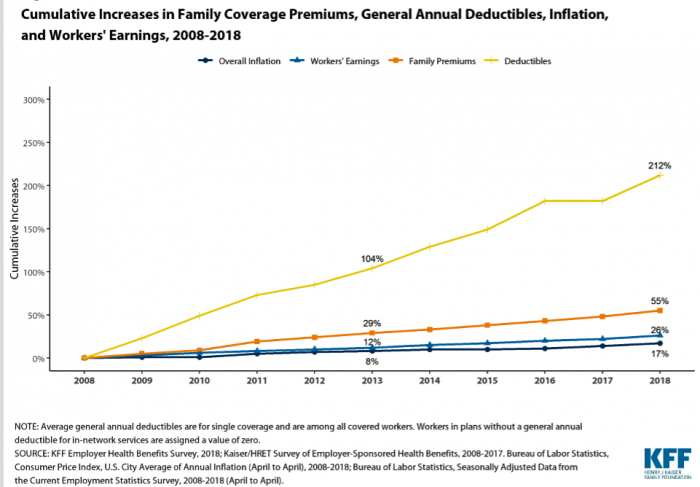
Family premiums for health insurance received at the workplace grew 5% in 2018: to $19,616, according to the 2018 KFF Employer Health Benefits Survey released today by the Kaiser Family Foundation (KFF). These two trends combine for a 212% increase in workers’ deductibles in the past decade. This is about eight times the growth of workers’ wages in the U.S. in the same period. Thus, the main takeaway from the study, KFF President and CEO Drew Altman noted, is that rising health care costs absolutely remain a burden for employers — but a bigger problem for workers in America. Given that
The Importance of Broadband and Net Neutrality for Health, to the Last Person and the Last Mile

California’s Governor Jerry Brown signed into law a net neutrality bill this weekend. Gov. Brown’s proverbial swipe of the pen accomplished two things: he went back to the Obama-era approach to ensure that internet service providers treat all users of the internet equally; and, he prompted the Department of Justice, representing the Trump Administration’s Federal Communications Commission (FCC), to launch a lawsuit. California, home to start-ups, mature tech platform companies (like Apple, Facebook and Google), and countless digital health developers, is in a particularly strategic place to fight the FCC and, now, the Department of Justice. Nearly two dozen other states
Slow Food, Slow Medicine: What Italy Can Teach America About Health
Obesity, diabesity, food deserts and food swamps co-exist across America, factors that cost the U.S. economy over $327 billion a year just in the costs of diagnosed diabetes. In addition, America’s overweight and obesity epidemic results in lost worker productivity, mental health and sleep challenges, and lower quality of life for millions of Americans. Food — healthy, accessible, fairly-priced — is a key social determinant of individual health, wellness, and a public’s ability to pursue happiness. There’s a lot the U.S. can learn from the food culture, policy and economy of Italy when it comes to health. This week, I have the
Sicker Consumers Are More Willing to Share Health Data

People dealing with chronic conditions are keener to share personally-generated data than people that don’t have a chronic disease, Deloitte’s 2018 Survey of U.S> Health Care Consumers learned. This and other insights about the patient journey are published in Inside the patient journey, a report from Deloitte that assesses three key touch points for consumer health engagement. These three patient journey milestones are searching for care, using new channels of care, and tracking and sharing health data, Deloitte maps. What drives people to engage on their patient journeys has a lot more to do with practical matters of care like convenience,
When Life and Health Insurance Blur: John Hancock, Behavioral Economics, and Wearable Tech

Most consumers look to every industry sector to help them engage with their health. And those companies include the insurance industry and financial services firms, we found in the 2010 Edelman Health Engagement Barometer. John Hancock, which covers about 10 million consumers across a range of products, is changing their business model for life insurance. Here’s the press release, titled, “John Hancock Leaves Traditional Life Insurance Model Behind to Incentivize Longer, Healthier Lives.” “We fundamentally believe life insurers should care about how long and well their customers live. With this decision, we are proud to become the only U.S. life insurance
Prescription Drugs: From Costs and Bad Reputation to Civica Rx and Amazon to the Rescue

The prices of medicines prescribed in outpatient settings rose, on average, 10.3% in 2018. Wages increased about 2.6%, and consumer prices, 1.3%, based on the 2019 Segal Health Plan Cost Trend Survey. Segal forecasts that medical cost trends will moderate for 2019, lower than 2018 rates. But to the patient, now feeling like a consumer dealing with high-deductibles and the growing sticker shock of specialty drug prices, a so-called “moderate” trend still feels like a big bite in the household budget. Specifically, specialty drug trend is expected to be 14.3% in 2019, compared with 17.7% in 2018 — still several
Consumers Don’t Know What They Don’t Know About Healthcare Costs

The saving rate in the U.S. ranks among the lowest in the world, in a country that rates among the richest nations. So imagine how well Americans save for healthcare? “Consumers are not disciplined about saving in general,” with saving for healthcare lagging behind other types of savings, Alegeus observes in the 2018 Alegeus Consumer Health & Financial Fluency Report. Alegeus surveyed 1,400 U.S. healthcare consumers in September 2017 to gauge peoples’ views on healthcare finances, insurance, and levels of fluency. As patients continue to take on more financial responsibility for healthcare spending in the U.S., they are struggling with finances and
Consumers Changing the Channel on Where They Shop for Health

Consumers who have long purchased over-the-counter medicines, anti-dandruff shampoo, whitening toothpaste, and cosmetics-with-benefits at food, drug and mass merchant retailers are switching to other places to shop for health, new data from AT Kearney and GMDC have found. The two organizations have collaborated to launch a new benchmarking study into health-beauty-wellness (HBW) sales, launched this weekend at the GMDC HBW Conference in Orlando. Overall, 2017 to 2018 year-on-year, HBW sales were flat-to-no growth, notwithstanding the consumer and influencer buzz around the categories. This study uncovered some very important trends underneath the macro numbers that tell a story
Retail Tomorrow, Today: A Smart Grocery Cart and Digital Samples For Paleo-Eating Moms

In our Amazon-Primed world, the future of retail is not ten years from now; it’s “tomorrow.” So GMDC, the association of retailers and brands who supply them, has formed a program called Retail Tomorrow to turbocharge the supply side with consumers who are already demanding convenience, immediate (or “soon”) gratification, and health where she/he “is.” That’s personalization, and that’s where retail health can and is making a difference in Everyday Peoples’ lives. In our DIY culture, we’re pumping our own petrol, making our own airline and hospitality reservations (from Expedia to Airbnb), trading stocks online, and cooking at home enabled by
Self-Care is Healthcare for Everyday People

Patients are the new healthcare payors, and as such, taking on the role of health consumers. In fact, health and wellness consumers have existed since a person purchased the first toothpaste, aspirin, heating pad, and moisturizing cream at retail. Or consulted with their neighborhood herbalista, homeopathic practitioner, therapeutic masseuse, or skin aesthetician. Today, the health and wellness consumer can DIY all of these things at home through a huge array of products available in pharmacies, supermarkets, Big Box stores, cosmetic superstores, convenience and dollar stores, and other retail channels – increasingly, online (THINK, of course, of Amazon — more on
Health Il-Literacy Costs

The complexity of the U.S. healthcare system erodes Americans’ health literacy, Accenture asserts in their report, The Hidden Cost of Healthcare System Complexity. And that complexity costs, Accenture calculated, to the tune of nearly $5 billion in administrative cost burden to payors. Accenture developed a healthcare system literacy index to quantify the relationship between peoples’ understanding of how health insurance works and what a lack of understanding can cost the system. The index looks at consumer comprehension of health insurance terms like premium, deductible, copayment, coinsurance, out-of-pocket
Pharmacies Continue to Earn Consumer-Love

Among industries that consumers frequent, one continues to delight people more than most: pharmacies. J.D. Power’s 2018 ratings on U.S. pharmacies finds that consumers do indeed still love their pharmacies after ten years of rating customer satisfaction with brick-and-mortar and mail order channels. “U.S. consumers love their pharmacies,” J.D. Power asserts in its first study finding. In terms of total points across all pharmacies, Wegmans pharmacy was the overall top-ranked Rx retail channel with a total ranking of 906 out of 1,000 points. J.D. Power evaluated four categories of pharmacy: Brick-and-mortar chain drug stores, ranking Good Neighbor Pharmacy number one.
Going Digital for Health Is a New-Normal for Consumers

Using digital health tech is a new normal for U.S. consumers, including Seniors, found in the 2018 digital health consumer survey from Deloitte. The title of the report, “Consumers are on board with virtual health options,” summarizes the bullish outlook for telehealth. That’s the consumer-demand side of the equation. But the tagline begs the supply side question: “Can the health care system deliver?” For a decade or longer, we’ve noted the slow uptake of telehealth and digital health tools among healthcare providers. But the consumer pressures, along with evidence-based self-service options for health – both for “care” and for wellness,
The Top Pain Point in the Healthcare Consumer Experience is Money

Beyond the physical and emotional pain that people experience when they become a patient, in the U.S. that person becomes a consumer bearing expenses and financial pain, as well. 98% of Americans rank paying their medical bills is an important pain point in their patient journey, according to Embracing consumerism: Driving customer engagement in the healthcare financial journey, from Experian Health. Experian is best known as the consumer credit reporting agency; Experian Health works with healthcare providers on revenue cycle management, patient identity, and care management, so the company has experience with patient finance and medical expense sticker shock. In the
Surprise, Surprise: Most Americans Have Faced a “Surprise” Medical Bill

Most Americans have been surprised by a medical bill, a NORC AmeriSpeak survey found. Who’s responsible? Nearly all Americans (86% net responsible) first blame health insurance companies, followed by hospitals (82%). Fewer U.S. patients blamed doctors and pharmacies, although a majority of consumers still put responsibility for surprise healthcare bills on them (71% and 64% net). Most of the surprise bills were for charges associated with a physician’s service or lab test. Most surprise charges were not due to the service being excluded from a health plans provider network. The poll was conducted among 1,002 U.S. adults 18 and over
The Digital Health Consumer According to Rock Health
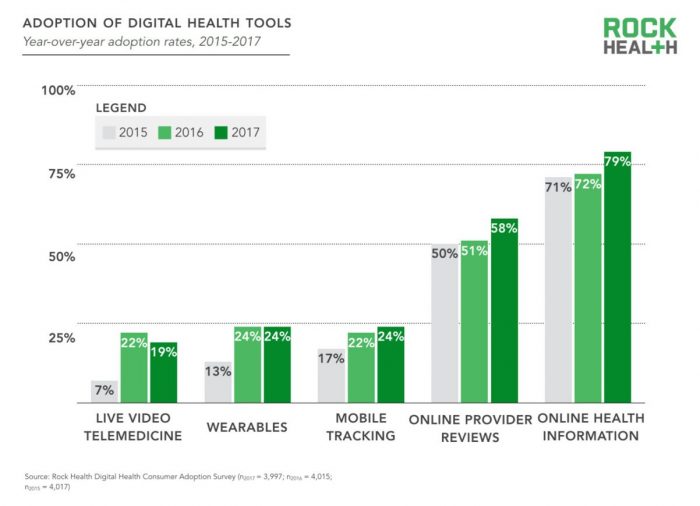
Looking for health information online is just part of being a normal, mainstream health consumer, according to the third Rock Health Digital Health Consumer Adoption Survey published this week. By 2017, 8 in 10 U.S. adults were online health information hunters. Six in 10 Americans looked for reviews of healthcare providers online, another new-normal consumer digital health activity. But only one in four people had used wearable technology for health, and one in five had participated in a live video telemedicine encounter. The Rock Health team observes that “the needle has not moved equally across every type of digital health solution.” Thus the
More U.S. Companies Offering Health Insurance After 8 Years of Decline
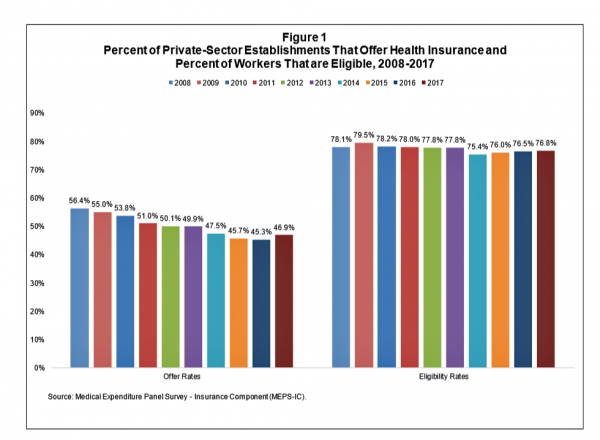
After eight years of decline, more U.S. employers offered health insurance to workers in 2017, EBRI reports in its latest Issue Brief. In 2017, 46.9% of U.S. companies offered health insurance to their employees, up by 1.6 percentage points from a low of 45.3% in 2016. For perspective, ten years earlier in 2008, 56.4% of employers offered health insurance, shown in the first bar chart (Figure 1 from the EBRI report). The largest percentage point increase in health plan offer-rates came from the smallest companies, those with less than 10 employees: while 21.7% of those companies offered health insurance in
Multimorbidity In the US – Obesity As A Key Driver of Health Spending
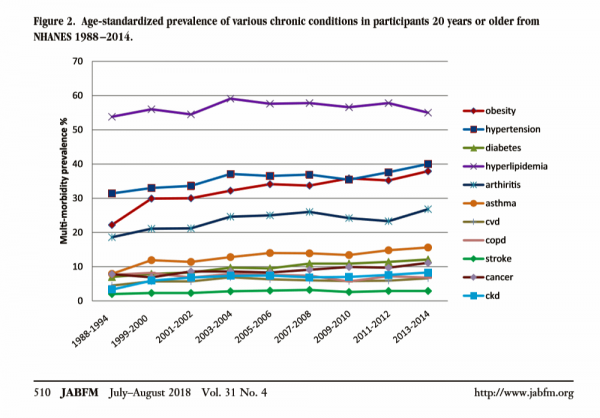
In the U.S., the growing prevalence of multi-morbidity is contributing to increased mortality and healthcare cost growth in America. Underlying this clinical and economic phenomenon is obesity, which primary care doctors are challenged to deal with as a chronic condition along with typically co-occurring comorbidities of hypertension, diabetes, and hyperlipidemia. The line chart come from a new study into Multimorbidity Trends in United States Adults, 1988-2014, published in the July-August 2018 issue of the Journal of the American Board of Family Medicine. The authors, affiliated with the West Virginia University Department of Family Medicine, call out that obesity (the pink-red line)
Best Buy Bets on AgingTech in the Expanding Retail Health Ecosystem
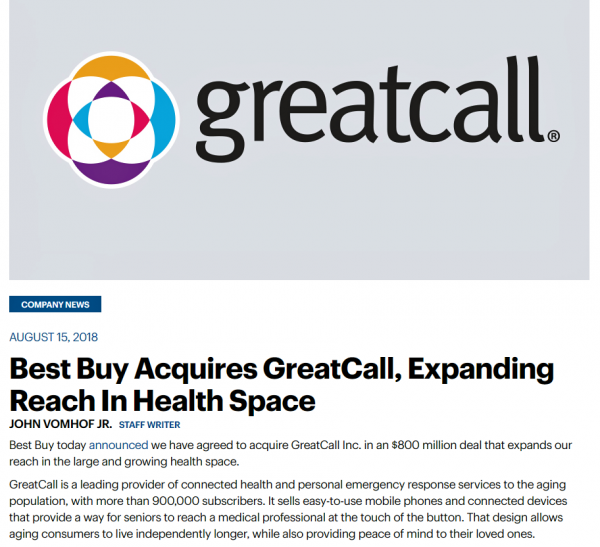
With the acquisition of GreatCall, a mature player in the aging-tech space, Best Buy is doubling down on consumer health technology@retail. This week at Best Buy. the electronics retailer, it’s out with CDs and in with technology for aging at home. The company announced that it would buy GreatCall for $800 million. A snippet from the announcement from Best Buy’s press release is shown in the first diagram, noting that GreatCall’s membership is approaching 1 million subscribers who use mobile phones and connected devices, “providing peace of mind to their loved ones.” Beyond the obvious “falling and I can’t get
Benefit Cost Increases Overwhelm Flat Wages for Most in US: Pew
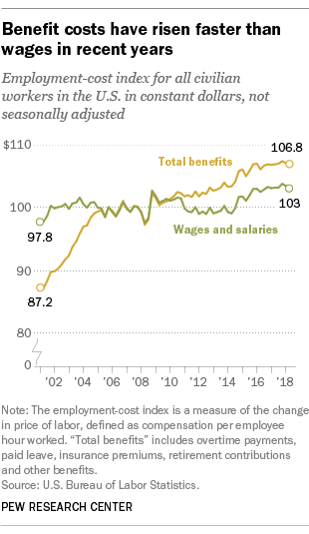
Today’s financial news reports and the bullish stock market generate headlines saying that the U.S. economy is riding high. President Trump forecasted in late July, “we are now on track to hit an average GDP annual growth of over 3% and it could be substantially over 3%,” Trump said. “Each point, by the way, means approximately $3 trillion and 10 million jobs. Think of that.” Indeed, unemployment is at its lowest rate in decades at 4%. Today, NASDAQ reported that, “the U.S. economy stays strong as the Fed holds steady.” For mainstream working people, though, even with a job in a high employment
Americans Growing Health Consumer Muscles and Knowledge: McKinsey
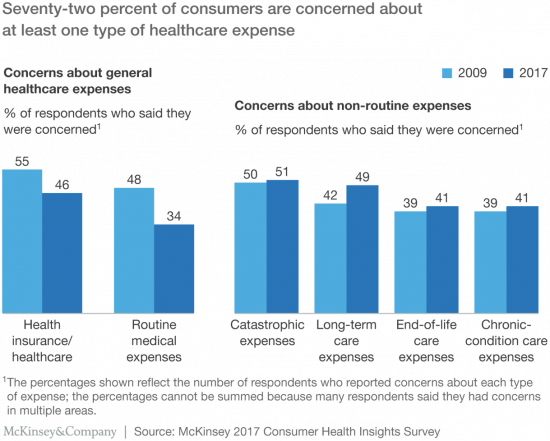
Most Americans are healthcare cost-conscious, concerned about various kinds of healthcare expenses, data from McKinsey’s research has found presented in Healthcare consumerism 2018: An update on the journey. McKinsey’s consumer research identified four themes: affordability as a pressing consumer concern; lack of continuity of care for many consumers; growing demand for digital convenience and access; and, greater willingness to partake in health care programs that lower costs, if made available. Personal and household concerns about healthcare costs is top-of-mind for U.S. consumers, as I’ve pointed out in previous studies such as Kaiser Family Foundation’s look at top “pocketbook issues,” here on
Employers Take on Health Activism, Embracing Behavioral Health, Virtual Care, AI, and Transparency
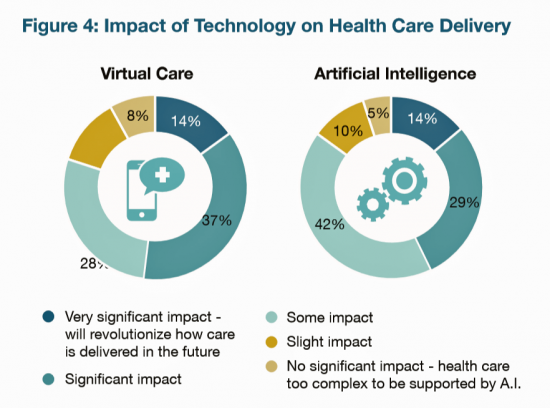
More U.S. employers are growing activist roles as stakeholders in the healthcare system, according to the 2019 Large Employers Health Care Strategy and Plan Design Survey from the National Business Group on Health (NBGH). Consider the Amazon-Berkshire Hathaway-JPMorgan Chase link up between Jeff Bezos, Warren Buffet, and Jamie Dimon, as the symbol of such employer-health activism. The NBGH report is based on survey results collected from 170 large employers representing 13 million workers and 19 million covered lives (families/dependents). This annual survey is one of the most influential such reports released each year, providing a current snapshot of large employers’ views
Healthcare’s Profits Will Be Dramatically Redistributed as Care Shifts to Consumers: Accenture
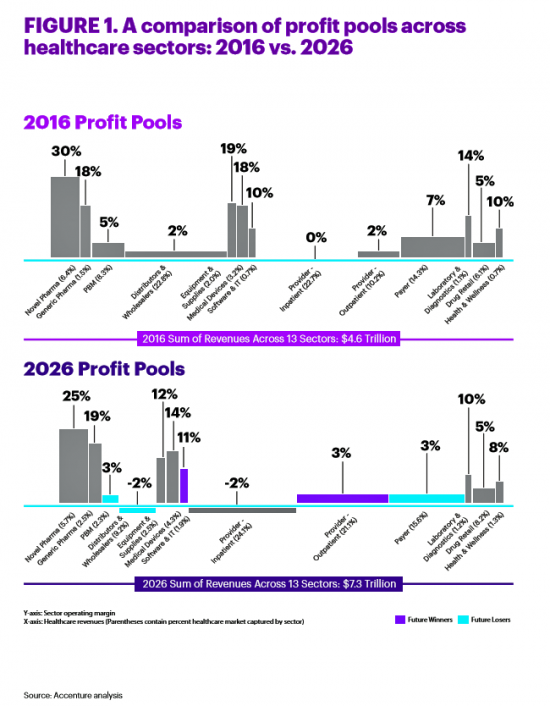
All sectors who are stakeholders in the healthcare ecosystem aren’t created equal, Accenture explains in their report, Healthcare’s future winners and losers. Observing the influx of new flavors of entrants like Amazon and Google, start-ups like Iora Health, Oscar and FetchMD, begs the question: how will legacy healthcare system players fare? Who will survive, and what will be the success factors that bolster long-term viability? To answer that question, Accenture points to three market trends that set “new rules” in healthcare: Blurred lines, which are the grey areas and adjacencies between technology, service, finance, and retail The middle of nowhere,
“Lower Prescription Drug Prices” – A Tri-Partisan Call Across America
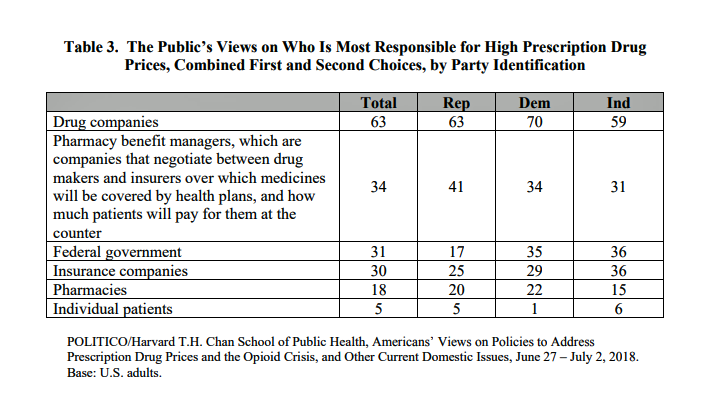
There’s growing evidence that a majority of U.S. voters, across the three-party landscape, agree on two healthcare issues this year: coverage of pre-existing conditions, and lowering the consumer-facing costs of prescription drugs. A new poll jointly conducted by Politico and the Harvard Chan School of Public Health bolsters my read on the latter issue – prescription drug pricing, which has become a mass popular culture union. There may be no other issue on voters’ collective minds for the 2018 mid-term election that so unites American voters than the demand for lower-cost medicines. This is directly relates to consumers’ tri-party
How Emotions and “Nocebos” Get in the Way of Preventive Healthcare
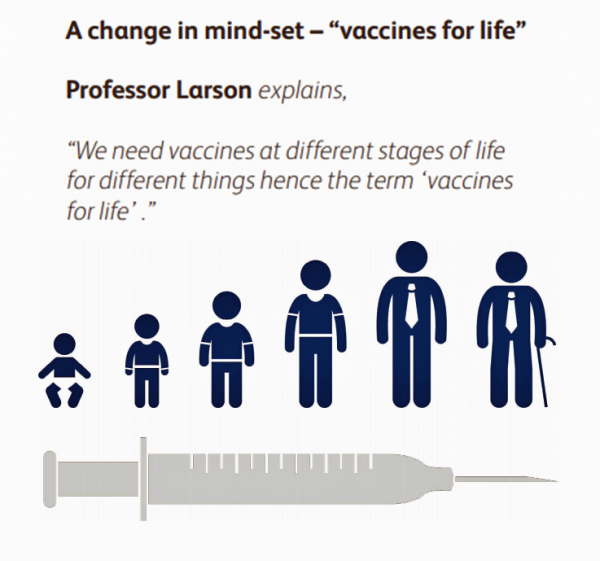
There are health facts that are based on rigorous scientific evidence. And, there are people who, for a variety of reasons, make irrational healthcare decisions without regard to those health facts. An important new report discusses the all-too-human aspects of people-as-patients, who often make health decisions based more on emotions than on the cold, hard truths that could save their lives and protect the well-being of loved ones. Preventative care and behavioural science: The emotional drivers of healthcare decisions is that report, sponsored by Pfizer Vaccines and written by the Economist Intelligence Unit (EIU). The report analyzes the psychological factors that shape consumers’ health
FANGs & MAGA – Meet WaWa for Health, Walgreens and Walmart
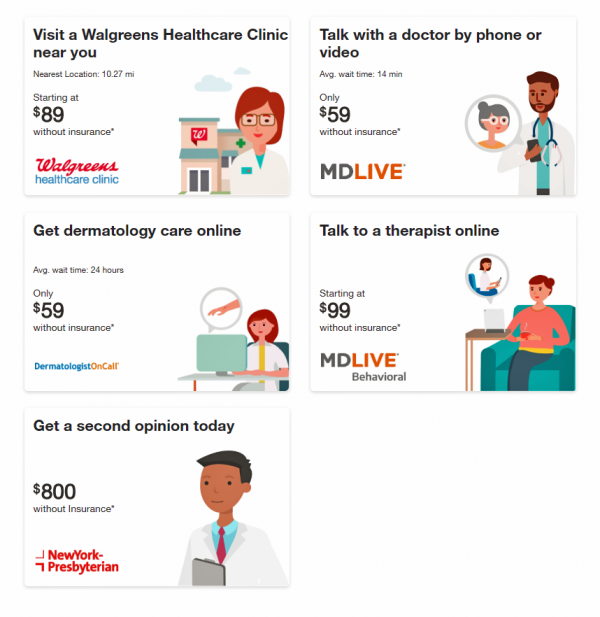
While Amazon and Google get lots of positive PR and media attention as major healthcare industry disruptors, don’t forget about two big “W’s,” Walgreens and Walmart, in the healthcare innovator mix. I recently read The Four in which Scott Galloway explains the dominance of Amazon, Apple, Google and Facebook in consumers’ everyday lives. These four tech-behemoths each have their particular designs on healthcare innovation, or disruption in the eyes of, say, Epic and Cerner working on health IT systems, or GE and IBM if you’ve been pioneers in health data or big-iron information technology. Then in the past week, the
Most Americans Over 50 Not Buying Groceries Online….Yet
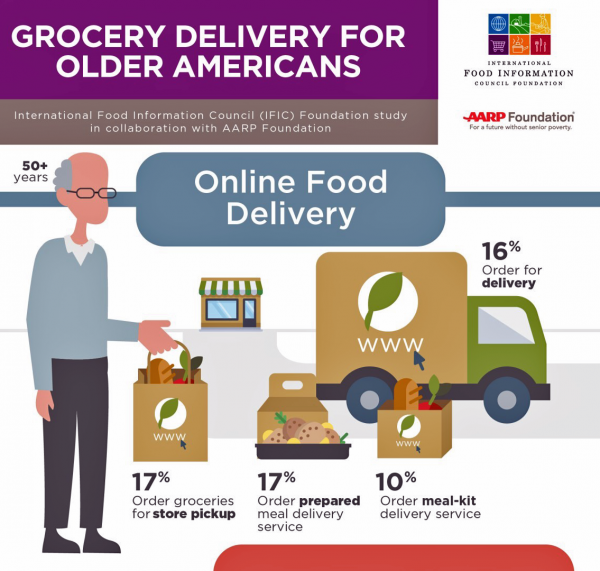
Only 17% of Americans over 50 years of age shopped for groceries online by mid-2018. But older people in the U.S. have underlying demands and needs that could nudge them to do online grocery shopping, unearthed in a survey from AARP Foundation and IFIC, the International Food Industry Council Foundation. Typically, older Americans who shop online tend to be college-educated, work full-time, and earn higher incomes. Older people with mobility issues also shop more online than folks without such challenges. But even among those older people who shop online for food, they do so less frequently than younger people do.
Healthcare, and Especially Covering Pre-Existing Conditions, Ranks High for Voters in 2018
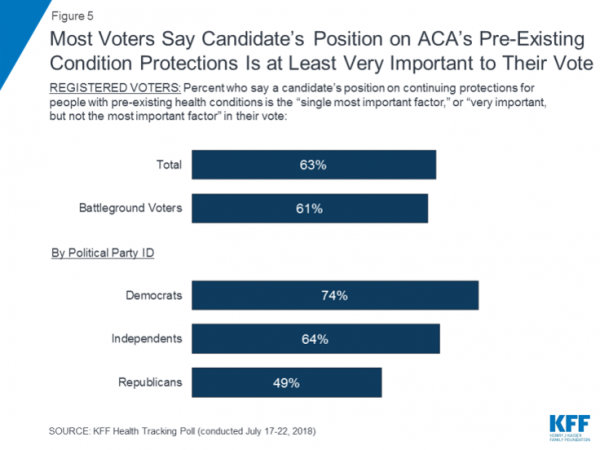
President Trump and his administrative have been trying to make the ACA fail, claim most U.S. adults. Thus, the public holds the POTUS and the Republican party responsible for moving the Affordable Care Act forward….or not, according to the July 2018 Kaiser Health Tracking Poll conducted by the Kaiser Family Foundation (KFF). Health care will be a key issue in the 2018 mid-term elections that will be held in November. Among U.S. voters’ key health care concerns in 2018, one ranks “most” or “very important” for two-thirds of Americans: that is continuing to protect people with pre-existing health conditions. Other issues
Heart Disease in America: Zip Code Determines Cardiovascular Disease-Destiny
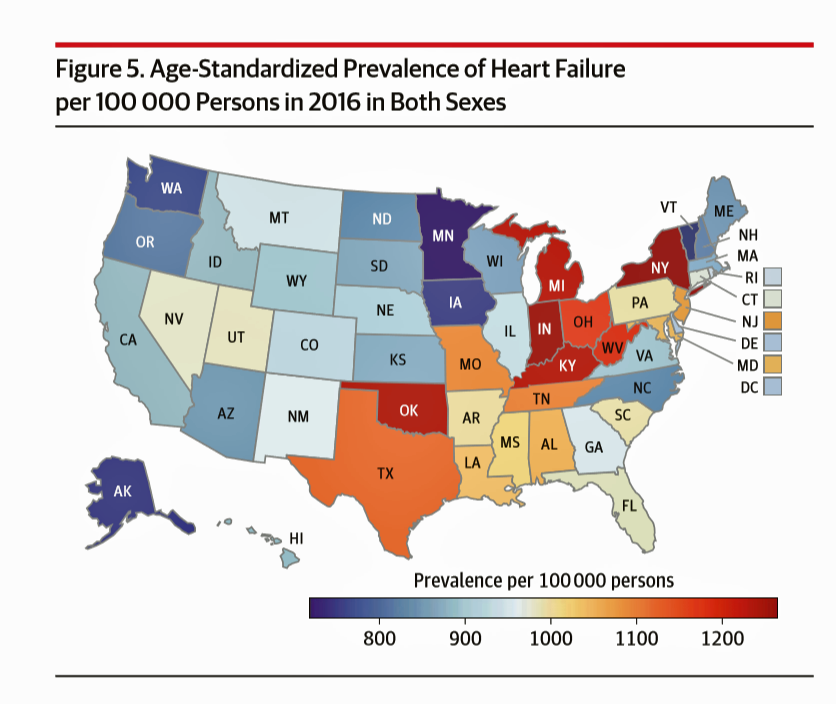
If you live in one of nine U.S. states, your chances of having heart disease are greater than living in the 41 others. This geography-as-destiny for heart conditions is examined in The Burden of Cardiovascular Diseases Among US States, 1990-2016 published in JAMA Cardiology. Researchers analyzed data on cardiovascular disease mortality, nonfatal health outcomes, and risk factors by age, sex, and year from 1990 to 2016 for the U.S. population. The outcome used to measure health by state was cardiovascular disease disability-adjusted life-years, or DALYs (FYI, “DALYs” are a commonly used metric in health economics research). Pennsylvania While overall cardiovascular
Closing the Digital Health Gap Between Consumers and Physicians
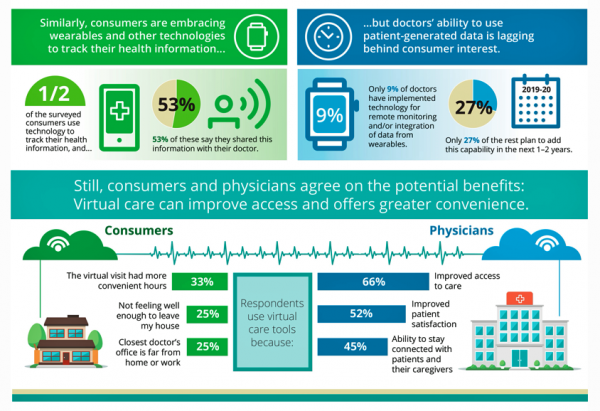
Consumers are more bullish demanding virtual and digital health tools from their physicians than doctors are in providing it, based on the research findings in What can health systems do to encourage physicians to embrace virtual care? from Deloitte. One-third of physicians have concerns about using virtual care services, such as medical errors that may result, access to technology, and data security. One in two U.S. consumers are now tracking health via digital tools, and one-half of these share the data generated by their apps. That sharing is limited by doctors’ ability to
How Taking Care of Your Health Boosts Savings Accounts
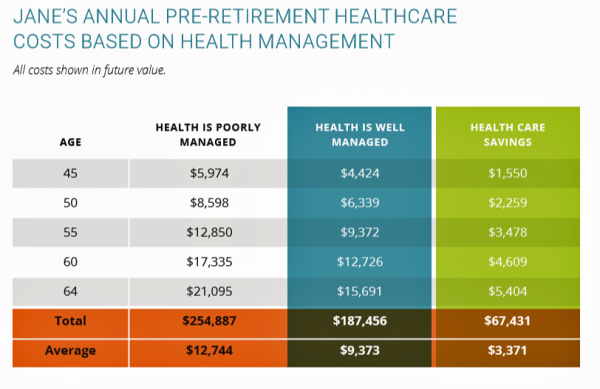
It will cost about $275,000 for a couple retiring in the U.S. this year to cover their healthcare costs for the rest of their life in retirement, Fidelity estimated. But Americans are notoriously pretty undisciplined about saving money, compared with peers living in other developed countries. How to address this challenge? Show people what improving their personal health can do to boost their 401(k) plans. This tactic is discussed in Health & Retirement Savings: Leveraging Healthcare Costs to Drive 401(k) Contributions & Improve Health, from HealthyCapital, a joint venture of Mercy health systems and HealthView Services. The chart illustrates three
In This Eroding Era of Trust, Consumers Look to Doctors Above Banks and Retailers for Trusted Sharing
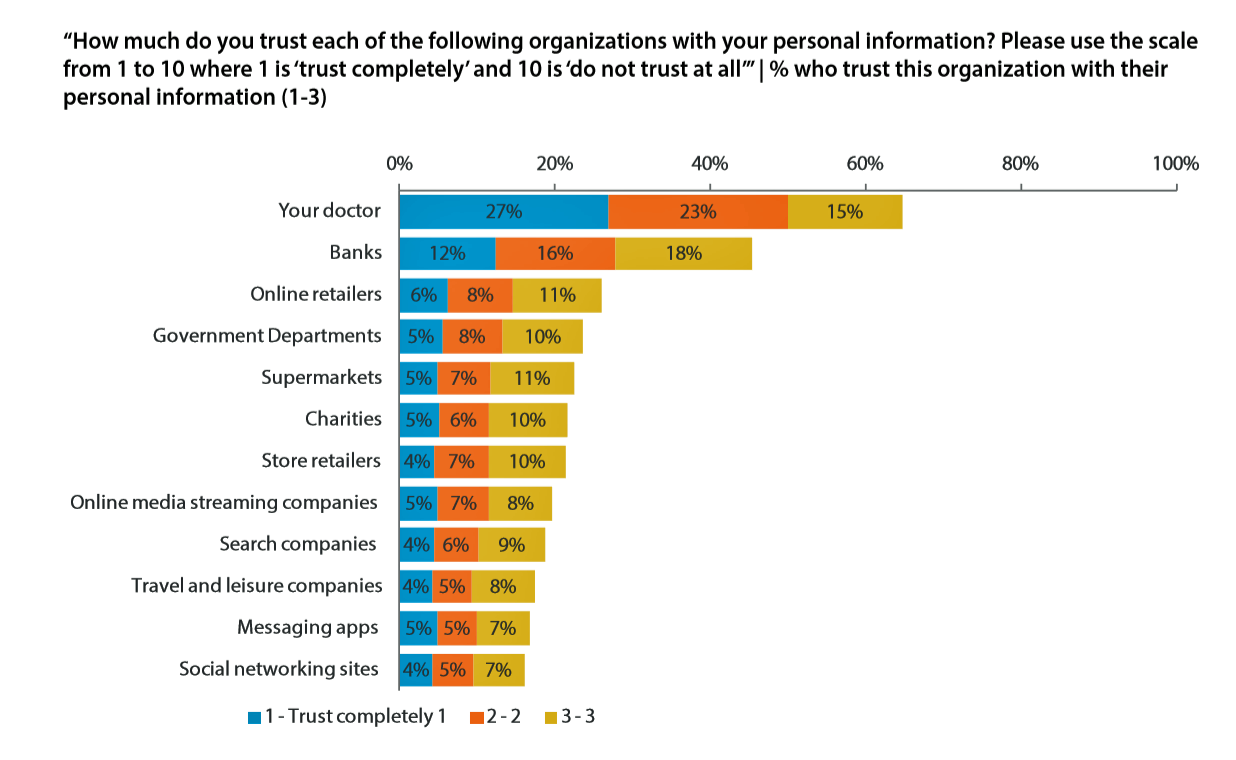
In this moment post-Cambridge Analytica/Facebook, the launch of the GDPR, and the everyday-ness of data breaches, consumers most trust doctors for sharing personal information. I’ve mined, through my health economic lens, the U.S. data published in the insightful report, Data Privacy: What the Consumer Really Thinks, a global research study from Axciom and the Data & Marketing Association (recently acquired by the Association of National Advertisers) working with Foresight Factory. The report compares consumers’ personal views on privacy and trust in ten countries: Argentina, Australia, Canada, France, Germany, the Netherlands, Singapore, Spain, the UK, and the US. We learn that Americans
The Social Determinants of Food for Health, Farms, and the Economy
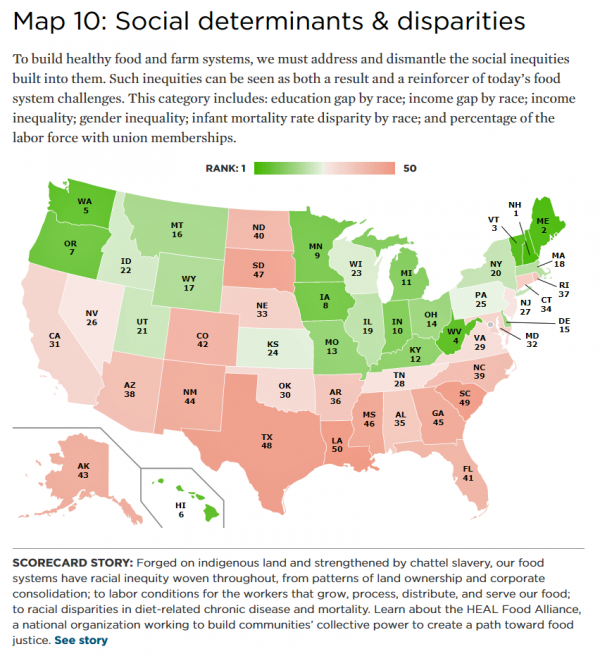
America’s agricultural roots go deep, from the native Patuxet tribe that shared maize with Mayflower settling Pilgrims in southern New England, to biodynamic and organic winemakers in Sonoma County, California, operating today. In 2016, 21.4 million full- and part-time jobs were related to agriculture and food sectors, about 11% of total U.S. employment. Farming is an integral part of a nation’s food system, so the Union of Concerned Scientists developed the 50-State Food System Scorecard to gauge the state of farming and food in the U.S. on several dimensions: diet and health outcomes, farming as an industry and economic engine,
Consumers Consider Cost When They Think About Medical Innovation
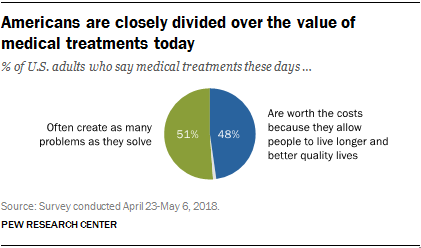
While the vast majority of Americans say that science has made life easier for most people, and especially for health care, people are split in questioning the financial cost and value of medical treatments, the Pew Research Center has found. The first chart illustrates the percent of Americans identifying various aspects of medical treatments as “big problems.” If you add in people who see these as “small problems,” 9 in 10 Americans say that all of these line items are “problems.” In the sample, two-thirds of respondents had seen a health care provider for an illness or medical condition in
Value Comes to Healthcare: But Whose Value Is It?
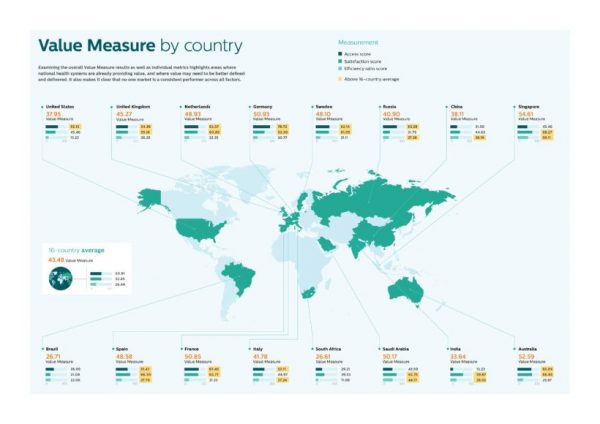
The Search for Value is the prevailing journey to a Holy Grail in healthcare these days. On that, most stakeholders working on the ground, globally. can agree. But whose value is it, anyway? Three reports published in the past few weeks give us some useful perspective on that question, woven together in today’s Health Populi blog. Let’s start with the Philips Future Health Index, which assesses value to 16 national health systems through three lenses: access, satisfaction, and efficiency. The results are shown in the map. “Value-based healthcare is contextual, geared towards providing the right care in the right place, at
Diabetes and Independence Day: An Inflection Point for Rising Blood Sugar
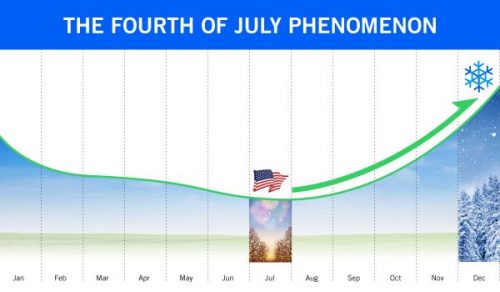
In the USA, July 4th celebrates the adoption of the Declaration of Independence on that day in 1776. For people with diabetes, July 4th is also an inflection point when blood glucose spikes and kicks off a rise in blood sugar levels through autumn to New Year’s Eve. The team at Livongo observed this by mining 20 million blood glucose measures among its community of people with diabetes. This research debuted in the inaugural Insights Report, Diabetes Across America: Seasons, Regions & More. I appreciated the opportunity to discuss these findings with Dr. Jennifer Schneider, Chief Medical Officer at Livongo. I
 Jane will be working with EU- and UK-based clients in September and October 2026, collaborating with stakeholders in digital health, public/community health, retail health, and growing opportunities for health-at-home. Stay tuned to her updates here on Health Populi on-the-ground as she lives the digital nomadic work-life in Italy, Belgium, the Netherlands, and in London.
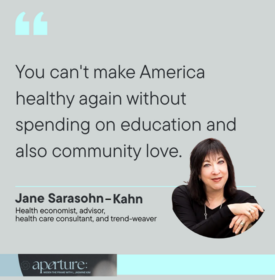 I was grateful to be Jasmine's first conversation-guest on her new podcast, "Aperture - Widen the Frame," where this expert in narrative medicine is bringing together the broad range of voices to sit at the table and address what health care needs: those humans in the health-system-loop who address health equity and empathy along with delivering evidence-based medicine for all.
 Jane joined host Dr. Geeta "Dr. G" Nayyar and colleagues to brainstorm the value of vaccines for public and individual health in this challenging environment for health literacy, health politics, and health citizen grievance. Click onto the Pfizer Value of Vaccines site and you can watch four episodes covering the challenges with adult vaccination, the employer and health plan member's journey to vaccination, reimbursement, and collaborating for proactive prevention.