


Power to the health care consumer – but how much and when?
Oliver Wyman’s Health & Life Sciences group names its latest treatise on the new-new health care The Patient-to-Consumer Revolution, subtitled: “how high tech, transparent marketplaces, and consumer power are transforming U.S. healthcare.” The report kicks off with the technology supply side of “Health Market 2.0,” noting that “the user experience of health care is falling behind” other industry segments — pointing to Uber for transport, Amazon for shopping, and Open Table for reserving a table. The authors estimate that investments in digital health and healthcare rose “easily ten times faster” than the industry has seen in the past. Companies like
Live from the 11th annual Connected Health Symposium – Keeping Telehealth Real
Dr. Joseph Kvedar has led the Center for Connected Health for as long as I’ve used the word “telehealth” in my work – over 20 years. After two decades, the Center and other pioneers in connected health have evidence proving the benefits, ROI (“hard” in terms of dollars, and “soft” in terms of patient and physician satisfaction), and technology efficacy for connecting health. The 11th Annual Connected Health Symposium is taking place as I write this post at the Seaport Hotel in Boston, bringing health providers, payers, plans and researchers together to share best practices, learnings and evidence supporting the
PwC on wearables – the health opportunity is huge, but who will pay?
“A wearable future is around the corner,” PwC says. So it’s appropriate the consulting firm’s new report is indeed titled The Wearable Future. Wearable technologies — smartwatches, sensor-laden workout gear, activity tracking wristbands, and Google Glass, among them — are more than individual tracking and information devices. They’re part of a larger ecosystem called The Internet of Things (IoT), which is made of lots of stuff, each ‘thing’ incorporating a sensor that measures something. Those measurements can track virtually everything that someone does throughout the day: beyond the obvious steps taken, hours slept, and GPS coordinates, sensors can sense movement
Health care as a retail business
The health care industry is undergoing a retail transformation, according to Retail Reigns in Health Care: The rise of consumer power and its organization & workforce implications from Deloitte. Deloitte’s report published in October 2014 focuses on the health insurance business, which is newly-dealing with uninsured people largely unfamiliar with how to evaluate health plan options. This by any definition requires new muscles for both buyers and sellers on a health insurance exchange: new product access + uninformed consumer = retail challenge. Deloitte notes another supply and demand challenge, and that’s with the health insurance company workforce: while 93% of health
Health and financial well-being are strongly linked, CIGNA asks and answers
The modern view on wellness is “having it all” in terms of driving physical, emotional, mental and financial health across one’s life, according to CIGNA’s survey report, Health & Financial Well-Being: How Strong Is the Link? The key elements of whole health, as people define them are: – Absence of sickness, 37% – Feeling of happiness, 32% – Stable mental health, 32% – Management of chronic disease, 15% – Financial health, 14% – Living my dreams, 9%. 1 in 2 people (49%) agree that health and wellness comprise “all of these” elements, listed above. This holistic view of health is
Specialty pharmaceuticals’ costs in the health economic bulls-eye
This past weekend, 60 Minutes’ Leslie Stahl asked John Castellani, the president of PhRMA, the pharmaceutical industry’s advocacy (lobby) organization, why the cost of Gleevec, from Novartis, dramatically increased over the 13 years it’s been in the market, while other more expensive competitors have been launched in the period. (Here is the FDA’s announcement of the Gleevec approval from 2001). Mr. Castellani said he couldn’t respond to specific drug company’s pricing strategies, but in general, these products are “worth it.” Here is the entire transcript of the 60 Minutes’ piece. Today, Health Affairs, the policy journal, is hosting a discussion
Hug your doctor: s/he needs it, according to the 2014 Physician Foundation survey
While the medical profession has reached a so-called state of crisis, there’s also a “changing of the guard” happening in the profession where doctors are re-imagining what it means to be physician in the era of value-based, technology-enabled health care. Such is the state of the union — or dis-union — of the U.S. medical profession. The 2014 Survey of America’s Physicians from Physicians Foundation finds that 4 in 5 U.S. doctors are over-extended or reaching full capacity in their practices. This is up from 2012. Only 19% of doctors say they have time to see more patients. That may be
Walgreens+WebMD: reinventing retail pharmacy
With the goal of driving a digital health platform for well-informed, effective self-care, the nation’s largest retail pharmacy chain and prominent consumer-facing health information portal are allying to move from serving up pills and information to health “care.” Walgreens and WebMD launched their joint effort on 2nd October 2014, a few weeks after CVS/pharmacy re-branded as CVS Health. Welcome to the reinvention of the retail pharmacy. I spoke for a few minutes with David Schlanger, CEO, WebMD, and Alex Gourlay, President, Customer Experience and Daily Living, Walgreens, the day of the launch, to get early insights into the vision for
Health-wear – at Health 2.0, health met fashion, function and care
Wearables met health and medicine at the 8th annual Health 2.0 Conference in Santa Clara, CA, last week. I had the real pleasure of shepherding a wearables panel of five innovators during the conference, in a well-attended session followed by an energetic Q&A. The organizations who demonstrated their tools and brainstormed the wearables market included, in alphabetical order, Atlas Wearables, Heartmath, MySugr, SunSprite and Withings. I hasten to add that among the five presenters, two were women: that 2 in 5 = 40% gender representation is, happily to my way of thinking about women’s roles in health-making, a very good
Health info disconnect: most people view accessing online records important, but don’t perceive the need to do so
There’s a health information disconnect among U.S. adults: most people believe online access to their personal health information is important, but three-quarters of people who were offered access to their health data and didn’t do so didn’t perceive the need to. The first two graphs illustrate each of these points. When people do access their online health records, they use their information for a variety of reasons, including monitoring their health (73%), sharing their information with family or care providers (44%), or downloading the data to a mobile device or computer (39%). In this context, note that 1 in 3
$1 in $5 will go to health care in 2023 – the new health engagement is health cost engagement
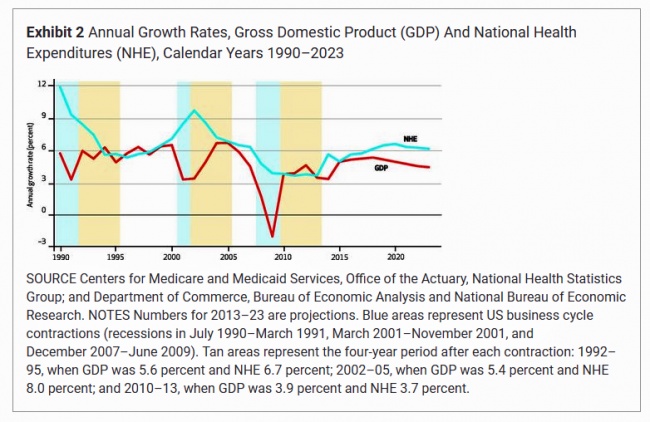
National health spending will comprise 19.3% of U.S. gross domestic product in 2023, nearly $1 in $5 of all American spending. This statistic includes the expenditure categories for health spending as defined by the Centers for Medicare and Medicaid Services (CMS), Office of the Actuary. The number includes hospital care, personal health care, professional services (physicians and other professionals), home health, long term care, retail sales of prescription drugs and durable medical equipment, and investment in capital equipment, among other line items. The forecast was published in Health Affairs article, National Health Expenditure Projections, 2013-23: Faster Growth Expected With Expanded
Joan Rivers lessons for health and wellness: think like a Bee and Laugh
If laughter is the best medicine, Joan Rivers earned an MD in my personal health ecosystem. My parents loved and laughed with her comedy when pioneered stand-up comedy on TV, and I became increasingly intrigued in and impressed by her vitality, her tenacity, and her survival strategies. I also shared a love of her bee pins with my mother-in-law; the pins were created by Joan and her team for QVC, the electronic retailer, with whom Joan forged a profitable and popular line of fashion, jewelry and home decor. The bee, Joan explained, is anatomically and aerodynamically unfit to fly. Yet,
Health on the 2014 Gartner Hype Cycle
Remote health monitoring is in the Trough of Disillusionment. Wearables are at the Peak of Inflated Expectations, with Big Data leapfrogging wearables from the 2013 forecast — both descending toward the Disillusionment Trough. Mobile (remote) health monitoring, however, has fallen into that Trough of Disillusionment as RHM has been undergoing reality checks in the health care system especially for monitoring and patient self-management of heart disease (most notably heart failure) and diabetes. Welcome to the 2014 edition of the Gartner Hype Cycle, one of my most-trusted data sources for doing health industry forecasts in my advisory work. Compared with last year’s
Understanding the patient journey – using real-world data
It’s de rigueur for any organization marketing a product or service in health care to be “patient-centered” these days. “Patient engagement” and “health engagement” are phrases found on health conference agendas, whether pitching to attendees in pharma and life sciences, health IT, health insurance, or healthcare (to hospitals and physicians, alike). One paradigm for patient-centricity that’s more mature than most is IMS Health’s Patient Journey construct, which the data-driven company has been talking about since 2012. While the concept focused mainly on pharmaceutical marketing and medication adherence, it’s useful for all industry segments looking to motivate behavior change in health
Inflection point for telehealth in 2014
The supply side of telehealth has been readying itself for nearly a decade. The demand side appears to be aligning in 2014 for adoption to grow and sustain (some) solid business models. On the demand side, Towers Watson’s 2014 survey of large employers forecasts growth among companies that will offer telemedicine in 2015. Towers found that 37% of employers planned to offer telemedicine to workers as a lower-cost site of care; 34% more employers were considering telemedicine in 2016 or 2017. The health benefits adviser calculates that employers could save over $6 billion if industry replaces virtual health consultations with
Employers engaging in health engagement
Expecting health care cost increases of 5% in 2015, employers in the U.S. will focus on several tactics to control costs: greater offerings of consumer-directed health plans, increasing employee cost-sharing, narrowing provider networks, and serving up wellness and disease management programs. The National Business Group on Health’s Large Employers’ 2015 Health Plan Design Survey finds employers committed to health engagement in 2015 as a key strategy for health benefits. More granularly, addressing weight management, smoking cessation, physical activity, and stress reduction, will be top priorities, shown in the first chart. An underpinning of engagement is health care consumerism — which
Blurred lines: health, pharmacy, food and care
In the past few weeks, several events bolster the reality that health and health care are in Blurred Lines mode. Not Robin Thicke Blurred Lines, mind you, but the Venn Diagram overlapping kind. Walmart launched real primary care clinics in South Carolina and Texas. These will provide services beyond urgent care, charging $4 a visit for company employees and $40 a visit for other people The U.S. Department of Agriculture issued a report promoting “nudges” to grocery shoppers enrolled in the Supplemental Nutrition Access Program (SNAP) to buy healthy foods Apple is talking with Cleveland Clinic, Johnson Hopkins, and Mount Sinai Medical
Over-the-counter drugs – an asset in the collaborative, DIY health economy
Nations throughout the world are challenged by the cost of health care: from Brazil to China, India to the Philippines, and especially in the U.S., people are morphing into health care consumers. Three categories of health spending in the bulls-eye of countries’ Departments of Health are prescription drugs, and the costs of care in hospitals and doctors’ offices. In the U.S., one tactic for cost containment in health is “switching” certain prescription drugs to over-the-counter products – those deemed to be efficacious and safe for patients to take without seeking treatment from a doctor. Over-the-counter drugs (OTCs) are available every
Novel concept: people + health pricing information = market competition
In the post-Recession American economy, people shop for value in all things. And that includes health care services like MRIs — when patients are informed of pricing differences among imaging facilities and given free rein to pick-and-choose among them. In addition to lowering imaging costs in a community, price transparency also generated competition between providers. Health Affairs published this research detailed in Price Transparency for MRIs Increased Use of Less Costly Providers And Triggered Provider Competition in August 2014. An Economics 101 course teaches us that a well-oiled (perfect) market depends on lots of sellers of a product and lots of
Do EHRs “chill” patient disclosures to clinicians?
Patients are concerned about private risks of personal health data, resulting in some patients not disclosing certain information to health providers to protect their perceived EHR privacy and security risks. Peoples’ mixed feelings about sharing personal health information with their providers and EHRs is explored in The double-edged sword of electronic health records: implications for patient disclosure, published in the July 2014 issue of JAMIA, the Journal of the American Medical Informatics Association (AMIA). “The perception of the [EHR] technology may elicit non-disclosure as a privacy-protecting behavior,” the authors warn. Celeste Campos-Castillo and Denise Anthony, the paper’s researchers who work in
Self-care – the role of OTCs for personal health financial management
Make-over your medicine cabinet. That’s a key headline for International Self-Care Day (ISD) on July 24, 2014, an initiative promoting the opportunity for people to take a greater role in their own health care and wellness. Sponsored by the Consumer Healthcare Products Association (CHPA), consumer products companies, health advocacy organizations, and legislators including John Barrow (D-GA), a co-sponsor of H.R. 2835 (aka the Restoring Access to Medications Act), the Day talked about the $102 billion savings opportunity generated through people in the U.S. taking on more self-care through using over-the-counter medicines. After the 2008 Recession hit the U.S. economy, industry analysts
Health consumers – largely in charge, engaged and cost conscious
3 in 5 people in the U.S. would like to take the lead on making medical decisions for themselves, according to the Altarum Institute Survey of Consumer Health Care Opinions, Spring 2014 edition, published July 2014. Another 30% of people want to make a joint decision with equal input from their doctor. Together, the math calculates to 9 in 10 Americans seeking major roles in medical decisions. Altarum’s survey paints a picture of consumers looking to take charge in health care, seeking information about symptoms and clinical issues. 7 in 10 people look up health information before seeing their doctor,
How smart do you want your home to be?
Smarter homes can conserve energy, do dirty jobs, and remind you to take your medicine. In doing all these things, smart homes can also collect data about what you do inside every single room of that home. The fast convergence of Wi-Fi and sensors are laying the foundation for the Internet of Things, where objects embedded with sensors do things they’re specially designed to do, and collect information while doing them. This begs the questions: what do you want to know about yourself and your family? How much do you want to know? And, with whom do you want to
People want mobile health by phone, and FICO knows it
Most people (54%) want their mobile phones to enable health care interactions, according to Mobile Thought Leadership, a paper from FICO that summarizes data from a survey conducted with health citizens around the world. FICO conducted research among 2,239 adult smartphone users in the UK, Australia, Brazil, China, France, Germany, India, Italy, Japan, Korea, Mexico, Russia, Turkey and the United States. The data discussed here in Health Populi refer to a subset covering just U.S. consumers. Among the one-half of consumers interested in doing more health care interactions via mobile in the future, the most popular options are: receiving reminders of appointments,
Apple and Google and Samsung, Oh My!
Three of the world’s biggest technology companies – Apple, Google and Samsung — have made big announcements in the world of connected health in the past few weeks. A fourth is positioned to enter the fray. These major announcements illustrate the convergence of consumer technology, health, and wearables, with the potential for Big Data and population health impacts. Among the three tech giants, Samsung announced its consumer health/tech story first, on May 28, 2014, at its Digital Health Initiative meeting. Samsung unveiled the Samsung Architecture Multimodal Interactions platform, SAMI, along with the Simband prototype wristband that would enable users to
Online is to go-to place for health insurance info, but lots of uninsured people live offline
A vast majority of people shopping for a health plan on a Health Insurance Exchange for coverage in 2014 obtained information online via websites. One-half of these shoppers used only online information, and 29% combined both websites and other sources like direct assistance, informal assistance, and via (offline) media. In the Health Reform Monitoring Survey from the Urban Institute Health Policy Center, a research team, funded by the Robert Wood Johnson Foundation and the Ford Foundation, looked into data collected from the Health Reform Monitoring Survey in March 2014 at the end of the 2014 open enrollment period for the
Privatizing health privacy in the US?
8 in 10 people in the U.S. believe that total privacy in the digital world is history, based on a survey from Accenture conducted online in March and April 2014 and published in the succinctly-titled report, Eighty Percent of Consumers Believe Total Data Privacy No Longer Exists. 84% of U.S. consumers say they’re aware what tracking personal behavior can enable – receiving customized offers and content that match one’s interests. At the same time, 63% of people in the U.S. also say they have a concern over tracking behavior. Only 14% of people in the U.S. believe there are adequate safeguards
World No Tobacco Day v2014 – let’s raise (more) taxes on tobacco
Tomorrow is World No Tobacco Day. The use of tobacco is one of the most preventable public health issues on the planet. And the global tobacco epidemic contributed to 100 million deaths around the world in the 20th century. 6 million people die every year due to tobacco use — including 600,000 deaths due to exposure to secondhand smoke. About 500 million people living today will be dead from the use of tobacco products if current smoking habits continue, the World Health Organization (WHO) expects. WHO sponsors the World No Tobacco Day every year on May 31. For this year’s
We are all self-insured until we get sick – especially if we are women
During my conversation with a prominent pharma industry analyst yesterday, he observed, “As a consumer, you are self-insured until you get sick.” My brain then flashed back to a graph from the 2013 Employer Health Benefits Survey conducted annually by the Kaiser Family Foundation (KFF). The chart is shown here. It illustrates the upward line indicating that in 2013, 4 in 5 workers were enrolled in a health plan that included an annual deductible. That’s the “self-insurance” part of the observation my astute conversationalist noted. Simply put, when you are enrolled in a high-deductible health plan, You, The Consumer, are responsible for
The Season of Healthcare Transparency – Chaos, then Creation, Part 5
The consumer demand side for healthcare transparency is hungry for the light to shine on health care costs, quality and information that’s relevant and meaningful to the individual. The supply side is fast-growing, with websites and portals, government-sponsored projects, commercial-driven start-ups, and numerous mobile apps. These tools endeavor to: Help people find and access services Schedule appointments Compare peer consumers’ reviews for those providers Calculate and prepare for out-of-pocket co-payments deriving from their health plan Negotiate prices with providers Pay for the services, and Reconcile the payment with a high-deductible health plan or health savings account. On the demand side, consumers
The Season of Healthcare Transparency – Consumer Payments and Tools, Part 4
“The surge in HDHP enrollment is causing patients to become consumers of healthcare,” begins a report documenting the rise of patients making more payments to health providers. Patients’ payments to providers have increased 72% since 2011. And, 78% of providers mail paper statements to patients to collect what they’re owed. “HDHPs” are high-deductible health plans, the growing thing in health insurance for consumers now faced with paying for health care first out-of-pocket before their health plan coverage kicks in. And those health consumers’ expectations for convenience in payment methods is causing dissatisfaction, negatively affecting these individuals and their health providers’
The Season of Healthcare Transparency – Will Your Health Plan Be Your Transparency Partner? – Part 3
Three U.S. health plans cover about 100 million people. Today, those three market-dominant health plans — Aetna, Humana and UnitedHealthcare — announced that they will post health care prices on a website in early 2015. Could this be the tipping point for health care transparency so long overdue? These 3 plans are ranked #1, #4 and #5 in terms of market shares in U.S. health insurance. Together, they will share price data with the Health Care Cost Institute (HCCI), a not-for-profit organization dedicated to research on U.S. health spending. An important part of the backstory is that the HCCI was
The Season of Healthcare Transparency – Shopping in a World of High Cost and High Variability – Part 2
Yesterday kicked off this week in Health Populi, focusing on the growing role of transparency in health care in America. Today’s post discusses the results from Change Healthcare’s latest Healthcare Transparency Index report, based on data from the fourth quarter of 2013, published in May 2014. Charges for health services — dental, medical and pharmacy – varied by more than 300% in Q42013 — even within a single health network. Change Healthcare found this, based on their national data on 7 million health-covered lives. The company analyzed over 180 million medical claims. The company built the Healthcare Transparency Index (HCTI)
The Season of Healthcare Transparency – HFMA’s Price Transparency Manifesto – Part 1
As Big Payors continue to shift more costs onto health consumers in the U.S., the importance of and need for transparency grows. 39% of large employers offered consumer-directed health plans (CDHPs) in 2013, and by 2016, 64% of large employers plan to offer CDHPs. These plans require members to pay first-dollar, out-of-pocket, to reach the agreed deductible, and at the same time manage a health savings account (HSA). In the past several weeks, many reports have published on the subject and several tools to promote consumer engagement in health finance have made announcements. This week of posts provides an update on
In a world of digital health data, more sick people trade off privacy risks
People managing chronic diseases are more likely to have accessed information in their electronic medical records — and are also less likely to worry about the privacy risks of their personal electronic health information compared with people who are healthy. Over 2,000 people, both those who say they’re healthy and those with chronic conditions, were surveyed by Accenture in February-March 2014, and their responses are summarized in the report, Consumers with Chronic Conditions Believe the Ability to Access Electronic Medical Records Outweighs Concern of Privacy Invasion. Slight more consumers are concerned about privacy risks related to online banking, online shopping,
The retailization of digital health: Consumer Electronics Association mainstreams health
The Consumer Electronics Association (CEA) has formed a new Health and Fitness Technology Division, signalling the growing-up and mainstreaming of digital health in everyday life. The CEA represents companies that design, manufacture and market goods for people who pay for stuff that plugs into electric sockets and operate on batteries — like TVs, phones, music playing and listening, kitchen appliances, electronic games, and quite prominent at the 2014 Consumer Electronics Show, e-cigarettes (rebranding “safe smoking” as “vaping” technology). In its press release announcing this news, CEA President and CEO Gary Shapiro says, “Technology innovations now offer unprecedented opportunities for consumers to
Consumers and health data sharing: managing risk via anonymity
9 in 10 U.S. adults would be willing to share their personal health information to help researchers better understand a disease or improve care and treatment options — with varying desires to control the anonymity of their data, according to the fourth Makovsky Health/Kelton Survey published April 24, 2014. This study gauged peoples’ perspectives on personal data privacy based on 1,001 responses from Americans ages 18 and older and was fielded in March 2014. The chart shows four variations on the theme of consumers’ interest in sharing their personal health data with researchers, finding that: – 40% of people
The appification of health – a bullish outlook from Mobiquity
Over half of people using health and fitness apps began using them over six months ago, and one-half of these people who have downloaded health and fitness apps use them daily according to survey research summarized in the report, Get Mobile, Get Healthy: The Appification of Health and Fitness from Mobiquity. The company contracted a survey conducted among 1,000 U.S. adults in March 2014 who use or plan to use mobile apps to track health and fitness. Thus the “N” in this study was a group of people already interested in self-tracking health and not representative of the broader U.S. consumer
Doctors become health economists
The rising costs of health care in America, and consumers’ growing cost burdens, has many impacts on the U.S. health ecosystem. In particular, patients have been self-rationing due to costs, without necessarily paying attention to quality or medical outcomes. Doctors have begun to pay more attention to costs and their impacts on patients in their practices, addressed in today’s New York Times article, Treatment costs could influence doctors’ advice to patients. Andrew Pollack writes in the Times about the morphing role of doctors, some of whom are taking on the mantle of being a “steward of society,” as characterized by
Your health score: on beyond FICO
Over one dozen scores assessing our personal health are being mashed up, many using our digital data exhaust left on conversations scraped from Facebook and Twitter, via our digital tracking devices from Fitbit and Jawbone, retail shopping receipts, geo-location data created by our mobile phones, and publicly available data bases, along with any number of bits and pieces about ‘us’ we (passively) generate going about our days. Welcome to The Scoring of America: How Secret Consumer Scores Threaten Your Privacy and Your Future. Pam Dixon and Robert Gellman wrote this well-documented report, published April 2, 2014 by The World Privacy Forum.
The New Chief Patient Officer
There’s a new member in the C-suite in health care, and her name is the Chief Patient Officer (CPO). That new role in health-town is filled by Dr. Anne Beal, appointed by Sanofi, the global biopharma company, to fill this new job description. Here she is, shaking hands with Colin Powell in one of the many awards ceremonies where Dr. Beal’s work in public health has been lauded. But what is a CPO? Because it’s a new job, Dr. Beal can create the role, at least within the environment and mission of Sanofi and the larger life sciences world. Some
Health consumers building up the U.S. economy
U.S. consumer spending on health care is boosting the nation’s economy, based on some new data points. First, health care spending grew at an annual rate of 5.6% at the end of 2013, USA Today reported. This was the fastest-growth seen in ten years, reversing the fall of health spending experienced in the wake of America’s Great Recession of 2008. Furthermore the Centers for Medicare and Medicaid Services (CMS) anticipates health spending to grow by 6.1% in 2014 with the influx of newly-insured health plan members. Healthcare was responsible for one-fourth of America’s GDP growth rate of 2.6%, which is
FICO scores for health – chatting with a #BigData pioneer
I had the pleasure of spending quality time brainstorming with Mikki Nasch, co-founder of AchieveMint, yesterday. Mikki worked on the early days of building the FICO score with Fair Isaac, so has been involved in Big Data well before it became the well-#hashtagged buzzword it is today. In our conversation, we talked about the history of FICO and how it took about a decade for consumers to understand it, accept it, and use it as a tool for bettering their credit ratings. When a FICO score was below an acceptable threshold to a lender – say, for a new car
People want to DIY with pharma
In our increasingly-DIY society, most consumers expect high levels of access and customer service from the organizations with whom we engage. With more consumers reaching into their pockets to pay for health services and products, the health industry is increasingly a retail-facing environment. So expect quality service levels from their healthcare touch points. The pharmaceutical and prescription drug touch point is not exempt from this expectation, as learned by an Accenture survey analyzed in Great Expectations: Why Pharma Companies Can’t Ignore Patient Services. As the first picture shows, 70% of patients think pharma companies are responsible for bundling information and services
Health care in a multiscreen world
In 2014, we are digital omnivores. Most people “consume” information and entertainment on more than one screen: 7 hours’ worth over a 5-hour period. You read that right: most people who watch TV, use a laptop or PC, smartphone or tablet are multitasking use of these devices in parallel. And above all, people are using smartphones as their primary screen. The AdReaction: Marketing in a multiscreen world report from Millward Brown paints a picture of global consumers who are cobbling together multiscreen experiences. The smartphone has become the “do it all” device if you don’t carry a laptop or tablet around, especially favored
Why a grocery chain supports health data liquidity
The CEO of a family-owned grocery store chain wrote a letter to New York State lawmakers to support $65 million worth of spending on a computer system for health information in the state. That grocer is Danny Wegman, and that project is the Statewide Health Information Network, aka SHIN-NY. In his letter beginning, “Dear New York Legislator,” Wegman identifies several benefits he expects would flow out of the health IT project: 1. Improve health care for all New Yorkers 2. Lower health care costs, through reducing hospital readmission rates and reducing duplicate testing. 3. Lead to health data “liquidity” (my
The digital health bubble – is it about to burst? #SXSW
That’s a useful and timely question, given the news that Castlight Health will launch its IPO with valuations north of $1 billion. Yes, “billions,” and according to a MarketWatch analysis, “it’s a bargain at $1 billion.” So then – do we anticipate a bubble? asked Marc Monseau of the Mint Collective, the convener of our panel who brought together Robert Stern, a successful health-tech entrepreneur whose latest venture, @PointofCare, focuses on patient engagement; Marco Smit of Next Innovation Health Partners (parting from the Health 2.0 Conference family where he led Health 2.0 Advisors for several years); and me. Some key
Health data data everywhere – let’s human-scale it / Report from #SXSW #SXSH
Health data is everywhere, but not much useful to drink. Is #bigdata in health care at the top of the Hype Cycle? And how do we humanize it, make it relevant and useful for our everyday life? In other words, can this data help us hack our lives and health for the better? That question has been on my mind for the past couple of years since the convergence of big data and data analytics and health has emerged. Yesterday at the 2014 South-by-Southwest happening, I attended a panel discussion called Hacking Your Life For Better Health (#hacklife on Twitter).
Digital health is hot at South-by-Southwest #SXSH
Today kicked off the 2014 South-by-Southwest Festival (#SXSW) in Austin, TX, running until March 16 and featuring dozens of sessions, concerts, video, and fireside chats in music, film and interactive segments. I’ll be involved in an interactive session on Tuesday called “The Digital Health Bubble – Is It About to Burst?” This panel includes Marc Monseau (@MDMonseau) who is a pioneer in health and social media (building J&J’s early leadership in social health online); Marco Smit (@MrHealth20) who leads Health 2.0 Advisors and is a veteran strategist in several health/tech companies; and, Robert Stern, Founder/CEO of @PointofCare, a health IT platform that
Risk-shift: employers continue to push more risk to employees and families for health costs
With health costs increase increasing at 4.4% in 2014, a slightly higher rate of growth than the 4.1% seen in 2013. While this is lower than the double-digit increases U.S. employers faced in 2001-2004, it’s still twice the rate of general consumer price inflation. That’s what the first graph shows, based on the The 19th Annual Towers Watson/National Business Group on Health Employer Survey on Purchasing Value in Health Care. Employers generally want to continue to provide health insurance…for the time being. 92% of companies expect to make changes in health plan provisions in 2014, with 1 in 2 anticipating “significant
Employers spending more on wellness in 2014, with growing focus on food
Employers continue to invest in wellness programs aimed at improving employees’ health. In 2014, 3 in 4 employers plan to offer incentives to employees who participate in health improvement programs compared = and the financial value of these incentives has grown to $500, up from $338 in 2010. In its fifth year, the National Business Group on Health (NBGH)/Fidelity Investments have conducted their benefit consulting survey, culminating in the report, Employer Investments in Improving Employee Health. In the past 5 years, employers have increased their investments in wellness: the chart illustrates the growth of programs addressing physical activity/weight management and health eating,
HIMSS14 Monday Morning Quarterback – The Key Takeaways
Returning to terra firma following last week’s convening of the 2014 annual HIMSS conference…taking some time off for family, a funeral, the Oscars, and dealing with yet another snowstorm…I now take a fresh look back at #HIMSS14 at key messages. In random order, the syntheses are: Healthcare in America has entered an era of doing more, with less...and health information technology is a strategic investment for doing so. The operational beacon going forward is moving toward The Triple Aim: building population health, enhancing the patient’s experience, and lowering costs per patient. The CEO of Aetna, Mark Bertolini, spoke of the
Patient engagement and mobile health – design and timing matter
Thinking about personal health information technology – the wearable devices, remote health monitors, digital weight scales, and Bluetooth-enabled medical equipment scaled for the home – there are two glasses. One is half-full and the other, half-empty. The half-full glass is the proliferation of consumer-facing devices like Fitbit, Jawbone and Nike, which comprise the lion’s market share in the health wearables segment; the mass adoption of mobile phones and tablets; consumers’ multi-screen media behavior (as tracked by Nielsen); and consumers’ growing share of medical spending, now about 40% of annual spending (or something north of $8,000 for a family of four
The new retail health: Bertolini of Aetna connects dots between the economy and health consumers
3 in 4 people in America will buy health care at retail with a subsidy within just a few years, according to Mark Bertolini, CEO of Aetna. Bertolini was the first keynote speaker this week at the 2014 HIMSS conference convened in Orlando. Bertolini’s message was grounded in health economics 101 (about which frequent readers of Health Populi are accustomed to hearing). A healthy community drives a healthy local economy, and healthier people are more economically satisfied, Bertolini explained. The message: health care can move from being a cost driver to being an economic engine. But getting to a healthy
Patients play a starring role at #HIMSS14 – Best In Show
Even before stepping into the Orlando Convention Center on Sunday 23 February 2014, my clairvoyant powers know the forecast of the Best in Show: the growing role of patients in health care, reflected in both the education session at the annual 2014 meeting of HIMSS as well as the product/service mix being proffered on the convention show floor. As a member of HIMSS Connected Patient Committee, I know first-hand the conscious effort and energy that the organization has committed to getting real about patients’-peoples’-caregivers’ central role in health care. The organization was built on providers and technology. When I first
Where’s TripAdvisor for health care? JAMA on physician ratings sites
As more U.S. health citizens enroll in high-deductible health plans – now representing about 30% of health-insured people in America – health plan members are being called on to play the role of consumer. Among the most important choices the health consumer makes is for a physician. Ratings sites and health care report cards ranking doctors by various characteristics have been in the market for over a decade. However, little has been known on the public’s knowledge about the availability of these information sources, nor of peoples’ use of physician rating sites. This question is addressed in Public Awareness, Perception, and
The value of health IT – driving ROI takes a village
This is my second post for the #HIMSS14 Blog Carnival, written to coincide with the annual 2014 HIMSS Conference convening health IT leaders in Orlando, FL, 23-28 February 2014. I am gratified to be one of a dozen+ Social Media Ambassadors to the Conference. The first post, on why health IT ‘should’ matter to consumers, can be found here. Investments in the digital health space reached nearly $2 billion in 2013, based on Rock Health’s look back at venture funding in the market. These financings covered $245 mm that went toward electronic health records and clinical workflow; $161 toward analytics
Health Axioms – inspiring self-care in patients and people
Most people face constraints in following a healthier lifestyle, according to new research from Bain & Company. Stress, time constraints, difficulty changing habits, getting enough sleep, and financial issues all militate against people project managing their health on a daily basis. Enter The Health Axioms, 32 mantras for simplifying healthcare DIY to empower and engage people in self-health. Conceived by health/tech designer Juhan Sonin, who teaches at MIT and is part of the team at Involution Studios, Health Axioms are 32 messages each designed on a 2×3 inch card and packaged as a deck to inspire and support health outside
Watson goes wellness
IBM’s data analytics engine Watson, having cut its teeth on complex health care conditions like cancer, is now entering an even more challenging space: wellness. Why is wellness more challenging? Because understanding a person’s wellness goes beyond mining data from health care claims silos in hospitals, pharmacies, and physicians’ electronic health records. Wellness happens where we live, work, play and pray. Wellness is nurtured through choices made every day at home, in the workplace, and at moments-of-truth in the grocery store and restaurant where slick marketing messages planted in our subconscious compete with our more rational minds that tell us to
Managing cost and utilization are top goals for specialty pharmacy buyers
While the prescription drug bill makes up about 10% of U.S. national health spending, the fastest-growing component of pharmacy spending is specialty medications. These are categorized as “specialty” drugs because they rarely have generic equivalents, and treat serious or life-threatening diseases (such as cancer, MS, and rheumatoid arthritis). They are also “special” because specialty pharmaceuticals average $3,000 per patient per month and can surpass $100,000 a year for certain products. As a result, the top two goals for managing specialty medications among employers are #1, to reduce inappropriate utilization, and #2, to reduce drug acquisition costs, based on a survey
What CVS going tobacco-free means for health and business

Bravo! to CVS/pharmacy who today announced it would pull tobacco products from store shelves by October 2014. “The sale of tobacco products is inconsistent with our purpose,” the company’s press release asserts. The move will cost CVS $1.5 billion in revenue annually, as the company seeks to consolidate its position as a health company. CVS/pharmacy is part of CVS Caremark, which includes the retail pharmacy chain (the second-largest in the U.S.), a pharmacy benefit management company (Caremark), and retail health clinics (Minute Clinics). CVS Caremark also participates in a healthy communities program issuing grants for projects that focus on health
Connected Health – the technology is ready, providers on the cusp
The convergence of technology developments – such as the internet, mobile phone adoption, cloud computing, sensors, electronic health records – with societal evolution including consumerism, demand for transparency, and “flatter” organizations – enable the phenomenon of Connected Health. Connected Health by definition includes mobile health (mHealth), telehealth and telemedicine, as presented in the February 2014 issue of Health Affairs which is dedicated to this theme. Why Connected Health’s time is Now relates to those factors cited above, and the underlying challenge of managing health care costs. While all nations in the developed world are facing difficult health economies, the U.S. spends so
U.S. families face medical financial burdens; health care in the SOTU
A growing proportion of American families are facing money problems related to health care, according to the report, Financial Burden of Medical Care: A Family Perspective, No. 142 in the NCHS Data Brief series from the CDC, published January 2014 and based on 2012 data. 1 in 4 families are dealing with some financial burden due to medical care. “Financial burdens” in health include problems paying medical bills in the past 12 months, shared by 16.5% of families; and medical bills being paid over time, faced by 21.4% of families. 1 in 10 families (9%) have medical bills they are
4 in 5 doctors in America use an EHR, but most not ready for Stage 2
The number of physicians using electronic health record systems (EHRs) rose by 50% since 2010, from 51% to 78% of office-based doctors. That equates to about 4 in 5 U.S. physicians now using any EHR system. This growing adoption of EHRs is evident in the first chart, published in Use and Characteristics of Electronic Health Record Systems Among Office-based Physician Practices: United States, 2001-2013. This survey was published by the National Center for Health Statistics in the NCHS Data Brief Series in January 2014. (The NCHS is part of the Centers for Disease Control, aka the CDC). This growth rate hasn’t
Pharma and the health industry: when will they finally meet us Where We Live?
Millions of health citizens, consumers, patients and caregivers flock to Facebook, Twitter and Wikipedia every day the world over to seek health information, advocate for patients’ access to a cancer therapy on a health blog, engage in peer-to-peer health care in a social network, and bolster each others’ management of chronic medical conditions in a chat community. Yet the pharmaceutical and medical device industries rank well behind other industries vis-à-vis the use of social media, asserts Engaging patients through social media, with the punchline question: is healthcare ready for empowered and digitally demanding patients? from the IMS Institute for Healthcare Informatics, published on
Do People Really Want To Tech Their Health? in Huffington Post
This post appeared in my Huffington Post column on January 16, 2013. In the afterglow of the 2014 Consumer Electronics Show (CES), away from the neon lights of Las Vegas, 4D curved TV screens, and uber-hip Google Glass wearers, a big question remains: Do we, the people, really want to tech our way to self-health? The number of digital health companies exhibiting at CES grew by 40 percent, exceeding 300 based on the count of the International Consumer Electronics Association, sponsor of the event. The hockey-stick growth of “wearable technology” seen at the 2014 Consumer Electronics Show begs the question: Are there
Health costs and wellness: can digital tools bridge the gap? Altarum’s Fall 2013 consumer survey
More than twice as many people value the opinions of friends and family for health care provider choices than turn to online ratings for doctors’ bedside manner, waiting times, or clinical quality, according to the Altarum Institute Survey of Consumer Health Care Opinions, Fall 2013, released on January 8, 2014. 1 in 3 consumers also looks into the cost and quality of services recommended by nurses, doctors, labs and hospitals before choosing a provider. However, most people (4 in 5) say they are comfortable asking their doctor about how much treatment will cost: 43% are “very comfortable,” and 38% somewhat comfortable,
Health Care Everywhere at the 2014 Consumer Electronics Show
When the head of the Consumer Electronics Association gives a shout-out to the growth of health products in his annual mega-show, attention must be paid. The #2014CES featured over 300 companies devoted to “digital health” as the CEA defines the term. But if you believe that health is where we live, work, play, and pray, then you can see health is almost everywhere at the CES, from connected home tech and smart refrigerators to autos that sense ‘sick’ air and headphones that amplify phone messages for people with hearing aids, along with pet activity tracking devices like the Petbit. If
Wear It Well – Fashion Mashes Up With Health At #CES2014
Madame Onassis got nothing on you, Rod Stewart complimented in his hit You Wear It Well in 1972. Now we can all wear it well, based on the fashion-meets-health-mashups at the 2014 Consumer Electronics Show. Several events underline this observation at the CES this year: – Fitbit has signed up Tory Burch to put her mark accessorizing the company’s activity trackers – The CSR Bluetooth smart pendant was designed with the chic jeweler Cellini; the device can receive alerts from an iPhone (think: medication adherence, or a message from mom in Florida). This is featured in the first photo. –
mHealth will join the health ecosystem – prelude to the 2014 Consumer Electronics Show
The rise of digital health at the 2014 Consumer Electronics Show signals the hockey-stick growth of consumer-facing health devices for fitness and, increasingly, more medical applications in the hands of people, patients, and caregivers. This year at #CES2014, while the 40% growth of the CES digital health footprint will get the headlines, the underlying story will go beyond wristbands and step-tracking generating data from an N of 1 to tools that generate data to bolster shared-decision making between people and the health system, and eventually support population health. For example: – Aetna is partnering with J&J to deploy their Care4Today
3 Things I Know About Health Care in 2014
We who are charged with forecasting the future of health and health care live in a world of scenario planning, placing bets on certainties (what we know we know), uncertainties (what we know we don’t know), and wild cards — those phenomena that, if they happen in the real world, blow our forecasts to smithereens, forcing a tabula rasa for a new-and-improved forecast. There are many more uncertainties than certainties challenging the tea leaves for the new year, including the changing role of health insurance companies and how they will respond to the Affordable Care Act implementation and changing mandates
Doctor respect, nurse trust – the yin/yang of team-based care
7 in 10 people in the U.S. see a doctor for their health care, and prefer seeing a doctor over a nurse practitioner, based on a poll Ipsos conducted on behalf of the American Academy of Family Physicians. What do people seek in a doctor? Knowledge, state-of-the-art treatments, experience and trustworthiness are the top traits people seek in health providers overall. Ipsos probed further into various traits for clinicians (including doctors, nurses and NPs), asking which of these factors were embodied in the health professional people want to receive care from. The most important attributes for doctors were: Who I want
Supermarkets and hospitals most-trusted industries in the U.S.
See the yellow highlighted rows? That single yellow bar at the top, that’s hospitals; at the bottom, you’ll see pharma, health insurance, and managed care. Hospitals, trusted; pharma, insurance, managed care? Down south on the trust barometer with oil, tobacco, phone companies and social media. The Harris Poll has gauged U.S. consumers’ views on honesty and trustworthiness across industries for the past ten years. Over those ten years, trust in these industries has eroded, from huge falls-from-grace for banks (a 17 point fall), packaged food (falling 12 points), and computer hardware and software substantially falling, as well. Hospitals are
Nurses are the most-trusted professionals in America
Who do you trust? If you’re a member of the middle of the U.S. normal bell curve, you’re thinking “nurses.” 8 in 10 Americans put nurses at the top of the ethics list, a question that Gallup has frequently surveyed since 1976. Nurses have ranked highest in honesty and ethics in America since Gallup began included the profession in the poll in 1999 (except for 2001, when firefighters were #1 post 9/11). Tied for second place this year are pharmacists and grade school teachers (with 70% of U.S. adults ranking them with high ethical standards), closely followed by doctors and
A certain forecast: health consumers will be more cost-squeezed in 2014 for Rx and insurance
Gird your wallets, U.S. consumers: watch the dollars flow out-of-pocket for prescription drugs in 2014, as predicted by the 2013-2014 Prescription Drug Benefit Cost and Plan Design Report published by the Pharmacy Benefit Management Institute (PBMI) this week. Constraints covering most plan members are: Step therapy Prior authorization (to get approvals to fill high-cost drugs, notably growth hormones, injectables, controlled substances, Retin-A, and medications for sleep disorders, and Compulsory 90 day refills at retail (90-day dispensing for chronic meds). This Report, sponsored by Takeda, is the gold standard of drug benefit trends, having been published since 1995. Average 30-day copayments
Investing in technology that lowers health costs – the growing role of mobile
At the Venture+ Forum at the 2013 Mobile Health Summit yesterday, Lisa Suennen, Managing Director of Psilos Ventures was asked what she and her venture capital fund look for in choosing new investments for their health care portfolio. She succinctly said, “technologies that lower costs.” With nearly $1 in $5 of the U.S. economy attributable to health spending, Lisa’s got a point. Technology in U.S. health care has been mostly additive and expense-inducing, not reducing: fax machines and printers, for example, continue to proliferate in health care settings as part of “networking,” and once you add a new clinical technology
Employers will strongly focus on costs in health benefit plans for 2014; so must consumers
Employers who sponsor health insurance in America are at a fork on a cloudy road: they know that they’re in the midst of changes happening in the U.S. health system. Except for one certainty: that health care costs too much. So employers’ plans for health benefits in 2014 strongly focus on getting a return-on-investment from health spending in an uncertain climate, according to Deloitte’s 2013 Survey of U.S. Employers. Key findings are that: Employers will grow their use of workers’ cost-sharing, continuing to shift more financial responsibility onto employees They will expand other tactics they believe will help address cost
Be thankful for your good life. Now think about what a good death would be.
This Thanksgiving, we’re once again participating in the annual Engage With Grace blog rally, encouraging those who haven’t considered their end-of-life preferences to start thinking about them, and asking those who have done it to consider how their decisions may have changed over time. It’s good food for thought. Wishing you all a happy, healthy holiday season. Most of us find ourselves pretty fascinating… flipping through photos and slowing down for the ones where we’re included, tweeting our favorite tidbits of information, Facebook-ing progress on this or that… We find other people captivating as well. In fact, there’s a meme going around
More chronically ill people use online health resources – but they’re not so social, Pew finds
People who are diagnosed with at least one chronic medical condition are more likely to seek information online, use social media to understand peer patients’ reviews on drugs and treatments, and learn from other patients about their personal health experiences. While that’s encouraging news for a health empowerment headline, the underlying challenge that should prevent congratulatory fist-bumps among patient-engagement proponents is that people living with chronic disease are less likely to have internet access. Why? Because chronically ill people tend to be older and less educated, and they’re also less likely to be working. Simply put, “People living with chronic
Health care and costs on front-burner for people in America (again)
This week in America, the concept of “health care consumer” is in a tug-of-war, and those of us trying to behave as such feel bloodied in the skirmish. One side of the tug-of-war is the obvious, post October 1st reality of the sad state of the Health Insurance Exchanges. This has been well covered in mass media, right, left and center. And Americans polled by Gallup last week express their knowledge of that fact — even if they didn’t know what Healthcare.gov was on the 1st of October. The first chart shows that health care is now a front-burner issue
When health care costs are a side effect
4 in 5 U.S. patients – 81% of them – want an equal say in health care decisions with their care provider, according to a 2013 Institute of Medicine study. At the same time, patients choose to take “drug holidays,” opting out of taking three or more doses of medicines in a row, or adopt “trail mix” approaches to taking prescriptions, casually and inappropriately mixing Rx drugs. Welcome to your world, pharma industry: where people say they want control, but somehow don’t exercise it in the way you — drug companies — define as “compliance” or “adherence.” Customer experience in
Gamification in health – make the person the quarterback
Games are part of peoples’ lives in the 20-teens. Gamification has been used in military and business training and now is a growing method to help change peoples’ behavior across a variety of issues — health, among them. But it’s not all “fun and games” when it comes to succeeding in applying gaming methods in health, according to Gaming to Engage the Healthcare Consumer, a report from ICF International. ICF’s roots are in the defense industry, and the team that wrote this paper together have decades of experience in military applications. These learnings can be quite useful when translated into the
Self-service health – how consumers can help solve the primary care shortage
Self-service – people DIYing health care — can help solve the primary care shortage in America, based on the findings of 23 studies published this week. If health information technologies (health IT) were “fully implemented” in 30% of doctors’ offices, demand for physicians would fall by 4 to 9%, according to The Impact of Health Information Technology and e-Health On the Future Demand for Physician Services, published in the November 2013 issue of Health Affairs. Weiner, Yeh and Blumenthal did a meta-analysis of the literature on health IT and its potential to improve productivity and extend physician services and found
Health costs up, credit down: health consumers face tightening credit markets in the face of rising medical costs
People who received health care in the U.S. between the second quarters of 2012 and 2013 faced 38% higher out-of-pocket costs, growing from $1,862 to $2,568 in just one year. These were payments for common procedures like joint replacements, Caesarean sections, and normal births. At the same time, consumers’ access to revolving credit lines fell by $1,000 over the twelve months. (Credit lines here include bank-issued credit cards, store credit cards, and home equity loans). The TransUnion Healthcare Report from TransUnion, the credit information company, paints a picture of tightening money for all consumers in the face of rising household
Moneytalk: why doctors and patients should talk about health finances
Money and health are two things most people don’t like to talk about. But if people and their doctors spoke more about health and finance, outcomes (both fiscal and physical) could improve. In late October 2013, Best Practices for Communicating with Patients on Financial Matters were published by the Healthcare Financial Management Association (HFMA). Michael Leavitt, former head of the Department of Health and Human Services, led the year-long development effort on behalf of HFMA, with input from patient advocates, the American Hospital Association, America’s Health Insurance Plans, the American Academy of Family Physicians and the National Patient Advocate Foundation, along
Mobile health apps – opportunity for patients and doctors to co-create the evidence
There are thousands of downloadable apps that people can use that touch on health. But among the 40,000+ mobile health apps available in iTunes, which most effectively drive health and efficient care? To answer that question, the IMS Institute for Healthcare Informatics analyzed 43,689 health, fitness and medical apps in the Apple iTunes store as of June 2013. These split into what IMS categorized as 23,682 “genuine” health care apps, and 20,007 falling into miscellaneous categories such as product-specific apps, fashion and beauty, fertility, veterinary, and apps with “gimmicks” (IMS’s word) with no obvious health benefit. Among the 23,682 so-called
Getting to health engagement will require more than a patient portal
Patient and health engagement is the flavor du jour in health circles these days, from the corridors of hospitals to the caffeinated marketing meetings in Big Pharma’s east coast meet-ups. But there’s no standard agreement on what we mean by peoples’ health engagement, whether by patient or well consumer. In Market Insights: The Evolution of Consumer Engagement in Health Care, Porter Research endeavors to deepen our understanding of this important concept. In the introductory section of the paper, “Understanding Engagement,” Porter proffers that industry – providers, payers and employers – consider engagement as “changing consumer behavior through increased participation in consumers’ own health
Innovating and thriving in value-based health – collaboration required
In health care, when money is tight, labor inputs like nurses and doctors stretched, and patients wanting to be treated like beloved Amazon consumers, what do you do? Why, innovate and thrive. This audacious Holy Grail was the topic for a panel II moderated today at the Connected Health Symposium, sponsored by Partners Heathcare, the Boston health system that includes Harvard’s hospitals and other blue chip health providers around the region. My panelists were 3 health ecosystem players who were not your typical discussants at this sort of meeting: none wore bow ties, and all were very entrepreneurial: Jeremy Delinsky
Consumers trust and welcome health and insurance providers to go DTC with communications
Consumers embrace ongoing dialog with the companies they do business with, Varolii Corporation toplines in a survey report, What Do Customers Want? A Growing Appetite for Customer Communications. Across all vertical industries consumers trust for this dialogue, health care organizations – specifically doctors, pharmacists, and insurance companies – are the most trusted. Examples of “welcome-comms” would be reminders about upcoming appointments or vaccinations (among 69% of people), notices to reorder or pick up a prescription (57%), and messages encouraging scheduling an appointment (39%). In banking, notices about fraudulent activity on one’s account is the most welcomed message beating out appointment
The new era of consumer health risk management: employers “migrate” risk
The current role of health insurance at work is that it’s the “benefits” part of “compensation and benefits.” Soon, benefits will simply be integrated into “compensation and compensation.” That is, employers will be transferring risk to employees for health care. This will translate into growing defined contribution and cost-shifting to employees. Health care sponsorship by employers is changing quite quickly, according to the 2013 Aon Hewitt Health Care Survey published in October 2013. Aon found that companies are shifting to individualized consumer-focused approaches that emphasize wellness and “health ownership” by workers to bolster behavior change and, ultimately, outcomes. The most
A new medical side-effect: out-of-pocket health care costs
When we say the phrase “side effects,” what do we think of? The FDA says that “all medicines have benefits and risks. The risks of medicines are the chances that something unwanted or unexpected could happen to you when you use them. Risks could be less serious things, such as an upset stomach, or more serious things, such as liver damage.” There’s a new risk in town in health care, and it’s the equivalent of an upset stomach when it comes to a co-pay for a branded on-formulary drug, or liver damage if it involves a coinsurance percent of “retail”
Whither price transparency in health care? The supply side may be growing faster than consumer demand
Online shopping for health care can drive costs down, according to research conducted by HealthSparq, a company that works with health insurance companies to channel health cost information to plan members (that is, consumers). Healthsparq partnered with one of the company’s health insurance company clients to conduct this study, which demonstrated that, over two years, consumers who used an online treatment cost estimator saved money on care for hernia conditions, digestive conditions, and women’s health issues. It’s early days for health care price transparency in health care, but HealthSparq’s findings demonstrate positive evidence that when consumers are offered a tool
Economics of obesity and heart disease: We, the People, can bend the curves
The “O” word drives health costs in America ever-upward. Without bending the obesity curve downward toward healthy BMIs, America won’t be able to bend that stubborn cost curve, either. The Economic Impacts of Obesity report from Alere Wellbeing accounts for the costs of chronic diseases and how high obesity rates play out in the forms of absenteeism, presenteeism, and direct health care costs to employers, workers and society-at-large. Among the 10 costliest physical health conditions, the top 3 are angina, hypertension and diabetes — all related to obesity and amenable to lifestyle behavior change. The top-line numbers set the context:
7 Women and 1 Man Talking About Life, Health and Sex – Health 2.0 keeping it real
Women and binge drinking…job and financial stress…sleeplessness…caregiving challenges…sex…these were the topics covered in Health 2.0 Conference’s session aptly called “The Unmentionables.” The panel on October 1, 2013, was a rich, sobering and authentic conversation among 7 women and 1 man who kept it very real on the main stage of this mega-meeting that convenes health technology developers, marketers, health providers, insurers, investors, patient advocates, and public sector representatives (who, sadly, had to depart for Washington, DC, much earlier than intended due to the government shutdown). The Unmentionables is the brainchild of Alexandra Drane and her brilliant team at the Eliza
Health care and survey taking at the Big Box Store
Where can you shop the health and beauty aisles, pick up some groceries and a prescription, get a flu vaccine, and weigh in on Obamacare and what digital health tools you like? Why, at one of several thousand retail stores where you can find a SoloHealth kiosk. As of yesterday afternoon, over 32 million encounters were recorded on SoloHealth kiosks, based on an app I saw on the company CEO Bart Foster’s smartphone. Kiosks are locatted around the United States in retailers including Walmart and Sam’s Clubs, along with major grocery chains like Schnuck’s and Publix, and the CVS pharmacy
A tale of vaccines, public school, and family medical rights
This is a personal post about a very personal idea: medical rights and freedom of choice. When it has to do with your child, especially when she is a minor, then it’s ever-the-more personal. I have permission to use my daughter’s name, Anna, for this post. Anna’s public high school hosted a flu vaccine clinic this week. As I believe and live the mantra that health is where we live, work, play and pray — that health is not locked up isolated in a doctor’s office or hospital bed — I embrace the role that schools can play to bolster
Healing the Patient-Doctor Relationship with Health IT
A cadre of pioneering Americans has been meaningfully using personal health information technology (PHIT), largely outside of the U.S. health care system. These applications include self-tracking and wearable health technologies, mobile health apps, and digital medical tracking devices like glucometers that streamline tracking and recording blood glucose levels. In the meantime, only 21% of doctors surveyed by Accenture currently allow patients to have online access to their medical summary or patient chart – very basic components of the electronic health record. We know what’s primarily driving health providers’ adoption of health IT: namely, the HITECH Act’s provisions for incentives. But
Health information search online, an hour a week. Time with a doctor? An hour a year.
In game-scoring unit terms, 52 is the number of hours an average American spends seeking health information online each year. The 1 (hour) is roughly equivalent to the approximate total time a patient spends with a physician (an average of 3 visits, with an average time per vision of 20 minutes). Thus, 52:1. This means that the average U.S. health consumer spends much more time DIYing her health using digital information resources than speaking face-to-face with their physician in the doctor’s office. Still, the physician continues to be a go-to source for health information, according to Makovsky, a health communications
Consumers don’t get as much satisfaction with high-deductible health plans
Since the advent of the so-called consumer-directed health care era in the mid-2000s, there’s been a love-gap between health plan members of traditional plans, living in Health Plan World 1.0, and people enrolled in newer consumer-driven plans – high-deductible health plans (HDHPs) and consumer-directed health plans (CDHPs). That gap in plan satisfaction continues, according to the Employee Benefits Research Institute (EBRI)’s poll of Americans’ consumer engagement in health care. The survey was conducted with the Commonwealth Fund. As the bar chart illustrates, some 62% of members in traditional plans were satisfied (very or extremely) with their health insurance in 2012.
People with doctors interested in EMRs, but where’s the easy button?
1 in two people who are insured and have a regular doctor are interested in trying out an electronic medical record. But they need a doctor or nurse to suggest this, and they need it to be easy to use. The EMR Impact survey was conducted by Aeffect and 88 Brand Partners to assess 1,000 U.S. online consumers’ views on electronic medical records (EMRs): specifically, how do insured American adults (age 25 to 55 who have seen their regular physician in the past 3 years) view accessing their personal health information via EMRs? Among this population segment, 1 in 4 people (24%)
 Thank you Aaron Strout for hosting our conversation on the Reaching Higher Podcast, now live on Apple, Spotify, and YouTube. We covered a lot of ground addressing health care and health citizenship, the growing prospects for our homes as our health hubs, and how our humanity is a key ingredient in health-making for all.
 Jane joined host Dr. Geeta "Dr. G" Nayyar and colleagues to brainstorm the value of vaccines for public and individual health in this challenging environment for health literacy, health politics, and health citizen grievance. Click onto the Pfizer Value of Vaccines site and you can watch four episodes covering the challenges with adult vaccination, the employer and health plan member's journey to vaccination, reimbursement, and collaborating for proactive prevention.
 I'm grateful to be part of the Duke Corporate Education faculty, sharing perspectives on the future of health care with health and life science companies. Once again, I'll be brainstorming the future of health care with a cohort of executives working in a global pharmaceutical company.