


Walgreens Steps with Balance program rewards both consumers and the store
Consumers who patronize Walgreens can get rewarded for tracking their physical activity For the Steps with Balance program kickoff, self-tracking consumers can earn 20 points for every mile walked or run and 20 points for tracking weight. Walgreens implemented the Walk with Walgreens program in 2012. The program won an Effie Award for an outstanding marketing program. With the success of Walk with Walgreens, the retail pharmacy company has expanded the program beyond simple steps to include weight tracking and health goals for earning loyalty points. The program enables a few of the most popular self-tracking devices to sync so
The Not-So-Affordable Care Act? Cost-squeezed Americans still confused and need to know more
While health care cost growth has slowed nationally, most Americans feel they’re going up faster than usual. 1 in 3 people believe their own health costs have gone up faster than usual, and 1 in 4 feel they’re going out about “the same amount” as usual. For only one-third, health costs feel like they’re staying even. As the second quarter of 2013 begins and the implementation of the Affordable Care Act (ACA, aka “health reform” and “Obamacare”) looms nearer, most Americans still don’t understand how the ACA will impact them. Most Americans (57%) believe the law will create a government-run health plan,
An American Nanny State? Most Americans support government tactics addressing lifestyle impacts on chronic disease
Most people like government policies targeting reducing tobacco use, requiring food manufacturers and restaurants to reduce salt content, and mandating schools to require 45 minutes of daily activity for students. A large majority of Americans (at least 8 in 10 people) support government actions to promote public health that stem chronic disease, from preventing cancer (89%) and heart disease (86%) to helping people control their diabetes (84%) and preventing childhood obesity (81%). A Survey Finds Public Support For Legal Interventions Directed At Health Behavior To Fight Noncommunicable Disease (NCD). This poll, published in the March 2013 issue of Health Affairs, profiles the
Arianna and Lupe and Deepak and Sanjay – will the cool factor drive mobile health adoption?
Digital health is attracting the likes of Bill Clinton, Lupe Fiasco, Deepak Chopra, Dr. Sanjay Gupta, Arianna Huffington, and numerous famous athletes who rep a growing array of activity trackers, wearable sensors, and mobile health apps. Will this diverse cadre of popular celebs drive consumer adoption of mobile health? Can a “cool factor” motivate people to try out mobile health tools that, over time, help people sustain healthy behaviors? Mobile and digital health is a fast-growing, good-news segment in the U.S. macroeconomy. The industry attracted more venture capital in 2012 than other health sectors, based on Rock Health’s analysis of the year-in-review. Digital health
Gettin’ higi with it: Lupe Fiasco’s foray into public health
The latest in SoLoMo (Social, Local, Mobile) Health is a gamified tool coupled with a hardware kiosk, known as higi. The brainchild of Michael Ferro, a successful dotcom entrepreneur who now owns the Chicago Sun-Times, higi’s mission is to help people – particularly younger peeps – to take better care of themselves by scoring points and, as a result, social connections. Higi’s an African word for origin, so the health tool has some aspects relating to being in a tribe — a kind of health tribe. It also has a fun sound to it, Ferro noted, which sets the vibe
The Sitting Disease: health is growing at SXSW
If it’s March, it must be time for South by Southwest (SXSW), the annual conference weaving music, film and interactive tracks of speakers and conferees that overcrowds and excites Austin, Texas, with a cool vibe and even cooler ideas. I’ll be participating on Sunday 10 March 2013 at 5 pm on a panel, Sitting Will Kill You: Can Mobile Save Us?, featuring Fran Melmed, developer of the HotSeat app that nudges us to all Get Up Offa Our Things when living our typical sedentary lives; Peter Katzmarzyk, public health researcher who knows all about the relationship between too much sitting
Bill Clinton’s public health, cost-bending message thrills health IT folks at HIMSS
In 2010, the folks who supported health care reform were massacred by the polls, Bill Clinton told a rapt audience of thousands at HIMSS13 yesterday. In 2012, the folks who were against health care reform were similarly rejected. President Clinton gave the keynote speech at the annual HIMSS conference on March 6, 2013, and by the spillover, standing-room-only crowd in the largest hall at the New Orleans Convention Center, Clinton was a rock star. Proof: with still nearly an hour to go before his 1 pm speech, the auditorium was already full with only a few seats left in the
Consumer health empowerment is compromised by complex information
The U.S. economy is largely built on consumer purchasing (the big “C” in the GDP* – see note, below Hot Points). Americans have universally embraced their role as consumers in virtually every aspect of life — learning to self-rely in making travel plans, stock trades, photo development, and purchasing big-dollar hard goods (like cars and washing machines). Consumers transact these activities thanks to usable tools and information that empower them to learn, compare, and execute smarter decisions. That is, in every aspect of life but in health care. While the banner of “consumerism” in health care has been flown
Health is wealth and wealth, health
It’s America Saves Week (February 25-March 2, 2013). Do you know what your savings rate is? If you’re in the center of the American savings bell curve, you probably don’t have a savings plan with specific goals and don’t know your net worth. Two-thirds of U.S. adults say they have sufficient emergency savings for unexpected expenses like a visit to a doctor. However, only one-half of non-retired people believe they’re saving enough for a retirement where they’ll have a “desirable standard of living.” This six annual survey by the Consumer Federation of America, the American Savings Education Council, and the
Wealthy Americans’ top financial concern is affording health care in retirement
The wealthiest Americans’ top financial concern is being able to afford healthcare and support they’ll need in old age. The #2 financial concern among wealthy investors is worrying about the financial situation of their children and grandchildren, closely followed by a major family health problem occurring and someone to care for them in their old age. These health-financial worries come out of a survey among 2,056 U.S. investors age 25 and over who have at least $250,000 in investable assets conducted by UBS in January 2013. UBS found that staying health and fit is investors’ top objective, with 73% of wealthy
Lower calories are good business
The restaurant chain business employs 10% of U.S. workers and accounts for $660 bn worth of the national economy. Where restaurant chains are growing fastest is in serving up lower-calorie meals, and it’s been a boon to the bottom-line. The case for lower calories leading to better business is made in Lower-Calorie Foods: It’s Just Good Business from the Hudson Institute‘s Obesity Solutions Initiative, published February 2013. In the report, researchers analyzed nitty-gritty restaurant chain data on servings and traffic from 2006-2011 to sort out whether sales of so-called lower-calorie menu items in 21 chains led to improved business. The chains
Dark chocolate as health food – a healthy salute to Valentine’s Day
On a recent Whole Living segment on Martha Stewart’s Sirius XM radio channel, I learned of the artisan chocolatier, Gnosis. The company, whose name is Greek for “knowledge,” grew out of the kitchen of a holistic health counselor, Vanessa Berg, who began to make nutritionally-infused sweets for her private clientele. Word-of-mouth made its way to a buyer from Whole Foods, who subsequently did a deal with Berg to sell Gnosis goods in some of the company’s stores in New Jersey and New York. Here’s a link to the radio interview. Chocolate is a health food for this company, and for
Americans are first in un-health: the US health disadvantage
In the U.S., we’ll be the #1 oil producer by 2020. We’re the largest national economy in the world (to be surpassed by China before 2030). And, we’re #1 in terms of the lowest taxes paid as a percentage of national GDP. That’s all heartening news for the time being. But we’re also #1 in what I’ll call “un-health:” in auto accident mortality for adolescents, obesity rates, infant mortality, prevalence of sexually transmitted diseases, and among other public health metrics. A report from the National Research Council and Institute of Medicine (NRC/IOM) calls out what JAMA terms The US Health Disadvantage:
The flu shot economy
4 in 10 Americans got flu shots in this epidemic season, and most of these didn’t receive their immunization in their doctor’s office. The Flu Vaccination Survey from Ipsos Public Affairs, conducted in January 2013, paints a picture of U.S. health consumers who are project managing their personal approaches to preventing the flu in this historically hard-hitting flu season. The most expressed demand for flu shots has been among people 55 and over, one-half of whom have received vaccinations, with the lowest use been in the 25-35 year age group. Geographically, the most covered health citizens live in New England
Most women want to be healthy, buy healthy
Health and wellness motivations among women cross all generations, driving them to purchase products that bolster health as they define it…not how media and stereotyping advertising have typically portrayed it, according to a survey report from Anthem Worldwide, What Women Really Want From Health and Wellness. Over all generations, 3 in 4 women say they make choices to benefit their health and wellness. Anthem asked women about the “external voices” of health/wellness messaging versus their “internal voice.” The external represent societal expectations: over 80% of women expect to take responsibility for their family’s health, and about 70% of women say the
Butter over guns in the minds of Americans when it comes to deficit cutting
Americans have a clear message for the 113th Congress: I want my MTV, but I want my Medicare, Medicaid, Social Security, health insurance subsidies, and public schools. These budget-saving priorities are detailed in The Public’s Health Care Agenda for the 113th Congress, conducted by the Kaiser Family Foundation, Robert Wood Johnson Foundation, and the Harvard School of Public Health, published in January 2013. The poll found that a majority of Americans placed creating health insurance exchanges/marketplaces at top priority, compared with other health priorities at the state level. More people support rather than oppose Medicaid expansion, heavily weighted toward 75%
Formally tracking health data changes health behavior and drives social health
Most of us keep track of some aspect of our health. Half of all people who track do so “in their heads,” not on paper, Excel spreadsheet, or via digital platform. Furthermore, 36% update their health tracking data at least once a day; but 16% update at most twice a month, and 9% update less than once monthly. Tracking for Health from the Pew Internet & American Life Project paints a portrait of U.S. adults who, on one hand are quantifying themselves but largely aren’t taking advantage of automated and convenient ways of doing so. Overall, 69% of U.S. adults track
Aetna and Costco – the broker is ‘us’
Costco and Aetna announced that the Big Box retailer would expand its marketing of Aetna health insurance policies to card-carrying members in California. Costco has already been selling health insurance through stores in Arizona, Connecticut, Georgia, Illinois, Michigan, Nevada, Pennsylvania, Texas and Virginia. Later in 2013, Aetna plans will be available in Costco stores in other state markets. BTW, Costco operates stores in 42 U.S. states (as well as Canada, the UK, Taiwan, Korea, Japan, Australia, and Mexico). All together, the company serves 37 million households. The Costco Personal Health Insurance Program offers five plans, a network of health providers, and
Think about health disparities on Martin Luther King Day 2013
On this day celebrating Martin Luther King, Jr., I post a photo of him in Detroit in 1963, giving a preliminary version of his “I Have a Dream” speech he would give two months later in Washington, DC. As I meditate on MLK, I think about health equity. By now, most rational Americans know the score on the nation’s collective health status compared to other developed countries: suffice it to say, We’re Not #1. But underneath that statistic is a further sad state of health affairs: that people of color in the U.S. have lower quality of health than white
Battle of the (wrist)Bands at the Digital Health Summit, 2013 CES
One of the fastest-growing segments at the 2013 Consumer Electronics Show in Las Vegas this week is digital health. And within that segment, there’s a battle brewing for what technology companies seem to think is the most valuable part of real estate on the human body: the wrist. I counted at least fifty products as I cruised aisles 26000-27000 in the South Hall at the Las Vegas Convention Center that had wristbands, usually black, plastic or rubbery, and often able to click in and out of the band for use in-hand, in pocket, or in a few cases, on a
We are all health deputies in the #digitalhealth era: live from the 2013 Consumer Electronic Show
Reed Tuckson of UnitedHealthGroup was the first panelist to speak at the kickoff of the Digital Health Summit, the fastest-growing aspct of the 2013 Consumer Electronics Show (#2013CES). Tuckson implored the spillover audience to all, “self-deputize as national service agents in health,” recognizing that technology developers in the room at this show that’s focused on developers building Shiny New Digital Things have much to bring to health. As Andrew Thompson of Proteus Medical (the “invisible pill” company) said, “we can’t bend the health care cost curve; we have to break it.” This pioneering panel was all about offering new-new technologies
One-third of U.S. consumers plan to buy a new fitness tech in 2013, but most buyers are already healthy
Over one-third of U.S. consumers plan to buy a new fitness technology in the next year, especially women. They’ll buy these at mass merchants (females in particular, shopping at Target and Walmart), sporting goods retailers (more male buyers here), online and at electronics stores like Best Buy. These potential buyers consider themselves in good or excellent physical health. They’ll see the latest applications on retail store shelves in pedometers, calorie trackers, fitness video games, digital weight scales, and heart rate monitors that will be launched this week at the 2013 Consumer Electronics Show in Las Vegas. In advance of the
Consumers want digital communications from providers, from payment reminders to patient care via email
85% of U.S. health consumers say that emails, text messages, and voicemails are at least as helpful as in-person or phone conversations with health providers, according to the TeleVox Healthy World study, Technology Beyond the Exam Room. The study was based on surveys conducted with over 2,200 health providers across specialties, and 1,015 U.S. adults over 18. Furthermore, one in 3 consumers admit to being more honest when talking about medical needs via automated voice response systems, emails or texts than face-to-face with a health provider. And 3 in 10 consumers believe that receiving digital health communications from providers such
Growing use of online health tools is replacing going to the doctor for more patients
41% of Americans are comfortable using websites that allow them to check health symptoms. Furthermore, 25% of people trust online symptom checkers, mobile apps and home-based vital sign monitors as much as they trust their doctor. In fact, roughly the same proportion uses these tools instead of going to see the doctor, according to a consumer survey from Royal Philips Electronics (Philips). The infographic illustrates some of Philip’s top-line findings from this poll, conducted among 1,003 U.S. adults 18 and over in November 2012. Over one-third of Americans also believe that technology allows them to monitor their health — a
Nurses, pharmacists and doctors rank top in honesty, says Gallup poll
Nurses, pharmacists and doctors rank tops with Americans when it comes to honesty and ethics. Most people also rate engineers, dentists, police officers, clergy and college teachers as high on honesty metrics. Lawmakers (THINK: Congress) and car salesman fall to the bottom of the honesty-and-trust roster, who only 1 in 10 Americans believe act with honesty and integrity. Other low-ranking professions on this list are HMO managers, stockbrokers, and folks in the advertising business. Welcome to this year’s Gallup Poll on consumers’ perceptions of honesty and ethics in 22 professions in the U.S. Gallup measures six health care professions
Food and health: information is not doing the job as the U.S. continues its obesity march
Notwithstanding the fact that most phones on U.S. streets are “smart” ones, most adults surf the net for health information, and most people try to change a health habit each year, Americans haven’t adopted healthier long-term relationships with food. The International Food Information Council has conducted the Food & Health Survey: Consumer Attitudes Toward Food, Safety, Nutrition & Health poll since 2006, thus enabling us to track peoples’ attitudes and behaviors over the past several years. The latest polling results appear in Is it Time to Rethink Nutrition Communications? A 5-Year Retrospective of Americans’ Attitude toward Food, Nutrition, and Health online in
Consumers seek emotional connections with health care
83% of consumers would pay more for a product or service from a company they feel puts them first, finds rbb Public Relations in their 2012 Nationwide Breakout Brand Survey. Emotional connections matter most in health care, say 76% of U.S. consumers, followed by banks (63%), professional services (62% – think: accountant, financial planner, estate lawyer), travel (56%), insurance (55%) and autos (52%). Interestingly, apparel and beauty rank the lowest in the poll – with only 18% and 19% of consumers looking for emotional connections from those industries. The top 10 breakout brands on the emotional front are Apple Amazon
Obama would get health-issue voters’ votes
Bob Blendon and his can-do team at the Harvard School of Public Health have done the heavy lifting for us by analyzing 36 telephone polls (that’s “polls,” not “poles”) looking at the role of health reform in the 2012 election cycle. I knew Bob Blendon when I was affiliated for a decade with Institute for the Future, and Blendon was affiliated as well as health politics consultant to the health team. He is the guru on this topic, so when I spotted his article, Understanding Health Care in the 2012 Election in this week’s New England Journal of Medicine, I dashed
What Jerry the Bear means for Health 2.0
A teddy bear in the arms of a child with diabetes can change health care. At least, Jerry the Bear can. Yesterday kicked off the sixth autumn mega-version of the Health 2.0 Conference in San Francisco. Co-founded by Matthew Holt and Indu Subaiya, a long-time health analyst and physician, respectively, this meeting features new-new tools, apps and devices aimed at improving individual and population health, as well as health processes and workflows for physicians, hospitals, pharma, and other stakeholders in the health care ecosystem – even health lawyers, who met on October 7 to discuss up-to-the-minute e-health law issues. Yesterday was
Not goin’ mobile (yet): health search still mostly done on computers
As the Web Goes Mobile, Healthcare Stands Still, sums up a survey from Makovsky Health and Kelton. Their research finds that, while consumers have beloved relationships with their mobile devices (phones and tablets) and use them regularly for aspects of daily living, healthcare information search is still largely managed via desktop and laptop computers. The infographic organizes some of Makovsky-Kelton’s findings. Of note is that parents are more likely to seek health answers online, Wikipedia has gained in health use since 2011, women are more likely than men to research before filling a prescription, and recommendations from friends and family are
Free statins at the grocery: retail health update
I spotted this sign yesterday at my local Wegmans, the family-owned grocery chain founded in upstate NY and growing down the northeast corridor of the U.S. Many months ago, a similar sign promoted “free antibiotics” at the store. What does a grocery chain’s pharmacy doling out “Free” [asterisked] generic Lipitor mean to the larger health ecosystem? On the upside, health is where we live, work, play and pray, as Dr. Regina Benjamin, the Surgeon General, has said. This has become a mantra for us at THINK-Health, and regular Health Populi readers may be tiring of my repeated use of this
Men get more attention in health marketing
As women are generally thought of by marketers as the Chief Health Officers of their families, images of men in health advertising and media have been fewer than their female counterparts. In 1998, Pfizer promoted Viagra through Bob Dole. In 2003, Magic Johnson represented GSK’s HIV treatment Combivir. That same year, Mike Ditka, football coach, hawked Levitra, the ED drug, for GSK. Dr. Robert Jarvik has repped Lipitor (controversially), and Bobby Labonte, a NASCAR driver, endorsed Wellbutrin XL. But since the advent of direct-to-consumer health advertising, there haven’t been as many celebrity men promoting health as there have been women. Now, it’s the
Target gets into the Quantified Self biz: could this be the mainstreaming of self-monitoring?
Target, the beloved retail channel for many design-minded value-conscious consumers, has opted in to mobile health through its purchase of SMARTCOACH mobile health coaching devices. SMARTCOACH is part of a growing category of wearable devices that monitor health behaviors like walking and calories consumed. What differentiates SMARTCOACH is the “coach” element, which provides real-time feedback throughout the day. Most other devices in the market simply track and record data. And it’s feedback loops that more experts say are key to sustaining health behavior change. Target will bring the device into stores for purchase in the fall. Like some other wearable
Good Housekeeping features Facebook for health: health social networks go mainstream
Using social networks for health is no longer a pioneering, first-wave adoption activity: Facebook has gone mainstream in health. What’s the indicator that says we’ve hit the tipping point in consumers going Health 2,0, beyond Paging Doctor Google? A story in the July 2012 issue of Good Housekeeping magazine titled, Miracle on Facebook. What’s powerful about this is that articles on health social networks have been largely focused in health IT trade publications, business magazines like Forbes (focusing on sustainbale business modeels) and technology channels such as Fast Company and Wired. Looking at Good Housekeeping’s ad pages, its readership is mostly
The selling of a health plan, part two
Calling Don Draper, Donny Deutsch, and the spirit of David Ogilvy: the President needs you. The President must sell the Affordable Care Act to the American people now that Justice Roberts wrote the Supreme Court’s historic 5-4 majority opinion supporting the Act, and especially the individual mandate. He argued for the majority that while the mandate is unconstitutional under the Commerce Clause which would “command people to buy insurance,” he said that the mandate is a de facto tax, as people who would choose to opt out of insurance would have an alternative of paying an IRS fine. Senator Eric
The gender gap in U.S. health economics
50% more women than men are worried about health care affordability and access in the U.S., revealed in a new Kaiser Opinion Poll, the Health Security Watch, based on interviews from May 2012. Overall, about the same proportion of men and women had problems paying medical bills in the past year — 26% vs. 27%, respectively. However, when it comes to self-rationing health care — delaying or skipping treatment due to cost — gender gap shows, with 52% of men and 64% of women delaying or skipping health care. Underneath these numbers are even greater gaps between men and women.
Antidepressant Nation – and how computerized CBT can help primary care in America
The antidepressant market is worth $20 billion in the U.S. Antidepressants were the third most common prescription drug taken by Americans of all ages in 2005-2008 and the most frequently used by people age 18-44 (according to the National Center for Health Statistics). About one in 10 Americans age 12 and over takes an antidepressant medication. But there is little evidence that pharmacotherapy should be used as a first line of treatment for mild to moderate depression. Why are anti-depressants the first line of treatment for mild to moderate depression in the U.S.? The answer lies in the fact that
Our social network schizophrenia: how “reluctant individualism” impacts health care
While 2 in 3 U.S. adults are active on social media, we are skeptical about trustworthiness of the content we find there. Welcome to the 13th quarterly Heartland Monitor Poll from Allstate and National Journal, surveying how U.S. adults look at social media, trust, and the political future of the nation. The Poll surveyed, by landline and cell phone, 1,000 U.S. adults over 18 in May 2012. The most common social network used is Facebook, among 51% of U.S. adults, followed by Google+ (28%), Twitter (13%), LinkedIn (12%), Pinterest (6%), and MySpace (5%). While Americans are drawn to using social
The Online Couch: how “safe Skyping” is changing the relationship for patients and therapists
Skype and videoconferencing have surpassed the tipping point of consumer adoption. Grandparents Skype with grandchildren living far, far away. Soldiers converse daily with families from Afghanistan and Iraq war theatres. Workers streamline telecommuting by videoconferencing with colleagues in geographically distributed offices. In the era of DIY’ing all aspects of life, more health citizens are taking to DIY’ing health — and, increasingly, looking beyond physical health for convenient access to mental and behavioral health services. The Online Couch: Mental Health Care on the Web is my latest paper for the California HealthCare Foundation. Among a range of emerging tech-enabled mental health
Thinking about Dad as Digital “Mom”
What is a Mom, and especially, who is a “Digital Mom?” I’ve been asked to consider this question in a webinar today hosted by Enspektos, who published the report Digging Beneath the Surface: Understanding the Digital Health Mom in May 2012. I wrote my review of that study in Health Populi here on May 15. In today’s webinar, my remarks are couched as “Caveats About the Digital Mom: a multiple persona.” Look at the graphic. On the left, the first persona is a mother with children under 18. Most “mom segmentations” in market research focus on this segment. But what
Health and Digital Moms – getting underneath the hood of the Mobile Mom
Mom is the Chief Health Officer of her family, she’s mobile, and seeking health information and community on-the-go. But underneath the persona of the Mobile Mom, she’s consuming information and sharing perspectives on many other ‘screens,’ too. And that’s the challenge for marketers seeking to grab the attention of this key player in the health ecosystem. There are new survey data from Enspektos‘s report, Digging Beneath the Surface: Understanding the Digital Health Mom, that are must-reading for health industry stakeholders who seek to motivate health behaviors among women, who are at once nurturing wellness, caregiving for sick people, and sharing
Health consumers’ digital adoption gets more social, approaching nearly half of U.S. consumers
Nearly 1 in 2 U.S. adults now uses social media in health, according to Manhattan Research’s latest look into Cybercitizens, fielded in Q311. That 45% of U.S. health consumers use social media in health is a significantly higher percentage than recent studies fielded by PwC and Deloitte, which have found about 1 in 3 consumers using social media for health. Manhattan Research defines social media use in health as having created or consumed health-related user-generated content on blogs, social networks, health ratings websites, online health communities and message boards, or patient testimonials. Key findings are that, 14% of health-social media folks are
Leverage the American DIY attitude for health
As I leave Asia, where I’ve been for the past two weeks, for the U.S. today, I am reading the daily newspaper, the Korea Joongang News. On today’s op-Ed age is The Fountain column titled, Embracing the do-it-yourself attitude. In it, Lee Na-ree writes, “Making something with your own hands is part of the American pioneer spirit.” He describes the Maker Faire events and the project of Caine’s Arcade, a game developed by a Los Angeles boy who used auto parts from his dad’s shop. Na-ree observes that Americans are ‘regretting’ mass consumption. Health Populi’s Hot Points: I happened upon
Wellness Ignited! Edelman panel talks about how to build a health culture in the U.S.
Dr. Andrew Weil, the iconic guru of all-things-health, was joined by a panel of health stakeholders at this morning’s Edelman salon discussing Wellness Ignited – Now and Next. Representatives from the American Heart Association, Columbia University, Walgreens, Google, Harvard Business School, and urban media mavens Quincy Jones III and Shawn Ullman, who lead Feel Rich, a health media organization, were joined by Nancy Turett, Edelman’s Chief Strategist of Health & Society, in the mix. Each participant offered a statement about what they do related to health and wellness, encapsulating a trend identified by Jennifer Pfahler, EVP of Edelman. Trend 1: Integrative
Highmark’s new mobile site and health texting programs a milestone for healthcareDIY
Highmark is the next health plan to launch mobile health programs, signalling a tipping point in health insurance companies getting up-close-and-personal with members’ wellness. Encouraging Words of Wisdom is a personal nutrition coaching program for plan enrollees who meet with dieticians. Members can opt-in to receive motivational text messages and support ongoing commitments to healthy eating. One such message reads, “The best food comes in its own package.” Another app enables members to find a doctor using GPS or to calculate their co-pay amount for a service. Highmark’s head of health services strategy said in the company’s press release, “We understand
Food = health: JWT foodspotting
35% of consumers who have been altering their food intake to lose weight are eating fewer processed foods, according to a recent Nielsen Global Survey. This percentage has grown from 29% in 2008. Health and wellness is one of three driving forces shaping food in 2012, according to JWT‘s What’s Cooking: Trends in Food. The other two forces, technology and foodie culture, combine with health/wellness and yield some interesting consumer trends in the milieu of food. JWT’s top food issues to watch are: – Fooducate – Nutrition scores – Fat taxes – Health and fresh vending machines – Gluten-free –
The self-care economy: OTC medicines in the U.S. deliver value to the health system
U.S. health consumers’ purchase and use of over-the-counter medicines (OTCs) generate $102 billion worth of value to the health system every year. Half of this value accrues to employers who sponsor health insurance for their workforce; 25% goes to government payers (e.g., Medicare, Medicaid); and, 25% returns to self-insured and uninsured people. For every $1 spent on OTCs, $6.50 is saved by the U.S. health system, shown by the chart. For millions of health consumers, OTCs substitute for a visit to a doctor’s office: most cost-savings generated by OTC use are in saved costs of not visiting a clinician, as discussed
The Connected Consumer – she loves her iPad, and she’ll be able to Connect for Health
She’s likely to be female, Facebooking, smartphoning, and digitally shopping. She’s the Connected Consumer, and she’s a lot older than you might expect: on average, 40 years of age, and with a mean household income of $63,000. And Connected she is: in addition to having a PC or laptop computer, 43% have a smartphone, and 16%, a tablet. Meet the Connected Consumer is a report from Zmags, a digital design company. Zmags surveyed 1,500 U.S. adults in November 2012 who owned a tablet, a smartphone and/or a computer, asking people their views on shopping, apps and the digital lifestyle. Connected
help comes to health care: well-designed front-of-pharmacy DIY health products
Less is more when it comes to health care utilization and outcomes. The U.S. allocates too many resources to a huge line item of waste in the health system – administrative (in terms of too many paper processes and staff to deal with them) and clinically (especially involving duplicated tests and ineffective treatments that aren’t based on evidence based medicine). “Take less” is the tagline of the company called help which is found at the URL http://www.helpineedhelp.com/. This is a consumer-facing over-the-counter drug supplier. Their product line counts 7 mature products each packaged with the health complaint they target: “Help,” I have
Stop SOPA
Health Populi’s Hot Points: Please stop censorship in the United States of America. Click on this hyperlink to easily contact your Congressional representatives and express your opinion on SOPA and PIPA – two laws that would limit basic freedom in the marketplace of ideas and commerce.
Make 2012 the year of living health-fully
When I would meet up with clients and friends during the latter half of 2011, people whom I hadn’t seen for months would do a double-take when they saw me. “What have you done?” they have asked. In this first post of 2012, I will share with Health Populi readers my story of 2011 — a year of living health-fully for me. One of the blessings of my work-life is that I have access to some of the great minds in health and health care. But not until I began to personally harness their wisdom, intentionally incorporating what they’ve learned into my own life-flow and
What’s baked into the Affordable Care Act? Half of Americans still don’t realize there’s no-cost preventive care
The U.S. public’s views on health reform — the Affordable Care Act (ACT) – remain fairly negative, although the percent of people feeling favorably toward it increased from 34% to 37% between October and November. Still, that represents a low from the 50% who favored the law back in July 2010. It’s quite possible that American health citizens’ views on health reform are largely reflective of their more general feelings about the direction of the country and what’s going on in Washington right now, versus what’s specifically embodied in the health care law, according to the November 2011 Kaiser Health
Designing health technology for people at home
The Internet, broadband, mobile health platforms, and consumers’ demand for more convenient health care services are fueling the development and adoption of health technologies in peoples’ homes. However, designing products that people will delight in using is based on incorporating human factors in design. Human factors are part of engineering science and account for the people using the device, the equipment being used, and the tasks the people are undertaking. The model illustrates these three interactive factors, along with the outer rings of environments: health policy, community, social, and physical. Getting these aspects right in the design of health technologies meant for
Workplace wellness: the cost of unhealthy behaviors in the American workforce is $623 per worker
The health status of the American workforce is declining. Every year, unhealthy behaviors of the U.S. workforce cost employers $623 per employee annually, according to the Thomson Reuters Workforce Wellness Index. People point to smoking, obesity and stress as the 3 most important factors impacting health costs. Thomson Reuters and NPR polled over 3,000 Americans on their health behaviors, utilization and costs of health care, publishing their results in a summary, Paying for Unhealthy Behaviors in October 2011. 4 in 5 overall — and 9 in 10 of those with over $50,000 annual income — believe that people with healthy behaviors should receive a
Why a Foundation and the Federal Reserve are working together to improve health in the U.S.
Health philanthropies are about more than making grants. The Robert Wood Johnson Association, among the largest health philanthropic organizations in the world, is partnering with the Federal Reserve Bank (the Fed) on how community development impacts health — and vice versa. You cannot have a healthy community without focusing on housing, schools, and other neighborhood stakeholders, Dr. Risa Lavizzo-Mourey told the conference on Healthy Communities: Building Systems to Integrate Community Development and Health. In this context, Dr. Lavizzo-Mourey quoted Robert Kennedy who said, “The gross national product does not allow for the health of our children, the quality of their education, or
Primary care, everywhere: how the shortage of PCPs is driving innovation – especially for patient participation in their own care
The signs of the primary care crisis in America are visible: A growing number of visits to the emergency room for treating commonplace ailments Waiting lists for signing up with and queuing lines to see primary care doctors Fewer med students entering primary care disciplines Maldistribution of primary care practitioners (PCPs) in underserved areas, rural, exurban and urban. The implementation of the Affordable Care Act will (try to) enroll at least 30 million newly-insured health citizens into the U.S. health system. That’s the objective: whether being insured will actually provide people access to needed primary care is a big question given the current supply of
Every picture tells a story, and nowhere more important than in health
A picture’s not only worth the proverbial thousand words, but can save a life. So can a t-shirt…er, TeachShirt. At the Unniched meeting held on 25 October 2011 in NYC, I spent a few minutes talking with two members of Zemoga‘s brain trust: Sven Larsen, Chief Marketing Office, and the firm’s Principal Design guru, Dan Licht. We discussed how design is so critical a factor in health, and in life — particularly, in DIY health, where we are all taking on more responsibility for our own health care — clinical, financial, mental, social. Among Zemoga’s colorful and uber-creative portfolio is its concept, the
Tech fast forward families are ripe for health care self-care
Kids lead their parents in the adoption of digital technologies; that’s why the youngers are called Digital Natives. An intriguing survey of adults’ use of technologies finds that those who do so like “childlike play,” and at the same time, for kids, make them feel more grown up. The trend, Ogilvy says, is blurring generational lines: market to adults as kids, and kids as adults. This convergence is leading families to become more “units” — parents and kids increasingly on the same page in purchase decisions. In Tech Fast Forward: Plug in to see the brighter side of life, from
Unretirement: the number of Americans planning to retire at 67 is plummeting
Two publications this week reinforce the new reality of health and financial insecurity: The Vanishing Middle America issue of Advertising Age (October 17, 2011 issue) and the Sun Life Financial U.S. Unretirement Index – Fall 2011 with the subtitle, “Americans’ trust in retirement reaches a tipping point.” The chart shows the retirement coin’s two sides: since 2008, the proportion of people in the U.S. who expect to retire by 67 dropped from 52% down to 35%; and, those who believe they will be working full-time (I emphasize “full,” not “part,” time) grew from 19% to 29%. 61% of working Americans plan to
Health is a team sport: the 2011 Edelman Health Barometer
Lifestyle, nutrition, the environment and the health system are four key factors that people globally say have the most impact on their health. Underlying these influences, its friends and family who most shape our health, followed by government and business. Welcome to the 2011 Edelman Health Barometer, the third year the communications firm has polled health citizens around the world on their views on health, behavior change, and the use of information and digital tools. Edelman conducted 15,165 interviews 12 countries in North America, Asia and Europe to gather health citizens’ perspectives. The top-line, globally, is that there is a knowledge-action
The tough nut of health behavior change: it’s about today, not next week
While women may equally ‘value’ healthy aging in the long-run, it’s their daily quality of life that may motivate them to stick with exercise routines. Simply put, immediate payoffs are more motivating to sustaining behavior change than the long-term promise of “health.” In Rebranding exercise: closing the gap between values and behavior, Michelle Segar and colleagues from the University of Michigan (disclosure: my beloved alma mater) describe the state of women and chronic illness, and the difficulty in sustaining physical activity especially in middle age. “While a number of interventions can help individuals successfully initiate an exercise program, most interventions have failed
Most Americans like the idea “Big Government” when it comes to food safety
Two-thirds of Americans favor increasing funding to the Food & Drug Administration (FDA) to ensure food safety in the U.S. Furthermore, 9 in 10 Americans also believe that the Federal government should be responsible for ensuring that food is safe to eat. And, 3 in 4 Americans say if it costs 1 to 3% more money to buy safer foods. they’d be willing to pay for those foods kept safer by the new food safety measures. A poll from the Pew Charitable Trusts, conducted by Hart Research Associates in April and May 2011, finds that when it comes to what Americans eat,
Health care where we live, play, work and pray: how Ford & Toyota’s mhealth pilots fit into Whole Health
In an interview in March 2011 with the Los Angeles Times, Dr. Regina Benjamin, the U.S. Surgeon General, said, “We can’t look at health in isolation. It’s not just in the doctor’s office. It’s got to be where we live, we work, we play, we pray. If you have a healthy community, you have a healthy individual.” Ford’s announcement last week that the automaker would team up with WellDoc to incorporate mobile health sensors into the company’s SYNC connectivity system follows Toyota’s mhealth concept, the RiN, launched in 2007. Among various applications envisioned at this preliminary stage: Glucose monitors, from Medtronic, will
Brand “Health:” where is it in the Top 100 most valuable brands?
Apple has supplanted Google as the world’s #1 most valuable brand, worth more brand-wise than Microsoft and Coca-Cola combined (#5 and #6). the other most valuable global brands are IBM, McDonalds, AT&T, Marlboro, China Mobile, and GE. Technology brands have significantly grown in value with consumers allocating more personal disposable income to products like tablet computers and smartphones, even in the face of recessionary economics the world over. Technology companies are now 1/3 of the top 100 brands. Millward Brown, the brand consultancy that is part of WPP, the global communications firm, has conducted the BrandZ top 100 most valuable
The Withings scale – building block for the self-powered home-health hub
In the “House & Home” section of last weekend’s Financial Times, an article titled ‘Domestic Science’ talked about internet-operated vacuum cleaners that feed pets, refrigerators that track emptying cartons of milk, and the $10 Savant TruControl iPad app that helps control home systems’ remotely (tied to a $6,000 home-based system). The article also touched on the Withings WiFi body scale. The Withings scale communicates wirelessly to a computer or mobile phone, transferring and automatically recording the user’s weight, BMI, body fat percentage and other parameters to a secure, password-protected online system. The user can choose to tweet their weight via Twitter if they choose
Drugs & Deli retail pharmacy in the Caribbean – a harbinger of things-to-come in U.S. health care?
The Family Sarasohn-Kahn is sailing on the Caribbean this week for a long-overdue winter break. Imagine my surprise and ironic delight when at our port this morning we happened onto a storefront called, “Drugs & Deli.” Inside, there’s the usual combination of barcodes that are the hallmark of convenience stores: Pringles, Gatorade, candy, gum, and since we’re on the sea, sunscreen. But there’s another product group sold here in a very retail way: prescription drugs. The décor tells the story: while the name of the store tells the headline, the interior of the shop screams the storyline. Above our heads
Health: is there really an app for that? A preview of our SXSW Health Panel
As we are in the midst of the Hype Cycle for mHealth, the answer to the question, Health – is there really an app for that? has a loaded answer. This will be evident during the panel on which I’m participating on Sunday 3/13/11, the first full day of health hosted as part of the legendary South by Southwest conference. I am absolutely gob-smacked thrilled to be sharing the stage with John DeSouza, President and CEO of MedHelp; BJ Fogg of the Stanford Persuasive Technology Lab; and, Margie Morris, clinical psychologist and senior researcher at Intel Labs. We’ll be shepherded by Gigi Peterkin of Edelman, who
Welcome Migraine.com to the health care community
About 1 in 10 people in the U.S. suffer from migraine headaches. The direct cost to business for medical care and wage replacement is over $1 bn, but this underestimates the total economic impact of lost productivity to the economy and personal lives (for more on whole-health costs, read yesterday’s Health Populi, Lost Costs: Lost Productivity Represents One-Half of Health Costs for U.S. Employers). There are actually 14 kinds of headaches, as classified by the International Headache Society (IHS). Among these, there are four primary headache types: migraine, tension-type headaches, cluster headaches and trigeminal autonomic cephalagias, and a fourth
Love, sex and what I tweeted
EURO RSCG has polled 1,000 online Americans’ views on romance through the lens of digital media, publishing results in a paper, Love (and Sex) in the Age of Social Media. This ‘digital love’ survey was conducted in January 2011. [It’s interesting to note that EURO RSCG won the business for the Durex condom line in November 2010.] In its introduction, EURO RSCG suggests that, “the Internet is the most powerful erogenous zone that the world has ever known.” There are five aspects to digital love, based on these findings: 1. Observing love online. As more people do more daily activities online like banking,
New year, new you, new health apps
As health citizens the world over vow to lose N zillion pounds in this first week of 2011, they’ll go beyond buying into Weight Watchers’ tempting offer to join “for free” (not really, folks), purchasing Home Shopping Network’s “Today’s Special” Earth brand Exer-Trainer sneaker, and getting motivated by Jillian Michaels gut-busting workouts on The Biggest Loser (her last season, by the way). People wanting to lose weight will adopt mobile health apps in record numbers in 2011. This category of mHealth apps is among the largest and most downloaded apps available. By the fourth quarter of 2011, most phones on the street
An Rx for improving health care: lessons from Target
Target, fondly known as “Tar-zhay“ in my home, won the Design of the Decade award from the Industrial Designers Society of America for the innovation called ClearRx — a pill bottle. While a pill bottle might seem to be a commoditized sort of item, this bottle was designed to prevent medication mistakes committed by patients who take maintenance medications for chronic conditions. The National Coordinating Council for Medication Error Reporting and Prevention (NCCMERP) defines medication errors as preventable events that can cause or lead to inappropriate medication use or patient harm while the medication is in hands of patients or providers. The Institute of Medicine estimated that
Listening in on patient-physician conversations – consumers don’t talk so much about branded drugs
What happens when a company becomes a proverbial fly on the wall in the physician’s exam room as she’s meeting with patients? Real-life insights into what health consumers ask for, and how they converse with doctors — neither of which match up to a pharma marketer’s dream (or business objective) of motivating consumers to ask their physicians to describe specific brands of drugs. Bloomberg/Business Week published a story online on November 4, 2009, which talks about Verilogue, a company that has recorded thousands of conversations between physicians and patients in different U.S. geographies and across a broad range of medical specialties. What Verilogue found through
Trust in hospitals highest over all health industry groups; pharma flat, and health plans rank lowest
Americans trust their supermarkets and local hospitals more than other industries they deal with. while tobacco and oil companies remain at the bottom of the trust-list for U.S. consumers, health insurance and managed care aren’t much ahead of them. Pharmaceutical companies rank fairly low, with only 11% of U.S. adults seeing them as “honest and trustworthy.” As a result, nearly one-half of Americans would like to see increased regulation on pharma. Over 1 in 3 Americans would like to see managed care and health insurance companies more regulated. The latest Harris Poll has found that oil, pharmaceutical, health insurance and tobacco are
Be Thankful: Engage With Grace
Now that the turkey, champagne, stuffing and other glorious carbs have been consumed. the real dessert is whipped cream on the pumpkin pie: the gift of a conversation about Life and Grace. We each have our stories about how a loved one’s life has ended. If we’re lucky, that beloved person had a good death: in sleep, perhaps, or of simply old age with no hospital events or trauma. Then there are the Rest-of-Us who have the stories of long and painful endings. When you’re already in the situation of making tough health decisions, it’s tough, it’s emotional, it’s irrational,
Another bullish forecast for mobile health
In the wake of last week’s mHealth Summit in Washington, DC, there’s yet another bullish forecast on mobile health to consider. The Promise of Mobile Health asks the tagline question: “Bigger than DTC?” Euro RSCG’s Life 4D group, published the paper in November 2010. Survey data in the report followed up its October 2009 digital health survey in September 2010 among 502 American adults. Euro RSCG rightly points out that consumers’ health needs are 24×7: “they take their healthcare needs with them.” The firm believes that the biggest barrier to wider consumer adoption of mobile health is the low penetration of “suitable mobile devices among consumers.” The report’s survey
Doctors and social media: the AMA weighs in
At least one-third of American adults use social media for some aspect of health. Most seek health information online, and increasingly via mobile platforms. While many physicians engage in social networks on a peer-to-peer basis in Sermo and Ozmosis, among others, most physicians have avoided social networks where their patients and health citizens interact. The American Medical Association (AMA) released guidelines to help physician members enter the social media fray. There are five areas of recommendations: Protect privacy: using settings to protect personal information and content on social networking sites Monitor internet persona: routinely monitor presence on the internet to ensure that information is accurate
Mobile health search is on the rise – but not yet at the tipping point
The oracle (and I use the word here in the classic sense) of health internet statistics, Susannah Fox (@susannahfox on Twitter), along with the Pew Internet & American Life Project and the California HealthCare Foundation, find that 17% of mobile phone users look up health information online — and nearly 1 in 3 young adults 18-29 do so, while between 5-6% of people 50 and seek health information via mobile. The Mobile Health 2010 report tells the story. Beneath these macro statistics are the ones shown in the chart: people who have used cell phones to look up health information, which is a larger base
Health is a growing business for Nestlé
Their website now talks about it being the “Nutrition, Health and Wellness Company.” Most of us still think of it as the biggest food company in the world. It’s spending one-half billion dollars to expand in health. Nestlé, which brings baby food, bottled water, bars of chocolate and breakfast cereal to kitchen tables is now bringing us Health. The new group will be known as Nestlé Health Science. The company’s existing health business is already valued at about $1.6 billion. “The combination of health economics, changing demographics and advances in health science show that our existing health care systems, which focus on treating
Cause branding permeates all industries, including health
8 in 10 people want companies to help them make changes to their own behavior, including getting more physical activity, eating healthier, and reducing their impact on the environment, according to the 2010 Cone Cause Evolution Study. Even more moms — 9 in 10 — are looking for this kind of support from companies with which they do business. Health is top-of-mind when it comes to cause marketing. 8 in 10 people think that companies should support health and disease. Cone’s study shows that cause marketing hasn’t just gone mainstream: it’s been absorbed into shoppers’ consciousness and figures into personal spending
Prescription Drug Nation
In 2008, 2 in 3 people in the U.S. over 60 took 3 or more prescription drug medications in the past month, and 14% of kids 11 and under regularly took an Rx. The CDC’s National Center for Health Statistics latest issue brief on prescription drug use illustrates that prescription drugs are as much of American popular culture and life as fast-moving consumer goods. It’s the more intense use of Rx drugs, 5 or more, where the most significant growth has been since 1999-2000, when 6.3% of Americans took 5 or more prescription drugs in the past month. In 2007-8, the proportion
A link between DTC ads, genetic pre-disposition, and healthy decisions
Detractors of direct-to-consumer advertising (DTC) contend that the ads promote consumers asking for pills they don’t often need, medicalize normal life conditions (such as menopause and sleeplessness), and drive up unnecessary medical spending. A team of researchers now finds that DTC can play an important, positive role in motivating health consumers to adopt healthy behaviors. “The intention to engage in healthy lifestyles was strengthened by exposure to familial risk cues in DTC ads and this effect was mediated through enhanced efficacy to take healthy actions,” the paper concludes. Familial risk cues engendered positive self-efficacy. This is the first empirical study that
So many health apps: is this a Field of Dreams?
“If you build it, he will come,” Shoeless Joe whispers to Ray in the baseball class movie, Field of Dreams. Ray then takes a leap of faith, building a baseball field on top of his corn fields there in the middle of Iowa, and miracles happen. Will it take a miracle for people to adopt health apps? A panel, now in the midst of PanelPicking as one of many Interactive sessions for South-by-Southwest 2011 (SXSW), will respond to that question. The panel is called, Health: Is There Really an App for That? Voting ends midnight CDT on Friday, August 27,
Gaming, Mars & Venus – Implications for Health Games
Call them “kinder, gentler,” gamers, according to ComScore: women like gaming as much as men do, but the kinds of games they like are different from their male peers. I wrote about ComScore‘s report, Women on the Web: How Women Are Shaping the Internet, on July 30 2010. The post was titled, Women Are the Digital Mainstream, Especially in Health. The report includes detailed survey data on women’s use of games. The chart here illustrates the Mars vs. Venus differences in tastes for online games: men prefer action, adventure and sports, along with education. Women like online puzzles, card games, trivia,
Mayberry RFDHHS
Now showing in a 60-second spot during the 6 o’clock news: Andy Griffith’s got the starring role in promoting the peoples’ use of the Patient Protection and Affordable Care Act of 2010 (PPACA). Here is the announcement of the ad in The White House blog of July 30 2010. In the ad, Andy, now 84, recalls the signing of Medicare by President Johnson and moves into some details about the good things PPACA brings to seniors in the U.S. The Christian Science Monitor covers the story and shows the video here. This has caused quite a stir among Republicans who say
Consumers go generic, both in and outside of health care
1 in 2 Americans are purchasing more generic brands, and 2 in 3 are brown-bagging lunch, according to a HarrisInteractive survey into consumers’ buying patterns 30 months into the recession. Titled, Americans Still Cutting Back on the Little Things to Save Money, Harris’s poll discovered that U.S. consumers are making a lot of micro-changes on a daily basis to deal with the economic downturn. Besides migrating toward generic products and away from branded ones, and not buying as many lunches out, they’re switching to refillable water bottles, using the hairdresser and barber less, cancelling media subscriptions (including magazines, newspapers and cable TV), and
Consumers trust pharma ads on TV more than online
Most consumers give thumbs-up to “fair and balanced” information on risks and benefits delivered in prescription drug ads on TV. But online? Not so much. This finding comes from one of the most highly anticipated surveys in the pharma business, the annual Prevention Magazine consumer survey on direct-to-consumer advertising (DTC). The FDA takes this survey seriously and its results inform FDA approaches to regulation. The 13th annual poll was published on July 15, 2010, titled, Consumer Reaction to DTC Advertising of Prescription Drugs. Most consumers find that “fair balance,” which is FDA required for presenting risks and benefits, is indeed “fair and balanced” on broadcast and in magazines. However,
Caveat emptor for consumers buying medicine
Two weeks ago, I bought a package containing 100 caplets of Tylenol PM caplets from my grocery store’s pharmacy aisle. I checked the lot number marked on the box against the list on the McNeil consumer healthcare website, and my lot appears to be fine. Today, Avandia, the prescription drug that treats diabetes, hit the headlines of the world’s major newspapers: Avandia Panel Hints At Doubts of Credibility, says the New York Times Avandia Hearings To Reveal True Dangers of Popular Drug, according to FOXNews GlaxoSmithKline Hid Negative Avandia Data: Lawmakers, reads ABC News Glaxo to Pay $460 million in Avandia Settlement, notes Reuters. And there’s also
Hospital marketing and Mad Men: national brands go direct-to-consumer
This week’s issue of Advertising Age magazine dated June 28, 2010, includes cover stories about fast food advertising buoying cable TV revenues, car companies changing ad agencies, the Cannes advertising festival focusing on creativity and ROI, and…hospitals and health reform? Why do hospitals and health reform appear on the cover page of Ad Age? It’s the “new front of medical marketing,” Rich Thomaselli, Ad Age editor, calls it. With upwards of 30 million Americans gaining health insurance coverage under the Patient Protection and Affordability Act (PPACA, or “health reform” broadly writ), hospitals are competing for new business, along with aging baby
Health and entertainment: kids like food with Dora, Scooby and Shrek
What do Dora the Explorer, Scooby-Doo and Shrek have in common? They’re persuading kids to eat less nutritious food, according to a study in the July 2010 Pediatrics journal (Volume 126. Number 1). A team from The Yale Rudd Center for Food Policy and Obesity studied children’s taste for food that’s sold in cartoon-character themed packages, versus products in plain packaging. The verdict? Kids think the cartoon-themed food tastes better. The study was done among 40 so-called “ethnically diverse” children 4-6 years old in New Haven, CT, preschools. Health Populi’s Hot Points: Since Vance Packard wrote the seminal book on advertising, The Hidden
Our Technology, Ourselves
A confounding, confusing regulatory regime after health reform kicks in
Good luck to stakeholders in navigating the health-regulatory labyrinth once health reform is implementing in the U.S. A report from PricewaterhouseCoopers (PwC) predicts, “A number of existing regulators will also have expanded roles as a result of the legislation.” These will be in addition to the new regulators identified by the law, which include but won’t be limited to: CMS Innovation Center Independent Payment Advisory Board Health Insurance Reform Implementation Fund Patient-Centered Outcomes Research Institute National Prevention, Health Promotion and Public Health Council Task Forces on Preventive Services and Community Preventive Services Community-based Collaborative Care Network Program Community Living Assistance
Trust and authenticity are the enablers of health engagement
Without trust, health consumers won’t engage with organizations who want to cure them, sell to them, promote to them, help them. Here’s what I told a group of pharmaceutical marketers at The DTC Annual Conference in Washington , DC, on April 9, 2010. Let’s start with the World Health Organization’s definition of health: that is, the state of complete physical, mental and social wellbeing, and not just the absence of disease. This definition is being embraced by health citizens long before the silos in the health industry – including pharma – get it. That’s an important mindset to take on as
Flipping cancer the bird: can pop culture cure cancer?
70,000 young Americans between 15 and 39 years of age are diagnosed with cancer every year. This population falls in a gap between pediatric and adult cancer. Newly-diagnosed young adults often find themselves in a no-patients’-land, confronting a lack of targeted clinical trials and knowledgeable clinicians in local health markets.The National Cancer Institute says that survival rates for this group of cancer patients haven’t improved in over 30 years.That’s definitely cause to flip cancer the bird, and that’s exactly what the young actor, Zac Efron, has done.Efron is photographed with a young cancer patient, Emily Hobson, to focus on Stupid
Embarrassing bodies – preventing people from dying of embarassment in the UK
“Don’t be embarrassed by your body. Learn to love it,” the voice on the video positively commands. Comcast, are you listening? Channel 4 in the United Kingdom hosts the television show, Embarrassing Bodies. There’s also a website providing health information that is detailed, audacious, graphic, and absolutely engaging. On it, you’ll see close-ups of breasts, testicles, vulvae, and most other body parts in Grey’s Anatomy that are suitable for self-examination. The show launched in April 2008 and was watched by over 12 million people. Since there, Embarrassing Bodies has seen countless downloads of health videos, page views on
Health workers are most trusted profession – except for HMO managers
Who do you trust the most in America? Nurses, pharmacists, doctors, and police officers. Who’s least trusted? Elected officials in Congress, car salesmen, stockbrockers, and…HMO managers. Gallup‘s annual Honesty and Ethics of Professions poll is out and finds that health providers and front-line health workers rank highest in the nation. Nearly 9 in 10 Americans say nurses have the highest integrity, followed by 2 in 3 Americans ranking pharmacists and doctors as high or very high. Integrity grades aren’t so high, though, for chiropractors and psychiatrists, ranked very high or high in ethics among 34% and 33% of Americans, respectively.
Health is contagious: the nature of connected-ness
The book Connected was recommended by my colleague, intellectual beacon and friend, Susannah Fox of the Pew Internet & American Life Project. In the midst of late nights analyzing health reform scenarios and medical microeconomics, I’ve made the time to read this book in its entirety. It’s been a worthwhile investment. Previously, the authors of Connected, Nicholas Christakis and James Fowler, found evidence on connectedness in health in the areas of obesity, smoking cessation, binge drinking, and other lifestyle behaviors that directly impact good or bad health. This week, another team of innovative thinkers led by John Caccioppo from the
Health and fast food: calorie labels work
New Yorkers who frequent Au Bon Pain, KFC, McDonald’s and Starbucks who noticed calorie counts on menu labels ordered 106 fewer calories at the point-of-purchase than people who didn’t pay attention to the information. Here’s evidence that labeling in fast-food destinations works. At the annual meeting of the Obesity Society in Washington DC this week, researchers are presenting results on how transparency of calorie information motivates many health citizens to change their choices based on nutritional knowledge. Reuters reports some details from the study. Researchers in New York polled 10,000 diners at 275 locations of the most
Americans’ spending on complementary and alternative medicine is up, but most of the increase is "do-it-yourself" care
U.S. adults spent $33.9 billion on complementary and alternative medicine (CAM) in 2007. The largest expenditure on CAM was on self-care costs of $22.0 billion, the largest component of which was $14.8 billion spent on non-vitamin, non-mineral natural products. In addition, Americans spent $11.9 out-of-pocket (OOP) on practitioners such as chiropractic, osteopathic manipulation, naturopathy and chelation therapy; $4.1 billion on yoga (equal to 12% of the total), $2.9 billion on homeopathy, and $0.2 billion on relaxation techniques. The National Health Statistics Reports series published Costs of Complementary and Alternative Medicine (CAM) and Frequency of Visits to CAM Practitioners: United
What Michael Jackson can teach us about health
Having grown up outside of Detroit, Berry Gordy and Hitsville, U.S.A., aka Motown Records, plays the core beat in the soundtrack of my younger life, and still to this day. The Jackson 5’s hits are woven into that musical quilt, and Michael Jackson’s work with Quincy Jones even more: in particular, Off the Wall and Thriller. This brilliant force in our lives had much to teach us in life: Be a lifelong learner, and grow every day in your craft – whatever that might be. Reach beyond your grasp. Delight in what you do for a living. Give to
Learning about social networks and health in Omaha
There’s a groundswell driving social media in health care in America, from Silicon Valley to Boston, Miami to…Omaha? Strategy& (former Booz and Company) and the Center for Health Transformation convened a roundtable discussion in Omaha, Nebraska, in March 2009 following up a discussion the company had in 2008 with stakeholders in diabetes. In that meeting, the opportunities generated by social media in the field of diabetes were explored, with respect to improving peoples’ access to information for health and wellness, as well as how to use social media to influence policy and positive health behaviors. As I pointed out in my
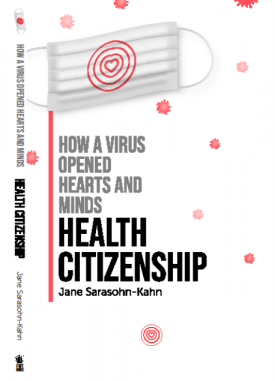
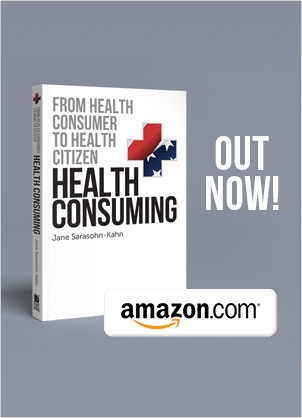
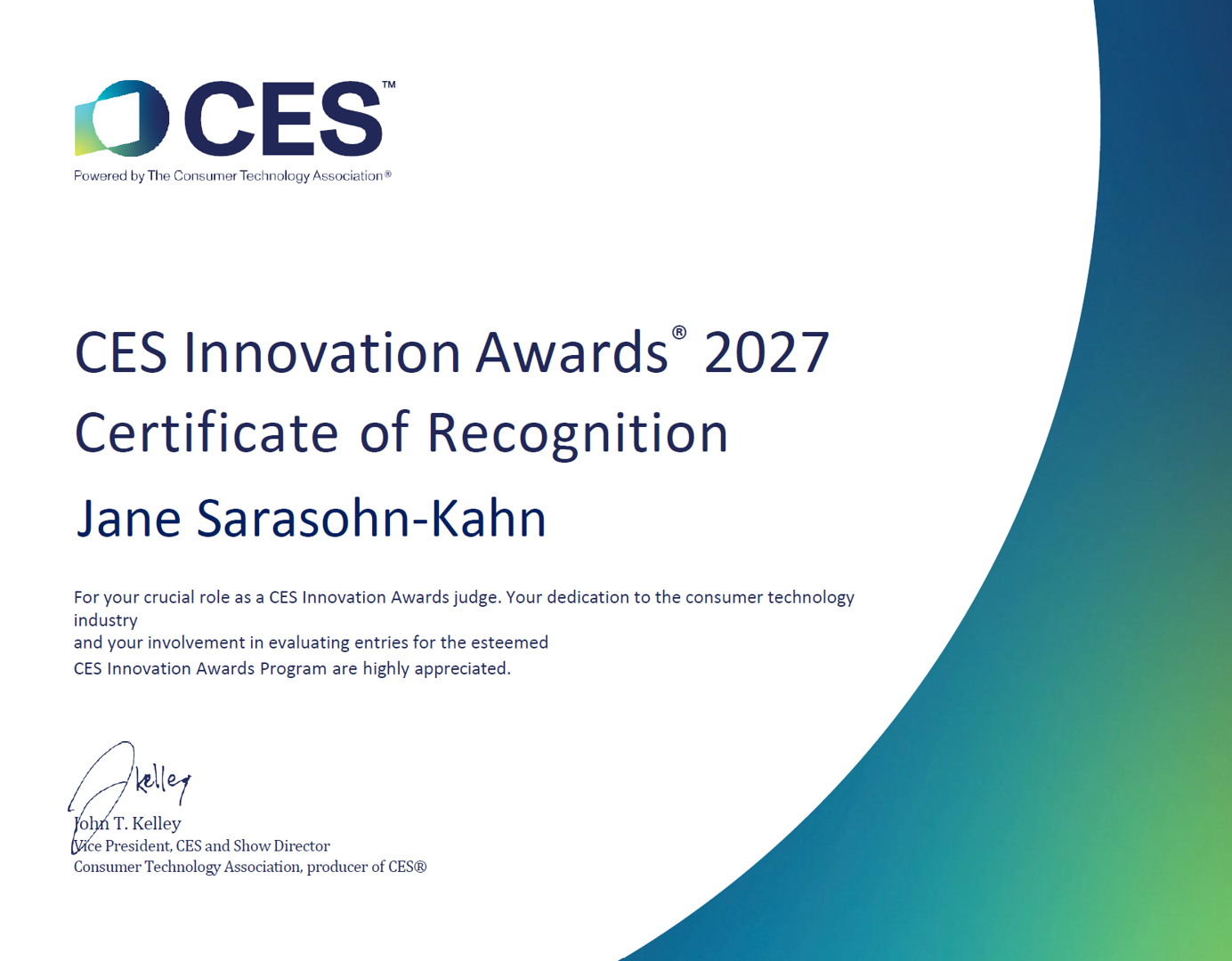 It was an honor to be a CES Innovation Awards 2027 judge once again for the digital health category. Based on the new-new things I reviewed in the process, we'll be seeing some amazing developments that should have positive impacts on peoples' health and well-being, from head and brain to toe. Viva Las Vegas, as usual, right after New Year January 2027!
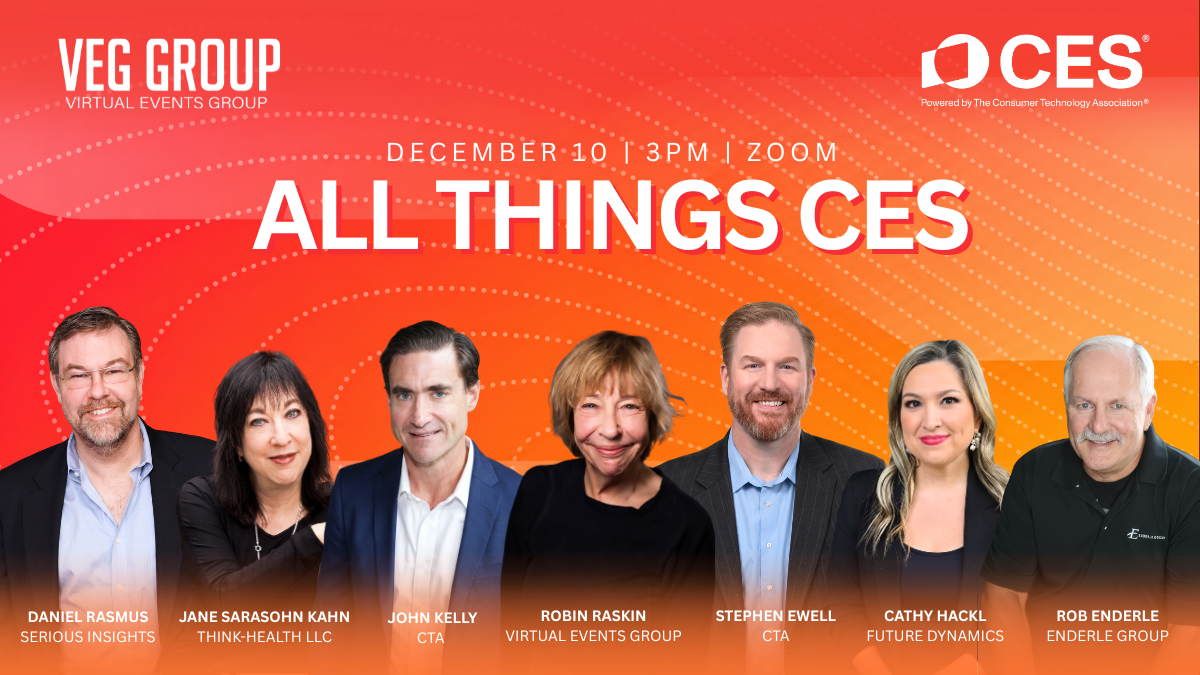 January 2027 is in our sights, and that means we're making plans for #CES2027. I've attended the largest consumer electronics show for nearly 20 years, tracking the evolution of digital health which enables people for greater self-care and health agency and literacy. I'm looking forward to collaborating on this webcast with fellow CES experts in their fields to brainstorm what we expect in this "All Things CES" Zoom session organized by the great Robin Raskin and the Virtual Events Group on December 10.
 Jane joined host Dr. Geeta "Dr. G" Nayyar and colleagues to brainstorm the value of vaccines for public and individual health in this challenging environment for health literacy, health politics, and health citizen grievance. Click onto the Pfizer Value of Vaccines site and you can watch four episodes covering the challenges with adult vaccination, the employer and health plan member's journey to vaccination, reimbursement, and collaborating for proactive prevention.