


Expect Double-Digit Rx Cost Growth to 2020 – Implications for Oncology
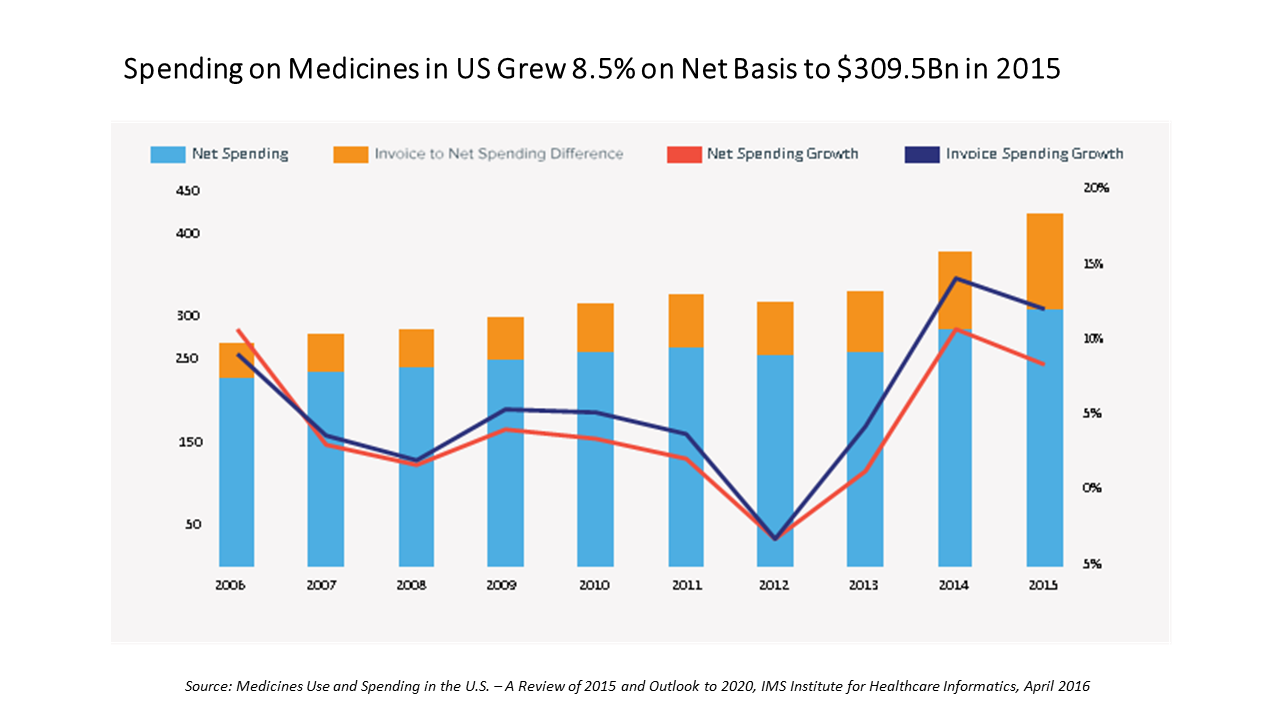
In the U.S., spending on prescription medicines reached $425 bn in 2015, a 12% increase over 2014. For context, that Rx spending comprised about 14% of the American healthcare spend (based on roughly $3 trillion reported in the National Health Expenditure Accounts in 2014). We can expect double-digit prescription drug cost growth over the next five years, according to forecasts in Medicines Use and Spending in the U.S. – A Review of 2015 and Outlook to 2020 from IMS Institute of Healthcare Informatics. The biggest cost growth driver is specialty medicines, which accounted for $151 bn of the total Rx spend
Digitizing Self-Healthcare with Google, Pfizer, Under Armour, Walgreens and WebMD
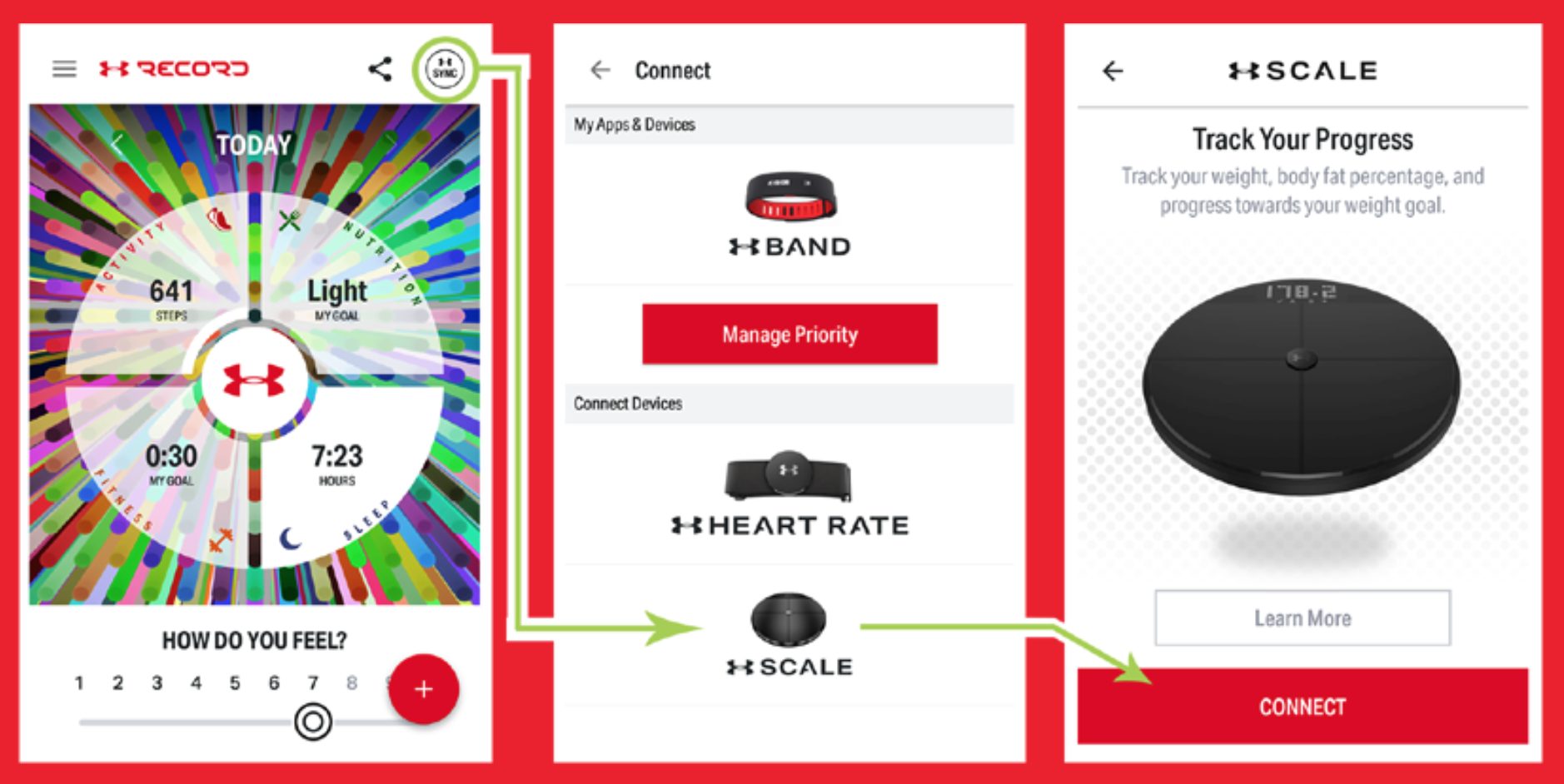
How can digital technologies enable self-healthcare in novel ways? This was the theme of a meeting sponsored by Pfizer Consumer Healthcare and hosted by Google, with the title, “Advancing Consumer Health through New Technology and Next Generation OTC Healthcare” held on 12th April 2016 at Google offices in Manhattan’s Chelsea neighborhood. Pharmaceutical brand drugs switching to over-the-counter packaged goods, the Cellscope Otoscope used by parents checking their young children’s earaches, connected shoes and earbuds for athletic enhancement, and omni-channel retail shopping….these are a few of the signals we see emerging to enable consumers’ to drive healthy behaviors, wellness and self-healthcare. Speakers
Generation Gaps in Health Benefit Engagement
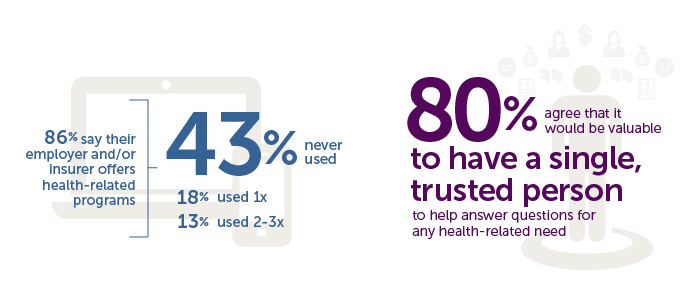
Older workers and retirees in the U.S. are most pleased with their healthcare experiences and have the fewest problems accessing services and benefits. But, “younger workers [are] least comfortable navigating U.S. healthcare system,” which is the title of a press release summarizing results of a survey conducted among 1,536 U.S. adults by the Harris Poll for Accolade in September 2015. Results of this Accolade Consumer Healthcare Experience Index poll were published on April 12, 2016. Accolade, a healthcare concierge company serving employers, insurers and health systems, studied the experiences of people covered by health insurance to learn about the differences across age
Paper and Fax, Not EHRs or Portals, Are Popular for Health Data Sharing
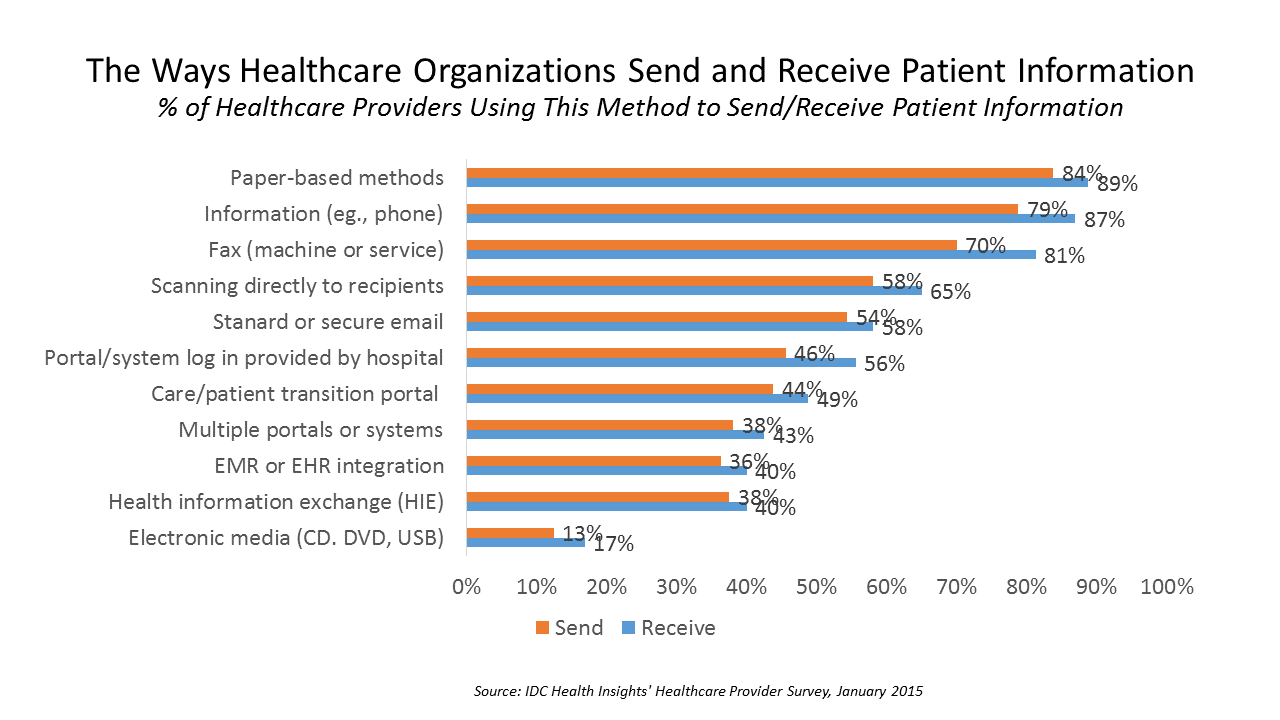
Faxing in health care ranks higher in patient data information sharing than using secure email, online portals, health information exchange (HIE), or leveraging electronic health records. Welcome to the American healthcare system in 2016, as described in a market spotlight published by IDC, The Rocky Road to Information Sharing in the Health System. IDC’s survey research among healthcare providers forecasts the “rocky road” to information sharing. That rocky road is built for medical errors, duplication of services, greater healthcare costs, and continued health il-literacy for many patients. “The holy grail of interoperability — lower-cost, better-quality care with an improved experience for
Patient Engagement – Secret In The Healthcare Sauce

Patient engagement is the new imperative in health care, writes Editor-in-chief Alan Weil in his introduction to the April 2016 issue of Health Affairs. It is appropriate and right that Judith Hibbard of the University of Oregon served as the theme adviser for the issue: she’s the innovator of the Patient Activation Measure and has frequently published her research in Health Affairs. Her own bottom-line: that the higher the patient activation, the less health care costs the health plan. (See a recent post on her research here on Health Populi). This issue of Health Affairs is a comprehensive primer on the
It’s World Health Day: Stay Super, Act Local
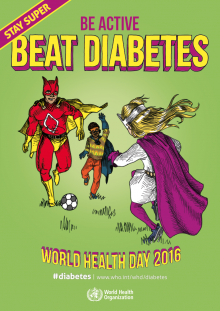
April 7 is World Health Day, and the World Health Organization (WHO) has named #diabetes the big public health challenge for 2016. What’s striking about this year’s World Health Day is the “Stay Super” public health ad campaign that WHO has developed featuring figures of super-people. THINK: Superman and Wonderwoman meet Doctors Welby, Kildare, and McDreamy. I’ve included several of the posters in the blog today to show how engaging health messaging works well when it works. The materials can be downloaded at this link. This week also saw the publication of America’s Health Rankings, spotlighting the impact of unhealthy behaviors.
Healthcare Vs New Entrants: A $1.5 T Problem
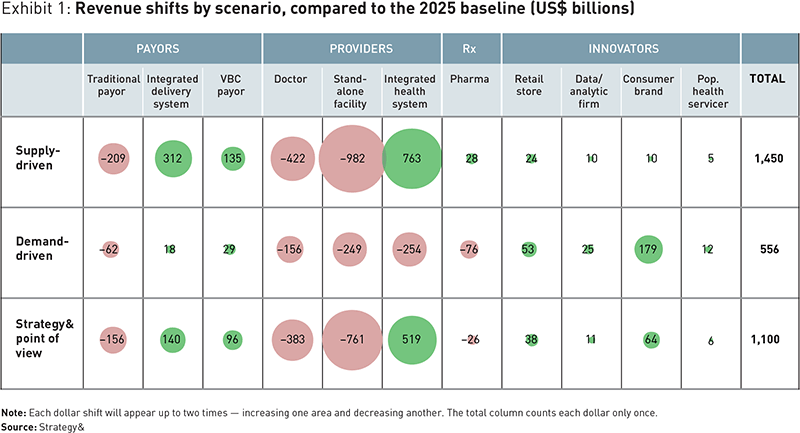
There’s an annual $1.5 trillion in revenues for the legacy healthcare system at stake by 2025, at risk of transferring to new entrants keen to please consumers, streamline physician practices, and provide new-new health insurance plans. A team from PwC has characterized this challenge in their strategy+business article, The Coming $1.5 Trillion Shift in Healthcare. Based on their survey of healthcare industry stakeholders and analyzing their economic model, the PwC team developed three scenarios about the 2025 healthcare market in the U.S. These are supply-driven, demand-driven, and equilibrium. The exhibit details each of these possible futures across various industry stakeholder
Honoring the Doctor-Patient Relationship
March 30 this week was National Doctors Day, which was proclaimed a national celebration by President George Bush in 1991. But as I’ve written through this week here on Health Populi, doctors may enjoy prestige on the outside, but they’re hurting on the inside — both economically in medical/business practices, and emotionally in their personal career-lives. Patients tend to like, even love, their personal physicians based on years of consumer polls on the topic (usually themed, “love my own doctor, hate the health care system”). But physicians and their patients aren’t on the same page, literally, when it comes
People Want Healthcare Sherpas
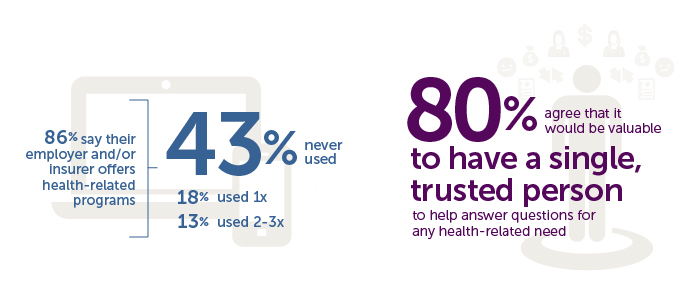
8 in 10 Americans would like one trusted person to help them figure out their health care, according to the Accolade Consumer Healthcare Experience Index Poll, conducted by The Harris Poll. The study gauged how Americans feel about their healthcare, especially focusing on employer-sponsored health insurance. One-third of people (32%) aren’t comfortable with navigating medical benefits and the healthcare system; a roughly percentage of people aren’t comfortable with their personal knowledge to make financial investments, either (35%). Buying a car, a home, technology and electronics? Consumers are much more comfortable shopping for these things. Consumers say that the most onerous
The Patient-Physician Experience Gap
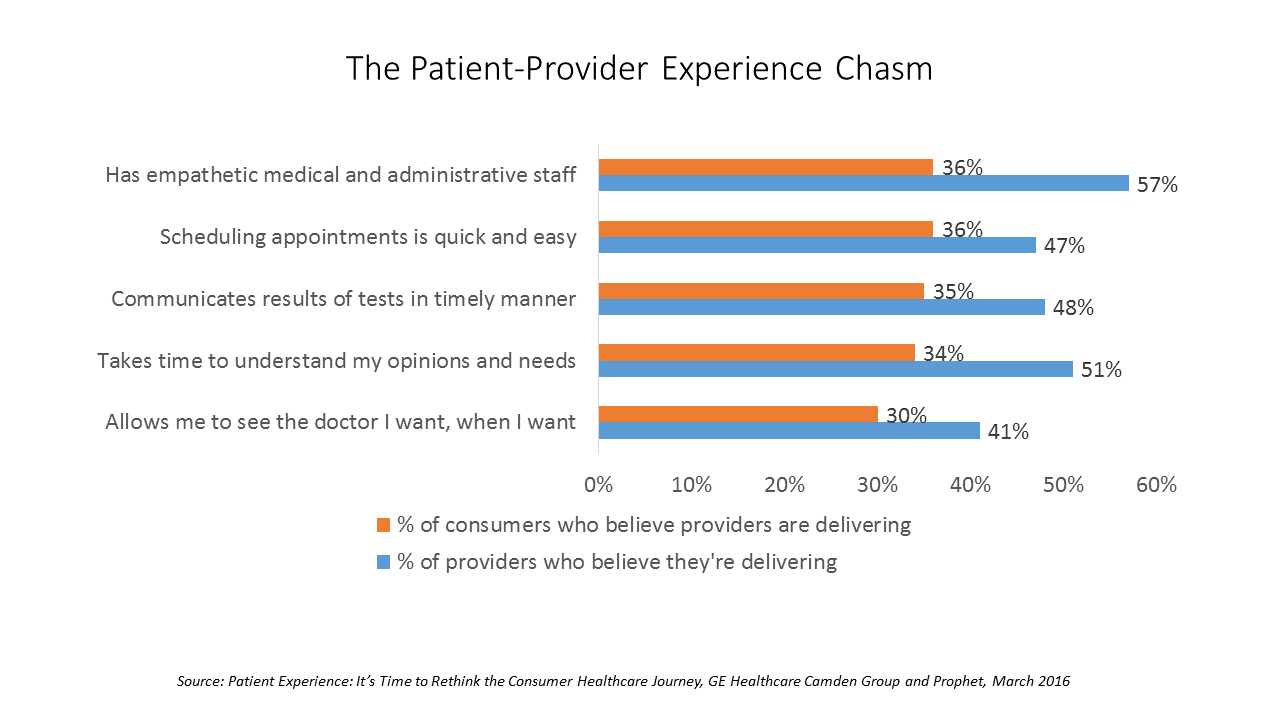
As patients continue to grow health consumer muscles, their ability to vote with their feet for health care services and products grows. That’s why it’s crucial for health care providers to understand how patients perceive their quality and service levels, explained in Patient Experience: It’s Time to Rethink the Consumer Healthcare Journey, a survey report from GE Healthcare Camden Group and Prophet, a brand and marketing consultancy. 3 in 4 frequent healthcare consumers say they are frustrated with their services. One-half of less-frequent patients are frustrated. Patients and physicians are on different pages when it comes to evaluating the health care
Consumers’ Growing Use of New Retail Health “Doors”
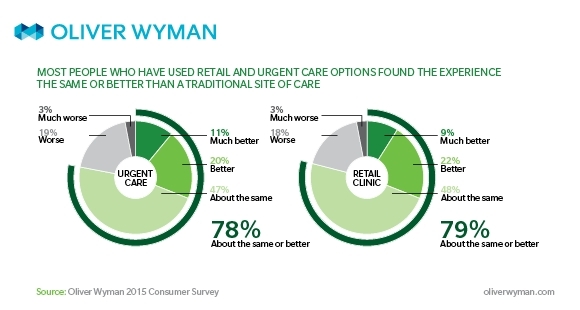
In the growing era of consumer-driven health, a growing list of options for receiving care are available to consumers. And people are liking new-new sites of care that are more convenient, cheaper, price-transparent, and digitally-enabled. Think of these new-new sites as “new front doors,” according to Oliver Wyman in their report, The New Front Door to Healthcare is Here. The traditional “doors” to primary and urgent care have been the doctor’s office, hospital ambulatory clinics, and the emergency room. Today, the growing locations for retail clinics and urgent care centers are giving consumers more visible and convenient choices for seeking
The Rise and Rise of (Specialty) Prescription Drug Prices
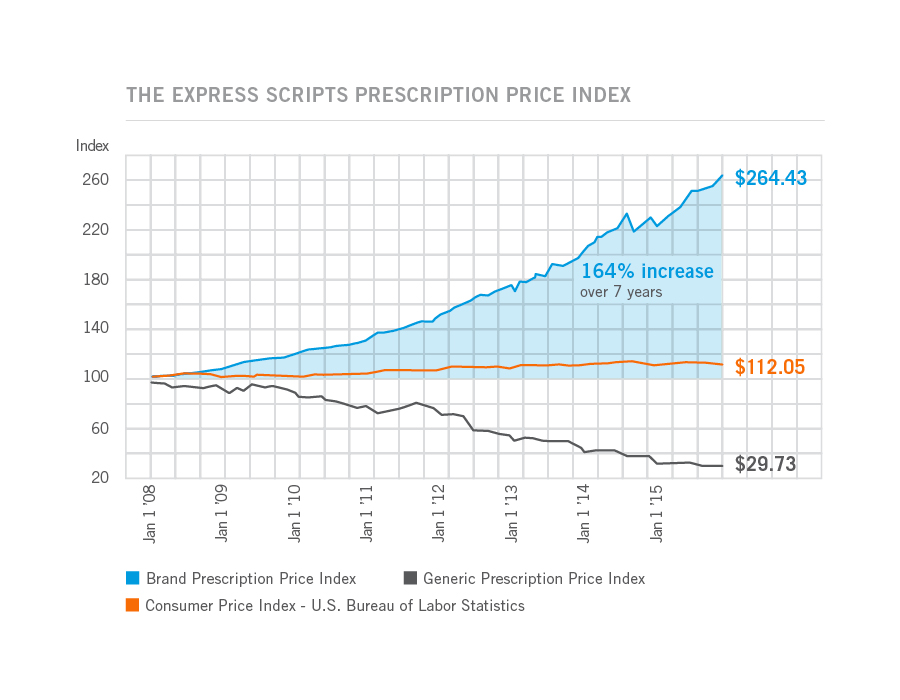
Prices for the most commonly used branded prescription drugs grew from a base index of $100 in 2008 to to $264 in 2015, based on the Express Scripts 2015 Drug Trend Report. This is illustrated by the upwardly-sloping blue line in the chart. In contrast, the market basket of the most commonly used generic drugs fell from the $100 index in 2008 to $29.73, shown by the declining black line in the graph. The $112.05 is calculated from a market basket of commonly purchased household goods which cost $100 in 2008, a relatively flat line which puts the 264% rise in
The Growth of Digital Patient Engagement
9 in 10 people in the U.S. use some form of digital technology or electronic tools for health management, Accenture found in the company’s 2016 Consumer Survey on Patient Engagement. Younger people (18-34) tend to favor wearable technology, apps and social media for health. More older people (age 65-74) mine electronic health records (EHRs) for personal health data and more likely use tech for remote consultations with care providers. Overall, the percent of U.S. consumers accessing their EHR data grew by over 50% between 2014 and 2016, from 27% to 45% of people doing so, with older people indexing higher
The Link Between Eating and Financial Health

People who more consistently track their calories and food intake are more likely to be fiscally fit than people who do not, suggesting a link between healthy eating and financially wellness. I learned this through a survey conducted in February 2016 among 4,118 people using the Lose It! mobile app, which enables people to track their daily nutrition. Some 25 million people have downloaded Lose It! The app is one of the most consistently-used mobile health tools available in app stores. The Rutgers School of Environmental and Biological Sciences has explored the financial impact of improved health behaviors, asserting that,
Digital Food
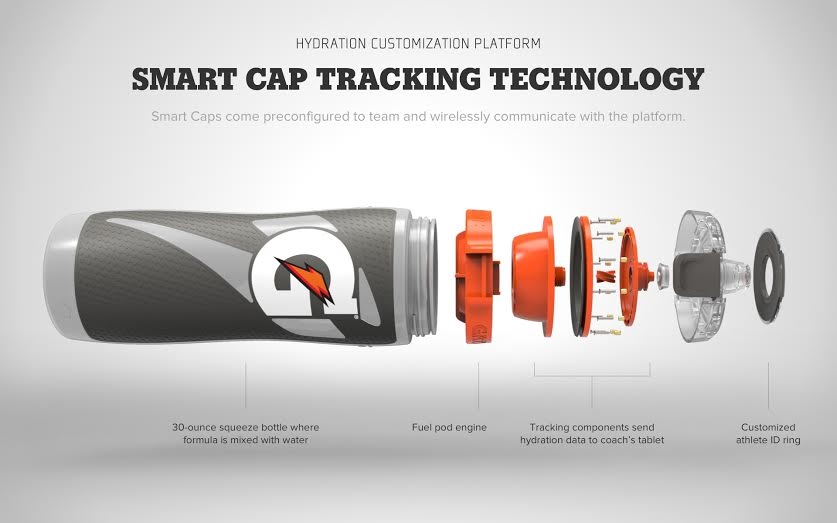
When I say “Fitbit,” you may think, “digital health.” When I mention “Gatorade,” “Nestle,” and “Dannon,” you might think, “drink,” “chocolate,” and “yogurt.” But soon, the phrase “digital health” will come to mind. That’s because a growing list of food manufacturers is looking to digital technologies to bake (or cook, blend, or mix) health into their value propositions. “Gatorade Taps Into Tech-Thirsty Consumers” is an article published in today’s Wall Street Journal, page B1 in the Business & Tech section of the newspaper. Mike Estrel writes that Gatorade is going high tech, working on a “smart cap” bottle with a microchip
Being a Woman is a Social Determinant of Health – Happyish International Women’s Day

Today is International Women’s Day. Being a woman is a social determinant of health (for the worse). To mark the occasion of the Day, The International Labour Organization (ILO) published a report on women and work yesterday, finding that in the 178 countries studied, inequality between women and men persists across labor markets. And while there’s been progress in women’s education over the past twenty years, this hasn’t resulted in women advancing career paths and wage equality. It struck me this morning, reading both (paper versions of) the Wall Street Journal and the Financial Times that the latter had two FT-sponsored ads marking
Health Consumers’ Use of Apps Is Up, Accenture Finds
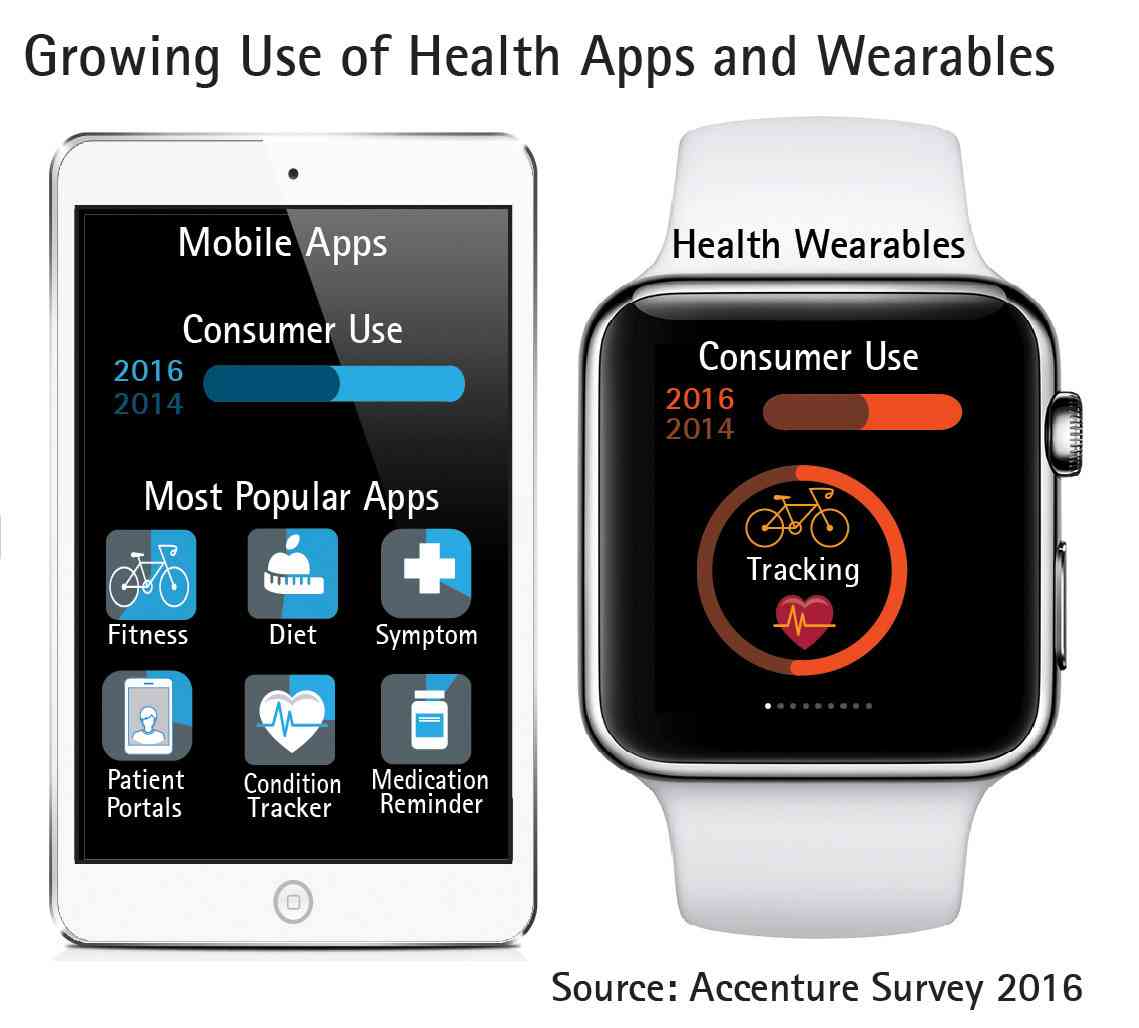
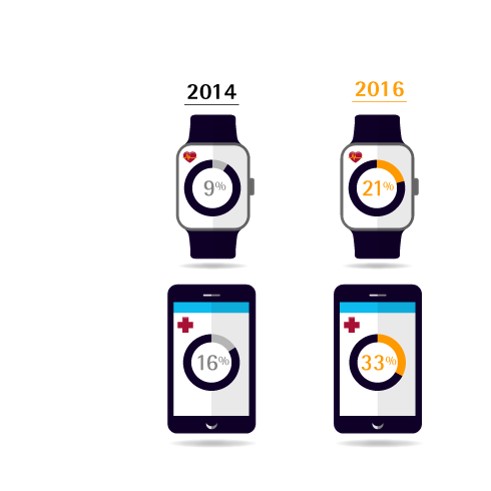
One in 3 consumers is using mobile apps for health, doubling from 16% in 2014 to 33% in 2016, according to a survey from Accenture released during HIMSS 2016 conference. The proportion of people donning a wearable device for health more than doubled, from 9% to 21% between 2014-15. Part of this response is due to more physicians asking their patients — consumers — to adopt a wearable to track a health or fitness metric. One in 5 consumers said their doctor “prescribed” the use of a wearable, and 76% of these people followed the doctor’s recommendation. Most consumers and
Yin and Yang: Doctors and Patients’ Bipolar Views on EHR Access
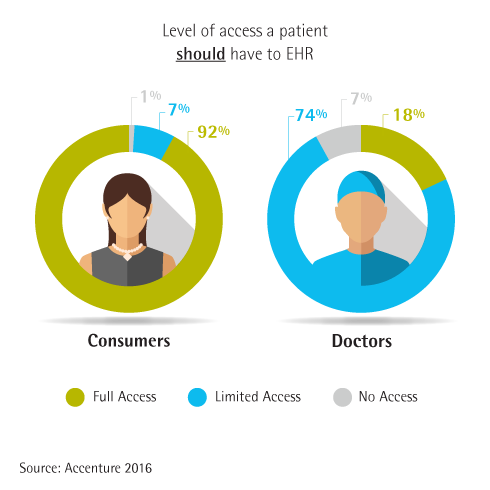
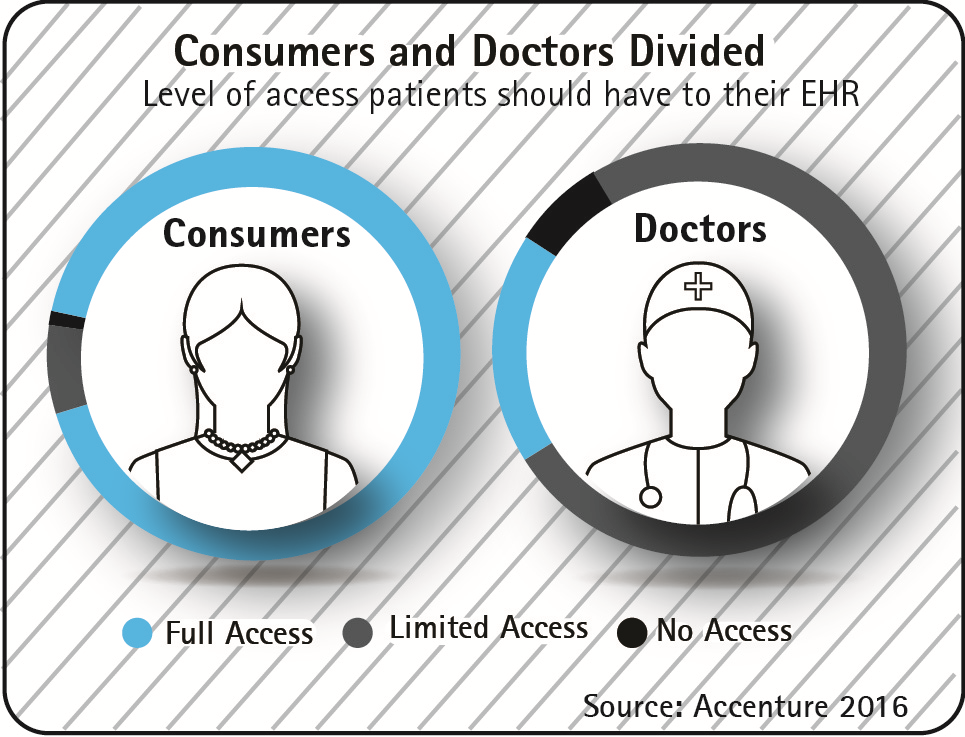
Patients are from Mars and Doctors from Venus when it comes to their views on whether consumers should have full access to their electronic health records (EHRs), according to a survey from Accenture released this week at the 2016 meeting of the HIMSS conference in Las Vegas. The vast majority of consumers are keen to access their full EHR, compared to a majority of doctors who advocate for limited access, as the circle diagram dramatically illustrates. The “old days” of patient information asymmetry — with a paper-based folder that got locked up in a health records cabinet — are gone.
Behavioral Economics in Motion: UnitedHealthcare and Qualcomm
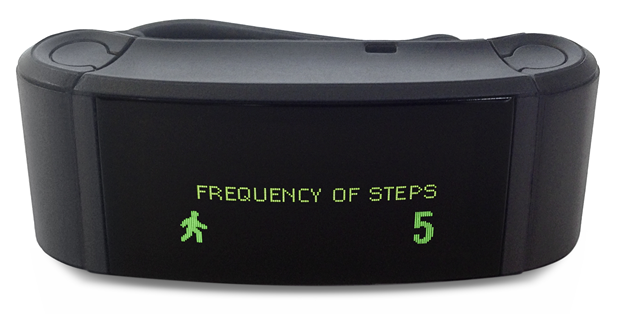
What do you get when one of the largest health insurance companies supports the development of a medical-grade activity tracker, enables data to flow through a HIPAA-compliant cloud, and nudges consumers to use the app by baking behavioral economics into the program? You get Motion from UnitedHealthcare, working with Qualcomm Life’s 2net cloud platform, a program announced today during the 2016 HIMSS conference. What’s most salient about this announcement in the context of HIMSS — a technology convention — is that these partners recognize the critical reality that for consumers and their healthcare, it’s not about the technology. It’s about
Tying Health IT to Consumers’ Financial Health and Wellness
As HIMSS 2016, the annual conference of health information technology community, convenes in Vegas, an underlying market driver is fast-reshaping consumers’ needs that go beyond personal health records: that’s personal health-financial information and tools to help people manage their growing burden of healthcare financial management. There’s a financial risk-shift happening in American health care, from payers and health insurance plan sponsors (namely, employers and government agencies) to patients – pushing them further into their role as health care consumers. The burden of health care costs weighs heavier on younger U.S. health citizens, based on a survey from the Xerox Healthcare
The New-New Health Fair – Care Goes Shopping
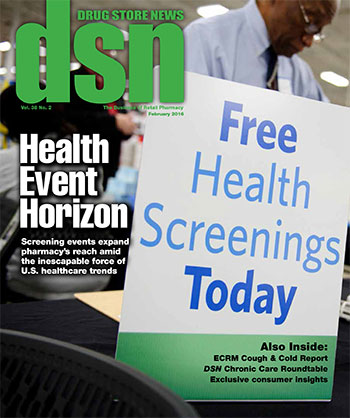
As consumers’ growing financial skin in the health care game compels them to seek care in lower-cost settings, the pharmacy business recognizes the opportunity to provide healthcare services beyond the core business of filling prescriptions. This month, Drug Store News (DSN) published a special section called which profiles several pharmacy companies’ expanding reach into retail health – in particular, re-defining the concept of the “health fair.” A health fair is “an educational and interactive event designed for outreach to provide basic prevention and medical screening to people in the community,” according to the latest Wikipedia definition. But the health fairs described
Good Design Can Drive Trust in Healthcare
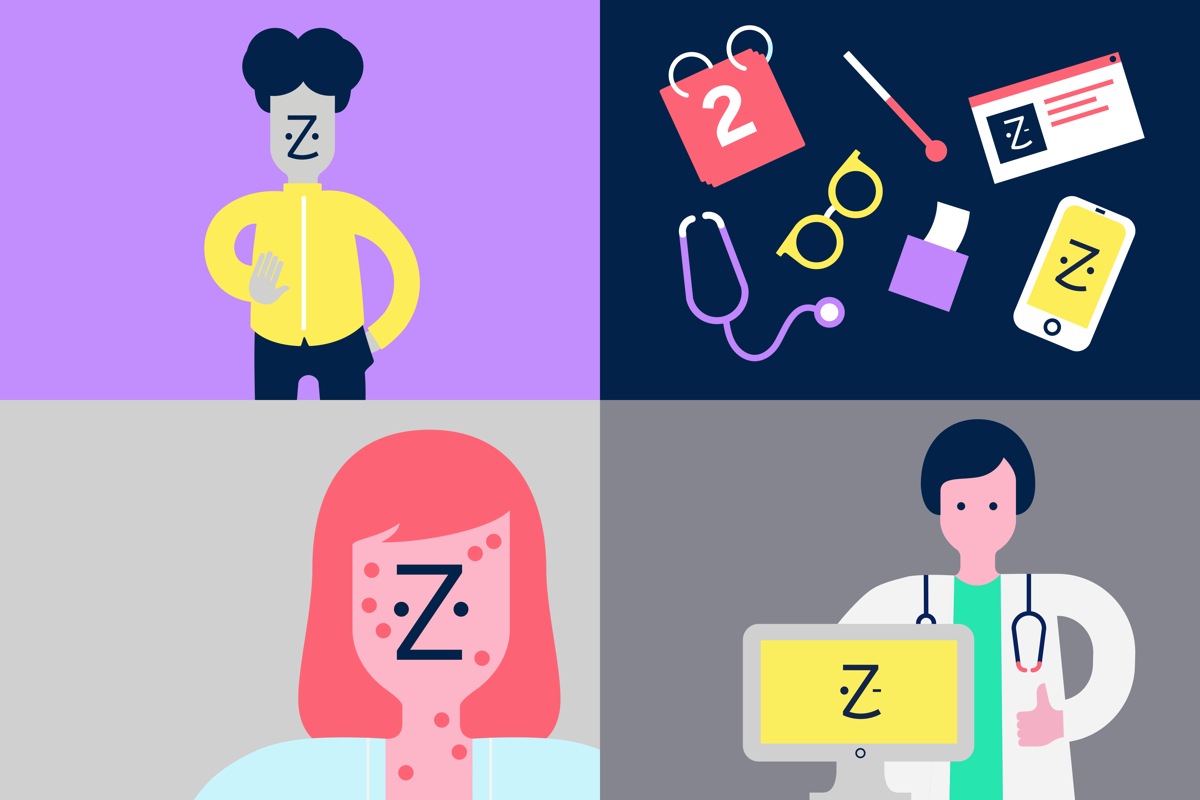
“The best healthcare must involve kindness and instill trust,” reads the title of a Huffington Post UK article written by David Haslam, Chair of NICE, the National Institute for Health and Care Excellence. NICE (an appropriate acronym for the article’s sentiment) is in fact not an institution known for charity or do-goodness, but is the organization that is charged with assessing the cost-effectiveness and -benefit of medical innovations — drugs, devices, procedures and processes. Haslam writes that kindness and trust connote “care, community and friendship.” These factors have a profound impact on health outcomes, Haslam has observed. Trust drives health
Beauty Meets Pharma in Retail Health – At Coin in Florence
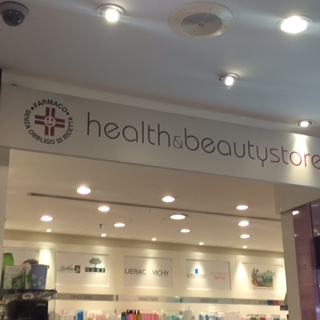
All over the world, people define their health and wellness across many dimensions…physical, mental, financial, and appearance. In Florence, Italy, I happened upon a riff on this last component on “look good, feel good” at the Coin Department store located on Via Del Calzaiuoli in central Firenze. Welcome to Coin’s Health&Beauty Store. The two photos tell a story about health, where we live, work, play, and shop, the mantra for public health focused on the social determinants of health beyond healthcare. Here at Coin, adjacent to the holistic brands of Clarins and other luxury labels, is a pharmacy along with
Health Consumers Look For Cost and Convenience
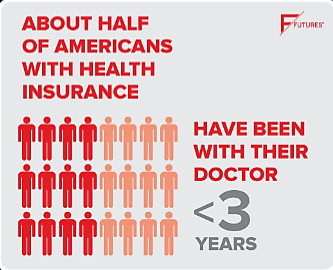
In a growing on-demand society, coupled with a burden of more out-of-pocket health care costs, U.S.health consumers tend to vote with their pocketbooks for healthcare based on cost and convenience, at least when it comes to prescription drug demand, according to the Finn Futures Health Poll conducted by Finn Partners. The survey was conducted in November 2015 among 1,000 U.S. online adults. 51% of consumers have been with their current health plans and primary care physicians for three years or less, which Finn Partners sees as a sign that brand loyalty isn’t a top motivation for health consumers signing on
Improving the Patient Experience in Legacy Health Systems – My Start-Up Health Interview
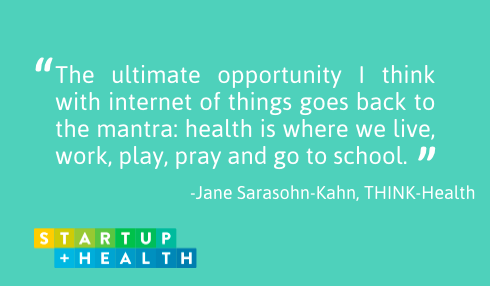
The so-called legacy healthcare system are the incumbents in American health care — hospitals, physician practices, pharma, health plans, and other organizations that have long-served and been reimbursed by traditional volume-based payment. Patients, now morphing in to health consumers, look to these stakeholders to provide new levels of service, accessibility, convenience, transparency and value — the likes of which people find in their daily life in other market sectors. Those consumer demands are pressuring the health system as we know it in many new ways, which I discussed with Unity Stoakes, Co-Founder of Startup Health, at the Health 2.0 Conference in
Welcome to the Era of Personal Health IT – a #HIMSS16 Preview
People – patients, caregivers, health consumers all – have begun to use the digital tools they use in daily life for booking taxis, managing money, seeking information — for their health. This is the growing adoption of Personal Health IT (PHIT), and it’s a growing aspect of the annual HIMSS Conference that the planet’s health IT folk will attend from 29th February until 4th March in Las Vegas. I talk about the phenomenon of PHIT and #HIMSS16 in The State of Health IT to Engage the New Health Consumer, a summary of the driving forces of the trend and opportunities
My Body, My Self – With My Physician, Say Patients
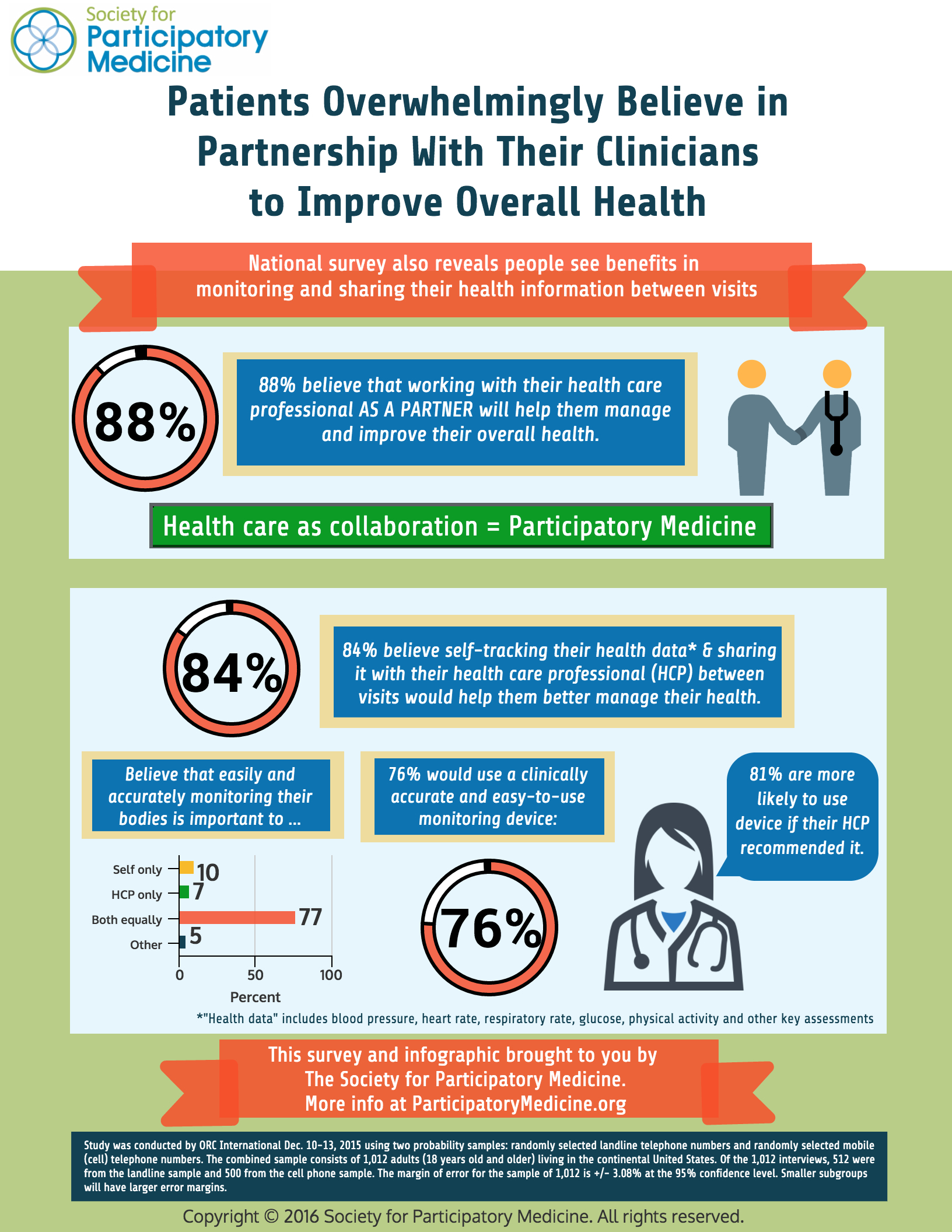
9 in 10 people in the U.S. believe working with their health clinician as a partner will help them better manage their overall health, according to a survey conducted for The Society for Participatory Medicine. Consumers’ majority call-out for shared decision-making with health care professionals also extends to their self-tracking health data — for example, via activity trackers, digital glucometers for blood sugar, technologies for blood pressure, and food logging apps. 84% of people said that sharing their personal self-tracking health data with clinicians between visits would also help people manage health. That clinician’s involvement is very important to health
Health Consumers Happy With Doctor Visits, But Want More Technology Options
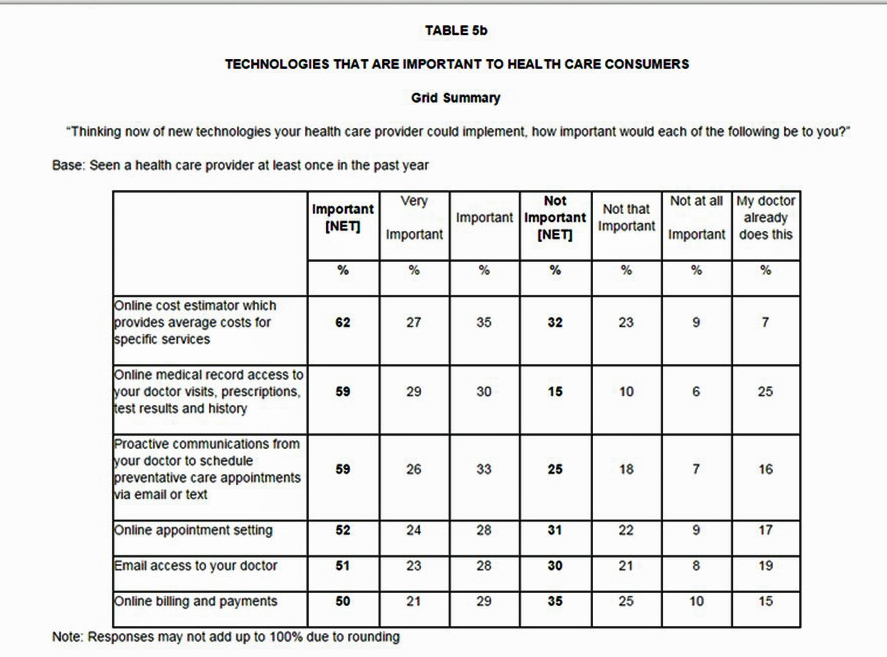
9 in 10 adults in the U.S. have visited a doctor’s office in the past year, and over half of these patients have been very satisfied with the visit; 35% have been “somewhat” satisfied. Being a highly-satisfied patient depends on how old you are: if you’re 70 or older, two-thirds of people are the most satisfied. Millennial or Gen X? Less than half. What underlies patient satisfaction across generations is the fact that younger people tend to compare their health care experience to other retail experiences, like visiting a bank, staying at a hotel, or shopping in a department store.
Consumers Take Better Preventive Care of Pets Than Themselves, CIGNA Finds
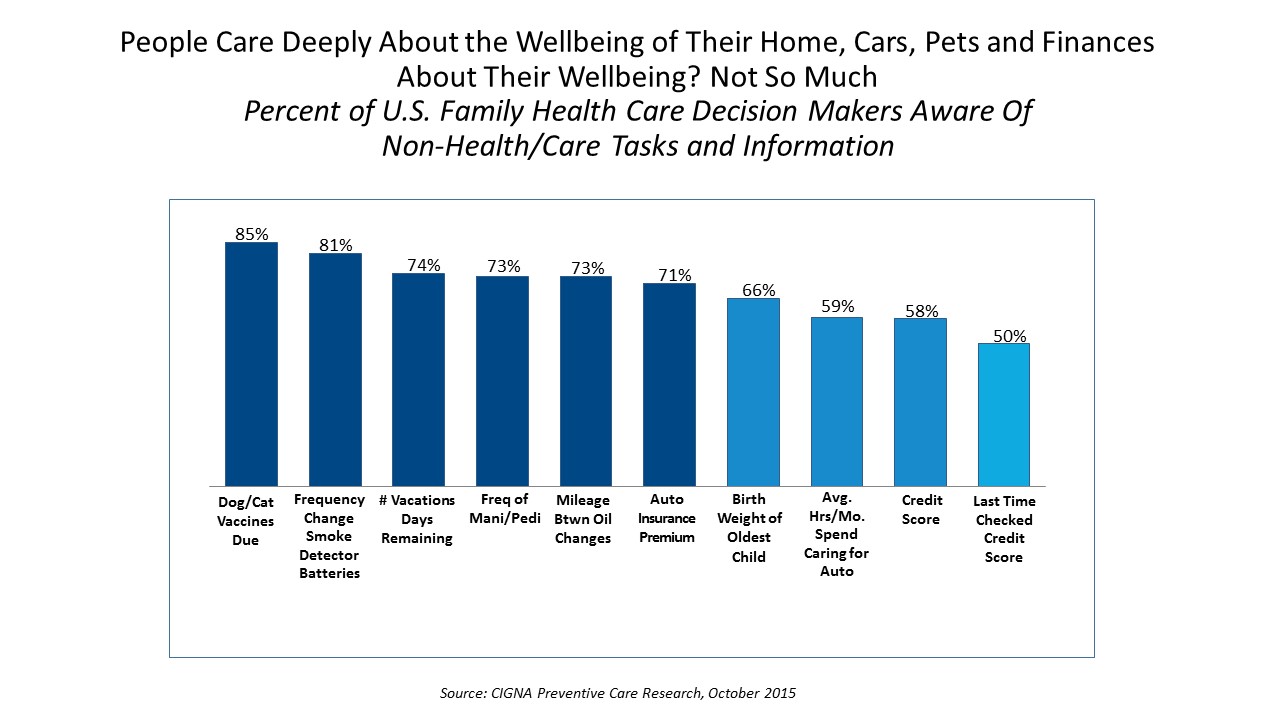
Nine in 10 pet owners know when their dog or cat is due for their shots. Eight in 10 women know the frequency with which they get manicures and pedicures. 80% of men know the mileage between old changes. But only 50% of family health care decision makers know their blood pressure, and only 20% know their biometric numbers like cholesterol and BMI. Americans are great at doing preventive care for their pets and automobiles; but not so much for their own bodies and health, finds the report CIGNA Preventive Care Research, a survey of 1,000 U.S. consumers between 25 and
Health Consumers Grow Clinical and Financial Engagement Chops
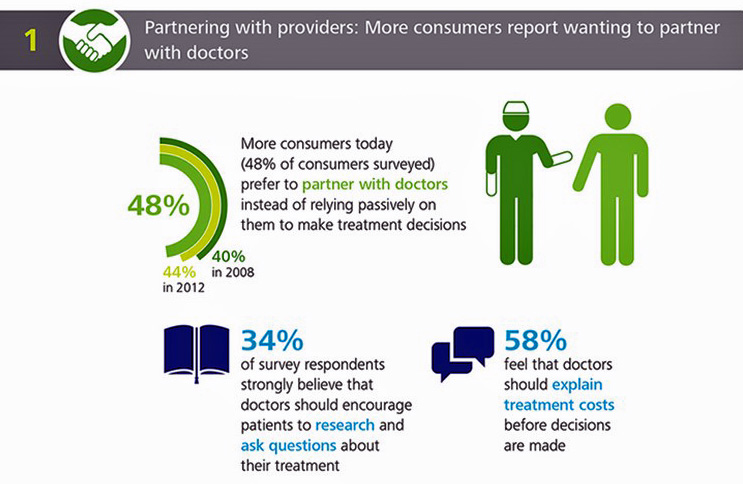
About one-half of consumers want to partner with doctors instead of allowing their physicians to make treatment decisions for them, according to a report from the Deloitte Center for Health Solutions, Health care consumer engagement: No “one-size-fits-all” approach. 1 in 4 people (25%) want to make treatment decisions themselves. Call that clinical health engagement. But even more people, 6 in 10, want to be financially-health engaged: 58% believe doctors should explain treatment costs before decisions are made, shown in the first chart. Most consumers would be comfortable talking about health care costs with doctors, and believe doctors should provide and explain the
The 2016 THINK-Health Health/Care Forecast
It’s time to get the tea leaves out and mash up trends in my world of health, health care, technology, policy and people for 2016. We’ll start with the central player: people, consumers, patients, caregivers all. Health consumerism on the rise. People – call us patients, consumers, caregivers – will take on even more financial and clinical decision making risk in 2016. Growing penetration of high-deductible and consumer-driven health plans will push (not just nudge) people into the role of health care consumers, and the emerging businesses and programs serving the transparency market for price and quality will gain traction
Connectivity Is A Social Determinant of Health
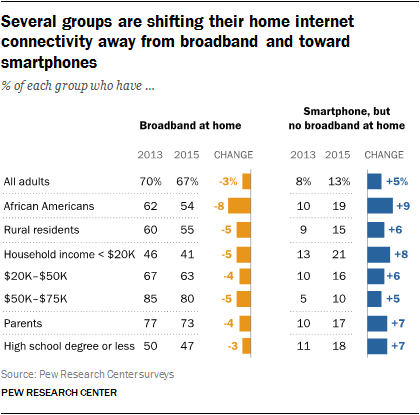
It’s Christmastime, so I’m thinking about connections. “Connectivity” can be social (offline and online), which is indeed a health factor (see Christakis and Fowler on being Connected). But the kind of connectivity to which I’m referring is broadband, WiFi, the kind most often associated with data plans, cable to the home, and free WiFi at your favorite coffee or fast food joint. That kind of connectivity is also a social determinant of health, and is increasingly becoming so for all people. Yet as peoples’ need for internet connectivity is fast growing, especially for health, home broadband connectivity has reached a
The Magic of Getting Fit Starring Penn Jillette (With Help From Withings)
Health is where we live, work, play, pray and have fun. And if you’re Penn Jillette, the magician who collaborates with Teller, it took more than sleight of hand or a magic trick to lose 100 pounds — one-third of his body weight. He did it, according to this video, with the help of hard work, and using activity tracking tools from Withings. [youtube https://www.youtube.com/watch?v=EQWCVLvuBzI?rel=0] Unlike many people who quantify themselves for wellness and fitness, Penn did so to avoid having a medical procedure (i.e., the implantation of a stomach sleeve for weight loss) and also to reduce the six
Prescription Drug Costs Will Be In Health Benefits Bullseye in 2016
Prescription drug costs have become a front-and-center health benefits cost issue for U.S. employers in 2015, and in 2016 the challenge will be directly addressed through more aggressive utilization management (such as step therapy and prior authorization), tools to enable prescription intentions like DUR, and targeting fraud, waste and abuse. Consumers, too, will be more financially responsible for cost-sharing prescription drugs, in terms of deductibles and annual out-of-pocket limits, as described in the PBMI 2015-206 Prescription Drug Benefit Cost and Plan Design Report, sponsored by Takeda. The Pharmacy Benefit Management Institute has published this report for 15 years, which provides neutral, detailed survey
The Internet of Healthy Things According to Dr. Kvedar
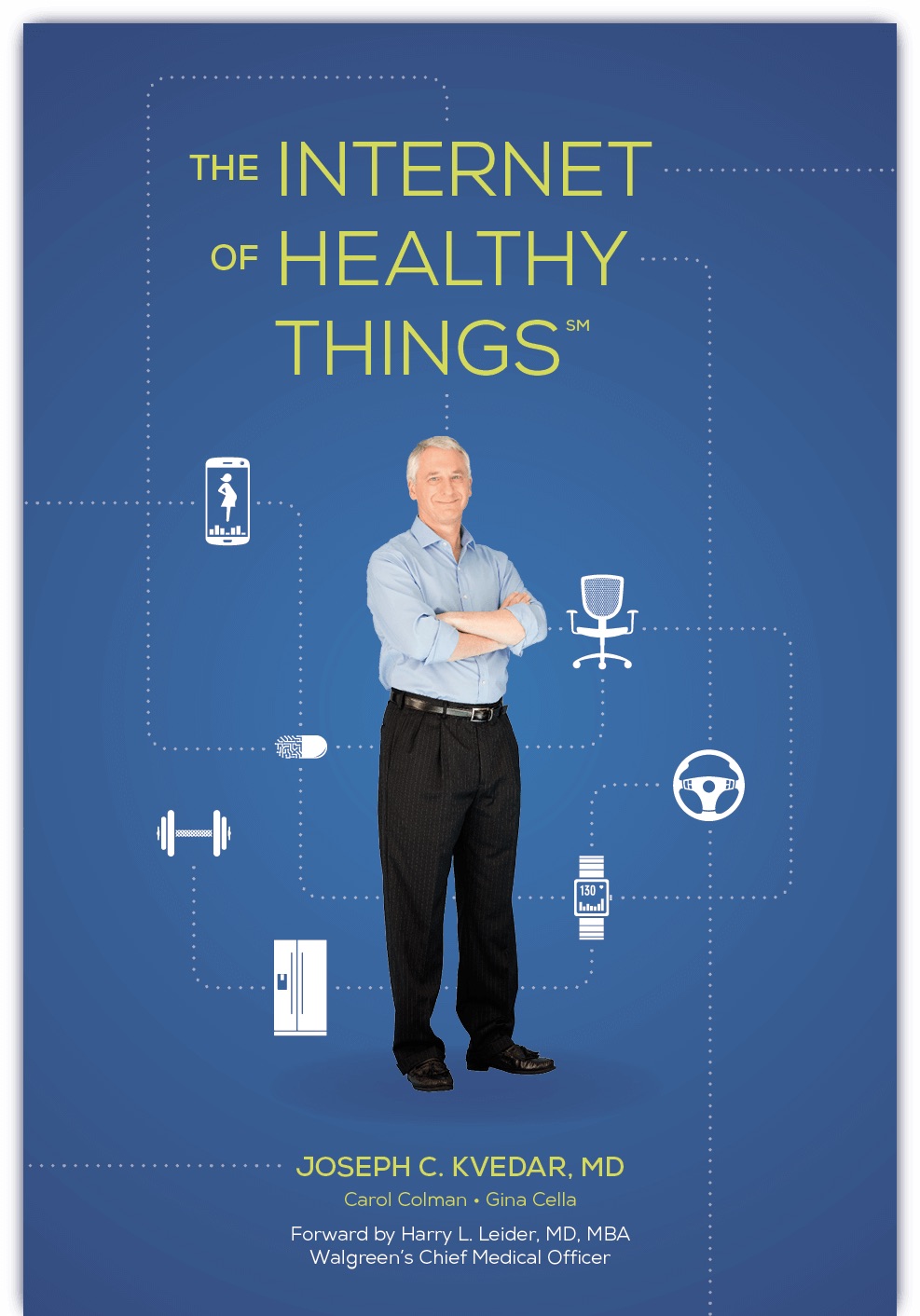
By 2020, according to the World Economic Forum, more than 5 billion people and 30 billion “things” will be connected to the Internet — cars, refrigerators, TVs, washing machines and coffeemakers, among those 5 bn folks’ electronic stuff. But so will medical devices, activity trackers, and a host of sensor-enabled “things” to help people and clinicians optimize health and manage illness. The Internet of Things (IoT) phenomenon, which is already penetrating households with energy management and security applications, is reaching health care. One of the pioneers in this connected health market is Dr. Joseph Kvedar, who leads the Center for
Yes, Virginia, There Really Are Healthcare Consumers: McKinsey
“There’s no such thing as a healthcare consumer. No one really wants to consume healthcare,” naysayers tell me, critical of my all health-consmer-all-the-time bully pulpit. But, touché to my health consumer-critics! I’ve more evidence refuting the healthcare consumer detractors from McKinsey in their research report, Debunking common myths about healthcare consumerism, from the team working in McKinsey’s Healthcare Systems and Services Practice. Their survey research among over 11,000 U.S. adults uncovered 8 myths about the emerging American health consumer, including: Healthcare is different from other industries Consumers know what they want from healthcare and what drives their decisions Most consumers
The Average Price of a New Specialty Drug Exceeds Median U.S. Annual Income; and a Tweet from Pam Anderson
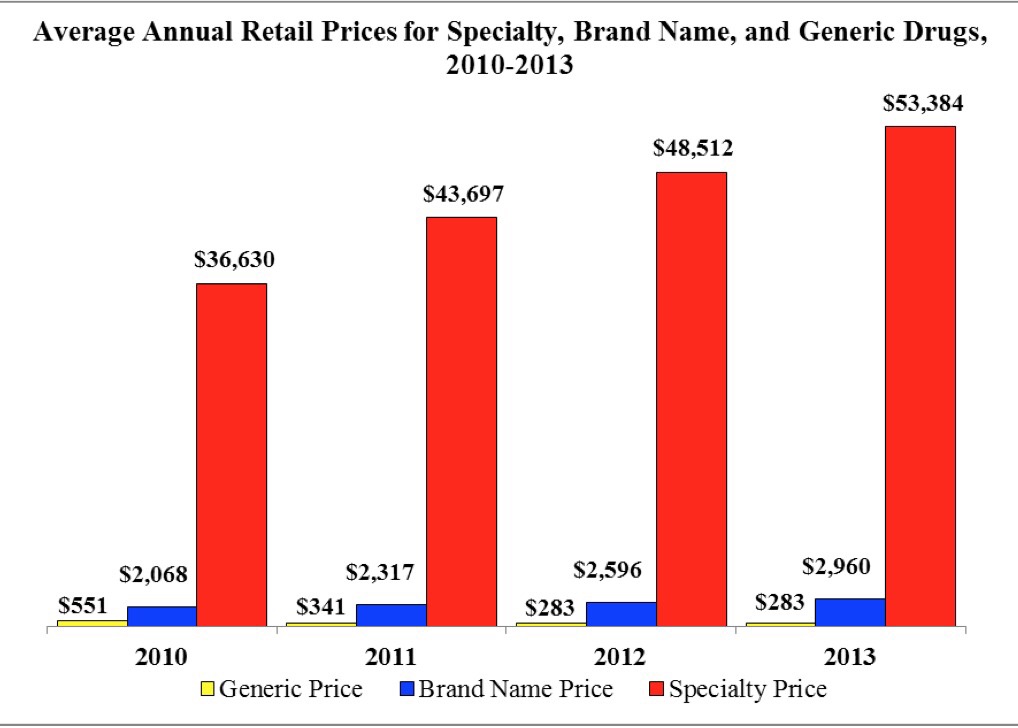
The average price for a specialty drug was $53,384 in 2013; the average household income was $52,250. Thus, even allocating 100% of a family’s annual earnings to pay for a drug wouldn’t stretch far enough to cover it in 2013, nor would it do so today in 2015. This sober health economic artifact comes from the latest Rx Price Watch Report from the AARP, detailing cost trends for prescription drugs across all segments — generics, brands and specialty drugs. Contrast, as well, the $53K for the average specialty drug with the median 2013 Social Security benefit payout of $15,526 and median Medicare
American health citizens hungry for cost controls
Most Americans support price controls on drug and medical device manufacturers, hospitals, and payments to doctors, along with allowing Medicare to negotiate drug prices. U.S. health citizens, now consumers, have been experiencing sticker-shock when it comes to prices on medical bills upon hospital discharge, leaving the doctor’s office, filling a prescription at a pharmacy or receiving a specialty drug recommended for a serious medical condition. The HealthDay/Harris Poll of 5 November 2015 quantifies their observation that Americans Want Bold Steps to Keep Health Care Costs in Check. The topline of the Poll shows that: 73 percent support price controls on
The Telephone Is As Digital As It Gets in Mainstream U.S. Health Care
The phone continues to be the platform technology used in this digital age of health care, according to Better Together: High Tech and High Touch, a survey report sponsored by the Bipartisan Policy Center and the Council of Accountable Physician Practices. Nielsen’s Strategy Health Perspectives project polled 5,014 U.S. adults in June and July 2015 for this study. According to the study sponsors, this is the largest consumer population studied conducted to-date on the topic of digital health use and demand. The first chart illustrates the reality of digital health in the U.S. 2015: that notwithstanding the availability of telehealth,
Health Care Costs Are #1 Pocketbook Issue, and Drug Prices Top the Line Items
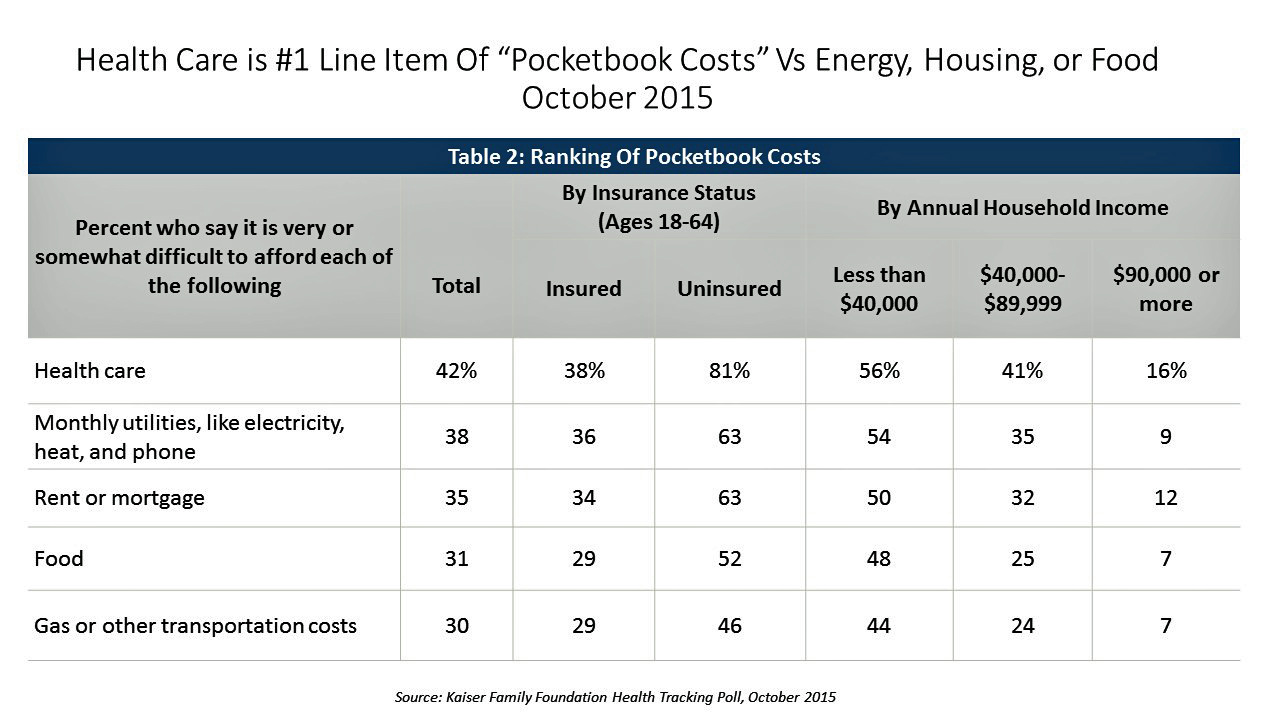
Consumers are most concerned about health care costs among their kitchen table issues, above their ability to afford the utility bill, housing, food, or gas and transportation costs. The October 2015 Kaiser Family Foundation Health Tracking Poll finds 4 in 10 Americans finding it difficult to afford health care, including 16% of people earning $90,000 a year or more. Underneath that worrying healthcare cost umbrella are the price of prescription drugs, which the majority of Democrats, Independents, and Republicans all agree need to be “limited” by government regulation. Ensuring that the public have affordable access to high-cost drugs for chronic conditions
Physical Healthcare Facilities Can Bolster Health Consumerism
Reluctantly accepting the Affordable Care Act, health executives and their architects now see opportunities for re-imagining the hospital and health care services, according to Healthcare Industry Trends, a publication that’s part of the 2015 Building & Development Leadership Series provided by Mortenson, a construction services firm that’s active with healthcare organizations. Mortenson conducted a survey at the 2015 ASHE Planning, Design, and Construction Summit, the results of which were published in this report. The over 300 respondents included healthcare executives, facilities managers, and healthcare architects. Thus the lens on the data in this survey is through the eyes of physical
Palliative Care: Getting End of Life Care (W)right
I lost a best friend last week. His memorial service, held this past weekend, was a celebration of his life. And part of that well-lived life was a very conscious planning of his last days. The Economist published its 2015 Quality of Death Index, a data-driven treatise on palliative care, the very week my dear friend Rick died. This gives me the opportunity to discuss palliative care issues with Health Populi readers through The Economist’s lens, and then in the Hot Points below through my personal context of this remarkable man’s end-of-life choices. The Economist ranks 80 countries on several
Growing Signs Of Consumer Health Engagement, Via Deloitte
A growing desire for shared decision making with doctors. Increasing trust and consumption of health care information online, in social media, and report cards. Reliance on technology for monitoring health adn wellness, and medical conditions. Together, these three signals converge, illustrating a growing sense of consumer engagement among U.S. patients, found in the 2015 Deloitte Center for Health Solutions Survey of US Health Care Consumers. In Deloitte’s research summary, the title states that “No ‘one-size-fits-all’ approach” will work, given diversity among American health consumers. The sickest health consumers, Deloitte notes, have higher levels of health engagement and index higher on
Social Networking Is The New Normal, Pew Finds
Two-thirds of all internet users, and 65% of all adults over 18 years of age, use social networking sites. Social Media Usage: 2005-2015, the latest report from the Pew Research Center, finds social networking is the new normal for people up to 65 years of age. One-third of people over 65 use social networking sites. Peoples’ use of social media impacts every aspect of daily living beyond sharing social updates, from home keeping and political discussions to work, parenting, and managing stress, the Pew research found. Key findings in the report are that: Seniors’ use of social networks rose from
The Fast-Growing Consumer Digital Health Ecosystem – Health 2.0 Day 2
The fastest-growing category of products and services at Health 2.0 is consumer-facing digital health, and a panel of companies demonstrated various flavors of the New Retail Health. One of the most prominent companies featured in Health 2.0’s conferences from the inception has been MyFitnessPal (MFP), a long-time helpful tool I’ve used to manage my own health-life. Under Armour acquired MFP earlier this year, which I covered here in Health Populi. Under Armour’s original mission was to make all athletes better. With the company’s acquisition of MyFitnessPal, Under Armour continued its morphing from a textile and sports gear company to a
More consumers expect a connected health experience
When most patients in the U.S. visit their doctors, they find their medical history missing or incomplete. 1 in 2 American patients say their doctors do not have a complete list of their medications. But the new health consumer expects a connected health experience the likes of which, as consumers, they expect and generally find in their everyday lives. One-half of consumers would prefer to get lab test results, access their medical records, and fill out paperwork from a doctor’s office ahead of a visit online versus via phone or in person. Surescripts conducted a survey with Kelton Global in
Insurance Should Pay For End-of-Life Conversation, Most Patients Say
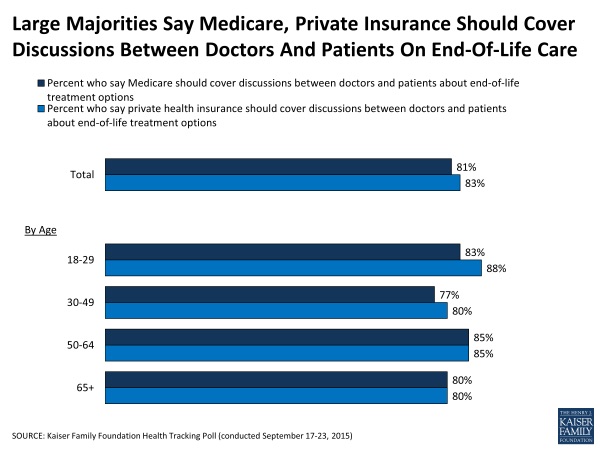
8 in 10 people in the U.S. say that Medicare as well as private health insurance plans should pay for discussions held between patients and doctors about hatlhcare at the end-of-life. The September 2015 Kaiser Family Foundation Health Tracking Poll asks people their opinions about talking end-of-life with their doctors. The vast majority of people support the concept and physicians being paid for holding such conversations in doctor-patient relationship. The question is germane because the Obama Administration has announced plans to pay doctors for office visits to discuss end-of-life (EOL) issues with Medicare patients. There isn’t a huge variation across
Fitbit Means Business When It Comes To Privacy
Fitbit, the company that makes and markets the most popular activity tracker, is getting serious about its users’ personal data. The company announced that it will enter into HIPAA business associate agreements with employers, health plans, and companies that offer workers the devices and the apps that organize and analyze consumers’ personal data. The Health Insurance Portability and Accountability Act (HIPAA) protects patients’ personal health information generated in a doctor’s office, a hospital, lab, and other healthcare entities covered under the law (as such, “covered entities”). However, data generated through activity tracking devices such as Fitbit’s many wearable technologies have
36 Mobile Health Apps Account for Half of All Downloads
Of the over 165,000 mobile health (mHealth) apps available in the Apple iTunes and Google Play (Android) stores, 36 are responsible for one-half of all downloads, based on IMS Institute‘s latest research into Patient Adoption of mHealth: Use, Evidence and Remaining Barriers to Mainstream Adoption published today. This report updates IMS Institute’s 2013 report on mHealth, covered here in Health Populi. For the 2015 research, IMS Institute looked at the state of mHealth apps, number and type, uptake and usage, evidence of the impact apps have on patient care, and consideration of barriers and progress made for apps becoming a
The Internet of Things in Health: McKinsey Sees $1.6 T Value
‘Tis the summer of big, smart reports covering the Internet of Things (IoT) impact on health and fitness. Just this month, three of these missives have come to my inbox, and they all contribute sound thinking about the topic. Today, tomorrow and Friday, I’ll cover each of these here in Health Populi. We begin with McKinsey Global Institute’s The Internet of Things: Mapping the Value Beyond the Hype. [In full disclosure, I was an outside adviser to the MGI team members who focused on the human/health and fitness aspects of this report, and thank MGI for the opportunity to provide
People-powered health/care – celebrating Patient Independence & Empowerment
In the growing shared economy, one centerpiece is people-powered health – co-creating, shared decision-making, and a greater appreciation for the impact of social on health. As we approach the mid-point of 2015, there are several signposts pointing to people-powered health/care. FasterCures launched the Science of Patient Input Project, with the objective of getting the patient’s voice into clinical discovery and decision-making. This video describes the intent of the program and its potential for people-powered health and user/patient-centered drug design, beyond the pure clinical efficacy of therapies. Another example of people-powered health comes from The Wall Street Journal dated 29 June 2015, which
What the SCOTUS ACA ruling means for health consumers
Now that the Affordable Care Act is settled, in the eyes of the U.S. Supreme Court, what does the 6-3 ruling mean for health/care consumers living in America? I wrote the response to that question on the site of Intuit’s American Tax & Financial Center here. The top-line is that people living in Michigan, where the Federal government is running the health insurance exchange for Michiganders, and people living in New York, where the state is running the exchange, are considered equal under the ACA’s health insurance premium subsidies: health plan shoppers, whether resident New Yorkers or Michiganders, can qualify for
Digital health mainstreams at CE Week 2015
Digital health is a fast-growing category of consumer electronics, and many new mobile and wearable health devices were featured at the 2015 CE Week held in New York City. The major themes of the “Fresh Gear” unveiled at the meeting included connected cars, connected home devices, 3-D printing, and a growing array of wristbands, apps, and wearable devices focused on the already-crowded health/wellness segment, and the emerging health/care area. The five I’ll focus on are good examples of digital health tech’s aimed at mainstream consumers shopping at retail at the middle of the market: an area that’s ripe to be served.
Most Americans say drug prices are unreasonable and blame company profits
Three-quarters of U.S. adults say the cost of prescription drugs are unreasonable, and blame high medication prices set by profitable pharmaceutical companies according to the Kaiser Family Foundation Health Tracking Poll for June 2015. Profits made by drug companies are the #1 reason Americans cite among major factors that contribute to the price of prescription drugs (among 77% of people), followed by the cost of medical research (64%), the cost of marketing and advertising (54%), and the cost of lawsuits (49%). Regardless of the cost, 71% of people say that health insurance should “always” pay for high-cost drugs. At the same
The 3 tectonic forces shaping patients – it’s BIO week
Patients in the U.S. are transforming into health care consumers, and in 2015 there are 3 underlying forces shaping that new consumer. This week kicks off the annual BIO conference in Philadelphia, and today Klick Health, the digital communications firm, convenes a group of thought leaders in healthcare to brainstorm markets, financing, and the state of pharmaceutical and life science innovation. An underlying theme throughout this meet-up is patient’s role in health/care. Patients are people, consumers, caregivers, mothers, fathers, sisters, brothers, friends, neighbors, community members, taxpayers, all. We’re old, we’re young, we’re mobile and not-so-much, we’re amputees, we’re migraneurs, we’re cancer
It’s still the prices, stupid – health care costs drive consumerism
“It’s the prices, stupid,” wrote Uwe Reinhardt, Gerald F. Anderson and colleagues in the May 2003 issue of Health Affairs. Exactly twelve years later, three reports out in the first week of June 2015 illustrate that salient observation that is central to the U.S. healthcare macroeconomy. Avalere reports that spending on prescription drugs increased over 13% in 2014, with half of the growth attributable to new product launches over the past two years. Spending on pharmaceuticals has grown to 13% of overall health spending, and the growth of that spending between 2013-14 was the fastest since 2001. In light of
Employers go beyond physical health in 2015, adding financial and stress management
Workplace well-being programs are going beyond physical wellness, incorporating personal stress management and financial management. Nearly one-half of employers offer these programs in 2015. Another one-third will offer stress management in the next one to three years, and another one-fourth will offer financial management to workers, according to Virgin Pulse’s 2015 survey of workplace health priorities, The Busness of Healthy Employees. The survey was published June 1st 2015, kicking off Employee Wellbeing Month, which uses the Twitter hashtag #EWM15. It takes a village to bolster population health and wellness, so Virgin Pulse is collaborating with several partners in this effort
Musings with Mary Meeker on the Digital/Health Nexus
People in the U.S. spend over five-and-a-half hours a day with digital media in 2015, with time on mobile devices exceeding use of laptop and desktop computers. The growth of mobile means people are using and seeking more just-in-time services in daily living, and this has big implications for health/care, based on the annual mega-report on Internet Trends from Mary Meeker, KPCB’s internet analyst. “People” in health/care are patients, consumers and caregivers; people in health/care are also health plan administrators, employer benefits managers, doctors, nurses, allied health professionals, financial managers in hospitals, pharmacists, and the entire range of humans who
Health care costs for a family of four in the U.S. reach $24,671 in 2015
The cost of a PPO for a family of four in America hits $24,671 in 2015, growing 6.3% over 2014’s cost. The growth in health care costs will be driven by high specialty prescription drug costs. The 6.3% growth rate in health costs is a stark increase compared with the twelve month April 2014-March 2015 decline in the Consumer Price Index of -0.1%. Welcome to the 2015 Milliman Medical Index, subtitled “Will the typical American family of four be driving a ‘Cadillac plan’ by 2018?” The MMI gauges the average cost of an employer-sponsored preferred provider organization (PPO) health plan and includes all
Purchase of wearable fitness trackers expected to grow in 2015, but one-half of Americans would “never” buy one
Headphones and smartphones are the top two electronics products U.S. consumers intend to purchase in 2015. But the emerging consumer electronics categories of wearable fitness trackers, smart watches, and smarthome devices (especially “smart” thermostats) are positioned to grow, too, in 2015, according to the 17th Annual CE Ownership and Market Potential Study from the Consumer Electronics Association (CEA). Wearable trackers have an installed base of about 17 million devices in the U.S., with 11% of U.S. households intending to purchase a tracker in 2015 — 6 percentage points up from 2014 (about a 50% increase over 2014). There are about 6 million smart
Supersize Rx: the impact of specialty drug spending and Hep C in 2014
The number of people in the U.S. spending over $100,000 a year on prescription drugs tripled in 2014, according to Super Spending: U.S. Trends in High-Cost Medication Use, from The Express Scripts Lab. Express Scripts is a pharmacy benefits management company that manages over one billion prescriptions a year. The company analyzed prescription drug claims for 31.5 million health plan members for this study, in commercially insured, Medicare, and Medicaid plans. The big-dollar story in 2014 was Hepatitis C, with a relatively small patient population but a super-sized drug spend as the first chart shows: a very tall blue bar (Rx
Happy 25 million, MinuteClinic and CVS Health!
Call it a Silver Million Anniversary, if you will: The MinuteClinic just saw its 25 millionth patient. This is a milestone in the evolution and growth of retail health in America, a trend-marker in this growing health industry segment that will become increasingly used by consumers, patients, parents, and caregivers. CVS bought the MinuteClinic in 2006, when the organization treated seven illnesses. Today, MinuteClinic offers 65 services and vaccinations in nearly 1,000 clinics located in 31 states and Washington, DC. In addition, MinuteClinic will grow the number of clinic locations in both existing and new markets. The company will open
Capital investments in health IT moving healthcare closer to people

In recent weeks, an enormous amount of money has been raised by organizations using information technology to move health/care to people where they live, work, and play… This prompted one questioner at the recent ANIA annual conference to ask me after my keynote speech on the new health economy, “Is the hospital going the way of the dinosaur?” Before we get to the issue of possible extinction of inpatient care, let’s start with the big picture on digital health investment for the first quarter of 2015. Some $429 mm was raised for digital health in the first quarter of 2015,
#OwnYourHealth: Health is everywhere, even underground
Living my mantra of Health is Everywhere, where we live, work, play, pray, and shop, I am always on the lookout for signs of health in my daily life. Today I’m in Washington, DC, speaking on a webinar led by the National Council on Patient Information and Education (NCPIE), discussing the findings in a survey of U.S. adults on self-care health care – my shorthand for healthcareDIY. And the hashtag for the webinar also speaks volumes: #OwnYourHealth. Here’s the link to the survey resources. On my walk from Farragut North Metro station to a nearby office where the meeting will take place,
Nurses are consumers’ trusted partners-in-health
The two most trusted health professionals in the eyes of U.S. consumers are nurses and pharmacists, and both of these health workers will be key partners for people wanting to engage in health/care. That was my introductory message kicking off the annual conference of ANIA, the American Nursing Informatics Association, in Philadelphia on April 24, 2015. Meeting in the City of Brotherly Love gave ANIA the opportunity to theme the meeting a “Declaration of Nursing Informatics,” carrying that theme through the exhibition hall with a Benjamin Franklin lookalike walking the floor availing himself of attendees’ requests for selfie-taking with the
It’s a retail health world: consumers at the helm of health/care
Retail health v1.0 encompassed the pharmacy, then embraced urgent care and retail health clinics co-located in brick-and-mortar pharmacy chain stores. In v2.0, retail health encompasses all health/care, really, because people, patients and consumers are essentially self-insured up to the point when their health plan kicks in some cash. The high-deductible health plan era is ushering in the retail health era, broadly writ. Hospitals & Health Networks magazine (HHN) ran a story titled Think Like a Retailer to Engage Patients, covering founder of WEGO Health Jack Barrette‘s and my panel presentation at the 2015 HIMSS conference in Chicago last week. Writer
Health is where we live, work, and shop…at Walgreens
Alex Gourley, President of The Walgreen Company, addressed the capacity crowd at HIMSS15 in Chicago on 13th April 2015, saying his company’s goal is to “make good health easier.” Remember that HIMSS is the “Health Information and Management Systems Society” — in short, the mammoth health IT conference that this year has attracted over 41,000 health computerfolk from around the world. So what’s a nice pharmacy like you, Walgreens, doing in a Place like McCormick amidst 1,200+ health/tech vendors? If you believe that health is a product of lifstyle behaviors at least as much as health “care” services (what our
“What If 1 Million Americans Asked for Medical Records on the Same Day?”
This was not a theoretical question Dr. Farzad Mostashari, former head of the Office of the National Coordinator of Health IT in the Department of Health and Human Services, asked yesterday at the closing keynote of Day 1 of the Patient Engagement Forum. Dr. Mostashari issued a challenged to the community of mischief-makers in health/tech patient advocacy: tell everyone you know to contact their doctors — by phone, email, patient portal, or in-person, on one designated day which he called a “Day of Action.” Health IT journalist Neil Versel (disclosure: also a long-time friend in the field) covered this news
John Hancock flips the life insurance policy with wellness and data
When you think about life insurance, images of actuaries churning numbers to construct mortality tables may come to mind. Mortality tables show peoples’ life expectancy based on various demographic characteristics. John Hancock is flipping the idea life insurance to shift it a bit in favor of “life” itself. The company is teaming with Vitality, a long-time provider of wellness tools programs, to create insurance products that incorporate discounts for healthy living. The programs also require people to share their data with the companies to quality for the discounts, which the project’s press release says could amount to $25,000 over the
Consumers trust retailers to manage health as much as health providers
40% of U.S. consumers trust Big Retail to manage their health; 39% of U.S. consumers trust healthcare providers to manage their health. What’s wrong with this picture? The first chart shows the neck-and-neck tie in the horse race for consumer trust in personal health management. The Walmart primary care clinic vs. your doctor. The grocery pharmacy vis-a-vis the hospital or chain pharmacy. Costco compared to the chiropractor. Or Apple, Google, Microsoft, Samsung or UnderArmour, because “digitally-enabled companies” are virtually tied with health providers and large retailers as responsible health care managers. Welcome to The Birth of the Healthcare Consumer according
Doctors who write right: Gawande, Topol and Wachter put people at the center of health/care
There’s a trifecta of books written by three brilliant doctors that, together, provide a roadmap for the 21st century continuum of health care: The Patient Will See You Now by Eric Topol, MD; The Digital Doctor from Robert Wachter, MD; and, Being Mortal, by Atul Gawande. Each book’s take provides a lens, through the eyes of a hands-on healthcare provider, on healthcare delivery today (the good, the warts and all) and solutions based on their unique points-of-view. This triple-review will move, purposefully, from the digitally, technology optimistic “Gutenberg moment” for democratizing medicine per Dr. Topol, to the end-game importance of
Transparency in health care: not all consumers want to look
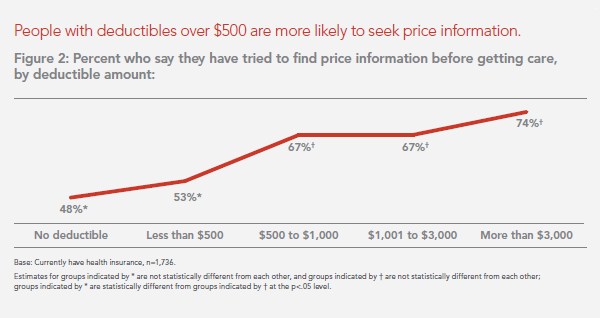
Financial wellness is integral to overall health. And the proliferation of high-deductible health plans for people covered by both public insurance exchanges as well as employer-sponsored commercial (private sector) plans, personal financial angst is a growing fact-of-life, -health, and -healthcare. Ask any hospital Chief Financial Officer or physician practice manager, and s/he will tell you that “revenue cycle management” and patient financial medical literacy are top challenges to the business. For pharma and biotech companies launching new-new specialty drugs (read: “high-cost”), communicating the value of those products to users — clinician prescribers and patients — is Job #1 (or #2,
The Affordable Care Act As New-Business Creator
While there’s little evidence that the short-term impact of the Affordable Care Act has limited job growth or driven most employers to drop health insurance plans, the ACA has spawned a “cottage industry” of health companies since 2010, according to PwC. As the ACA turned five years of age, the PwC Health Research Institute led by Ceci Connolly identified at least 90 newcos addressing opportunities inspired by the ACA: Supporting telehealth platforms between patients and providers, such as Vivre Health Educating consumers, such as the transparency provider HealthSparq does Streamlining operations to enhance efficiency, the business of Cureate among others
Health is a growth industry at SXSW
Health is the hot topic at SXSW. While edgy new movies and hot music are the foundational elements of the annual South-by-Southwest festival, health and health care are the fast-growing themes at the meet-up, where the new-new, month-old beautiful JW Marriott Hotel by the Convention Center hosted most of the digital health track sessions. Digital health today goes well beyond mobile apps and genomic futures. Philips was a major presence this year at SXSW with its vision, shared by me, THINK-Health, and the HeathcareDIY team, of connected health where we live, work, play, pray and learn. In the case of
Value is in the eye of the shopper for health insurance
While shopping is a life sport, and even therapeutic for some, there’s one product that’s not universally attracting shoppers: health insurance. McKinsey’s Center for U.S. Health System Reform studied people who were qualified to go health insurance shopping for plans in 2015, covered by the Affordable Care Act. McKinsey’s consumer research identified six segments of health insurance plan shoppers — and non-shoppers — including 4 cohorts of insured and 2 of uninsured people. The insureds include: Newly-insured people, who didn’t enroll in health plans in 2014 but did so in 2015 Renewers, who purchased health insurance in both 2014 and
Digital health love – older people who use tech like health-tech, too
As people take on self-service across all aspects of daily living, self-care in health is growing beyond the use of vitamins/minerals/supplements, over-the-counter meds, and trying out the blood-pressure cuff in the pharmacy waiting for a prescription to be filled. Today, health consumers the world over have begun to engage in self-care using digital technologies. And this isn’t just a phenomenon among people in the Millennial generation. Most seniors who regularly use technology (e.g., using computers and mobile phones) are also active in digitally tracking their weight, for example, learned in a survey by Accenture. Older people who use technology in daily
Learning from Mr. Spock and Leonard Nimoy about living long and prospering
“Live long and prosper,” Mr. Spock repeated, like a mantra, throughout his life. We say goodbye, on this dimension anyway, to Leonard Nimoy, who passed away today at the age of 83. Star Trek is a staple entertainment — perhaps even a relaxation therapy — in my home. So Mr. Nimoy’s departure from the Planet is indeed a sad event here. In thinking about Spock’s mantra about living well, I am reminded of an interchange between him and Captain Kirk in the Star Trek movie, The Wrath of Khan. In that film, Spock is severely irradiated while saving the ship, and
Most people want to go digital for health – especially the un-well
2 in 3 people in the U.S. would use a mobile app to manage their health, especially for diet and nutrition, medication reminders, tracking symptoms, and recording physical activity. The fifth annual Pulse of Online Health survey from Makovsky finds that digital health is blurring into peoples’ everyday lives. We’ve covered previous Makovsky digital health surveys here on Health Populi; last year, we focused on consumers managing risk in digital health platforms, and in 2013, the state of seeking health information online. That most consumers would go beyond health information search to the more engaging pursuit of managing health over
Employers grow wellness programs, and ramp up support for fitness tech
Offering wellness programs is universal among U.S. employers, who roughly divide in half regarding their rationale for doing so: about one-half offer wellness initiatives to invest in and increase worker health engagement, and one-half to control or reduce health care costs. Two-thirds of companies offering wellness will increase their budgets, according to the International Foundation of Employee Benefit Plans (IFEBP) report, Workplace Wellness Trends, 2015 survey results. The IFEBP polled 479 employers in October 2014, covering corporate, public, and multi-employer funds in the U.S. and Canada. The statistics discussed in this post refer solely to U.S. organizations included in the study
She’s just not that into connecting with you (yet), doctor
Just 1 in 5 health-insured people with a primary care provider use the web to look at their health data, and fewer than 1 in 10 people use digital means to book appointments. Welcome to the 2015 State of the Connected Patient, a survey report from Salesforce conducted by Harris Poll among 2,095 adults in January 2015. Perhaps the title of the analysis should more appropriately be the “2015 State of the Unconnected Patient.” While most patients polled are satisfied with their PCPs and most believe doctors are sharing their health records, people lack digital engagement with their primary care providers.
Fish oil and yoga are the most-used alternative “medicines”
1 in 3 U.S. adults used some form of complementary and alternative medicine (CAM) in the U.S. in 2012, led by fish oil in the herbal supplements category, and yoga in the services category. While use of complementary products and services in health has remained unchanged at about 34% of Americans using CAM, the adoption of yoga in American life has doubled among adults in the past decade to about 1 in 10 adults doing some form of yoga. The report, the Use of Complementary Health Approaches in the U.S., a National Health Interview Survey conducted for the National Center for
Left Swipe Dat – this is how health messaging is done
In our ADHD-addled, over-messaged and noisy world, it’s hard to break through the media clutter and binge-watching to get a health message out. Here’s the way it’s done: an engaging, humorous, impactful and crisp campaign focusing on making smoking so un-sexy and un-cool, you swipe the prospective date off of your Tinder app. Watch and learn, from The Truth. You can follow the campaign on Twitter using the hashtag #LeftSwipeDat. Kudos to the truth® anti-smoking campaign and the creative team who got this blend of message and medium so right. truth® is part of the Legacy project which is funded by the
The phone is a gateway drug to health: what MyFitnessPal knows, and what Under Armour gets
65 million people know that food journaling works for losing weight, that it’s engaging to do on a well-designed app, and that health is social. MyFitnessPal (MFP) has the distinction of being a top health app used longer by more people and more effectively than probably any other mobile health tool. Under Armour, the athletic goods company, now has MFP under its corporate umbrella, along with Endomondo, another very popular motivating mobile health tool. You may know Under Armour as a company that manufactures and markets functional workout gear. But this deal is so not about the wearable. It’s about
Health care costs still top financial problems for Americans
“Health care spending grows at lowest-ever rate,” USA Today celebrated in their December 3, 2014 headline. The announcement was drawn from national health spending data gleaned from an annual report from the Centers for Medicare and Medicare Services (CMS), which tallied U.S. health spending at $2.9 trillion. From the bird’s-eye view, slowing healthcare cost growth is indeed good news. But from the point-of-view of consumers’ own pockets, health care costs are rising. And, a survey published today by Gallup points to this reality: that people in American say the most important financial problem they face is healthcare costs, tied for first place
Thinking about health disparities on Martin Luther King Day 2015
On this day celebrating Martin Luther King, Jr., I post a photo of him in my hometown of Detroit in 1963, giving a preliminary version of the “I Have a Dream” speech he would give two months later in Washington, DC. As I meditate on MLK, I think about health equity. By now, most rational Americans know the score on the nation’s collective health status compared to other developed countries: suffice it to say, We’re Still Not #1. But underneath that statistic is a further sad state of health affairs: that people of color in the U.S. have lower quality of
People in consumer-directed health plans are — surprise! — getting more consumer-directed
People with more financial skin in the health care game are more likely to act more cost-consciously, according to the latest Employee Benefits Research Institute (EBRI) poll on health engagement, Findings from the 2014 EBRI/Greenwald & Associates Consumer Engagement in Health Care Survey published in December 2014. Health benefit consultants introduced consumer-directed health plans, assuming that health plan members would instantly morph in to health care consumers, seeking out information about health services and self-advocating for right-priced and right-sized health services. However, this wasn’t the case in the early era of CDHPs. Information about the cost and quality of health care services was scant,
Who is perfect? Advocacy ads for real people.
What is the nature of disability? What is the nature of beauty? What is perfection? Who among us is perfect? These questions are at the heart (literally and figuratively) of a project undertaken by Pro Infirmis, a Switzerland-based advocacy organization raising awareness of people with disabilities, promoting the International Day of Persons with Disabilities in December 2013. Mannequins in fashionable shops on Zurich’s tony street the Bahnhofstrasse were replaced by new ones, artfully, painstakingly and lovingly created, as shown in the video. Pro Infirmis’s website tells us “who” we are looking at in human and 3-D life-size mannequin form: Miss Handicap 2010,
Building the health ecosystem: new bedfellows coming together
2015 is already becoming a year where bedfellows of different stripes are joining together to build a health care ecosystem well beyond hospitals, doctors and health plans. Announcements launched last week at the 2015 Consumer Electronics Show in Las Vegas, and coming out this week at the J.P. Morgan Conference in San Francisco, the first two weeks of 2015 reveal that new entrants and legacy health stakeholders are crossing corporate and cultural chasms to (try and) solve challenges that prevent us from getting to that Holy Grail of The Triple Aim: improving health care outcomes, driving down per capita costs,
Health and wellness at CES 2015 – trend-weaving the big ideas
Health is where we live, work, play and pray — my and others’ mantra if we want to truly bend (down) the cost curve and improve medical outcomes. If we’re serious about achieving the Triple Aim — improving public health, lowering spending, and enhancing the patient/health consumer experience (which can drive activation and ongoing engagement) — then you see health everywhere at the 2015 Consumer Electronics Show in Las Vegas this week. With this post, I’ll share with you the major themes I’m seeing at #CES2015 related to health, wellness, and DIYing medical care at home. The meta: from health care to self-care.
Getting real about consumer demand for wearables: Accenture slows us down
Are you Feelin’ Groovy about wearables? Well slow down, you move too fast… …at least, according to Accenture’s latest survey into consumers’ perspectives on new technologies, published this week in conjunction with the 2015 Consumer Electronics Show in Las Vegas, the largest annual convention in the U.S. featuring technology for people. At #CES2015, we’re seeing a rich trove of blinged-out, multi-sensor, shiny new wearable things at the 2015 Consumer Electronics Show. Swarovski crystals are paired with Misfit Wearables, called the Swarovski Shine, shown here as a shiny new thing, indeed. Withings launched its Activite fitness tracking watch in new colors.
The Internet of Healthy Me – putting digital health in context for #CES2015
Men are from Mars and Women, Venus, when it comes to managing health and using digital tools and apps, based on a poll conducted by A&D Medical, who will be one of several hundred healthcare companies exhibiting at the 2015 Consumer Electronics Show this week in Las Vegas. Digital health, connected homes and cars, and the Internet of Things (IoT) will prominently feature at the 2015 Consumer Electronics Show in Las Vegas this week. I’ll be attending this mega-conference, meeting up with digital health companies and platform providers that will enable the Internet of Healthy “Me” — consumers’ ability to self-track,
People don’t know much about patient portals: Xerox’s 5th EHR study
The Field of Dreams works in nostalgic plotlines about baseball, but as I’ve pointed out since the advent of consumer-facing health technologies, there’s no Field of Dreams effect in health care when it comes to consumer health engagement. U.S. health consumers aren’t using the patient portals that health care providers have built as part of their efforts to bolster health engagement via EHRs and health IT, Xerox found in the company’s 5th annual survey on electronic health records. I spoke with Tamara St. Claire to discuss the implications of the consumer poll, which was conducted among 2,017 U.S. adults in
Health IT Forecast for 2015 – Consumers Pushing for Healthcare Transformation
Doctors and hospitals live and work in a parallel universe than the consumers, patients and caregivers they serve, a prominent Chief Medical Information Officer told me last week. In one world, clinicians and health care providers continue to implement the electronic health records systems they’ve adopted over the past several years, respond to financial incentives for Meaningful Use, and re-engineering workflows to manage the business of healthcare under constrained reimbursement (read: lower payments from payors). In the other world, illustrated here by the graphic artist Sean Kane for the American Academy of Family Practice, people — patients, healthy consumers, newly insured folks,
Irrational exuberance in mobile health? Live from the mHealth Summit 2014
Mobile and digital technologies will bend the health care cost curve, drive individual and population health, and solve the nagging challenge of health disparities. Mobile and digital technologies will increase costs to health providers, disrupt work flows and lower clinicians’ productivity, and hit a market bubble. Depending on your lens into mHealth, and what product categories and user segments you’re looking at, all of the above can be true. The plenary session of the 2014 mHeath Summit kicked off with Dr. Harry Leider, Chief Medical Information Officer of Walgreens, who spoke of the pharmacy’s evolving role across the entire continuum of care,
Self-care is the new black in health care
Consumers’ growing health care cost burden is competing with other household spending: basic costs for Americans are eroding what’s left of the traditionally-defined Middle Class. At the front end of health costs is the health insurance premium, the largest single line item for a family. It looks like a big number because it is: Milliman gauged the cost for an employer to cover a family of four in a PPO in the U.S. at around $23K, with the employee bearing an increasing percent of the premium, copays, coinsurance, and a larger deductible this year than last, on average. There are
Women-centered design and mobile health: heads-up, 2014 mHealth Summit
This post is written as part of the Disruptive Women on Health’s blog-fest celebrating the 2014 mHealth Summit taking place 7-11 December 2014 in greater Washington, DC. Women and mobile health: let’s unpack the intersection. On the supply side of the equation, Good Housekeeping covered health tracking-meets-fashion bling in the magazine a few weeks ago in article tucked between how to cook healthy Thanksgiving side dishes and tips on getting red wine stains out of tablecloths. This ad appeared in a major sporting goods chain’s 2014 Black Friday pre-print in my city’s newspaper last week. And along with consumer electronics brand faves like
Thinking about Tony on World Aids Day
I lost my dear friend Tony M. in 1987 in the first generation of deaths from the scourge of AIDS. Remembering Tony, here he is helping me get dressed on my wedding day, along with my BFF Susan. When Tony was diagnosed within months of this photo being taken, he was with full-blown AIDS. At that time, Tony had no access to the portfolio of drug therapies available to an HIV+ patient today. Those were the days of denial, experimentation, toxicity, and really, really tough side effects. We remember Tony and all our loved ones everyday and especially today, on
Digital and mobile health: can doctors and consumers get on the same wavelength?
There’s growing interest among both consumers and clinicians in people DIY’ing healthcare. Consumers are even keener than their doctors about the self-care concept, PwC’s Health Research Institute has found. Doctors who are already in value-based payment mode — participating in accountable care organizations, at-risk for reimbursement, doing population health — are earlier adopters of digital health tools that enable patients to care for themselves outside of the health care setting. These providers are also working more on care teams, where physicians can work at their ‘highest and best use,’ complemented by nurse practitioners, physician assistants, diabetes educators, and other ancillary
Health care costs, access and Ebola – what’s on health care consumers’ minds
The top 3 urgent health problems facing the U.S. are closely tied for first place: affordable health care/health costs, access to health care, and the Ebola virus. While the first two issues ranked #1 and #2 one year ago, Ebola didn’t even register on the list of healthcare stresses in November 2013. Gallup polled U.S. adults on the biggest health issues facing Americans in early November 2014, and 1 in 6 people named Ebola as the nation’s top health problem, ahead of obesity, cancer, as well as health costs and insurance coverage. Gallup points out that at the time of
Health-committed consumers look to food to be healthy, wealthy, and wise
There’s an emerging health-committed consumer, one of over 70% of people who believe they’re less healthy than the generations who came before them. 9 in 10 consumers overall believe that what you eat impacts how you feel. Those who are health-committed spend 70% of their grocery budgets on healthy products, read food labels, spend more and shop more frequently than low health-committed consumers, according to Healthy, Wealthy, & Wise, a survey report from Dunnhumby. The number of health-committed consumers globally grew by 38% since 2009. Most consumers look first to themselves to drive health, then to doctors, and third to food companies
 Thank you Aaron Strout for hosting our conversation on the Reaching Higher Podcast, now live on Apple, Spotify, and YouTube. We covered a lot of ground addressing health care and health citizenship, the growing prospects for our homes as our health hubs, and how our humanity is a key ingredient in health-making for all.
 Jane joined host Dr. Geeta "Dr. G" Nayyar and colleagues to brainstorm the value of vaccines for public and individual health in this challenging environment for health literacy, health politics, and health citizen grievance. Click onto the Pfizer Value of Vaccines site and you can watch four episodes covering the challenges with adult vaccination, the employer and health plan member's journey to vaccination, reimbursement, and collaborating for proactive prevention.
 I'm grateful to be part of the Duke Corporate Education faculty, sharing perspectives on the future of health care with health and life science companies. Once again, I'll be brainstorming the future of health care with a cohort of executives working in a global pharmaceutical company.