


Health Care for a Typical Working Family of Four in America Will Cost $28,166 in 2018
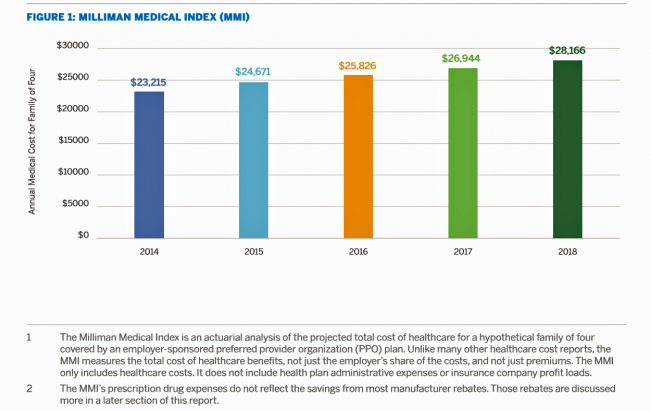
What could $28,166 buy you in 2018? A new car? A year of your child’s college education? A plot of land for your retirement home? Or a year of healthcare for a family of four? Welcome to this year’s edition of the Milliman Medical Index (MMI), one of the most important forecasts of the year in the world of the Health Populi blog and THINK-Health universe. That’s because we’re in the business of thinking about the future of health and health care through the health economics lens; the MMI is a key component of our ongoing environmental analysis of the
The U.S. is a Nation in Pain – America’s Life Expectancy Fell Again in 2016
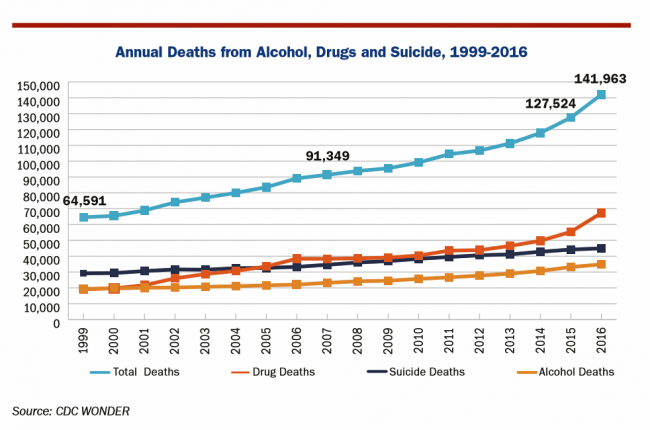
American saw the greatest number of deaths from suicide and alcohol- and drug-induced fatalities was recorded in 2016. That statistic of nearly 142,000 equates to deaths from stroke and exceed the number of deaths among Americans who died in all U.S. wars since 1950, according to Pain in the Nation Update from the Well Being Trust and Trust for America’s Health. The line graph soberly illustrates the growing tragic public health epidemic of mortality due to preventable causes, those deaths of despair as Anne Case and Sir Angus Deaton have observed in their research into this uniquely all-American phenomenon. While this
Consumers Shop Food for Health, But Cost Is a Barrier to Healthy Eating
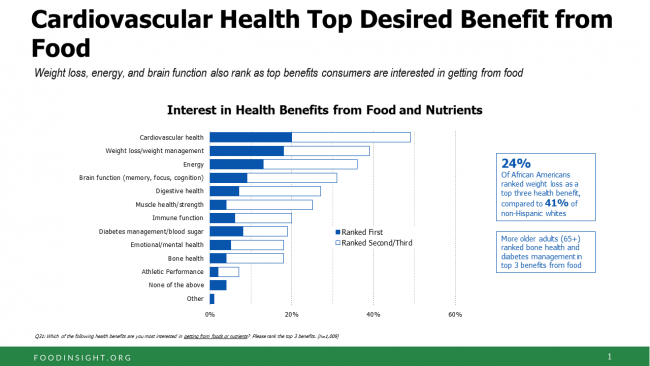
One-third of Americans are following a specific eating pattern, including intermittent fasting, paleo gluten-free, low-carb, Mediterranean diet, and Whole 30, among dozens of other food-styles in vogue in 2018. It’s mainstream now that Americans are shopping food for health, with eyes focused on heart health, weight, energy, diabetes, and brain health, according to the 2018 Food & Health Survey from IFIC, the International Food Industry Council Foundation. But underneath these healthy eating intentions are concerns about the cost of nutritious foods, IFIC reports. And this aspect of home health economics can sub-optimize peoples’ health. Consider the first graph on consumers’
A Tale of Two America’s for Health
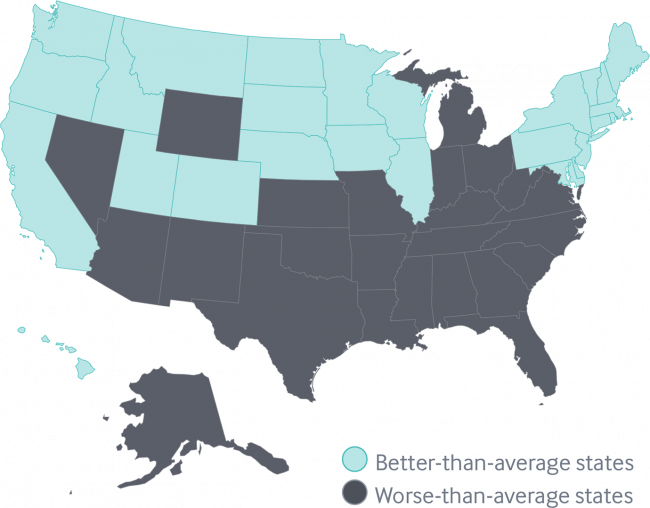
Disparities in Americans’ health vary among people living in each of the 50 states. These differences in health status generally fall into two regions: north and south, found in the Commonwealth Fund’s 2018 Scorecard on State Health System Performance. The map shows this stark geography-is-health-destiny reality: the worse-than-average states, the Fund found, run from Nevada southeast to Arizona, through New Mexico and Texas all the way to Atlantic Ocean and the Carolinas, then north west all the way up through the industrial Midwest states through Michigan to the north. Wyoming is the only non-contiguous state in the worse-performing U.S. state
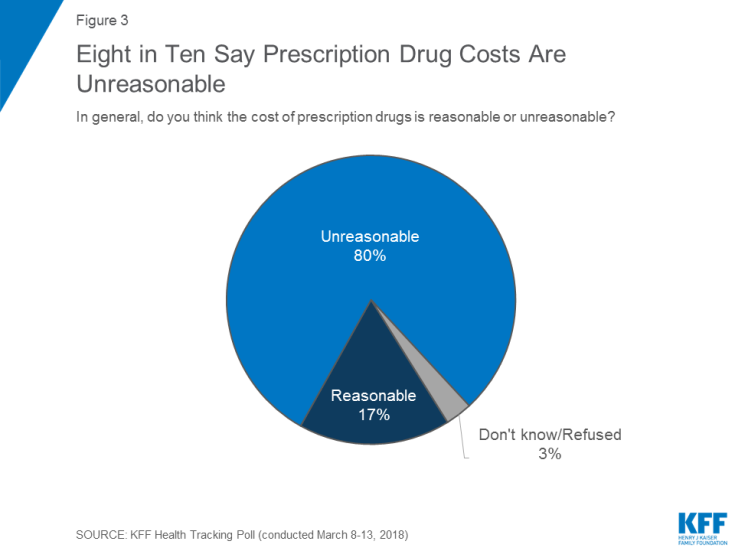
The Gap Between the Trump Administration’s Promise of Reducing Rx Costs for Consumers and What People Really Want
This is what happened to pharma stock prices on Friday after President Trump and Secretary of Health and Human Services Alex Azar outlined their new policies focusing on prescription drug prices. The graph is the Nasdaq U.S. Smart Pharmaceuticals Index (NQSSPH) from May 11, 2018, the date when POTUS and Secretary Azar made their announcement. What this upward driving curve indicates, from the start of stock trading in the morning until the ring of the closing bell, is that the pharma industry players, both manufacturers and PBMs, were quite delighted with what they heard. The blueprint for restructuring the prescription drug industry,
Guns, Jobs, or Health Care? In 2018, Voters Split as to Top Issue
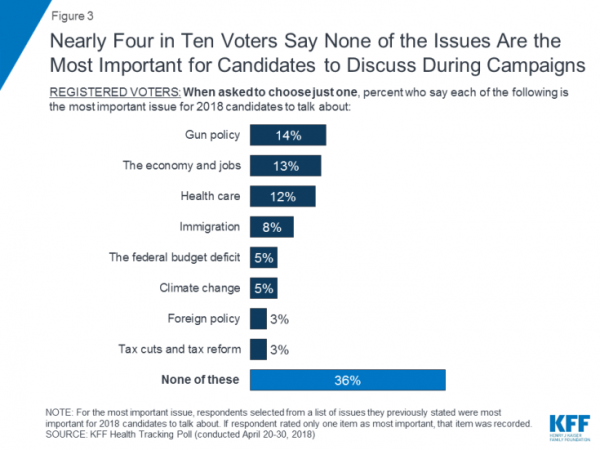
It’s a fairly even split between voting first on gun policy, jobs, or healthcare for the 2018 mid-term elections, ac cording to the May 2018 Kaiser Family Foundation Health Tracking Poll. Arguably, gun policy can cut in two ways: in light of the Stoneman Douglas High School shootings and wake-up call for #NeverAgain among both students and the public-at-large, vis-a-vis Second Amendment issue voters. And, as a growing public health issue, “guns” could also be adjacent to health. “If it isn’t a health problem, then why are all these people dying from it?” rhetorically asked Dr. Garen Wintemute, professor of emergency
Having Health Insurance Is a Social Determinant of Health: the implications of growing uninsured in the U.S.
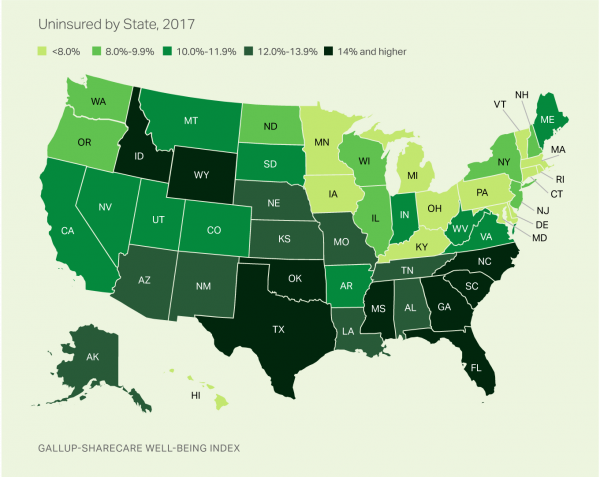
The rolls of the uninsured are growing in America, the latest Gallup-Sharecare Poll indicates. The U.S. uninsurance rate rose to 12.2% by the fourth quarter of 2017, up 1.3 percentage points from the year before. 2017 reversed advancements in health insurance coverage increases since the advent of the Affordable Care Act, and for the first time since 2014 no states’ uninsured rates fell. The 17 states with declines in insurance rates were Arizona, Colorado, Florida, Hawaii, Illinois, Indiana, Iowa, Missouri, New Mexico, New York, North Carolina, South Carolina, Texas, Utah, Washington, West Virginia, Wisconsin, and Wyoming. Among these, the greatest
Universal Health Care and Financial Inclusion – Two Sides of the Wellness Coin
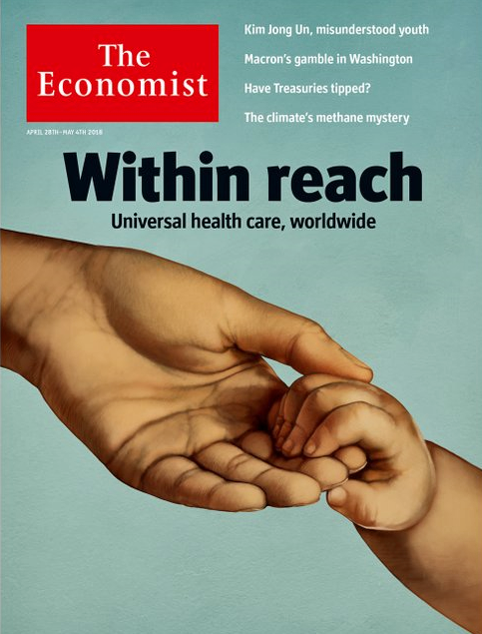
Two weeks in a row, The Economist, the news magazine headquartered in London, included two special reports stapled into the middle of the magazines. Universal health care was covered in a section on 28 April 2018, and coverage on financial inclusion was bundled into the 5th May edition. While The Economist’s editors may not have intended for these two reports to reinforce each other, my lens on health and healthcare immediately, and appreciatively, connected the dots between healthcare coverage and financial wellness. The Economist, not known for left-leaning political tendencies whatsoever, lays its bias down on the cover of the section here: universal healthcare
Think Like a LEGO Builder in Healthcare – Considering PwC’s New Health Economy Vision
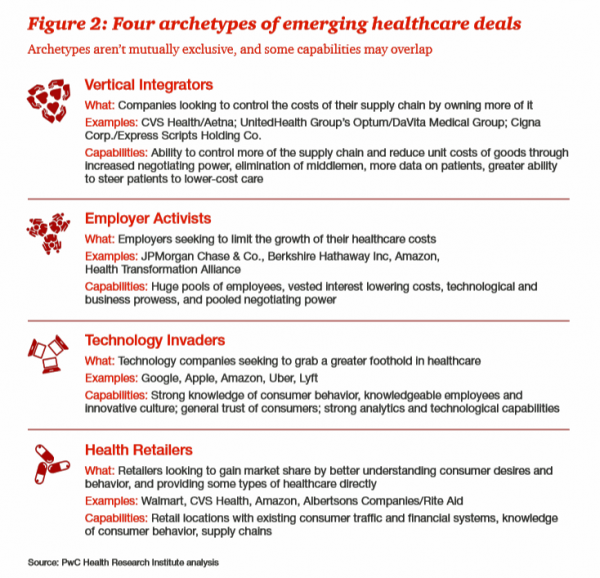
Expect “new combinations” of industry actors and technologies to reorganize and re-imagine healthcare, with an eye on both price and investments in customer experience (CX), PwC envisions in their latest report on The New Health Economy in the Age of Disruption. In this vision, healthcare will be a more flexible marketplace underpinned by data, platforms, and workers. Yes, it’s challenging to get from here-to-there, but PwC explains just how this can happen. Four archetypes, models, of healthcare deals have begun to emerge in the marketplace, illustrated by the Big Deals and announcements reshaping the industry in the past couple of years:
Food as Medicine – Philips’ Take On An Apple A Day from the Rijksmuseum
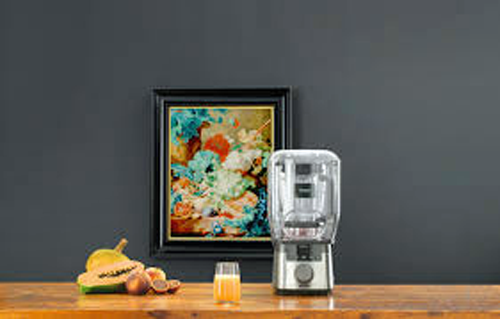
What if you went to visit a Vermeer still life with fruit, vegetables, and flowers, and the only image you saw in the famous painting was the flower and an urn? What if you heard the sounds of a juicing machine whirring as you reflected on a Rembrandt? That’s exactly what happened to museum-goers visiting Amsterdam’s Rijksmuseum. These art patrons witnessed a museum guard literally pulling an apple out of a painting, to leave a barren portrait of an urn and little else. Roll over, Anthony Oberman, the artist of “Still Life with Fruit in a Terracotta Dish,” one of
Healthcare Information In-Security Is the New Normal

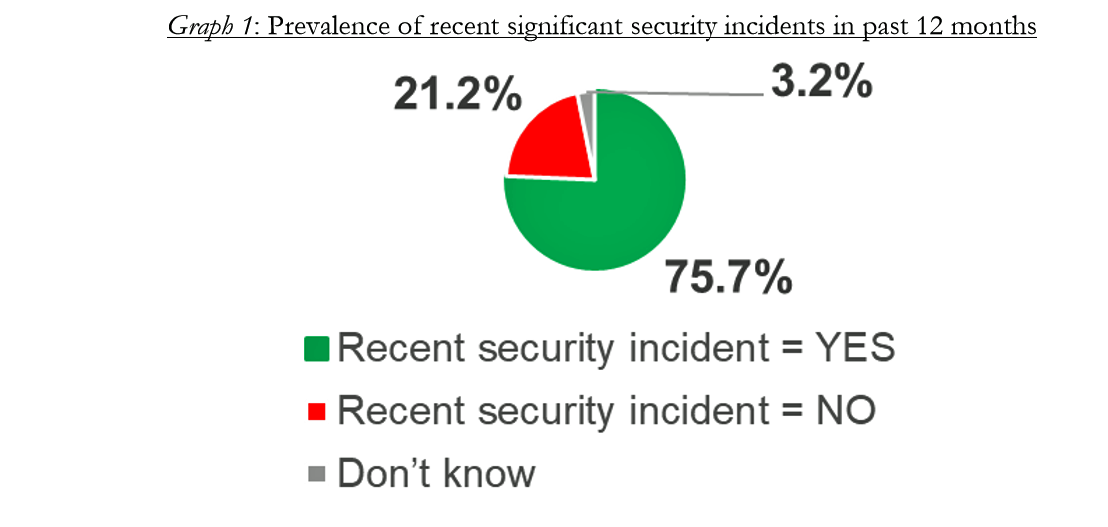
Three-fourths of healthcare providers experienced a data breach in 2017, according to the HIMSS 2018 Cybersecurity Survey. Health data insecurity is the new normal. A big piece of addressing the cybersecurity healthcare challenge is educating people who work in healthcare settings, and that has been under-funded. Only 41% of healthcare workers say they receive security training, a Forrester study learned in January 2018. Forrester also found that while healthcare organizations have experienced some of the most egregious cyberattacks, the industry allocates a smaller proportion of IT budgets to security compared with than other organizational types at a rate of 22%
Re-Imagining Healthcare – a Lesson from Von Clausewitz in the Fog of War

When you’re on the battlefield and you can’t see what lies ahead, go high, recommended General Von Clausewitz in his book, On War. I paraphrase this prescription from the good General-strategist’s book, On War — “War is the realm of uncertainty; three-quarters of the factors on which action in war is based are wrapped in a fog of greater or lesser uncertainty. A sensitive and discriminating judgment is called for; a skilled intelligence to scent out the truth.” Governor Mark Leavitt, who held the post of Secretary of Health and Human Services under President Bush, offered this advice at the recent Liberation
Americans’ Trust in the Healthcare System Low Compared to Rest-of-World’s Health Citizens
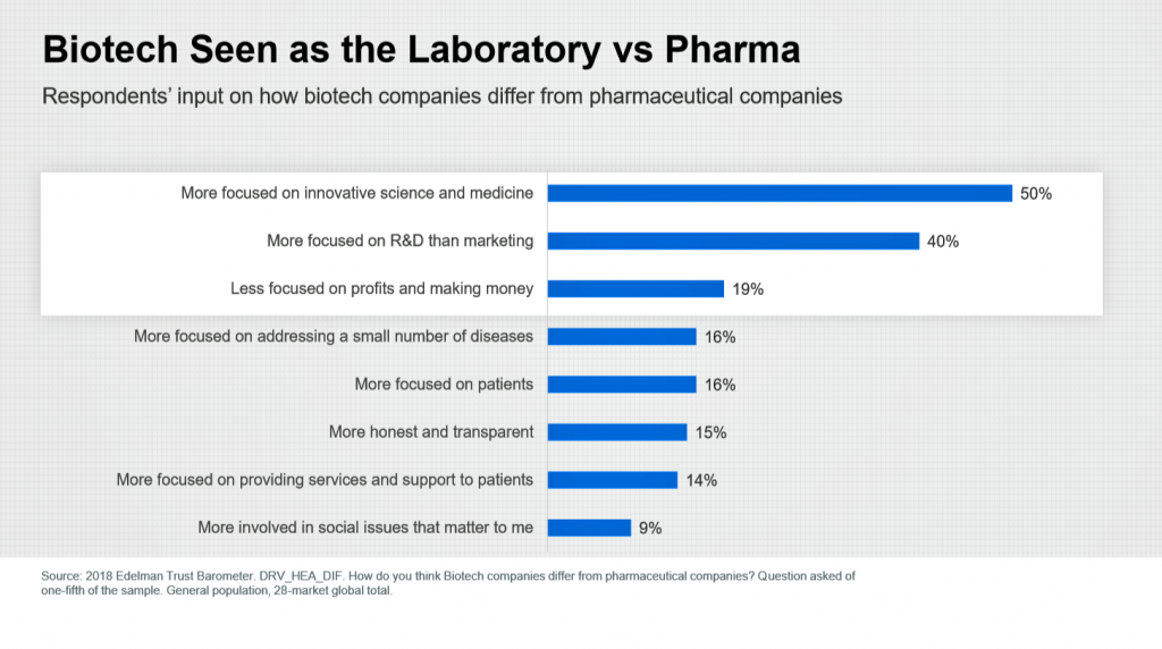
In the U.S., trust in the healthcare industry declined by 9 percentage points in just one year, declining from 62% of people trusting — that’s roughly two-thirds of Americans — down to 53% — closer to one-half of the population. I covered the launch of the 2018 Edelman Trust Barometer across all industries here in Health Populi in January 2018, when this year’s annual report was presented at the World Economic Forum in Davos as it is each year. The Edelman team shared this detailed data on the healthcare sector with me this week, for which I am grateful. Check
Pharma Spending Gone Bipolar: Generics At One End, Specialty Drugs on the Other
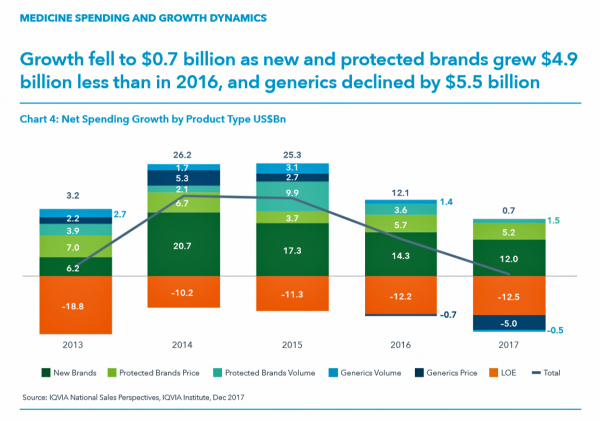
While the use of medicines continues to rise in the U.S., spending grew by only 0.6% in 2017 after accounting for discounts and rebates. In retail and mail-order channels, net spending fell by 2.1%. Prescription drug spending on branded products grew nearly $5 billion less than in 2016; generic drug spending fell by $5.5 billion, according to Medicine Use and Spending in the U.S., a report from the IQVIA Institute for Health Data Science. The report reviews medicines spending in 2017 looking forward to 2022. There were over 5.8 billion prescriptions dispensed in 2017, and generic drugs accounted 90% of
Using Design to Liberate Healthcare; Learning from Dr. Andrew Chacko and Tan Le

This is the second post of three written to summarize what I learned participating in Medecision’s annual meeting with the company’s partners, held March 27-29, 2018 at the Ritz-Carlton in Dallas, TX. I concluded the first of this three-part series with Dr. Don Rucker’s belief that, “Patients are the massive use-case for interoperability.” This second post focuses on the key role of designing for healthcare – for patients, caregivers, providers, all industry sector workers indeed. And designing information to make it beautiful, useable, meaningful. You’ll read about Renaissance Man/Doctor Andrew Chacko MD, a board-certified physician, French and Physics student at the Naval
Healthcare Companies’ Reputations Go North While All Other Industries’ Reps Fall; and, A Lesson from Campbell’s Soup
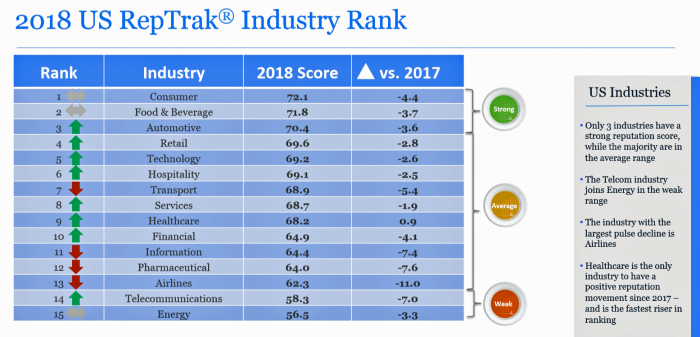
Healthcare has a reputation halo in the eyes of U.S. consumers, who ranked the sector as the only industry whose reputations rose between 2017 and 2018. But consumers separate the pharma industry from healthcare: prescription drug manufacturers’ reputation took the second-largest fall, just behind the airline industry. Pharma and airlines were the lowest-ranked industries, along with telecomms and energy. The Reputation Institute has published its annual 2018 US RepTrak Industry Rankings, finding that all industries but healthcare took negative hits on reputation from 2017 to 2018. The study asks consumers to rate the most reputable companies in their daily lives.
Food as Medicine Update: Danone Goes B-Corp, Once Upon a Farm Garners Garner, and Livongo Buys Retrofit
As the nation battles an obesity epidemic that adds $$ costs to U.S. national health spending, there are many opportunities to address this impactful social determinant of health to reduce health spending per person and to drive public and individual health. In this post, I examine a few very current events in the food-as-medicine marketspace. Big Food as an industry gets a bad rap, as Big Tobacco and Big Oil have had. In the case of Big Food, the public health critique points to processed foods, those of high sugar content (especially when cleverly marketed to children), and sustainability. But
How Walmart Could Bolster Healthcare in the Community

Walmart has been a health/care destination for many years. The company that defined Big Box stores in their infancy grew in healthcare, health and wellness over the past two decades, pioneering the $4 generic prescription back in 2006. Today, that low-cost generic Rx is ubiquitous in the retail pharmacy. A decade later, can Walmart re-imagine primary care the way the company did low-cost medicines? Walmart is enhancing about 500 of 3500 stores, and health will be part of the interior redecorating. Walmart has had ambitious plans in healthcare since those $4 Rx’s were introduced. Here’s a New York Times article from
The Health of A Nation – Being Healthy In America Depends on Where You Live

In the US, when it comes to life and death, it’s good to live in Hawaii, Utah, Minnesota, North Dakota, and Iowa — the top five states with the greatest life expectancy and healthy life expectancy at birth in 2016. For health and longevity, sorry to see the lowest five ranked states are Washington DC which ranks last, along with Mississippi, Louisiana, South Carolina, and Alabama. This sober geography-is-health-destiny update was published this week in JAMA, The State of US Health, 1990-2016: Burden of Diseases, Injuries, and Risk Factors Among US States. The first chart illustrates states down the left
Livongo and Cambia Allying to Address Chronic Disease Burden and Scale Solutions to Consumers

Chronic diseases are what kill most people in the world. In the U.S., the chronic disease burden takes a massive toll on both public health and mortality, accounting for 7 in 10 deaths in America each year. That personal health toll comes at a high price and proportion of national health expenditures. A new alliance between Livongo and Cambia Health seeks to address that challenge, beginning with diabetes and scaling to other chronic conditions. Livongo has proven out the Livongo for Diabetes program, which has demonstrated positive outcomes in terms of patient satisfaction and cost-savings. The plan with Cambia is
Nudging Patients to Use EHRs: Moving Toward a Tipping Point for Consumer Health IT
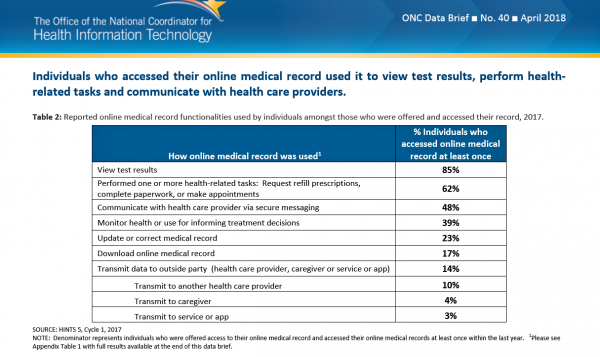
Half of U.S. patients were offered online access to their health records by providers or insurers, and one-half of them accessed the EHR at least once in the last year. One in four of those offered online EHR access looked at them more than 3 times. It takes a good nudge from a provider to motivate a patient to access online medical records, found by ONC in their latest research into consumers’ use of EHRs detailed in Individuals’ use of online medical records and technology for health needs, the ONC Data Brief No. 40, published April 2018. he concept of
What Would Healthcare Feel Like If It Acted Like Supermarkets – the 2018 Temkin Experience Ratings
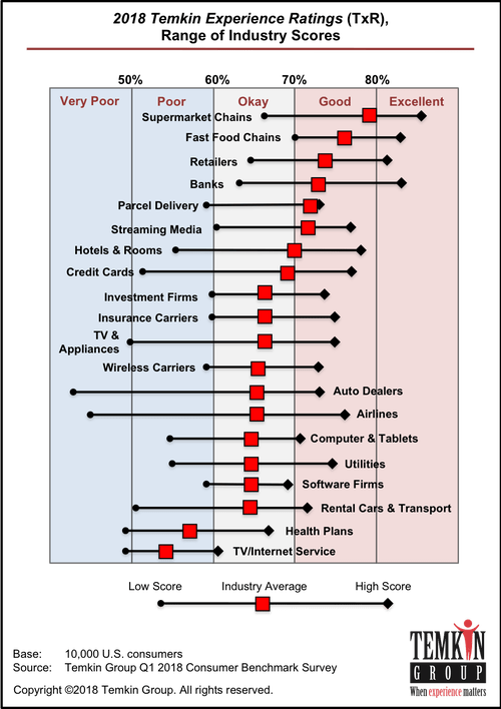
U.S. consumers rank supermarkets, fast food chains, retailers, and banks as their top performing industries for experience according to the 2018 Temkin Experience Ratings. Peoples’ experience with health plans rank at the bottom of the roster, on par with rental cars and TV/Internet service providers. If there is any good news for health plans in this year’s Temkin Experience Ratings compared to the 2017 results, it’s at the margin of “very poor” performance: last year, health plans has the worst performance of any industry (with the bar to the furthest point on the left as “low scoring”). This year, it
Please Stop Hating on Amazon, Mr. President. It’s Americans’ Favorite Brand.
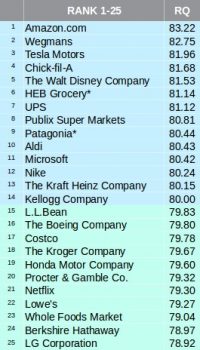
The most beloved company in America is Amazon, according to the 2018 Harris Poll Reputation Quotient Rankings which were published on 22nd March 2018. This was the third year in a row that Amazon garnered the top position in this corporate reputation poll, which gauges consumers’ views on workplace environment, social responsibility, emotional appeal, financial performance, vision and leadership, and products and services. Mr. President, why pick on Americans’ favorite brand? The brand defines the 2018 consumer’s benchmark for a best-retail experience, which is what people increasingly expect across the various interactions they have throughout a day. [As a sidebar,
Healthcare Access and Cost Top Americans’ Concerns in Latest Gallup Poll

Healthcare — availability and affordability — is a more intense worry for Americans in March 2018 than crime and violence, Federal spending, guns, drug use, and hunger and homelessness. The Gallup Poll, fielded in the first week of March 2018, found that peoples’ overall economic and employment concerns are on the decline since 2010, at the height of the Great Recession which began in 2008. While 70% of Americans were worried about economic matters in 2010, only 34% of people in the U.S. were worried about the economy, and 23% about unemployment, in March 2018. Gallup has asked this “worry”
Consumer Trust, Privacy and Healthcare – Considering #HIMSS18 in the Stark Light of Facebook and Cambridge Analytica
What a difference a couple of weeks make…. On 1st March 2018, two over-arching issues remained with me leaving Las Vegas and #HIMSS18: the central, recognized role of cybersecurity threats in healthcare, and the growing use of consumer-facing technologies for self- and virtual care. Eighteen days later, we all learned about Cambridge Analytica’s misuse of 50 million Americans’ social network data posted on Facebook. We who work in healthcare must pose the questions: going forward, how trusting will patients, consumers and caregivers be sharing their personal health information (PHI)? Will people connect dots between their Facebook lives – and their
The Patient As Payor: From Rationing Visits Due to Co-Pays to Facing $370K for Healthcare in Retirement
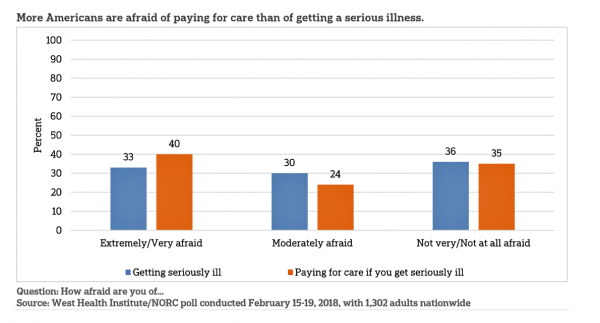
Health care in America is such a scary experience that more people are afraid of paying for care than the actually getting sick part of the scenario. The patient is the payor, and she is afraid…more afraid of the paying than of the illness, according to a survey conducted among U.S. health consumers from WestHealth Institute and NORC, Americans’ Views of Healthcare Costs, Coverage, and Policy from WestHealth and NORC. See the orange bar on the left: 40% of Americans are “extremely or very afraid” about paying for care if they get seriously ill, and 33% are that afraid
Sounds Like A John Denver Song: Virginia and Colorado Towns Rank High As Healthy Communities
If it’s true that “your ZIP code is more important than your genetic code,” you’d look for a job in 22046, buy a house there, and plant your roots. You’d find yourself in Falls Church, Virginia, named number one in the Healthiest Communities rankings of 500 U.S. towns. You can see a list of all of the communities here. The project is a collaboration between the Aetna Foundation and U.S. News & World Report, with help from the University of Missouri Center for Applied Research and Engagement Systems (CARES) and a team from the National Committee on Vital and Health
The New Financial Toxicity in Health Care: The Cost of Hospitalization
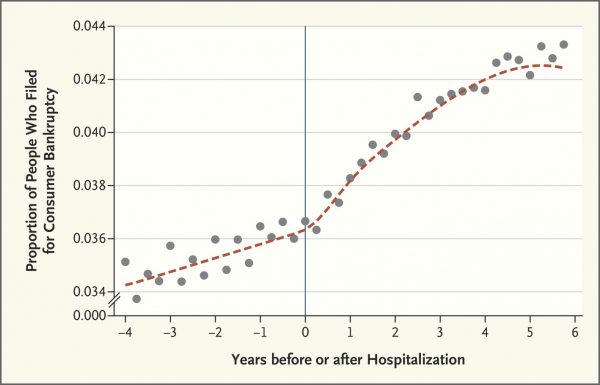
In healthcare, we use the word “toxicity” when it comes to taking a new medicine, especially a strong therapy to cure cancer. That prescription may be toxic as a harmful side effect on our journey to getting well. The concept of “financial toxicity” for cancer patients was raised by concerned clinicians at Sloane-Kettering Medical Center, who discussed the topic on 60 Minutes in 2014 and have published papers on the issue. Beyond strong medicines, a new financial toxicity has emerged for patients due to hospital inpatient admissions. A new article in the New England Journal of Medicine studies Myth and
How the Latest on Facebook and the “Deep State” Could Undermine Patient Data Sharing and AI
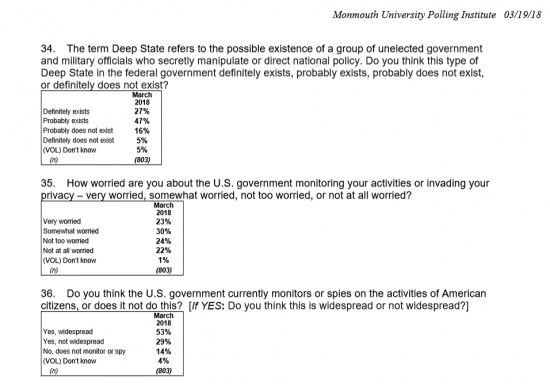
There’s a potential large obstacle that could prevent the full benefits of the current go-go, bullish forecasts for artificial intelligence (AI) to help make healthcare better: a decline in consumers’ willingness to share their personal data. Along with the overall erosion of peoples’ trust in government and other institutions comes this week’s revelations about Facebook, Cambridge Analytica, and the so-called Deep State. Three-fourths of Americans believe that some type of “Deep State” in the federal government exists, a new poll from Monmouth University published yesterday. I clipped the responses to three of the survey’s most relevant questions here. Not only
How We Spend Versus What We Get: America’s Healthcare Spending Makes for Poor Health
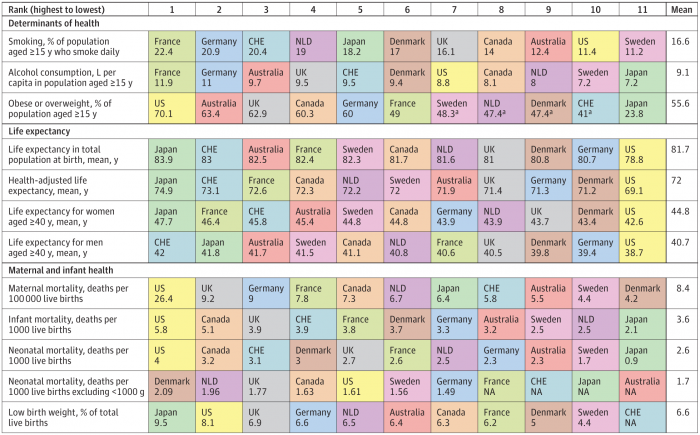
The U.S. spent nearly twice as much as other wealthy countries on healthcare, mostly due to higher prices for both labor and products (especially prescription drugs). And, America spends more on administrative costs compared to other high-income countries. What do U.S. taxpayers get in return for that spending? Lower life spans, higher maternal and infant mortality, and the highest level of obesity and overweight among our OECD peer nations. These sobering statistics were published in Health Care Spending in the United States and Other High-Income Countries this week in JAMA, the Journal of the American Medical Association. The study analyzes
FemTech is Hot, and Fitbit Knows It
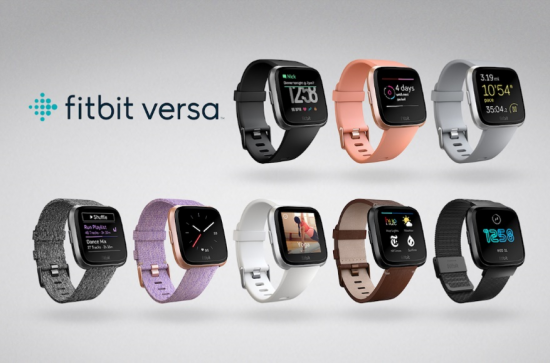
Girls Rule the World, Beyoncé has told us. But not when it comes to digital health…at least until 2018, as Fitbit has announced a woman-focused smartwatch called the Versa which is expected to hit the market in April 2018. The waterproof Versa will measure heart rate, do the usual fitness tracking metrics, and enable women to track their menstrual cycle. Fitbit has been quite clear that the device isn’t for conception or contraception. The watch will be priced at $199 at retail, a much lower price-point than the Apple Watch at $329. So here Fitbit also has an argument for
Rx 2018: A New Era of Specialty Drugs, Telehealth, Mobile Apps and Value, IQVIA Reports
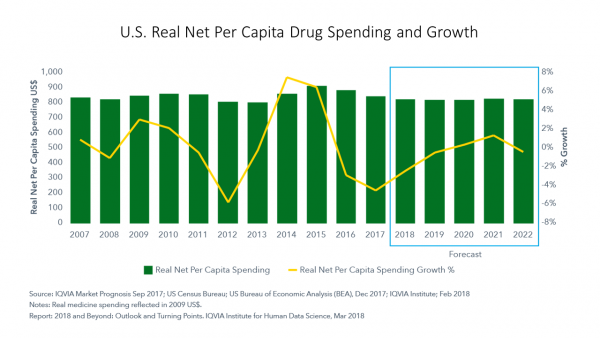
In 2018, spending on branded prescription drugs will fall in wealthy countries, while spending on specialty drugs will increase, resulting in flat medicines spending. In the U.S., net spending on medicines will fall in 2018 and remain flat at about $800 per person, according to forecasts in 2018 and Beyond: Outlook and Turning Points, from the IQVIA Institute for Human Data Science. “Concerns about existing medicine costs have captured significant attention,” the introduction warns, setting the stage for slowing growth. Key factors for slow growth include payor concerns about budgets and the consideration of value when deciding on access for new
Patient Privacy And Cyber In-Security at HIMSS 2018
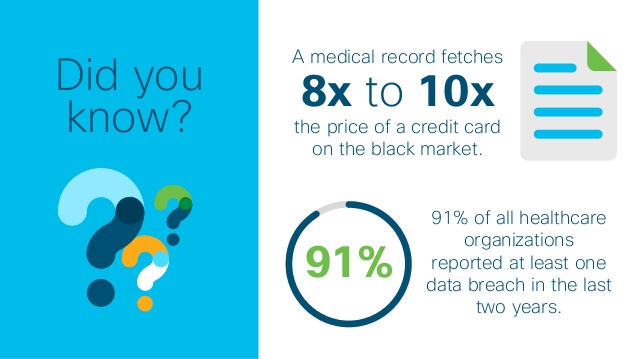
Nearly one-half of Americans experienced a personal data breach in the past three years, the third annual national cybersecurity survey found. Ensuring privacy and cybersecurity should become integrated into the healthcare industry’s consideration of a patient’s consumer experience. This makes sense, given that privacy and cybersecurity ranked the second highest priority to hospitals and healthcare providers polled in HIMSS 2018 Healthcare Leadership Survey. Providers put patient safety as #1. Appropriately, privacy and security were hot topics at HIMSS Annual Conference this year, in respond to providers’ demands for more education and concerns around the challenges. Let’s put these concerns in
Will People Enrolled in Medicaid Want to Be Amazon Prime’d?

Amazon is planning to extend Prime subscriptions to people enrolled in Medicaid for the discount price of $5.99 a month instead of the recent price increase to $12.99/month or $99 a year. The $5.99 a month calculates to a 27% break on the annual Prime membership cost. Medicaid enrollees who want to take advantage of the deal must provide Amazon with a scan or image of the card they use for their benefit (either Medicaid or EBT). These consumers can enroll annually, for a maximum of four years. Here’s what the Seattle Times, Amazon’s hometown newspaper, said about the program.
Tweets at Lunch with Paul Krugman – Health IT Meets Economics
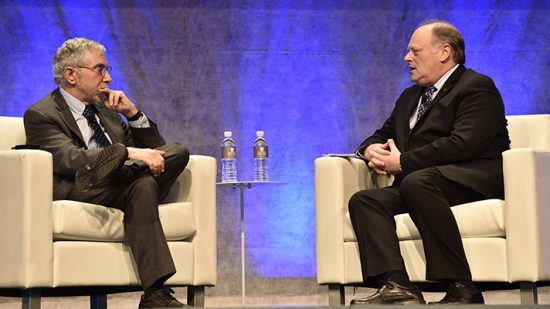
I greatly appreciated the opportunity today to attend a luncheon at the HX360 meeting which convened as part of the 2018 HIMSS Conference. The speaker at this event was Paul Krugman, who won the Nobel Prize for Economics 10 years ago and today is an iconic op-ed columnist at the New York Times And Distinguished Professor of Economics at the City University of New York (CUNY). I admit to being a bit of a groupie for Paul Krugman’s work. It tickles me to look at Rise Global’s list of the Top 100 Influential Economists:
Wearable, Shareable, Virtual: The Demands of the Digital Health Consumer in 2018
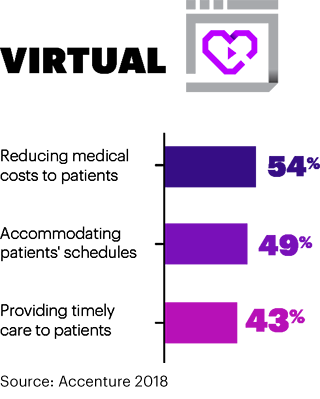
As I wrote here in April 2017, telehealth and virtual healthcare are mainstreaming. This week at the 2018 annual HIMSS conference, telehealth is playing a mainstream role in discussions about right-sizing and right-placing healthcare. The evidence for telehealth’s tipping point is rooted in new research published today by Accenture on Patients + Doctors + Machines, Accentures’ 2018 Consumer Survey on Digital Health. I sat down today with Dr. Kaveh Safavi who leads Accenture’s healthcare practice to discuss the results of this study into peoples’ atttudes toward healthcare technology and innovation. Three in four consumers in America say technology is
Collaboration is the New Innovation – Designing for Health with Amy Cueva at #HIMSS18
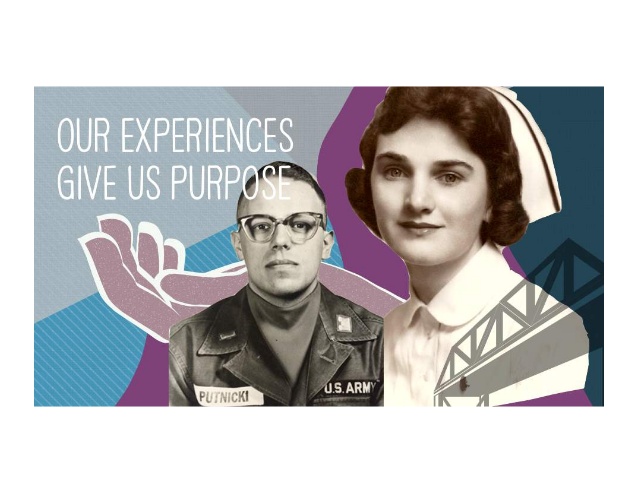
“It’s not about shiny new technologies but about designing relationships to truly impact the patient at the center of the disconnected ecosystem,” asserted Amy Cueva, Founder and CXO of the design consultancy Mad*Pow. That patient is a consumer, a caregiver; it’s you and me, Cueva explained. To reconnect the fragmented pieces of healthcare delivery, Cueva said, mantra-style, “collaboration is the new innovation.” And collaboration with patients, caregivers — the people for whom that healthcare is aimed — is the optimal workflow for effectively, enchantingly designing healthcare. In a talk she delivered at the Innovation Summit in a preconference meet-up at the annual
What the Latest Pew Consumer Data Means for #HIMSS18
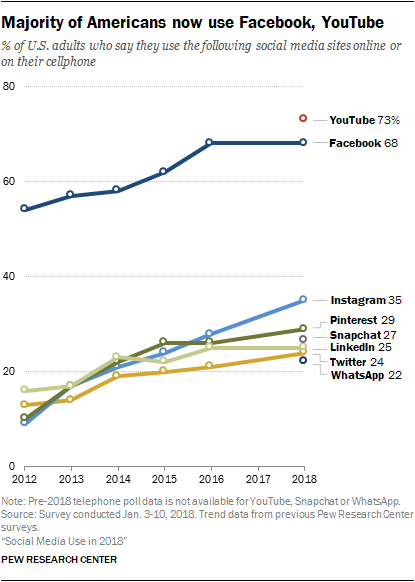
The median American uses 3 social networking platforms in 2018. Facebook is the primary platform for most Americans who use social media in 2018: two-thirds of U.S. adults use Facebook, and 3 in 4 of them check in on a daily basis. But in the past year, the percentage of people using Facebook and its corporate sister YouTube has flattened, based on the survey report, Social Media Use in 2018 from the Pew Research Center. The Pew team researched U.S. adults’ use of social media across eight popular platforms. Instagram has gained consumer favor over the past two years,
How One Hospital System Baked Love Into Their Health App
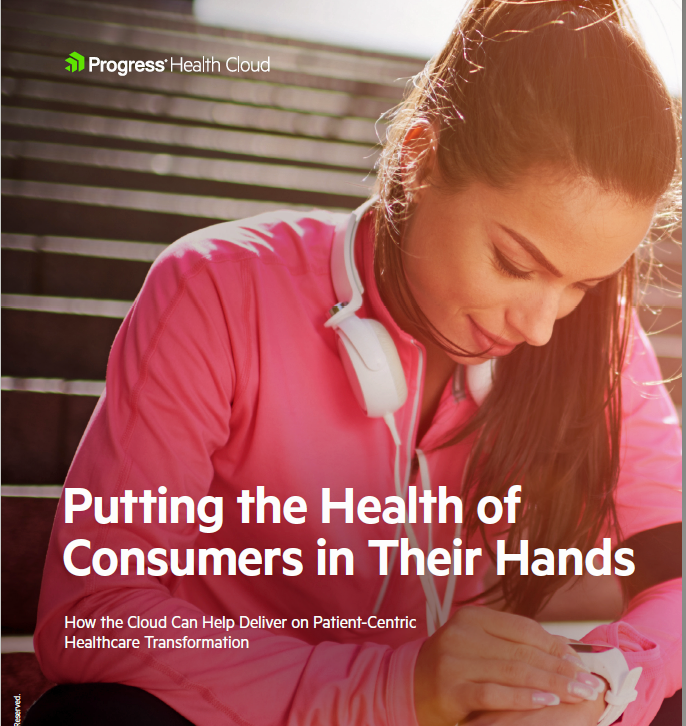
On July 18, 2017, Neil Gomes, Chief Digital Officer at Thomas Jefferson University and Jefferson Health in Philadelphia, tweeted this: When I saw this tweet, I was especially struck by Gomes’s phrase, “Designed & developed with heart/love by my @DICEGRP.” That’s Jefferson’s health solutions group that focuses on digital innovation and consumer experience. Here’s a health system that’s focused on that customer experience, which has become a critical success factor for healthcare to thrive. That’s because, as Steve Laughlin, VP and General Manager of IBM’s Global Consumer Group recently explained to me, a consumer’s last great customer experience becomes the
Majority Rules? The Right to Affordable Health Care is A Right for All Americans
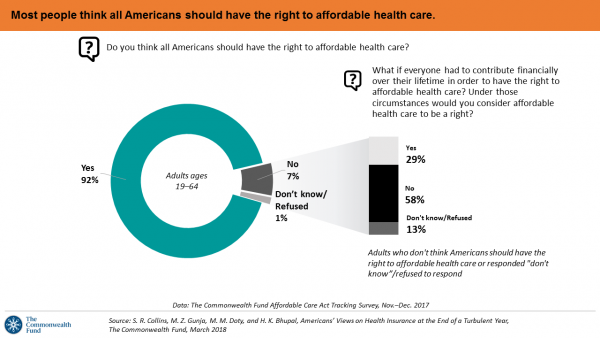
If we’re playing a game of “majority rules,” then everyone in America would have the right to affordable health care, according to a new poll from The Commonwealth Fund. The report is aptly titled, Americans’ Views on Health Insurance at the End of a Turbulent Year. The Fund surveyed 2,410 U.S. adults, age 19 to 64, by phone in November and December 2017. This is the sixth survey conducted by the Fund to track Americans’ views of the Affordable Care Act; the first survey was fielded in mid-to-fall 2013. 9 in 10 working-age adults say “yes” indeed, my fellow Americans
Add Behavioral Data to Social Determinants For Better Patient Understanding
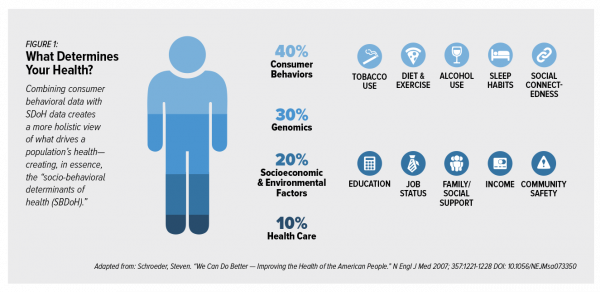
“Health agencies will have to become at least as sophisticated as other consumer/retail industries in analyzing a variety of data that helps uncover root causes of human behavior,” Gartner recommended in 2017. That’s because “health” is not all pre-determined by our parent-given genetics. Health is determined by many factors in our own hands, and in forces around us: physical environment, built environment, and public policy. These are the social determinants of health, but knowing them even for the N of 1 patient isn’t quite enough to help the healthcare industry move the needle on outcomes and costs. We need to
Building Trust and Truth in Patient Social Networks
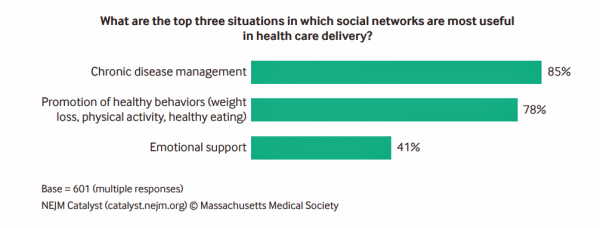
We are only just past the dawn of the second machine age, where digitization is enabling artificial intelligence. “Our new tools are destroying both trust and truth, creating a hunger for community and authenticity. We crave actual physical connection to neighbours, colleagues, and fellow townspeople, even if digitally facilitated.” Anne-Marie Slaughter wrote this in a column I read this morning in the Financial Times titled, “Our struggle with technology to protect trust and truth.” Trust and truth underpin health engagement, we learned in the first Edelman Health Engagement Barometer launched ten years ago. Those were the early days of the formation
More Working Americans Enrolled in High-Deductible Health Plans in 2017
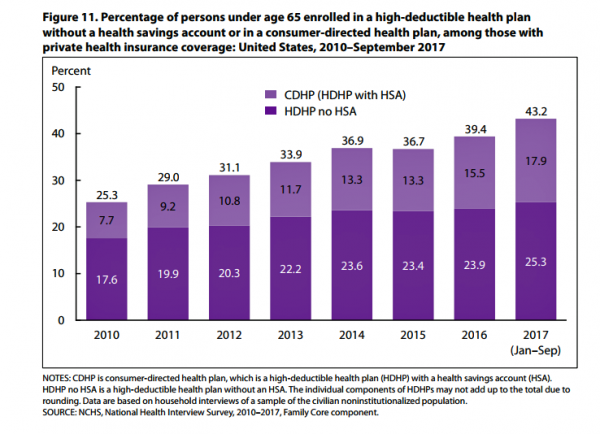
Over four in 10 U.S. workers were enrolled in a high-deductible health plan in the first 9 months of 2017, according to the latest research published by the National Center for Health Statistics, part of the Centers for Disease Control in the U.S. Department of Health and Human Services. The report details Health Insurance Coverage: Early Release of Estimates From the National Health Interview Survey, January-September 2017. About 28 million people were uninsured in the U.S. in 2017, about the same proportion as in 2016 — but nearly 20 million fewer than in 2010, as the line chart illustrates. The
How Albertsons Grocery Stores and Rite Aid Can Help Remake Healthcare

Albertsons, the grocery group with popular brands like Acme, Safeway, and Vons, announced a merger with Rite Aid, the retail pharmacy chain. The deal has been discussed as Albertsons’ move to succeed in light of growing competition from Amazon and Whole Foods, the proposed CVS/Aetna merger, and Walgreens’ possible purchase of AmerisourceBergen (finalizing its acquisition of over 1,900 Rite Aid stores). If played out well, the combination could become an important player in the evolving U.S. health/care ecosystem that brings a self-care front-door closer to consumers, patients and caregivers. “The new company is expected to serve more than 40 million
Consumer Health and Patient Engagement – Are We There Yet?
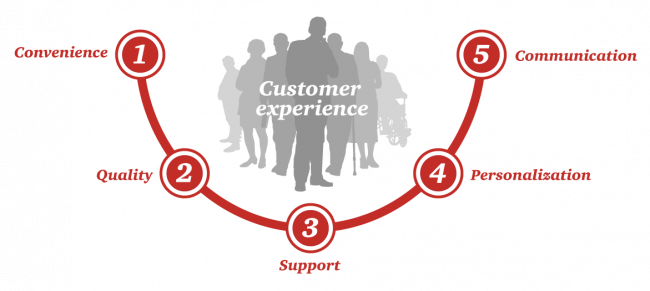
Along with artificial intelligence, patient engagement feels like the new black in health care right now. Perhaps that’s because we’re just two weeks out from the annual HIMSS Conference which will convene thousands of health IT wonks, users and developers (I am the former), but I’ve received several reports this week speaking to health engagement and technology that are worth some trend-weaving. As my colleague-friends Gregg Masters of Health Innovation Media (@2healthguru) and John Moore of Chilmark Research (@john_chilmark) challenged me on Twitter earlier this week: are we scaling sustained, real patient engagement and empowerment yet? Let’s dive into the
A Tale of Two States: Idaho, Limiting Health Plan Benefits; and Oregon, Moving Toward Universal Health Care

The United States don’t feel very united these days on a whole range of issues. But today, I’m struck by a 180-degree-apart chasm between Idaho and Oregon. While the centers of these two states only lie 290 miles from each other, they are worlds apart when it comes to their views on their residents as health citizens. Idaho. First, let’s travel to Idaho, aka the Gem State due to its rich endowment of natural resources. Health insurers in the state are now allowed to offer plans with limited benefits, escaping the rules for plans in the Affordable Care Act that
The $4 Trillion Health Economy of 2020
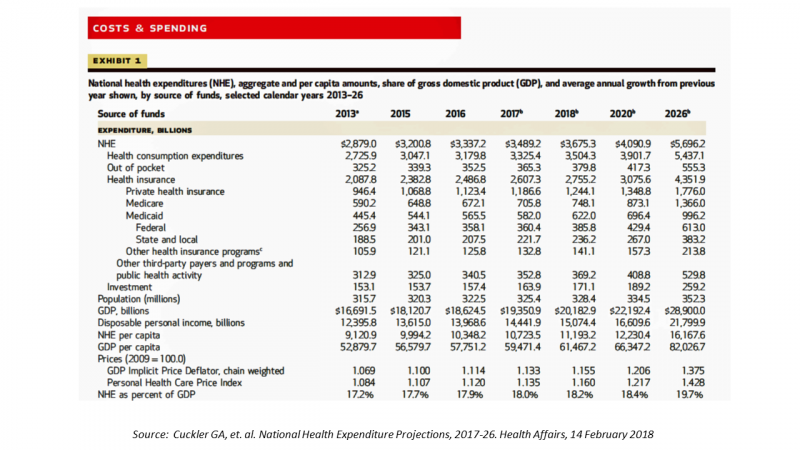
In 2020, national health expenditures (NHE) in the United States will exceed $4 trillion to cover 334.5 million Americans. That equates to 18.4% of the Gross Domestic Product (GDP) and $12,230.40 of health spending per person. I sat in on a press call today with researchers from the Office of the Actuary working in the Centers for Medicare and Medicaid Services (CMS) to review the annual forecast of the NHE, published in Health Affairs in a statistically-dense eleven page article titled, National Health Expenditure Projections, 2017-2026: Despite Uncertainty, Fundamentals Primarily Drive Spending Growth. What are those “fundamentals” pushing up healthcare spending?
#Engage4Health: How Patients Are Morphing Into Healthcare Consumers, for #HIMSS18
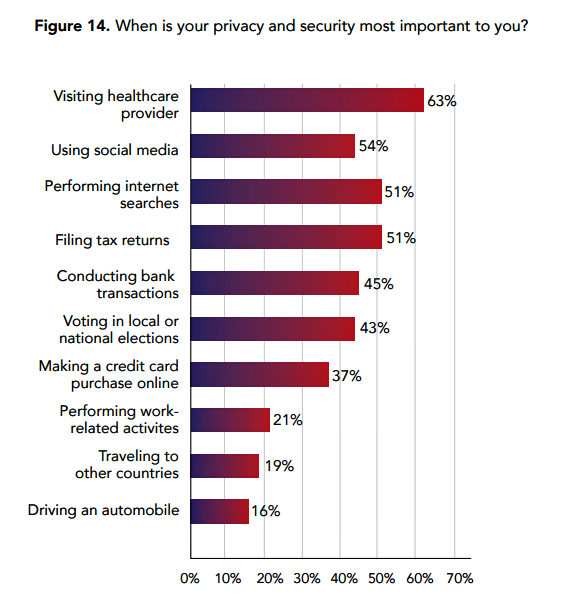
This blog appears today as part of a #HIMSS18 primer series for attendees, and the industry at large, to discuss major health IT issues that will help move health and healthcare delivery forward in 2018 – and beyond. I’m grateful to HIMSS to be one of 20 Social Media Ambassadors appointed for this year’s conference, which convenes in Las Vegas at the Sands Expo Center from March 5 to 9th, 2018. Prioritizing the patient-as-consumer through my health economic lens, the biggest priorities will be: Engaging patients in self-care and driving health and health plan literacy to better manage constrained access
When Buying a Pair of Jeans Competes With Filling a Prescription at CVS in Target
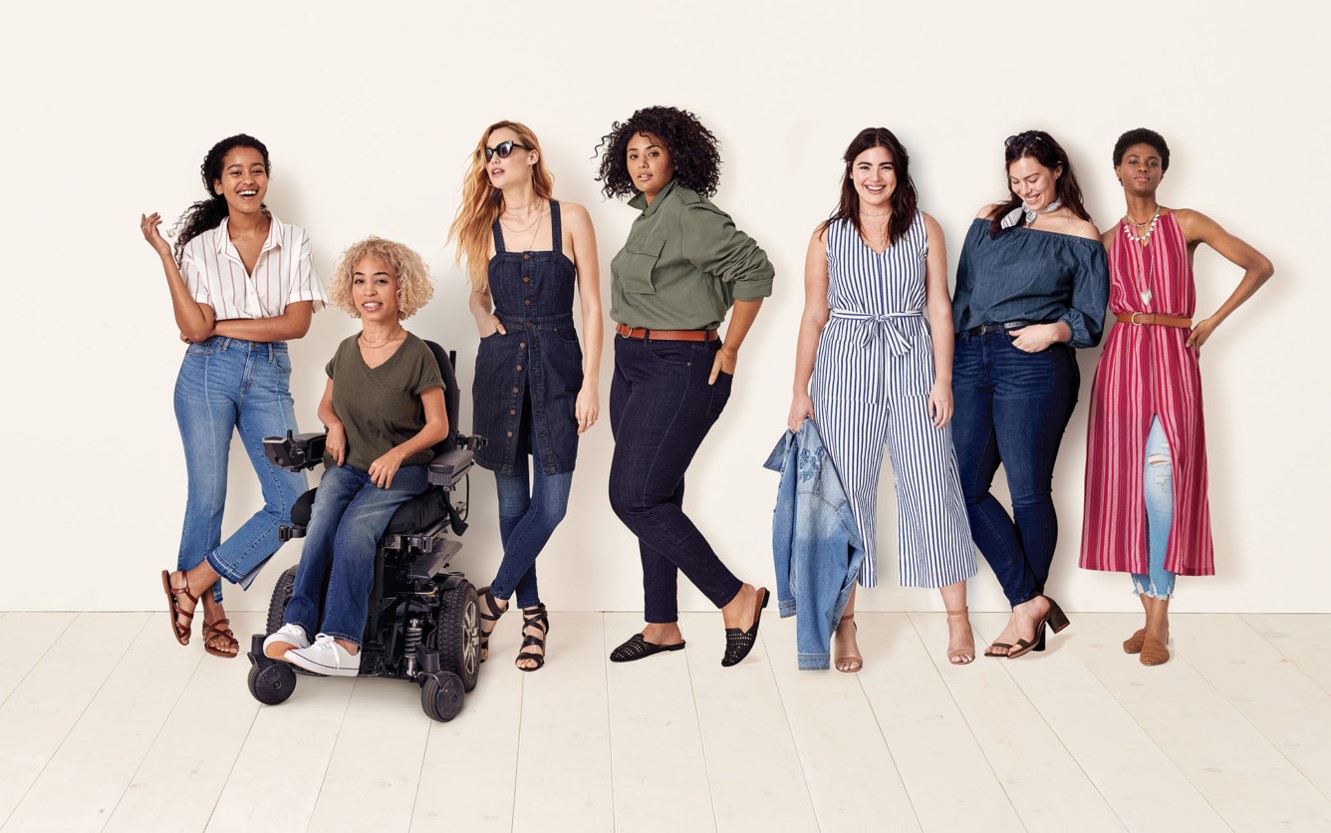
Stories about three fashion brands have me thinking about women and their health economics. Stay with me. Target unveiled its new line of clothing, Universal Thread, which features pieces that are accessible to women who may be dealing with physical limitations or sensory challenges. I first read about Universal Thread on The Mighty website, which is a community of over 1 million people interested in connecting on health and disabilities. As The Mighty described, the brand Universal Thread, “is centered around denim since it is a staple in many women’s wardrobes, but denim can be uncomfortable for many people with disabilities
Getting Real About Social Determinants of Health
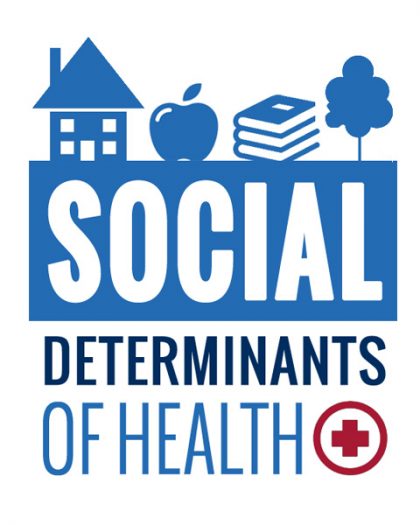
New research points out that real people live real lives, and our assumptions about social determinants of health (SDOH) may need to be better informed by those real lives. I read three reports in the past week sobering up my bullish #SDOH ethos dealing with food deserts, transportation, and health service access — three key social determinants of health. To remind you about the social determinants, here’s a graphic from Kaiser Family Foundation that summarizes the key pillars of SDOH. Assumption 1: Food deserts in and of themselves diminish peoples’ healthy nutrition lifestyles. Low-income households who are exposed to the same food-buying
The United States of Care Launches to Promote Healthcare for All of US
Let’s change the conversation and put healthcare over politics. Sounds just right, doesn’t it? If you’re reading Health Populi, then you’re keen on health policy, health economics, most of all, patients: now playing starring roles as consumers, caregivers, and payors in their own care. Andy Slavitt, former Acting Administrator of the Centers for Medicare and Medicaid Services (CMS), has assembled a diverse group of health care leaders who care about those patients/people, too, appropriately named the United States of Care. Founders include Dr. Bill Frist, former Republican U.S. Senator from Tennessee, Dave Durenberger, former Republican U.S. Senator from Minnesota, and
U.S. Workers Say Health Care is the Most Critical Issue Facing the Nation
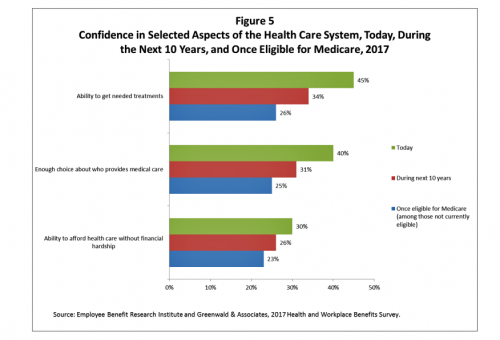
Health care ranks highest among working Americans as the top critical issue facing the country, well above terrorism, the role of the Federal government, unemployment and jobs, education, immigration and taxes. Over half of American workers also rate the country’s healthcare system as “poor” or “fair,” based on the results of the EBRI/Greenwald & Associates Health and Workplace Benefits Survey. Workers dissatisfaction with U.S. healthcare is based largely on cost: one-half of workers experienced an increase in health care costs in the past year. Furthermore, only 22% are satisfied with the cost of their health insurance plan, 18% are satisfied
Heart-Love – Omron’s Holy Grail of Blood Pressure Tracking on the Wrist

It’s February 1st, which marks the first of 28 days of American Heart Month – a time to get real, embrace, learn about, and engage with heart health. Heart disease kills 610,000 people in the U.S. every year, equal to 1 in 4 deaths in America. It’s the leading cause of death for both men and women in the U.S. Knowing your blood pressure is an important step for managing the risks of heart disease. That hasn’t yet been available to those of us who quantify our steps, weight, sleep, food intake, and other health metrics. In 2017, Hugh Langley
Warren Buffett’s Healthcare Cost Tapeworm & His Alliance with Amazon and JPMorgan

The fact that the average U.S. employer committed to spend nearly $27,000 a year for a PPO to cover a family of 4 in America in 2017 is the most important rationale underlying the announcement that Amazon, Berkshire-Hathaway, and JP Morgan made on 30th January 2017. That news immediately shook Wall Street trading, sending downward shocks down the proverbial spines of healthcare insurance plans and suppliers to the industry — legacy healthcare companies that scale patient-members and healthcare supplies, like pills and surgical implants. The “new competition” chart published in the Wall Street Journal in the morning illustrates those shock
The 2018 Edelman Trust Barometer – What It Means for Health/Care in America

Trust in the United States has declined to its lowest level since the Edelman Trust Barometer has conducted its annual survey among U.S. adults. Welcome to America in Crisis, as Edelman brands Brand USA in 2018. In the 2018 Edelman Trust Barometer, across the 28 nations polled, trust among the “informed public” in the U.S. “plunged,” as Edelman describes it, by 23 points to 45. The Trust Index in America is now #28 of 28 countries surveyed (that is, rock bottom), dropping below Russia and South Africa. “The public’s confidence in the traditional structures of American leadership is now fully
Health Insurance Costs Stress US Whether We’re Rich or Not / and Why a $0 Budget for CFPB Matters for Healthcare

Health care costs cause anxiety for U.S. adults, regardless of their affluence, we learn in Uncertainty About Healthcare, the latest Stress in America poll from the American Psychological Association. The big stat is that 2 in 3 Americans say the cost of health insurance is a stressor for them or their loved ones, whether the person earns more or less than $50,000 a year. Underneath that top-line are some demographic differences. Millennials are most concerned about access to mental health care compared with Boomers and older adults. Reproductive care access is of most interest to Millennials and Gen Xers. Two-thirds
In the U.S., Spend More, Get Less Health Care: the Latest HCCI Data

Picture this scenario: you, the consumer, take a dollar and spend it, and you get 90 cents back. In what industry is that happening? Here’s the financial state of healthcare in America, explained in the 2016 Health Care Cost and Utilization Report from the Health Care Cost Institute (HCCI). We live in an era of Amazon-Primed consumers, digital couponing, and expectations of free news in front of paywalls. We are all in search of value, even as the U.S. economy continues to recover on a macroeconomic basis. But that hasn’t yet translated to many peoples’ home economics. In this personal
Healthcare EveryWhere: Philips and American Well Streamline Telehealth

Two mature companies in their respective healthcare spaces came together earlier this month to extend healthcare services where patients live and doctors work, via telehealth services. Philips, celebrating 127 years in business this year, has gone all-in on digital health across the continuum of care, from prevention and healthy living to the ICU and hospital emergency department. American Well is among the longest operating telehealth companies, founded in 2006. Together, these two established organizations will transcend physician offices and ERs and deliver virtual care in and beyond the U.S. I had the opportunity to sit down with Ido Schoenberg, MD,
Hug Your Physician: S/He Needs It – Listening to the 2018 Medscape National Physician Burnout & Depression Report

Two in five U.S. physicians feels burned out, according to the Medscape National Physician Burnout & Depression Report for 2018. This year, Medscape explicitly adds the condition of “depression” to its important study, and its title. In 2017, the Medscape report was about bias and burnout. Physicians involved in primary care specialties and critical care are especially at-risk for burnout, the study found. One in five OBGYNs experience both burnout and depression. Furthermore, there’s a big gender disparity when it comes to feeling burned out: nearly one-half of female physicians feel burnout compared with 38% of male doctors. Being employed by
What Healthcare Can Learn from A Pig and Piggy Bank via Santander Bank

When patients feel disrespected in a medical exam room, they will be less likely to follow instructions they receive from a doctor. Research from the Altarum Institute revealed this fundamental finding. The chart shows that feeling respected reduces a patient’s diabetes medication adherence by a factor of nearly 2x, and is a risk factor for poorly managed diabetes. Furthermore, consumers who feel disrespected by providers are three times more likely to not believe doctors are accurate sources of information than consumers who do feel respected. And, patients with diabetes who do not feel respected are one-third more likely to have poorly
Calling Out Health Disparities on Martin Luther King Day 2018

On this day appreciating the legacy of Martin Luther King, Jr., I post a photo of him in my hometown of Detroit in 1963, giving a preliminary version of the “I Have a Dream” speech he would deliver two months later in Washington, DC. Wisdom from the speech: “But now more than ever before, America is forced to grapple with this problem, for the shape of the world today does not afford us the luxury of an anemic democracy. The price that this nation must pay for the continued oppression and exploitation of the Negro or any other minority group
Sleepless in America: Prescribing Sleep at CES 2018

Las Vegas is known for glitzy neon lights brightly shining along the strip and casinos without clocks reminding us of the time, stimulating us to stay awake at all hours of day or night. But inside the Sands Convention Center are a couple dozen technologies and connected things designed to put us to sleep, which is a growing digital health category at the annual CES. Form factors for sleep-things at CES 2018 include masks, beds, lights, apps, and even a huggable sleep “robot.” Why is sleep seeing such a huge influx on the consumer tech-supply side? Because there’s growing, mainstream
What A Duck Can Teach Us at CES 2018

We’re spending more time at CES 2018 calling out the societal and health impacts of technologies, especially for children and under-served people. How surprised and delighted I am to find a positive, enchanting impact at the convergence of kids and tech…from a duck. When I say “duck,” there are a few images that probably swim up in your mind’s eye: Donald, Daisy, Daffy, Howard, Darkwing, and the brand-famous Aflac Duck (who has his own Twitter handle @AflacDuck). It’s this last-named web-footed feathered friend who is a major star here at CES 2018 in the persona of My Special Aflac Duck.
Healthy Living in Digital Times at CES 2018

Connecting Life’s Dots, the organization Living in Digital Times partners with CES to deliver conference content during the show. At CES 2018, LIDT is connecting a lot of dots to help make health streamline into daily living. Robin Raskin, founder, kicked off LIDT’s press conference setting the context for how technology is changing lifestyles. Her Holy Grail is to help make tech fun for everybody, inclusive for everybody, and loved by everybody, she enthused. LIDT has been a presence at CES for many years, conceiving the contest the Last Gadget Standing, hosting tech-fashion shows with robots, and supporting a young innovators
Smarter, Streamlined, Connected Consumers – The Promise of CES 2018

Journalists and industry analysts from around the globe have come to Las Vegas which, this week, is the mecca for new-new electronic things that companies think consumers will be keen to buy. On media day 1, I spoke with a colleague from the Netherlands who covers audio, a sector that’s certainly in disruption; an automotive analyst from India covering autonomous vehicles; and, a mobile tech guru based in Dubai, to identify just a few of my media friends who have gathered here to research and write on their respective beats. In these conversations, there are some common buzzwords floating around
Searching Las Vegas for Health at CES 2018

While a phrase containing the words “health” and “Las Vegas” may seem a dichotomy, there will be a lot of health-tangent goods and services I’ll be seeking next week at the annual CES. This year, health will be ubiquitous at this huge conference, whose three-letter acronym for “consumer electronics show” typically conjures up images of shiny new things in the guise of automobiles, video games, big TV screens, and drones. At CES 2018, health will go beyond wearable tech and the first phase of fitness that’s been growing at the meeting over the past five years since I began attending
The Cloud’s Growing Role in Consumer-Pharma Health Engagement

The pharmaceutical industry is facing a multitude of political, regulatory, and financial uncertainties in and beyond 2018. But there’s one thing I know for sure about pharma’s morphing business model: it’s that patients are playing a growing role in the industry’s future well-being. That is, if the industry can meet health consumers where they want to be met. Patients want more communication and support from pharma companies, a new study from Accenture found. In fact, over one-third of patients tell their health care providers about pharma patient-service programs: this chart from Accenture’s study illustrates the top seven ways providers hear
Most Americans Say Healthcare is #1 Policy Issue Entering 2018

Concerns about health care are, by a large margin, the top domestic policy issue U.S. voters identified as they enter 2018. The proportion of Americans citing healthcare as the top public agenda priority grew by 50% since 2016, from 31% two years ago to 48%. Taxes rank #2 this year, garnering 31% of Americans’ concerned, followed by immigration, which has remained flat cited by about one-in-four Americans. The Associated Press (AP)-NORC Center for Public Affairs Research polled 1,444 U.S. adults 18 and over between November 30 and December 4, 2017 for this survey. While one-half of Americans would like the
Let’s Increase Life Expectancy in America in 2018 – A New Year for Opioids, Social Determinants, and Financial Health
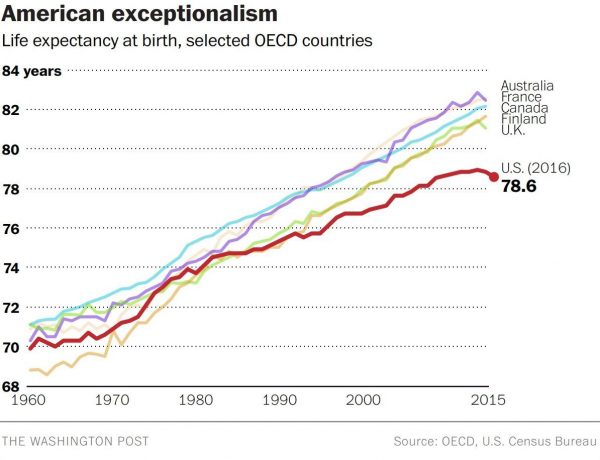
For this end-of-year post leading into 2018, I choose to address the big topic of how long we live in America, and what underpins the sobering fact that life expectancy is falling. Life expectancy in the United States declined to 78.6 years in 2016, placing America at number 37 on the list of 137 countries the World Economic Forum (WEF) has ranked in their annual Global Competitiveness Report 2017-2018. The first chart shows the declining years for Americans compared with health citizens of Australia, France, Canada, Finland, and the UK. While Australians’ and Britons’ life expectancies declined from 2015-16, their
Nurses Rate Highest for Ethics in American Professions Once Again in Gallup Poll
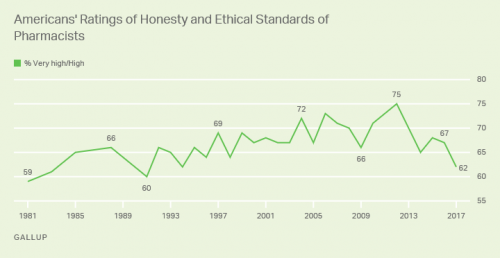
Nurses working in the U.S. are number one when it comes to ethics and honesty, the Gallup Poll found for the sixteenth year in a row. After nurses, military officers, grade school teachers, medical doctors and pharmacists rank second through fifth in ethical-line behind top-rated nursing. It’s important to note that consumers have ranked pharmacists and doctors in second and third place in this annual survey for many years. This year, both professions fall below the military and teachers. Nurses have been #1 in this study every year since Gallup launched the survey in 1999, except for 2001 when firefighters topped
What Healthcare Can Learn from Volkswagen: A Scenario of a Post-Healthcare World
As I am finalizing my schedule for meet-ups at CES in Las Vegas for early January 2018, I’m thinking about digital devices and wearable tech, connected cars, smart homes, and the Internet of Things through my all-health, all-the-time lens. My friends at TrendWatching write today about the automaker, Volkswagen, which has a division called MOIA started in 2016. VW, like most car manufacturers, is working on strategies to avoid being disrupted and made irrelevant as tectonic forces like autonomous cars and shared rides innovate and re-define the nature of personal transportation. MOIA is a brand and a self-described “social movement.”
Health Consumers Face the New Year Concerned About Costs, Security and Caring – Health Populi’s 2018 Forecast
As 2018 approaches, consumers will gather healthy New Year’s Resolutions together. Entering the New Year, most Americans are also dealing with concerns about healthcare costs, cybersecurity, and caring – for physical health, mental stress, and the nation. Healthcare costs continue to be top-of-mind for consumer pocketbook issues. Entrenched frugality is the new consumer ethos. While the economy might be statistically improving, American consumers’ haven’t regained confidence. In 2018, frugality will impact how people look at healthcare costs. 88% of US consumers are likely to consider cost when selecting a healthcare provider, a Conduent survey found. Physicians know this: 81% of
Net Neutrality is Dead: What Happens to Connectivity as a Social Determinant of Health?
Today’s FCC’s repeal of the net neutrality rules for internet service providers will have an impact on healthcare — in particular, the channeling of telehealth services. “The Federal Communication Commission overturned a two-year-old set of rules passed during the Obama administration to protect consumers against bad behavior from their Internet service providers, overriding protests from consumer groups and Internet companies,” USA Today wrote just after the ruling. The concern from advocates to keep net neutrality is that the large ISPs — AT&T, Comcast, and Verizon, among them — could be so-called “bad actors” in favoring fast-lane communications for certain content versus
Support for the Affordable Care Act the Highest Since Passage
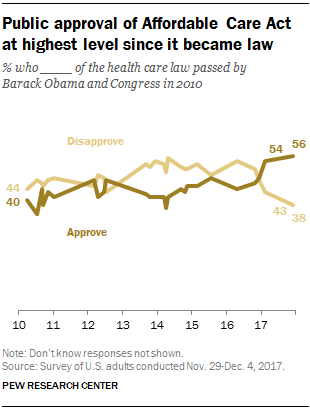
Americans’ approval of the Affordable Care Act reached its apex in December 2017, the Pew Research Center found. The proportion of people approving the ACA has been growing since the middle of 2016, now at 56% of the public. The timing of this survey, conducted at the end of November and first few days of December 2017, coincides with Congress’s arm-wrestling a tax bill that would eliminate the individual mandate for health insurance which is an ACA building block for universal coverage in the United States. Most people in the U.S. also believe that the ACA has had a positive
Will Getting Bigger Make Hospitals Get Better?
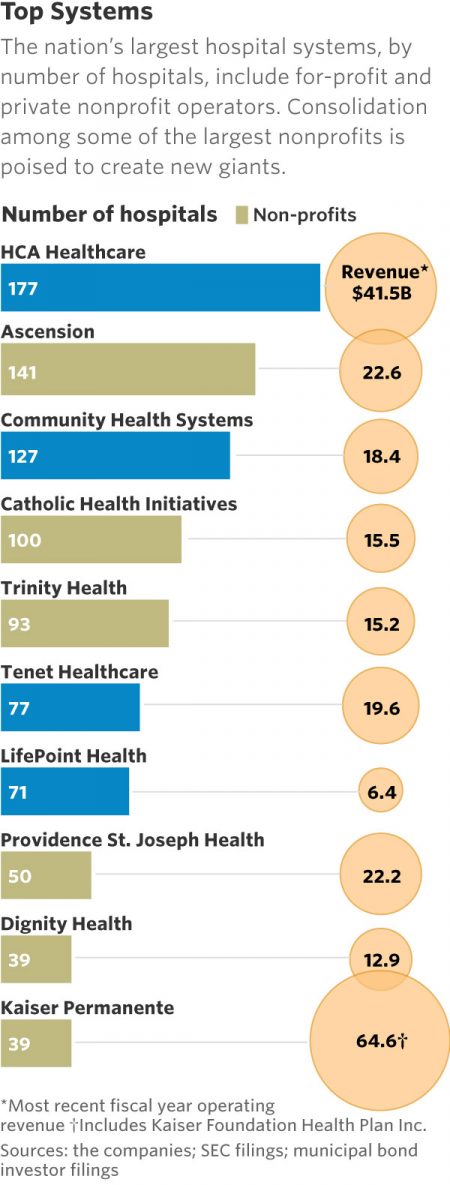
This month, two hospital mega-mergers were announced between Ascension and Providence, two of the nation’s largest hospital groups; and, between CHI and Dignity Health. In terms of size, the CHI and Dignity combination would create a larger company than McDonald’s or Macy’s in terms of projected $28 bn of revenue. (Use the chart of America’s top systems to do the math). For context, other hospital stories this week discuss in southern New Jersey. And this week, the New Jersey Hospital Association annual report called the hospital industry the “$23.4 billion economic bedrock” of the state. Add a third important item
Patients Continue to Grow Healthcare Consumer Muscles, Alegeus’s 2017 Index Finds
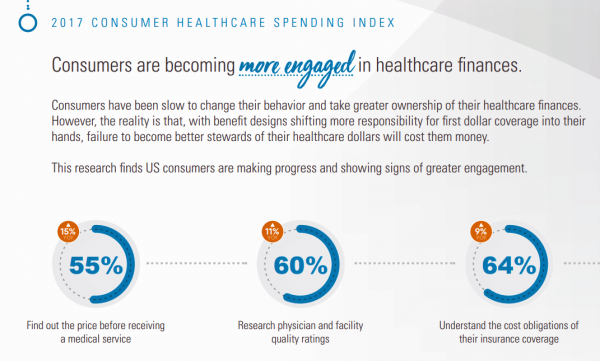
Patients’ health consumer muscles continue to get a work out as more people enroll in high-deductible health plans and face sticker shock for health insurance premiums, prescription drug costs, and that thousand-dollar threshold. The 2017 Alegeus Healthcare Consumerism Index finds growth in patients’, now consumers’, interest and competence in becoming disciplined about planning, saving, and spending for healthcare. Overall, the healthcare spending index hit 60.1 in 2017, up from 54.4 in 2016. This is a macro benchmark that represents most consumers exhibiting greater healthcare spending engagement with eyes on cost as well as adopting purchasing behaviors for healthcare. Underneath that
The Patient as Payor – Consumers and the Government Bear the Largest Share of Healthcare Spending in America
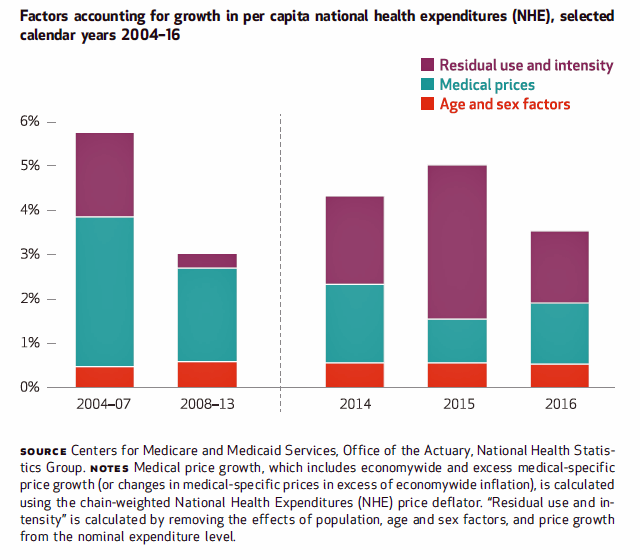
The biggest healthcare spenders in the United States are households and the Federal government, each responsible for paying 28% of the $3.3 trillion spent in 2016. Private business — that is, employers covering healthcare insurance — paid for 20% of healthcare costs in 2016, based on calculations from the CMS Office of the Actuary’s report on 2016 National Health Expenditures. The positive spin on this report is that overall national health spending grew at a slower rate in 2016, at 4.3% after 5.8% growth in 2015. This was due to a decline in the growth rates for the use of
Six Healthcare News Stories to Keep Hospital CFOs Up At Night
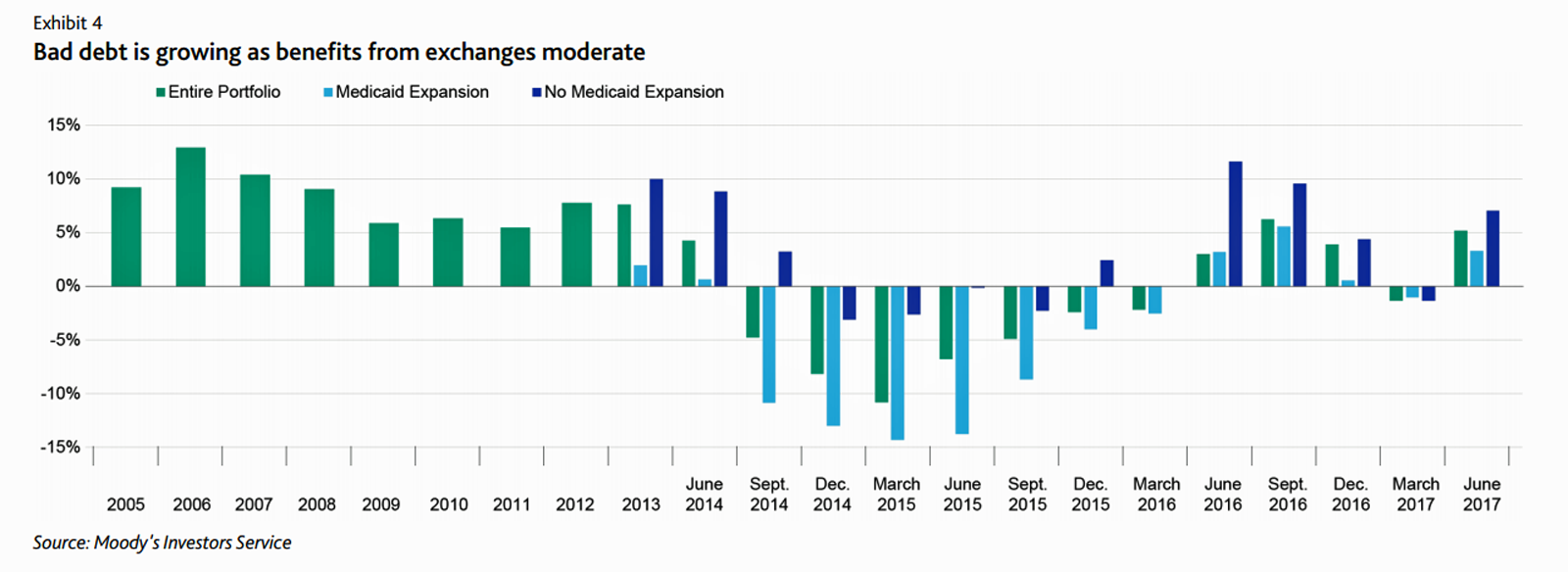
At this moment, the healthcare job I’d least like to have is that of a non-profit hospital Chief Financial Officer (CFO). Five news stories, published in the past 24 hours, tell the tale: First, Moody’s forecast for non-profit hospitals and healthcare in 2018 is negative due to reimbursement and expense pressures. The investors report cited an expected contraction in cash flow, lower reimbursement rates, and rising expense pressures in the midst of rising bad debt. Second, three-quarters of Federally Qualified Health Centers plan to lay off staff given lack of budget allocations resulting from Congressional inaction. Furthermore, if the $3.6
CVS + Aetna: An Inflection Point for American Healthcare
The nation’s largest retail pharmacy chain signed a deal to combine with one of the top three health insurance companies. The deal is valued at $69 billion. I wrote about this inflection point for U.S. healthcare four weeks ago here in Health Populi. CVS is both the biggest pharmacy and pharmacy benefit manager in the U.S., as the first chart shows. In my previous post, I talked about the value of vertical integration bringing together the building blocks of retail pharmacy and pharmacist care, retail clinics, the PBM (Caremark), along with Aetna’s health plan member base and business. As Amazon and other
Consumers Seek Health Engagement Everywhere: the Case for Alcohol and Breweries

More consumers are seeking health-making opportunities everywhere, both within and outside of traditional healthcare touch-points. That includes peoples’ consumption of beer. We learned from the Edelman Health Engagement Barometer that consumers seek to engage for health beyond healthcare organizations – namely, hospitals, providers, over-the-counter medicines, pharma and insurance. What was perhaps the most surprising industry segment consumers called on for personal health engagement was brewing and alcohol. Fully 8 in 10 consumers expect brewing and spirits companies to engage in health. The bar chart shows this finding, arraying beer and liquor producers on par with retail and consumer technology, along
The State of Financial Wellness and Health in America – Suffering Across the Ages
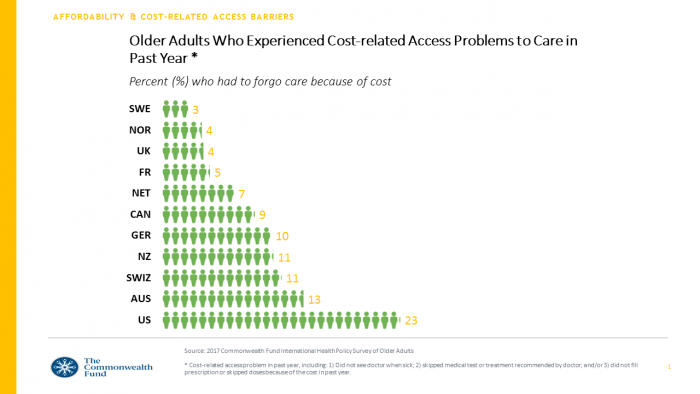
Nearly one-half of Americans are challenged by low financial well-being. Compared to emotional/mental, job/career, social, physical, and financial, it’s this last lens on personal health that gets the lowest ratings for the largest number of Americans. The second most worrying factor diminishing well-being is a tie between physical health and social health. Welcome to The uncomfortable reality of financial wellbeing, a report on the 2017 Financial Mindset Study Highlights from Alight Solutions, an HR services company. The first chart arrays the well-being rankings across the five factors, showing that just over one-half of Americans have more positive views on their emotional
High-Deductibles Do Not Automatically Inspire Healthcare Consumerism
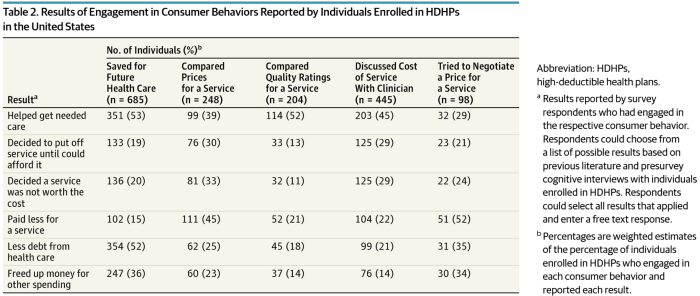
It takes more than enrolling in a high-deductible health plan (HDHP) for someone to immediately morph into an effective health care “consumer.” Research from Dr. Jeffrey Kullgren and his team from the University of Michigan found that enrollees in HDHPs could garner more benefits from these plans were people better informed about how to use them, including how to save for them and spend money once enrolled in them. The team’s research letter was published in JAMA Internal Medicine on 27 November 2017. The discussion details results of a survey conducted among 1,637 people 18 to 64 years of age
Engage With Grace and Your Family on Thanksgiving: Have an End-Of-Life Chat at the End-Of-the-Feast
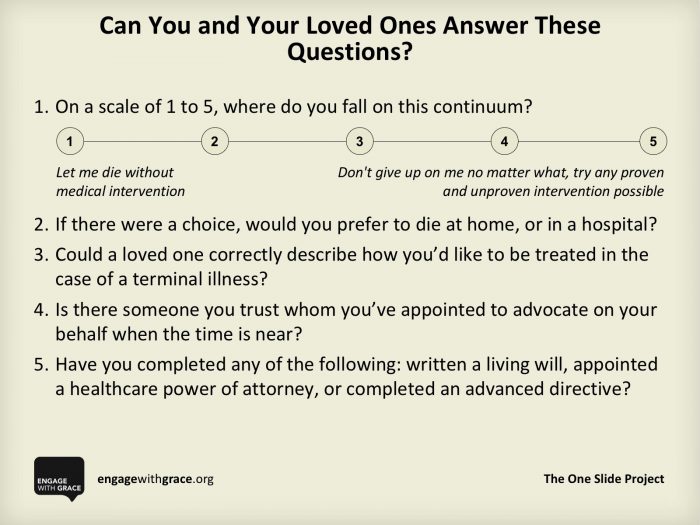
“Thanksgiving.” Merriam-Webster’s dictionary defines the word, first, as “the act of giving thanks.” Second, it’s “a prayer of expressing gratitude.” And, third, the word means a public acknowledgment or celebration of divine goodness. We each have our stories about how a loved one’s life has ended. If we’re lucky, that beloved person had a good death: in sleep, perhaps, or simply of old age with no hospital events or trauma. Then there are the Rest-of-Us who share family stories and experience of long and painful endings, in institutional settings often coupled with costly, so-called “heroic” bit unwanted, futile care. When you’re
TIME Magazine’s Best Inventions – Health-y Things and Privacy Questions
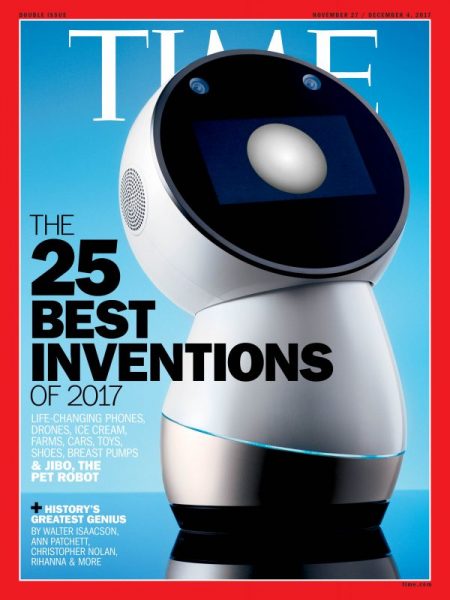
Health permeates a plethora of TIME magazine’s 25 Best Inventions of 2017. From head to foot, health is the mother of invention, based on TIME’s curation of “the best” things launched to market in the past year. Starting with “the head,” the Oculus Go virtual reality (VR) headset from Facebook. While the first function with which VR is associated is fun and games, Dr. Brennan Spiegel at UCLA Geffen School of Medicine has been proving out VR‘s value in helping patients deal with pain and medical management. Keep your eye on his and others’ research into VR’s use in healthcare. The
Don’t Touch My Entitlements to Pay For Tax Reform, Most Americans Say to Congress
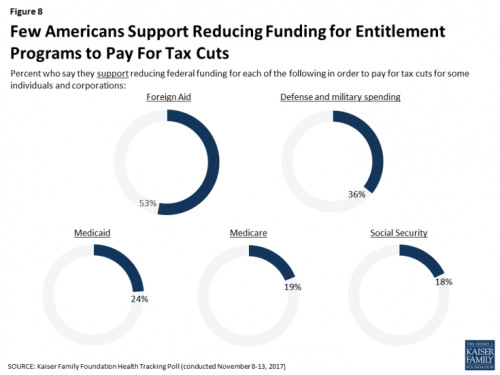
To pay for tax cuts, take money from foreign aid if you must, 1 in 2 Americans say. But do not touch my Medicaid, Medicare, or Social Security, insist the majority of U.S. adults gauged by the November 2017 Kaiser Health Tracking Poll. This month’s survey looks at Americans’ priorities for President Trump and the Congress in light of the GOP tax reforms emerging from Capitol Hill. While reforming taxes is considered a top priority for the President and Congress by 3 in 10 people, two healthcare policy issues are more important to U.S. adults: first, 62% of U.S. adults
Movin’ Out(patient) – The Future of the Hospital is Virtual at UPMC

In 2016, most consultations between patients and Kaiser-Permanente Health Plan were virtual — that is, between consumers and clinicians who were not in the same room when the exam or conversation took place. Virtual healthcare may be the new black for healthcare providers. Mercy Health System in St. Louis launched a virtual hospital in 2016, covered here in the Health Populi post, “Love, Mercy, and Virtual Healthcare.” Intermountain Healthcare announced plans to build a virtual hospital in 2018. And, earlier this month, UPMC’s CEO, Jeffrey Romoff, made healthcare headlines saying, “UPMC desires to be the Amazon of healthcare.” UPMC, aka University of Pittsburgh
The Internet of Things via Medicines – FDA Approves Digital Pill
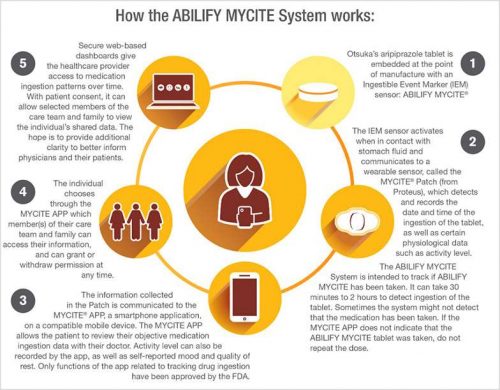
Yesterday, the FDA approved a “digital ingestion tracking system,” the first drug in the U.S. that has an ingestible (in other words, safely edible) sensor built into the pill. That sensor tracks that the medication was taken, which helps with adherence, meant to help ensure that patients who are prescribed the medicine do indeed take the regimen as prescribed. Once ingested, the sensor in the pill communicates to a wearable patch on the patient that then communicates information to a mobile health app that tracks the pill-taking via smartphone. Patients can allow their family and clinicians access to that information
U.S. Healthcare Spending & Outcomes in Five Charts: #EpicFail in the 2017 OECD Statistics
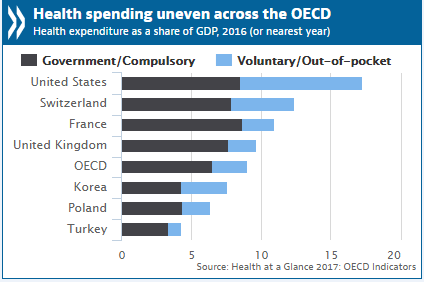
“Spend more. Get less.” If a retailer advertised using these four words, how many consumers would buy that product or service? This is the American reality of healthcare spending in 2016, told in the OECD report, Health at a Glance 2017. I present five charts from the study in this post, which together take the current snapshot health-economic lesson for the U.S. First, look at health expenditures as a share of gross domestic product: the U.S. is number one above Switzerland, France, and the UK, and about two times the OECD average. Note, too, the proportion of out-of-pocket and so-called
Stress is US: Health Care Is the #1 Stressor in America
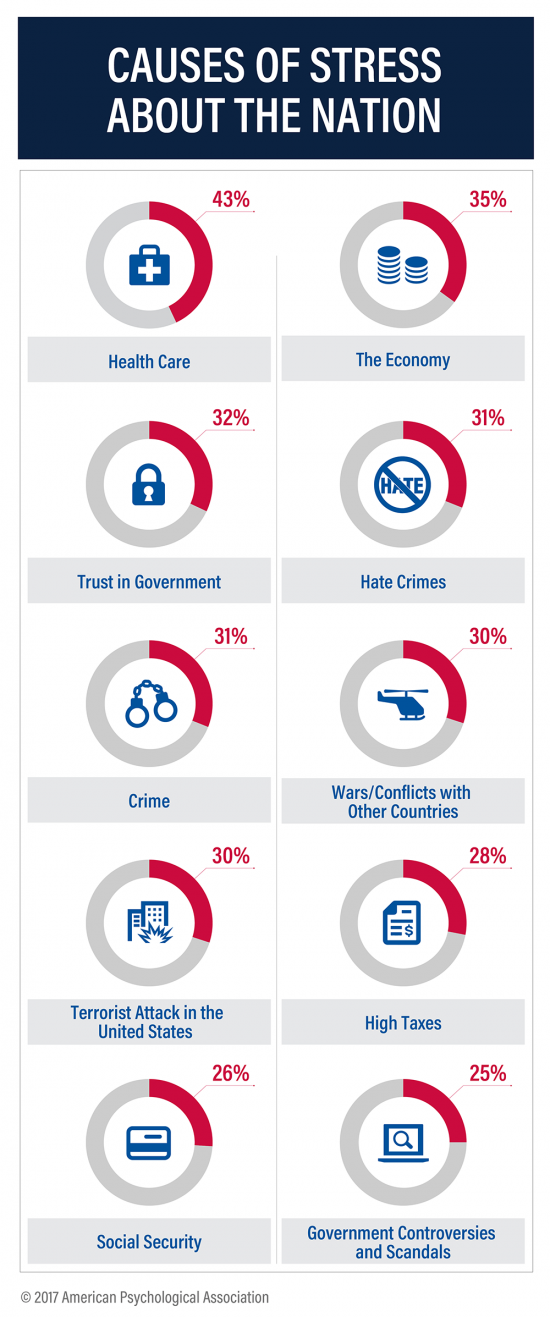
Above the economy, trust in government, crime, war, terrorism, and taxes, health care is the top cause of stress in America. For ten years, the American Psychological Association has gauged Americans’ collective mood in their ongoing study, Stress in America. The latest report is The State of Our Nation, published this month, finding that we’re at the “lowest point in our nation’s history” according to 59% of Americans. The 2016 national election in the U.S. raised the stress-stakes, when APA released a stress study we discussed here in Health Populi. The election season was a source of stress for 52%
Rx Delivery to the Patient’s Door: Home Is Where the Health/Care Is

Talk about the last mile in healthcare. CVS Pharmacy will deliver prescription drugs to patients’ homes, the company announced this week. “Same-day prescription delivery gives customers the easy option of having the pharmacy they trust deliver right to their front door at no cost,” Helen Foulkes, President of CVS Pharmacy, said in the press release. Rx home delivery may not be “the” last mile to conquer all healthcare access challenges, but it’s nonetheless a signal that healthcare industry suppliers are focusing on helping patients streamline their health-consumer lives. In this case, it’s also CVS morphing towards Amazon’s Prime delivery model. Amazon
Evidence is Growing for Using Digital Health Apps, Says IQVIA
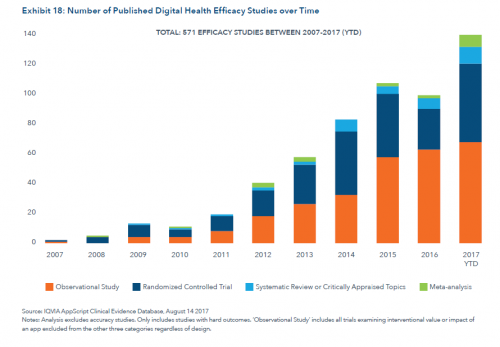
The evidence of the value of digital health tools is growing, based on research published in The Growing Value of Digital Health, from the IQVIA Institute for Human Data Science. With this report, the IMS Institute ushers in the organization’s new name, IQVIA Institute (THINK: “I” for “IMS,” and “Q” for “Quintiles). This is the organization’s third report on digital health, following the original analysis from 2013, updated in 2015. Here’s my take on the 2013 report, which found that 36 mobile health apps represented one-half of all downloads. On a conference call held last week, the company’s SVP and Executive
Health Care Is 2.5 More Expensive Than Food for the Average U.S. Family
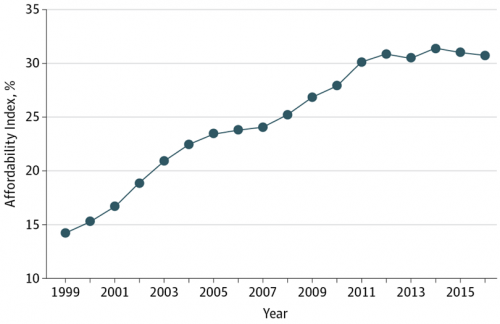
The math is straightforward. Assume “A” equals $59.039, the median household income in 2016. Assume “B” is $18,142, the mean employer-sponsored family insurance premium last year. B divided by A equals 30.7%, which is the percent of the average U.S. family’s income represented by the premium cost of health insurance. Compare that to what American households spent on food: just over $7,000, including groceries and eating out (which is garnering a larger share of U.S. eating opportunities, a topic for another post). Thus, health care represents, via the home’s health insurance premium, represents 2.5 times more than food for the
A Health Consumer Perspective on CVS+Aetna
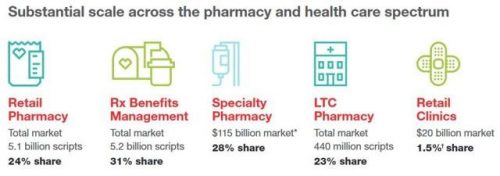
A response to Amazon’s potential moves in healthcare and pharmacy…strategic positioning for the post-Trump healthcare landscape…vertical integration to better manage healthcare utilization and costs…these, and other rationale have been offered by industry analysts and observers of the discussions between CVS and Aetna, for the former to acquire the latter. “A pharmacy chain buying a health insurance company?” many have asked me over the past few days. These inquiring minds include people who work both inside and outside of health/care. I ask back: in 2017 and in the future, “What is a pharmacy? What is a health plan?” See the
CVS Health in Talks to Acquire Aetna – The Changing Retail Health Landscape
Just a few days since CVS Health announced the company would be working with mega-health insurer Anthem on a prescription drug management program, the pharmacy chain today is reportedly in talks to buy Aetna, the national health insurance company, according to CNBC and other credible news outlets like the Wall Street Journal. Remember that Aetna’s bid to acquire Humana was scuttled earlier this year after many months of negotiation and positioning, along with FTC scrutiny about antitrust. That insurance merger “died” on one day in February 2017 along with an Anthem-CIGNA deal, covered here by CNN. A deal between CVS
In the Post-Weinstein Era, How to Market Health to Women: Philips, Kalenji, and Libresse Getting It Right

“With Mad Men still in charge, ad campaigns miss the mark,” an editorial published this week in the Financial Times asserts. Leave it to a fiscally conservative British publication to be spot-on about a particularly, but not uniquely, American challenge, in this post-Weinstein (Miramax), -Price (Amazon), and today, -Halperin (MSNBC) moment of sexual harassment revelations. In health/care, women are key consumers, buyers and influencers, yet under-represented in the Mad Men demographic of senior advertising executives, as the data-driven FT essay points out. So it’s especially heartening to find this month a few examples of empowering, inspiring ad campaigns getting health/care marketing
Health (Healthcare, Not So Much) Abounds in Prophet’s Top 50 Brands
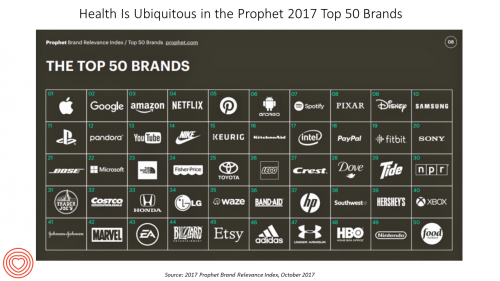
U.S. consumers’ most-valued brands include Apple, Google, Amazon, Netflix, Pinterest, Android, Spotify, PIXAR, Disney and Samsung, according to the 2017 Brand Relevance Index from Prophet. The top 50 are shown in the first chart. On the second chart, I’ve circled in red the brands that have reach into healthcare, health, fitness, and wellness. Arguably, I could have circled every brand in the top 50 because in one way or another, depending on the individual, people find health “everywhere” that’s relevant to them based on their own definitions and value-systems. This is Prophet’s third year conducting this study, and I was
Four Things We Want in 2017: Financial Health, Relationships, Good Food, and Sleep
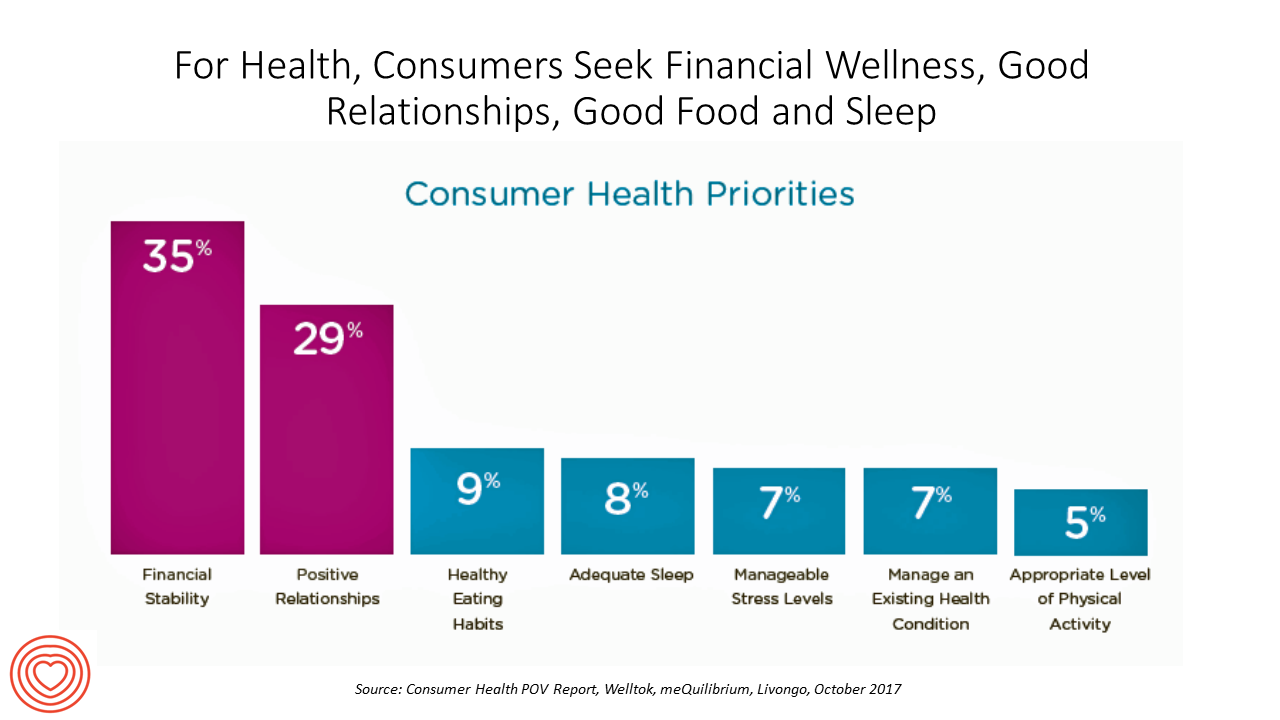
THINK: money and love. To find health, working-aged people seek financial stability and good relationships, according to the Consumer Health POV Report from Welltok, meQuilibrium, and Zipongo, featured in their webinar broadcast today. The online consumer survey was conducted among 2,000 full-time working U.S. adults in August 2017, segmented roughly into thirds by Boomers (37%), Gen Xers (32%), and Millennials (31%). Much lower down the priority list for healthy living are managing food, sleep, and stress based on the poll. Feeling stress is universal across most consumers in each of the three generational cohorts, especially related to work and finance.
President Trump Utters “M” for Murder, and a $1 MM Price Tag for Rx Therapy – an October 2017 Pharma Update
Last week, President Trump once again used the “M” word (“murder”) in a sentence accusing the pharmaceutical industry of too-high priced products for U.S. health citizens. The sentence included the phrase, “Drug companies are getting away with murder.” That week, USA Today published an article on a new FDA-approved specialty drug therapy that could add up to over a $1 mm price tag. There is much to report in the world of pharmaceutical innovation, pricing, and patient Rx coverage this month. The CVS Health – Epic announcement ranks high in Health Populi’s vision for the evolving health/care ecosystem, bringing together two
Income Inequality For Older Americans Among Highest in the World – What This Means for Healthcare
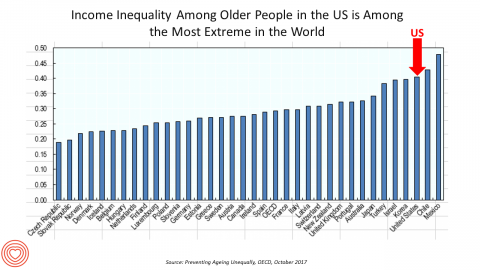
Old-age inequality among current retirees in the U.S. is already greater than in ever OECD country except Chile and Mexico, revealed in Preventing Ageing Unequally from the OECD. Key findings from the report are that: Inequalities in education, health, employment and income start building up from early ages At all ages, people in bad health work less and earn less. Over a career, bad health reduces lifetime earnings of low-educated men by 33%, while the loss is only 17% for highly-educated men Gender inequality in old age, however, is likely to remain substantial: annual pension payments to the over-65s today are
Most Consumers Would Trust a Health Info Site “Prescribed” by Their Doctor
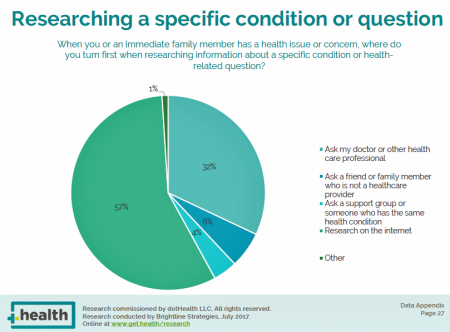
Most consumers access the Internet for health information before they ask their doctor for the same information. But virtually everyone who goes online for health information would trust a website recommended to them by their doctor, according to the dotHealth Consumer Health Online – 2017 Research Report. This survey was conducted on behalf of dotHealth, an internet registry company channeling “.health” domains to organizations in the broad health and healthcare landscape. [FYI, both Health Populi and JaneSarasohnKahn are also registered with .health domains, having availed ourselves of this service at launch]. Six in 10 consumers who have used the internet in the
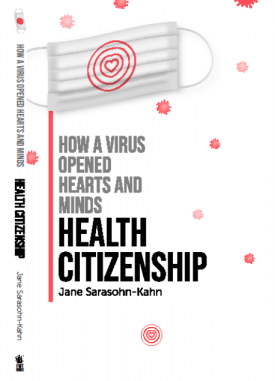
 I'm grateful to be part of the Duke Corporate Education faculty, sharing perspectives on the future of health care with health and life science companies. Once again, I'll be brainstorming the future of health care with a cohort of executives working in a global health care enterprise.
 Jane joined host Dr. Geeta "Dr. G" Nayyar and colleagues to brainstorm the value of vaccines for public and individual health in this challenging environment for health literacy, health politics, and health citizen grievance. Click onto the Pfizer Value of Vaccines site and you can watch four episodes covering the challenges with adult vaccination, the employer and health plan member's journey to vaccination, reimbursement, and collaborating for proactive prevention.
 Jane will be working with EU- and UK-based clients in September and October 2026, collaborating with stakeholders in digital health, public/community health, retail health, and growing opportunities for health-at-home. Stay tuned to her updates here on Health Populi on-the-ground as she lives the digital nomadic work-life in Italy, Belgium, the Netherlands, and in London.