


Tying Health IT to Consumers’ Financial Health and Wellness
As HIMSS 2016, the annual conference of health information technology community, convenes in Vegas, an underlying market driver is fast-reshaping consumers’ needs that go beyond personal health records: that’s personal health-financial information and tools to help people manage their growing burden of healthcare financial management. There’s a financial risk-shift happening in American health care, from payers and health insurance plan sponsors (namely, employers and government agencies) to patients – pushing them further into their role as health care consumers. The burden of health care costs weighs heavier on younger U.S. health citizens, based on a survey from the Xerox Healthcare
Telehealth Comes of Age at HIMSS 2016
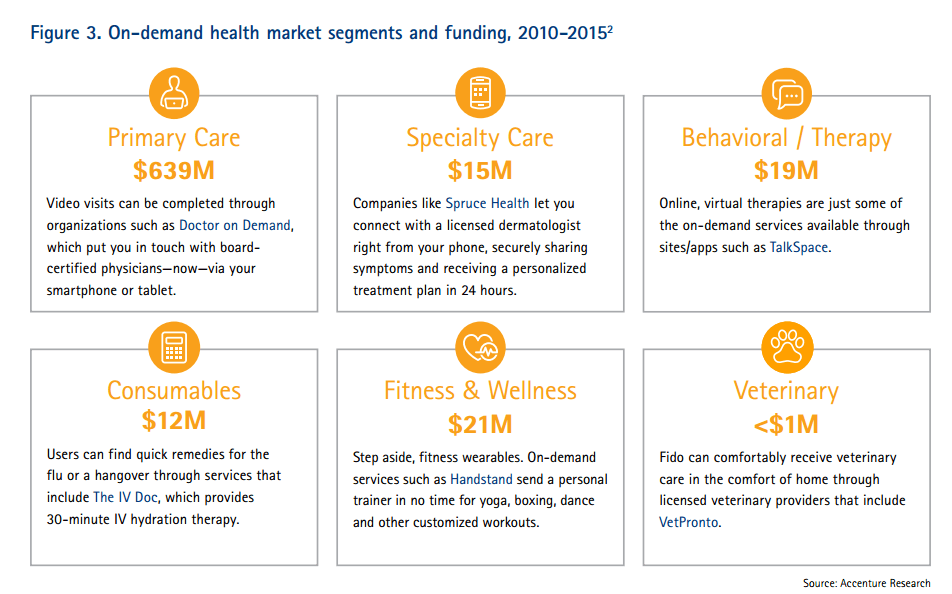
Telehealth will be in the spotlight at HIMSS 2016, the biggest annual conference on health information technology (HIT) that kicks off on 29th February 2016 in Las Vegas – one of the few convention cities that can handle the anticipated crowd of over 50,000 attendees. Some major pre-HIMSS announcements relate to telehealth: American Well, one of the most mature telehealth vendors, is launching a software development kit (SDK) which will enable The new videoconferencing option can simultaneously connect patients with multiple physicians and specialists, and the SDK is designed to enable users to incorporate telemedicine consults into patient portals and
The New-New Health Fair – Care Goes Shopping
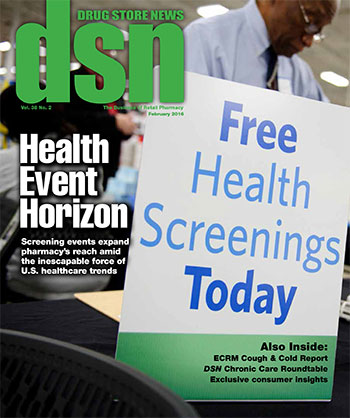
As consumers’ growing financial skin in the health care game compels them to seek care in lower-cost settings, the pharmacy business recognizes the opportunity to provide healthcare services beyond the core business of filling prescriptions. This month, Drug Store News (DSN) published a special section called which profiles several pharmacy companies’ expanding reach into retail health – in particular, re-defining the concept of the “health fair.” A health fair is “an educational and interactive event designed for outreach to provide basic prevention and medical screening to people in the community,” according to the latest Wikipedia definition. But the health fairs described
Good Design Can Drive Trust in Healthcare
“The best healthcare must involve kindness and instill trust,” reads the title of a Huffington Post UK article written by David Haslam, Chair of NICE, the National Institute for Health and Care Excellence. NICE (an appropriate acronym for the article’s sentiment) is in fact not an institution known for charity or do-goodness, but is the organization that is charged with assessing the cost-effectiveness and -benefit of medical innovations — drugs, devices, procedures and processes. Haslam writes that kindness and trust connote “care, community and friendship.” These factors have a profound impact on health outcomes, Haslam has observed. Trust drives health
What Zero Kilometers Means for Food and Health

Italians get the food=health connection as a natural everyday behavior. So it’s no surprise that one of the fast-selling books in Italy’s librerias is about Slow Food – a movement that’s celebrating its 30th anniversary in that hot book by Carlo Petrini, a father of the Slow Food organization. I took the photograph this evening peering into a shop window during our post-dinner walk along the Via Gucciardini past the Giunti al Punto bookstore. [In full transparency, I’ve been a long-time member of this organization, represented by the little red snail icon.] The book has a three-word title: Buono, Pulito, Giusto. This
Beauty Meets Pharma in Retail Health – At Coin in Florence
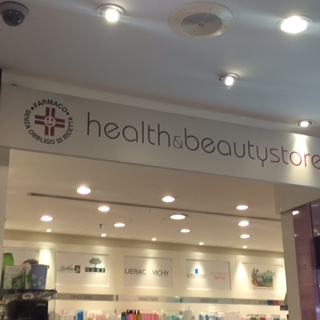
All over the world, people define their health and wellness across many dimensions…physical, mental, financial, and appearance. In Florence, Italy, I happened upon a riff on this last component on “look good, feel good” at the Coin Department store located on Via Del Calzaiuoli in central Firenze. Welcome to Coin’s Health&Beauty Store. The two photos tell a story about health, where we live, work, play, and shop, the mantra for public health focused on the social determinants of health beyond healthcare. Here at Coin, adjacent to the holistic brands of Clarins and other luxury labels, is a pharmacy along with
Health Consumers Look For Cost and Convenience
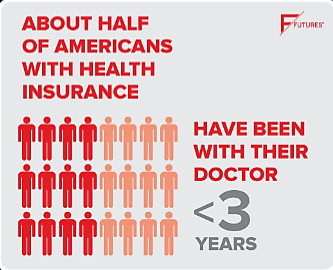
In a growing on-demand society, coupled with a burden of more out-of-pocket health care costs, U.S.health consumers tend to vote with their pocketbooks for healthcare based on cost and convenience, at least when it comes to prescription drug demand, according to the Finn Futures Health Poll conducted by Finn Partners. The survey was conducted in November 2015 among 1,000 U.S. online adults. 51% of consumers have been with their current health plans and primary care physicians for three years or less, which Finn Partners sees as a sign that brand loyalty isn’t a top motivation for health consumers signing on
Improving the Patient Experience in Legacy Health Systems – My Start-Up Health Interview
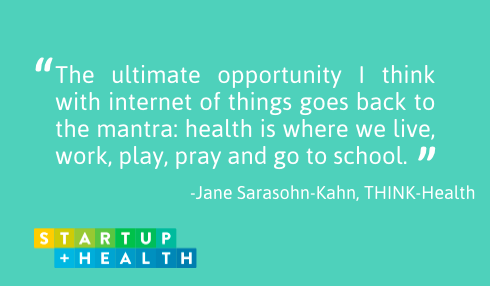
The so-called legacy healthcare system are the incumbents in American health care — hospitals, physician practices, pharma, health plans, and other organizations that have long-served and been reimbursed by traditional volume-based payment. Patients, now morphing in to health consumers, look to these stakeholders to provide new levels of service, accessibility, convenience, transparency and value — the likes of which people find in their daily life in other market sectors. Those consumer demands are pressuring the health system as we know it in many new ways, which I discussed with Unity Stoakes, Co-Founder of Startup Health, at the Health 2.0 Conference in
Welcome to the Era of Personal Health IT – a #HIMSS16 Preview
People – patients, caregivers, health consumers all – have begun to use the digital tools they use in daily life for booking taxis, managing money, seeking information — for their health. This is the growing adoption of Personal Health IT (PHIT), and it’s a growing aspect of the annual HIMSS Conference that the planet’s health IT folk will attend from 29th February until 4th March in Las Vegas. I talk about the phenomenon of PHIT and #HIMSS16 in The State of Health IT to Engage the New Health Consumer, a summary of the driving forces of the trend and opportunities
My Body, My Self – With My Physician, Say Patients
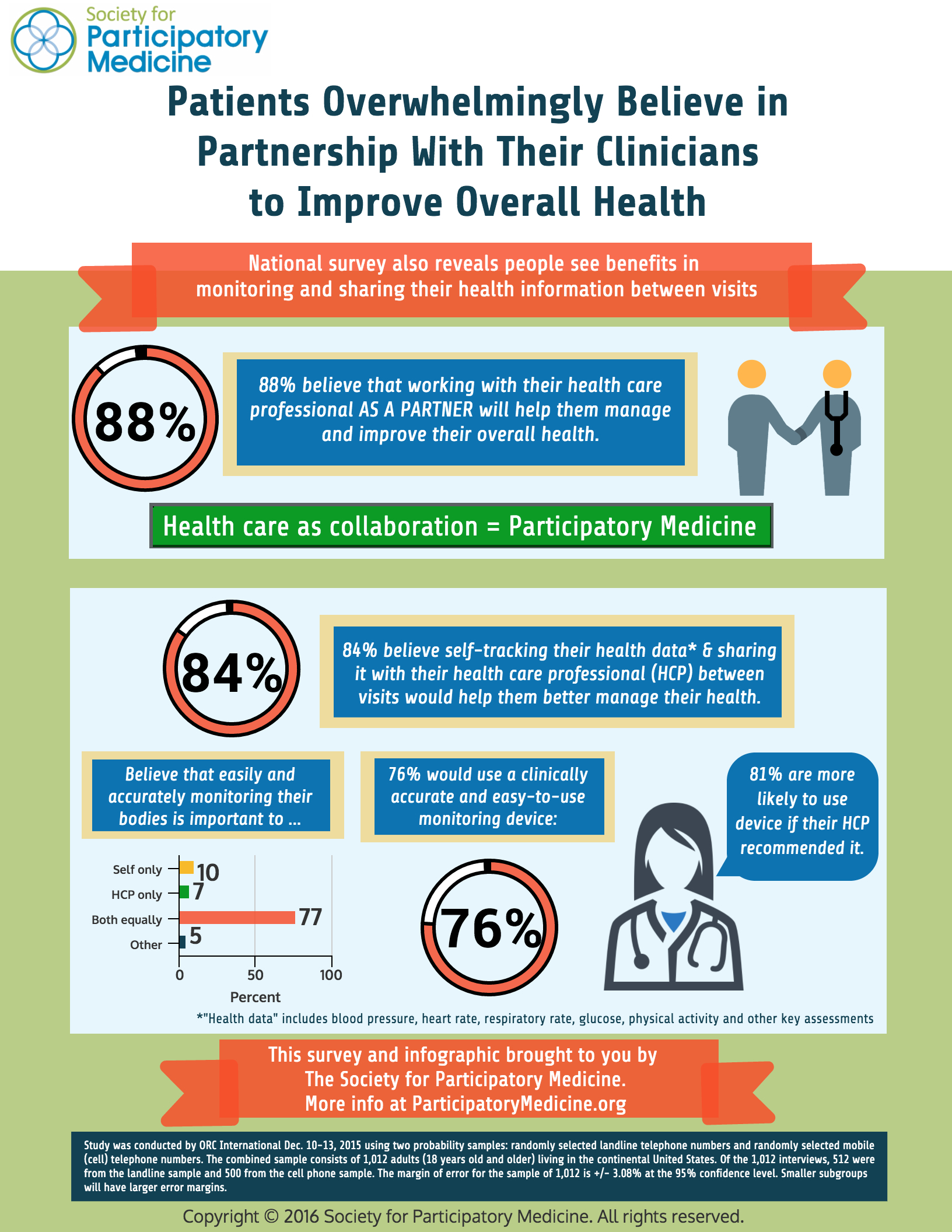
9 in 10 people in the U.S. believe working with their health clinician as a partner will help them better manage their overall health, according to a survey conducted for The Society for Participatory Medicine. Consumers’ majority call-out for shared decision-making with health care professionals also extends to their self-tracking health data — for example, via activity trackers, digital glucometers for blood sugar, technologies for blood pressure, and food logging apps. 84% of people said that sharing their personal self-tracking health data with clinicians between visits would also help people manage health. That clinician’s involvement is very important to health
Health Consumers Happy With Doctor Visits, But Want More Technology Options
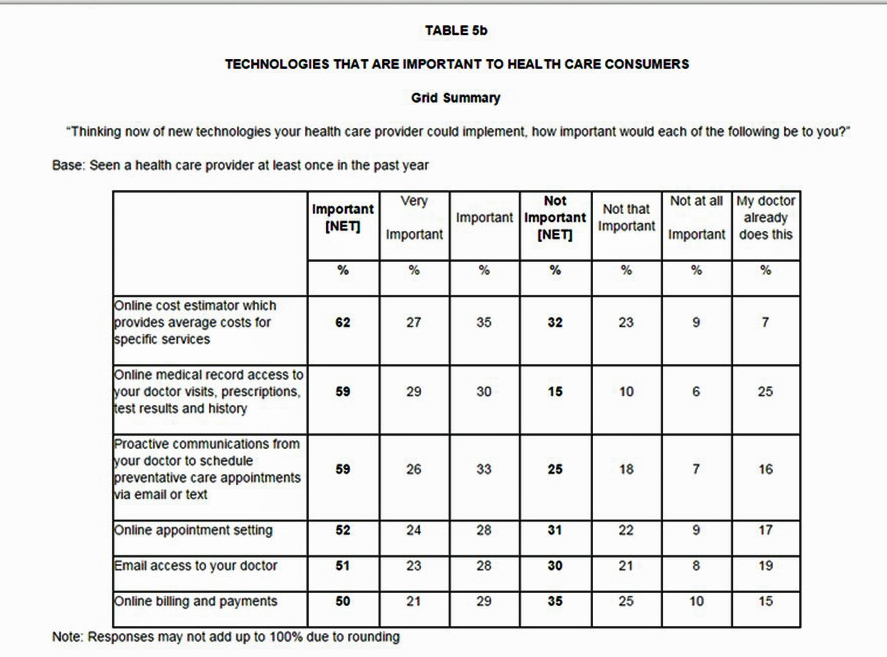
9 in 10 adults in the U.S. have visited a doctor’s office in the past year, and over half of these patients have been very satisfied with the visit; 35% have been “somewhat” satisfied. Being a highly-satisfied patient depends on how old you are: if you’re 70 or older, two-thirds of people are the most satisfied. Millennial or Gen X? Less than half. What underlies patient satisfaction across generations is the fact that younger people tend to compare their health care experience to other retail experiences, like visiting a bank, staying at a hotel, or shopping in a department store.
The Health Information Economy – Better With Patients
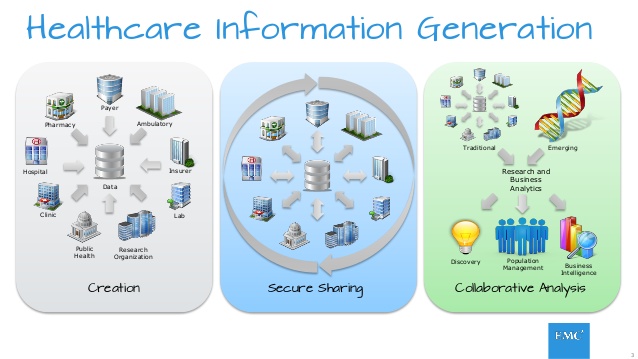
“Consumers expect to have their data available and shareable.” Two essays in two issues in the past two weeks of The New England Journal of Medicine point to the importance of patients – people, caregivers, consumers, all — in the morphing “health information economy,” a phrase used in the title of one of the published pieces. In Time for a Patient-Driven Health Information Economy, Dr. Ken Mandl and Dr. Isaac Kohane, who are both affiliated with the Department of Biomedical Informatics at Harvard, discuss peoples’ growing interest in engaging with their personal health information, noting frustrating barriers to doing so:
Getting Beyond Consumer Self-Rationing in High-Deductible Health Plans
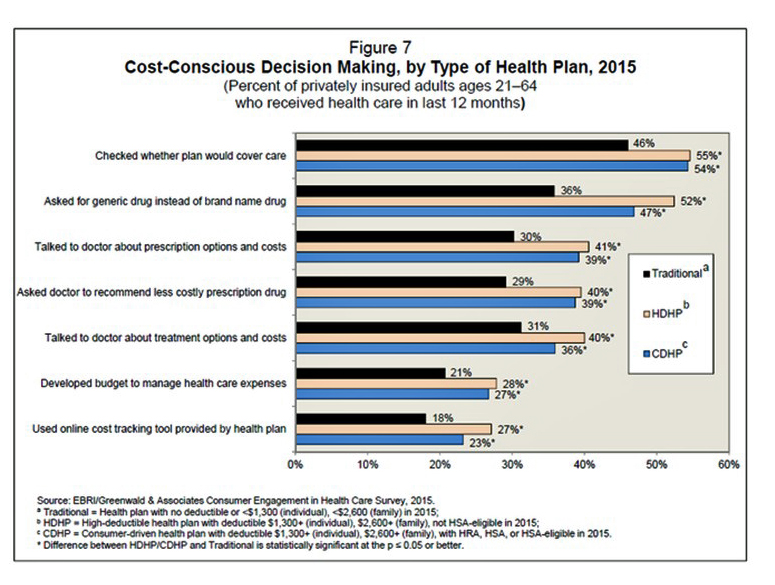
The rising cost of health care for Americans continues to contribute to self-rationing care in the forms of not filling prescriptions, postponing necessary services and tests, and avoiding needed visits to doctors. Furthermore, health care costs are threatening the livelihood of most American families, according to the Pioneer Institute. “What Will U.S. Households Pay for Health Care in the Future?” asks the title of a study by the Institute, noting that health care costs for an American family of average income could increase annually to $13,213 by 2025 — and as high as $18,251. Pioneer calculates that this forecasted spend will
Let’s Make a Deal: Patients Weigh Privacy Paybacks
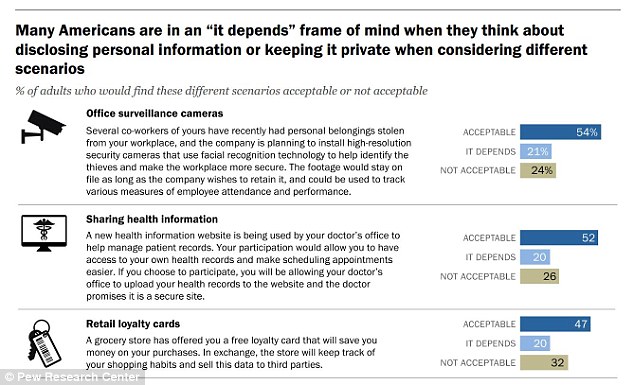
“It depends” is the hedge-phrase that characterizes how Americans see disclosing personal information versus keeping private information private, according to the consumer survey report, Privacy and Information Sharing, published by the Pew Research Center (PRC) in January 2016. U.S. adults see a privacy trade-off, living in the convenience-context of 21st century digital economy in exchange for some form of value. The “it depends” is a factor of what kind of data is geing collected, especially by third parties, how long that data area retained, for what use — vis-à-vis what a person is trading in return which could be a hard dollar
Consumers Take Better Preventive Care of Pets Than Themselves, CIGNA Finds
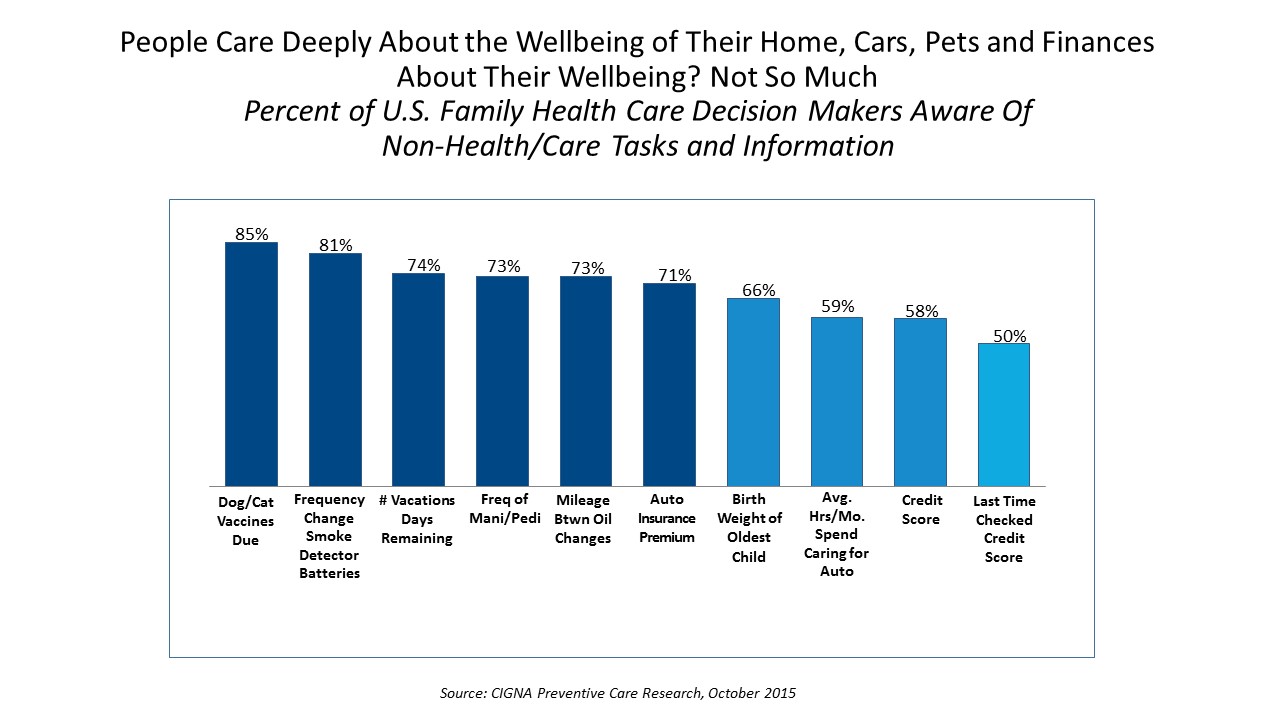
Nine in 10 pet owners know when their dog or cat is due for their shots. Eight in 10 women know the frequency with which they get manicures and pedicures. 80% of men know the mileage between old changes. But only 50% of family health care decision makers know their blood pressure, and only 20% know their biometric numbers like cholesterol and BMI. Americans are great at doing preventive care for their pets and automobiles; but not so much for their own bodies and health, finds the report CIGNA Preventive Care Research, a survey of 1,000 U.S. consumers between 25 and
Health Consumers Grow Clinical and Financial Engagement Chops
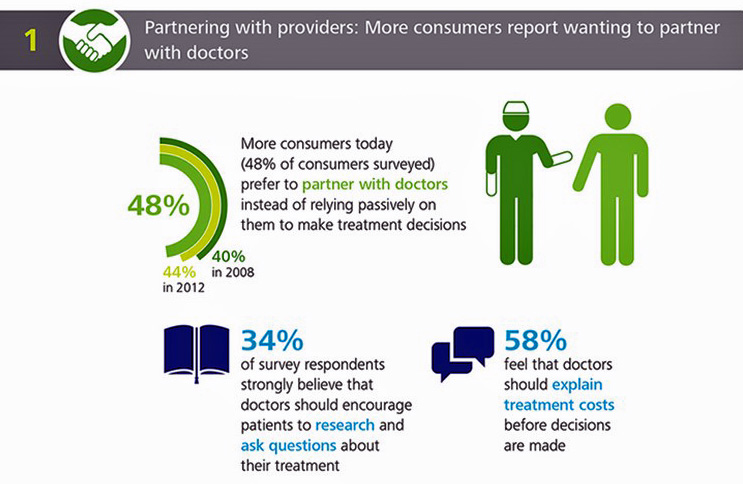
About one-half of consumers want to partner with doctors instead of allowing their physicians to make treatment decisions for them, according to a report from the Deloitte Center for Health Solutions, Health care consumer engagement: No “one-size-fits-all” approach. 1 in 4 people (25%) want to make treatment decisions themselves. Call that clinical health engagement. But even more people, 6 in 10, want to be financially-health engaged: 58% believe doctors should explain treatment costs before decisions are made, shown in the first chart. Most consumers would be comfortable talking about health care costs with doctors, and believe doctors should provide and explain the
A Growing Market for DIY Digital Health for Sleep and Pain
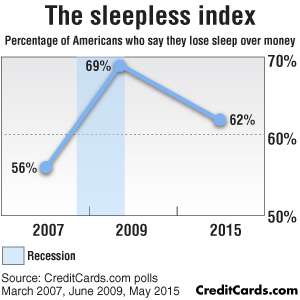
Sleeplessness and chronic pain are two epidemics that are mutually-enforcing, as the chart shows. The 2015 Sleep in America Poll found that pain is a key factor in Americans’ “sleep debt:” 21% of people have experienced chronic pain and lose 42 minutes of sleep due to it; 36% have experience acute pain, resulting in 14 minutes of lost sleep each night. People dealing with both conditions project-manage their health in numerous ways, multitasking with over-the-counter meds, prescription drugs (from “lite” to narcotic), meditation, yoga, homeopathic remedies, aural relaxation, Mozart, and more. There are a growing number of digital health tools now
Retailers will morph into health destinations in 2016
Retailers in the U.S. are morphing into health destinations in 2016. Members of Target’s management team attended the 2016 Consumer Electronics Show (CES) and shared their perspectives in the company blog. Among the Target teams observations came from the Chief Marketing Officer, Jeff Jones, who observed, “A tidal wave of newness is coming to fitness technology and many companies are on the cusp of changing the game. From nutrition and sleep to how you exercise, it’s all going to be measured, linked and tracked. Wearables are here to stay and getting smarter every year.” The Senior Vice President for Hardlines,
The Consumer Health Electronics Show – Putting People At the Center
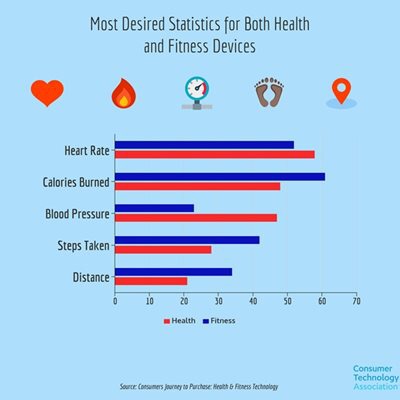
As we concluded our panel on The Wizards of Maternal Health kicking off today’s launch of the 2016 Digital Health Summit, co-located with the 2016 CES (Consumer Electronics Show) in Las Vegas, our diverse team concurred that there’s more than enough “technology” on the convention floor. The challenge now for health is to make connections between the islands of devices, and generate meaningful data and culturally contextual information and support for consumers (patients, caregivers, people) and health providers. Here at the CES, it’s all about the supply side of the equation – for health, that means digital health tools, wearables,
Live from CES 2016 – The Healthy Connected Life

As he walked across the stage, back-and-forth, the CEO of the Connected Technology Association talked about pacing not to think, but to compete in a Fitbit Challenge at the 2016 CES this morning, live in Las Vegas. Shapiro leads the Consumer Technology Assoociation (CTA), formerly known as the Consumer Electronics Association. The Association was re-amed with “Technology” as its middle name, morphing away from Electronics, to recognize the growth of the market away from Radio Shack (metaphorically speaking) toward the Uber-ization of Everything and the Internet of Everyday Things like cars, refrigerators, washing machines, and thermometers. “Intelligence and data are
Looking for Health at CES 2016

The Internet of Healthy and Medical Things will proliferate at CES 2016 in Las Vegas next week – the annual Consumer Electronics Show. This is the yearly mega-convention organized by the Consumer Technology Association, and digital health has been among the fastest-growing marketplaces at the CES for several years in a row. The two-day Digital Health Summit will complement the vendors ont he convention floor with content, education, and networking for the industry. Here’s a link to my latest Huffington Post column on Health at the 2016 Consumer Electronics Show – What to Expect. Health Populi’s Hot Points: The Consumer
The 2016 THINK-Health Health/Care Forecast
It’s time to get the tea leaves out and mash up trends in my world of health, health care, technology, policy and people for 2016. We’ll start with the central player: people, consumers, patients, caregivers all. Health consumerism on the rise. People – call us patients, consumers, caregivers – will take on even more financial and clinical decision making risk in 2016. Growing penetration of high-deductible and consumer-driven health plans will push (not just nudge) people into the role of health care consumers, and the emerging businesses and programs serving the transparency market for price and quality will gain traction
Diagnosis: Acute Health Care Angst In America
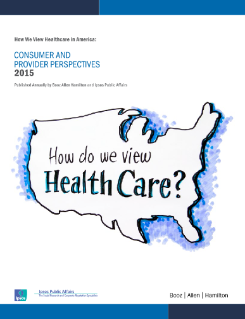
There’s an overall feeling of angst about healthcare in America among both health care consumers and the people who provide care — physicians and administrators. On one thing most healthcare consumers and providers (can agree: that the U.S. health care system is on the wrong track. Another area of commonality between consumers and providers regards privacy and security of health information: while healthcare providers will continue to increase investments in digital health tools and electronic health records systems, both providers and consumers are concerned about the security of personal health information. In How We View Healthcare in America: Consumer and Provider Perspectives,
Connectivity Is A Social Determinant of Health
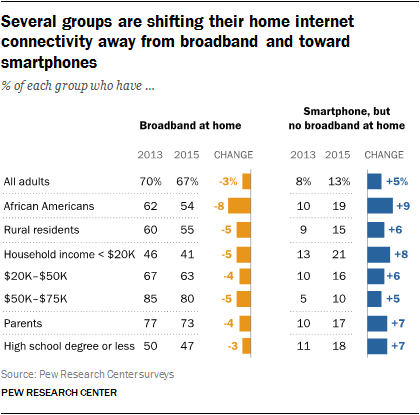
It’s Christmastime, so I’m thinking about connections. “Connectivity” can be social (offline and online), which is indeed a health factor (see Christakis and Fowler on being Connected). But the kind of connectivity to which I’m referring is broadband, WiFi, the kind most often associated with data plans, cable to the home, and free WiFi at your favorite coffee or fast food joint. That kind of connectivity is also a social determinant of health, and is increasingly becoming so for all people. Yet as peoples’ need for internet connectivity is fast growing, especially for health, home broadband connectivity has reached a
The Magic of Getting Fit Starring Penn Jillette (With Help From Withings)
Health is where we live, work, play, pray and have fun. And if you’re Penn Jillette, the magician who collaborates with Teller, it took more than sleight of hand or a magic trick to lose 100 pounds — one-third of his body weight. He did it, according to this video, with the help of hard work, and using activity tracking tools from Withings. [youtube https://www.youtube.com/watch?v=EQWCVLvuBzI?rel=0] Unlike many people who quantify themselves for wellness and fitness, Penn did so to avoid having a medical procedure (i.e., the implantation of a stomach sleeve for weight loss) and also to reduce the six
In 2016 Reaching For The Triple Aim Will Drive Health IT Spending
Adoption of telehealth, remote health monitoring, patient engagement platforms, mobile and digital health applications, and the emergence of the Internet of Things in health care will all be bolstered in 2016 based on health care providers’ having to do more with less (money, labor, resources). The value-based healthcare world — the migration of payment “from volume to value” — requires greater investment in information and communications technology that moves care to lower-cost sites, with lower-priced labor (as appropriate), and shifting greater clinical self-care and financial skin-in-the-game to patients. My annual health IT forecast was published yesterday in iHealthBeat, 2016: Technology
Prescription Drug Costs Will Be In Health Benefits Bullseye in 2016
Prescription drug costs have become a front-and-center health benefits cost issue for U.S. employers in 2015, and in 2016 the challenge will be directly addressed through more aggressive utilization management (such as step therapy and prior authorization), tools to enable prescription intentions like DUR, and targeting fraud, waste and abuse. Consumers, too, will be more financially responsible for cost-sharing prescription drugs, in terms of deductibles and annual out-of-pocket limits, as described in the PBMI 2015-206 Prescription Drug Benefit Cost and Plan Design Report, sponsored by Takeda. The Pharmacy Benefit Management Institute has published this report for 15 years, which provides neutral, detailed survey
TIME Sees Lots of Health in the Best Inventions of 2015
Among TIME magazine’s 25 best inventions of 2015, most relate directly or adjacently to health and health care. Among the 25 are: The EKO Stethoscope A gluten-sniffing sensor, the 6SensorLabs Nima The Sproutling baby monitor Nike Flyease 8 shoes, that you can tie with one hand Cogni-Toys Dino, the toy that talks back A smart refrigerator that can fix you a glass of nutrient-enriched water The TZOA environmental tracker for personal pollution sensing, measuring atmosphere in a specific area (e.g., temperature, particulates such as dust, pollen, mold, and car exhaust), and UV exposure Doppler Labs Here Active Listening earbuds The
The Internet of Healthy Things According to Dr. Kvedar
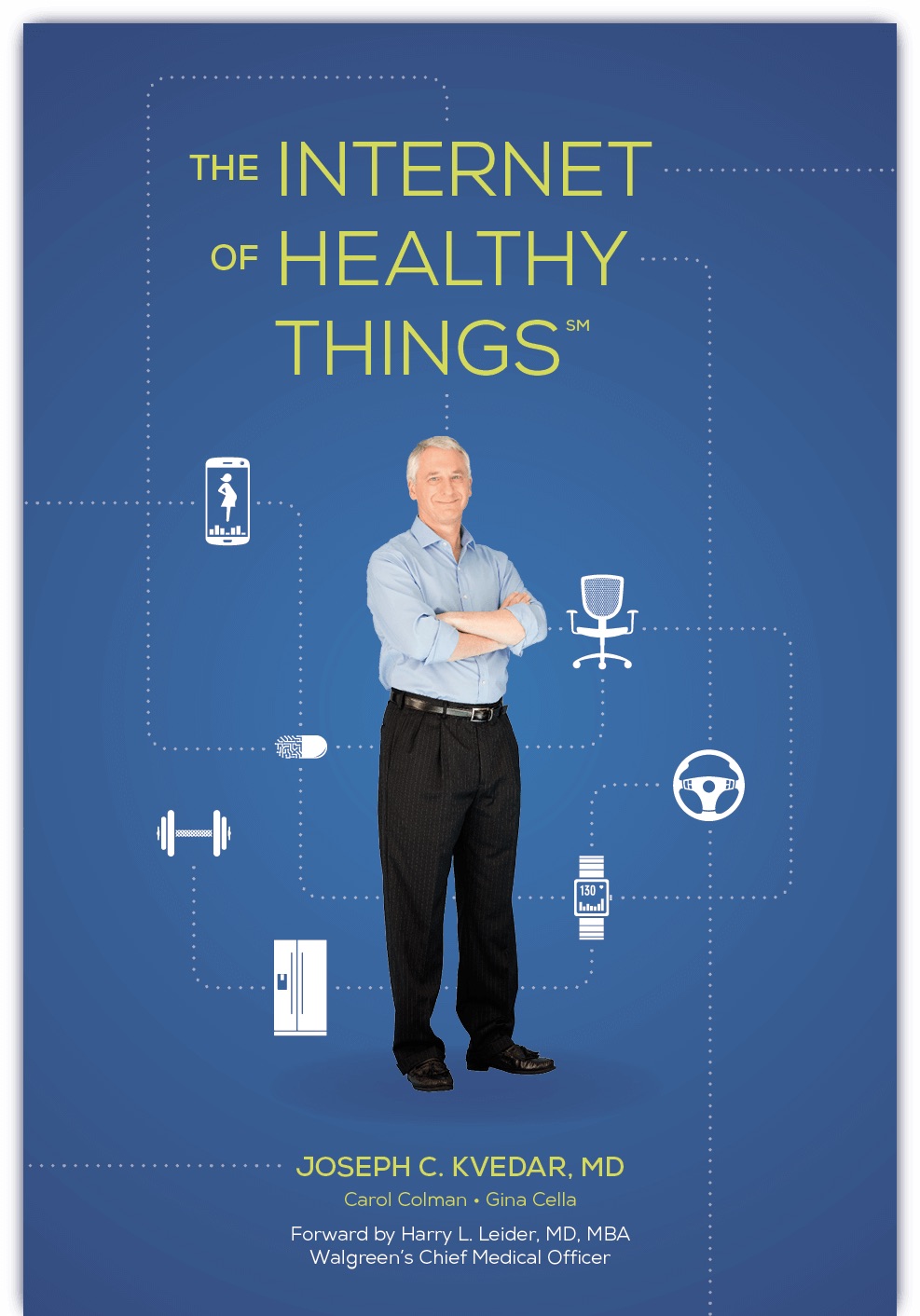
By 2020, according to the World Economic Forum, more than 5 billion people and 30 billion “things” will be connected to the Internet — cars, refrigerators, TVs, washing machines and coffeemakers, among those 5 bn folks’ electronic stuff. But so will medical devices, activity trackers, and a host of sensor-enabled “things” to help people and clinicians optimize health and manage illness. The Internet of Things (IoT) phenomenon, which is already penetrating households with energy management and security applications, is reaching health care. One of the pioneers in this connected health market is Dr. Joseph Kvedar, who leads the Center for
The Future 100 from JWT – Health Is Everywhere in 2016
Food + Drink, Beauty, Tech + Innovation, Retail, Lifestyle…JWT pulls out their crystal ball for 2016, and I see health, everywhere. The Future 100 – Trends and Change to Watch in 2016 is J. Walter Thompson Intelligence Innovation Group’s annual trend forecast, which I highly value and mine each year to help THINK-Health continue to hone our own environmental analyses for health and healthcare. [Here’s what I wrote one year ago about JWT’s 2015 forecast]. Health is baked into JWT’s 2016 trendscape, well beyond their “Health” chapter. Even the report’s introduction is health-flavored: “As forecasters, we’re watching the rapid metabolism
Yes, Virginia, There Really Are Healthcare Consumers: McKinsey
“There’s no such thing as a healthcare consumer. No one really wants to consume healthcare,” naysayers tell me, critical of my all health-consmer-all-the-time bully pulpit. But, touché to my health consumer-critics! I’ve more evidence refuting the healthcare consumer detractors from McKinsey in their research report, Debunking common myths about healthcare consumerism, from the team working in McKinsey’s Healthcare Systems and Services Practice. Their survey research among over 11,000 U.S. adults uncovered 8 myths about the emerging American health consumer, including: Healthcare is different from other industries Consumers know what they want from healthcare and what drives their decisions Most consumers
Americans Like Generic Drugs Over Brands
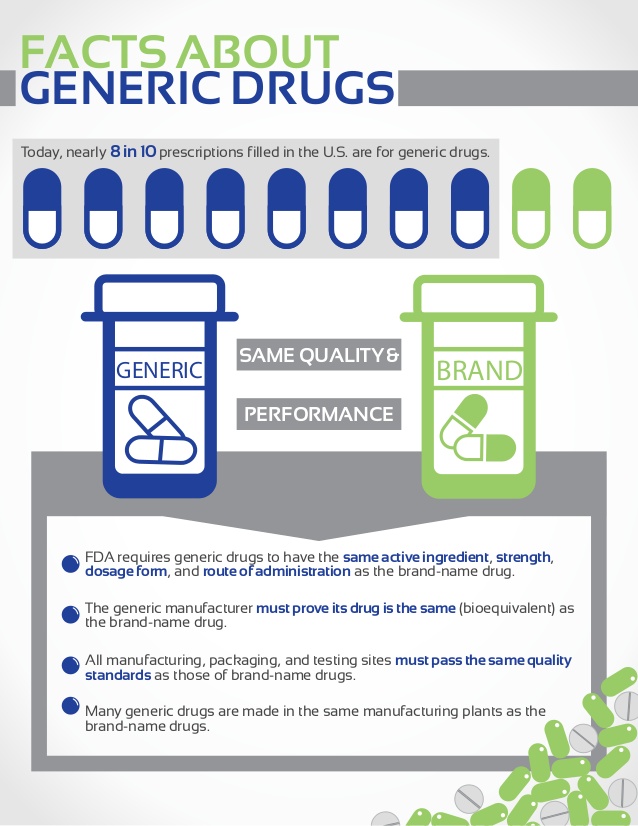
“What’s in a name?” Juliet asked in Shakespeare’s play. For medicines consumers in the U.S., not much. Most Americans prefer generics products, according to The Harris Poll’s survey. 7 in 10 U.S. adults choose generics over brands when given a choice. 3 in 10 people say they would “always” choose generics, whether a prescription drug or an over-the-counter product (store brand, private label). While most people across all age groups would choose generics over brand ames for meds, parents with children in the households would more likely choose a brand name (36% with vs. 28% without kids). Still, 66% of
The U.S. Will Cover the Bulk of Medicines Spending in 2020
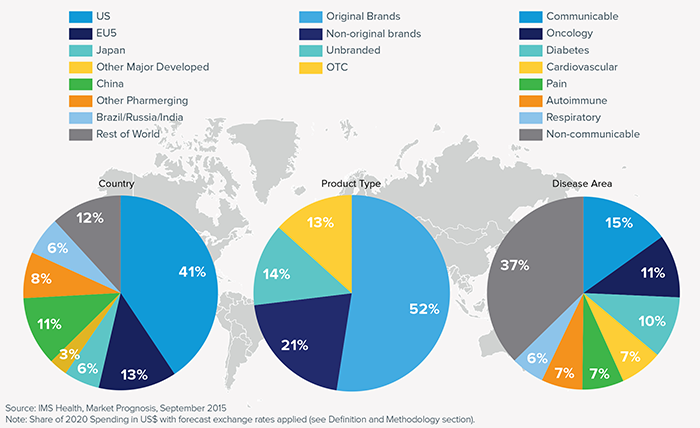
U.S. spending on medicines will approach $590 billion in 2020, increasing 34% over 2015, IMS Institute for Healthcare Informatics projects in its forecast, Global Medicines Use in 2020. Growth in spending will be attributable to innovation (new products), price increases and some patent losses of exclusivity (e.g., branded drugs going generic). The U.S. will cover the bulk of drugs spending in 2020 at 41% of the world medicines market, shown in the first pie in the first chart. U.S. medicines spending dwarfs any other country or region in the world, including China which is expected to account for 11% of
Activity Wearables on Black Friday 2015 – Doorbusters Abound
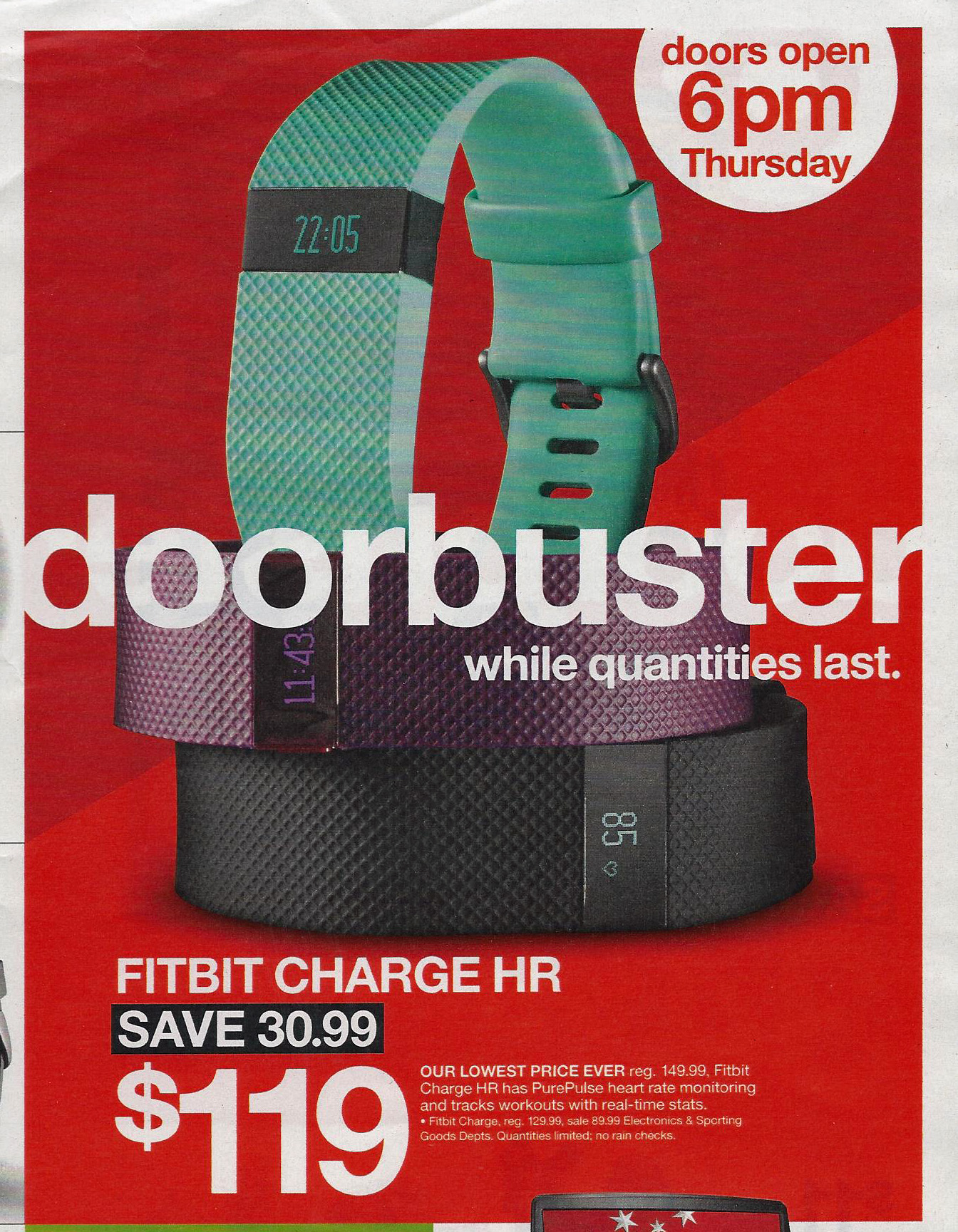
The 2015 holiday shopper can find activity trackers for gifting discounted as much as 50% and more over Thanksgiving weekend. In greater Philadelphia, the Thursday print newspaper ads were chock full of examples from Best Buy, Dick’s Sporting Goods, Kohl’s, Target, and Walmart, among others. Among the many “Doorbusters” and deep discounts were a Misfit Flash tracker for $14.99 at Best Buy (a 50% discount), a Fitbit Zip at both Kohl’s and Walmart for $39 ($20 off the manufacturers’ suggested retail price), and a Fitbit Flex at Dick’s Sporting Goods for $49.95 — 50% off full retail. That trackers are
51% of Americans Say It’s Government’s Responsibility To Provide Health Insurance
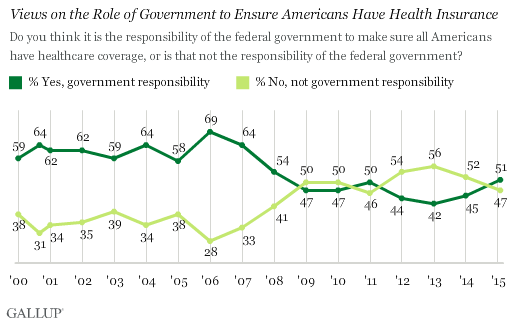
For the first time since 2008, a majority of Americans say government is responsible for ensuring that people have health insurance. The first chart shows the crossing lines between those who see government-assured health insurance in the rising dark green line in 2015, and people who see it as a private sector responsibility. The demographics and sentiments underneath the 51% are important to parse out: people who approve of the Affordable Care Act are over 3x more likely to believe in government sponsoring health insurance versus those who disapprove, 80% compared with 26%. The demographic differences are also striking, detailed
The Average Price of a New Specialty Drug Exceeds Median U.S. Annual Income; and a Tweet from Pam Anderson
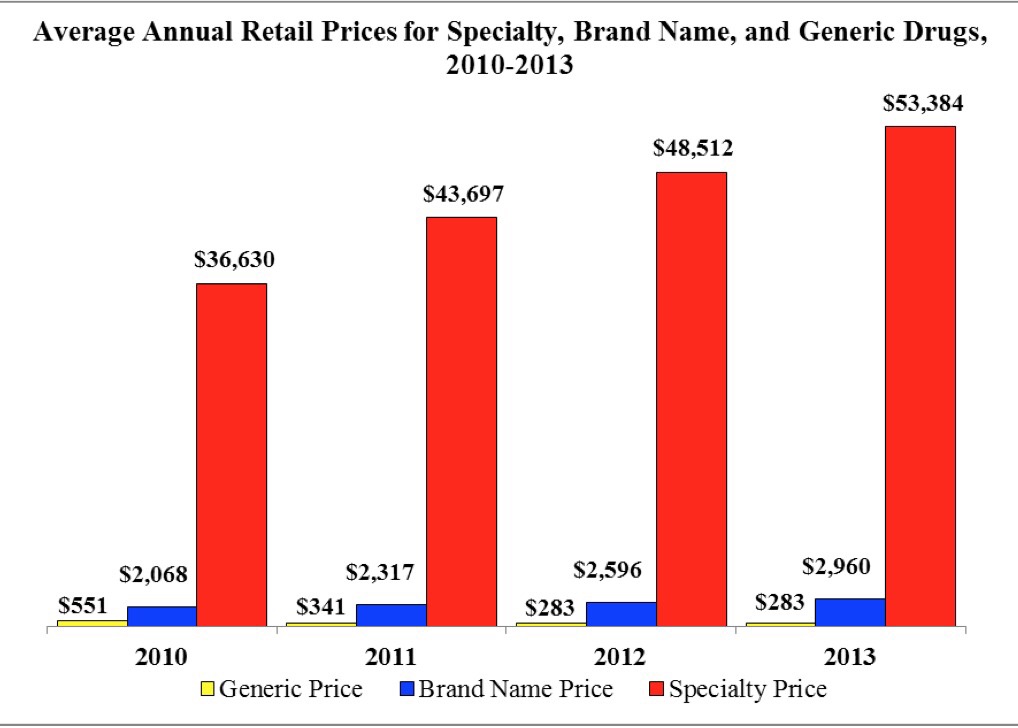
The average price for a specialty drug was $53,384 in 2013; the average household income was $52,250. Thus, even allocating 100% of a family’s annual earnings to pay for a drug wouldn’t stretch far enough to cover it in 2013, nor would it do so today in 2015. This sober health economic artifact comes from the latest Rx Price Watch Report from the AARP, detailing cost trends for prescription drugs across all segments — generics, brands and specialty drugs. Contrast, as well, the $53K for the average specialty drug with the median 2013 Social Security benefit payout of $15,526 and median Medicare
American health citizens hungry for cost controls
Most Americans support price controls on drug and medical device manufacturers, hospitals, and payments to doctors, along with allowing Medicare to negotiate drug prices. U.S. health citizens, now consumers, have been experiencing sticker-shock when it comes to prices on medical bills upon hospital discharge, leaving the doctor’s office, filling a prescription at a pharmacy or receiving a specialty drug recommended for a serious medical condition. The HealthDay/Harris Poll of 5 November 2015 quantifies their observation that Americans Want Bold Steps to Keep Health Care Costs in Check. The topline of the Poll shows that: 73 percent support price controls on
Retail Health Landscape Expanding Through Clinic Growth, Accenture Forecasts
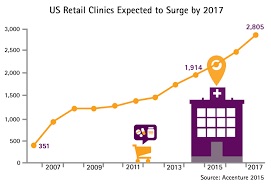
The Old School retail clinic is going beyond checking your child’s ear infection and sore throat, giving immunizations and filling out back-to-school forms just-in-time over LaborDay weekend. The new-new retail clinic is supporting patients’ chronic disease management, partnering with academic medical centers, and bolstering medication management. Accenture’s bullish forecast is titled “US Retail Health Clinics Expected to Surge by 2017,” making the case that these brick-and-mortar providers are shifting from a relatively limited retail scope to a broader and deeper clinical focus. The so-called surge in the number of retail clinics is projected to be nearly 50% growth between 2014 and 2017,
My Breakfast With Alain – On Health Consumers and the New Retail Health
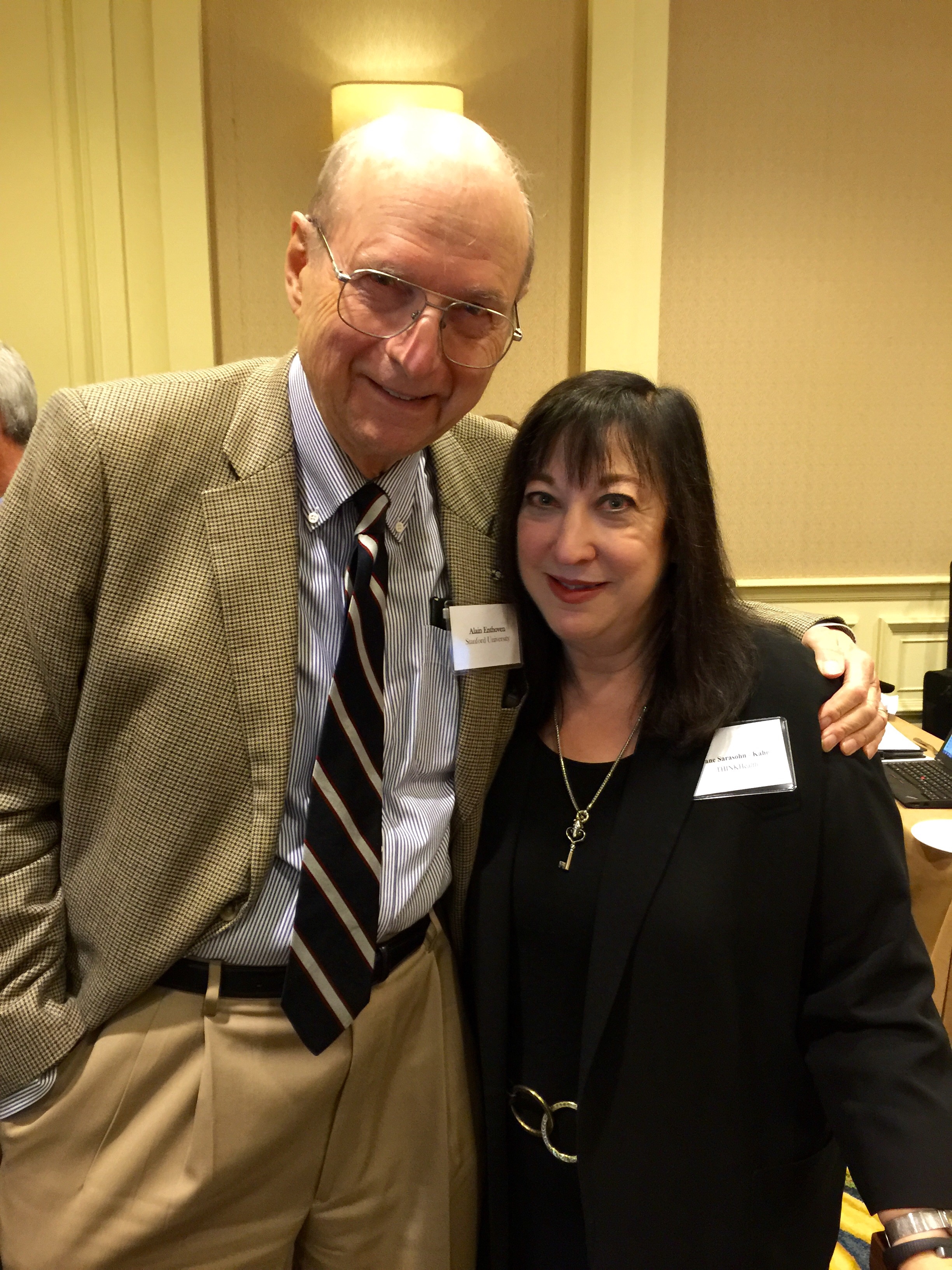
My National Health Care Consumer Week, I’ll coin this, looking back on flying some 12,000 airmiles over six days, criss-crossing America from the City of Brotherly Love to Sacramento, back to Philly and then to Los Angeles. Finally, today, heading home to Philadelphia and my beloved, most necessary Tempur-Pedic bed, a loving husband and some therapeutic TV binge-watching. It’s Friday and I’m at LAX, reflecting on a week of meeting with three groups of healthcare executives and stakeholders who all wanted to hear my take on the evolution of patients, people, caregivers, all, morphing into health care consumers. The lens
Walgreens Extends Telehealth On Your Smartphone
In the U.S., if you walk 3 miles in any direction, there’s a 3 in 4 chance you’ll find yourself in front of a Walgreens pharmacy. The company often says that 75% of people in the America live within 3 miles of a Walgreens storefront. What’s a pharmacy storefront anymore? Both Walgreens and CVS are re-defining that with a dizzying pace of new announcements. The latest for Walgreens: people in 25 states will be able to use the Walgreens app on their smartphones to access physicians virtually. Consumers living in Alabama, Arizona, California, Colorado, Connecticut, Florida, Indiana, Illinois, Iowa, Maryland,
Getting to Connected Health Is A Marathon, Not A Sprint
Consumers may demand connected experiences in daily living, but there have been many barriers to health care industry stakeholders delivering on that expectation: among them, privacy and security concerns, and provider resistance. This demand-and-supply chasm is noted in Deloitte’s Center for Health Solutions’ latest look into the healthcare landscape, Accelerating the adoption of connected health. The objectives of connected health, or cHealth, are: To improve digital connectivity among consumers, providers, health plans and life sciences companies To facilitate self-managed care in a secure environment that protects privacy To deliver care outside of traditional institutional settings To enable chronic care management
Health Care Costs Are #1 Pocketbook Issue, and Drug Prices Top the Line Items
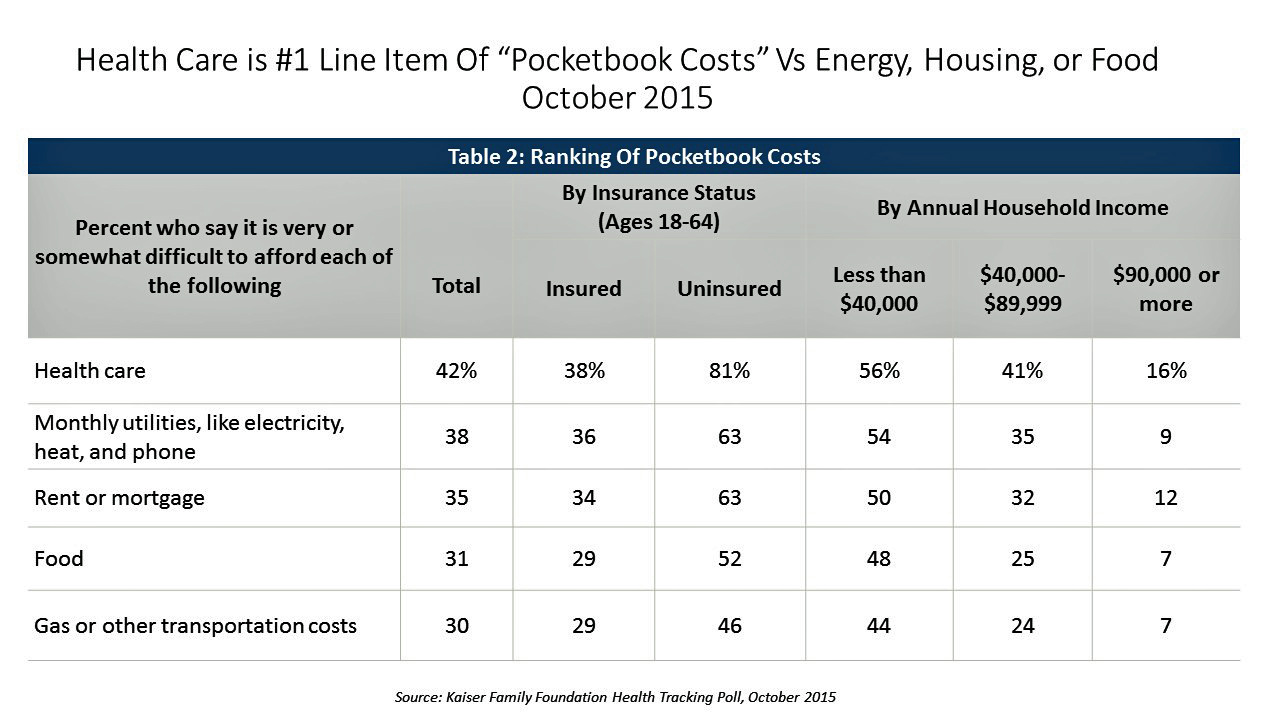
Consumers are most concerned about health care costs among their kitchen table issues, above their ability to afford the utility bill, housing, food, or gas and transportation costs. The October 2015 Kaiser Family Foundation Health Tracking Poll finds 4 in 10 Americans finding it difficult to afford health care, including 16% of people earning $90,000 a year or more. Underneath that worrying healthcare cost umbrella are the price of prescription drugs, which the majority of Democrats, Independents, and Republicans all agree need to be “limited” by government regulation. Ensuring that the public have affordable access to high-cost drugs for chronic conditions
Physical Healthcare Facilities Can Bolster Health Consumerism
Reluctantly accepting the Affordable Care Act, health executives and their architects now see opportunities for re-imagining the hospital and health care services, according to Healthcare Industry Trends, a publication that’s part of the 2015 Building & Development Leadership Series provided by Mortenson, a construction services firm that’s active with healthcare organizations. Mortenson conducted a survey at the 2015 ASHE Planning, Design, and Construction Summit, the results of which were published in this report. The over 300 respondents included healthcare executives, facilities managers, and healthcare architects. Thus the lens on the data in this survey is through the eyes of physical
Palliative Care: Getting End of Life Care (W)right
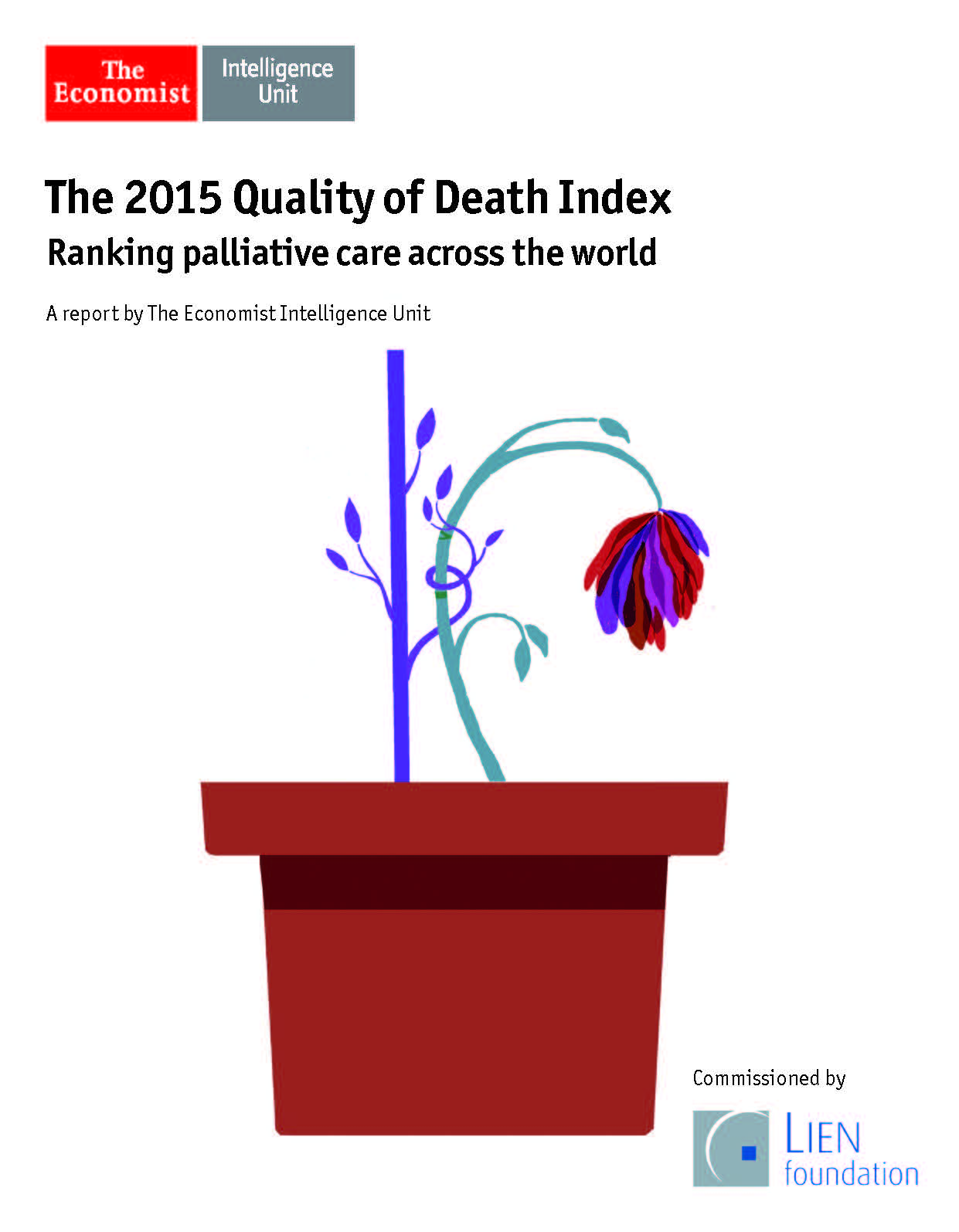
I lost a best friend last week. His memorial service, held this past weekend, was a celebration of his life. And part of that well-lived life was a very conscious planning of his last days. The Economist published its 2015 Quality of Death Index, a data-driven treatise on palliative care, the very week my dear friend Rick died. This gives me the opportunity to discuss palliative care issues with Health Populi readers through The Economist’s lens, and then in the Hot Points below through my personal context of this remarkable man’s end-of-life choices. The Economist ranks 80 countries on several
Growing Signs Of Consumer Health Engagement, Via Deloitte
A growing desire for shared decision making with doctors. Increasing trust and consumption of health care information online, in social media, and report cards. Reliance on technology for monitoring health adn wellness, and medical conditions. Together, these three signals converge, illustrating a growing sense of consumer engagement among U.S. patients, found in the 2015 Deloitte Center for Health Solutions Survey of US Health Care Consumers. In Deloitte’s research summary, the title states that “No ‘one-size-fits-all’ approach” will work, given diversity among American health consumers. The sickest health consumers, Deloitte notes, have higher levels of health engagement and index higher on
Social Networking Is The New Normal, Pew Finds
Two-thirds of all internet users, and 65% of all adults over 18 years of age, use social networking sites. Social Media Usage: 2005-2015, the latest report from the Pew Research Center, finds social networking is the new normal for people up to 65 years of age. One-third of people over 65 use social networking sites. Peoples’ use of social media impacts every aspect of daily living beyond sharing social updates, from home keeping and political discussions to work, parenting, and managing stress, the Pew research found. Key findings in the report are that: Seniors’ use of social networks rose from
The Fast-Growing Consumer Digital Health Ecosystem – Health 2.0 Day 2
The fastest-growing category of products and services at Health 2.0 is consumer-facing digital health, and a panel of companies demonstrated various flavors of the New Retail Health. One of the most prominent companies featured in Health 2.0’s conferences from the inception has been MyFitnessPal (MFP), a long-time helpful tool I’ve used to manage my own health-life. Under Armour acquired MFP earlier this year, which I covered here in Health Populi. Under Armour’s original mission was to make all athletes better. With the company’s acquisition of MyFitnessPal, Under Armour continued its morphing from a textile and sports gear company to a
More consumers expect a connected health experience
When most patients in the U.S. visit their doctors, they find their medical history missing or incomplete. 1 in 2 American patients say their doctors do not have a complete list of their medications. But the new health consumer expects a connected health experience the likes of which, as consumers, they expect and generally find in their everyday lives. One-half of consumers would prefer to get lab test results, access their medical records, and fill out paperwork from a doctor’s office ahead of a visit online versus via phone or in person. Surescripts conducted a survey with Kelton Global in
Insurance Should Pay For End-of-Life Conversation, Most Patients Say
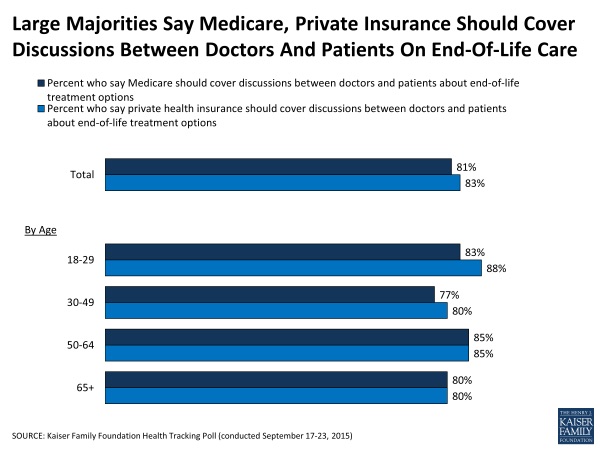
8 in 10 people in the U.S. say that Medicare as well as private health insurance plans should pay for discussions held between patients and doctors about hatlhcare at the end-of-life. The September 2015 Kaiser Family Foundation Health Tracking Poll asks people their opinions about talking end-of-life with their doctors. The vast majority of people support the concept and physicians being paid for holding such conversations in doctor-patient relationship. The question is germane because the Obama Administration has announced plans to pay doctors for office visits to discuss end-of-life (EOL) issues with Medicare patients. There isn’t a huge variation across
In 2016 Prescription Drugs Will Be The Fastest-Growing Component of Healthcare Costs
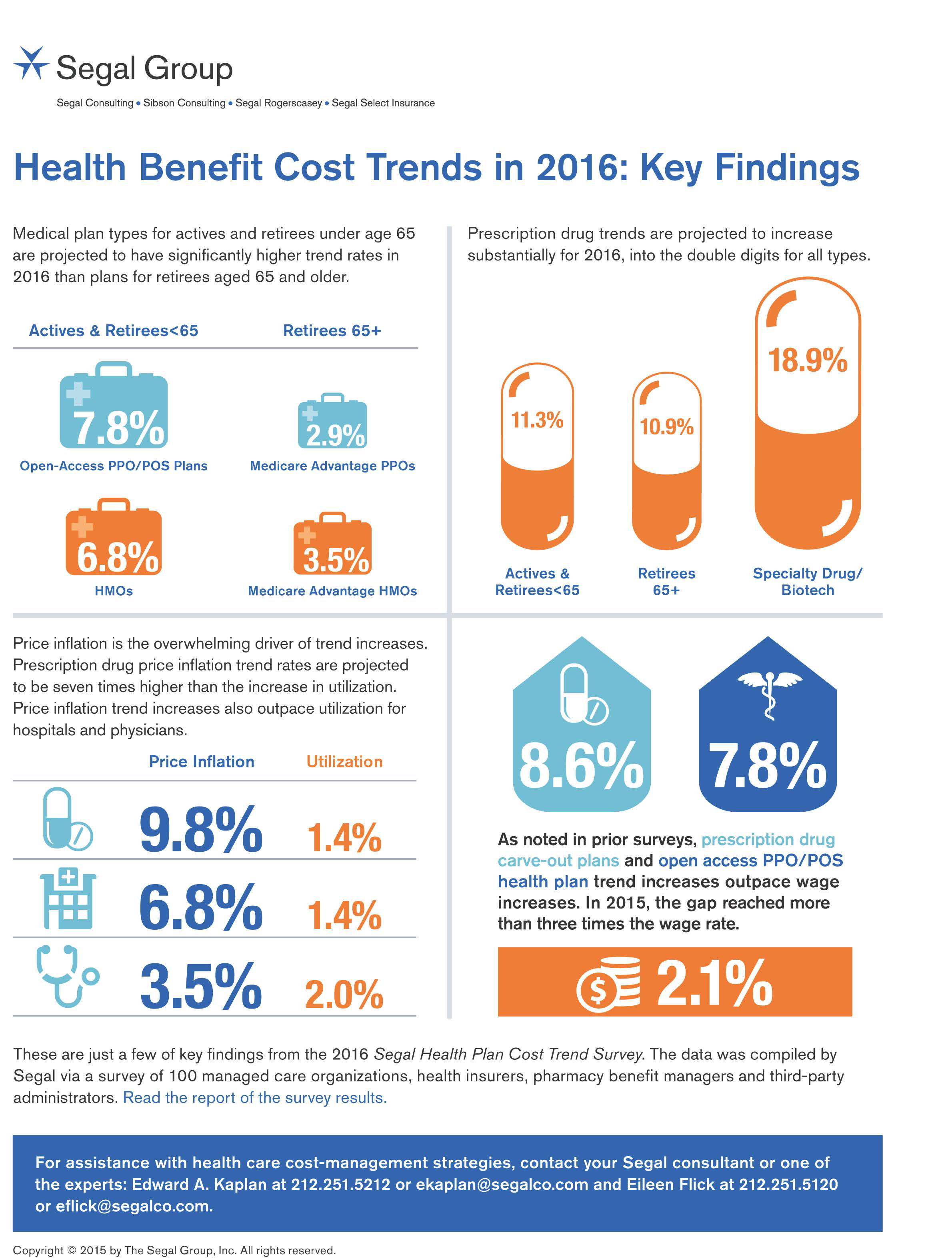
In 2016, prescription drug trend will rise over 11%. In contrast, medical trend growth for high-deductible health plans is expected to be 8%, hospital services 8.2%, and physician services 5.5%, according to the 2016 Segal Health Plan Cost Trend Survey released in September 2015. By definition, “trend” is the forecast of per capita health insurance claims cost increases that incorporate many factors include price inflation, utilization, government-mandated benefits, and new therapies and technologies. Consider the upper right portion of the infographic which illustrates Segal’s data: the 3 “capsule” diagrams show that specialty drug trend is anticipated to be 18.9% in
Wellness Is In Target’s Bullseye
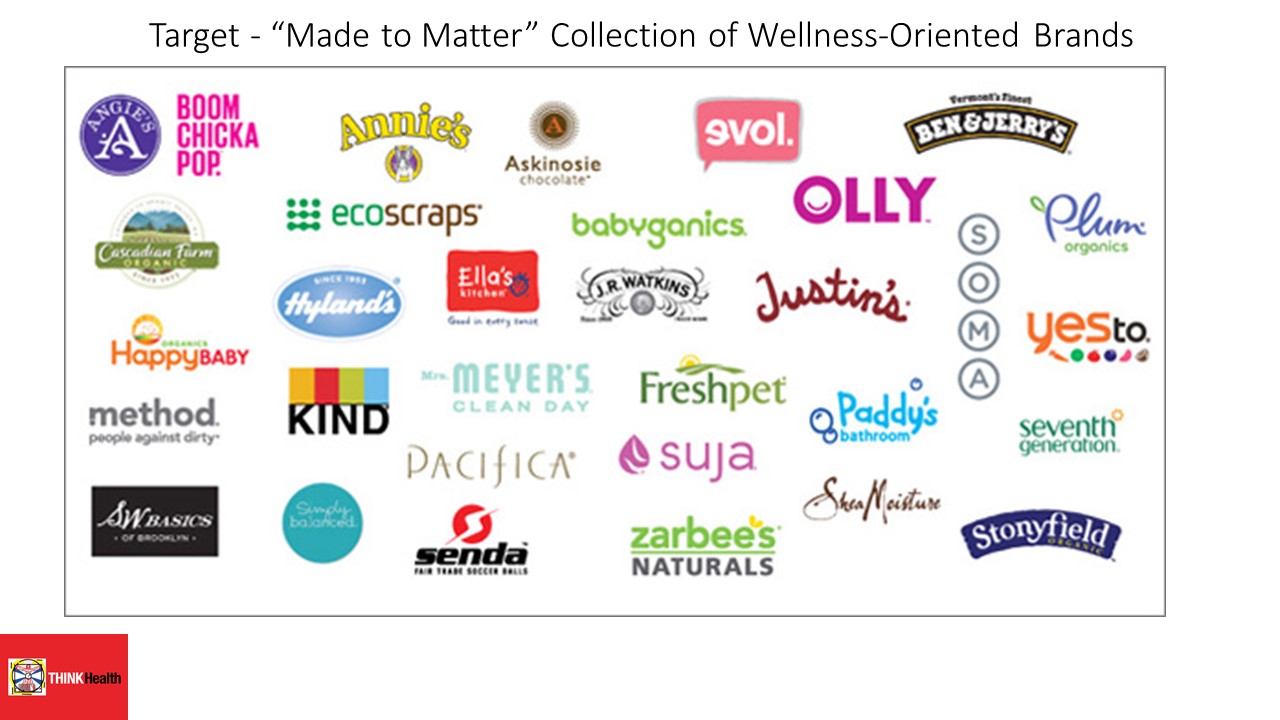
Health is where we live, work, play, pray, learn, and increasingly, shop. The new Retail Health goes well beyond the pure-play pharmacy. Part of Target’s re-imagined market positioning is in this expanding sweet-spot as healthcare morphs from institutional providers like hospitals and doctors’ offices to the community. Don’t think pharmacy’s not important: it will remain a core business and revenue center in retail health. But that business is fast-changing, as the role of pharmacy benefits management companies change, more (expensive) specialty drug benefits come out of pipeline and into the market, and health insurance continues to shift financial risk to
What Retail Telemedicine Means For Healthcare Providers
Direct-to-consumer retail health options are fast-growing in the U.S. health ecosystem. CVS Health brought three telemedicine vendors to its pharmacy brick-and-mortar stores. CVS also acquired Target’s pharmacies, expanding its retail health footprint. Rite Aid has added HealthSpot kiosks to its pharmacies, while Walgreens expanded its relationship with MDLive. And, Cox Cable acquired Trapollo to bring remote health monitoring into subscribers’ homes, along with the cable company’s venture with Cleveland Clinic, Vivre Health. Coupled with the growing supply side of telemedicine vendors, the latest National Business Group on Health survey found that most large employers plan to expand the telemedicine services they
Health consumers’ cost increases far outpace wage growth
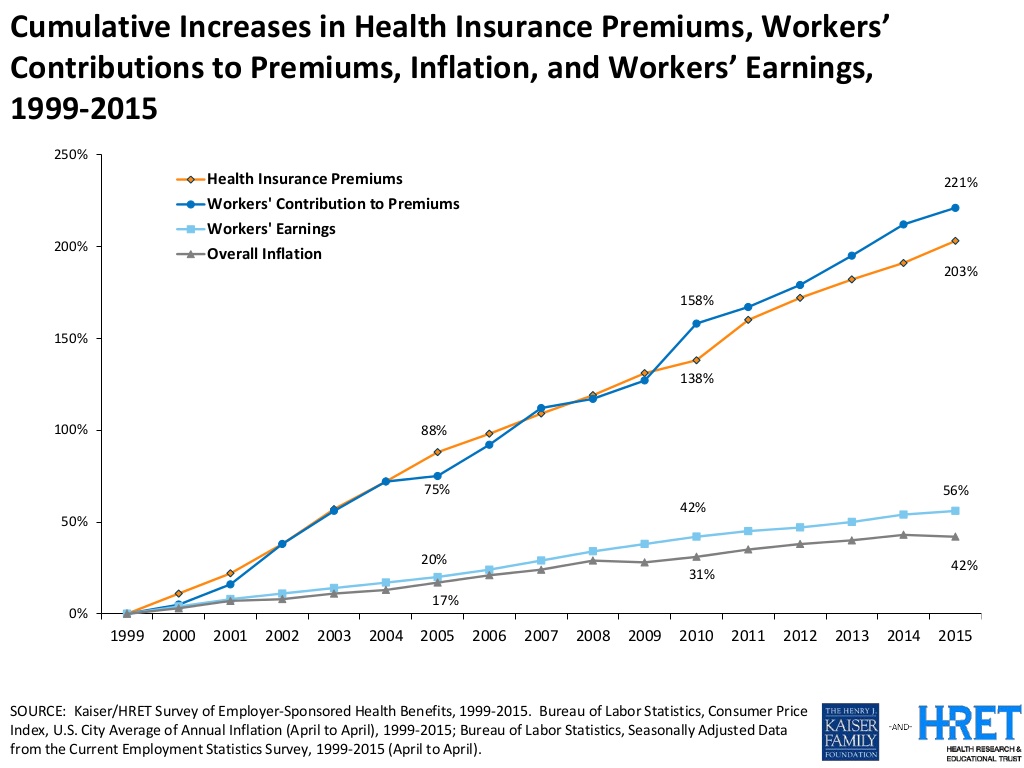
American workers are working to pay for health care costs, having traded off wage increases for health premiums, out-of-pocket costs and growing high deductibles. Welcome to the 2015 Employer Health Benefits survey conducted annually by the Kaiser Family Foundation (KFF) and Health Research & Educational Trust (HRET). Premiums are growing seven times faster than wages. The report calculates that high-deductibles for health insurance have grown 67% from 2010 to 2015. In the same period, wages grew a paltry 10%, while the Consumer Price Index rose 9%. The first chart illustrates that growing gap between relatively flat wages and spirally health
U.S. Consumers’ View of Pharma Goes Negative in 2015
Americans’ views of the pharmaceutical industry have fallen in the past year, with negative perceptions outweighing positive ones, shown in the line graph from the Gallup Poll. Pharma’s low-lying reputation among consumers sits among others including the legal field, healthcare, oil and gas, and the Federal government which ranked lowest across all 25 sectors Gallup analyzed. Gallup surveyed 1,011 U.S. adults in in the first week of August 2015 via telephone. Since 2003, Gallup notes, the pharma industry has consistently ranked in the bottom third of industries operating in the U.S. Pharma respect is in the eye of the consumer-beholder
Employers pushing consumerism for health benefits in 2016
This is the dawning of the Age of Consumer-Driven Health, the tipping point of which has been passed. The data point for this assertion comes from the National Business Group on Health‘s annual 2016 Large Employers’ Health Plan Design Survey. The tagline, “reducing costs while looking to the future,” suggests some of the underlying tactics employers will use to manage their financial burden of providing health insurance to workers. That burden will continue to shift to employees and their dependents in the form of greater cost-sharing: for premiums, co-pays and co-insurance, and the hallmark of consumer-driven health plans (CDHPs): high(er) deductibles.
There’s more to taste: a marketing lesson for health/care from a coffee ad
I switched from being a devoted coffee drinker to green tea several years ago, but once in a while I still love an excellent cup of coffee (especially when I’m in Italy – stay tuned for late October posts from the 2015 Milan Expo where I’ll be all-food-and-health, all-the-time). One of my long-time favorite coffee brands is Lavazza, based in Italy. The company hadn’t allocated much resource to advertising in the U.S. But they are launching a new multimedia campaign in America; here’s a look at their initial video promotion… [youtube http://www.youtube.com/watch?v=Jfx2yL6guhk?rel=0] This ad covers many features that are relevant
Coverage and price before brand for health plan shoppers
When Americans shop for health insurance (and they do – more, later in the post), they look most for covering major medical expenses, prescription drugs, preventive care, and price. Less important is the brand of the plan, or its high ratings. Valence Health surveyed 524 U.S. consumers in June 2015 to learn how healthcare shoppers feel about health insurance and health reform. The results are published in the report, U.S. Attitudes Toward Health Insurance and Healthcare Reform in August 2015. Key findings in the study were that: Price and coverage come before all other factors in evaluating health plans 73%
Wegmans tops pharmacy satisfaction – and it’s not even a pharmacy
Think of the word “pharmacy,” and what names come to your mind? CVS Health, Walgreens, Rite-Aid, perhaps. But it’s Wegmans who’s #1 across all pharmacy brands and types, according to the 2015 J.D. Power Pharmacy Study. The big improvement in pharmacy satisfaction in 2015 has been among supermarket drug stores, up to an index score of 851 (of 1,000), the highest consumer score. The satisfaction score for chain pharmacies increased a small 2 points, whereas satisfaction for two other channels for pharmacies — mass merchandisers and mail order — both fell from 2014. It may come as no surprise to Health
Health, Wearables and the IoT in the Windy City

Health is everywhere, where we live, work, play, pray and shop. So while I’m in Chicago staying off The Magnificent Mile in The Windy City, I took a several-thousand step walk along this shopping mecca and found health and wellness in the form of wearable technology, fitness, smart homes and the Internet of Things spanning the eastern end of Michigan Avenue to the western Gold Coast lakefront. Here’s a photo of the Garmin store, whose windows feature wearable tracking device promotions and devices. It was surprising to see Garmin investing in this expensive piece of real estate, with its logo
People Like Physicians, Food and Banks. Pharma? Not much.
Most consumers think favorably when they picture doctors, food manufacturers, banks, and airlines. But the pharma industry continues to be lumped with Big Oil and health insurance in the minds of U.S. consumers, industries for which more than 50% of people in America share unfavorable impressions. The August 2015 Kaiser Family Foundation Health Tracking Poll focuses a lot on the pharmaceutical industry. The link to the poll is here: http://kff.org/health-costs/poll-finding/kaiser-health-tracking-poll-august-2015/ Key findings from the survey tell a story about a health citizenry highly suspicious of pharma: 72% of Americans think that drug costs are unreasonable 74% of people think patients in
Health consumers: in search of authentic consumer experiences
In the growing value-based era of health care, patients are looking for real consumer experiences: being treated well, with respect, and with a high level of service people find in other industries. PwC polled about 2,300 U.S. adults online in June 2014, resulting in the paper, Personal health management: The rise of the empowered consumer, part of PwC’s research into The New Health Economy. In that New Health Economy, more consumers want to take control of their health, PwC discovered through the survey. The three key parameters for this empowered health consumer are personal, proactive health management, service, and value,
Pocketbook Health Economics In One Chart
Covering the uninsured changes pocketbook problems, this chart demonstrates. The Kaiser Family Foundation (KFF) surveyed Californians between February and May 2015, and found that people newly enrolling in health insurance had less financial stress, and more health needs met. KFF asked previously uninsured Californians to rank five household “pocketbook” spending categories which they said were difficult to afford: health care, housing (rent/mortgage), gasoline, utilities, and food. Among the five, people gaining insurance worried much less about health care costs (49%, slipping to fourth place), and more about paying for shelter (58%), utility bills (54%), and gas (53%), shown in the
Yelp For Health Grows With ProPublica
In addition to checking out local restaurants, auto repair shops, and dry cleaners, you can check out health care providers on a new-and-improving consumer review portal on Yelp. While Yelp has been serving up consumer comments on doctors, hospitals, clinical labs, nursing homes and dentists for several years, the review site is partnering with ProPublica, the journalism portal, to complement the data collected on health in local communities. Yelp’s CEO, Jeremy Stoppelman, made the announcement in the company blog on August 5 2015. Yelp has amassed over 1.3 million health reviews, and ProPublica will have access to those as part
Fitness tech will boost holiday retail sales for consumer electronics
Sales of computers and tablets and LCD TVs won’t be hot on peoples’ holiday shopping lists in 2015. But smartwatches, health and fitness tech, and 4K Ultra HD TVs will be in peoples’ gift wish-lists and under homes’ holiday trees. The Consumer Electronics Association (CEA) published its 2015 U.S. Consumer Electronics Sales and Forecasts report, and it shows a shifting retail picture where traditional consumer electronics categories — notably computers and mainstream TVs — are declining in demand. But new-new categories are expected to buoy 2015 retail sales. The new categories of consumer electronics will generate about $10 bn (wholesale
Sports and the Internet of Things: the Scoop & Score podcast
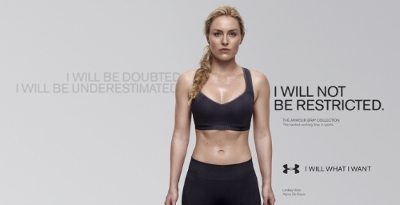
From elite soccer and football fields to youth athletes in public school gyms, wearable technology has come to sports bringing two big benefits of gathering data at the point of exercise: to gauge performance and coach back to the athlete in real time, and to prevent injury. I discussed the advent of the Internet of Things in sports on the Scoop and Score podcast with Andrew Kahn, sports journalist and writer, and Stephen Kahn, sports enthusiast and business analyst. [In full disclosure these two Kahn’s are also my brilliant nephews.] We recorded the podcast on July 14, 2015, the day
Collaboration in health/care drives value – in & beyond bio/pharma
“Tomorrow [drug makers] may not get paid for the molecule, they may only get paid for the outcome,” expects Brian Niznik of Qualcomm Life. He’s quoted in a report from PwC’s Health Research Institute, 21st Century Pharmaceutical Collaboration: The Value Convergence. What Brian’s comment recognizes is the growing value-based environment for healthcare, which couples purchasers driving down drug costs via discounts and stringent formulary (approved drug list) contracts, and growing patient responsibility for paying for prescription drugs — especially financially costly for specialty drugs that are new-new molecules. But as Brian points out, if the high-cost molecule doesn’t perform as
IoT in Healthcare, Take 2: Goldman Sachs weighs in
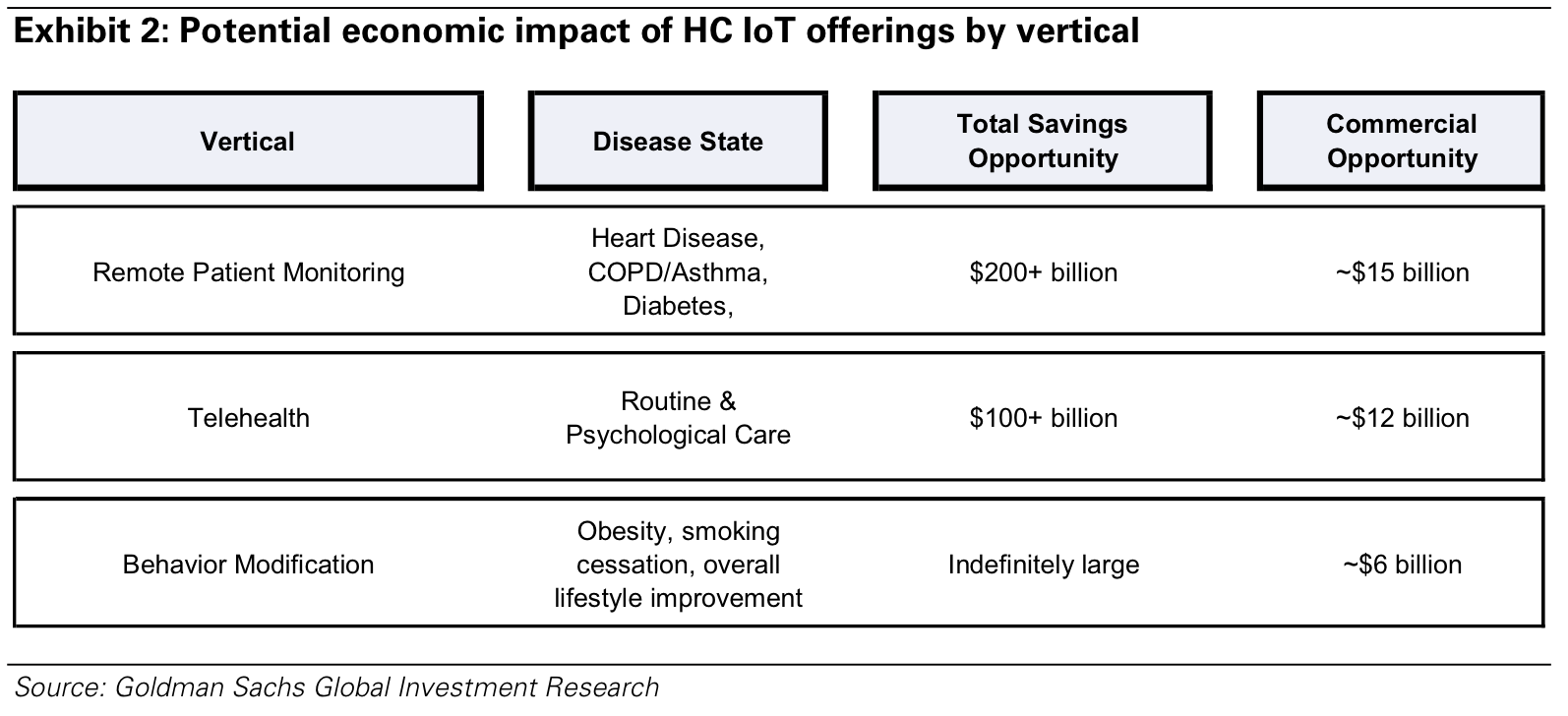
In this week’s posts on Health Populi, we’re diving into three big reports focused on digital health and the Internet of Things (IoT) in healthcare: from the McKinsey Global Institute, Goldman Sachs, and Accenture. In this post, we dig into Goldman Sachs’ analysis, The Digital Revolution comes to US Healthcare, the investment firm’s fifth volume in their Internet of Things report series. Goldman Sachs’ definition of the Healthcare IoT is, “a device that is connected via the Internet and informs clinical decision making,” which bridges digital and physical worlds “to change physician and patient behavior.” The firm identifies three IoT
The Internet of Things in Health: McKinsey Sees $1.6 T Value
‘Tis the summer of big, smart reports covering the Internet of Things (IoT) impact on health and fitness. Just this month, three of these missives have come to my inbox, and they all contribute sound thinking about the topic. Today, tomorrow and Friday, I’ll cover each of these here in Health Populi. We begin with McKinsey Global Institute’s The Internet of Things: Mapping the Value Beyond the Hype. [In full disclosure, I was an outside adviser to the MGI team members who focused on the human/health and fitness aspects of this report, and thank MGI for the opportunity to provide
People-powered health/care – celebrating Patient Independence & Empowerment
In the growing shared economy, one centerpiece is people-powered health – co-creating, shared decision-making, and a greater appreciation for the impact of social on health. As we approach the mid-point of 2015, there are several signposts pointing to people-powered health/care. FasterCures launched the Science of Patient Input Project, with the objective of getting the patient’s voice into clinical discovery and decision-making. This video describes the intent of the program and its potential for people-powered health and user/patient-centered drug design, beyond the pure clinical efficacy of therapies. Another example of people-powered health comes from The Wall Street Journal dated 29 June 2015, which
What the SCOTUS ACA ruling means for health consumers
Now that the Affordable Care Act is settled, in the eyes of the U.S. Supreme Court, what does the 6-3 ruling mean for health/care consumers living in America? I wrote the response to that question on the site of Intuit’s American Tax & Financial Center here. The top-line is that people living in Michigan, where the Federal government is running the health insurance exchange for Michiganders, and people living in New York, where the state is running the exchange, are considered equal under the ACA’s health insurance premium subsidies: health plan shoppers, whether resident New Yorkers or Michiganders, can qualify for
Digital health mainstreams at CE Week 2015
Digital health is a fast-growing category of consumer electronics, and many new mobile and wearable health devices were featured at the 2015 CE Week held in New York City. The major themes of the “Fresh Gear” unveiled at the meeting included connected cars, connected home devices, 3-D printing, and a growing array of wristbands, apps, and wearable devices focused on the already-crowded health/wellness segment, and the emerging health/care area. The five I’ll focus on are good examples of digital health tech’s aimed at mainstream consumers shopping at retail at the middle of the market: an area that’s ripe to be served.
How digital ‘everything’ and consumer expectations are re-shaping health care
Two forces are converging to shape a new era of “living services,” Accenture posits: the digitization of “everything” and consumers’ “liquid” expectations — which are demands for personalized, engaging and adaptable experiences. Accenture’s report on this phenomenon, The Era of Living Services, spans the broad range of consumers’ daily lives where these services will impact: homes, families, transportation, shopping, leisure time, jobs, finances, education, cities, and above all for Health Populi readers, “our bodies.” Living services are physically close to us, as Accenture sees them, “wrapping themselves around the everyday things we do.” They are digital services that are aware
Congratulations, Fitbit – what $4.1 bn looks like
When I clipped you to my underwear for the first time in 2011, I’d no idea that you were about to change my life, health and mindfulness. You were my first digital activity tracker and since then, I’ve purchased three versions of you…as well as others. Fitbit, you really did change my life and help me become more mindful of my activity, my calorie burn, ultimately supporting me in losing weight and keeping it off. Since its launch in 2009, the brand name “Fitbit” has become synonymous with digital activity tracking, the most popular digital pedometer on the market —
Most Americans say drug prices are unreasonable and blame company profits
Three-quarters of U.S. adults say the cost of prescription drugs are unreasonable, and blame high medication prices set by profitable pharmaceutical companies according to the Kaiser Family Foundation Health Tracking Poll for June 2015. Profits made by drug companies are the #1 reason Americans cite among major factors that contribute to the price of prescription drugs (among 77% of people), followed by the cost of medical research (64%), the cost of marketing and advertising (54%), and the cost of lawsuits (49%). Regardless of the cost, 71% of people say that health insurance should “always” pay for high-cost drugs. At the same
The 3 tectonic forces shaping patients – it’s BIO week
Patients in the U.S. are transforming into health care consumers, and in 2015 there are 3 underlying forces shaping that new consumer. This week kicks off the annual BIO conference in Philadelphia, and today Klick Health, the digital communications firm, convenes a group of thought leaders in healthcare to brainstorm markets, financing, and the state of pharmaceutical and life science innovation. An underlying theme throughout this meet-up is patient’s role in health/care. Patients are people, consumers, caregivers, mothers, fathers, sisters, brothers, friends, neighbors, community members, taxpayers, all. We’re old, we’re young, we’re mobile and not-so-much, we’re amputees, we’re migraneurs, we’re cancer
Telehealth goes retail
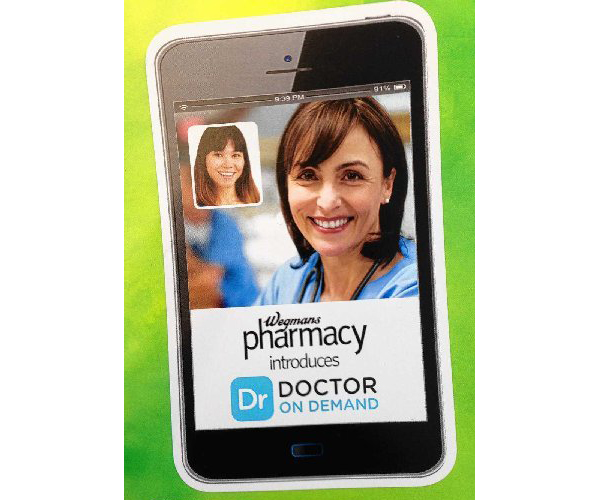
In the past couple of weeks, a grocery store launched a telemedicine pilot, a pharmacy chain expanded telehealth to patients in 25 states, and several new virtual healthcare entrants received $millions in investments. On a parallel track, the AMA postponed dealing with medical ethics issues regarding telemedicine, the Texas Medical Association got stopped in its tracks in a case versus Teladoc, and the Centers for Medicare and Medicaid Services (CMS) issued a final rule for the Medicare Shared Savings Program that falls short of allowing Accountable Care Organizations (ACOs) to take full advantage of telehealth services. These events beg the
It’s still the prices, stupid – health care costs drive consumerism
“It’s the prices, stupid,” wrote Uwe Reinhardt, Gerald F. Anderson and colleagues in the May 2003 issue of Health Affairs. Exactly twelve years later, three reports out in the first week of June 2015 illustrate that salient observation that is central to the U.S. healthcare macroeconomy. Avalere reports that spending on prescription drugs increased over 13% in 2014, with half of the growth attributable to new product launches over the past two years. Spending on pharmaceuticals has grown to 13% of overall health spending, and the growth of that spending between 2013-14 was the fastest since 2001. In light of
Employers go beyond physical health in 2015, adding financial and stress management
Workplace well-being programs are going beyond physical wellness, incorporating personal stress management and financial management. Nearly one-half of employers offer these programs in 2015. Another one-third will offer stress management in the next one to three years, and another one-fourth will offer financial management to workers, according to Virgin Pulse’s 2015 survey of workplace health priorities, The Busness of Healthy Employees. The survey was published June 1st 2015, kicking off Employee Wellbeing Month, which uses the Twitter hashtag #EWM15. It takes a village to bolster population health and wellness, so Virgin Pulse is collaborating with several partners in this effort
Musings with Mary Meeker on the Digital/Health Nexus
People in the U.S. spend over five-and-a-half hours a day with digital media in 2015, with time on mobile devices exceeding use of laptop and desktop computers. The growth of mobile means people are using and seeking more just-in-time services in daily living, and this has big implications for health/care, based on the annual mega-report on Internet Trends from Mary Meeker, KPCB’s internet analyst. “People” in health/care are patients, consumers and caregivers; people in health/care are also health plan administrators, employer benefits managers, doctors, nurses, allied health professionals, financial managers in hospitals, pharmacists, and the entire range of humans who
Avoiding Wrinkles: A World Without Tobacco
May 31st is World No Tobacco Day, heralded by the World Health Organization, and celebrated by the advocacy group Action on Smoking and Health (with the very appropriate acronym ASH). Smoking is one of the most addictive (anti-)health behaviors around, so persuading people to quit the habit continues to challenge public health advocates. Enter ASH’s engaging campaign called “The Wrinkler,” with the introductory question, “Ever notice how some people who are 25 look 45?” The video continues to explain how we can “expedite the aging process….Ladies, wish you were half your age? Don’t wait for him to look younger; make yourself
All women are health workers
The spiritual and emotional top the physical in women’s definition of “health,” based on a multi-country survey conducted in Brazil, Germany, Japan, the UK and the U.S. The Power of the Purse, a research project sponsored by the Center for Talent Innovation, underscores women’s primary role as Chief Medical Officers in their families and social networks. The research was sponsored by health industry leaders including Aetna, Bristol-Myers Squibb, Cardinal Health, Eli Lilly and Company, Johnson & Johnson, Merck & Co., Merck KGaA, MetLife, Pfizer, PwC, Strategy&, Teva, and WPP. The study’s summary infographic is titled How the Healthcare Industry Fails
Health care costs for a family of four in the U.S. reach $24,671 in 2015
The cost of a PPO for a family of four in America hits $24,671 in 2015, growing 6.3% over 2014’s cost. The growth in health care costs will be driven by high specialty prescription drug costs. The 6.3% growth rate in health costs is a stark increase compared with the twelve month April 2014-March 2015 decline in the Consumer Price Index of -0.1%. Welcome to the 2015 Milliman Medical Index, subtitled “Will the typical American family of four be driving a ‘Cadillac plan’ by 2018?” The MMI gauges the average cost of an employer-sponsored preferred provider organization (PPO) health plan and includes all
Purchase of wearable fitness trackers expected to grow in 2015, but one-half of Americans would “never” buy one
Headphones and smartphones are the top two electronics products U.S. consumers intend to purchase in 2015. But the emerging consumer electronics categories of wearable fitness trackers, smart watches, and smarthome devices (especially “smart” thermostats) are positioned to grow, too, in 2015, according to the 17th Annual CE Ownership and Market Potential Study from the Consumer Electronics Association (CEA). Wearable trackers have an installed base of about 17 million devices in the U.S., with 11% of U.S. households intending to purchase a tracker in 2015 — 6 percentage points up from 2014 (about a 50% increase over 2014). There are about 6 million smart
Supersize Rx: the impact of specialty drug spending and Hep C in 2014
The number of people in the U.S. spending over $100,000 a year on prescription drugs tripled in 2014, according to Super Spending: U.S. Trends in High-Cost Medication Use, from The Express Scripts Lab. Express Scripts is a pharmacy benefits management company that manages over one billion prescriptions a year. The company analyzed prescription drug claims for 31.5 million health plan members for this study, in commercially insured, Medicare, and Medicaid plans. The big-dollar story in 2014 was Hepatitis C, with a relatively small patient population but a super-sized drug spend as the first chart shows: a very tall blue bar (Rx
Happy 25 million, MinuteClinic and CVS Health!
Call it a Silver Million Anniversary, if you will: The MinuteClinic just saw its 25 millionth patient. This is a milestone in the evolution and growth of retail health in America, a trend-marker in this growing health industry segment that will become increasingly used by consumers, patients, parents, and caregivers. CVS bought the MinuteClinic in 2006, when the organization treated seven illnesses. Today, MinuteClinic offers 65 services and vaccinations in nearly 1,000 clinics located in 31 states and Washington, DC. In addition, MinuteClinic will grow the number of clinic locations in both existing and new markets. The company will open
Consumers seek retail convenience in healthcare financing and payment
Health care consumers face a fragmented and complicated payment landscape after receiving services from hospitals and doctors, and paying for insurance coverage. People want to “view their bills, make a few clicks, pay…and be done,” according to Jamie Kresberg, product manager at Citi Retail Services, a unit of Citibank. He’s quoted in Money Matters: Billing and payment for a New Health Economy from PwC’s Health Research Institute. The healthcare service segment most consumers are satisfied with when it comes to billing and payment is pharmacies, who score well on convenience, affordability, reliability, and seamless transactions – with only transparency being
Moms are the most important social determinant of health
It’s Mother’s Day 2015, so it’s time to praise moms and their role in making health: in their families, in their communities, and long-overlooked, for themselves. Mothers play a defining role in driving health in the world. Moms may be the most important social determinant of health. The National Partnership for Women & Families advocates for the role of women in building a healthy society, broadly defined. From the womb via the Childbirth Connection and Reproductive Health through economic security (such as fair wages and paid maternity leave) and women’s ability to access health information on behalf of their families and themselves,
The Consumer in the New Health Economy: Out-of-Pocket
The costs of healthcare in the U.S. have trended upward since 2000, with a slowdown in cost growth between 2009 to 2013 due to the impact of the Great Recession. That’s no surprise. What stands out in the new U.S. News & World Report Health Care Index is that people covered by private health insurance through employers are bearing more health care costs while publicly-covered insureds (in Medicare and Medicaid) are not. Blame it on the fast-growth of high-deductible health plans, the Index finds, resulting in what U.S. News coins as a “massive increase in consumer cost.” U.S. News &
Capital investments in health IT moving healthcare closer to people

In recent weeks, an enormous amount of money has been raised by organizations using information technology to move health/care to people where they live, work, and play… This prompted one questioner at the recent ANIA annual conference to ask me after my keynote speech on the new health economy, “Is the hospital going the way of the dinosaur?” Before we get to the issue of possible extinction of inpatient care, let’s start with the big picture on digital health investment for the first quarter of 2015. Some $429 mm was raised for digital health in the first quarter of 2015,
Banks — a new entrant in the health/care landscape
TD Bank gifted free Fitbit activity trackers to new customers signing up for savings accounts in the 2015 New Year. John Hancock is discounting life insurance premiums for clients who track steps and take on preventive care strategies. And Banco Sabadell in Spain, along with Westpac in New Zealand and Standard Chartered in the United Kingdom are all piloting wearable technology for consumer financial management. Financial wellness is an integral part of peoples’ overall health, so financial services companies are putting their collective corporate feet into the health/care market. Banks and consumer investment companies are new entrants in health/care as
#OwnYourHealth: Health is everywhere, even underground
Living my mantra of Health is Everywhere, where we live, work, play, pray, and shop, I am always on the lookout for signs of health in my daily life. Today I’m in Washington, DC, speaking on a webinar led by the National Council on Patient Information and Education (NCPIE), discussing the findings in a survey of U.S. adults on self-care health care – my shorthand for healthcareDIY. And the hashtag for the webinar also speaks volumes: #OwnYourHealth. Here’s the link to the survey resources. On my walk from Farragut North Metro station to a nearby office where the meeting will take place,
Nurses are consumers’ trusted partners-in-health
The two most trusted health professionals in the eyes of U.S. consumers are nurses and pharmacists, and both of these health workers will be key partners for people wanting to engage in health/care. That was my introductory message kicking off the annual conference of ANIA, the American Nursing Informatics Association, in Philadelphia on April 24, 2015. Meeting in the City of Brotherly Love gave ANIA the opportunity to theme the meeting a “Declaration of Nursing Informatics,” carrying that theme through the exhibition hall with a Benjamin Franklin lookalike walking the floor availing himself of attendees’ requests for selfie-taking with the
No relief for consumers’ healthcare costs
U.S. consumers are spending $1 in every $5 dollars in the household on health care, and personal cost curves aren’t going to bend down anytime soon. Three surveys published in April confirm my financially unwell forecast for American health citizens. Kaiser Family Foundation’s April 2015 Health Tracking Poll finds most people say health care costs or going up or holding flat, shown in the first diagram from the KFF survey. U.S. adults told KFF the top health care priorities for the President and Congress should focus on health costs, such as: Making sure high-cost drugs for chronic conditions, such as HIV,
It’s a retail health world: consumers at the helm of health/care
Retail health v1.0 encompassed the pharmacy, then embraced urgent care and retail health clinics co-located in brick-and-mortar pharmacy chain stores. In v2.0, retail health encompasses all health/care, really, because people, patients and consumers are essentially self-insured up to the point when their health plan kicks in some cash. The high-deductible health plan era is ushering in the retail health era, broadly writ. Hospitals & Health Networks magazine (HHN) ran a story titled Think Like a Retailer to Engage Patients, covering founder of WEGO Health Jack Barrette‘s and my panel presentation at the 2015 HIMSS conference in Chicago last week. Writer
Health = love. Care = love. Healthcare? Meh
Bruce Broussard, CEO of Humana, forgot the charger for his smartwatch on a business trip. Stopping into a consumer electronics store, he was struck by the options he faced of various wearable technologies. He ended up buying a new watch, which he uses for exercise tracking. “Technology is such an important part of the direction of health care,” Broussard told the HIMSS 2015 audience in his keynote address on 14 April 2015. But Broussard was quick to point out to the thousands of technology geeks that comprise HIMSS’s membership that improving the health/care system isn’t just about technology: “we have
Health is where we live, work, and shop…at Walgreens
Alex Gourley, President of The Walgreen Company, addressed the capacity crowd at HIMSS15 in Chicago on 13th April 2015, saying his company’s goal is to “make good health easier.” Remember that HIMSS is the “Health Information and Management Systems Society” — in short, the mammoth health IT conference that this year has attracted over 41,000 health computerfolk from around the world. So what’s a nice pharmacy like you, Walgreens, doing in a Place like McCormick amidst 1,200+ health/tech vendors? If you believe that health is a product of lifstyle behaviors at least as much as health “care” services (what our
“What If 1 Million Americans Asked for Medical Records on the Same Day?”
This was not a theoretical question Dr. Farzad Mostashari, former head of the Office of the National Coordinator of Health IT in the Department of Health and Human Services, asked yesterday at the closing keynote of Day 1 of the Patient Engagement Forum. Dr. Mostashari issued a challenged to the community of mischief-makers in health/tech patient advocacy: tell everyone you know to contact their doctors — by phone, email, patient portal, or in-person, on one designated day which he called a “Day of Action.” Health IT journalist Neil Versel (disclosure: also a long-time friend in the field) covered this news
John Hancock flips the life insurance policy with wellness and data
When you think about life insurance, images of actuaries churning numbers to construct mortality tables may come to mind. Mortality tables show peoples’ life expectancy based on various demographic characteristics. John Hancock is flipping the idea life insurance to shift it a bit in favor of “life” itself. The company is teaming with Vitality, a long-time provider of wellness tools programs, to create insurance products that incorporate discounts for healthy living. The programs also require people to share their data with the companies to quality for the discounts, which the project’s press release says could amount to $25,000 over the
Workers at work for the health benefits but absent when it comes to talking costs
As much as the Affordable Care Act is bolstering health insurance rolls for the uninsured, people who have enjoyed health insurance at work continue to highly value that benefit, according to a survey from Benz Communications and Quantum Workplace published April 2015. Based on a national sample of over 2,000 employees surveyed in October 2014 about workplace benefits. The research re-confirms the long-term reality of workers working in America for the health benefit. Benz/Quantum note that 89% of workers say health benefits play a part in remaining on-the-job, and half say the health benefit is a “major” part of remaining
Consumers trust retailers to manage health as much as health providers
40% of U.S. consumers trust Big Retail to manage their health; 39% of U.S. consumers trust healthcare providers to manage their health. What’s wrong with this picture? The first chart shows the neck-and-neck tie in the horse race for consumer trust in personal health management. The Walmart primary care clinic vs. your doctor. The grocery pharmacy vis-a-vis the hospital or chain pharmacy. Costco compared to the chiropractor. Or Apple, Google, Microsoft, Samsung or UnderArmour, because “digitally-enabled companies” are virtually tied with health providers and large retailers as responsible health care managers. Welcome to The Birth of the Healthcare Consumer according
 Jane will be working with EU- and UK-based clients in September and October 2026, collaborating with stakeholders in digital health, public/community health, retail health, and growing opportunities for health-at-home. Stay tuned to her updates here on Health Populi on-the-ground as she lives the digital nomadic work-life in Italy, Belgium, the Netherlands, and in London.
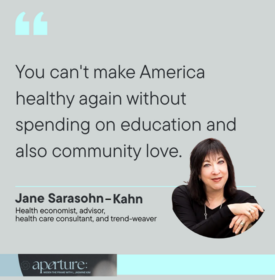 I was grateful to be Jasmine's first conversation-guest on her new podcast, "Aperture - Widen the Frame," where this expert in narrative medicine is bringing together the broad range of voices to sit at the table and address what health care needs: those humans in the health-system-loop who address health equity and empathy along with delivering evidence-based medicine for all.
 Jane joined host Dr. Geeta "Dr. G" Nayyar and colleagues to brainstorm the value of vaccines for public and individual health in this challenging environment for health literacy, health politics, and health citizen grievance. Click onto the Pfizer Value of Vaccines site and you can watch four episodes covering the challenges with adult vaccination, the employer and health plan member's journey to vaccination, reimbursement, and collaborating for proactive prevention.